
Free Books for Kids: 15 Digital Libraries and Programs
Free Books for Kids: 15 Digital Libraries and Programs

Article by
Milo
ESL Content Coordinator & Educator
ESL Content Coordinator & Educator
All Posts
It's October and your 2nd graders are tearing through the classroom library faster than you can reshelve. You've got three kids reading at a 4th grade level, five who need emergent readers, and a budget that won't stretch past December. Finding quality free books for kids isn't just nice to have—it's how you keep thirty different readers engaged without buying three hundred paperbacks out of pocket.
This list covers the digital libraries and programs that actually work in real classrooms. You'll find picture books and early readers for your kindergarten crew, chapter book collections for upper elementary, and resources that reflect the diversity sitting in your reading corner. I also tracked down seasonal giveaways and event-based programs that drop physical books into kids' hands, plus straightforward tips for matching titles to grade level without wasting your planning period on sites that look pretty but crash when twenty-five kids log in at once.
I tested these resources with actual students over the past few years. Some crashed during whole-group read aloud sessions. Others had hidden fees buried three clicks deep or required district IT permissions that take months to approve. The fifteen sources below are the ones that survived my classroom—free, functional, and full of good children's literature your kids will actually want to read during independent time.
Still grading everything by hand?
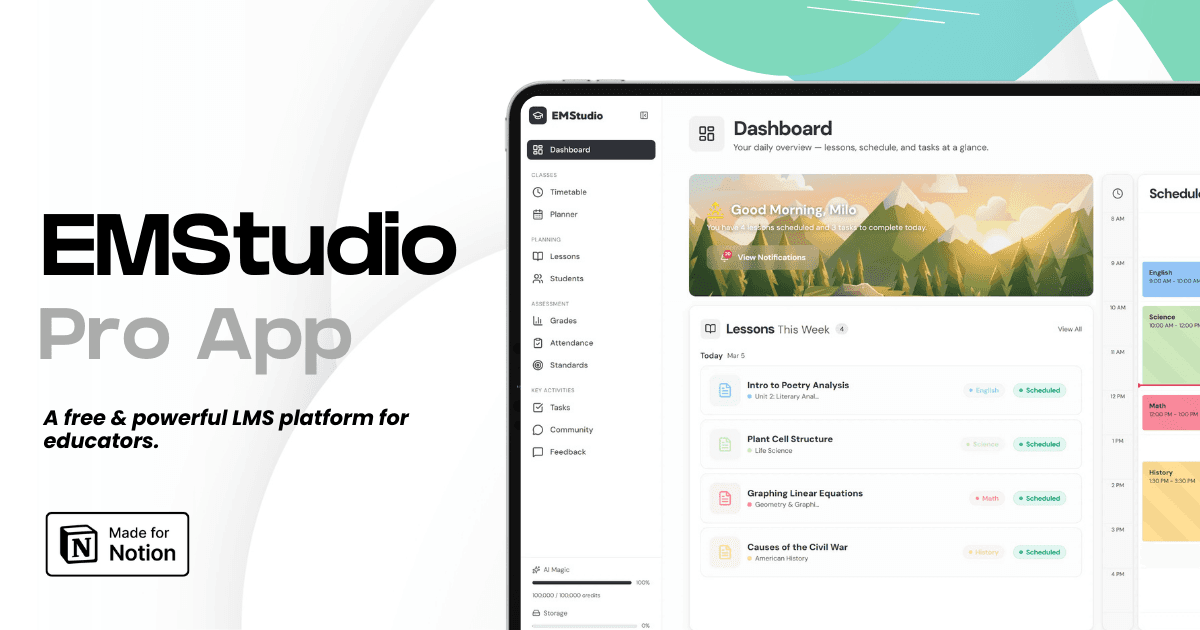
EMStudio is a free teaching management app — manage your classes, students, lessons, and more!
Learn More
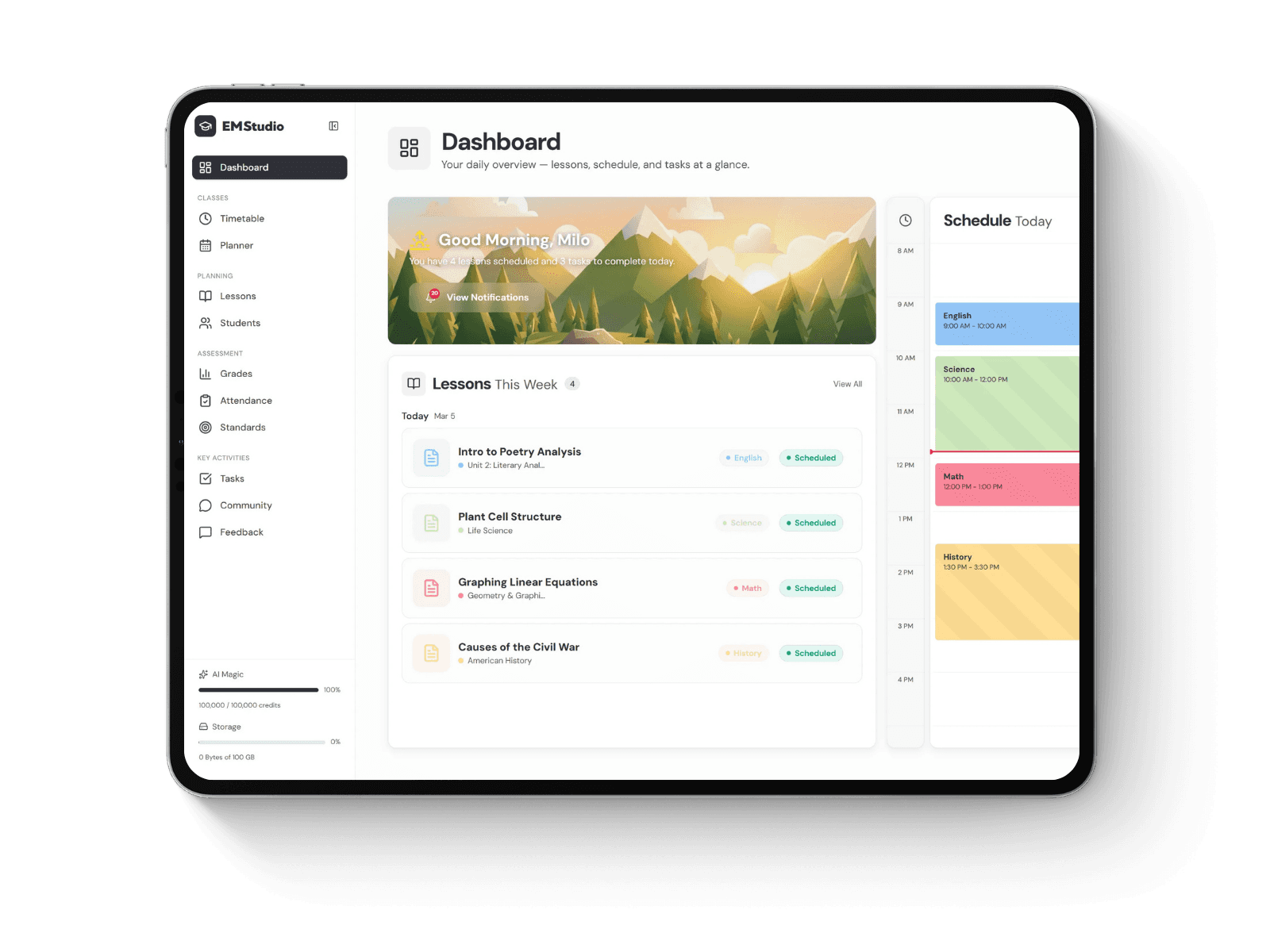
Still grading everything by hand?
EMStudio is a free teaching management app — manage your classes, students, lessons, and more!
Learn More
Table of Contents
Free Picture Books and Early Readers (Kindergarten-Grade 2)
Classroom libraries need 20 books per student. For a class of 25, that's 500 books. Quality picture books that transform classroom libraries cost $4 to $8 each. You're looking at $2,000 to $4,000 to stock shelves properly. Most districts don't provide that budget. Free kindergarten reading books become essential for equitable access, not optional.
Ages 4 through 8 need distinct formats. Non-readers require audio support. Emergent readers need decodable texts with strong visual cues. These four platforms deliver both without draining your wallet.
Platform Name | Best For | Login Required? | Offline Access? | Unique Limitation |
|---|---|---|---|---|
Epic! School | Diverse digital library | Yes (teacher) | No | School hours only (7am-4pm) |
Unite for Literacy | Multilingual STEM content | No | No | Photographic images only |
Storyline Online | Fluency modeling | No | No | Streaming only, 8-12 min runtime |
Oxford Owl | Systematic phonics progression | Yes (email) | No | Uses UK Book Bands system |
Summer slide widens achievement gaps when families lack resources. Free kindergarten books to read at home must cost parents nothing. Zero subscription fees. Zero device requirements beyond a basic phone or tablet. That's how you eliminate the digital divide barrier completely.
Epic! Free Educator Access
Epic! School runs on educator time. The free tier unlocks 7am to 4pm weekdays only. You get 36 student profiles and 40,000+ titles in this massive digital library.
"Read to Me" audio matters most for pre-readers. Text highlights word-by-word as narrators speak. Critical limitation: home access requires an $11.99 monthly family subscription. Your students can't read at home without parents paying.
Available series include:
Elephant & Piggie by Mo Willems
National Geographic Kids readers
The Bad Seed by Jory John
These support early literacy through predictable humor and visual cues that keep 5-year-olds engaged.
Unite for Literacy
This site hosts 500+ photographic nonfiction books covering STEM and social studies. Narration comes in 40+ languages including Spanish, Arabic, and Somali.
Zero barriers define this platform:
No login or account creation required
No passwords to remember for shared devices
Immediate browser access on any tablet or computer
Books use predictable patterns with heavy image support. These function as leveled readers for guided reading levels A through D, perfect for Kindergarten and Grade 1 students building confidence.
Storyline Online
The SAG-AFTRA Foundation produces these celebrity read aloud videos. Viola Davis, Chris Pine, and Betty White have all recorded titles here, bringing expert expression to children's literature.
Each video runs 8 to 12 minutes. Streaming only—no downloads for offline viewing. Every book includes free printable activity guides aligned to Common Core reading comprehension standards.
Use these for fluency instruction. Students hear expert pacing and intonation while you pull small groups for targeted intervention.
Oxford Owl Free eBooks
Oxford Reading Tree's Biff, Chip, and Kipper series lives here. You'll find 250+ free picture book titles organized by Book Bands from Pink to Dark Red.
Free registration requires an email address. The HTML5 format works on tablets without Flash. Each book ends with embedded comprehension quizzes.
Early levels follow systematic phonics progression matching UK Letters and Sounds or US Fountas & Pinnell. For phonics books for early elementary grades, this provides structured free books for kids for explicit decoding practice.
Where Can You Find Free Chapter Books for Elementary Readers?
Free chapter books for elementary readers are available through digital libraries like Magic Blox (ages 1-13), the International Children's Digital Library (4,600+ multilingual titles), Project Gutenberg's kids collection (public domain classics like Anne of Green Gables), and Open Library's Classroom Edition (borrow 1-2 million titles via Controlled Digital Lending).
Third graders need longer stories, not harder words. The sweet spot sits between Lexile 400L and 700L, where leveled readers stretch sentences but eliminate pictures. You want books i can read for free that offer both contemporary characters and classics, so kids don't get stuck reading only 100-year-old dialect.
Most kids transition from early literacy picture books to chapter books around Lexile 400L-700L, typically ages 7-9. At this stage, free books for kids must include both contemporary characters and classics to maintain reading comprehension and keep them engaged while building stamina.
Magic Blox: Best for classroom libraries. Ages 6-10. Parent email required. Free books owned; borrowed books temporary.
ICDL: Best for multilingual units. Ages 3-13. No account. PDFs owned permanently.
Project Gutenberg: Best for classics. Ages 9+. No account. Downloads owned forever.
Open Library: Best for read alouds. Ages 5-14. Internet Archive account required. Borrowed temporarily (1 hour to 14 days).
Magic Blox Digital Library
Magic Blox uses a freemium model. The free tier offers 50+ "Featured Free" books permanently, or one borrowed book monthly from their full catalog of 900+ titles. It targets ages 1-13, with strong realistic fiction and mystery for ages 6-10. You need a parent email for COPPA compliance, or classroom codes for teacher-monitored access. Pair these with strategies to teach reading skills for your struggling readers.
International Children's Digital Library
University of Maryland researchers built this digital library to preserve global children's literature. It holds 4,639 books in 59 languages as of 2024. Kids search by "story color," cultural category, or narrator age. Every title downloads as a PDF for offline access. The collection includes rare historical books from the 1800s-1950s you won't find in standard school libraries.
Project Gutenberg Kids Collection
The Children's Literature bookshelf holds over 2,000 public domain titles like Anne of Green Gables, The Secret Garden, and Black Beauty. These are books i can read for free and keep forever. Archaic vocabulary and complex syntax generally suit 4th grade and up. While the dear america book series isn't available here, you'll find similar 19th-century historical diaries. Download in EPUB, Kindle, plain text, or HTML for any device.
Open Library Classroom Edition
Open Library lends one digital copy per physical book owned through Controlled Digital Lending. Borrow for one hour to 14 days from 3 million titles, including 100,000+ children's books and current bestsellers not in the public domain. You need a free Internet Archive account. It works best for read aloud sessions projected to the class. Track your loans with digital book trackers and reading lists.
What Free Book Collections Support Diverse Representation?
Free diverse book collections include We Need Diverse Books' curated educator resources, Storyweaver by Pratham Books offering 30,000+ stories in 300+ languages with open licensing, First Book Marketplace's free sections for Title I schools, and Reading A-Z's 14-day trial featuring 2,000+ leveled diverse titles.
Your classroom library needs mirrors where kids see themselves and windows into lives unlike their own. Rudine Sims Bishop coined this framework back in 1990, and it still holds. Finding diverse free books for kids shouldn't require a district grant.
Rudine Sims Bishop's mirrors and windows framework still guides culturally responsive teaching practices. Students need mirrors reflecting their own culture and windows opening into others. Yet surveys show most teachers struggle to locate sufficient diverse titles. These four resources solve that diversity gap while supporting strategies for equitable education and socioeconomic diversity without draining your wallet.
Use We Need Diverse Books if you want curated recent titles with lesson plans for your read aloud selections.
Use Storyweaver if you serve multilingual learners or need printable bilingual free story books.
Use First Book Marketplace if you work in a Title I school and can wait for physical books.
Use Reading A-Z if you need immediate digital access to leveled readers for reading comprehension work.
We Need Diverse Books Free Resources
We Need Diverse Books doesn't host files. Instead, they curate what's worth your time. Their free OurStory app for iOS and Android catalogs 1,200+ diverse titles with ready-made lesson plans. You also get educator guides for specific books like Last Stop on Market Street and downloadable #OwnVoices booklists sorted by grade band. No registration required for the basic lists. Everything here is recent—2015 and newer—so you won't dig through musty public domain texts to find a contemporary voice.
Storyweaver by Pratham Books
Storyweaver operates under Creative Commons 4.0 licensing. That means you can print, adapt, or translate any of the 30,000+ stories available. Download free story books as PDF or EPUB, or send them to print-on-demand services. The platform hosts the largest open-licensed children's literature repository globally, featuring 300+ languages including indigenous and endangered ones. The side-by-side bilingual reader supports ESL/ELL classrooms and bilingual immersion programs. Build culturally responsive text sets without spending a dime.
First Book Marketplace Free Sections
First Book Marketplace serves educators in Title I schools or programs where 50% or more students qualify as low-income. You'll verify with a pay stub, school ID, or tax ID. The "Free" section lists physical books—not digital—priced from $0 to $3, offering tangible free books for kids to take home. Registered members also access the National Book Bank for quarterly free shipments. Homeschoolers can't use this unless affiliated with qualifying groups. Expect shipping delays of 8 to 12 weeks, so plan your units accordingly.
Reading A-Z Free Trial Collections
Reading A-Z offers a 14-day trial with full access to 2,000+ leveled readers spanning 29 levels. You'll find decodable books for phonics instruction alongside fiction and nonfiction featuring BIPOC protagonists and global perspectives aligned to CCSS. This digital library supports early literacy interventions and reading comprehension skills. Set a phone reminder before day 14. The trial requires a credit card and auto-renews at $119.95 annually if you don't cancel.
Seasonal Programs and Event-Based Free Book Access
Think of these programs as supplementary income. They deliver physical free books for kids directly into hands. Digital library access works for in-class instruction. But nothing beats a book a child owns permanently. These seasonal campaigns build home libraries one title at a time.
You need to think six to eight weeks ahead. These programs have hard deadlines and limited geographic availability. Don't count on them for next week's guided reading groups. Use them as bonus resources that extend classroom events to boost student engagement into student homes. They work best as supplements, not curriculum staples.
February: World Book Day registration opens for UK teachers.
May-June: Barnes & Noble Summer Reading signup begins.
August 1: Pizza Hut BOOK IT! enrollment starts.
The ownership piece matters. Kids reread these titles during summer breaks or share them with siblings. You can't replicate that with borrowed classroom copies.
World Book Day Free Book Tokens
This one serves the UK and Ireland primarily. Held annually the first Thursday in March. Schools register in February to receive physical £1 book tokens (€1.50 in Ireland) for every student.
Students choose from 12-15 specially commissioned titles by authors like David Walliams or Jacqueline Wilson.
Redeem tokens at Waterstones, WHSmith, or any participating independent bookstore.
Valid for a 3-week window post-event.
These works represent quality children's literature that often becomes favorites for read aloud sessions back in class. Check eligibility carefully. Only registered schools receive the tokens. If you teach in the US, skip this section. For UK educators, February registration is non-negotiable. Miss the window, miss the books.
Barnes & Noble Summer Reading Program
Grades 1st through 6th only. The program runs June through August.
Students read any 8 books and record titles, authors, and favorite parts in the printable "Imagination's Destination" journal.
Bring completed journal to any Barnes & Noble store.
Choose 1 free book from 8-10 specific paperbacks (retail value $5-8).
While supplies last. One per child. These aren't leveled readers for your classroom library, but they supplement nicely. The catch? No stores near you means no books. Rural teachers face this reality yearly. Sign up in May and download the journal then. Don't wait for June.
Pizza Hut BOOK IT! Free Resources
Runs October 1 through March 31. Enrollment opens August 1. Don't sleep on this date.
The digital teacher dashboard logs student reading by minutes or books completed. Monthly completion certificates arrive via email.
The reward isn't a book. It's one Personal Pan Pizza per month per student at participating locations. Valid for dine-in, carryout, or delivery with purchase.
This pairs well with early literacy goals and reading comprehension targets. The pizza motivates. The reading practice builds skills. Check that your local Pizza Hut participates before promising pies to your class.

How to Choose the Right Free Books for Your Grade Level?
Choose free books by matching Lexile scores to grade-level bands (Kindergarten: BR200L-300L, Grade 3: 450L-790L), verifying alignment with Common Core or state standards for text complexity, and selecting digital formats only when students have reliable 1:1 device access and minimal offline reading needs.
Don't grab every freebie you see. A book costs zero dollars. It wastes infinite time if it sits too hard or too easy in a kid's hands. Match the reader, match the standard, then check if the format actually works in your room. Your library space is limited; fill it with texts that teach.
Free does not mean appropriate. Vet every title for quality using the five-finger rule. Zero to one errors on a page means too easy. Two to three errors means just right. Four or more means too hard. A digital library full of leveled readers helps only if the content actually builds reading comprehension. Don't let price drive your pedagogy.
Red Flags:
Avoid books two or more grade levels above student ability—that hits frustration level fast.
Don't ignore cultural relevance; kids need mirrors and windows in their texts.
Never assign digital-only texts when students lack reliable home WiFi or device access.
Assessing Reading Levels and Lexile Scores
Lead with the data. About half your students should fall within these Lexile bands. Kindergarten reads BR200L-300L. Grade 1 hits 200L-450L. Grade 2 stretches 450L-650L. Grade 3 ranges 450L-790L. Use the Scholastic Book Wizard app or Fountas & Pinnell's free correlation charts. Check unfamiliar titles before adding them to your classroom library.
Grade | Lexile Range |
|---|---|
K | BR200L-300L |
1 | 200L-450L |
2 | 450L-650L |
3 | 450L-790L |
But numbers lie. Run the five-finger rule during individual reading conferences. If a student misses four or more words per page, the book wins. Check background knowledge requirements too. Children's literature about snow days frustrates kids who've never seen frost. Match the early literacy level to the specific child, not just the grade on your roster.
Matching Content to Curriculum Standards
Common Core breaks text complexity into bands: K-1, 2-3, 4-5, and 6-8. Examine qualitative dimensions like text structure, language conventions, and knowledge demands. When aligning reading materials with curriculum standards, skip random grabs. Teaching a weather unit? Hit Unite for Literacy's 'Earth and Sky' category instead of scattered selections that don't reinforce your academic vocabulary goals.
Verify standard matches through your state DOE appendices or the Achievement Standards Network. Free books for kids work best when they explicitly reinforce your unit's key concepts. A misplaced read aloud wastes precious instructional minutes you don't have. Check that the text complexity aligns with your grade band expectations before you commit the time.
Evaluating Digital vs. Physical Format Needs
Pick digital formats only with true 1:1 device access and reliable home WiFi. Ensure students have no IEP accommodations requiring physical manipulation of pages. Choose paper if students need to annotate margins. Also pick paper for shared device rotations or strict screen time limits in IEPs. The science of reading and evidence-based instruction shows that format significantly affects comprehension retention for struggling readers.
Consider a hybrid approach for key titles. Storyweaver's CC license lets you print at cost via Lulu or local shops for three to five dollars per book. Watch for digital eye strain—the Cleveland Clinic recommends the 20-20-20 rule. Every twenty minutes, students should look twenty feet away for twenty seconds. Physical leveled readers eliminate that worry entirely.
Building a Year-Round Free Book Strategy for Your Classroom
You need a rhythm. Not a frantic scramble every time you need new titles. Map your book sourcing to the calendar, and you will never pay out of pocket again. A year-round strategy keeps children's literature flowing without burning you out.
Treat book acquisition like lesson planning. Block these specific dates:
January: File First Book grant applications. They open funding windows early in the year for leveled readers and classroom libraries.
February: Distribute World Book Day tokens. Students trade them for free books at local bookshops.
March: Set up your Epic! class account. Perfect timing for spring reading challenges before testing season hits.
June: Grab Barnes & Noble Summer Reading packets. Kids read eight books, get a free one. Send home the tracking sheets.
August: Curate your International Children's Digital Library (ICDL) collection. Build your multicultural read aloud list before school starts.
October: Register for BOOK IT! Pizza Hut's program runs October through March. Free personal pan pizzas motivate reluctant readers.
Do not use Epic! all year. Students tune out by December. Rotate your digital library monthly. September might be Epic!, October switches to ICDL, November uses your First Book physical haul. This keeps interfaces fresh and protects you when companies change their free tiers. When reading comprehension platforms shift to paid models, you have three others already running. Contingency planning saves your early literacy centers from going dark.
This rotation creates natural backup plans. If Epic! cancels their educator free tier next fall, your August ICDL setup already covers you. You are not scrambling for free books for kids the night before a unit starts.
You have two solid paths for physical books. Choose based on your tolerance for self-promotion and your school's income data.
First Book National Book Bank requires no donor emails. You qualify based on school income data. Books ship cheap but you take what they have. Great for building classroom libraries fast.
DonorsChoose works for any public school teacher willing to write a compelling narrative. You create the project and promote it. You get exactly the titles you want, but you hustle for every dollar.
First Book requires Title I status or similar income verification. DonorsChoose is open to all public school teachers. Both beat buying leveled readers with your own money. I use First Book for bulk classroom libraries. I save DonorsChoose for specific author studies where I need twelve copies of one particular title.
Parents worry about hidden fees. Send this home. No confusion, no credit cards required.
"We use free books for kids in class, and your child can access these at home. Go to [Platform Name]. Enter our class code: [CODE]. No payment information required. Ever. These are district-approved resources for building reading comprehension. Questions? Email me."
Include screenshots of the login page. Circle exactly where to click. Remove every barrier to early literacy practice at home. Post this on your build a digital resource library for your classroom page so families can reference it during school breaks.

What's Next for Free Books For Kids
You have fifteen solid options now. Pick two or three that fit your grade level and bookmark them. Digital libraries update their catalogs every season, so check back in December and again in May when they refresh collections. Don't try to use all fifteen at once. That leads to password fatigue and forgotten logins. Grab one early literacy source and one chapter book site for now.
The landscape is shifting fast. More leveled readers are moving to browser-based access and ditching the apps, and several major publishers are dropping paywalls for classroom accounts. Districts are auto-enrolling teachers in new platforms, which means less setup for you but more features to track. Watch for AI narration tools popping up in free collections this year.
Stay ahead by following the social accounts of two or three favorites. They announce flash freebies and new reading comprehension tools there first. Set a calendar reminder to audit your free book links each quarter. Dead links pile up fast, and new platforms launch every semester. Keep your list tight and current. Your students will thank you for the fresh choices.
Free Picture Books and Early Readers (Kindergarten-Grade 2)
Classroom libraries need 20 books per student. For a class of 25, that's 500 books. Quality picture books that transform classroom libraries cost $4 to $8 each. You're looking at $2,000 to $4,000 to stock shelves properly. Most districts don't provide that budget. Free kindergarten reading books become essential for equitable access, not optional.
Ages 4 through 8 need distinct formats. Non-readers require audio support. Emergent readers need decodable texts with strong visual cues. These four platforms deliver both without draining your wallet.
Platform Name | Best For | Login Required? | Offline Access? | Unique Limitation |
|---|---|---|---|---|
Epic! School | Diverse digital library | Yes (teacher) | No | School hours only (7am-4pm) |
Unite for Literacy | Multilingual STEM content | No | No | Photographic images only |
Storyline Online | Fluency modeling | No | No | Streaming only, 8-12 min runtime |
Oxford Owl | Systematic phonics progression | Yes (email) | No | Uses UK Book Bands system |
Summer slide widens achievement gaps when families lack resources. Free kindergarten books to read at home must cost parents nothing. Zero subscription fees. Zero device requirements beyond a basic phone or tablet. That's how you eliminate the digital divide barrier completely.
Epic! Free Educator Access
Epic! School runs on educator time. The free tier unlocks 7am to 4pm weekdays only. You get 36 student profiles and 40,000+ titles in this massive digital library.
"Read to Me" audio matters most for pre-readers. Text highlights word-by-word as narrators speak. Critical limitation: home access requires an $11.99 monthly family subscription. Your students can't read at home without parents paying.
Available series include:
Elephant & Piggie by Mo Willems
National Geographic Kids readers
The Bad Seed by Jory John
These support early literacy through predictable humor and visual cues that keep 5-year-olds engaged.
Unite for Literacy
This site hosts 500+ photographic nonfiction books covering STEM and social studies. Narration comes in 40+ languages including Spanish, Arabic, and Somali.
Zero barriers define this platform:
No login or account creation required
No passwords to remember for shared devices
Immediate browser access on any tablet or computer
Books use predictable patterns with heavy image support. These function as leveled readers for guided reading levels A through D, perfect for Kindergarten and Grade 1 students building confidence.
Storyline Online
The SAG-AFTRA Foundation produces these celebrity read aloud videos. Viola Davis, Chris Pine, and Betty White have all recorded titles here, bringing expert expression to children's literature.
Each video runs 8 to 12 minutes. Streaming only—no downloads for offline viewing. Every book includes free printable activity guides aligned to Common Core reading comprehension standards.
Use these for fluency instruction. Students hear expert pacing and intonation while you pull small groups for targeted intervention.
Oxford Owl Free eBooks
Oxford Reading Tree's Biff, Chip, and Kipper series lives here. You'll find 250+ free picture book titles organized by Book Bands from Pink to Dark Red.
Free registration requires an email address. The HTML5 format works on tablets without Flash. Each book ends with embedded comprehension quizzes.
Early levels follow systematic phonics progression matching UK Letters and Sounds or US Fountas & Pinnell. For phonics books for early elementary grades, this provides structured free books for kids for explicit decoding practice.
Where Can You Find Free Chapter Books for Elementary Readers?
Free chapter books for elementary readers are available through digital libraries like Magic Blox (ages 1-13), the International Children's Digital Library (4,600+ multilingual titles), Project Gutenberg's kids collection (public domain classics like Anne of Green Gables), and Open Library's Classroom Edition (borrow 1-2 million titles via Controlled Digital Lending).
Third graders need longer stories, not harder words. The sweet spot sits between Lexile 400L and 700L, where leveled readers stretch sentences but eliminate pictures. You want books i can read for free that offer both contemporary characters and classics, so kids don't get stuck reading only 100-year-old dialect.
Most kids transition from early literacy picture books to chapter books around Lexile 400L-700L, typically ages 7-9. At this stage, free books for kids must include both contemporary characters and classics to maintain reading comprehension and keep them engaged while building stamina.
Magic Blox: Best for classroom libraries. Ages 6-10. Parent email required. Free books owned; borrowed books temporary.
ICDL: Best for multilingual units. Ages 3-13. No account. PDFs owned permanently.
Project Gutenberg: Best for classics. Ages 9+. No account. Downloads owned forever.
Open Library: Best for read alouds. Ages 5-14. Internet Archive account required. Borrowed temporarily (1 hour to 14 days).
Magic Blox Digital Library
Magic Blox uses a freemium model. The free tier offers 50+ "Featured Free" books permanently, or one borrowed book monthly from their full catalog of 900+ titles. It targets ages 1-13, with strong realistic fiction and mystery for ages 6-10. You need a parent email for COPPA compliance, or classroom codes for teacher-monitored access. Pair these with strategies to teach reading skills for your struggling readers.
International Children's Digital Library
University of Maryland researchers built this digital library to preserve global children's literature. It holds 4,639 books in 59 languages as of 2024. Kids search by "story color," cultural category, or narrator age. Every title downloads as a PDF for offline access. The collection includes rare historical books from the 1800s-1950s you won't find in standard school libraries.
Project Gutenberg Kids Collection
The Children's Literature bookshelf holds over 2,000 public domain titles like Anne of Green Gables, The Secret Garden, and Black Beauty. These are books i can read for free and keep forever. Archaic vocabulary and complex syntax generally suit 4th grade and up. While the dear america book series isn't available here, you'll find similar 19th-century historical diaries. Download in EPUB, Kindle, plain text, or HTML for any device.
Open Library Classroom Edition
Open Library lends one digital copy per physical book owned through Controlled Digital Lending. Borrow for one hour to 14 days from 3 million titles, including 100,000+ children's books and current bestsellers not in the public domain. You need a free Internet Archive account. It works best for read aloud sessions projected to the class. Track your loans with digital book trackers and reading lists.
What Free Book Collections Support Diverse Representation?
Free diverse book collections include We Need Diverse Books' curated educator resources, Storyweaver by Pratham Books offering 30,000+ stories in 300+ languages with open licensing, First Book Marketplace's free sections for Title I schools, and Reading A-Z's 14-day trial featuring 2,000+ leveled diverse titles.
Your classroom library needs mirrors where kids see themselves and windows into lives unlike their own. Rudine Sims Bishop coined this framework back in 1990, and it still holds. Finding diverse free books for kids shouldn't require a district grant.
Rudine Sims Bishop's mirrors and windows framework still guides culturally responsive teaching practices. Students need mirrors reflecting their own culture and windows opening into others. Yet surveys show most teachers struggle to locate sufficient diverse titles. These four resources solve that diversity gap while supporting strategies for equitable education and socioeconomic diversity without draining your wallet.
Use We Need Diverse Books if you want curated recent titles with lesson plans for your read aloud selections.
Use Storyweaver if you serve multilingual learners or need printable bilingual free story books.
Use First Book Marketplace if you work in a Title I school and can wait for physical books.
Use Reading A-Z if you need immediate digital access to leveled readers for reading comprehension work.
We Need Diverse Books Free Resources
We Need Diverse Books doesn't host files. Instead, they curate what's worth your time. Their free OurStory app for iOS and Android catalogs 1,200+ diverse titles with ready-made lesson plans. You also get educator guides for specific books like Last Stop on Market Street and downloadable #OwnVoices booklists sorted by grade band. No registration required for the basic lists. Everything here is recent—2015 and newer—so you won't dig through musty public domain texts to find a contemporary voice.
Storyweaver by Pratham Books
Storyweaver operates under Creative Commons 4.0 licensing. That means you can print, adapt, or translate any of the 30,000+ stories available. Download free story books as PDF or EPUB, or send them to print-on-demand services. The platform hosts the largest open-licensed children's literature repository globally, featuring 300+ languages including indigenous and endangered ones. The side-by-side bilingual reader supports ESL/ELL classrooms and bilingual immersion programs. Build culturally responsive text sets without spending a dime.
First Book Marketplace Free Sections
First Book Marketplace serves educators in Title I schools or programs where 50% or more students qualify as low-income. You'll verify with a pay stub, school ID, or tax ID. The "Free" section lists physical books—not digital—priced from $0 to $3, offering tangible free books for kids to take home. Registered members also access the National Book Bank for quarterly free shipments. Homeschoolers can't use this unless affiliated with qualifying groups. Expect shipping delays of 8 to 12 weeks, so plan your units accordingly.
Reading A-Z Free Trial Collections
Reading A-Z offers a 14-day trial with full access to 2,000+ leveled readers spanning 29 levels. You'll find decodable books for phonics instruction alongside fiction and nonfiction featuring BIPOC protagonists and global perspectives aligned to CCSS. This digital library supports early literacy interventions and reading comprehension skills. Set a phone reminder before day 14. The trial requires a credit card and auto-renews at $119.95 annually if you don't cancel.
Seasonal Programs and Event-Based Free Book Access
Think of these programs as supplementary income. They deliver physical free books for kids directly into hands. Digital library access works for in-class instruction. But nothing beats a book a child owns permanently. These seasonal campaigns build home libraries one title at a time.
You need to think six to eight weeks ahead. These programs have hard deadlines and limited geographic availability. Don't count on them for next week's guided reading groups. Use them as bonus resources that extend classroom events to boost student engagement into student homes. They work best as supplements, not curriculum staples.
February: World Book Day registration opens for UK teachers.
May-June: Barnes & Noble Summer Reading signup begins.
August 1: Pizza Hut BOOK IT! enrollment starts.
The ownership piece matters. Kids reread these titles during summer breaks or share them with siblings. You can't replicate that with borrowed classroom copies.
World Book Day Free Book Tokens
This one serves the UK and Ireland primarily. Held annually the first Thursday in March. Schools register in February to receive physical £1 book tokens (€1.50 in Ireland) for every student.
Students choose from 12-15 specially commissioned titles by authors like David Walliams or Jacqueline Wilson.
Redeem tokens at Waterstones, WHSmith, or any participating independent bookstore.
Valid for a 3-week window post-event.
These works represent quality children's literature that often becomes favorites for read aloud sessions back in class. Check eligibility carefully. Only registered schools receive the tokens. If you teach in the US, skip this section. For UK educators, February registration is non-negotiable. Miss the window, miss the books.
Barnes & Noble Summer Reading Program
Grades 1st through 6th only. The program runs June through August.
Students read any 8 books and record titles, authors, and favorite parts in the printable "Imagination's Destination" journal.
Bring completed journal to any Barnes & Noble store.
Choose 1 free book from 8-10 specific paperbacks (retail value $5-8).
While supplies last. One per child. These aren't leveled readers for your classroom library, but they supplement nicely. The catch? No stores near you means no books. Rural teachers face this reality yearly. Sign up in May and download the journal then. Don't wait for June.
Pizza Hut BOOK IT! Free Resources
Runs October 1 through March 31. Enrollment opens August 1. Don't sleep on this date.
The digital teacher dashboard logs student reading by minutes or books completed. Monthly completion certificates arrive via email.
The reward isn't a book. It's one Personal Pan Pizza per month per student at participating locations. Valid for dine-in, carryout, or delivery with purchase.
This pairs well with early literacy goals and reading comprehension targets. The pizza motivates. The reading practice builds skills. Check that your local Pizza Hut participates before promising pies to your class.
How to Choose the Right Free Books for Your Grade Level?
Choose free books by matching Lexile scores to grade-level bands (Kindergarten: BR200L-300L, Grade 3: 450L-790L), verifying alignment with Common Core or state standards for text complexity, and selecting digital formats only when students have reliable 1:1 device access and minimal offline reading needs.
Don't grab every freebie you see. A book costs zero dollars. It wastes infinite time if it sits too hard or too easy in a kid's hands. Match the reader, match the standard, then check if the format actually works in your room. Your library space is limited; fill it with texts that teach.
Free does not mean appropriate. Vet every title for quality using the five-finger rule. Zero to one errors on a page means too easy. Two to three errors means just right. Four or more means too hard. A digital library full of leveled readers helps only if the content actually builds reading comprehension. Don't let price drive your pedagogy.
Red Flags:
Avoid books two or more grade levels above student ability—that hits frustration level fast.
Don't ignore cultural relevance; kids need mirrors and windows in their texts.
Never assign digital-only texts when students lack reliable home WiFi or device access.
Assessing Reading Levels and Lexile Scores
Lead with the data. About half your students should fall within these Lexile bands. Kindergarten reads BR200L-300L. Grade 1 hits 200L-450L. Grade 2 stretches 450L-650L. Grade 3 ranges 450L-790L. Use the Scholastic Book Wizard app or Fountas & Pinnell's free correlation charts. Check unfamiliar titles before adding them to your classroom library.
Grade | Lexile Range |
|---|---|
K | BR200L-300L |
1 | 200L-450L |
2 | 450L-650L |
3 | 450L-790L |
But numbers lie. Run the five-finger rule during individual reading conferences. If a student misses four or more words per page, the book wins. Check background knowledge requirements too. Children's literature about snow days frustrates kids who've never seen frost. Match the early literacy level to the specific child, not just the grade on your roster.
Matching Content to Curriculum Standards
Common Core breaks text complexity into bands: K-1, 2-3, 4-5, and 6-8. Examine qualitative dimensions like text structure, language conventions, and knowledge demands. When aligning reading materials with curriculum standards, skip random grabs. Teaching a weather unit? Hit Unite for Literacy's 'Earth and Sky' category instead of scattered selections that don't reinforce your academic vocabulary goals.
Verify standard matches through your state DOE appendices or the Achievement Standards Network. Free books for kids work best when they explicitly reinforce your unit's key concepts. A misplaced read aloud wastes precious instructional minutes you don't have. Check that the text complexity aligns with your grade band expectations before you commit the time.
Evaluating Digital vs. Physical Format Needs
Pick digital formats only with true 1:1 device access and reliable home WiFi. Ensure students have no IEP accommodations requiring physical manipulation of pages. Choose paper if students need to annotate margins. Also pick paper for shared device rotations or strict screen time limits in IEPs. The science of reading and evidence-based instruction shows that format significantly affects comprehension retention for struggling readers.
Consider a hybrid approach for key titles. Storyweaver's CC license lets you print at cost via Lulu or local shops for three to five dollars per book. Watch for digital eye strain—the Cleveland Clinic recommends the 20-20-20 rule. Every twenty minutes, students should look twenty feet away for twenty seconds. Physical leveled readers eliminate that worry entirely.
Building a Year-Round Free Book Strategy for Your Classroom
You need a rhythm. Not a frantic scramble every time you need new titles. Map your book sourcing to the calendar, and you will never pay out of pocket again. A year-round strategy keeps children's literature flowing without burning you out.
Treat book acquisition like lesson planning. Block these specific dates:
January: File First Book grant applications. They open funding windows early in the year for leveled readers and classroom libraries.
February: Distribute World Book Day tokens. Students trade them for free books at local bookshops.
March: Set up your Epic! class account. Perfect timing for spring reading challenges before testing season hits.
June: Grab Barnes & Noble Summer Reading packets. Kids read eight books, get a free one. Send home the tracking sheets.
August: Curate your International Children's Digital Library (ICDL) collection. Build your multicultural read aloud list before school starts.
October: Register for BOOK IT! Pizza Hut's program runs October through March. Free personal pan pizzas motivate reluctant readers.
Do not use Epic! all year. Students tune out by December. Rotate your digital library monthly. September might be Epic!, October switches to ICDL, November uses your First Book physical haul. This keeps interfaces fresh and protects you when companies change their free tiers. When reading comprehension platforms shift to paid models, you have three others already running. Contingency planning saves your early literacy centers from going dark.
This rotation creates natural backup plans. If Epic! cancels their educator free tier next fall, your August ICDL setup already covers you. You are not scrambling for free books for kids the night before a unit starts.
You have two solid paths for physical books. Choose based on your tolerance for self-promotion and your school's income data.
First Book National Book Bank requires no donor emails. You qualify based on school income data. Books ship cheap but you take what they have. Great for building classroom libraries fast.
DonorsChoose works for any public school teacher willing to write a compelling narrative. You create the project and promote it. You get exactly the titles you want, but you hustle for every dollar.
First Book requires Title I status or similar income verification. DonorsChoose is open to all public school teachers. Both beat buying leveled readers with your own money. I use First Book for bulk classroom libraries. I save DonorsChoose for specific author studies where I need twelve copies of one particular title.
Parents worry about hidden fees. Send this home. No confusion, no credit cards required.
"We use free books for kids in class, and your child can access these at home. Go to [Platform Name]. Enter our class code: [CODE]. No payment information required. Ever. These are district-approved resources for building reading comprehension. Questions? Email me."
Include screenshots of the login page. Circle exactly where to click. Remove every barrier to early literacy practice at home. Post this on your build a digital resource library for your classroom page so families can reference it during school breaks.
What's Next for Free Books For Kids
You have fifteen solid options now. Pick two or three that fit your grade level and bookmark them. Digital libraries update their catalogs every season, so check back in December and again in May when they refresh collections. Don't try to use all fifteen at once. That leads to password fatigue and forgotten logins. Grab one early literacy source and one chapter book site for now.
The landscape is shifting fast. More leveled readers are moving to browser-based access and ditching the apps, and several major publishers are dropping paywalls for classroom accounts. Districts are auto-enrolling teachers in new platforms, which means less setup for you but more features to track. Watch for AI narration tools popping up in free collections this year.
Stay ahead by following the social accounts of two or three favorites. They announce flash freebies and new reading comprehension tools there first. Set a calendar reminder to audit your free book links each quarter. Dead links pile up fast, and new platforms launch every semester. Keep your list tight and current. Your students will thank you for the fresh choices.
Still grading everything by hand?
EMStudio is a free teaching management app — manage your classes, students, lessons, and more!
Learn More
Still grading everything by hand?
EMStudio is a free teaching management app — manage your classes, students, lessons, and more!
Learn More



Notion4Teachers
Notion templates to simplify administrative tasks and enhance your teaching experience.



2026 Notion4Teachers. All Rights Reserved.
Notion4Teachers
Notion templates to simplify administrative tasks and enhance your teaching experience.
2026 Notion4Teachers. All Rights Reserved.
Notion4Teachers
Notion templates to simplify administrative tasks and enhance your teaching experience.
2026 Notion4Teachers. All Rights Reserved.