
12 Classroom Events to Boost Student Engagement
12 Classroom Events to Boost Student Engagement

Article by
Milo
ESL Content Coordinator & Educator
ESL Content Coordinator & Educator
All Posts
Your lessons are solid, but by mid-October the energy in room 204 has flatlined. Kids are completing the work, sure, but they're going through the motions. You need something that breaks the routine without breaking your prep time, something that gets them talking to each other instead of staring at slides. That's where strategic classroom events come in. Not the all-day field trips that require six permission slips and a bus. I'm talking about the small, repeatable moments that shift the room from passive to active.
Small physical rewards can also give these events a sense of identity. Eric Turney, President and Co-owner of The Monterey Company, which produces custom enamel pins, patches, and race medals for schools and organizations, says, “Students respond differently when recognition gives them something they can actually keep. A small pin, patch, or medal tied to a classroom challenge can become a reminder of what they accomplished and make the event feel more meaningful.”
Over the years, I've tested dozens of these micro-events, from five-minute debate warm-ups to week-long simulation games that tie directly to curriculum. Some flopped (never again with the flour baby project). Others became staples I use every quarter. In this post, I'm sharing twelve that actually work for busy teachers: low-prep daily routines, culture-focused celebrations, and hands-on learning experiences that build community while hitting your standards. No elaborate sets, no weekends lost to cutting lamination. Just practical student engagement strategies you can launch Monday.
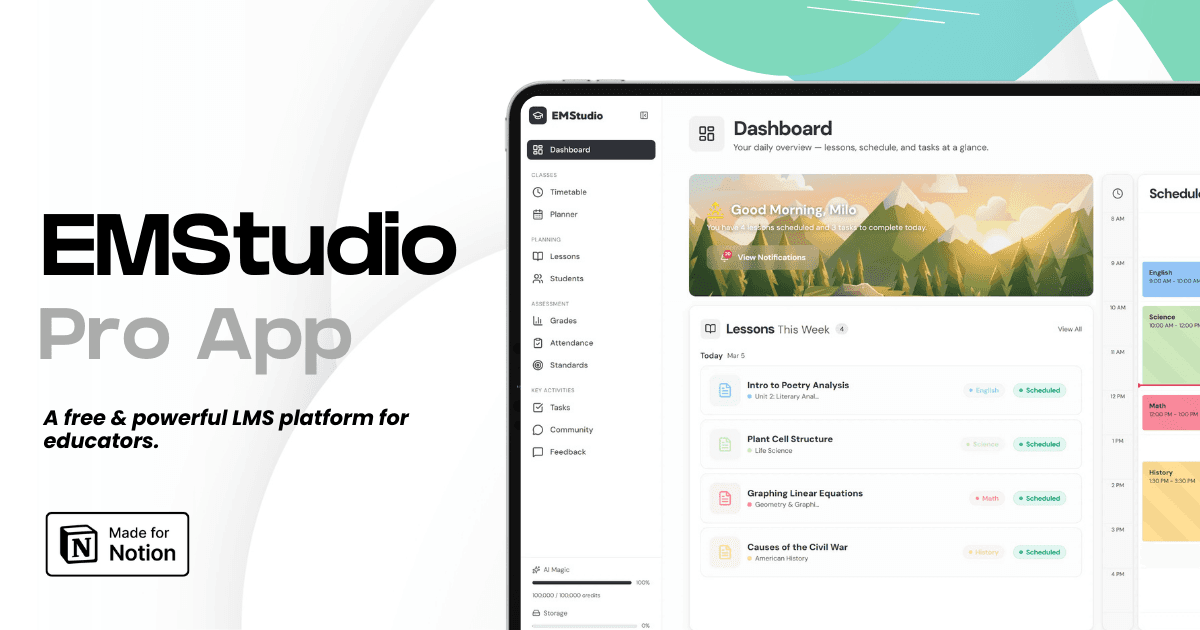
Still grading everything by hand?
EMStudio is a free teaching management app — manage your classes, students, lessons, and more!
Learn More
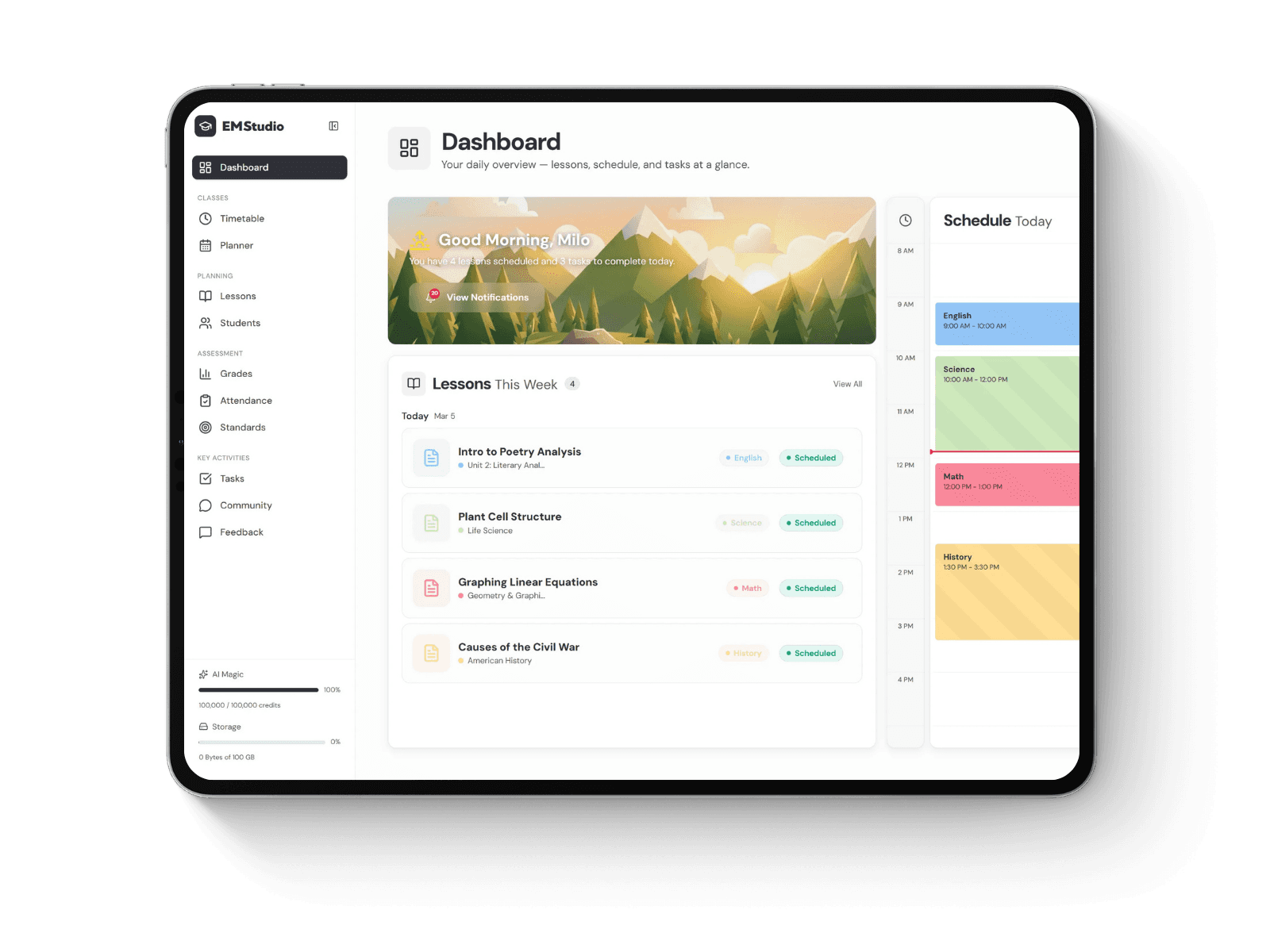
Still grading everything by hand?
EMStudio is a free teaching management app — manage your classes, students, lessons, and more!
Learn More
Table of Contents
What Are the Best Low-Prep Daily Classroom Events?
The best low-prep daily classroom events include Morning Meeting Circles using Responsive Classroom prompts (10-15 minutes), 5-Minute Brain Break Challenges like GoNoodle alternatives or rock-paper-scissors tournaments, and Classroom Escape Rooms using free Genially templates (20-minute setup). These require under 30 minutes preparation, cost $0-$10, and serve grades K-8.
Don't confuse these with time fillers. Playing a random YouTube video because you finished the lesson early is survival mode. Structured classroom events build routine while swapping in fresh content to keep neural pathways firing. Research on predictable novelty suggests that when students recognize the container but can't guess what's inside, they retain more. The format stays locked; the variables rotate.
Event Type | Prep Time | Grade Range | Materials Needed |
|---|---|---|---|
Morning Meeting Circles | 0-15 min | K-5 | Talking piece, prompt list |
Brain Break Competitions | 0-5 min | K-12 | Timer, whiteboard |
Escape Room Activities | 20-30 min | 4-12 | Free digital templates |
When to Skip: Avoid launching any new event during standardized testing weeks or the first two weeks of school. In August, your third graders are still learning how to line up without injuring each other. Introducing a talking circle before the bathroom signal is automatic creates chaos. Testing weeks fry everyone's executive function. Wait for week three, or save it for after the spring assessments.
Morning Meeting Circles with Structured Prompts
I borrowed this from Responsive Classroom after watching a first-grade teacher run one in seven minutes flat. The structure never changes: Greeting, Share, Activity, Message. You rotate through four greetings weekly: ball toss across the circle, handshake with eye contact, saying hello in different languages (I keep a printed list of "hello" in 20 languages taped to my whiteboard), or the silent wave where you make eye contact and wiggle your fingers.
For the Share portion, use a talking piece—any object works, though I use a squishy ball that doesn't roll. The talking piece forces the loud kids to listen and the quiet kids to speak. Students pass it while answering one prompt. Rotate these three: "Would you rather... (eat pizza or tacos forever)," "One thing that made you smile yesterday," and "A goal for today." Time this for 10-15 minutes right after attendance. It beats the morning worksheet trap.
Create a downloadable PDF structure to stay sane: a four-week greeting rotation schedule, a share question bank with 20 questions so you never blank out, and a closing message template with the day's agenda. You can find more classroom events to boost student engagement that follow this low-lift model.
5-Minute Brain Break Challenge Competitions
These aren't dance parties. They're quick competitions that reset attention spans without the tech fails. I run three types:
Rock-Paper-Scissors Tournament: Draw a single-elimination bracket on the whiteboard in 30 seconds. Two minutes total, winner picks the next transition song.
Statue Challenge: Play music, students move, freeze when it stops. Last one moving sits down.
30-Second Pose: Hold tree pose or plank. Yoga without the mindfulness lecture.
Frequency matters more than duration. For grades K-5, hit this every 25-30 minutes of instruction. For grades 6-12, stretch it to every 45 minutes. I use a physical sand timer because phone timers get lost in my pocket, but ClassDojo's visual timer projected on the board works for tech-heavy rooms. Zero dollars spent. You need a cleared 6x6 foot area, or just have them stand behind desks if you're teaching in a closet-sized room like I did in 2019.
Classroom Escape Room Activities Using Free Templates
This sounds complicated. It isn't. Use Breakout EDU Digital—the free tier gives you two games per month—or Genially's "Escape the Classroom" templates. Setup takes 20 minutes: you customize 5-7 digital locks with your curriculum content. I did this last spring with my 6th graders for math review. The combination lock answer came from 24 x 15 = 360, so the code was 3-6-0. They solved four problems to open the box.
Differentiate on the fly. Give struggling groups three hint cards they can trade for help: one reveals which operation to use, one eliminates two wrong digits, one gives the first number of the code. For advanced teams, add a speed challenge—sub-10 minutes to escape. Fourth graders need the tactile satisfaction of physical locks; eighth graders prefer typing codes into a Chromebook. Know your crowd.
These digital breakouts are perfect time-saving classroom hacks that look like you spent hours prepping. Grades 4-12 handle this best.
Curriculum-Connected Classroom Events for Deep Learning
An activity keeps students busy. An assessment-integrated classroom event produces a grade, portfolio piece, or standards-aligned data you can track. The difference is the exit ticket. If you can't point to specific evidence of mastery when the bell rings, you're managing time, not learning.
Project-Based Learning Showcases and Galleries
These work best with CCSS ELA Speaking & Listening standards. Structure your project based classroom culmination as an Exhibition Night. Students stand beside tri-fold boards explaining their driving question while digital portfolios on Google Sites loop behind them on Chromebooks. Grades 3-12 handle this well if you build in 3-minute presentation rotations—any longer and 5th graders start fidgeting. I schedule "presentation practice" two days prior so kids don't freeze when parents arrive.
Teachers can also preserve highlights from these showcases in photo books, creating a lasting classroom keepsake that documents student projects, presentations, and learning milestones. Teachers can recognize students’ effort and achievements with Custom Recognition Pins, creating a tangible keepsake that celebrates participation and growth.
Grade it with a three-part rubric: 40% content accuracy tied to your standards, 30% presentation skills (eye contact, volume, no reading from notecards), and 30% design/visual communication. I use Google Forms for peer assessment; visitors scan a QR code and score two classmates before they leave. Assign "docent" roles to early finishers so they can explain neighbors' projects while you circulate. This keeps everyone occupied and builds speaking confidence in kids who hate presenting their own work but love explaining someone else's solar system model.
Cost analysis:
Pros: Budget runs $0-50 for refreshments only (cookies and water). Most materials come from recycled cardboard and student devices. No printing costs if portfolios stay digital.
Cons: Evening events exclude working parents; school-day gallery walks compress the schedule and reduce student engagement strategies effectiveness. Setup takes 45 minutes if you move desks.
Schedule 90 minutes for an evening event or a 2-hour school-day gallery walk. Invite the community via SignUpGenius so you know who's coming. For a full project-based learning implementation guide, see our step-by-step setup.
Subject-Specific Tournament Days
Align these with state math standards or CCSS ELA depending on your focus. Math Madness in March uses a 32-question bracket with single elimination and 5-minute whiteboard rounds. For Vocab Olympics, run four events: definition sprint, synonym toss, antonym race, and context clue climb. These learning activities work for grades 4-8; younger kids melt down with elimination formats, and high schoolers find them gimmicky unless you make the questions AP-level hard.
Management is everything. Laminate a giant bracketology poster for reuse year after year. Train "referee" students to check answers using colored answer keys—green for correct, red for incorrect—so you aren't running between desks. Establish a "challenge protocol" for disputed responses: student cites the page number, referee checks the text, decision is final. I keep a "calm down corner" with math puzzles for kids who get out early; it prevents behavior issues and extends hands-on learning.
Cost analysis:
Pros: Cheap at $10-30. Homework passes cost nothing to print. Free reading time and "line leader" status are free student-centered learning incentives that mean more than plastic trophies.
Cons: Prize envy is real. Have consolation bookmarks ready for early eliminations or you'll face tears. The bracket takes 3 hours to complete if you run it during class time.
Cross-Curricular Integration Fairs
These events align with NGSS Engineering standards when you frame them as design challenges. Run a "Medieval Market" combining 7th-grade ELA (Beowulf analysis), Social Studies (feudal economics), and Math (currency exchange rates). Students engineer market stalls, calculate exchange algorithms, and defend literary analysis to shoppers. This is hands-on learning that forces cooperation across subjects. I've seen kids explain supply and demand using Beowulf's mead-hall economy better than any textbook diagram.
Timeline matters: three weeks prep (week 1 research, week 2 build, week 3 rehearse), then a 2-hour event. Students run booths teaching 5-minute mini-lessons to visiting classes. Classroom management shifts to student leaders while you troubleshoot technology. The noise level is high—embrace it. If it's quiet, kids aren't trading goods or arguing about exchange rates.
Assessment uses a "passport" system. Visitors record three facts learned at each booth; this serves as an exit ticket grade for attendees and performance data for booth presenters. You'll see immediately which groups taught clearly and which ones read from Wikipedia. The passport also keeps wandering 6th graders focused instead of just grabbing free cookies.
Cost analysis:
Pros: Reusable investment at $25-75 for tri-fold boards and art supplies. Store boards in the library for next year's cooperative learning cycle. Parents often donate old fabric and cardboard.
Cons: Storage headaches. Those 40 tri-folds take up serious closet space until June. Paint takes 48 hours to dry, so start building Thursday, not Monday.
For help connecting subjects, check our building interdisciplinary curriculum guide.

How Do You Plan Inclusive Cultural Classroom Events?
Plan inclusive cultural classroom events by forming a student diversity committee (3-5 members), using the Windows and Mirrors framework for content selection, and scheduling events during multiple months rather than isolated heritage weeks. These student engagement strategies only work when you partner with family liaisons and community cultural organizations for authentic resources and avoid the tourist approach to cultural celebrations.
The biggest mistake is the tourist approach. You know the drill: tacos on Tuesday for Cinco de Mayo, then back to the regular curriculum Wednesday morning. That isolated celebration tokenizes cultures instead of honoring them. Classroom events that matter weave cultural perspectives into your year-round fabric. Schedule heritage recognitions across multiple months. When you study poetry in April, feature Nepalese-American writers alongside Whitman. This isn't additive; it's transformative.
Before you pick a date, run the Voice-Choice-Agency checklist. Are students from the featured culture on the planning committee? Not performing for others—planning. Form committees of three to five students who guide content selection. Do they have choice in how they present? Can they opt for a research gallery instead of a performance? Do they have agency to say when something feels stereotypical? If the answer is no, you're putting on a show, not hosting student-centered learning.
Managing these classroom engagement activities requires tight transitions. Danielson Framework 4.2 emphasizes managing classroom activities to maximize learning time and safety. For gallery walks or station rotations, use the "freeze and reset" signal. When the timer chimes, students freeze, put hands on heads, and wait for your direction to rotate. This prevents the chaos that excludes anxious learners. Assign "station captains" from your diversity committee to answer peer questions, reducing your vocal load while building cooperative learning structures.
Black History Month Living Museum Walks
This is one of my favorite black history month activities for students in grades 3-8. Each student researches one figure and writes a one-minute first-person monologue. They create a tri-fold display with photos and key facts. The hook? The button press activation. Visitors press a paper button on the display, and the student "comes to life" to speak.
Critical inclusion standard: ensure figures represent diverse achievements. Scientists like George Washington Carver, artists like Alma Thomas, inventors like Garrett Morgan—not solely civil rights icons. Provide a research graphic organizer with five achievement categories:
Science and Invention
Visual Arts
Literature and Poetry
Political Leadership
Athletics and Performance
For costumes, stick to simple props only: a hat, scarf, or sign. Avoid full historical dress that risks inaccuracy or stereotype. Schedule two rehearsal sessions of fifteen minutes each. The first run is for memorization; the second is for volume and eye contact. These lesson plan ideas hit speaking and listening standards without extra fluff.
International Heritage Research Galleries
These hands-on learning galleries turn your hallway into a museum. Start with a family interview protocol. Send home five questions two weeks prior:
What is our family's origin story?
What tradition makes us unique?
What challenge did our family overcome?
What food connects us to our heritage?
What would you want classmates to know?
Teachers can also assemble these student submissions into a collaborative digital flipbook that parents can browse online via a simple link.
Safety note: allow students to opt-out of family history sharing. Some kids have sensitive home situations, adoptions, or undocumented family members. Always offer a "culture of choice" research alternative.
Student-Led Cultural Celebration Assemblies
Student-led means eighty percent student voice, not eighty percent teacher direction. Structure the assembly with two emcees from grade 4 or higher, three to four cultural performances (music, dance, poetry), and one educational segment providing historical context. These fun classroom activities become meaningful when students choose the content.
Rehearsal schedule: three sessions of twenty minutes over two weeks. Keep it tight. Pitfall to avoid: asking only students of color to participate. These are teaching events for all students to learn and celebrate together. Your white students should be emcees, tech crew, and researchers too.
For accessibility, provide seating near exits for students with sensory needs, offer a "quiet viewing room" livestream for those overwhelmed by crowds, and ensure an ASL interpreter if applicable. This is classroom management that includes everyone. For more on global contexts, see integrating global perspectives in your classroom.
Interactive Classroom Events for Maximum Engagement
Stop guessing which classroom events fit your schedule. Use this decision tree:
If you have 20 minutes, choose STEM Challenge.
If you have 90 minutes, choose Market Simulation.
If you need quiet focus, choose Cross-Grade Reading.
John Hattie's Visible Learning research puts classroom discussion at an effect size of 0.82. Direct instruction sits at 0.59. That gap matters. When students talk, move, and teach each other, they retain more than when they sit through lectures. These aren't just fun activities for students; they're high-impact student engagement strategies backed by data.
Event | Materials | Cost | Source |
|---|---|---|---|
STEM Challenge | Spaghetti, tape, marshmallows, straws | $18 | Dollar Tree |
Market Simulation | Colored paper, play money | $22 | Amazon bulk |
Reading Buddies | Binder, paper, books | $8 | In-house |
Total | $48 |
STEM Design Challenge Competitions
The Spaghetti Tower takes 20 minutes. Give each team 20 sticks, one meter of masking tape, and one marshmallow. The marshmallow goes on top. The structure must stand for ten seconds. Winner is the tallest freestanding build. I’ve seen 3rd graders beat 8th graders at this because they prototype faster instead of planning forever. For longer blocks, run the Egg Drop. Budget $15 at Dollar Tree for straws, rubber bands, and paper cups. Teams have 45 minutes to protect a raw egg from a second-story drop. The constraint forces creative problem solving. Add the Paper Airplane Distance challenge for 15-minute fillers. Kids measure flights with meter sticks and calculate mean distances, hitting measurement and data standards in one shot. I run these with grades 2 through 12. The judging rubric is simple: height or distance counts for 40%, structural integrity 30%, and budget adherence 30%. Project a Google Sheets leaderboard in real time so kids see their ranks update. This is hands-on learning at its messiest and best. For more on connecting these to curriculum, see our integrative STEM education guide.
Classroom Economy Market Simulations
This works for grades 3-6. Print Class Cash on colored paper in denominations of $1, $5, and $10. Assign jobs: the banker tracks the class economy, the store clerk manages inventory, and the accountant verifies ledgers. The accountant role keeps the math honest while you circulate. Hold Market Day once a month for 30 minutes. Students sell handmade bookmarks or services like peer tutoring. They must track income and expenses in a ledger using decimal math. You’ll hear bargaining and price wars, but the room stays focused because they’re doing real business. Differentiation is built in. Offer a business loan of $20 class cash to students who lack startup materials. They pay back $22 after market day. This connects directly to math standards on decimals and basic economics. These teacher activities require setup, but the classroom management pays off when students police their own behavior to protect their business credit. Check our classroom gamification methods for currency templates.
Collaborative Cross-Grade Mentorship Programs
Reading Buddies pairs K-2 students with 4th and 5th graders. Meet weekly for 30 minutes. Structure it tight: ten minutes for a picture walk, fifteen minutes of shared reading, and five minutes discussing "thick vs. thin" questions. Thick questions start with "Why do you think..." while thin questions ask "What color was the dog?" This teaches the older kids to ask better questions, not just quiz. For STEM Mentors, have 8th graders teach 5th graders coding using Scratch. It’s free and the older kids learn by explaining loops and conditionals. High schoolers work too. I recruit 11th and 12th grade National Honor Society members for bi-weekly 40-minute tutoring sessions. The younger ones see high school success as reachable, not mythical. Management is the key. Create a Mentor Binder with lesson plan templates, reflection logs, and troubleshooting guides. Track participation via a Google Form check-in. This is cooperative learning that builds school culture while meeting 4.2 manage classroom activities standards for teacher evaluation. These lesson plan ideas shift the cognitive load to students, creating true student-centered learning environments. These sessions are the perfect time for struggling students to ask a mentor to do my math homework with them so they can finally understand the steps.
How to Launch Your First Classroom Event Without Burnout?
Launch your first classroom event by selecting a 15-minute low-stakes activity during a high-energy time (Friday afternoon), assigning student 'Event Captains' to manage materials, and using a reusable template system. Limit yourself to one new event type per month and keep a 'panic button' backup lesson ready. You don't need Broadway production values to create memorable classroom activities; you need sustainability.
Step 1: Audit Your Calendar
Pick three anchor events maximum per semester. That's it. I learned this the hard way after scheduling six classroom events in one October and watching engagement drop with each subsequent activity. When you overprogram, these moments become white noise. Mark your calendar now: one event before winter break, one in late February when everyone hits the wall, and one in May when seniors check out and fifth graders think they're seniors. Space them six weeks apart so students anticipate them rather than expect them.
Step 2: Delegate Using Event Captains
Use the Event Captain system, straight out of Danielson 4.2 on student ownership. Your role is facilitation only—not stage management. When I ran my first classroom escape room, I tried controlling every lock and clue myself. I sweated through my shirt and missed half the conversations that mattered. Now my Captains handle logistics while I circulate.
Materials Captain: Checks supply lists, distributes resources, and collects reusable items during transitions.
Time Captain: Manages timers, gives five-minute warnings, and keeps the schedule visible.
Space Captain: Handles desk arrangement, cleanup checklists, and physical environment resets.
This delegation protects your energy and builds genuine student-centered learning ownership.
Step 3: Create Reusable Templates
Build an Event Toolkit to reduce future planning to fifteen minutes. Create one master slide deck with your template—title slide, instructions, timer embed, and exit ticket. Make a generic signup sheet and a rubric for cooperative learning that works across subjects. Store these in a Google Drive folder labeled "Event Toolkit." Next time you're planning hands-on learning experiences, you're copying and tweaking, not starting from scratch. These planning habits of highly effective educators save your evenings for actual rest.
Warning Signs to Abort or Postpone
Know when to pull the plug. If your instincts say the timing is wrong, listen. I once pushed through a complex debate setup the day after a school lockdown drill. The energy was wrong, and I spent more time on classroom management than content discussion.
Prep time exceeds two hours for thirty minutes of activity.
More than 30% of students lack prerequisite skills or background knowledge.
Behavioral data shows elevated incidents, unusual emotional volatility, or the Friday before a break.
Recovery Protocol When Events Flop
When activities collapse—and they will—use the Stop-Reflect-Adjust method. Pause the lesson plan ideas mid-stream. Gather students in a circle. Ask: "What's blocking our learning right now?" Listen for five minutes. Then adjust or pivot to your backup plan. This models metacognition better than any poster on the wall.
Last spring, my collaborative engineering challenge collapsed when groups argued over materials. We stopped, identified the unclear rules, rewrote them together, and restarted. The fixed version ran smoother than the original plan, and students saw how to fix broken systems in real-time.
These strategies for teacher work-life balance aren't about diluting your student engagement strategies. They're about making powerful moments repeatable without sacrificing your sanity. Start small, delegate hard, and keep that panic button handy.

Final Thoughts on Classroom Events
You don't need twelve events running at once. You need one that you can actually sustain when the copier jams and your lunch duty gets moved. The teachers who see real engagement gains aren't the ones with the flashiest bulletin boards or the most complicated rotation schedules. They're the ones who show up Tuesday with the same energy they brought Monday, who follow through on the promises they make when they introduce a new routine. Consistency beats novelty every single time.
Pick one event from this list—just one—that matches what you're already teaching next week. Don't script every minute. Don't buy anything new. Tell your students, "We're trying something Friday," and watch what happens. If it flops, you learned something. If it flies, you have a foundation. Either way, you started.

What Are the Best Low-Prep Daily Classroom Events?
The best low-prep daily classroom events include Morning Meeting Circles using Responsive Classroom prompts (10-15 minutes), 5-Minute Brain Break Challenges like GoNoodle alternatives or rock-paper-scissors tournaments, and Classroom Escape Rooms using free Genially templates (20-minute setup). These require under 30 minutes preparation, cost $0-$10, and serve grades K-8.
Don't confuse these with time fillers. Playing a random YouTube video because you finished the lesson early is survival mode. Structured classroom events build routine while swapping in fresh content to keep neural pathways firing. Research on predictable novelty suggests that when students recognize the container but can't guess what's inside, they retain more. The format stays locked; the variables rotate.
Event Type | Prep Time | Grade Range | Materials Needed |
|---|---|---|---|
Morning Meeting Circles | 0-15 min | K-5 | Talking piece, prompt list |
Brain Break Competitions | 0-5 min | K-12 | Timer, whiteboard |
Escape Room Activities | 20-30 min | 4-12 | Free digital templates |
When to Skip: Avoid launching any new event during standardized testing weeks or the first two weeks of school. In August, your third graders are still learning how to line up without injuring each other. Introducing a talking circle before the bathroom signal is automatic creates chaos. Testing weeks fry everyone's executive function. Wait for week three, or save it for after the spring assessments.
Morning Meeting Circles with Structured Prompts
I borrowed this from Responsive Classroom after watching a first-grade teacher run one in seven minutes flat. The structure never changes: Greeting, Share, Activity, Message. You rotate through four greetings weekly: ball toss across the circle, handshake with eye contact, saying hello in different languages (I keep a printed list of "hello" in 20 languages taped to my whiteboard), or the silent wave where you make eye contact and wiggle your fingers.
For the Share portion, use a talking piece—any object works, though I use a squishy ball that doesn't roll. The talking piece forces the loud kids to listen and the quiet kids to speak. Students pass it while answering one prompt. Rotate these three: "Would you rather... (eat pizza or tacos forever)," "One thing that made you smile yesterday," and "A goal for today." Time this for 10-15 minutes right after attendance. It beats the morning worksheet trap.
Create a downloadable PDF structure to stay sane: a four-week greeting rotation schedule, a share question bank with 20 questions so you never blank out, and a closing message template with the day's agenda. You can find more classroom events to boost student engagement that follow this low-lift model.
5-Minute Brain Break Challenge Competitions
These aren't dance parties. They're quick competitions that reset attention spans without the tech fails. I run three types:
Rock-Paper-Scissors Tournament: Draw a single-elimination bracket on the whiteboard in 30 seconds. Two minutes total, winner picks the next transition song.
Statue Challenge: Play music, students move, freeze when it stops. Last one moving sits down.
30-Second Pose: Hold tree pose or plank. Yoga without the mindfulness lecture.
Frequency matters more than duration. For grades K-5, hit this every 25-30 minutes of instruction. For grades 6-12, stretch it to every 45 minutes. I use a physical sand timer because phone timers get lost in my pocket, but ClassDojo's visual timer projected on the board works for tech-heavy rooms. Zero dollars spent. You need a cleared 6x6 foot area, or just have them stand behind desks if you're teaching in a closet-sized room like I did in 2019.
Classroom Escape Room Activities Using Free Templates
This sounds complicated. It isn't. Use Breakout EDU Digital—the free tier gives you two games per month—or Genially's "Escape the Classroom" templates. Setup takes 20 minutes: you customize 5-7 digital locks with your curriculum content. I did this last spring with my 6th graders for math review. The combination lock answer came from 24 x 15 = 360, so the code was 3-6-0. They solved four problems to open the box.
Differentiate on the fly. Give struggling groups three hint cards they can trade for help: one reveals which operation to use, one eliminates two wrong digits, one gives the first number of the code. For advanced teams, add a speed challenge—sub-10 minutes to escape. Fourth graders need the tactile satisfaction of physical locks; eighth graders prefer typing codes into a Chromebook. Know your crowd.
These digital breakouts are perfect time-saving classroom hacks that look like you spent hours prepping. Grades 4-12 handle this best.
Curriculum-Connected Classroom Events for Deep Learning
An activity keeps students busy. An assessment-integrated classroom event produces a grade, portfolio piece, or standards-aligned data you can track. The difference is the exit ticket. If you can't point to specific evidence of mastery when the bell rings, you're managing time, not learning.
Project-Based Learning Showcases and Galleries
These work best with CCSS ELA Speaking & Listening standards. Structure your project based classroom culmination as an Exhibition Night. Students stand beside tri-fold boards explaining their driving question while digital portfolios on Google Sites loop behind them on Chromebooks. Grades 3-12 handle this well if you build in 3-minute presentation rotations—any longer and 5th graders start fidgeting. I schedule "presentation practice" two days prior so kids don't freeze when parents arrive.
Teachers can also preserve highlights from these showcases in photo books, creating a lasting classroom keepsake that documents student projects, presentations, and learning milestones. Teachers can recognize students’ effort and achievements with Custom Recognition Pins, creating a tangible keepsake that celebrates participation and growth.
Grade it with a three-part rubric: 40% content accuracy tied to your standards, 30% presentation skills (eye contact, volume, no reading from notecards), and 30% design/visual communication. I use Google Forms for peer assessment; visitors scan a QR code and score two classmates before they leave. Assign "docent" roles to early finishers so they can explain neighbors' projects while you circulate. This keeps everyone occupied and builds speaking confidence in kids who hate presenting their own work but love explaining someone else's solar system model.
Cost analysis:
Pros: Budget runs $0-50 for refreshments only (cookies and water). Most materials come from recycled cardboard and student devices. No printing costs if portfolios stay digital.
Cons: Evening events exclude working parents; school-day gallery walks compress the schedule and reduce student engagement strategies effectiveness. Setup takes 45 minutes if you move desks.
Schedule 90 minutes for an evening event or a 2-hour school-day gallery walk. Invite the community via SignUpGenius so you know who's coming. For a full project-based learning implementation guide, see our step-by-step setup.
Subject-Specific Tournament Days
Align these with state math standards or CCSS ELA depending on your focus. Math Madness in March uses a 32-question bracket with single elimination and 5-minute whiteboard rounds. For Vocab Olympics, run four events: definition sprint, synonym toss, antonym race, and context clue climb. These learning activities work for grades 4-8; younger kids melt down with elimination formats, and high schoolers find them gimmicky unless you make the questions AP-level hard.
Management is everything. Laminate a giant bracketology poster for reuse year after year. Train "referee" students to check answers using colored answer keys—green for correct, red for incorrect—so you aren't running between desks. Establish a "challenge protocol" for disputed responses: student cites the page number, referee checks the text, decision is final. I keep a "calm down corner" with math puzzles for kids who get out early; it prevents behavior issues and extends hands-on learning.
Cost analysis:
Pros: Cheap at $10-30. Homework passes cost nothing to print. Free reading time and "line leader" status are free student-centered learning incentives that mean more than plastic trophies.
Cons: Prize envy is real. Have consolation bookmarks ready for early eliminations or you'll face tears. The bracket takes 3 hours to complete if you run it during class time.
Cross-Curricular Integration Fairs
These events align with NGSS Engineering standards when you frame them as design challenges. Run a "Medieval Market" combining 7th-grade ELA (Beowulf analysis), Social Studies (feudal economics), and Math (currency exchange rates). Students engineer market stalls, calculate exchange algorithms, and defend literary analysis to shoppers. This is hands-on learning that forces cooperation across subjects. I've seen kids explain supply and demand using Beowulf's mead-hall economy better than any textbook diagram.
Timeline matters: three weeks prep (week 1 research, week 2 build, week 3 rehearse), then a 2-hour event. Students run booths teaching 5-minute mini-lessons to visiting classes. Classroom management shifts to student leaders while you troubleshoot technology. The noise level is high—embrace it. If it's quiet, kids aren't trading goods or arguing about exchange rates.
Assessment uses a "passport" system. Visitors record three facts learned at each booth; this serves as an exit ticket grade for attendees and performance data for booth presenters. You'll see immediately which groups taught clearly and which ones read from Wikipedia. The passport also keeps wandering 6th graders focused instead of just grabbing free cookies.
Cost analysis:
Pros: Reusable investment at $25-75 for tri-fold boards and art supplies. Store boards in the library for next year's cooperative learning cycle. Parents often donate old fabric and cardboard.
Cons: Storage headaches. Those 40 tri-folds take up serious closet space until June. Paint takes 48 hours to dry, so start building Thursday, not Monday.
For help connecting subjects, check our building interdisciplinary curriculum guide.
How Do You Plan Inclusive Cultural Classroom Events?
Plan inclusive cultural classroom events by forming a student diversity committee (3-5 members), using the Windows and Mirrors framework for content selection, and scheduling events during multiple months rather than isolated heritage weeks. These student engagement strategies only work when you partner with family liaisons and community cultural organizations for authentic resources and avoid the tourist approach to cultural celebrations.
The biggest mistake is the tourist approach. You know the drill: tacos on Tuesday for Cinco de Mayo, then back to the regular curriculum Wednesday morning. That isolated celebration tokenizes cultures instead of honoring them. Classroom events that matter weave cultural perspectives into your year-round fabric. Schedule heritage recognitions across multiple months. When you study poetry in April, feature Nepalese-American writers alongside Whitman. This isn't additive; it's transformative.
Before you pick a date, run the Voice-Choice-Agency checklist. Are students from the featured culture on the planning committee? Not performing for others—planning. Form committees of three to five students who guide content selection. Do they have choice in how they present? Can they opt for a research gallery instead of a performance? Do they have agency to say when something feels stereotypical? If the answer is no, you're putting on a show, not hosting student-centered learning.
Managing these classroom engagement activities requires tight transitions. Danielson Framework 4.2 emphasizes managing classroom activities to maximize learning time and safety. For gallery walks or station rotations, use the "freeze and reset" signal. When the timer chimes, students freeze, put hands on heads, and wait for your direction to rotate. This prevents the chaos that excludes anxious learners. Assign "station captains" from your diversity committee to answer peer questions, reducing your vocal load while building cooperative learning structures.
Black History Month Living Museum Walks
This is one of my favorite black history month activities for students in grades 3-8. Each student researches one figure and writes a one-minute first-person monologue. They create a tri-fold display with photos and key facts. The hook? The button press activation. Visitors press a paper button on the display, and the student "comes to life" to speak.
Critical inclusion standard: ensure figures represent diverse achievements. Scientists like George Washington Carver, artists like Alma Thomas, inventors like Garrett Morgan—not solely civil rights icons. Provide a research graphic organizer with five achievement categories:
Science and Invention
Visual Arts
Literature and Poetry
Political Leadership
Athletics and Performance
For costumes, stick to simple props only: a hat, scarf, or sign. Avoid full historical dress that risks inaccuracy or stereotype. Schedule two rehearsal sessions of fifteen minutes each. The first run is for memorization; the second is for volume and eye contact. These lesson plan ideas hit speaking and listening standards without extra fluff.
International Heritage Research Galleries
These hands-on learning galleries turn your hallway into a museum. Start with a family interview protocol. Send home five questions two weeks prior:
What is our family's origin story?
What tradition makes us unique?
What challenge did our family overcome?
What food connects us to our heritage?
What would you want classmates to know?
Teachers can also assemble these student submissions into a collaborative digital flipbook that parents can browse online via a simple link.
Safety note: allow students to opt-out of family history sharing. Some kids have sensitive home situations, adoptions, or undocumented family members. Always offer a "culture of choice" research alternative.
Student-Led Cultural Celebration Assemblies
Student-led means eighty percent student voice, not eighty percent teacher direction. Structure the assembly with two emcees from grade 4 or higher, three to four cultural performances (music, dance, poetry), and one educational segment providing historical context. These fun classroom activities become meaningful when students choose the content.
Rehearsal schedule: three sessions of twenty minutes over two weeks. Keep it tight. Pitfall to avoid: asking only students of color to participate. These are teaching events for all students to learn and celebrate together. Your white students should be emcees, tech crew, and researchers too.
For accessibility, provide seating near exits for students with sensory needs, offer a "quiet viewing room" livestream for those overwhelmed by crowds, and ensure an ASL interpreter if applicable. This is classroom management that includes everyone. For more on global contexts, see integrating global perspectives in your classroom.
Interactive Classroom Events for Maximum Engagement
Stop guessing which classroom events fit your schedule. Use this decision tree:
If you have 20 minutes, choose STEM Challenge.
If you have 90 minutes, choose Market Simulation.
If you need quiet focus, choose Cross-Grade Reading.
John Hattie's Visible Learning research puts classroom discussion at an effect size of 0.82. Direct instruction sits at 0.59. That gap matters. When students talk, move, and teach each other, they retain more than when they sit through lectures. These aren't just fun activities for students; they're high-impact student engagement strategies backed by data.
Event | Materials | Cost | Source |
|---|---|---|---|
STEM Challenge | Spaghetti, tape, marshmallows, straws | $18 | Dollar Tree |
Market Simulation | Colored paper, play money | $22 | Amazon bulk |
Reading Buddies | Binder, paper, books | $8 | In-house |
Total | $48 |
STEM Design Challenge Competitions
The Spaghetti Tower takes 20 minutes. Give each team 20 sticks, one meter of masking tape, and one marshmallow. The marshmallow goes on top. The structure must stand for ten seconds. Winner is the tallest freestanding build. I’ve seen 3rd graders beat 8th graders at this because they prototype faster instead of planning forever. For longer blocks, run the Egg Drop. Budget $15 at Dollar Tree for straws, rubber bands, and paper cups. Teams have 45 minutes to protect a raw egg from a second-story drop. The constraint forces creative problem solving. Add the Paper Airplane Distance challenge for 15-minute fillers. Kids measure flights with meter sticks and calculate mean distances, hitting measurement and data standards in one shot. I run these with grades 2 through 12. The judging rubric is simple: height or distance counts for 40%, structural integrity 30%, and budget adherence 30%. Project a Google Sheets leaderboard in real time so kids see their ranks update. This is hands-on learning at its messiest and best. For more on connecting these to curriculum, see our integrative STEM education guide.
Classroom Economy Market Simulations
This works for grades 3-6. Print Class Cash on colored paper in denominations of $1, $5, and $10. Assign jobs: the banker tracks the class economy, the store clerk manages inventory, and the accountant verifies ledgers. The accountant role keeps the math honest while you circulate. Hold Market Day once a month for 30 minutes. Students sell handmade bookmarks or services like peer tutoring. They must track income and expenses in a ledger using decimal math. You’ll hear bargaining and price wars, but the room stays focused because they’re doing real business. Differentiation is built in. Offer a business loan of $20 class cash to students who lack startup materials. They pay back $22 after market day. This connects directly to math standards on decimals and basic economics. These teacher activities require setup, but the classroom management pays off when students police their own behavior to protect their business credit. Check our classroom gamification methods for currency templates.
Collaborative Cross-Grade Mentorship Programs
Reading Buddies pairs K-2 students with 4th and 5th graders. Meet weekly for 30 minutes. Structure it tight: ten minutes for a picture walk, fifteen minutes of shared reading, and five minutes discussing "thick vs. thin" questions. Thick questions start with "Why do you think..." while thin questions ask "What color was the dog?" This teaches the older kids to ask better questions, not just quiz. For STEM Mentors, have 8th graders teach 5th graders coding using Scratch. It’s free and the older kids learn by explaining loops and conditionals. High schoolers work too. I recruit 11th and 12th grade National Honor Society members for bi-weekly 40-minute tutoring sessions. The younger ones see high school success as reachable, not mythical. Management is the key. Create a Mentor Binder with lesson plan templates, reflection logs, and troubleshooting guides. Track participation via a Google Form check-in. This is cooperative learning that builds school culture while meeting 4.2 manage classroom activities standards for teacher evaluation. These lesson plan ideas shift the cognitive load to students, creating true student-centered learning environments. These sessions are the perfect time for struggling students to ask a mentor to do my math homework with them so they can finally understand the steps.
How to Launch Your First Classroom Event Without Burnout?
Launch your first classroom event by selecting a 15-minute low-stakes activity during a high-energy time (Friday afternoon), assigning student 'Event Captains' to manage materials, and using a reusable template system. Limit yourself to one new event type per month and keep a 'panic button' backup lesson ready. You don't need Broadway production values to create memorable classroom activities; you need sustainability.
Step 1: Audit Your Calendar
Pick three anchor events maximum per semester. That's it. I learned this the hard way after scheduling six classroom events in one October and watching engagement drop with each subsequent activity. When you overprogram, these moments become white noise. Mark your calendar now: one event before winter break, one in late February when everyone hits the wall, and one in May when seniors check out and fifth graders think they're seniors. Space them six weeks apart so students anticipate them rather than expect them.
Step 2: Delegate Using Event Captains
Use the Event Captain system, straight out of Danielson 4.2 on student ownership. Your role is facilitation only—not stage management. When I ran my first classroom escape room, I tried controlling every lock and clue myself. I sweated through my shirt and missed half the conversations that mattered. Now my Captains handle logistics while I circulate.
Materials Captain: Checks supply lists, distributes resources, and collects reusable items during transitions.
Time Captain: Manages timers, gives five-minute warnings, and keeps the schedule visible.
Space Captain: Handles desk arrangement, cleanup checklists, and physical environment resets.
This delegation protects your energy and builds genuine student-centered learning ownership.
Step 3: Create Reusable Templates
Build an Event Toolkit to reduce future planning to fifteen minutes. Create one master slide deck with your template—title slide, instructions, timer embed, and exit ticket. Make a generic signup sheet and a rubric for cooperative learning that works across subjects. Store these in a Google Drive folder labeled "Event Toolkit." Next time you're planning hands-on learning experiences, you're copying and tweaking, not starting from scratch. These planning habits of highly effective educators save your evenings for actual rest.
Warning Signs to Abort or Postpone
Know when to pull the plug. If your instincts say the timing is wrong, listen. I once pushed through a complex debate setup the day after a school lockdown drill. The energy was wrong, and I spent more time on classroom management than content discussion.
Prep time exceeds two hours for thirty minutes of activity.
More than 30% of students lack prerequisite skills or background knowledge.
Behavioral data shows elevated incidents, unusual emotional volatility, or the Friday before a break.
Recovery Protocol When Events Flop
When activities collapse—and they will—use the Stop-Reflect-Adjust method. Pause the lesson plan ideas mid-stream. Gather students in a circle. Ask: "What's blocking our learning right now?" Listen for five minutes. Then adjust or pivot to your backup plan. This models metacognition better than any poster on the wall.
Last spring, my collaborative engineering challenge collapsed when groups argued over materials. We stopped, identified the unclear rules, rewrote them together, and restarted. The fixed version ran smoother than the original plan, and students saw how to fix broken systems in real-time.
These strategies for teacher work-life balance aren't about diluting your student engagement strategies. They're about making powerful moments repeatable without sacrificing your sanity. Start small, delegate hard, and keep that panic button handy.
Final Thoughts on Classroom Events
You don't need twelve events running at once. You need one that you can actually sustain when the copier jams and your lunch duty gets moved. The teachers who see real engagement gains aren't the ones with the flashiest bulletin boards or the most complicated rotation schedules. They're the ones who show up Tuesday with the same energy they brought Monday, who follow through on the promises they make when they introduce a new routine. Consistency beats novelty every single time.
Pick one event from this list—just one—that matches what you're already teaching next week. Don't script every minute. Don't buy anything new. Tell your students, "We're trying something Friday," and watch what happens. If it flops, you learned something. If it flies, you have a foundation. Either way, you started.
Still grading everything by hand?
EMStudio is a free teaching management app — manage your classes, students, lessons, and more!
Learn More
Still grading everything by hand?
EMStudio is a free teaching management app — manage your classes, students, lessons, and more!
Learn More


Notion4Teachers
Notion templates to simplify administrative tasks and enhance your teaching experience.



2026 Notion4Teachers. All Rights Reserved.
Notion4Teachers
Notion templates to simplify administrative tasks and enhance your teaching experience.
2026 Notion4Teachers. All Rights Reserved.
Notion4Teachers
Notion templates to simplify administrative tasks and enhance your teaching experience.
2026 Notion4Teachers. All Rights Reserved.