
Educational Technologist: Complete Career Guide
Educational Technologist: Complete Career Guide

Article by
Milo
ESL Content Coordinator & Educator
ESL Content Coordinator & Educator
All Posts
So what does an educational technologist actually do all day? They don't just fix your Wi-Fi when the superintendent's iPad won't connect. They design how technology actually functions in your building. They pick the learning management systems you log into each morning. They map the digital curriculum your students click through. They make the call on which platforms deserve your time and which ones are just digital clutter.
Think of them as the translator between Silicon Valley and your classroom. They evaluate educational software implementation so you don't waste three weeks on apps that crash during state testing. They run technology coaching sessions that actually respect your prep period. When your district drops money on new devices, they're the ones ensuring those tablets become tools for learning, not expensive paperweights. They build the bridge between broken Smart Boards and lessons that actually work. Whether you're considering this career path or wondering who to call when your digital gradebook breaks, here's what the job really looks like from the inside.
Still grading everything by hand?
EMStudio is a free teaching management app — manage your classes, students, lessons, and more!
Learn More
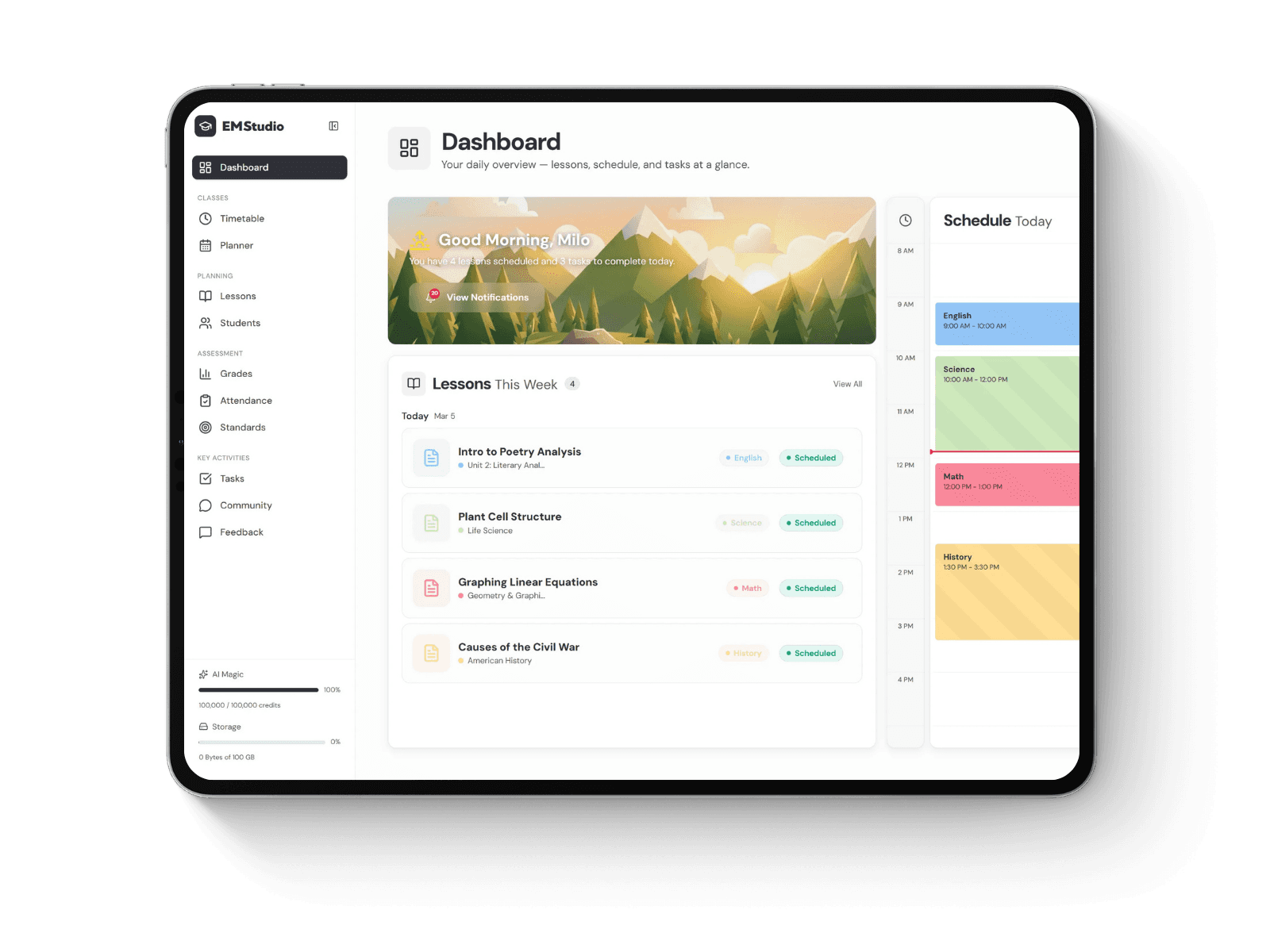
Still grading everything by hand?
EMStudio is a free teaching management app — manage your classes, students, lessons, and more!
Learn More
Table of Contents
What Is an Educational Technologist?
An educational technologist bridges teaching and technology. They design digital learning experiences and train staff to use tools effectively. Unlike IT staff who fix hardware, they focus on how core functions of educational technology improve student outcomes by connecting pedagogy to digital tools.
This role sits between curriculum coordinators and IT technicians. You need both teaching experience and technical fluency. According to the Bureau of Labor Statistics, instructional coordinators earn a median $66,490 annually. K-12 educational technologists typically see $45,000-$55,000 in small rural districts and $75,000-$95,000 in large urban systems with bigger tech budgets.
They don't just install apps. They observe your 4th grade math lesson and suggest specific ways to use digital manipulatives. Then they stick around to make sure it actually works when 28 students log in simultaneously.
Coaching a 9th-grade biology teacher through Nearpod virtual labs during 3rd period.
Evaluating whether to migrate 1,200 students from Canvas to Google Classroom before next semester.
Running a 90-minute PD session on AI writing detection for 40 elementary teachers after school.
Core Responsibilities and Daily Functions
Strategic planning means building three-year technology roadmaps aligned to district literacy goals. You research new educational software implementation options. Tactical support means walking into Room 204 to fix a SMART Board that won't calibrate before 1st grade arrives.
Most districts follow the 70/30 rule. You spend 70% of your week coaching teachers on digital curriculum design and classroom technology integration. The remaining 30% covers troubleshooting hardware or managing learning management systems updates. The best days involve watching a struggling student finally engage because the teacher used a tool you recommended. You become the person who translates between teacher needs and technical capabilities.
How the Role Differs from IT Support and Classroom Teachers
Role | Primary Focus | Required Credentials | Success Metrics |
|---|---|---|---|
Educational Technologist | Learning outcomes | Teaching certification | Student engagement/achievement |
IT Support | Infrastructure uptime | CompTIA A+ | Ticket resolution time |
Classroom Teacher | Direct instruction | State licensure | Individual student growth |
You typically need 3-5 years in the classroom before becoming an educational technologist. Entry-level IT support roles require CompTIA A+ certification and no teaching background. This difference matters when you're explaining why a tool helps 3rd graders learn fractions, not just why it connects to Wi-Fi.
Classroom teachers measure success through individual student growth on standards. IT teams measure uptime and ticket resolution speed. Educational technologists measure whether technology coaching actually changes teacher practice and improves engagement. You sit in the awkward middle where the Wi-Fi must work, but the lesson must also be pedagogically sound.
Why Do Schools Need Educational Technologists?
Schools need educational technologists to ensure expensive technology investments actually improve learning rather than creating digital distractions. These professionals translate technical capabilities into pedagogical outcomes, helping districts avoid significant waste on unused edtech tools by aligning purchases with curriculum goals and teacher capacity.
Without an educational technologist, your district buys laptops that become expensive paperweights. You get learning management systems nobody logs into. Software licenses pile up unused. Technology coaching bridges this execution gap between purchase and practice.
The second digital divide separates schools with devices from those using them effectively. High-poverty schools often match affluent districts in device ratios yet lack the integration expertise to turn hardware into measurable learning gains. An instructional technology specialist closes this gap through targeted classroom technology integration and sustained support.
Medium-sized districts burn through $3–$5 million annually on software licenses alone. Studies show that without dedicated staff overseeing educational software implementation, over half those licenses sit dormant. You pay for seats nobody occupies while teachers revert to proven analog methods.
Strong educational technologists enforce a pedagogy first framework. They require vendors to map tools directly to CCSS, NGSS, or state standards before any pilot begins. This prevents shiny object syndrome and protects your budget from solutions seeking problems.
Bridging the Gap Between Pedagogy and Technology
Your instructional technology specialist uses the SAMR model to evaluate classroom technology integration. This framework measures whether teachers Substitute, Augment, Modify, or Redefine their practice. Most districts stall at Substitution—swapping paper worksheets for PDFs that offer zero pedagogical advancement.
Consider a 5th-grade book report. Substitution means typing the same report in Google Docs. Redefinition looks like students building collaborative Book Creator projects with embedded video interviews of local historians, then publishing to a global audience. Bridging the gap between pedagogy and technology requires moving toward these transformative tasks that reimagine student work.
Driving Systemic Digital Transformation
Sustainable change follows a disciplined cycle:
Year One: Pilot with five early adopters testing digital curriculum design.
Year Two: Expand to grade-level teams with intensive technology coaching.
Year Three: Full rollout with embedded teacher professional development.
Success requires 85% staff buy-in measured quarterly. Your educational technologist deploys Technology Acceptance Model (TAM) surveys to track perceived usefulness. Without this data, educational software implementation fails because teachers abandon tools that disrupt classroom flow.
How Does an Educational Technologist Work?
Educational technologists follow a systematic integration process: assessing teacher needs through classroom observations, selecting evidence-based tools aligned to learning objectives, piloting with small groups, providing job-embedded coaching, and measuring impact on student outcomes. They serve as liaison between curriculum, IT, and administration, translating technical requirements into pedagogical solutions.
They work like instructional coaches who speak fluent IT. Nothing enters classrooms without testing.
The workflow moves through five distinct stages:
Needs Assessment using the PICRAT framework to determine if technology transforms learning or merely digitizes worksheets.
Tool Selection through rubric-based evaluation against learning objectives.
Pilot Implementation spanning 4-6 weeks with volunteer teachers.
Professional Development using just-in-time training rather than one-off workshops.
Evaluation through data analysis of student outcomes and usage patterns.
This process fails when administrators mandate tools without teacher input. Top-down rollouts see 40% adoption rates. Collaborative selection hits 85%. Digital equity matters too. An educational technologist checks if tools work on smartphones for students without home computers.
Day-to-day collaboration happens through Slack or Microsoft Teams channels for quick troubleshooting, shared Google Drive folders for resource libraries, and learning management systems analytics dashboards showing real-time usage data. This infrastructure supports sustainable classroom technology integration.
The Technology Integration Process
The PICRAT framework guides every decision. It measures student engagement (Passive, Interactive, Creative) against task transformation (Replacement, Amplification, Transformation). A PDF worksheet moved to Google Docs? Replacement. Students creating video explanations? Transformation. This rubric prevents wasting money on digital flashcards that add no pedagogical value.
Teachers often overestimate the transformational power of simply putting textbooks on tablets. The framework forces honest conversations about whether students are constructing knowledge or just consuming content.
Pilots run exactly four weeks. Three teachers test the tool while the instructional technologist observes twice weekly. Data collection includes:
Pre/post surveys using the Teacher Technology Integration Survey (TTIS)
Student time-on-task observations measured in 5-minute intervals
Technical error logs tracking platform reliability
This technology coaching catches problems early. If the tool crashes during 3rd period daily, the pilot reveals it before district-wide frustration. Successful pilots lead to integrating EdTech seamlessly into lesson plans rather than awkward add-ons.
Collaborating with Teachers and Administrators
The co-teaching model builds capacity without embarrassment. The technologist models a lesson using Nearpod or Pear Deck for 45 minutes. The teacher watches. Then they switch. The teacher runs the same activity while the technologist observes, providing real-time feedback via silent signals or brief sidebar conversations.
This beats traditional "sit and get" training. Teachers see the tool with their actual students in their actual classroom. When the technologist leaves, the teacher possesses concrete experience, not just theoretical knowledge.
Administrators receive monthly dashboards pulled from learning management systems. These show:
Login frequency by grade level and subject
Assignment submission rates compared to paper-based baselines
Feature utilization heatmaps showing which tools gather dust
This transparency supports implementing educational change effectively. Teachers know the technologist reports data, not gossip. That trust determines whether teacher professional development changes practice or wastes time.
Evaluating and Implementing New Tools
The evaluation starts with privacy. No amount of engagement justifies compromising student data. The technologist verifies FERPA compliance and checks vendor data policies. SSO integration prevents the "password plague" wasting ten minutes of every computer lab session.
Accessibility checks ensure students with visual or motor impairments can navigate menus. Cost analysis includes hidden fees for premium features that unlock essential functionality.
New tools face a six-point checklist before rollout:
Data privacy compliance (FERPA/COPPA)
Single sign-on (SSO) integration capability
Accessibility standards (WCAG 2.1 AA)
Cost per student under $5 annually for supplemental tools
Evidence base meeting ESSA Tier 1-4 levels
Mobile responsiveness for smartphone access
Sunsetting matters as much as onboarding. Tools showing less than 30% teacher utilization after one semester face removal. Negative impacts on instructional time trigger immediate review. When retiring tools, the technologist sends thirty-day notices and archives student work to shared Google Drive folders. Educational software implementation requires exit strategies, not just launch parties. This ruthless pruning keeps digital curriculum design manageable for classroom teachers.

Where Do Educational Technologists Work?
Educational technologists work in diverse settings including K-12 public and private school districts (70% of positions), higher education instructional design centers, corporate training departments, and edtech companies as implementation specialists or learning experience designers. They may work as full-time employees, district-level coordinators, or independent consultants charging $75-$150 hourly. Educational technologists can also work in remote education roles, supporting online learning platforms, schools, and organizations from virtually anywhere.
You will find them in district offices, university basements, and Zoom calls with EdTech companies transforming K-12 classrooms. The role shifts dramatically based on the employer. Each setting demands different skills and offers distinct pay scales.
K-12 School Districts and Individual Schools
District-level coordinators manage classroom technology integration across 15-25 schools. Site-based specialists embed in single sites of 1,800 students.
Staffing ratios: ISTE recommends one educational technologist per 1,000-1,500 students. Budget realities often stretch this to 1:2,500.
Reporting structure: These roles typically answer to the Director of Curriculum and Instruction. This prioritizes teacher professional development over network troubleshooting.
Higher Education Institutions
Centralized Centers for Teaching and Learning support 200+ faculty with generic educational software implementation and digital curriculum design. Embedded models assign specialists to specific colleges like Engineering or Business, requiring deep content knowledge.
Organizational models: Centralized teams serve all colleges. Embedded specialists develop subject-matter expertise for discipline-specific digital tools.
Post-2020 shift: Focus moved to learning management systems course design and hybrid classroom technology training for professors.
EdTech Companies and Private Consulting
Companies like Instructure and Nearpod hire Implementation Managers and Professional Development Specialists. These roles focus on technology coaching to ensure client districts adopt purchased tools.
Corporate titles: Customer Success Manager, Implementation Consultant, and Professional Development Specialist positions focus on classroom technology integration support.
Consulting rates: Independent contractors charge $75-$125/hour for small private schools. Large district contracts command $150-$200/hour for strategic planning.
Educational Technologist vs Instructional Technology Specialist
These titles get swapped on job boards. Sometimes they mean the same thing. Sometimes one outranks the other. The difference usually comes down to scale and signing authority.
Overlapping Responsibilities and Required Skills
Both roles require classroom experience. You cannot coach teachers on classroom technology integration if you have not managed a room of 8th graders during a fire drill.
The shared competency stack includes:
ISTE Standards for Coaches
Administration of learning management systems like Canvas, Schoology, or Blackboard
Adult learning theory—specifically Andragogy
Data privacy regulations including FERPA, COPPA, and GDPR
You apply Constructivism and Connectivism daily. You know teachers learn best by building knowledge collaboratively, not by sitting through PowerPoint lectures about PowerPoint.
Technical skills overlap heavily. Both use Camtasia or WeVideo for tutorials, Adobe Creative Suite or Canva for assets, and basic HTML/CSS to fix broken LMS themes. This work bridges instructional coaching and leadership with IT support.
Neither job is entry-level. Districts require three to five years of teaching before you can manage educational software implementation budgets or lead teacher professional development sessions.
Key Differences in Scope and Decision-Making Authority
An educational technologist thinks district-wide strategy. An instructional technology specialist thinks building-level tactics. One writes the three-year tech roadmap. The other helps Mrs. Johnson get her projector working before 3rd period.
Role | Scope | Budget Authority | Strategic Focus |
|---|---|---|---|
Educational Technologist | District-wide or multi-site | $50k–$500k procurement decisions | 3–5 year tech plans |
Instructional Technology Specialist | Single building or department | $5k–$25k classroom grants | Weekly support and immediate integration |
Budget authority splits them cleanly. The Ed Tech approves $50k to $500k for district-wide educational software implementation. They evaluate vendors, negotiate contracts, and decide which platforms every school will use. The Specialist recommends $5k classroom grants and troubleshoots daily teacher professional development needs. The Ed Tech signs the purchase order. The Specialist writes the grant application.
Career progression depends on your zip code. In the South and Midwest, an Educational Technologist typically outranks the Instructional Technology Specialist and manages multiple Specialists across schools. On the coasts, the titles blur together. Texas and Florida favor "Technology Integration Specialist." California and New York prefer "Digital Learning Coach." In small districts, one person does both jobs under either title.

How to Become an Educational Technologist
Educational Requirements and Relevant Degrees
Start with a bachelor's in Elementary or Secondary Education, Computer Science Education, or Library Science. Computer Information Systems majors can add teaching certification through an alternative route. You need that classroom management foundation before coaching others. Library Science graduates often work as media specialists first, then transition.
Most candidates pursue the master's between years three and five of teaching. Budget $15,000 to $40,000 for tuition and two to three years of part-time study while maintaining your classroom load. The coursework covers instructional design, data analysis, and adult learning theory. Capstone projects usually involve implementing a new technology initiative at your current school.
Three programs dominate the field:
Boise State's M.E.T. runs fully online for approximately $450 per credit hour. The 33-credit program emphasizes technology coaching and classroom technology integration through applied projects rather than theory.
Purdue's M.S. in Learning Design and Technology focuses on educational software implementation and digital curriculum design for K-12 environments. The program requires 35 credits and includes an instructional design internship.
University of Florida's M.Ed. in Curriculum and Instruction with an Educational Technology concentration prepares you for teacher professional development and district-level coordination. Florida residents receive tuition breaks.
Research Educational Technology Master's degree programs to compare admission requirements and practicum options.
Building Experience Through Teaching or Technical Roles
Eighty-five percent of educational technologist and instructional technology specialist job postings require three or more years of certified teaching experience. Substitute teaching or paraprofessional work typically does not qualify. You need your own roster, your own grading system, and the scars from difficult parent-teacher conferences. Teachers can smell an administrator who has not survived a full year of 8th graders.
The smoothest transition involves a hybrid role. Serve as "Tech Lead Teacher" for 40% of your day while maintaining regular classroom teaching for the remaining 60%. You pilot learning management systems with 9th graders, troubleshoot hardware, and model digital curriculum design for hesitant colleagues. This split typically lasts one to two years before you apply for full-time specialist positions. Your admin gets free tech support while you build credibility.
IT professionals can pivot through learning design certificate programs like Quality Matters or OLC. These focus on instructional design rather than pedagogy. You will still need classroom time to learn how seventh graders break technology just by looking at it. Shadow a high school teacher for a full semester before applying.
Professional Certifications and Continued Learning
Certifications validate your expertise to hiring committees. Plan to spend $200 to $500 per exam. Start with ISTE Certification if you want pedagogy focus. It costs around $1,000 and requires a portfolio demonstrating sustained classroom technology integration over several months.
Add Google Certified Trainer status ($15 exam plus application) only after facilitating ten or more workshops independently. For district-level director positions, pursue the Certified Education Technology Leader (CETL) through CoSN. This credential signals you can manage budgets and infrastructure, not just apps. Microsoft offers the Innovative Educator Expert program for those in Windows environments.
Build your portfolio continuously. Document every learning management system rollout, every educational software implementation, and every coaching cycle you lead. Include before-and-after photos of classroom setups, screenshots of student work, and data showing improved outcomes. These carry more weight than the certificates themselves.
This field moves fast. Budget 15 to 20 hours annually for professional development in emerging tech. Current priorities include AI literacy, VR/AR integration, and cybersecurity awareness. An educational technologist who stopped learning in 2019 is already obsolete. Join your state educational technology organization for conference discounts and renewal credits.
How to Succeed as an Educational Technologist?
Successful educational technologists prioritize relationship-building over technical expertise, establishing trust through classroom-embedded support rather than lecture-style training. They maintain a 'teacher-first' mentality, respect instructional time constraints, and develop deep expertise in 3-4 core tools rather than superficial knowledge of dozens, while systematically documenting impact on student learning outcomes.
You will fail if teachers see you as the "tech police." The instructional technologist role burns you out when you chase every new app, lack administrative cover, or work in isolation from curriculum teams. Success requires focusing on human connection first, software second.
Tool fatigue kills adoption faster than poor Wi-Fi. Introducing five platforms in one semester overwhelms teachers and guarantees none stick. Lack of administrative support leaves you exposed when budgets tighten. Isolation from curriculum teams means you handle digital curriculum design alone, creating lessons nobody will teach. Avoid these traps by aligning every tool recommendation to specific instructional goals and securing principal buy-in before rolling out changes.
Measure relationship quality through teacher satisfaction surveys, not just login counts. Track student outcome data by correlating educational software implementation usage analytics with achievement gains. If teachers trust you but scores don't move, adjust the tool. If scores rise but teachers hate the process, the gains won't last. Documentation matters when budget season arrives.
Developing Trust and Relationships with Educators
Show up with coffee, not cables. The "Coffee and Curriculum" strategy means informal 20-minute morning meetings in teachers' lounges where you listen to pain points before proposing solutions. Teachers need to vent about the copy machine before they care about your new app. This generates three times higher adoption rates than formal PD announcements.
Implement structured coaching techniques for building trust with educators through four-week cycles:
Goal-setting conference to identify specific student learning targets
Model lesson where you teach while they observe
Co-teaching session with shared responsibilities
Reflective debrief using Jim Knight's Impact Cycle framework
This embedded support prevents "drive-by" teacher professional development and eliminates the isolation that kills classroom technology integration efforts.
Staying Current with Emerging EdTech Trends
Curate your information diet carefully. Essential sources include:
EdSurge newsletters for daily news
Cult of Pedagogy podcast for practical pedagogy
ISTE's Learning Lab webinars for skill building
The Horizon Report for strategic forecasting
These keep your recommendations grounded in evidence rather than marketing hype.
Develop AI literacy immediately. You must understand Large Language Model limitations, prompt engineering for education, and AI detection tool reliability. Current detection software shows only 60-80% accuracy with significant false positive concerns. Staying current with emerging educational tools requires active participation in ISTE or CoSN, engaging in Twitter #EdTech chats, and presenting at regional conferences to share your classroom findings.

Is Educational Technologist Right for Your Students?
If your teachers are drowning in new tools and your students deserve better than broken links in Google Classroom, you need an educational technologist on your team. They bridge the gap between IT and classroom instruction. Your staff finally gets support that actually helps them teach instead of creating more busywork.
This role isn't about shiny gadgets or buzzwords. It's about choosing stable learning management systems, managing smooth educational software implementation, and providing patient technology coaching when your 4th grade team panics about the new math platform. A good educational technologist turns tech from a daily distraction into just another teaching tool that fades into the background.
You don't need a wizard who speaks in acronyms and vanishes. You need someone who can fix the printer at 8:00 AM, troubleshoot the smartboard by third period, and train your specialists on digital curriculum design by lunch. So: who's currently handling tech headaches in your building—and are they already underwater?
What Is an Educational Technologist?
An educational technologist bridges teaching and technology. They design digital learning experiences and train staff to use tools effectively. Unlike IT staff who fix hardware, they focus on how core functions of educational technology improve student outcomes by connecting pedagogy to digital tools.
This role sits between curriculum coordinators and IT technicians. You need both teaching experience and technical fluency. According to the Bureau of Labor Statistics, instructional coordinators earn a median $66,490 annually. K-12 educational technologists typically see $45,000-$55,000 in small rural districts and $75,000-$95,000 in large urban systems with bigger tech budgets.
They don't just install apps. They observe your 4th grade math lesson and suggest specific ways to use digital manipulatives. Then they stick around to make sure it actually works when 28 students log in simultaneously.
Coaching a 9th-grade biology teacher through Nearpod virtual labs during 3rd period.
Evaluating whether to migrate 1,200 students from Canvas to Google Classroom before next semester.
Running a 90-minute PD session on AI writing detection for 40 elementary teachers after school.
Core Responsibilities and Daily Functions
Strategic planning means building three-year technology roadmaps aligned to district literacy goals. You research new educational software implementation options. Tactical support means walking into Room 204 to fix a SMART Board that won't calibrate before 1st grade arrives.
Most districts follow the 70/30 rule. You spend 70% of your week coaching teachers on digital curriculum design and classroom technology integration. The remaining 30% covers troubleshooting hardware or managing learning management systems updates. The best days involve watching a struggling student finally engage because the teacher used a tool you recommended. You become the person who translates between teacher needs and technical capabilities.
How the Role Differs from IT Support and Classroom Teachers
Role | Primary Focus | Required Credentials | Success Metrics |
|---|---|---|---|
Educational Technologist | Learning outcomes | Teaching certification | Student engagement/achievement |
IT Support | Infrastructure uptime | CompTIA A+ | Ticket resolution time |
Classroom Teacher | Direct instruction | State licensure | Individual student growth |
You typically need 3-5 years in the classroom before becoming an educational technologist. Entry-level IT support roles require CompTIA A+ certification and no teaching background. This difference matters when you're explaining why a tool helps 3rd graders learn fractions, not just why it connects to Wi-Fi.
Classroom teachers measure success through individual student growth on standards. IT teams measure uptime and ticket resolution speed. Educational technologists measure whether technology coaching actually changes teacher practice and improves engagement. You sit in the awkward middle where the Wi-Fi must work, but the lesson must also be pedagogically sound.
Why Do Schools Need Educational Technologists?
Schools need educational technologists to ensure expensive technology investments actually improve learning rather than creating digital distractions. These professionals translate technical capabilities into pedagogical outcomes, helping districts avoid significant waste on unused edtech tools by aligning purchases with curriculum goals and teacher capacity.
Without an educational technologist, your district buys laptops that become expensive paperweights. You get learning management systems nobody logs into. Software licenses pile up unused. Technology coaching bridges this execution gap between purchase and practice.
The second digital divide separates schools with devices from those using them effectively. High-poverty schools often match affluent districts in device ratios yet lack the integration expertise to turn hardware into measurable learning gains. An instructional technology specialist closes this gap through targeted classroom technology integration and sustained support.
Medium-sized districts burn through $3–$5 million annually on software licenses alone. Studies show that without dedicated staff overseeing educational software implementation, over half those licenses sit dormant. You pay for seats nobody occupies while teachers revert to proven analog methods.
Strong educational technologists enforce a pedagogy first framework. They require vendors to map tools directly to CCSS, NGSS, or state standards before any pilot begins. This prevents shiny object syndrome and protects your budget from solutions seeking problems.
Bridging the Gap Between Pedagogy and Technology
Your instructional technology specialist uses the SAMR model to evaluate classroom technology integration. This framework measures whether teachers Substitute, Augment, Modify, or Redefine their practice. Most districts stall at Substitution—swapping paper worksheets for PDFs that offer zero pedagogical advancement.
Consider a 5th-grade book report. Substitution means typing the same report in Google Docs. Redefinition looks like students building collaborative Book Creator projects with embedded video interviews of local historians, then publishing to a global audience. Bridging the gap between pedagogy and technology requires moving toward these transformative tasks that reimagine student work.
Driving Systemic Digital Transformation
Sustainable change follows a disciplined cycle:
Year One: Pilot with five early adopters testing digital curriculum design.
Year Two: Expand to grade-level teams with intensive technology coaching.
Year Three: Full rollout with embedded teacher professional development.
Success requires 85% staff buy-in measured quarterly. Your educational technologist deploys Technology Acceptance Model (TAM) surveys to track perceived usefulness. Without this data, educational software implementation fails because teachers abandon tools that disrupt classroom flow.
How Does an Educational Technologist Work?
Educational technologists follow a systematic integration process: assessing teacher needs through classroom observations, selecting evidence-based tools aligned to learning objectives, piloting with small groups, providing job-embedded coaching, and measuring impact on student outcomes. They serve as liaison between curriculum, IT, and administration, translating technical requirements into pedagogical solutions.
They work like instructional coaches who speak fluent IT. Nothing enters classrooms without testing.
The workflow moves through five distinct stages:
Needs Assessment using the PICRAT framework to determine if technology transforms learning or merely digitizes worksheets.
Tool Selection through rubric-based evaluation against learning objectives.
Pilot Implementation spanning 4-6 weeks with volunteer teachers.
Professional Development using just-in-time training rather than one-off workshops.
Evaluation through data analysis of student outcomes and usage patterns.
This process fails when administrators mandate tools without teacher input. Top-down rollouts see 40% adoption rates. Collaborative selection hits 85%. Digital equity matters too. An educational technologist checks if tools work on smartphones for students without home computers.
Day-to-day collaboration happens through Slack or Microsoft Teams channels for quick troubleshooting, shared Google Drive folders for resource libraries, and learning management systems analytics dashboards showing real-time usage data. This infrastructure supports sustainable classroom technology integration.
The Technology Integration Process
The PICRAT framework guides every decision. It measures student engagement (Passive, Interactive, Creative) against task transformation (Replacement, Amplification, Transformation). A PDF worksheet moved to Google Docs? Replacement. Students creating video explanations? Transformation. This rubric prevents wasting money on digital flashcards that add no pedagogical value.
Teachers often overestimate the transformational power of simply putting textbooks on tablets. The framework forces honest conversations about whether students are constructing knowledge or just consuming content.
Pilots run exactly four weeks. Three teachers test the tool while the instructional technologist observes twice weekly. Data collection includes:
Pre/post surveys using the Teacher Technology Integration Survey (TTIS)
Student time-on-task observations measured in 5-minute intervals
Technical error logs tracking platform reliability
This technology coaching catches problems early. If the tool crashes during 3rd period daily, the pilot reveals it before district-wide frustration. Successful pilots lead to integrating EdTech seamlessly into lesson plans rather than awkward add-ons.
Collaborating with Teachers and Administrators
The co-teaching model builds capacity without embarrassment. The technologist models a lesson using Nearpod or Pear Deck for 45 minutes. The teacher watches. Then they switch. The teacher runs the same activity while the technologist observes, providing real-time feedback via silent signals or brief sidebar conversations.
This beats traditional "sit and get" training. Teachers see the tool with their actual students in their actual classroom. When the technologist leaves, the teacher possesses concrete experience, not just theoretical knowledge.
Administrators receive monthly dashboards pulled from learning management systems. These show:
Login frequency by grade level and subject
Assignment submission rates compared to paper-based baselines
Feature utilization heatmaps showing which tools gather dust
This transparency supports implementing educational change effectively. Teachers know the technologist reports data, not gossip. That trust determines whether teacher professional development changes practice or wastes time.
Evaluating and Implementing New Tools
The evaluation starts with privacy. No amount of engagement justifies compromising student data. The technologist verifies FERPA compliance and checks vendor data policies. SSO integration prevents the "password plague" wasting ten minutes of every computer lab session.
Accessibility checks ensure students with visual or motor impairments can navigate menus. Cost analysis includes hidden fees for premium features that unlock essential functionality.
New tools face a six-point checklist before rollout:
Data privacy compliance (FERPA/COPPA)
Single sign-on (SSO) integration capability
Accessibility standards (WCAG 2.1 AA)
Cost per student under $5 annually for supplemental tools
Evidence base meeting ESSA Tier 1-4 levels
Mobile responsiveness for smartphone access
Sunsetting matters as much as onboarding. Tools showing less than 30% teacher utilization after one semester face removal. Negative impacts on instructional time trigger immediate review. When retiring tools, the technologist sends thirty-day notices and archives student work to shared Google Drive folders. Educational software implementation requires exit strategies, not just launch parties. This ruthless pruning keeps digital curriculum design manageable for classroom teachers.
Where Do Educational Technologists Work?
Educational technologists work in diverse settings including K-12 public and private school districts (70% of positions), higher education instructional design centers, corporate training departments, and edtech companies as implementation specialists or learning experience designers. They may work as full-time employees, district-level coordinators, or independent consultants charging $75-$150 hourly. Educational technologists can also work in remote education roles, supporting online learning platforms, schools, and organizations from virtually anywhere.
You will find them in district offices, university basements, and Zoom calls with EdTech companies transforming K-12 classrooms. The role shifts dramatically based on the employer. Each setting demands different skills and offers distinct pay scales.
K-12 School Districts and Individual Schools
District-level coordinators manage classroom technology integration across 15-25 schools. Site-based specialists embed in single sites of 1,800 students.
Staffing ratios: ISTE recommends one educational technologist per 1,000-1,500 students. Budget realities often stretch this to 1:2,500.
Reporting structure: These roles typically answer to the Director of Curriculum and Instruction. This prioritizes teacher professional development over network troubleshooting.
Higher Education Institutions
Centralized Centers for Teaching and Learning support 200+ faculty with generic educational software implementation and digital curriculum design. Embedded models assign specialists to specific colleges like Engineering or Business, requiring deep content knowledge.
Organizational models: Centralized teams serve all colleges. Embedded specialists develop subject-matter expertise for discipline-specific digital tools.
Post-2020 shift: Focus moved to learning management systems course design and hybrid classroom technology training for professors.
EdTech Companies and Private Consulting
Companies like Instructure and Nearpod hire Implementation Managers and Professional Development Specialists. These roles focus on technology coaching to ensure client districts adopt purchased tools.
Corporate titles: Customer Success Manager, Implementation Consultant, and Professional Development Specialist positions focus on classroom technology integration support.
Consulting rates: Independent contractors charge $75-$125/hour for small private schools. Large district contracts command $150-$200/hour for strategic planning.
Educational Technologist vs Instructional Technology Specialist
These titles get swapped on job boards. Sometimes they mean the same thing. Sometimes one outranks the other. The difference usually comes down to scale and signing authority.
Overlapping Responsibilities and Required Skills
Both roles require classroom experience. You cannot coach teachers on classroom technology integration if you have not managed a room of 8th graders during a fire drill.
The shared competency stack includes:
ISTE Standards for Coaches
Administration of learning management systems like Canvas, Schoology, or Blackboard
Adult learning theory—specifically Andragogy
Data privacy regulations including FERPA, COPPA, and GDPR
You apply Constructivism and Connectivism daily. You know teachers learn best by building knowledge collaboratively, not by sitting through PowerPoint lectures about PowerPoint.
Technical skills overlap heavily. Both use Camtasia or WeVideo for tutorials, Adobe Creative Suite or Canva for assets, and basic HTML/CSS to fix broken LMS themes. This work bridges instructional coaching and leadership with IT support.
Neither job is entry-level. Districts require three to five years of teaching before you can manage educational software implementation budgets or lead teacher professional development sessions.
Key Differences in Scope and Decision-Making Authority
An educational technologist thinks district-wide strategy. An instructional technology specialist thinks building-level tactics. One writes the three-year tech roadmap. The other helps Mrs. Johnson get her projector working before 3rd period.
Role | Scope | Budget Authority | Strategic Focus |
|---|---|---|---|
Educational Technologist | District-wide or multi-site | $50k–$500k procurement decisions | 3–5 year tech plans |
Instructional Technology Specialist | Single building or department | $5k–$25k classroom grants | Weekly support and immediate integration |
Budget authority splits them cleanly. The Ed Tech approves $50k to $500k for district-wide educational software implementation. They evaluate vendors, negotiate contracts, and decide which platforms every school will use. The Specialist recommends $5k classroom grants and troubleshoots daily teacher professional development needs. The Ed Tech signs the purchase order. The Specialist writes the grant application.
Career progression depends on your zip code. In the South and Midwest, an Educational Technologist typically outranks the Instructional Technology Specialist and manages multiple Specialists across schools. On the coasts, the titles blur together. Texas and Florida favor "Technology Integration Specialist." California and New York prefer "Digital Learning Coach." In small districts, one person does both jobs under either title.
How to Become an Educational Technologist
Educational Requirements and Relevant Degrees
Start with a bachelor's in Elementary or Secondary Education, Computer Science Education, or Library Science. Computer Information Systems majors can add teaching certification through an alternative route. You need that classroom management foundation before coaching others. Library Science graduates often work as media specialists first, then transition.
Most candidates pursue the master's between years three and five of teaching. Budget $15,000 to $40,000 for tuition and two to three years of part-time study while maintaining your classroom load. The coursework covers instructional design, data analysis, and adult learning theory. Capstone projects usually involve implementing a new technology initiative at your current school.
Three programs dominate the field:
Boise State's M.E.T. runs fully online for approximately $450 per credit hour. The 33-credit program emphasizes technology coaching and classroom technology integration through applied projects rather than theory.
Purdue's M.S. in Learning Design and Technology focuses on educational software implementation and digital curriculum design for K-12 environments. The program requires 35 credits and includes an instructional design internship.
University of Florida's M.Ed. in Curriculum and Instruction with an Educational Technology concentration prepares you for teacher professional development and district-level coordination. Florida residents receive tuition breaks.
Research Educational Technology Master's degree programs to compare admission requirements and practicum options.
Building Experience Through Teaching or Technical Roles
Eighty-five percent of educational technologist and instructional technology specialist job postings require three or more years of certified teaching experience. Substitute teaching or paraprofessional work typically does not qualify. You need your own roster, your own grading system, and the scars from difficult parent-teacher conferences. Teachers can smell an administrator who has not survived a full year of 8th graders.
The smoothest transition involves a hybrid role. Serve as "Tech Lead Teacher" for 40% of your day while maintaining regular classroom teaching for the remaining 60%. You pilot learning management systems with 9th graders, troubleshoot hardware, and model digital curriculum design for hesitant colleagues. This split typically lasts one to two years before you apply for full-time specialist positions. Your admin gets free tech support while you build credibility.
IT professionals can pivot through learning design certificate programs like Quality Matters or OLC. These focus on instructional design rather than pedagogy. You will still need classroom time to learn how seventh graders break technology just by looking at it. Shadow a high school teacher for a full semester before applying.
Professional Certifications and Continued Learning
Certifications validate your expertise to hiring committees. Plan to spend $200 to $500 per exam. Start with ISTE Certification if you want pedagogy focus. It costs around $1,000 and requires a portfolio demonstrating sustained classroom technology integration over several months.
Add Google Certified Trainer status ($15 exam plus application) only after facilitating ten or more workshops independently. For district-level director positions, pursue the Certified Education Technology Leader (CETL) through CoSN. This credential signals you can manage budgets and infrastructure, not just apps. Microsoft offers the Innovative Educator Expert program for those in Windows environments.
Build your portfolio continuously. Document every learning management system rollout, every educational software implementation, and every coaching cycle you lead. Include before-and-after photos of classroom setups, screenshots of student work, and data showing improved outcomes. These carry more weight than the certificates themselves.
This field moves fast. Budget 15 to 20 hours annually for professional development in emerging tech. Current priorities include AI literacy, VR/AR integration, and cybersecurity awareness. An educational technologist who stopped learning in 2019 is already obsolete. Join your state educational technology organization for conference discounts and renewal credits.
How to Succeed as an Educational Technologist?
Successful educational technologists prioritize relationship-building over technical expertise, establishing trust through classroom-embedded support rather than lecture-style training. They maintain a 'teacher-first' mentality, respect instructional time constraints, and develop deep expertise in 3-4 core tools rather than superficial knowledge of dozens, while systematically documenting impact on student learning outcomes.
You will fail if teachers see you as the "tech police." The instructional technologist role burns you out when you chase every new app, lack administrative cover, or work in isolation from curriculum teams. Success requires focusing on human connection first, software second.
Tool fatigue kills adoption faster than poor Wi-Fi. Introducing five platforms in one semester overwhelms teachers and guarantees none stick. Lack of administrative support leaves you exposed when budgets tighten. Isolation from curriculum teams means you handle digital curriculum design alone, creating lessons nobody will teach. Avoid these traps by aligning every tool recommendation to specific instructional goals and securing principal buy-in before rolling out changes.
Measure relationship quality through teacher satisfaction surveys, not just login counts. Track student outcome data by correlating educational software implementation usage analytics with achievement gains. If teachers trust you but scores don't move, adjust the tool. If scores rise but teachers hate the process, the gains won't last. Documentation matters when budget season arrives.
Developing Trust and Relationships with Educators
Show up with coffee, not cables. The "Coffee and Curriculum" strategy means informal 20-minute morning meetings in teachers' lounges where you listen to pain points before proposing solutions. Teachers need to vent about the copy machine before they care about your new app. This generates three times higher adoption rates than formal PD announcements.
Implement structured coaching techniques for building trust with educators through four-week cycles:
Goal-setting conference to identify specific student learning targets
Model lesson where you teach while they observe
Co-teaching session with shared responsibilities
Reflective debrief using Jim Knight's Impact Cycle framework
This embedded support prevents "drive-by" teacher professional development and eliminates the isolation that kills classroom technology integration efforts.
Staying Current with Emerging EdTech Trends
Curate your information diet carefully. Essential sources include:
EdSurge newsletters for daily news
Cult of Pedagogy podcast for practical pedagogy
ISTE's Learning Lab webinars for skill building
The Horizon Report for strategic forecasting
These keep your recommendations grounded in evidence rather than marketing hype.
Develop AI literacy immediately. You must understand Large Language Model limitations, prompt engineering for education, and AI detection tool reliability. Current detection software shows only 60-80% accuracy with significant false positive concerns. Staying current with emerging educational tools requires active participation in ISTE or CoSN, engaging in Twitter #EdTech chats, and presenting at regional conferences to share your classroom findings.
Is Educational Technologist Right for Your Students?
If your teachers are drowning in new tools and your students deserve better than broken links in Google Classroom, you need an educational technologist on your team. They bridge the gap between IT and classroom instruction. Your staff finally gets support that actually helps them teach instead of creating more busywork.
This role isn't about shiny gadgets or buzzwords. It's about choosing stable learning management systems, managing smooth educational software implementation, and providing patient technology coaching when your 4th grade team panics about the new math platform. A good educational technologist turns tech from a daily distraction into just another teaching tool that fades into the background.
You don't need a wizard who speaks in acronyms and vanishes. You need someone who can fix the printer at 8:00 AM, troubleshoot the smartboard by third period, and train your specialists on digital curriculum design by lunch. So: who's currently handling tech headaches in your building—and are they already underwater?
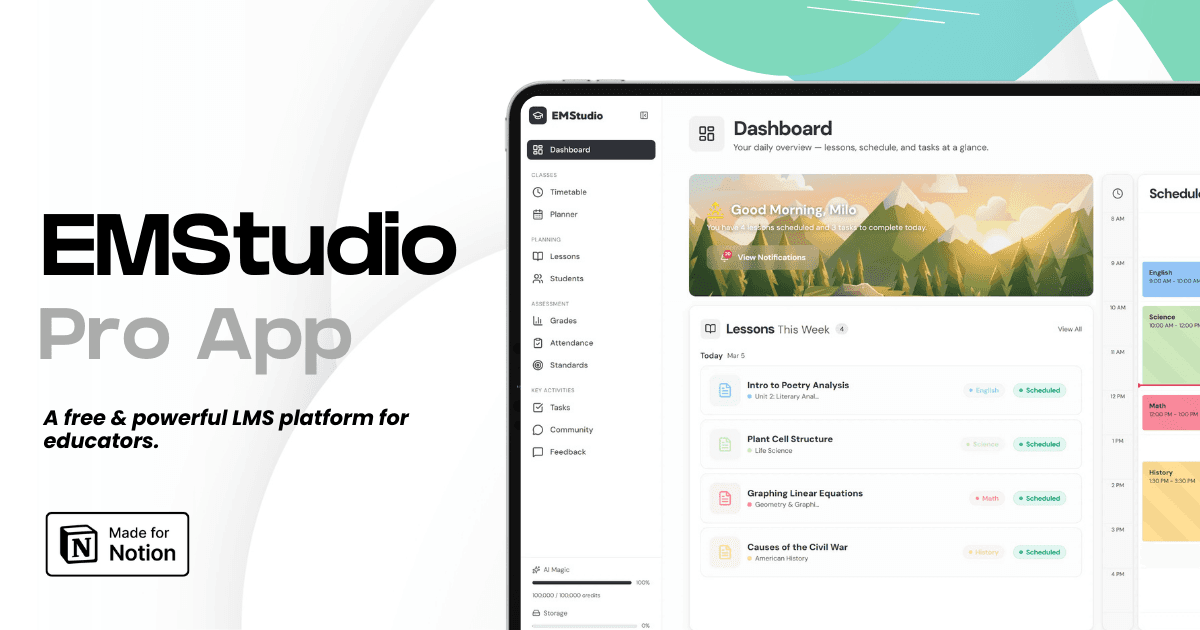
Still grading everything by hand?
EMStudio is a free teaching management app — manage your classes, students, lessons, and more!
Learn More
Still grading everything by hand?
EMStudio is a free teaching management app — manage your classes, students, lessons, and more!
Learn More



Notion4Teachers
Notion templates to simplify administrative tasks and enhance your teaching experience.



2026 Notion4Teachers. All Rights Reserved.
Notion4Teachers
Notion templates to simplify administrative tasks and enhance your teaching experience.
2026 Notion4Teachers. All Rights Reserved.
Notion4Teachers
Notion templates to simplify administrative tasks and enhance your teaching experience.
2026 Notion4Teachers. All Rights Reserved.