
12 Learning Design Certificate Programs for K-12 Educators
12 Learning Design Certificate Programs for K-12 Educators

Article by
Milo
ESL Content Coordinator & Educator
ESL Content Coordinator & Educator
All Posts
The best university-backed options include the University of Illinois Learning Design and Leadership Certificate (graduate credit, 8 months), Harvard's Learning Design Certificate (8-week intensive, UDL focus), and Stanford's Online Instructional Design Program (12 weeks, $995, online/hybrid focus).
You want credentials that mean something to your principal and actually improve your lessons. These three programs deliver university credibility without requiring you to quit your classroom job.
John Hattie's Visible Learning research shows an effect size of 0.59 for direct instruction quality. University programs connect you to this evidence-based practice through systematic foundational ADDIE method of instructional design training. You learn to build lessons that actually move the needle on student achievement instead of just filling time with digital worksheets.
Still grading everything by hand?
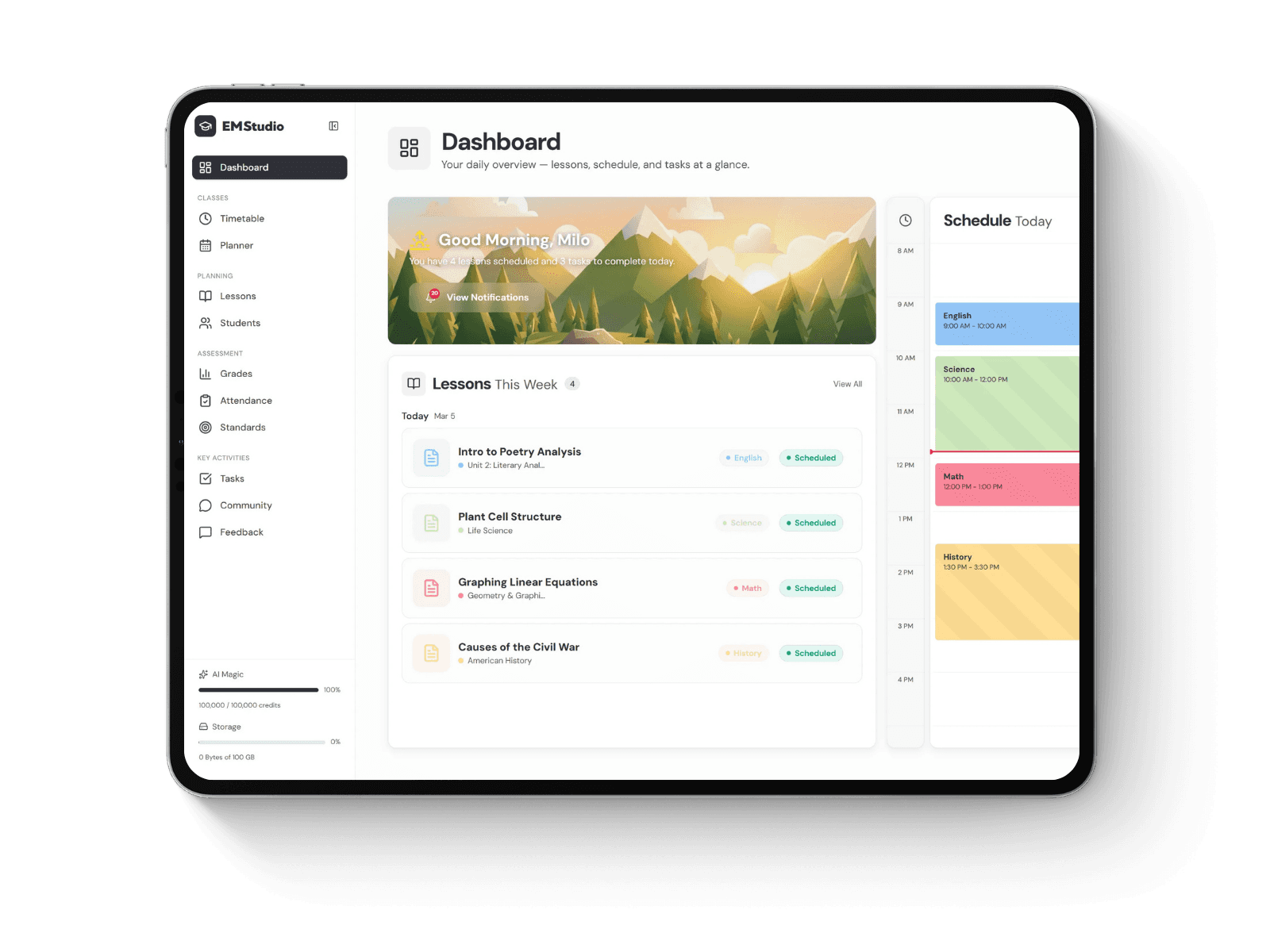
EMStudio is a free teaching management app — manage your classes, students, lessons, and more!
Learn More
Still grading everything by hand?
EMStudio is a free teaching management app — manage your classes, students, lessons, and more!
Learn More
Table of Contents
What Are the Best University-Backed Learning Design Certificates?
Program Name | Duration | Cost | Credit Type | Best For |
|---|---|---|---|---|
University of Illinois Learning Design and Leadership Certificate | 8 months | $8,200 | 12 graduate credits | Teachers seeking master's pathway |
Harvard Learning Design and Technology Certificate | 8 weeks | $2,995 | CEUs | UDL implementation focus |
Stanford Online Instructional Design Certificate | 12 weeks | $995 | CEU certificate | Online/hybrid K-12 builders |
University of Illinois Learning Design and Leadership Certificate
The University of Illinois Learning Design and Leadership Certificate offers a true graduate-level learning design certificate through a rigorous sequence. The program runs 100% online with optional synchronous sessions for real-time collaboration. You need a bachelor's degree minimum to apply, though they prefer candidates with actual classroom experience.
Learning Design and Leadership Foundations: Core theories and leadership frameworks.
Digital Media and Learning: Using technology to support student instruction.
Research Methods: Evaluating educational interventions with data.
Capstone Portfolio: Building your digital portfolio for employers.
Cohorts cap at 25 students, so professors know your name and review your work personally. The eight-month journey culminates in a portfolio that proves your curriculum development capabilities to doctoral programs or district leadership.
Tuition hits $8,200 plus a $250 technology fee. That investment buys you 12 graduate credits you can stack toward a master's degree later. Financial aid exists through College of Education scholarships, and the program is fully GI Bill approved for veterans transitioning to instructional design roles.
Harvard Graduate School of Education Learning Design Certificate
Harvard's program is Professional Education, not degree-bearing, taught by Dr. Joe Blatt and the HGSE team. The eight-week intensive focuses heavily on Universal Design for Learning implementation across all subject areas. You complete three hands-on redesign projects where peers review your actual lesson designs and give structured feedback.
The time commitment runs 8-10 hours weekly. Live sessions meet Tuesdays from 12-1pm ET, but everything gets recorded for asynchronous access if your schedule conflicts. You earn CEUs rather than graduate credit, though you do gain Harvard Alumni Association access upon completion.
The $2,995 fee includes all materials and readings. You study educational technology through the lens of accessibility and inclusion rather than flashy apps. This instructional design certificate emphasizes practical UDL application that helps your struggling students access grade-level content.
Stanford Online Instructional Design Certificate Program
Stanford's program spans four modules over twelve weeks using d.school design thinking methodology: Design Thinking, Learning Theory, Technology Integration, and Assessment Design. You commit 4-6 hours weekly specifically targeting online and hybrid K-12 environments. Each module pushes you to prototype real solutions for your actual classroom.
You get hands-on with Canvas LMS administration basics, Articulate 360 (they provide the free trial), and Google Workspace for Education. The final deliverable is a complete 3-unit online module ready for immediate implementation with your students. This focuses on instructional technology you can deploy tomorrow rather than theoretical frameworks.
At $995, this CEU certificate costs less than most district conference trips. You learn e-learning authoring tools without the graduate school price tag or admissions hassle. The program assumes you are currently teaching and want to convert existing face-to-face lessons to effective digital formats.
Which Learning Design Certificates Offer the Best Value for Teachers?
For best value, Coursera's MasterTrack offers graduate credit at $2,000-4,000 with Master's pathway potential. edX MicroMasters costs under $1,600 and stacks to degrees. Teachers College Columbia provides Ivy League credentials at $6,210 for 12 credits.
Value isn't just the sticker price. You need credits that transfer to salary lanes and stack toward degrees. Review the fundamentals of digital learning design first to ensure you're targeting the right credential. At the same time, many educators also explore opportunities like how to qualify for a scholarship to reduce the financial burden of these programs and make higher education more accessible.
Cost per credit hour tells part of the story. Coursera runs $400-600 per credit through University of Illinois. edX MicroMasters breaks down to roughly $150 per credit. Columbia sits at $600 per credit but carries the Ivy League weight.
Stackability separates the resume padding from the career builders. Both Coursera and edX pathways guarantee admission to full Master's programs. Columbia's certificate stands alone—valuable, but it won't reduce your future graduate tuition.
Career ROI depends on your district's pay scale. Check if the career development opportunities for educators in your contract require regional accreditation.
Before enrolling, verify these details with your HR office:
Regional accreditation status (WASC, MSCHE, or NEASC).
District acceptance for salary lane advancement.
Transferability to Master's programs if you continue later.
Watch for failure modes. That $49 Coursera certificate without credit won't bump you up a salary lane. Non-credit certificates look nice on LinkedIn but districts want transcripts from regionally accredited institutions. When evaluating any learning design certificate, call your HR office first.
Coursera Instructional Design MasterTrack Certificate
The MasterTrack runs 4.5 months with four courses: Learning Technologies, Foundations of ID, Learning Sciences, and a Capstone. Expect 4-6 hours weekly. The cohort moves together through discussion forums, and financial aid covers 50-100% for qualifying teachers.
You build actual projects using Articulate Storyline. I watched a 4th-grade teacher in my cohort build a fractions module that she deployed the following Monday. That's immediate classroom application, not theory.
The credit transfer is the real draw. You earn 9 graduate credits with guaranteed admission to UIUC's Master's in Education Policy, Organization and Leadership. Make sure you understand the fundamentals before enrolling, as the pace moves quickly.
edX MicroMasters in Learning Design and Technology
The MicroMasters from University of Maryland spans 8 months with four graduate courses. Each runs 4-6 weeks with weekly deadlines, covering Instructional Design using the Dick & Carey model, Learning Technologies, Media Selection, and a Capstone.
The program emphasizes systematic design of instruction. You analyze actual curriculum problems and propose evidence-based solutions. One middle school science teacher I know used her capstone to redesign her district's lab safety training, replacing a 40-page PDF with interactive scenarios.
Stackability makes this budget-friendly. The 12 credits transfer directly to UMD's Master's in Learning Design and Technology. Full program cost sits around $25,000, but starting with the MicroMasters lets you test the rigor before committing to the full degree.
Teachers College Columbia University Certificate in Learning Design
Teachers College Columbia offers a 12-credit certificate spanning three semesters. The $6,210 tuition covers Curriculum Theory, Instructional Design for K-12, Digital Media and Learning, and Assessment and Evaluation. The hybrid format requires two weekend intensives per semester, either in NYC or virtual.
This program targets working teachers specifically. The fieldwork component places you in NYC schools—or matches you with virtual equivalents—to redesign actual curriculum under supervision. You're not just learning theory; you're practicing on real students with expert feedback.
Admission requires a Bachelor's degree and 3.0 GPA. Teaching certification is preferred but not required. Factor in $495 in fees. Unlike the MOOC options, this certificate is terminal—it doesn't stack into a Master's, but the Columbia name carries weight in independent and international schools.

Self-Paced Learning Design Certificates for Busy Educators
You don't need to quit teaching to earn a learning design certificate or instructional design certificate online. These three programs respect your contract hours while building real educational technology skills. Each trades something—money for flexibility, or structure for speed—so pick based on your actual calendar and career goals.
ATD Instructional Design Certificate
The Association for Talent Development runs a tight ship. You choose between Live Online (four consecutive Fridays, 9am–1pm ET) or a two-day in-person intensive. Both cover the ADDIE framework with heavy emphasis on the Analysis phase. Expect pre-work and between-session assignments.
You earn 1.4 CEUs and receive three practical deliverables:
Training Needs Assessment template
Lesson Plan Framework
Evaluation Rubric
Price stings: $1,295 for members, $1,495 for non-members, and that membership costs $299 annually. Use these documents in your current classroom or district curriculum development work immediately. The templates alone justify the cost if you lead professional development.
The downside? Synchronous attendance is mandatory. If you miss a Friday session, you forfeit the certificate. No recording catch-ups allowed. Best fit: district PD leads or coaches who can block their calendars and need accredited hours for salary advancement. Skip if your principal schedules meetings on short notice.
LinkedIn Learning Instructional Design Certificate
For the price of two lattes per month ($29.99), you get access to an 11-course path totaling 20 hours. The sequence includes:
Instructional Design Foundations
Storyline 360 Essential Training
Captivate Essentials
Visual Design Basics
Gamification
You move at your own speed through videos and downloadable practice files. New courses drop regularly, keeping the library fresh. Pause when a lesson hits too close to your current classroom chaos.
You download practice files and work through e-learning authoring tools at midnight if that's when your grading is done. Completion hinges on watching 90% of each video—no graded assignments, no peer feedback. You receive a certificate of completion, not academic credit, so check with your district before counting these toward renewal hours. Some districts accept these hours; others don't.
This path suits teachers testing the instructional design waters. Build a productive online learning routine around your prep period. It's the cheapest way to learn if you actually enjoy building digital lessons. Skip it if you need accountability, portfolio pieces, or help with universal design for learning implementation.
IDOL Courses Academy Certificate Program
IDOL Courses Academy knows its audience: teachers ready to leave the classroom for corporate instructional technology roles. The program costs $1,497 upfront (or three payments of $599) and offers two tracks—an eight-week guided cohort with weekly coaching calls, or full self-paced access for one year. Most teachers choose the cohort for the accountability.
Eight modules cover andragogy (adult learning theory), Storyline 360, UX basics, LMS administration, and freelancing. The "Build Your Portfolio" component requires three sample projects:
eLearning module
Job aid
Video tutorial
Templates are provided, and the private community critiques your work. This beats staring at a blank screen wondering what corporate ID actually looks like day-to-day. Graduates often mention the job search templates as the real value.
You keep lifetime access to materials and job placement support. No academic credit here—this is purely industry-focused. Ideal for educators committed to the career switch who need finished portfolio pieces to show hiring managers. Not for teachers who want to stay in K-12.
Learning Design Certificates with Strong Technology Integration
These learning design certificate programs prioritize building over planning. You will export SCORM packages, compile Unity projects, and manage Canvas instances. Before enrolling, verify your district allows installation of e-learning authoring tools on work devices. Many K-12 networks block executable installations, preventing you from completing assignments without a personal machine.
University of Colorado Boulder eLearning Design Lab Certificate
This nine-month program costs $7,500 and specializes in learning design and technology for immersive K-12 environments. You complete three intensive courses covering serious game design, AR/VR in education, and learning analytics. The curriculum prepares you for Unity certification using the Unity Learn platform and a free Unity Personal license. No prior coding experience is required to begin the sequence.
The program focuses specifically on game-based learning mechanics and immersive pedagogy. You will design interaction loops, assessment triggers, and feedback systems that function within three-dimensional space. This represents a significant leap from traditional slide-based authoring into spatial computing design.
You do not need a Meta Quest 2 headset, though the program recommends one for authentic user testing. An emulator suffices for development and debugging. Your culminating project requires designing a complete VR science lab experience targeting grades 6-8. This demands functional 3D modeling, scene lighting, and basic C# scripting for physics interactions.
Technology Skills Gained:
VR authoring with Unity and C# scripting fundamentals.
3D asset integration and optimization for educational simulations.
Learning analytics dashboard configuration and data interpretation.
User experience testing in head-mounted displays.
Warning: Unity requires significant processing power and administrator rights to install. If your district locks down teacher laptops, you will need a personal machine capable of running game engines. Verify these technical requirements before paying tuition.
Royal Roads University Learning and Technology Certificate
This Canadian program runs six months fully online and costs approximately $2,800 USD ($3,800 CAD). It focuses on practical instructional technology implementation across both K-12 and higher education contexts. Two comprehensive courses cover foundational learning theory and the systematic design of digital learning environments. All coursework is asynchronous with structured instructor feedback delivered within 48 hours.
The program emphasizes creating accessible content using universal design for learning principles. You master H5P interactive video creation, Pressbooks OER textbook development, and advanced Canvas administration including LTI tool integration. The curriculum specifically addresses mobile learning design for BYOD environments where students use personal devices. International students are welcome; no visa is required for fully online participation.
Technology Skills Gained:
LMS administration for Canvas and D2L Brightspace.
Mobile learning design for BYOD classroom environments.
Open educational resource creation using Pressbooks.
Advanced H5P interactive content development.
The Bureau of Labor Statistics reports Instructional Coordinators earn a median $66,490 annually, compared to $61,810 for secondary teachers. Districts frequently pay 10-15% salary premiums for specialists who complete instructional design courses online and gain certified LMS administration expertise.
University of Wisconsin-Madison Capstone Certificate in Learning Design
This rigorous 12-month program delivers 15 graduate credits fully transferable to a Master's degree at UW-Madison. Tuition is $8,500 for the complete sequence. The five-course progression includes Foundations of Distance Education, Instructional Design, Multimedia for Learning, Authoring Tools, and a final Capstone project. This pathway aligns naturally with educational technology master's degree programs for educators considering continued study.
You receive six-month licenses for Articulate 360 and Adobe Captivate, representing a $1,300 software value included in tuition. The curriculum emphasizes backward design principles from Wiggins and McTighe alongside strict WCAG 2.1 accessibility compliance. You will build for user-centered design for educational applications following Section 508 federal standards.
Technology Skills Gained:
Advanced Storyline 360 variables, states, and triggers.
Adobe Captivate responsive design for multi-device deployment.
Section 508 and WCAG 2.1 compliance testing.
Multimedia production for accessibility standards.
Verify your district allows installation of Articulate and Captivate before enrolling. Some K-12 networks block these instructional technology programs. Ensure you receive the provided software licenses, as purchasing them independently adds significant cost and may delay your curriculum development progress.

How Do You Choose the Right Learning Design Certificate?
Choose based on three criteria: your current skill gaps (tech vs. pedagogy), time availability (5 vs. 20 hours weekly), and career goals. Teachers seeking promotion should prioritize graduate credit from regionally accredited universities; career changers should choose portfolio-building programs.
Stop browsing flashy websites. Start with honest self-assessment and a notebook. The wrong certificate wastes money and weekends.
Map your decision like a branching quiz.
Current role: Classroom teacher vs. Aspiring ID?
Budget: Under $2K vs. $2K–$8K vs. $8K+?
Time: 5hrs/week vs. 20hrs/week?
Goal: Promotion vs. Career change vs. Skill building?
Rate yourself 1–5 on four competencies: curriculum development, multimedia creation, LMS administration, and assessment design. If you score below 3 on multimedia, choose tech-heavy certificates covering e-learning authoring tools. If curriculum mapping is your weak spot, pick university-backed programs with strong instructional technology foundations.
Verify credentials before paying. Check for regional accreditation—WASC, MSCHE, or SACS—if you need salary lane advancement. Look for CAEP accreditation for education-specific programs. Industry recognition from ATD or ISTE helps for corporate pivots. Avoid "certificates" that are just completion badges without rigorous assessment.
Match schedules to your reality. Teaching full-time with three preps? Choose self-paced options requiring five hours weekly. Have summer free? An intensive four-week institute works. Planning a Master's later? Pick graduate credit options now, even if they take longer. Your teacher career advancement guide should include timeline mapping.
Watch for three common errors. Don't choose based on university brand alone without checking if the curriculum covers universal design for learning or your specific gaps. Verify software requirements—some programs require Macs or specific subscriptions. Always confirm district salary lane acceptance before enrolling; not all online universities for working professionals qualify.
Research suggests adult learners succeed in self-paced formats only with high baseline self-efficacy. Otherwise, structured cohorts show 40% higher completion rates. Be honest about your procrastination habits.
Assess Your Current Skills and Career Goals
Start with a Skills Gap Analysis. List your current competencies—classroom management, subject expertise, differentiated instruction—against needed ID skills like storyboarding, LMS administration, and rubric design. Draw lines between matches and gaps.
Match gaps to program strengths. If your multimedia development scores low, find certificates heavy on e-learning authoring tools and video editing. Weak on assessment architecture? Choose university-backed programs with deep curriculum development coursework.
Map goals to pathways. Curriculum Specialist roles require university certificates with graduate credit that move you up salary lanes. Corporate ID transitions demand portfolio-focused bootcamps where you build real modules. Technology Coach positions need certificates emphasizing educational technology integration and coaching frameworks.
Compare Accreditation and University Partnerships
Know your accreditation types. Regional accreditation—WASC, MSCHE, SACS, or NECC—certifies institutional quality and usually qualifies for district salary lane changes. National accreditation through DEAC works for distance learning but check district policies first. Programmatic accreditation like CAEP specifically validates teacher preparation quality.
For salary lane movement, usually only regionally-accredited graduate credits count. Verify before enrolling.
Run the verification checklist. Confirm the .edu domain legitimacy. Cross-reference claims against the CHEA database. Ask for transfer agreements with local universities. Check if the learning design certificate appears in your district's pre-approved course list. Some online universities for working professionals offer great marketing but lack regional backing.
Evaluate Time Commitment and Flexibility
Calculate the true cost in hours. Synchronous programs demand fixed calendar commitments—every Tuesday 7–9 PM regardless of parent conferences or grading piles. Asynchronous flexibility still requires 5–10 hours of disciplined weekly effort; the work doesn't grade itself.
Plan around the school calendar. Summer intensives require full-time dedication for four weeks but finish fast. Semester-long models spread work part-time across sixteen weeks. Self-paced options range three to twelve months.
Avoid starting intensive programs during state testing windows or March Madness busy seasons. If you teach full-time with three preps, the five-hour weekly self-paced track prevents burnout. If you have summers free and high self-efficacy, the intensive four-week structure gets you credentialed before August.

Key Takeaways for Learning Design Certificate
Your learning design certificate needs to match your actual classroom goals, not just look good on paper. University-backed programs build serious muscle in curriculum development and theory, while self-paced options get you building with e-learning authoring tools before the semester ends. Price matters less than implementation—an affordable certificate you actually use beats an expensive one that sits in a drawer.
Choose based on your educational technology timeline. If your district just rolled out new platforms, pick the certificate that teaches those specific tools. Look for programs with portfolio projects, not just video lectures. You need artifacts you can show your principal or use in tomorrow's lesson.
Stop researching and pick one. Finish it. Apply it Monday morning. Your students care more about the quality of your new activities than they do about the university logo on your wall, and that's what actually matters.
What Are the Best University-Backed Learning Design Certificates?
Program Name | Duration | Cost | Credit Type | Best For |
|---|---|---|---|---|
University of Illinois Learning Design and Leadership Certificate | 8 months | $8,200 | 12 graduate credits | Teachers seeking master's pathway |
Harvard Learning Design and Technology Certificate | 8 weeks | $2,995 | CEUs | UDL implementation focus |
Stanford Online Instructional Design Certificate | 12 weeks | $995 | CEU certificate | Online/hybrid K-12 builders |
University of Illinois Learning Design and Leadership Certificate
The University of Illinois Learning Design and Leadership Certificate offers a true graduate-level learning design certificate through a rigorous sequence. The program runs 100% online with optional synchronous sessions for real-time collaboration. You need a bachelor's degree minimum to apply, though they prefer candidates with actual classroom experience.
Learning Design and Leadership Foundations: Core theories and leadership frameworks.
Digital Media and Learning: Using technology to support student instruction.
Research Methods: Evaluating educational interventions with data.
Capstone Portfolio: Building your digital portfolio for employers.
Cohorts cap at 25 students, so professors know your name and review your work personally. The eight-month journey culminates in a portfolio that proves your curriculum development capabilities to doctoral programs or district leadership.
Tuition hits $8,200 plus a $250 technology fee. That investment buys you 12 graduate credits you can stack toward a master's degree later. Financial aid exists through College of Education scholarships, and the program is fully GI Bill approved for veterans transitioning to instructional design roles.
Harvard Graduate School of Education Learning Design Certificate
Harvard's program is Professional Education, not degree-bearing, taught by Dr. Joe Blatt and the HGSE team. The eight-week intensive focuses heavily on Universal Design for Learning implementation across all subject areas. You complete three hands-on redesign projects where peers review your actual lesson designs and give structured feedback.
The time commitment runs 8-10 hours weekly. Live sessions meet Tuesdays from 12-1pm ET, but everything gets recorded for asynchronous access if your schedule conflicts. You earn CEUs rather than graduate credit, though you do gain Harvard Alumni Association access upon completion.
The $2,995 fee includes all materials and readings. You study educational technology through the lens of accessibility and inclusion rather than flashy apps. This instructional design certificate emphasizes practical UDL application that helps your struggling students access grade-level content.
Stanford Online Instructional Design Certificate Program
Stanford's program spans four modules over twelve weeks using d.school design thinking methodology: Design Thinking, Learning Theory, Technology Integration, and Assessment Design. You commit 4-6 hours weekly specifically targeting online and hybrid K-12 environments. Each module pushes you to prototype real solutions for your actual classroom.
You get hands-on with Canvas LMS administration basics, Articulate 360 (they provide the free trial), and Google Workspace for Education. The final deliverable is a complete 3-unit online module ready for immediate implementation with your students. This focuses on instructional technology you can deploy tomorrow rather than theoretical frameworks.
At $995, this CEU certificate costs less than most district conference trips. You learn e-learning authoring tools without the graduate school price tag or admissions hassle. The program assumes you are currently teaching and want to convert existing face-to-face lessons to effective digital formats.
Which Learning Design Certificates Offer the Best Value for Teachers?
For best value, Coursera's MasterTrack offers graduate credit at $2,000-4,000 with Master's pathway potential. edX MicroMasters costs under $1,600 and stacks to degrees. Teachers College Columbia provides Ivy League credentials at $6,210 for 12 credits.
Value isn't just the sticker price. You need credits that transfer to salary lanes and stack toward degrees. Review the fundamentals of digital learning design first to ensure you're targeting the right credential. At the same time, many educators also explore opportunities like how to qualify for a scholarship to reduce the financial burden of these programs and make higher education more accessible.
Cost per credit hour tells part of the story. Coursera runs $400-600 per credit through University of Illinois. edX MicroMasters breaks down to roughly $150 per credit. Columbia sits at $600 per credit but carries the Ivy League weight.
Stackability separates the resume padding from the career builders. Both Coursera and edX pathways guarantee admission to full Master's programs. Columbia's certificate stands alone—valuable, but it won't reduce your future graduate tuition.
Career ROI depends on your district's pay scale. Check if the career development opportunities for educators in your contract require regional accreditation.
Before enrolling, verify these details with your HR office:
Regional accreditation status (WASC, MSCHE, or NEASC).
District acceptance for salary lane advancement.
Transferability to Master's programs if you continue later.
Watch for failure modes. That $49 Coursera certificate without credit won't bump you up a salary lane. Non-credit certificates look nice on LinkedIn but districts want transcripts from regionally accredited institutions. When evaluating any learning design certificate, call your HR office first.
Coursera Instructional Design MasterTrack Certificate
The MasterTrack runs 4.5 months with four courses: Learning Technologies, Foundations of ID, Learning Sciences, and a Capstone. Expect 4-6 hours weekly. The cohort moves together through discussion forums, and financial aid covers 50-100% for qualifying teachers.
You build actual projects using Articulate Storyline. I watched a 4th-grade teacher in my cohort build a fractions module that she deployed the following Monday. That's immediate classroom application, not theory.
The credit transfer is the real draw. You earn 9 graduate credits with guaranteed admission to UIUC's Master's in Education Policy, Organization and Leadership. Make sure you understand the fundamentals before enrolling, as the pace moves quickly.
edX MicroMasters in Learning Design and Technology
The MicroMasters from University of Maryland spans 8 months with four graduate courses. Each runs 4-6 weeks with weekly deadlines, covering Instructional Design using the Dick & Carey model, Learning Technologies, Media Selection, and a Capstone.
The program emphasizes systematic design of instruction. You analyze actual curriculum problems and propose evidence-based solutions. One middle school science teacher I know used her capstone to redesign her district's lab safety training, replacing a 40-page PDF with interactive scenarios.
Stackability makes this budget-friendly. The 12 credits transfer directly to UMD's Master's in Learning Design and Technology. Full program cost sits around $25,000, but starting with the MicroMasters lets you test the rigor before committing to the full degree.
Teachers College Columbia University Certificate in Learning Design
Teachers College Columbia offers a 12-credit certificate spanning three semesters. The $6,210 tuition covers Curriculum Theory, Instructional Design for K-12, Digital Media and Learning, and Assessment and Evaluation. The hybrid format requires two weekend intensives per semester, either in NYC or virtual.
This program targets working teachers specifically. The fieldwork component places you in NYC schools—or matches you with virtual equivalents—to redesign actual curriculum under supervision. You're not just learning theory; you're practicing on real students with expert feedback.
Admission requires a Bachelor's degree and 3.0 GPA. Teaching certification is preferred but not required. Factor in $495 in fees. Unlike the MOOC options, this certificate is terminal—it doesn't stack into a Master's, but the Columbia name carries weight in independent and international schools.
Self-Paced Learning Design Certificates for Busy Educators
You don't need to quit teaching to earn a learning design certificate or instructional design certificate online. These three programs respect your contract hours while building real educational technology skills. Each trades something—money for flexibility, or structure for speed—so pick based on your actual calendar and career goals.
ATD Instructional Design Certificate
The Association for Talent Development runs a tight ship. You choose between Live Online (four consecutive Fridays, 9am–1pm ET) or a two-day in-person intensive. Both cover the ADDIE framework with heavy emphasis on the Analysis phase. Expect pre-work and between-session assignments.
You earn 1.4 CEUs and receive three practical deliverables:
Training Needs Assessment template
Lesson Plan Framework
Evaluation Rubric
Price stings: $1,295 for members, $1,495 for non-members, and that membership costs $299 annually. Use these documents in your current classroom or district curriculum development work immediately. The templates alone justify the cost if you lead professional development.
The downside? Synchronous attendance is mandatory. If you miss a Friday session, you forfeit the certificate. No recording catch-ups allowed. Best fit: district PD leads or coaches who can block their calendars and need accredited hours for salary advancement. Skip if your principal schedules meetings on short notice.
LinkedIn Learning Instructional Design Certificate
For the price of two lattes per month ($29.99), you get access to an 11-course path totaling 20 hours. The sequence includes:
Instructional Design Foundations
Storyline 360 Essential Training
Captivate Essentials
Visual Design Basics
Gamification
You move at your own speed through videos and downloadable practice files. New courses drop regularly, keeping the library fresh. Pause when a lesson hits too close to your current classroom chaos.
You download practice files and work through e-learning authoring tools at midnight if that's when your grading is done. Completion hinges on watching 90% of each video—no graded assignments, no peer feedback. You receive a certificate of completion, not academic credit, so check with your district before counting these toward renewal hours. Some districts accept these hours; others don't.
This path suits teachers testing the instructional design waters. Build a productive online learning routine around your prep period. It's the cheapest way to learn if you actually enjoy building digital lessons. Skip it if you need accountability, portfolio pieces, or help with universal design for learning implementation.
IDOL Courses Academy Certificate Program
IDOL Courses Academy knows its audience: teachers ready to leave the classroom for corporate instructional technology roles. The program costs $1,497 upfront (or three payments of $599) and offers two tracks—an eight-week guided cohort with weekly coaching calls, or full self-paced access for one year. Most teachers choose the cohort for the accountability.
Eight modules cover andragogy (adult learning theory), Storyline 360, UX basics, LMS administration, and freelancing. The "Build Your Portfolio" component requires three sample projects:
eLearning module
Job aid
Video tutorial
Templates are provided, and the private community critiques your work. This beats staring at a blank screen wondering what corporate ID actually looks like day-to-day. Graduates often mention the job search templates as the real value.
You keep lifetime access to materials and job placement support. No academic credit here—this is purely industry-focused. Ideal for educators committed to the career switch who need finished portfolio pieces to show hiring managers. Not for teachers who want to stay in K-12.
Learning Design Certificates with Strong Technology Integration
These learning design certificate programs prioritize building over planning. You will export SCORM packages, compile Unity projects, and manage Canvas instances. Before enrolling, verify your district allows installation of e-learning authoring tools on work devices. Many K-12 networks block executable installations, preventing you from completing assignments without a personal machine.
University of Colorado Boulder eLearning Design Lab Certificate
This nine-month program costs $7,500 and specializes in learning design and technology for immersive K-12 environments. You complete three intensive courses covering serious game design, AR/VR in education, and learning analytics. The curriculum prepares you for Unity certification using the Unity Learn platform and a free Unity Personal license. No prior coding experience is required to begin the sequence.
The program focuses specifically on game-based learning mechanics and immersive pedagogy. You will design interaction loops, assessment triggers, and feedback systems that function within three-dimensional space. This represents a significant leap from traditional slide-based authoring into spatial computing design.
You do not need a Meta Quest 2 headset, though the program recommends one for authentic user testing. An emulator suffices for development and debugging. Your culminating project requires designing a complete VR science lab experience targeting grades 6-8. This demands functional 3D modeling, scene lighting, and basic C# scripting for physics interactions.
Technology Skills Gained:
VR authoring with Unity and C# scripting fundamentals.
3D asset integration and optimization for educational simulations.
Learning analytics dashboard configuration and data interpretation.
User experience testing in head-mounted displays.
Warning: Unity requires significant processing power and administrator rights to install. If your district locks down teacher laptops, you will need a personal machine capable of running game engines. Verify these technical requirements before paying tuition.
Royal Roads University Learning and Technology Certificate
This Canadian program runs six months fully online and costs approximately $2,800 USD ($3,800 CAD). It focuses on practical instructional technology implementation across both K-12 and higher education contexts. Two comprehensive courses cover foundational learning theory and the systematic design of digital learning environments. All coursework is asynchronous with structured instructor feedback delivered within 48 hours.
The program emphasizes creating accessible content using universal design for learning principles. You master H5P interactive video creation, Pressbooks OER textbook development, and advanced Canvas administration including LTI tool integration. The curriculum specifically addresses mobile learning design for BYOD environments where students use personal devices. International students are welcome; no visa is required for fully online participation.
Technology Skills Gained:
LMS administration for Canvas and D2L Brightspace.
Mobile learning design for BYOD classroom environments.
Open educational resource creation using Pressbooks.
Advanced H5P interactive content development.
The Bureau of Labor Statistics reports Instructional Coordinators earn a median $66,490 annually, compared to $61,810 for secondary teachers. Districts frequently pay 10-15% salary premiums for specialists who complete instructional design courses online and gain certified LMS administration expertise.
University of Wisconsin-Madison Capstone Certificate in Learning Design
This rigorous 12-month program delivers 15 graduate credits fully transferable to a Master's degree at UW-Madison. Tuition is $8,500 for the complete sequence. The five-course progression includes Foundations of Distance Education, Instructional Design, Multimedia for Learning, Authoring Tools, and a final Capstone project. This pathway aligns naturally with educational technology master's degree programs for educators considering continued study.
You receive six-month licenses for Articulate 360 and Adobe Captivate, representing a $1,300 software value included in tuition. The curriculum emphasizes backward design principles from Wiggins and McTighe alongside strict WCAG 2.1 accessibility compliance. You will build for user-centered design for educational applications following Section 508 federal standards.
Technology Skills Gained:
Advanced Storyline 360 variables, states, and triggers.
Adobe Captivate responsive design for multi-device deployment.
Section 508 and WCAG 2.1 compliance testing.
Multimedia production for accessibility standards.
Verify your district allows installation of Articulate and Captivate before enrolling. Some K-12 networks block these instructional technology programs. Ensure you receive the provided software licenses, as purchasing them independently adds significant cost and may delay your curriculum development progress.
How Do You Choose the Right Learning Design Certificate?
Choose based on three criteria: your current skill gaps (tech vs. pedagogy), time availability (5 vs. 20 hours weekly), and career goals. Teachers seeking promotion should prioritize graduate credit from regionally accredited universities; career changers should choose portfolio-building programs.
Stop browsing flashy websites. Start with honest self-assessment and a notebook. The wrong certificate wastes money and weekends.
Map your decision like a branching quiz.
Current role: Classroom teacher vs. Aspiring ID?
Budget: Under $2K vs. $2K–$8K vs. $8K+?
Time: 5hrs/week vs. 20hrs/week?
Goal: Promotion vs. Career change vs. Skill building?
Rate yourself 1–5 on four competencies: curriculum development, multimedia creation, LMS administration, and assessment design. If you score below 3 on multimedia, choose tech-heavy certificates covering e-learning authoring tools. If curriculum mapping is your weak spot, pick university-backed programs with strong instructional technology foundations.
Verify credentials before paying. Check for regional accreditation—WASC, MSCHE, or SACS—if you need salary lane advancement. Look for CAEP accreditation for education-specific programs. Industry recognition from ATD or ISTE helps for corporate pivots. Avoid "certificates" that are just completion badges without rigorous assessment.
Match schedules to your reality. Teaching full-time with three preps? Choose self-paced options requiring five hours weekly. Have summer free? An intensive four-week institute works. Planning a Master's later? Pick graduate credit options now, even if they take longer. Your teacher career advancement guide should include timeline mapping.
Watch for three common errors. Don't choose based on university brand alone without checking if the curriculum covers universal design for learning or your specific gaps. Verify software requirements—some programs require Macs or specific subscriptions. Always confirm district salary lane acceptance before enrolling; not all online universities for working professionals qualify.
Research suggests adult learners succeed in self-paced formats only with high baseline self-efficacy. Otherwise, structured cohorts show 40% higher completion rates. Be honest about your procrastination habits.
Assess Your Current Skills and Career Goals
Start with a Skills Gap Analysis. List your current competencies—classroom management, subject expertise, differentiated instruction—against needed ID skills like storyboarding, LMS administration, and rubric design. Draw lines between matches and gaps.
Match gaps to program strengths. If your multimedia development scores low, find certificates heavy on e-learning authoring tools and video editing. Weak on assessment architecture? Choose university-backed programs with deep curriculum development coursework.
Map goals to pathways. Curriculum Specialist roles require university certificates with graduate credit that move you up salary lanes. Corporate ID transitions demand portfolio-focused bootcamps where you build real modules. Technology Coach positions need certificates emphasizing educational technology integration and coaching frameworks.
Compare Accreditation and University Partnerships
Know your accreditation types. Regional accreditation—WASC, MSCHE, SACS, or NECC—certifies institutional quality and usually qualifies for district salary lane changes. National accreditation through DEAC works for distance learning but check district policies first. Programmatic accreditation like CAEP specifically validates teacher preparation quality.
For salary lane movement, usually only regionally-accredited graduate credits count. Verify before enrolling.
Run the verification checklist. Confirm the .edu domain legitimacy. Cross-reference claims against the CHEA database. Ask for transfer agreements with local universities. Check if the learning design certificate appears in your district's pre-approved course list. Some online universities for working professionals offer great marketing but lack regional backing.
Evaluate Time Commitment and Flexibility
Calculate the true cost in hours. Synchronous programs demand fixed calendar commitments—every Tuesday 7–9 PM regardless of parent conferences or grading piles. Asynchronous flexibility still requires 5–10 hours of disciplined weekly effort; the work doesn't grade itself.
Plan around the school calendar. Summer intensives require full-time dedication for four weeks but finish fast. Semester-long models spread work part-time across sixteen weeks. Self-paced options range three to twelve months.
Avoid starting intensive programs during state testing windows or March Madness busy seasons. If you teach full-time with three preps, the five-hour weekly self-paced track prevents burnout. If you have summers free and high self-efficacy, the intensive four-week structure gets you credentialed before August.
Key Takeaways for Learning Design Certificate
Your learning design certificate needs to match your actual classroom goals, not just look good on paper. University-backed programs build serious muscle in curriculum development and theory, while self-paced options get you building with e-learning authoring tools before the semester ends. Price matters less than implementation—an affordable certificate you actually use beats an expensive one that sits in a drawer.
Choose based on your educational technology timeline. If your district just rolled out new platforms, pick the certificate that teaches those specific tools. Look for programs with portfolio projects, not just video lectures. You need artifacts you can show your principal or use in tomorrow's lesson.
Stop researching and pick one. Finish it. Apply it Monday morning. Your students care more about the quality of your new activities than they do about the university logo on your wall, and that's what actually matters.
Still grading everything by hand?
EMStudio is a free teaching management app — manage your classes, students, lessons, and more!
Learn More
Still grading everything by hand?
EMStudio is a free teaching management app — manage your classes, students, lessons, and more!
Learn More





Notion4Teachers
Notion templates to simplify administrative tasks and enhance your teaching experience.



2026 Notion4Teachers. All Rights Reserved.
Notion4Teachers
Notion templates to simplify administrative tasks and enhance your teaching experience.
2026 Notion4Teachers. All Rights Reserved.
Notion4Teachers
Notion templates to simplify administrative tasks and enhance your teaching experience.
2026 Notion4Teachers. All Rights Reserved.