
15 Special Education Curriculum Programs for K-12
15 Special Education Curriculum Programs for K-12

Article by
Milo
ESL Content Coordinator & Educator
ESL Content Coordinator & Educator
All Posts
It's mid-October and your 7th grade self-contained class just got three new students with competing needs—one with autism spectrum disorder on alternate assessment, another needing functional math for daily living, and a third with significant cognitive disabilities. You're staring at a generic ELA textbook that doesn't match anyone's IEP alignment goals while knowing transition services paperwork is due next week.
You need a special education curriculum that actually fits the kids in front of you, not the other way around. This list cuts through the marketing noise to show you programs that handle differentiated instruction without burying you in prep work. You'll find options for multi-subject support, life skills for transition planning, adapted science and social studies, and free resources that won't blow your department budget. I've used or watched colleagues use every program listed here, and I only recommend tools that save you time while meeting diverse learning needs.
Still grading everything by hand?
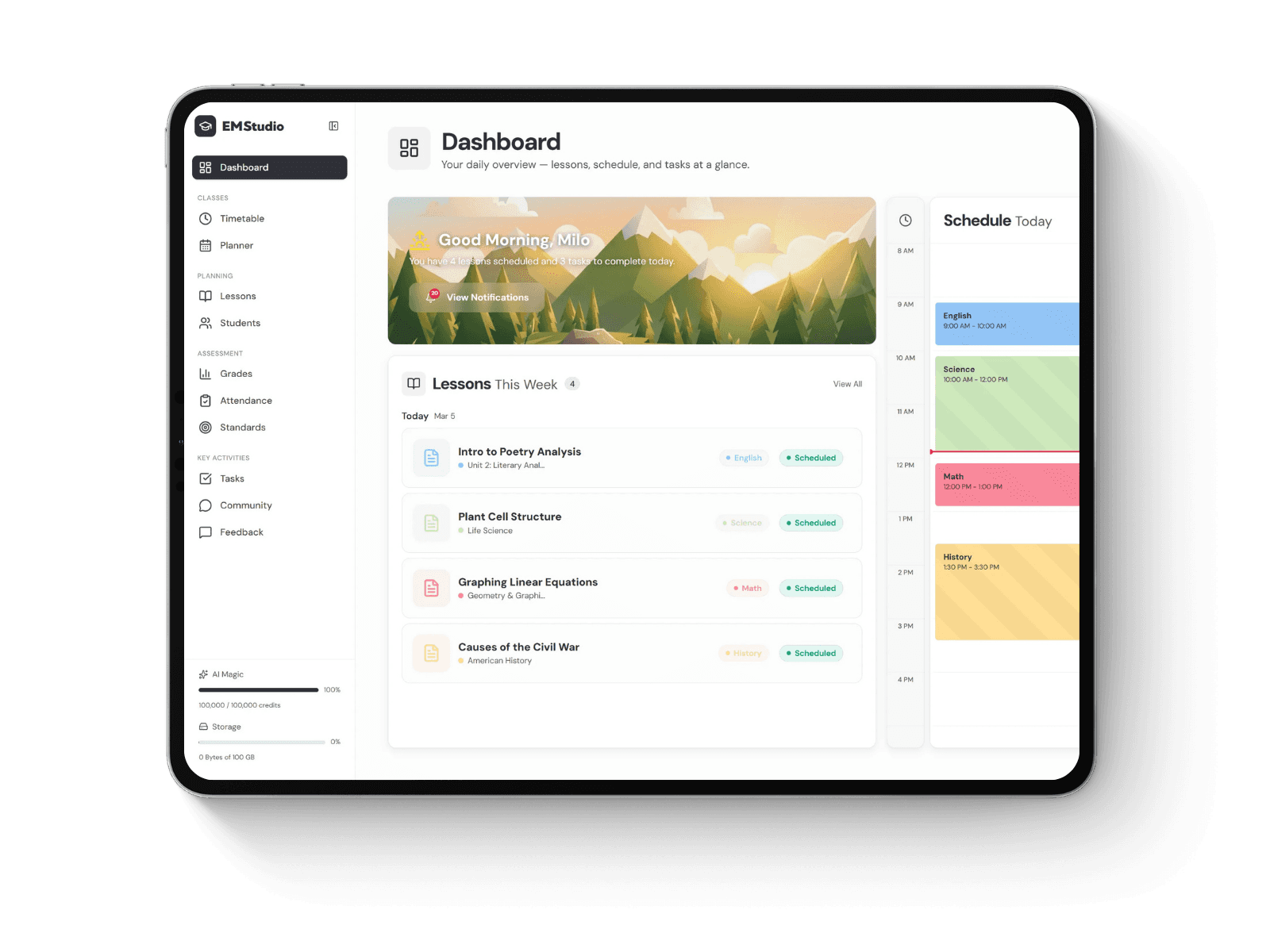
EMStudio is a free teaching management app — manage your classes, students, lessons, and more!
Learn More
Still grading everything by hand?
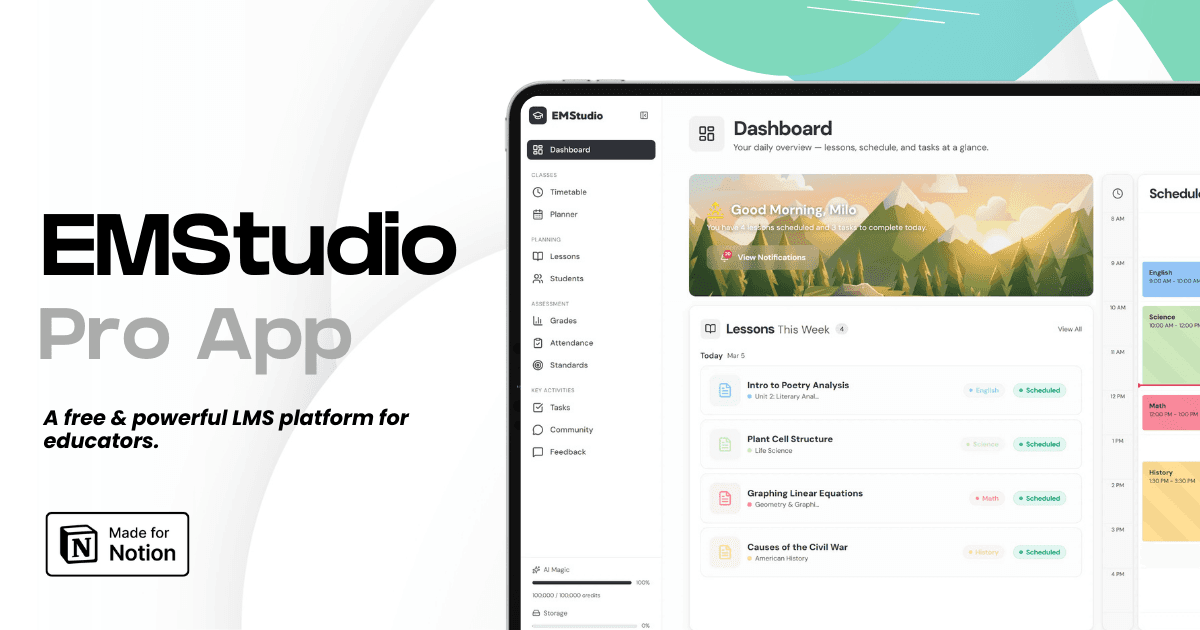
EMStudio is a free teaching management app — manage your classes, students, lessons, and more!
Learn More
Table of Contents
Comprehensive Core Curricula for Multi-Subject Support
Choosing a special education curriculum from the major special education curriculum companies is tempting. You want one login, one scope and sequence, one data system. But these multi-subject suites demand specific infrastructure. Pick wrong, and you have a $2,000 digital paperweight.
Program | Annual Cost Per Classroom | Grade Range | Primary Focus | Implementation | Data Collection |
|---|---|---|---|---|---|
Unique Learning System | $500–$2,000 | K–12 (3 bands) | Multiple disabilities | 2–3 weeks | Cloud-based IEP tracking |
Attainment Core | $2,400 suite | K–12 | Cognitive disabilities | 1–2 weeks | Hybrid print-digital |
STAR Program | $1,500–$3,000 | Autism-specific | ASD | 2–4 weeks | Discrete trial data sheets |
Skip these programs if you only need intensive single-subject intervention. They require 1:1 device access and three days of initial training. Without both, you will waste money and frustrate your team.
Unique Learning System by n2y
n2y organizes content into three grade bands that match developmental stages, not calendar ages. Elementary covers ages 5–11, Middle School handles 11–14, and High School/Transition serves 14–22. Within each band, you get three text levels: Enrichment for students approaching grade level, Simplified for substantial support, and Symbol text featuring SymbolStix icons. I watched nonverbal 8th graders access Constitution Day content through symbols while their peers read the text version.
You need 5 Mbps internet bandwidth minimum. The platform runs on iPads, Chromebooks, and interactive whiteboards, with cloud-based data storage for IEP alignment and alternate assessment documentation. n2y acquired News-2-You and SymbolStix, integrating weekly current events with symbol-supported text. Students with complex communication needs discuss the same headlines as their specialized resources for resource teachers peers.
Subscription tiers depend on student count, not classrooms. You pay for every enrolled student, not just active users. Budget carefully for high-turnover self-contained programs or intensive transition services caseloads.
Attainment Company Core Curriculum Solutions
Attainment structures their Academic Core into leveled bands that respect cognitive ability while preserving dignity through differentiated instruction. ELA offers six levels labeled A through F, while Math provides five levels A through E. Each level represents approximately two years of traditional academic growth. I used Level C ELA with high school sophomores reading at a 3rd grade level. The stories addressed job interviews, not cartoon animals.
The Dale-Chall readability sits between 2nd and 4th grade, but themes mature appropriately. High school students study employment and relationships despite simplified vocabulary. This age-neutral design prevents the humiliation of giving 16-year-olds elementary picture books. You can purchase physical books for destructive students, PDFs for projection, or interactive apps. Suites cost $400 to $800.
The print-digital hybrid works for teaching methods for students with neuromuscular disorders where screen access is limited. Physical books allow tactile page turning when fine motor skills vary.
The STAR Program for Autism and Cognitive Disabilities
STAR relies on discrete trial training methods that demand strict 1:1 instructional formats for students with autism spectrum disorder. You cannot run this effectively in small groups. The curriculum breaks skills into microscopic steps across six specific domains with defined mastery criteria. Students must hit 80% accuracy across two consecutive sessions before advancing.
Receptive Language
Expressive Language
Spontaneous Language
Functional Routines
Pre-Academic Skills
Academic Skills
The program requires instructors trained in Applied Behavior Analysis principles. Video training modules come with the subscription, but the publisher recommends onsite consultation at $1,500 per day for initial fidelity. Without ABA-trained staff, you drift from protocol and see stagnant data. The Links Assessment generates specific lesson plans based on entry assessments.
Data collection happens on paper sheets tracking each discrete trial. This is labor-intensive. If your staff lacks time for daily graphing or your school cannot release staff for 2-day initial training, STAR will fail. Choose a less rigid sped curriculum instead.
Functional Math and Literacy Programs for Daily Living
Functional math curriculum special education focuses on time, money, and measurement for daily living. Modified standards keep the academic trajectory but add scaffolds. You need to know the difference. Don't place a student with standard diploma potential into a functional track that caps at counting coins. That kills their future options.
Equals Mathematics Special Education Curriculum
Equals builds a bridge you can actually see. Students start with manipulatives—counting blocks, sorting bears—then draw what they touched. The Abstraction Bridge forces explicit steps. They don't just touch three blocks and write "3." They touch, draw circles, match to the numeral, then write. This prevents the leap where kids get stuck guessing.
The full program costs $1,200–$1,800. It spans pre-readiness skills through pre-algebra. For high schoolers who will always need calculation support, the upper levels teach calculator use as a life skill. That's real transition services—preparing them for grocery shopping, not fictional fluency. This is strong IEP alignment.
This special education curriculum aligns with alternate assessment standards for grades K-12 equivalent. It fits students with significant cognitive disabilities who need consistent visual structure across years.
TouchMath Standards-Based Complete Program
TouchMath turns numerals into tactile maps using evidence-based mathematics strategies. Each digit 1 through 9 has touchpoints—single dots for 1-5, double dots for 6-9. Students see the 5, touch the points while counting, say the number, and write it simultaneously. This multisensory input locks in number sense for kids who can't hold mental images.
Don't confuse the Standards-Based Complete Program with the Remedial Intervention kit. The first teaches grade-level content with touch support for standard diplomas. The second fills gaps for students who missed number sense by age 8. A kit runs about $350 per grade level.
For distance learning, TouchMath PRO costs $100–$200 per teacher annually. It tracks which students mastered the touchpoints and which still count dots on their fingers.
This special education math curriculum supports differentiated instruction in resource rooms where some kids need the remedial track and others need grade-level content with tactile support.
Edmark Reading Program for Struggling Readers
Edmark teaches 150 functional sight words through errorless learning implementation. The five-step lesson never lets a student guess wrong: word identification, picture association, phrase reading, sentence reading, then story reading. If they know "milk," they see a glass of milk. No distractors.
The controlled vocabulary separates look-alike words by ten lessons. "This" and "that" never appear together until mastery is solid. The software requires Windows or Mac and costs around $800 site license. Print runs $600 with four binders and response cards.
Do not use Edmark for students with dyslexia who can phonetically decode. They need structured literacy, not sight-word memorization. Edmark fits students with autism spectrum disorder or cognitive disabilities who need whole-word recognition for signs and labels.

What Are the Best Life Skills Curricula for Transition Planning?
The best life skills curricula include Attainment Company for comprehensive daily living skills, Transition-to-Work for vocational preparation, and Functional Living Skills for task-analysis-based instruction. Select based on student age and cognitive level: symbol-supported programs for non-readers, text-based for readers, and work-based for transition-age students. Ensure alignment with IDEA transition mandates and state alternate assessment standards.
Pick the wrong curriculum and you will waste months. Match the program to your student's cognitive level and transition timeline, not just what your district purchased last year.
IDEA mandates post-secondary goals documented by age 16, though some states require them at 14. You must write annual transition IEP goals and provide a coordinated set of activities. This includes instruction, related services, community experiences, employment preparation, and functional vocational evaluation. Your special education curriculum must address these components directly or you risk non-compliance during state monitoring.
Attainment's Life Skills covers six domains: self-care, domestic, community, vocational, recreation, and functional academics. The complete kit runs about $650 and includes over 150 video modeling clips. Transition-to-Work costs $800-1200 and offers 300+ standardized job tasks following a five-stage sequence from awareness to follow-up. Functional Living Skills aligns with the AFLS assessment, breaks 800+ skills into 10-50 step task analyses, and charges $300-500 for app-based data collection.
Use this framework:
Ages 14-16 with no work history: Attainment Life Skills.
Ages 17-21 seeking employment: Transition-to-Work.
Significant behavior challenges: Functional Living Skills (task analysis reduces complexity).
Life Skills Curriculum by Attainment Company
The six domains cover Self-Care, Domestic, Community, Vocational, Recreation and Leisure, and Functional Academics. Students learn concrete skills like microwaving food, using a laundromat, and basic banking. The 150+ video modeling components show age-appropriate peers performing tasks. This works well for students with autism spectrum disorder who learn better from visual demonstration than verbal instruction.
The kit includes the Enderle-Severson Transition Rating Scale for baseline assessment and IEP justification. At around $650, it serves as a foundational special education curriculum for middle school through early high school.
Transition-to-Work Curriculum Systems
This system follows five stages: Job Awareness, Exploration, Preparation, Placement, and Follow-Up. Students progress from learning jobs exist to trying standardized work samples, then move into community employment with retention support. The 300+ tasks include mail sorting and food service trials predicting vocational potential in 15-minute assessments.
Soft skills lessons cover interviewing, workplace communication, and accepting correction from supervisors. When launching work-based learning programs, these work samples provide data to justify student placements with employers.
Functional Living Skills Independent Living Program
This program spans basic grooming to apartment living, including cooking, cleaning, budgeting, and public transportation. It aligns with AFLS protocols covering six skill areas from basic living to vocational. Each skill uses task analysis with 10-50 steps and mastery criteria requiring three consecutive days of 100% independence.
The app-based data collection costs $300-500. This granular approach helps students with cognitive disabilities or behavior challenges who shut down during complex tasks. You pinpoint exactly where breakdowns occur.
Specialized Science and Social Studies Adaptations
Most science curricula assume your students read at grade level and follow complex safety protocols. That assumption leaves kids with cognitive disabilities or autism spectrum disorder coloring worksheets while peers do labs. The special education science curriculum options below remove those barriers. They maintain NGSS alignment for alternate assessment while adapting content for learners with significant reading gaps.
But adapted materials do not eliminate lab risks. Students with impulse control issues may grab hot plates or pour chemicals unsafely even with modified instructions. You need 1:1 support during hands-on activities regardless of how accessible the curriculum claims to be. Check your district insurance coverage before doing any labs. Some policies exclude science experiments for students with certain IEP classifications. Verify coverage first. Safety protocols come before content accessibility.
Science for Special Education Students by n2y
n2y Science offers three reading levels for every unit. You assign different levels within the same classroom based on IEP alignment goals. No one gets handed a textbook they cannot decode while others work.
High: Paragraph text at grade 4-5 complexity
Medium: Short sentences with picture supports
Low: SymbolStix symbols with minimal text
The Science Investigations ship as pre-packaged experiment kits. Each box contains visual step-by-step instructions, safety equipment modifications like larger-grip goggles, and adapted measurement tools for fine motor difficulties. I used the water cycle kit with 7th graders last spring. Students who refuse written work measured evaporation using widened beakers they could grip successfully. The visual instructions eliminated the need for me to verbally explain procedures repeatedly to anxious learners.
The program covers Earth and Space Science, Life Science, Physical Science, and Engineering standards mapped for students taking alternate assessments. Expect to pay $800 to $1,500 annually depending on student count and whether you need experiment kits shipped quarterly or all at once. The price stings until you calculate what you would spend sourcing adapted beakers and symbol-supported lab manuals separately.
Attainment Company Science Curriculum
Attainment publishes modified textbooks for Biology, Earth & Space Science, and Physical Science. Each package includes a textbook, student workbook, and lab materials with built-in safety modifications. The content targets high schoolers reading at 2nd to 4th grade levels. You get serious science without the linguistic gatekeeping that standard textbooks impose on struggling readers.
The reading supports use Dale-Chall formulas keeping vocabulary at 2nd-4th grade level. Comprehension checks appear every two pages, not at chapter ends. Students answer three to four questions immediately after reading short sections. Chapter summaries use bullet points to preview concepts. This prevents cognitive overload while maintaining content integrity for students pursuing alternate assessment pathways.
Every package includes the Safety First protocol. Students complete prerequisite lessons and safety quizzes on PPE and emergency procedures before touching lab equipment. Picture-supported safety contracts address fire safety, chemical handling, and emergency stopping procedures. Each subject costs approximately $250. Buy only what you need. You do not need the full suite if your state testing covers just Biology.
News-2-You Current Events and Social Studies Platform
News-2-You follows a weekly rhythm that helps students with autism spectrum disorder anticipate transitions while building knowledge for transition services. You can prep the whole week in twenty minutes.
Monday: Current events article
Tuesday through Thursday: Comprehension activities
Friday: Cooking or craft extensions connecting to social studies themes
The platform offers three text levels for every article. Regular reads at grade 4-5. Higher pushes to grade 6-8. Simple drops to grade 1-2 with symbol supports. You can place mixed-ability groups together to discuss the same topic. Last month my class debated community gardens using all three levels. Everyone participated because content matched reading ability without changing the subject.
Cross-curricular connections appear throughout. Math skills emerge through money and time exercises. Science concepts surface in weather and animal articles. Social skills practice happens during turn-taking discussions. The Friday cooking activities reinforce measurement and sequencing skills while teaching cultural studies through food. At $200 per year, this complements other tools to transform social studies instruction without draining your budget. Use it for differentiated instruction in resource rooms or self-contained settings.

Free and Low-Cost Special Education Curriculum Resources
You don't need district money to build a solid special ed curriculum. You need time. Lots of it. Free resources exist. They just extract payment in hours instead of dollars.
Here is the real cost breakdown across three tiers:
Tier | Examples | Upfront Cost | Weekly Prep | Data Tracking |
|---|---|---|---|---|
Free | ReadWorks, Do2Learn | $0 | 10-15 hours | Manual only |
Mid | TouchMath, Edmark | $300-800 | 4-5 hours | Moderate support |
Enterprise | n2y, Attainment | $1,500+ | 2-3 hours | Full IEP alignment |
Calculate your true cost of ownership before choosing your special education curriculum. At $40 per hour, free curricula consume $1,600 monthly in teacher labor. Mid-tier programs run $640 monthly. Enterprise solutions cost $320. Over three years, that free resource demands $57,600 in prep time. The expensive boxed curriculum totals $11,520. Suddenly that $2,000 price tag looks like a bargain. Always factor in your hourly salary rate when administrators push free solutions as budget-friendly alternatives to comprehensive programs.
ReadWorks Modified Curriculum Units
ReadWorks solves the differentiation headache for grades 2-12. Their StepReads feature gives you identical content at three different Lexile levels, spanning roughly a 400L range per article. Your 7th graders can discuss climate change together, even when one reads at 500L and another at 900L. Same facts. Same discussion. Different reading loads.
You get built-in text-to-speech for every passage, vocabulary supports with clickable images, and comprehension question sets aligned to state standards. The special education filters let you search by specific skills—main idea, inference, summarizing—or by reading level from BR500 to 1300L. They write high-interest, low-readability passages specifically for older students. No more handing seniors "See Spot Run" stories that insult their intelligence while destroying engagement.
Pair ReadWorks with free digital libraries and book programs to build a complete reading block for your classroom. Everything is completely free with registration. The trade-off? You build the units, align them to IEP goals, and track the data manually in your gradebook.
Council for Exceptional Children Resource Library
CEC membership costs $60 to $115 per year depending on your professional status. You get digital access to the Teaching Exceptional Children journal and the High-Leverage Practices in Special Education implementation guide. That resource breaks down 22 specific evidence-based practices with concrete step-by-step implementation steps for students with cognitive disabilities and autism spectrum disorder. You also receive monthly email updates with new research findings.
Download Behavior Intervention Plan templates, UDL lesson plan checklists, and transition services planning guides. Browse hundreds of archived webinars on curriculum adaptation for inclusive settings and alternate assessment preparation. The materials support differentiated instruction across all disability categories from learning disabilities to emotional disturbance. You also get access to advocacy tools for securing better resources.
Here is the hard truth: CEC provides frameworks and research summaries, not ready-to-teach lessons with scripted dialogue. You adapt every resource for your specific classroom context and student needs. If you need a comprehensive scope and sequence for your self-contained class with built-in assessments and data charts, this is not it. This is professional development with toolkits attached.
Life Skills Curriculum Special Education Free Options
Three sites form the backbone of free functional academics:
Do2Learn hosts over 10,000 printable picture cards, emotion recognition games, and customizable visual schedules. Their social stories cover specific transition events like dentist visits, haircuts, and job interviews.
Practical Autism Resources offers detailed task analyses for daily living skills—everything from tooth brushing to microwave cooking with step-by-step photo sequences you can laminate.
Autism Speaks School Community Tool Kit provides grade-specific implementation strategies from preschool through high school for adapting existing materials.
The materials work well for students with autism spectrum disorder and cognitive disabilities. You get templates for teaching self-advocacy and safety awareness during community outings.
Watch for dangerous gaps. Free collections lack systematic scope and sequence across domains. You might miss critical skills like menstrual hygiene management, financial literacy, or workplace safety protocols if you don't comprehensively map every area yourself. That oversight becomes your professional liability when students graduate without essential life skills for independent living.

How Do You Evaluate and Select the Right Curriculum for Your Students?
Evaluate special education curricula using a 6-point rubric: IEP goal alignment, age-respectfulness, data collection ease, required training, cost per student, and accessibility features. Pilot test with 2-3 students for 4-6 weeks. Verify vendor offers implementation support. For Canadian schools, ensure alignment with provincial alternate curriculum expectations like Ontario's Growing Success framework.
You cannot judge a special education curriculum by its cover or its price tag. The wrong choice costs you months of progress and endless frustration. You need a systematic way to separate flashy marketing from what actually works for your specific students when choosing the best curriculum for individual needs.
I use a 6-Dimension Evaluation Rubric when vetting new materials. It prevents me from falling for slick sales presentations that collapse during the first week of school. Print this checklist and use it during every vendor demonstration.
Standards/IEP Alignment: Does it map to your state standards and specific IEP goals for differentiated instruction?
Age-Appropriateness: Are graphics respectful for teenagers? No babyish cartoons for high schoolers with autism spectrum disorder.
Data Tracking: Is progress monitoring automated or will you spend Sundays with a calculator and graph paper?
Implementation Support: How many training hours come included? Who pays for substitutes during those PD days?
Total Cost of Ownership: Calculate the 3-year projection including renewals, add-ons, and required hardware upgrades.
Accessibility: Is it screen reader compatible? Does it offer symbol support for students with complex communication needs?
Begin with your student profile. Document their cognitive level, primary communication mode, and transition services needs. Match these to either functional or academic special education curriculum programs. Run a structured pilot before committing district funds. Check fidelity weekly using a standardized rubric. Only then move to full adoption across your caseload.
I've watched districts crash and burn by choosing based on sticker price alone. They never calculated the prep time costs or the hidden expense of substitute teachers needed during training weeks. Others forgot to check firewall compatibility until launch day or excluded related service providers like SLPs, OTs, and school social workers—many of whom earn their degrees through online msw programs—from the selection committee. Always involve the team that will actually implement the materials.
For special education in Ontario, verify alignment with provincial documents like The Ontario Curriculum, Grades 9-12: Learning for All or alternate learning expectations. You must report against provincial report card standards even when using alternate assessment tools for students with cognitive disabilities. Don't assume American materials translate directly to Canadian reporting requirements without verification.
Run your pilot for 4-6 weeks with at least three students representing different disability categories such as autism spectrum disorder, intellectual disability, and OHI. Conduct weekly fidelity checks using an implementation checklist. Measure pre and post data on target skills, looking for 80% mastery before expanding to the full caseload. If you don't hit that threshold, pivot immediately.
Implementation Strategies for Successful Curriculum Adoption
You bought the special education curriculum. Now comes the hard part. I've watched districts spend thousands on beautiful programs only to see them gather dust because the WiFi crashed or teachers got zero support. Implementation isn't an event. It's a year-long process with distinct phases. Skip any step and you risk wasting money while your students with IEPs fall further behind.
Phase 1: Infrastructure Audit
Before you unbox anything, audit your foundation. I learned this the hard way during a reading intervention rollout when thirty students tried to log in simultaneously and our network collapsed. You need bandwidth that can handle peak loads, especially when students with autism spectrum disorder or cognitive disabilities require consistent access to digital supports without frustration. Nothing kills engagement faster than a spinning wheel.
WiFi bandwidth: 5 Mbps per 10 devices minimum
Storage space for physical manipulatives
Printer access for PDF materials
Staff email accounts for digital licenses
Backup systems for cloud-dependent programs
Phase 2: Pilot Implementation
Don't roll out district-wide on day one. Pick your champions carefully. Select one teacher per grade band—elementary, middle, and high school. Give them six weeks to test drive the program with real students. They need to hit 80% fidelity on the implementation integrity checklist before you expand. These teachers become your internal experts when you scale up, troubleshooting problems before they reach the wider staff.
Phase 3: Professional Development Schedule
One training day won't cut it for complex special education curriculum adoption. Start with a three-hour workshop covering program overview and initial setup. Then hold monthly one-hour PLC meetings for troubleshooting and data review. Year two requires booster training on advanced features plus structured onboarding for new staff. This rhythm keeps the program alive and ensures IEP alignment remains strong as staff turnover happens. Veterans need refreshers too.
Phase 4: Fidelity Monitoring
You can't manage what you don't measure, especially with high-need populations. Use a fifteen-component explicit instruction checklist. Coaches observe monthly for twenty minutes, then deliver feedback within forty-eight hours using praise-correction-praise format. Keep detailed logs for compliance audits. This ensures students with autism spectrum disorder or cognitive disabilities actually receive the differentiated instruction their IEPs promise, not just a watered-down version.
Phase 5: Sustainability Planning
Plan for year two before you finish year one. Budget fifteen to twenty percent of first-year costs for renewals and consumables. Pair new teachers with veteran special educators for mentorship on alternate assessment requirements. Schedule an annual curriculum review committee to evaluate if student outcomes improved—particularly for transition services and post-school goals. Without this planning, you restart from zero every August. That wastes everyone's time.
Successful adoption happens in the details. When you align your infrastructure, training, and monitoring systems, you create a foundation where managing individual learning plans becomes sustainable rather than overwhelming. The goal isn't just implementation—it's supporting differentiated instruction strategies that actually move the needle for your kids long-term.
Should You Try Special Education Curriculum?
You already are. Every worksheet you adapt, every visual schedule you laminate, every math problem you break into three steps — that’s curriculum. The programs we covered just give you a head start so you’re not building from scratch at midnight. Pick one area where your current materials are failing your students. Maybe it’s transition planning for your 18-year-olds who still can’t read a bus schedule. Maybe it’s finding science content that doesn’t require grade-level reading. Start there.
Don't pilot three programs at once. That’s a recipe for half-finished implementations and frustrated paras. Run one new reading or life skills program with a single classroom for six weeks. Watch how your students with cognitive disabilities interact with the assessments. Check if the alternate assessment data actually matches what you see in daily work. If it clicks, expand. If it flops, you’ve lost six weeks, not a school year.
The best special education curriculum isn’t the one with the glossiest videos. It’s the one your team will actually use without burning out. Which of your students would benefit most from you making that switch next Monday?
Comprehensive Core Curricula for Multi-Subject Support
Choosing a special education curriculum from the major special education curriculum companies is tempting. You want one login, one scope and sequence, one data system. But these multi-subject suites demand specific infrastructure. Pick wrong, and you have a $2,000 digital paperweight.
Program | Annual Cost Per Classroom | Grade Range | Primary Focus | Implementation | Data Collection |
|---|---|---|---|---|---|
Unique Learning System | $500–$2,000 | K–12 (3 bands) | Multiple disabilities | 2–3 weeks | Cloud-based IEP tracking |
Attainment Core | $2,400 suite | K–12 | Cognitive disabilities | 1–2 weeks | Hybrid print-digital |
STAR Program | $1,500–$3,000 | Autism-specific | ASD | 2–4 weeks | Discrete trial data sheets |
Skip these programs if you only need intensive single-subject intervention. They require 1:1 device access and three days of initial training. Without both, you will waste money and frustrate your team.
Unique Learning System by n2y
n2y organizes content into three grade bands that match developmental stages, not calendar ages. Elementary covers ages 5–11, Middle School handles 11–14, and High School/Transition serves 14–22. Within each band, you get three text levels: Enrichment for students approaching grade level, Simplified for substantial support, and Symbol text featuring SymbolStix icons. I watched nonverbal 8th graders access Constitution Day content through symbols while their peers read the text version.
You need 5 Mbps internet bandwidth minimum. The platform runs on iPads, Chromebooks, and interactive whiteboards, with cloud-based data storage for IEP alignment and alternate assessment documentation. n2y acquired News-2-You and SymbolStix, integrating weekly current events with symbol-supported text. Students with complex communication needs discuss the same headlines as their specialized resources for resource teachers peers.
Subscription tiers depend on student count, not classrooms. You pay for every enrolled student, not just active users. Budget carefully for high-turnover self-contained programs or intensive transition services caseloads.
Attainment Company Core Curriculum Solutions
Attainment structures their Academic Core into leveled bands that respect cognitive ability while preserving dignity through differentiated instruction. ELA offers six levels labeled A through F, while Math provides five levels A through E. Each level represents approximately two years of traditional academic growth. I used Level C ELA with high school sophomores reading at a 3rd grade level. The stories addressed job interviews, not cartoon animals.
The Dale-Chall readability sits between 2nd and 4th grade, but themes mature appropriately. High school students study employment and relationships despite simplified vocabulary. This age-neutral design prevents the humiliation of giving 16-year-olds elementary picture books. You can purchase physical books for destructive students, PDFs for projection, or interactive apps. Suites cost $400 to $800.
The print-digital hybrid works for teaching methods for students with neuromuscular disorders where screen access is limited. Physical books allow tactile page turning when fine motor skills vary.
The STAR Program for Autism and Cognitive Disabilities
STAR relies on discrete trial training methods that demand strict 1:1 instructional formats for students with autism spectrum disorder. You cannot run this effectively in small groups. The curriculum breaks skills into microscopic steps across six specific domains with defined mastery criteria. Students must hit 80% accuracy across two consecutive sessions before advancing.
Receptive Language
Expressive Language
Spontaneous Language
Functional Routines
Pre-Academic Skills
Academic Skills
The program requires instructors trained in Applied Behavior Analysis principles. Video training modules come with the subscription, but the publisher recommends onsite consultation at $1,500 per day for initial fidelity. Without ABA-trained staff, you drift from protocol and see stagnant data. The Links Assessment generates specific lesson plans based on entry assessments.
Data collection happens on paper sheets tracking each discrete trial. This is labor-intensive. If your staff lacks time for daily graphing or your school cannot release staff for 2-day initial training, STAR will fail. Choose a less rigid sped curriculum instead.
Functional Math and Literacy Programs for Daily Living
Functional math curriculum special education focuses on time, money, and measurement for daily living. Modified standards keep the academic trajectory but add scaffolds. You need to know the difference. Don't place a student with standard diploma potential into a functional track that caps at counting coins. That kills their future options.
Equals Mathematics Special Education Curriculum
Equals builds a bridge you can actually see. Students start with manipulatives—counting blocks, sorting bears—then draw what they touched. The Abstraction Bridge forces explicit steps. They don't just touch three blocks and write "3." They touch, draw circles, match to the numeral, then write. This prevents the leap where kids get stuck guessing.
The full program costs $1,200–$1,800. It spans pre-readiness skills through pre-algebra. For high schoolers who will always need calculation support, the upper levels teach calculator use as a life skill. That's real transition services—preparing them for grocery shopping, not fictional fluency. This is strong IEP alignment.
This special education curriculum aligns with alternate assessment standards for grades K-12 equivalent. It fits students with significant cognitive disabilities who need consistent visual structure across years.
TouchMath Standards-Based Complete Program
TouchMath turns numerals into tactile maps using evidence-based mathematics strategies. Each digit 1 through 9 has touchpoints—single dots for 1-5, double dots for 6-9. Students see the 5, touch the points while counting, say the number, and write it simultaneously. This multisensory input locks in number sense for kids who can't hold mental images.
Don't confuse the Standards-Based Complete Program with the Remedial Intervention kit. The first teaches grade-level content with touch support for standard diplomas. The second fills gaps for students who missed number sense by age 8. A kit runs about $350 per grade level.
For distance learning, TouchMath PRO costs $100–$200 per teacher annually. It tracks which students mastered the touchpoints and which still count dots on their fingers.
This special education math curriculum supports differentiated instruction in resource rooms where some kids need the remedial track and others need grade-level content with tactile support.
Edmark Reading Program for Struggling Readers
Edmark teaches 150 functional sight words through errorless learning implementation. The five-step lesson never lets a student guess wrong: word identification, picture association, phrase reading, sentence reading, then story reading. If they know "milk," they see a glass of milk. No distractors.
The controlled vocabulary separates look-alike words by ten lessons. "This" and "that" never appear together until mastery is solid. The software requires Windows or Mac and costs around $800 site license. Print runs $600 with four binders and response cards.
Do not use Edmark for students with dyslexia who can phonetically decode. They need structured literacy, not sight-word memorization. Edmark fits students with autism spectrum disorder or cognitive disabilities who need whole-word recognition for signs and labels.
What Are the Best Life Skills Curricula for Transition Planning?
The best life skills curricula include Attainment Company for comprehensive daily living skills, Transition-to-Work for vocational preparation, and Functional Living Skills for task-analysis-based instruction. Select based on student age and cognitive level: symbol-supported programs for non-readers, text-based for readers, and work-based for transition-age students. Ensure alignment with IDEA transition mandates and state alternate assessment standards.
Pick the wrong curriculum and you will waste months. Match the program to your student's cognitive level and transition timeline, not just what your district purchased last year.
IDEA mandates post-secondary goals documented by age 16, though some states require them at 14. You must write annual transition IEP goals and provide a coordinated set of activities. This includes instruction, related services, community experiences, employment preparation, and functional vocational evaluation. Your special education curriculum must address these components directly or you risk non-compliance during state monitoring.
Attainment's Life Skills covers six domains: self-care, domestic, community, vocational, recreation, and functional academics. The complete kit runs about $650 and includes over 150 video modeling clips. Transition-to-Work costs $800-1200 and offers 300+ standardized job tasks following a five-stage sequence from awareness to follow-up. Functional Living Skills aligns with the AFLS assessment, breaks 800+ skills into 10-50 step task analyses, and charges $300-500 for app-based data collection.
Use this framework:
Ages 14-16 with no work history: Attainment Life Skills.
Ages 17-21 seeking employment: Transition-to-Work.
Significant behavior challenges: Functional Living Skills (task analysis reduces complexity).
Life Skills Curriculum by Attainment Company
The six domains cover Self-Care, Domestic, Community, Vocational, Recreation and Leisure, and Functional Academics. Students learn concrete skills like microwaving food, using a laundromat, and basic banking. The 150+ video modeling components show age-appropriate peers performing tasks. This works well for students with autism spectrum disorder who learn better from visual demonstration than verbal instruction.
The kit includes the Enderle-Severson Transition Rating Scale for baseline assessment and IEP justification. At around $650, it serves as a foundational special education curriculum for middle school through early high school.
Transition-to-Work Curriculum Systems
This system follows five stages: Job Awareness, Exploration, Preparation, Placement, and Follow-Up. Students progress from learning jobs exist to trying standardized work samples, then move into community employment with retention support. The 300+ tasks include mail sorting and food service trials predicting vocational potential in 15-minute assessments.
Soft skills lessons cover interviewing, workplace communication, and accepting correction from supervisors. When launching work-based learning programs, these work samples provide data to justify student placements with employers.
Functional Living Skills Independent Living Program
This program spans basic grooming to apartment living, including cooking, cleaning, budgeting, and public transportation. It aligns with AFLS protocols covering six skill areas from basic living to vocational. Each skill uses task analysis with 10-50 steps and mastery criteria requiring three consecutive days of 100% independence.
The app-based data collection costs $300-500. This granular approach helps students with cognitive disabilities or behavior challenges who shut down during complex tasks. You pinpoint exactly where breakdowns occur.
Specialized Science and Social Studies Adaptations
Most science curricula assume your students read at grade level and follow complex safety protocols. That assumption leaves kids with cognitive disabilities or autism spectrum disorder coloring worksheets while peers do labs. The special education science curriculum options below remove those barriers. They maintain NGSS alignment for alternate assessment while adapting content for learners with significant reading gaps.
But adapted materials do not eliminate lab risks. Students with impulse control issues may grab hot plates or pour chemicals unsafely even with modified instructions. You need 1:1 support during hands-on activities regardless of how accessible the curriculum claims to be. Check your district insurance coverage before doing any labs. Some policies exclude science experiments for students with certain IEP classifications. Verify coverage first. Safety protocols come before content accessibility.
Science for Special Education Students by n2y
n2y Science offers three reading levels for every unit. You assign different levels within the same classroom based on IEP alignment goals. No one gets handed a textbook they cannot decode while others work.
High: Paragraph text at grade 4-5 complexity
Medium: Short sentences with picture supports
Low: SymbolStix symbols with minimal text
The Science Investigations ship as pre-packaged experiment kits. Each box contains visual step-by-step instructions, safety equipment modifications like larger-grip goggles, and adapted measurement tools for fine motor difficulties. I used the water cycle kit with 7th graders last spring. Students who refuse written work measured evaporation using widened beakers they could grip successfully. The visual instructions eliminated the need for me to verbally explain procedures repeatedly to anxious learners.
The program covers Earth and Space Science, Life Science, Physical Science, and Engineering standards mapped for students taking alternate assessments. Expect to pay $800 to $1,500 annually depending on student count and whether you need experiment kits shipped quarterly or all at once. The price stings until you calculate what you would spend sourcing adapted beakers and symbol-supported lab manuals separately.
Attainment Company Science Curriculum
Attainment publishes modified textbooks for Biology, Earth & Space Science, and Physical Science. Each package includes a textbook, student workbook, and lab materials with built-in safety modifications. The content targets high schoolers reading at 2nd to 4th grade levels. You get serious science without the linguistic gatekeeping that standard textbooks impose on struggling readers.
The reading supports use Dale-Chall formulas keeping vocabulary at 2nd-4th grade level. Comprehension checks appear every two pages, not at chapter ends. Students answer three to four questions immediately after reading short sections. Chapter summaries use bullet points to preview concepts. This prevents cognitive overload while maintaining content integrity for students pursuing alternate assessment pathways.
Every package includes the Safety First protocol. Students complete prerequisite lessons and safety quizzes on PPE and emergency procedures before touching lab equipment. Picture-supported safety contracts address fire safety, chemical handling, and emergency stopping procedures. Each subject costs approximately $250. Buy only what you need. You do not need the full suite if your state testing covers just Biology.
News-2-You Current Events and Social Studies Platform
News-2-You follows a weekly rhythm that helps students with autism spectrum disorder anticipate transitions while building knowledge for transition services. You can prep the whole week in twenty minutes.
Monday: Current events article
Tuesday through Thursday: Comprehension activities
Friday: Cooking or craft extensions connecting to social studies themes
The platform offers three text levels for every article. Regular reads at grade 4-5. Higher pushes to grade 6-8. Simple drops to grade 1-2 with symbol supports. You can place mixed-ability groups together to discuss the same topic. Last month my class debated community gardens using all three levels. Everyone participated because content matched reading ability without changing the subject.
Cross-curricular connections appear throughout. Math skills emerge through money and time exercises. Science concepts surface in weather and animal articles. Social skills practice happens during turn-taking discussions. The Friday cooking activities reinforce measurement and sequencing skills while teaching cultural studies through food. At $200 per year, this complements other tools to transform social studies instruction without draining your budget. Use it for differentiated instruction in resource rooms or self-contained settings.
Free and Low-Cost Special Education Curriculum Resources
You don't need district money to build a solid special ed curriculum. You need time. Lots of it. Free resources exist. They just extract payment in hours instead of dollars.
Here is the real cost breakdown across three tiers:
Tier | Examples | Upfront Cost | Weekly Prep | Data Tracking |
|---|---|---|---|---|
Free | ReadWorks, Do2Learn | $0 | 10-15 hours | Manual only |
Mid | TouchMath, Edmark | $300-800 | 4-5 hours | Moderate support |
Enterprise | n2y, Attainment | $1,500+ | 2-3 hours | Full IEP alignment |
Calculate your true cost of ownership before choosing your special education curriculum. At $40 per hour, free curricula consume $1,600 monthly in teacher labor. Mid-tier programs run $640 monthly. Enterprise solutions cost $320. Over three years, that free resource demands $57,600 in prep time. The expensive boxed curriculum totals $11,520. Suddenly that $2,000 price tag looks like a bargain. Always factor in your hourly salary rate when administrators push free solutions as budget-friendly alternatives to comprehensive programs.
ReadWorks Modified Curriculum Units
ReadWorks solves the differentiation headache for grades 2-12. Their StepReads feature gives you identical content at three different Lexile levels, spanning roughly a 400L range per article. Your 7th graders can discuss climate change together, even when one reads at 500L and another at 900L. Same facts. Same discussion. Different reading loads.
You get built-in text-to-speech for every passage, vocabulary supports with clickable images, and comprehension question sets aligned to state standards. The special education filters let you search by specific skills—main idea, inference, summarizing—or by reading level from BR500 to 1300L. They write high-interest, low-readability passages specifically for older students. No more handing seniors "See Spot Run" stories that insult their intelligence while destroying engagement.
Pair ReadWorks with free digital libraries and book programs to build a complete reading block for your classroom. Everything is completely free with registration. The trade-off? You build the units, align them to IEP goals, and track the data manually in your gradebook.
Council for Exceptional Children Resource Library
CEC membership costs $60 to $115 per year depending on your professional status. You get digital access to the Teaching Exceptional Children journal and the High-Leverage Practices in Special Education implementation guide. That resource breaks down 22 specific evidence-based practices with concrete step-by-step implementation steps for students with cognitive disabilities and autism spectrum disorder. You also receive monthly email updates with new research findings.
Download Behavior Intervention Plan templates, UDL lesson plan checklists, and transition services planning guides. Browse hundreds of archived webinars on curriculum adaptation for inclusive settings and alternate assessment preparation. The materials support differentiated instruction across all disability categories from learning disabilities to emotional disturbance. You also get access to advocacy tools for securing better resources.
Here is the hard truth: CEC provides frameworks and research summaries, not ready-to-teach lessons with scripted dialogue. You adapt every resource for your specific classroom context and student needs. If you need a comprehensive scope and sequence for your self-contained class with built-in assessments and data charts, this is not it. This is professional development with toolkits attached.
Life Skills Curriculum Special Education Free Options
Three sites form the backbone of free functional academics:
Do2Learn hosts over 10,000 printable picture cards, emotion recognition games, and customizable visual schedules. Their social stories cover specific transition events like dentist visits, haircuts, and job interviews.
Practical Autism Resources offers detailed task analyses for daily living skills—everything from tooth brushing to microwave cooking with step-by-step photo sequences you can laminate.
Autism Speaks School Community Tool Kit provides grade-specific implementation strategies from preschool through high school for adapting existing materials.
The materials work well for students with autism spectrum disorder and cognitive disabilities. You get templates for teaching self-advocacy and safety awareness during community outings.
Watch for dangerous gaps. Free collections lack systematic scope and sequence across domains. You might miss critical skills like menstrual hygiene management, financial literacy, or workplace safety protocols if you don't comprehensively map every area yourself. That oversight becomes your professional liability when students graduate without essential life skills for independent living.
How Do You Evaluate and Select the Right Curriculum for Your Students?
Evaluate special education curricula using a 6-point rubric: IEP goal alignment, age-respectfulness, data collection ease, required training, cost per student, and accessibility features. Pilot test with 2-3 students for 4-6 weeks. Verify vendor offers implementation support. For Canadian schools, ensure alignment with provincial alternate curriculum expectations like Ontario's Growing Success framework.
You cannot judge a special education curriculum by its cover or its price tag. The wrong choice costs you months of progress and endless frustration. You need a systematic way to separate flashy marketing from what actually works for your specific students when choosing the best curriculum for individual needs.
I use a 6-Dimension Evaluation Rubric when vetting new materials. It prevents me from falling for slick sales presentations that collapse during the first week of school. Print this checklist and use it during every vendor demonstration.
Standards/IEP Alignment: Does it map to your state standards and specific IEP goals for differentiated instruction?
Age-Appropriateness: Are graphics respectful for teenagers? No babyish cartoons for high schoolers with autism spectrum disorder.
Data Tracking: Is progress monitoring automated or will you spend Sundays with a calculator and graph paper?
Implementation Support: How many training hours come included? Who pays for substitutes during those PD days?
Total Cost of Ownership: Calculate the 3-year projection including renewals, add-ons, and required hardware upgrades.
Accessibility: Is it screen reader compatible? Does it offer symbol support for students with complex communication needs?
Begin with your student profile. Document their cognitive level, primary communication mode, and transition services needs. Match these to either functional or academic special education curriculum programs. Run a structured pilot before committing district funds. Check fidelity weekly using a standardized rubric. Only then move to full adoption across your caseload.
I've watched districts crash and burn by choosing based on sticker price alone. They never calculated the prep time costs or the hidden expense of substitute teachers needed during training weeks. Others forgot to check firewall compatibility until launch day or excluded related service providers like SLPs, OTs, and school social workers—many of whom earn their degrees through online msw programs—from the selection committee. Always involve the team that will actually implement the materials.
For special education in Ontario, verify alignment with provincial documents like The Ontario Curriculum, Grades 9-12: Learning for All or alternate learning expectations. You must report against provincial report card standards even when using alternate assessment tools for students with cognitive disabilities. Don't assume American materials translate directly to Canadian reporting requirements without verification.
Run your pilot for 4-6 weeks with at least three students representing different disability categories such as autism spectrum disorder, intellectual disability, and OHI. Conduct weekly fidelity checks using an implementation checklist. Measure pre and post data on target skills, looking for 80% mastery before expanding to the full caseload. If you don't hit that threshold, pivot immediately.
Implementation Strategies for Successful Curriculum Adoption
You bought the special education curriculum. Now comes the hard part. I've watched districts spend thousands on beautiful programs only to see them gather dust because the WiFi crashed or teachers got zero support. Implementation isn't an event. It's a year-long process with distinct phases. Skip any step and you risk wasting money while your students with IEPs fall further behind.
Phase 1: Infrastructure Audit
Before you unbox anything, audit your foundation. I learned this the hard way during a reading intervention rollout when thirty students tried to log in simultaneously and our network collapsed. You need bandwidth that can handle peak loads, especially when students with autism spectrum disorder or cognitive disabilities require consistent access to digital supports without frustration. Nothing kills engagement faster than a spinning wheel.
WiFi bandwidth: 5 Mbps per 10 devices minimum
Storage space for physical manipulatives
Printer access for PDF materials
Staff email accounts for digital licenses
Backup systems for cloud-dependent programs
Phase 2: Pilot Implementation
Don't roll out district-wide on day one. Pick your champions carefully. Select one teacher per grade band—elementary, middle, and high school. Give them six weeks to test drive the program with real students. They need to hit 80% fidelity on the implementation integrity checklist before you expand. These teachers become your internal experts when you scale up, troubleshooting problems before they reach the wider staff.
Phase 3: Professional Development Schedule
One training day won't cut it for complex special education curriculum adoption. Start with a three-hour workshop covering program overview and initial setup. Then hold monthly one-hour PLC meetings for troubleshooting and data review. Year two requires booster training on advanced features plus structured onboarding for new staff. This rhythm keeps the program alive and ensures IEP alignment remains strong as staff turnover happens. Veterans need refreshers too.
Phase 4: Fidelity Monitoring
You can't manage what you don't measure, especially with high-need populations. Use a fifteen-component explicit instruction checklist. Coaches observe monthly for twenty minutes, then deliver feedback within forty-eight hours using praise-correction-praise format. Keep detailed logs for compliance audits. This ensures students with autism spectrum disorder or cognitive disabilities actually receive the differentiated instruction their IEPs promise, not just a watered-down version.
Phase 5: Sustainability Planning
Plan for year two before you finish year one. Budget fifteen to twenty percent of first-year costs for renewals and consumables. Pair new teachers with veteran special educators for mentorship on alternate assessment requirements. Schedule an annual curriculum review committee to evaluate if student outcomes improved—particularly for transition services and post-school goals. Without this planning, you restart from zero every August. That wastes everyone's time.
Successful adoption happens in the details. When you align your infrastructure, training, and monitoring systems, you create a foundation where managing individual learning plans becomes sustainable rather than overwhelming. The goal isn't just implementation—it's supporting differentiated instruction strategies that actually move the needle for your kids long-term.
Should You Try Special Education Curriculum?
You already are. Every worksheet you adapt, every visual schedule you laminate, every math problem you break into three steps — that’s curriculum. The programs we covered just give you a head start so you’re not building from scratch at midnight. Pick one area where your current materials are failing your students. Maybe it’s transition planning for your 18-year-olds who still can’t read a bus schedule. Maybe it’s finding science content that doesn’t require grade-level reading. Start there.
Don't pilot three programs at once. That’s a recipe for half-finished implementations and frustrated paras. Run one new reading or life skills program with a single classroom for six weeks. Watch how your students with cognitive disabilities interact with the assessments. Check if the alternate assessment data actually matches what you see in daily work. If it clicks, expand. If it flops, you’ve lost six weeks, not a school year.
The best special education curriculum isn’t the one with the glossiest videos. It’s the one your team will actually use without burning out. Which of your students would benefit most from you making that switch next Monday?
Still grading everything by hand?
EMStudio is a free teaching management app — manage your classes, students, lessons, and more!
Learn More
Still grading everything by hand?
EMStudio is a free teaching management app — manage your classes, students, lessons, and more!
Learn More


Notion4Teachers
Notion templates to simplify administrative tasks and enhance your teaching experience.



2026 Notion4Teachers. All Rights Reserved.
Notion4Teachers
Notion templates to simplify administrative tasks and enhance your teaching experience.
2026 Notion4Teachers. All Rights Reserved.
Notion4Teachers
Notion templates to simplify administrative tasks and enhance your teaching experience.
2026 Notion4Teachers. All Rights Reserved.