
Work Based Learning: 4 Steps to Launch Student Programs
Work Based Learning: 4 Steps to Launch Student Programs

Article by
Milo
ESL Content Coordinator & Educator
ESL Content Coordinator & Educator
All Posts
I watched a senior stand a little taller after her first week shadowing at the veterinary clinic. She’d spent three years telling me she wasn’t “college material.” But watching her explain proper restraint techniques to a 9th grader showed me what work based learning actually does. It changes posture. It changes trajectory. You’ve probably seen it too—that shift when a student realizes the classroom connects to a paycheck, or when an apprenticeship clicks harder than any lecture.
This isn’t career day with brochures. It’s structured, sustained, and legally complicated. But when you match students with real mentors in real workplaces, the growth is immediate and measurable. The hard part is building the bridge between school and industry without losing kids in the gap.
This guide walks you through launching a program that lasts. You’ll start with the paperwork that protects everyone—site agreements and insurance requirements that districts love to ignore until something breaks. Then you’ll design competency-based objectives that satisfy career and technical education standards without burying students in busywork. We’ll cover the prep work that keeps students from freezing on day one, and the communication systems that keep mentors from ghosting you mid-semester. These four steps come from fifteen years of building industry partnerships that actually stick, including the ones that failed so you don’t have to repeat my mistakes.
You don’t need a massive budget or a dedicated staff of ten. You need clarity, consistent check-ins, and a few forms that hold up in court. Get these foundations right, and your experiential learning program will outlast the grant funding that started it. You might be launching internships for seniors or building career pathways for freshmen. The process stays the same.
Still grading everything by hand?
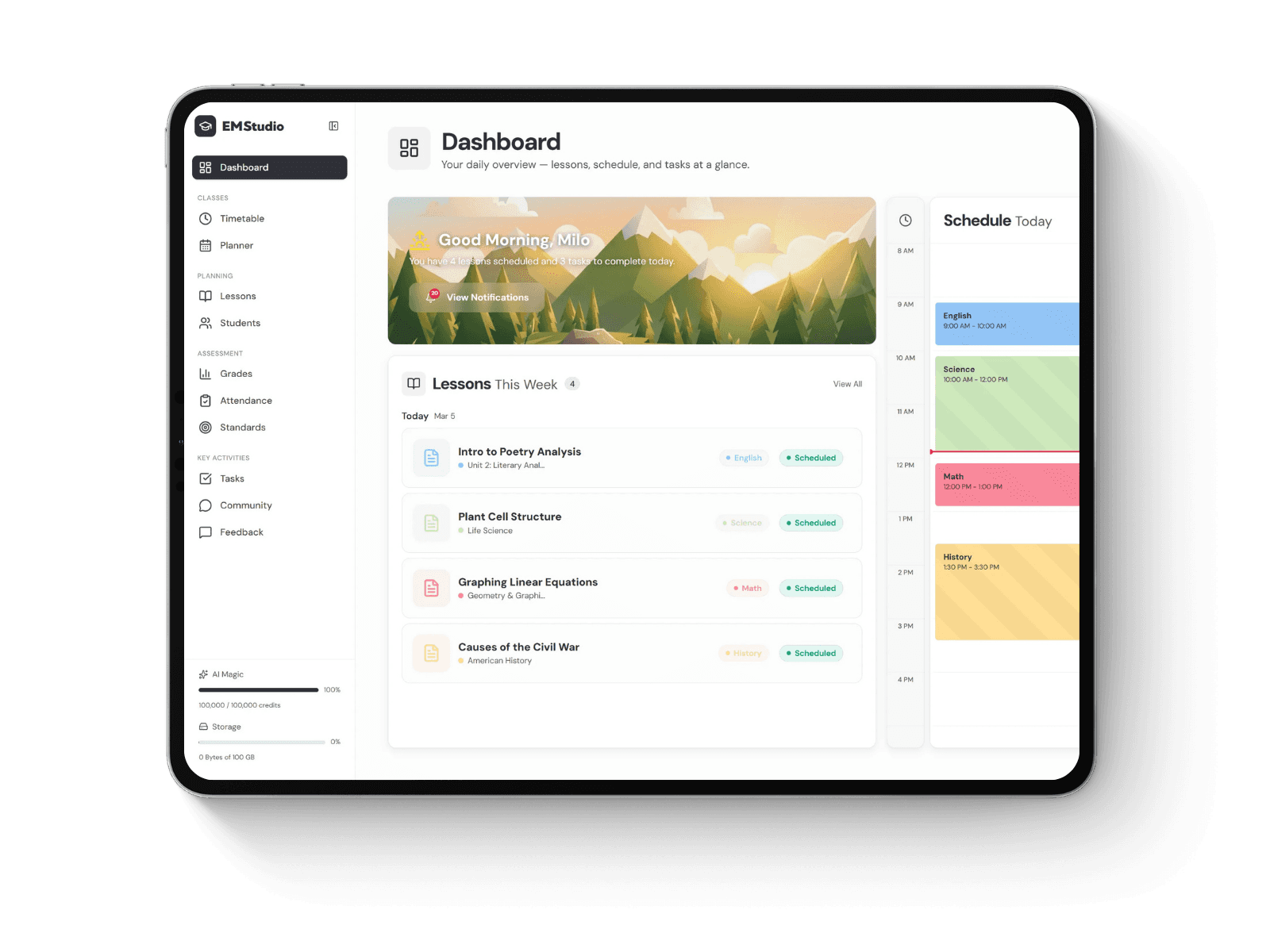
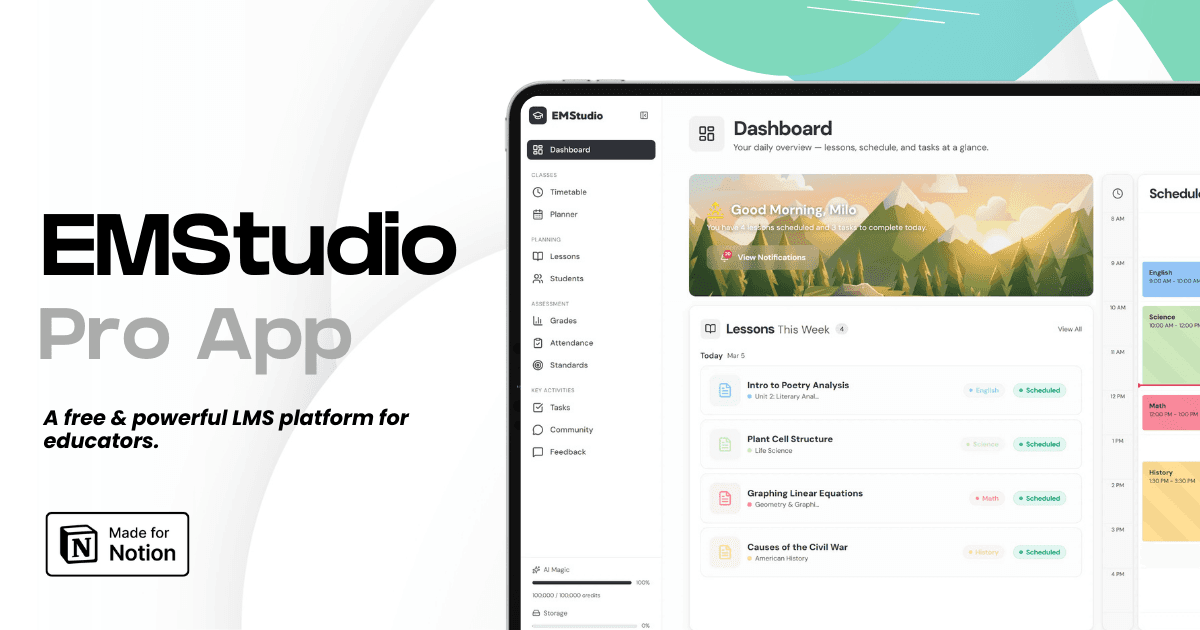
EMStudio is a free teaching management app — manage your classes, students, lessons, and more!
Learn More
Still grading everything by hand?
EMStudio is a free teaching management app — manage your classes, students, lessons, and more!
Learn More
Table of Contents
What Do You Need Before Launching Work Based Learning?
Before launching work based learning, you need administrative buy-in with board policy updates, general liability insurance covering $1-2 million per incident, signed site agreements with at least 3 anchor employers, a dedicated coordinator allocating 10-15 hours per student weekly, and a 12-week minimum runway for partnership development and student pre-placement training.
Category | Requirement |
|---|---|
Policy | Board-approved MOU templates |
Insurance | General liability riders ($1-2M coverage) |
Staffing | 0.5 FTE coordinator minimum |
Budget | $3,000-$8,000 startup |
Timeline | 12-16 week runway |
These prerequisites create sustainable industry partnerships.
Securing Administrative Buy-In and District Policies
Start with hard data. Your superintendent needs proof that these career pathways lead to real jobs, not just credits. Schedule three specific meetings:
Initial pitch to superintendent using regional Labor Market Information showing high-demand occupations
Board work session reviewing sample MOUs and FLSA compliance
Final policy vote updating student handbooks and transportation agreements
Bring post-secondary enrollment data for career and technical education participants and a one-page policy template. This process helps involve school stakeholders effectively.
Consider career development opportunities for educators who will coordinate these efforts. They will need classroom management pd for workplace settings beyond the traditional center for learning.
Understanding Liability Insurance and Legal Requirements
You need three coverage layers. General liability covers bodily injury on site. Professional liability covers educational negligence claims. Accident medical covers student injury regardless of fault. Annual premiums typically run $500-$1,500 for districts placing under 50 students.
Collect certificates of insurance from each host employer naming your district as additional insured, signed hold-harmless agreements, and written verification of the site's workers' compensation status. This distinction matters for unpaid internships versus paid apprenticeships.
Building Your Initial Timeline and Resource Budget
Block out 12 weeks minimum. Weeks 1-4 finalize legal and policy work. Weeks 5-8 recruit employers and conduct site safety audits—aim for signed Letters of Intent from five host sites covering fifteen student slots by Week 6. Weeks 9-12 handle student applications and matching.
Budget roughly $150-$400 per student for transportation, background checks, and insurance riders, plus $2,000-$5,000 for coordinator stipends. Remember: coordinators spend 10-15 hours per student weekly on placement and monitoring. Districts with formalized pre-launch protocols see fewer mid-semester disruptions and higher completion rates in their experiential learning programs.
Step 1 — Establish Community Partnerships and Site Agreements
Start with who you know. Map warm contacts first—school board business connections, parents who own shops, and alumni in growing fields. Target healthcare, IT, advanced manufacturing, and hospitality. These sectors need talent for experiential learning placements.
Draft your outreach templates before you call anyone. Your initial email needs three paragraphs: your connection to them, the value for their business, and the specific ask. Follow with a two-page Site Agreement. Cap supervision at one adult per five students. Limit hours to twenty per week during school. Include a forty-eight-hour termination clause so hosts can withdraw without penalty.
Sell the 3-30-3 framework on one page:
Three hours of initial setup.
Thirty hours of meaningful student contribution per semester.
Three potential pipeline candidates for future hiring.
Add local tax incentive details. This is how work based learning scales.
Identifying Local Employers and Industry Contacts
Pull Labor Market Information (LMI) data first. Filter for occupations with five percent or higher growth. Cross-reference those businesses against your Chamber of Commerce directory. Target companies with ten to two hundred employees. These industry partnerships anchor your career and technical education program.
Build a tiered prospect list:
Tier One: Existing relationships and parent employers.
Tier Two: Alumni business owners.
Tier Three: Cold outreach to high-growth sectors.
Recruit for one hundred fifty percent capacity. If you need fifteen placements, secure twenty-three hosts. Life happens. Hosts drop out.
Drafting Clear Liability and Safety Protocols
Require safety documentation upfront. Hosts must complete OSHA 300 logs review for the past three years. They provide site-specific orientation checklists and designate an on-site supervisor with two or more years experience. Emergency contact trees must guarantee fifteen-minute response times.
Spell out liability clauses clearly. Mandate accident reporting within two hours. Prohibit under-eighteens from operating forklifts or heavy machinery. Require breaks every four hours. Provide a template safety inspection rubric with twenty checkpoints.
Creating Mutual Value Propositions for Host Sites
Quantify the win. Reduced recruitment screening saves four hundred to twelve hundred dollars per hire. Hosts gain prescreened candidate pipelines and community goodwill. For non-profits, emphasize mission alignment.
Address fears in a FAQ:
"What if the student doesn't work out?" Forty-eight-hour removal.
"Do we pay them?" Clarify FLSA criteria for internships and apprenticeships.
"What training do we provide?" Explain that your team handles classroom management training for teachers.
Mention degrees that include global internships when mapping career pathways with hospitality partners.

Step 2 — Design Competency-Based Learning Objectives
Aligning Career Skills With Academic Standards
Stop guessing whether your work based learning placements actually teach anything. Build a crosswalk table that maps Workplace Task → Academic Standard → Assessment Method. For Healthcare pathways, students analyze safety protocols to demonstrate CCSS.ELA-LITERACY.RI.9-10.3 by sequencing procedural steps. IT students troubleshoot network latency calculations to hit mathematical modeling standards. Manufacturing students measuring tolerances to 0.001 inches cover precision measurement math.
Use the National Career Clusters Framework and your state career and technical education standards as your foundation. Reference the Employability Skills Framework from the Career Readiness Partner Council to map tasks to Applied Academic Skills, Critical Thinking, and Personal Qualities. Create a template alignment chart for your five core subjects so every apprenticeship task has academic backup. You can align standards with a curriculum tool to speed this up.
Defining Measurable Workplace Outcomes and Rubrics
Ditch the vague "satisfactory performance" checkboxes. Build a 4-point rubric with behavioral anchors that mean something. Professional Communication: 1 means using informal language with supervisors; 4 means initiating clarifying questions using precise industry terminology. For Time Management, Emerging is arriving within 15 minutes of start time; Proficient is arriving within 5 minutes consistently for four consecutive weeks; Advanced includes assisting with onboarding new student workers.
Cover five core competencies in your experiential learning rubric: Professional Communication, Technical Skill Application, Problem Solving, Time Management, and Safety Compliance. Measure Technical Skill by requiring less than 5% error rate on assigned tasks. Track Collaboration through peer/mentor 360-feedback scores. For Safety Compliance Advanced, students must demonstrate protocols without prompting in three consecutive observations. This turns subjective observations into data you can defend during parent conferences.
Integrating Reflection Journals and Portfolio Requirements
Students need structure to process their internships. Require five mandatory artifacts that prove growth across career pathways better than any certificate from classroom management workshops:
Weekly timesheets signed by supervisors
300-word reflective essays using Gibbs' Reflective Cycle
2-minute skill demonstration videos
Quarterly supervisor evaluation forms
10-minute capstone presentation slide decks
Schedule 15-minute guided writing every Friday using Gibbs' Cycle: Description, Feelings, Evaluation, Analysis, Conclusion, Action Plan. Rotate through ten prompts like "Describe a challenge you solved today" or "Analyze a communication breakdown you observed."
Use Google Sites or Canvas ePortfolio with sections for Journal, Artifacts, Evaluations, and Resume. Set permissions so industry partnerships supervisors can view but not edit. Require weekly entries with timestamp verification. Learning to manage documentation now saves headaches later. This beats any classroom management course theory because students police their own progress when the portfolio counts for 40% of their grade. You can find templates for creating effective student portfolios that work for CTE programs.

Step 3 — How Do You Prepare Students for Professional Placements?
Prepare students through 8-10 hours of pre-placement workshops covering workplace communication, safety protocols, and professional etiquette. Require updated resumes, conduct mock interviews with industry partners, and use interest assessments like Naviance or YouScience to match students with aligned host opportunities based on career pathway compatibility and skill level.
This isn't a training on classroom management. Don't skip the prep work. I've seen confident 12th graders in career and technical education programs fall apart on day one because no one taught them how to read a room. These workshops bridge the gap between school and work based learning.
Conducting Pre-Placement Workshops and Soft Skills Training
Run four modules totaling 8-10 hours: Workplace Culture, Safety & Legal Rights, Communication, and Technical Preparation. This differs from a workshop on classroom management.
Module 3 teaches Conscious Discipline techniques for emotional regulation—specifically Composure and Assertiveness skills for handling criticism. Role-play receiving constructive feedback, asking for clarification, and declining inappropriate tasks.
Safety requirements: Students learn to distinguish between appropriate learning activities and exploitative labor under FLSA guidelines.
Facilitating Resume Building and Mock Interviews
Build resumes using Canva or Google Docs templates following NACE standards. Limit to one page.
Use the XYZ formula: "Accomplished X, as measured by Y, by doing Z." Include three bullets demonstrating measurable outcomes from prior coursework or real-world assessments for your students.
Conduct 20-minute mock interviews with representatives from two industry partnerships per student. Use behavioral question banks—five questions per sector starting with "Tell me about a time you..." Score on Appearance, Articulation, and Content. Require two practice rounds before final placement.
Matching Student Interests With Appropriate Host Opportunities
Administer YouScience or Naviance Career Key (20-minute aptitude/interest assessments). Host Interview Days where students rank employer preferences and hosts conduct 10-minute screening conversations before final algorithm matching.
Weight matches by career assessment results (40%), transportation access (30%), and employer capacity/skill level fit (30%).
Map student home addresses against host site locations. Flag matches beyond public transit routes or a 20-minute drive radius for carpool coordination. Ensure ADA accessibility compliance for all experiential learning sites across your career pathways.
Step 4 — Monitor Progress and Facilitate Mentor Communication
Establishing Structured Check-In Schedules and Site Visits
Front-load your contact intensity. Week 1 requires daily check-ins because juniors panic over parking codes and lunch protocols. Scale back based on risk level using this rhythm:
Weeks 2–4: Bi-weekly 30-minute meetings using a standardized agenda—five minutes student self-assessment, ten minutes employer feedback, fifteen minutes coordinator troubleshooting.
Weeks 5+: Weekly email or phone check-ins.
Site visits: Week 2 for safety verification, Week 6 for mid-semester evaluation, Week 12 for final assessment. Run these 45 to 60 minutes with observation rubrics covering safety, task appropriateness, and mentor engagement.
Use Red-Yellow-Green status indicators on your dashboard for instant visual triage. Red flags—safety violations, harassment reports, attendance crashes—trigger immediate site visits within 24 hours and possible placement suspension. Yellow flags like tardiness merit extra check-ins.
Coaching Mentors on Feedback and Student Support
Mentors aren't born knowing how to teach teenagers. Run a 90-minute orientation covering adolescent brain basics, effective delegation techniques, and delivering criticism without demotivating. Use coaching techniques for educators adapted for industry settings. Cover these elements:
Conscious Discipline: Strategies for handling student anxiety or resistance.
SBI Feedback: Situation-Behavior-Impact framework. Hand out laminated pocket cards with the script: "When you answered the phone [S], you used the proper greeting script [B], which projects professionalism to clients [I]."
GROW Model: Goal, Reality, Options, Will for structured coaching conversations.
Support them with monthly 30-minute "Mentor Huddles" for peer troubleshooting, quarterly appreciation events, and a guaranteed 24-hour response time to emails. This is how you succeed at building successful mentorship relationships that retain partners.
Documenting Hours and Competency Achievement in Real Time
Ditch paper timesheets immediately. Implement mobile-friendly platforms for your work based learning documentation:
TrackMyHours or Google Forms with geolocation verification.
Custom LMS plugins that push data directly to your SIS.
Weekly digital submissions with supervisor signatures, logging hours in 15-minute increments toward the 120-hour semester minimum.
Auto-flag any student dropping below six hours weekly for immediate intervention. Verify attendance via GPS check-in at the site or supervisor digital signature. Generate automated competency transcripts showing skill codes like COMM-1 or TECH-2.
Export hours and competency data to PowerSchool or Infinite Campus for official transcript notation. Maintain secure cloud storage of all evaluations for three years post-graduation. Credential verification requests arrive sooner than you expect.

Common Implementation Mistakes and Sustainability Strategies
Avoiding the Free Labor Perception Trap
The Primary Beneficiary Test from Department of Labor Fact Sheet #71 determines whether your work based learning placement is legal unpaid training or wage theft. Seven criteria decide this: the training must mirror an educational environment, not displace regular employees, provide no immediate advantage to the employer, last a fixed duration, carry no entitlement to a job, and involve no wages if unpaid.
Use a simple decision flowchart for each site: Does the work provide educational benefit? Would the business hire someone if the student weren't here? If you answer yes to the second question, convert the role to paid internships or apprenticeships at $12 to $15 per hour typical for high school interns in 2024.
Perception matters as much as legality. Protect your program with these boundaries:
Require weekly learning logs documenting skills taught, not tasks completed.
Prohibit using students to cover sick leave, strikes, or vacation gaps.
Rotate students through departments every four weeks to emphasize exposure over productivity.
These rules keep the focus on genuine experiential learning, not convenient labor.
Maintaining Long-Term Partnership Retention
Sustaining industry partnerships requires structure. Retention crashes 40% after Year 1 without systematic appreciation. Reverse this with a three-year cycle:
Year 1: High-touch pilot mode with monthly check-ins and intensive support.
Year 2: Expanded student capacity with reduced oversight burdens.
Year 3: Anchor partnership status where veterans train new hosts.
Schedule quarterly Advisory Council meetings as two-hour working lunches where employers refine curriculum. Between sessions, send handwritten superintendent notes and LinkedIn recommendations. Show student thank-you video montages at board meetings. When hosts withdraw, conduct 30-minute exit interviews to identify pain points. Target 80% retention year-over-year. These deep relationships sustain your career and technical education pipeline better than cold-calling for replacement sites.
Scaling From Pilot Program to District-Wide Adoption
Scale deliberately or collapse. Advance through distinct phases:
Pilot: 10 to 15 students in one sector.
Phase 2: 50 students across three sectors.
District-wide: 200-plus students with full coverage.
Maintain one coordinator per 40 students; add assistants at 100 placements. Invest in classroom management professional development workshops and conscious discipline training for teachers who become coordinators. Hit these metrics before advancing: 90% student completion, 85% positive employer feedback, and sustainable budget model dropping from $400 per student to $150 at scale. Secure buy-in from 70% of principals and establish middle school feeder patterns for your career pathways. Reference our experiential education implementation guide for templates, and design projects for real-world impact that justify resources to skeptical board members.
What Work Based Learning Really Comes Down To
All the paperwork and partnership meetings matter, but work based learning lives or dies on relationships. You can have perfect competency checklists and signed site agreements, yet if the mentor at the auto shop stops answering texts, your student sits in the break room for three weeks. The flip side? A messy placement with a busy restaurant owner who actually teaches line cook skills beats a perfect-sounding internship where no one talks to the kid.
Start small. One reliable partner beats ten flaky ones. Focus on three clear skills students must master, not twenty. Check in weekly, not monthly. Career and technical education works when students do real work, fail safely, and try again with someone watching who cares about their growth.
Your first cohort won't be perfect. Neither was mine. But when a senior tells you they finally understand why algebra matters because the carpenter showed them load-bearing math, you'll know why this beats another worksheet.
What Do You Need Before Launching Work Based Learning?
Before launching work based learning, you need administrative buy-in with board policy updates, general liability insurance covering $1-2 million per incident, signed site agreements with at least 3 anchor employers, a dedicated coordinator allocating 10-15 hours per student weekly, and a 12-week minimum runway for partnership development and student pre-placement training.
Category | Requirement |
|---|---|
Policy | Board-approved MOU templates |
Insurance | General liability riders ($1-2M coverage) |
Staffing | 0.5 FTE coordinator minimum |
Budget | $3,000-$8,000 startup |
Timeline | 12-16 week runway |
These prerequisites create sustainable industry partnerships.
Securing Administrative Buy-In and District Policies
Start with hard data. Your superintendent needs proof that these career pathways lead to real jobs, not just credits. Schedule three specific meetings:
Initial pitch to superintendent using regional Labor Market Information showing high-demand occupations
Board work session reviewing sample MOUs and FLSA compliance
Final policy vote updating student handbooks and transportation agreements
Bring post-secondary enrollment data for career and technical education participants and a one-page policy template. This process helps involve school stakeholders effectively.
Consider career development opportunities for educators who will coordinate these efforts. They will need classroom management pd for workplace settings beyond the traditional center for learning.
Understanding Liability Insurance and Legal Requirements
You need three coverage layers. General liability covers bodily injury on site. Professional liability covers educational negligence claims. Accident medical covers student injury regardless of fault. Annual premiums typically run $500-$1,500 for districts placing under 50 students.
Collect certificates of insurance from each host employer naming your district as additional insured, signed hold-harmless agreements, and written verification of the site's workers' compensation status. This distinction matters for unpaid internships versus paid apprenticeships.
Building Your Initial Timeline and Resource Budget
Block out 12 weeks minimum. Weeks 1-4 finalize legal and policy work. Weeks 5-8 recruit employers and conduct site safety audits—aim for signed Letters of Intent from five host sites covering fifteen student slots by Week 6. Weeks 9-12 handle student applications and matching.
Budget roughly $150-$400 per student for transportation, background checks, and insurance riders, plus $2,000-$5,000 for coordinator stipends. Remember: coordinators spend 10-15 hours per student weekly on placement and monitoring. Districts with formalized pre-launch protocols see fewer mid-semester disruptions and higher completion rates in their experiential learning programs.
Step 1 — Establish Community Partnerships and Site Agreements
Start with who you know. Map warm contacts first—school board business connections, parents who own shops, and alumni in growing fields. Target healthcare, IT, advanced manufacturing, and hospitality. These sectors need talent for experiential learning placements.
Draft your outreach templates before you call anyone. Your initial email needs three paragraphs: your connection to them, the value for their business, and the specific ask. Follow with a two-page Site Agreement. Cap supervision at one adult per five students. Limit hours to twenty per week during school. Include a forty-eight-hour termination clause so hosts can withdraw without penalty.
Sell the 3-30-3 framework on one page:
Three hours of initial setup.
Thirty hours of meaningful student contribution per semester.
Three potential pipeline candidates for future hiring.
Add local tax incentive details. This is how work based learning scales.
Identifying Local Employers and Industry Contacts
Pull Labor Market Information (LMI) data first. Filter for occupations with five percent or higher growth. Cross-reference those businesses against your Chamber of Commerce directory. Target companies with ten to two hundred employees. These industry partnerships anchor your career and technical education program.
Build a tiered prospect list:
Tier One: Existing relationships and parent employers.
Tier Two: Alumni business owners.
Tier Three: Cold outreach to high-growth sectors.
Recruit for one hundred fifty percent capacity. If you need fifteen placements, secure twenty-three hosts. Life happens. Hosts drop out.
Drafting Clear Liability and Safety Protocols
Require safety documentation upfront. Hosts must complete OSHA 300 logs review for the past three years. They provide site-specific orientation checklists and designate an on-site supervisor with two or more years experience. Emergency contact trees must guarantee fifteen-minute response times.
Spell out liability clauses clearly. Mandate accident reporting within two hours. Prohibit under-eighteens from operating forklifts or heavy machinery. Require breaks every four hours. Provide a template safety inspection rubric with twenty checkpoints.
Creating Mutual Value Propositions for Host Sites
Quantify the win. Reduced recruitment screening saves four hundred to twelve hundred dollars per hire. Hosts gain prescreened candidate pipelines and community goodwill. For non-profits, emphasize mission alignment.
Address fears in a FAQ:
"What if the student doesn't work out?" Forty-eight-hour removal.
"Do we pay them?" Clarify FLSA criteria for internships and apprenticeships.
"What training do we provide?" Explain that your team handles classroom management training for teachers.
Mention degrees that include global internships when mapping career pathways with hospitality partners.
Step 2 — Design Competency-Based Learning Objectives
Aligning Career Skills With Academic Standards
Stop guessing whether your work based learning placements actually teach anything. Build a crosswalk table that maps Workplace Task → Academic Standard → Assessment Method. For Healthcare pathways, students analyze safety protocols to demonstrate CCSS.ELA-LITERACY.RI.9-10.3 by sequencing procedural steps. IT students troubleshoot network latency calculations to hit mathematical modeling standards. Manufacturing students measuring tolerances to 0.001 inches cover precision measurement math.
Use the National Career Clusters Framework and your state career and technical education standards as your foundation. Reference the Employability Skills Framework from the Career Readiness Partner Council to map tasks to Applied Academic Skills, Critical Thinking, and Personal Qualities. Create a template alignment chart for your five core subjects so every apprenticeship task has academic backup. You can align standards with a curriculum tool to speed this up.
Defining Measurable Workplace Outcomes and Rubrics
Ditch the vague "satisfactory performance" checkboxes. Build a 4-point rubric with behavioral anchors that mean something. Professional Communication: 1 means using informal language with supervisors; 4 means initiating clarifying questions using precise industry terminology. For Time Management, Emerging is arriving within 15 minutes of start time; Proficient is arriving within 5 minutes consistently for four consecutive weeks; Advanced includes assisting with onboarding new student workers.
Cover five core competencies in your experiential learning rubric: Professional Communication, Technical Skill Application, Problem Solving, Time Management, and Safety Compliance. Measure Technical Skill by requiring less than 5% error rate on assigned tasks. Track Collaboration through peer/mentor 360-feedback scores. For Safety Compliance Advanced, students must demonstrate protocols without prompting in three consecutive observations. This turns subjective observations into data you can defend during parent conferences.
Integrating Reflection Journals and Portfolio Requirements
Students need structure to process their internships. Require five mandatory artifacts that prove growth across career pathways better than any certificate from classroom management workshops:
Weekly timesheets signed by supervisors
300-word reflective essays using Gibbs' Reflective Cycle
2-minute skill demonstration videos
Quarterly supervisor evaluation forms
10-minute capstone presentation slide decks
Schedule 15-minute guided writing every Friday using Gibbs' Cycle: Description, Feelings, Evaluation, Analysis, Conclusion, Action Plan. Rotate through ten prompts like "Describe a challenge you solved today" or "Analyze a communication breakdown you observed."
Use Google Sites or Canvas ePortfolio with sections for Journal, Artifacts, Evaluations, and Resume. Set permissions so industry partnerships supervisors can view but not edit. Require weekly entries with timestamp verification. Learning to manage documentation now saves headaches later. This beats any classroom management course theory because students police their own progress when the portfolio counts for 40% of their grade. You can find templates for creating effective student portfolios that work for CTE programs.
Step 3 — How Do You Prepare Students for Professional Placements?
Prepare students through 8-10 hours of pre-placement workshops covering workplace communication, safety protocols, and professional etiquette. Require updated resumes, conduct mock interviews with industry partners, and use interest assessments like Naviance or YouScience to match students with aligned host opportunities based on career pathway compatibility and skill level.
This isn't a training on classroom management. Don't skip the prep work. I've seen confident 12th graders in career and technical education programs fall apart on day one because no one taught them how to read a room. These workshops bridge the gap between school and work based learning.
Conducting Pre-Placement Workshops and Soft Skills Training
Run four modules totaling 8-10 hours: Workplace Culture, Safety & Legal Rights, Communication, and Technical Preparation. This differs from a workshop on classroom management.
Module 3 teaches Conscious Discipline techniques for emotional regulation—specifically Composure and Assertiveness skills for handling criticism. Role-play receiving constructive feedback, asking for clarification, and declining inappropriate tasks.
Safety requirements: Students learn to distinguish between appropriate learning activities and exploitative labor under FLSA guidelines.
Facilitating Resume Building and Mock Interviews
Build resumes using Canva or Google Docs templates following NACE standards. Limit to one page.
Use the XYZ formula: "Accomplished X, as measured by Y, by doing Z." Include three bullets demonstrating measurable outcomes from prior coursework or real-world assessments for your students.
Conduct 20-minute mock interviews with representatives from two industry partnerships per student. Use behavioral question banks—five questions per sector starting with "Tell me about a time you..." Score on Appearance, Articulation, and Content. Require two practice rounds before final placement.
Matching Student Interests With Appropriate Host Opportunities
Administer YouScience or Naviance Career Key (20-minute aptitude/interest assessments). Host Interview Days where students rank employer preferences and hosts conduct 10-minute screening conversations before final algorithm matching.
Weight matches by career assessment results (40%), transportation access (30%), and employer capacity/skill level fit (30%).
Map student home addresses against host site locations. Flag matches beyond public transit routes or a 20-minute drive radius for carpool coordination. Ensure ADA accessibility compliance for all experiential learning sites across your career pathways.
Step 4 — Monitor Progress and Facilitate Mentor Communication
Establishing Structured Check-In Schedules and Site Visits
Front-load your contact intensity. Week 1 requires daily check-ins because juniors panic over parking codes and lunch protocols. Scale back based on risk level using this rhythm:
Weeks 2–4: Bi-weekly 30-minute meetings using a standardized agenda—five minutes student self-assessment, ten minutes employer feedback, fifteen minutes coordinator troubleshooting.
Weeks 5+: Weekly email or phone check-ins.
Site visits: Week 2 for safety verification, Week 6 for mid-semester evaluation, Week 12 for final assessment. Run these 45 to 60 minutes with observation rubrics covering safety, task appropriateness, and mentor engagement.
Use Red-Yellow-Green status indicators on your dashboard for instant visual triage. Red flags—safety violations, harassment reports, attendance crashes—trigger immediate site visits within 24 hours and possible placement suspension. Yellow flags like tardiness merit extra check-ins.
Coaching Mentors on Feedback and Student Support
Mentors aren't born knowing how to teach teenagers. Run a 90-minute orientation covering adolescent brain basics, effective delegation techniques, and delivering criticism without demotivating. Use coaching techniques for educators adapted for industry settings. Cover these elements:
Conscious Discipline: Strategies for handling student anxiety or resistance.
SBI Feedback: Situation-Behavior-Impact framework. Hand out laminated pocket cards with the script: "When you answered the phone [S], you used the proper greeting script [B], which projects professionalism to clients [I]."
GROW Model: Goal, Reality, Options, Will for structured coaching conversations.
Support them with monthly 30-minute "Mentor Huddles" for peer troubleshooting, quarterly appreciation events, and a guaranteed 24-hour response time to emails. This is how you succeed at building successful mentorship relationships that retain partners.
Documenting Hours and Competency Achievement in Real Time
Ditch paper timesheets immediately. Implement mobile-friendly platforms for your work based learning documentation:
TrackMyHours or Google Forms with geolocation verification.
Custom LMS plugins that push data directly to your SIS.
Weekly digital submissions with supervisor signatures, logging hours in 15-minute increments toward the 120-hour semester minimum.
Auto-flag any student dropping below six hours weekly for immediate intervention. Verify attendance via GPS check-in at the site or supervisor digital signature. Generate automated competency transcripts showing skill codes like COMM-1 or TECH-2.
Export hours and competency data to PowerSchool or Infinite Campus for official transcript notation. Maintain secure cloud storage of all evaluations for three years post-graduation. Credential verification requests arrive sooner than you expect.
Common Implementation Mistakes and Sustainability Strategies
Avoiding the Free Labor Perception Trap
The Primary Beneficiary Test from Department of Labor Fact Sheet #71 determines whether your work based learning placement is legal unpaid training or wage theft. Seven criteria decide this: the training must mirror an educational environment, not displace regular employees, provide no immediate advantage to the employer, last a fixed duration, carry no entitlement to a job, and involve no wages if unpaid.
Use a simple decision flowchart for each site: Does the work provide educational benefit? Would the business hire someone if the student weren't here? If you answer yes to the second question, convert the role to paid internships or apprenticeships at $12 to $15 per hour typical for high school interns in 2024.
Perception matters as much as legality. Protect your program with these boundaries:
Require weekly learning logs documenting skills taught, not tasks completed.
Prohibit using students to cover sick leave, strikes, or vacation gaps.
Rotate students through departments every four weeks to emphasize exposure over productivity.
These rules keep the focus on genuine experiential learning, not convenient labor.
Maintaining Long-Term Partnership Retention
Sustaining industry partnerships requires structure. Retention crashes 40% after Year 1 without systematic appreciation. Reverse this with a three-year cycle:
Year 1: High-touch pilot mode with monthly check-ins and intensive support.
Year 2: Expanded student capacity with reduced oversight burdens.
Year 3: Anchor partnership status where veterans train new hosts.
Schedule quarterly Advisory Council meetings as two-hour working lunches where employers refine curriculum. Between sessions, send handwritten superintendent notes and LinkedIn recommendations. Show student thank-you video montages at board meetings. When hosts withdraw, conduct 30-minute exit interviews to identify pain points. Target 80% retention year-over-year. These deep relationships sustain your career and technical education pipeline better than cold-calling for replacement sites.
Scaling From Pilot Program to District-Wide Adoption
Scale deliberately or collapse. Advance through distinct phases:
Pilot: 10 to 15 students in one sector.
Phase 2: 50 students across three sectors.
District-wide: 200-plus students with full coverage.
Maintain one coordinator per 40 students; add assistants at 100 placements. Invest in classroom management professional development workshops and conscious discipline training for teachers who become coordinators. Hit these metrics before advancing: 90% student completion, 85% positive employer feedback, and sustainable budget model dropping from $400 per student to $150 at scale. Secure buy-in from 70% of principals and establish middle school feeder patterns for your career pathways. Reference our experiential education implementation guide for templates, and design projects for real-world impact that justify resources to skeptical board members.
What Work Based Learning Really Comes Down To
All the paperwork and partnership meetings matter, but work based learning lives or dies on relationships. You can have perfect competency checklists and signed site agreements, yet if the mentor at the auto shop stops answering texts, your student sits in the break room for three weeks. The flip side? A messy placement with a busy restaurant owner who actually teaches line cook skills beats a perfect-sounding internship where no one talks to the kid.
Start small. One reliable partner beats ten flaky ones. Focus on three clear skills students must master, not twenty. Check in weekly, not monthly. Career and technical education works when students do real work, fail safely, and try again with someone watching who cares about their growth.
Your first cohort won't be perfect. Neither was mine. But when a senior tells you they finally understand why algebra matters because the carpenter showed them load-bearing math, you'll know why this beats another worksheet.
Still grading everything by hand?
EMStudio is a free teaching management app — manage your classes, students, lessons, and more!
Learn More
Still grading everything by hand?
EMStudio is a free teaching management app — manage your classes, students, lessons, and more!
Learn More


Notion4Teachers
Notion templates to simplify administrative tasks and enhance your teaching experience.



2026 Notion4Teachers. All Rights Reserved.
Notion4Teachers
Notion templates to simplify administrative tasks and enhance your teaching experience.
2026 Notion4Teachers. All Rights Reserved.
Notion4Teachers
Notion templates to simplify administrative tasks and enhance your teaching experience.
2026 Notion4Teachers. All Rights Reserved.