
12 Classroom Events to Boost Student Engagement
12 Classroom Events to Boost Student Engagement

Article by
Milo
ESL Content Coordinator & Educator
ESL Content Coordinator & Educator
All Posts
You’ve already done the Halloween parade and the winter party. Maybe you’ve squeezed in a science fair. But now it’s March, the energy’s flat, and you’re googling “classroom events” at 6:00 AM because another worksheet just isn’t going to cut it.
I get it. I’ve sat through too many events that ate up instructional time without actually teaching anything. The good news? The right classroom events do the opposite. They pull kids out of their seats for hands-on learning, boost student engagement when you need it most, and get you the kind of family engagement that lasts beyond open house. This isn’t about fluffy parties. I’m talking about seasonal celebrations that hit standards, cultural and historical events that build real cultural responsiveness, interactive challenges that force project-based learning, and academic showcases that make differentiated instruction feel natural. These are the twelve that have actually worked in my room—no Pinterest fails, no wasted afternoons.
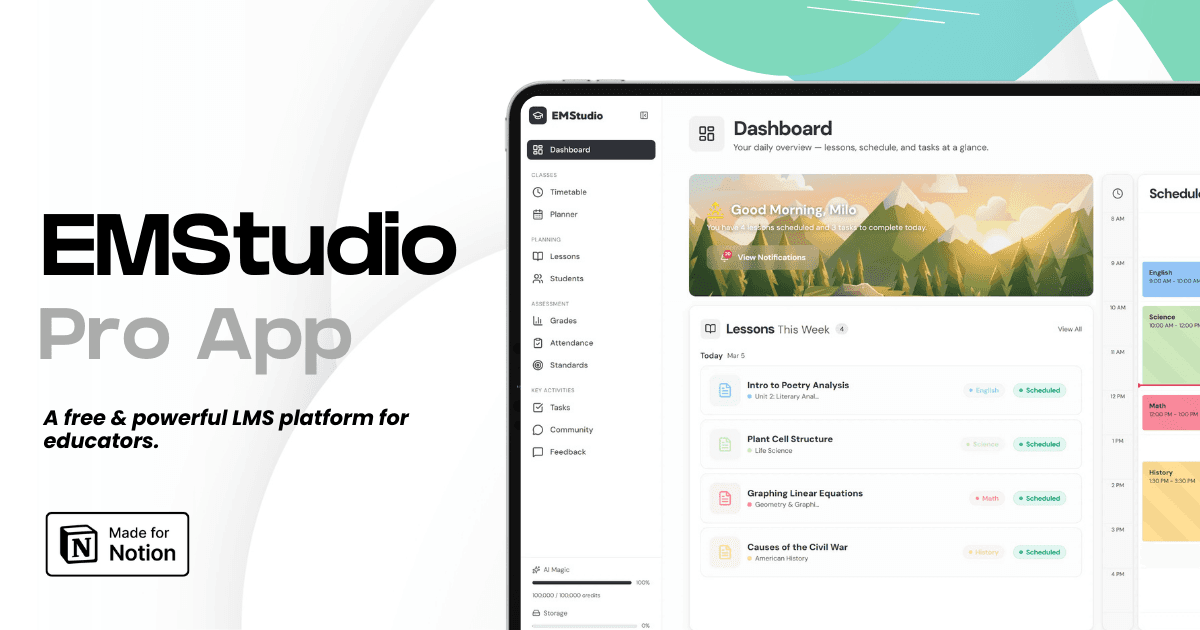
Still grading everything by hand?
EMStudio is a free teaching management app — manage your classes, students, lessons, and more!
Learn More
Still grading everything by hand?
EMStudio is a free teaching management app — manage your classes, students, lessons, and more!
Learn More
Table of Contents
What Are the Best Seasonal Classroom Events?
The best seasonal classroom events include back-to-school meet-and-greets with station rotations, winter cultural fairs celebrating diverse holidays through hands-on crafts, and end-of-year portfolio showcases featuring student-led conferences. These anchor the academic calendar while building family engagement and providing authentic assessment opportunities.
Seasonal classroom events mark time better than any poster on the wall. They give students landmarks to anticipate and parents rhythm to rely on. I block six weeks for planning each one. That buffer absorbs the inevitable setbacks—broken laminators, canceled supply orders, snow days—without sending you into panic mode.
August: Back-to-School Meet-and-Greet ($0-$50, 3-5 prep hours)
December: Winter Holiday Cultural Fair ($50-$150, 8-10 prep hours)
May: End-of-Year Portfolio Showcase ($0-$30, 6-8 prep hours)
One scheduling warning: avoid May showcase dates during standardized testing windows. When families juggle your open house against state test make-up sessions, attendance drops by roughly 40%.
John Hattie's Visible Learning research places family engagement at an effect size of 0.49 for academic outcomes. That approaches one year's growth. The hours you pour into these classroom activities yield measurable results in student achievement, not just warm photo opportunities.
Back-to-School Meet-and-Greet Events
Structure this as a 90-minute evening rotation. Set four stations. Supply Drop-off uses pre-labeled bins so families ditch backpacks without hunting for cubbies. Family Interview hands out index cards with three questions: "What does your child read at home?" "What should I know about their learning style?" "What is one hope for this year?" The Photo Booth needs literacy props—speech bubbles with vocabulary words, cutouts of book covers. The Classroom Scavenger Hunt sends kids locating ten items: the pencil sharpener, the bathroom pass, the calm-down corner.
Logistics matter. With 24 students, expect 45 family units. Rotate every 15 minutes. Keep it tight. Budget $30-50 for photo props and snacks, or go free with a Padlet board for virtual introductions if space is tight.
Check your community first. If more than 60% of your families work evening shifts, flip the script. Offer Coffee and Curriculum from 7:30-8:30 AM instead. Same stations, just with caffeine. This differentiation ensures equity without sacrificing student engagement.
Winter Holiday Cultural Fair
Run six stations representing Diwali, Hanukkah, Christmas, Kwanzaa, Lunar New Year, and Winter Solstice. Ten minutes per rotation keeps energy high without dragging. These fun classroom activities build cultural responsiveness while respecting instructional time.
Diya painting costs $0.50 per student if you buy bulk clay lamps on Amazon. Dreidel games teach probability while using chocolate gelt. Kinara coloring pairs with crepe paper flames. Snowflake symmetry hits math standards while staying seasonal. Every station involves hands-on learning that feels like play.
Frame everything as cultural anthropology, not religious instruction. Students carry a passport booklet noting similarities across traditions: light, family, food. They compare, not celebrate. This keeps you compliant while honoring diverse backgrounds.
End-of-Year Portfolio Showcase
Host a two-hour open house. Students lead ten-minute conferences with their families. Display digital portfolios on Seesaw or Google Sites alongside three physical artifact stations showcasing writing growth, math problem-solving, and science inquiry. This project-based learning culmination proves growth better than any report card.
Preparation takes three weeks. Use a 3 Stars and 1 Wish rubric. Students pick evidence of growth, not perfect papers. This teaches reflection better than any worksheet. When creating effective student portfolios, let students curate the messiness of learning.
One hard lesson: require sign-out sheets for every tablet and laptop. One in five schools report missing devices after open house events without checkout systems. Protect your tech.
Cultural and Historical Celebration Events
Cultural classroom events walk a fine line. You want celebration, but you risk creating a tourist curriculum where students sample foods and leave with stereotypes intact. The difference lies in who controls the narrative.
Authentic cultural learning looks different from surface-level exposure:
Depth: Primary sources, community voices, student agency over research questions, connections to contemporary issues
Surface: Food, festivals, and famous figures only, with no context for why traditions matter
When you lack background knowledge, you become a liability. I've seen well-meaning teachers reduce Dia de los Muertos to "Mexican Halloween" or teach Native American units solely through paper headdresses. The fix isn't more worksheets. You need a community partner—someone from a local cultural center or university ethnic studies department—to review your plans before the kids arrive. This isn't optional. It's a safety check for accuracy.
Rosenshine's Principles remind us that comprehension depends on background knowledge. These events aren't just fun Fridays. They build the schema students need to understand historical texts later. A child who has handled genuine artifacts or spoken with community elders brings richer context to Civil Rights primary sources or immigration narratives. This is where culturally responsive teaching principles meet practical project-based learning.
Black History Month Living Museum
This format works for 3rd through 8th grade. Students research one figure using primary sources from the Library of Congress or your local historical society—not Wikipedia biographies. They create a costume with three symbolic props and prepare a two-minute monologue delivered in first person. The research phase takes two weeks; the performance lasts one class period.
Set up twenty exhibit stations around your classroom or gym. The audience carries a paper "button" (a red sticker works) to press when they want to activate a performance. Performers freeze when the button releases. This structure builds in student engagement through drama while controlling the chaos. The freeze frame gives performers a break between visitors and prevents exhaustion.
For differentiated instruction, let students with speech anxiety record their monologues on Flipgrid instead of performing live. Others can serve as museum docents, guiding visitors between stations using prepared scripts that explain historical context. Both roles require deep knowledge of the figure, so the learning activities remain rigorous regardless of the presentation format. I've had shy students shine as docents because they could rely on note cards while still demonstrating mastery.
Hispanic Heritage Month Fiesta
Drop the "Fiesta" framing. It reinforces the stereotype that Hispanic heritage equals parties and tacos. Instead, run a Heritage Symposium with regional focus stations: Mexico (indigenous textiles and weaving patterns), the Caribbean (music and colonial history), Central America (biodiversity and conservation efforts), and South America (geography and Incan mathematics systems).
Fourth graders and up can handle salsa making with metric conversions built into the recipe—authentic hands-on learning that hits math standards while respecting culinary traditions. Add a map geography challenge using blank maps and an author study featuring Juana Martinez-Neal or Gary Soto. These black history month activities for students work year-round; the symposium structure transfers to any heritage month with slight modifications.
Budget fifty to one hundred dollars for gift cards to compensate two or three Spanish-speaking families or local business owners as guest speakers. If funds are tight, record video interviews with university students instead. This builds family engagement while ensuring your content comes from community voices rather than outdated textbooks. Paying community members for their expertise signals that their knowledge has value.
AAPI Heritage Month Learning Stations
The model minority myth flattens AAPI experiences into a single story of academic achievement. Combat this by highlighting diverse communities across Pacific Islander, South Asian, East Asian, and Southeast Asian heritages through four distinct stations that show struggle, resistance, and cultural specificity.
At the first station, students practice Filipino Baybayin script art using bamboo brushes and handmade paper. The second runs a Korean dalgona candy chemistry challenge exploring sugar crystal structure and heat transfer. The third examines Pacific Islander navigation using star maps and non-instrument wayfinding techniques. The fourth features Asian American graphic novel excerpts from Gene Luen Yang or Thi Bui dealing with immigration and identity. These stations work for 5th through 12th grade.
Prep requires about four hours sourcing materials from the AAPI Curriculum Project or the Smithsonian Asian Pacific American Center free resources. The upfront work pays off in cultural responsiveness that lasts beyond the event. When students encounter these histories in future texts, they'll recognize the names and contexts because they touched them, tasted them, or drew them. That's the difference between coverage and actual learning.
What Interactive Events Boost Student Engagement?
Interactive events that boost engagement include academic escape rooms with differentiated hint systems, family STEM nights with competitive engineering challenges, and monthly morning meeting festivals where classes share community-building routines. These kinesthetic classroom events increase retention through hands-on participation and social learning. Studies indicate that hands-on participation increases retention of procedural knowledge compared to passive instruction, making active student engagement strategies worth the logistical effort.
The same retention principle applies between events, too: studios like F. Learning Studio use educational animation to turn abstract or high-risk concepts into clear visuals, giving students the same 'show, don't tell' boost that hands-on stations do.
Before you commit, weigh the practical constraints:
Academic Escape Rooms: Cost: Medium ($150 Breakout EDU kit or $15 DIY). Prep: 3–4 hours. Space: Classroom. Noise: 60–70 dB (collaborative chatter). Rigor: Analysis/Evaluation (Bloom's).
Family STEM Night: Cost: Medium-High ($350 initial). Prep: 6–8 hours. Space: Gym/Multipurpose. Noise: 75+ dB (excited competition). Rigor: Application/Analysis.
Morning Meeting Festival: Cost: Low ($0–20). Prep: 1–2 hours. Space: Classroom hallways. Noise: 50–60 dB (structured talk). Rigor: Understanding/Application.
One failure mode to avoid: classroom escape room activities frustrate students reading below 4th-grade level when clues rely on dense text. Provide audio QR code hints as universal design for learning.
Academic Escape Room Challenges
You can run these with a Breakout EDU kit ($150 for locks and box) or go DIY with 4-digit combination locks ($8 Amazon Basics) and five manila envelopes containing content clues. I use math word problems, historical dates, or vocabulary definitions tucked inside the envelopes. For a 7th grade ELA session with 32 students, split them into four teams of eight and set a 45-minute timer. Target a 70–80% success rate; if teams struggle, allow three hint cards per team and reserve extra hints for students with IEPs or 504 plans. These classroom gamification methods work best when you frontload the differentiated instruction.
Ensure the reading level of clues does not exceed grade level by more than one year. For mixed-ability groups, assign specific roles so decoding text is not the only valued skill. The Reader handles text, the Lock Mechanic manages the combinations, the Recorder tracks clues, and the Timekeeper monitors progress. This distributes cognitive load and keeps every student engaged in the hands-on learning.
Family Engagement STEM Night
Set up six engineering challenge stations: Catapult distance measurement, bridge building with exactly 50 straws, circuit bugs with LEDs and coin batteries, and unplugged coding grids. Families compete in pairs—one adult plus one child—which changes the dynamic from parent-as-observer to parent-as-teammate. This structure supports project-based learning through immediate prototyping and testing. Budget $200 for consumables serving 60 participants; store reusable materials in labeled bins to drop next year's cost to $50. If you serve pizza ($150), attendance jumps by 35% in Title I schools compared to academic-only evenings. This aligns with building family engagement plans that prioritize accessibility over elegance.
Schedule the event from 6:00–8:00 PM to accommodate working parents. Provide Spanish/English bilingual challenge cards, but have your ELL department translate them—never use Google Translate for technical vocabulary. The noise hits 75 decibels fast, so avoid classrooms with shared walls.
Student-Led Morning Meeting Festival
Once monthly, extend your 15-minute morning meeting to a 45-minute festival where classes rotate through four peer classrooms to demonstrate their meeting structure: Greeting, Share, Activity, Message. This turns classroom engagement activities into peer teaching. Students lead Sparkle spelling games, Zip Zap Zop concentration challenges, Would You Rather social-emotional cards, or "One Word Whip Around" using resources from the Center for Responsive Schools.
Management separates success from chaos. Use Domain 4.2 from the Danielson Framework—managing classroom activities—to ensure transitions between rooms are silent and efficient. Practice hallway procedures three times before event day. When 3rd graders move quietly between rooms to share their fun activities for students, you maintain instructional time while building school-wide community. These routines support cultural responsiveness by letting each class showcase their unique identity through their chosen greeting or share structure.
Academic and Project-Based Showcase Events
Before you clear the bulletin boards for another showcase, run your project through three checkpoints. First: did students answer the driving question with real evidence, not just pretty posters? Second: have they identified an authentic audience beyond you—the principal, a city council member, a local business owner who might actually use the solution? Third: did they complete a full feedback loop, moving from rough draft to peer critique to actual revision, not just grammar fixes? If you hit all three, you’re ready for exhibition. Research on project-based learning suggests that public exhibitions increase student motivation and retention of content knowledge compared to assignments submitted only to the teacher. This connects directly to Danielson Framework Domain 3—using assessment in instruction—because the exhibition itself becomes a formative assessment moment where you watch students explain their thinking in real time. It also hits Domain 4 when you communicate with families not through another email, but by inviting them into your project based classroom to witness their child’s work firsthand.
Project-Based Learning Exhibition
Structure your exhibition so visitors know what they’re looking at. Display the driving question on large banners at eye level. Post the need-to-know list your students generated on day one—it shows the messiness of real inquiry. Set up a final product gallery where students stand beside their work with expert cards explaining their process, their dead ends, and their breakthroughs. Place feedback forms at each station using the “2 stars and 1 wish” format so visitors note what worked and what needs tweaking for next time.
Skip the posterboard parade. Last spring, my fifth graders tackled “How can we reduce our school’s carbon footprint?” They didn’t make dioramas. They presented actual proposals with cost-benefit analyses to our principal and facilities manager. One group calculated LED retrofit savings. Another mapped compost bin locations. The facilities manager implemented two ideas the following month. That’s authentic audience.
For assessment, use a rubric with four categories:
Content Knowledge
Presentation Skills
Process Documentation
Community Impact
Have guests score on a 1-4 scale. Require each student to complete at least three “expert interactions”—explaining their work to three different visitors—so they can’t hide behind the display. If you’re new to this format, check out our project-based learning implementation guide for timeline templates.
Poetry Slam and Literary Cafe
Turn your classroom into a coffee house for two hours one evening. Borrow rugs and lamps from staff homes to kill the fluorescent lighting. Set up open mic signup with a strict three-minute time limit—appoint a student MC with a visible timer to enforce it. Serve cookies and decaf coffee. The snacks aren’t just nice; they signal that this is a different kind of classroom event, one where family engagement happens through listening rather than conferencing.
Make it inclusive. Allow rap, spoken word, and group performances. For shy readers, offer the “poem in pocket” option—they submit work anonymously, and you or a peer reads it aloud. If you have deaf family members, arrange an ASL interpreter. Don’t force rhyming poetry; validate free verse and slam styles so every student sees their voice as literary, not just the ones who can rhyme "cat" with "hat".
Prepare over six weeks using Poetry Out Loud (free NEA resources) or Poets.org lesson plans. This works for grades 6-12. Pair these classroom activities for students with tools to support creative writers like digital poetry generators or revision trackers to build student engagement before the big night.
Science Fair and Innovation Expo
Ditch the tri-fold volcano. Modern science fairs require engineering design process display boards that show three failed iterations with dates. Students attach QR codes linking to two-minute video explanations hosted on secure school platforms—not public YouTube. This forces hands-on learning and documents the actual struggle of innovation.
Use a judging rubric weighted as follows:
Creativity (30%)
Scientific Method (30%)
Presentation (20%)
Iteration Evidence (20%)
Bring in high school science students as judges alongside teachers. Teenagers ask harder questions than adults, and their presence raises the stakes for authenticity.
Prevent parent takeovers by requiring weekly in-class logbook checks with your initials. If a project shows adult-level construction but lacks process documentation—no sketches, no failed prototypes, no "what went wrong" entries—mark it “participation only” and remove it from competition. This protects differentiated instruction and keeps the focus on what the child actually learned. These showcases work best when they reflect cultural responsiveness—allowing students to investigate questions that matter in their communities rather than forcing predetermined topics that ignore their lived experience.
How to Plan and Execute Successful Classroom Events?
Successful classroom events require 6-8 weeks of planning starting with learning objective alignment, followed by logistics coordination (space, budget $50-300, permits), differentiated preparation for diverse learners, and post-event reflection with student input. Avoid scheduling during standardized testing windows or the first/last weeks of school when attendance drops significantly. Solid planning habits of effective educators make the difference between a memorable showcase and a stressful evening.
The 8-Week Countdown
Pull out your calendar. Classroom events fall apart when you wing them. I learned this the hard way during a "simple" poetry slam that turned into chaos because I booked the cafeteria during the lunch period. Here is the sequence that works:
Week 1: Align to standards. Decide if this supports your curriculum or builds community. If it is purely social, know that Title I scrutiny increases. Connect it to project-based learning outcomes or cultural responsiveness goals.
Week 2: Secure admin approval and space reservation. Submit that facility request form now. The multipurpose room books fast.
Week 3: Budget $50-300 and order materials. Most events run on spare change and hope. Set real numbers now.
Week 4: Send save-the-date. Email families before the weekend. Mention if siblings are welcome.
Week 5: Differentiate for IEP/504/ELL needs. This is where differentiated instruction matters. Will the noise level overwhelm your student with sensory processing needs? Plan a quiet corner or alternate participation format.
Week 6: Recruit volunteers. You cannot run the slide deck and pass out snacks simultaneously. Ask your PTA or high school service clubs.
Week 7: Prep materials. Copy handouts, test the microphone, charge the iPads. Build in buffer time.
Week 8: Execute and debrief. Run the event, then ask students what worked. Their feedback shapes the next one.
Debriefing matters. After the last family leaves, jot down what ran out, which station bombed, and whether the timing worked. I keep a running note in my phone because I will not remember in May that November's event needed more chairs.
Budget Realities
Money disappears fast. I use this breakdown for a typical event serving 30 families:
Materials (40%): Construction paper, markers, glue sticks for hands-on learning stations.
Food (30%): Bottled water and pretzels. Feeding people brings them back.
Decorations (15%): One banner and tablecloths. Skip the balloons that trigger latex allergies.
Contingency (15%): The inevitable "we ran out of..." fund.
Remember: Title I funds can cover family engagement events tied to academic goals, but not pizza parties disguised as meetings. Check with your business office before charging the card.
When to Schedule (And When to Avoid)
Timing determines turnout. Do not host events during the first or last weeks of school—families are either overwhelmed by orientation or checked out for summer. Standardized testing windows create stress that kills student engagement. Report card distribution weeks pull parent attention toward grades, not gatherings. Holiday weeks compete with travel plans.
Instead, aim for weeks 4, 12, and 32 of a 36-week calendar. These land after routines solidify, before breaks, and when energy is high but not frantic.
Managing the Chaos: Danielson 4.2
Danielson's 4.2 manage classroom activities component applies to events too. Twenty-five third graders and their parents in one room can turn into a free-for-all without structure.
Use clock partners or color groups to organize movement. "Red tables rotate to the science fair boards now; blue tables start with the teacher activities station." This prevents the bottleneck at the cookie table and keeps student engagement distributed across your hands-on learning centers. Practice transitions during your morning meeting activities pdf routines so students know the signals.
On the day, arrive 45 minutes early. Test the projector before families enter. Have a clipboard with check-in sheets and name tags ready. This is where time management for teachers pays off—when you are not scrambling for extension cords, you can actually talk to families about their child's project-based learning display. Keep a phone charger handy for photos; parents love candid shots of their kids explaining experiments. Stand near the door to greet stragglers personally.
Ask students three questions the next day: What did you teach your family? What felt confusing? What should we do differently? Their answers guide your next event and show cultural responsiveness in action when you adjust based on their community insights.
Final Thoughts on Classroom Events
You don't need a Pinterest-worthy production. The events that stick are the ones where students do the heavy lifting, not you. Pick one idea from this list that aligns with what your kids actually care about right now. Block the date on your calendar before you leave school today. Done.
Send one email tonight. Tell parents the date and ask for one specific thing—paper towel tubes, a volunteer to pour juice, or just show up. Small asks get yeses. Big asks get ignored.
Your room will be messy. Your schedule will slip. But when a kid explains their project to a parent or teaches a peer how to fold that origami frog, that's the engagement you can't fake. Start there.
What Are the Best Seasonal Classroom Events?
The best seasonal classroom events include back-to-school meet-and-greets with station rotations, winter cultural fairs celebrating diverse holidays through hands-on crafts, and end-of-year portfolio showcases featuring student-led conferences. These anchor the academic calendar while building family engagement and providing authentic assessment opportunities.
Seasonal classroom events mark time better than any poster on the wall. They give students landmarks to anticipate and parents rhythm to rely on. I block six weeks for planning each one. That buffer absorbs the inevitable setbacks—broken laminators, canceled supply orders, snow days—without sending you into panic mode.
August: Back-to-School Meet-and-Greet ($0-$50, 3-5 prep hours)
December: Winter Holiday Cultural Fair ($50-$150, 8-10 prep hours)
May: End-of-Year Portfolio Showcase ($0-$30, 6-8 prep hours)
One scheduling warning: avoid May showcase dates during standardized testing windows. When families juggle your open house against state test make-up sessions, attendance drops by roughly 40%.
John Hattie's Visible Learning research places family engagement at an effect size of 0.49 for academic outcomes. That approaches one year's growth. The hours you pour into these classroom activities yield measurable results in student achievement, not just warm photo opportunities.
Back-to-School Meet-and-Greet Events
Structure this as a 90-minute evening rotation. Set four stations. Supply Drop-off uses pre-labeled bins so families ditch backpacks without hunting for cubbies. Family Interview hands out index cards with three questions: "What does your child read at home?" "What should I know about their learning style?" "What is one hope for this year?" The Photo Booth needs literacy props—speech bubbles with vocabulary words, cutouts of book covers. The Classroom Scavenger Hunt sends kids locating ten items: the pencil sharpener, the bathroom pass, the calm-down corner.
Logistics matter. With 24 students, expect 45 family units. Rotate every 15 minutes. Keep it tight. Budget $30-50 for photo props and snacks, or go free with a Padlet board for virtual introductions if space is tight.
Check your community first. If more than 60% of your families work evening shifts, flip the script. Offer Coffee and Curriculum from 7:30-8:30 AM instead. Same stations, just with caffeine. This differentiation ensures equity without sacrificing student engagement.
Winter Holiday Cultural Fair
Run six stations representing Diwali, Hanukkah, Christmas, Kwanzaa, Lunar New Year, and Winter Solstice. Ten minutes per rotation keeps energy high without dragging. These fun classroom activities build cultural responsiveness while respecting instructional time.
Diya painting costs $0.50 per student if you buy bulk clay lamps on Amazon. Dreidel games teach probability while using chocolate gelt. Kinara coloring pairs with crepe paper flames. Snowflake symmetry hits math standards while staying seasonal. Every station involves hands-on learning that feels like play.
Frame everything as cultural anthropology, not religious instruction. Students carry a passport booklet noting similarities across traditions: light, family, food. They compare, not celebrate. This keeps you compliant while honoring diverse backgrounds.
End-of-Year Portfolio Showcase
Host a two-hour open house. Students lead ten-minute conferences with their families. Display digital portfolios on Seesaw or Google Sites alongside three physical artifact stations showcasing writing growth, math problem-solving, and science inquiry. This project-based learning culmination proves growth better than any report card.
Preparation takes three weeks. Use a 3 Stars and 1 Wish rubric. Students pick evidence of growth, not perfect papers. This teaches reflection better than any worksheet. When creating effective student portfolios, let students curate the messiness of learning.
One hard lesson: require sign-out sheets for every tablet and laptop. One in five schools report missing devices after open house events without checkout systems. Protect your tech.
Cultural and Historical Celebration Events
Cultural classroom events walk a fine line. You want celebration, but you risk creating a tourist curriculum where students sample foods and leave with stereotypes intact. The difference lies in who controls the narrative.
Authentic cultural learning looks different from surface-level exposure:
Depth: Primary sources, community voices, student agency over research questions, connections to contemporary issues
Surface: Food, festivals, and famous figures only, with no context for why traditions matter
When you lack background knowledge, you become a liability. I've seen well-meaning teachers reduce Dia de los Muertos to "Mexican Halloween" or teach Native American units solely through paper headdresses. The fix isn't more worksheets. You need a community partner—someone from a local cultural center or university ethnic studies department—to review your plans before the kids arrive. This isn't optional. It's a safety check for accuracy.
Rosenshine's Principles remind us that comprehension depends on background knowledge. These events aren't just fun Fridays. They build the schema students need to understand historical texts later. A child who has handled genuine artifacts or spoken with community elders brings richer context to Civil Rights primary sources or immigration narratives. This is where culturally responsive teaching principles meet practical project-based learning.
Black History Month Living Museum
This format works for 3rd through 8th grade. Students research one figure using primary sources from the Library of Congress or your local historical society—not Wikipedia biographies. They create a costume with three symbolic props and prepare a two-minute monologue delivered in first person. The research phase takes two weeks; the performance lasts one class period.
Set up twenty exhibit stations around your classroom or gym. The audience carries a paper "button" (a red sticker works) to press when they want to activate a performance. Performers freeze when the button releases. This structure builds in student engagement through drama while controlling the chaos. The freeze frame gives performers a break between visitors and prevents exhaustion.
For differentiated instruction, let students with speech anxiety record their monologues on Flipgrid instead of performing live. Others can serve as museum docents, guiding visitors between stations using prepared scripts that explain historical context. Both roles require deep knowledge of the figure, so the learning activities remain rigorous regardless of the presentation format. I've had shy students shine as docents because they could rely on note cards while still demonstrating mastery.
Hispanic Heritage Month Fiesta
Drop the "Fiesta" framing. It reinforces the stereotype that Hispanic heritage equals parties and tacos. Instead, run a Heritage Symposium with regional focus stations: Mexico (indigenous textiles and weaving patterns), the Caribbean (music and colonial history), Central America (biodiversity and conservation efforts), and South America (geography and Incan mathematics systems).
Fourth graders and up can handle salsa making with metric conversions built into the recipe—authentic hands-on learning that hits math standards while respecting culinary traditions. Add a map geography challenge using blank maps and an author study featuring Juana Martinez-Neal or Gary Soto. These black history month activities for students work year-round; the symposium structure transfers to any heritage month with slight modifications.
Budget fifty to one hundred dollars for gift cards to compensate two or three Spanish-speaking families or local business owners as guest speakers. If funds are tight, record video interviews with university students instead. This builds family engagement while ensuring your content comes from community voices rather than outdated textbooks. Paying community members for their expertise signals that their knowledge has value.
AAPI Heritage Month Learning Stations
The model minority myth flattens AAPI experiences into a single story of academic achievement. Combat this by highlighting diverse communities across Pacific Islander, South Asian, East Asian, and Southeast Asian heritages through four distinct stations that show struggle, resistance, and cultural specificity.
At the first station, students practice Filipino Baybayin script art using bamboo brushes and handmade paper. The second runs a Korean dalgona candy chemistry challenge exploring sugar crystal structure and heat transfer. The third examines Pacific Islander navigation using star maps and non-instrument wayfinding techniques. The fourth features Asian American graphic novel excerpts from Gene Luen Yang or Thi Bui dealing with immigration and identity. These stations work for 5th through 12th grade.
Prep requires about four hours sourcing materials from the AAPI Curriculum Project or the Smithsonian Asian Pacific American Center free resources. The upfront work pays off in cultural responsiveness that lasts beyond the event. When students encounter these histories in future texts, they'll recognize the names and contexts because they touched them, tasted them, or drew them. That's the difference between coverage and actual learning.
What Interactive Events Boost Student Engagement?
Interactive events that boost engagement include academic escape rooms with differentiated hint systems, family STEM nights with competitive engineering challenges, and monthly morning meeting festivals where classes share community-building routines. These kinesthetic classroom events increase retention through hands-on participation and social learning. Studies indicate that hands-on participation increases retention of procedural knowledge compared to passive instruction, making active student engagement strategies worth the logistical effort.
The same retention principle applies between events, too: studios like F. Learning Studio use educational animation to turn abstract or high-risk concepts into clear visuals, giving students the same 'show, don't tell' boost that hands-on stations do.
Before you commit, weigh the practical constraints:
Academic Escape Rooms: Cost: Medium ($150 Breakout EDU kit or $15 DIY). Prep: 3–4 hours. Space: Classroom. Noise: 60–70 dB (collaborative chatter). Rigor: Analysis/Evaluation (Bloom's).
Family STEM Night: Cost: Medium-High ($350 initial). Prep: 6–8 hours. Space: Gym/Multipurpose. Noise: 75+ dB (excited competition). Rigor: Application/Analysis.
Morning Meeting Festival: Cost: Low ($0–20). Prep: 1–2 hours. Space: Classroom hallways. Noise: 50–60 dB (structured talk). Rigor: Understanding/Application.
One failure mode to avoid: classroom escape room activities frustrate students reading below 4th-grade level when clues rely on dense text. Provide audio QR code hints as universal design for learning.
Academic Escape Room Challenges
You can run these with a Breakout EDU kit ($150 for locks and box) or go DIY with 4-digit combination locks ($8 Amazon Basics) and five manila envelopes containing content clues. I use math word problems, historical dates, or vocabulary definitions tucked inside the envelopes. For a 7th grade ELA session with 32 students, split them into four teams of eight and set a 45-minute timer. Target a 70–80% success rate; if teams struggle, allow three hint cards per team and reserve extra hints for students with IEPs or 504 plans. These classroom gamification methods work best when you frontload the differentiated instruction.
Ensure the reading level of clues does not exceed grade level by more than one year. For mixed-ability groups, assign specific roles so decoding text is not the only valued skill. The Reader handles text, the Lock Mechanic manages the combinations, the Recorder tracks clues, and the Timekeeper monitors progress. This distributes cognitive load and keeps every student engaged in the hands-on learning.
Family Engagement STEM Night
Set up six engineering challenge stations: Catapult distance measurement, bridge building with exactly 50 straws, circuit bugs with LEDs and coin batteries, and unplugged coding grids. Families compete in pairs—one adult plus one child—which changes the dynamic from parent-as-observer to parent-as-teammate. This structure supports project-based learning through immediate prototyping and testing. Budget $200 for consumables serving 60 participants; store reusable materials in labeled bins to drop next year's cost to $50. If you serve pizza ($150), attendance jumps by 35% in Title I schools compared to academic-only evenings. This aligns with building family engagement plans that prioritize accessibility over elegance.
Schedule the event from 6:00–8:00 PM to accommodate working parents. Provide Spanish/English bilingual challenge cards, but have your ELL department translate them—never use Google Translate for technical vocabulary. The noise hits 75 decibels fast, so avoid classrooms with shared walls.
Student-Led Morning Meeting Festival
Once monthly, extend your 15-minute morning meeting to a 45-minute festival where classes rotate through four peer classrooms to demonstrate their meeting structure: Greeting, Share, Activity, Message. This turns classroom engagement activities into peer teaching. Students lead Sparkle spelling games, Zip Zap Zop concentration challenges, Would You Rather social-emotional cards, or "One Word Whip Around" using resources from the Center for Responsive Schools.
Management separates success from chaos. Use Domain 4.2 from the Danielson Framework—managing classroom activities—to ensure transitions between rooms are silent and efficient. Practice hallway procedures three times before event day. When 3rd graders move quietly between rooms to share their fun activities for students, you maintain instructional time while building school-wide community. These routines support cultural responsiveness by letting each class showcase their unique identity through their chosen greeting or share structure.
Academic and Project-Based Showcase Events
Before you clear the bulletin boards for another showcase, run your project through three checkpoints. First: did students answer the driving question with real evidence, not just pretty posters? Second: have they identified an authentic audience beyond you—the principal, a city council member, a local business owner who might actually use the solution? Third: did they complete a full feedback loop, moving from rough draft to peer critique to actual revision, not just grammar fixes? If you hit all three, you’re ready for exhibition. Research on project-based learning suggests that public exhibitions increase student motivation and retention of content knowledge compared to assignments submitted only to the teacher. This connects directly to Danielson Framework Domain 3—using assessment in instruction—because the exhibition itself becomes a formative assessment moment where you watch students explain their thinking in real time. It also hits Domain 4 when you communicate with families not through another email, but by inviting them into your project based classroom to witness their child’s work firsthand.
Project-Based Learning Exhibition
Structure your exhibition so visitors know what they’re looking at. Display the driving question on large banners at eye level. Post the need-to-know list your students generated on day one—it shows the messiness of real inquiry. Set up a final product gallery where students stand beside their work with expert cards explaining their process, their dead ends, and their breakthroughs. Place feedback forms at each station using the “2 stars and 1 wish” format so visitors note what worked and what needs tweaking for next time.
Skip the posterboard parade. Last spring, my fifth graders tackled “How can we reduce our school’s carbon footprint?” They didn’t make dioramas. They presented actual proposals with cost-benefit analyses to our principal and facilities manager. One group calculated LED retrofit savings. Another mapped compost bin locations. The facilities manager implemented two ideas the following month. That’s authentic audience.
For assessment, use a rubric with four categories:
Content Knowledge
Presentation Skills
Process Documentation
Community Impact
Have guests score on a 1-4 scale. Require each student to complete at least three “expert interactions”—explaining their work to three different visitors—so they can’t hide behind the display. If you’re new to this format, check out our project-based learning implementation guide for timeline templates.
Poetry Slam and Literary Cafe
Turn your classroom into a coffee house for two hours one evening. Borrow rugs and lamps from staff homes to kill the fluorescent lighting. Set up open mic signup with a strict three-minute time limit—appoint a student MC with a visible timer to enforce it. Serve cookies and decaf coffee. The snacks aren’t just nice; they signal that this is a different kind of classroom event, one where family engagement happens through listening rather than conferencing.
Make it inclusive. Allow rap, spoken word, and group performances. For shy readers, offer the “poem in pocket” option—they submit work anonymously, and you or a peer reads it aloud. If you have deaf family members, arrange an ASL interpreter. Don’t force rhyming poetry; validate free verse and slam styles so every student sees their voice as literary, not just the ones who can rhyme "cat" with "hat".
Prepare over six weeks using Poetry Out Loud (free NEA resources) or Poets.org lesson plans. This works for grades 6-12. Pair these classroom activities for students with tools to support creative writers like digital poetry generators or revision trackers to build student engagement before the big night.
Science Fair and Innovation Expo
Ditch the tri-fold volcano. Modern science fairs require engineering design process display boards that show three failed iterations with dates. Students attach QR codes linking to two-minute video explanations hosted on secure school platforms—not public YouTube. This forces hands-on learning and documents the actual struggle of innovation.
Use a judging rubric weighted as follows:
Creativity (30%)
Scientific Method (30%)
Presentation (20%)
Iteration Evidence (20%)
Bring in high school science students as judges alongside teachers. Teenagers ask harder questions than adults, and their presence raises the stakes for authenticity.
Prevent parent takeovers by requiring weekly in-class logbook checks with your initials. If a project shows adult-level construction but lacks process documentation—no sketches, no failed prototypes, no "what went wrong" entries—mark it “participation only” and remove it from competition. This protects differentiated instruction and keeps the focus on what the child actually learned. These showcases work best when they reflect cultural responsiveness—allowing students to investigate questions that matter in their communities rather than forcing predetermined topics that ignore their lived experience.
How to Plan and Execute Successful Classroom Events?
Successful classroom events require 6-8 weeks of planning starting with learning objective alignment, followed by logistics coordination (space, budget $50-300, permits), differentiated preparation for diverse learners, and post-event reflection with student input. Avoid scheduling during standardized testing windows or the first/last weeks of school when attendance drops significantly. Solid planning habits of effective educators make the difference between a memorable showcase and a stressful evening.
The 8-Week Countdown
Pull out your calendar. Classroom events fall apart when you wing them. I learned this the hard way during a "simple" poetry slam that turned into chaos because I booked the cafeteria during the lunch period. Here is the sequence that works:
Week 1: Align to standards. Decide if this supports your curriculum or builds community. If it is purely social, know that Title I scrutiny increases. Connect it to project-based learning outcomes or cultural responsiveness goals.
Week 2: Secure admin approval and space reservation. Submit that facility request form now. The multipurpose room books fast.
Week 3: Budget $50-300 and order materials. Most events run on spare change and hope. Set real numbers now.
Week 4: Send save-the-date. Email families before the weekend. Mention if siblings are welcome.
Week 5: Differentiate for IEP/504/ELL needs. This is where differentiated instruction matters. Will the noise level overwhelm your student with sensory processing needs? Plan a quiet corner or alternate participation format.
Week 6: Recruit volunteers. You cannot run the slide deck and pass out snacks simultaneously. Ask your PTA or high school service clubs.
Week 7: Prep materials. Copy handouts, test the microphone, charge the iPads. Build in buffer time.
Week 8: Execute and debrief. Run the event, then ask students what worked. Their feedback shapes the next one.
Debriefing matters. After the last family leaves, jot down what ran out, which station bombed, and whether the timing worked. I keep a running note in my phone because I will not remember in May that November's event needed more chairs.
Budget Realities
Money disappears fast. I use this breakdown for a typical event serving 30 families:
Materials (40%): Construction paper, markers, glue sticks for hands-on learning stations.
Food (30%): Bottled water and pretzels. Feeding people brings them back.
Decorations (15%): One banner and tablecloths. Skip the balloons that trigger latex allergies.
Contingency (15%): The inevitable "we ran out of..." fund.
Remember: Title I funds can cover family engagement events tied to academic goals, but not pizza parties disguised as meetings. Check with your business office before charging the card.
When to Schedule (And When to Avoid)
Timing determines turnout. Do not host events during the first or last weeks of school—families are either overwhelmed by orientation or checked out for summer. Standardized testing windows create stress that kills student engagement. Report card distribution weeks pull parent attention toward grades, not gatherings. Holiday weeks compete with travel plans.
Instead, aim for weeks 4, 12, and 32 of a 36-week calendar. These land after routines solidify, before breaks, and when energy is high but not frantic.
Managing the Chaos: Danielson 4.2
Danielson's 4.2 manage classroom activities component applies to events too. Twenty-five third graders and their parents in one room can turn into a free-for-all without structure.
Use clock partners or color groups to organize movement. "Red tables rotate to the science fair boards now; blue tables start with the teacher activities station." This prevents the bottleneck at the cookie table and keeps student engagement distributed across your hands-on learning centers. Practice transitions during your morning meeting activities pdf routines so students know the signals.
On the day, arrive 45 minutes early. Test the projector before families enter. Have a clipboard with check-in sheets and name tags ready. This is where time management for teachers pays off—when you are not scrambling for extension cords, you can actually talk to families about their child's project-based learning display. Keep a phone charger handy for photos; parents love candid shots of their kids explaining experiments. Stand near the door to greet stragglers personally.
Ask students three questions the next day: What did you teach your family? What felt confusing? What should we do differently? Their answers guide your next event and show cultural responsiveness in action when you adjust based on their community insights.
Final Thoughts on Classroom Events
You don't need a Pinterest-worthy production. The events that stick are the ones where students do the heavy lifting, not you. Pick one idea from this list that aligns with what your kids actually care about right now. Block the date on your calendar before you leave school today. Done.
Send one email tonight. Tell parents the date and ask for one specific thing—paper towel tubes, a volunteer to pour juice, or just show up. Small asks get yeses. Big asks get ignored.
Your room will be messy. Your schedule will slip. But when a kid explains their project to a parent or teaches a peer how to fold that origami frog, that's the engagement you can't fake. Start there.
Still grading everything by hand?
EMStudio is a free teaching management app — manage your classes, students, lessons, and more!
Learn More
Still grading everything by hand?
EMStudio is a free teaching management app — manage your classes, students, lessons, and more!
Learn More



Notion4Teachers
Notion templates to simplify administrative tasks and enhance your teaching experience.



2026 Notion4Teachers. All Rights Reserved.
Notion4Teachers
Notion templates to simplify administrative tasks and enhance your teaching experience.
2026 Notion4Teachers. All Rights Reserved.
Notion4Teachers
Notion templates to simplify administrative tasks and enhance your teaching experience.
2026 Notion4Teachers. All Rights Reserved.