
Comprehension Strategy: 7 Steps to Teach Reading Skills
Comprehension Strategy: 7 Steps to Teach Reading Skills

Article by
Milo
ESL Content Coordinator & Educator
ESL Content Coordinator & Educator
All Posts
You taught the comprehension strategy on Monday—maybe visualization or making inferences. You used the anchor chart. You read the mentor text. By Wednesday, half your class was back to word-calling, turning print into sound without catching a single meaning. This happens because showing students a strategy once isn't teaching. They need a bridge that carries the skill from your demonstration to their independent reading.
This post walks through seven concrete steps that close that gap. You'll learn how to use miscue analysis to pinpoint exactly where understanding breaks down, how think-aloud techniques make invisible thinking visible, and how to scaffold practice using graphic organizers so your struggling readers don't drown while your advanced kids don't tune out. It's the gradual release of responsibility model, but with the specific moves that make it work in a real classroom with 28 kids and a 45-minute block.
These aren't theoretical ideas. I've used them with 3rd graders who thought reading was just saying words fast, and with 7th graders who could decode Shakespeare but couldn't tell you what happened in the last paragraph. The steps work because they respect how reading comprehension actually develops—through repeated, supported practice with anchor texts that matter.
Still grading everything by hand?
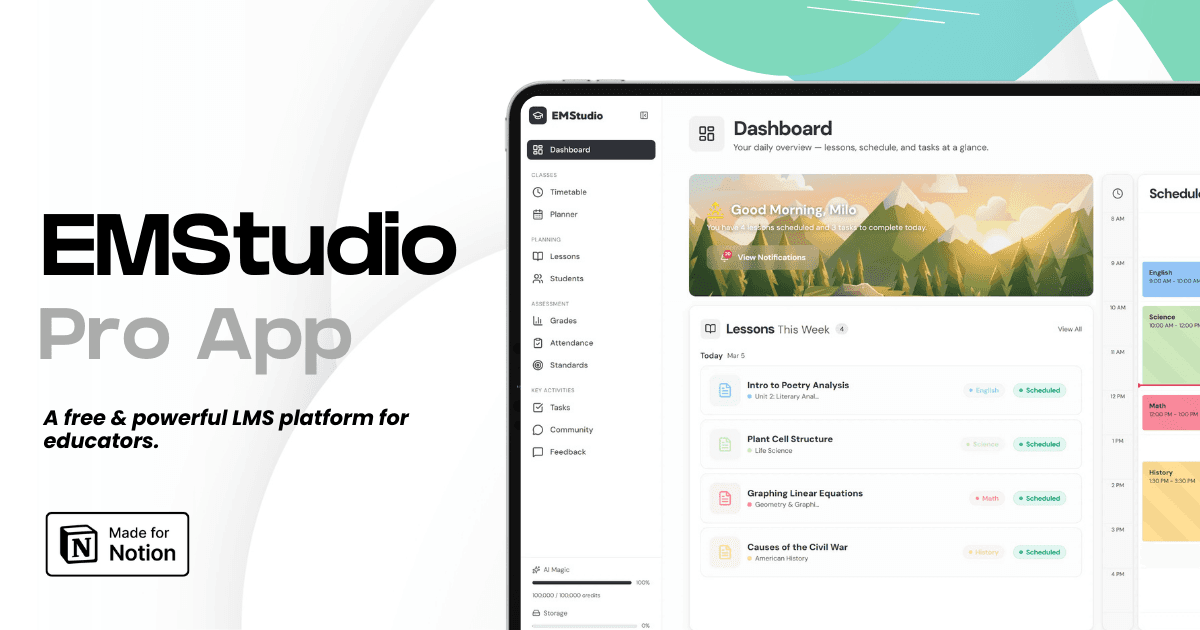
EMStudio is a free teaching management app — manage your classes, students, lessons, and more!
Learn More
Still grading everything by hand?
EMStudio is a free teaching management app — manage your classes, students, lessons, and more!
Learn More
Table of Contents
What Do You Need Before Teaching Comprehension Strategy?
Before you teach your first comprehension strategy, stock your room with leveled texts spanning 100L below to 50L above students' independent reading levels. Grab diagnostic tools like the QRI-6 or Running Records to capture baseline data—you cannot teach what you do not know. Map out a six-week scope that sequences strategies from activating prior knowledge to questioning. You will also need graphic organizers, four-color sticky notes, anchor chart paper, and a protected block of time—twenty minutes for grades 2–5 or thirty minutes for grades 6–8.
Essential Materials and Text Selection Criteria
Start with a pre-instruction checklist:
Secure texts at multiple Lexile levels, four-color sticky notes for coding thinking, and anchor chart paper for co-created charts.
Stock digital PDF graphic organizers that students can type on or print.
Block twenty minutes daily for grades 2–5 or thirty minutes for grades 6–8.
Select texts using the five-finger rule and the Lexile overlap method. If a student reads independently at 600L, gather books from 500L to 650L. Stock your shelf with high-yield anchor texts: The Snowy Day (500L) for K–2, Because of Winn-Dixie (670L) for 3–5, and The Giver (760L) for 6–8. Check that each chapter contains eight to ten tier 2 vocabulary words so students can practice inferring meaning while they apply the strategy.
Diagnostic Tools for Baseline Assessment
You need solid data before you can teach. Compare three common options:
Tool | Time | Grades | Cost |
|---|---|---|---|
QRI-6 | 45–60 min | K–12 | $85 manual |
DIBELS 8th Ed | 8 min | K–8 | Free |
F&P Benchmark | 20 min | A–Z levels | $450 kit |
When administering the QRI-6, start with word lists to find a starting point, then move to graded passages. Calculate accuracy percentage: 96–98% signals instructional level, 98% or above means independent. Students need 80% correct on both explicit and implicit questions to show comprehension. Code errors using M for Meaning, S for Syntax, and V for Visual—this miscue analysis shows you which cue systems the child relies on.
Setting Up Your Instructional Scope and Sequence
Map your teaching using an instructional scope and sequence planner. I build mine in Notion so I can shift dates without rewriting the whole page. Introduce one strategy every two weeks, provide five practice sessions per strategy, and reserve Fridays for strategy review days where kids spiral back. Use a think-aloud to model the strategy during the first two days, then shift to guided practice.
Follow Clay’s literacy processing theory: Weeks 1–2 focus on activating prior knowledge, Weeks 3–4 on visualization, and Weeks 5–6 on questioning. Spiral back to previous strategies every three weeks for maintenance. This pacing creates natural formative assessment checkpoints. Align each two-week block with your district’s ELA standards for both informational and literary texts, ensuring you follow the gradual release of responsibility model across the unit.

Step 1 — Assess Current Reading Levels and Set Learning Targets
Before you dive into teaching reading comprehension strategies, you need baseline data. Not the standardized test scores from last spring—those are too old. You need current, specific evidence of how each child processes text right now.
Running Records and Miscue Analysis
Pull out your clipboard and a blank Running Record form. You'll need 100 to 200 words of uninterrupted oral reading from a levelled text. As the student reads, mark every substitution, omission, insertion, or reversal using Fountas & Pinnell coding conventions. Circle the error, write what they said above the line, and note any self-corrections with "SC."
Count the total errors and divide by the total words read. If they scored below 90% accuracy, that book is at frustration level—put it away. 90% to 94% is the instructional sweet spot where miscue analysis pays off. 95% or higher means independent level; good for fluency practice, useless for teaching new comprehension strategies. You can't teach a kid to infer when they're decoding every third word.
Now look at the quality of those errors. Code each miscue with M (meaning), S (syntax), or V (visual). If the student reads "bunny" for "rabbit," that's an M—the meaning holds. Calculate the self-correction ratio by adding errors to self-corrections, then dividing by self-corrections. You're looking for 1:3 to 1:5. Anything tighter means they're not monitoring; anything looser means they're guessing. High-quality errors preserve meaning even when the words are wrong; low-quality errors break the syntax and destroy sense.
Determining Zone of Proximal Development
Vygotsky's Zone of Proximal Development isn't just theory—it's your book shopping list. Find the level where students read with 90% to 94% accuracy and about 80% comprehension when you sit beside them. That's their instructional level. Now add 100L to 250L Lexile points for their challenge range.
I had a 5th grader last year reading independently at 700L. She could handle Because of Winn-Dixie on her own, but for our comprehension strategy work, I pulled texts at 800L to 950L. That's where the gradual release of responsibility lives—just hard enough that she needed modeling and guided practice, not so hard that she shut down. Texts at 95% accuracy or higher don't require strategy instruction; the kid already understands them perfectly.
Don't rely solely on the computer adaptive score. Listen to the kid read. If they're stumbling over every other word in an 850L passage, drop back. The ZPD is a moving target, not a prison sentence. This is the foundation of effective methods of teaching reading comprehension: matching the text complexity to the reader's growing edge, then stepping back as they solidify.
Establishing Measurable Comprehension Goals
Vague goals like "improve comprehension" waste everyone's time. Write SMART goals with teeth. Distinguish between literal questions—who, what, where—and inferential work—why, predict, author's purpose. A solid 4th-grade target reads: "Student will answer 4 of 5 literal questions and 2 of 3 inferential questions in a grade-level narrative passage with 80% accuracy over 3 consecutive weekly probes."
For grade-specific benchmarks, try these. Grade 3: Retell 5 story elements including problem/solution, scored 0 to 4 on a district rubric where 3 meets standard. Grade 5: Identify 3 text structures in expository passages using graphic organizers, scoring 3 or 4 consistently. Grade 7: Analyze 2 pieces of evidence supporting a claim in anchor texts, achieving a 3 on the 0 to 4 scale.
Track this through formative assessment, not just unit tests. If you're analyzing student assessment data weekly, you'll see whether the literal comprehension solidifies before the inferential work kicks in. Adjust the numbers up or down based on what the think-aloud protocols reveal in Step 2.

Step 2 — Model the Strategy Explicitly Using Think-Alouds
You can't just tell students to "visualize" and expect them to see the movie in their heads. They need to hear what thinking sounds like first. That's why the think-aloud matters as a read aloud teaching strategy. Spend ten minutes daily verbalizing your metacognitive process using sentence stems like "I notice the author..." or "This makes me wonder..." or "I predict... because..." If you teach grades 3-5, model with Charlotte's Web; for 6-8, use a grade-level science text about ecosystems. Your students need to hear you stumble, correct yourself, and ask questions before they try it alone. This isn't performance art. It's showing the messiness of real thinking. Pick your text carefully. The Goldilocks rule applies here: 500-800 words for elementary, Lexile hitting that instructional sweet spot of 90-94% accuracy, and packed with either rich description or clear argument structure. Anything below 85% accuracy wastes everyone's time. The kids get confused watching you struggle with decoding when you should be showing them how to think. Your goal is demonstrating the comprehension strategy, not miscue analysis. Pick texts you can read fluently so you can focus on the thinking, not the words.
Selecting High-Quality Anchor Texts
Your anchor texts make or break the lesson. I look for three specific criteria:
Lexile in the instructional range (90-94% accuracy)
One or two genuine comprehension challenges, like a confusing passage or ambiguous character motivation
A clear match to the specific strategy you're teaching—visualization demands descriptive language, while cause-and-effect needs expository structure
For grade 2, try Frog and Toad Are Friends—simple but rich in inference opportunities. Grade 4 works well with Because of Winn-Dixie for character analysis. Grade 6 handles Hatchet beautifully for survival themes and vivid setting description. These fit the gradual release of responsibility model perfectly.
Demonstrating Visualization and Mental Imagery
Don't just say "picture it." Show them. I use the 5-senses technique with a passage from Sarah, Plain and Tall for grades 3-4 or a social studies text about the Oregon Trail for grades 5-6. Verbalize exactly what your mind's eye sees: "I see the gray Kansas sky pressing down... I hear the wagon wheels creaking..." While you speak, sketch the scene on chart paper in real-time. It looks messy. That's the point. Then pass out paper and have students draw their own images. Compare them. Watch their faces during this process. That's your formative assessment. The differences prove that reading is active construction, not passive reception. This is where research based techniques to teach reading comprehension meet actual classroom practice.
Showing Question Generation and Prediction Techniques
Questions drive comprehension. I demonstrate generating three levels on the fly:
Literal: recall facts directly from the text
Inferential: predict events or interpret character feelings
Evaluative: judge decisions or connect to personal experience
Draw a Question Web on chart paper—a simple graphic organizer with the text topic in the center and branches for each type. Then introduce Question-Answer Relationships (QAR) using four-color sticky notes: green for Right There, yellow for Think and Search, blue for Author and Me, and red for On My Own. When you hit a stopping point, slap a sticky on the page and verbalize your choice. "I'm using blue here because the book doesn't say it outright—I have to connect what I know about farm life to this passage." These explicit direct instruction models work because you make the invisible visible. Students see that expert readers question texts constantly. They stop predicting. They adjust their mental models. Only after watching you do this ten or twelve times will they risk trying it themselves.
Step 3 — How Do You Scaffold Practice for Diverse Learners?
Scaffold comprehension strategy instruction by using graphic organizers like story maps for visual structure, implementing partner reading with structured protocols such as Think-Pair-Share for peer support, and providing ELL-specific accommodations including cognate instruction and sentence frames. Gradually fade supports when students demonstrate 80% accuracy over three consecutive sessions. This step bridges the gap between your think-aloud and true independence.
Using Graphic Organizers and Visual Anchors
Graphic organizers convert invisible thinking into concrete visual maps. Match the organizer to the text structure, not just the grade level. For narrative texts, use story maps with character, setting, problem, and solution boxes—perfect for K-3 but useful for older students who struggle with retelling. For expository texts in grades 4-8, Cornell Notes separate main ideas from supporting details. When texts ask students to compare concepts, Venn diagrams work across grades 2-8.
Here's how to choose:
Story Maps: Use with narrative anchor texts. Fade by removing the "solution" box first, then "setting."
Cornell Notes: Use with informational articles. Fade by leaving the right column blank for independent note-taking.
Venn Diagrams: Use for compare/contrast structures. Fade by removing the center intersection and asking students to identify overlaps themselves.
Wait for five consecutive uses with 80% accuracy before removing scaffolds completely. If you pull support too early, students revert to passive reading. I once removed story maps from my 4th graders too quickly—watched them stumble through a simple retell the next day. Keep faded organizers in a "tools folder" for optional use.
Partner Reading and Collaborative Annotation
Pair work cuts the risk of silent failure. Structure the Think-Pair-Share protocol tightly: three minutes of silent reading, one minute of individual thinking with sticky notes, then two minutes of structured pair discussion. Provide sentence starters like "I agree because..." or "I disagree because..." so the conversation stays academic, not social.
Group strategically using ZPD bands. Pair high readers with medium readers. Never put two struggling readers together—they'll reinforce miscues rather than correct them. During the pair share, circulate with a clipboard. Note who uses the comprehension strategy correctly and who needs a reteach tomorrow. I jot initials in three columns: solid, shaky, absent. This becomes my small group list.
For texts with heavy cognitive load, try the "Pause and Predict" variation. Reader A reads two paragraphs while Reader B tracks, then Reader B asks one question or makes one prediction. Switch every two minutes. This keeps both brains active instead of one reading and one zoning out.
Differentiating for ELL Students and Struggling Readers
ELLs need the same comprehension strategies with additional linguistic bridges. Start with cognate instruction—point out Spanish/English connections like "conclusion/conclusión." This activates prior knowledge in their strongest language. For families in Madrid seeking practice beyond school, English classes for children in Madrid can reinforce these bridges through guided reading and conversation.
Implement these four accommodations consistently:
Pre-teach 8-12 vocabulary words using pictorial anchors before students see the text.
Provide bilingual glossaries for tier 3 terms—the content-specific words that don't translate easily through context clues.
Extend wait time to 5-7 seconds during questioning. Count silently. ELLs need processing time that feels uncomfortable to native speakers.
Allow responses in native language first, then translate to English. This validates their thinking while building academic English.
Add sentence frames for the specific strategy: "I predict _____ because the text says _____." These supports align with mastering differentiated instruction and strategies for multilingual and inclusive classrooms. When students show mastery, fade the frames first, then the native language support.

Step 4 — Transition from Guided to Independent Application
You can't hand a student a comprehension strategy and expect them to run with it on day one. They need to see you think through a text, struggle with it, fix your understanding, and start over. That's the gradual release of responsibility model—moving from heavy teacher support to student independence in deliberate phases.
The Gradual Release of Responsibility Framework
Pearson and Gallagher's framework breaks instruction into four distinct phases. 'I Do' takes about 20% of your time—you model the strategy with a think-aloud while students watch you grapple with the text. Don't rush this. Move to 'We Do' only when students can verbalize the steps back to you without prompting. This guided practice phase eats 30% of your schedule, and that's where you catch misconceptions early.
Advance to 'You Do Together' after hitting 80% accuracy in guided practice with graphic organizers or text annotations. Students work in pairs or small groups while you circulate and listen. Finally, 'You Do Alone'—independent application—comes only after three successful collaborative attempts with different texts. This last phase runs 20% of instructional time. Spend at least two full weeks in each phase; cutting corners here creates gaps that show up months later in miscue analysis.
John Hattie's research backs this pacing. Direct instruction shows an effect size of 0.59, while reciprocal teaching (the collaborative phase) hits 0.74. That jump matters. You're not just teaching comprehension strategies; you're building self-sufficient readers who can attack new texts without you.
Guided Practice with Teacher Feedback Loops
During the 'We Do' phase, you need a conferring system that doesn't eat your entire prep period. Try the 3-2-1 method: three specific compliments about strategy use, two questions to push thinking deeper, and one actionable goal. "I noticed you stopped at the word 'barren' and checked the anchor text's description—that's monitoring for meaning. What if you also connected it to the character's mood? Try that with the next chapter."
With 25 students, you can't conference everyone daily. Rotate through five kids per day for five minutes each during independent reading time. Monday through Friday, you hit your whole class. Every student gets feedback every five days. Keep a simple clipboard with student names and dates. When you miss a day because of a fire drill or assembly, you know exactly who gets priority tomorrow.
Structure each conference the same way: Compliment something specific you saw, teach one micro-skill (the teaching point), then set a measurable target. "Find two more examples of symbolism by Wednesday." This formative assessment data drives your next mini-lesson and tells you who stays in guided practice another week.
Independent Reading with Strategy Monitoring
When students finally reach independent practice, they need accountability without you hovering over their shoulders. Reading Strategy Logs work better than generic reading journals. After every chapter or ten pages, students record the text title, the specific strategy they used, and the actual evidence: "I visualized the forest as dark because the text said the canopy blocked all sunlight."
Collect these logs three times weekly during the first month, then twice weekly once routines stick. You're checking for consistent application, not perfect grammar. Does the strategy match the text's demands? Is the evidence actually in the book or did they invent it? This reveals whether your comprehension instructional strategies transferred or if you're looking at sophisticated fake reading.
Add a self-monitoring checklist for daily use:
I stopped to ask questions when confused.
I made a mental picture of descriptions.
I checked if my predictions were correct.
I summarized after each section.
This connects to the self-regulated strategy development framework—students track their own process before you ever see the log. If checklists stay blank or logs show the same strategy copy-pasted, you know who needs to drop back to guided practice.

Step 5 — Assess Mastery and Adjust Instruction
Formative Assessment Through Retelling and Summaries
I use an 8-point rubric that separates what happened from why it matters. Setting, characters, problem, three sequential events, and solution earn one point each. Theme or inference grabs two points because that’s where the real thinking lives. For a 4th grader to hit the benchmark—six of eight points in grade 3, seven in grade 5, eight in grade 7—I need to hear five story elements plus two solid inferences.
Narrative and expository texts need different score sheets. A narrative without a problem and solution misses the point entirely, while expository demands main idea and key details. I once scored a retelling where a student listed every character and event but couldn’t tell me the author’s purpose—classic score 2. Another student connected the character’s fear to their own moving-day anxiety, earning a 4.
Using Cloze Procedures and Comprehension Checks
The cloze strategy shows whether students read for meaning or just decode. I pull 250 words from our anchor texts, keep the first sentence intact, and delete every fifth word—fifty blanks total. Students supply the missing words. I accept exact matches or strong synonyms; "sprinted" for "ran" counts because it preserves meaning.
Score it on the spot. Sixty percent correct means instructional level. Eighty percent signals mastery and readiness to move on. For a quicker check during formative assessment examples for immediate use, delete every seventh word instead. It takes ten minutes to prep and beats a multiple-choice quiz for diagnosing teaching comprehension skills gaps.
Data-Driven Instructional Adjustments
Numbers don’t lie, but they do guide. I sort results into three action tiers:
Below sixty percent: Return to gradual release of responsibility. I do the think-aloud with simpler text while they watch.
Sixty to eighty percent: Add graphic organizers or partner support before re-assessing.
Eighty percent or higher: Apply this comprehension strategy to grade-level material independently.
Three consecutive scores in the top tier, tracked in my digital assessment tracking tool, signal mastery. No shame in sliding back. I had a 5th grader drop from eighty-five percent to fifty-five percent on science articles. We returned to miscue analysis with picture books for two days. That’s the point of formative assessment—to adjust, not to judge.

Common Mistakes and How to Avoid Them
Most comprehension strategy instruction fails because we push kids too fast or divorce skills from real reading. Watch for three red flags: students scoring below 80% on comprehension checks, abandoning the method after one week, or saying "I don't know when to use this." If you see these, immediately return to the gradual release of responsibility model and spend three to five more sessions in the "We Do" phase.
Moving to Independence Too Quickly
Warning signs show up fast during independent practice. Look for:
Three or more errors per page during independent reading
Inability to retell main events without teacher prompts
Strategy use dropping below 50% of opportunities
When you spot these, stop. Re-establish the routine with high-support texts where students read with 95% accuracy for one week. Use think-aloud methods daily before fading support again.
Teaching Strategies in Isolation from Content
Worksheets labeled "Making Inferences" using decontextualized sentences waste time. teaching critical thinking across the curriculum requires embedding techniques for teaching reading comprehension within real texts.
Wrong Approach | Right Approach |
|---|---|
Strategy Monday regardless of text | Strategy taught when encountering relevant text challenges |
Isolated skill drills with poor transfer | Integrated instruction in science and social studies content |
Contextualized instruction improves transfer by 40% compared to isolated drills. Build automaticity by teaching methods of teaching comprehension only when the content demands it.
Final Thoughts on Comprehension Strategy
You don't need seven new posters on your wall. You need one strategy taught well. The difference between a lesson that sticks and one that evaporates is the time you spend in the "we do" phase before you cut kids loose. Most of us rush toward independence because the pacing guide says Tuesday is for independent practice. Resist that. If your third graders can't explain how you found the main idea using the title and first paragraph, they aren't ready to hunt for it alone. Slowing down now saves you reteaching later.
Today, pick tomorrow's text. Choose one comprehension strategy—visualizing, questioning, whatever your standards demand. Plan exactly what you will say during the think-aloud. Write it in the margin of your teacher's edition or on a sticky note. Actually say those thoughts out loud. Watch your students' faces. When they start nodding before you ask the question, you'll know they're ready to try it themselves. That's your win.
What Do You Need Before Teaching Comprehension Strategy?
Before you teach your first comprehension strategy, stock your room with leveled texts spanning 100L below to 50L above students' independent reading levels. Grab diagnostic tools like the QRI-6 or Running Records to capture baseline data—you cannot teach what you do not know. Map out a six-week scope that sequences strategies from activating prior knowledge to questioning. You will also need graphic organizers, four-color sticky notes, anchor chart paper, and a protected block of time—twenty minutes for grades 2–5 or thirty minutes for grades 6–8.
Essential Materials and Text Selection Criteria
Start with a pre-instruction checklist:
Secure texts at multiple Lexile levels, four-color sticky notes for coding thinking, and anchor chart paper for co-created charts.
Stock digital PDF graphic organizers that students can type on or print.
Block twenty minutes daily for grades 2–5 or thirty minutes for grades 6–8.
Select texts using the five-finger rule and the Lexile overlap method. If a student reads independently at 600L, gather books from 500L to 650L. Stock your shelf with high-yield anchor texts: The Snowy Day (500L) for K–2, Because of Winn-Dixie (670L) for 3–5, and The Giver (760L) for 6–8. Check that each chapter contains eight to ten tier 2 vocabulary words so students can practice inferring meaning while they apply the strategy.
Diagnostic Tools for Baseline Assessment
You need solid data before you can teach. Compare three common options:
Tool | Time | Grades | Cost |
|---|---|---|---|
QRI-6 | 45–60 min | K–12 | $85 manual |
DIBELS 8th Ed | 8 min | K–8 | Free |
F&P Benchmark | 20 min | A–Z levels | $450 kit |
When administering the QRI-6, start with word lists to find a starting point, then move to graded passages. Calculate accuracy percentage: 96–98% signals instructional level, 98% or above means independent. Students need 80% correct on both explicit and implicit questions to show comprehension. Code errors using M for Meaning, S for Syntax, and V for Visual—this miscue analysis shows you which cue systems the child relies on.
Setting Up Your Instructional Scope and Sequence
Map your teaching using an instructional scope and sequence planner. I build mine in Notion so I can shift dates without rewriting the whole page. Introduce one strategy every two weeks, provide five practice sessions per strategy, and reserve Fridays for strategy review days where kids spiral back. Use a think-aloud to model the strategy during the first two days, then shift to guided practice.
Follow Clay’s literacy processing theory: Weeks 1–2 focus on activating prior knowledge, Weeks 3–4 on visualization, and Weeks 5–6 on questioning. Spiral back to previous strategies every three weeks for maintenance. This pacing creates natural formative assessment checkpoints. Align each two-week block with your district’s ELA standards for both informational and literary texts, ensuring you follow the gradual release of responsibility model across the unit.
Step 1 — Assess Current Reading Levels and Set Learning Targets
Before you dive into teaching reading comprehension strategies, you need baseline data. Not the standardized test scores from last spring—those are too old. You need current, specific evidence of how each child processes text right now.
Running Records and Miscue Analysis
Pull out your clipboard and a blank Running Record form. You'll need 100 to 200 words of uninterrupted oral reading from a levelled text. As the student reads, mark every substitution, omission, insertion, or reversal using Fountas & Pinnell coding conventions. Circle the error, write what they said above the line, and note any self-corrections with "SC."
Count the total errors and divide by the total words read. If they scored below 90% accuracy, that book is at frustration level—put it away. 90% to 94% is the instructional sweet spot where miscue analysis pays off. 95% or higher means independent level; good for fluency practice, useless for teaching new comprehension strategies. You can't teach a kid to infer when they're decoding every third word.
Now look at the quality of those errors. Code each miscue with M (meaning), S (syntax), or V (visual). If the student reads "bunny" for "rabbit," that's an M—the meaning holds. Calculate the self-correction ratio by adding errors to self-corrections, then dividing by self-corrections. You're looking for 1:3 to 1:5. Anything tighter means they're not monitoring; anything looser means they're guessing. High-quality errors preserve meaning even when the words are wrong; low-quality errors break the syntax and destroy sense.
Determining Zone of Proximal Development
Vygotsky's Zone of Proximal Development isn't just theory—it's your book shopping list. Find the level where students read with 90% to 94% accuracy and about 80% comprehension when you sit beside them. That's their instructional level. Now add 100L to 250L Lexile points for their challenge range.
I had a 5th grader last year reading independently at 700L. She could handle Because of Winn-Dixie on her own, but for our comprehension strategy work, I pulled texts at 800L to 950L. That's where the gradual release of responsibility lives—just hard enough that she needed modeling and guided practice, not so hard that she shut down. Texts at 95% accuracy or higher don't require strategy instruction; the kid already understands them perfectly.
Don't rely solely on the computer adaptive score. Listen to the kid read. If they're stumbling over every other word in an 850L passage, drop back. The ZPD is a moving target, not a prison sentence. This is the foundation of effective methods of teaching reading comprehension: matching the text complexity to the reader's growing edge, then stepping back as they solidify.
Establishing Measurable Comprehension Goals
Vague goals like "improve comprehension" waste everyone's time. Write SMART goals with teeth. Distinguish between literal questions—who, what, where—and inferential work—why, predict, author's purpose. A solid 4th-grade target reads: "Student will answer 4 of 5 literal questions and 2 of 3 inferential questions in a grade-level narrative passage with 80% accuracy over 3 consecutive weekly probes."
For grade-specific benchmarks, try these. Grade 3: Retell 5 story elements including problem/solution, scored 0 to 4 on a district rubric where 3 meets standard. Grade 5: Identify 3 text structures in expository passages using graphic organizers, scoring 3 or 4 consistently. Grade 7: Analyze 2 pieces of evidence supporting a claim in anchor texts, achieving a 3 on the 0 to 4 scale.
Track this through formative assessment, not just unit tests. If you're analyzing student assessment data weekly, you'll see whether the literal comprehension solidifies before the inferential work kicks in. Adjust the numbers up or down based on what the think-aloud protocols reveal in Step 2.
Step 2 — Model the Strategy Explicitly Using Think-Alouds
You can't just tell students to "visualize" and expect them to see the movie in their heads. They need to hear what thinking sounds like first. That's why the think-aloud matters as a read aloud teaching strategy. Spend ten minutes daily verbalizing your metacognitive process using sentence stems like "I notice the author..." or "This makes me wonder..." or "I predict... because..." If you teach grades 3-5, model with Charlotte's Web; for 6-8, use a grade-level science text about ecosystems. Your students need to hear you stumble, correct yourself, and ask questions before they try it alone. This isn't performance art. It's showing the messiness of real thinking. Pick your text carefully. The Goldilocks rule applies here: 500-800 words for elementary, Lexile hitting that instructional sweet spot of 90-94% accuracy, and packed with either rich description or clear argument structure. Anything below 85% accuracy wastes everyone's time. The kids get confused watching you struggle with decoding when you should be showing them how to think. Your goal is demonstrating the comprehension strategy, not miscue analysis. Pick texts you can read fluently so you can focus on the thinking, not the words.
Selecting High-Quality Anchor Texts
Your anchor texts make or break the lesson. I look for three specific criteria:
Lexile in the instructional range (90-94% accuracy)
One or two genuine comprehension challenges, like a confusing passage or ambiguous character motivation
A clear match to the specific strategy you're teaching—visualization demands descriptive language, while cause-and-effect needs expository structure
For grade 2, try Frog and Toad Are Friends—simple but rich in inference opportunities. Grade 4 works well with Because of Winn-Dixie for character analysis. Grade 6 handles Hatchet beautifully for survival themes and vivid setting description. These fit the gradual release of responsibility model perfectly.
Demonstrating Visualization and Mental Imagery
Don't just say "picture it." Show them. I use the 5-senses technique with a passage from Sarah, Plain and Tall for grades 3-4 or a social studies text about the Oregon Trail for grades 5-6. Verbalize exactly what your mind's eye sees: "I see the gray Kansas sky pressing down... I hear the wagon wheels creaking..." While you speak, sketch the scene on chart paper in real-time. It looks messy. That's the point. Then pass out paper and have students draw their own images. Compare them. Watch their faces during this process. That's your formative assessment. The differences prove that reading is active construction, not passive reception. This is where research based techniques to teach reading comprehension meet actual classroom practice.
Showing Question Generation and Prediction Techniques
Questions drive comprehension. I demonstrate generating three levels on the fly:
Literal: recall facts directly from the text
Inferential: predict events or interpret character feelings
Evaluative: judge decisions or connect to personal experience
Draw a Question Web on chart paper—a simple graphic organizer with the text topic in the center and branches for each type. Then introduce Question-Answer Relationships (QAR) using four-color sticky notes: green for Right There, yellow for Think and Search, blue for Author and Me, and red for On My Own. When you hit a stopping point, slap a sticky on the page and verbalize your choice. "I'm using blue here because the book doesn't say it outright—I have to connect what I know about farm life to this passage." These explicit direct instruction models work because you make the invisible visible. Students see that expert readers question texts constantly. They stop predicting. They adjust their mental models. Only after watching you do this ten or twelve times will they risk trying it themselves.
Step 3 — How Do You Scaffold Practice for Diverse Learners?
Scaffold comprehension strategy instruction by using graphic organizers like story maps for visual structure, implementing partner reading with structured protocols such as Think-Pair-Share for peer support, and providing ELL-specific accommodations including cognate instruction and sentence frames. Gradually fade supports when students demonstrate 80% accuracy over three consecutive sessions. This step bridges the gap between your think-aloud and true independence.
Using Graphic Organizers and Visual Anchors
Graphic organizers convert invisible thinking into concrete visual maps. Match the organizer to the text structure, not just the grade level. For narrative texts, use story maps with character, setting, problem, and solution boxes—perfect for K-3 but useful for older students who struggle with retelling. For expository texts in grades 4-8, Cornell Notes separate main ideas from supporting details. When texts ask students to compare concepts, Venn diagrams work across grades 2-8.
Here's how to choose:
Story Maps: Use with narrative anchor texts. Fade by removing the "solution" box first, then "setting."
Cornell Notes: Use with informational articles. Fade by leaving the right column blank for independent note-taking.
Venn Diagrams: Use for compare/contrast structures. Fade by removing the center intersection and asking students to identify overlaps themselves.
Wait for five consecutive uses with 80% accuracy before removing scaffolds completely. If you pull support too early, students revert to passive reading. I once removed story maps from my 4th graders too quickly—watched them stumble through a simple retell the next day. Keep faded organizers in a "tools folder" for optional use.
Partner Reading and Collaborative Annotation
Pair work cuts the risk of silent failure. Structure the Think-Pair-Share protocol tightly: three minutes of silent reading, one minute of individual thinking with sticky notes, then two minutes of structured pair discussion. Provide sentence starters like "I agree because..." or "I disagree because..." so the conversation stays academic, not social.
Group strategically using ZPD bands. Pair high readers with medium readers. Never put two struggling readers together—they'll reinforce miscues rather than correct them. During the pair share, circulate with a clipboard. Note who uses the comprehension strategy correctly and who needs a reteach tomorrow. I jot initials in three columns: solid, shaky, absent. This becomes my small group list.
For texts with heavy cognitive load, try the "Pause and Predict" variation. Reader A reads two paragraphs while Reader B tracks, then Reader B asks one question or makes one prediction. Switch every two minutes. This keeps both brains active instead of one reading and one zoning out.
Differentiating for ELL Students and Struggling Readers
ELLs need the same comprehension strategies with additional linguistic bridges. Start with cognate instruction—point out Spanish/English connections like "conclusion/conclusión." This activates prior knowledge in their strongest language. For families in Madrid seeking practice beyond school, English classes for children in Madrid can reinforce these bridges through guided reading and conversation.
Implement these four accommodations consistently:
Pre-teach 8-12 vocabulary words using pictorial anchors before students see the text.
Provide bilingual glossaries for tier 3 terms—the content-specific words that don't translate easily through context clues.
Extend wait time to 5-7 seconds during questioning. Count silently. ELLs need processing time that feels uncomfortable to native speakers.
Allow responses in native language first, then translate to English. This validates their thinking while building academic English.
Add sentence frames for the specific strategy: "I predict _____ because the text says _____." These supports align with mastering differentiated instruction and strategies for multilingual and inclusive classrooms. When students show mastery, fade the frames first, then the native language support.
Step 4 — Transition from Guided to Independent Application
You can't hand a student a comprehension strategy and expect them to run with it on day one. They need to see you think through a text, struggle with it, fix your understanding, and start over. That's the gradual release of responsibility model—moving from heavy teacher support to student independence in deliberate phases.
The Gradual Release of Responsibility Framework
Pearson and Gallagher's framework breaks instruction into four distinct phases. 'I Do' takes about 20% of your time—you model the strategy with a think-aloud while students watch you grapple with the text. Don't rush this. Move to 'We Do' only when students can verbalize the steps back to you without prompting. This guided practice phase eats 30% of your schedule, and that's where you catch misconceptions early.
Advance to 'You Do Together' after hitting 80% accuracy in guided practice with graphic organizers or text annotations. Students work in pairs or small groups while you circulate and listen. Finally, 'You Do Alone'—independent application—comes only after three successful collaborative attempts with different texts. This last phase runs 20% of instructional time. Spend at least two full weeks in each phase; cutting corners here creates gaps that show up months later in miscue analysis.
John Hattie's research backs this pacing. Direct instruction shows an effect size of 0.59, while reciprocal teaching (the collaborative phase) hits 0.74. That jump matters. You're not just teaching comprehension strategies; you're building self-sufficient readers who can attack new texts without you.
Guided Practice with Teacher Feedback Loops
During the 'We Do' phase, you need a conferring system that doesn't eat your entire prep period. Try the 3-2-1 method: three specific compliments about strategy use, two questions to push thinking deeper, and one actionable goal. "I noticed you stopped at the word 'barren' and checked the anchor text's description—that's monitoring for meaning. What if you also connected it to the character's mood? Try that with the next chapter."
With 25 students, you can't conference everyone daily. Rotate through five kids per day for five minutes each during independent reading time. Monday through Friday, you hit your whole class. Every student gets feedback every five days. Keep a simple clipboard with student names and dates. When you miss a day because of a fire drill or assembly, you know exactly who gets priority tomorrow.
Structure each conference the same way: Compliment something specific you saw, teach one micro-skill (the teaching point), then set a measurable target. "Find two more examples of symbolism by Wednesday." This formative assessment data drives your next mini-lesson and tells you who stays in guided practice another week.
Independent Reading with Strategy Monitoring
When students finally reach independent practice, they need accountability without you hovering over their shoulders. Reading Strategy Logs work better than generic reading journals. After every chapter or ten pages, students record the text title, the specific strategy they used, and the actual evidence: "I visualized the forest as dark because the text said the canopy blocked all sunlight."
Collect these logs three times weekly during the first month, then twice weekly once routines stick. You're checking for consistent application, not perfect grammar. Does the strategy match the text's demands? Is the evidence actually in the book or did they invent it? This reveals whether your comprehension instructional strategies transferred or if you're looking at sophisticated fake reading.
Add a self-monitoring checklist for daily use:
I stopped to ask questions when confused.
I made a mental picture of descriptions.
I checked if my predictions were correct.
I summarized after each section.
This connects to the self-regulated strategy development framework—students track their own process before you ever see the log. If checklists stay blank or logs show the same strategy copy-pasted, you know who needs to drop back to guided practice.
Step 5 — Assess Mastery and Adjust Instruction
Formative Assessment Through Retelling and Summaries
I use an 8-point rubric that separates what happened from why it matters. Setting, characters, problem, three sequential events, and solution earn one point each. Theme or inference grabs two points because that’s where the real thinking lives. For a 4th grader to hit the benchmark—six of eight points in grade 3, seven in grade 5, eight in grade 7—I need to hear five story elements plus two solid inferences.
Narrative and expository texts need different score sheets. A narrative without a problem and solution misses the point entirely, while expository demands main idea and key details. I once scored a retelling where a student listed every character and event but couldn’t tell me the author’s purpose—classic score 2. Another student connected the character’s fear to their own moving-day anxiety, earning a 4.
Using Cloze Procedures and Comprehension Checks
The cloze strategy shows whether students read for meaning or just decode. I pull 250 words from our anchor texts, keep the first sentence intact, and delete every fifth word—fifty blanks total. Students supply the missing words. I accept exact matches or strong synonyms; "sprinted" for "ran" counts because it preserves meaning.
Score it on the spot. Sixty percent correct means instructional level. Eighty percent signals mastery and readiness to move on. For a quicker check during formative assessment examples for immediate use, delete every seventh word instead. It takes ten minutes to prep and beats a multiple-choice quiz for diagnosing teaching comprehension skills gaps.
Data-Driven Instructional Adjustments
Numbers don’t lie, but they do guide. I sort results into three action tiers:
Below sixty percent: Return to gradual release of responsibility. I do the think-aloud with simpler text while they watch.
Sixty to eighty percent: Add graphic organizers or partner support before re-assessing.
Eighty percent or higher: Apply this comprehension strategy to grade-level material independently.
Three consecutive scores in the top tier, tracked in my digital assessment tracking tool, signal mastery. No shame in sliding back. I had a 5th grader drop from eighty-five percent to fifty-five percent on science articles. We returned to miscue analysis with picture books for two days. That’s the point of formative assessment—to adjust, not to judge.
Common Mistakes and How to Avoid Them
Most comprehension strategy instruction fails because we push kids too fast or divorce skills from real reading. Watch for three red flags: students scoring below 80% on comprehension checks, abandoning the method after one week, or saying "I don't know when to use this." If you see these, immediately return to the gradual release of responsibility model and spend three to five more sessions in the "We Do" phase.
Moving to Independence Too Quickly
Warning signs show up fast during independent practice. Look for:
Three or more errors per page during independent reading
Inability to retell main events without teacher prompts
Strategy use dropping below 50% of opportunities
When you spot these, stop. Re-establish the routine with high-support texts where students read with 95% accuracy for one week. Use think-aloud methods daily before fading support again.
Teaching Strategies in Isolation from Content
Worksheets labeled "Making Inferences" using decontextualized sentences waste time. teaching critical thinking across the curriculum requires embedding techniques for teaching reading comprehension within real texts.
Wrong Approach | Right Approach |
|---|---|
Strategy Monday regardless of text | Strategy taught when encountering relevant text challenges |
Isolated skill drills with poor transfer | Integrated instruction in science and social studies content |
Contextualized instruction improves transfer by 40% compared to isolated drills. Build automaticity by teaching methods of teaching comprehension only when the content demands it.
Final Thoughts on Comprehension Strategy
You don't need seven new posters on your wall. You need one strategy taught well. The difference between a lesson that sticks and one that evaporates is the time you spend in the "we do" phase before you cut kids loose. Most of us rush toward independence because the pacing guide says Tuesday is for independent practice. Resist that. If your third graders can't explain how you found the main idea using the title and first paragraph, they aren't ready to hunt for it alone. Slowing down now saves you reteaching later.
Today, pick tomorrow's text. Choose one comprehension strategy—visualizing, questioning, whatever your standards demand. Plan exactly what you will say during the think-aloud. Write it in the margin of your teacher's edition or on a sticky note. Actually say those thoughts out loud. Watch your students' faces. When they start nodding before you ask the question, you'll know they're ready to try it themselves. That's your win.
Still grading everything by hand?
EMStudio is a free teaching management app — manage your classes, students, lessons, and more!
Learn More
Still grading everything by hand?
EMStudio is a free teaching management app — manage your classes, students, lessons, and more!
Learn More



Notion4Teachers
Notion templates to simplify administrative tasks and enhance your teaching experience.



2026 Notion4Teachers. All Rights Reserved.
Notion4Teachers
Notion templates to simplify administrative tasks and enhance your teaching experience.
2026 Notion4Teachers. All Rights Reserved.
Notion4Teachers
Notion templates to simplify administrative tasks and enhance your teaching experience.
2026 Notion4Teachers. All Rights Reserved.