
Self Regulated Strategy Development: 6 Steps to Implementation
Self Regulated Strategy Development: 6 Steps to Implementation

Article by
Milo
ESL Content Coordinator & Educator
ESL Content Coordinator & Educator
All Posts
Your students can tell you a great story. But when you say "write it down," they freeze. You get three sentences and thirty minutes of erasing. Or they churn out pages that wander nowhere. You've taught graphic organizers. You've done anchor charts. Still, they don't plan. They don't check their work. They just... stop. That's not laziness. That's a missing skill set.
Self regulated strategy development (SRSD) fills that gap. It's not another graphic organizer. It's a way to teach writing (and reading, and math) that builds how students think about their own thinking. I started using this with my 4th graders who claimed they "couldn't" write essays. Six weeks later, they were arguing about thesis statements during recess. The change isn't magic. It's a six-step process you can run in your classroom starting Monday.
This post walks through those six steps. You'll learn how to build background knowledge, present the strategy clearly, model your thinking out loud, and help kids memorize the steps until they own them. No fluff. Just what worked in my room and what I wish I'd known sooner.
Still grading everything by hand?
EMStudio is a free teaching management app — manage your classes, students, lessons, and more!
Learn More

Still grading everything by hand?
EMStudio is a free teaching management app — manage your classes, students, lessons, and more!
Learn More
Table of Contents
What Is Self Regulated Strategy Development and Why Does It Matter?
Self Regulated Strategy Development (SRSD) is a six-stage instructional model that teaches kids how to learn, not just what to learn. Developed by Karen Harris and Steve Graham starting in 1985, it pairs academic strategies with self-regulation skills like goal-setting and self-monitoring. Think of it as giving students the executive functioning tools their brains haven't developed yet, wrapped around specific writing or math strategies they can actually use.
John Hattie's Visible Learning research puts learning strategy instruction in the "high impact" zone with effect sizes between 0.59 and 0.63. That means it works better than most interventions you're probably using right now. SRSD targets students in grades 2-12 who struggle with academic tasks—especially writing—but the framework adapts to reading comprehension, math problem-solving, and science inquiry just as well.
Here's the difference: traditional instruction teaches what to write. SRSD teaches how to plan, monitor, and evaluate using mnemonics and self-instructions. You don't just assign a paragraph and hope. You break the process into chunks, model your thinking out loud, and gradually hand the reins to the student.
Every SRSD unit has two parts:
Task-specific strategies—like TREE for opinion writing (Topic sentence, Reasons, Explanations, Ending)
Self-regulation procedures—goal-setting, self-monitoring, and self-reinforcement that keep kids engaged when the work gets hard
This isn't skill-and-drill. It's explicit instruction with scaffolded instruction built in, moving through gradual release of responsibility until students run the metacognitive strategies on their own. I've watched 4th graders who couldn't write three sentences independently plan and draft full essays using these tools. When kids internalize both the strategy and the self-regulation, they stop waiting for teacher rescue. That's why it matters.

Step 1 — Develop Background Knowledge and Pre-Skills
Assessing Prior Knowledge and Self-Efficacy
Before you introduce any self regulated strategy development intervention, verify students have the basics down. I use Curriculum-Based Measurement (CBM) probes—quick 2-minute fluency checks—to confirm 80% accuracy on foundational skills. If kids can't construct a complete sentence or compute basic operations, the writing or math strategy will collapse under the weight of that gap.
Then I run the Strategy Assessment System (SAS) interviews. These take 15 minutes one-on-one at a quiet table in the hallway. I ask what they do when stuck on a word problem, then have them rate their confidence using the Self-Efficacy for Writing Scale—a simple 1-10 rating on tasks like "composing a paragraph." You'd be surprised how many 5th graders circle "2" and tell you "I'm just bad at math" before you've taught the first step.
I also collect diagnostic writing samples or problem sets, scoring with analytic rubrics like the 6-trait writing model. This distinguishes:
Skill gaps: run-on sentences, place-value errors
Strategy deficits: no planning, no checking
I document current strategy use ("I just start writing"), error patterns, and attribution patterns ("I'm dumb" versus "I need a plan"). That student profile drives my explicit instruction planning.
Building Buy-In With Goal-Setting Activities
Once I know where they stand, I run the readiness checklist. Look for three indicators:
Can they complete the task independently?
Do they show self-monitoring by recognizing when they're stuck?
Are they motivated to improve?
Three yeses means we proceed with scaffolded instruction.
Next comes the "Strategy vs. Talent" discussion. I show them research: strategic behavior predicts success better than raw ability. We spend ten minutes on metacognitive strategies—thinking about thinking—to shift from "I'm stupid" to "I need a tool." I use mnemonics here to hook the concept.
Then we draft SMART goals together during a 10-minute conference. Not "write better" but "include three transition words in my Tuesday essay." These goal-setting activities to build student buy-in work because students co-create specific, measurable targets with 2-week timelines and track their own progress. Finally, I use the "What's In It For Me?" protocol—students interview older kids or professionals about which classroom learning strategies they use in actual jobs. When a high schooler says "I outline everything before I write," my 3rd graders suddenly care about planning. This gradual release of responsibility starts with motivation, not mechanics.
Step 2 — Present and Describe the Target Strategy
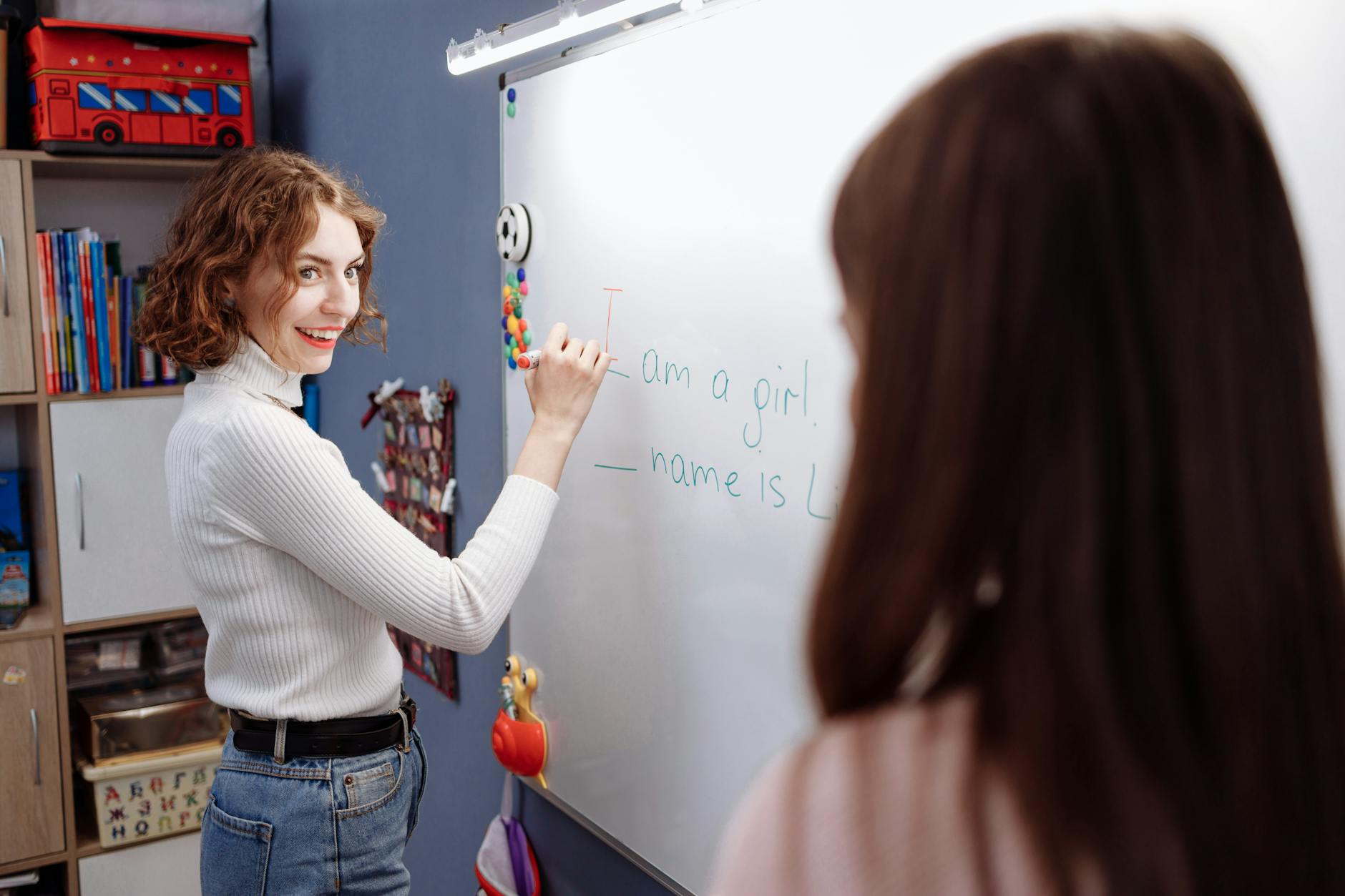
Students can't use what they can't remember. Self regulated strategy development relies on mnemonics that stick. Keep your steps between three and seven—anything longer overloads working memory. I use POWER for persuasive writing: Pick ideas, Organize, Write, Evaluate, Revise. It matches the content and sounds strong enough that 5th graders actually remember it.
Present the strategy using a T-chart. Left column lists the steps. Right column shows what each step looks like using text from your current unit. If you're reading Frindle and writing opinion pieces, the right column shows an actual topic sentence about Nick's battle with Mrs. Granger. Concrete examples beat abstract definitions every time.
Give students a single-page PDF strategy guide for their binders. Include:
Visual icons for each step
Step definitions in student-friendly language
Self-check questions for each phase
Laminate them. These become their anchor during independent work when you're across the room helping another group. The visual icons matter. A small drawing of a tree next to the TREE steps helps working memory more than you think.
Breaking Down Strategy Steps and Mnemonics
Break every strategy into atomic actions. For a 7th-grade opinion essay, TREE becomes: Topic sentence (write one clear sentence), Reasons (provide three with because), Ending (wrap it up), Examine (run your check list). Each piece is bite-sized and specific. No guessing what "good" looks like.
Create muscle memory with physical gestures. Associating steps with hand signals burns them into long-term storage. Fist for Topic. Three fingers spread for Reasons. Thumb and finger circle for Examine. I see kids whispering the steps and moving their hands under their desks during tests. The body remembers what the mind forgets.
Develop self-instruction scripts for each step. Students write these in first person. "First, I need to pick my topic sentence. Does it state my opinion clearly? Let me check..." This builds the inner voice they'll need when the teacher isn't hovering. Metacognitive strategies and scaffolded instruction start here.
Connecting Strategies to Real Classroom Tasks
Map the strategy to your current unit immediately. If you're teaching persuasive writing in ELA, don't use generic prompts. Have students write a letter to the principal about cafeteria changes using the TREE steps. They need to see this tool solves today's problem, not some abstract future task. Authentic contexts make strategies based instruction stick.
Label the standards explicitly. Put CCSS.W.5.1 right on the anchor chart. When students see the strategy connects directly to the standard they need to master, the "why" clicks. This isn't busy work. It's the path to meeting the benchmark.
Co-create success criteria before they start writing. Build an analytic rubric together showing what "meets" versus "exceeds" looks like for each step. When students help define quality, they own the self-monitoring process. This fits within explicit direct instruction models while preparing for gradual release of responsibility.

Step 3 — How Do You Model the Strategy Through Explicit Think-Alouds?
Model self regulated strategy development strategies through explicit think-alouds by verbalizing every cognitive decision while completing the task yourself. Demonstrate 3-5 times using authentic work, include intentional errors to model self-correction, and use mnemonics to make thinking visible. This shows students the 'how' behind the strategy, not just the 'what.'
Plan to model for 15-20 minutes using your own imperfect writing. Project your paper and write live in front of your 3rd graders. Verbalize hesitations, false starts, and corrections. Students need to see that skilled writing isn't magic—it's a series of decisions they can replicate. Research indicates that multiple demonstrations across different contexts are necessary before students can transfer these learning strategies activities independently. Don't rush this step. If you only model once before asking them to try, the strategy won't stick when they face new prompts.
Demonstrating Cognitive Processes Verbalization
Use the "I Say, I Think, I Do" protocol to externalize your thinking. This breaks down metacognitive strategies into three visible layers:
"I need a topic sentence" shows declarative knowledge—what to do.
"I'm organizing my reasons now" reveals procedural knowledge—how to do it.
"Since this is persuasive, I need strong evidence" demonstrates conditional knowledge—knowing when to use what.
Speak slowly enough that students can catch the decision points. Script specific self-questions and post them as "self-talk bubbles" on chart paper beside your screen. Ask "Does this make sense?" or "Have I included all steps?" or "What should I do next?" Point to these charts during your think-aloud so students see that expert writers constantly self-monitor rather than drafting perfectly in one pass. Leave the charts up during their practice time.
Vary the complexity of your models across the 3-5 demonstrations. Start with grade-level texts, then model with below-grade material to highlight the strategy mechanics without text complexity getting in the way. Finally, demonstrate with on-grade texts in different genres. This shows flexibility and helps students understand how memory functions during the learning process—the strategy stays constant even as the content changes.
Incorporating Self-Instructions and Error Correction
Teach three types of self-instructions that students can internalize:
Attributional statements like "I can do this with my strategy" build confidence.
Self-reinforcement such as "Good job including three reasons" acknowledges progress.
Problem-solving prompts like "This is hard, but I'll use my plan" help students push through difficulty.
These explicit instruction moments make the invisible visible and give students language for their own internal dialogue.
Model error detection deliberately. Circle a missing component in a different color pen. State clearly, "I forgot my transition words. That's error type two." Then demonstrate the fix in real-time. This teaches self-correction more effectively than perfect models because it shows the recovery process that happens during real writing. Students remember the fix better when they see you struggle.
Consider video modeling for scaffolded instruction. Record a five-minute think-aloud and post it to your learning platform. Students can pause, rewind, and watch at their own pace. This is especially useful for English learners or students who need to see the gradual release of responsibility process multiple times before attempting collaborative practice. Keep the videos authentic—don't edit out your mistakes. The stumbles are where the learning happens.

Step 4 — Support Memorization of Strategy Steps
Students can't use what they can't remember. After modeling, your next job is locking these steps into long-term memory so kids can focus on content, not procedure. I laminate 4x6 index cards with the mnemonic steps on one side and self-check questions on the back—questions like "Did I brainstorm three ideas?" or "Have I checked my capitals?" Students keep these on their desks during writing or problem-solving until the steps become automatic. But cards alone won't do it—you need spaced repetition and retrieval practice. I follow a strict schedule: Day 1 (initial teach), Day 2 (cover-and-remember), Day 4 (verbal rehearsal), Day 7 (independent recall). During cover-and-remember, students physically hide the strategy card and verbally rehearse steps out loud. When they can recite with 100% accuracy for three consecutive days without prompts, they earn "Strategy Expert" status and retire the card. That's your signal to move from scaffolded instruction toward the gradual release of responsibility.
Creating Visual Anchors and Strategy Cards
Color-coding saves your sanity. I assign green to planning, yellow to drafting, and red to revising—consistent across every anchor chart, slide, and handout. Add consistent icons: a lightbulb for planning, a pencil for drafting, a magnifying glass for revising. These visual anchors hang at eye level where students glance up during independent work.
For younger kids in grades 2-4, I make desk tents from folded cardstock. They stand upright showing 3-4 illustrated steps with checkboxes students tick off as they work. It turns metacognitive strategies into a physical action they can see and touch.
For 1:1 device schools, I create a learning strategies pdf stored in Google Classroom resource folders. Each digital card hyperlinks to short video examples for that specific step. Kids tap the icon when they forget what "elaborate" looks like in practice. Whether paper or pixel, these mnemonics serve as external self-monitoring tools until the process becomes internal. The goal of self regulated strategy development is making the invisible visible until students don't need the scaffold anymore.
Using Retrieval Practice and Self-Testing Activities
Turn and Teach: Every morning for five minutes, students close notebooks and teach the strategy steps to a partner without peeking at reference materials. Then they check against the anchor chart to see what they missed. This forces retrieval from memory, not recognition from looking. The gaps become obvious immediately.
Self-testing logs: Students rate confidence for each step on a 1-5 scale. If they circle "2" for "Add details," they identify that step needs more practice and set a personalized study target for choice time.
Gamified retrieval: Use Quizlet Live or physical flashcards. Teams race to sequence steps correctly in under two minutes. Winners advance to application activities while others run another retrieval cycle. This keeps explicit instruction moving toward independence without leaving anyone behind.

Step 5 — How Do You Facilitate Collaborative Practice and Scaffolding?
Facilitate collaborative practice by pairing students for structured peer review using checklists, while maintaining teacher roving conferences. Use graduated release—moving from guided to collaborative to independent over 3-4 weeks—and daily strategy logs where students self-rate implementation and set goals for transfer to new tasks.
Structuring Peer Collaboration and Teacher Check-Ins
Run the Pair-Check-Share method twice a week. Pair a student who has mastered the mnemonics with one still internalizing them. Assign explicit roles: the "Strategy Coach" holds the checklist and asks "Did you underline the evidence?" while the "Writer" executes the step. Roles switch at the 15-minute mark so both practice the metacognitive strategies. This setup catches errors immediately rather than after you've collected 25 papers at the bell. It also reduces the anxiety of struggling students who panic when working alone with a blank page staring back at them.
Keep conferences tight and predictable. I rove for 10 minutes, hitting four or five desks. I ask three questions: "What step are you on?" "What's your goal?" "How will you check your work?" Then I walk away even if they hesitate. It forces them to solve the next problem alone without me hovering. Set up Help Cards—red plastic cups or laminated index cards—students place on their desk when stuck. The rule: check your strategy card before you call me. It cuts interruptions by half and builds resource independence faster than any lecture on problem-solving. These collaborative learning methods that drive results work because they make students talk through their process instead of waiting for teacher rescue.
Monitoring Progress With Strategy Logs
Design daily strategy implementation logs with three concrete fields: Strategy Used (the specific mnemonic), Self-Rating (1-5 scale or smiley/neutral/frown), and Tomorrow's Goal (one concrete fix). After explicit instruction, these logs shift the cognitive load to students. In self regulated strategy development, this self-monitoring is where transfer happens—kids begin anticipating their own mistakes before they make them, not after they turn in a blank page.
Chart the data weekly on chart paper or a digital slide. Create bar graphs showing average self-ratings across strategy components like "Planning" or "Revision." When the class average stays above 4.0 for three consecutive sessions, we celebrate with five minutes of free writing time or choice of prompt. Differentiate for IEP students by adding sentence starters to the logs: "I used the ___ strategy. I think I did ___ on step ___. Tomorrow I will ___." This maintains scaffolded instruction while pushing toward the gradual release of responsibility. If you want templates, search for a learn to learn pdf—universities often post free versions with these tracking formats that you can adapt for your grade level and laminate for daily use.

Step 6 — Transition to Independent Performance and Generalization
You've reached the payoff moment in self regulated strategy development: the final phase of learning strategy instruction where students work without you hovering. But independence isn't a guess—it’s monitored. Start by transferring monitoring responsibility. Provide self-checking rubrics where students evaluate their own work against strategy criteria before submitting to you. When their ratings align with yours 80% of the time, you know they're ready for the gradual release of responsibility to stick. Schedule maintenance probes at 3 weeks and 6 weeks after you close explicit instruction. If accuracy drops below 70%, cycle back to scaffolded instruction for a few days. That number tells you whether the metacognitive strategies actually stuck or just lived in your classroom.
Self-Monitoring and Self-Evaluation Techniques
Hand students self-checking rubrics that mirror the strategy steps you taught. They score their own work before it reaches your inbox. When their ratings match yours 80% of the time, they’re ready to fly solo. For supporting students with learning disabilities, this agreement rate is non-negotiable data; it proves they can see quality work without your prompt.
Have them compare drafts against anchor papers using the strategy steps as criteria, marking where they met each component. When they miss steps, they complete a "Fix-It Sheet"—naming the skipped step and rewriting the section correctly. Let them build personal reward menus too: five minutes of drawing time or the helper role, earned only after hitting strategy goals. Designing self-assessment tools for students that include these error analysis routines builds self-monitoring accountability without your constant oversight.
Generalizing Skills Across Subjects and Settings
Create a generalization matrix on chart paper—a grid showing how this writing strategy works for science lab reports, social studies document-based questions, and math explanations. Explicitly teach the transfer; don’t assume kids see the connection between persuasive essays and hypothesis justification. Walk through one cell of the grid together during your last few lessons so they see the strategy isn't trapped in your ELA block.
Push setting generalization by assigning homework that requires the strategy at the kitchen table, not just your room. Send home a parent signature line confirming the student used their strategy card. Have students create small "Cue Cards for Other Classes" listing the mnemonic steps to hand to their science or social studies teachers. Once monthly, hold "Strategy Share" sessions where students present how they adapted the steps for a different subject. Hearing a kid explain how they used TREE in a lab report convinces the rest of the class that this tool travels beyond your walls.

Implementation Mistakes That Undermine Strategy Instruction
You can have the perfect mnemonic and still watch the lesson flop. In my first year using self regulated strategy development, I skipped the pre-skills check and spent three weeks troubleshooting why kids couldn't write a paragraph. They were still struggling with complete sentences. Here is where strategies based instruction usually breaks down in real classrooms.
Common Mistake | The Fix |
|---|---|
Skipping Pre-Skills Assessment | Verify 80% mastery of foundational skills first. If they cannot write a complete sentence, the TREE planner will not help them craft an essay. |
Rushing the Modeling Phase | Provide 3-5 demonstrations using explicit instruction with authentic student work. Watch their eyes during your think-aloud. When they stop tracking, you lost them. |
Fading too fast kills momentum. Teachers see a student hit 70% accuracy during guided practice and push for independence. Two weeks later, the strategy is abandoned. Wait for 90% accuracy during supported practice before you loosen the scaffolded instruction. They need to succeed with help before they succeed alone.
The content over process error tricks you because the kids can chant the mnemonic perfectly. But if you skipped goal-setting and self-monitoring, you taught a party trick, not a writing tool. Implementation fidelity research shows dropping the metacognitive strategies cuts effect sizes by roughly 40%. The self-regulation components are not bonus features—they are the engine.
Assessment errors compound the damage. You grade the final essay for voice and organization but ignore whether the student used the planning strategy at all. Or you test them in your room during ELA but never check if they transfer it to science class. Generalization across settings does not happen by accident.
Run this troubleshooting sequence when students stall:
If they are not using strategies independently → Check memorization accuracy first. Can they recite the steps without the poster?
If memorized but not used → Check motivation and self-efficacy. Do they believe the strategy works better than their old habits? Pair this work with effective classroom management strategies to build the confidence needed for risk-taking.
If used in one setting only → The generalization phase is incomplete. Return to gradual release of responsibility across subjects and rooms.
Fix your implementation before you blame the strategy.

Final Thoughts on Self Regulated Strategy Development
The charts and mnemonics are helpful, but they aren't what makes self regulated strategy development actually work in a classroom. The single biggest difference is the mess you show when you model. When you stop pretending that good writing happens in one clean draft and instead let kids hear you pause, backtrack, and genuinely question your own topic sentence, you give them permission to struggle too. Students don't need to see another perfect example. They need to see the self-monitoring in real time—the unfiltered voice in your head that asks, "Does this make sense?" without a script.
So start there. Pick the strategy you’re teaching next week and prepare one honest, ten-minute explicit instruction session where you think aloud through every wrong turn. Don't polish it. Let it be ugly. That's the metacognitive strategy they'll actually remember, and it's the only step you can't skip if you want them to work independently when you step away.

What Is Self Regulated Strategy Development and Why Does It Matter?
Self Regulated Strategy Development (SRSD) is a six-stage instructional model that teaches kids how to learn, not just what to learn. Developed by Karen Harris and Steve Graham starting in 1985, it pairs academic strategies with self-regulation skills like goal-setting and self-monitoring. Think of it as giving students the executive functioning tools their brains haven't developed yet, wrapped around specific writing or math strategies they can actually use.
John Hattie's Visible Learning research puts learning strategy instruction in the "high impact" zone with effect sizes between 0.59 and 0.63. That means it works better than most interventions you're probably using right now. SRSD targets students in grades 2-12 who struggle with academic tasks—especially writing—but the framework adapts to reading comprehension, math problem-solving, and science inquiry just as well.
Here's the difference: traditional instruction teaches what to write. SRSD teaches how to plan, monitor, and evaluate using mnemonics and self-instructions. You don't just assign a paragraph and hope. You break the process into chunks, model your thinking out loud, and gradually hand the reins to the student.
Every SRSD unit has two parts:
Task-specific strategies—like TREE for opinion writing (Topic sentence, Reasons, Explanations, Ending)
Self-regulation procedures—goal-setting, self-monitoring, and self-reinforcement that keep kids engaged when the work gets hard
This isn't skill-and-drill. It's explicit instruction with scaffolded instruction built in, moving through gradual release of responsibility until students run the metacognitive strategies on their own. I've watched 4th graders who couldn't write three sentences independently plan and draft full essays using these tools. When kids internalize both the strategy and the self-regulation, they stop waiting for teacher rescue. That's why it matters.
Step 1 — Develop Background Knowledge and Pre-Skills
Assessing Prior Knowledge and Self-Efficacy
Before you introduce any self regulated strategy development intervention, verify students have the basics down. I use Curriculum-Based Measurement (CBM) probes—quick 2-minute fluency checks—to confirm 80% accuracy on foundational skills. If kids can't construct a complete sentence or compute basic operations, the writing or math strategy will collapse under the weight of that gap.
Then I run the Strategy Assessment System (SAS) interviews. These take 15 minutes one-on-one at a quiet table in the hallway. I ask what they do when stuck on a word problem, then have them rate their confidence using the Self-Efficacy for Writing Scale—a simple 1-10 rating on tasks like "composing a paragraph." You'd be surprised how many 5th graders circle "2" and tell you "I'm just bad at math" before you've taught the first step.
I also collect diagnostic writing samples or problem sets, scoring with analytic rubrics like the 6-trait writing model. This distinguishes:
Skill gaps: run-on sentences, place-value errors
Strategy deficits: no planning, no checking
I document current strategy use ("I just start writing"), error patterns, and attribution patterns ("I'm dumb" versus "I need a plan"). That student profile drives my explicit instruction planning.
Building Buy-In With Goal-Setting Activities
Once I know where they stand, I run the readiness checklist. Look for three indicators:
Can they complete the task independently?
Do they show self-monitoring by recognizing when they're stuck?
Are they motivated to improve?
Three yeses means we proceed with scaffolded instruction.
Next comes the "Strategy vs. Talent" discussion. I show them research: strategic behavior predicts success better than raw ability. We spend ten minutes on metacognitive strategies—thinking about thinking—to shift from "I'm stupid" to "I need a tool." I use mnemonics here to hook the concept.
Then we draft SMART goals together during a 10-minute conference. Not "write better" but "include three transition words in my Tuesday essay." These goal-setting activities to build student buy-in work because students co-create specific, measurable targets with 2-week timelines and track their own progress. Finally, I use the "What's In It For Me?" protocol—students interview older kids or professionals about which classroom learning strategies they use in actual jobs. When a high schooler says "I outline everything before I write," my 3rd graders suddenly care about planning. This gradual release of responsibility starts with motivation, not mechanics.
Step 2 — Present and Describe the Target Strategy
Students can't use what they can't remember. Self regulated strategy development relies on mnemonics that stick. Keep your steps between three and seven—anything longer overloads working memory. I use POWER for persuasive writing: Pick ideas, Organize, Write, Evaluate, Revise. It matches the content and sounds strong enough that 5th graders actually remember it.
Present the strategy using a T-chart. Left column lists the steps. Right column shows what each step looks like using text from your current unit. If you're reading Frindle and writing opinion pieces, the right column shows an actual topic sentence about Nick's battle with Mrs. Granger. Concrete examples beat abstract definitions every time.
Give students a single-page PDF strategy guide for their binders. Include:
Visual icons for each step
Step definitions in student-friendly language
Self-check questions for each phase
Laminate them. These become their anchor during independent work when you're across the room helping another group. The visual icons matter. A small drawing of a tree next to the TREE steps helps working memory more than you think.
Breaking Down Strategy Steps and Mnemonics
Break every strategy into atomic actions. For a 7th-grade opinion essay, TREE becomes: Topic sentence (write one clear sentence), Reasons (provide three with because), Ending (wrap it up), Examine (run your check list). Each piece is bite-sized and specific. No guessing what "good" looks like.
Create muscle memory with physical gestures. Associating steps with hand signals burns them into long-term storage. Fist for Topic. Three fingers spread for Reasons. Thumb and finger circle for Examine. I see kids whispering the steps and moving their hands under their desks during tests. The body remembers what the mind forgets.
Develop self-instruction scripts for each step. Students write these in first person. "First, I need to pick my topic sentence. Does it state my opinion clearly? Let me check..." This builds the inner voice they'll need when the teacher isn't hovering. Metacognitive strategies and scaffolded instruction start here.
Connecting Strategies to Real Classroom Tasks
Map the strategy to your current unit immediately. If you're teaching persuasive writing in ELA, don't use generic prompts. Have students write a letter to the principal about cafeteria changes using the TREE steps. They need to see this tool solves today's problem, not some abstract future task. Authentic contexts make strategies based instruction stick.
Label the standards explicitly. Put CCSS.W.5.1 right on the anchor chart. When students see the strategy connects directly to the standard they need to master, the "why" clicks. This isn't busy work. It's the path to meeting the benchmark.
Co-create success criteria before they start writing. Build an analytic rubric together showing what "meets" versus "exceeds" looks like for each step. When students help define quality, they own the self-monitoring process. This fits within explicit direct instruction models while preparing for gradual release of responsibility.
Step 3 — How Do You Model the Strategy Through Explicit Think-Alouds?
Model self regulated strategy development strategies through explicit think-alouds by verbalizing every cognitive decision while completing the task yourself. Demonstrate 3-5 times using authentic work, include intentional errors to model self-correction, and use mnemonics to make thinking visible. This shows students the 'how' behind the strategy, not just the 'what.'
Plan to model for 15-20 minutes using your own imperfect writing. Project your paper and write live in front of your 3rd graders. Verbalize hesitations, false starts, and corrections. Students need to see that skilled writing isn't magic—it's a series of decisions they can replicate. Research indicates that multiple demonstrations across different contexts are necessary before students can transfer these learning strategies activities independently. Don't rush this step. If you only model once before asking them to try, the strategy won't stick when they face new prompts.
Demonstrating Cognitive Processes Verbalization
Use the "I Say, I Think, I Do" protocol to externalize your thinking. This breaks down metacognitive strategies into three visible layers:
"I need a topic sentence" shows declarative knowledge—what to do.
"I'm organizing my reasons now" reveals procedural knowledge—how to do it.
"Since this is persuasive, I need strong evidence" demonstrates conditional knowledge—knowing when to use what.
Speak slowly enough that students can catch the decision points. Script specific self-questions and post them as "self-talk bubbles" on chart paper beside your screen. Ask "Does this make sense?" or "Have I included all steps?" or "What should I do next?" Point to these charts during your think-aloud so students see that expert writers constantly self-monitor rather than drafting perfectly in one pass. Leave the charts up during their practice time.
Vary the complexity of your models across the 3-5 demonstrations. Start with grade-level texts, then model with below-grade material to highlight the strategy mechanics without text complexity getting in the way. Finally, demonstrate with on-grade texts in different genres. This shows flexibility and helps students understand how memory functions during the learning process—the strategy stays constant even as the content changes.
Incorporating Self-Instructions and Error Correction
Teach three types of self-instructions that students can internalize:
Attributional statements like "I can do this with my strategy" build confidence.
Self-reinforcement such as "Good job including three reasons" acknowledges progress.
Problem-solving prompts like "This is hard, but I'll use my plan" help students push through difficulty.
These explicit instruction moments make the invisible visible and give students language for their own internal dialogue.
Model error detection deliberately. Circle a missing component in a different color pen. State clearly, "I forgot my transition words. That's error type two." Then demonstrate the fix in real-time. This teaches self-correction more effectively than perfect models because it shows the recovery process that happens during real writing. Students remember the fix better when they see you struggle.
Consider video modeling for scaffolded instruction. Record a five-minute think-aloud and post it to your learning platform. Students can pause, rewind, and watch at their own pace. This is especially useful for English learners or students who need to see the gradual release of responsibility process multiple times before attempting collaborative practice. Keep the videos authentic—don't edit out your mistakes. The stumbles are where the learning happens.
Step 4 — Support Memorization of Strategy Steps
Students can't use what they can't remember. After modeling, your next job is locking these steps into long-term memory so kids can focus on content, not procedure. I laminate 4x6 index cards with the mnemonic steps on one side and self-check questions on the back—questions like "Did I brainstorm three ideas?" or "Have I checked my capitals?" Students keep these on their desks during writing or problem-solving until the steps become automatic. But cards alone won't do it—you need spaced repetition and retrieval practice. I follow a strict schedule: Day 1 (initial teach), Day 2 (cover-and-remember), Day 4 (verbal rehearsal), Day 7 (independent recall). During cover-and-remember, students physically hide the strategy card and verbally rehearse steps out loud. When they can recite with 100% accuracy for three consecutive days without prompts, they earn "Strategy Expert" status and retire the card. That's your signal to move from scaffolded instruction toward the gradual release of responsibility.
Creating Visual Anchors and Strategy Cards
Color-coding saves your sanity. I assign green to planning, yellow to drafting, and red to revising—consistent across every anchor chart, slide, and handout. Add consistent icons: a lightbulb for planning, a pencil for drafting, a magnifying glass for revising. These visual anchors hang at eye level where students glance up during independent work.
For younger kids in grades 2-4, I make desk tents from folded cardstock. They stand upright showing 3-4 illustrated steps with checkboxes students tick off as they work. It turns metacognitive strategies into a physical action they can see and touch.
For 1:1 device schools, I create a learning strategies pdf stored in Google Classroom resource folders. Each digital card hyperlinks to short video examples for that specific step. Kids tap the icon when they forget what "elaborate" looks like in practice. Whether paper or pixel, these mnemonics serve as external self-monitoring tools until the process becomes internal. The goal of self regulated strategy development is making the invisible visible until students don't need the scaffold anymore.
Using Retrieval Practice and Self-Testing Activities
Turn and Teach: Every morning for five minutes, students close notebooks and teach the strategy steps to a partner without peeking at reference materials. Then they check against the anchor chart to see what they missed. This forces retrieval from memory, not recognition from looking. The gaps become obvious immediately.
Self-testing logs: Students rate confidence for each step on a 1-5 scale. If they circle "2" for "Add details," they identify that step needs more practice and set a personalized study target for choice time.
Gamified retrieval: Use Quizlet Live or physical flashcards. Teams race to sequence steps correctly in under two minutes. Winners advance to application activities while others run another retrieval cycle. This keeps explicit instruction moving toward independence without leaving anyone behind.
Step 5 — How Do You Facilitate Collaborative Practice and Scaffolding?
Facilitate collaborative practice by pairing students for structured peer review using checklists, while maintaining teacher roving conferences. Use graduated release—moving from guided to collaborative to independent over 3-4 weeks—and daily strategy logs where students self-rate implementation and set goals for transfer to new tasks.
Structuring Peer Collaboration and Teacher Check-Ins
Run the Pair-Check-Share method twice a week. Pair a student who has mastered the mnemonics with one still internalizing them. Assign explicit roles: the "Strategy Coach" holds the checklist and asks "Did you underline the evidence?" while the "Writer" executes the step. Roles switch at the 15-minute mark so both practice the metacognitive strategies. This setup catches errors immediately rather than after you've collected 25 papers at the bell. It also reduces the anxiety of struggling students who panic when working alone with a blank page staring back at them.
Keep conferences tight and predictable. I rove for 10 minutes, hitting four or five desks. I ask three questions: "What step are you on?" "What's your goal?" "How will you check your work?" Then I walk away even if they hesitate. It forces them to solve the next problem alone without me hovering. Set up Help Cards—red plastic cups or laminated index cards—students place on their desk when stuck. The rule: check your strategy card before you call me. It cuts interruptions by half and builds resource independence faster than any lecture on problem-solving. These collaborative learning methods that drive results work because they make students talk through their process instead of waiting for teacher rescue.
Monitoring Progress With Strategy Logs
Design daily strategy implementation logs with three concrete fields: Strategy Used (the specific mnemonic), Self-Rating (1-5 scale or smiley/neutral/frown), and Tomorrow's Goal (one concrete fix). After explicit instruction, these logs shift the cognitive load to students. In self regulated strategy development, this self-monitoring is where transfer happens—kids begin anticipating their own mistakes before they make them, not after they turn in a blank page.
Chart the data weekly on chart paper or a digital slide. Create bar graphs showing average self-ratings across strategy components like "Planning" or "Revision." When the class average stays above 4.0 for three consecutive sessions, we celebrate with five minutes of free writing time or choice of prompt. Differentiate for IEP students by adding sentence starters to the logs: "I used the ___ strategy. I think I did ___ on step ___. Tomorrow I will ___." This maintains scaffolded instruction while pushing toward the gradual release of responsibility. If you want templates, search for a learn to learn pdf—universities often post free versions with these tracking formats that you can adapt for your grade level and laminate for daily use.
Step 6 — Transition to Independent Performance and Generalization
You've reached the payoff moment in self regulated strategy development: the final phase of learning strategy instruction where students work without you hovering. But independence isn't a guess—it’s monitored. Start by transferring monitoring responsibility. Provide self-checking rubrics where students evaluate their own work against strategy criteria before submitting to you. When their ratings align with yours 80% of the time, you know they're ready for the gradual release of responsibility to stick. Schedule maintenance probes at 3 weeks and 6 weeks after you close explicit instruction. If accuracy drops below 70%, cycle back to scaffolded instruction for a few days. That number tells you whether the metacognitive strategies actually stuck or just lived in your classroom.
Self-Monitoring and Self-Evaluation Techniques
Hand students self-checking rubrics that mirror the strategy steps you taught. They score their own work before it reaches your inbox. When their ratings match yours 80% of the time, they’re ready to fly solo. For supporting students with learning disabilities, this agreement rate is non-negotiable data; it proves they can see quality work without your prompt.
Have them compare drafts against anchor papers using the strategy steps as criteria, marking where they met each component. When they miss steps, they complete a "Fix-It Sheet"—naming the skipped step and rewriting the section correctly. Let them build personal reward menus too: five minutes of drawing time or the helper role, earned only after hitting strategy goals. Designing self-assessment tools for students that include these error analysis routines builds self-monitoring accountability without your constant oversight.
Generalizing Skills Across Subjects and Settings
Create a generalization matrix on chart paper—a grid showing how this writing strategy works for science lab reports, social studies document-based questions, and math explanations. Explicitly teach the transfer; don’t assume kids see the connection between persuasive essays and hypothesis justification. Walk through one cell of the grid together during your last few lessons so they see the strategy isn't trapped in your ELA block.
Push setting generalization by assigning homework that requires the strategy at the kitchen table, not just your room. Send home a parent signature line confirming the student used their strategy card. Have students create small "Cue Cards for Other Classes" listing the mnemonic steps to hand to their science or social studies teachers. Once monthly, hold "Strategy Share" sessions where students present how they adapted the steps for a different subject. Hearing a kid explain how they used TREE in a lab report convinces the rest of the class that this tool travels beyond your walls.
Implementation Mistakes That Undermine Strategy Instruction
You can have the perfect mnemonic and still watch the lesson flop. In my first year using self regulated strategy development, I skipped the pre-skills check and spent three weeks troubleshooting why kids couldn't write a paragraph. They were still struggling with complete sentences. Here is where strategies based instruction usually breaks down in real classrooms.
Common Mistake | The Fix |
|---|---|
Skipping Pre-Skills Assessment | Verify 80% mastery of foundational skills first. If they cannot write a complete sentence, the TREE planner will not help them craft an essay. |
Rushing the Modeling Phase | Provide 3-5 demonstrations using explicit instruction with authentic student work. Watch their eyes during your think-aloud. When they stop tracking, you lost them. |
Fading too fast kills momentum. Teachers see a student hit 70% accuracy during guided practice and push for independence. Two weeks later, the strategy is abandoned. Wait for 90% accuracy during supported practice before you loosen the scaffolded instruction. They need to succeed with help before they succeed alone.
The content over process error tricks you because the kids can chant the mnemonic perfectly. But if you skipped goal-setting and self-monitoring, you taught a party trick, not a writing tool. Implementation fidelity research shows dropping the metacognitive strategies cuts effect sizes by roughly 40%. The self-regulation components are not bonus features—they are the engine.
Assessment errors compound the damage. You grade the final essay for voice and organization but ignore whether the student used the planning strategy at all. Or you test them in your room during ELA but never check if they transfer it to science class. Generalization across settings does not happen by accident.
Run this troubleshooting sequence when students stall:
If they are not using strategies independently → Check memorization accuracy first. Can they recite the steps without the poster?
If memorized but not used → Check motivation and self-efficacy. Do they believe the strategy works better than their old habits? Pair this work with effective classroom management strategies to build the confidence needed for risk-taking.
If used in one setting only → The generalization phase is incomplete. Return to gradual release of responsibility across subjects and rooms.
Fix your implementation before you blame the strategy.
Final Thoughts on Self Regulated Strategy Development
The charts and mnemonics are helpful, but they aren't what makes self regulated strategy development actually work in a classroom. The single biggest difference is the mess you show when you model. When you stop pretending that good writing happens in one clean draft and instead let kids hear you pause, backtrack, and genuinely question your own topic sentence, you give them permission to struggle too. Students don't need to see another perfect example. They need to see the self-monitoring in real time—the unfiltered voice in your head that asks, "Does this make sense?" without a script.
So start there. Pick the strategy you’re teaching next week and prepare one honest, ten-minute explicit instruction session where you think aloud through every wrong turn. Don't polish it. Let it be ugly. That's the metacognitive strategy they'll actually remember, and it's the only step you can't skip if you want them to work independently when you step away.
Still grading everything by hand?
EMStudio is a free teaching management app — manage your classes, students, lessons, and more!
Learn More
Still grading everything by hand?
EMStudio is a free teaching management app — manage your classes, students, lessons, and more!
Learn More




Notion4Teachers
Notion templates to simplify administrative tasks and enhance your teaching experience.



2026 Notion4Teachers. All Rights Reserved.
Notion4Teachers
Notion templates to simplify administrative tasks and enhance your teaching experience.
2026 Notion4Teachers. All Rights Reserved.
Notion4Teachers
Notion templates to simplify administrative tasks and enhance your teaching experience.
2026 Notion4Teachers. All Rights Reserved.