
Student Engagement: 4 Steps to Transform Your Classroom
Student Engagement: 4 Steps to Transform Your Classroom

Article by
Milo
ESL Content Coordinator & Educator
ESL Content Coordinator & Educator
All Posts
Gallup's longitudinal data shows student engagement plummets from 76% in elementary grades to 44% by high school. That drop happens on our watch. It happens in classrooms where teachers work hard and care deeply, yet see learner motivation fade year after year. You recognize the symptoms. The blank stares after ten minutes of explanation. The compliant but empty work. The hands that used to shoot up now staying resolutely down.
This isn't about entertainment or being the "fun" teacher. Real instructional engagement happens when students think hard about the right things. It requires cognitive engagement—the kind where minds are active, not just bodies. You also need affective engagement, where kids feel safe enough to risk a wrong answer. Most of us were never taught how to build this systematically. We were handed a textbook and told to cover it.
This post gives you four concrete steps to reverse the trend. You'll audit your current academic engagement levels without complex rubrics. You'll deploy participatory learning protocols that survive the chaos of real classrooms. You'll build genuine student agency through meaningful choice. And you'll troubleshoot the barriers that sabotage your best plans. No theory dumps. Just what works when you're standing in front of 28 kids who checked out three months ago.
Still grading everything by hand?
EMStudio is a free teaching management app — manage your classes, students, lessons, and more!
Learn More
Still grading everything by hand?
EMStudio is a free teaching management app — manage your classes, students, lessons, and more!
Learn More
Table of Contents
What Foundation Do You Need for Student Engagement?
Student engagement requires three foundational elements: automatic classroom management (Marzano Level 4), positive teacher-student relationships (Hattie effect size 0.48), and clear learning targets. Before implementing strategies, audit behavioral, emotional, and cognitive engagement dimensions using the Fredricks framework. Identify specific gaps rather than assuming universal disengagement plagues your room.
Student engagement isn’t one thing. The Fredricks framework splits it into three measurable dimensions. Behavioral engagement covers the observable stuff: eyes on the speaker, pencils moving, hands raised during discussion. Emotional engagement tracks whether kids feel like they actually belong in your room.
Cognitive engagement shows if they’re actually thinking hard about the content, not just complying with your directions. Hattie’s Visible Learning data puts behavioral engagement at an effect size of 0.46 and teacher-student relationships at 0.48. Both beat the hinge point of 0.40. That tells you these foundations matter more than your slide deck.
Most teachers overestimate engagement in the classroom because they see quiet compliance and mistake it for real thinking. A room of kids filling out worksheets looks peaceful. It might even register as high student engagement in the classroom on a surface level. But check the cognitive dimension before you celebrate.
When you confuse compliance with cognition, you move too fast. You add rigor to lessons where kids haven’t mastered the basics of attention. Check all three corners of the triangle before you blame the activity.
You can’t run instructional engagement strategies on a chaotic foundation. Marzano’s Level 4 classroom management—where procedures run automatically—has to come first in your sequence. When you’re still stopping to redirect every two minutes, students burn working memory monitoring their own behavior instead of solving the math problem you assigned.
I’ve watched teachers try complex participatory learning activities while still managing basic transitions. It fails every time. The kids are so busy figuring out where to sit that they can’t hear the inquiry question you spent twenty minutes crafting. Nail the routines until they’re invisible, then ask for deep thinking.
Start with an honest baseline. Use the Engagement Triangle diagnostic for five minutes during your next lesson. Count instances of behavioral compliance: are materials ready when the bell rings? Note emotional connection: do students volunteer answers or wait to be picked by you?
Watch for cognitive activation: are they generating questions or just answering yours? This isn’t formal research. It’s you paying attention with a practical framework. Try measuring and improving student engagement with this lens instead of guessing what’s broken.
Stop confusing learner motivation with fun. Kahoots and YouTube clips create temporary arousal, not academic engagement. True cognitive engagement looks like productive struggle—kids grappling with a text that’s slightly too hard or debugging code that keeps failing. That frustration is the signal that real learning is happening, not that you’re failing.
Affective engagement matters, but it supports the work; it doesn’t replace it. If your tactics rely primarily on entertainment value, you’re building on sand. Fix the foundation first. Solid management, real relationships, and clear targets beat shiny new apps every single time.
Once these three pillars hold, your specific student engagement strategies will actually stick. You can’t build lasting engagement strategies on a shaky base and expect them to work. Audit first. Build second. Test what actually works with your kids.

Step 1 — Audit Your Current Engagement Levels
Grab a clipboard. Pick a typical Tuesday during regular instruction—not when administrators visit. Set a timer for 3 minutes. When it rings, scan the room and tally every student into three categories. Column one: On-Task—kids writing, discussing content, eyes on text. Column two: Off-Task Passive—staring out windows, head on desk, glazed eyes. Column three: Off-Task Active— whispering about lunch, phones under desks. Repeat this cycle every 3 minutes for 15 minutes total while teaching normally. You now have five snapshots of classroom engagement.
The numbers sting. Traditional lecture formats average 11 to 15 percent off-task intervals. That is roughly one in eight kids disengaged at any given moment. Classrooms using active learning protocols drop that figure under 5 percent. Your baseline matters here. You cannot fix what you cannot see, and gut feelings about "how it went" lie. Hard data from your own room beats intuition every time. This audit reveals which specific classroom engagement patterns need your immediate attention before next week.
Next, hand out the Student Engagement Instrument. Appleton and colleagues built this 35-item survey to measure both cognitive and affective engagement. It is free, validated across grade levels, and takes ten minutes to complete. Students rate items 1 through 5 based on their experience in your class. You get quantifiable data on learner motivation and academic engagement. Stop guessing who is faking understanding or going through the motions.
Score it immediately. Look specifically at the cognitive engagement subscale. Flag any student averaging below 3.0 on those items. These kids are drifting. They might turn in work, but they are not processing deeply. Pair this data with your student assessment analysis to spot patterns. Low cognitive engagement plus dropping grades equals an intervention alert. Do not wait for the report card to confirm what the survey already shows you plainly.
Now check the temperature in real time. Launch Mentimeter or Poll Everywhere. Project the join code. Ask three questions only. First: "I could explain this learning target to a partner." Second: "I feel capable of today's task." Third: "My attention level right now." You get instant feedback on instructional engagement. This beats asking "Everybody got it?" and hearing silence. Students quietly plan their escape while you wait for hands that never rise.
Watch the percentages closely. If over 30 percent select negative responses—"No," "Low," or 1-2 on the scale—stop teaching. Pause the lecture. Deploy a processing protocol immediately. Think-pair-share, quick write, or turn-and-talk. Thirty percent disengagement is a tipping point. Push through and you lose the room entirely. These participatory learning breaks reset attention better than raising your voice to blank stares or repeating the instructions yet again.
Create a visual Engagement Scorecard. Draw three zones on a poster or keep it in your planbook. Green Zone means 80 to 100 percent of students demonstrate on-task behaviors. Yellow Zone lands at 60 to 79 percent. Red Zone falls below 60 percent. Be honest. A Red Zone period demands different teaching strategies for engagement tomorrow, not next week. Color-coding removes the guesswork from your daily self-assessment and keeps your classroom engagement goals visible and urgent.
Define behaviors for each zone concretely. Green Zone looks like eyes on the speaker, pens moving, relevant questions asked without prompting. Yellow Zone shows scattered gazes, one or two side conversations, hesitant participation. Red Zone means phones out, heads down, or multiple off-topic discussions drowning out your voice completely. Tape this rubric to your clipboard. Glance at it during instruction. Gauge which strategies for classroom engagement actually work with this specific group. Student engagement lives in these observable details, not in how smoothly you delivered the slides or managed the clock.
Step 2 — Deploy Active Learning Protocols
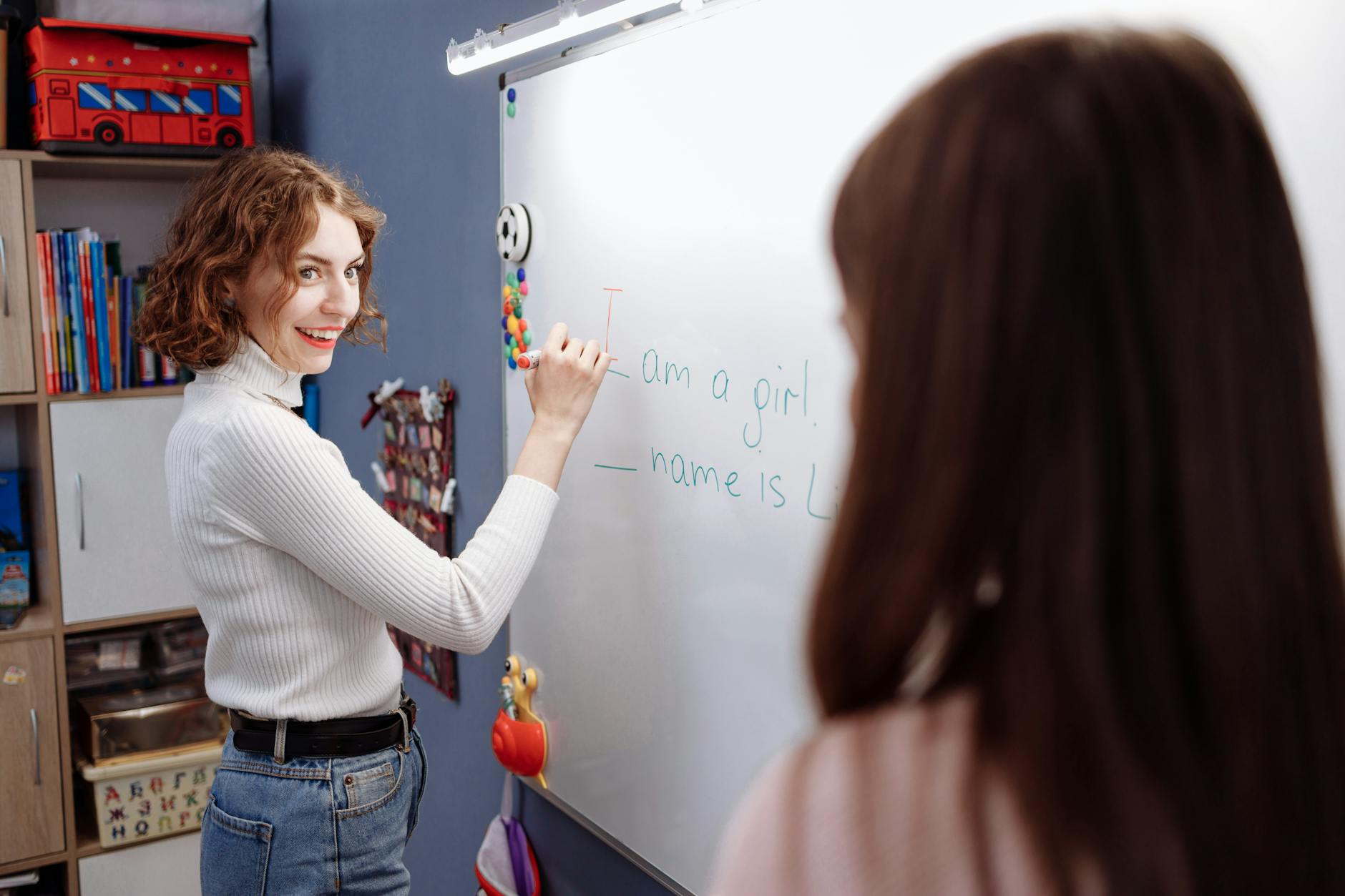
Stop talking at them. Start the Turn and Talk with Accountability protocol instead. Write a sentence frame on the board: "One way to solve this is...because..." Set a visible timer for ninety seconds. Partner A explains while Partner B listens without interrupting. You walk the perimeter and listen in, catching misconceptions in real time. This forces every student to articulate thinking, not just the three kids who always raise their hands.
Then roll the dice. Cold-call two random pairs to share out with the class. The randomness keeps them honest. Prep takes sixty seconds: write two frames on the board before the bell rings. Use this for grades four through twelve. It works for analyzing primary source documents or comparing fractions. The verbal processing builds participatory learning habits that transfer to independent work.
Freeman et al. (2014) published a meta-analysis in PNAS. They found that active learning protocols improve exam performance by an average of six percent. That is half a letter grade. The research covered undergraduate STEM courses, but the mechanism applies to your fourth graders too. When students manipulate ideas verbally, they encode information deeper than passive listening allows. This is cognitive engagement in action. You are literally changing their brains through structured conversation.
Next, try the Stand and Share method for immediate accountability. Hand out individual whiteboards or index cards. Students write responses while you circulate. When finished, they stand behind their desks. They sit only after sharing aloud. Everyone stands. Everyone shares. You eliminate the opt-out. The physical elevation makes it impossible to hide.
This works best in ELA and Social Studies classes of fifteen to thirty students. The activity takes five to seven minutes. Use it for thesis statement practice or summarizing a video clip. The physical shift from sitting to standing triggers affective engagement—students feel the urgency in their bodies. You see 100% participation without raising your voice. You are engaging students physically and mentally.
For collaborative work, deploy the Consensus Placemat. Divide students into groups of four. Give each student an outer box for individual thinking. They write in silence for three minutes. No talking yet. This protects introverts and prevents one dominant voice from hijacking the process. The silence builds academic engagement through individual accountability. Each student brings something to the center.
Then comes the hard part. The center box requires unanimous written agreement before the group moves to the next task. They must negotiate and synthesize. Ideal for seventh through tenth grade science hypothesis formation or algebra problem-solving. The format forces instructional engagement through structured disagreement. You can find similar active learning strategies that scaffold group work effectively.
Now, the rule that saves these protocols from becoming stale: never use the same structure more than twice per week. Habituation kills learner motivation. Alternate between verbal discussions, written exit tickets, and kinesthetic gallery walks. Keep them guessing. This rotation prevents the "oh, this again" slump that kills student engagement by Wednesday. Variety is not just spice; it is oxygen for engaging learning.
Build a weekly rotation schedule template. Monday: verbal turn-and-talk. Tuesday: written consensus placemat. Wednesday: kinesthetic gallery walk. Thursday: back to verbal. Friday: written reflection. You can mix in active learning games on Tuesdays to maintain variety. This systematic rotation creates sustainable routines for engaging students in learning. It is one of the most reliable ways to engage students across diverse content areas.

Step 3 — Build Student Agency Through Meaningful Choice
Choice isn't a free-for-all. It's a scaffold. When you give students structured options, you hand them the steering wheel while keeping the guardrails up. This shift drives authentic student engagement and learner motivation because ownership beats compliance every time. I've watched 7th graders who wouldn't write a paragraph suddenly draft three pages when they picked the research topic. The trick is designing menus that actually move learning forward, not just keep kids busy with fake options between colored pencils.
Build a 9-Square Choice Board using three rows. Label the top row Content: what students learn. The middle row is Process: how they access information. The bottom row is Product: how they demonstrate mastery. Students must select one square from each row.
For 10th-grade Biology studying cell division, Content options might include mitosis details, meiosis mechanics, or comparing both. Process could mean watching a video tutorial, running an interactive simulation, or reading with guided notes. Product choices range from an annotated diagram to a three-slide teaching presentation, or a written comparison paragraph. These strategies for engaging students in learning work because you're not lowering rigor. You're letting students choose their route up the mountain.
Create a Tiered Menu using the Appetizer-Entree-Dessert model. Entree is the grade-level standard. Everyone eats this. It takes 25 minutes. Appetizer is remediation for students who need foundation work. Dessert is extension for those ready to push deeper. Both sides take 15 minutes.
Students don't pick based on preference or what their friends chose. You assign Appetizer or Dessert using diagnostic data from yesterday's exit ticket or a quick pre-check. If a student demonstrated gaps in the prerequisite skill, they start with the Appetizer. If they showed mastery, they move to the Dessert after the Entree. This builds academic engagement by keeping challenge levels appropriate while giving everyone agency within their zone.
Launch Student-Led Conferences using the Claim-Evidence-Reasoning framework. Quarterly, each student selects two portfolio pieces that show growth over time. In a 10-minute conference with you and their family, they state what they learned (Claim), display the actual work with highlighted sections (Evidence), and explain their thinking progression from draft to final (Reasoning). You sit beside the student, not across from the parents. This shifts the locus of control from teacher to student and builds student centered learning and participatory learning habits. Kids stop working for points and start working to have something worth presenting.
Apply the When to Offer Choice decision flowchart to avoid choice overload on the wrong tasks. Post this if-then diagram by your desk or project it during the lesson launch. If the target builds procedural fluency—math facts, grammar conventions, spelling patterns—offer zero choice. Everyone needs the same repetition to build automaticity.
If the task requires strategic thinking—solving using a graph or an equation—offer limited choice between two teacher-selected methods. If the task demands deep application—research topics, project formats, creative demonstrations—offer full choice within safety constraints. This prevents the chaos of letting kids choose their multiplication tables while ensuring they choose their science fair format.
These self-assessment tools for students work best when you model them first. Show students how to pick the Process option that matches their learning style, not just the easiest one. Walk through a sample conference before they run their own. Teach them how to read the diagnostic data so they understand why they got the Appetizer. Agency is a skill you teach through these engagement strategies for teachers, not a switch you flip on a Friday afternoon.

Step 4 — Troubleshoot Common Engagement Barriers
You can spot fake engagement with one question. Stop class ten minutes in and ask three random students: "Why are we learning this today?" If they answer "Because you told us to" or "For the grade," you have behavioral compliance. Not cognition. They’re following rules, not wrestling with ideas. You’ve got quiet bodies but dormant brains.
Fix this by adding an authentic audience. Replace the invisible teacher-as-audience with peer review galleries, public exhibitions, or parent showcases. When 7th graders know actual engineers will critique their bridge designs, learner motivation shifts from obedience to ownership. The work gains stakes. Suddenly they care about precision because someone who actually builds things will see their calculations.
The 80/20 participation problem kills instructional engagement. Three voices dominate every discussion. Twenty-five others check out mentally. You finish the lesson thinking it went great because those three nodded enthusiastically. The quiet majority never processed the question. They just let the loud kids do the cognitive heavy lifting.
Deploy Equity Sticks—popsicle sticks with student names—or a ClassDojo randomizer. Enforce the "No Repeat Until All Have Spoken" rule strictly. If stick A gets drawn twice before everyone has gone, put it back and redraw. Target: every student speaks at least once per 45-minute block. This forces participatory learning across the room and prevents your extroverts from carrying the entire discussion.
Learned helplessness masquerades as engagement. Students raise hands thirty seconds into independent practice because they’ve been trained to outsource thinking. They want you to rescue them immediately.
Implement the 3 Before Me protocol. Students must consult Brain (think independently), Book (notes or text), and Buddy (peer) before approaching the Teacher. For high school, add Bot as step four for technical troubleshooting. Post a massive visual anchor chart by the door. When they try to skip steps, point silently to the chart. No exceptions. This builds academic engagement through self-reliance.
Sometimes high-energy protocols hurt student engagement. During initial explicit instruction of brand-new complex concepts, cognitive load is already maxed. Adding movement, noise, or rapid questioning creates overwhelm and shutdown. Save the gallery walks and think-pair-shares for later.
Instead, use 10-minute chunked direct instruction with 2-minute "Stop and Jot" reflection periods. Let them process silently. Reserve active protocols for the guided practice phase, when the concept is familiar enough to withstand extra stimulation. This protects cognitive engagement when the content is fragile and new.
These strategies for increasing student engagement work best alongside consistent classroom behavior management. And when you need to shift from energetic to calm, use these science-backed methods to improve student focus.

What Foundation Do You Need for Student Engagement?
Student engagement requires three foundational elements: automatic classroom management (Marzano Level 4), positive teacher-student relationships (Hattie effect size 0.48), and clear learning targets. Before implementing strategies, audit behavioral, emotional, and cognitive engagement dimensions using the Fredricks framework. Identify specific gaps rather than assuming universal disengagement plagues your room.
Student engagement isn’t one thing. The Fredricks framework splits it into three measurable dimensions. Behavioral engagement covers the observable stuff: eyes on the speaker, pencils moving, hands raised during discussion. Emotional engagement tracks whether kids feel like they actually belong in your room.
Cognitive engagement shows if they’re actually thinking hard about the content, not just complying with your directions. Hattie’s Visible Learning data puts behavioral engagement at an effect size of 0.46 and teacher-student relationships at 0.48. Both beat the hinge point of 0.40. That tells you these foundations matter more than your slide deck.
Most teachers overestimate engagement in the classroom because they see quiet compliance and mistake it for real thinking. A room of kids filling out worksheets looks peaceful. It might even register as high student engagement in the classroom on a surface level. But check the cognitive dimension before you celebrate.
When you confuse compliance with cognition, you move too fast. You add rigor to lessons where kids haven’t mastered the basics of attention. Check all three corners of the triangle before you blame the activity.
You can’t run instructional engagement strategies on a chaotic foundation. Marzano’s Level 4 classroom management—where procedures run automatically—has to come first in your sequence. When you’re still stopping to redirect every two minutes, students burn working memory monitoring their own behavior instead of solving the math problem you assigned.
I’ve watched teachers try complex participatory learning activities while still managing basic transitions. It fails every time. The kids are so busy figuring out where to sit that they can’t hear the inquiry question you spent twenty minutes crafting. Nail the routines until they’re invisible, then ask for deep thinking.
Start with an honest baseline. Use the Engagement Triangle diagnostic for five minutes during your next lesson. Count instances of behavioral compliance: are materials ready when the bell rings? Note emotional connection: do students volunteer answers or wait to be picked by you?
Watch for cognitive activation: are they generating questions or just answering yours? This isn’t formal research. It’s you paying attention with a practical framework. Try measuring and improving student engagement with this lens instead of guessing what’s broken.
Stop confusing learner motivation with fun. Kahoots and YouTube clips create temporary arousal, not academic engagement. True cognitive engagement looks like productive struggle—kids grappling with a text that’s slightly too hard or debugging code that keeps failing. That frustration is the signal that real learning is happening, not that you’re failing.
Affective engagement matters, but it supports the work; it doesn’t replace it. If your tactics rely primarily on entertainment value, you’re building on sand. Fix the foundation first. Solid management, real relationships, and clear targets beat shiny new apps every single time.
Once these three pillars hold, your specific student engagement strategies will actually stick. You can’t build lasting engagement strategies on a shaky base and expect them to work. Audit first. Build second. Test what actually works with your kids.
Step 1 — Audit Your Current Engagement Levels
Grab a clipboard. Pick a typical Tuesday during regular instruction—not when administrators visit. Set a timer for 3 minutes. When it rings, scan the room and tally every student into three categories. Column one: On-Task—kids writing, discussing content, eyes on text. Column two: Off-Task Passive—staring out windows, head on desk, glazed eyes. Column three: Off-Task Active— whispering about lunch, phones under desks. Repeat this cycle every 3 minutes for 15 minutes total while teaching normally. You now have five snapshots of classroom engagement.
The numbers sting. Traditional lecture formats average 11 to 15 percent off-task intervals. That is roughly one in eight kids disengaged at any given moment. Classrooms using active learning protocols drop that figure under 5 percent. Your baseline matters here. You cannot fix what you cannot see, and gut feelings about "how it went" lie. Hard data from your own room beats intuition every time. This audit reveals which specific classroom engagement patterns need your immediate attention before next week.
Next, hand out the Student Engagement Instrument. Appleton and colleagues built this 35-item survey to measure both cognitive and affective engagement. It is free, validated across grade levels, and takes ten minutes to complete. Students rate items 1 through 5 based on their experience in your class. You get quantifiable data on learner motivation and academic engagement. Stop guessing who is faking understanding or going through the motions.
Score it immediately. Look specifically at the cognitive engagement subscale. Flag any student averaging below 3.0 on those items. These kids are drifting. They might turn in work, but they are not processing deeply. Pair this data with your student assessment analysis to spot patterns. Low cognitive engagement plus dropping grades equals an intervention alert. Do not wait for the report card to confirm what the survey already shows you plainly.
Now check the temperature in real time. Launch Mentimeter or Poll Everywhere. Project the join code. Ask three questions only. First: "I could explain this learning target to a partner." Second: "I feel capable of today's task." Third: "My attention level right now." You get instant feedback on instructional engagement. This beats asking "Everybody got it?" and hearing silence. Students quietly plan their escape while you wait for hands that never rise.
Watch the percentages closely. If over 30 percent select negative responses—"No," "Low," or 1-2 on the scale—stop teaching. Pause the lecture. Deploy a processing protocol immediately. Think-pair-share, quick write, or turn-and-talk. Thirty percent disengagement is a tipping point. Push through and you lose the room entirely. These participatory learning breaks reset attention better than raising your voice to blank stares or repeating the instructions yet again.
Create a visual Engagement Scorecard. Draw three zones on a poster or keep it in your planbook. Green Zone means 80 to 100 percent of students demonstrate on-task behaviors. Yellow Zone lands at 60 to 79 percent. Red Zone falls below 60 percent. Be honest. A Red Zone period demands different teaching strategies for engagement tomorrow, not next week. Color-coding removes the guesswork from your daily self-assessment and keeps your classroom engagement goals visible and urgent.
Define behaviors for each zone concretely. Green Zone looks like eyes on the speaker, pens moving, relevant questions asked without prompting. Yellow Zone shows scattered gazes, one or two side conversations, hesitant participation. Red Zone means phones out, heads down, or multiple off-topic discussions drowning out your voice completely. Tape this rubric to your clipboard. Glance at it during instruction. Gauge which strategies for classroom engagement actually work with this specific group. Student engagement lives in these observable details, not in how smoothly you delivered the slides or managed the clock.
Step 2 — Deploy Active Learning Protocols
Stop talking at them. Start the Turn and Talk with Accountability protocol instead. Write a sentence frame on the board: "One way to solve this is...because..." Set a visible timer for ninety seconds. Partner A explains while Partner B listens without interrupting. You walk the perimeter and listen in, catching misconceptions in real time. This forces every student to articulate thinking, not just the three kids who always raise their hands.
Then roll the dice. Cold-call two random pairs to share out with the class. The randomness keeps them honest. Prep takes sixty seconds: write two frames on the board before the bell rings. Use this for grades four through twelve. It works for analyzing primary source documents or comparing fractions. The verbal processing builds participatory learning habits that transfer to independent work.
Freeman et al. (2014) published a meta-analysis in PNAS. They found that active learning protocols improve exam performance by an average of six percent. That is half a letter grade. The research covered undergraduate STEM courses, but the mechanism applies to your fourth graders too. When students manipulate ideas verbally, they encode information deeper than passive listening allows. This is cognitive engagement in action. You are literally changing their brains through structured conversation.
Next, try the Stand and Share method for immediate accountability. Hand out individual whiteboards or index cards. Students write responses while you circulate. When finished, they stand behind their desks. They sit only after sharing aloud. Everyone stands. Everyone shares. You eliminate the opt-out. The physical elevation makes it impossible to hide.
This works best in ELA and Social Studies classes of fifteen to thirty students. The activity takes five to seven minutes. Use it for thesis statement practice or summarizing a video clip. The physical shift from sitting to standing triggers affective engagement—students feel the urgency in their bodies. You see 100% participation without raising your voice. You are engaging students physically and mentally.
For collaborative work, deploy the Consensus Placemat. Divide students into groups of four. Give each student an outer box for individual thinking. They write in silence for three minutes. No talking yet. This protects introverts and prevents one dominant voice from hijacking the process. The silence builds academic engagement through individual accountability. Each student brings something to the center.
Then comes the hard part. The center box requires unanimous written agreement before the group moves to the next task. They must negotiate and synthesize. Ideal for seventh through tenth grade science hypothesis formation or algebra problem-solving. The format forces instructional engagement through structured disagreement. You can find similar active learning strategies that scaffold group work effectively.
Now, the rule that saves these protocols from becoming stale: never use the same structure more than twice per week. Habituation kills learner motivation. Alternate between verbal discussions, written exit tickets, and kinesthetic gallery walks. Keep them guessing. This rotation prevents the "oh, this again" slump that kills student engagement by Wednesday. Variety is not just spice; it is oxygen for engaging learning.
Build a weekly rotation schedule template. Monday: verbal turn-and-talk. Tuesday: written consensus placemat. Wednesday: kinesthetic gallery walk. Thursday: back to verbal. Friday: written reflection. You can mix in active learning games on Tuesdays to maintain variety. This systematic rotation creates sustainable routines for engaging students in learning. It is one of the most reliable ways to engage students across diverse content areas.
Step 3 — Build Student Agency Through Meaningful Choice
Choice isn't a free-for-all. It's a scaffold. When you give students structured options, you hand them the steering wheel while keeping the guardrails up. This shift drives authentic student engagement and learner motivation because ownership beats compliance every time. I've watched 7th graders who wouldn't write a paragraph suddenly draft three pages when they picked the research topic. The trick is designing menus that actually move learning forward, not just keep kids busy with fake options between colored pencils.
Build a 9-Square Choice Board using three rows. Label the top row Content: what students learn. The middle row is Process: how they access information. The bottom row is Product: how they demonstrate mastery. Students must select one square from each row.
For 10th-grade Biology studying cell division, Content options might include mitosis details, meiosis mechanics, or comparing both. Process could mean watching a video tutorial, running an interactive simulation, or reading with guided notes. Product choices range from an annotated diagram to a three-slide teaching presentation, or a written comparison paragraph. These strategies for engaging students in learning work because you're not lowering rigor. You're letting students choose their route up the mountain.
Create a Tiered Menu using the Appetizer-Entree-Dessert model. Entree is the grade-level standard. Everyone eats this. It takes 25 minutes. Appetizer is remediation for students who need foundation work. Dessert is extension for those ready to push deeper. Both sides take 15 minutes.
Students don't pick based on preference or what their friends chose. You assign Appetizer or Dessert using diagnostic data from yesterday's exit ticket or a quick pre-check. If a student demonstrated gaps in the prerequisite skill, they start with the Appetizer. If they showed mastery, they move to the Dessert after the Entree. This builds academic engagement by keeping challenge levels appropriate while giving everyone agency within their zone.
Launch Student-Led Conferences using the Claim-Evidence-Reasoning framework. Quarterly, each student selects two portfolio pieces that show growth over time. In a 10-minute conference with you and their family, they state what they learned (Claim), display the actual work with highlighted sections (Evidence), and explain their thinking progression from draft to final (Reasoning). You sit beside the student, not across from the parents. This shifts the locus of control from teacher to student and builds student centered learning and participatory learning habits. Kids stop working for points and start working to have something worth presenting.
Apply the When to Offer Choice decision flowchart to avoid choice overload on the wrong tasks. Post this if-then diagram by your desk or project it during the lesson launch. If the target builds procedural fluency—math facts, grammar conventions, spelling patterns—offer zero choice. Everyone needs the same repetition to build automaticity.
If the task requires strategic thinking—solving using a graph or an equation—offer limited choice between two teacher-selected methods. If the task demands deep application—research topics, project formats, creative demonstrations—offer full choice within safety constraints. This prevents the chaos of letting kids choose their multiplication tables while ensuring they choose their science fair format.
These self-assessment tools for students work best when you model them first. Show students how to pick the Process option that matches their learning style, not just the easiest one. Walk through a sample conference before they run their own. Teach them how to read the diagnostic data so they understand why they got the Appetizer. Agency is a skill you teach through these engagement strategies for teachers, not a switch you flip on a Friday afternoon.
Step 4 — Troubleshoot Common Engagement Barriers
You can spot fake engagement with one question. Stop class ten minutes in and ask three random students: "Why are we learning this today?" If they answer "Because you told us to" or "For the grade," you have behavioral compliance. Not cognition. They’re following rules, not wrestling with ideas. You’ve got quiet bodies but dormant brains.
Fix this by adding an authentic audience. Replace the invisible teacher-as-audience with peer review galleries, public exhibitions, or parent showcases. When 7th graders know actual engineers will critique their bridge designs, learner motivation shifts from obedience to ownership. The work gains stakes. Suddenly they care about precision because someone who actually builds things will see their calculations.
The 80/20 participation problem kills instructional engagement. Three voices dominate every discussion. Twenty-five others check out mentally. You finish the lesson thinking it went great because those three nodded enthusiastically. The quiet majority never processed the question. They just let the loud kids do the cognitive heavy lifting.
Deploy Equity Sticks—popsicle sticks with student names—or a ClassDojo randomizer. Enforce the "No Repeat Until All Have Spoken" rule strictly. If stick A gets drawn twice before everyone has gone, put it back and redraw. Target: every student speaks at least once per 45-minute block. This forces participatory learning across the room and prevents your extroverts from carrying the entire discussion.
Learned helplessness masquerades as engagement. Students raise hands thirty seconds into independent practice because they’ve been trained to outsource thinking. They want you to rescue them immediately.
Implement the 3 Before Me protocol. Students must consult Brain (think independently), Book (notes or text), and Buddy (peer) before approaching the Teacher. For high school, add Bot as step four for technical troubleshooting. Post a massive visual anchor chart by the door. When they try to skip steps, point silently to the chart. No exceptions. This builds academic engagement through self-reliance.
Sometimes high-energy protocols hurt student engagement. During initial explicit instruction of brand-new complex concepts, cognitive load is already maxed. Adding movement, noise, or rapid questioning creates overwhelm and shutdown. Save the gallery walks and think-pair-shares for later.
Instead, use 10-minute chunked direct instruction with 2-minute "Stop and Jot" reflection periods. Let them process silently. Reserve active protocols for the guided practice phase, when the concept is familiar enough to withstand extra stimulation. This protects cognitive engagement when the content is fragile and new.
These strategies for increasing student engagement work best alongside consistent classroom behavior management. And when you need to shift from energetic to calm, use these science-backed methods to improve student focus.
Still grading everything by hand?
EMStudio is a free teaching management app — manage your classes, students, lessons, and more!
Learn More
Still grading everything by hand?
EMStudio is a free teaching management app — manage your classes, students, lessons, and more!
Learn More



Notion4Teachers
Notion templates to simplify administrative tasks and enhance your teaching experience.



2026 Notion4Teachers. All Rights Reserved.
Notion4Teachers
Notion templates to simplify administrative tasks and enhance your teaching experience.
2026 Notion4Teachers. All Rights Reserved.
Notion4Teachers
Notion templates to simplify administrative tasks and enhance your teaching experience.
2026 Notion4Teachers. All Rights Reserved.