
Student Centered Learning: A Complete Guide for K-12 Teachers
Student Centered Learning: A Complete Guide for K-12 Teachers

Article by
Milo
ESL Content Coordinator & Educator
ESL Content Coordinator & Educator
All Posts
John Dewey opened his Laboratory School at the University of Chicago in 1896 to test a radical idea: children learn by doing, not by sitting in rows absorbing lectures. That idea became what we now call student centered learning. It means shifting from you talking at the board to students wrestling with problems, building projects, and teaching each other. The content still matters, but how students interact with it matters more than your delivery.
I spent my first years teaching the way I was taught—heavy on direct instruction, light on student choice. My kids could pass tests, but they forgot the material by June. When I flipped to inquiry-based lessons and let students track their own progress through metacognition journals, retention finally stuck. This guide covers what actually works in K-12 classrooms: concrete methods for differentiated instruction, self-directed learning setups, and how to balance structure with student agency without losing control of your room.
Still grading everything by hand?
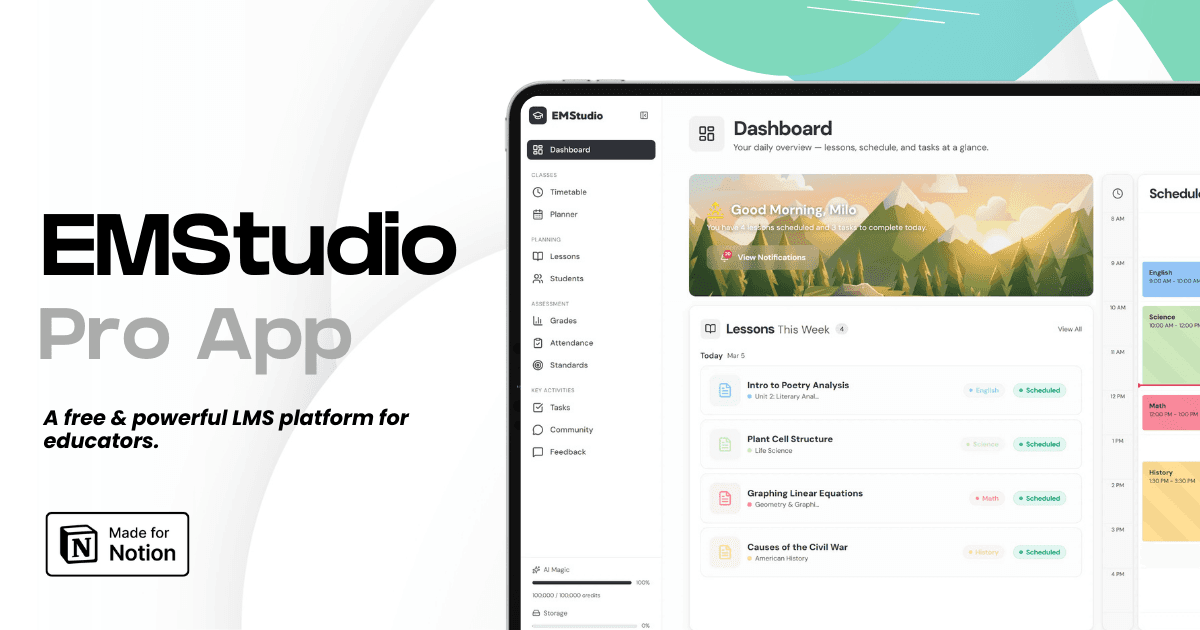
EMStudio is a free teaching management app — manage your classes, students, lessons, and more!
Learn More
Still grading everything by hand?
EMStudio is a free teaching management app — manage your classes, students, lessons, and more!
Learn More
Table of Contents
What Is Student Centered Learning?
Student centered learning is an instructional approach that shifts cognitive responsibility from teacher to student, emphasizing active inquiry, student voice, and choice. Rooted in constructivism and Self-Determination Theory, it positions the teacher as facilitator while students construct knowledge through authentic problems, collaborative investigation, and metacognitive reflection rather than passive reception.
Deci and Ryan's Self-Determination Theory anchors this in three psychological needs: autonomy, competence, and relatedness. Students choose research topics, master skills through scaffolded practice, and collaborate in critique circles. This beats teacher-centered control where I hold all authority—dictating seating, pacing, and assessment formats while kids remain passive.
The Gradual Release of Responsibility framework maps this shift across four stages: Focus Lessons (I do), Guided Instruction (We do), Collaborative Learning (You do together), and Independent Learning (You do alone). I time these differently by age. K-2 students need 10-minute stages before their attention drifts. My high schoolers handle 20-minute stages, diving deeper into complex inquiry-based learning before transitioning.
You know it's working when you see these indicators:
Student talk comprises 60%+ of class time
Student-generated questions populate a "Wonder Wall"
Flexible seating allows movement every 20 minutes
Choice appears in 40%+ of assignments
John Hattie's Visible Learning research confirms this. Student-centered strategies like self-reported grades (d=1.44) and reciprocal teaching (d=0.74) outperform traditional lecture methods by significant margins.
Core Principles of Learner Centered Education
I had to unlearn my controlling instincts. Compare the teacher moves:
Controlling: "You must finish this worksheet before recess."
Autonomy-supportive: "What strategy will you use to reach the learning target?"
The Danielson Framework for Teaching Domain 3 (Instruction) and Domain 1 (Planning) align with learner centred education, rewarding units built around student questions and multiple pathways to mastery rather than rigid, teacher-controlled pacing.
The Role of the Teacher in Student Centered Classrooms
Using the Harkness Method, I speak less than 30% of class time, employing 3-5 seconds of wait time after questions. This silence feels awkward at first, but it's where the thinking happens.
I stopped being the sage on the stage. Last month, instead of explaining photosynthesis through a PowerPoint, I handed out plants and light meters. The kids designed experiments while I circulated with probing questions. That's the concrete shift to active learning—from delivering content to designing experiences.
Student Ownership and Agency in Learning
During Student-Led Conferences, students present a three-piece portfolio—growth work, best work, and goal work—to their parents. I remain silent for 90% of the 15 minutes, serving only as timekeeper. This is student centered education in practice.
We track this through Learner Profiles. Each quarter, students update Google Forms self-assessments cataloging their interests, learning preferences, and goal progress. I use this data for differentiated instruction. When students see their own metacognitive reflections driving the groups and choices, self-directed learning becomes classroom culture.
Why Does Student Centered Teaching Matter?
Student centered teaching matters because research consistently shows higher effect sizes for active learning strategies compared to passive lecture. It addresses the documented decline in student engagement from elementary to high school while developing critical 21st century competencies like collaboration, communication, and self-regulation that automated economies demand. The data is clear: how we teach matters as much as what we teach.
John Hattie's meta-analysis puts hard numbers on what veteran teachers see daily. Reciprocal teaching hits an effect size of 0.74. Self-verbalization and self-questioning sit at 0.64. Traditional lecturing? Just 0.48. Remember that 0.40 represents one year of growth. So when we shift from talking at kids to having them teach each other and question their own understanding, we nearly double the learning impact. That's the power of metacognition in action.
The Gallup Student Poll tracks what happens when we ignore this data. Engagement drops from 74% in grade 5 to 32% by grade 12. I've watched 5th graders buzz with questions and 12th graders check out completely. Learner centered teaching counters this spiral by giving students relevance and agency—two things teenagers need desperately but rarely get in traditional classrooms.
Improved Academic Outcomes and Long-Term Retention
I've seen the retention data play out in my own classroom. When students learn through application rather than lecture, they retain 60-80% of material on delayed post-tests six weeks later. Lecture-only instruction? That drops to 20%. The neuroscience backs this up.
Elaborative rehearsal during student centered activities strengthens neural pathways through multiple connections, while rote memorization creates weak, temporary links that fade fast. Self-directed learning and inquiry-based learning build durable memory through retrieval practice and spacing effects.
Development of Critical 21st Century Skills
The 21st century skills development isn't buzzword fluff. The P21 Framework demands Critical Thinking through analyzing primary sources, Communication through presenting to authentic audiences, Collaboration via team contracts, and Creativity through design thinking iterations. Kindergarteners use "Turn and Talk" protocols. Middle schoolers write team contracts with conflict resolution clauses.
High schoolers rotate through interdependent roles—facilitator, recorder, skeptic, reporter. The World Economic Forum's Future of Jobs Report makes clear: automated economies demand complex problem-solving that requires active, not passive, learning environments. Differentiated instruction prepares them for this reality.
Increased Student Engagement and Intrinsic Motivation
Self-Determination Theory explains why student centered design works. Students need autonomy (choice in topics), competence (scaffolded challenge), and relatedness (classroom community). Check all three boxes and intrinsic motivation follows.
I've watched kids hit flow state—Csikszentmihalyi's concept—when they tackle self-selected challenge-level tasks with clear goals and immediate feedback loops. Time disappears. Learning sticks. That's constructivism working at the neurological level.
How Student Centered Education Works
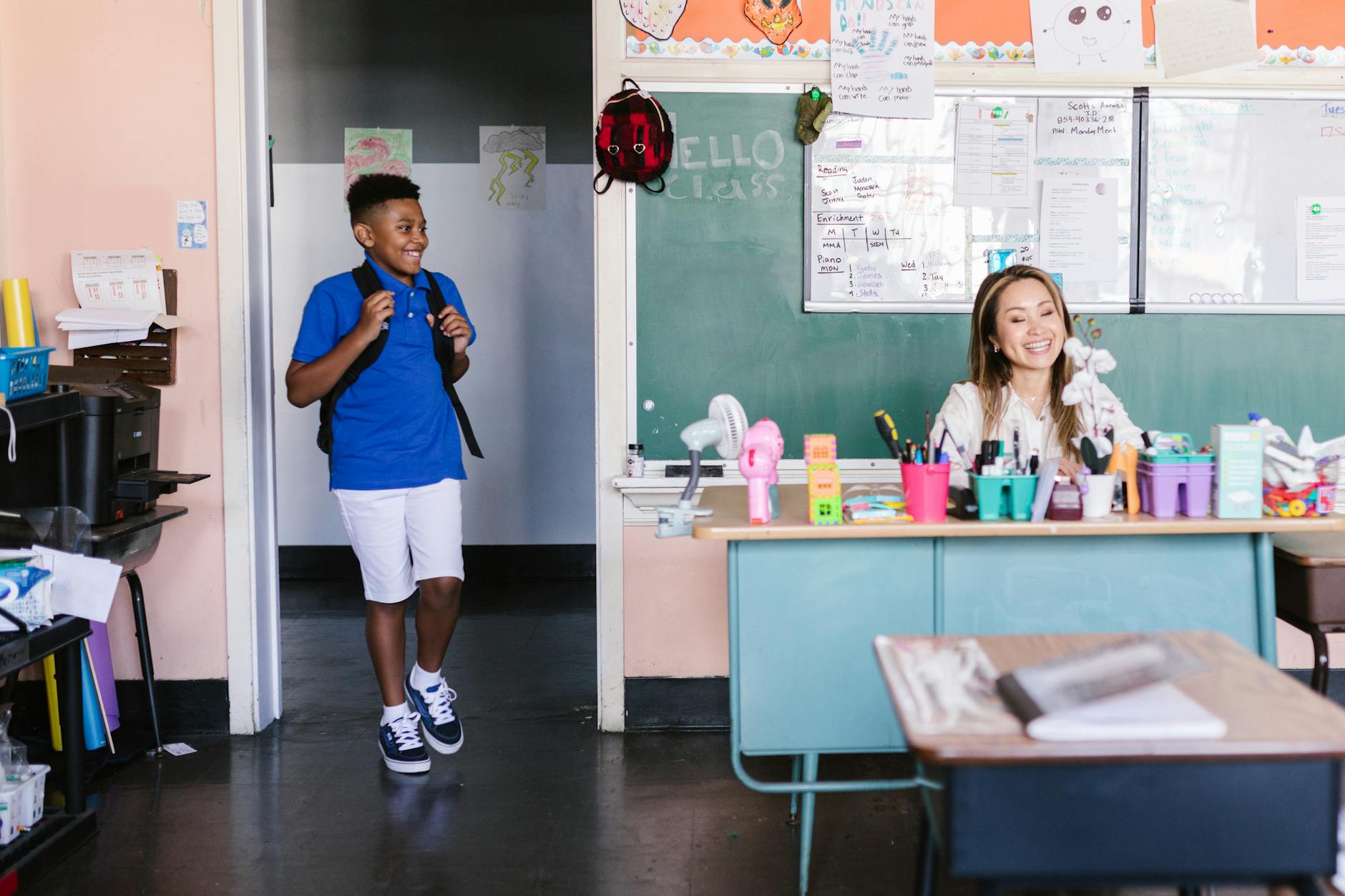
I run the Workshop Model daily. It's the backbone of student centered instruction. Three phases keep kids moving.
Step 1 (10-15 min): Mini-lesson with explicit modeling.
Step 2 (20-30 min): Active work time with teacher conferring.
Step 3 (5-10 min): Student share/closure. This fits literacy and math blocks.
You know it's working when you see these 5 Daily Indicators of Student Centered Practice:
Students choosing work location
Peer feedback occurring
Teacher facilitating small group
Student questions driving inquiry
Multiple solution paths visible on anchor charts
Cognitive load management makes inquiry-based learning possible. I use anchor charts, word walls, and digital repositories like Google Classroom or Seesaw to store procedures. This frees working memory for problem-solving rather than memorization.
Active Learning Strategies and Collaborative Work
This learner centered method depends on active learning strategies that force participation without chaos. Think-Pair-Share fails when kids blurt immediately. I set a strict 30-second individual think timer before anyone pairs. Silence first. Then talk.
The Jigsaw method breaks content into expert groups of 4. Each member masters one chunk, then teaches the others. I post Accountable Talk stems at eye level: "I agree with X because..." or "I see it differently..." so kids have language for disagreement that doesn't devolve into "you're wrong."
For science inquiry, the 5E Instructional Model structures learner centered learning across grade levels. In grades 3-5, I allocate: Engage (10 min), Explore (15-20 min), Explain (10-15 min), Elaborate (15-20 min), Evaluate (10 min). High schoolers need longer exploration—20-30 minutes—before explaining complex concepts.
Differentiated Instruction and Personalized Pathways
Differentiated instruction and personalized pathways require systems, not just goodwill. I use Learning Menus: 3 "Entrees" cover required standards, 2 "Sides" let kids choose application methods, and 1 "Dessert" offers extension. Last month my 7th graders worked through linear equations this way. Everyone solved for y, but some graphed in Desmos. Others used algebra tiles. Advanced kids wrote word problems for the Dessert.
Fluid grouping based on NWEA MAP data keeps learner centered instruction honest. I regroup every 6-8 weeks based on specific standard mastery, not ability tracking. A kid who crushed fractions but struggles with decimals moves groups just for that unit. This constructivism approach meets kids where they are without permanent labels that kill motivation.
Authentic Assessment and Continuous Feedback Loops
Self-assessment tools for students work best with single-point rubrics. I ditched analytic rubrics with four columns. Kids ignore them. Single-point rubrics show only the target criteria with blank space beside each for specific feedback. Cleaner. Less overwhelming. Students actually read them.
Peer feedback runs on "I Like, I Wonder, Next Steps" protocols with sentence starters posted. Kids write on sticky notes during gallery walks. No vague "good job" comments allowed.
The real engine is weekly conferring. Five minutes per student equals 150 minutes for a class of 30. I schedule four kids daily during independent work time. We look at their work together, set one goal, and move on. This builds metacognition and self-directed learning faster than any letter grade.
Student Centered vs Teacher Centered: Key Differences
Knowledge View | Transmission: I deliver facts via lecture while students copy notes | Construction: Students analyze primary sources to build causal arguments |
Teacher Role | Expert at the front dispensing information | Facilitator circulating with scaffolding questions |
Student Role | Passive recipient following along | Active investigator debating evidence with peers |
Pacing | Uniform: Chapter 5 starts Monday regardless of Friday's scores | Mastery-based: Advance only after demonstrating 80% proficiency |
Error Framing | Failure: Points deducted, move to next topic | Learning opportunity: Analyze gaps and retry with support |
Use direct instruction for threshold concepts—Meyer and Land's troublesome knowledge that blocks all further understanding, like balancing chemical equations or lab safety protocols. Shift to student centered approaches for consolidation, transfer, and synthesis. Apply Cognitive Load Theory: novices need worked examples and guided practice, while experts with automated schema can handle open inquiry without overwhelming working memory.
Teacher prep time runs 2.5 hours weekly for student centered units versus 1 hour for lecture-based lessons. Optimal class size is 22:1 for active learning versus 30:1 manageable for direct instruction. You'll need 1:1 devices or a reliable rotation model to support independent research and differentiated pathways.
Knowledge Transmission vs Knowledge Construction
The behaviorist view assumes I pour knowledge into empty vessels. I used to lecture for 40 minutes on World War II causes, filling graphic organizers while students copied dates into notebooks. Constructivism changed my practice. Knowledge isn't transferred; it's constructed through assimilation and accommodation as students modify existing mental models.
Now I use Vygotsky's Zone of Proximal Development with strategic scaffolding. Students analyze five primary sources—Churchill speeches, economic data, treaty clauses—through inquiry-based learning. They construct their own causal arguments about the war's origins rather than receiving mine. The thinking sticks because they built it.
Passive Reception vs Active Participation
Electronic monitoring through GoGuardian or Securly reveals brutal truths: during lectures, my students' time-on-task hovers around 45%, with constant tab-flipping to distractions. When I shift to active learning strategies, engagement jumps to 85%. The difference is participation depth, not just attendance.
In traditional Q&A, I call on the same five volunteers—maybe 5-10% of the class speaks during a period. Think-Pair-Share forces 100% verbal participation; every student explains their thinking to a partner before sharing with the group. That's the gap between hearing about history and doing the work of historians.
Standardized Pacing vs Mastery Based Progression
Teacher centered pacing is calendar-driven. I moved to Chapter 5 on Monday regardless of Friday's test results. Students with 60% proficiency advanced anyway, accumulating gaps that collapsed later. Mastery-based progression requires students demonstrate 80% proficiency on formative assessments before advancing to new material.
New Hampshire districts have replaced seat time with competency-based frameworks—students exhibit understanding through portfolios and defenses, not clocks. Error framing shifts too: wrong answers become data for metacognition rather than failures. When a student misses the threshold, we analyze the specific gap and retry, ensuring solid foundations before building higher-order thinking.
Practical Examples of Learner Centered Methods
Project Based Learning and Inquiry Cycles
I ran a 7th grade Water Quality Initiative using the Buck Institute Gold Standard. We started with an Entry Event—a local news clip—then built our Know/Need-to-Know list. The six A's guided us: Authenticity meant testing stream water; Academic Rigor hit NGSS standards; Applied Learning had students calculating contamination; Active Exploration sent them to the creek; Adult Relationships connected us with the city hydrologist; Assessment included a rubric with a presentation for City Council. This constructivism in action exemplifies student centered instruction. You can read more about project based learning and inquiry cycles on our site.
Flipped Classroom Models
Last semester I flipped my 10th grade ELA unit on Lord of the Flies. I built Edpuzzle videos with three embedded questions per ten minutes. Class time became active learning through Socratic Seminar using Save the Last Word for Me protocol. The biggest headache? Kids who don't watch the video. I solved this with an in-class video station. Stragglers watch during the first ten minutes while others start the seminar, then join the rotation. Learn more about flipped classroom models here.
Choice Boards and Learning Stations
Differentiated instruction shines in Learning Stations. For K-2, rotate every 15 minutes; 3-5 can handle 20. I set up four stations for a 3rd grade force and motion unit: Research, Experiment, Create, and Share. Student based learning requires giving up control. For Choice Boards, I use a Tic-Tac-Toe format with nine options in 4th grade math. The center column contains three required activities; students pick two others to complete a row. I include RAFT choices—Role, Audience, Format, Topic—for explaining math concepts. I manage this with a Must Do/May Do chart using magnetic labels. Students move their name tags when finished so I can see accountability at a glance and support self-directed learning.
Peer Teaching and Collaborative Groups
Peer Teaching builds metacognition. In 10th grade biology, I use Reciprocal Teaching with four roles: Predictor, Clarifier, Questioner, and Summarizer. Each student holds a role card with sentence stems during 25-minute discussions. For larger units, I use Jigsaw II. Expert groups of four or five master one Civil Rights leader, then return to home groups with a Teaching Preparation Checklist: three key facts, one primary source, and two discussion questions. For daily protocols, try Ask 3 Before Me with expert students wearing lanyards. Or use peer editing with colored pens—green for glow, pink for grow. These learner centered methods put the cognitive load where it belongs.

How to Shift to Student Centered Instruction
Redesigning Physical and Digital Learning Spaces
Start with the furniture. I removed half my traditional desks during winter break and never looked back. Flexible seating zones changed everything. I added two IKEA Bekant standing tables ($179 each) for active learning and scattered $15 floor cushions near the library. Kids claimed Home Base spots where they stash belongings, then rotate through Collaborative tables (four students), Independent carrels, Focus standing desks, and Comfort zones with a thrifted couch. I track rotations on a clipboard to ensure fair access to preferred spots.
The digital space matters just as much as the physical. I use Google Sites for student portfolios where they archive growth and reflect on progress. In Google Classroom, I organize topics by unit with embedded choice board hyperdocs. For younger grades, Seesaw folders work better—each student uploads photos of physical work with voice reflections. This is redesigning physical learning spaces that actually supports self-directed learning and constructivism. This setup enables true learner centered teaching and learning.
Transitioning from Lecturer to Facilitator
Release control in phases. Week 1, I model at 100%. Week 2, I guide at 70%. Week 3 drops to 50% student collaboration. By Week 4, they run 80% independently. This gradual release builds metacognition without chaos.
In Weeks 3-4, I release procedural control. Students sign out digitally via Google Form. Table Captains handle materials. I use a chime for transitions instead of my voice.
I keep an "Instead of This, Try This" phrase bank handy:
Instead of "Check your work," try "What would convince a skeptic of your solution?"
Instead of "Any questions?" try "What part feels unclear right now?"
Instead of "Good job," try "Which strategy helped you most?"
Instead of "You're smart," try "Your effort shifted when you hit that wall."
Instead of "Yes or no?" try "Defend your answer with evidence."
Instead of "Read chapter 4," try "What do you need to know to solve this?"
Instead of "That's wrong," try "Walk me through your thinking."
Instead of "Be quiet," try "Check your volume against the anchor chart."
Instead of "I like how you..." try "Your group met the criteria we established."
Instead of "Turn it in," try "Publish when it meets your standards."
I use No Opt Out, Right is Right, and Stretch It questioning to maintain inquiry-based learning.
Building Student Choice into Curriculum Design
By Months 2-3, I overhaul curriculum. I post Must Do/May Do boards so kids see requirements versus exploration. Fridays become Genius Hour—20% time for passion projects. Science shifts to the 5E model: Engage, Explore, Explain, Elaborate, Evaluate. This is differentiated instruction in action.
I plan using Understanding by Design. I identify desired results from standards, determine acceptable evidence through performance tasks with built-in choice, then plan learning experiences using a workshop model. Beginners get Structured Choice (pick A or B). Advanced learners get Open Choice (choose your product format—video, essay, or model).
This architecture creates true learner centred teaching and learning. When students control the "how," they own the learning. That's authentic student centered practice that actually sticks with kids long after the unit ends.
Common Challenges and Solutions
I’ve watched teachers crash into the Dump and Run trap. They assign the inquiry project, sit at their desk to grade, and mistake physical presence for teaching. Kids know the difference immediately. You are cognitively absent. I fix this with an Active Facilitation Checklist: rotate the room every 8 minutes, confer with 3 students per rotation, and track those interactions on a clipboard. No more hiding behind a stack of papers while students struggle in silence.
Managing Classroom Noise and Activity Levels
Noise spikes when you shift to active learning and group work. I use a Yacker Tracker—that $100 visual decibel meter that glows red when voices hit 65 decibels—or the free Too Noisy app set to the same threshold. We post a Voice Levels 0-4 anchor chart with specific activities tied to each level. Level 0 means silent independent reading. Level 2 covers partner math talks. Level 4 is playground only.
The CHAMPs system structures every transition:
Conversation level: How loud is too loud?
Help procedure: How do you ask without interrupting conferring?
Activity objective: What are you producing?
Movement permission: Can you get up?
Participation expectations: What does engagement look like?
I explicitly teach managing classroom noise and activity levels using silent signals: hand up means need help, hand on head means bathroom, two fingers means sharp pencil. These cues let me finish conferring with a 3rd grader about their research question without stopping to referee every minor request.
Addressing Standardized Testing Pressures
State tests don’t have to kill your student centered classroom. I treat Test as Genre: for the last 3 weeks before exams, we study multiple-choice questions like mystery novels, analyzing distractors and annotating passages explicitly. We embed released items as formative checks within PBL units, maintaining inquiry-based learning and learner based teaching the other 32 weeks.
I map every project to state standards using a simple alignment chart that shows exactly which standards we covered through authentic work. My grade-level team races to finish required curriculum by April 1, leaving 6 weeks for strategic test prep and deeper constructivism without the coverage panic that drives teachers back to drill-and-kill worksheets.
Supporting Students Who Struggle with Autonomy
Full self-directed learning terrifies some kids, especially those with IEPs, 504s, or trauma histories who have never been trusted with decisions before. I use Structured Choice: present two pre-selected options instead of open-ended chaos that paralyzes them. Visual timers mark 20 minutes of focused work followed by 5 minutes of sanctioned movement. Assigned peer buddies provide scaffolding without the teacher hovering.
My Graduated Autonomy Protocol moves students through four distinct levels:
Level 1: I choose the task, you execute
Level 2: I provide 2 choices
Level 3: You propose a plan, I approve
Level 4: Full autonomy
Students level up based on demonstrated self-regulation, not calendar dates. Weekly SMART goals adapted for grade level, tracked via Google Form self-reports on effort and strategy use, build the metacognition and self-awareness essential for differentiated instruction and true student centred teaching.

Measuring Success in Student Centered Classrooms
In a student centered classroom, we stop counting worksheets and start watching growth happen in real time. I track progress through digital portfolios—Seesaw for K-5 and Google Sites for 6-12. Each portfolio requires four distinct sections:
About Me
Growth Projects showing iteration and drafts
Reflections on the learning process
Best Works showcasing final mastery
Kids update Growth Projects weekly and Best Works quarterly. This beats any gradebook entry for showing parents what their child actually learned through authentic student centred instruction.
For daily formative assessment strategies, I use Google Forms with dropdown menus for CCSS standards observed, support levels needed (independent/prompt/guided), and specific teaching points recorded. The auto-spreadsheet generates patterns instantly. I also run monthly Learner Profile surveys tracking collaboration, persistence, and question-asking frequency. When I compare these non-cognitive measures to academic data, I often spot the quiet kids who score okay but stopped asking questions three weeks ago. This data drives my differentiated instruction immediately.
Formative Assessment Strategies
I check understanding every twenty minutes with hinge questions. These are multiple choice questions where fifty percent correct is my line in the sand. Below that, we reteach right away. At or above, we proceed. Students respond with Plickers cards or whiteboards—low tech, zero setup time. This keeps active learning moving without losing anyone.
At the bell, I pass out 3-2-1 Exit Tickets. Students write:
3 things learned today
2 questions they still have
1 connection to prior knowledge
I sort these into three piles during my prep: got it, confused, or lost. Tomorrow's small groups form themselves based on these piles. My conferring notes feed into that same Google Form tracker—CCSS standard observed, level of support needed, and teaching point recorded. By Friday, I can see exactly who needs targeted instruction next week.
Student Self Assessment and Reflection
Students assess themselves weekly using an Exit Tweet—exactly one hundred forty characters reflecting on their mastery of the learning target using Marzano's four-point scale. Four means they can teach others. Three means independent work. Two means they needed help. One means not yet. This builds metacognition into our daily learner centred instruction routine.
With fourth graders and up, we co-create rubrics by analyzing exemplars together. Students generate the criteria, then post them as checklists for self-monitoring during work time. I also run metacognitive journals—three-minute written reflections at class end using prompts like "What was challenging today and how did you handle it?" This supports self-directed learning and true centred learning better than any teacher-generated checklist ever could.
Tracking Growth Beyond Test Scores
Academic scores tell only half the story in my classroom. I use 21st Century Skills rubrics to assess collaboration separately from content grades. My indicators are specific and observable:
Listens actively without interrupting
Contributes ideas that build on others
Asks questions of peers to deepen understanding
Each rated one to four. This approach aligns with inquiry-based learning and constructivism—we care deeply about how students learn, not just what they memorize.
During public exhibitions, parents and community members provide feedback using simplified rubrics. I triangulate this audience data with my teacher assessment and student self-assessment. This tracking growth beyond test scores reveals the real impact of sustained inquiry-based learning. When a kid who refused to speak in September presents confidently to fifty adults in May, that's success I can actually measure.
What Is Student Centered Learning?
Student centered learning is an instructional approach that shifts cognitive responsibility from teacher to student, emphasizing active inquiry, student voice, and choice. Rooted in constructivism and Self-Determination Theory, it positions the teacher as facilitator while students construct knowledge through authentic problems, collaborative investigation, and metacognitive reflection rather than passive reception.
Deci and Ryan's Self-Determination Theory anchors this in three psychological needs: autonomy, competence, and relatedness. Students choose research topics, master skills through scaffolded practice, and collaborate in critique circles. This beats teacher-centered control where I hold all authority—dictating seating, pacing, and assessment formats while kids remain passive.
The Gradual Release of Responsibility framework maps this shift across four stages: Focus Lessons (I do), Guided Instruction (We do), Collaborative Learning (You do together), and Independent Learning (You do alone). I time these differently by age. K-2 students need 10-minute stages before their attention drifts. My high schoolers handle 20-minute stages, diving deeper into complex inquiry-based learning before transitioning.
You know it's working when you see these indicators:
Student talk comprises 60%+ of class time
Student-generated questions populate a "Wonder Wall"
Flexible seating allows movement every 20 minutes
Choice appears in 40%+ of assignments
John Hattie's Visible Learning research confirms this. Student-centered strategies like self-reported grades (d=1.44) and reciprocal teaching (d=0.74) outperform traditional lecture methods by significant margins.
Core Principles of Learner Centered Education
I had to unlearn my controlling instincts. Compare the teacher moves:
Controlling: "You must finish this worksheet before recess."
Autonomy-supportive: "What strategy will you use to reach the learning target?"
The Danielson Framework for Teaching Domain 3 (Instruction) and Domain 1 (Planning) align with learner centred education, rewarding units built around student questions and multiple pathways to mastery rather than rigid, teacher-controlled pacing.
The Role of the Teacher in Student Centered Classrooms
Using the Harkness Method, I speak less than 30% of class time, employing 3-5 seconds of wait time after questions. This silence feels awkward at first, but it's where the thinking happens.
I stopped being the sage on the stage. Last month, instead of explaining photosynthesis through a PowerPoint, I handed out plants and light meters. The kids designed experiments while I circulated with probing questions. That's the concrete shift to active learning—from delivering content to designing experiences.
Student Ownership and Agency in Learning
During Student-Led Conferences, students present a three-piece portfolio—growth work, best work, and goal work—to their parents. I remain silent for 90% of the 15 minutes, serving only as timekeeper. This is student centered education in practice.
We track this through Learner Profiles. Each quarter, students update Google Forms self-assessments cataloging their interests, learning preferences, and goal progress. I use this data for differentiated instruction. When students see their own metacognitive reflections driving the groups and choices, self-directed learning becomes classroom culture.
Why Does Student Centered Teaching Matter?
Student centered teaching matters because research consistently shows higher effect sizes for active learning strategies compared to passive lecture. It addresses the documented decline in student engagement from elementary to high school while developing critical 21st century competencies like collaboration, communication, and self-regulation that automated economies demand. The data is clear: how we teach matters as much as what we teach.
John Hattie's meta-analysis puts hard numbers on what veteran teachers see daily. Reciprocal teaching hits an effect size of 0.74. Self-verbalization and self-questioning sit at 0.64. Traditional lecturing? Just 0.48. Remember that 0.40 represents one year of growth. So when we shift from talking at kids to having them teach each other and question their own understanding, we nearly double the learning impact. That's the power of metacognition in action.
The Gallup Student Poll tracks what happens when we ignore this data. Engagement drops from 74% in grade 5 to 32% by grade 12. I've watched 5th graders buzz with questions and 12th graders check out completely. Learner centered teaching counters this spiral by giving students relevance and agency—two things teenagers need desperately but rarely get in traditional classrooms.
Improved Academic Outcomes and Long-Term Retention
I've seen the retention data play out in my own classroom. When students learn through application rather than lecture, they retain 60-80% of material on delayed post-tests six weeks later. Lecture-only instruction? That drops to 20%. The neuroscience backs this up.
Elaborative rehearsal during student centered activities strengthens neural pathways through multiple connections, while rote memorization creates weak, temporary links that fade fast. Self-directed learning and inquiry-based learning build durable memory through retrieval practice and spacing effects.
Development of Critical 21st Century Skills
The 21st century skills development isn't buzzword fluff. The P21 Framework demands Critical Thinking through analyzing primary sources, Communication through presenting to authentic audiences, Collaboration via team contracts, and Creativity through design thinking iterations. Kindergarteners use "Turn and Talk" protocols. Middle schoolers write team contracts with conflict resolution clauses.
High schoolers rotate through interdependent roles—facilitator, recorder, skeptic, reporter. The World Economic Forum's Future of Jobs Report makes clear: automated economies demand complex problem-solving that requires active, not passive, learning environments. Differentiated instruction prepares them for this reality.
Increased Student Engagement and Intrinsic Motivation
Self-Determination Theory explains why student centered design works. Students need autonomy (choice in topics), competence (scaffolded challenge), and relatedness (classroom community). Check all three boxes and intrinsic motivation follows.
I've watched kids hit flow state—Csikszentmihalyi's concept—when they tackle self-selected challenge-level tasks with clear goals and immediate feedback loops. Time disappears. Learning sticks. That's constructivism working at the neurological level.
How Student Centered Education Works
I run the Workshop Model daily. It's the backbone of student centered instruction. Three phases keep kids moving.
Step 1 (10-15 min): Mini-lesson with explicit modeling.
Step 2 (20-30 min): Active work time with teacher conferring.
Step 3 (5-10 min): Student share/closure. This fits literacy and math blocks.
You know it's working when you see these 5 Daily Indicators of Student Centered Practice:
Students choosing work location
Peer feedback occurring
Teacher facilitating small group
Student questions driving inquiry
Multiple solution paths visible on anchor charts
Cognitive load management makes inquiry-based learning possible. I use anchor charts, word walls, and digital repositories like Google Classroom or Seesaw to store procedures. This frees working memory for problem-solving rather than memorization.
Active Learning Strategies and Collaborative Work
This learner centered method depends on active learning strategies that force participation without chaos. Think-Pair-Share fails when kids blurt immediately. I set a strict 30-second individual think timer before anyone pairs. Silence first. Then talk.
The Jigsaw method breaks content into expert groups of 4. Each member masters one chunk, then teaches the others. I post Accountable Talk stems at eye level: "I agree with X because..." or "I see it differently..." so kids have language for disagreement that doesn't devolve into "you're wrong."
For science inquiry, the 5E Instructional Model structures learner centered learning across grade levels. In grades 3-5, I allocate: Engage (10 min), Explore (15-20 min), Explain (10-15 min), Elaborate (15-20 min), Evaluate (10 min). High schoolers need longer exploration—20-30 minutes—before explaining complex concepts.
Differentiated Instruction and Personalized Pathways
Differentiated instruction and personalized pathways require systems, not just goodwill. I use Learning Menus: 3 "Entrees" cover required standards, 2 "Sides" let kids choose application methods, and 1 "Dessert" offers extension. Last month my 7th graders worked through linear equations this way. Everyone solved for y, but some graphed in Desmos. Others used algebra tiles. Advanced kids wrote word problems for the Dessert.
Fluid grouping based on NWEA MAP data keeps learner centered instruction honest. I regroup every 6-8 weeks based on specific standard mastery, not ability tracking. A kid who crushed fractions but struggles with decimals moves groups just for that unit. This constructivism approach meets kids where they are without permanent labels that kill motivation.
Authentic Assessment and Continuous Feedback Loops
Self-assessment tools for students work best with single-point rubrics. I ditched analytic rubrics with four columns. Kids ignore them. Single-point rubrics show only the target criteria with blank space beside each for specific feedback. Cleaner. Less overwhelming. Students actually read them.
Peer feedback runs on "I Like, I Wonder, Next Steps" protocols with sentence starters posted. Kids write on sticky notes during gallery walks. No vague "good job" comments allowed.
The real engine is weekly conferring. Five minutes per student equals 150 minutes for a class of 30. I schedule four kids daily during independent work time. We look at their work together, set one goal, and move on. This builds metacognition and self-directed learning faster than any letter grade.
Student Centered vs Teacher Centered: Key Differences
Knowledge View | Transmission: I deliver facts via lecture while students copy notes | Construction: Students analyze primary sources to build causal arguments |
Teacher Role | Expert at the front dispensing information | Facilitator circulating with scaffolding questions |
Student Role | Passive recipient following along | Active investigator debating evidence with peers |
Pacing | Uniform: Chapter 5 starts Monday regardless of Friday's scores | Mastery-based: Advance only after demonstrating 80% proficiency |
Error Framing | Failure: Points deducted, move to next topic | Learning opportunity: Analyze gaps and retry with support |
Use direct instruction for threshold concepts—Meyer and Land's troublesome knowledge that blocks all further understanding, like balancing chemical equations or lab safety protocols. Shift to student centered approaches for consolidation, transfer, and synthesis. Apply Cognitive Load Theory: novices need worked examples and guided practice, while experts with automated schema can handle open inquiry without overwhelming working memory.
Teacher prep time runs 2.5 hours weekly for student centered units versus 1 hour for lecture-based lessons. Optimal class size is 22:1 for active learning versus 30:1 manageable for direct instruction. You'll need 1:1 devices or a reliable rotation model to support independent research and differentiated pathways.
Knowledge Transmission vs Knowledge Construction
The behaviorist view assumes I pour knowledge into empty vessels. I used to lecture for 40 minutes on World War II causes, filling graphic organizers while students copied dates into notebooks. Constructivism changed my practice. Knowledge isn't transferred; it's constructed through assimilation and accommodation as students modify existing mental models.
Now I use Vygotsky's Zone of Proximal Development with strategic scaffolding. Students analyze five primary sources—Churchill speeches, economic data, treaty clauses—through inquiry-based learning. They construct their own causal arguments about the war's origins rather than receiving mine. The thinking sticks because they built it.
Passive Reception vs Active Participation
Electronic monitoring through GoGuardian or Securly reveals brutal truths: during lectures, my students' time-on-task hovers around 45%, with constant tab-flipping to distractions. When I shift to active learning strategies, engagement jumps to 85%. The difference is participation depth, not just attendance.
In traditional Q&A, I call on the same five volunteers—maybe 5-10% of the class speaks during a period. Think-Pair-Share forces 100% verbal participation; every student explains their thinking to a partner before sharing with the group. That's the gap between hearing about history and doing the work of historians.
Standardized Pacing vs Mastery Based Progression
Teacher centered pacing is calendar-driven. I moved to Chapter 5 on Monday regardless of Friday's test results. Students with 60% proficiency advanced anyway, accumulating gaps that collapsed later. Mastery-based progression requires students demonstrate 80% proficiency on formative assessments before advancing to new material.
New Hampshire districts have replaced seat time with competency-based frameworks—students exhibit understanding through portfolios and defenses, not clocks. Error framing shifts too: wrong answers become data for metacognition rather than failures. When a student misses the threshold, we analyze the specific gap and retry, ensuring solid foundations before building higher-order thinking.
Practical Examples of Learner Centered Methods
Project Based Learning and Inquiry Cycles
I ran a 7th grade Water Quality Initiative using the Buck Institute Gold Standard. We started with an Entry Event—a local news clip—then built our Know/Need-to-Know list. The six A's guided us: Authenticity meant testing stream water; Academic Rigor hit NGSS standards; Applied Learning had students calculating contamination; Active Exploration sent them to the creek; Adult Relationships connected us with the city hydrologist; Assessment included a rubric with a presentation for City Council. This constructivism in action exemplifies student centered instruction. You can read more about project based learning and inquiry cycles on our site.
Flipped Classroom Models
Last semester I flipped my 10th grade ELA unit on Lord of the Flies. I built Edpuzzle videos with three embedded questions per ten minutes. Class time became active learning through Socratic Seminar using Save the Last Word for Me protocol. The biggest headache? Kids who don't watch the video. I solved this with an in-class video station. Stragglers watch during the first ten minutes while others start the seminar, then join the rotation. Learn more about flipped classroom models here.
Choice Boards and Learning Stations
Differentiated instruction shines in Learning Stations. For K-2, rotate every 15 minutes; 3-5 can handle 20. I set up four stations for a 3rd grade force and motion unit: Research, Experiment, Create, and Share. Student based learning requires giving up control. For Choice Boards, I use a Tic-Tac-Toe format with nine options in 4th grade math. The center column contains three required activities; students pick two others to complete a row. I include RAFT choices—Role, Audience, Format, Topic—for explaining math concepts. I manage this with a Must Do/May Do chart using magnetic labels. Students move their name tags when finished so I can see accountability at a glance and support self-directed learning.
Peer Teaching and Collaborative Groups
Peer Teaching builds metacognition. In 10th grade biology, I use Reciprocal Teaching with four roles: Predictor, Clarifier, Questioner, and Summarizer. Each student holds a role card with sentence stems during 25-minute discussions. For larger units, I use Jigsaw II. Expert groups of four or five master one Civil Rights leader, then return to home groups with a Teaching Preparation Checklist: three key facts, one primary source, and two discussion questions. For daily protocols, try Ask 3 Before Me with expert students wearing lanyards. Or use peer editing with colored pens—green for glow, pink for grow. These learner centered methods put the cognitive load where it belongs.
How to Shift to Student Centered Instruction
Redesigning Physical and Digital Learning Spaces
Start with the furniture. I removed half my traditional desks during winter break and never looked back. Flexible seating zones changed everything. I added two IKEA Bekant standing tables ($179 each) for active learning and scattered $15 floor cushions near the library. Kids claimed Home Base spots where they stash belongings, then rotate through Collaborative tables (four students), Independent carrels, Focus standing desks, and Comfort zones with a thrifted couch. I track rotations on a clipboard to ensure fair access to preferred spots.
The digital space matters just as much as the physical. I use Google Sites for student portfolios where they archive growth and reflect on progress. In Google Classroom, I organize topics by unit with embedded choice board hyperdocs. For younger grades, Seesaw folders work better—each student uploads photos of physical work with voice reflections. This is redesigning physical learning spaces that actually supports self-directed learning and constructivism. This setup enables true learner centered teaching and learning.
Transitioning from Lecturer to Facilitator
Release control in phases. Week 1, I model at 100%. Week 2, I guide at 70%. Week 3 drops to 50% student collaboration. By Week 4, they run 80% independently. This gradual release builds metacognition without chaos.
In Weeks 3-4, I release procedural control. Students sign out digitally via Google Form. Table Captains handle materials. I use a chime for transitions instead of my voice.
I keep an "Instead of This, Try This" phrase bank handy:
Instead of "Check your work," try "What would convince a skeptic of your solution?"
Instead of "Any questions?" try "What part feels unclear right now?"
Instead of "Good job," try "Which strategy helped you most?"
Instead of "You're smart," try "Your effort shifted when you hit that wall."
Instead of "Yes or no?" try "Defend your answer with evidence."
Instead of "Read chapter 4," try "What do you need to know to solve this?"
Instead of "That's wrong," try "Walk me through your thinking."
Instead of "Be quiet," try "Check your volume against the anchor chart."
Instead of "I like how you..." try "Your group met the criteria we established."
Instead of "Turn it in," try "Publish when it meets your standards."
I use No Opt Out, Right is Right, and Stretch It questioning to maintain inquiry-based learning.
Building Student Choice into Curriculum Design
By Months 2-3, I overhaul curriculum. I post Must Do/May Do boards so kids see requirements versus exploration. Fridays become Genius Hour—20% time for passion projects. Science shifts to the 5E model: Engage, Explore, Explain, Elaborate, Evaluate. This is differentiated instruction in action.
I plan using Understanding by Design. I identify desired results from standards, determine acceptable evidence through performance tasks with built-in choice, then plan learning experiences using a workshop model. Beginners get Structured Choice (pick A or B). Advanced learners get Open Choice (choose your product format—video, essay, or model).
This architecture creates true learner centred teaching and learning. When students control the "how," they own the learning. That's authentic student centered practice that actually sticks with kids long after the unit ends.
Common Challenges and Solutions
I’ve watched teachers crash into the Dump and Run trap. They assign the inquiry project, sit at their desk to grade, and mistake physical presence for teaching. Kids know the difference immediately. You are cognitively absent. I fix this with an Active Facilitation Checklist: rotate the room every 8 minutes, confer with 3 students per rotation, and track those interactions on a clipboard. No more hiding behind a stack of papers while students struggle in silence.
Managing Classroom Noise and Activity Levels
Noise spikes when you shift to active learning and group work. I use a Yacker Tracker—that $100 visual decibel meter that glows red when voices hit 65 decibels—or the free Too Noisy app set to the same threshold. We post a Voice Levels 0-4 anchor chart with specific activities tied to each level. Level 0 means silent independent reading. Level 2 covers partner math talks. Level 4 is playground only.
The CHAMPs system structures every transition:
Conversation level: How loud is too loud?
Help procedure: How do you ask without interrupting conferring?
Activity objective: What are you producing?
Movement permission: Can you get up?
Participation expectations: What does engagement look like?
I explicitly teach managing classroom noise and activity levels using silent signals: hand up means need help, hand on head means bathroom, two fingers means sharp pencil. These cues let me finish conferring with a 3rd grader about their research question without stopping to referee every minor request.
Addressing Standardized Testing Pressures
State tests don’t have to kill your student centered classroom. I treat Test as Genre: for the last 3 weeks before exams, we study multiple-choice questions like mystery novels, analyzing distractors and annotating passages explicitly. We embed released items as formative checks within PBL units, maintaining inquiry-based learning and learner based teaching the other 32 weeks.
I map every project to state standards using a simple alignment chart that shows exactly which standards we covered through authentic work. My grade-level team races to finish required curriculum by April 1, leaving 6 weeks for strategic test prep and deeper constructivism without the coverage panic that drives teachers back to drill-and-kill worksheets.
Supporting Students Who Struggle with Autonomy
Full self-directed learning terrifies some kids, especially those with IEPs, 504s, or trauma histories who have never been trusted with decisions before. I use Structured Choice: present two pre-selected options instead of open-ended chaos that paralyzes them. Visual timers mark 20 minutes of focused work followed by 5 minutes of sanctioned movement. Assigned peer buddies provide scaffolding without the teacher hovering.
My Graduated Autonomy Protocol moves students through four distinct levels:
Level 1: I choose the task, you execute
Level 2: I provide 2 choices
Level 3: You propose a plan, I approve
Level 4: Full autonomy
Students level up based on demonstrated self-regulation, not calendar dates. Weekly SMART goals adapted for grade level, tracked via Google Form self-reports on effort and strategy use, build the metacognition and self-awareness essential for differentiated instruction and true student centred teaching.
Measuring Success in Student Centered Classrooms
In a student centered classroom, we stop counting worksheets and start watching growth happen in real time. I track progress through digital portfolios—Seesaw for K-5 and Google Sites for 6-12. Each portfolio requires four distinct sections:
About Me
Growth Projects showing iteration and drafts
Reflections on the learning process
Best Works showcasing final mastery
Kids update Growth Projects weekly and Best Works quarterly. This beats any gradebook entry for showing parents what their child actually learned through authentic student centred instruction.
For daily formative assessment strategies, I use Google Forms with dropdown menus for CCSS standards observed, support levels needed (independent/prompt/guided), and specific teaching points recorded. The auto-spreadsheet generates patterns instantly. I also run monthly Learner Profile surveys tracking collaboration, persistence, and question-asking frequency. When I compare these non-cognitive measures to academic data, I often spot the quiet kids who score okay but stopped asking questions three weeks ago. This data drives my differentiated instruction immediately.
Formative Assessment Strategies
I check understanding every twenty minutes with hinge questions. These are multiple choice questions where fifty percent correct is my line in the sand. Below that, we reteach right away. At or above, we proceed. Students respond with Plickers cards or whiteboards—low tech, zero setup time. This keeps active learning moving without losing anyone.
At the bell, I pass out 3-2-1 Exit Tickets. Students write:
3 things learned today
2 questions they still have
1 connection to prior knowledge
I sort these into three piles during my prep: got it, confused, or lost. Tomorrow's small groups form themselves based on these piles. My conferring notes feed into that same Google Form tracker—CCSS standard observed, level of support needed, and teaching point recorded. By Friday, I can see exactly who needs targeted instruction next week.
Student Self Assessment and Reflection
Students assess themselves weekly using an Exit Tweet—exactly one hundred forty characters reflecting on their mastery of the learning target using Marzano's four-point scale. Four means they can teach others. Three means independent work. Two means they needed help. One means not yet. This builds metacognition into our daily learner centred instruction routine.
With fourth graders and up, we co-create rubrics by analyzing exemplars together. Students generate the criteria, then post them as checklists for self-monitoring during work time. I also run metacognitive journals—three-minute written reflections at class end using prompts like "What was challenging today and how did you handle it?" This supports self-directed learning and true centred learning better than any teacher-generated checklist ever could.
Tracking Growth Beyond Test Scores
Academic scores tell only half the story in my classroom. I use 21st Century Skills rubrics to assess collaboration separately from content grades. My indicators are specific and observable:
Listens actively without interrupting
Contributes ideas that build on others
Asks questions of peers to deepen understanding
Each rated one to four. This approach aligns with inquiry-based learning and constructivism—we care deeply about how students learn, not just what they memorize.
During public exhibitions, parents and community members provide feedback using simplified rubrics. I triangulate this audience data with my teacher assessment and student self-assessment. This tracking growth beyond test scores reveals the real impact of sustained inquiry-based learning. When a kid who refused to speak in September presents confidently to fifty adults in May, that's success I can actually measure.
Still grading everything by hand?
EMStudio is a free teaching management app — manage your classes, students, lessons, and more!
Learn More
Still grading everything by hand?
EMStudio is a free teaching management app — manage your classes, students, lessons, and more!
Learn More


Notion4Teachers
Notion templates to simplify administrative tasks and enhance your teaching experience.



2026 Notion4Teachers. All Rights Reserved.
Notion4Teachers
Notion templates to simplify administrative tasks and enhance your teaching experience.
2026 Notion4Teachers. All Rights Reserved.
Notion4Teachers
Notion templates to simplify administrative tasks and enhance your teaching experience.
2026 Notion4Teachers. All Rights Reserved.