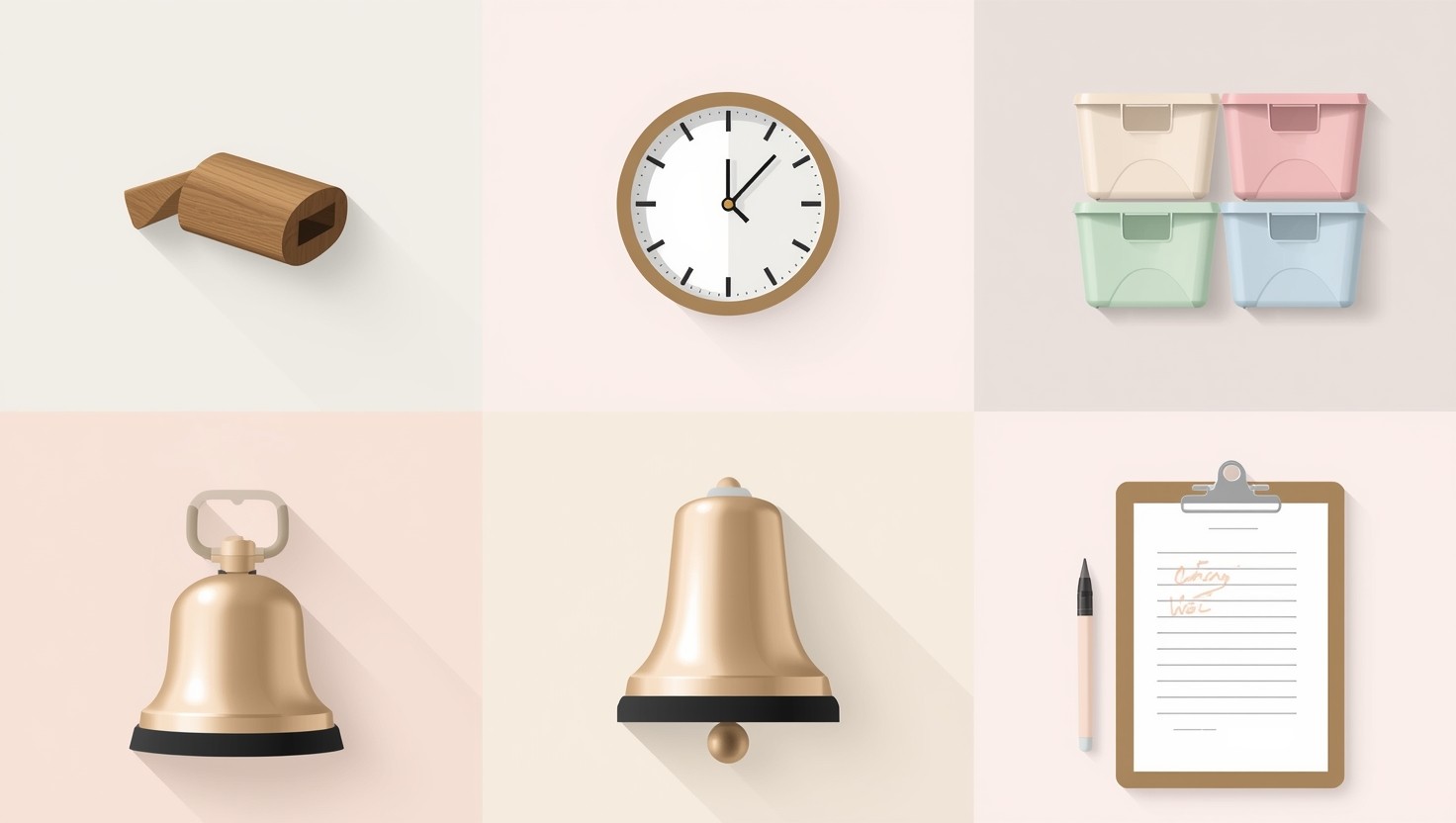
12 Classroom Control and Management Strategies That Work
12 Classroom Control and Management Strategies That Work

Article by
Milo
ESL Content Coordinator & Educator
ESL Content Coordinator & Educator
All Posts
You know that moment when you turn from the board and realize half the class isn't following the discussion? Or when that one student derails your lesson and you watch your instructional time evaporate? You've tried the advice from your credential program—the behavior charts, the warnings, the "wait until they're quiet" standoff—but your classroom control and management still feels like a daily battle instead of a system.
It doesn't have to stay that way. After fifteen years in rooms ranging from 3rd grade to AP Chemistry, I've learned that effective management isn't about being the loudest voice in the room. It's about building a classroom climate where student engagement happens naturally, using positive behavior support that prevents problems before they start, and knowing which behavior interventions actually work when things go sideways.
This post breaks down 12 specific strategies—the proactive moves, the responsive techniques for high-pressure moments, and yes, the digital tools that actually help. You'll learn how your language shapes student responses and how to combine these approaches for your specific teaching context. No theory that falls apart by October. Just what works.
Still grading everything by hand?
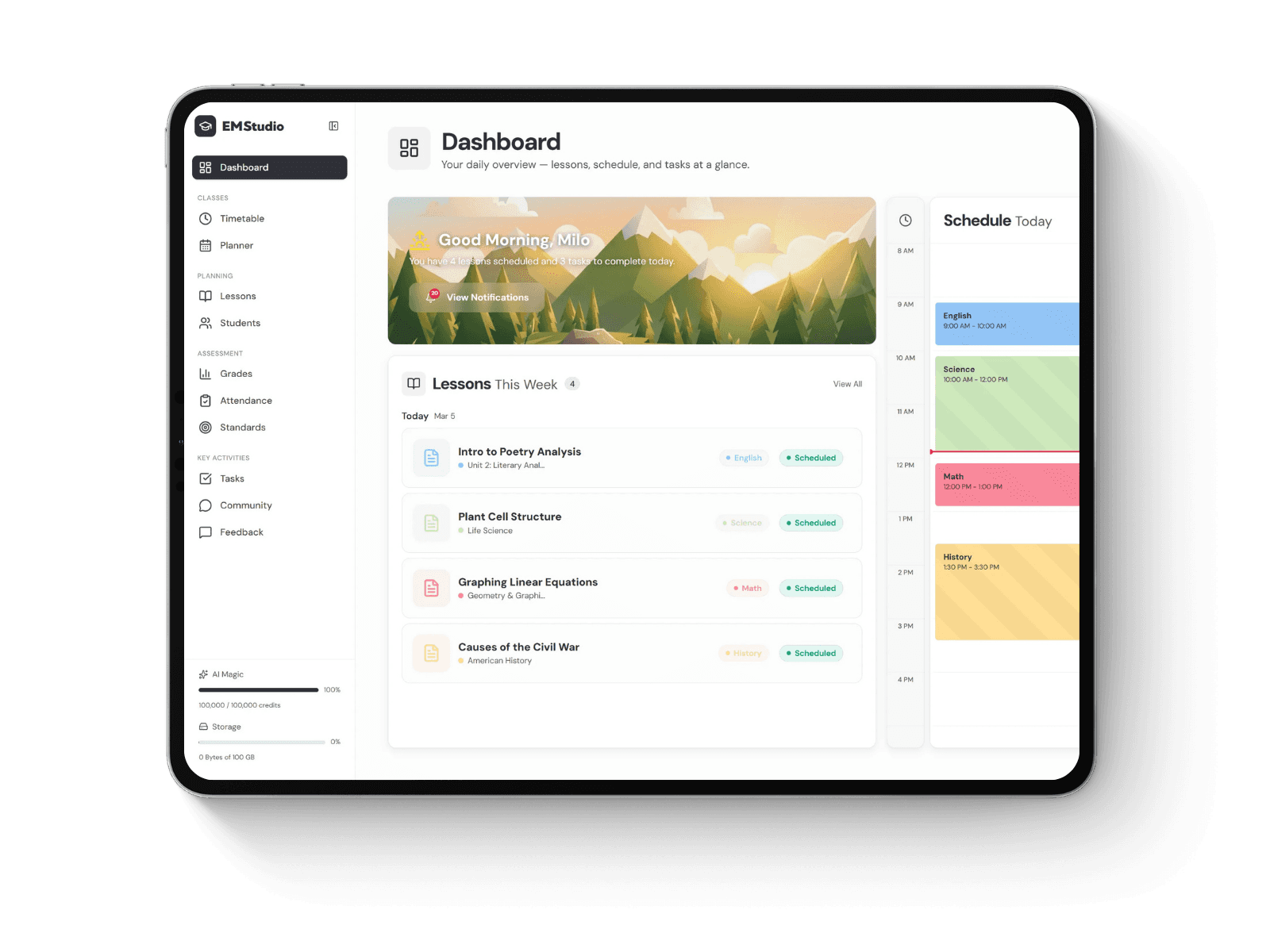
EMStudio is a free teaching management app — manage your classes, students, lessons, and more!
Learn More
Still grading everything by hand?
EMStudio is a free teaching management app — manage your classes, students, lessons, and more!
Learn More
Table of Contents
What Are the Best Proactive Classroom Management Strategies?
Proactive classroom management prevents disruptions through clear routines, positive reinforcement, and strategic spatial awareness. Research by Hattie shows strong classroom management has an effect size of 0.52 on student achievement. Effective proactive strategies include CHAMPS expectation frameworks, non-verbal cues, and token economies that target behavior before it escalates.
The highest-impact proactive approaches share one trait: they front-load the work. You build systems that run themselves rather than putting out fires all period.
Kounin's "With-It-Ness": Systematic scanning patterns—sweep left-to-right every 30 seconds—keep you aware of off-task behavior before it spreads.
CHAMPS Framework: Post visual slides defining Conversation, Help, Activity, Movement, Participation, and Success for every transition.
4:1 Positive Ratio: Behavior research supports four positive interactions for every corrective one to maintain classroom control and management without triggering defensiveness.
Threshold Technique: Greet students at the door with a specific academic task they start within 60 seconds of entry.
Proactive vs. Reactive Management: Proactive systems require heavy investment during the first three weeks—explicitly teaching routines until they become automatic. Reactive management costs you daily, stealing instructional time with constant disruptions. Teachers using proactive approaches report significantly lower stress levels by October because the class practically runs itself, while reactive teachers face elevated cortisol from perpetual crisis mode.
For equitable participation, the Lucky Duck technique works wonders in grades 3-8. Use a labeled popsicle stick draw system or the Lucky Duck app ($2.99/year) to randomize calling on students and recognize positive behavior randomly.
Non-Verbal Cues and Spatial Awareness Techniques
Kounin's overlapping technique means positioning yourself where peripheral vision covers all students while you work with one group. Maintain "with-it-ness" through systematic scanning—sweep left-to-right every 30 seconds. Students notice when your eyes track the room; they stay honest because they know you're watching.
Teach three hand signals using the "I do, we do, you do" model over five days:
Closed fist for immediate silence
Peace sign for restroom requests
Thumbs up for readiness checks
Signals eliminate the verbal negotiation that wastes instructional time. Master spatial positioning: the "teaching zone" (front third) for direct instruction, "monitoring loops" (perimeter walks every 3 minutes) during independent work, and "anchor spots" (three strategic standing positions) that maximize visual coverage without hovering.
Clear Expectations and Routine Architecture
Break down effective classroom rules and procedures using CHAMPS: Conversation (voice level 0-3), Help (hand signal versus calling out), Activity (objectives and deliverables), Movement (permission procedures), Participation (expected engagement), and Success (criteria for completion). For a 7th-grade science lab, post a fillable template slide showing "Voice Level 1, Raise hand for chemical questions, Stay at station until cleanup signal."
Design the "First 60 Seconds" entry routine: students enter, grab entry ticket from table, check materials list on board, begin bell-ringer activity. Fred Jones's research targets 85% on-task time, achievable through tight transition procedures that leave no downtime for mischief.
Post the "3 Before Me" rule: check directions, ask a neighbor, consult notes before raising your hand. Create a visual slide template with icons for ELL students showing each step to preserve your sanity during independent work.
Positive Behavior Reinforcement Systems
Contrast token economies (paper tickets, ClassDojo points) against mystery motivators (sealed envelopes with group rewards). Both work, but extrinsic systems should fade by week 6-8 to avoid dependency. You want the behavior, not the bribery.
Format praise using the "Identity-Behavior-Impact" script: "You're the kind of student who [identity] because you [behavior], which [impact]." Example: "You're a scholar because you double-checked your work, which shows academic integrity." This builds self-concept, not just compliance.
Implement the Lucky Duck system for positive behavior support systems. Write five student names on the board daily. If you "catch" them being good, they earn a ticket. If not, names change tomorrow with no penalty. This builds positive culture without shame, targeting grades 3-8 where peer visibility matters most.
Which Responsive Techniques Work in High-Pressure Moments?
High-pressure moments require de-escalation scripts and strategic proximity rather than power struggles. Effective responsive techniques include the OODA loop (Observe, Orient, Decide, Act), affective statements that name emotions without judgment, and offering controlled choices. These methods maintain dignity while preserving instructional time and classroom safety.
Responsive means you choose your move. Reactive means the kid chooses it for you. Fred Jones's research shows that effective classroom management skills maintain 85% on-task time not through perfection, but through preventing minor disruptions from becoming major interruptions. Teachers typically lose 10 to 30 minutes of instructional time daily to minor disturbances. Responsive techniques recover 60 to 80% of this time compared to punitive approaches.
Use a crisis de-escalation hierarchy: (1) Non-verbal proximity, (2) Private signal, (3) Affective statement, (4) Choices/consequences, (5) Removal for safety only. Steps one through three preserve 90% of disruptions without stopping your lesson. Avoid the failure modes: never humiliate publicly, never power struggle in front of the class, never threaten consequences you cannot enforce immediately. For administrative referrals, follow the 24-hour rule—document while fresh, submit when calm.
De-escalation Scripts and Calm-Down Protocols
The OODA loop comes from Air Force combat training. Observe the behavior, orient to the trigger, decide on the smallest intervention, act. Give yourself a 10-second pause before stepping in. That pause keeps you from sounding like the enemy.
Use the "Name it to Tame it" script: "I see you're feeling frustrated because the Chromebook died. We can solve this, but I need you to take a breath first." Contrast this with invalidating phrases like "You're fine" or "Stop overreacting." Those escalate 100% of the time.
The calm-down corner sits at the edge of your room, not in isolation. Students stay for two minutes maximum, return when regulated, and never use it as punishment. Stock it with these five sensory tools for grades K-12:
Weighted lap pad (3-5 pounds)
Visual breathing light that expands and contracts
Texture boards with carpet, sandpaper, and velvet
Noise-canceling headphones (not earbuds)
Resistance bands for chair legs
Logical Consequences and Restorative Practices
Natural consequences happen without you. Forget your lunch, you get hungry. Logical consequences connect directly to the behavior. Break your pencil during a tantrum, you get a loaner from the jar, not a new one from my drawer. Late work gets completed during choice time. Disruption means sitting closer to instruction for the next 15 minutes. Property damage requires a restoration plan.
Implementing restorative practices means asking four questions in a circle: What happened? Who was affected? What needs to happen to make it right? How do we prevent this? The circle takes 10 to 15 minutes and only works if you've taught the protocol in September.
Skip restorative practices when there's an immediate safety threat, severe vandalism, or when the student shows no remorse. Escalate to administration immediately. Knowing when to switch from restoration to removal is part of effective classroom control and management.
Strategic Proximity and Silent Interventions
Fred Jones calls it "Working the Crowd." Walk the interior loop down the aisles every three minutes, the exterior loop around the perimeter, and use zigzag patterns that keep you within two steps of any student. This is with-it-ness—seeing everything while teaching.
The 18-inch rule means standing within 18 inches of an off-task student without speaking. If they don't shift, place your hand lightly on their shoulder—but ask permission first. Touch carries different weight across cultures.
Three silent interventions handle 70% of minor off-task behavior:
The teacher stare: 3 to 5 seconds of eye contact while continuing instruction
The item hover: standing near the materials the student needs to start
The board tap: pointing to the expectation poster without speaking
Navigating classroom conflicts quietly preserves your student engagement. When you speak, they win. When you move, you win.

What Digital Tools Support Classroom Control and Management?
Digital classroom management tools for classroom control and management include ClassDojo for real-time feedback, Lucky Duck selectors for equitable participation, and Time Timer apps for transitions. Research suggests consistent use of visual timers and random selection technology reduces transition time significantly. Free tiers typically support 30-200 students depending on the platform.
Introduce only one new tool per week to avoid cognitive overload. If fewer than 60% of students actively use it after 14 days, abandon it. For equity, ensure digital tools have offline backups for students without devices, and use lucky duck classroom management selectors to track participation data and balance gender and race representation. Hardware needs vary: random selection requires a teacher tablet or phone plus projection; behavior tracking works best with 1:1 devices or a shared classroom tablet.
Tool | Cost | Grade Range Best Fit | Setup Time |
|---|---|---|---|
ClassDojo (behavior tracking) | Free (2 classes/200 students) | K-5 | 15 minutes |
Classcraft (gamification, quests) | Freemium | 4-9 | 45 minutes |
Bloomz (parent communication) | Freemium | K-8 | 20 minutes |
LiveSchool (PBIS points) | Paid | 6-12 | 30 minutes |
Real-Time Feedback Apps and Behavior Tracking
ClassDojo takes 15 minutes to set up. Follow these steps:
Create your class and upload student avatars.
Define three positive and three negative behaviors—any more causes decision fatigue.
Project the point screen for transparency, but disable the "monster" sounds before middle schoolers enter; the chirps drive them nuts.
Paper ticket economies work better for K-2 because little kids need tactile reinforcement. Digital tracking wins for parent conferences because it provides data analytics. Check behaviors every 15 minutes, not constantly, or you'll lose with-it-ness with your actual lesson. Frame this positive behavior support as growth documentation, not surveillance. Offer opt-outs for photo and video features. You can also use digital behavior tracking sheets for a simpler approach without the gamification.
Random Selection and Engagement Platforms
Wheel of Names is free and web-based with customizable colors, good for sporadic checks. Lucky duck classroom management costs $2.99 and tracks how often you call on each student, exporting data to ensure you're not favoring one gender or race. Use Lucky Duck for daily equity tracking.
Classcraft Boss Battles turn review into a game where students attack a boss by answering correctly and lose HP for off-task behavior. Best for grades 4-9, but needs 20 minutes of setup. These are innovative tools to engage and inspire reluctant learners while maintaining student engagement.
Use the "Cold Call with Safety" protocol:
Spin the selector to choose a student.
Allow "phone a friend" for support.
Permit a "pass" up to three times weekly to reduce anxiety.
Visual Timers and Transition Management Tech
The Time Timer app costs $2.99 versus $36 for the physical clock. Digital allows multiple simultaneous timers for station rotation; physical gives younger students a tactile reference. Embed ad-free countdowns from these YouTube channels into your classroom management slides:
'TimerClock' offers clean 5/10/15 minute countdowns.
'Classroom Timers' provides themed visuals like space and ocean.
'Study With Me' combines lo-fi music with timers for older students.
Use Google Slides Insert > Video to embed them directly. Use the '2-Minute Warning' protocol: flash lights or play a chime at two minutes remaining, then again at 30 seconds. ClassroomScreen.com combines timers, noise meters, and random pickers in one tab. These behavior interventions protect instructional time and improve classroom climate without yelling.

How Does Language Impact Classroom Management Success?
Classroom management language relies on assertive voice modulation and precision requests that eliminate ambiguity. Using 'when/then' statements, avoiding apologetic phrasing like 'please' in commands, and maintaining consistent tone increases compliance. Culturally responsive dialogue techniques build relationships while maintaining clear behavioral boundaries.
Your language choices reflect your classroom control and management philosophy. Authoritarian language barks orders and demands submission. Permissive language apologizes for existing and begs cooperation. Authoritative language—the sweet spot—sounds firm and warm simultaneously. It communicates high expectations with high support, correlating with the highest student autonomy and achievement. This is where you want to live.
Assertive Voice Modulation and Tone Control
I operate on three distinct voice levels:
Outside Voice for true emergencies only—fire drills, injuries, immediate danger
Table Talk for group work that carries exactly three feet
6-Inch Voice for confidential one-on-one corrections that preserve dignity
I teach these transitions using hand signals. Three fingers up means shift to Table Talk instantly without me raising my voice. This protects instructional time and signals with-it-ness.
Master the Drops and Pops technique. Drop your volume unexpectedly to force students to lean in and listen harder—engagement through curiosity. Then pop your pitch slightly at sentence ends to project confidence. Avoid uptalk, that rising intonation that turns "Put your books away" into "Put your books away?" One commands, the other pleads. When students deflect, use the broken record technique: repeat your request verbatim up to three times without arguing or adding new information.
Precision Requests and Command Language
Precision Requests follow a specific checklist:
Student name first to activate attention
Action verb (never "try")
Specific criteria
Time limit
"Marcus, put your phone in the caddy [point] in the next 10 seconds." Compare that to "Can you try to put your phone away please?"—which implies failure is acceptable and the task is optional.
Structure compliance using When/Then contingencies: "When you complete the analysis section, then you may work with your partner." This frames positive behavior support as earned privilege rather than punishment. Reserve "please" for genuine requests like borrowing a pencil, not for commands. When correcting, use the three-part script: state the rule, provide a choice, state the consequence. "The rule is phones are away. You can put it in the caddy or I can hold it until lunch. Which works for you?"
Collaborative Problem-Solving Dialogue
Effective communication in education balances authority with relationship repair. Use affective statements to name impact without accusation: "I feel frustrated when the lesson stops because I want everyone to learn." This models emotional literacy while maintaining classroom climate boundaries. Eliminate deficit-based terms like "at-risk" or "low" from your vocabulary; they shape expectations. Instead, use "yet" statements: "You haven't mastered this yet."
Teach the Repair Script for after conflict: "I apologize for [specific action]. I was feeling [emotion] but should have [alternative]. Can we reset?" Model this explicitly so students deploy it peer-to-peer during group work. Finally, validate code-switching by teaching academic register ("May I use the restroom") as context-specific rather than "correct" English. Display home language and school language side-by-side on anchor charts. This builds student engagement while maintaining the boundaries necessary for learning.
How to Combine Strategies for Your Teaching Context?
Combining strategies requires assessing your classroom culture against the MTSS 80-15-5 framework: 80% of students respond to universal strategies, 15% need targeted interventions like Check-In/Check-Out, and 5% require intensive functional behavior assessments. Match techniques to grade level—elementary needs concrete signals while high school requires autonomy structures. This approach to classroom management creating a successful k 12 learning community respects that different ages need different structures.
Assessing Your Current Classroom Culture
Start with the quadrant chart protocol. Divide your room into four sections. Every 30 seconds for five minutes, mark how many students are on-task. Repeat this three times daily for one week to establish your baseline student engagement percentage. You cannot fix what you haven't measured.
Then administer the Classroom Climate Survey. Five questions: Do you feel safe? Are the rules fair? Does your teacher care? Do you know what is expected? Can you succeed here? Use a Likert scale. If students don't feel safe, your classroom management system won't work regardless of how many strategies you layer on.
Calculate transition time averages between activities
Track your ratio of positive to corrective statements (target 4:1)
Measure percentage of students engaged during independent work (target 85%)
Log frequency of office referrals
Review survey data on students feeling safe
Map your trigger times. Transitions between subjects. After lunch. The last ten minutes of the day. These need buffer routines—calming music, entry tickets, or a mindfulness minute—to protect instructional time. Don't pretend every minute is equal. Some moments require more with-it-ness than others.
Matching Techniques to Grade Level and Context
Kindergarten through fifth grade needs concrete signals. Use Whole Brain Teaching rules with hand gestures. Try color-coded behavior charts—clip up for good choices, clip down for poor ones. The "Secret Student" motivator works wonders here. For K-2 specifically, schedule physical movement breaks every 20 minutes. Their brains can't sit longer.
Middle schoolers need autonomy within boundaries. Co-create social contracts on day one. Implement the 2x10 strategy: two minutes of personal conversation for ten consecutive days with at-risk students. This builds the relationship that makes classroom control and management possible. Offer flexible seating, but with clear choice boundaries—sit where you work best, but move if you're chatting.
High school requires structures that respect maturity while limiting distraction. Use cell phone caddies with numbered slots matching seat numbers. Try "Parking Lot" posters for off-topic questions students want answered later. Flipped Classroom structures reduce whole-group behavior interventions by front-loading content at home.
Creating a Tiered Intervention Plan
When universal strategies fail, move to Tier 2 interventions. Check-In/Check-Out (CICO) uses a daily report card with three behavioral goals. The student reviews these morning and afternoon with a mentor—usually a counselor or designated adult who can spare five minutes. This is positive behavior support with data attached.
Tier 3 kicks in after more than five office referrals per semester, physical aggression, or self-harm ideation. Initiate a Functional Behavior Assessment (FBA) to map antecedent-behavior-consequence patterns. This isn't punishment; it's detective work to find what need the behavior meets.
Signal for administrator support immediately
Remove the audience by sending other students to a buddy room
Ensure safety before attempting any pedagogy
Document the incident using your district SIS within 24 hours
You can build a behavior management plan that accounts for these tiers without rewriting your entire classroom management styles approach.

Building Your Personalized Classroom Management System
The Start Small Rule
You can't install all twelve strategies by Tuesday. You'll burn out and the kids will sense your desperation. Instead, use the Start Small rule—the best classroom management systems build slowly. Pick one proactive strategy—maybe the entry routine—and one responsive strategy—maybe the quiet correction signal. Run those for a month until they feel automatic. Then layer in the next pair. In six months, you'll have a full system that actually sticks instead of a pile of half-tried tricks. This works for seniors and elementary students alike, though the best classroom management strategies for elementary classrooms usually require faster transitions between activities.
Three Failure Modes That Destroy Success
Three habits destroy classroom management success faster than any disruptive student.
First, inconsistency. If you say "no phones" but let kids sneak peeks during independent work, you've taught them that your words are flexible. They'll test every boundary you set.
Second, empty threats. Never announce a consequence you won't enforce. If you say "next time you lose recess," you must follow through, even when it ruins your lunch break. Backing down teaches that your consequences are imaginary.
Third, public humiliation. Correcting a kid in front of their peers triggers shame, and shame demands retaliation. That "example" you make of someone turns into a grudge that poisons your classroom climate for months. Pull them aside or use a private signal.
The Burnout Prevention Protocol
Classroom management for teachers becomes sustainable only when you protect your own energy. Set office hours for parent contact—maybe Tuesdays and Thursdays 3:00 to 3:30. Put it in your syllabus and stick to it. Parents will adapt.
Batch your behavior documentation. Don't write incident reports during class or at midnight. Spend Friday's last thirty minutes updating your log while the room is quiet. You'll spot patterns you missed in the moment.
Define your red line behaviors—the ones that automatically trigger administrator support rather than solo handling. For me, it's physical aggression and drug paraphernalia. Everything else, I handle with in-house behavior interventions. Knowing this boundary protects your sanity.
The Evolution Timeline
Your system must shift as the year progresses. Classroom management creating a successful K-12 learning community requires adjusting strategies as students mature.
September is for routines and rules. Drill them until you're bored of saying them.
October tightens transitions. That's when the novelty wears off and kids start dawdling. This is where with-it-ness matters most—scanning the room during changes in activity catches issues before they erupt.
November adds complexity. You can finally handle group work or stations without chaos, increasing student engagement through collaboration.
Post-Winter Break requires reteaching essentials. They forget everything over vacation. Spend three days rebuilding your entry routine and attention signal.
Spring increases autonomy. By April, great classroom management should look like student-led stations while you confer individually, maintaining classroom control and management without micromanaging every minute.
The Good Enough Standard
Perfect classroom control and management is a myth. Fred Jones's research says 85% on-task time is the target. That means 15% of your instructional time will involve reminders, redirects, or minor disruptions. That's normal.
When you lose your cool or mishandle a situation, repair the rupture quickly. "I was frustrated earlier and spoke sharply. That's on me." Then move on. Forgive yourself for bad days. The kids don't need a saint; they need a consistent adult.
Use this self-assessment rubric weekly to check your classroom management tips:
Did I follow through on every consequence I threatened?
Did I correct behavior privately at least 90% of the time?
Did I protect my non-teaching time by batching tasks and setting parent hours?
Two "no" answers mean you're heading toward burnout. Adjust before next week.
For classroom management for new teachers, remember that mastering classroom behavior management is a marathon, not a sprint. Aim for positive behavior support that lasts the year, not just the week.

Final Thoughts on Classroom Control And Management
You don't need twelve strategies tomorrow. You need one, done well, for fourteen days straight. That's the difference between teachers who dread third period and teachers who rest easy on Friday afternoon. Consistency beats novelty every single time. Students don't need perfection; they need predictability.
Pick the single technique from this list that felt possible—not impressive, just possible. Maybe it's the two-by-ten check-in with your most challenging student, or moving that kid three seats left so he stops chatting with Marco. Write it on a sticky note. Tape it to your computer. Do it until it feels automatic, then add another. Don't layer the next strategy until the first one sticks.
Classroom management isn't a personality trait you're born with or without. It's a system you build one habit at a time. Start today. Pick the sticky note. Commit to the fourteen days.

What Are the Best Proactive Classroom Management Strategies?
Proactive classroom management prevents disruptions through clear routines, positive reinforcement, and strategic spatial awareness. Research by Hattie shows strong classroom management has an effect size of 0.52 on student achievement. Effective proactive strategies include CHAMPS expectation frameworks, non-verbal cues, and token economies that target behavior before it escalates.
The highest-impact proactive approaches share one trait: they front-load the work. You build systems that run themselves rather than putting out fires all period.
Kounin's "With-It-Ness": Systematic scanning patterns—sweep left-to-right every 30 seconds—keep you aware of off-task behavior before it spreads.
CHAMPS Framework: Post visual slides defining Conversation, Help, Activity, Movement, Participation, and Success for every transition.
4:1 Positive Ratio: Behavior research supports four positive interactions for every corrective one to maintain classroom control and management without triggering defensiveness.
Threshold Technique: Greet students at the door with a specific academic task they start within 60 seconds of entry.
Proactive vs. Reactive Management: Proactive systems require heavy investment during the first three weeks—explicitly teaching routines until they become automatic. Reactive management costs you daily, stealing instructional time with constant disruptions. Teachers using proactive approaches report significantly lower stress levels by October because the class practically runs itself, while reactive teachers face elevated cortisol from perpetual crisis mode.
For equitable participation, the Lucky Duck technique works wonders in grades 3-8. Use a labeled popsicle stick draw system or the Lucky Duck app ($2.99/year) to randomize calling on students and recognize positive behavior randomly.
Non-Verbal Cues and Spatial Awareness Techniques
Kounin's overlapping technique means positioning yourself where peripheral vision covers all students while you work with one group. Maintain "with-it-ness" through systematic scanning—sweep left-to-right every 30 seconds. Students notice when your eyes track the room; they stay honest because they know you're watching.
Teach three hand signals using the "I do, we do, you do" model over five days:
Closed fist for immediate silence
Peace sign for restroom requests
Thumbs up for readiness checks
Signals eliminate the verbal negotiation that wastes instructional time. Master spatial positioning: the "teaching zone" (front third) for direct instruction, "monitoring loops" (perimeter walks every 3 minutes) during independent work, and "anchor spots" (three strategic standing positions) that maximize visual coverage without hovering.
Clear Expectations and Routine Architecture
Break down effective classroom rules and procedures using CHAMPS: Conversation (voice level 0-3), Help (hand signal versus calling out), Activity (objectives and deliverables), Movement (permission procedures), Participation (expected engagement), and Success (criteria for completion). For a 7th-grade science lab, post a fillable template slide showing "Voice Level 1, Raise hand for chemical questions, Stay at station until cleanup signal."
Design the "First 60 Seconds" entry routine: students enter, grab entry ticket from table, check materials list on board, begin bell-ringer activity. Fred Jones's research targets 85% on-task time, achievable through tight transition procedures that leave no downtime for mischief.
Post the "3 Before Me" rule: check directions, ask a neighbor, consult notes before raising your hand. Create a visual slide template with icons for ELL students showing each step to preserve your sanity during independent work.
Positive Behavior Reinforcement Systems
Contrast token economies (paper tickets, ClassDojo points) against mystery motivators (sealed envelopes with group rewards). Both work, but extrinsic systems should fade by week 6-8 to avoid dependency. You want the behavior, not the bribery.
Format praise using the "Identity-Behavior-Impact" script: "You're the kind of student who [identity] because you [behavior], which [impact]." Example: "You're a scholar because you double-checked your work, which shows academic integrity." This builds self-concept, not just compliance.
Implement the Lucky Duck system for positive behavior support systems. Write five student names on the board daily. If you "catch" them being good, they earn a ticket. If not, names change tomorrow with no penalty. This builds positive culture without shame, targeting grades 3-8 where peer visibility matters most.
Which Responsive Techniques Work in High-Pressure Moments?
High-pressure moments require de-escalation scripts and strategic proximity rather than power struggles. Effective responsive techniques include the OODA loop (Observe, Orient, Decide, Act), affective statements that name emotions without judgment, and offering controlled choices. These methods maintain dignity while preserving instructional time and classroom safety.
Responsive means you choose your move. Reactive means the kid chooses it for you. Fred Jones's research shows that effective classroom management skills maintain 85% on-task time not through perfection, but through preventing minor disruptions from becoming major interruptions. Teachers typically lose 10 to 30 minutes of instructional time daily to minor disturbances. Responsive techniques recover 60 to 80% of this time compared to punitive approaches.
Use a crisis de-escalation hierarchy: (1) Non-verbal proximity, (2) Private signal, (3) Affective statement, (4) Choices/consequences, (5) Removal for safety only. Steps one through three preserve 90% of disruptions without stopping your lesson. Avoid the failure modes: never humiliate publicly, never power struggle in front of the class, never threaten consequences you cannot enforce immediately. For administrative referrals, follow the 24-hour rule—document while fresh, submit when calm.
De-escalation Scripts and Calm-Down Protocols
The OODA loop comes from Air Force combat training. Observe the behavior, orient to the trigger, decide on the smallest intervention, act. Give yourself a 10-second pause before stepping in. That pause keeps you from sounding like the enemy.
Use the "Name it to Tame it" script: "I see you're feeling frustrated because the Chromebook died. We can solve this, but I need you to take a breath first." Contrast this with invalidating phrases like "You're fine" or "Stop overreacting." Those escalate 100% of the time.
The calm-down corner sits at the edge of your room, not in isolation. Students stay for two minutes maximum, return when regulated, and never use it as punishment. Stock it with these five sensory tools for grades K-12:
Weighted lap pad (3-5 pounds)
Visual breathing light that expands and contracts
Texture boards with carpet, sandpaper, and velvet
Noise-canceling headphones (not earbuds)
Resistance bands for chair legs
Logical Consequences and Restorative Practices
Natural consequences happen without you. Forget your lunch, you get hungry. Logical consequences connect directly to the behavior. Break your pencil during a tantrum, you get a loaner from the jar, not a new one from my drawer. Late work gets completed during choice time. Disruption means sitting closer to instruction for the next 15 minutes. Property damage requires a restoration plan.
Implementing restorative practices means asking four questions in a circle: What happened? Who was affected? What needs to happen to make it right? How do we prevent this? The circle takes 10 to 15 minutes and only works if you've taught the protocol in September.
Skip restorative practices when there's an immediate safety threat, severe vandalism, or when the student shows no remorse. Escalate to administration immediately. Knowing when to switch from restoration to removal is part of effective classroom control and management.
Strategic Proximity and Silent Interventions
Fred Jones calls it "Working the Crowd." Walk the interior loop down the aisles every three minutes, the exterior loop around the perimeter, and use zigzag patterns that keep you within two steps of any student. This is with-it-ness—seeing everything while teaching.
The 18-inch rule means standing within 18 inches of an off-task student without speaking. If they don't shift, place your hand lightly on their shoulder—but ask permission first. Touch carries different weight across cultures.
Three silent interventions handle 70% of minor off-task behavior:
The teacher stare: 3 to 5 seconds of eye contact while continuing instruction
The item hover: standing near the materials the student needs to start
The board tap: pointing to the expectation poster without speaking
Navigating classroom conflicts quietly preserves your student engagement. When you speak, they win. When you move, you win.
What Digital Tools Support Classroom Control and Management?
Digital classroom management tools for classroom control and management include ClassDojo for real-time feedback, Lucky Duck selectors for equitable participation, and Time Timer apps for transitions. Research suggests consistent use of visual timers and random selection technology reduces transition time significantly. Free tiers typically support 30-200 students depending on the platform.
Introduce only one new tool per week to avoid cognitive overload. If fewer than 60% of students actively use it after 14 days, abandon it. For equity, ensure digital tools have offline backups for students without devices, and use lucky duck classroom management selectors to track participation data and balance gender and race representation. Hardware needs vary: random selection requires a teacher tablet or phone plus projection; behavior tracking works best with 1:1 devices or a shared classroom tablet.
Tool | Cost | Grade Range Best Fit | Setup Time |
|---|---|---|---|
ClassDojo (behavior tracking) | Free (2 classes/200 students) | K-5 | 15 minutes |
Classcraft (gamification, quests) | Freemium | 4-9 | 45 minutes |
Bloomz (parent communication) | Freemium | K-8 | 20 minutes |
LiveSchool (PBIS points) | Paid | 6-12 | 30 minutes |
Real-Time Feedback Apps and Behavior Tracking
ClassDojo takes 15 minutes to set up. Follow these steps:
Create your class and upload student avatars.
Define three positive and three negative behaviors—any more causes decision fatigue.
Project the point screen for transparency, but disable the "monster" sounds before middle schoolers enter; the chirps drive them nuts.
Paper ticket economies work better for K-2 because little kids need tactile reinforcement. Digital tracking wins for parent conferences because it provides data analytics. Check behaviors every 15 minutes, not constantly, or you'll lose with-it-ness with your actual lesson. Frame this positive behavior support as growth documentation, not surveillance. Offer opt-outs for photo and video features. You can also use digital behavior tracking sheets for a simpler approach without the gamification.
Random Selection and Engagement Platforms
Wheel of Names is free and web-based with customizable colors, good for sporadic checks. Lucky duck classroom management costs $2.99 and tracks how often you call on each student, exporting data to ensure you're not favoring one gender or race. Use Lucky Duck for daily equity tracking.
Classcraft Boss Battles turn review into a game where students attack a boss by answering correctly and lose HP for off-task behavior. Best for grades 4-9, but needs 20 minutes of setup. These are innovative tools to engage and inspire reluctant learners while maintaining student engagement.
Use the "Cold Call with Safety" protocol:
Spin the selector to choose a student.
Allow "phone a friend" for support.
Permit a "pass" up to three times weekly to reduce anxiety.
Visual Timers and Transition Management Tech
The Time Timer app costs $2.99 versus $36 for the physical clock. Digital allows multiple simultaneous timers for station rotation; physical gives younger students a tactile reference. Embed ad-free countdowns from these YouTube channels into your classroom management slides:
'TimerClock' offers clean 5/10/15 minute countdowns.
'Classroom Timers' provides themed visuals like space and ocean.
'Study With Me' combines lo-fi music with timers for older students.
Use Google Slides Insert > Video to embed them directly. Use the '2-Minute Warning' protocol: flash lights or play a chime at two minutes remaining, then again at 30 seconds. ClassroomScreen.com combines timers, noise meters, and random pickers in one tab. These behavior interventions protect instructional time and improve classroom climate without yelling.
How Does Language Impact Classroom Management Success?
Classroom management language relies on assertive voice modulation and precision requests that eliminate ambiguity. Using 'when/then' statements, avoiding apologetic phrasing like 'please' in commands, and maintaining consistent tone increases compliance. Culturally responsive dialogue techniques build relationships while maintaining clear behavioral boundaries.
Your language choices reflect your classroom control and management philosophy. Authoritarian language barks orders and demands submission. Permissive language apologizes for existing and begs cooperation. Authoritative language—the sweet spot—sounds firm and warm simultaneously. It communicates high expectations with high support, correlating with the highest student autonomy and achievement. This is where you want to live.
Assertive Voice Modulation and Tone Control
I operate on three distinct voice levels:
Outside Voice for true emergencies only—fire drills, injuries, immediate danger
Table Talk for group work that carries exactly three feet
6-Inch Voice for confidential one-on-one corrections that preserve dignity
I teach these transitions using hand signals. Three fingers up means shift to Table Talk instantly without me raising my voice. This protects instructional time and signals with-it-ness.
Master the Drops and Pops technique. Drop your volume unexpectedly to force students to lean in and listen harder—engagement through curiosity. Then pop your pitch slightly at sentence ends to project confidence. Avoid uptalk, that rising intonation that turns "Put your books away" into "Put your books away?" One commands, the other pleads. When students deflect, use the broken record technique: repeat your request verbatim up to three times without arguing or adding new information.
Precision Requests and Command Language
Precision Requests follow a specific checklist:
Student name first to activate attention
Action verb (never "try")
Specific criteria
Time limit
"Marcus, put your phone in the caddy [point] in the next 10 seconds." Compare that to "Can you try to put your phone away please?"—which implies failure is acceptable and the task is optional.
Structure compliance using When/Then contingencies: "When you complete the analysis section, then you may work with your partner." This frames positive behavior support as earned privilege rather than punishment. Reserve "please" for genuine requests like borrowing a pencil, not for commands. When correcting, use the three-part script: state the rule, provide a choice, state the consequence. "The rule is phones are away. You can put it in the caddy or I can hold it until lunch. Which works for you?"
Collaborative Problem-Solving Dialogue
Effective communication in education balances authority with relationship repair. Use affective statements to name impact without accusation: "I feel frustrated when the lesson stops because I want everyone to learn." This models emotional literacy while maintaining classroom climate boundaries. Eliminate deficit-based terms like "at-risk" or "low" from your vocabulary; they shape expectations. Instead, use "yet" statements: "You haven't mastered this yet."
Teach the Repair Script for after conflict: "I apologize for [specific action]. I was feeling [emotion] but should have [alternative]. Can we reset?" Model this explicitly so students deploy it peer-to-peer during group work. Finally, validate code-switching by teaching academic register ("May I use the restroom") as context-specific rather than "correct" English. Display home language and school language side-by-side on anchor charts. This builds student engagement while maintaining the boundaries necessary for learning.
How to Combine Strategies for Your Teaching Context?
Combining strategies requires assessing your classroom culture against the MTSS 80-15-5 framework: 80% of students respond to universal strategies, 15% need targeted interventions like Check-In/Check-Out, and 5% require intensive functional behavior assessments. Match techniques to grade level—elementary needs concrete signals while high school requires autonomy structures. This approach to classroom management creating a successful k 12 learning community respects that different ages need different structures.
Assessing Your Current Classroom Culture
Start with the quadrant chart protocol. Divide your room into four sections. Every 30 seconds for five minutes, mark how many students are on-task. Repeat this three times daily for one week to establish your baseline student engagement percentage. You cannot fix what you haven't measured.
Then administer the Classroom Climate Survey. Five questions: Do you feel safe? Are the rules fair? Does your teacher care? Do you know what is expected? Can you succeed here? Use a Likert scale. If students don't feel safe, your classroom management system won't work regardless of how many strategies you layer on.
Calculate transition time averages between activities
Track your ratio of positive to corrective statements (target 4:1)
Measure percentage of students engaged during independent work (target 85%)
Log frequency of office referrals
Review survey data on students feeling safe
Map your trigger times. Transitions between subjects. After lunch. The last ten minutes of the day. These need buffer routines—calming music, entry tickets, or a mindfulness minute—to protect instructional time. Don't pretend every minute is equal. Some moments require more with-it-ness than others.
Matching Techniques to Grade Level and Context
Kindergarten through fifth grade needs concrete signals. Use Whole Brain Teaching rules with hand gestures. Try color-coded behavior charts—clip up for good choices, clip down for poor ones. The "Secret Student" motivator works wonders here. For K-2 specifically, schedule physical movement breaks every 20 minutes. Their brains can't sit longer.
Middle schoolers need autonomy within boundaries. Co-create social contracts on day one. Implement the 2x10 strategy: two minutes of personal conversation for ten consecutive days with at-risk students. This builds the relationship that makes classroom control and management possible. Offer flexible seating, but with clear choice boundaries—sit where you work best, but move if you're chatting.
High school requires structures that respect maturity while limiting distraction. Use cell phone caddies with numbered slots matching seat numbers. Try "Parking Lot" posters for off-topic questions students want answered later. Flipped Classroom structures reduce whole-group behavior interventions by front-loading content at home.
Creating a Tiered Intervention Plan
When universal strategies fail, move to Tier 2 interventions. Check-In/Check-Out (CICO) uses a daily report card with three behavioral goals. The student reviews these morning and afternoon with a mentor—usually a counselor or designated adult who can spare five minutes. This is positive behavior support with data attached.
Tier 3 kicks in after more than five office referrals per semester, physical aggression, or self-harm ideation. Initiate a Functional Behavior Assessment (FBA) to map antecedent-behavior-consequence patterns. This isn't punishment; it's detective work to find what need the behavior meets.
Signal for administrator support immediately
Remove the audience by sending other students to a buddy room
Ensure safety before attempting any pedagogy
Document the incident using your district SIS within 24 hours
You can build a behavior management plan that accounts for these tiers without rewriting your entire classroom management styles approach.
Building Your Personalized Classroom Management System
The Start Small Rule
You can't install all twelve strategies by Tuesday. You'll burn out and the kids will sense your desperation. Instead, use the Start Small rule—the best classroom management systems build slowly. Pick one proactive strategy—maybe the entry routine—and one responsive strategy—maybe the quiet correction signal. Run those for a month until they feel automatic. Then layer in the next pair. In six months, you'll have a full system that actually sticks instead of a pile of half-tried tricks. This works for seniors and elementary students alike, though the best classroom management strategies for elementary classrooms usually require faster transitions between activities.
Three Failure Modes That Destroy Success
Three habits destroy classroom management success faster than any disruptive student.
First, inconsistency. If you say "no phones" but let kids sneak peeks during independent work, you've taught them that your words are flexible. They'll test every boundary you set.
Second, empty threats. Never announce a consequence you won't enforce. If you say "next time you lose recess," you must follow through, even when it ruins your lunch break. Backing down teaches that your consequences are imaginary.
Third, public humiliation. Correcting a kid in front of their peers triggers shame, and shame demands retaliation. That "example" you make of someone turns into a grudge that poisons your classroom climate for months. Pull them aside or use a private signal.
The Burnout Prevention Protocol
Classroom management for teachers becomes sustainable only when you protect your own energy. Set office hours for parent contact—maybe Tuesdays and Thursdays 3:00 to 3:30. Put it in your syllabus and stick to it. Parents will adapt.
Batch your behavior documentation. Don't write incident reports during class or at midnight. Spend Friday's last thirty minutes updating your log while the room is quiet. You'll spot patterns you missed in the moment.
Define your red line behaviors—the ones that automatically trigger administrator support rather than solo handling. For me, it's physical aggression and drug paraphernalia. Everything else, I handle with in-house behavior interventions. Knowing this boundary protects your sanity.
The Evolution Timeline
Your system must shift as the year progresses. Classroom management creating a successful K-12 learning community requires adjusting strategies as students mature.
September is for routines and rules. Drill them until you're bored of saying them.
October tightens transitions. That's when the novelty wears off and kids start dawdling. This is where with-it-ness matters most—scanning the room during changes in activity catches issues before they erupt.
November adds complexity. You can finally handle group work or stations without chaos, increasing student engagement through collaboration.
Post-Winter Break requires reteaching essentials. They forget everything over vacation. Spend three days rebuilding your entry routine and attention signal.
Spring increases autonomy. By April, great classroom management should look like student-led stations while you confer individually, maintaining classroom control and management without micromanaging every minute.
The Good Enough Standard
Perfect classroom control and management is a myth. Fred Jones's research says 85% on-task time is the target. That means 15% of your instructional time will involve reminders, redirects, or minor disruptions. That's normal.
When you lose your cool or mishandle a situation, repair the rupture quickly. "I was frustrated earlier and spoke sharply. That's on me." Then move on. Forgive yourself for bad days. The kids don't need a saint; they need a consistent adult.
Use this self-assessment rubric weekly to check your classroom management tips:
Did I follow through on every consequence I threatened?
Did I correct behavior privately at least 90% of the time?
Did I protect my non-teaching time by batching tasks and setting parent hours?
Two "no" answers mean you're heading toward burnout. Adjust before next week.
For classroom management for new teachers, remember that mastering classroom behavior management is a marathon, not a sprint. Aim for positive behavior support that lasts the year, not just the week.
Final Thoughts on Classroom Control And Management
You don't need twelve strategies tomorrow. You need one, done well, for fourteen days straight. That's the difference between teachers who dread third period and teachers who rest easy on Friday afternoon. Consistency beats novelty every single time. Students don't need perfection; they need predictability.
Pick the single technique from this list that felt possible—not impressive, just possible. Maybe it's the two-by-ten check-in with your most challenging student, or moving that kid three seats left so he stops chatting with Marco. Write it on a sticky note. Tape it to your computer. Do it until it feels automatic, then add another. Don't layer the next strategy until the first one sticks.
Classroom management isn't a personality trait you're born with or without. It's a system you build one habit at a time. Start today. Pick the sticky note. Commit to the fourteen days.
Still grading everything by hand?
EMStudio is a free teaching management app — manage your classes, students, lessons, and more!
Learn More
Still grading everything by hand?
EMStudio is a free teaching management app — manage your classes, students, lessons, and more!
Learn More





Notion4Teachers
Notion templates to simplify administrative tasks and enhance your teaching experience.



2026 Notion4Teachers. All Rights Reserved.
Notion4Teachers
Notion templates to simplify administrative tasks and enhance your teaching experience.
2026 Notion4Teachers. All Rights Reserved.
Notion4Teachers
Notion templates to simplify administrative tasks and enhance your teaching experience.
2026 Notion4Teachers. All Rights Reserved.