
Science of Reading: 5 Steps to Evidence-Based Instruction
Science of Reading: 5 Steps to Evidence-Based Instruction

Article by
Milo
ESL Content Coordinator & Educator
ESL Content Coordinator & Educator
All Posts
Your guided reading groups are falling apart. Three kids are staring at the picture instead of the word, another is guessing "house" for "home," and you're circling back to the same sight words week after week wondering why they aren't sticking. You've heard the district mention the science of reading and maybe sat through a training on Scarborough's Reading Rope, but you're still staring at your leveled library wondering what actually changes on Monday morning.
Here's the hard truth: switching to evidence-based instruction isn't about buying a new boxed curriculum or throwing out everything you've done. It's about understanding that reading happens through orthographic mapping — brains connecting sounds to letters to meaning — and most of us weren't taught to teach that way. Whether you're running dyslexia screening data or just tired of watching kids memorize and forget, you need a roadmap.
These five steps start with auditing what you're already doing and end with decodable texts in kids' hands. No fluff. Just the shift from guessing to reading.
Still grading everything by hand?
EMStudio is a free teaching management app — manage your classes, students, lessons, and more!
Learn More
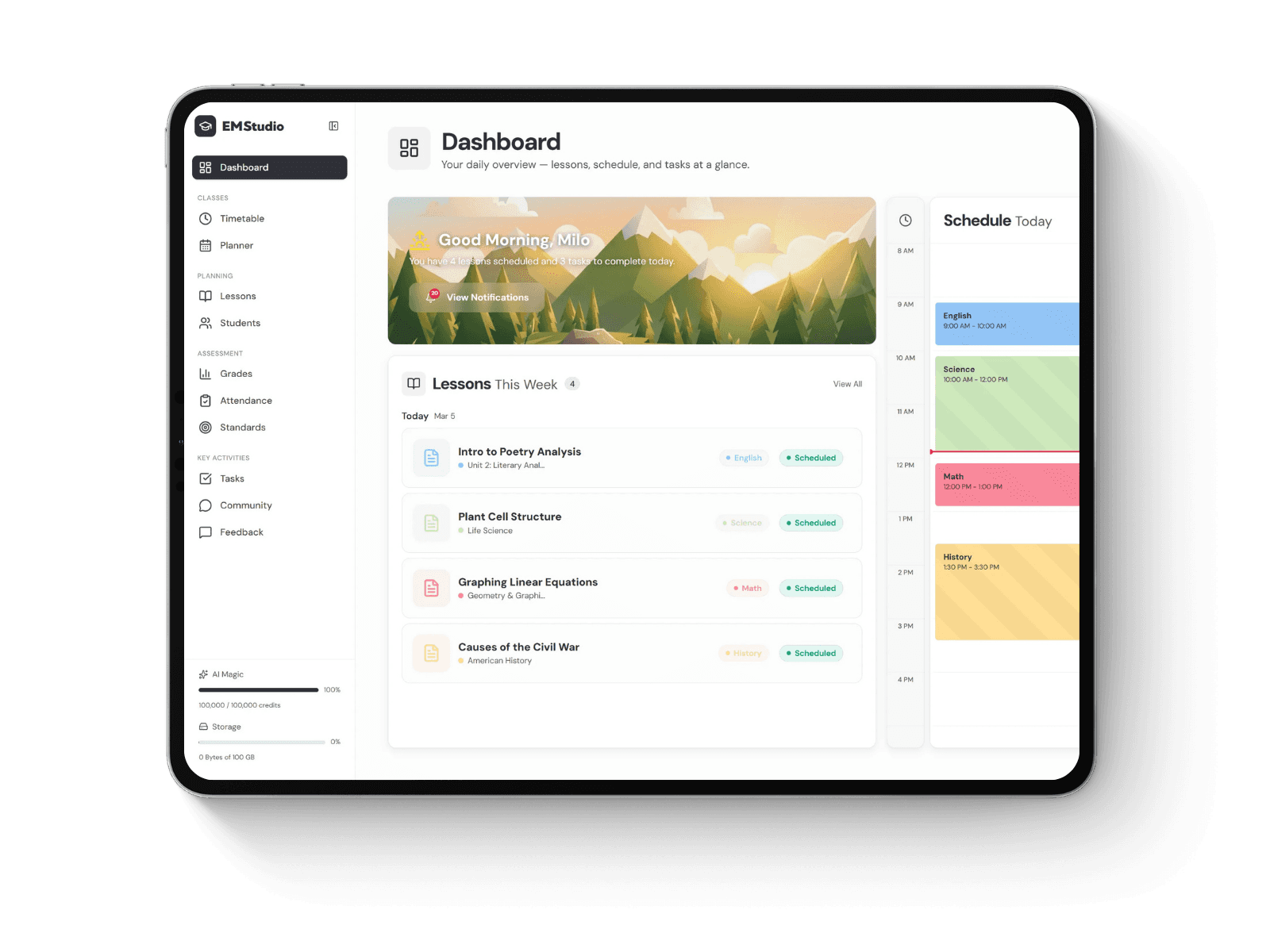
Still grading everything by hand?
EMStudio is a free teaching management app — manage your classes, students, lessons, and more!
Learn More
Table of Contents
Understanding the Science of Reading Framework
The science of reading isn't a boxed curriculum you buy. It's the converging evidence from cognitive neuroscience, developmental psychology, and educational research about how brains learn to read. The National Reading Panel's 2000 meta-analysis established the foundational research, while Scarborough's Reading Rope illustrates how word recognition and language comprehension intertwine like braided fibers. You need both strands operating simultaneously. When one strand frays, you get distinct failure profiles: kids with dyslexia hit walls in word recognition, while language comprehension deficits produce decoders who can't tell you what happened in the story.
The five pillars function as an implementation sequence with prerequisite dependencies, not just theoretical concepts. Hattie's Visible Learning meta-analysis puts explicit phonics instruction at an effect size of 0.57 compared to 0.06 for unaided whole language. That's the difference between a year of growth and spinning wheels.
Explicit versus implicit instruction isn't a philosophical preference. It's a logistical choice with concrete tradeoffs:
Time-to-proficiency: Explicit methods get kids reading faster in K-2 but require more teacher-directed minutes.
Cognitive load: Working memory benefits from explicit breakdowns for novices; implicit discovery overloads beginners.
Prerequisite knowledge: Explicit requires systematic scope and sequence; implicit assumes students already hold foundational patterns.
Grade-level suitability: K-3 requires explicit instruction; grade 4+ allows implicit approaches for morphological study.
You can see these differences in action through evidence-based models for explicit direct instruction. The research is clear: evidence-based reading instruction demands both word recognition and language comprehension strands working together.
The Five Core Pillars of Evidence-Based Instruction
Each pillar carries specific benchmarks and time allocations. Phonemic awareness happens in K-1 with 10-15 minutes of daily oral work—no books, just sounds. Phonics runs K-2 with 30-40 minutes of systematic instruction using decodable texts. Fluency targets 60+ correct words per minute by mid-first grade, continuing through grade 3. Vocabulary and comprehension span K-12, with explicit tier 2 word instruction and background knowledge building.
These aren't parallel tracks. They're a numbered dependency chain:
Phonemic awareness mastery must reach segmentation before alphabetic principle instruction begins.
Phonics must establish automaticity before fluency work dominates.
Fluency must reach automaticity before comprehension strategies take center stage.
Skip step one, and you're building on quicksand.
Why Cueing Systems Conflict With Research
The three-cueing system—teaching kids to guess using Meaning, Structure, and Visual (MSV) cues—bypasses orthographic mapping, the neural process that bonds spelling to sounds for sight word retention. When students look at pictures or context instead of graphemes, they recruit the semantic processor instead of the phonological loop. The National Council on Teacher Quality has documented how teacher preparation programs still push MSV despite cognitive science findings.
Here's what that looks like in a 1st grade classroom: A student encounters the word "horse" next to a picture of a pony. They guess "pony" using the visual cue. They feel successful. But they didn't activate the phonological processor (/h/ /or/ /s/) or the orthographic processor (h-o-r-s-e). They've reinforced a guessing habit that works for leveled readers in kindergarten but collapses when text complexity increases in grade 3 and pictures disappear. By then, the cognitive patterns are sticky.
Step 1 — Audit Your Current Reading Practices
Before you buy anything new, figure out what you're actually doing right now. Block off 2-3 hours with the University of Florida Literacy Institute Diagnostic Reading Audit. Work through your teacher's manual page by page. Then bring your notes to a 90-minute grade-level team meeting to calibrate—two teachers reading the same lesson should flag the same alignment issues, or your inter-rater reliability is off.
Use this 12-point checklist to score your current materials:
Scope and sequence alignment: Are you teaching high-utility letter-sound correspondences (s, a, t, i, p, n) before low-utility ones (x, qu, z)?
Percentage of decodable texts versus predictable texts in classroom libraries
Sight word instruction timeline: Is there a clear sequence, or are kids memorizing "the" before they know the /th/ phonics pattern?
Assessment types: Are you using dyslexia screening tools and diagnostic assessments, or just universal screeners that tell you "below grade level" without explaining why?
Teacher language prompts: Do you reference three-cueing system strategies (MSV: Meaning, Structure, Visual) or do you prompt for orthographic mapping ("sound it out")?
Phonological awareness sequence: Is it explicit and systematic, or embedded in songs?
Pre reading activities: Do they activate background knowledge without spoiling the decoding?
Scarborough's Reading Rope: Which strands are missing from your instruction?
Running record analysis: Are you analyzing errors by evidence based reading instruction standards or using cueing systems?
Picture dependencies: Can students "read" the text without looking at the words?
Vocabulary instruction: Is it taught in isolated lists or embedded in context?
Intervention materials: Do they align with core instruction or contradict it?
Now for the budget reality. Replacing your leveled readers with quality decodable text sets runs $15-30 per student. That's real money. But you can repurpose your existing predictable books as comprehension-only read-alouds for $0. Kids still get the stories; they just aren't using them to practice decoding.
Mapping Your Current Scope and Sequence
Pull your teacher's edition and create a three-column chart: Current Sequence, Science of Reading Alignment, and Gap Analysis. In the first column, transcribe exactly what you teach week by week—don't skip the "review weeks" or random holiday lessons. In the second column, note whether each skill follows research on utility frequency. High-utility sounds like a, m, t, p, s appear in thousands of words; low-utility sounds like x or z appear in dozens. In the third column, flag exactly where your curriculum deviates from the evidence.
Here's the misalignment I see in nearly every audit: teaching consonant blends (st, tr, pl) before kids have solid short vowel mastery. The science of reading is clear that a sequence like s, a, t, i, p, n lets beginning readers build and decode dozens of words immediately. When you introduce blends before vowels, you create cognitive overload. Kids start guessing based on initial consonants because they can't hold the entire phonological string in working memory yet. I've watched 1st graders stare at "stop" and say "sun" because they were taught /st/ before they could segment /o/ reliably.
Use this decision flowchart as you review: If your current scope teaches digraphs like /sh/ or /th/ before all short vowels are mastered, flag it as High Priority Change—this actively confuses orthographic mapping. If vocabulary is taught in isolated weekly lists without context, flag it as Medium Priority. Mapping your scope and sequence in a shared digital space makes these gaps visible to your entire team before you spend money on new materials.
Identifying Misaligned Materials and Strategies
Some materials actively work against evidence based reading instruction. You need to spot them fast before they undo your explicit phonics instruction. These five red flags require immediate removal from your small-group rotation:
Repetitive predictable sentence patterns ("I see the ___") that encourage guessing
Picture-dependent text where illustrations reveal the words, bypassing orthographic processing
Sight words taught before decoding skills—like teaching "the" before kids understand the /th/ phonics pattern
MSV strategy posters promoting the three-cueing system ("Look at the picture," "Does it make sense?")
Running records analyzed using cueing systems rather than error analysis focused on phonological awareness and orthographic mapping
That MSV poster hanging above your library? Take it down. When you tell a child to "look at the picture" or "what would make sense," you train them to bypass the orthographic processor—the very skill you're trying to build. I kept one predictable text set last year, but I moved it to social studies. We used those books to practice finding the main idea and connecting to prior knowledge during read-alouds. The kids loved the photographs. But during small-group reading instruction, those books stayed on the shelf. Decoding practice requires words kids can actually sound out, not guess from context. If you're worried about waste, remember that repurposing these materials to comprehension-only status costs nothing. You're not throwing them away; you're just stopping them from sabotaging your phonics lessons.

Step 2 — Build Explicit Phonemic Awareness Routines
You can't build reading on a shaky foundation. That's why phonological awareness comes first in the science of reading—before letters, before books, before anything else. These are the pre reading activities that matter most. I use either the Heggerty Phonemic Awareness Curriculum (perfect for pre-K to 1st) or UFLI Foundations (solid for intervention). Both require zero materials. Just your voice and hand signals for blending.
The progression is deliberate. Weeks 1-6 hit compound words and syllables. Weeks 7-12 move to onset-rime. Weeks 13 and beyond isolate, blend, and manipulate individual phonemes. Plan for 18-20 instructional weeks to get 80% of kindergarteners fully proficient.
Here's the part where teachers mess up: Don't show letters for the first 8-10 weeks. Keep it oral and auditory only. Adding print too early creates cognitive overload and weakens the phonological processor you're trying to strengthen. This is one of those research based strategies for reading that protects how memory functions during the learning process.
Daily Oral Blending and Segmenting Protocols
Run this 10-15 minutes daily. I use a five-day rotation that hits different skills without overwhelming anyone:
Monday: Blending with Elkonin boxes and sound chips
Tuesday: Segmenting spoken words into sounds
Wednesday: Phoneme addition (adding /s/ to the start of "pin")
Thursday: Deletion and substitution games
Friday: Quick assessment and reteaching of errors from the week
Stick to the script. Word-for-word. Say: "I'm going to say the sounds in a word. Listen: /m/ /a/ /p/. Your turn. Say the sounds. (Wait 3 seconds). Now say the word fast." Use only five words per session. Wait exactly three seconds for the response. If a kid bombs it, correct immediately: "Listen again: /m/ /a/ /p/. Your turn." No shame, just repetition.
This routine builds the orthographic mapping system kids need later. You're essentially wiring their brains to hear sounds separately before they ever have to connect those sounds to squiggly lines on paper.
Advancing to Manipulation and Substitution Drills
Once blending and segmenting feel automatic, ramp up the difficulty. I run three levels with clear mastery criteria: 80% accuracy for two consecutive sessions before moving up.
Level 1: Compound words. "Say 'cupcake,' now say it without 'cake.'"
Level 2: Syllable deletion. "Say 'cowboy' without 'cow.'"
Level 3: Phoneme manipulation. "Say 'fit,' change /f/ to /s.'"
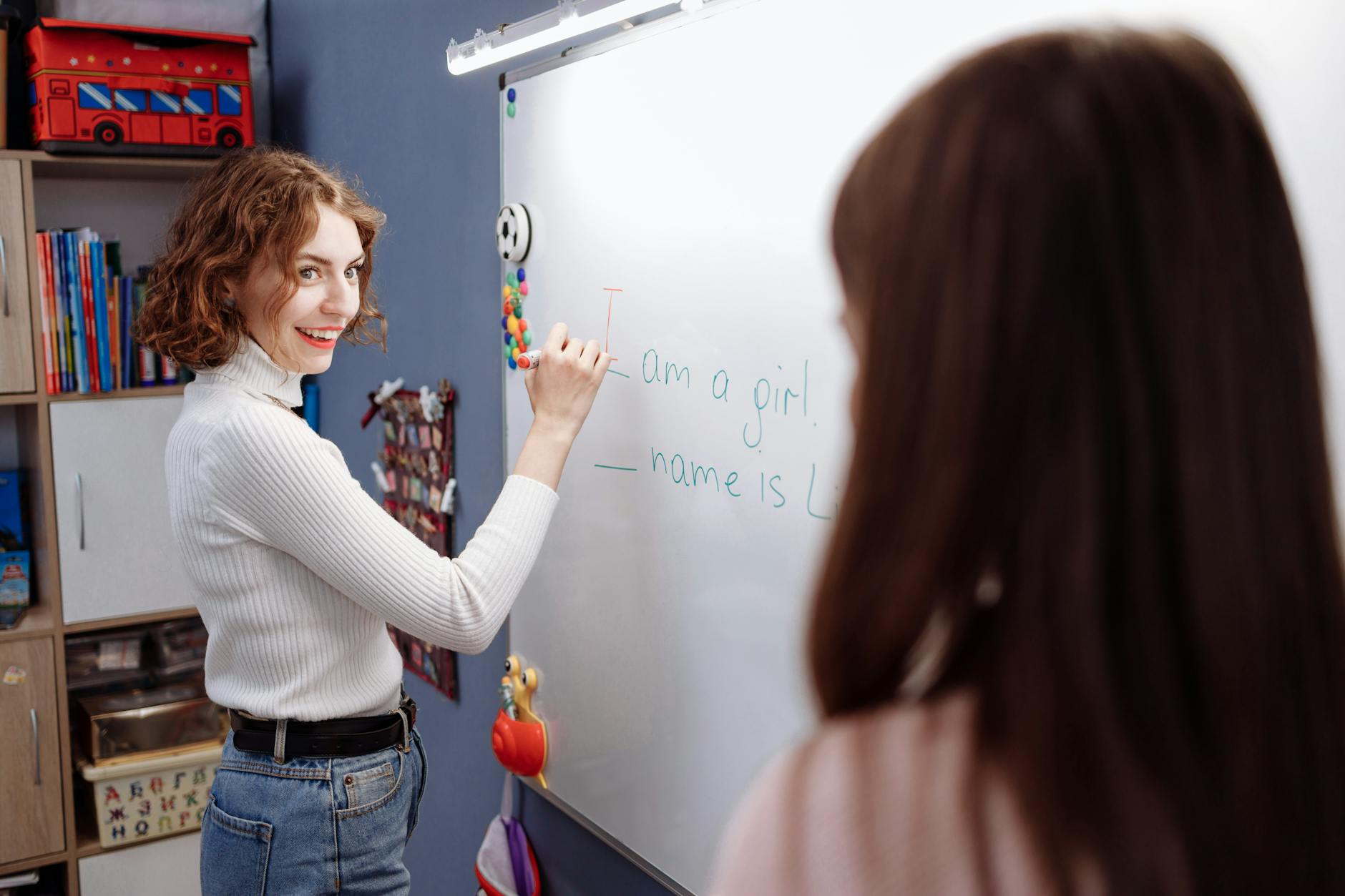
For the visual learners, draw three boxes on your whiteboard for CVC words. Students slide chips into the boxes while saying each sound, then sweep their finger underneath to blend the word together. No letters in the boxes yet—just empty spaces and chips. This bridges the gap between pure auditory work and the decodable texts they'll see later.
Skip these steps and you'll see kids guessing from pictures using the three-cueing system instead of actually reading. That's why dyslexia screening often flags weak phonemic awareness first—it's the canary in the coal mine on Scarborough's Reading Rope.

Step 3 — Implement Systematic Phonics Instruction
Systematic phonics means you teach sound-spellings in a planned sequence based on utility, not themes. Start with s, a, t, i, p, n. Kids can blend over 100 words with just those seven sounds. Compare that to teaching a, b, c, d in alphabetical order—cute for songs, useless for reading. The science of reading connects phonological awareness directly to print: if they can segment "cat," they need to see c-a-t immediately.
Selecting a Scope and Sequence Based on Frequency
You have three main approaches, and your choice depends on who sits in front of you. High-frequency order starts with s, a, t, i, p, n, c, k, e, h, r, m, d because kids can build "sat," "pin," "hen," and "milk" immediately. Print exposure order follows what kids see in picture books—lots of m, s, d, a for "Mom" and "My." Categorical order blocks all short vowels together, then digraphs, then blends. Each has a place, but don't mix them randomly.
High-Frequency Order | s, a, t, i, p, n, c, k, e, h... | Best for general education Kindergarten. |
Print Exposure Order | m, s, d, a, t... | Works for preschool exposure, lacks systematic layering. |
Categorical Order | All short vowels, then sh/ch/th, then blends. | Ideal for intervention or older struggling readers. |
Skip the ABC song approach. Teaching letters in order lets kids read "bad" eventually, but they can't blend "sit" or "pet" for months. That's lost time for building the automatic word recognition strand of Scarborough's Reading Rope.
Pace yourself against these benchmarks or you'll lose the kids who need you most:
Kindergarten: Short vowels and single consonants mastered by January; start digraphs by March.
1st Grade: Solid review of K content through September, then silent e and vowel teams wrapped by May.
2nd Grade: Multisyllabic decoding including prefixes, suffixes, and compound words.
Integrating Decodable Texts for Immediate Application
Never teach a sound in isolation without a book to read it in. Use the 80/20 rule: the text should be 80% decodable using patterns you've explicitly taught, 20% high-frequency irregular words taught as heart words. These heart words get mapped through orthographic mapping—connecting sounds to spellings in memory—not guessing from pictures. This structured approach replaces the failed three-cueing system and builds automaticity faster.
Cost reality check: a Flyleaf Publishing classroom set runs $180 for 90 books ($2 per book). Traditional leveled libraries cost $400 and actually work against your phonics instruction by encouraging guessing. That's $220 you could redirect toward dyslexia screening tools or professional development on Scarborough's Reading Rope.
Linnea Ehri's phases of word learning research is specific: students require 4 to 14 meaningful exposures to map irregular words to sight vocabulary. That means you can't dump ten heart words on Monday and test Friday. Systematic introduction must control for word complexity and never exceed working memory limits. If you're following science of reading strategies, you know that overloading the phonological loop kills retention.
Check your decodable texts against these criteria:
Controlled for taught sound-spellings only—no guessing.
Engaging content that doesn't insult the reader's intelligence.
Pictures support comprehension, not word-guessing cues.
Length 8-12 pages for beginners; font 14pt+ sans-serif.
Quality decodables don't require a grant. Flyleaf Publishing runs about $2 per book with engaging stories. Half-Pint Readers cost $1.50 and work well for small groups. Decodable Readers Australia charges around $3 but includes non-fiction sets. The University of Florida Literacy Institute offers free printable sets—print on cardstock, slide into sheet protectors, and they'll survive the year.

Step 4 — How Do You Transition From Cueing Systems to Decodable Texts?
Transition gradually over 6-8 weeks. Replace MSV prompts with "sound it out" scripts. Introduce decodable texts alongside your old leveled books initially. Once students hit 80% accuracy on current phonics patterns, pull the predictable texts from independent reading. Keep comprehension work alive through daily read-alouds while you build decoding accuracy. This bridges the gap without leaving kids stranded while you dismantle the old cueing systems in reading.
Phasing Out Three-Cueing Without Student Confusion
Stop using the three-cueing system immediately, but fade the visual supports gradually so kids don't panic. In Week 1-2, take down those MSV posters and cover them with phonics anchor charts showing mouth formations. When a child stalls on a word, bite your tongue before asking "Does that make sense?" Use this instead: "Look at the first sound. Now look at the rest of the word. Blend it together." If they point to the picture, try: "The picture helps us understand the story, but the letters tell us the word. Let's check the letters."
Week 3-4, introduce decodables during small group while keeping old books available for independent reading. This dual exposure prevents the shock of suddenly losing familiar texts. When students guess from the first letter only—saying "horse" for "house"—implement "stretch and zip." Have them stretch each sound slowly to build phonological awareness, then zip them together fast. No more guessing.
By Week 5-6, remove leveled texts from independent reading baskets entirely. Students now practice only with books containing phonics patterns they've learned. Week 7-8 brings full implementation. You're running science of reading aligned instruction with 80% accuracy as your benchmark. This builds the automatic word recognition strand of Scarborough's Reading Rope through proper orthographic mapping. It also supports accurate dyslexia screening by revealing true decoding gaps instead of masking them with picture cues.
Building a Decodable Text Library on Any Budget
You don't need $2,000 upfront. Build your library progressively at $50 per month for six months, and you'll accumulate 150 books. For immediate needs, go with free Project Gutenberg decodables or district printing of public domain titles like "The Bee and the Flea."
Here's a tiered implementation plan:
Tier 1 ($0): Use district printing of public domain decodables. evidence-based best practices for reading instruction don't require expensive materials, just texts that match your phonics sequence.
Tier 2 ($200): Starter set of 50 titles with 2 copies each for partner reading.
Tier 3 ($500): Comprehensive classroom library with 6 copies per title for small-group instruction.
Organize with color-coded bins to match your instruction. Red tags for short a, blue for short i, green for consonant blends. Students select only from the bin matching this week's target pattern. This eliminates the "just right book" confusion that old reading styles promoted. You'll know at a glance if a child is practicing the phonics skill you actually taught rather than memorizing patterns from repetitive text.

Step 5 — What Assessment Methods Align With Evidence-Based Reading Instruction?
Use universal screeners like DIBELS 8th Edition or Acadience three times yearly to catch at-risk readers early. When a student hits "Well Below" benchmark, administer diagnostic assessments like the PAST (Phonological Awareness Screening Test) or CORE Phonics Survey within two weeks to pinpoint exactly where orthographic mapping breaks down. Progress monitor every two weeks using curriculum-based measures that match your current phonics scope and sequence. Stop using MSV analysis from running records. The three-cueing system teaches kids to guess from pictures or context, and tracking those errors wastes instructional time.
Run universal screening in fall, winter, and spring. For students in the bottom 20th percentile, complete diagnostic testing within two weeks. Progress monitor tier 2 students every two weeks and tier 3 students weekly. This rhythm keeps you from flying blind.
Create small groups based on specific skill deficits—blending, segmenting, or sight word recognition—not vague "below grade level" labels. Plot progress on line graphs with aim lines. If you see four consecutive data points below the aim line, change the intervention. Four above? Move them forward. Digital assessment tracking tools make these graphs visible during planning periods.
Dyslexia-Screening and Phonics Diagnostic Tools
DIBELS 8th Edition is free and measures oral reading fluency and accuracy. Acadience offers similar data. If your district pays for aimswebPlus, you get spelling subtests too. Download the PAST for free to test phonological memory and manipulation through deletion and substitution tasks. The CORE Phonics Survey is also free; it checks grapheme-phoneme correspondence against grade-level expectations.
Interpretation is straightforward. A "Well Below" benchmark on DIBELS means you need that diagnostic deep dive immediately. On the PAST, if an older student scores below 5 on advanced items like phoneme deletion, they need explicit phonemic awareness intervention regardless of their grade. These strategies for identifying learning disabilities align with the science of reading by catching gaps in the phonological awareness strand of Scarborough's Reading Rope before they harden into failure.
Progress Monitoring That Informs Small-Group Instruction
Stop mixing probe types. When you're teaching short vowels, use a CVC word reading probe, not a mixed passage. Graph the results against an aim line showing the target trajectory. This visual tells you in seconds whether the decodable texts and explicit instruction are sticking.
Sort your groups by deficit, not reading level:
Group 1: Phonemic awareness deficit → Do Heggerty.
Group 2: Decoding accuracy deficit → Do UFLI.
Group 3: Fluency deficit → Do repeated reading.
Group 4: Comprehension deficit → Do vocabulary building.
This approach respects the science of teaching reading. You target the specific strand of Scarborough's Reading Rope that is frayed instead of reteaching everything to everyone.

Avoiding Common Pitfalls During Implementation
Managing the Pace of Change With Stakeholders
Implementation fails when you try to fix everything at once. Follow this timeline to avoid change fatigue:
Year 1: Lock in K-2 core instruction and intervention only.
Year 2: Expand to 3-5 word study while K-2 teachers mentor.
Year 3: Layer in comprehension strategies once orthographic mapping foundations are solid.
This sequencing prevents teachers from confusing science of reading with worksheet-heavy busywork that kills engagement. If your teachers are drowning in phonics copies, pull back. Evidence-based instruction thrives on student talk and paperless manipulation of sounds, not seatwork packets.
Resistance hits hard if you skip the pilot phase. Identify three or four early-adopter teachers during the first semester. Run the new phonics program in their rooms only. Collect baseline data in September. When their students show 1.5x growth rates on winter benchmarks compared to the control group, you have the proof you need for district-wide rollout. Data silences skeptics better than any professional development slide deck.
Parents will push back hard when you stop letting their first graders guess from pictures. They call it "taking away the support." Send a three-email sequence explaining the shift from guessing to decoding. Use this script: "We are teaching children to read the words using letter-sound knowledge first, then using pictures to understand the story—rather than guessing from pictures, which research shows creates habits that fail in upper grades." Implementing educational change effectively means managing change fatigue by sequencing your wins and front-loading parent communication before the panic sets in.
Supporting Struggling Readers Without Reverting to Old Methods
The worst trap? A third grader freezes on a new decodable text pattern, so you hand him the picture book and say "look at the first letter and think what makes sense." That reactivates the three-cueing system you just spent months dismantling. Guessing strategies feel like help in the moment, but they destroy the orthographic mapping process.
Instead, watch for this warning sign: If a student fails to respond to tier 2 after eight weeks—sixteen sessions—increase the dosage to double daily time or reduce group size from six-to-one to three-to-one. Never return to guessing when phonics gets hard. Supporting students with learning disabilities requires holding this line when progress feels slow.
Jigsaw reading and making predictions are not evil. They are simply misplaced in early phonics instruction. Use jigsaw reading examples like this: in fourth grade social studies, after dyslexia screening and decoding assessment confirm grade-level accuracy, assign students to become "experts" on one section of the text and teach peers. Making predictions belongs to kindergarten and first grade listening comprehension read-alouds, not independent reading for kids who still sound out CVC words. According to Scarborough's Reading Rope, these comprehension strategies hang on the word-recognition strand. For students with dyslexia, using them as replacements for phonics drains working memory needed for phonological awareness tasks. Wait for automatic decoding before you add the complexity.

Final Thoughts on Science Of Reading
The biggest shift isn't the curriculum you buy. It's the moment you stop asking kids to guess and start teaching them to map sounds to letters. Orthographic mapping happens when students connect phonemes to graphemes with intention, not when they look at a picture for context. That change—from searching for clues to building words—transforms everything. You'll see it in your running records, but more importantly, you'll hear it when a struggling reader finally sounds out "stop" without checking your face for help. The science works when you trust the mechanics over the shortcuts.
Start tomorrow. Pick one student who relies on the first-letter cue, hand them a decodable text that matches the phonics pattern you taught last week, and watch what happens when the pictures don't bail them out. If they stumble on a sound, you know exactly what to reteach. If they read it straight through, you've just proven that explicit instruction beats guessing games. That's your proof of concept. Build from there.

Understanding the Science of Reading Framework
The science of reading isn't a boxed curriculum you buy. It's the converging evidence from cognitive neuroscience, developmental psychology, and educational research about how brains learn to read. The National Reading Panel's 2000 meta-analysis established the foundational research, while Scarborough's Reading Rope illustrates how word recognition and language comprehension intertwine like braided fibers. You need both strands operating simultaneously. When one strand frays, you get distinct failure profiles: kids with dyslexia hit walls in word recognition, while language comprehension deficits produce decoders who can't tell you what happened in the story.
The five pillars function as an implementation sequence with prerequisite dependencies, not just theoretical concepts. Hattie's Visible Learning meta-analysis puts explicit phonics instruction at an effect size of 0.57 compared to 0.06 for unaided whole language. That's the difference between a year of growth and spinning wheels.
Explicit versus implicit instruction isn't a philosophical preference. It's a logistical choice with concrete tradeoffs:
Time-to-proficiency: Explicit methods get kids reading faster in K-2 but require more teacher-directed minutes.
Cognitive load: Working memory benefits from explicit breakdowns for novices; implicit discovery overloads beginners.
Prerequisite knowledge: Explicit requires systematic scope and sequence; implicit assumes students already hold foundational patterns.
Grade-level suitability: K-3 requires explicit instruction; grade 4+ allows implicit approaches for morphological study.
You can see these differences in action through evidence-based models for explicit direct instruction. The research is clear: evidence-based reading instruction demands both word recognition and language comprehension strands working together.
The Five Core Pillars of Evidence-Based Instruction
Each pillar carries specific benchmarks and time allocations. Phonemic awareness happens in K-1 with 10-15 minutes of daily oral work—no books, just sounds. Phonics runs K-2 with 30-40 minutes of systematic instruction using decodable texts. Fluency targets 60+ correct words per minute by mid-first grade, continuing through grade 3. Vocabulary and comprehension span K-12, with explicit tier 2 word instruction and background knowledge building.
These aren't parallel tracks. They're a numbered dependency chain:
Phonemic awareness mastery must reach segmentation before alphabetic principle instruction begins.
Phonics must establish automaticity before fluency work dominates.
Fluency must reach automaticity before comprehension strategies take center stage.
Skip step one, and you're building on quicksand.
Why Cueing Systems Conflict With Research
The three-cueing system—teaching kids to guess using Meaning, Structure, and Visual (MSV) cues—bypasses orthographic mapping, the neural process that bonds spelling to sounds for sight word retention. When students look at pictures or context instead of graphemes, they recruit the semantic processor instead of the phonological loop. The National Council on Teacher Quality has documented how teacher preparation programs still push MSV despite cognitive science findings.
Here's what that looks like in a 1st grade classroom: A student encounters the word "horse" next to a picture of a pony. They guess "pony" using the visual cue. They feel successful. But they didn't activate the phonological processor (/h/ /or/ /s/) or the orthographic processor (h-o-r-s-e). They've reinforced a guessing habit that works for leveled readers in kindergarten but collapses when text complexity increases in grade 3 and pictures disappear. By then, the cognitive patterns are sticky.
Step 1 — Audit Your Current Reading Practices
Before you buy anything new, figure out what you're actually doing right now. Block off 2-3 hours with the University of Florida Literacy Institute Diagnostic Reading Audit. Work through your teacher's manual page by page. Then bring your notes to a 90-minute grade-level team meeting to calibrate—two teachers reading the same lesson should flag the same alignment issues, or your inter-rater reliability is off.
Use this 12-point checklist to score your current materials:
Scope and sequence alignment: Are you teaching high-utility letter-sound correspondences (s, a, t, i, p, n) before low-utility ones (x, qu, z)?
Percentage of decodable texts versus predictable texts in classroom libraries
Sight word instruction timeline: Is there a clear sequence, or are kids memorizing "the" before they know the /th/ phonics pattern?
Assessment types: Are you using dyslexia screening tools and diagnostic assessments, or just universal screeners that tell you "below grade level" without explaining why?
Teacher language prompts: Do you reference three-cueing system strategies (MSV: Meaning, Structure, Visual) or do you prompt for orthographic mapping ("sound it out")?
Phonological awareness sequence: Is it explicit and systematic, or embedded in songs?
Pre reading activities: Do they activate background knowledge without spoiling the decoding?
Scarborough's Reading Rope: Which strands are missing from your instruction?
Running record analysis: Are you analyzing errors by evidence based reading instruction standards or using cueing systems?
Picture dependencies: Can students "read" the text without looking at the words?
Vocabulary instruction: Is it taught in isolated lists or embedded in context?
Intervention materials: Do they align with core instruction or contradict it?
Now for the budget reality. Replacing your leveled readers with quality decodable text sets runs $15-30 per student. That's real money. But you can repurpose your existing predictable books as comprehension-only read-alouds for $0. Kids still get the stories; they just aren't using them to practice decoding.
Mapping Your Current Scope and Sequence
Pull your teacher's edition and create a three-column chart: Current Sequence, Science of Reading Alignment, and Gap Analysis. In the first column, transcribe exactly what you teach week by week—don't skip the "review weeks" or random holiday lessons. In the second column, note whether each skill follows research on utility frequency. High-utility sounds like a, m, t, p, s appear in thousands of words; low-utility sounds like x or z appear in dozens. In the third column, flag exactly where your curriculum deviates from the evidence.
Here's the misalignment I see in nearly every audit: teaching consonant blends (st, tr, pl) before kids have solid short vowel mastery. The science of reading is clear that a sequence like s, a, t, i, p, n lets beginning readers build and decode dozens of words immediately. When you introduce blends before vowels, you create cognitive overload. Kids start guessing based on initial consonants because they can't hold the entire phonological string in working memory yet. I've watched 1st graders stare at "stop" and say "sun" because they were taught /st/ before they could segment /o/ reliably.
Use this decision flowchart as you review: If your current scope teaches digraphs like /sh/ or /th/ before all short vowels are mastered, flag it as High Priority Change—this actively confuses orthographic mapping. If vocabulary is taught in isolated weekly lists without context, flag it as Medium Priority. Mapping your scope and sequence in a shared digital space makes these gaps visible to your entire team before you spend money on new materials.
Identifying Misaligned Materials and Strategies
Some materials actively work against evidence based reading instruction. You need to spot them fast before they undo your explicit phonics instruction. These five red flags require immediate removal from your small-group rotation:
Repetitive predictable sentence patterns ("I see the ___") that encourage guessing
Picture-dependent text where illustrations reveal the words, bypassing orthographic processing
Sight words taught before decoding skills—like teaching "the" before kids understand the /th/ phonics pattern
MSV strategy posters promoting the three-cueing system ("Look at the picture," "Does it make sense?")
Running records analyzed using cueing systems rather than error analysis focused on phonological awareness and orthographic mapping
That MSV poster hanging above your library? Take it down. When you tell a child to "look at the picture" or "what would make sense," you train them to bypass the orthographic processor—the very skill you're trying to build. I kept one predictable text set last year, but I moved it to social studies. We used those books to practice finding the main idea and connecting to prior knowledge during read-alouds. The kids loved the photographs. But during small-group reading instruction, those books stayed on the shelf. Decoding practice requires words kids can actually sound out, not guess from context. If you're worried about waste, remember that repurposing these materials to comprehension-only status costs nothing. You're not throwing them away; you're just stopping them from sabotaging your phonics lessons.
Step 2 — Build Explicit Phonemic Awareness Routines
You can't build reading on a shaky foundation. That's why phonological awareness comes first in the science of reading—before letters, before books, before anything else. These are the pre reading activities that matter most. I use either the Heggerty Phonemic Awareness Curriculum (perfect for pre-K to 1st) or UFLI Foundations (solid for intervention). Both require zero materials. Just your voice and hand signals for blending.
The progression is deliberate. Weeks 1-6 hit compound words and syllables. Weeks 7-12 move to onset-rime. Weeks 13 and beyond isolate, blend, and manipulate individual phonemes. Plan for 18-20 instructional weeks to get 80% of kindergarteners fully proficient.
Here's the part where teachers mess up: Don't show letters for the first 8-10 weeks. Keep it oral and auditory only. Adding print too early creates cognitive overload and weakens the phonological processor you're trying to strengthen. This is one of those research based strategies for reading that protects how memory functions during the learning process.
Daily Oral Blending and Segmenting Protocols
Run this 10-15 minutes daily. I use a five-day rotation that hits different skills without overwhelming anyone:
Monday: Blending with Elkonin boxes and sound chips
Tuesday: Segmenting spoken words into sounds
Wednesday: Phoneme addition (adding /s/ to the start of "pin")
Thursday: Deletion and substitution games
Friday: Quick assessment and reteaching of errors from the week
Stick to the script. Word-for-word. Say: "I'm going to say the sounds in a word. Listen: /m/ /a/ /p/. Your turn. Say the sounds. (Wait 3 seconds). Now say the word fast." Use only five words per session. Wait exactly three seconds for the response. If a kid bombs it, correct immediately: "Listen again: /m/ /a/ /p/. Your turn." No shame, just repetition.
This routine builds the orthographic mapping system kids need later. You're essentially wiring their brains to hear sounds separately before they ever have to connect those sounds to squiggly lines on paper.
Advancing to Manipulation and Substitution Drills
Once blending and segmenting feel automatic, ramp up the difficulty. I run three levels with clear mastery criteria: 80% accuracy for two consecutive sessions before moving up.
Level 1: Compound words. "Say 'cupcake,' now say it without 'cake.'"
Level 2: Syllable deletion. "Say 'cowboy' without 'cow.'"
Level 3: Phoneme manipulation. "Say 'fit,' change /f/ to /s.'"
For the visual learners, draw three boxes on your whiteboard for CVC words. Students slide chips into the boxes while saying each sound, then sweep their finger underneath to blend the word together. No letters in the boxes yet—just empty spaces and chips. This bridges the gap between pure auditory work and the decodable texts they'll see later.
Skip these steps and you'll see kids guessing from pictures using the three-cueing system instead of actually reading. That's why dyslexia screening often flags weak phonemic awareness first—it's the canary in the coal mine on Scarborough's Reading Rope.
Step 3 — Implement Systematic Phonics Instruction
Systematic phonics means you teach sound-spellings in a planned sequence based on utility, not themes. Start with s, a, t, i, p, n. Kids can blend over 100 words with just those seven sounds. Compare that to teaching a, b, c, d in alphabetical order—cute for songs, useless for reading. The science of reading connects phonological awareness directly to print: if they can segment "cat," they need to see c-a-t immediately.
Selecting a Scope and Sequence Based on Frequency
You have three main approaches, and your choice depends on who sits in front of you. High-frequency order starts with s, a, t, i, p, n, c, k, e, h, r, m, d because kids can build "sat," "pin," "hen," and "milk" immediately. Print exposure order follows what kids see in picture books—lots of m, s, d, a for "Mom" and "My." Categorical order blocks all short vowels together, then digraphs, then blends. Each has a place, but don't mix them randomly.
High-Frequency Order | s, a, t, i, p, n, c, k, e, h... | Best for general education Kindergarten. |
Print Exposure Order | m, s, d, a, t... | Works for preschool exposure, lacks systematic layering. |
Categorical Order | All short vowels, then sh/ch/th, then blends. | Ideal for intervention or older struggling readers. |
Skip the ABC song approach. Teaching letters in order lets kids read "bad" eventually, but they can't blend "sit" or "pet" for months. That's lost time for building the automatic word recognition strand of Scarborough's Reading Rope.
Pace yourself against these benchmarks or you'll lose the kids who need you most:
Kindergarten: Short vowels and single consonants mastered by January; start digraphs by March.
1st Grade: Solid review of K content through September, then silent e and vowel teams wrapped by May.
2nd Grade: Multisyllabic decoding including prefixes, suffixes, and compound words.
Integrating Decodable Texts for Immediate Application
Never teach a sound in isolation without a book to read it in. Use the 80/20 rule: the text should be 80% decodable using patterns you've explicitly taught, 20% high-frequency irregular words taught as heart words. These heart words get mapped through orthographic mapping—connecting sounds to spellings in memory—not guessing from pictures. This structured approach replaces the failed three-cueing system and builds automaticity faster.
Cost reality check: a Flyleaf Publishing classroom set runs $180 for 90 books ($2 per book). Traditional leveled libraries cost $400 and actually work against your phonics instruction by encouraging guessing. That's $220 you could redirect toward dyslexia screening tools or professional development on Scarborough's Reading Rope.
Linnea Ehri's phases of word learning research is specific: students require 4 to 14 meaningful exposures to map irregular words to sight vocabulary. That means you can't dump ten heart words on Monday and test Friday. Systematic introduction must control for word complexity and never exceed working memory limits. If you're following science of reading strategies, you know that overloading the phonological loop kills retention.
Check your decodable texts against these criteria:
Controlled for taught sound-spellings only—no guessing.
Engaging content that doesn't insult the reader's intelligence.
Pictures support comprehension, not word-guessing cues.
Length 8-12 pages for beginners; font 14pt+ sans-serif.
Quality decodables don't require a grant. Flyleaf Publishing runs about $2 per book with engaging stories. Half-Pint Readers cost $1.50 and work well for small groups. Decodable Readers Australia charges around $3 but includes non-fiction sets. The University of Florida Literacy Institute offers free printable sets—print on cardstock, slide into sheet protectors, and they'll survive the year.
Step 4 — How Do You Transition From Cueing Systems to Decodable Texts?
Transition gradually over 6-8 weeks. Replace MSV prompts with "sound it out" scripts. Introduce decodable texts alongside your old leveled books initially. Once students hit 80% accuracy on current phonics patterns, pull the predictable texts from independent reading. Keep comprehension work alive through daily read-alouds while you build decoding accuracy. This bridges the gap without leaving kids stranded while you dismantle the old cueing systems in reading.
Phasing Out Three-Cueing Without Student Confusion
Stop using the three-cueing system immediately, but fade the visual supports gradually so kids don't panic. In Week 1-2, take down those MSV posters and cover them with phonics anchor charts showing mouth formations. When a child stalls on a word, bite your tongue before asking "Does that make sense?" Use this instead: "Look at the first sound. Now look at the rest of the word. Blend it together." If they point to the picture, try: "The picture helps us understand the story, but the letters tell us the word. Let's check the letters."
Week 3-4, introduce decodables during small group while keeping old books available for independent reading. This dual exposure prevents the shock of suddenly losing familiar texts. When students guess from the first letter only—saying "horse" for "house"—implement "stretch and zip." Have them stretch each sound slowly to build phonological awareness, then zip them together fast. No more guessing.
By Week 5-6, remove leveled texts from independent reading baskets entirely. Students now practice only with books containing phonics patterns they've learned. Week 7-8 brings full implementation. You're running science of reading aligned instruction with 80% accuracy as your benchmark. This builds the automatic word recognition strand of Scarborough's Reading Rope through proper orthographic mapping. It also supports accurate dyslexia screening by revealing true decoding gaps instead of masking them with picture cues.
Building a Decodable Text Library on Any Budget
You don't need $2,000 upfront. Build your library progressively at $50 per month for six months, and you'll accumulate 150 books. For immediate needs, go with free Project Gutenberg decodables or district printing of public domain titles like "The Bee and the Flea."
Here's a tiered implementation plan:
Tier 1 ($0): Use district printing of public domain decodables. evidence-based best practices for reading instruction don't require expensive materials, just texts that match your phonics sequence.
Tier 2 ($200): Starter set of 50 titles with 2 copies each for partner reading.
Tier 3 ($500): Comprehensive classroom library with 6 copies per title for small-group instruction.
Organize with color-coded bins to match your instruction. Red tags for short a, blue for short i, green for consonant blends. Students select only from the bin matching this week's target pattern. This eliminates the "just right book" confusion that old reading styles promoted. You'll know at a glance if a child is practicing the phonics skill you actually taught rather than memorizing patterns from repetitive text.
Step 5 — What Assessment Methods Align With Evidence-Based Reading Instruction?
Use universal screeners like DIBELS 8th Edition or Acadience three times yearly to catch at-risk readers early. When a student hits "Well Below" benchmark, administer diagnostic assessments like the PAST (Phonological Awareness Screening Test) or CORE Phonics Survey within two weeks to pinpoint exactly where orthographic mapping breaks down. Progress monitor every two weeks using curriculum-based measures that match your current phonics scope and sequence. Stop using MSV analysis from running records. The three-cueing system teaches kids to guess from pictures or context, and tracking those errors wastes instructional time.
Run universal screening in fall, winter, and spring. For students in the bottom 20th percentile, complete diagnostic testing within two weeks. Progress monitor tier 2 students every two weeks and tier 3 students weekly. This rhythm keeps you from flying blind.
Create small groups based on specific skill deficits—blending, segmenting, or sight word recognition—not vague "below grade level" labels. Plot progress on line graphs with aim lines. If you see four consecutive data points below the aim line, change the intervention. Four above? Move them forward. Digital assessment tracking tools make these graphs visible during planning periods.
Dyslexia-Screening and Phonics Diagnostic Tools
DIBELS 8th Edition is free and measures oral reading fluency and accuracy. Acadience offers similar data. If your district pays for aimswebPlus, you get spelling subtests too. Download the PAST for free to test phonological memory and manipulation through deletion and substitution tasks. The CORE Phonics Survey is also free; it checks grapheme-phoneme correspondence against grade-level expectations.
Interpretation is straightforward. A "Well Below" benchmark on DIBELS means you need that diagnostic deep dive immediately. On the PAST, if an older student scores below 5 on advanced items like phoneme deletion, they need explicit phonemic awareness intervention regardless of their grade. These strategies for identifying learning disabilities align with the science of reading by catching gaps in the phonological awareness strand of Scarborough's Reading Rope before they harden into failure.
Progress Monitoring That Informs Small-Group Instruction
Stop mixing probe types. When you're teaching short vowels, use a CVC word reading probe, not a mixed passage. Graph the results against an aim line showing the target trajectory. This visual tells you in seconds whether the decodable texts and explicit instruction are sticking.
Sort your groups by deficit, not reading level:
Group 1: Phonemic awareness deficit → Do Heggerty.
Group 2: Decoding accuracy deficit → Do UFLI.
Group 3: Fluency deficit → Do repeated reading.
Group 4: Comprehension deficit → Do vocabulary building.
This approach respects the science of teaching reading. You target the specific strand of Scarborough's Reading Rope that is frayed instead of reteaching everything to everyone.
Avoiding Common Pitfalls During Implementation
Managing the Pace of Change With Stakeholders
Implementation fails when you try to fix everything at once. Follow this timeline to avoid change fatigue:
Year 1: Lock in K-2 core instruction and intervention only.
Year 2: Expand to 3-5 word study while K-2 teachers mentor.
Year 3: Layer in comprehension strategies once orthographic mapping foundations are solid.
This sequencing prevents teachers from confusing science of reading with worksheet-heavy busywork that kills engagement. If your teachers are drowning in phonics copies, pull back. Evidence-based instruction thrives on student talk and paperless manipulation of sounds, not seatwork packets.
Resistance hits hard if you skip the pilot phase. Identify three or four early-adopter teachers during the first semester. Run the new phonics program in their rooms only. Collect baseline data in September. When their students show 1.5x growth rates on winter benchmarks compared to the control group, you have the proof you need for district-wide rollout. Data silences skeptics better than any professional development slide deck.
Parents will push back hard when you stop letting their first graders guess from pictures. They call it "taking away the support." Send a three-email sequence explaining the shift from guessing to decoding. Use this script: "We are teaching children to read the words using letter-sound knowledge first, then using pictures to understand the story—rather than guessing from pictures, which research shows creates habits that fail in upper grades." Implementing educational change effectively means managing change fatigue by sequencing your wins and front-loading parent communication before the panic sets in.
Supporting Struggling Readers Without Reverting to Old Methods
The worst trap? A third grader freezes on a new decodable text pattern, so you hand him the picture book and say "look at the first letter and think what makes sense." That reactivates the three-cueing system you just spent months dismantling. Guessing strategies feel like help in the moment, but they destroy the orthographic mapping process.
Instead, watch for this warning sign: If a student fails to respond to tier 2 after eight weeks—sixteen sessions—increase the dosage to double daily time or reduce group size from six-to-one to three-to-one. Never return to guessing when phonics gets hard. Supporting students with learning disabilities requires holding this line when progress feels slow.
Jigsaw reading and making predictions are not evil. They are simply misplaced in early phonics instruction. Use jigsaw reading examples like this: in fourth grade social studies, after dyslexia screening and decoding assessment confirm grade-level accuracy, assign students to become "experts" on one section of the text and teach peers. Making predictions belongs to kindergarten and first grade listening comprehension read-alouds, not independent reading for kids who still sound out CVC words. According to Scarborough's Reading Rope, these comprehension strategies hang on the word-recognition strand. For students with dyslexia, using them as replacements for phonics drains working memory needed for phonological awareness tasks. Wait for automatic decoding before you add the complexity.
Final Thoughts on Science Of Reading
The biggest shift isn't the curriculum you buy. It's the moment you stop asking kids to guess and start teaching them to map sounds to letters. Orthographic mapping happens when students connect phonemes to graphemes with intention, not when they look at a picture for context. That change—from searching for clues to building words—transforms everything. You'll see it in your running records, but more importantly, you'll hear it when a struggling reader finally sounds out "stop" without checking your face for help. The science works when you trust the mechanics over the shortcuts.
Start tomorrow. Pick one student who relies on the first-letter cue, hand them a decodable text that matches the phonics pattern you taught last week, and watch what happens when the pictures don't bail them out. If they stumble on a sound, you know exactly what to reteach. If they read it straight through, you've just proven that explicit instruction beats guessing games. That's your proof of concept. Build from there.
Still grading everything by hand?
EMStudio is a free teaching management app — manage your classes, students, lessons, and more!
Learn More
Still grading everything by hand?
EMStudio is a free teaching management app — manage your classes, students, lessons, and more!
Learn More


Notion4Teachers
Notion templates to simplify administrative tasks and enhance your teaching experience.



2026 Notion4Teachers. All Rights Reserved.
Notion4Teachers
Notion templates to simplify administrative tasks and enhance your teaching experience.
2026 Notion4Teachers. All Rights Reserved.
Notion4Teachers
Notion templates to simplify administrative tasks and enhance your teaching experience.
2026 Notion4Teachers. All Rights Reserved.