Shapes Preschool Lesson Plan Template
Shapes Preschool Lesson Plan Template

Article by
Milo
ESL Content Coordinator & Educator
ESL Content Coordinator & Educator
All Posts
Are you hunting for yet another circle-and-square worksheet to fill twenty minutes of your morning block? Stop. This shapes preschool lesson plan template gives you a full week of intentional early geometry instruction without the printable clutter. It maps out exactly when to introduce 2D shapes, when to push for spatial reasoning, and when to back off before the kids check out.
I built this after watching my threes spend exactly ten minutes gluing foam triangles before the activity cratered. The template breaks down shape recognition activities into fifteen-minute chunks that build real pre-math skills. You get the specific materials list, the differentiation notes for mixed-age classrooms, and the assessment checkpoints most commercial curricula skip.
Whether you are teaching three-year-olds who still mouth the pattern blocks or fours ready to debate if a diamond is a square, this structure adapts. No more guessing how much prep time you need or which picture books actually work for hexagon hunts. Just open the template and teach.
Still grading everything by hand?
EMStudio is a free teaching management app — manage your classes, students, lessons, and more!
Learn More

Still grading everything by hand?
EMStudio is a free teaching management app — manage your classes, students, lessons, and more!
Learn More
Table of Contents
What This Template Covers
This is a 5-center rotation template built for the 3-5 year old crowd—specifically ages 36 to 60 months, when attention spans can handle structured play. It runs Monday through Friday with 60-90 minute instructional blocks that blend shapes preschool concepts with color recognition. I designed it for morning centers, but it works for afternoon transitions too. Each day hits five stations. You rotate small groups every 12-15 minutes. The activities repeat weekly so kids know the routine while the content shifts. Colors act as the anchor—red circles one week, blue rectangles the next—so you are hitting two standards simultaneously without extending the day.
The template addresses four core learning domains aligned with the Head Start Early Learning Outcomes Framework:
Cognitive: Shape identification and matching games that build early geometry foundations.
Language: Geometric vocabulary development—moving from "that one" to "the rectangle."
Fine motor: Tracing, cutting, and pinching manipulatives to strengthen pencil grips.
Social-emotional: Center collaboration, sharing materials, and resolving conflicts without teacher intervention.
The progression follows a three-week arc. Week 1 sticks to basic 2D shapes: circle, square, triangle. Week 2 adds rectangles, ovals, and diamonds. Week 3 jumps to 3D shapes: sphere, cube, cylinder. I keep the template structure identical each week. Kids focus on learning the new geometric shapes, not new procedures. This consistency builds the spatial reasoning and pre-math skills they need for kindergarten screening. You will notice them start spotting cylinders in the block corner or calling the snack cups "round spheres" without prompting.
The measurable goal is straightforward: 80% of your class will correctly identify taught shapes in isolation and in the environment by unit end. Research suggests children need 12-15 exposures to master a new shape concept. This template builds in those repetitions through varied shape recognition activities—not flashcards, but sorting felt pieces, building with blocks, and hunting for circles during snack. You track progress through quick daily checklists at cleanup time. If you are looking for more engaging early learning lesson plans, this structure scales well across other themes like seasons or community helpers.
What Components Make Up the Lesson Plan Structure?
A comprehensive shapes preschool lesson plan includes five structured components: circle time for direct instruction (10-15 min), matching worksheets for cognitive association (15 min), tactile exploration stations for sensory learning (15 min), integrated art activities for creative application (15 min), and closing assessments for progress monitoring (10 min). Each component targets different learning modalities in a 60-90 minute block.
You need a blueprint that moves fast and hits every learning style. This structure balances teacher-led moments with hands-on discovery, keeping three-year-olds engaged without burning them out.
Circle Time (10-15 min): Direct instruction with songs and games.
Matching Worksheets (15 min): Cognitive association practice with dry-erase activities.
Tactile Stations (15 min): Sensory exploration of geometric shapes.
Art Integration (15 min): Creative application through painting and collage.
Closing Assessment (10 min): Progress monitoring and documentation.
Component | Learning Style | Prep Time | Grouping |
|---|---|---|---|
Circle Time | Visual/Auditory | 10 minutes | Whole group |
Matching Worksheets | Visual | 15 minutes | Small group |
Tactile Stations | Kinesthetic | 20 minutes | Small group |
Art Integration | Visual/Kinesthetic | 15 minutes | Small group |
Closing Assessment | Visual/Auditory | 5 minutes | Individual |
John Hattie's Visible Learning research supports this balance. Direct instruction during Circle Time shows an effect size of 0.59, while hands-on exploration shows 0.54. Both rank high on the influence scale, justifying the time split between teacher talk and student discovery.
Circle Time: Shape and Color Introduction
Open with The Learning Station's "Shape Song." It's exactly 2 minutes and 37 seconds, which is the perfect length for preschool attention spans. Display your 12x12 inch laminated shape posters in primary colors while they sing.
Keep the momentum going with the Mystery Bag game. Drop attribute blocks into a fabric bag—make sure you have at least 24 pieces so you can cycle through different examples. Describe the texture and edges while students guess. This builds oral language for five to seven minutes.
Finish with the Shape Detective routine. Hand four students magnifying glasses and send them hunting for the target shape hidden in plain sight. The door is a rectangle. The clock is a circle. This takes three minutes and gets them moving.
Center 1: Matching Shapes with Objects Worksheets
Set up three differentiated worksheet levels. Level one focuses on circles only with four objects to match. Level two adds a second shape and eight total objects. Level three pushes four shapes with twelve objects including real-world photos like stop signs and slices of pizza.
Use 8.5x11 heavy cardstock printed worksheets. Slide them into dry-erase sleeves—I prefer Expo or C-Line brand—with fine-tip Expo markers. This makes them reusable for every class.
Students draw lines connecting shape outlines to environmental objects. Then they verbally label each pair to you or your aide for immediate error correction. This effective learning station for young children builds early geometry skills through direct practice.
Center 2: Tactile Shape Exploration Stations
Create three rotating bins for sensory learning. Bin A holds ten pounds of sensory rice hiding foam geometric shapes. Bin B contains GeoBoards with five-by-five pins and colored rubber bands. Bin C has translucent pattern blocks on a light table.
Each bin accommodates four students for fifteen-minute rotations. Use a two-minute sand timer to signal cleanup time. This keeps transitions tight and prevents chaos.
The progression matters. Students trace shapes in the rice for prerecognition. They stretch bands to create shapes for construction skills. They cover pre-drawn shapes with pattern blocks for decomposition practice. This counting and number recognition activity foundation supports spatial reasoning development.
Center 3: Integrated Art and Color Activities
Project one uses Kandinsky-inspired concentric circles. Give students three-inch and one-and-a-half-inch circle sponges dipped in Crayola Washable Tempera. Stick to red, yellow, blue, and green on nine-by-twelve white construction paper.
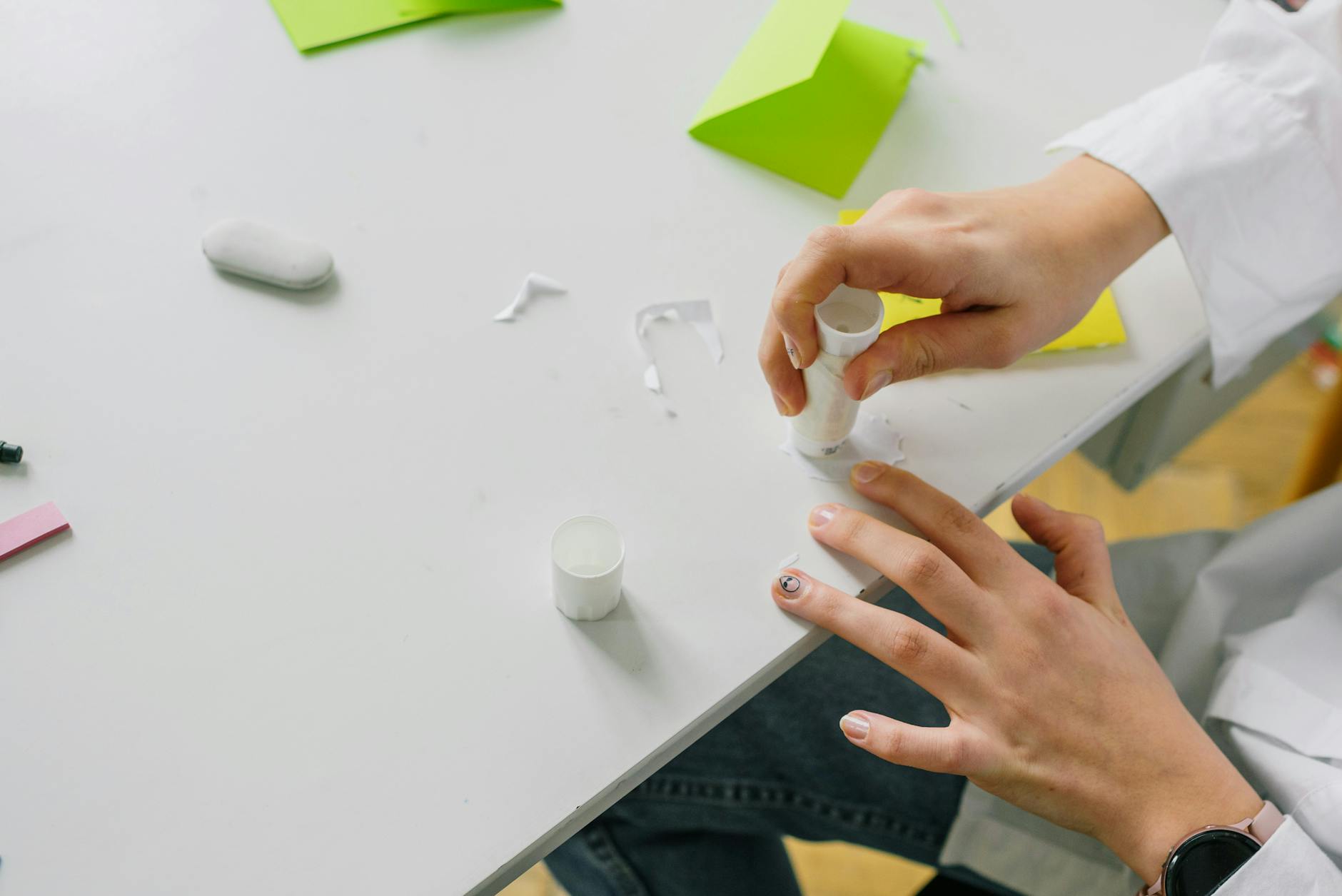
Project two is shape collage work. Provide pre-cut construction paper pieces with two-inch sides. Students glue these onto eleven-by-seventeen background paper to create shape monsters or houses. They must name each shape aloud while gluing, reinforcing shape recognition activities.
Safety comes first with three-year-olds. Use only AP-certified non-toxic materials since they still mouth supplies. Avoid small beads or sequins entirely due to choking hazards. This detailed lesson plan about shapes and colors prioritizes safe exploration.
Closing: Assessment and Reflection Activities
Run the Exit Ticket activity. Display four shape cards and ask each child to point to the shape you name. Record results on Google Sheets or a paper clipboard using a three-point scale. Zero means unable, one means with prompting, two means independent.
Document learning digitally through SeeSaw Learning Journal or ClassDojo Portfolio. Photograph each child's artwork and worksheet. Add voice recordings of the child describing their 2D shapes for family sharing.
Wrap up by reading "The Shape of Things" by Dayle Ann Dodds or "Mouse Shapes" by Ellen Stoll Walsh. Both take five minutes. Read while students transition to snack time. This closes your pre-math skills block with calm review.
Step-by-Step Setup Guide
Think of setup as a flowchart. You start with materials, move to organization, test your tech, then execute. If you have 16 or more students, duplicate your center setup—run two identical art stations, two tactile bins. Otherwise, kids queue up and you lose instructional time.
Spatial layout matters more than cute decor. Each center needs 36 square feet minimum—that's a 6x6 foot zone for four students plus your access path. Maintain 4-foot-wide traffic paths between centers to accommodate wheelchairs per ADA guidelines. I learned this the hard way when a wheelchair got stuck between my block center and reading nook in 2019.
Follow this Prep Timeline to avoid Sunday night panic:
2 weeks before: Order supplies. Attribute blocks ship slowly.
1 week before: Print and laminate.
3 days before: Organize bins.
Day before: Set up room.
Morning of: Final visual check.
Step 1: Prepare Printable Resources and Manipulatives
For a class of 20, print 25 copies of each worksheet. Twenty for students, three extras for the inevitable "I lost mine" moments, and two for display and modeling. Use 110lb cardstock single-sided. Standard copy paper crumples by Wednesday when four-year-olds handle it.
Run everything through a thermal laminator using 3mil or 5mil pouches. I buy Scotch or Amazon Basics brands in bulk. Trim a 1/4 inch border around each sheet to prevent peeling. Budget three hours for cutting and laminating 100 sheets. It takes longer than you think, and rushing creates sharp plastic edges that cut small fingers.
Stock each bin with 20 attribute blocks per geometric shapes type—circles, squares, triangles, rectangles. Add 10 geometric sponges, 5 GeoBoards, and 2 pounds of sensory filler per tactile station. Count them now. Mid-lesson discovery of missing triangles derails shape recognition activities and sparks arguments over sharing.
Step 2: Organize Learning Centers by Activity Type
Color-code your centers using duct tape or bin labels. Red marks Art stations—high mess zones with paint and sponges. Blue signals Worksheet areas—the quiet zone near your desk for focused early geometry practice. Green labels Tactile spots for sensory exploration. Yellow designates Closing centers for assessment. Kids learn the system in two days.
Arrange stations in a clockwise loop with clear entrance and exit points. Place worksheet centers near your desk for monitoring while you handle attendance. Move tactile stations to tile or vinyl floors for easy sweep-up. Sand and carpet don't mix, and custodians remember which teachers create vacuum hazards.
Limit groups to 4 or 5 students per center. Research shows optimal teacher monitoring ratios: 1:4 for three-year-olds, 1:6 for four-year-olds. If you have 16+ students, duplicate centers. Run two red art stations instead of cramming eight kids into one space. Crowding destroys pre-math skills focus.
Step 3: Create Visual Schedules and Transition Cues
Make visual schedule cards measuring 4x6 inches. Use Boardmaker symbols or free clip art showing each center activity—circle time, art station, shape hunt. Arrange them on a pocket chart or Velcro strip mounted at 36 inches high—child eye level. Not at adult eye level. Bend down and check. If you can't see it sitting cross-legged, neither can they.
Buy the Time Timer 8-inch model or queue up the "Clean Up" song by The Wiggles—exactly two minutes long. Practice the transition routine three times before introducing content. Rehearsal prevents the traffic jam that happens when 20 preschoolers try to move simultaneously without cues.
Teach the "Shape Freeze" game. When you hold up a shape card, students freeze and point to that shape in the room. Then they rotate to the next center. It builds spatial reasoning while managing traffic flow. They think it's a game. You know it's classroom management disguised as fun.
Step 4: Set Up Assessment Documentation Systems
Create a Google Form or paper checklist with four fields: Student Name, Shape Identified (Y/N), Environmental Recognition (Y/N), and Notes. Prep 20 clipboards with attached golf pencils. Full-sized pencils roll off trays and cause delays. Clipboards let you circulate during 2D shapes exploration rather than sitting at a desk.
Verify signed photo consent forms before snapping pictures of student work for portfolios. Store digital assessments in password-protected folders compliant with FERPA. I label folders by month and year, not student names, for extra security. One breach ruins trust with parents.
Conduct baseline assessments three days before the unit starts. Use the same criteria as your post-assessment to measure growth. Target 70% improvement in identification by unit end. This data proves your shapes preschool curriculum works when administrators ask why the room looks messy during observations.
How Do You Customize This for Different Age Groups?
For 2-3 year olds, limit instruction to circles and squares using 6-inch foam shapes and 8-minute sensory activities. For 3-4 year olds, add triangles and rectangles with 15-minute matching worksheets and color differentiation. For 4-5 year olds, introduce hexagons, diamonds, and 3D shapes with 20-minute pattern creation and handwriting practice.
Young 3s (24-36 months) | Preschool 3s/4s (ages 3-4) | Pre-K 4s/5s (ages 4-5) |
|---|---|---|
Shape Complexity: Circles and squares only | Shape Complexity: Triangles, rectangles added | Shape Complexity: Hexagons, diamonds, 3D shapes |
Time on Task: 5-8 minutes | Time on Task: 12-15 minutes | Time on Task: 20 minutes |
Assessment Type: Gross motor observation | Assessment Type: Matching worksheets (4-6 items) | Assessment Type: Pattern creation and handwriting |
For shapes preschool, stick to circles and squares only. Use 6-inch foam floor shapes for gross motor movement like hopping on the circle. Keep activities to 5-8 minutes max. Their spatial reasoning is just emerging, so big shapes and whole-body movement build early geometry foundations better than worksheets. Focus on shape recognition activities that involve touch and movement, not sitting. If they cannot name the shape, they can still match it by feel in a mystery bag.
Add triangles and rectangles to your lesson plan on shapes and colors for preschool. See our play-based preschool curriculum guide for rotation ideas. Use matching worksheets with four to six items. Run 12-15 minute centers. Incorporate color-shape combinations like red circle versus blue circle. This age can handle pre-math skills like sorting by multiple attributes. They start noticing that triangles have three sides without you drilling flashcards.
Introduce hexagons, diamonds, and 3D shapes like spheres and cubes. Set up ABAB pattern creation with blocks. Push focused work time to 20 minutes. Add handwriting practice tracing shape names to connect geometric shapes with literacy. This builds the visual-motor integration they'll need for kindergarten. Students now analyze properties. They move past simple naming. Ask why a triangle cannot roll like a sphere. Their answers reveal understanding.
Do not introduce 3D shapes until students show eighty percent mastery of 2D shapes. If children confuse rectangles and squares, return to attribute blocks. Emphasize that rectangle sides are different lengths using measurement. Rushing past attribute confusion creates gaps that hurt later mathematics. Watch for the kid who calls every four-sided shape a square. That signals you moved too fast. Back up to sorting by size before naming.

What Materials and Preparation Are Required?
Essential materials include printable matching shapes with objects worksheets (25 copies per activity), a 60-piece attribute block set, geometric sponges for stamping, sensory bin fillers (10 lbs rice/beans), and dry-erase supplies. Total initial investment ranges $45-90 for a class of 20, with $10-15 monthly consumable costs.
You do not need a Pinterest classroom to teach early geometry. Start with the basics.
Break your shopping into four buckets:
Printables/Worksheets: $0-5 if you self-print using ready-to-use worksheet templates.
Manipulatives: $25-40 for attribute blocks and pattern blocks.
Art/Sensory: $20-30 for sponges, rice, and cleanup gear.
Storage/Organization: $10-15 for bins or zip-top bags.
Must-haves include a basic set of attribute blocks and simple shape posters for wall reference. These anchor your shape recognition activities. Nice-to-haves include light tables for tracing and digital cameras for capturing portfolio work. Buy the must-haves first; add the others after you see how often you actually teach shapes preschool lessons.
If the $15 Melissa & Doug sorting cubes strain your budget, grab empty tissue boxes and cardboard from the recycling pile. Cut 2D shapes from the cardboard, paint them with acrylics, and cut matching slots in the boxes. They will last one school year and cost nothing but your time during a Netflix episode.
Essential Printable Resources and Worksheets
Create three levels of matching shapes with objects worksheets using real-world photos. Level 1 shows clocks and balls; Level 2 adds signs and books; Level 3 includes architectural elements and food items. This progression builds pre-math skills gradually without overwhelming students who are just starting to recognize geometric shapes.
Laminate 11x17 shape sorting mats divided into four quadrants so students can sort manipulatives by attribute without mixing up categories. Send home black-and-white shape tracing sheets formatted two-per-page. Parents appreciate the extra shape recognition activities, and you save paper. These ready-to-use worksheet templates work well for morning work or early finisher bins.
Physical Manipulatives and Classroom Tools
Invest in one classroom set of 60 attribute blocks featuring five geometric shapes in three colors, two sizes, and two thicknesses. Learning Resources and ETA hand2mind both sell quality sets for $18-25. These blocks teach spatial reasoning through hands-on comparison of attributes, not just shape names.
Add 250 plastic pattern blocks for advanced patterning once students master the basics. Store materials in Sterilite 6-quart clear bins with locking lids. You will need about five bins, or use individual zip-top bags for each student’s personal shape kit. Clear storage lets you see when pieces go missing before they end up in the vacuum.
Art Supplies and Sensory Materials
Buy a 10-piece set of geometric shape sponges two to three inches wide, including circles, squares, triangles, and hexagons. Pair these with tactile learning strategies for early childhood by filling bins with ten pounds of dyed rice or five pounds of dried beans. Add mini metal cookie cutters for imprinting practice.
Budget for cleanup: two dustpans with brooms, one small shop vacuum for major spills, and disposable tablecloths for art protection. Sensory play builds pre-math skills, but only if you can clean it up fast enough to stay sane. Keep the shop vacuum accessible, not locked in a closet.
Implementation Tips for First-Week Success
Most preschool teachers crash their shapes preschool units by dumping four or five geometric shapes on the table Monday morning. Don't. Cognitive overload hits hard with three-year-olds. They stare at the hexagons and octagons like you just spoke Latin. They need time to build pre-math skills one concept at a time. Slow and steady wins this race.
Use the Shape of the Week protocol. Week one is circle only. Every book, song, and center activity has circles. Trace them in shaving cream. Hunt for them in the classroom. Eat circular crackers. Roll hula hoops on the playground. Find wheels on toy cars. Week two introduces squares. Week three brings triangles. Week four compares all three. This spaced approach locks in spatial reasoning far better than the blitz method that leaves kids mixing up hexagons and octagons.
Your classroom management will crumble without physical boundaries. Cut six-by-six foot squares of colored tape on your floor. Each square is a center's territory. Teach the "feet on tape" rule immediately: if you cannot see your colored tape, you are too far from your station. I learned this during my second year when my block center kept migrating across the room. The tape saves your voice. You simply point instead of repeating "back to center" forty times. It also speeds up transitions. Kids know exactly where they belong.
For engagement, bring out the Shape Monster. This is a simple sock puppet with felt teeth. He "eats" shapes when students name them correctly. Research shows character-based learning boosts retention in young children. The monster adds drama to shape recognition activities. Kids will shout the names just to watch him chomp. I had a student who refused to speak during math time until that puppet appeared. Suddenly she was yelling "Triangle!" to feed the beast. Make him burp for laughs. Use a funny voice.
Stop asking yes-or-no questions. "Is this a circle?" gives fifty-fifty guessing odds. A lucky guess tells you nothing about what they actually see. Use forced choice instead: "Is this a circle or a square?" Better yet, go open-ended: "What shape is this?" These formats force actual processing of 2D shapes. Guessing gets you nothing. Watch their eyes when they answer. The pause before the right answer is worth more than a quick yes. Silence means thinking. Wrong answers teach you more.
Watch your data like a hawk. If fewer than sixty percent of your class correctly identifies the target shape after three days of instruction, pivot immediately. Drop back to concrete manipulatives. Cut your distractors from four options down to two. Remove the hexagons and trapezoids until they nail the basic three. This is not failure; it is responsive teaching. These adjustments are part of the essential survival strategies for new teachers that separate struggling classrooms from thriving ones. Trust the numbers. They never lie about early geometry readiness. Slow down to speed up.
Your first week sets the tone. Resist the urge to rush. Mastery matters more than checking boxes. Build strong habits now.
Where Shapes Preschool Is Heading
The field is shifting hard toward three-dimensional exploration. Last year, my 4-year-olds spent more time with geometric shapes they could hold and rotate than they did with flat flashcards. Spatial reasoning is finally getting the attention it deserves, connecting block towers to later math success. Stop worrying about perfect circle identification. Focus on how kids manipulate objects in space. That skill predicts stronger math outcomes down the line better than any worksheet ever could.
You'll need to stay flexible. New research on early geometry drops constantly, and the best pre-math skills activities look more like play than seatwork. Keep your template loose. Swap in tactile materials each semester based on what bores your current group. Yesterday's puzzle might collect dust while magnetic tiles become the classroom obsession.
Watch which kids gravitate toward pattern blocks versus clay molding. Build your next unit there, not from a pacing guide written five years ago. Stay ahead by trusting your observations more than the teacher's manual. The kids will show you exactly where shapes preschool needs to go next.
What This Template Covers
This is a 5-center rotation template built for the 3-5 year old crowd—specifically ages 36 to 60 months, when attention spans can handle structured play. It runs Monday through Friday with 60-90 minute instructional blocks that blend shapes preschool concepts with color recognition. I designed it for morning centers, but it works for afternoon transitions too. Each day hits five stations. You rotate small groups every 12-15 minutes. The activities repeat weekly so kids know the routine while the content shifts. Colors act as the anchor—red circles one week, blue rectangles the next—so you are hitting two standards simultaneously without extending the day.
The template addresses four core learning domains aligned with the Head Start Early Learning Outcomes Framework:
Cognitive: Shape identification and matching games that build early geometry foundations.
Language: Geometric vocabulary development—moving from "that one" to "the rectangle."
Fine motor: Tracing, cutting, and pinching manipulatives to strengthen pencil grips.
Social-emotional: Center collaboration, sharing materials, and resolving conflicts without teacher intervention.
The progression follows a three-week arc. Week 1 sticks to basic 2D shapes: circle, square, triangle. Week 2 adds rectangles, ovals, and diamonds. Week 3 jumps to 3D shapes: sphere, cube, cylinder. I keep the template structure identical each week. Kids focus on learning the new geometric shapes, not new procedures. This consistency builds the spatial reasoning and pre-math skills they need for kindergarten screening. You will notice them start spotting cylinders in the block corner or calling the snack cups "round spheres" without prompting.
The measurable goal is straightforward: 80% of your class will correctly identify taught shapes in isolation and in the environment by unit end. Research suggests children need 12-15 exposures to master a new shape concept. This template builds in those repetitions through varied shape recognition activities—not flashcards, but sorting felt pieces, building with blocks, and hunting for circles during snack. You track progress through quick daily checklists at cleanup time. If you are looking for more engaging early learning lesson plans, this structure scales well across other themes like seasons or community helpers.
What Components Make Up the Lesson Plan Structure?
A comprehensive shapes preschool lesson plan includes five structured components: circle time for direct instruction (10-15 min), matching worksheets for cognitive association (15 min), tactile exploration stations for sensory learning (15 min), integrated art activities for creative application (15 min), and closing assessments for progress monitoring (10 min). Each component targets different learning modalities in a 60-90 minute block.
You need a blueprint that moves fast and hits every learning style. This structure balances teacher-led moments with hands-on discovery, keeping three-year-olds engaged without burning them out.
Circle Time (10-15 min): Direct instruction with songs and games.
Matching Worksheets (15 min): Cognitive association practice with dry-erase activities.
Tactile Stations (15 min): Sensory exploration of geometric shapes.
Art Integration (15 min): Creative application through painting and collage.
Closing Assessment (10 min): Progress monitoring and documentation.
Component | Learning Style | Prep Time | Grouping |
|---|---|---|---|
Circle Time | Visual/Auditory | 10 minutes | Whole group |
Matching Worksheets | Visual | 15 minutes | Small group |
Tactile Stations | Kinesthetic | 20 minutes | Small group |
Art Integration | Visual/Kinesthetic | 15 minutes | Small group |
Closing Assessment | Visual/Auditory | 5 minutes | Individual |
John Hattie's Visible Learning research supports this balance. Direct instruction during Circle Time shows an effect size of 0.59, while hands-on exploration shows 0.54. Both rank high on the influence scale, justifying the time split between teacher talk and student discovery.
Circle Time: Shape and Color Introduction
Open with The Learning Station's "Shape Song." It's exactly 2 minutes and 37 seconds, which is the perfect length for preschool attention spans. Display your 12x12 inch laminated shape posters in primary colors while they sing.
Keep the momentum going with the Mystery Bag game. Drop attribute blocks into a fabric bag—make sure you have at least 24 pieces so you can cycle through different examples. Describe the texture and edges while students guess. This builds oral language for five to seven minutes.
Finish with the Shape Detective routine. Hand four students magnifying glasses and send them hunting for the target shape hidden in plain sight. The door is a rectangle. The clock is a circle. This takes three minutes and gets them moving.
Center 1: Matching Shapes with Objects Worksheets
Set up three differentiated worksheet levels. Level one focuses on circles only with four objects to match. Level two adds a second shape and eight total objects. Level three pushes four shapes with twelve objects including real-world photos like stop signs and slices of pizza.
Use 8.5x11 heavy cardstock printed worksheets. Slide them into dry-erase sleeves—I prefer Expo or C-Line brand—with fine-tip Expo markers. This makes them reusable for every class.
Students draw lines connecting shape outlines to environmental objects. Then they verbally label each pair to you or your aide for immediate error correction. This effective learning station for young children builds early geometry skills through direct practice.
Center 2: Tactile Shape Exploration Stations
Create three rotating bins for sensory learning. Bin A holds ten pounds of sensory rice hiding foam geometric shapes. Bin B contains GeoBoards with five-by-five pins and colored rubber bands. Bin C has translucent pattern blocks on a light table.
Each bin accommodates four students for fifteen-minute rotations. Use a two-minute sand timer to signal cleanup time. This keeps transitions tight and prevents chaos.
The progression matters. Students trace shapes in the rice for prerecognition. They stretch bands to create shapes for construction skills. They cover pre-drawn shapes with pattern blocks for decomposition practice. This counting and number recognition activity foundation supports spatial reasoning development.
Center 3: Integrated Art and Color Activities
Project one uses Kandinsky-inspired concentric circles. Give students three-inch and one-and-a-half-inch circle sponges dipped in Crayola Washable Tempera. Stick to red, yellow, blue, and green on nine-by-twelve white construction paper.
Project two is shape collage work. Provide pre-cut construction paper pieces with two-inch sides. Students glue these onto eleven-by-seventeen background paper to create shape monsters or houses. They must name each shape aloud while gluing, reinforcing shape recognition activities.
Safety comes first with three-year-olds. Use only AP-certified non-toxic materials since they still mouth supplies. Avoid small beads or sequins entirely due to choking hazards. This detailed lesson plan about shapes and colors prioritizes safe exploration.
Closing: Assessment and Reflection Activities
Run the Exit Ticket activity. Display four shape cards and ask each child to point to the shape you name. Record results on Google Sheets or a paper clipboard using a three-point scale. Zero means unable, one means with prompting, two means independent.
Document learning digitally through SeeSaw Learning Journal or ClassDojo Portfolio. Photograph each child's artwork and worksheet. Add voice recordings of the child describing their 2D shapes for family sharing.
Wrap up by reading "The Shape of Things" by Dayle Ann Dodds or "Mouse Shapes" by Ellen Stoll Walsh. Both take five minutes. Read while students transition to snack time. This closes your pre-math skills block with calm review.
Step-by-Step Setup Guide
Think of setup as a flowchart. You start with materials, move to organization, test your tech, then execute. If you have 16 or more students, duplicate your center setup—run two identical art stations, two tactile bins. Otherwise, kids queue up and you lose instructional time.
Spatial layout matters more than cute decor. Each center needs 36 square feet minimum—that's a 6x6 foot zone for four students plus your access path. Maintain 4-foot-wide traffic paths between centers to accommodate wheelchairs per ADA guidelines. I learned this the hard way when a wheelchair got stuck between my block center and reading nook in 2019.
Follow this Prep Timeline to avoid Sunday night panic:
2 weeks before: Order supplies. Attribute blocks ship slowly.
1 week before: Print and laminate.
3 days before: Organize bins.
Day before: Set up room.
Morning of: Final visual check.
Step 1: Prepare Printable Resources and Manipulatives
For a class of 20, print 25 copies of each worksheet. Twenty for students, three extras for the inevitable "I lost mine" moments, and two for display and modeling. Use 110lb cardstock single-sided. Standard copy paper crumples by Wednesday when four-year-olds handle it.
Run everything through a thermal laminator using 3mil or 5mil pouches. I buy Scotch or Amazon Basics brands in bulk. Trim a 1/4 inch border around each sheet to prevent peeling. Budget three hours for cutting and laminating 100 sheets. It takes longer than you think, and rushing creates sharp plastic edges that cut small fingers.
Stock each bin with 20 attribute blocks per geometric shapes type—circles, squares, triangles, rectangles. Add 10 geometric sponges, 5 GeoBoards, and 2 pounds of sensory filler per tactile station. Count them now. Mid-lesson discovery of missing triangles derails shape recognition activities and sparks arguments over sharing.
Step 2: Organize Learning Centers by Activity Type
Color-code your centers using duct tape or bin labels. Red marks Art stations—high mess zones with paint and sponges. Blue signals Worksheet areas—the quiet zone near your desk for focused early geometry practice. Green labels Tactile spots for sensory exploration. Yellow designates Closing centers for assessment. Kids learn the system in two days.
Arrange stations in a clockwise loop with clear entrance and exit points. Place worksheet centers near your desk for monitoring while you handle attendance. Move tactile stations to tile or vinyl floors for easy sweep-up. Sand and carpet don't mix, and custodians remember which teachers create vacuum hazards.
Limit groups to 4 or 5 students per center. Research shows optimal teacher monitoring ratios: 1:4 for three-year-olds, 1:6 for four-year-olds. If you have 16+ students, duplicate centers. Run two red art stations instead of cramming eight kids into one space. Crowding destroys pre-math skills focus.
Step 3: Create Visual Schedules and Transition Cues
Make visual schedule cards measuring 4x6 inches. Use Boardmaker symbols or free clip art showing each center activity—circle time, art station, shape hunt. Arrange them on a pocket chart or Velcro strip mounted at 36 inches high—child eye level. Not at adult eye level. Bend down and check. If you can't see it sitting cross-legged, neither can they.
Buy the Time Timer 8-inch model or queue up the "Clean Up" song by The Wiggles—exactly two minutes long. Practice the transition routine three times before introducing content. Rehearsal prevents the traffic jam that happens when 20 preschoolers try to move simultaneously without cues.
Teach the "Shape Freeze" game. When you hold up a shape card, students freeze and point to that shape in the room. Then they rotate to the next center. It builds spatial reasoning while managing traffic flow. They think it's a game. You know it's classroom management disguised as fun.
Step 4: Set Up Assessment Documentation Systems
Create a Google Form or paper checklist with four fields: Student Name, Shape Identified (Y/N), Environmental Recognition (Y/N), and Notes. Prep 20 clipboards with attached golf pencils. Full-sized pencils roll off trays and cause delays. Clipboards let you circulate during 2D shapes exploration rather than sitting at a desk.
Verify signed photo consent forms before snapping pictures of student work for portfolios. Store digital assessments in password-protected folders compliant with FERPA. I label folders by month and year, not student names, for extra security. One breach ruins trust with parents.
Conduct baseline assessments three days before the unit starts. Use the same criteria as your post-assessment to measure growth. Target 70% improvement in identification by unit end. This data proves your shapes preschool curriculum works when administrators ask why the room looks messy during observations.
How Do You Customize This for Different Age Groups?
For 2-3 year olds, limit instruction to circles and squares using 6-inch foam shapes and 8-minute sensory activities. For 3-4 year olds, add triangles and rectangles with 15-minute matching worksheets and color differentiation. For 4-5 year olds, introduce hexagons, diamonds, and 3D shapes with 20-minute pattern creation and handwriting practice.
Young 3s (24-36 months) | Preschool 3s/4s (ages 3-4) | Pre-K 4s/5s (ages 4-5) |
|---|---|---|
Shape Complexity: Circles and squares only | Shape Complexity: Triangles, rectangles added | Shape Complexity: Hexagons, diamonds, 3D shapes |
Time on Task: 5-8 minutes | Time on Task: 12-15 minutes | Time on Task: 20 minutes |
Assessment Type: Gross motor observation | Assessment Type: Matching worksheets (4-6 items) | Assessment Type: Pattern creation and handwriting |
For shapes preschool, stick to circles and squares only. Use 6-inch foam floor shapes for gross motor movement like hopping on the circle. Keep activities to 5-8 minutes max. Their spatial reasoning is just emerging, so big shapes and whole-body movement build early geometry foundations better than worksheets. Focus on shape recognition activities that involve touch and movement, not sitting. If they cannot name the shape, they can still match it by feel in a mystery bag.
Add triangles and rectangles to your lesson plan on shapes and colors for preschool. See our play-based preschool curriculum guide for rotation ideas. Use matching worksheets with four to six items. Run 12-15 minute centers. Incorporate color-shape combinations like red circle versus blue circle. This age can handle pre-math skills like sorting by multiple attributes. They start noticing that triangles have three sides without you drilling flashcards.
Introduce hexagons, diamonds, and 3D shapes like spheres and cubes. Set up ABAB pattern creation with blocks. Push focused work time to 20 minutes. Add handwriting practice tracing shape names to connect geometric shapes with literacy. This builds the visual-motor integration they'll need for kindergarten. Students now analyze properties. They move past simple naming. Ask why a triangle cannot roll like a sphere. Their answers reveal understanding.
Do not introduce 3D shapes until students show eighty percent mastery of 2D shapes. If children confuse rectangles and squares, return to attribute blocks. Emphasize that rectangle sides are different lengths using measurement. Rushing past attribute confusion creates gaps that hurt later mathematics. Watch for the kid who calls every four-sided shape a square. That signals you moved too fast. Back up to sorting by size before naming.
What Materials and Preparation Are Required?
Essential materials include printable matching shapes with objects worksheets (25 copies per activity), a 60-piece attribute block set, geometric sponges for stamping, sensory bin fillers (10 lbs rice/beans), and dry-erase supplies. Total initial investment ranges $45-90 for a class of 20, with $10-15 monthly consumable costs.
You do not need a Pinterest classroom to teach early geometry. Start with the basics.
Break your shopping into four buckets:
Printables/Worksheets: $0-5 if you self-print using ready-to-use worksheet templates.
Manipulatives: $25-40 for attribute blocks and pattern blocks.
Art/Sensory: $20-30 for sponges, rice, and cleanup gear.
Storage/Organization: $10-15 for bins or zip-top bags.
Must-haves include a basic set of attribute blocks and simple shape posters for wall reference. These anchor your shape recognition activities. Nice-to-haves include light tables for tracing and digital cameras for capturing portfolio work. Buy the must-haves first; add the others after you see how often you actually teach shapes preschool lessons.
If the $15 Melissa & Doug sorting cubes strain your budget, grab empty tissue boxes and cardboard from the recycling pile. Cut 2D shapes from the cardboard, paint them with acrylics, and cut matching slots in the boxes. They will last one school year and cost nothing but your time during a Netflix episode.
Essential Printable Resources and Worksheets
Create three levels of matching shapes with objects worksheets using real-world photos. Level 1 shows clocks and balls; Level 2 adds signs and books; Level 3 includes architectural elements and food items. This progression builds pre-math skills gradually without overwhelming students who are just starting to recognize geometric shapes.
Laminate 11x17 shape sorting mats divided into four quadrants so students can sort manipulatives by attribute without mixing up categories. Send home black-and-white shape tracing sheets formatted two-per-page. Parents appreciate the extra shape recognition activities, and you save paper. These ready-to-use worksheet templates work well for morning work or early finisher bins.
Physical Manipulatives and Classroom Tools
Invest in one classroom set of 60 attribute blocks featuring five geometric shapes in three colors, two sizes, and two thicknesses. Learning Resources and ETA hand2mind both sell quality sets for $18-25. These blocks teach spatial reasoning through hands-on comparison of attributes, not just shape names.
Add 250 plastic pattern blocks for advanced patterning once students master the basics. Store materials in Sterilite 6-quart clear bins with locking lids. You will need about five bins, or use individual zip-top bags for each student’s personal shape kit. Clear storage lets you see when pieces go missing before they end up in the vacuum.
Art Supplies and Sensory Materials
Buy a 10-piece set of geometric shape sponges two to three inches wide, including circles, squares, triangles, and hexagons. Pair these with tactile learning strategies for early childhood by filling bins with ten pounds of dyed rice or five pounds of dried beans. Add mini metal cookie cutters for imprinting practice.
Budget for cleanup: two dustpans with brooms, one small shop vacuum for major spills, and disposable tablecloths for art protection. Sensory play builds pre-math skills, but only if you can clean it up fast enough to stay sane. Keep the shop vacuum accessible, not locked in a closet.
Implementation Tips for First-Week Success
Most preschool teachers crash their shapes preschool units by dumping four or five geometric shapes on the table Monday morning. Don't. Cognitive overload hits hard with three-year-olds. They stare at the hexagons and octagons like you just spoke Latin. They need time to build pre-math skills one concept at a time. Slow and steady wins this race.
Use the Shape of the Week protocol. Week one is circle only. Every book, song, and center activity has circles. Trace them in shaving cream. Hunt for them in the classroom. Eat circular crackers. Roll hula hoops on the playground. Find wheels on toy cars. Week two introduces squares. Week three brings triangles. Week four compares all three. This spaced approach locks in spatial reasoning far better than the blitz method that leaves kids mixing up hexagons and octagons.
Your classroom management will crumble without physical boundaries. Cut six-by-six foot squares of colored tape on your floor. Each square is a center's territory. Teach the "feet on tape" rule immediately: if you cannot see your colored tape, you are too far from your station. I learned this during my second year when my block center kept migrating across the room. The tape saves your voice. You simply point instead of repeating "back to center" forty times. It also speeds up transitions. Kids know exactly where they belong.
For engagement, bring out the Shape Monster. This is a simple sock puppet with felt teeth. He "eats" shapes when students name them correctly. Research shows character-based learning boosts retention in young children. The monster adds drama to shape recognition activities. Kids will shout the names just to watch him chomp. I had a student who refused to speak during math time until that puppet appeared. Suddenly she was yelling "Triangle!" to feed the beast. Make him burp for laughs. Use a funny voice.
Stop asking yes-or-no questions. "Is this a circle?" gives fifty-fifty guessing odds. A lucky guess tells you nothing about what they actually see. Use forced choice instead: "Is this a circle or a square?" Better yet, go open-ended: "What shape is this?" These formats force actual processing of 2D shapes. Guessing gets you nothing. Watch their eyes when they answer. The pause before the right answer is worth more than a quick yes. Silence means thinking. Wrong answers teach you more.
Watch your data like a hawk. If fewer than sixty percent of your class correctly identifies the target shape after three days of instruction, pivot immediately. Drop back to concrete manipulatives. Cut your distractors from four options down to two. Remove the hexagons and trapezoids until they nail the basic three. This is not failure; it is responsive teaching. These adjustments are part of the essential survival strategies for new teachers that separate struggling classrooms from thriving ones. Trust the numbers. They never lie about early geometry readiness. Slow down to speed up.
Your first week sets the tone. Resist the urge to rush. Mastery matters more than checking boxes. Build strong habits now.
Where Shapes Preschool Is Heading
The field is shifting hard toward three-dimensional exploration. Last year, my 4-year-olds spent more time with geometric shapes they could hold and rotate than they did with flat flashcards. Spatial reasoning is finally getting the attention it deserves, connecting block towers to later math success. Stop worrying about perfect circle identification. Focus on how kids manipulate objects in space. That skill predicts stronger math outcomes down the line better than any worksheet ever could.
You'll need to stay flexible. New research on early geometry drops constantly, and the best pre-math skills activities look more like play than seatwork. Keep your template loose. Swap in tactile materials each semester based on what bores your current group. Yesterday's puzzle might collect dust while magnetic tiles become the classroom obsession.
Watch which kids gravitate toward pattern blocks versus clay molding. Build your next unit there, not from a pacing guide written five years ago. Stay ahead by trusting your observations more than the teacher's manual. The kids will show you exactly where shapes preschool needs to go next.
Still grading everything by hand?
EMStudio is a free teaching management app — manage your classes, students, lessons, and more!
Learn More
Still grading everything by hand?
EMStudio is a free teaching management app — manage your classes, students, lessons, and more!
Learn More





Notion4Teachers
Notion templates to simplify administrative tasks and enhance your teaching experience.



2026 Notion4Teachers. All Rights Reserved.
Notion4Teachers
Notion templates to simplify administrative tasks and enhance your teaching experience.
2026 Notion4Teachers. All Rights Reserved.
Notion4Teachers
Notion templates to simplify administrative tasks and enhance your teaching experience.
2026 Notion4Teachers. All Rights Reserved.