15 Preschool Lesson Plans for Engaging Early Learning
15 Preschool Lesson Plans for Engaging Early Learning

Article by
Milo
ESL Content Coordinator & Educator
ESL Content Coordinator & Educator
All Posts
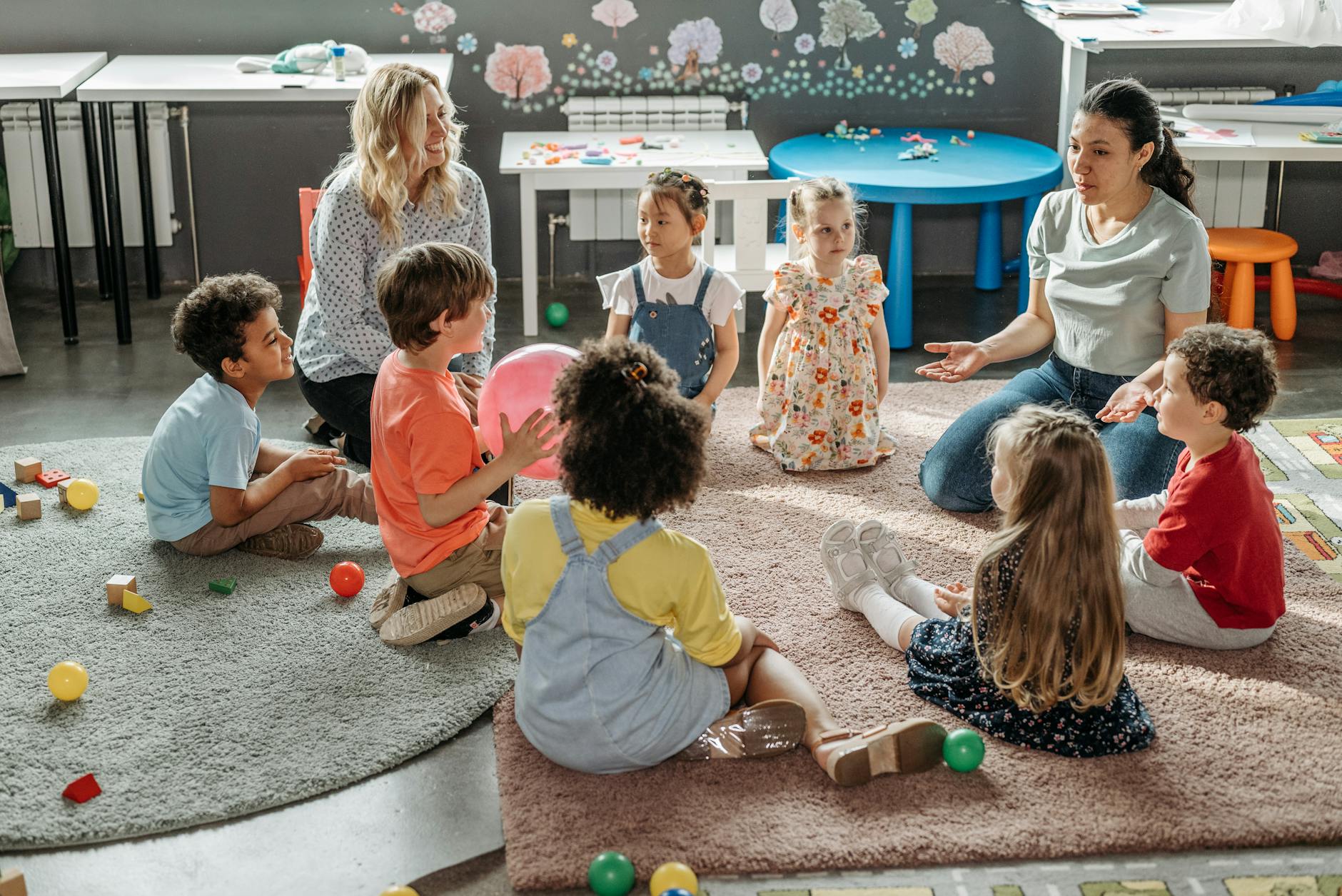
I watched a four-year-old named Marcus build a tower of blocks last Tuesday. He counted each block aloud, crashed it down, and built it again. In those ten minutes, he hit three developmental milestones without a single worksheet.
That's the sweet spot of early childhood education. You don't need scripted curricula or expensive apps to get there. You need solid preschool lesson plans that weave play-based learning into your circle time activities and learning centers. Whether you follow an emergent curriculum or map out your month in advance, the best plans meet kids where they are. They honor developmental milestones without turning your classroom into a testing center.
They account for short attention spans, big emotions, and the need to move. This post breaks down fifteen field-tested lessons across literacy, math, science, and social-emotional growth. Each one respects how young brains actually learn — through movement, mess, and meaningful interaction. You can adapt these for half-day or full-day programs, for tiny classrooms or sprawling ones. They work because they build from what four-year-olds actually do, not what adults think they should do. No worksheets required. Just solid planning that leaves room for surprise.
Still grading everything by hand?
EMStudio is a free teaching management app — manage your classes, students, lessons, and more!
Learn More

Still grading everything by hand?
EMStudio is a free teaching management app — manage your classes, students, lessons, and more!
Learn More
Table of Contents
What Are the Best Literacy-Based Preschool Lesson Plans?
The best literacy-based preschool lesson plans combine explicit phonemic awareness instruction with immersive sensory experiences. Top-rated approaches include sound hunt scavenger hunts using environmental print, interactive story retelling with tangible props and sequencing cards, and alphabet sensory bins that combine tactile exploration with letter recognition.
Three-year-olds need to move. These preschool lesson plan ideas respect developmental milestones by letting kids learn letters through touch, not tracing worksheets. They build foundations for evidence-based literacy instruction.
Phonemic Awareness Sound Hunts | 'I Spy' initial sound cards featuring environmental print (Stop signs, Cheerios logos), clipboards with 5-box checklists | 15 minutes | Isolate 3-4 phonemes (/m/, /s/, /t/, /b/)
Interactive Story Retelling | Printable 4-box sequencing maps, tangible props (Three Little Pigs houses, Brown Bear character cards) | 20 minutes | Peer-to-peer retelling and narrative sequencing
Alphabet Sensory Bins | Sterilite bins, 5 lbs dyed rice or beans, magnetic letters, hidden object checklist | 30 minutes | Tactile letter recognition and fine motor development
Watch your corrections. Avoid over-correcting pronunciation during exploratory phases; research suggests excessive interruption reduces verbal risk-taking by up to 40% in emergent speakers.
Phonemic Awareness Sound Hunts
Take your clipboards outside. Give each child an 'I Spy' initial sound card featuring environmental print like Stop signs or Cheerios logos. They hunt for 3-4 target phonemes—typically /m/, /s/, /t/, and /b/ for beginners—and check boxes when they find matching sounds. This fits any preschool lesson plan template focused on play-based learning.
This isn't silent work. Your kids should say the sounds aloud as they search. The 15-minute duration matches the attention span of 3-5 year olds perfectly. Keep your groups small; four children with four clipboards means everyone stays engaged without waiting turns.
Interactive Story Retelling Circles
Set up your circle time activities with physical props from stories like The Three Little Pigs or Goldilocks. Use plastic houses, bowls of varying sizes, and printable 4-box sequencing maps. You should pair stronger speakers with emergent bilinguals for natural peer modeling during these preschool lesson plans.
The 20-minute slot works because it allows time for the initial read-aloud and two full retelling cycles. Your kids handle the tangible props while arranging picture cards in sequence. This beats worksheets because they're physically rebuilding the narrative arc, hitting key developmental milestones without sitting still.
Alphabet Sensory Bin Explorations
Fill your Sterilite bins with 5 lbs of dyed rice or dried beans. Hide 26 magnetic letters or foam puzzle pieces inside. Add tongs for fine motor practice and a hidden object checklist. Each bin costs $8-12 to set up, though you can use free printable alternatives if budget is tight.
This 30-minute learning centers rotation lets children explore at their own pace using an emergent curriculum approach. You can photo document the letters they find rather than demanding immediate identification. Personalized storybooks to enhance engagement work well here—hide letters from a child's name in the bin for added relevance.
Which Early Math Lesson Plans Build Number Sense Naturally?
The best preschool lesson plans for early math build number sense through concrete manipulatives and real-world contexts, not worksheets. Effective plans include counting collections with 50-100 small objects for 1:1 correspondence, pattern block challenges for geometric reasoning, and non-standard measurement activities using classroom materials.
Activity Name | Materials Needed | Duration | Learning Target | Age Modification |
|---|---|---|---|---|
Counting Collections | 50-100 small manipulatives (Counting Bears, buttons), number lines 0-20, free printable recording sheets with ten frames | 15 minutes | 1:1 correspondence | Pre-K 3: to 10; Pre-K 4: to 20 |
Pattern Blocks | Standard tangram sets or Melissa & Doug pattern boards ($15-25 for classroom set) | 20 minutes | Geometric shape naming, AB/ABB patterns | Pre-K 3: Match shapes; Pre-K 4: Extend patterns |
Measurement | Unifix cubes or paper clips, recording sheets with traced objects | 25 minutes | Comparison vocabulary (longer/shorter, heavier/lighter) | Avoid standard rulers until late Pre-K 4 |
Counting Collections and Number Lines
Fill bins with 50 to 100 objects. Counting Bears work, but so do buttons or acorns. Give each child a scoop and a laminated number line 0-20.
This lesson plan for numbers 1 10 preschool works for circle time activities or small groups. Focus on 1:1 correspondence. Pre-K 3 counts to 10. Pre-K 4 counts to 20 and identifies "one more."
Pre-K 3: Focus on stable order to 10.
Pre-K 4: Add cardinality and "one more" to 20.
Use free printable recording sheets with ten frames, available as a free lesson plan for preschool pdf. This builds the benefits of early math challenges through tactile exploration. Research shows hands-on manipulatives improve retention through age 6, supporting critical developmental milestones.
Shape Sorting and Pattern Block Challenges
Set out standard tangram sets or Melissa & Doug pattern boards. A classroom set costs $15 to $25.
Focus on hexagon, trapezoid, and rhombus identification in this play-based learning center. Pre-K 3 matches shapes to outlines. Pre-K 4 extends AB and ABB patterns.
Keep this in your learning centers for 20 minutes. Kids experiment with symmetry while naming shapes aloud.
Extension: Fill a hexagon using only triangles. This builds geometric reasoning for early childhood education standards. Attribute blocks help distinguish size, shape, and color simultaneously.
Measurement and Comparison Activities
Employ non-standard units like Unifix cubes to measure classroom objects. Kids measure pencils and shoes.
These pre k lesson plans teach comparison vocabulary: longer, shorter, heavier, lighter. Duration: 25 minutes.
Use paper clips for short objects.
Use Unifix cubes for longer items.
Warning: Avoid standard rulers until late Pre-K 4. Standard units confuse children who lack unit consistency understanding.
Trace objects on recording sheets, then measure. Work in pairs to predict and verify lengths. This connects physical experience to symbolic representation in emergent curriculum.
What Science and Sensory Plans Spark Curiosity in Young Learners?
Science and sensory plans that spark curiosity feature open-ended exploration with systematic observation tools. High-impact activities in early childhood education include nature walks with child-safe magnifying glasses and simple journals, sink-or-float prediction labs using ten test objects and hypothesis charts, and five-senses discovery stations with sealed smell jars and tactile discrimination bags.
Nature Walk and Observation Journals
Take your class outside for 30 minutes of structured exploration. Hand out Learning Resources Primary Science magnifying glasses—the jumbo ones fit small hands without pinching. Add butterfly nets and clipboards with three-box drawing sheets so kids sketch what they see before the moment passes. This isn't recess; it's data collection.
Focus the hunt. Ask them to find two different leaf shapes or three colors of flowers. Give them date stamps and weather stickers for their journals so they connect observations to conditions. Studies indicate that regular nature-based science activities improve attention regulation and observational vocabulary acquisition in early childhood settings.
That’s why these preschool lesson plans work as intentional preschool lessons—they build focus while kids think they’re just hunting for bugs. The butterfly nets rarely catch anything, but the chasing builds gross motor skills while they scan for movement.
Sink or Float Prediction Labs
Set up 6-quart Sterilite bins filled two-thirds with water. You’ll need ten test objects:
Apple, cork, Lego, foam ball, wood block
Penny, metal spoon, paper clip, bar of soap, plastic egg
Laminate prediction charts with smiley and sad faces—or simple Sink and Float columns—so kids mark guesses before they test. Scaffold the language. Teach them to say, “I predict the penny will sink because it is heavy metal.” Run this as a 20-minute science center, not a whole-group marathon. Kids lose interest after two objects if twenty children watch.
Warning: Do not conduct this with children under three. Small objects create choking hazards. For Pre-K 3, substitute large floating scarves and heavy balls instead. Save the pennies and paper clips for older preschoolers who have moved past the mouthing stage.
Five Senses Discovery Stations
Rotate through five stations, eight minutes each. Set up smell jars with coffee, lemon, vanilla, soap, and one unscented control. Fill sound cans with rice, beans, pennies, cotton, and one empty. Create touch bags with sandpaper, velvet, fur, foil, and cotton. Label everything with picture cues so kids work independently while you facilitate.
For the taste station, use sealed crackers only. No open bowls. The sight station holds I Spy bottles. Every item must be choking-proof for your age group. Check cans weekly; moisture ruins the sound experiment.
This rotation creates a sensory-friendly classroom environment where emergent curriculum meets developmental milestones through play-based learning. These free lesson plans for preschool turn circle time activities into hands-on learning center investigations that hit multiple domains simultaneously without worksheets.
How Do Social-Emotional Lesson Plans Support Behavior and Growth?
Social-emotional lesson plans support behavior through explicit skill instruction and co-regulation strategies rather than punishment. Effective preschool lesson plans include emotion recognition games using facial expression cards and mirrors, structured turn-taking with visual timers and cooperative games, and scripted mindfulness routines like 'Starfish Breathing' for self-regulation.
Emotion Recognition and Expression Games
Start with Second Step or Conscious Discipline card sets showing happy, sad, angry, and surprised. Run Feelings Charades during your 15-minute morning meeting. One child draws a card and acts out the face while peers guess. Keep the pace quick.
Add mirror practice. Give each child a small mirror to copy expressions and check their own faces. This builds the vocabulary they need before they can name feelings in the moment. These circle time activities fit into any pre k curriculum lesson plans or broader early childhood education framework.
Watch for these signs that distinguish standard SEL support from needing outside help:
No recognition of the four basic emotions after six weeks of practice.
Inability to imitate facial expressions in mirror work.
Consistent avoidance of eye contact during emotion games.
If you see these, consider an occupational therapy referral for possible sensory processing differences. Do not keep pushing card games.
Turn-Taking and Cooperative Play Structures
Break out Candy Land or Hi Ho! Cherry-O with a three-minute sand timer. The visual countdown prevents the "when is it my turn" meltdowns. Target three consecutive turns without protest before you call it a win. This is play-based learning at its most practical.
Set up a cooperative building challenge. Give each child exactly six blocks and tell the group to build one tower together. This forces sharing without you nagging. Run this in 20-minute small groups during learning centers while you observe.
Research shows explicit emotion coaching reduces behavioral incidents more than consequence-only approaches. Use these scripts:
"I see you are frustrated waiting."
"Your turn comes when the sand runs out."
"You can handle this. I am right here."
These structured social-emotional learning activities work better than timeouts for preschoolers.
Mindfulness and Calm-Down Routine Scripts
Teach Starfish Breathing. Have children trace up and down their fingers while breathing. Or use Smell the Flower, Blow the Bubble breathing. These techniques show up in effective applying mindfulness in the classroom routines that support developmental milestones.
Set up a five-minute calm-down corner with these items:
DIY glitter jars: Voss bottle plus glitter glue and hot water ($3 each).
Store-bought breathing balls ($12 each) if budget allows.
Two-minute hourglass timers for visual grounding.
Every preschool teacher lesson plans for emergent curriculum needs this affordable backup.
Script the language. Say "Your body is safe. You can handle this." Never use timeout during active dysregulation. Co-regulation means you sit beside them and breathe together until the nervous system settles. Timeout isolates; co-regulation teaches self-regulation skills.
Creative Arts and Movement Plans for Physical Development
Process Art with Recycled Materials
Save your toilet paper rolls and bubble wrap for tomorrow's pre k lessons. Process art demands salad spinners filled with tempera paint and cardboard boxes destined for the recycling bin. You will spend $2 to $5 per session using these cleaned materials. Craft kits run $15 to $20 for identical group sizes. The savings buy you extra tempera or replacement bubble wrap.
Set up takes seven minutes. Cover the floor with butcher paper or drop cloths. Hand out smocks or old t-shirts. Then step back for 30 minutes of uninterrupted messy play. Do not display sample art. When children copy a template, they miss the fine motor practice of manipulating materials. Open-ended creation builds grip strength and decision-making skills.
Safety checks matter. Wash all recycled materials and inspect for sharp edges. Avoid newspaper printed with soy ink for children under four. Mouthing behaviors persist in early childhood education, and newsprint transfers easily. Check salad spinner lids for cracks before adding paint.
Music and Movement Pattern Dancing
Keep scarves and ribbon wands in a milk crate near your speaker. Play Greg & Steve's "Listen and Move" or Laurie Berkner's station during circle time activities. These 4/4 time tracks cue children to switch locomotor patterns without verbal prompts. You will see them shift from marching to galloping when the music changes. The transitions build auditory processing and impulse control.
Teach four distinct movements. March with heavy feet. Gallop with quick, uneven rhythm. Slide with smooth side-to-side motion. Jump with two-footed bounces. These patterns align with developmental milestones for three- and four-year-olds. The activity runs 15 minutes as a gross motor break between seated tasks. You can assess balance and coordination without formal testing.
Mark boundaries with poly spots or hula hoops. This prevents collisions during sessions focused on supporting psychomotor development. Each child claims a personal space. When the music stops, they freeze on their spot. You address spatial awareness while burning energy before lunch.
Dramatic Play Scenario Planning
Rotate scenarios every two weeks to maintain engagement. Set up a Grocery Store with empty food boxes, play money, and aprons. Stock a Doctor's Office with toy stethoscopes, bandages, and clipboards. Arrange a Post Office with envelopes, stickers for stamps, and a mail bag. Each scenario runs 45 minutes of sustained play during learning centers time. Children need that extended block to settle into roles and resolve conflicts independently.
Embed literacy naturally. Children write shopping lists before hitting the store. They fill out patient appointment cards at the doctor's station. They compose letters to mail at the post office. This integrating play and learning approach beats isolated phonics drills. Meaningful writing emerges from pretend scenarios.
This structure supports play-based learning and emergent curriculum without chaos. You observe social negotiation as children assign roles. You note language expansion when four-year-olds argue about grocery prices. These preschool lesson plans write themselves once you establish the prop rotation system.

How Do You Adapt These Plans for Different Age Groups?
Adapt preschool lesson plans by matching activity duration and complexity to developmental attention spans and skill levels. For Pre-K 3, use 10-15 minute activities with parallel play and 2-step directions. For Pre-K 4/TK, extend to 20-30 minutes with cooperative tasks and emergent writing. In mixed-age settings, implement tiered activities using the same materials with differentiated objectives.
Think of it as a decision flowchart. You start with the age group, which determines attention span, which dictates activity structure, social expectations, and complexity level. One size fits none in early childhood education.
Modifications for Pre-K 3 Classrooms
Pre-K 3 students need brevity. Their brains tire after ten minutes of focused effort.
Cap activities at 10-15 minutes maximum. Their attention spans are still developing.
Use 1.5-inch blocks minimum to eliminate choking hazards and help small hands grasp effectively.
Accept parallel play without forcing sharing. Side-by-side building is appropriate developmental behavior.
Limit directions to two steps: "Pick up the red block, put it here."
These free pre k 3 lesson plans should prioritize sensory-heavy experiences and routine establishment over academics. Circle time activities work best when they involve movement and song, not sitting still. Play-based learning looks messy now. That's normal.
Extensions for Pre-K 4 and Transitional Kindergarten
Pre-K 4 and TK students can handle 20-30 minutes of project work. Their attention spans have doubled.
Require cooperative play. They must build together and negotiate roles.
Provide emergent writing centers where invented spelling like "BD" for bird is celebrated.
Read early chapter books like Frog and Toad or Mercer Mayer.
Give 3-4 step directions: "Cut the circle, glue it, write your name, put it in the basket."
These free preschool weekly lesson plans should include fine motor precision tasks like beading or using tweezers. Check your comprehensive guide to playing preschool for project ideas. This is emergent curriculum. Follow their obsessions. Dinosaurs today mean fossil digs tomorrow.
Differentiation for Mixed-Age Preschool Settings
Mixed-age rooms require smart differentiation. Use the "Big Buddy" system—pair each 4-year-old with a 3-year-old.
Use the same materials but tier objectives. Everyone uses blocks: 3s sort by color, 4s build symmetrical structures.
Everyone paints: 3s mix colors, 4s add narrative elements to their work.
Document individual progress through learning stories, not checklists.
Research shows mixed-age classrooms boost empathy and leadership in older kids while accelerating language acquisition in younger ones through peer modeling. Never teach to the middle—it frustrates advanced learners and overwhelms developing ones. Use these strategies for mixed-ability classrooms to manage your learning centers effectively.
One Thing to Try This Week
You now have fifteen starting points, but a list won't teach your kids. Pick one plan that matches what you noticed yesterday. Maybe three-year-olds crushed the playdough station and you need the sensory science plan. Maybe your four-year-olds need the counting rhyme to settle rowdy transitions. Grab the one that solves today's problem, not the one that looks prettiest on Pinterest. File the other fourteen for later.
Strip it down to the core activity. Ignore the fancy materials list. Use what sits in your cabinet right now. That observation becomes your emergent curriculum for next week. Teaching this age isn't about perfect execution. It's about showing up with something intentional, then letting the kids rewrite the script while you take notes.
Tomorrow morning, set out that one activity. Watch for ten minutes. Notice who engages, who wanders, and what questions they ask. Start there. The rest of your play-based learning framework will build from that single moment of paying attention.

What Are the Best Literacy-Based Preschool Lesson Plans?
The best literacy-based preschool lesson plans combine explicit phonemic awareness instruction with immersive sensory experiences. Top-rated approaches include sound hunt scavenger hunts using environmental print, interactive story retelling with tangible props and sequencing cards, and alphabet sensory bins that combine tactile exploration with letter recognition.
Three-year-olds need to move. These preschool lesson plan ideas respect developmental milestones by letting kids learn letters through touch, not tracing worksheets. They build foundations for evidence-based literacy instruction.
Phonemic Awareness Sound Hunts | 'I Spy' initial sound cards featuring environmental print (Stop signs, Cheerios logos), clipboards with 5-box checklists | 15 minutes | Isolate 3-4 phonemes (/m/, /s/, /t/, /b/)
Interactive Story Retelling | Printable 4-box sequencing maps, tangible props (Three Little Pigs houses, Brown Bear character cards) | 20 minutes | Peer-to-peer retelling and narrative sequencing
Alphabet Sensory Bins | Sterilite bins, 5 lbs dyed rice or beans, magnetic letters, hidden object checklist | 30 minutes | Tactile letter recognition and fine motor development
Watch your corrections. Avoid over-correcting pronunciation during exploratory phases; research suggests excessive interruption reduces verbal risk-taking by up to 40% in emergent speakers.
Phonemic Awareness Sound Hunts
Take your clipboards outside. Give each child an 'I Spy' initial sound card featuring environmental print like Stop signs or Cheerios logos. They hunt for 3-4 target phonemes—typically /m/, /s/, /t/, and /b/ for beginners—and check boxes when they find matching sounds. This fits any preschool lesson plan template focused on play-based learning.
This isn't silent work. Your kids should say the sounds aloud as they search. The 15-minute duration matches the attention span of 3-5 year olds perfectly. Keep your groups small; four children with four clipboards means everyone stays engaged without waiting turns.
Interactive Story Retelling Circles
Set up your circle time activities with physical props from stories like The Three Little Pigs or Goldilocks. Use plastic houses, bowls of varying sizes, and printable 4-box sequencing maps. You should pair stronger speakers with emergent bilinguals for natural peer modeling during these preschool lesson plans.
The 20-minute slot works because it allows time for the initial read-aloud and two full retelling cycles. Your kids handle the tangible props while arranging picture cards in sequence. This beats worksheets because they're physically rebuilding the narrative arc, hitting key developmental milestones without sitting still.
Alphabet Sensory Bin Explorations
Fill your Sterilite bins with 5 lbs of dyed rice or dried beans. Hide 26 magnetic letters or foam puzzle pieces inside. Add tongs for fine motor practice and a hidden object checklist. Each bin costs $8-12 to set up, though you can use free printable alternatives if budget is tight.
This 30-minute learning centers rotation lets children explore at their own pace using an emergent curriculum approach. You can photo document the letters they find rather than demanding immediate identification. Personalized storybooks to enhance engagement work well here—hide letters from a child's name in the bin for added relevance.
Which Early Math Lesson Plans Build Number Sense Naturally?
The best preschool lesson plans for early math build number sense through concrete manipulatives and real-world contexts, not worksheets. Effective plans include counting collections with 50-100 small objects for 1:1 correspondence, pattern block challenges for geometric reasoning, and non-standard measurement activities using classroom materials.
Activity Name | Materials Needed | Duration | Learning Target | Age Modification |
|---|---|---|---|---|
Counting Collections | 50-100 small manipulatives (Counting Bears, buttons), number lines 0-20, free printable recording sheets with ten frames | 15 minutes | 1:1 correspondence | Pre-K 3: to 10; Pre-K 4: to 20 |
Pattern Blocks | Standard tangram sets or Melissa & Doug pattern boards ($15-25 for classroom set) | 20 minutes | Geometric shape naming, AB/ABB patterns | Pre-K 3: Match shapes; Pre-K 4: Extend patterns |
Measurement | Unifix cubes or paper clips, recording sheets with traced objects | 25 minutes | Comparison vocabulary (longer/shorter, heavier/lighter) | Avoid standard rulers until late Pre-K 4 |
Counting Collections and Number Lines
Fill bins with 50 to 100 objects. Counting Bears work, but so do buttons or acorns. Give each child a scoop and a laminated number line 0-20.
This lesson plan for numbers 1 10 preschool works for circle time activities or small groups. Focus on 1:1 correspondence. Pre-K 3 counts to 10. Pre-K 4 counts to 20 and identifies "one more."
Pre-K 3: Focus on stable order to 10.
Pre-K 4: Add cardinality and "one more" to 20.
Use free printable recording sheets with ten frames, available as a free lesson plan for preschool pdf. This builds the benefits of early math challenges through tactile exploration. Research shows hands-on manipulatives improve retention through age 6, supporting critical developmental milestones.
Shape Sorting and Pattern Block Challenges
Set out standard tangram sets or Melissa & Doug pattern boards. A classroom set costs $15 to $25.
Focus on hexagon, trapezoid, and rhombus identification in this play-based learning center. Pre-K 3 matches shapes to outlines. Pre-K 4 extends AB and ABB patterns.
Keep this in your learning centers for 20 minutes. Kids experiment with symmetry while naming shapes aloud.
Extension: Fill a hexagon using only triangles. This builds geometric reasoning for early childhood education standards. Attribute blocks help distinguish size, shape, and color simultaneously.
Measurement and Comparison Activities
Employ non-standard units like Unifix cubes to measure classroom objects. Kids measure pencils and shoes.
These pre k lesson plans teach comparison vocabulary: longer, shorter, heavier, lighter. Duration: 25 minutes.
Use paper clips for short objects.
Use Unifix cubes for longer items.
Warning: Avoid standard rulers until late Pre-K 4. Standard units confuse children who lack unit consistency understanding.
Trace objects on recording sheets, then measure. Work in pairs to predict and verify lengths. This connects physical experience to symbolic representation in emergent curriculum.
What Science and Sensory Plans Spark Curiosity in Young Learners?
Science and sensory plans that spark curiosity feature open-ended exploration with systematic observation tools. High-impact activities in early childhood education include nature walks with child-safe magnifying glasses and simple journals, sink-or-float prediction labs using ten test objects and hypothesis charts, and five-senses discovery stations with sealed smell jars and tactile discrimination bags.
Nature Walk and Observation Journals
Take your class outside for 30 minutes of structured exploration. Hand out Learning Resources Primary Science magnifying glasses—the jumbo ones fit small hands without pinching. Add butterfly nets and clipboards with three-box drawing sheets so kids sketch what they see before the moment passes. This isn't recess; it's data collection.
Focus the hunt. Ask them to find two different leaf shapes or three colors of flowers. Give them date stamps and weather stickers for their journals so they connect observations to conditions. Studies indicate that regular nature-based science activities improve attention regulation and observational vocabulary acquisition in early childhood settings.
That’s why these preschool lesson plans work as intentional preschool lessons—they build focus while kids think they’re just hunting for bugs. The butterfly nets rarely catch anything, but the chasing builds gross motor skills while they scan for movement.
Sink or Float Prediction Labs
Set up 6-quart Sterilite bins filled two-thirds with water. You’ll need ten test objects:
Apple, cork, Lego, foam ball, wood block
Penny, metal spoon, paper clip, bar of soap, plastic egg
Laminate prediction charts with smiley and sad faces—or simple Sink and Float columns—so kids mark guesses before they test. Scaffold the language. Teach them to say, “I predict the penny will sink because it is heavy metal.” Run this as a 20-minute science center, not a whole-group marathon. Kids lose interest after two objects if twenty children watch.
Warning: Do not conduct this with children under three. Small objects create choking hazards. For Pre-K 3, substitute large floating scarves and heavy balls instead. Save the pennies and paper clips for older preschoolers who have moved past the mouthing stage.
Five Senses Discovery Stations
Rotate through five stations, eight minutes each. Set up smell jars with coffee, lemon, vanilla, soap, and one unscented control. Fill sound cans with rice, beans, pennies, cotton, and one empty. Create touch bags with sandpaper, velvet, fur, foil, and cotton. Label everything with picture cues so kids work independently while you facilitate.
For the taste station, use sealed crackers only. No open bowls. The sight station holds I Spy bottles. Every item must be choking-proof for your age group. Check cans weekly; moisture ruins the sound experiment.
This rotation creates a sensory-friendly classroom environment where emergent curriculum meets developmental milestones through play-based learning. These free lesson plans for preschool turn circle time activities into hands-on learning center investigations that hit multiple domains simultaneously without worksheets.
How Do Social-Emotional Lesson Plans Support Behavior and Growth?
Social-emotional lesson plans support behavior through explicit skill instruction and co-regulation strategies rather than punishment. Effective preschool lesson plans include emotion recognition games using facial expression cards and mirrors, structured turn-taking with visual timers and cooperative games, and scripted mindfulness routines like 'Starfish Breathing' for self-regulation.
Emotion Recognition and Expression Games
Start with Second Step or Conscious Discipline card sets showing happy, sad, angry, and surprised. Run Feelings Charades during your 15-minute morning meeting. One child draws a card and acts out the face while peers guess. Keep the pace quick.
Add mirror practice. Give each child a small mirror to copy expressions and check their own faces. This builds the vocabulary they need before they can name feelings in the moment. These circle time activities fit into any pre k curriculum lesson plans or broader early childhood education framework.
Watch for these signs that distinguish standard SEL support from needing outside help:
No recognition of the four basic emotions after six weeks of practice.
Inability to imitate facial expressions in mirror work.
Consistent avoidance of eye contact during emotion games.
If you see these, consider an occupational therapy referral for possible sensory processing differences. Do not keep pushing card games.
Turn-Taking and Cooperative Play Structures
Break out Candy Land or Hi Ho! Cherry-O with a three-minute sand timer. The visual countdown prevents the "when is it my turn" meltdowns. Target three consecutive turns without protest before you call it a win. This is play-based learning at its most practical.
Set up a cooperative building challenge. Give each child exactly six blocks and tell the group to build one tower together. This forces sharing without you nagging. Run this in 20-minute small groups during learning centers while you observe.
Research shows explicit emotion coaching reduces behavioral incidents more than consequence-only approaches. Use these scripts:
"I see you are frustrated waiting."
"Your turn comes when the sand runs out."
"You can handle this. I am right here."
These structured social-emotional learning activities work better than timeouts for preschoolers.
Mindfulness and Calm-Down Routine Scripts
Teach Starfish Breathing. Have children trace up and down their fingers while breathing. Or use Smell the Flower, Blow the Bubble breathing. These techniques show up in effective applying mindfulness in the classroom routines that support developmental milestones.
Set up a five-minute calm-down corner with these items:
DIY glitter jars: Voss bottle plus glitter glue and hot water ($3 each).
Store-bought breathing balls ($12 each) if budget allows.
Two-minute hourglass timers for visual grounding.
Every preschool teacher lesson plans for emergent curriculum needs this affordable backup.
Script the language. Say "Your body is safe. You can handle this." Never use timeout during active dysregulation. Co-regulation means you sit beside them and breathe together until the nervous system settles. Timeout isolates; co-regulation teaches self-regulation skills.
Creative Arts and Movement Plans for Physical Development
Process Art with Recycled Materials
Save your toilet paper rolls and bubble wrap for tomorrow's pre k lessons. Process art demands salad spinners filled with tempera paint and cardboard boxes destined for the recycling bin. You will spend $2 to $5 per session using these cleaned materials. Craft kits run $15 to $20 for identical group sizes. The savings buy you extra tempera or replacement bubble wrap.
Set up takes seven minutes. Cover the floor with butcher paper or drop cloths. Hand out smocks or old t-shirts. Then step back for 30 minutes of uninterrupted messy play. Do not display sample art. When children copy a template, they miss the fine motor practice of manipulating materials. Open-ended creation builds grip strength and decision-making skills.
Safety checks matter. Wash all recycled materials and inspect for sharp edges. Avoid newspaper printed with soy ink for children under four. Mouthing behaviors persist in early childhood education, and newsprint transfers easily. Check salad spinner lids for cracks before adding paint.
Music and Movement Pattern Dancing
Keep scarves and ribbon wands in a milk crate near your speaker. Play Greg & Steve's "Listen and Move" or Laurie Berkner's station during circle time activities. These 4/4 time tracks cue children to switch locomotor patterns without verbal prompts. You will see them shift from marching to galloping when the music changes. The transitions build auditory processing and impulse control.
Teach four distinct movements. March with heavy feet. Gallop with quick, uneven rhythm. Slide with smooth side-to-side motion. Jump with two-footed bounces. These patterns align with developmental milestones for three- and four-year-olds. The activity runs 15 minutes as a gross motor break between seated tasks. You can assess balance and coordination without formal testing.
Mark boundaries with poly spots or hula hoops. This prevents collisions during sessions focused on supporting psychomotor development. Each child claims a personal space. When the music stops, they freeze on their spot. You address spatial awareness while burning energy before lunch.
Dramatic Play Scenario Planning
Rotate scenarios every two weeks to maintain engagement. Set up a Grocery Store with empty food boxes, play money, and aprons. Stock a Doctor's Office with toy stethoscopes, bandages, and clipboards. Arrange a Post Office with envelopes, stickers for stamps, and a mail bag. Each scenario runs 45 minutes of sustained play during learning centers time. Children need that extended block to settle into roles and resolve conflicts independently.
Embed literacy naturally. Children write shopping lists before hitting the store. They fill out patient appointment cards at the doctor's station. They compose letters to mail at the post office. This integrating play and learning approach beats isolated phonics drills. Meaningful writing emerges from pretend scenarios.
This structure supports play-based learning and emergent curriculum without chaos. You observe social negotiation as children assign roles. You note language expansion when four-year-olds argue about grocery prices. These preschool lesson plans write themselves once you establish the prop rotation system.
How Do You Adapt These Plans for Different Age Groups?
Adapt preschool lesson plans by matching activity duration and complexity to developmental attention spans and skill levels. For Pre-K 3, use 10-15 minute activities with parallel play and 2-step directions. For Pre-K 4/TK, extend to 20-30 minutes with cooperative tasks and emergent writing. In mixed-age settings, implement tiered activities using the same materials with differentiated objectives.
Think of it as a decision flowchart. You start with the age group, which determines attention span, which dictates activity structure, social expectations, and complexity level. One size fits none in early childhood education.
Modifications for Pre-K 3 Classrooms
Pre-K 3 students need brevity. Their brains tire after ten minutes of focused effort.
Cap activities at 10-15 minutes maximum. Their attention spans are still developing.
Use 1.5-inch blocks minimum to eliminate choking hazards and help small hands grasp effectively.
Accept parallel play without forcing sharing. Side-by-side building is appropriate developmental behavior.
Limit directions to two steps: "Pick up the red block, put it here."
These free pre k 3 lesson plans should prioritize sensory-heavy experiences and routine establishment over academics. Circle time activities work best when they involve movement and song, not sitting still. Play-based learning looks messy now. That's normal.
Extensions for Pre-K 4 and Transitional Kindergarten
Pre-K 4 and TK students can handle 20-30 minutes of project work. Their attention spans have doubled.
Require cooperative play. They must build together and negotiate roles.
Provide emergent writing centers where invented spelling like "BD" for bird is celebrated.
Read early chapter books like Frog and Toad or Mercer Mayer.
Give 3-4 step directions: "Cut the circle, glue it, write your name, put it in the basket."
These free preschool weekly lesson plans should include fine motor precision tasks like beading or using tweezers. Check your comprehensive guide to playing preschool for project ideas. This is emergent curriculum. Follow their obsessions. Dinosaurs today mean fossil digs tomorrow.
Differentiation for Mixed-Age Preschool Settings
Mixed-age rooms require smart differentiation. Use the "Big Buddy" system—pair each 4-year-old with a 3-year-old.
Use the same materials but tier objectives. Everyone uses blocks: 3s sort by color, 4s build symmetrical structures.
Everyone paints: 3s mix colors, 4s add narrative elements to their work.
Document individual progress through learning stories, not checklists.
Research shows mixed-age classrooms boost empathy and leadership in older kids while accelerating language acquisition in younger ones through peer modeling. Never teach to the middle—it frustrates advanced learners and overwhelms developing ones. Use these strategies for mixed-ability classrooms to manage your learning centers effectively.
One Thing to Try This Week
You now have fifteen starting points, but a list won't teach your kids. Pick one plan that matches what you noticed yesterday. Maybe three-year-olds crushed the playdough station and you need the sensory science plan. Maybe your four-year-olds need the counting rhyme to settle rowdy transitions. Grab the one that solves today's problem, not the one that looks prettiest on Pinterest. File the other fourteen for later.
Strip it down to the core activity. Ignore the fancy materials list. Use what sits in your cabinet right now. That observation becomes your emergent curriculum for next week. Teaching this age isn't about perfect execution. It's about showing up with something intentional, then letting the kids rewrite the script while you take notes.
Tomorrow morning, set out that one activity. Watch for ten minutes. Notice who engages, who wanders, and what questions they ask. Start there. The rest of your play-based learning framework will build from that single moment of paying attention.
Still grading everything by hand?
EMStudio is a free teaching management app — manage your classes, students, lessons, and more!
Learn More
Still grading everything by hand?
EMStudio is a free teaching management app — manage your classes, students, lessons, and more!
Learn More





Notion4Teachers
Notion templates to simplify administrative tasks and enhance your teaching experience.



2026 Notion4Teachers. All Rights Reserved.
Notion4Teachers
Notion templates to simplify administrative tasks and enhance your teaching experience.
2026 Notion4Teachers. All Rights Reserved.
Notion4Teachers
Notion templates to simplify administrative tasks and enhance your teaching experience.
2026 Notion4Teachers. All Rights Reserved.