
Questioning Education: 5 Steps to Transform Your Teaching
Questioning Education: 5 Steps to Transform Your Teaching

Article by
Milo
ESL Content Coordinator & Educator
ESL Content Coordinator & Educator
All Posts
You ask a question. Three hands go up. The same three hands. Everyone else stares at their desk. You call on someone anyway. They mumble, “I don't know,” and the silence stretches until you break it with the answer. This is what questioning education looks like in most classrooms—we fire off queries like we're checking for pulse, not building thinking.
I spent years confusing activity with engagement. My lessons moved fast, but my students' thinking stayed shallow. Then I stopped treating questions as quiz items and started using them as tools to dig. That shift changed everything. These five steps map how to audit your current techniques, match question types to real learning goals, and build chains that force kids to actually think.
Still grading everything by hand?
EMStudio is a free teaching management app — manage your classes, students, lessons, and more!
Learn More
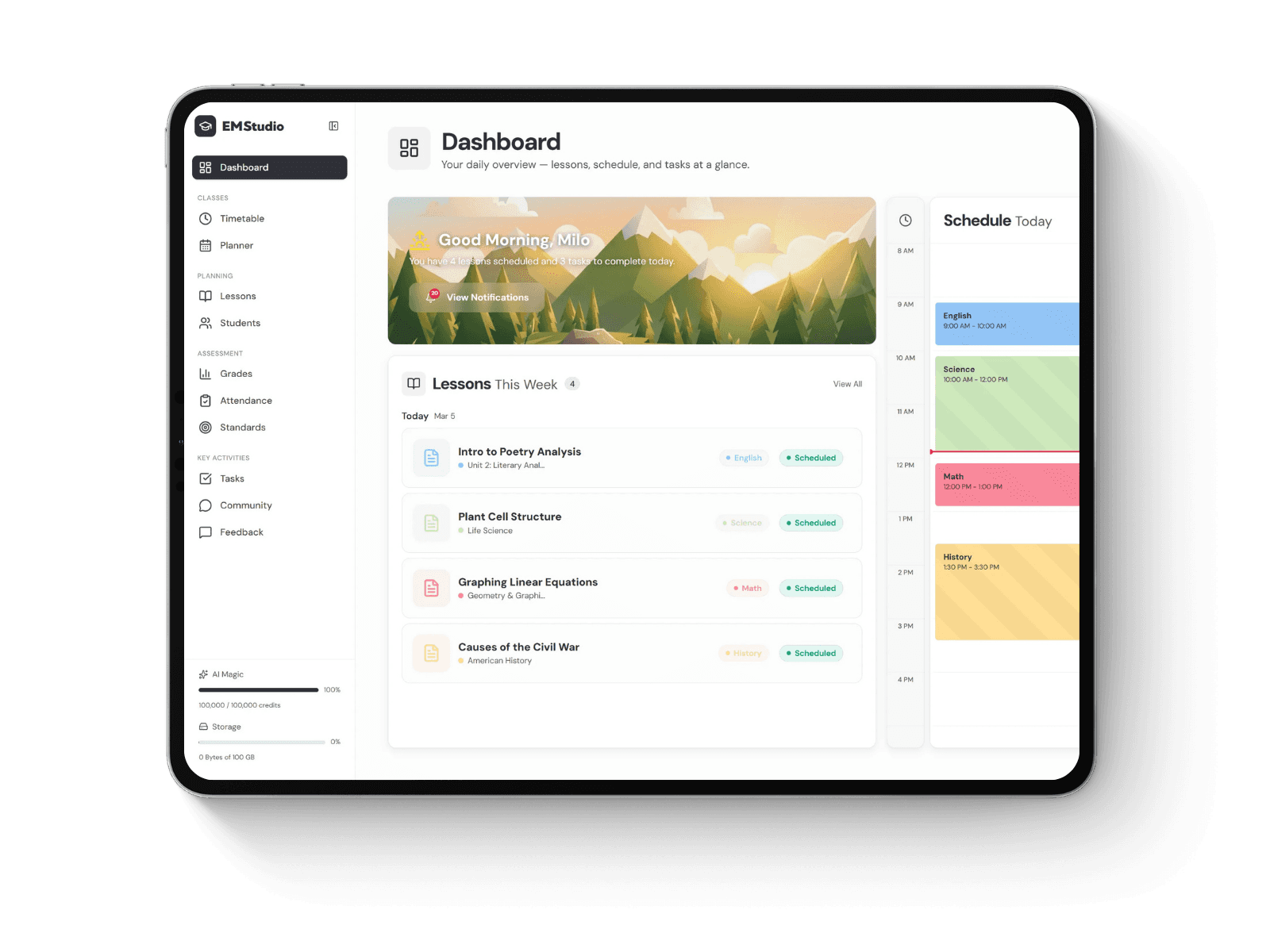
Still grading everything by hand?
EMStudio is a free teaching management app — manage your classes, students, lessons, and more!
Learn More
Table of Contents
Understanding Your Current Questioning Baseline
Before you change anything, you need to know where you stand. Use the Danielson Framework for Teaching, specifically Domain 3: Instruction, to rate your current questioning quality on the 1-4 rubric. Level 1 means you're asking recall questions with no follow-up; Level 4 means you're using Socratic questioning to push students into genuine inquiry.
For three days, carry a printable tally sheet as a formative assessment of your own practice. Mark every question as closed (one right answer) or open (multiple valid responses). Divide your higher-order questions by your total questions to get your Ratio of Inquiry. Most teachers land between 0.15 and 0.25 on their first count.
During those same three days, run a stopwatch during random 15-minute intervals. Time your talk against silent student processing time before they enter the student discourse. Wait time research from Mary Rowe shows we average less than one second before jumping in with hints. If you're clocking 80% teacher talk, that's your real baseline.
Color-code your questions against Bloom's Taxonomy levels 1-6 using a frequency chart. This exposes over-reliance on Level 1 recall and gaps in Level 5 evaluation. The visual map reveals the true cognitive demand of your current questioning in teaching practice.
I did this audit last October with my 7th graders during a unit on proportions. My tally sheet showed 47 recall questions per period and only three requiring higher-order thinking. The stopwatch revealed I dominated 12 minutes of a 15-minute discussion. That data hurt. But it gave me a concrete starting point for my own questioning education.
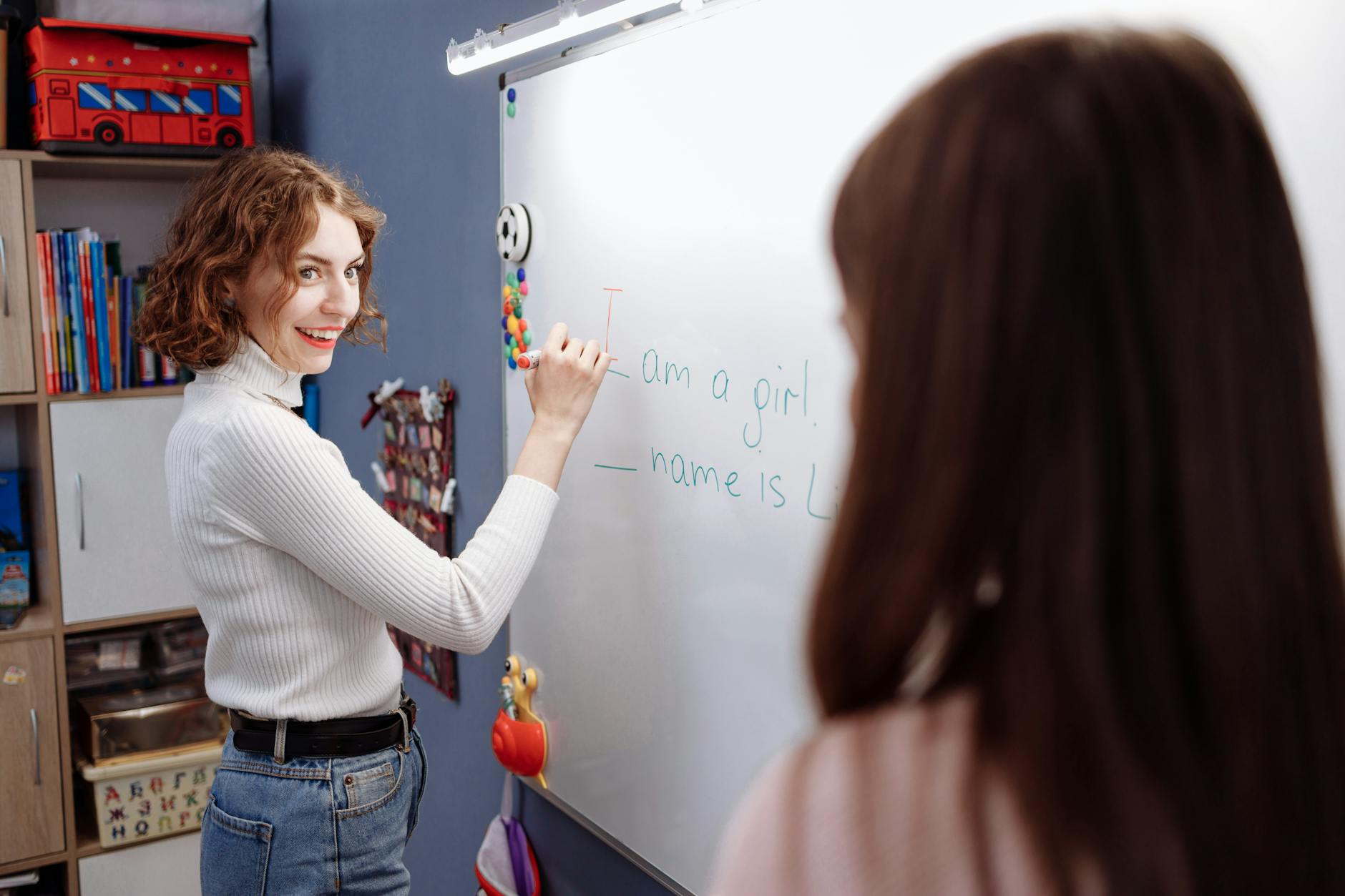
Step 1 — How Do You Audit Your Current Questioning Techniques?
Record three consecutive lessons and code questions using Bloom's Taxonomy. Tally closed versus open questions, note wait times, and map who participates. Calculate your Ratio of Inquiry by dividing higher-order questions by total questions. Target an RI above 0.4 for secondary classrooms and 0.3 for elementary.
Stop guessing. You need hard data.
I learned this the hard way in my 10th-grade history class. I thought I was asking deep Socratic questioning prompts about the causes of World War I, but the recordings revealed I was actually peppering kids with rapid-fire recall checks about dates. The audio doesn't lie, and neither will yours when you audit your current instructional practices with brutal honesty.
Start the Question Audit Protocol. Place your phone on your desk and record 20-minute segments using voice memos for three consecutive days. Don't script special lessons. Pick normal Tuesday instruction when you're tired and teaching on autopilot. Code every question using Costa's Levels of Questioning: Level 1 (Gathering), Level 2 (Processing), or Level 3 (Applying). Mark whether each requires simple recall or actual higher-order thinking.
Calculate your baseline Ratio of Inquiry. Divide your higher-order questions—Costa Level 2 and 3, or Bloom's Apply and above—by your total question count. In questioning education research, effective secondary teachers hit above 0.4, meaning 40 percent of questions push past recall. Elementary targets sit around 0.3. Most teachers initially score below 0.2, shocked by how often they ask "Who can tell me" instead of "What would happen if."
Build a participation equity map. Sketch your seating chart and place checkmarks when students speak. I discovered my "dead zone" was the back left corner—three quiet students I unconsciously ignored while focusing on the eager front row. This geographic bias kills student discourse before it starts. Color-code by gender or reading level if you suspect systemic exclusion patterns hiding in your questioning for teachers routines.
Measure your wait time research against reality. Average teacher wait time hovers at 1.2 seconds. Effective questioning techniques for teachers require 3 to 5 seconds of actual silence after posing a question. Time it with your phone stopwatch. You'll be shocked how uncomfortable three seconds feels—and how it transforms response quality from single words to full explanations.
Closed questions: Currently 60 percent, target 40 percent to allow deeper exploration.
Open questions: Currently 40 percent, target 60 percent to drive analysis.
Average wait time: Currently 1.2 seconds, goal 3–5 seconds for cognitive processing.
Student response length: Currently 5–7 words, target complete sentences with reasoning and evidence.
Track formative assessment value too. Note which questions reveal misconceptions versus those that just check homework completion. High cognitive demand questions force students to explain their reasoning, giving you real insight into their thinking. Low-level questions tell you only who memorized the reading.
Code your recordings during lunch breaks. Listen once for question types, once for wait times, once for participation patterns. This triple-pass method catches what single viewing misses. These questioning strategies for teachers work only when you know your starting point.
The audit takes three hours total—one hour of recording, two hours of coding. That's less time than grading a single essay set, and the data changes everything about how you plan discussions that actually work.

Step 2 — Mapping Question Types to Specific Learning Objectives
Matching your questions to your targets is where questioning education gets practical. I learned this the hard way in my 9th-grade Biology class when I realized my "discussion" was actually just me checking if they'd read the textbook.
Build a Question-Objective Alignment Matrix. List Bloom's Taxonomy levels down the side—Remember through Create. Across the top, write your objective verbs: Define, Compare, Defend. In the cells, plug specific stems. "Define osmosis" hits Remember. "What patterns emerge in the data?" hits Analyze. This grid organizes the types of questioning in teaching by cognitive lift.
Separate your formative assessment probes from summative ones. During instruction, I shoot quick checking for understanding questions: "What did you mean by osmosis?" That's low-stakes clarification. For assessing mastery or debate prep, I use Socratic questioning and higher-order thinking prompts: "Which solution is most viable given budget constraints?" Wait time research applies here—kids need seconds to shift between these different types of questioning techniques for teachers and manage the cognitive demand.
Take photosynthesis. Remember: "What are the reactants?" (One word: CO2, water). Apply: "How would a plant respond to 48 hours of darkness?" (Sentence answer). Evaluate: "Which factor most limits growth and why?" (Paragraph defense). This progression reflects the inquiry-based learning framework and the art of questioning in teaching—shifting from recall to genuine student discourse.

Step 3 — How Do You Implement Wait Time and Elicitation Protocols?
After asking a question, wait 3-5 seconds before calling on students (Wait Time I). After a student responds, wait 3-5 seconds before commenting (Wait Time II). Use elicitation stems like "Say more about that" or "What evidence supports this?" to extend thinking without immediately evaluating responses.
The silence feels like forever. I remember counting Mississippis in my head while my 7th graders squirmed in their seats, waiting for me to rescue them. Three seconds of quiet beats thirty minutes of shallow answers. You have to train yourself to become comfortable with the uncomfortable.
Wait time research from Mary Budd Rowe changed how I teach. Wait Time I means three to five seconds of dead air after you ask and before you call a name. Wait Time II means three to five seconds after a student speaks before you jump in with feedback. That pause lets kids process the cognitive demand of your question. It transforms questioning techniques in the classroom from rapid-fire recall into actual thinking time.
Pair those pauses with elicitation techniques in teaching that push past surface answers. Try these stems:
"Say more about that."
"What evidence led you to that conclusion?"
"How does this connect to yesterday's concept of photosynthesis?"
"Who sees this differently?"
These beat "Great job" every time. They keep the student discourse moving without you becoming the evaluator. When you withhold judgment, students take intellectual risks. That is when real learning happens.
Use the Pose-Pause-Pounce-Bounce sequence to build accountability. Pose your Socratic questioning stem. Pause five seconds using a visible timer so kids know you mean business. Pounce on a random student using ClassDojo or popsicle sticks. Then bounce to another: "Do you agree with Sarah's analysis or do you have alternative evidence?" This creates the questioning and discussion techniques in the classroom that develop higher-order thinking.
When a student says "I don't know," use No Opt Out with dignity. I use the Phone a Friend then Return method. The struggling student asks a peer for help, listens carefully, then restates the synthesized answer in their own words. They own the response. It builds confidence while maintaining formative assessment rigor. Nobody gets to hide.
Track your questioning education progress by measuring response length. At first, my students averaged four-word answers like "It was about courage." After three weeks of consistent wait time use, they hit ten-word sentences naturally. Count words in your next discussion. Data shows up fast.
Mastering these wait time and elicitation protocols is the foundation for leading effective student discussions that push thinking beyond checking comprehension boxes.

Step 4 — Building Question Chains That Develop Critical Thinking
Random questions don't build thinking. Chains do. In my 7th grade science class, I learned that connecting questions like links in a chain keeps cognitive demand high and students engaged.
I use the Socratic Seminar Sandwich protocol to structure discussions. It prevents the awkward silences that kill momentum and provides a clear roadmap for Socratic questioning. Students know exactly where we're headed.
Opening divergent question (5 minutes): "What surprised you most about the cell division lab?"
Clarifying questions (3 minutes): "What do you mean by 'irregular pattern'?"
Textual evidence questions (7 minutes): "Which slide supports that claim?"
Closing evaluative synthesis (5 minutes): "How would these results impact cancer research?"
Critical questioning techniques work best when scaffolded. I build three-tier chains that move from literal to evaluative. Tier 1 asks what happened in the experiment. Tier 2 asks why results differed from the hypothesis. Tier 3 asks how the outcome would change if we altered the pH levels by 2 points. This progression builds cognitive demand gradually. It mirrors the developing higher-order thinking skills progression that transforms surface learning into deep understanding.
Hattie's Visible Learning research changed how I follow up answers. Instead of accepting "mitochondria produce energy," I ask "Why is this true?" Every time. Last October, my 7th graders initially groaned at the extra work. By November, they were explaining cellular respiration without prompting. That elaborative interrogation—inquiring "how does this work"—increased retention more than any worksheet. It turns passive recall into active questioning techniques.
I keep Question Stem Cards organized by Bloom's level on my desk. When planning, I grab the "Analyze" pile to ensure I'm pushing past simple recall.
My five go-to stems include: "What are the component parts of...?" "How does ___ compare to ___ in terms of...?" "What patterns emerge when...?" "What is the relationship between...?" and "What distinctions can you make between...?" These strategies for teaching critical thinking work because they're ready when I need them. No more blank moments staring at the lesson plan.
Stop the ping-pong. I used to ask, a student answered, I evaluated. Dead end. Now I use volleyball sequencing. Maria shares an observation about the data. Jamal responds directly to Maria. Tariq synthesizes both viewpoints. Then I bridge to the next concept. This keeps student discourse moving between them, not through me. It also is real-time formative assessment.
Unlike static effective questioning techniques in the classroom pdf handouts that gather dust, these chains adapt in real time. They build on wait time research by giving students something substantial to ponder between exchanges. Quality questions deserve quality think time.
This is questioning education done right. Not interrogation. Conversation. When questions chain together naturally, you spend less time managing behavior and more time hearing kids think.

Step 5 — Creating Sustainable Questioning Routines
Launch Entrance Tickets tomorrow. Post one higher-order thinking prompt requiring 3-5 sentences within four minutes of the bell. My 7th graders predicted two economic consequences of Southern secession before we opened the textbook. It beats asking "Did you do the homework?" and raises the cognitive demand immediately.
Install a Question Wall using chart paper and sticky notes. Students post "I wonder...", "How come...", or "What if..." questions. Rotate facilitation weekly among table groups. Materials cost under $5. This drives student discourse without complex technology.
Schedule Micro-Practice Mondays twice weekly. Dedicate ten minutes to practicing one specific effective questioning technique. Week one: only wait time. Week two: only elicitation stems. Build Socratic methods of teaching through these active learning strategies incrementally.
Map Gradual Release of Responsibility across six weeks. Weeks 1-2: Teacher models questioning using think-alouds (I Do). Weeks 3-4: Co-construct questions together (We Do). Weeks 5+: Students generate essential questions for upcoming units (You Do). This pacing prevents burnout while building effective questioning strategies in the classroom.
Audit your practice monthly. Measure the percentage of student-generated questions (target above 30%), average wait time duration (target 3+ seconds via peer observation), and participation equity (target 80% verbal contribution weekly). These metrics prove whether your questioning education changes are sustainable.

Avoiding Common Mistakes When Implementing New Questioning Strategies
We all rush the silence. Wait time research shows teachers average 1.5 seconds before jumping in, but brains need 3-5 seconds minimum to process. I tuck my hand behind my back and count to seven on my fingers. It feels like forever. The answers get deeper when I resist filling the void. That pause is where the thinking happens.
Question overload kills thinking faster than silence does. Most of us fire off 120 to 150 questions per hour without realizing it. That pace fragments attention. I now aim for 20 to 30 rich questions that demand elaboration. Fewer prompts, more depth.
I fell into the echo trap for years in my 7th grade classroom. I would repeat every student answer immediately, thinking I was helping. Then I noticed they stopped listening to each other; they just waited for my voice. Now I ask, "Who can paraphrase what Jordan said?" Accountability jumps, and my talk time drops by 40 percent.
Watch your Bloom's ceiling. Many of us default to 80 percent Remember and Understand questions, which caps cognitive demand. I carry a handheld tally counter in my pocket. When I hit 60 percent lower-order questions, I force an Analyze or Evaluate prompt. Students need forty percent of their queries to push higher-order thinking.
Break the Initiate-Response-Evaluate cycle. This pattern—ask, answer, "That's correct"—shuts down student discourse fast. I stopped evaluating immediately. Now I follow with "What makes you say that?" This shift alone transformed my formative assessment data.
Resist changing everything at once. Last semester I tried wait time, randomization, and Socratic questioning chains simultaneously. The cognitive overload was real. By week two I had reverted to default lecture patterns. Pick one protocol per month. Master it. Solid classroom management fundamentals support these shifts better than rushed overhauls.
Real improvement in questioning education comes from these small, stubborn adjustments. Effective questioning techniques fail when we deploy them all at once. Effective questioning in teaching requires patience. Good questioning techniques for teachers only work when given room to breathe. Choose one fix. Stick with it.

What This Means for Your Classroom
Questioning education isn't about scripting perfect questions or turning every class into a Socratic questioning seminar. It means teaching with intention. You audit what you ask, map questions to objectives, wait those extra three seconds, and chain your prompts so higher-order thinking actually happens. I started with just wait time in my 7th grade class. The silence felt awkward for a week. Then hands started rising from kids who never spoke. Small shifts create the biggest waves.
Pick one step from the five. Audit your questions for three days, or add wait time to your next formative assessment discussion. Don't overhaul everything on Monday morning. Sustainable routines beat dramatic revamps every time. Your students won't notice the technique. They'll just start thinking deeper.
When you raise the cognitive demand of your questions consistently, even by small degrees, students learn to think instead of just hunt for the right answer. That shift—from answering to thinking—is what transforms your teaching. Start with tomorrow's first question. Make it count.

Understanding Your Current Questioning Baseline
Before you change anything, you need to know where you stand. Use the Danielson Framework for Teaching, specifically Domain 3: Instruction, to rate your current questioning quality on the 1-4 rubric. Level 1 means you're asking recall questions with no follow-up; Level 4 means you're using Socratic questioning to push students into genuine inquiry.
For three days, carry a printable tally sheet as a formative assessment of your own practice. Mark every question as closed (one right answer) or open (multiple valid responses). Divide your higher-order questions by your total questions to get your Ratio of Inquiry. Most teachers land between 0.15 and 0.25 on their first count.
During those same three days, run a stopwatch during random 15-minute intervals. Time your talk against silent student processing time before they enter the student discourse. Wait time research from Mary Rowe shows we average less than one second before jumping in with hints. If you're clocking 80% teacher talk, that's your real baseline.
Color-code your questions against Bloom's Taxonomy levels 1-6 using a frequency chart. This exposes over-reliance on Level 1 recall and gaps in Level 5 evaluation. The visual map reveals the true cognitive demand of your current questioning in teaching practice.
I did this audit last October with my 7th graders during a unit on proportions. My tally sheet showed 47 recall questions per period and only three requiring higher-order thinking. The stopwatch revealed I dominated 12 minutes of a 15-minute discussion. That data hurt. But it gave me a concrete starting point for my own questioning education.
Step 1 — How Do You Audit Your Current Questioning Techniques?
Record three consecutive lessons and code questions using Bloom's Taxonomy. Tally closed versus open questions, note wait times, and map who participates. Calculate your Ratio of Inquiry by dividing higher-order questions by total questions. Target an RI above 0.4 for secondary classrooms and 0.3 for elementary.
Stop guessing. You need hard data.
I learned this the hard way in my 10th-grade history class. I thought I was asking deep Socratic questioning prompts about the causes of World War I, but the recordings revealed I was actually peppering kids with rapid-fire recall checks about dates. The audio doesn't lie, and neither will yours when you audit your current instructional practices with brutal honesty.
Start the Question Audit Protocol. Place your phone on your desk and record 20-minute segments using voice memos for three consecutive days. Don't script special lessons. Pick normal Tuesday instruction when you're tired and teaching on autopilot. Code every question using Costa's Levels of Questioning: Level 1 (Gathering), Level 2 (Processing), or Level 3 (Applying). Mark whether each requires simple recall or actual higher-order thinking.
Calculate your baseline Ratio of Inquiry. Divide your higher-order questions—Costa Level 2 and 3, or Bloom's Apply and above—by your total question count. In questioning education research, effective secondary teachers hit above 0.4, meaning 40 percent of questions push past recall. Elementary targets sit around 0.3. Most teachers initially score below 0.2, shocked by how often they ask "Who can tell me" instead of "What would happen if."
Build a participation equity map. Sketch your seating chart and place checkmarks when students speak. I discovered my "dead zone" was the back left corner—three quiet students I unconsciously ignored while focusing on the eager front row. This geographic bias kills student discourse before it starts. Color-code by gender or reading level if you suspect systemic exclusion patterns hiding in your questioning for teachers routines.
Measure your wait time research against reality. Average teacher wait time hovers at 1.2 seconds. Effective questioning techniques for teachers require 3 to 5 seconds of actual silence after posing a question. Time it with your phone stopwatch. You'll be shocked how uncomfortable three seconds feels—and how it transforms response quality from single words to full explanations.
Closed questions: Currently 60 percent, target 40 percent to allow deeper exploration.
Open questions: Currently 40 percent, target 60 percent to drive analysis.
Average wait time: Currently 1.2 seconds, goal 3–5 seconds for cognitive processing.
Student response length: Currently 5–7 words, target complete sentences with reasoning and evidence.
Track formative assessment value too. Note which questions reveal misconceptions versus those that just check homework completion. High cognitive demand questions force students to explain their reasoning, giving you real insight into their thinking. Low-level questions tell you only who memorized the reading.
Code your recordings during lunch breaks. Listen once for question types, once for wait times, once for participation patterns. This triple-pass method catches what single viewing misses. These questioning strategies for teachers work only when you know your starting point.
The audit takes three hours total—one hour of recording, two hours of coding. That's less time than grading a single essay set, and the data changes everything about how you plan discussions that actually work.
Step 2 — Mapping Question Types to Specific Learning Objectives
Matching your questions to your targets is where questioning education gets practical. I learned this the hard way in my 9th-grade Biology class when I realized my "discussion" was actually just me checking if they'd read the textbook.
Build a Question-Objective Alignment Matrix. List Bloom's Taxonomy levels down the side—Remember through Create. Across the top, write your objective verbs: Define, Compare, Defend. In the cells, plug specific stems. "Define osmosis" hits Remember. "What patterns emerge in the data?" hits Analyze. This grid organizes the types of questioning in teaching by cognitive lift.
Separate your formative assessment probes from summative ones. During instruction, I shoot quick checking for understanding questions: "What did you mean by osmosis?" That's low-stakes clarification. For assessing mastery or debate prep, I use Socratic questioning and higher-order thinking prompts: "Which solution is most viable given budget constraints?" Wait time research applies here—kids need seconds to shift between these different types of questioning techniques for teachers and manage the cognitive demand.
Take photosynthesis. Remember: "What are the reactants?" (One word: CO2, water). Apply: "How would a plant respond to 48 hours of darkness?" (Sentence answer). Evaluate: "Which factor most limits growth and why?" (Paragraph defense). This progression reflects the inquiry-based learning framework and the art of questioning in teaching—shifting from recall to genuine student discourse.
Step 3 — How Do You Implement Wait Time and Elicitation Protocols?
After asking a question, wait 3-5 seconds before calling on students (Wait Time I). After a student responds, wait 3-5 seconds before commenting (Wait Time II). Use elicitation stems like "Say more about that" or "What evidence supports this?" to extend thinking without immediately evaluating responses.
The silence feels like forever. I remember counting Mississippis in my head while my 7th graders squirmed in their seats, waiting for me to rescue them. Three seconds of quiet beats thirty minutes of shallow answers. You have to train yourself to become comfortable with the uncomfortable.
Wait time research from Mary Budd Rowe changed how I teach. Wait Time I means three to five seconds of dead air after you ask and before you call a name. Wait Time II means three to five seconds after a student speaks before you jump in with feedback. That pause lets kids process the cognitive demand of your question. It transforms questioning techniques in the classroom from rapid-fire recall into actual thinking time.
Pair those pauses with elicitation techniques in teaching that push past surface answers. Try these stems:
"Say more about that."
"What evidence led you to that conclusion?"
"How does this connect to yesterday's concept of photosynthesis?"
"Who sees this differently?"
These beat "Great job" every time. They keep the student discourse moving without you becoming the evaluator. When you withhold judgment, students take intellectual risks. That is when real learning happens.
Use the Pose-Pause-Pounce-Bounce sequence to build accountability. Pose your Socratic questioning stem. Pause five seconds using a visible timer so kids know you mean business. Pounce on a random student using ClassDojo or popsicle sticks. Then bounce to another: "Do you agree with Sarah's analysis or do you have alternative evidence?" This creates the questioning and discussion techniques in the classroom that develop higher-order thinking.
When a student says "I don't know," use No Opt Out with dignity. I use the Phone a Friend then Return method. The struggling student asks a peer for help, listens carefully, then restates the synthesized answer in their own words. They own the response. It builds confidence while maintaining formative assessment rigor. Nobody gets to hide.
Track your questioning education progress by measuring response length. At first, my students averaged four-word answers like "It was about courage." After three weeks of consistent wait time use, they hit ten-word sentences naturally. Count words in your next discussion. Data shows up fast.
Mastering these wait time and elicitation protocols is the foundation for leading effective student discussions that push thinking beyond checking comprehension boxes.
Step 4 — Building Question Chains That Develop Critical Thinking
Random questions don't build thinking. Chains do. In my 7th grade science class, I learned that connecting questions like links in a chain keeps cognitive demand high and students engaged.
I use the Socratic Seminar Sandwich protocol to structure discussions. It prevents the awkward silences that kill momentum and provides a clear roadmap for Socratic questioning. Students know exactly where we're headed.
Opening divergent question (5 minutes): "What surprised you most about the cell division lab?"
Clarifying questions (3 minutes): "What do you mean by 'irregular pattern'?"
Textual evidence questions (7 minutes): "Which slide supports that claim?"
Closing evaluative synthesis (5 minutes): "How would these results impact cancer research?"
Critical questioning techniques work best when scaffolded. I build three-tier chains that move from literal to evaluative. Tier 1 asks what happened in the experiment. Tier 2 asks why results differed from the hypothesis. Tier 3 asks how the outcome would change if we altered the pH levels by 2 points. This progression builds cognitive demand gradually. It mirrors the developing higher-order thinking skills progression that transforms surface learning into deep understanding.
Hattie's Visible Learning research changed how I follow up answers. Instead of accepting "mitochondria produce energy," I ask "Why is this true?" Every time. Last October, my 7th graders initially groaned at the extra work. By November, they were explaining cellular respiration without prompting. That elaborative interrogation—inquiring "how does this work"—increased retention more than any worksheet. It turns passive recall into active questioning techniques.
I keep Question Stem Cards organized by Bloom's level on my desk. When planning, I grab the "Analyze" pile to ensure I'm pushing past simple recall.
My five go-to stems include: "What are the component parts of...?" "How does ___ compare to ___ in terms of...?" "What patterns emerge when...?" "What is the relationship between...?" and "What distinctions can you make between...?" These strategies for teaching critical thinking work because they're ready when I need them. No more blank moments staring at the lesson plan.
Stop the ping-pong. I used to ask, a student answered, I evaluated. Dead end. Now I use volleyball sequencing. Maria shares an observation about the data. Jamal responds directly to Maria. Tariq synthesizes both viewpoints. Then I bridge to the next concept. This keeps student discourse moving between them, not through me. It also is real-time formative assessment.
Unlike static effective questioning techniques in the classroom pdf handouts that gather dust, these chains adapt in real time. They build on wait time research by giving students something substantial to ponder between exchanges. Quality questions deserve quality think time.
This is questioning education done right. Not interrogation. Conversation. When questions chain together naturally, you spend less time managing behavior and more time hearing kids think.
Step 5 — Creating Sustainable Questioning Routines
Launch Entrance Tickets tomorrow. Post one higher-order thinking prompt requiring 3-5 sentences within four minutes of the bell. My 7th graders predicted two economic consequences of Southern secession before we opened the textbook. It beats asking "Did you do the homework?" and raises the cognitive demand immediately.
Install a Question Wall using chart paper and sticky notes. Students post "I wonder...", "How come...", or "What if..." questions. Rotate facilitation weekly among table groups. Materials cost under $5. This drives student discourse without complex technology.
Schedule Micro-Practice Mondays twice weekly. Dedicate ten minutes to practicing one specific effective questioning technique. Week one: only wait time. Week two: only elicitation stems. Build Socratic methods of teaching through these active learning strategies incrementally.
Map Gradual Release of Responsibility across six weeks. Weeks 1-2: Teacher models questioning using think-alouds (I Do). Weeks 3-4: Co-construct questions together (We Do). Weeks 5+: Students generate essential questions for upcoming units (You Do). This pacing prevents burnout while building effective questioning strategies in the classroom.
Audit your practice monthly. Measure the percentage of student-generated questions (target above 30%), average wait time duration (target 3+ seconds via peer observation), and participation equity (target 80% verbal contribution weekly). These metrics prove whether your questioning education changes are sustainable.
Avoiding Common Mistakes When Implementing New Questioning Strategies
We all rush the silence. Wait time research shows teachers average 1.5 seconds before jumping in, but brains need 3-5 seconds minimum to process. I tuck my hand behind my back and count to seven on my fingers. It feels like forever. The answers get deeper when I resist filling the void. That pause is where the thinking happens.
Question overload kills thinking faster than silence does. Most of us fire off 120 to 150 questions per hour without realizing it. That pace fragments attention. I now aim for 20 to 30 rich questions that demand elaboration. Fewer prompts, more depth.
I fell into the echo trap for years in my 7th grade classroom. I would repeat every student answer immediately, thinking I was helping. Then I noticed they stopped listening to each other; they just waited for my voice. Now I ask, "Who can paraphrase what Jordan said?" Accountability jumps, and my talk time drops by 40 percent.
Watch your Bloom's ceiling. Many of us default to 80 percent Remember and Understand questions, which caps cognitive demand. I carry a handheld tally counter in my pocket. When I hit 60 percent lower-order questions, I force an Analyze or Evaluate prompt. Students need forty percent of their queries to push higher-order thinking.
Break the Initiate-Response-Evaluate cycle. This pattern—ask, answer, "That's correct"—shuts down student discourse fast. I stopped evaluating immediately. Now I follow with "What makes you say that?" This shift alone transformed my formative assessment data.
Resist changing everything at once. Last semester I tried wait time, randomization, and Socratic questioning chains simultaneously. The cognitive overload was real. By week two I had reverted to default lecture patterns. Pick one protocol per month. Master it. Solid classroom management fundamentals support these shifts better than rushed overhauls.
Real improvement in questioning education comes from these small, stubborn adjustments. Effective questioning techniques fail when we deploy them all at once. Effective questioning in teaching requires patience. Good questioning techniques for teachers only work when given room to breathe. Choose one fix. Stick with it.
What This Means for Your Classroom
Questioning education isn't about scripting perfect questions or turning every class into a Socratic questioning seminar. It means teaching with intention. You audit what you ask, map questions to objectives, wait those extra three seconds, and chain your prompts so higher-order thinking actually happens. I started with just wait time in my 7th grade class. The silence felt awkward for a week. Then hands started rising from kids who never spoke. Small shifts create the biggest waves.
Pick one step from the five. Audit your questions for three days, or add wait time to your next formative assessment discussion. Don't overhaul everything on Monday morning. Sustainable routines beat dramatic revamps every time. Your students won't notice the technique. They'll just start thinking deeper.
When you raise the cognitive demand of your questions consistently, even by small degrees, students learn to think instead of just hunt for the right answer. That shift—from answering to thinking—is what transforms your teaching. Start with tomorrow's first question. Make it count.
Still grading everything by hand?
EMStudio is a free teaching management app — manage your classes, students, lessons, and more!
Learn More
Still grading everything by hand?
EMStudio is a free teaching management app — manage your classes, students, lessons, and more!
Learn More





Notion4Teachers
Notion templates to simplify administrative tasks and enhance your teaching experience.



2026 Notion4Teachers. All Rights Reserved.
Notion4Teachers
Notion templates to simplify administrative tasks and enhance your teaching experience.
2026 Notion4Teachers. All Rights Reserved.
Notion4Teachers
Notion templates to simplify administrative tasks and enhance your teaching experience.
2026 Notion4Teachers. All Rights Reserved.