
Instructional Practice Guide: 6 Steps to Transform Teaching
Instructional Practice Guide: 6 Steps to Transform Teaching

Article by
Milo
ESL Content Coordinator & Educator
ESL Content Coordinator & Educator
All Posts
It is October in a 7th-grade classroom. The teacher stares at exit tickets — formative assessment data — from yesterday's ratio lesson. Half the class is still confused. She wonders which of her three explanation methods actually worked. This is where a solid instructional practice guide becomes necessary. It is not another binder collecting dust. It is a living system for figuring out what is actually helping students learn.
I have sat in too many data meetings where we celebrated average scores while ignoring that one group never moved. Real improvement requires evidence-based teaching, not just hope that this year's strategy sticks. It demands looking at your actual teaching moves and building feedback loops that show you student thinking while it is happening, not after the unit ends.
This post walks you through six concrete steps to audit your current framework and map your existing instructional practices with honesty. You will select high-impact strategies tied to specific learning objectives, design peer observation protocols that support rather than scrutinize, and integrate elaboration techniques that create visible learning. We are talking about instructional coaching that actually changes what happens at 10:15 AM, not just what gets discussed in May.
Every strategy here has survived contact with real students, tight schedules, and limited copies. You will leave with a plan you can start Monday, not a vision board for next year.
Still grading everything by hand?
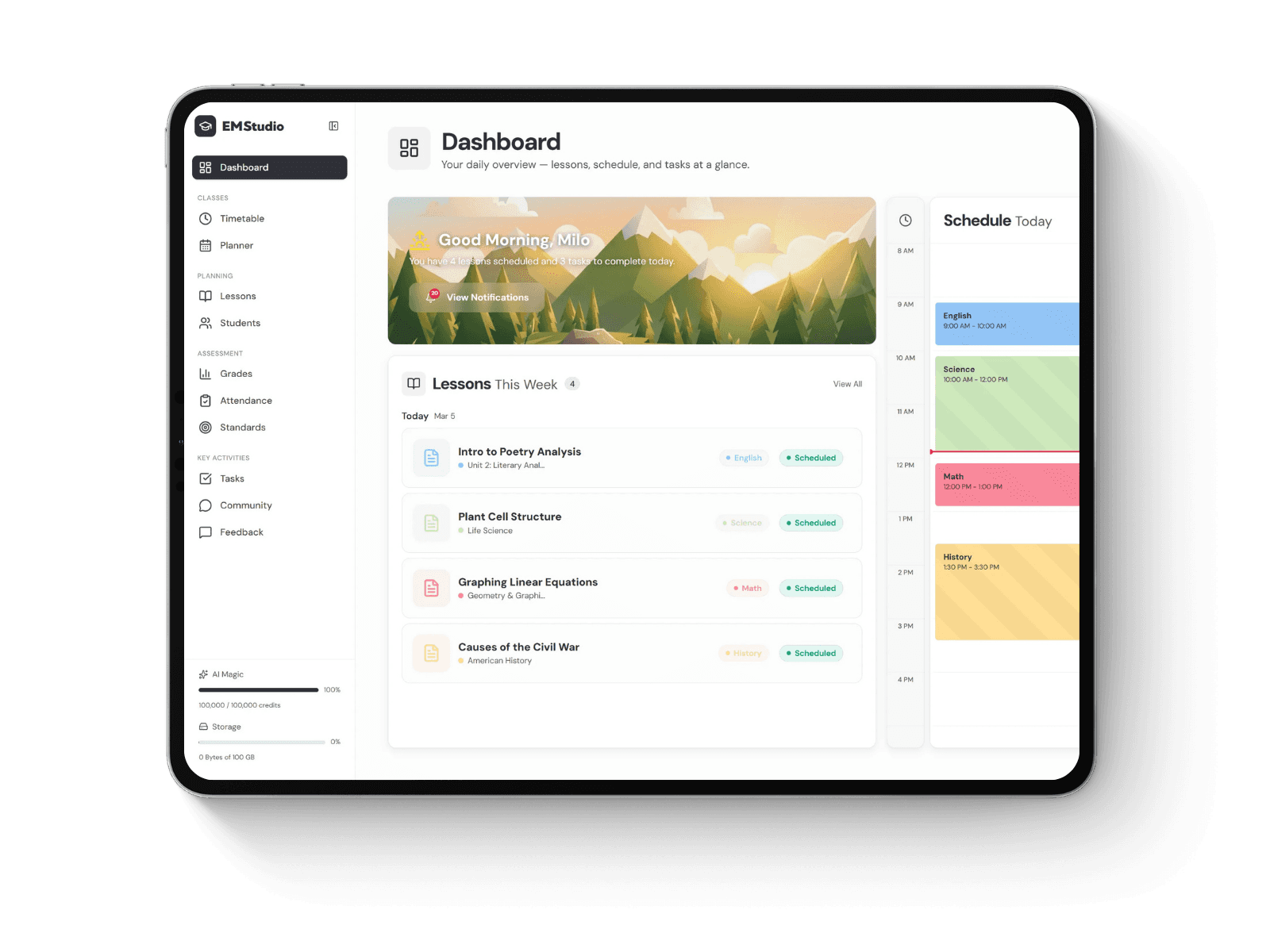
EMStudio is a free teaching management app — manage your classes, students, lessons, and more!
Learn More
Still grading everything by hand?
EMStudio is a free teaching management app — manage your classes, students, lessons, and more!
Learn More
Table of Contents
Audit Your Current Teaching Framework
An instructional practice guide is a living document that codifies specific, observable teaching moves. Unlike curriculum maps that sequence what to teach, these guides capture how to teach it. Most run eight to twelve pages and zero in on pedagogical delivery rather than content coverage.
I learned this distinction the hard way in my seventh-grade math classroom during our unit on proportional relationships. I had immaculate curriculum maps showing which standards hit which week. But my actual questioning techniques shifted daily depending on my energy level. That inconsistency showed up in my exit ticket data.
To audit your current teaching framework, build a three-column spreadsheet. Column one lists current practices like "wait time after questioning" or "turn-and-talk protocols" from your middle school math blocks. Column two tracks frequency: daily, weekly, or sporadic. Column three cites outcome data, such as "75% mastery on formative assessment" or "peer observation notes from February."
Before building anything new, inventory what your district already uses. Pull out Danielson's Framework for Teaching, Marzano's Art and Science of Teaching, or your local evaluation rubrics. Mirror their language so your guide supplements existing instructional coaching cycles rather than creating parallel paperwork.
Set aside two to three hours for this audit. Gather at least six weeks of recent lesson plans and student work samples from three distinct ability levels—your struggling learners, your middle group, and your advanced students. Check for clear learning objectives in your daily slides. This evidence-based teaching review reveals which instructional practices actually move the needle on visible learning.
Step 1 — Map Your Existing Instructional Practices
Mapping your current reality requires triangulating three data sources: daily lesson plans from the past six weeks, informal observation notes from peer visits or instructional coaching cycles, and recent common assessment results. This evidence-based teaching approach prevents us from relying on memory alone when we evaluate what actually consumes our instructional minutes.
Follow this workflow: Step A) Select one representative week from the past month—avoid benchmark testing weeks or holidays. Step B) Code your instructional minutes using the Instructional Time Audit log across three consecutive days. Step C) Cross-reference that time allocation against specific student performance clusters to spot misalignments between where we spend time and where kids struggle most. This triangulation prevents the "activity trap" where we confuse engagement with learning.
Documenting Current Classroom Methods
I learned this the hard way with my 7th graders last fall. I thought we were doing plenty of guided practice, but the audit revealed transitions and independent work were eating 45% of our block. We were mistaking busywork for active learning.
To run your own audit, track three consecutive instructional days using a simple tally sheet or the free Classroom Clock app. Record the dominant activity type every five minutes to build a visible learning timeline of your period.
Direct Instruction: Log in 15-minute blocks when you are modeling, explaining, or leading whole-group demonstration.
Guided Practice: Mark when you and students are working through problems together with heavy scaffolding and immediate feedback.
Independent Practice: Count silent work time, small group rotations without teacher facilitation, or homework review.
Transitions: Track passing papers, logging into devices, or any non-instructional downtime between activities.
Target benchmark: active instructional categories—Direct plus Guided—should comprise roughly 60% of your total class time. If Transitions alone exceed 15%, you've found your first leakage point.
Use a straightforward tally system. Every five minutes, mark the dominant mode. At the end of three days, calculate percentages. I keep a clipboard with four columns and simply slash the appropriate box. The patterns emerge quickly—usually by day two you'll spot the drift between your intended lesson flow and the actual clock.
Be ruthless about coding. If you pause direct instruction to pass out papers, that interval counts as Transition, not Direct. If students work silently while you circulate answering individual questions, that's Independent Practice unless you're actively modeling thinking aloud with the whole group. Precision matters for valid data.
Analyzing Student Outcome Data
This is where the instructional practice guide gets practical. You need exactly three data points to complete the picture. First, calculate your formative assessment frequency and aim for an embedded check every 7-10 minutes of instruction.
Second, pull student growth percentiles from your most recent benchmark assessment such as NWEA MAP, STAR, or your district equivalent. Third, run an error pattern analysis on the last common unit assessment to identify the top three misconception categories.
Create a simple comparison table correlating your instructional time allocation against these outcome clusters. For example, classes spending less than 20% of time in guided practice often show 15-20% lower proficiency rates on application-level standards. That correlation tells you exactly where to shift your minutes tomorrow.
When analyzing student outcome data, look for the gap between your learning objectives and actual student performance. If your formative checks happen every 15 minutes instead of every 7, and your error patterns show conceptual misunderstandings rather than careless mistakes, you have a pacing issue. Fix the interval, not the content.
Peer observation notes add crucial context here. Ask your instructional coach or a colleague to track the same three days. Compare their tallies to yours. Teachers consistently overestimate their direct instruction time by about 20%, especially during discussion-heavy lessons where we think we're guiding but students are actually just listening. The discrepancy usually shocks us.
Error pattern analysis reveals the specific misconceptions blocking mastery. Sort your last common assessment by missed standards. If 40% of students missed the multi-step word problem but aced the computation, your guided practice needs more application, not more drill. This single insight can redirect your entire next unit.
Build your table with two columns: Instructional Time Allocation and Student Outcome Cluster. List your percentages for Direct, Guided, Independent, and Transition alongside the corresponding proficiency rates from your benchmark data. Draw arrows between mismatches.
Step 2 — Select High-Impact Teaching Strategies
High-impact evidence-based teaching depends on selecting moves that actually accelerate growth. Hattie’s Visible Learning meta-analyses give us the numbers to compare.
Strategy | Hattie Effect Size | Prep Time | Training Required | Grade-Level Fit |
|---|---|---|---|---|
Reciprocal Teaching | 0.74 | Med | 2 hours | 6–12 |
Elaborative Interrogation | 0.75 | Low | 1 hour | 4–12 |
Spaced Practice | 0.65 | Low | 1 hour | K–12 |
Direct Instruction | 0.59 | Med | 4 hours | K–12 |
Feedback | 0.70 | Low | 2 hours | K–12 |
Prioritize strategies with effect sizes above 0.60 that require less than three hours of initial training and fit within existing class periods without additional materials budgets. This filter immediately surfaces your high-probability starters while screening out resource-heavy distractions.
Evaluating Evidence-Based Techniques
Use the TRAC matrix during instructional coaching cycles: Time (implementation minutes), Resources (under $50 per class), Alignment (to standards), and Complexity (skill level 1–5). Score each category 1–5; totals above 16 indicate high feasibility for your instructional practices.
This evaluating evidence-based techniques method prevents wasted effort. Skipping the Complexity check sinks implementations fast—Reciprocal Teaching demands level 4 facilitation skills that take months of deliberate practice to master, not weeks.
Apply Rosenshine's Principles of Instruction as a secondary screen. Principle 1 (daily review) and Principle 5 (guided practice) are non-negotiable foundations for any strategy you select.
Aligning Strategies to Learning Objectives
Build a strategy-to-objective alignment matrix. Rows list selected strategies; columns represent learning objectives types: Declarative (facts/concepts), Procedural (skills/processes), and Conditional (when to apply). Mark best fits with checkmarks.
Elaborative Interrogation: Declarative ✓, Conditional ✓, Procedural ✗
Reciprocal Teaching: Procedural ✓
Spaced Practice: Declarative ✓ (optimal), Procedural ✓, Conditional ✓
Last October, I applied this to a 9th-grade Biology unit on Photosynthesis. I matched Reciprocal Teaching to the procedural objective of interpreting diagrams—students verbalized the light-dependent reactions while annotating chloroplast cross-sections. For the declarative objective of identifying reactants and products, I assigned Spaced Practice through weekly low-stakes retrieval drills instead of one cram session. This tight alignment transforms your instructional practice guide from a wish list into a workable scope. Embed formative assessment checkpoints during both activities to catch misconceptions early. Peer observation protocols validate whether the strategy actually matches the cognitive demand of the objective or just looks busy.

Step 3 — Design Observation and Feedback Protocols
Observation protocols collapse when they rely on general impressions instead of specific behaviors. I learned this the hard way during my first year as an instructional coach. We used a form with vague categories like "engagement" and "questioning," and teachers received contradictory feedback from different observers. One coach saw "active learning" while another saw "chaos" in the same lesson. The fix is a 4-indicator checklist that defines exactly what counts as evidence before anyone enters the room.
Your protocol must separate compliance (what the teacher does) from impact (what students actually do). Weight the evidence accordingly. Student behavioral evidence should carry 60% of the evaluation. If the teacher asks a great question but nobody thinks or talks, that's not evidence-based teaching. This 60/40 split forces observers to watch students, not performers. It shifts the conversation from "I taught it" to "They learned it." This distinction turns your instructional practice guide into a formative assessment tool rather than a performance checklist.
Without the 60% rule, observers stare at the teacher. They note whether she moved around the room. Meanwhile, students sit passively. That observation tells you nothing about learning.
Creating Look-Fors and Success Criteria
Specific indicators make visible learning possible. For a "Wait Time and Elaboration" protocol, your checklist needs four concrete look-fors that an observer can mark yes or no in real time without interpretation.
The teacher waits 3+ seconds after questioning before calling on students.
No hands are raised during the think-time window.
Student-to-student discourse follows at least 50% of questions.
The teacher refrains from rephrasing or answering within the first 10 seconds.
Each indicator needs three success criteria tiers to track growth. In an 11th-grade History lesson on Causes of WWI, emerging looks like the teacher providing elaboration prompts ("Explain why that treaty mattered to the region"). Developing shows students using provided sentence stems ("This caused WWI because..."). Mastered means students spontaneously elaborate without scaffolding, connecting the assassination of Franz Ferdinand to imperial competition using their own vocabulary and historical reasoning.
The checklist format matters. Print it on half-sheets so observers can check boxes without writing essays. Focus the peer observation on whether students actually think harder, not whether the teacher performs correctly. If three of the four indicators show student silence, you have data, not opinions.
Behavioral definitions eliminate arguments. "Wait time" becomes "count to three Mississippi." "Student discourse" becomes "I hear voices other than the teacher." These micro-definitions make the formative assessment reliable across multiple observers.
Mastered doesn't mean perfect. It means the behavior is automatic and student-driven. Even in mastered classrooms, you might see one student struggle to elaborate. The indicator tracks the dominant pattern, not individual exceptions.
The WWI example works because the content is complex enough to require elaboration. Students can't just answer "imperialism" and stop. They must explain the mechanism. Your look-fors should match this cognitive demand.
Scheduling Peer Observation Cycles
Frequency matters more than duration. Run 20-minute focused observations every three weeks during high-impact instructional segments. Skip testing days or movie sessions. You're looking for evidence of learning objectives in action, not classroom management during downtime. Target the meat of the lesson: the initial exploration of new content or the collaborative analysis phase. These windows reveal whether your evidence-based teaching actually produces thinking.
The cycle breaks into three parts: a 10-minute pre-brief to review the look-fors, the 20-minute observation, and a 15-minute post-brief using the Glow-Grow-Goal protocol. Each pair completes this cycle roughly six times per semester. That totals nine hours of committed time per teacher pair.
The pre-brief sets the scope. The observed teacher identifies which indicator they want feedback on most. The observer knows where to aim their attention. This focus prevents the scattershot approach that overwhelms teachers with too many suggestions.
Logistics require district support. Use instructional coaching coverage or substitutes to release teachers. Budget approximately $150 per teacher per semester for sub coverage. When scheduling peer observation cycles, prioritize common planning periods first, then buy coverage for the gaps. Never expect teachers to give up prep time for observations; that breeds resentment and rushed feedback.
That $150 covers roughly three sub days per teacher. Spread across a semester, that's less than the cost of one professional development workshop. Yet it produces more sustainable change because it happens in context, not in a hotel conference room.
The Glow-Grow-Goal structure keeps feedback actionable. Identify one bright spot (Glow), one specific gap tied to the look-fors (Grow), and one concrete strategy for next time (Goal). This prevents the vague "great job" comments that waste everyone's time. The observer references the checklist data to say, "Indicator three showed zero student discourse during the primary source analysis," rather than "They weren't very engaged."
Protect the schedule. When observations get canceled for assemblies or testing, teachers learn that this work is optional. Block the dates at the start of the semester. Treat these 45-minute blocks as sacred as IEP meetings. Consistency builds the trust necessary for honest conversations about instructional practices.

Step 4 — How Do You Integrate Elaboration Into Classroom Practice?
Integrate elaboration by embedding 'how' and 'why' questions into every lesson segment. Use the Connect-Extend-Challenge protocol three times weekly, where students explain concepts to partners using sentence stems like 'This is similar to...' Schedule 5-minute elaboration breaks every 20 minutes of direct instruction.
Elaboration is the engine of retention. Without it, you're lecturing into a void.
Elaboration is the cognitive process of connecting new information to prior knowledge through explanation and questioning. It is the opposite of passive consumption. When students ask themselves why something works rather than just reviewing notes, they build durable memory traces. Research on elaborative interrogation consistently shows this approach improves retention significantly compared to passive review methods like re-reading or highlighting.
Your instructional practice guide should allocate 25 to 30 percent of instructional minutes to elaboration in classroom practice. That means roughly fifteen minutes of every hour. These breaks must occur every 15 to 20 minutes during direct instruction. This timing interrupts the forgetting curve before memories decay into confusion.
Structuring Elaboration Prompts and Questions
When structuring elaboration prompts and questions, specificity beats vagueness every time. I watched my 7th graders freeze last October when I asked them to "explain your reasoning" without supports. They stared at me, unsure where to start. Targeted stems eliminate that paralysis by giving students the cognitive scaffold they need.
Math: How is this different from yesterday's method?
ELA: Why did the author choose this specific word instead of a synonym?
Science: How does this evidence support or contradict the claim?
Social Studies: What would have happened if this event occurred 10 years earlier?
Art: How does the color palette convey the emotional tone?
PE: How does this movement pattern compare to the one we learned last unit?
These stems transform surface learning into deep processing. When a student explains how today's linear equations differ from yesterday's inequalities, they organize knowledge into retrievable structures. This is visible learning in action. You see their thinking in real time.
Model the Think-Aloud technique first. Verbalize your own elaboration process for two minutes while solving a sample problem. Speak every connection you make to prior units or concepts. Then shift to guided practice where students complete sentence stems on whiteboards. Watch their work closely. Only move to independent application once you see consistent success in the guided phase.
This progression mirrors effective instructional coaching cycles. You demonstrate, practice together, then release responsibility. Apply this rhythm to your instructional practices.
Building Peer Explanation Routines
Replace hand-raising with structured talk. When building peer explanation routines, use the Turn-and-Talk Plus protocol for half of your questions. This evidence-based teaching strategy maximizes student talk time and surfaces misconceptions for formative assessment. Give students thirty seconds of individual think time first. Silence is productive here.
Partner A explains for sixty seconds while Partner B listens without interrupting. Partner B then asks one probing question using the stem "Can you tell me more about..." for sixty seconds. Partner A elaborates further for thirty seconds based on that probe. This cycle forces students to generate new connections rather than parrot answers from the text.
For high school grades 9 through 12, use the Elaboration Snowball. Students write one connection on paper, crumple it, and toss it across the room. They retrieve a random paper and expand on the received connection in writing. Repeat twice. This produces three levels of elaboration on a single concept within five minutes, creating visible learning through written tracks you can review later.
These routines align with learning objectives that require synthesis rather than recall. They allow for peer observation of thinking processes and make learning visible.

Avoid These Common Pitfalls When Rolling Out Your Guide
Implementation science tells us approximately 60-70% of educational initiatives fail due to poor implementation rather than strategy selection. When rolling out your instructional practice guide, these pitfalls represent the primary failure modes. Avoid them, and you recover in days. Fall into them, and you lose months.
Overloading Teachers With Too Many Strategies at Once — Severity: High | Recovery if avoided: 2 weeks | Recovery if encountered: Full semester
Neglecting to Align With Existing Curriculum Maps — Severity: High | Recovery if avoided: 1 week | Recovery if encountered: 6-8 weeks
Failing to Build in Protected Observation Time — Severity: Medium | Recovery if avoided: Immediate | Recovery if encountered: 3-4 months
Overloading Teachers With Too Many Strategies at Once
I learned this with my 7th graders. We adopted three discussion protocols, two annotation strategies, and a new formative assessment system—all in September. By October, we were exhausted.
Follow the Rule of Three: limit new strategies to three per quarter. Each needs a mandatory six-week cycle before adding more. The implementation dip lasts four to six weeks before efficacy gains appear. Abandon strategies before week six, and you create initiative fatigue.
Watch the red flag: if teachers spend more than thirty minutes weekly on guide-related paperwork beyond normal planning, cut back immediately.
Neglecting to Align With Existing Curriculum Maps
New instructional practices must fit within existing unit structures without forcing teachers to skip standards. Cross-reference each strategy against your district's pacing guide. Aim for eighty percent alignment—strategies slide into existing weeks rather than displacing them.
Create a simple matrix mapping each strategy to specific weeks: "Reciprocal Teaching: Weeks 2, 5, and 8." This visual proof demonstrates compatibility to skeptical staff. Make sure you align with existing curriculum maps before finalizing your timeline.
Failing to Build in Protected Observation Time
Peer observation and instructional coaching require protected time that goodwill cannot create. Schools must allocate forty-five minutes weekly of non-negotiable coverage. Use substitutes, coaches, or cross-grade rotations. A school of thirty teachers needs approximately twenty-two and a half hours of coverage weekly.
The failure point arrives when observation is treated as "if we have time" rather than scheduled first. Observation rates drop below twenty percent within a month. Feedback loops die, and evidence-based teaching strategies go unmonitored. When rolling out your guide, put observation time on the master schedule first.

Audit Your Current Teaching Framework
An instructional practice guide is a living document that codifies specific, observable teaching moves. Unlike curriculum maps that sequence what to teach, these guides capture how to teach it. Most run eight to twelve pages and zero in on pedagogical delivery rather than content coverage.
I learned this distinction the hard way in my seventh-grade math classroom during our unit on proportional relationships. I had immaculate curriculum maps showing which standards hit which week. But my actual questioning techniques shifted daily depending on my energy level. That inconsistency showed up in my exit ticket data.
To audit your current teaching framework, build a three-column spreadsheet. Column one lists current practices like "wait time after questioning" or "turn-and-talk protocols" from your middle school math blocks. Column two tracks frequency: daily, weekly, or sporadic. Column three cites outcome data, such as "75% mastery on formative assessment" or "peer observation notes from February."
Before building anything new, inventory what your district already uses. Pull out Danielson's Framework for Teaching, Marzano's Art and Science of Teaching, or your local evaluation rubrics. Mirror their language so your guide supplements existing instructional coaching cycles rather than creating parallel paperwork.
Set aside two to three hours for this audit. Gather at least six weeks of recent lesson plans and student work samples from three distinct ability levels—your struggling learners, your middle group, and your advanced students. Check for clear learning objectives in your daily slides. This evidence-based teaching review reveals which instructional practices actually move the needle on visible learning.
Step 1 — Map Your Existing Instructional Practices
Mapping your current reality requires triangulating three data sources: daily lesson plans from the past six weeks, informal observation notes from peer visits or instructional coaching cycles, and recent common assessment results. This evidence-based teaching approach prevents us from relying on memory alone when we evaluate what actually consumes our instructional minutes.
Follow this workflow: Step A) Select one representative week from the past month—avoid benchmark testing weeks or holidays. Step B) Code your instructional minutes using the Instructional Time Audit log across three consecutive days. Step C) Cross-reference that time allocation against specific student performance clusters to spot misalignments between where we spend time and where kids struggle most. This triangulation prevents the "activity trap" where we confuse engagement with learning.
Documenting Current Classroom Methods
I learned this the hard way with my 7th graders last fall. I thought we were doing plenty of guided practice, but the audit revealed transitions and independent work were eating 45% of our block. We were mistaking busywork for active learning.
To run your own audit, track three consecutive instructional days using a simple tally sheet or the free Classroom Clock app. Record the dominant activity type every five minutes to build a visible learning timeline of your period.
Direct Instruction: Log in 15-minute blocks when you are modeling, explaining, or leading whole-group demonstration.
Guided Practice: Mark when you and students are working through problems together with heavy scaffolding and immediate feedback.
Independent Practice: Count silent work time, small group rotations without teacher facilitation, or homework review.
Transitions: Track passing papers, logging into devices, or any non-instructional downtime between activities.
Target benchmark: active instructional categories—Direct plus Guided—should comprise roughly 60% of your total class time. If Transitions alone exceed 15%, you've found your first leakage point.
Use a straightforward tally system. Every five minutes, mark the dominant mode. At the end of three days, calculate percentages. I keep a clipboard with four columns and simply slash the appropriate box. The patterns emerge quickly—usually by day two you'll spot the drift between your intended lesson flow and the actual clock.
Be ruthless about coding. If you pause direct instruction to pass out papers, that interval counts as Transition, not Direct. If students work silently while you circulate answering individual questions, that's Independent Practice unless you're actively modeling thinking aloud with the whole group. Precision matters for valid data.
Analyzing Student Outcome Data
This is where the instructional practice guide gets practical. You need exactly three data points to complete the picture. First, calculate your formative assessment frequency and aim for an embedded check every 7-10 minutes of instruction.
Second, pull student growth percentiles from your most recent benchmark assessment such as NWEA MAP, STAR, or your district equivalent. Third, run an error pattern analysis on the last common unit assessment to identify the top three misconception categories.
Create a simple comparison table correlating your instructional time allocation against these outcome clusters. For example, classes spending less than 20% of time in guided practice often show 15-20% lower proficiency rates on application-level standards. That correlation tells you exactly where to shift your minutes tomorrow.
When analyzing student outcome data, look for the gap between your learning objectives and actual student performance. If your formative checks happen every 15 minutes instead of every 7, and your error patterns show conceptual misunderstandings rather than careless mistakes, you have a pacing issue. Fix the interval, not the content.
Peer observation notes add crucial context here. Ask your instructional coach or a colleague to track the same three days. Compare their tallies to yours. Teachers consistently overestimate their direct instruction time by about 20%, especially during discussion-heavy lessons where we think we're guiding but students are actually just listening. The discrepancy usually shocks us.
Error pattern analysis reveals the specific misconceptions blocking mastery. Sort your last common assessment by missed standards. If 40% of students missed the multi-step word problem but aced the computation, your guided practice needs more application, not more drill. This single insight can redirect your entire next unit.
Build your table with two columns: Instructional Time Allocation and Student Outcome Cluster. List your percentages for Direct, Guided, Independent, and Transition alongside the corresponding proficiency rates from your benchmark data. Draw arrows between mismatches.
Step 2 — Select High-Impact Teaching Strategies
High-impact evidence-based teaching depends on selecting moves that actually accelerate growth. Hattie’s Visible Learning meta-analyses give us the numbers to compare.
Strategy | Hattie Effect Size | Prep Time | Training Required | Grade-Level Fit |
|---|---|---|---|---|
Reciprocal Teaching | 0.74 | Med | 2 hours | 6–12 |
Elaborative Interrogation | 0.75 | Low | 1 hour | 4–12 |
Spaced Practice | 0.65 | Low | 1 hour | K–12 |
Direct Instruction | 0.59 | Med | 4 hours | K–12 |
Feedback | 0.70 | Low | 2 hours | K–12 |
Prioritize strategies with effect sizes above 0.60 that require less than three hours of initial training and fit within existing class periods without additional materials budgets. This filter immediately surfaces your high-probability starters while screening out resource-heavy distractions.
Evaluating Evidence-Based Techniques
Use the TRAC matrix during instructional coaching cycles: Time (implementation minutes), Resources (under $50 per class), Alignment (to standards), and Complexity (skill level 1–5). Score each category 1–5; totals above 16 indicate high feasibility for your instructional practices.
This evaluating evidence-based techniques method prevents wasted effort. Skipping the Complexity check sinks implementations fast—Reciprocal Teaching demands level 4 facilitation skills that take months of deliberate practice to master, not weeks.
Apply Rosenshine's Principles of Instruction as a secondary screen. Principle 1 (daily review) and Principle 5 (guided practice) are non-negotiable foundations for any strategy you select.
Aligning Strategies to Learning Objectives
Build a strategy-to-objective alignment matrix. Rows list selected strategies; columns represent learning objectives types: Declarative (facts/concepts), Procedural (skills/processes), and Conditional (when to apply). Mark best fits with checkmarks.
Elaborative Interrogation: Declarative ✓, Conditional ✓, Procedural ✗
Reciprocal Teaching: Procedural ✓
Spaced Practice: Declarative ✓ (optimal), Procedural ✓, Conditional ✓
Last October, I applied this to a 9th-grade Biology unit on Photosynthesis. I matched Reciprocal Teaching to the procedural objective of interpreting diagrams—students verbalized the light-dependent reactions while annotating chloroplast cross-sections. For the declarative objective of identifying reactants and products, I assigned Spaced Practice through weekly low-stakes retrieval drills instead of one cram session. This tight alignment transforms your instructional practice guide from a wish list into a workable scope. Embed formative assessment checkpoints during both activities to catch misconceptions early. Peer observation protocols validate whether the strategy actually matches the cognitive demand of the objective or just looks busy.
Step 3 — Design Observation and Feedback Protocols
Observation protocols collapse when they rely on general impressions instead of specific behaviors. I learned this the hard way during my first year as an instructional coach. We used a form with vague categories like "engagement" and "questioning," and teachers received contradictory feedback from different observers. One coach saw "active learning" while another saw "chaos" in the same lesson. The fix is a 4-indicator checklist that defines exactly what counts as evidence before anyone enters the room.
Your protocol must separate compliance (what the teacher does) from impact (what students actually do). Weight the evidence accordingly. Student behavioral evidence should carry 60% of the evaluation. If the teacher asks a great question but nobody thinks or talks, that's not evidence-based teaching. This 60/40 split forces observers to watch students, not performers. It shifts the conversation from "I taught it" to "They learned it." This distinction turns your instructional practice guide into a formative assessment tool rather than a performance checklist.
Without the 60% rule, observers stare at the teacher. They note whether she moved around the room. Meanwhile, students sit passively. That observation tells you nothing about learning.
Creating Look-Fors and Success Criteria
Specific indicators make visible learning possible. For a "Wait Time and Elaboration" protocol, your checklist needs four concrete look-fors that an observer can mark yes or no in real time without interpretation.
The teacher waits 3+ seconds after questioning before calling on students.
No hands are raised during the think-time window.
Student-to-student discourse follows at least 50% of questions.
The teacher refrains from rephrasing or answering within the first 10 seconds.
Each indicator needs three success criteria tiers to track growth. In an 11th-grade History lesson on Causes of WWI, emerging looks like the teacher providing elaboration prompts ("Explain why that treaty mattered to the region"). Developing shows students using provided sentence stems ("This caused WWI because..."). Mastered means students spontaneously elaborate without scaffolding, connecting the assassination of Franz Ferdinand to imperial competition using their own vocabulary and historical reasoning.
The checklist format matters. Print it on half-sheets so observers can check boxes without writing essays. Focus the peer observation on whether students actually think harder, not whether the teacher performs correctly. If three of the four indicators show student silence, you have data, not opinions.
Behavioral definitions eliminate arguments. "Wait time" becomes "count to three Mississippi." "Student discourse" becomes "I hear voices other than the teacher." These micro-definitions make the formative assessment reliable across multiple observers.
Mastered doesn't mean perfect. It means the behavior is automatic and student-driven. Even in mastered classrooms, you might see one student struggle to elaborate. The indicator tracks the dominant pattern, not individual exceptions.
The WWI example works because the content is complex enough to require elaboration. Students can't just answer "imperialism" and stop. They must explain the mechanism. Your look-fors should match this cognitive demand.
Scheduling Peer Observation Cycles
Frequency matters more than duration. Run 20-minute focused observations every three weeks during high-impact instructional segments. Skip testing days or movie sessions. You're looking for evidence of learning objectives in action, not classroom management during downtime. Target the meat of the lesson: the initial exploration of new content or the collaborative analysis phase. These windows reveal whether your evidence-based teaching actually produces thinking.
The cycle breaks into three parts: a 10-minute pre-brief to review the look-fors, the 20-minute observation, and a 15-minute post-brief using the Glow-Grow-Goal protocol. Each pair completes this cycle roughly six times per semester. That totals nine hours of committed time per teacher pair.
The pre-brief sets the scope. The observed teacher identifies which indicator they want feedback on most. The observer knows where to aim their attention. This focus prevents the scattershot approach that overwhelms teachers with too many suggestions.
Logistics require district support. Use instructional coaching coverage or substitutes to release teachers. Budget approximately $150 per teacher per semester for sub coverage. When scheduling peer observation cycles, prioritize common planning periods first, then buy coverage for the gaps. Never expect teachers to give up prep time for observations; that breeds resentment and rushed feedback.
That $150 covers roughly three sub days per teacher. Spread across a semester, that's less than the cost of one professional development workshop. Yet it produces more sustainable change because it happens in context, not in a hotel conference room.
The Glow-Grow-Goal structure keeps feedback actionable. Identify one bright spot (Glow), one specific gap tied to the look-fors (Grow), and one concrete strategy for next time (Goal). This prevents the vague "great job" comments that waste everyone's time. The observer references the checklist data to say, "Indicator three showed zero student discourse during the primary source analysis," rather than "They weren't very engaged."
Protect the schedule. When observations get canceled for assemblies or testing, teachers learn that this work is optional. Block the dates at the start of the semester. Treat these 45-minute blocks as sacred as IEP meetings. Consistency builds the trust necessary for honest conversations about instructional practices.
Step 4 — How Do You Integrate Elaboration Into Classroom Practice?
Integrate elaboration by embedding 'how' and 'why' questions into every lesson segment. Use the Connect-Extend-Challenge protocol three times weekly, where students explain concepts to partners using sentence stems like 'This is similar to...' Schedule 5-minute elaboration breaks every 20 minutes of direct instruction.
Elaboration is the engine of retention. Without it, you're lecturing into a void.
Elaboration is the cognitive process of connecting new information to prior knowledge through explanation and questioning. It is the opposite of passive consumption. When students ask themselves why something works rather than just reviewing notes, they build durable memory traces. Research on elaborative interrogation consistently shows this approach improves retention significantly compared to passive review methods like re-reading or highlighting.
Your instructional practice guide should allocate 25 to 30 percent of instructional minutes to elaboration in classroom practice. That means roughly fifteen minutes of every hour. These breaks must occur every 15 to 20 minutes during direct instruction. This timing interrupts the forgetting curve before memories decay into confusion.
Structuring Elaboration Prompts and Questions
When structuring elaboration prompts and questions, specificity beats vagueness every time. I watched my 7th graders freeze last October when I asked them to "explain your reasoning" without supports. They stared at me, unsure where to start. Targeted stems eliminate that paralysis by giving students the cognitive scaffold they need.
Math: How is this different from yesterday's method?
ELA: Why did the author choose this specific word instead of a synonym?
Science: How does this evidence support or contradict the claim?
Social Studies: What would have happened if this event occurred 10 years earlier?
Art: How does the color palette convey the emotional tone?
PE: How does this movement pattern compare to the one we learned last unit?
These stems transform surface learning into deep processing. When a student explains how today's linear equations differ from yesterday's inequalities, they organize knowledge into retrievable structures. This is visible learning in action. You see their thinking in real time.
Model the Think-Aloud technique first. Verbalize your own elaboration process for two minutes while solving a sample problem. Speak every connection you make to prior units or concepts. Then shift to guided practice where students complete sentence stems on whiteboards. Watch their work closely. Only move to independent application once you see consistent success in the guided phase.
This progression mirrors effective instructional coaching cycles. You demonstrate, practice together, then release responsibility. Apply this rhythm to your instructional practices.
Building Peer Explanation Routines
Replace hand-raising with structured talk. When building peer explanation routines, use the Turn-and-Talk Plus protocol for half of your questions. This evidence-based teaching strategy maximizes student talk time and surfaces misconceptions for formative assessment. Give students thirty seconds of individual think time first. Silence is productive here.
Partner A explains for sixty seconds while Partner B listens without interrupting. Partner B then asks one probing question using the stem "Can you tell me more about..." for sixty seconds. Partner A elaborates further for thirty seconds based on that probe. This cycle forces students to generate new connections rather than parrot answers from the text.
For high school grades 9 through 12, use the Elaboration Snowball. Students write one connection on paper, crumple it, and toss it across the room. They retrieve a random paper and expand on the received connection in writing. Repeat twice. This produces three levels of elaboration on a single concept within five minutes, creating visible learning through written tracks you can review later.
These routines align with learning objectives that require synthesis rather than recall. They allow for peer observation of thinking processes and make learning visible.
Avoid These Common Pitfalls When Rolling Out Your Guide
Implementation science tells us approximately 60-70% of educational initiatives fail due to poor implementation rather than strategy selection. When rolling out your instructional practice guide, these pitfalls represent the primary failure modes. Avoid them, and you recover in days. Fall into them, and you lose months.
Overloading Teachers With Too Many Strategies at Once — Severity: High | Recovery if avoided: 2 weeks | Recovery if encountered: Full semester
Neglecting to Align With Existing Curriculum Maps — Severity: High | Recovery if avoided: 1 week | Recovery if encountered: 6-8 weeks
Failing to Build in Protected Observation Time — Severity: Medium | Recovery if avoided: Immediate | Recovery if encountered: 3-4 months
Overloading Teachers With Too Many Strategies at Once
I learned this with my 7th graders. We adopted three discussion protocols, two annotation strategies, and a new formative assessment system—all in September. By October, we were exhausted.
Follow the Rule of Three: limit new strategies to three per quarter. Each needs a mandatory six-week cycle before adding more. The implementation dip lasts four to six weeks before efficacy gains appear. Abandon strategies before week six, and you create initiative fatigue.
Watch the red flag: if teachers spend more than thirty minutes weekly on guide-related paperwork beyond normal planning, cut back immediately.
Neglecting to Align With Existing Curriculum Maps
New instructional practices must fit within existing unit structures without forcing teachers to skip standards. Cross-reference each strategy against your district's pacing guide. Aim for eighty percent alignment—strategies slide into existing weeks rather than displacing them.
Create a simple matrix mapping each strategy to specific weeks: "Reciprocal Teaching: Weeks 2, 5, and 8." This visual proof demonstrates compatibility to skeptical staff. Make sure you align with existing curriculum maps before finalizing your timeline.
Failing to Build in Protected Observation Time
Peer observation and instructional coaching require protected time that goodwill cannot create. Schools must allocate forty-five minutes weekly of non-negotiable coverage. Use substitutes, coaches, or cross-grade rotations. A school of thirty teachers needs approximately twenty-two and a half hours of coverage weekly.
The failure point arrives when observation is treated as "if we have time" rather than scheduled first. Observation rates drop below twenty percent within a month. Feedback loops die, and evidence-based teaching strategies go unmonitored. When rolling out your guide, put observation time on the master schedule first.
Still grading everything by hand?
EMStudio is a free teaching management app — manage your classes, students, lessons, and more!
Learn More
Still grading everything by hand?
EMStudio is a free teaching management app — manage your classes, students, lessons, and more!
Learn More





Notion4Teachers
Notion templates to simplify administrative tasks and enhance your teaching experience.



2026 Notion4Teachers. All Rights Reserved.
Notion4Teachers
Notion templates to simplify administrative tasks and enhance your teaching experience.
2026 Notion4Teachers. All Rights Reserved.
Notion4Teachers
Notion templates to simplify administrative tasks and enhance your teaching experience.
2026 Notion4Teachers. All Rights Reserved.