
21st Century Skills: What Teachers Need to Know
21st Century Skills: What Teachers Need to Know

Article by
Milo
ESL Content Coordinator & Educator
ESL Content Coordinator & Educator
All Posts
It's March in a 7th grade classroom. The state test is six weeks away, but half your class is staring at the ceiling while the other half keeps asking "will this be on the test?"—and you realize the worksheet in front of them won't help them navigate the group project they botched last week.
That's the gap 21st century skills were built to close. I've spent fifteen years watching teachers wrestle with this exact tension: we need to cover the standards, but we also need kids who can argue a point without melting down, collaborate without copying, and find information without raising their hand first. This isn't about replacing academics with vague "soft skills." It's about teaching students to think through the content, not just consume it.
Whether you're wrestling with inquiry-based instruction or just trying to get two kids to share a Chromebook without drama, these frameworks will help you name what you're already trying to build—and build it faster.
Still grading everything by hand?
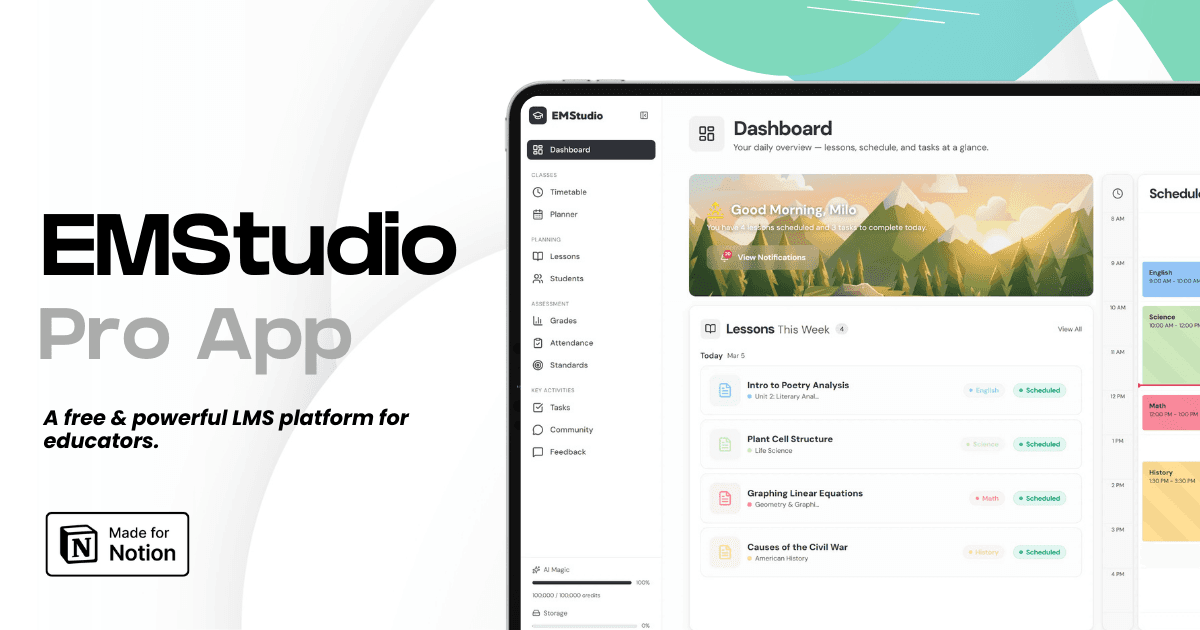
EMStudio is a free teaching management app — manage your classes, students, lessons, and more!
Learn More
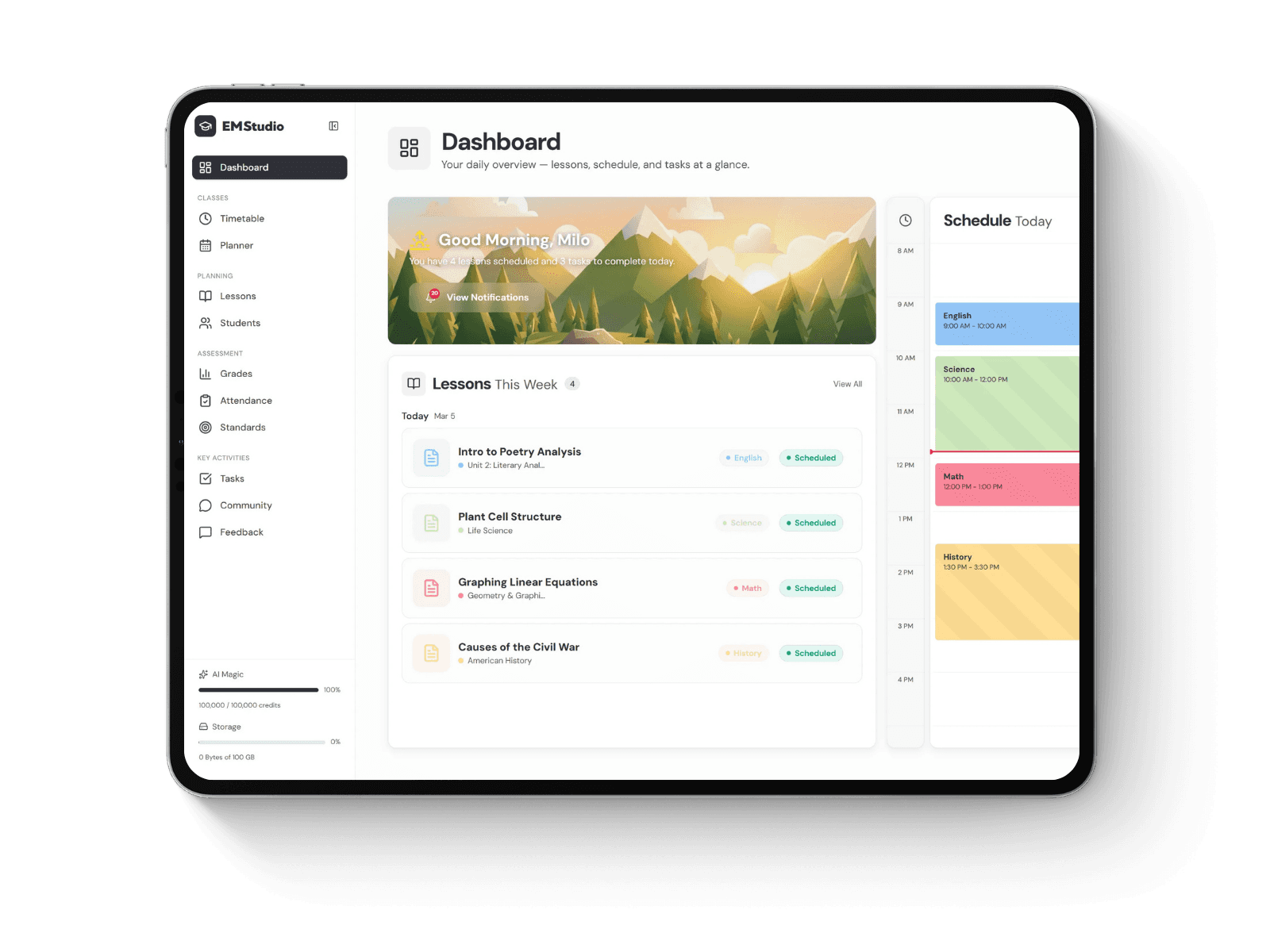
Still grading everything by hand?
EMStudio is a free teaching management app — manage your classes, students, lessons, and more!
Learn More
Table of Contents
What Are 21st Century Skills and Why Are They Important Today?
21st century skills are the competencies students need to thrive in an interconnected world, including critical thinking, creativity, communication, and collaboration (the Four Cs), plus digital literacy and career readiness. They matter because automation and AI are rapidly changing job markets, requiring adaptive, creative problem-solvers where knowledge-repeaters once thrived.
I watched my fourth graders argue over a robotics challenge last spring until they realized that collaboration requires listening, not just leading. That friction revealed why competency-based education matters as much as the content itself.
The Partnership for 21st Century Learning mapped this territory with their P21 Framework, organizing competencies into three arches. Life and career skills cover flexibility and leadership, while learning and innovation skills center on the Four Cs. Information, media, and technology skills round out the structure with digital literacy and media fluency.
The World Economic Forum Future of Jobs Report 2023 makes it clear why this matters for adaptive capability. Their research indicates that 50 percent of employees will need reskilling by 2025 due to AI and automation. Technical skills now have a half-life of roughly five years, making adaptive learning in the 21st century a survival tool.
This is a sharp break from the 1890 to 1970 industrial model that shaped our current school structures. That system prioritized memorization and batch processing for factory efficiency and compliance. Today’s information economy needs just-in-time learning and inquiry-based instruction over simple knowledge repetition.
Battelle for Kids offers schools a concrete translation through their Portrait of a Graduate framework. This visualization tool helps districts define local expectations for critical thinking rubrics and collaborative learning strategies. It moves abstract frameworks into observable behaviors that parents and boards can actually recognize and support with resources.
Defining the 21st Century Skills Framework
The P21 Framework rainbow diagram shows three distinct arches supporting student development. The outer arch contains life and career skills like initiative, cross-cultural flexibility, and productivity. The middle arch houses the Four Cs: critical thinking, communication, collaboration, and creativity. The inner arch covers information literacy, media literacy, and information and communications technology.
The ISTE Standards for Students provide the digital overlay that makes these concrete. Standard 1.6 Creative Communicator expects students to publish for authentic audiences, not just the teacher. Standard 1.2 Digital Citizen addresses ethical responsibility and digital citizenship online, while 1.5 Computational Thinking pushes beyond coding into problem decomposition. These standards give us specific language for teacher preparation needs a 21st-century overhaul conversations.
Mapping these standards to unit plans reveals natural overlap. A research project on local water quality can hit all three arches simultaneously: data analysis for technology skills, peer review for communication, and adapting methods when samples fail for flexibility. This integration prevents 21st century skills from becoming just another checkbox on the lesson plan.
The Shift From Industrial Age to Information Age Education
Walk into a 1920s classroom and you would recognize the factory model immediately. Rows of desks, bells signaling batch shifts, standardized pacing for every child. That design made sense when schools fed assembly lines requiring identical skills.
Modern collaborative workspaces look nothing like those rigid rows. Flexible seating, project teams, and agile sprints mirror the workplaces our students will inhabit. This physical shift signals a deeper pedagogical move toward project-based learning and authentic application.
John Hattie’s Visible Learning research clarifies the balance we must strike. Direct instruction carries an effect size of 0.59, making it important for foundational skill building. However, we must pair it with problem-based learning opportunities that force students to apply knowledge in messy, real-world contexts. The most effective 21st century skills education combines both approaches intentionally.
How Do 21st Century Skills Differ From Traditional Academic Focus?
Unlike traditional education's focus on individual content memorization and standardized testing, 21st century skills emphasize collaborative, real-world application and performance-based assessment. While traditional methods build foundational knowledge, modern approaches prioritize transferable skills like complex problem-solving and digital fluency that prepare students for evolving careers.
The shift is major. Traditional classrooms operated as information delivery systems. Modern approaches function as problem-solving studios, demanding different resources and structures than the textbook-and-chalkboard era.
Knowledge Goal: Memorization recycles facts; Application builds solutions.
Student Role: Passive recipient listens; Active constructor investigates.
Teacher Role: Sage on stage lectures; Guide on side coaches.
Assessment Type: Selected response picks answers; Performance creates products.
Success Metric: Test scores rank students; Portfolio evidence demonstrates growth.
Not every lesson needs collaboration. Foundational literacy and numeracy in K-2 require explicit, systematic instruction following Reading First principles. Kids need to automatize letter sounds before they can research online. 21st century approaches fail here without sufficient phonics and fluency drills. Save the project-based learning for after students can decode independently.
Traditional methods need textbooks. 21st century education requires devices, reliable WiFi, and intensive training. PBL certification runs $2,000 to $5,000 per teacher. You also need smaller student-teacher ratios to give meaningful feedback on complex projects. My district spent $12,000 outfitting one STEM lab while the traditional classroom got new workbooks. The investment gap creates equity issues.
Content Memorization vs. Real-World Application
I once watched two 4th grade classes study states. One memorized capitals for a Friday quiz. The other used Google Earth and USDA food desert data to analyze why certain regions lack grocery stores, then proposed solutions to city council. Both learned geography. Only one developed civic agency.
Jay McTighe's GRASPS framework builds these tasks. You define the Goal, Role, Audience, Situation, Product, and Standards. Swap "write about pioneers" for students becoming wagon train leaders presenting survival budgets to skeptical investors. The content sticks because the context matters.
The shift changes everything. Memorization asks "what." Application asks "so what." My students remember the food desert project three years later. They cannot name the capital of South Dakota.
Individual Achievement vs. Collaborative Learning
Traditional classrooms rely on individual seatwork. I used to hand out worksheets and hope neighbors didn't cheat. 21st century skills for students require structured interdependence.
Kagan Cooperative Learning Structures like Numbered Heads Together assign numbers to group members. You ask a question, groups ensure everyone knows the answer, then you randomly call number three. Everyone does the work because anyone might present.
Group composition matters. I mix high, medium, and low achievers deliberately. Homogeneous tracking widens gaps. Heterogeneous grouping for collaborative learning strategies forces peer tutoring and mirrors real workplace dynamics where expertise varies. The high achievers deepen understanding by teaching. The struggling students get immediate support.
Standardized Testing vs. Performance-Based Assessment
SBAC testing adapts to student ability using algorithms. It measures recall efficiently but cannot assess presentation skills or sustained inquiry. Performance-based assessments like portfolio defenses require students to present 20-minute work samples to panels of teachers and community members, then field questions. This is competency-based education in action.
I use the Buck Institute Gold Standard rubric for critical thinking. It tracks six traits: analysis, interpretation, self-regulation, and others. Students see exactly what sophisticated thinking looks like. Standardized tests show me who bubbled correctly. Portfolios show me who thinks critically. The rubric language shapes our daily discussions about quality and revision.
What Are the Four Cs and Digital Literacy Frameworks?
The Four Cs comprise critical thinking (analysis and evaluation), creativity (novel idea generation), communication (clear information exchange across media), and collaboration (effective teamwork). Digital literacy frameworks like ISTE Standards add information literacy, digital citizenship, and computational thinking, creating a comprehensive skill set for modern learning and citizenship.
I use a simple diagnostic for 21st century skills in education. If a lesson hits all five points, I keep it. If it misses more than two, I rewrite it.
Critical thinking shows up when students use Claim-Evidence-Reasoning to defend conclusions. Creativity means applying the SCAMPER technique to redesign existing products like lunch containers or backpack designs. Communication follows the PechaKucha protocol of twenty slides at twenty seconds each, forcing ruthless editing.
Collaboration uses the Harkness Method: an oval table with twelve students and me as silent observer taking notes on participation patterns. Digital literacy follows the Common Sense Media K-12 scope covering self-image, online relationships, cyberbullying prevention, and privacy security protocols.
The 4Cs + 1 Diagnostic helps me audit any lesson for true 21st century education skills:
Critical Thinking: Can students defend a claim using the C-E-R framework?
Creativity: Did they generate novel solutions using SCAMPER prompts?
Communication: Did they present using PechaKucha or equivalent multi-modal formats?
Collaboration: Did they work in Harkness-style or virtual teams with documented roles?
Digital Literacy: Did they practice safe, ethical, and effective technology use?
Score each item zero to two. Zero means absent, one means emerging, two means proficient. Ten points total. I consider seven or above a green light.
Critical Thinking and Complex Problem-Solving
I stopped writing multiple-choice tests for my biology unit. Now I target Evaluate and Create from Bloom’s revised taxonomy instead of Remember. Reciting cell parts gets a C. Arguing whether GMOs solve world hunger using scientific evidence gets an A.
I use the Claim-Support-Question routine from Harvard’s Project Zero. Students state a claim about a primary source, find three supporting evidence pieces, then generate one question that remains unanswered. I time this for twenty minutes. Any longer and they recycle ideas. The questions become tomorrow’s inquiry prompts built into my critical thinking rubrics. The unanswered questions reveal more about their thinking than the claims do.
Creativity and Innovation Mindsets
Last October, my 7th graders redesigned lunch containers using SCAMPER during a project-based learning unit. They substituted materials, combined functions, adapted sizes, and eliminated waste. One student created a foldable silicone box with a built-in ice pack compartment. The constraint forces them to think inside the box, which paradoxically generates more innovation.
I use Adobe Creative Cloud Express or Canva for Education for the final pitch decks. Both platforms have copyright-safe image libraries built in. This beats random Google Images searches that land kids on dubious sites with watermarked photos. This creative work connects directly to cultivating innovation mindsets.
Communication Across Multiple Modalities
Students must demonstrate proficiency in four distinct modes: text through argumentative essays, visual through infographics using Piktochart, oral through podcasts using Anchor, and embodied through theater or drama exercises.
I use the Speed Dating format for discussion practice. Students rotate every two minutes, taking notes on a conversation ticket that I collect for assessment. It forces concise speaking and active listening. No one hides in the back row during these collaborative learning strategies. Everyone speaks twice before the timer stops. The rotation keeps energy high and prevents the same three students from dominating.
Collaboration in Physical and Virtual Teams
I enforce the 3-before-me rule for digital teamwork. Check the shared documentation, ask a peer, consult the FAQ document, then ask me. It builds independence faster than hand-holding through every step of competency-based education projects. Students hate it for three days, then thank me when they realize they can solve problems without me.
Google Workspace allows real-time co-editing with up to 100 participants per Meet. Microsoft Teams offers better threaded conversations for asynchronous work. Slack for Education organizes by channels but has a steeper learning curve. Pick based on your district’s existing contract, not the shiniest features list.
Digital Literacy and Responsible Citizenship
I follow ISTE Standard 1.2 Digital Citizen. We practice source evaluation using the CRAAP test: Currency, Relevance, Authority, Accuracy, and Purpose. We also cover Creative Commons licenses for copyright-safe images and proper attribution formats.
For 8th grade and up, I introduce Bitwarden for password management and run phishing simulations. Two-factor authentication is mandatory for all school accounts. This forms the core of our digital literacy skills framework and supports genuine digital citizenship beyond watching basic safety videos. These skills transfer beyond my classroom walls.
Critical Thinking and Problem-Solving in Real-World Contexts
Inquiry-Based Learning Strategies
I learned the hard way that throwing ninth graders into pure discovery mode backfires. When I had bio students explore photosynthesis by placing Elodea sprigs in light and dark environments before lecturing, they retained the chemical pathway better than previous classes who sat through slides first. That is the 5E model—Engage, Explore, Explain, Elaborate, Evaluate—where exploration precedes direct inquiry-based instruction.
But here is where problem-solving in education gets tricky. Novice learners face crushing extraneous cognitive load. Sweller's research holds up in real classrooms: kids without prior knowledge need worked examples first, not open-ended investigation. Pure discovery can overwhelm working memory until schemas develop. I now use guided inquiry, offering partial data sets or scaffolded protocols so students can focus on conceptual connections, not hunting for procedures.
For discourse, Socratic Seminars work when roles are concrete. Assign a Discussion Director to pose follow-ups, an Evidence Tracker to map claims against the text, and a Vocabulary Enricher to flag key terminology. Post accountable talk stems like "I agree because..." or "I see a different perspective..." on the wall. These collaborative learning strategies keep talk academic and equitable. When physical labs are impossible, PhET interactive simulations from the University of Colorado let students test hypotheses about circuit resistance or gene expression without burning through supply budgets.
Authentic Scenario Design for Student Engagement
The Food Desert Project works for eighth grade geography. Students pull data from the USDA Food Access Research Atlas to map local food swamps, then calculate nutritional deficits using MyPlate guidelines. They identify specific zip codes where residents lack vehicle access and grocery stores within a mile. The hook comes when they present proposals to actual city council members, not just the teacher. That authentic audience makes them triple-check every calculation.
For inquiry-based learning strategies that stick, the GRASPS template helps. Seventh graders act as architects designing sustainable tiny houses for a local homeless nonprofit, applying area and perimeter standards to real floor plans. The constraint drives the thinking: limit the build budget to $25,000 using real Home Depot pricing APIs.
When student groups hit the $25k ceiling three days into planning, they must redesign. One group might swap granite for laminate countertops and discover R-value insulation ratings to cut HVAC costs. Teachers assess these projects with critical thinking rubrics that measure constraint navigation and source evaluation, not just correct answers. These skills of 21st century learners develop through project-based learning that mirrors adult professional work. Students practice digital citizenship as they manage real USDA data responsibly. This approach embodies competency-based education where mastery of these 21st century skills matters more than seat time.
Collaboration and Communication Across Digital and Physical Spaces
Structured Cooperative Learning Techniques
Kagan Structures give you frames that force equal participation. I use RoundRobin with a visible timer so each student gets exactly 45 seconds to share their hypothesis. Jigsaw works best when expert groups master one concept and return to teach their home group. Numbered Heads Together keeps them honest—I roll a die to pick who answers, so they all stay ready. Groups of four hit the sweet spot for interdependence; three lets one hide, five creates side conversations that split the group.
Your room setup changes the conversation. Harkness tables seat twelve in an oval where everyone sees everyone else without craning necks. When I don't have that furniture, I run a campfire config: an inner circle of four discusses while the outer circle observes using a fishbowl protocol. The outer group takes notes on specific speaking behaviors, then swaps in. This physical arrangement forces active listening.
Clock Partners ended my grouping headaches. Students trace a clock on paper and find a 12:00 partner, a 3:00 partner, and so on. When I call "meet with your 3:00 partner," the diversity is built in. Last October, my 7th graders used this during an inquiry-based instruction unit on ecosystems. They brought distinct background knowledge to their project-based learning teams because the clock pairings crossed reading groups. The randomness kept the groups fresh.
Digital Collaboration Tools and Online Etiquette
Digital citizenship starts with clear response expectations. I teach the 20-minute rule: if someone asks you a question in a shared doc, you acknowledge it within twenty minutes during class time. We use subject line protocols—[Action Required] means you do something today, [FYI] means read when you can. I adapted these from RFC 1855, the original netiquette guidelines, simplifying them for middle schoolers who are still learning professional communication norms.
Google Docs and Padlet serve different purposes. Docs work best with Suggestion mode turned on for peer editing; students see the change but choose whether to accept it. Padlet shines for visual brainstorming, but I cap it at three posts per student. That prevents one kid from dominating the wall with fifty sticky notes while others hang back. Both tools support tech-enabled collaborative learning when you match the platform to the task.
Virtual collaboration needs guardrails. I require cameras on for the first five minutes of breakout rooms, then allow them off to reduce bandwidth strain. Questions go in the chat; answers come verbally so I can hear the reasoning. For asynchronous discussion, Flip limits videos to 90 seconds. That forces concision and respects classmates' attention spans while building digital fluency.
You can't ignore the hitchhiker effect. I keep a cup of popsicle sticks on my desk for random selection during group debriefs. Each student maintains an individual processing log where they record their specific contribution before the group submits anything. I assign distinct roles—Recorder writes, Materials Manager handles the tech, Timekeeper watches the clock, Facilitator keeps the discussion moving. Each role has a specific deliverable attached to their name on the critical thinking rubrics. These collaborative learning strategies build the 21st century skills students need for competency-based education.
Practical Integration Strategies by Grade Level and Subject
Elementary Classroom Activities and Learning Centers
I run four stations rotating every twenty minutes: Tech, Create, Collaborate, Investigate. In the Create corner, our MakerSpace Tinkering Studio stays stocked with Lego Wedo 2.0 sets, Ozobots, cardboard scraps, Makedo connectors, and Squishy Circuits. Kids build without staring at screens all morning. The materials target computational thinking through hands-on logic not dependent on apps.
Last October, my kindergarteners tackled Story Engineering. We read Goldilocks and the Three Bears, then they designed beds that wouldn't collapse under weighted beanbags. They sketched plans, built prototypes, and tested them. One group used corrugated cardboard and Makedo screws to reinforce the legs after their first attempt snapped.
I capture everything in Seesaw Learning Journals. Students record thirty-second video reflections explaining their design choices. Parents see the engineering design process in action, and I have timestamped evidence of their computational thinking growth without piles of paper.
Middle School Interdisciplinary Project Units
Sixth through eighth graders need structure disguised as freedom. We run six-week interdisciplinary units that mirror real professional workflows. My favorite is the Future City competition: math classes build scale models, science tackles water management systems, ELA writes technical proposals, and art produces architectural renderings. A local engineering firm video-conferences twice during the build to critique designs.
We also block out Genius Hour every Friday. Students spend one full period weekly on passion projects, then deliver three-minute TED-style talks. The rule is maximum six words per slide. This forces them to own the narrative without reading bullet points off a screen.
Grading is transparent from day one. The physical model counts for fifty percent, the technical paper for twenty-five, and the presentation for twenty-five. Students see the weighted project-based learning projects for real-world impact rubric before they touch a glue stick.
High School Capstone Projects and Community Partnerships
By senior year, students need to prove they can manage complexity without a teacher hovering. Our capstones demand forty hours of field experience addressing authentic community needs. One team might create a social media strategy for the local animal shelter, logging ten documented hours with a marketing mentor from a nearby university.
The finish line is a public exhibition night. Each student defends their work for twenty minutes, followed by ten minutes of questioning from a panel of three teachers and one community expert. We use PBLWorks Gold Standard rubrics to assess their 21st century skills mastery, from critical thinking to collaborative problem-solving.
If geography limits mentor access, we use Nepris or LinkedIn for Education to connect with industry professionals virtually. The requirement doesn't change; only the zip code does. Virtual mentorship still demands the same ten-hour commitment documented in the student logs.
How to Build Your 21st Century Skills Implementation Plan
Audit Your Current Curriculum for Competency Gaps
Print the P21 Framework rainbow and spread your unit maps across the table. Use a traffic-light system: green where students already apply skills, red where you’re just dumping content. I spend three hours per course on this audit, usually during a professional development day when the building is quiet.
The visual map reveals what your syllabus hides. Block out the time. Three hours per course sounds like a lot until you realize you’re mapping the entire semester.
Most curricula sit at Webb’s DOK 1—simple recall. Look for opportunities to push toward DOK 3 (Strategic Thinking) and DOK 4 (Extended Thinking). Compare what you find against your state’s Portrait of a Graduate competencies, which likely include digital citizenship alongside traditional academics. Mark where your current lessons demand critical thinking versus mere memorization.
You’ll likely discover you’re “accidentally” teaching collaboration during group work rather than intentionally designing for it. Document these gaps explicitly. That red zone is where your competency-based education work begins.
Select One Skill Cluster to Develop First
Start with data, not ambition. If your standardized reading scores sit below the 50th percentile, prioritize Communication first. If they’re above the 75th percentile, start with Critical Thinking. High behavior referrals? That’s your signal to focus on Collaboration immediately.
Pick the skill cluster that matches your current strengths, especially if you already use collaborative learning strategies in your classroom. Debate coaches should lean into Communication; science teachers naturally gravitate toward Critical Thinking through inquiry-based instruction. Comfort here ensures you’ll stick with it when the tech fails or the fire drill hits.
Scope matters immensely. Choose one unit lasting three weeks in a single subject area. Do not attempt whole-school transformation simultaneously. You’re building proof of concept, not restructuring the entire building before lunch. Early wins matter more than comprehensive coverage right now. Your pilot unit should feel manageable, not monumental.
Design Performance-Based Rubrics and Assessments
Rubrics make or break this work. For creativity, use Single-Point Rubrics with one Proficient column and plus/minus columns for feedback. This avoids ceiling effects where advanced students hit the top and stop growing. For collaboration, use Analytic Rubrics with four levels: Emerging, Developing, Proficient, and Exemplary.
Separate Interpersonal Skills like active listening from Task Management like meeting deadlines. Students can organize a project while still fighting about who does what. Specificity prevents the "everyone gets a B for participation" trap that kills actual skill growth. Teachers need clarity before they can give it to students. Clear criteria separate noise from signal.
Use RubiStar for Teachers to generate customizable 21st century skills rubric templates, including critical thinking rubrics. Then streamline your curriculum development framework by storing these rubrics where your team can actually find them next September.
Iterate and Expand Across Grade Levels and Departments
Run a 90-day pilot with one unit. Collect data through student self-assessments using Google Forms with Likert scales and teacher observation checklists. Iterate before you even think about school-wide rollout. Data drives decisions here, not enthusiasm or admin pressure.
Set a fail-fast criteria. Last spring, when my 7th graders’ engagement scores dropped below 70% on the weekly survey after we switched to full project-based learning, I reverted to a hybrid model within 48 hours. We regrouped, adjusted our collaborative learning strategies, and tried again. The data told us what our lesson plans couldn’t.
Expansion follows a timeline: Year one is the pilot teacher, year two brings in the department, year three achieves vertical alignment K-12. Create Playbooks—single-page unit summaries with resources, not full lesson plans—to reduce prep time for colleagues who adopt this approach later. Protect your colleagues' time. Playbooks work because they respect the reality of teacher prep periods.

The Bottom Line on 21St Century Skills
These skills are not a separate curriculum you layer on top of your existing units. I learned this the hard way when I tried to teach "collaboration" as a standalone lesson in September with my 7th graders. It flopped. The Four Cs work best when they are the method through which students learn your content, not the content itself. Use project-based learning to teach your standards, and let the skills emerge naturally from the work.
Pick one skill and one unit to start. Last year, I focused only on critical thinking during our ecosystems project in April. When that felt natural after about three weeks, I added digital citizenship to our research phase. Small steps stick; grand overhauls collapse by October when you're drowning in grading and parent emails.
Your students need to leave your classroom knowing how to think through problems and work with others, not just what to memorize for the test. That's the real measure of 21st century skills. Everything else is just noise.
What Are 21st Century Skills and Why Are They Important Today?
21st century skills are the competencies students need to thrive in an interconnected world, including critical thinking, creativity, communication, and collaboration (the Four Cs), plus digital literacy and career readiness. They matter because automation and AI are rapidly changing job markets, requiring adaptive, creative problem-solvers where knowledge-repeaters once thrived.
I watched my fourth graders argue over a robotics challenge last spring until they realized that collaboration requires listening, not just leading. That friction revealed why competency-based education matters as much as the content itself.
The Partnership for 21st Century Learning mapped this territory with their P21 Framework, organizing competencies into three arches. Life and career skills cover flexibility and leadership, while learning and innovation skills center on the Four Cs. Information, media, and technology skills round out the structure with digital literacy and media fluency.
The World Economic Forum Future of Jobs Report 2023 makes it clear why this matters for adaptive capability. Their research indicates that 50 percent of employees will need reskilling by 2025 due to AI and automation. Technical skills now have a half-life of roughly five years, making adaptive learning in the 21st century a survival tool.
This is a sharp break from the 1890 to 1970 industrial model that shaped our current school structures. That system prioritized memorization and batch processing for factory efficiency and compliance. Today’s information economy needs just-in-time learning and inquiry-based instruction over simple knowledge repetition.
Battelle for Kids offers schools a concrete translation through their Portrait of a Graduate framework. This visualization tool helps districts define local expectations for critical thinking rubrics and collaborative learning strategies. It moves abstract frameworks into observable behaviors that parents and boards can actually recognize and support with resources.
Defining the 21st Century Skills Framework
The P21 Framework rainbow diagram shows three distinct arches supporting student development. The outer arch contains life and career skills like initiative, cross-cultural flexibility, and productivity. The middle arch houses the Four Cs: critical thinking, communication, collaboration, and creativity. The inner arch covers information literacy, media literacy, and information and communications technology.
The ISTE Standards for Students provide the digital overlay that makes these concrete. Standard 1.6 Creative Communicator expects students to publish for authentic audiences, not just the teacher. Standard 1.2 Digital Citizen addresses ethical responsibility and digital citizenship online, while 1.5 Computational Thinking pushes beyond coding into problem decomposition. These standards give us specific language for teacher preparation needs a 21st-century overhaul conversations.
Mapping these standards to unit plans reveals natural overlap. A research project on local water quality can hit all three arches simultaneously: data analysis for technology skills, peer review for communication, and adapting methods when samples fail for flexibility. This integration prevents 21st century skills from becoming just another checkbox on the lesson plan.
The Shift From Industrial Age to Information Age Education
Walk into a 1920s classroom and you would recognize the factory model immediately. Rows of desks, bells signaling batch shifts, standardized pacing for every child. That design made sense when schools fed assembly lines requiring identical skills.
Modern collaborative workspaces look nothing like those rigid rows. Flexible seating, project teams, and agile sprints mirror the workplaces our students will inhabit. This physical shift signals a deeper pedagogical move toward project-based learning and authentic application.
John Hattie’s Visible Learning research clarifies the balance we must strike. Direct instruction carries an effect size of 0.59, making it important for foundational skill building. However, we must pair it with problem-based learning opportunities that force students to apply knowledge in messy, real-world contexts. The most effective 21st century skills education combines both approaches intentionally.
How Do 21st Century Skills Differ From Traditional Academic Focus?
Unlike traditional education's focus on individual content memorization and standardized testing, 21st century skills emphasize collaborative, real-world application and performance-based assessment. While traditional methods build foundational knowledge, modern approaches prioritize transferable skills like complex problem-solving and digital fluency that prepare students for evolving careers.
The shift is major. Traditional classrooms operated as information delivery systems. Modern approaches function as problem-solving studios, demanding different resources and structures than the textbook-and-chalkboard era.
Knowledge Goal: Memorization recycles facts; Application builds solutions.
Student Role: Passive recipient listens; Active constructor investigates.
Teacher Role: Sage on stage lectures; Guide on side coaches.
Assessment Type: Selected response picks answers; Performance creates products.
Success Metric: Test scores rank students; Portfolio evidence demonstrates growth.
Not every lesson needs collaboration. Foundational literacy and numeracy in K-2 require explicit, systematic instruction following Reading First principles. Kids need to automatize letter sounds before they can research online. 21st century approaches fail here without sufficient phonics and fluency drills. Save the project-based learning for after students can decode independently.
Traditional methods need textbooks. 21st century education requires devices, reliable WiFi, and intensive training. PBL certification runs $2,000 to $5,000 per teacher. You also need smaller student-teacher ratios to give meaningful feedback on complex projects. My district spent $12,000 outfitting one STEM lab while the traditional classroom got new workbooks. The investment gap creates equity issues.
Content Memorization vs. Real-World Application
I once watched two 4th grade classes study states. One memorized capitals for a Friday quiz. The other used Google Earth and USDA food desert data to analyze why certain regions lack grocery stores, then proposed solutions to city council. Both learned geography. Only one developed civic agency.
Jay McTighe's GRASPS framework builds these tasks. You define the Goal, Role, Audience, Situation, Product, and Standards. Swap "write about pioneers" for students becoming wagon train leaders presenting survival budgets to skeptical investors. The content sticks because the context matters.
The shift changes everything. Memorization asks "what." Application asks "so what." My students remember the food desert project three years later. They cannot name the capital of South Dakota.
Individual Achievement vs. Collaborative Learning
Traditional classrooms rely on individual seatwork. I used to hand out worksheets and hope neighbors didn't cheat. 21st century skills for students require structured interdependence.
Kagan Cooperative Learning Structures like Numbered Heads Together assign numbers to group members. You ask a question, groups ensure everyone knows the answer, then you randomly call number three. Everyone does the work because anyone might present.
Group composition matters. I mix high, medium, and low achievers deliberately. Homogeneous tracking widens gaps. Heterogeneous grouping for collaborative learning strategies forces peer tutoring and mirrors real workplace dynamics where expertise varies. The high achievers deepen understanding by teaching. The struggling students get immediate support.
Standardized Testing vs. Performance-Based Assessment
SBAC testing adapts to student ability using algorithms. It measures recall efficiently but cannot assess presentation skills or sustained inquiry. Performance-based assessments like portfolio defenses require students to present 20-minute work samples to panels of teachers and community members, then field questions. This is competency-based education in action.
I use the Buck Institute Gold Standard rubric for critical thinking. It tracks six traits: analysis, interpretation, self-regulation, and others. Students see exactly what sophisticated thinking looks like. Standardized tests show me who bubbled correctly. Portfolios show me who thinks critically. The rubric language shapes our daily discussions about quality and revision.
What Are the Four Cs and Digital Literacy Frameworks?
The Four Cs comprise critical thinking (analysis and evaluation), creativity (novel idea generation), communication (clear information exchange across media), and collaboration (effective teamwork). Digital literacy frameworks like ISTE Standards add information literacy, digital citizenship, and computational thinking, creating a comprehensive skill set for modern learning and citizenship.
I use a simple diagnostic for 21st century skills in education. If a lesson hits all five points, I keep it. If it misses more than two, I rewrite it.
Critical thinking shows up when students use Claim-Evidence-Reasoning to defend conclusions. Creativity means applying the SCAMPER technique to redesign existing products like lunch containers or backpack designs. Communication follows the PechaKucha protocol of twenty slides at twenty seconds each, forcing ruthless editing.
Collaboration uses the Harkness Method: an oval table with twelve students and me as silent observer taking notes on participation patterns. Digital literacy follows the Common Sense Media K-12 scope covering self-image, online relationships, cyberbullying prevention, and privacy security protocols.
The 4Cs + 1 Diagnostic helps me audit any lesson for true 21st century education skills:
Critical Thinking: Can students defend a claim using the C-E-R framework?
Creativity: Did they generate novel solutions using SCAMPER prompts?
Communication: Did they present using PechaKucha or equivalent multi-modal formats?
Collaboration: Did they work in Harkness-style or virtual teams with documented roles?
Digital Literacy: Did they practice safe, ethical, and effective technology use?
Score each item zero to two. Zero means absent, one means emerging, two means proficient. Ten points total. I consider seven or above a green light.
Critical Thinking and Complex Problem-Solving
I stopped writing multiple-choice tests for my biology unit. Now I target Evaluate and Create from Bloom’s revised taxonomy instead of Remember. Reciting cell parts gets a C. Arguing whether GMOs solve world hunger using scientific evidence gets an A.
I use the Claim-Support-Question routine from Harvard’s Project Zero. Students state a claim about a primary source, find three supporting evidence pieces, then generate one question that remains unanswered. I time this for twenty minutes. Any longer and they recycle ideas. The questions become tomorrow’s inquiry prompts built into my critical thinking rubrics. The unanswered questions reveal more about their thinking than the claims do.
Creativity and Innovation Mindsets
Last October, my 7th graders redesigned lunch containers using SCAMPER during a project-based learning unit. They substituted materials, combined functions, adapted sizes, and eliminated waste. One student created a foldable silicone box with a built-in ice pack compartment. The constraint forces them to think inside the box, which paradoxically generates more innovation.
I use Adobe Creative Cloud Express or Canva for Education for the final pitch decks. Both platforms have copyright-safe image libraries built in. This beats random Google Images searches that land kids on dubious sites with watermarked photos. This creative work connects directly to cultivating innovation mindsets.
Communication Across Multiple Modalities
Students must demonstrate proficiency in four distinct modes: text through argumentative essays, visual through infographics using Piktochart, oral through podcasts using Anchor, and embodied through theater or drama exercises.
I use the Speed Dating format for discussion practice. Students rotate every two minutes, taking notes on a conversation ticket that I collect for assessment. It forces concise speaking and active listening. No one hides in the back row during these collaborative learning strategies. Everyone speaks twice before the timer stops. The rotation keeps energy high and prevents the same three students from dominating.
Collaboration in Physical and Virtual Teams
I enforce the 3-before-me rule for digital teamwork. Check the shared documentation, ask a peer, consult the FAQ document, then ask me. It builds independence faster than hand-holding through every step of competency-based education projects. Students hate it for three days, then thank me when they realize they can solve problems without me.
Google Workspace allows real-time co-editing with up to 100 participants per Meet. Microsoft Teams offers better threaded conversations for asynchronous work. Slack for Education organizes by channels but has a steeper learning curve. Pick based on your district’s existing contract, not the shiniest features list.
Digital Literacy and Responsible Citizenship
I follow ISTE Standard 1.2 Digital Citizen. We practice source evaluation using the CRAAP test: Currency, Relevance, Authority, Accuracy, and Purpose. We also cover Creative Commons licenses for copyright-safe images and proper attribution formats.
For 8th grade and up, I introduce Bitwarden for password management and run phishing simulations. Two-factor authentication is mandatory for all school accounts. This forms the core of our digital literacy skills framework and supports genuine digital citizenship beyond watching basic safety videos. These skills transfer beyond my classroom walls.
Critical Thinking and Problem-Solving in Real-World Contexts
Inquiry-Based Learning Strategies
I learned the hard way that throwing ninth graders into pure discovery mode backfires. When I had bio students explore photosynthesis by placing Elodea sprigs in light and dark environments before lecturing, they retained the chemical pathway better than previous classes who sat through slides first. That is the 5E model—Engage, Explore, Explain, Elaborate, Evaluate—where exploration precedes direct inquiry-based instruction.
But here is where problem-solving in education gets tricky. Novice learners face crushing extraneous cognitive load. Sweller's research holds up in real classrooms: kids without prior knowledge need worked examples first, not open-ended investigation. Pure discovery can overwhelm working memory until schemas develop. I now use guided inquiry, offering partial data sets or scaffolded protocols so students can focus on conceptual connections, not hunting for procedures.
For discourse, Socratic Seminars work when roles are concrete. Assign a Discussion Director to pose follow-ups, an Evidence Tracker to map claims against the text, and a Vocabulary Enricher to flag key terminology. Post accountable talk stems like "I agree because..." or "I see a different perspective..." on the wall. These collaborative learning strategies keep talk academic and equitable. When physical labs are impossible, PhET interactive simulations from the University of Colorado let students test hypotheses about circuit resistance or gene expression without burning through supply budgets.
Authentic Scenario Design for Student Engagement
The Food Desert Project works for eighth grade geography. Students pull data from the USDA Food Access Research Atlas to map local food swamps, then calculate nutritional deficits using MyPlate guidelines. They identify specific zip codes where residents lack vehicle access and grocery stores within a mile. The hook comes when they present proposals to actual city council members, not just the teacher. That authentic audience makes them triple-check every calculation.
For inquiry-based learning strategies that stick, the GRASPS template helps. Seventh graders act as architects designing sustainable tiny houses for a local homeless nonprofit, applying area and perimeter standards to real floor plans. The constraint drives the thinking: limit the build budget to $25,000 using real Home Depot pricing APIs.
When student groups hit the $25k ceiling three days into planning, they must redesign. One group might swap granite for laminate countertops and discover R-value insulation ratings to cut HVAC costs. Teachers assess these projects with critical thinking rubrics that measure constraint navigation and source evaluation, not just correct answers. These skills of 21st century learners develop through project-based learning that mirrors adult professional work. Students practice digital citizenship as they manage real USDA data responsibly. This approach embodies competency-based education where mastery of these 21st century skills matters more than seat time.
Collaboration and Communication Across Digital and Physical Spaces
Structured Cooperative Learning Techniques
Kagan Structures give you frames that force equal participation. I use RoundRobin with a visible timer so each student gets exactly 45 seconds to share their hypothesis. Jigsaw works best when expert groups master one concept and return to teach their home group. Numbered Heads Together keeps them honest—I roll a die to pick who answers, so they all stay ready. Groups of four hit the sweet spot for interdependence; three lets one hide, five creates side conversations that split the group.
Your room setup changes the conversation. Harkness tables seat twelve in an oval where everyone sees everyone else without craning necks. When I don't have that furniture, I run a campfire config: an inner circle of four discusses while the outer circle observes using a fishbowl protocol. The outer group takes notes on specific speaking behaviors, then swaps in. This physical arrangement forces active listening.
Clock Partners ended my grouping headaches. Students trace a clock on paper and find a 12:00 partner, a 3:00 partner, and so on. When I call "meet with your 3:00 partner," the diversity is built in. Last October, my 7th graders used this during an inquiry-based instruction unit on ecosystems. They brought distinct background knowledge to their project-based learning teams because the clock pairings crossed reading groups. The randomness kept the groups fresh.
Digital Collaboration Tools and Online Etiquette
Digital citizenship starts with clear response expectations. I teach the 20-minute rule: if someone asks you a question in a shared doc, you acknowledge it within twenty minutes during class time. We use subject line protocols—[Action Required] means you do something today, [FYI] means read when you can. I adapted these from RFC 1855, the original netiquette guidelines, simplifying them for middle schoolers who are still learning professional communication norms.
Google Docs and Padlet serve different purposes. Docs work best with Suggestion mode turned on for peer editing; students see the change but choose whether to accept it. Padlet shines for visual brainstorming, but I cap it at three posts per student. That prevents one kid from dominating the wall with fifty sticky notes while others hang back. Both tools support tech-enabled collaborative learning when you match the platform to the task.
Virtual collaboration needs guardrails. I require cameras on for the first five minutes of breakout rooms, then allow them off to reduce bandwidth strain. Questions go in the chat; answers come verbally so I can hear the reasoning. For asynchronous discussion, Flip limits videos to 90 seconds. That forces concision and respects classmates' attention spans while building digital fluency.
You can't ignore the hitchhiker effect. I keep a cup of popsicle sticks on my desk for random selection during group debriefs. Each student maintains an individual processing log where they record their specific contribution before the group submits anything. I assign distinct roles—Recorder writes, Materials Manager handles the tech, Timekeeper watches the clock, Facilitator keeps the discussion moving. Each role has a specific deliverable attached to their name on the critical thinking rubrics. These collaborative learning strategies build the 21st century skills students need for competency-based education.
Practical Integration Strategies by Grade Level and Subject
Elementary Classroom Activities and Learning Centers
I run four stations rotating every twenty minutes: Tech, Create, Collaborate, Investigate. In the Create corner, our MakerSpace Tinkering Studio stays stocked with Lego Wedo 2.0 sets, Ozobots, cardboard scraps, Makedo connectors, and Squishy Circuits. Kids build without staring at screens all morning. The materials target computational thinking through hands-on logic not dependent on apps.
Last October, my kindergarteners tackled Story Engineering. We read Goldilocks and the Three Bears, then they designed beds that wouldn't collapse under weighted beanbags. They sketched plans, built prototypes, and tested them. One group used corrugated cardboard and Makedo screws to reinforce the legs after their first attempt snapped.
I capture everything in Seesaw Learning Journals. Students record thirty-second video reflections explaining their design choices. Parents see the engineering design process in action, and I have timestamped evidence of their computational thinking growth without piles of paper.
Middle School Interdisciplinary Project Units
Sixth through eighth graders need structure disguised as freedom. We run six-week interdisciplinary units that mirror real professional workflows. My favorite is the Future City competition: math classes build scale models, science tackles water management systems, ELA writes technical proposals, and art produces architectural renderings. A local engineering firm video-conferences twice during the build to critique designs.
We also block out Genius Hour every Friday. Students spend one full period weekly on passion projects, then deliver three-minute TED-style talks. The rule is maximum six words per slide. This forces them to own the narrative without reading bullet points off a screen.
Grading is transparent from day one. The physical model counts for fifty percent, the technical paper for twenty-five, and the presentation for twenty-five. Students see the weighted project-based learning projects for real-world impact rubric before they touch a glue stick.
High School Capstone Projects and Community Partnerships
By senior year, students need to prove they can manage complexity without a teacher hovering. Our capstones demand forty hours of field experience addressing authentic community needs. One team might create a social media strategy for the local animal shelter, logging ten documented hours with a marketing mentor from a nearby university.
The finish line is a public exhibition night. Each student defends their work for twenty minutes, followed by ten minutes of questioning from a panel of three teachers and one community expert. We use PBLWorks Gold Standard rubrics to assess their 21st century skills mastery, from critical thinking to collaborative problem-solving.
If geography limits mentor access, we use Nepris or LinkedIn for Education to connect with industry professionals virtually. The requirement doesn't change; only the zip code does. Virtual mentorship still demands the same ten-hour commitment documented in the student logs.
How to Build Your 21st Century Skills Implementation Plan
Audit Your Current Curriculum for Competency Gaps
Print the P21 Framework rainbow and spread your unit maps across the table. Use a traffic-light system: green where students already apply skills, red where you’re just dumping content. I spend three hours per course on this audit, usually during a professional development day when the building is quiet.
The visual map reveals what your syllabus hides. Block out the time. Three hours per course sounds like a lot until you realize you’re mapping the entire semester.
Most curricula sit at Webb’s DOK 1—simple recall. Look for opportunities to push toward DOK 3 (Strategic Thinking) and DOK 4 (Extended Thinking). Compare what you find against your state’s Portrait of a Graduate competencies, which likely include digital citizenship alongside traditional academics. Mark where your current lessons demand critical thinking versus mere memorization.
You’ll likely discover you’re “accidentally” teaching collaboration during group work rather than intentionally designing for it. Document these gaps explicitly. That red zone is where your competency-based education work begins.
Select One Skill Cluster to Develop First
Start with data, not ambition. If your standardized reading scores sit below the 50th percentile, prioritize Communication first. If they’re above the 75th percentile, start with Critical Thinking. High behavior referrals? That’s your signal to focus on Collaboration immediately.
Pick the skill cluster that matches your current strengths, especially if you already use collaborative learning strategies in your classroom. Debate coaches should lean into Communication; science teachers naturally gravitate toward Critical Thinking through inquiry-based instruction. Comfort here ensures you’ll stick with it when the tech fails or the fire drill hits.
Scope matters immensely. Choose one unit lasting three weeks in a single subject area. Do not attempt whole-school transformation simultaneously. You’re building proof of concept, not restructuring the entire building before lunch. Early wins matter more than comprehensive coverage right now. Your pilot unit should feel manageable, not monumental.
Design Performance-Based Rubrics and Assessments
Rubrics make or break this work. For creativity, use Single-Point Rubrics with one Proficient column and plus/minus columns for feedback. This avoids ceiling effects where advanced students hit the top and stop growing. For collaboration, use Analytic Rubrics with four levels: Emerging, Developing, Proficient, and Exemplary.
Separate Interpersonal Skills like active listening from Task Management like meeting deadlines. Students can organize a project while still fighting about who does what. Specificity prevents the "everyone gets a B for participation" trap that kills actual skill growth. Teachers need clarity before they can give it to students. Clear criteria separate noise from signal.
Use RubiStar for Teachers to generate customizable 21st century skills rubric templates, including critical thinking rubrics. Then streamline your curriculum development framework by storing these rubrics where your team can actually find them next September.
Iterate and Expand Across Grade Levels and Departments
Run a 90-day pilot with one unit. Collect data through student self-assessments using Google Forms with Likert scales and teacher observation checklists. Iterate before you even think about school-wide rollout. Data drives decisions here, not enthusiasm or admin pressure.
Set a fail-fast criteria. Last spring, when my 7th graders’ engagement scores dropped below 70% on the weekly survey after we switched to full project-based learning, I reverted to a hybrid model within 48 hours. We regrouped, adjusted our collaborative learning strategies, and tried again. The data told us what our lesson plans couldn’t.
Expansion follows a timeline: Year one is the pilot teacher, year two brings in the department, year three achieves vertical alignment K-12. Create Playbooks—single-page unit summaries with resources, not full lesson plans—to reduce prep time for colleagues who adopt this approach later. Protect your colleagues' time. Playbooks work because they respect the reality of teacher prep periods.
The Bottom Line on 21St Century Skills
These skills are not a separate curriculum you layer on top of your existing units. I learned this the hard way when I tried to teach "collaboration" as a standalone lesson in September with my 7th graders. It flopped. The Four Cs work best when they are the method through which students learn your content, not the content itself. Use project-based learning to teach your standards, and let the skills emerge naturally from the work.
Pick one skill and one unit to start. Last year, I focused only on critical thinking during our ecosystems project in April. When that felt natural after about three weeks, I added digital citizenship to our research phase. Small steps stick; grand overhauls collapse by October when you're drowning in grading and parent emails.
Your students need to leave your classroom knowing how to think through problems and work with others, not just what to memorize for the test. That's the real measure of 21st century skills. Everything else is just noise.
Still grading everything by hand?
EMStudio is a free teaching management app — manage your classes, students, lessons, and more!
Learn More
Still grading everything by hand?
EMStudio is a free teaching management app — manage your classes, students, lessons, and more!
Learn More



Notion4Teachers
Notion templates to simplify administrative tasks and enhance your teaching experience.



2026 Notion4Teachers. All Rights Reserved.
Notion4Teachers
Notion templates to simplify administrative tasks and enhance your teaching experience.
2026 Notion4Teachers. All Rights Reserved.
Notion4Teachers
Notion templates to simplify administrative tasks and enhance your teaching experience.
2026 Notion4Teachers. All Rights Reserved.