Psychomotor Learning: The Complete Guide for K-12 Educators
Psychomotor Learning: The Complete Guide for K-12 Educators

Article by
Milo
ESL Content Coordinator & Educator
ESL Content Coordinator & Educator
All Posts
You’re watching a 7th grader struggle to type without looking at the keys, or a kindergartener grip a pencil like it’s a weapon, and you’re wondering: why can some kids execute a perfect layup but forget the steps to long division? That disconnect is psychomotor learning in action—the domain where physical movement meets cognitive understanding. It’s not just “kinesthetic learning” or letting kids wiggle during math. It’s the specific process of motor skill acquisition that creates procedural memory and muscle memory.
Most of us got trained on Bloom’s taxonomy, but the psychomotor domain often gets reduced to “hands-on activities” in your lesson plan. In reality, it spans everything from a toddler’s sensorimotor stage exploration to a high schooler’s automatic movements during a science lab. When you understand how physical skills develop through repetition and tactile learning, you stop treating movement as a classroom management tool and start using it as legitimate instruction. That shift matters when you’re trying to decide if that coding lesson needs actual keyboard time or if those science safety drills are building real muscle memory.
Still grading everything by hand?
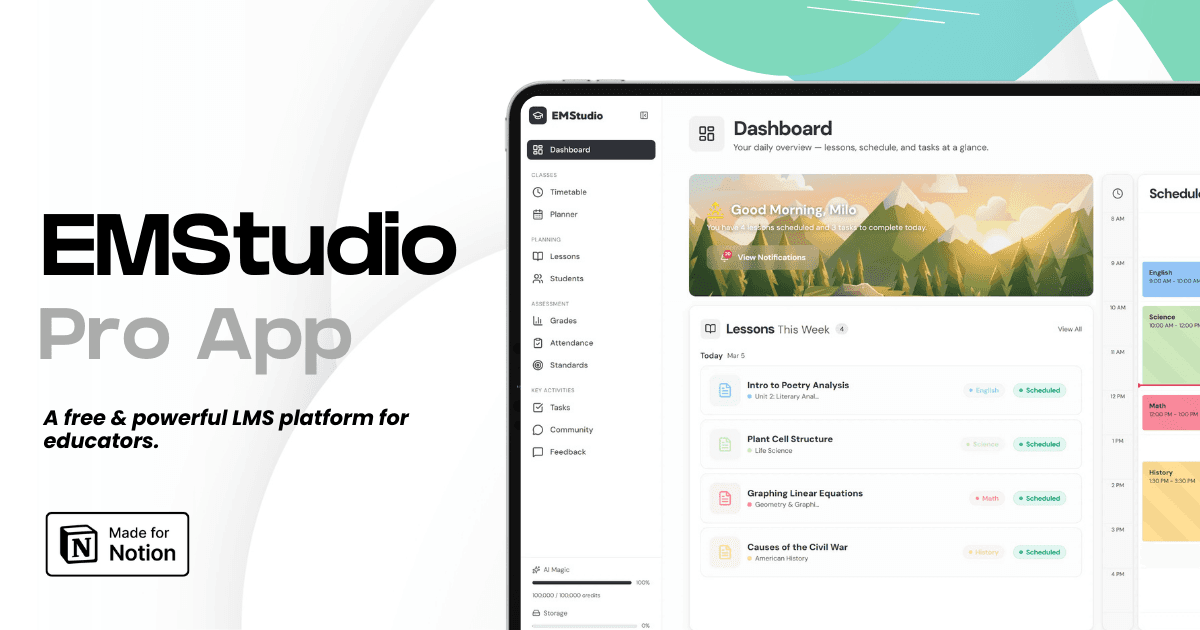
EMStudio is a free teaching management app — manage your classes, students, lessons, and more!
Learn More
Still grading everything by hand?
EMStudio is a free teaching management app — manage your classes, students, lessons, and more!
Learn More
Table of Contents
What Is Psychomotor Learning?
Psychomotor learning involves the acquisition of physical skills through neuromuscular coordination, progressing from basic perception to complex movement creation. It encompasses everything from handwriting to laboratory techniques, requiring deliberate practice and measurable physical performance rather than mere cognitive understanding. Unlike memorizing state capitals or analyzing themes in a novel, this domain relies on procedural memory formation in the cerebellum and motor cortex. Your brain literally rewires itself to move muscles with precision, storing muscle memory that outlasts conscious thought.
The ABCD model works here too, but with a twist. While cognitive objectives might ask students to "explain photosynthesis," physical objectives demand observable actions under specific conditions. You might write: "Given a compound microscope and slide (Condition), the student (Audience) will focus the specimen (Behavior) with 100% accuracy within three attempts (Degree)." No written test can capture whether a kid actually knows how to thread a needle or supporting students with neuromuscular disorders in adapting these physical tasks.
And stop thinking this only happens in gym class. Psychomotor learning drives the sensorimotor stage activities in your art room, the pipetting in biology labs, and the motor skill acquisition happening when 3rd graders finally grip pencils correctly. It's kinesthetic learning and tactile learning made measurable.
Simpson's Seven Levels of the Psychomotor Domain
Elizabeth Simpson revised Bloom's taxonomy in 1972 to track how we move from sensing to creating. Her hierarchy starts with simply noticing sensory data and ends with inventing new movement patterns. Each level builds on prior knowledge of the body itself.
The progression looks like this:
Level 1 Perception: Detecting cues like pencil pressure on paper or the resistance of clay under fingers.
Level 2 Set: Demonstrating readiness posture—shoulders squared to the desk, eyes tracking the demonstration.
Level 3 Guided Response: Copying cursive letters from a model, mimicking the teacher's pipetting technique.
Level 4 Mechanism: Automatic shoe-tying or calculator entry without looking at fingers.
Level 5 Complex Overt Response: Playing musical scales at tempo with proper fingering.
Level 6 Adaptation: Modifying lab techniques when equipment breaks or supporting students with neuromuscular disorders in finding alternative grips.
Level 7 Origination: Designing new engineering solutions or choreographing original movement sequences.
The Difference Between Fine and Gross Motor Skills
Not all movement is equal. Fine motor skills demand intrinsic muscle control—think handwriting, threading a needle, or instrument fingering. Gross motor skills recruit large muscle groups for throwing, balancing, or positioning lab stools safely.
Developmentally, these split sharply. Fine motor control hits rapid growth between ages 5-7, which explains why Kindergarteners struggle with scissors but 2nd graders cut precisely. Gross motor refinement continues through adolescence—your middle schoolers still look clumsy during group rotations because their bodies are still wiring coordination.
This matters for lesson design. Math manipulatives require fine motor precision that 1st graders haven't fully developed. Meanwhile, rearranging desks for collaborative work demands gross motor coordination that seems obvious to you but requires explicit safety cues for them.
How Psychomotor Objectives Differ From Cognitive Goals
Writing psychomotor objectives means abandoning verbs like "understand" or "analyze." You need actions you can see: "assembles," "calibrates," "threads," "sutures." If you can't film it and agree on whether they did it, it's not a physical objective.
Assessment differs too. Cognitive goals allow students to write explanations of the scientific method. Psychomotor demands they demonstrate it—measuring liquid within 2mm accuracy, completing the sequence within 30 seconds. The criteria are binary and measurable.
Usually, cognitive understanding precedes physical execution. Students need to know why they sterilize the loop before they can execute the flame-sterilization motion consistently. The brain learns the concept, then the body learns the movement.
How Does Psychomotor Development Progress Through the Seven Levels?
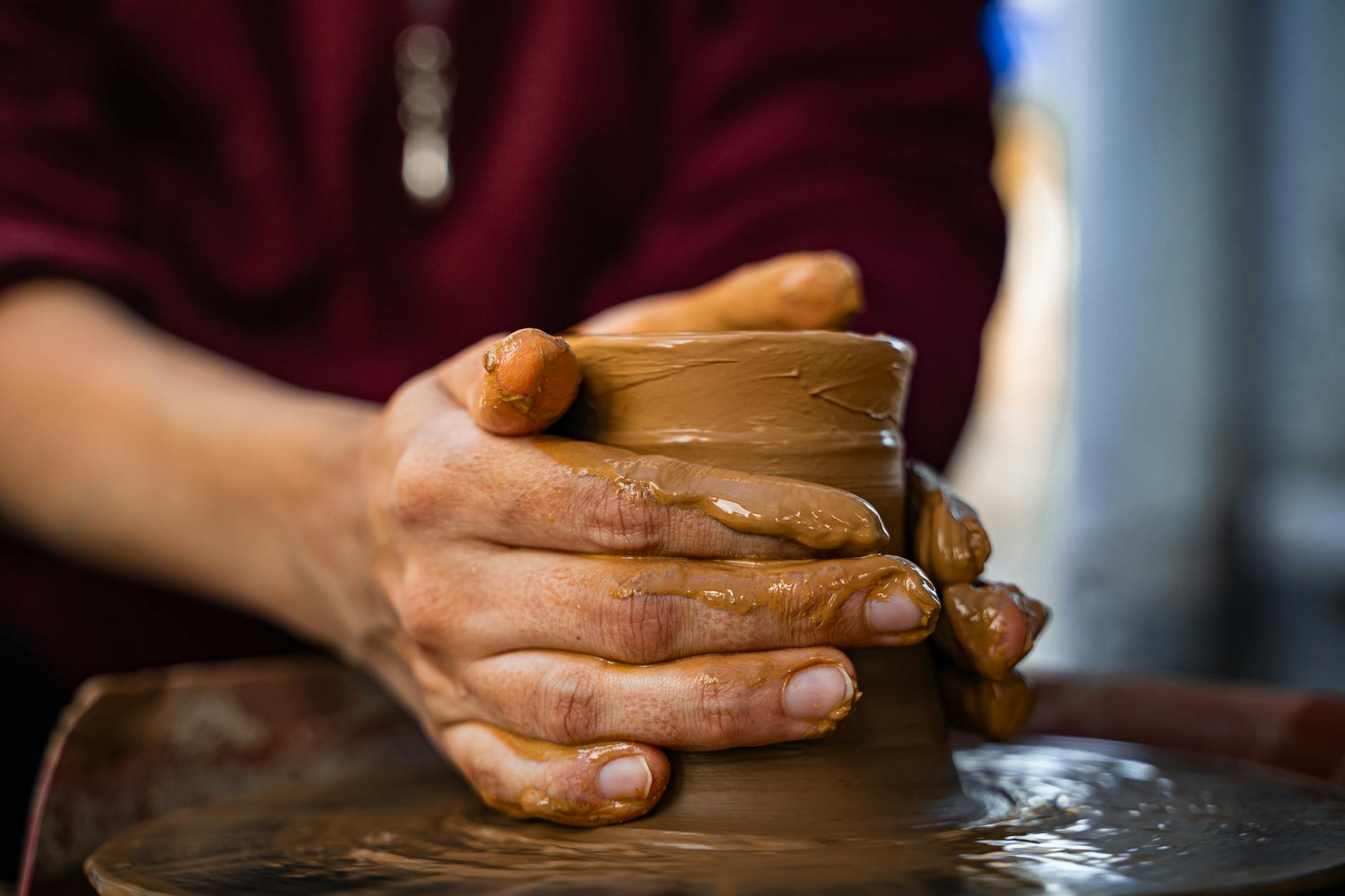
Students progress through seven hierarchical levels: perception (sensory awareness), set (readiness), guided response (imitation), mechanism (habituation), complex overt response (mastery), adaptation (contextual adjustment), and origination (creating new patterns). Each level requires mastery before advancing to the next.
Hattie's Visible Learning research puts the effect size for direct instruction in skill development at 0.59. That's well above the hinge point of 0.40. It means explicit, level-by-level teaching works. You can't skip steps in the cycle of learning and expect procedural memory to stick. When you teach psychomotor learning as a staircase rather than an elevator, students build muscle memory that lasts.
Here is the honest timeline for motor skill acquisition:
Levels 1–2: 1–2 sessions
Levels 3–4: 2–4 weeks of practice
Level 5: 6–8 weeks for automaticity
Levels 6–7: Months to years
Rush a kid to Level 5 before they've nailed Level 3, and you're drilling in errors. Those ingrained mistakes take twice as long to unlearn as teaching it right the first time. Here is your checkpoint: if a student cannot perform the skill while holding a conversation, they haven't reached Level 4 Mechanism. Dual-task failure means back to guided response.
Level 1: Perception and Sensory Awareness
Perception is where psychomotor learning begins. Students detect sensory cues: visually tracking a moving object across a screen, discriminating between high and low tones in music class, or feeling the difference between 20 and 40 pounds of pressure in their pencil grip. This is pure sensorimotor stage work.
In my 1st grade classroom, I watch kids learn to detect when their pencil grip is too tight through tactile feedback before any marks appear on paper. They haven't started writing yet. They're just feeling. These tactile learning strategies prevent the white-knuckle grip that ruins handwriting later.
Level 2: Set and Mental Readiness
Set is readiness in three forms: mental, physical, and emotional. Students assume correct posture, position materials within reach, and exhibit attention cues that signal their brain is primed for kinesthetic learning. Without this foundation, the body fights the skill.
Watch a middle schooler enter the science lab. If they've reached Level 2, they don safety goggles and gloves automatically before you say a word. The physical setup triggers the mental state. This habitual formation takes one or two sessions to establish, but it pays dividends for every subsequent skill you teach.
Level 3: Guided Response and Initial Practice
Guided response is where motor skill acquisition gets messy. Students imitate your demonstration, attempt the steps, and fail visibly. They need heavy scaffolding: verbal prompting, hand-over-hand assistance, and immediate error correction.
I teach cursive by having students trace letters while I chant stroke order. "Up, over, back down." Their hands wobble. That's fine. This stage requires tolerance for awkwardness. If you move them forward while they're still guessing at the pattern, that uncertainty fossilizes into bad form.
Level 4: Mechanism and Habitual Movement
Mechanism means the movement has become habitual. Students perform with confidence and consistency, freeing up cognitive load for other tasks. This is where procedural memory takes over from working memory, and the skill feels automatic.
Third graders tying shoes without looking up from their conversation. Seniors formatting MLA headers without reference sheets. If they have to stop talking to tie the knot, they're not here yet. That dual-task test—performing while conversing—separates Level 3 from Level 4 every time. You can't fake this level.
Level 5: Complex Overt Response and Skill Mastery
Complex overt response looks like expertise. Movements are smooth, accurate, precisely timed, and energy-efficient. The student has reached flow state in the physical task, expending minimal mental effort while maintaining high precision.
In AP Chemistry, I watch students perform titration with steady hand control, adding drops one by one while recording data simultaneously. No wobble. No hesitation. Six to eight weeks of deliberate practice gets you here, but only if you didn't rush past Level 3 and let errors set like concrete.
Level 6: Adaptation to New Contexts
Adaptation is where students modify technique to fit new constraints. The old microscope has stiff focus knobs. The wind picks up during the physics projectile lab. They adjust without starting over.
This isn't just following steps anymore. It's reading the environment and recalibrating muscle memory in real time. Takes months to develop. You can't teach it directly; you have to create problem scenarios and let them struggle through the transfer.
Level 7: Origination of New Movement Patterns
Origination is the summit. Students create movement patterns that didn't exist in their training. They design a novel gripping mechanism for an accessibility tool in engineering class. They develop a signature move on the field that becomes the new competitive standard.
This is creative kinesthetic learning. Years in the making. Most K-12 students won't reach Level 7 in your curriculum, but when you see it—a kid who invents a new way to hold the bow, a coder who designs an ergonomic keyboard workflow—you'll know what you're looking at.
What Are the Key Differences Between Psychomotor, Cognitive, and Affective Learning?
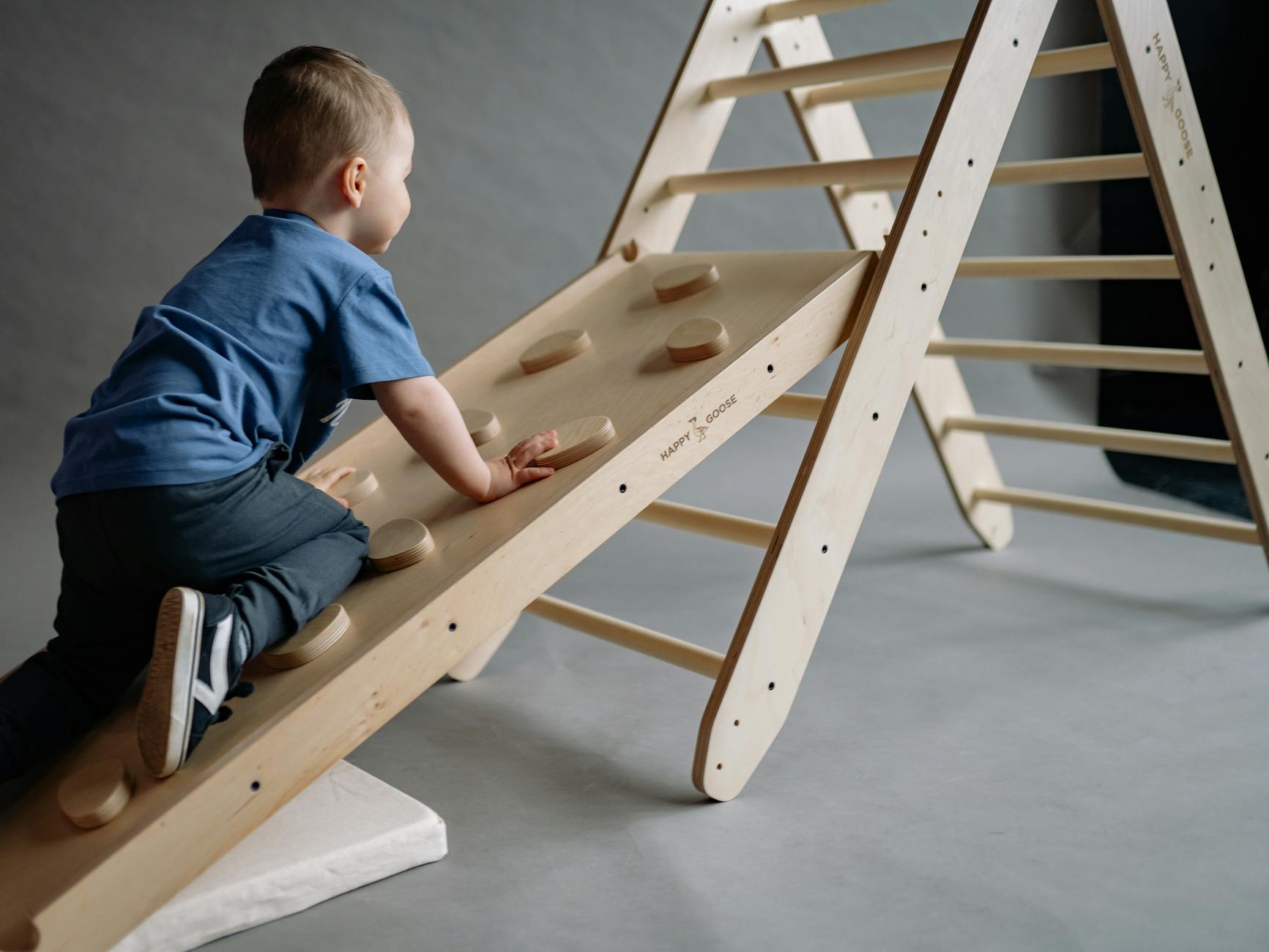
Psychomotor learning targets physical skill execution and neuromuscular coordination, cognitive learning focuses on knowledge acquisition and mental processing, and affective learning addresses attitudes and values. While cognitive outcomes are assessed through tests and affective through behavioral observation, psychomotor skills require performance-based evaluation of physical competency.
System | Psychomotor | Cognitive | Affective |
Brain region | Cerebellum | Prefrontal cortex | Limbic system |
Memory type | Procedural | Declarative | Episodic |
Retention | Slow forgetting with practice | Rapid decay without review | Variable, tied to emotional intensity |
Neurological research shows procedural memory—the foundation of psychomotor learning—follows a different forgetting curve than declarative knowledge. Physical skills show slower decay rates when practiced regularly, which explains why you never forget how to ride a bike but might forget the capital of Mongolia. However, when cognitive load exceeds working memory capacity during physical tasks, psychomotor performance degrades immediately. Ask a student to explain the physics of a basketball free throw while shooting, and their form collapses. This cognitive interference happens because the prefrontal cortex competes with motor pathways for limited attentional resources.
How Each Domain Processes Information
Motor skill acquisition relies on kinesthetic learning feedback loops and mirror neuron activation. When you watch a master teacher show proper pencil grip, your brain fires the same neurons as if you were gripping the pencil yourself. This sensorimotor stage processing creates muscle memory that persists long after verbal instructions fade. The cerebellum encodes these patterns without conscious effort, provided the body repeats the motion enough times.
Cognitive processing happens through working memory encoding and schema formation in the prefrontal cortex. Students absorb new information through linguistic or symbolic representation, organizing facts into mental frameworks. This requires active manipulation of concepts rather than physical movement.
Affective learning filters experiences through emotional valence and value systems in the limbic system. Drawing from humanistic learning theory, this domain connects to self-actualization through meaningful engagement. Mastering emotional skills requires understanding how students attach feelings to content.
Assessment Methods Across the Three Domains
Evaluating physical competence demands resources. While cognitive assessment requires only paper and pencil, psychomotor evaluation needs dedicated space, consumable materials, and often one-on-one observation time.
Psychomotor methods: Analytic rubrics with frequency counts, time-sampling observation (recording every 5 seconds), and video analysis for precision measurement of tactile learning outcomes. You cannot assess handwriting grip via multiple choice.
Cognitive methods: Selected response items, constructed response essays, and concept mapping. These scale easily to forty students.
Affective methods: Likert scales, behavioral observation of participation patterns, and value clarification exercises. These require watching students closely, though they demand empathy rather than equipment.
Why All Three Domains Must Work Together
Real learning integrates all three domains simultaneously. Consider a high school dissection lab. Students need psychomotor control (scalpel technique), cognitive knowledge (anatomical identification), and affective maturity (respect for the specimen and ethical considerations). Remove any leg and the stool collapses.
Isolation creates what I call "disembodied" learning. Students can label a diagram of a microscope perfectly but cannot load a slide. Or they can perform the physical steps while ignoring safety protocols because they haven't internalized the value of laboratory ethics. This happens when schools treat lab days as separate from "real" learning.
When you plan lessons, check for all three. Are students moving, thinking, and caring? If not, you're teaching half the child. The best lessons braid these threads so tightly you cannot tell where one ends and another begins.
Practical Applications: Integrating Movement and Skill Development Across Subjects
Psychomotor learning looks different across four distinct developmental bands. In preschool, you're buying $50-200 in playdough and tweezers; in high school, you're budgeting $500-5,000 for a single welding station. But money isn't the only variable. You need to know when to stop moving. Complex calculus problems actually get harder when students pace the room, and kids with certain physical disabilities need alternative access methods—not forced participation in activities that don't fit their bodies. For students with dyspraxia or motor delays, swap the standard pencil for weighted utensils with enlarged grips, and let them watch pre-recorded video demonstrations so they can pause and practice without an audience.
Early Childhood: Fine Motor Control and Handwriting Foundations
During the sensorimotor stage, tiny hands need specific work. Target these fundamentals:
Pincer grasp development: Bead threading, tearing tape, picking up small objects
Scissor control: Progressing from single snips to continuous cutting lines
Tripod pencil grip: Thumb and two fingers, not fist-wrapped
Run playdough resistance exercises for 5-10 minutes daily. Use clothespin pinching during math counts. Hand strength grows when kids use spray bottles for plant care. Budget $50-200 per classroom for these manipulatives—money you will not regret spending.
By kindergarten entry, students should show dominant hand preference and crossing midline during physical tasks. Safety protocols here focus on choke-proof materials and scissor supervision. Rushed handwriting without these prerequisites creates bad habits that are nearly impossible to unlearn later. This is foundational motor skill acquisition.
Elementary: Arts, Crafts, and Manipulative Mathematics
Students now connect physical action to abstract concepts through kinesthetic learning. Mathematics requires precise manipulation:
Base-ten blocks aligned perfectly to demonstrate place value
Fraction tiles fitted together before understanding numerical equivalents
Geometric compass use building procedural memory for later proofs
The arts provide tactile learning opportunities. Recorder fingering demands complete hole coverage. Weaving on cardboard looms teaches pattern recognition through touch. Watercolor work distinguishes wrist control from arm movement—wrist for detail, arm for washes.
If you teach cursive, stick to specific letter formation sequences; random practice builds confusion, not muscle memory. Keyboarding instruction belongs here too—home-row positioning with proper posture prevents hunting-and-pecking later. Most elementary tools cost little; cardboard looms run pennies each.
Middle School: Laboratory Safety and Scientific Procedure
Science labs demand exact psychomotor learning sequences with strict time and safety protocols. Students need 15-20 minutes to properly calibrate equipment without rushing. Safety steps are non-negotiable:
Bunsen burner lighting: gas on, flint strike, air vent adjustment
Microscope focusing: coarse adjustment first, then fine tuning
Triple beam balance calibration to the tenth of a gram
Technology classes add CAD mouse control requiring precision and 3D printer bed leveling that takes steady hands. Circuit board soldering needs lead-free safety protocols and ventilation. Physical measurement extends to protractors, compass navigation, and millimeter precision with meter sticks.
This is where social learning theory meets safety. Students watch peers model correct procedures before attempting dangerous steps themselves. Never let a student light a burner without demonstrating first; procedural errors here cause burns, not just wrong answers.
High School: Vocational Skills and Advanced Physical Education
Vocational stations run $500-5,000 each depending on equipment quality, but the skills last careers. Pathways include:
Culinary knife skills: claw grip protecting fingertips while producing julienne cuts
Welding bead consistency through repeated physical practice
Automotive tool identification by feel, not sight
Advanced PE shifts to biomechanical analysis. Students use slow-motion video to correct form. Yoga sequencing teaches stress management through controlled movement. This connects to mastering life-saving physical skills like CPR, where compression depth and rate require exact motor control under pressure.
Research skills turn microscopic. Biotechnology labs require micro-pipetting accurate to the microliter, with steady hands that don't tremor. Gel electrophoresis loading demands precision. These aren't academic exercises; they're job-ready competencies requiring years of accumulated physical skill development.

How Does Psychomotor Learning Connect to Kolb's Experiential Learning Cycle?
Psychomotor learning aligns with Kolb's Concrete Experience and Active Experimentation stages, where students physically engage with materials and test movement variations. The cycle completes when learners reflect on physical sensations and outcomes, then conceptualize improvements before practicing again, creating continuous skill refinement.
Concrete Experience and Active Experimentation
Concrete Experience is where motor skill acquisition actually begins—not with a diagram, but with the weight of materials in hand. When your 8th graders build earthquake-resistant towers from balsa wood, they aren't just following instructions. They're feeling structural tension in their fingers, sensing the moment a joint wobbles, experiencing the physical resistance that textbooks describe with arrows. This is psychomotor learning in its raw form: the body gathering data that no video can fully transmit.
Active Experimentation follows naturally. Students test variables by adjusting grip pressure on clay to prevent collapse, or varying throwing angles in projectile motion labs to see trajectory changes firsthand. This trial-and-error phase maps directly to kolbs learning styles—specifically the Accommodator style that combines Concrete Experience with Active Experimentation. These learners dive into physical trial-and-error and learn through their skin. Meanwhile, Assimilators often need more observation time before their first physical attempts, watching others navigate the sensorimotor stage before joining in. Traditional academic learning overemphasizes Abstract Conceptualization—talking about concepts before doing. But physical skills require the opposite weighting.
Plan about 40% of your lesson for these active "doing" quadrants. Let students fail visibly with their towers. That's when procedural memory encodes through tactile learning, not during the lecture on structural engineering that happens later in the cycle. The doing phases are where the skill actually forms.
Bridging Reflective Observation With Physical Practice
The cycle breaks down without Reflective Observation. After the tower collapses, students need time to notice what happened in their bodies, not just the result. Use "Think Aloud" physical practice—have students verbalize bodily sensations while performing, noting "my wrist is too tense" during handwriting practice or "my stance is off-balance" during a lab setup. This bridges the gap between physical action and cognitive processing, moving learners from Concrete Experience into reflection.
Video analysis integrates technology here. Students record 30-second clips of their technique, watch during the Reflective Observation phase to spot mechanical inefficiencies, then return to Abstract Conceptualization to understand the biomechanics before the next round of Active Experimentation. Research consistently shows that completing this full cycle—especially pausing for genuine reflection after physical practice—improves retention over rote repetition alone. The reflection isn't a luxury; it's where the kinesthetic learning solidifies into transferable skill.
This approach honors different kolbs learning styles. While Accommodators rush back to action, Assimilators need that observation period to process. Creating psychological safety for this "messy" physical learning supports the whole person's growth through embodied cognition. When you explore experiential education implementation, remember that muscle memory builds through the full cycle, not just through drilling the same movement endlessly.
How Can Teachers Assess Physical Skills Without Disrupting Learning Flow?
Teachers can use analytic rubrics with specific performance criteria, structured observation checklists with momentary time sampling, and digital portfolio collection of video evidence. Peer and self-assessment protocols, once students are trained, provide immediate feedback while maintaining practice flow and reducing teacher observation burden.
Each method below takes under two minutes per student. Rotate through your roster so you assess only 20% of the class deeply per session. Over-assessment triggers performance anxiety that inhibits psychomotor learning—the Yerkes-Dodson law applies to muscle memory too. When students feel watched constantly, their procedural memory shuts down and skills regress.
Analytic Rubrics for Physical Task Completion
Design rubrics with 3-4 specific physical criteria rather than holistic "good/bad" judgments. For elementary handwriting, measure these separately:
Pencil grip (tripod versus digital pronate)
Letter formation sequence (top-to-bottom strokes)
Baseline alignment (within 3mm of line)
Use a 4-point scale: 1 (attempts), 2 (imitates with support), 3 (independent but inconsistent), 4 (automatic/mastered). This precision shows exactly where in the motor skill acquisition process a student stalls.
Keep a clipboard with pre-printed rubrics for low-tech reliability. Mark scores while students practice; the physical act of checking boxes takes 45 seconds per child. Focus on one criteria per week to avoid overwhelming your documentation load.
Structured Observation Checklists for Real-Time Documentation
Implement momentary time sampling: observe a specific student for 10 seconds every 5 minutes, marking frequency of correct technique elements. Use shorthand codes: + (correct), - (incorrect), P (prompted). This allows real-time documentation without breaking your observation flow.
The GoObserve app handles frequency counts digitally, logging tallies with a thumb-tap. If you prefer paper, a simple clipboard rubric won't crash mid-class. Rotate through five students per period while facilitating whole-group practice. You get valid data without stopping the kinesthetic learning rhythm.
Peer and Self-Assessment Protocols
Students need 3-4 practice sessions using exemplar videos before peer assessment to ensure reliability. Show them what "scissor fingers position" looks like versus "thumb rotation smoothness" so they recognize mastery. Never use peer assessment for dangerous tools—pottery wheels, cutting instruments—until high school and with signed safety contracts.
Self-assessment tools like "traffic light" cards (green=smooth, yellow=needs focus, red=asking help) let students signal status without verbal interruption. These protocols cut your observation burden while building the metacognitive awareness critical to tactile learning. Once trained, 4th graders can spot errors in grip as accurately as you can.
Digital Portfolio Evidence Collection
Use Seesaw for video portfolio collection. Shoot 720p video, 30-second clips maximum, stored in district-approved encrypted platforms like Google Workspace for Education or Canvas. Students curate three artifacts per quarter showing growth: initial attempt, mid-point, final demonstration.
Video assessment requires FERPA compliance and parental consent for physical documentation of minors. Include audio descriptions of movements so visually impaired students can review their own technique. This approach to performance-based assessments creates permanent records of sensorimotor stage progression without disrupting daily practice. For more on organization, see our guide to creating effective student portfolios.

Quick-Start Guide: Writing Your First Psychomotor Learning Objective
Use the ABCD formula: "The student [Audience] will [Behavior/verb] [Condition/context] [Degree/criteria]." This template forces you to specify exactly what the learner's body should do. When mapping Simpson's Taxonomy, match your verb to the seven levels: Perception (detects, identifies), Set (displays, positions), Guided Response (copies, traces), Mechanism (assembles, manipulates), Complex Overt Response (calibrates, synchronizes), Adaptation (adjusts, revises), and Origination (designs, creates). Avoid the common failure mode of writing objectives for group performance when individual assessment is required. "The group will build the circuit" creates grading ambiguity. Instead: "The student will assemble the series circuit using the schematic, with all LEDs lighting within two attempts."
Task analysis drives successful motor skill acquisition. Break complex procedures into 12-15 discrete steps. For microscope use, that's retrieval, carry with two hands, plug in, adjust light, place slide, focus coarse, focus fine, sketch, return to lowest power, remove slide, unplug, return to cabinet. Each step builds procedural memory and muscle memory through the sensorimotor stage of learning.
Selecting Observable Action Verbs From Simpson's Taxonomy
Choose verbs you can see without interpretation. Match them to the skill level:
Levels 1-2 (Perception/Set): distinguishes, identifies, exhibits, explains. These work for initial kinesthetic learning and tactile learning awareness.
Levels 3-4 (Guided Response/Mechanism): reproduces, follows, assembles, organizes. These capture the practice phase where kolbs learning cycles through concrete experience.
Levels 5-7 (Complex Overt Response to Origination): demonstrates, modifies, constructs, originates. Reserve these for independent application and creative adaptation.
Breaking Complex Skills Into Micro-Progressions
Use forward chaining for sequential skills: teach step one to mastery, add step two, then link them. Use backward chaining for safety-critical tasks. When lighting a Bunsen burner, you complete all steps except turning the gas valve; the student masters only that final action, then adds the penultimate step, working backward. This builds confidence while protecting against burns.
For a titration procedure, divide the workflow into twelve micro-steps from rinsing the burette to final calculation. Insert checkpoints at step four (equipment verification), step eight (endpoint recognition), and step twelve (calculation accuracy). Students cannot proceed until they demonstrate precision at each gate.
Creating Safe Practice Environments
Establish error tolerance zones—areas where mistakes won't damage equipment or cause injury during initial learning. Implement pause signals so students may stop any physical activity without penalty if they feel unsafe, triggering re-teaching rather than forced continuation.
Set specific equipment standards:
Non-slip mats and adequate lighting (500 lux minimum for fine motor tasks)
Ergonomic seating heights ensuring feet rest flat on the floor and elbows sit at 90 degrees
Clear sight lines for instructor monitoring during psychomotor learning activities
Aligning Objectives With Existing Standards
Map your objectives to these framework requirements:
NGSS: Science and Engineering Practices SP3 (Planning and Carrying Out Investigations) and SP4 (Analyzing and Interpreting Data) require specific psychomotor objectives for lab work.
Common Core: Writing standards for production and distribution through grade five explicitly reference handwriting and keyboarding fluency benchmarks.
National PE Standards: SHAPE America Standard 1 provides grade-level outcomes for movement patterns and motor competency.
See our guide on aligning standards with your curriculum to map these connections in your planning documents.
Final Thoughts on Psychomotor Learning
Stop trying to map every movement to a taxonomy level. Psychomotor learning happens when students touch, build, and manipulate—not when you perfect the wording on your lesson plan. I've watched 7th graders master torque concepts by wrestling with actual wrenches while their peers read paragraphs about force. The difference wasn't the theory; it was the sweat and the spatial reasoning that only comes from trying to fit the wrong bolt three times before finding the right one.
Pick one activity from tomorrow's schedule. Replace the worksheet with something they handle. Write the objective using a physical action verb—"assemble," "calibrate," or "sketch"—and watch what happens to engagement. That's your entry point. You don't need to overhaul your curriculum; you need one lesson where kinesthetic learning carries the cognitive load instead of sitting beside it. Start with the verb. Everything else follows.
Motor skill acquisition doesn't require a dedicated makerspace or expensive PE equipment. It requires permission to move. Give that permission, and procedural memory takes over where lecture notes fail.
What Is Psychomotor Learning?
Psychomotor learning involves the acquisition of physical skills through neuromuscular coordination, progressing from basic perception to complex movement creation. It encompasses everything from handwriting to laboratory techniques, requiring deliberate practice and measurable physical performance rather than mere cognitive understanding. Unlike memorizing state capitals or analyzing themes in a novel, this domain relies on procedural memory formation in the cerebellum and motor cortex. Your brain literally rewires itself to move muscles with precision, storing muscle memory that outlasts conscious thought.
The ABCD model works here too, but with a twist. While cognitive objectives might ask students to "explain photosynthesis," physical objectives demand observable actions under specific conditions. You might write: "Given a compound microscope and slide (Condition), the student (Audience) will focus the specimen (Behavior) with 100% accuracy within three attempts (Degree)." No written test can capture whether a kid actually knows how to thread a needle or supporting students with neuromuscular disorders in adapting these physical tasks.
And stop thinking this only happens in gym class. Psychomotor learning drives the sensorimotor stage activities in your art room, the pipetting in biology labs, and the motor skill acquisition happening when 3rd graders finally grip pencils correctly. It's kinesthetic learning and tactile learning made measurable.
Simpson's Seven Levels of the Psychomotor Domain
Elizabeth Simpson revised Bloom's taxonomy in 1972 to track how we move from sensing to creating. Her hierarchy starts with simply noticing sensory data and ends with inventing new movement patterns. Each level builds on prior knowledge of the body itself.
The progression looks like this:
Level 1 Perception: Detecting cues like pencil pressure on paper or the resistance of clay under fingers.
Level 2 Set: Demonstrating readiness posture—shoulders squared to the desk, eyes tracking the demonstration.
Level 3 Guided Response: Copying cursive letters from a model, mimicking the teacher's pipetting technique.
Level 4 Mechanism: Automatic shoe-tying or calculator entry without looking at fingers.
Level 5 Complex Overt Response: Playing musical scales at tempo with proper fingering.
Level 6 Adaptation: Modifying lab techniques when equipment breaks or supporting students with neuromuscular disorders in finding alternative grips.
Level 7 Origination: Designing new engineering solutions or choreographing original movement sequences.
The Difference Between Fine and Gross Motor Skills
Not all movement is equal. Fine motor skills demand intrinsic muscle control—think handwriting, threading a needle, or instrument fingering. Gross motor skills recruit large muscle groups for throwing, balancing, or positioning lab stools safely.
Developmentally, these split sharply. Fine motor control hits rapid growth between ages 5-7, which explains why Kindergarteners struggle with scissors but 2nd graders cut precisely. Gross motor refinement continues through adolescence—your middle schoolers still look clumsy during group rotations because their bodies are still wiring coordination.
This matters for lesson design. Math manipulatives require fine motor precision that 1st graders haven't fully developed. Meanwhile, rearranging desks for collaborative work demands gross motor coordination that seems obvious to you but requires explicit safety cues for them.
How Psychomotor Objectives Differ From Cognitive Goals
Writing psychomotor objectives means abandoning verbs like "understand" or "analyze." You need actions you can see: "assembles," "calibrates," "threads," "sutures." If you can't film it and agree on whether they did it, it's not a physical objective.
Assessment differs too. Cognitive goals allow students to write explanations of the scientific method. Psychomotor demands they demonstrate it—measuring liquid within 2mm accuracy, completing the sequence within 30 seconds. The criteria are binary and measurable.
Usually, cognitive understanding precedes physical execution. Students need to know why they sterilize the loop before they can execute the flame-sterilization motion consistently. The brain learns the concept, then the body learns the movement.
How Does Psychomotor Development Progress Through the Seven Levels?
Students progress through seven hierarchical levels: perception (sensory awareness), set (readiness), guided response (imitation), mechanism (habituation), complex overt response (mastery), adaptation (contextual adjustment), and origination (creating new patterns). Each level requires mastery before advancing to the next.
Hattie's Visible Learning research puts the effect size for direct instruction in skill development at 0.59. That's well above the hinge point of 0.40. It means explicit, level-by-level teaching works. You can't skip steps in the cycle of learning and expect procedural memory to stick. When you teach psychomotor learning as a staircase rather than an elevator, students build muscle memory that lasts.
Here is the honest timeline for motor skill acquisition:
Levels 1–2: 1–2 sessions
Levels 3–4: 2–4 weeks of practice
Level 5: 6–8 weeks for automaticity
Levels 6–7: Months to years
Rush a kid to Level 5 before they've nailed Level 3, and you're drilling in errors. Those ingrained mistakes take twice as long to unlearn as teaching it right the first time. Here is your checkpoint: if a student cannot perform the skill while holding a conversation, they haven't reached Level 4 Mechanism. Dual-task failure means back to guided response.
Level 1: Perception and Sensory Awareness
Perception is where psychomotor learning begins. Students detect sensory cues: visually tracking a moving object across a screen, discriminating between high and low tones in music class, or feeling the difference between 20 and 40 pounds of pressure in their pencil grip. This is pure sensorimotor stage work.
In my 1st grade classroom, I watch kids learn to detect when their pencil grip is too tight through tactile feedback before any marks appear on paper. They haven't started writing yet. They're just feeling. These tactile learning strategies prevent the white-knuckle grip that ruins handwriting later.
Level 2: Set and Mental Readiness
Set is readiness in three forms: mental, physical, and emotional. Students assume correct posture, position materials within reach, and exhibit attention cues that signal their brain is primed for kinesthetic learning. Without this foundation, the body fights the skill.
Watch a middle schooler enter the science lab. If they've reached Level 2, they don safety goggles and gloves automatically before you say a word. The physical setup triggers the mental state. This habitual formation takes one or two sessions to establish, but it pays dividends for every subsequent skill you teach.
Level 3: Guided Response and Initial Practice
Guided response is where motor skill acquisition gets messy. Students imitate your demonstration, attempt the steps, and fail visibly. They need heavy scaffolding: verbal prompting, hand-over-hand assistance, and immediate error correction.
I teach cursive by having students trace letters while I chant stroke order. "Up, over, back down." Their hands wobble. That's fine. This stage requires tolerance for awkwardness. If you move them forward while they're still guessing at the pattern, that uncertainty fossilizes into bad form.
Level 4: Mechanism and Habitual Movement
Mechanism means the movement has become habitual. Students perform with confidence and consistency, freeing up cognitive load for other tasks. This is where procedural memory takes over from working memory, and the skill feels automatic.
Third graders tying shoes without looking up from their conversation. Seniors formatting MLA headers without reference sheets. If they have to stop talking to tie the knot, they're not here yet. That dual-task test—performing while conversing—separates Level 3 from Level 4 every time. You can't fake this level.
Level 5: Complex Overt Response and Skill Mastery
Complex overt response looks like expertise. Movements are smooth, accurate, precisely timed, and energy-efficient. The student has reached flow state in the physical task, expending minimal mental effort while maintaining high precision.
In AP Chemistry, I watch students perform titration with steady hand control, adding drops one by one while recording data simultaneously. No wobble. No hesitation. Six to eight weeks of deliberate practice gets you here, but only if you didn't rush past Level 3 and let errors set like concrete.
Level 6: Adaptation to New Contexts
Adaptation is where students modify technique to fit new constraints. The old microscope has stiff focus knobs. The wind picks up during the physics projectile lab. They adjust without starting over.
This isn't just following steps anymore. It's reading the environment and recalibrating muscle memory in real time. Takes months to develop. You can't teach it directly; you have to create problem scenarios and let them struggle through the transfer.
Level 7: Origination of New Movement Patterns
Origination is the summit. Students create movement patterns that didn't exist in their training. They design a novel gripping mechanism for an accessibility tool in engineering class. They develop a signature move on the field that becomes the new competitive standard.
This is creative kinesthetic learning. Years in the making. Most K-12 students won't reach Level 7 in your curriculum, but when you see it—a kid who invents a new way to hold the bow, a coder who designs an ergonomic keyboard workflow—you'll know what you're looking at.
What Are the Key Differences Between Psychomotor, Cognitive, and Affective Learning?
Psychomotor learning targets physical skill execution and neuromuscular coordination, cognitive learning focuses on knowledge acquisition and mental processing, and affective learning addresses attitudes and values. While cognitive outcomes are assessed through tests and affective through behavioral observation, psychomotor skills require performance-based evaluation of physical competency.
System | Psychomotor | Cognitive | Affective |
Brain region | Cerebellum | Prefrontal cortex | Limbic system |
Memory type | Procedural | Declarative | Episodic |
Retention | Slow forgetting with practice | Rapid decay without review | Variable, tied to emotional intensity |
Neurological research shows procedural memory—the foundation of psychomotor learning—follows a different forgetting curve than declarative knowledge. Physical skills show slower decay rates when practiced regularly, which explains why you never forget how to ride a bike but might forget the capital of Mongolia. However, when cognitive load exceeds working memory capacity during physical tasks, psychomotor performance degrades immediately. Ask a student to explain the physics of a basketball free throw while shooting, and their form collapses. This cognitive interference happens because the prefrontal cortex competes with motor pathways for limited attentional resources.
How Each Domain Processes Information
Motor skill acquisition relies on kinesthetic learning feedback loops and mirror neuron activation. When you watch a master teacher show proper pencil grip, your brain fires the same neurons as if you were gripping the pencil yourself. This sensorimotor stage processing creates muscle memory that persists long after verbal instructions fade. The cerebellum encodes these patterns without conscious effort, provided the body repeats the motion enough times.
Cognitive processing happens through working memory encoding and schema formation in the prefrontal cortex. Students absorb new information through linguistic or symbolic representation, organizing facts into mental frameworks. This requires active manipulation of concepts rather than physical movement.
Affective learning filters experiences through emotional valence and value systems in the limbic system. Drawing from humanistic learning theory, this domain connects to self-actualization through meaningful engagement. Mastering emotional skills requires understanding how students attach feelings to content.
Assessment Methods Across the Three Domains
Evaluating physical competence demands resources. While cognitive assessment requires only paper and pencil, psychomotor evaluation needs dedicated space, consumable materials, and often one-on-one observation time.
Psychomotor methods: Analytic rubrics with frequency counts, time-sampling observation (recording every 5 seconds), and video analysis for precision measurement of tactile learning outcomes. You cannot assess handwriting grip via multiple choice.
Cognitive methods: Selected response items, constructed response essays, and concept mapping. These scale easily to forty students.
Affective methods: Likert scales, behavioral observation of participation patterns, and value clarification exercises. These require watching students closely, though they demand empathy rather than equipment.
Why All Three Domains Must Work Together
Real learning integrates all three domains simultaneously. Consider a high school dissection lab. Students need psychomotor control (scalpel technique), cognitive knowledge (anatomical identification), and affective maturity (respect for the specimen and ethical considerations). Remove any leg and the stool collapses.
Isolation creates what I call "disembodied" learning. Students can label a diagram of a microscope perfectly but cannot load a slide. Or they can perform the physical steps while ignoring safety protocols because they haven't internalized the value of laboratory ethics. This happens when schools treat lab days as separate from "real" learning.
When you plan lessons, check for all three. Are students moving, thinking, and caring? If not, you're teaching half the child. The best lessons braid these threads so tightly you cannot tell where one ends and another begins.
Practical Applications: Integrating Movement and Skill Development Across Subjects
Psychomotor learning looks different across four distinct developmental bands. In preschool, you're buying $50-200 in playdough and tweezers; in high school, you're budgeting $500-5,000 for a single welding station. But money isn't the only variable. You need to know when to stop moving. Complex calculus problems actually get harder when students pace the room, and kids with certain physical disabilities need alternative access methods—not forced participation in activities that don't fit their bodies. For students with dyspraxia or motor delays, swap the standard pencil for weighted utensils with enlarged grips, and let them watch pre-recorded video demonstrations so they can pause and practice without an audience.
Early Childhood: Fine Motor Control and Handwriting Foundations
During the sensorimotor stage, tiny hands need specific work. Target these fundamentals:
Pincer grasp development: Bead threading, tearing tape, picking up small objects
Scissor control: Progressing from single snips to continuous cutting lines
Tripod pencil grip: Thumb and two fingers, not fist-wrapped
Run playdough resistance exercises for 5-10 minutes daily. Use clothespin pinching during math counts. Hand strength grows when kids use spray bottles for plant care. Budget $50-200 per classroom for these manipulatives—money you will not regret spending.
By kindergarten entry, students should show dominant hand preference and crossing midline during physical tasks. Safety protocols here focus on choke-proof materials and scissor supervision. Rushed handwriting without these prerequisites creates bad habits that are nearly impossible to unlearn later. This is foundational motor skill acquisition.
Elementary: Arts, Crafts, and Manipulative Mathematics
Students now connect physical action to abstract concepts through kinesthetic learning. Mathematics requires precise manipulation:
Base-ten blocks aligned perfectly to demonstrate place value
Fraction tiles fitted together before understanding numerical equivalents
Geometric compass use building procedural memory for later proofs
The arts provide tactile learning opportunities. Recorder fingering demands complete hole coverage. Weaving on cardboard looms teaches pattern recognition through touch. Watercolor work distinguishes wrist control from arm movement—wrist for detail, arm for washes.
If you teach cursive, stick to specific letter formation sequences; random practice builds confusion, not muscle memory. Keyboarding instruction belongs here too—home-row positioning with proper posture prevents hunting-and-pecking later. Most elementary tools cost little; cardboard looms run pennies each.
Middle School: Laboratory Safety and Scientific Procedure
Science labs demand exact psychomotor learning sequences with strict time and safety protocols. Students need 15-20 minutes to properly calibrate equipment without rushing. Safety steps are non-negotiable:
Bunsen burner lighting: gas on, flint strike, air vent adjustment
Microscope focusing: coarse adjustment first, then fine tuning
Triple beam balance calibration to the tenth of a gram
Technology classes add CAD mouse control requiring precision and 3D printer bed leveling that takes steady hands. Circuit board soldering needs lead-free safety protocols and ventilation. Physical measurement extends to protractors, compass navigation, and millimeter precision with meter sticks.
This is where social learning theory meets safety. Students watch peers model correct procedures before attempting dangerous steps themselves. Never let a student light a burner without demonstrating first; procedural errors here cause burns, not just wrong answers.
High School: Vocational Skills and Advanced Physical Education
Vocational stations run $500-5,000 each depending on equipment quality, but the skills last careers. Pathways include:
Culinary knife skills: claw grip protecting fingertips while producing julienne cuts
Welding bead consistency through repeated physical practice
Automotive tool identification by feel, not sight
Advanced PE shifts to biomechanical analysis. Students use slow-motion video to correct form. Yoga sequencing teaches stress management through controlled movement. This connects to mastering life-saving physical skills like CPR, where compression depth and rate require exact motor control under pressure.
Research skills turn microscopic. Biotechnology labs require micro-pipetting accurate to the microliter, with steady hands that don't tremor. Gel electrophoresis loading demands precision. These aren't academic exercises; they're job-ready competencies requiring years of accumulated physical skill development.
How Does Psychomotor Learning Connect to Kolb's Experiential Learning Cycle?
Psychomotor learning aligns with Kolb's Concrete Experience and Active Experimentation stages, where students physically engage with materials and test movement variations. The cycle completes when learners reflect on physical sensations and outcomes, then conceptualize improvements before practicing again, creating continuous skill refinement.
Concrete Experience and Active Experimentation
Concrete Experience is where motor skill acquisition actually begins—not with a diagram, but with the weight of materials in hand. When your 8th graders build earthquake-resistant towers from balsa wood, they aren't just following instructions. They're feeling structural tension in their fingers, sensing the moment a joint wobbles, experiencing the physical resistance that textbooks describe with arrows. This is psychomotor learning in its raw form: the body gathering data that no video can fully transmit.
Active Experimentation follows naturally. Students test variables by adjusting grip pressure on clay to prevent collapse, or varying throwing angles in projectile motion labs to see trajectory changes firsthand. This trial-and-error phase maps directly to kolbs learning styles—specifically the Accommodator style that combines Concrete Experience with Active Experimentation. These learners dive into physical trial-and-error and learn through their skin. Meanwhile, Assimilators often need more observation time before their first physical attempts, watching others navigate the sensorimotor stage before joining in. Traditional academic learning overemphasizes Abstract Conceptualization—talking about concepts before doing. But physical skills require the opposite weighting.
Plan about 40% of your lesson for these active "doing" quadrants. Let students fail visibly with their towers. That's when procedural memory encodes through tactile learning, not during the lecture on structural engineering that happens later in the cycle. The doing phases are where the skill actually forms.
Bridging Reflective Observation With Physical Practice
The cycle breaks down without Reflective Observation. After the tower collapses, students need time to notice what happened in their bodies, not just the result. Use "Think Aloud" physical practice—have students verbalize bodily sensations while performing, noting "my wrist is too tense" during handwriting practice or "my stance is off-balance" during a lab setup. This bridges the gap between physical action and cognitive processing, moving learners from Concrete Experience into reflection.
Video analysis integrates technology here. Students record 30-second clips of their technique, watch during the Reflective Observation phase to spot mechanical inefficiencies, then return to Abstract Conceptualization to understand the biomechanics before the next round of Active Experimentation. Research consistently shows that completing this full cycle—especially pausing for genuine reflection after physical practice—improves retention over rote repetition alone. The reflection isn't a luxury; it's where the kinesthetic learning solidifies into transferable skill.
This approach honors different kolbs learning styles. While Accommodators rush back to action, Assimilators need that observation period to process. Creating psychological safety for this "messy" physical learning supports the whole person's growth through embodied cognition. When you explore experiential education implementation, remember that muscle memory builds through the full cycle, not just through drilling the same movement endlessly.
How Can Teachers Assess Physical Skills Without Disrupting Learning Flow?
Teachers can use analytic rubrics with specific performance criteria, structured observation checklists with momentary time sampling, and digital portfolio collection of video evidence. Peer and self-assessment protocols, once students are trained, provide immediate feedback while maintaining practice flow and reducing teacher observation burden.
Each method below takes under two minutes per student. Rotate through your roster so you assess only 20% of the class deeply per session. Over-assessment triggers performance anxiety that inhibits psychomotor learning—the Yerkes-Dodson law applies to muscle memory too. When students feel watched constantly, their procedural memory shuts down and skills regress.
Analytic Rubrics for Physical Task Completion
Design rubrics with 3-4 specific physical criteria rather than holistic "good/bad" judgments. For elementary handwriting, measure these separately:
Pencil grip (tripod versus digital pronate)
Letter formation sequence (top-to-bottom strokes)
Baseline alignment (within 3mm of line)
Use a 4-point scale: 1 (attempts), 2 (imitates with support), 3 (independent but inconsistent), 4 (automatic/mastered). This precision shows exactly where in the motor skill acquisition process a student stalls.
Keep a clipboard with pre-printed rubrics for low-tech reliability. Mark scores while students practice; the physical act of checking boxes takes 45 seconds per child. Focus on one criteria per week to avoid overwhelming your documentation load.
Structured Observation Checklists for Real-Time Documentation
Implement momentary time sampling: observe a specific student for 10 seconds every 5 minutes, marking frequency of correct technique elements. Use shorthand codes: + (correct), - (incorrect), P (prompted). This allows real-time documentation without breaking your observation flow.
The GoObserve app handles frequency counts digitally, logging tallies with a thumb-tap. If you prefer paper, a simple clipboard rubric won't crash mid-class. Rotate through five students per period while facilitating whole-group practice. You get valid data without stopping the kinesthetic learning rhythm.
Peer and Self-Assessment Protocols
Students need 3-4 practice sessions using exemplar videos before peer assessment to ensure reliability. Show them what "scissor fingers position" looks like versus "thumb rotation smoothness" so they recognize mastery. Never use peer assessment for dangerous tools—pottery wheels, cutting instruments—until high school and with signed safety contracts.
Self-assessment tools like "traffic light" cards (green=smooth, yellow=needs focus, red=asking help) let students signal status without verbal interruption. These protocols cut your observation burden while building the metacognitive awareness critical to tactile learning. Once trained, 4th graders can spot errors in grip as accurately as you can.
Digital Portfolio Evidence Collection
Use Seesaw for video portfolio collection. Shoot 720p video, 30-second clips maximum, stored in district-approved encrypted platforms like Google Workspace for Education or Canvas. Students curate three artifacts per quarter showing growth: initial attempt, mid-point, final demonstration.
Video assessment requires FERPA compliance and parental consent for physical documentation of minors. Include audio descriptions of movements so visually impaired students can review their own technique. This approach to performance-based assessments creates permanent records of sensorimotor stage progression without disrupting daily practice. For more on organization, see our guide to creating effective student portfolios.
Quick-Start Guide: Writing Your First Psychomotor Learning Objective
Use the ABCD formula: "The student [Audience] will [Behavior/verb] [Condition/context] [Degree/criteria]." This template forces you to specify exactly what the learner's body should do. When mapping Simpson's Taxonomy, match your verb to the seven levels: Perception (detects, identifies), Set (displays, positions), Guided Response (copies, traces), Mechanism (assembles, manipulates), Complex Overt Response (calibrates, synchronizes), Adaptation (adjusts, revises), and Origination (designs, creates). Avoid the common failure mode of writing objectives for group performance when individual assessment is required. "The group will build the circuit" creates grading ambiguity. Instead: "The student will assemble the series circuit using the schematic, with all LEDs lighting within two attempts."
Task analysis drives successful motor skill acquisition. Break complex procedures into 12-15 discrete steps. For microscope use, that's retrieval, carry with two hands, plug in, adjust light, place slide, focus coarse, focus fine, sketch, return to lowest power, remove slide, unplug, return to cabinet. Each step builds procedural memory and muscle memory through the sensorimotor stage of learning.
Selecting Observable Action Verbs From Simpson's Taxonomy
Choose verbs you can see without interpretation. Match them to the skill level:
Levels 1-2 (Perception/Set): distinguishes, identifies, exhibits, explains. These work for initial kinesthetic learning and tactile learning awareness.
Levels 3-4 (Guided Response/Mechanism): reproduces, follows, assembles, organizes. These capture the practice phase where kolbs learning cycles through concrete experience.
Levels 5-7 (Complex Overt Response to Origination): demonstrates, modifies, constructs, originates. Reserve these for independent application and creative adaptation.
Breaking Complex Skills Into Micro-Progressions
Use forward chaining for sequential skills: teach step one to mastery, add step two, then link them. Use backward chaining for safety-critical tasks. When lighting a Bunsen burner, you complete all steps except turning the gas valve; the student masters only that final action, then adds the penultimate step, working backward. This builds confidence while protecting against burns.
For a titration procedure, divide the workflow into twelve micro-steps from rinsing the burette to final calculation. Insert checkpoints at step four (equipment verification), step eight (endpoint recognition), and step twelve (calculation accuracy). Students cannot proceed until they demonstrate precision at each gate.
Creating Safe Practice Environments
Establish error tolerance zones—areas where mistakes won't damage equipment or cause injury during initial learning. Implement pause signals so students may stop any physical activity without penalty if they feel unsafe, triggering re-teaching rather than forced continuation.
Set specific equipment standards:
Non-slip mats and adequate lighting (500 lux minimum for fine motor tasks)
Ergonomic seating heights ensuring feet rest flat on the floor and elbows sit at 90 degrees
Clear sight lines for instructor monitoring during psychomotor learning activities
Aligning Objectives With Existing Standards
Map your objectives to these framework requirements:
NGSS: Science and Engineering Practices SP3 (Planning and Carrying Out Investigations) and SP4 (Analyzing and Interpreting Data) require specific psychomotor objectives for lab work.
Common Core: Writing standards for production and distribution through grade five explicitly reference handwriting and keyboarding fluency benchmarks.
National PE Standards: SHAPE America Standard 1 provides grade-level outcomes for movement patterns and motor competency.
See our guide on aligning standards with your curriculum to map these connections in your planning documents.
Final Thoughts on Psychomotor Learning
Stop trying to map every movement to a taxonomy level. Psychomotor learning happens when students touch, build, and manipulate—not when you perfect the wording on your lesson plan. I've watched 7th graders master torque concepts by wrestling with actual wrenches while their peers read paragraphs about force. The difference wasn't the theory; it was the sweat and the spatial reasoning that only comes from trying to fit the wrong bolt three times before finding the right one.
Pick one activity from tomorrow's schedule. Replace the worksheet with something they handle. Write the objective using a physical action verb—"assemble," "calibrate," or "sketch"—and watch what happens to engagement. That's your entry point. You don't need to overhaul your curriculum; you need one lesson where kinesthetic learning carries the cognitive load instead of sitting beside it. Start with the verb. Everything else follows.
Motor skill acquisition doesn't require a dedicated makerspace or expensive PE equipment. It requires permission to move. Give that permission, and procedural memory takes over where lecture notes fail.
Still grading everything by hand?
EMStudio is a free teaching management app — manage your classes, students, lessons, and more!
Learn More
Still grading everything by hand?
EMStudio is a free teaching management app — manage your classes, students, lessons, and more!
Learn More



Notion4Teachers
Notion templates to simplify administrative tasks and enhance your teaching experience.



2026 Notion4Teachers. All Rights Reserved.
Notion4Teachers
Notion templates to simplify administrative tasks and enhance your teaching experience.
2026 Notion4Teachers. All Rights Reserved.
Notion4Teachers
Notion templates to simplify administrative tasks and enhance your teaching experience.
2026 Notion4Teachers. All Rights Reserved.