Play and Learning: A Complete Guide for K-12 Educators
Play and Learning: A Complete Guide for K-12 Educators

Article by
Milo
ESL Content Coordinator & Educator
ESL Content Coordinator & Educator
All Posts
Play and learning merges child-directed exploration with intentional teaching goals. Unlike direct instruction models where teachers dominate 90% of classroom talk time, this approach puts students in the driver's seat while you steer toward specific outcomes.
Real play and learning shows six distinct characteristics. Use this checklist when planning:
Voluntary – kids choose to participate
Still grading everything by hand?
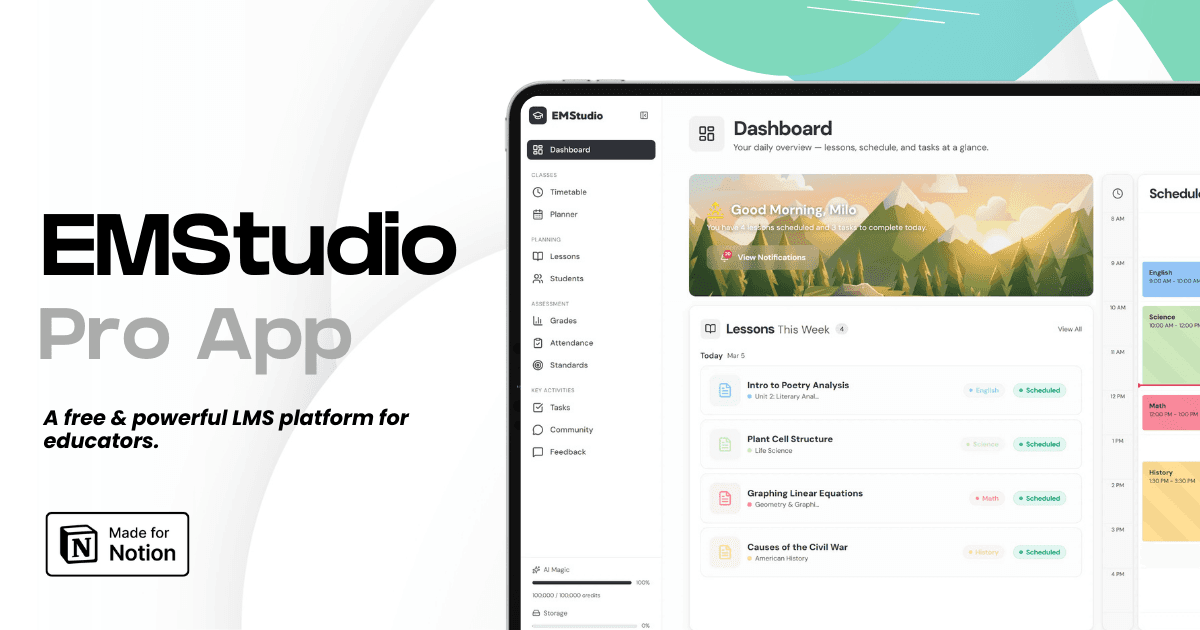
EMStudio is a free teaching management app — manage your classes, students, lessons, and more!
Learn More
Still grading everything by hand?
EMStudio is a free teaching management app — manage your classes, students, lessons, and more!
Learn More
Table of Contents
What Is Play and Learning?
Intrinsically motivated – the activity itself is the reward
Symbolic – using objects to represent ideas (blocks become castles)
Process-oriented – the doing matters more than the finished product
Pleasurable – there's genuine enjoyment, not just compliance
Active engagement – minds and bodies are both working
You'll work with three distinct flavors. Free play has zero learning objective attached – think indoor recess with loose parts play. Guided play happens when you scaffold within their chosen activity, like joining a block-building session to ask "how many more blocks to reach the window?" while they lead. Playful learning looks like game-based academics – high schoolers playing a modified Monopoly to learn economic systems, or 4th graders doing a math scavenger hunt.
Defining Play-Based Pedagogy
Academic preschool models drill letter recognition through worksheets and choral response. Play based learning pedagogy, like the Tools of the Mind curriculum, has kids planning their pretend grocery store, writing shopping lists, and negotiating roles – hitting the same literacy standards through defining play-based pedagogy that respects child agency.
This isn't new. The play way method emerged from Froebel's kindergarten gardens and Dewey's lab school, emphasizing experiential learning over memorization. Vygotsky called it the zone of proximal development in action – when you help that 5-year-old stabilize their wobbling block tower just enough that they finish it themselves, you're scaffolding their learning at the exact edge of their capability.
Research backs this up. By third grade, kids from high-quality inquiry-based learning programs match or exceed their direct-instruction peers on standardized reading tests. The difference? They can also sustain attention longer and solve social problems without running to you every five minutes. That's the self-regulation dividend.
The Core Principles of Play and Learning
Child-centered education only works when you translate theory into daily action. Here are five principles to post by your desk:
Agency means real choice within boundaries. Instead of "build whatever," try "use exactly five items from the loose parts play bin, you pick which ones."
Process over product changes your walls. Photograph block constructions at three stages of completion rather than displaying one perfect teacher sample. Show the mess of learning.
Joy isn't a reward for finishing – it's the fuel. When 2nd graders giggle while testing paper airplane designs, that pleasure is actually cementing the scientific method in their brains.
Risk-taking safety means reframing failure. "That didn't work yet" replaces "that's wrong." You want them iterating, not performing for you.
Embodied cognition recognizes that standing on wobble boards while reading, or pacing while debating, actually improves retention. The body is not separate from the mind.
This aligns with the principles of the play way method – learning through lived experience, not just listening.
Common Myths and Misconceptions
You've heard the pushback. Here's the reality:
Myth | Reality |
|---|---|
Teachers don't teach; they just babysit. | You facilitate through sophisticated questioning and just-in-time scaffolding. You're working harder, differently. |
You can't align this to standards. | Assessment is embedded. You map exactly which standards are met through observation checklists. |
The classroom would be chaos. | Structured choice prevents free-for-alls. Visual boundaries, timers, and clear material limits create safety. |
Take the standards panic. NGSS K-PS2-1 expects kids to understand push and pull forces. You could use a worksheet where they circle "push" or "pull." Or you set up ramps and balls during guided play. As they roll cars down inclines, you ask "what happens if you make the hill steeper?" Same standard, deeper understanding. The play and learning approach doesn't ignore benchmarks – it meets them through inquiry instead of interruption.
Why Does Play and Learning Matter for Student Development?
Play-based learning builds cognitive flexibility, social-emotional regulation, and long-term academic retention. The research is clear: it develops executive function skills like working memory and inhibitory control more effectively than passive instruction. Students who play to learn demonstrate superior problem-solving abilities and creativity that persist through upper elementary years and beyond.
Cognitive and Academic Benefits
When children engage in sensory-motor play, they physically construct the neural pathways that support executive function. This is the neuroplasticity argument in action. Every time a child balances a block or sorts loose parts, they're strengthening the brain architecture needed for later academic work. Specifically, loose parts play builds working memory capacity by requiring kids to hold multiple variables simultaneously while manipulating objects without predetermined uses. Watch a first grader during dramatic play grocery shopping in October. They're tracking prices, categorizing food groups, and remembering their shopping list—all at once. That's three distinct variables in working memory while they make financial decisions with play money and calculate change.
This hands-on approach accelerates concrete-to-abstract transfer in mathematics. Second graders using unit blocks to model addition problems—physically combining 3 blocks with 4 blocks to see and feel that it makes 7—transition to mental math algorithms months faster than worksheet-only peers. The same causal reasoning develops through block building's if-then logic. If I remove this support block, then the tower collapses. Symbolic thinking flourishes when a simple wooden block becomes a phone, then a car, then a dinosaur egg in the span of ten minutes. These aren't just games. They're cognitive and academic benefits rooted in experiential learning that physically wire the brain for complex, abstract thought.
Social-Emotional Growth Through Play
John Hattie's Visible Learning research identifies self-regulation strategies with an effect size of 0.52—significant territory that directly impacts academic achievement. Here's the kicker: play-based environments develop these prerequisites without explicit drill, behavior charts, or constant teacher intervention. Children learn to manage impulses and emotions through the architecture of child-centered education itself, practicing regulation in meaningful contexts rather than isolated skills lessons that fail to transfer.
I track this using the "3 C's" framework in my classroom. Cooperation emerges through turn-taking during board games like Sum Swamp, where waiting your turn isn't a rule on a poster but a necessity for the game to function. Conflict resolution happens when kids negotiate roles in the dramatic play kitchen—who cooks, who serves, who pays, and what happens when someone wants to switch jobs mid-shift. Confidence builds through mastery experiences in loose parts construction, where repetition and careful scaffolding within the zone of proximal development lead to genuine competence rather than empty praise.
Consider two fourth graders creating a trading card game from scratch during indoor recess. They must compromise on rules that feel fair to both parties, establish who has authority to modify them mid-game when disputes arise, and regulate their emotions when losing a match they designed themselves. One kid draws a "super rare" card that breaks the balance. They negotiate. That's sophisticated social-emotional growth through play happening organically, not through a scripted lesson plan or social skills worksheet.
Long-Term Learning Outcomes
Longitudinal studies tracking students from play-based kindergarten through grade 4 reveal sustained advantages in creative problem-solving and academic self-concept. These aren't fleeting gains that disappear after summer break. They stick because experiential learning creates multiple neural hooks for retrieval, connecting emotion, movement, and social interaction to academic content.
The comparison with traditional instruction breaks down across four critical dimensions:
Dimension | Play-Based Learning | Traditional Instruction |
|---|---|---|
Knowledge Retention Rates | High retention after 6+ months through deep encoding and meaningful context | Rapid decay without application or emotional connection to material |
Creativity Assessment Scores | Superior divergent thinking and novel solutions to unfamiliar problems | Standardized responses with limited transfer to new situations |
Standardized Test Performance | Strong long-term gains, slower initial results on immediate measures | Quick spikes for next-week tests, weak durability over academic years |
Student Wellbeing Indicators | Lower stress hormones, higher engagement, intrinsic motivation persists | Anxiety spikes, compliance-based participation, requires external rewards |
Drill-and-kill has its place in your toolkit. If you need rote memorization for next Friday's assessment or state testing prep next month, traditional worksheets work fast. But for transfer and retention that lasts into middle school and beyond, deep inquiry-based learning through play wins. Choose your approach based on the timeline that actually matters for your students' development, not just this month's data dashboard or next week's quiz.
How Play and Learning Works in the Classroom
The Teacher's Role as Facilitator
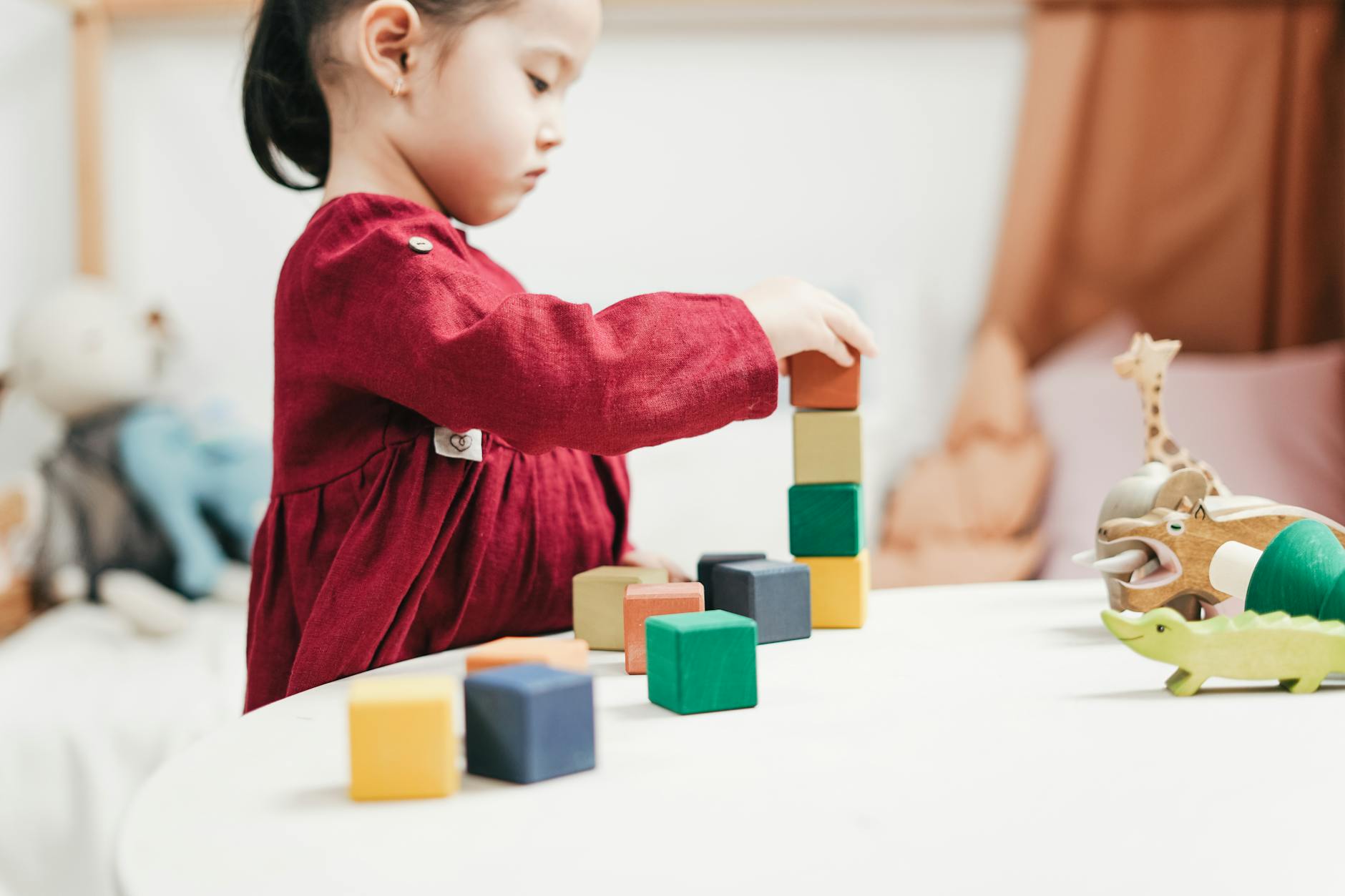
You have to stop teaching. Not completely—but you need to move from sage on stage to guide on side to co-player. When lecturing, you say "Gravity pulls things down." As a guide, you ask "What happens when you drop the rock?" As a co-player, you sit on the floor: "My tower keeps falling when I go this high. How did you make yours stable?" Each shift puts more cognitive weight on the student.
Run this check before intervening: Is there a safety risk? Stop immediately. Is there a learning opportunity hovering in the zone of proximal development? Scaffold with one question. Is it a peer conflict? Observe first—they often resolve it. Are they in flow state? Step back.
Watch for over-scaffolding. If you insert yourself every three minutes, you've become the obstacle. The tell is when kids stop building and look at you before continuing. They've learned to check for teacher approval instead of trusting their judgment. Count to ten before intervening. Let the struggle happen.
Use these five facilitation techniques:
Parallel play - Model complex block stacking nearby without directing their next move.
Verbal mapping - Narrate what you see: "I notice you put the red block on top of the blue one."
Wondering aloud - Pose questions: "I wonder what happens if you remove that middle block?"
Extending play - Add materials quietly, like dropping measuring tapes into the block area.
Documentation - Snap photos for later reflection without interrupting the flow.
Structuring the Learning Environment
The room is the third teacher. If you get structuring the learning environment right, it does half the work for you. You need 35 square feet per child minimum—less than that and bodies bump into each other, triggering conflict. Create defined zones using rugs or low shelving so kids can see where the quiet/soft space ends and the active/loud space begins. Put materials at child height in clear containers. If they can't see it, they won't use it. Loose parts play works best when materials are sorted by type rather than dumped in catch-all bins.
Traditional Rows | Centers with Physical Boundaries | Flexible Makerspace |
|---|---|---|
Desks face front. Teacher at board. Movement restricted. | Rugs and shelves define nooks. Fixed locations. | Wheeled furniture. Tables on casters. |
Unsuitable for play. | Good for early elementary. Clear boundaries reduce conflict. | Optimal for grades 4+. Supports inquiry-based learning. |
Check out 15 learning stations that work for specific zone ideas. When kids can move furniture without asking, they own the space. That's when experiential learning kicks in.
Balancing Child-Led and Teacher-Guided Play
The ratio matters. In early childhood, aim for 70% child-led play and 30% teacher-guided. By upper elementary, shift to 50/50. Adjust based on independence levels. A class new to inquiry-based learning in September needs more scaffolding than the same group in May. If kids are floundering, temporarily increase guidance. If they're creating elaborate scenarios without you, decrease it.
Picture a Venn diagram. On one side: free play, where students design the activity and the rules. On the other: playful learning, where you design a game with specific targets but students choose their path. Guided play sits in the intersection—you set the learning goal, but the child directs the method. That's the sweet spot for child-centered education.
Watch for the engagement indicator. Are they arguing productively about the rules of their game, or scanning the room looking for something to do? This play and learning balance isn't unsupervised chaos. It's maintaining that delicate space where challenge meets capability. It works when you trust the process enough to get out of the way, but stay close enough to capture the learning when it happens.
Play and Learning Examples Across Grade Levels
Activity Name | Target Standard | Materials Needed | Teacher Role | Assessment Method |
|---|---|---|---|---|
Sensory Writing Trays | CCSS.ELA-LITERACY.L.K.1.A | Salt trays, letter cards ($5) | Facilitator | Photo documentation |
Loose Parts Math Sorting | CCSS.MATH.CONTENT.K.MD.B.3 | Buttons, bowls ($10) | Observer | Sorting checklist |
Dramatic Play Transformations | CCSS.ELA-LITERACY.SL.K.6 | Fabrics, props ($20) | Co-player | Participation rubric |
STEM Challenge Bins | NGSS 3-5-ETS1-1 | Recyclables, tape ($8) | Coach | Design journal |
Reader's Theater with Costumes | CCSS.ELA-LITERACY.RF.4.4.B | Scripts, clothes ($15) | Director | Fluency rubric |
Gamified Math Stations | CCSS.MATH.CONTENT.4.OA.A.1 | Dice, cards, timers ($12) | Station manager | Progress tracker |
Model UN | NCSS.D2.Civ.7.9-12 | Position papers ($5) | Moderator | Position paper eval |
Science Review Escape Rooms | NGSS HS-LS1-1 | Locks, puzzles ($25) | Game master | Reflection + time |
LARP Literature Analysis | CCSS.ELA-LITERACY.RL.9-10.3 | Character sheets ($10) | NPC facilitator | Character essay |
Early Childhood and Kindergarten Applications
Mud kitchens turn dirt into data. You fill bins with measuring cups and laminated recipe cards, then watch 5-year-olds grapple with measurement standards while mixing "soup." Prep takes 20 minutes and costs about $15 if you hit the dollar store for the supplies. For families seeking a flexible early-learning option, virtual preschool can extend play-based exploration beyond the classroom through guided activities and social interaction.
Three play based learning in early childhood setups that work:
Shadow tracing. Kids strike poses at 10 AM, you trace outlines in chalk, they return at 2 PM to see how the sun shifted the silhouette. They measure differences and hypothesize about Earth's rotation without knowing they're doing astronomy.
Transient art. Dump baskets of pinecones, seed pods, and colored leaves on tables. No glue allowed. Children arrange compositions, photograph their creations, then sweep materials back into bins for tomorrow's build. This loose parts play builds fine motor control and decision-making simultaneously.
Mud kitchen math. Measuring cups and recipe cards target volume standards while children mix "soup" and "cakes" outdoors.
Safety matters more than the activity itself. Maintain a 1:10 teacher ratio when loose parts move outdoors. Check every object for choking hazards if you're in pre-K—anything under 1.25 inches goes into locked storage until next year. These moments live in the zone of proximal development; you're scaffolding curiosity without stealing the discovery.
Elementary School Strategies
Third graders running a classroom store handle real money and real frustration. Market Math puts them in charge of pricing inventory, making change for classmates, and counting till drawers at day's end. They learn decimals because their customers demand correct change, not because a worksheet says so. Historical Immersion Day demands more preparation—students spend a week researching colonial figures, then arrive in costume to debate taxation policies with scripted arguments. The Architecture Challenge limits teams to toothpicks and modeling clay while requiring specific 3D shapes that withstand wind from a fan.
You'll see the developmental shift immediately. These children moved from sensory exploration to rule-based systems with clear win/lose conditions. Check out more elementary school strategies if you're mapping your semester. This is where experiential learning gets structured. You're still facilitating play and learning, but now you're embedding academic non-negotiables into the game mechanics instead of the other way around.
Middle and High School Adaptations
Adolescents won't pretend to be squirrels. Instead, they debate Federalists versus Anti-Federalists using hidden role cards that force them to argue against their personal beliefs. Physics Olympics turns labs into competitions—whose paper airplane carries the most pennies? Whose rubber band car travels farthest? Students keep engineering notebooks because they want to win, not because you demanded documentation. For literature, try creative writing LARPing where students physically embody characters while arguing plot points in the cafeteria during lunch.
The Disease Detectives unit exemplifies inquiry-based learning for sophomores. You provide fake patient charts, CDC investigation protocols, and a mystery outbreak spreading through the school. Groups track vectors, calculate R-naught values, and present findings to a panel of "public health officials"—usually your administration roped into playing along. These aren't games inside the classroom for active learning as window dressing. They're child-centered education designed for brains that need social risk and strategic thinking. The play shifts from physical to cognitive and social, but the engagement remains just as intense.
Getting Started with Play-Based Instruction
Most play-based initiatives die in the first month. Teachers fall into three predictable traps. First, the chaos trap: launching 60-minute unstructured blocks before kids know the routines. You'll spend more time managing behavior than supporting learning. Second, the worksheet wolf: slapping a game board on drill worksheets and calling it play. Kids see through this immediately. Third, the documentation panic: parents and admins ask "Where's the evidence?" and you have nothing but sticky notes.
Avoid these by treating implementation like scaffolding within the zone of proximal development—start where you are, not where Pinterest says you should be. Here's a realistic four-week timeline. Week one: audit your space and introduce soft starts. Week two: add one center with true choice. Week three: begin documentation with learning stories or photo evidence. Week four: integrate fully. Budget fifty to one hundred dollars for thrift store baskets, rocks, fabric scraps, and cardboard tubes. Skip the five-hundred-dollar commercial kits. Loose parts play works better than plastic toys because the open-ended nature forces creative problem solving.
Assessing Your Current Classroom Setup
Before buying anything, audit what you've got. Score these five categories zero to ten. Physical space flexibility: Can kids move furniture without asking permission? Time allocation for choice: How many minutes per day do students direct their own learning? Material accessibility: Are supplies on open shelving at kid height or locked in cabinets? Teacher mindset shift: Do you view yourself as facilitator or lecturer? Student autonomy opportunities: Can kids choose partners, seating, or tools without raising their hand?
Add your scores. Below thirty means pump the brakes. You need structural changes before diving into full child-centered education. Thirty to forty indicates you're ready for gradual implementation of experiential learning. Forty-plus means optimize your current practice; you're already doing inquiry-based learning, you just haven't named it.
Be brutally honest about the mindset piece. If you're scoring yourself a three because you can't stand noise or uncertainty, start with structured activities rather than free play. The physical space matters less than your tolerance for ambiguity.
Starting Small with Low-Stakes Activities
Don't flip your entire schedule on Monday. Pick one transition to transform. Morning work is the easiest entry point. Ditch the packets. Set out three "invitation bins" with pattern blocks, drawing materials, or loose parts trays. Give fifteen minutes. That's it. I switched from traditional morning work to soft starts last year. Transition time to our first lesson dropped from eight minutes to three once kids stopped dragging their feet on worksheets they hated. The room felt calmer.
Other low-stakes entry points include choice-based indoor recess with an academic twist, like building the tallest tower using only blue blocks, or Friday genius hour following the twenty percent time model. These aren't rewards for finishing work. They are the work. These active learning strategies build stamina for longer play blocks later. Track what happens during these small windows. Which kids gravitate toward social play? Who defaults to solitary building? This informal data drives your planning more than any diagnostic test, especially when you're measuring progress without standardized testing.
Measuring Progress Without Standardized Testing
Parents and administrators need proof that play way method of teaching produces results. Standardized tests won't capture growth in collaboration, creativity, or oral language development. Instead, use learning stories: narrative documentation of a fifteen-minute play episode that captures dialogue and problem-solving. Photo portfolios with student voice captions using apps like Seesaw show process, not just product. Conferring binders with anecdotal notes track individual progress over time.
These play based learning strategies create accountability without killing the joy. When families see a photo of their child negotiating block tower rights with a classmate, they stop asking about worksheet completion rates.
Know when to pause the approach.
Don't use unstructured play during high-stakes standardized test prep weeks; the cognitive overload of switching modalities confuses kids who need routine.
Avoid it with specific behavioral safety concerns that require highly structured environments and constant visual monitoring.
Never leave play centers running with untrained substitute teachers; the lack of scaffolding leads to chaos and potential injury.
Reserve these days for direct instruction until your regular routines are rock solid.
What Is Play and Learning?
Intrinsically motivated – the activity itself is the reward
Symbolic – using objects to represent ideas (blocks become castles)
Process-oriented – the doing matters more than the finished product
Pleasurable – there's genuine enjoyment, not just compliance
Active engagement – minds and bodies are both working
You'll work with three distinct flavors. Free play has zero learning objective attached – think indoor recess with loose parts play. Guided play happens when you scaffold within their chosen activity, like joining a block-building session to ask "how many more blocks to reach the window?" while they lead. Playful learning looks like game-based academics – high schoolers playing a modified Monopoly to learn economic systems, or 4th graders doing a math scavenger hunt.
Defining Play-Based Pedagogy
Academic preschool models drill letter recognition through worksheets and choral response. Play based learning pedagogy, like the Tools of the Mind curriculum, has kids planning their pretend grocery store, writing shopping lists, and negotiating roles – hitting the same literacy standards through defining play-based pedagogy that respects child agency.
This isn't new. The play way method emerged from Froebel's kindergarten gardens and Dewey's lab school, emphasizing experiential learning over memorization. Vygotsky called it the zone of proximal development in action – when you help that 5-year-old stabilize their wobbling block tower just enough that they finish it themselves, you're scaffolding their learning at the exact edge of their capability.
Research backs this up. By third grade, kids from high-quality inquiry-based learning programs match or exceed their direct-instruction peers on standardized reading tests. The difference? They can also sustain attention longer and solve social problems without running to you every five minutes. That's the self-regulation dividend.
The Core Principles of Play and Learning
Child-centered education only works when you translate theory into daily action. Here are five principles to post by your desk:
Agency means real choice within boundaries. Instead of "build whatever," try "use exactly five items from the loose parts play bin, you pick which ones."
Process over product changes your walls. Photograph block constructions at three stages of completion rather than displaying one perfect teacher sample. Show the mess of learning.
Joy isn't a reward for finishing – it's the fuel. When 2nd graders giggle while testing paper airplane designs, that pleasure is actually cementing the scientific method in their brains.
Risk-taking safety means reframing failure. "That didn't work yet" replaces "that's wrong." You want them iterating, not performing for you.
Embodied cognition recognizes that standing on wobble boards while reading, or pacing while debating, actually improves retention. The body is not separate from the mind.
This aligns with the principles of the play way method – learning through lived experience, not just listening.
Common Myths and Misconceptions
You've heard the pushback. Here's the reality:
Myth | Reality |
|---|---|
Teachers don't teach; they just babysit. | You facilitate through sophisticated questioning and just-in-time scaffolding. You're working harder, differently. |
You can't align this to standards. | Assessment is embedded. You map exactly which standards are met through observation checklists. |
The classroom would be chaos. | Structured choice prevents free-for-alls. Visual boundaries, timers, and clear material limits create safety. |
Take the standards panic. NGSS K-PS2-1 expects kids to understand push and pull forces. You could use a worksheet where they circle "push" or "pull." Or you set up ramps and balls during guided play. As they roll cars down inclines, you ask "what happens if you make the hill steeper?" Same standard, deeper understanding. The play and learning approach doesn't ignore benchmarks – it meets them through inquiry instead of interruption.
Why Does Play and Learning Matter for Student Development?
Play-based learning builds cognitive flexibility, social-emotional regulation, and long-term academic retention. The research is clear: it develops executive function skills like working memory and inhibitory control more effectively than passive instruction. Students who play to learn demonstrate superior problem-solving abilities and creativity that persist through upper elementary years and beyond.
Cognitive and Academic Benefits
When children engage in sensory-motor play, they physically construct the neural pathways that support executive function. This is the neuroplasticity argument in action. Every time a child balances a block or sorts loose parts, they're strengthening the brain architecture needed for later academic work. Specifically, loose parts play builds working memory capacity by requiring kids to hold multiple variables simultaneously while manipulating objects without predetermined uses. Watch a first grader during dramatic play grocery shopping in October. They're tracking prices, categorizing food groups, and remembering their shopping list—all at once. That's three distinct variables in working memory while they make financial decisions with play money and calculate change.
This hands-on approach accelerates concrete-to-abstract transfer in mathematics. Second graders using unit blocks to model addition problems—physically combining 3 blocks with 4 blocks to see and feel that it makes 7—transition to mental math algorithms months faster than worksheet-only peers. The same causal reasoning develops through block building's if-then logic. If I remove this support block, then the tower collapses. Symbolic thinking flourishes when a simple wooden block becomes a phone, then a car, then a dinosaur egg in the span of ten minutes. These aren't just games. They're cognitive and academic benefits rooted in experiential learning that physically wire the brain for complex, abstract thought.
Social-Emotional Growth Through Play
John Hattie's Visible Learning research identifies self-regulation strategies with an effect size of 0.52—significant territory that directly impacts academic achievement. Here's the kicker: play-based environments develop these prerequisites without explicit drill, behavior charts, or constant teacher intervention. Children learn to manage impulses and emotions through the architecture of child-centered education itself, practicing regulation in meaningful contexts rather than isolated skills lessons that fail to transfer.
I track this using the "3 C's" framework in my classroom. Cooperation emerges through turn-taking during board games like Sum Swamp, where waiting your turn isn't a rule on a poster but a necessity for the game to function. Conflict resolution happens when kids negotiate roles in the dramatic play kitchen—who cooks, who serves, who pays, and what happens when someone wants to switch jobs mid-shift. Confidence builds through mastery experiences in loose parts construction, where repetition and careful scaffolding within the zone of proximal development lead to genuine competence rather than empty praise.
Consider two fourth graders creating a trading card game from scratch during indoor recess. They must compromise on rules that feel fair to both parties, establish who has authority to modify them mid-game when disputes arise, and regulate their emotions when losing a match they designed themselves. One kid draws a "super rare" card that breaks the balance. They negotiate. That's sophisticated social-emotional growth through play happening organically, not through a scripted lesson plan or social skills worksheet.
Long-Term Learning Outcomes
Longitudinal studies tracking students from play-based kindergarten through grade 4 reveal sustained advantages in creative problem-solving and academic self-concept. These aren't fleeting gains that disappear after summer break. They stick because experiential learning creates multiple neural hooks for retrieval, connecting emotion, movement, and social interaction to academic content.
The comparison with traditional instruction breaks down across four critical dimensions:
Dimension | Play-Based Learning | Traditional Instruction |
|---|---|---|
Knowledge Retention Rates | High retention after 6+ months through deep encoding and meaningful context | Rapid decay without application or emotional connection to material |
Creativity Assessment Scores | Superior divergent thinking and novel solutions to unfamiliar problems | Standardized responses with limited transfer to new situations |
Standardized Test Performance | Strong long-term gains, slower initial results on immediate measures | Quick spikes for next-week tests, weak durability over academic years |
Student Wellbeing Indicators | Lower stress hormones, higher engagement, intrinsic motivation persists | Anxiety spikes, compliance-based participation, requires external rewards |
Drill-and-kill has its place in your toolkit. If you need rote memorization for next Friday's assessment or state testing prep next month, traditional worksheets work fast. But for transfer and retention that lasts into middle school and beyond, deep inquiry-based learning through play wins. Choose your approach based on the timeline that actually matters for your students' development, not just this month's data dashboard or next week's quiz.
How Play and Learning Works in the Classroom
The Teacher's Role as Facilitator
You have to stop teaching. Not completely—but you need to move from sage on stage to guide on side to co-player. When lecturing, you say "Gravity pulls things down." As a guide, you ask "What happens when you drop the rock?" As a co-player, you sit on the floor: "My tower keeps falling when I go this high. How did you make yours stable?" Each shift puts more cognitive weight on the student.
Run this check before intervening: Is there a safety risk? Stop immediately. Is there a learning opportunity hovering in the zone of proximal development? Scaffold with one question. Is it a peer conflict? Observe first—they often resolve it. Are they in flow state? Step back.
Watch for over-scaffolding. If you insert yourself every three minutes, you've become the obstacle. The tell is when kids stop building and look at you before continuing. They've learned to check for teacher approval instead of trusting their judgment. Count to ten before intervening. Let the struggle happen.
Use these five facilitation techniques:
Parallel play - Model complex block stacking nearby without directing their next move.
Verbal mapping - Narrate what you see: "I notice you put the red block on top of the blue one."
Wondering aloud - Pose questions: "I wonder what happens if you remove that middle block?"
Extending play - Add materials quietly, like dropping measuring tapes into the block area.
Documentation - Snap photos for later reflection without interrupting the flow.
Structuring the Learning Environment
The room is the third teacher. If you get structuring the learning environment right, it does half the work for you. You need 35 square feet per child minimum—less than that and bodies bump into each other, triggering conflict. Create defined zones using rugs or low shelving so kids can see where the quiet/soft space ends and the active/loud space begins. Put materials at child height in clear containers. If they can't see it, they won't use it. Loose parts play works best when materials are sorted by type rather than dumped in catch-all bins.
Traditional Rows | Centers with Physical Boundaries | Flexible Makerspace |
|---|---|---|
Desks face front. Teacher at board. Movement restricted. | Rugs and shelves define nooks. Fixed locations. | Wheeled furniture. Tables on casters. |
Unsuitable for play. | Good for early elementary. Clear boundaries reduce conflict. | Optimal for grades 4+. Supports inquiry-based learning. |
Check out 15 learning stations that work for specific zone ideas. When kids can move furniture without asking, they own the space. That's when experiential learning kicks in.
Balancing Child-Led and Teacher-Guided Play
The ratio matters. In early childhood, aim for 70% child-led play and 30% teacher-guided. By upper elementary, shift to 50/50. Adjust based on independence levels. A class new to inquiry-based learning in September needs more scaffolding than the same group in May. If kids are floundering, temporarily increase guidance. If they're creating elaborate scenarios without you, decrease it.
Picture a Venn diagram. On one side: free play, where students design the activity and the rules. On the other: playful learning, where you design a game with specific targets but students choose their path. Guided play sits in the intersection—you set the learning goal, but the child directs the method. That's the sweet spot for child-centered education.
Watch for the engagement indicator. Are they arguing productively about the rules of their game, or scanning the room looking for something to do? This play and learning balance isn't unsupervised chaos. It's maintaining that delicate space where challenge meets capability. It works when you trust the process enough to get out of the way, but stay close enough to capture the learning when it happens.
Play and Learning Examples Across Grade Levels
Activity Name | Target Standard | Materials Needed | Teacher Role | Assessment Method |
|---|---|---|---|---|
Sensory Writing Trays | CCSS.ELA-LITERACY.L.K.1.A | Salt trays, letter cards ($5) | Facilitator | Photo documentation |
Loose Parts Math Sorting | CCSS.MATH.CONTENT.K.MD.B.3 | Buttons, bowls ($10) | Observer | Sorting checklist |
Dramatic Play Transformations | CCSS.ELA-LITERACY.SL.K.6 | Fabrics, props ($20) | Co-player | Participation rubric |
STEM Challenge Bins | NGSS 3-5-ETS1-1 | Recyclables, tape ($8) | Coach | Design journal |
Reader's Theater with Costumes | CCSS.ELA-LITERACY.RF.4.4.B | Scripts, clothes ($15) | Director | Fluency rubric |
Gamified Math Stations | CCSS.MATH.CONTENT.4.OA.A.1 | Dice, cards, timers ($12) | Station manager | Progress tracker |
Model UN | NCSS.D2.Civ.7.9-12 | Position papers ($5) | Moderator | Position paper eval |
Science Review Escape Rooms | NGSS HS-LS1-1 | Locks, puzzles ($25) | Game master | Reflection + time |
LARP Literature Analysis | CCSS.ELA-LITERACY.RL.9-10.3 | Character sheets ($10) | NPC facilitator | Character essay |
Early Childhood and Kindergarten Applications
Mud kitchens turn dirt into data. You fill bins with measuring cups and laminated recipe cards, then watch 5-year-olds grapple with measurement standards while mixing "soup." Prep takes 20 minutes and costs about $15 if you hit the dollar store for the supplies. For families seeking a flexible early-learning option, virtual preschool can extend play-based exploration beyond the classroom through guided activities and social interaction.
Three play based learning in early childhood setups that work:
Shadow tracing. Kids strike poses at 10 AM, you trace outlines in chalk, they return at 2 PM to see how the sun shifted the silhouette. They measure differences and hypothesize about Earth's rotation without knowing they're doing astronomy.
Transient art. Dump baskets of pinecones, seed pods, and colored leaves on tables. No glue allowed. Children arrange compositions, photograph their creations, then sweep materials back into bins for tomorrow's build. This loose parts play builds fine motor control and decision-making simultaneously.
Mud kitchen math. Measuring cups and recipe cards target volume standards while children mix "soup" and "cakes" outdoors.
Safety matters more than the activity itself. Maintain a 1:10 teacher ratio when loose parts move outdoors. Check every object for choking hazards if you're in pre-K—anything under 1.25 inches goes into locked storage until next year. These moments live in the zone of proximal development; you're scaffolding curiosity without stealing the discovery.
Elementary School Strategies
Third graders running a classroom store handle real money and real frustration. Market Math puts them in charge of pricing inventory, making change for classmates, and counting till drawers at day's end. They learn decimals because their customers demand correct change, not because a worksheet says so. Historical Immersion Day demands more preparation—students spend a week researching colonial figures, then arrive in costume to debate taxation policies with scripted arguments. The Architecture Challenge limits teams to toothpicks and modeling clay while requiring specific 3D shapes that withstand wind from a fan.
You'll see the developmental shift immediately. These children moved from sensory exploration to rule-based systems with clear win/lose conditions. Check out more elementary school strategies if you're mapping your semester. This is where experiential learning gets structured. You're still facilitating play and learning, but now you're embedding academic non-negotiables into the game mechanics instead of the other way around.
Middle and High School Adaptations
Adolescents won't pretend to be squirrels. Instead, they debate Federalists versus Anti-Federalists using hidden role cards that force them to argue against their personal beliefs. Physics Olympics turns labs into competitions—whose paper airplane carries the most pennies? Whose rubber band car travels farthest? Students keep engineering notebooks because they want to win, not because you demanded documentation. For literature, try creative writing LARPing where students physically embody characters while arguing plot points in the cafeteria during lunch.
The Disease Detectives unit exemplifies inquiry-based learning for sophomores. You provide fake patient charts, CDC investigation protocols, and a mystery outbreak spreading through the school. Groups track vectors, calculate R-naught values, and present findings to a panel of "public health officials"—usually your administration roped into playing along. These aren't games inside the classroom for active learning as window dressing. They're child-centered education designed for brains that need social risk and strategic thinking. The play shifts from physical to cognitive and social, but the engagement remains just as intense.
Getting Started with Play-Based Instruction
Most play-based initiatives die in the first month. Teachers fall into three predictable traps. First, the chaos trap: launching 60-minute unstructured blocks before kids know the routines. You'll spend more time managing behavior than supporting learning. Second, the worksheet wolf: slapping a game board on drill worksheets and calling it play. Kids see through this immediately. Third, the documentation panic: parents and admins ask "Where's the evidence?" and you have nothing but sticky notes.
Avoid these by treating implementation like scaffolding within the zone of proximal development—start where you are, not where Pinterest says you should be. Here's a realistic four-week timeline. Week one: audit your space and introduce soft starts. Week two: add one center with true choice. Week three: begin documentation with learning stories or photo evidence. Week four: integrate fully. Budget fifty to one hundred dollars for thrift store baskets, rocks, fabric scraps, and cardboard tubes. Skip the five-hundred-dollar commercial kits. Loose parts play works better than plastic toys because the open-ended nature forces creative problem solving.
Assessing Your Current Classroom Setup
Before buying anything, audit what you've got. Score these five categories zero to ten. Physical space flexibility: Can kids move furniture without asking permission? Time allocation for choice: How many minutes per day do students direct their own learning? Material accessibility: Are supplies on open shelving at kid height or locked in cabinets? Teacher mindset shift: Do you view yourself as facilitator or lecturer? Student autonomy opportunities: Can kids choose partners, seating, or tools without raising their hand?
Add your scores. Below thirty means pump the brakes. You need structural changes before diving into full child-centered education. Thirty to forty indicates you're ready for gradual implementation of experiential learning. Forty-plus means optimize your current practice; you're already doing inquiry-based learning, you just haven't named it.
Be brutally honest about the mindset piece. If you're scoring yourself a three because you can't stand noise or uncertainty, start with structured activities rather than free play. The physical space matters less than your tolerance for ambiguity.
Starting Small with Low-Stakes Activities
Don't flip your entire schedule on Monday. Pick one transition to transform. Morning work is the easiest entry point. Ditch the packets. Set out three "invitation bins" with pattern blocks, drawing materials, or loose parts trays. Give fifteen minutes. That's it. I switched from traditional morning work to soft starts last year. Transition time to our first lesson dropped from eight minutes to three once kids stopped dragging their feet on worksheets they hated. The room felt calmer.
Other low-stakes entry points include choice-based indoor recess with an academic twist, like building the tallest tower using only blue blocks, or Friday genius hour following the twenty percent time model. These aren't rewards for finishing work. They are the work. These active learning strategies build stamina for longer play blocks later. Track what happens during these small windows. Which kids gravitate toward social play? Who defaults to solitary building? This informal data drives your planning more than any diagnostic test, especially when you're measuring progress without standardized testing.
Measuring Progress Without Standardized Testing
Parents and administrators need proof that play way method of teaching produces results. Standardized tests won't capture growth in collaboration, creativity, or oral language development. Instead, use learning stories: narrative documentation of a fifteen-minute play episode that captures dialogue and problem-solving. Photo portfolios with student voice captions using apps like Seesaw show process, not just product. Conferring binders with anecdotal notes track individual progress over time.
These play based learning strategies create accountability without killing the joy. When families see a photo of their child negotiating block tower rights with a classmate, they stop asking about worksheet completion rates.
Know when to pause the approach.
Don't use unstructured play during high-stakes standardized test prep weeks; the cognitive overload of switching modalities confuses kids who need routine.
Avoid it with specific behavioral safety concerns that require highly structured environments and constant visual monitoring.
Never leave play centers running with untrained substitute teachers; the lack of scaffolding leads to chaos and potential injury.
Reserve these days for direct instruction until your regular routines are rock solid.
Still grading everything by hand?
EMStudio is a free teaching management app — manage your classes, students, lessons, and more!
Learn More
Still grading everything by hand?
EMStudio is a free teaching management app — manage your classes, students, lessons, and more!
Learn More


Notion4Teachers
Notion templates to simplify administrative tasks and enhance your teaching experience.



2026 Notion4Teachers. All Rights Reserved.
Notion4Teachers
Notion templates to simplify administrative tasks and enhance your teaching experience.
2026 Notion4Teachers. All Rights Reserved.
Notion4Teachers
Notion templates to simplify administrative tasks and enhance your teaching experience.
2026 Notion4Teachers. All Rights Reserved.