
Google Classroom LMS vs Canvas and Schoology: 2024 Comparison
Google Classroom LMS vs Canvas and Schoology: 2024 Comparison

Article by
Milo
ESL Content Coordinator & Educator
ESL Content Coordinator & Educator
All Posts
Last October, I watched a 7th-grade teacher toggle between three browser tabs just to take attendance, check homework submissions, and message a parent. She sighed and muttered, "I just need one place where this all lives." I have heard that same sigh in kindergarten rooms and high school departments across two different districts this year.
That frustration explains why learning management systems dominate every conversation in the teachers' lounge. You are not looking for another platform to babysit. Whether you already run a Google Classroom LMS environment or are shopping for alternatives, you need a hub that handles assignments and grades. It should not demand a second job in IT support.
This post compares the three platforms districts actually use: Google Classroom, Canvas, and Schoology. I have taught in classrooms running each one over the past eight years. I will show you which fits a lean budget and which makes differentiated instruction possible. We will cut through the marketing to look at what matters when the bell rings. No buzzwords, just what works for real teachers in real schools.
Still grading everything by hand?
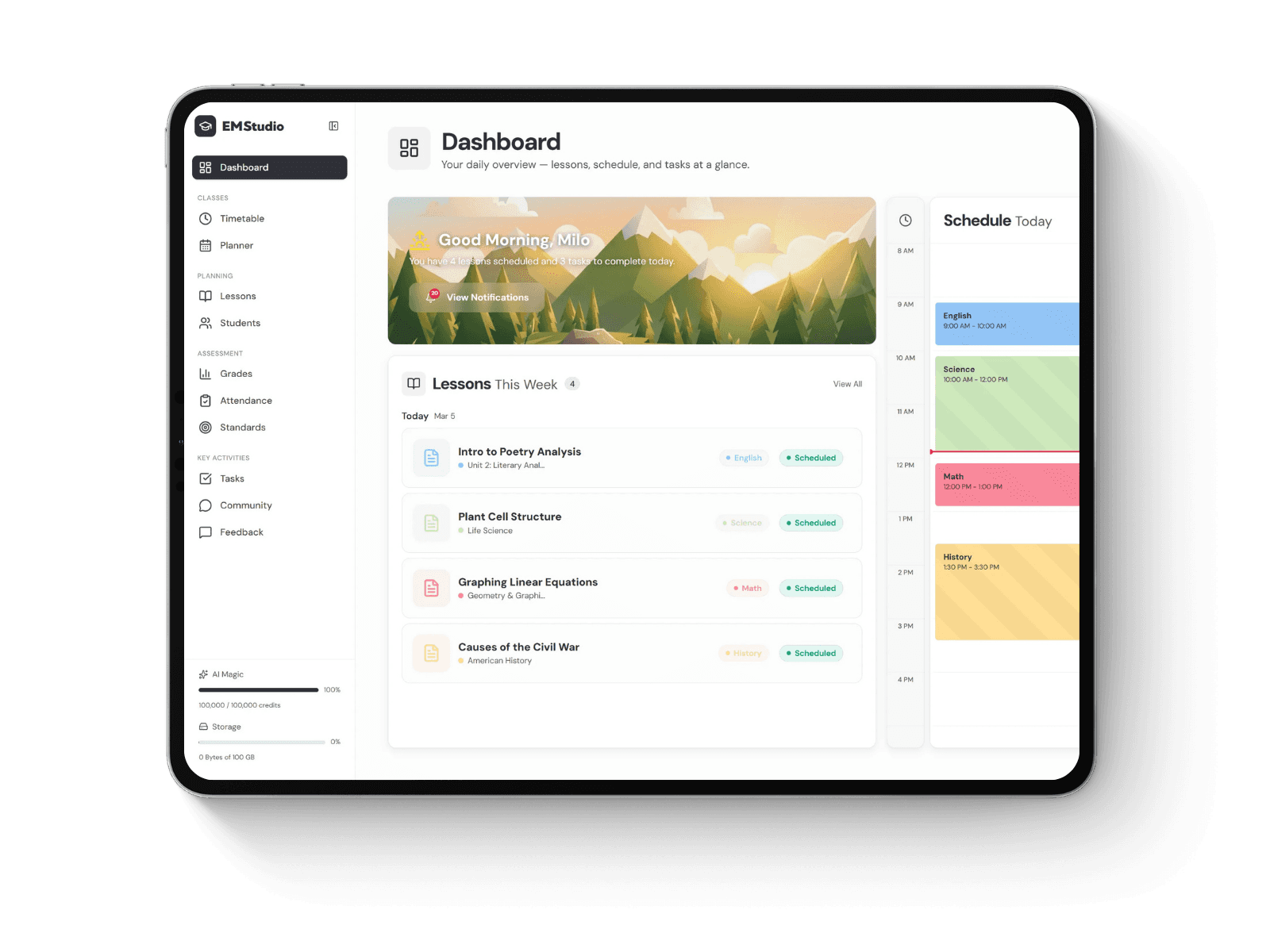
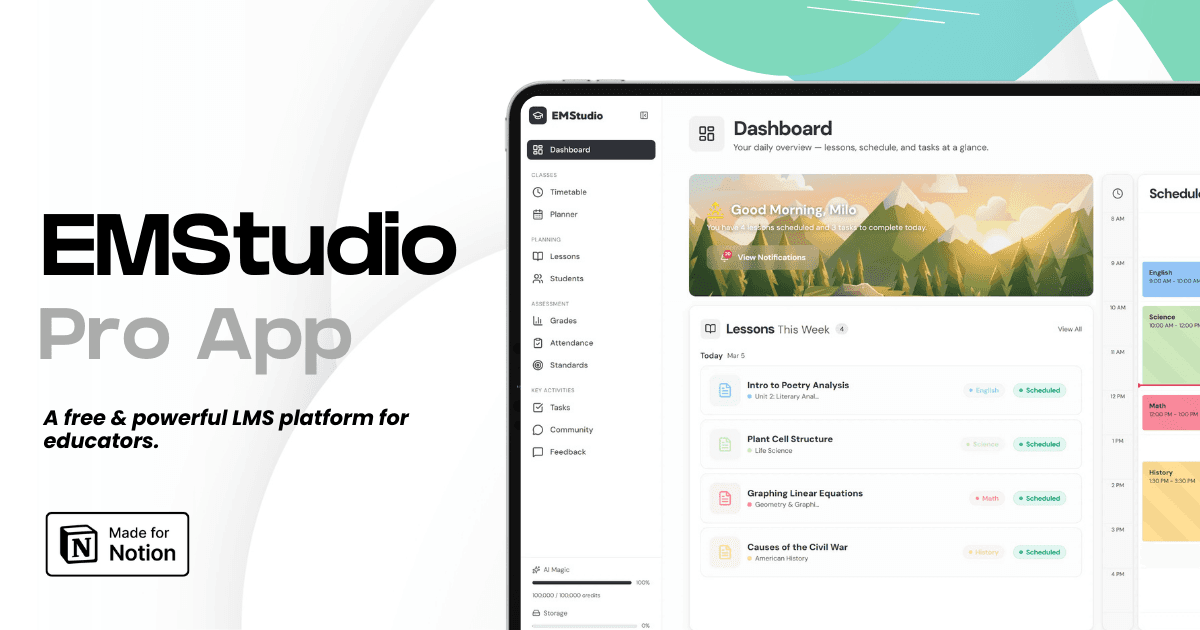
EMStudio is a free teaching management app — manage your classes, students, lessons, and more!
Learn More
Still grading everything by hand?
EMStudio is a free teaching management app — manage your classes, students, lessons, and more!
Learn More
Table of Contents
Quick Overview of Top Learning Management Systems
Choosing between Google Classroom, Canvas, and Schoology starts with knowing who each piece of educational technology actually serves. I learned this the hard way when my district piloted Canvas during my 8th-grade year while I was still running formative assessment cycles through Google Classroom. The mismatch became obvious by week three. Canvas wanted granular learning outcomes mapped to state standards; I needed to push out a quick exit ticket and see who got it before the bell rang. My 8th graders stared at the new interface like I had asked them to fly a plane. We lost three instructional days to navigation confusion alone.
Platform | Best For | Price Range (per student/year) | User Capacity | Setup Time |
|---|---|---|---|---|
Google Classroom | Individual teachers, small schools | Free to $4 | Unlimited users | Minutes |
Canvas | Higher ed, enterprise districts | $10 to $25 | Enterprise scale | Weeks (requires IT) |
Schoology | Standards-driven K-12 districts | Custom quotes | 20 million+ platform capacity | Full semester |
The numbers tell the market story. Google Classroom commands significant U.S. K-12 market share with 150 million users globally, making it the default learning management system google ecosystem for most American teachers. Canvas dominates higher education with 6,000+ institutions, while Schoology serves 20 million users focused on differentiated instruction and standards alignment in large districts. These figures matter when you consider long-term viability and support community size. When your IT director pitches a switch, ask which platform neighboring districts use. If they say Google, you will find help easily. If they say Canvas, expect a learning curve measured in months.
Three deal-breakers separate these learning management systems in practice. Canvas and Schoology offer native student information systems integration that pushes grades directly to your SIS; google classroom lms does not, forcing you to sync manually or pay for third-party bridges. Google Classroom lacks full LTI 1.3 Advantage compliance, limiting publisher content from Savvas or McGraw Hill.
Finally, Canvas needs dedicated IT admin support—roughly 0.5 to 1.0 FTE—to manage permissions and course shells, while you can launch classroom lms yourself during a single prep period. For a deeper breakdown of how these platforms support blended learning environments, see our comprehensive guide to learning management systems.

Google Classroom: Free Integration with Workspace for Education
Google Classroom sits inside Workspace for Education as a lightweight classroom management system. It handles the basics: you post content, collect work, and message students. Whether it qualifies as a true learning management system depends on how complex your tracking needs are.
The platform delivers assignments and scores work, functioning as a google classroom lms. However, it lacks the heavy analytics of student information systems. You won't find competency-based progression tracking or detailed longitudinal data here. For many K-12 teachers like Calah Jackson, this simplicity is the point.
Think of it as a digital filing cabinet with a gradebook attached. It works beautifully for formative assessment and daily workflow management. When you need granular data exports or automated standards reporting, you hit the ceiling.
Core Features and Assignment Workflows
Creating an assignment takes four clicks: Classwork, Create, Assignment, then attach your Google Doc. Check the "Make a copy for each student" box so they can't edit your template. You can set points from zero to one hundred, attach rubrics with up to fifty criteria, and run originality reports if your district pays for Education Plus.
Google Meet lives inside each class stream. The link lasts 365 days and recordings dump straight into Drive automatically. Free accounts cap you at 100 participants; Education Plus bumps that to 250. I've used this with my 7th graders during snow days. They clicked the Meet link in the assignment header, and I pulled up their shared Docs during the call to workshop their essays in real time.
What you won't find matters too. There are no weighted grading categories, so calculating final grades requires math outside the platform. You cannot export standards-based report cards directly, and peer review workflows don't exist natively. This isn't Canvas or Schoology; it's a streamlined workflow tool that keeps everyone in the same Google ecosystem without the bloat of enterprise features.
Pricing and Accessibility for Schools
The free Fundamentals tier gives you pooled storage capped at 100GB and Meet rooms for 100. Most small districts start here and stay here for years. The Teaching and Learning Upgrade runs four dollars per student annually, adding 250-person Meet limits, live streams for 10,000 viewers, and those originality reports.
Education Plus matches that four-dollar price but swaps in 500-person Meet rooms and adds security audit logs. Watch the hidden costs though. Third-party proctoring tools run two to five dollars per test. Monitoring software costs extra. If your pooled storage overflows, Google charges two cents per gigabyte monthly. These fees surprise districts who thought "free" meant free forever. The math changes quickly at scale.
Budget for the extras. A school of five hundred students might pay two thousand dollars yearly for the upgrade, then face another thousand in proctoring fees during state testing windows. Calculate the total cost of ownership before presenting the "free" solution to your board.
Ideal Use Cases and Grade Level Suitability
Google Classroom shines in 1:1 Chromebook districts serving grades three through twelve, especially for blended learning environments. If your students already live in Docs and Slides, the workflow feels invisible. Project-based learning environments benefit too; groups share files without external logins. Schools under one thousand students rarely hit the platform's limits.
Know when to look elsewhere. Universities requiring LTI interoperability for publisher content will hit walls immediately. Districts needing automated grade passback to their SIS without third-party bridges face tedious manual exports. Multi-section courses with five hundred plus students overwhelm the enrollment tools and bury you in notification emails.
For these scenarios, you need enterprise-grade virtual education management strategies and a heavier platform. Google Classroom works best as a google classroom management system for daily instruction, not as a district-wide data warehouse. Match the tool to the scale of your operation, or you'll spend more time workaround-hacking than teaching.

Canvas LMS: Enterprise-Grade Customization and Scalability
When your district tops 1,000 students, Google Classroom starts showing its seams. Sharing templates requires manual copying. Grade passback to student information systems breaks weekly. Canvas LMS is the enterprise alternative to google classroom lms deployments, built for scale and complex assessment workflows. The Canvas Commons repository offers 500,000 shared resources against Google Classroom's limited sharing, making it the choice for real learning management system functionality.
Advanced Assessment and Analytics Tools
You get two quiz engines. New Quizzes supports 15 question types including stimulus-based items where students analyze an image or text block before answering. Classic Quizzes caps at 11 types. New Quizzes also gives you item banks storing 1,000+ questions that you can share across departments. Moderation tools let you give extra time or attempts to specific students without creating separate assignments.
SpeedGrader changes how you give feedback. I used it last spring with my 11th graders. Side-by-side rubric scoring lets you click 10-point scale increments while viewing the submission. You can record three minutes of audio or video feedback directly in the browser. Research from Hattie shows feedback has a 0.75 effect size on student achievement. Canvas's multimedia tools make that high-impact practice possible.
The platform integrates Turnitin Similarity Reports for plagiarism detection, though that requires a separate license. These advanced assessment and analytics tools justify the jump from free alternatives when accuracy matters. The rubrics support outcomes-based grading aligned to standards, which matters for formative assessment tracking.
Implementation Costs and Training Requirements
Freedom costs money. Canvas runs $10 to $25 per student annually depending on volume, with discounts kicking in at 5,000 students. Small districts pay the higher end. Expect a one-time implementation fee between $15,000 and $50,000 based on your full-time equivalent count and existing data migration needs.
Every teacher needs Canvas Certified Educator training. That is $500 per person and a 40-hour time commitment. You cannot skip this. The permission structures and outcomes-based grading require fluency that YouTube tutorials will not provide.
That 40-hour certification is a full week of summer work or two months of Wednesday afternoons. Factor this into your differentiated instruction planning time, because teachers will lose planning periods to training.
Plan for a 6 to 12 month rollout. You need 0.5 to 1.0 FTE Canvas administrator per 2,000 students. Most districts hire dedicated admins for building course templates and student information systems integrations before teachers receive login credentials. Rushing this timeline results in broken gradebook syncs and angry phone calls.
Higher Education and Large District Applications
Canvas Catalog lets you monetize expertise. You can sell professional development courses priced anywhere from $1.99 to $999, with integrated payment processing for continuing education units. Universities use this for certification programs. K-12 districts sell summer school access or parent education series. This turns your professional learning into a revenue stream, not a budget drain.
The LTI 1.3 Advantage specification makes Canvas play nice with enterprise tools. It supports deep linking, Names and Role Provisioning Services for roster syncing, and Assignment and Grade Services for seamless two-way grade passback. When your educational technology stack includes specialized math apps or language lab software, these protocols keep data flowing without CSV uploads.
For institutions running blended learning environments across multiple campuses, these integrations eliminate the manual grade entry that plagues smaller platforms. You stop being the data messenger between apps. The scalability becomes infrastructure you do not have to think about, even when enrollment hits five digits.

Schoology: Assessment-Driven Instruction and Parent Engagement
Schoology functions less like a file-sharing folder and more like a digital gradebook that thinks in standards. While Google Classroom handles assignment distribution, districts needing granular assessment data graduate to these specialized learning management systems. The parent portal justifies the switch for many buildings.
Unlike sparse guardian summaries in a typical google classroom lms setup, Schoology offers real-time gradebook access and direct messaging. When I tested strategies for parent engagement here, open rates tripled compared to my previous system.
Standards-Aligned Curriculum Management
The platform arrives pre-loaded with state standards for all fifty states. You import curriculum maps directly from Excel, then align every quiz and project rubric to Common Core or NGSS benchmarks. The system tracks mastery at the individual standard level using a zero-to-four scale visible in real-time dashboards that update as students submit work.
Assessment creation accelerates through item banks. You access over three hundred thousand pre-built questions from Certica and Edmentum without leaving the interface. I built a formative assessment on fractional equivalence in eight minutes last February by filtering for fourth-grade Number and Operations standards.
This rigor transforms your lms classroom from a simple document dropbox into a data-driven instruction engine. Every assignment feeds standards-based mastery data back to your gradebook, showing precisely which three students need reteaching on 4.NBT.B.5 before Friday. Teachers use these insights to form differentiated instruction groups that same afternoon within their blended learning environments.
Pricing Tiers and Add-On Features
Schoology operates on an enterprise model that hides pricing behind district negotiation. Administrators report paying five to fifteen dollars per student annually for the Enterprise version. Premium analytics packages add another two to three dollars per head for predictive reporting on at-risk students.
The free Basic version works for individual teachers but carries heavy restrictions. You lose student information systems integration, bulk enrollment tools, and district-wide admin dashboards. It functions as an isolated schoology classroom without the data backbone that makes the platform powerful for systemic improvement.
Assessment Premium packages unlock the full item banks and longitudinal reporting features. Most districts bundle these with their PowerSchool SIS contracts. The investment only makes sense when your entire building commits to standards-based grading; otherwise you are paying for horsepower you will never use on a single teacher account, and you might stick with simpler educational technology instead.
K-12 District-Wide Deployment Strengths
Schoology shines brightest in elementary settings where the interface simplifies for younger learners. The primary dashboard uses large icons and limited navigation options perfect for kindergarten through fifth grade. Students maintain digital portfolios that show work during fall and spring conferences without teacher assembly.
The PowerSchool SIS native sync eliminates double entry entirely. Grades pass back in real-time, demographic data imports automatically, and scheduler updates reflect immediately in course rosters. This integration justifies the cost for busy registrars alone.
I watched my third graders take ownership of their learning last October using the portfolio feature. They selected their best writing samples and explained their growth to parents during student-led conferences. The bus attendance integration even helped us locate a missing backpack by checking who boarded that morning. When your learning management system google classroom alternative connects this deeply to daily operations, it stops feeling like software and starts feeling like infrastructure.

How Do These Platforms Compare on Pricing and Hidden Costs?
Google Classroom ranges from free to $4 per student yearly; Canvas costs $10-25 per student with $15,000+ implementation fees; Schoology uses custom enterprise pricing starting around $5-15 per student. Hidden expenses include professional development, SIS integration ($5,000-$20,000), and classroom monitoring tools.
The sticker price never tells the whole story. When you factor in training, IT overhead, and third-party plugins, your actual spend often doubles. I learned this the hard way during a 7th grade blended learning environments pilot that ballooned our budget.
Over three years, google classroom lms costs roughly $12 per student for Education Plus plus $8,000 for IT staffing, while Canvas runs $45-75 per student including implementation fees. Schoology sits at $25-40 per student plus another $10,000 often spent on dyknow classroom tools and student information systems integration. You can offset educational technology expenses through grants for free classroom supplies when planning for educational technology costs, though hardware adds $300 per student and formative assessment proctoring tools cost extra.
Free vs Premium Feature Gaps
The free tier of Google Classroom gives you unlimited classes and Google Meet access, but you lose originality reports and advanced audit logs unless you pay for Education Plus. Most teachers stick with the free version until compliance requires those data trails.
Canvas offers no institutional free tier—their Free-for-Teacher plan works for individuals only with limited storage. Paid licenses include differentiated instruction tools but require separate video hosting contracts that add $2-3 per student.
Schoology lets individual teachers run three courses free, which works for testing the waters. Enterprise unlocks student information systems sync and admin controls, though you cannot mix free and paid accounts easily.
Professional Development and Support Expenses
Training costs catch districts off guard after the first semester when teachers need advanced help. The Google Certified Trainer exam costs $299, while Canvas Certified Educator runs $500 per teacher. Most districts certify only instructional coaches to avoid budget shock.
Support quality varies sharply by tier. Google offers phone support only with Education Plus; free users rely on forums. Canvas includes 24/7 Tier 1 support, while Schoology provides a dedicated success manager only for Enterprise contracts over $50,000. The Schoology Ambassador program offers free training but requires a competitive application.
Hidden integration work adds up quickly. Connecting these learning management systems to existing gradebooks often requires outside IT help at $150 per hour regardless of platform, draining funds meant for free classroom supplies.

Which Platform Offers Better Third-Party Integrations?
Google Classroom integrates natively with 800+ Workspace apps but lacks full LTI 1.3 Advantage compliance; Canvas and Schoology support LTI 1.3 and Advantage standards, connecting to 200+ tools including Turnitin, Khan Academy, and Zoom with automatic grade passback capabilities.
Your tools either talk to your gradebook or they don't.
LTI 1.3 replaces the older 1.1 standard with OAuth 2 security and deep linking, letting students access external content without leaving the LMS. Canvas and Schoology carry full certification for these protocols. Google Classroom LMS supports only basic LTI links that open in new tabs, forcing you to manually transfer scores from formative assessment tools.
Classroom monitoring reveals the gaps. Netsupport classroom cloud, HP classroom manager, and mythware classroom all struggle with Google Classroom's limited API, requiring separate authentication and window monitoring outside the browser. Canvas and Schoology offer deeper hooks for these systems, though you will still wrestle with firewall permissions during setup.
Google Workspace vs LTI Standard Compatibility
Google Workspace locks you into Docs, Sheets, Slides, Forms, and Meet with seamless single sign-on but strict API restrictions. You get instant collaboration for differentiated instruction, yet you cannot embed external content directly into assignment streams. Everything launches in a new tab, fragmenting attention during blended learning environments. You also lose the ability to restrict navigation or lock browsers during high-stakes testing.
Canvas and Schoology operate on true LTI Advantage architecture. They support NRPS for automatic rostering, AGS for two-way grade synchronization, and Deep Linking that lets you place external tools directly inside modules. This enables seamlessly integrating third-party educational tools like specialized math manipulatives or science simulations without forcing students to manage multiple passwords. The learning management systems handle authentication silently in the background.
I saw this clearly with my 10th graders last fall. They completed a Desmos graphing activity embedded in Canvas—their scores posted automatically while they never left the assignment page. Google Classroom would have required separate logins and manual grade entry during my prep period.
SIS and Gradebook Synchronization Options
Canvas connects directly to PowerSchool, Infinite Campus, Skyward, and Banner via OneRoster APIs. Schoology offers native PowerSchool synchronization that updates rosters overnight. Google Classroom requires third-party bridges like Clever or Elevate Data Sync for most student information systems, adding another potential point of failure when those services hiccup.
Grade passback separates the workflows. Canvas and Schoology offer bidirectional sync—when a student completes a Quizizz or Edpuzzle, the score appears immediately in your gradebook. Google Classroom needs manual CSV exports or paid automation tools like Grade Transferer, stealing precious minutes during your prep period. That friction means you skip syncing small formative assessment scores.
The real cost shows up at grading time. With Canvas, I review Khan Academy mastery percentages directly in the gradebook columns. With Google Classroom, I download spreadsheets, format cells, and upload them again—assuming the student information systems accept the file format that week. That manual workflow steals time you could spend planning differentiated instruction.

Which LMS Should Your Institution Choose?
Choose Google Classroom for budget-conscious K-12 districts under 1,000 students using Chromebooks. Select Canvas for higher education or large districts needing customization and LTI compliance. Opt for Schoology for assessment-focused K-12 districts requiring standards alignment and solid parent engagement tools.
Schools comparing different platforms can also explore School LMS Software solutions to identify software that fits their teaching, administration, and student-management needs.
Your choice depends on student count, IT staffing, and how deep you need assessment tools to run. Small schools need simplicity; large districts need infrastructure that won't collapse during state testing week.
Decision Matrix by Institution Size
Districts with 0-500 students should default to the google classroom learning management system, which costs nothing beyond Workspace licenses and requires almost no IT maintenance. I watched my own 4th grade team migrate to it in a single afternoon; we were grading papers that night, unlike the semester-long transitions I've seen elsewhere. If you run vocational programs on WordPress, learndash classrooms offer a lightweight alternative that keeps everything inside your existing site.
At 500-5,000 students, the decision splits by level. Elementary-heavy districts benefit from Schoology's tight formative assessment tools and standards-based grading for differentiated instruction. High school districts with multiple sites need Canvas for shared course shells and mastery paths that travel across buildings without replication.
Once you cross 5,000 students, Canvas becomes the only viable engine for managing learning management systems at scale. Plan for one full-time educational technology administrator per 2,000 students to manage integrations with student information systems and handle tiered support. Anything less and your blended learning environments will stall when adoption spikes.
Migration and Implementation Roadmap
Moving platforms is painful. Google Takeout dumps your content into static PDFs that you cannot import into other learning management systems, forcing you to rebuild lessons from scratch. You will also lose grade history unless you pay for third-party archiving, and teachers need 6-18 months to relearn workflows during their planning periods.
Follow a hard roadmap for implementing educational change. Audit what content can actually transfer versus what needs complete recreation, then export using Common Cartridge for Canvas or Schoology, or HTML for Google. Run a pilot with ten teachers for one full semester before district-wide rollout over two additional semesters.
Check mobile assessment tools before you commit. Apps like proctur your pocket classroom might not support your new platform's API, breaking remote proctoring workflows. Loop in your role of an educational technologist in platform selection early to vet these dependencies and avoid surprises.

The Future of Google Classroom Lms in the Classroom
The right learning management systems choice depends on your school's reality. Google Classroom wins if you live in Workspace and need something that just works. Canvas makes sense when you have dedicated IT staff and complex grading requirements. Schoology fits when assessments drive every decision and parents need constant visibility. None of these platforms will transform bad teaching into good teaching, but the wrong one will waste hours you do not have.
These tools are converging faster than ever. Google keeps adding has that mimic Canvas, Canvas keeps simplifying its interface, and everyone is racing to embed AI grading tools that you will probably ignore anyway. The real shift is not in the software but in expectations—parents now assume real-time grade access, and students expect assignments to sync with their phones instantly.
Stay ahead by choosing one platform and digging deep. Resist the urge to migrate every time a new feature appears. Master the assessment tools in your current system, train your colleagues, and move on. The schools that thrive are not the ones with the newest educational technology, but the ones where teachers stop fighting their tools and start using them without thinking.

Quick Overview of Top Learning Management Systems
Choosing between Google Classroom, Canvas, and Schoology starts with knowing who each piece of educational technology actually serves. I learned this the hard way when my district piloted Canvas during my 8th-grade year while I was still running formative assessment cycles through Google Classroom. The mismatch became obvious by week three. Canvas wanted granular learning outcomes mapped to state standards; I needed to push out a quick exit ticket and see who got it before the bell rang. My 8th graders stared at the new interface like I had asked them to fly a plane. We lost three instructional days to navigation confusion alone.
Platform | Best For | Price Range (per student/year) | User Capacity | Setup Time |
|---|---|---|---|---|
Google Classroom | Individual teachers, small schools | Free to $4 | Unlimited users | Minutes |
Canvas | Higher ed, enterprise districts | $10 to $25 | Enterprise scale | Weeks (requires IT) |
Schoology | Standards-driven K-12 districts | Custom quotes | 20 million+ platform capacity | Full semester |
The numbers tell the market story. Google Classroom commands significant U.S. K-12 market share with 150 million users globally, making it the default learning management system google ecosystem for most American teachers. Canvas dominates higher education with 6,000+ institutions, while Schoology serves 20 million users focused on differentiated instruction and standards alignment in large districts. These figures matter when you consider long-term viability and support community size. When your IT director pitches a switch, ask which platform neighboring districts use. If they say Google, you will find help easily. If they say Canvas, expect a learning curve measured in months.
Three deal-breakers separate these learning management systems in practice. Canvas and Schoology offer native student information systems integration that pushes grades directly to your SIS; google classroom lms does not, forcing you to sync manually or pay for third-party bridges. Google Classroom lacks full LTI 1.3 Advantage compliance, limiting publisher content from Savvas or McGraw Hill.
Finally, Canvas needs dedicated IT admin support—roughly 0.5 to 1.0 FTE—to manage permissions and course shells, while you can launch classroom lms yourself during a single prep period. For a deeper breakdown of how these platforms support blended learning environments, see our comprehensive guide to learning management systems.
Google Classroom: Free Integration with Workspace for Education
Google Classroom sits inside Workspace for Education as a lightweight classroom management system. It handles the basics: you post content, collect work, and message students. Whether it qualifies as a true learning management system depends on how complex your tracking needs are.
The platform delivers assignments and scores work, functioning as a google classroom lms. However, it lacks the heavy analytics of student information systems. You won't find competency-based progression tracking or detailed longitudinal data here. For many K-12 teachers like Calah Jackson, this simplicity is the point.
Think of it as a digital filing cabinet with a gradebook attached. It works beautifully for formative assessment and daily workflow management. When you need granular data exports or automated standards reporting, you hit the ceiling.
Core Features and Assignment Workflows
Creating an assignment takes four clicks: Classwork, Create, Assignment, then attach your Google Doc. Check the "Make a copy for each student" box so they can't edit your template. You can set points from zero to one hundred, attach rubrics with up to fifty criteria, and run originality reports if your district pays for Education Plus.
Google Meet lives inside each class stream. The link lasts 365 days and recordings dump straight into Drive automatically. Free accounts cap you at 100 participants; Education Plus bumps that to 250. I've used this with my 7th graders during snow days. They clicked the Meet link in the assignment header, and I pulled up their shared Docs during the call to workshop their essays in real time.
What you won't find matters too. There are no weighted grading categories, so calculating final grades requires math outside the platform. You cannot export standards-based report cards directly, and peer review workflows don't exist natively. This isn't Canvas or Schoology; it's a streamlined workflow tool that keeps everyone in the same Google ecosystem without the bloat of enterprise features.
Pricing and Accessibility for Schools
The free Fundamentals tier gives you pooled storage capped at 100GB and Meet rooms for 100. Most small districts start here and stay here for years. The Teaching and Learning Upgrade runs four dollars per student annually, adding 250-person Meet limits, live streams for 10,000 viewers, and those originality reports.
Education Plus matches that four-dollar price but swaps in 500-person Meet rooms and adds security audit logs. Watch the hidden costs though. Third-party proctoring tools run two to five dollars per test. Monitoring software costs extra. If your pooled storage overflows, Google charges two cents per gigabyte monthly. These fees surprise districts who thought "free" meant free forever. The math changes quickly at scale.
Budget for the extras. A school of five hundred students might pay two thousand dollars yearly for the upgrade, then face another thousand in proctoring fees during state testing windows. Calculate the total cost of ownership before presenting the "free" solution to your board.
Ideal Use Cases and Grade Level Suitability
Google Classroom shines in 1:1 Chromebook districts serving grades three through twelve, especially for blended learning environments. If your students already live in Docs and Slides, the workflow feels invisible. Project-based learning environments benefit too; groups share files without external logins. Schools under one thousand students rarely hit the platform's limits.
Know when to look elsewhere. Universities requiring LTI interoperability for publisher content will hit walls immediately. Districts needing automated grade passback to their SIS without third-party bridges face tedious manual exports. Multi-section courses with five hundred plus students overwhelm the enrollment tools and bury you in notification emails.
For these scenarios, you need enterprise-grade virtual education management strategies and a heavier platform. Google Classroom works best as a google classroom management system for daily instruction, not as a district-wide data warehouse. Match the tool to the scale of your operation, or you'll spend more time workaround-hacking than teaching.
Canvas LMS: Enterprise-Grade Customization and Scalability
When your district tops 1,000 students, Google Classroom starts showing its seams. Sharing templates requires manual copying. Grade passback to student information systems breaks weekly. Canvas LMS is the enterprise alternative to google classroom lms deployments, built for scale and complex assessment workflows. The Canvas Commons repository offers 500,000 shared resources against Google Classroom's limited sharing, making it the choice for real learning management system functionality.
Advanced Assessment and Analytics Tools
You get two quiz engines. New Quizzes supports 15 question types including stimulus-based items where students analyze an image or text block before answering. Classic Quizzes caps at 11 types. New Quizzes also gives you item banks storing 1,000+ questions that you can share across departments. Moderation tools let you give extra time or attempts to specific students without creating separate assignments.
SpeedGrader changes how you give feedback. I used it last spring with my 11th graders. Side-by-side rubric scoring lets you click 10-point scale increments while viewing the submission. You can record three minutes of audio or video feedback directly in the browser. Research from Hattie shows feedback has a 0.75 effect size on student achievement. Canvas's multimedia tools make that high-impact practice possible.
The platform integrates Turnitin Similarity Reports for plagiarism detection, though that requires a separate license. These advanced assessment and analytics tools justify the jump from free alternatives when accuracy matters. The rubrics support outcomes-based grading aligned to standards, which matters for formative assessment tracking.
Implementation Costs and Training Requirements
Freedom costs money. Canvas runs $10 to $25 per student annually depending on volume, with discounts kicking in at 5,000 students. Small districts pay the higher end. Expect a one-time implementation fee between $15,000 and $50,000 based on your full-time equivalent count and existing data migration needs.
Every teacher needs Canvas Certified Educator training. That is $500 per person and a 40-hour time commitment. You cannot skip this. The permission structures and outcomes-based grading require fluency that YouTube tutorials will not provide.
That 40-hour certification is a full week of summer work or two months of Wednesday afternoons. Factor this into your differentiated instruction planning time, because teachers will lose planning periods to training.
Plan for a 6 to 12 month rollout. You need 0.5 to 1.0 FTE Canvas administrator per 2,000 students. Most districts hire dedicated admins for building course templates and student information systems integrations before teachers receive login credentials. Rushing this timeline results in broken gradebook syncs and angry phone calls.
Higher Education and Large District Applications
Canvas Catalog lets you monetize expertise. You can sell professional development courses priced anywhere from $1.99 to $999, with integrated payment processing for continuing education units. Universities use this for certification programs. K-12 districts sell summer school access or parent education series. This turns your professional learning into a revenue stream, not a budget drain.
The LTI 1.3 Advantage specification makes Canvas play nice with enterprise tools. It supports deep linking, Names and Role Provisioning Services for roster syncing, and Assignment and Grade Services for seamless two-way grade passback. When your educational technology stack includes specialized math apps or language lab software, these protocols keep data flowing without CSV uploads.
For institutions running blended learning environments across multiple campuses, these integrations eliminate the manual grade entry that plagues smaller platforms. You stop being the data messenger between apps. The scalability becomes infrastructure you do not have to think about, even when enrollment hits five digits.
Schoology: Assessment-Driven Instruction and Parent Engagement
Schoology functions less like a file-sharing folder and more like a digital gradebook that thinks in standards. While Google Classroom handles assignment distribution, districts needing granular assessment data graduate to these specialized learning management systems. The parent portal justifies the switch for many buildings.
Unlike sparse guardian summaries in a typical google classroom lms setup, Schoology offers real-time gradebook access and direct messaging. When I tested strategies for parent engagement here, open rates tripled compared to my previous system.
Standards-Aligned Curriculum Management
The platform arrives pre-loaded with state standards for all fifty states. You import curriculum maps directly from Excel, then align every quiz and project rubric to Common Core or NGSS benchmarks. The system tracks mastery at the individual standard level using a zero-to-four scale visible in real-time dashboards that update as students submit work.
Assessment creation accelerates through item banks. You access over three hundred thousand pre-built questions from Certica and Edmentum without leaving the interface. I built a formative assessment on fractional equivalence in eight minutes last February by filtering for fourth-grade Number and Operations standards.
This rigor transforms your lms classroom from a simple document dropbox into a data-driven instruction engine. Every assignment feeds standards-based mastery data back to your gradebook, showing precisely which three students need reteaching on 4.NBT.B.5 before Friday. Teachers use these insights to form differentiated instruction groups that same afternoon within their blended learning environments.
Pricing Tiers and Add-On Features
Schoology operates on an enterprise model that hides pricing behind district negotiation. Administrators report paying five to fifteen dollars per student annually for the Enterprise version. Premium analytics packages add another two to three dollars per head for predictive reporting on at-risk students.
The free Basic version works for individual teachers but carries heavy restrictions. You lose student information systems integration, bulk enrollment tools, and district-wide admin dashboards. It functions as an isolated schoology classroom without the data backbone that makes the platform powerful for systemic improvement.
Assessment Premium packages unlock the full item banks and longitudinal reporting features. Most districts bundle these with their PowerSchool SIS contracts. The investment only makes sense when your entire building commits to standards-based grading; otherwise you are paying for horsepower you will never use on a single teacher account, and you might stick with simpler educational technology instead.
K-12 District-Wide Deployment Strengths
Schoology shines brightest in elementary settings where the interface simplifies for younger learners. The primary dashboard uses large icons and limited navigation options perfect for kindergarten through fifth grade. Students maintain digital portfolios that show work during fall and spring conferences without teacher assembly.
The PowerSchool SIS native sync eliminates double entry entirely. Grades pass back in real-time, demographic data imports automatically, and scheduler updates reflect immediately in course rosters. This integration justifies the cost for busy registrars alone.
I watched my third graders take ownership of their learning last October using the portfolio feature. They selected their best writing samples and explained their growth to parents during student-led conferences. The bus attendance integration even helped us locate a missing backpack by checking who boarded that morning. When your learning management system google classroom alternative connects this deeply to daily operations, it stops feeling like software and starts feeling like infrastructure.
How Do These Platforms Compare on Pricing and Hidden Costs?
Google Classroom ranges from free to $4 per student yearly; Canvas costs $10-25 per student with $15,000+ implementation fees; Schoology uses custom enterprise pricing starting around $5-15 per student. Hidden expenses include professional development, SIS integration ($5,000-$20,000), and classroom monitoring tools.
The sticker price never tells the whole story. When you factor in training, IT overhead, and third-party plugins, your actual spend often doubles. I learned this the hard way during a 7th grade blended learning environments pilot that ballooned our budget.
Over three years, google classroom lms costs roughly $12 per student for Education Plus plus $8,000 for IT staffing, while Canvas runs $45-75 per student including implementation fees. Schoology sits at $25-40 per student plus another $10,000 often spent on dyknow classroom tools and student information systems integration. You can offset educational technology expenses through grants for free classroom supplies when planning for educational technology costs, though hardware adds $300 per student and formative assessment proctoring tools cost extra.
Free vs Premium Feature Gaps
The free tier of Google Classroom gives you unlimited classes and Google Meet access, but you lose originality reports and advanced audit logs unless you pay for Education Plus. Most teachers stick with the free version until compliance requires those data trails.
Canvas offers no institutional free tier—their Free-for-Teacher plan works for individuals only with limited storage. Paid licenses include differentiated instruction tools but require separate video hosting contracts that add $2-3 per student.
Schoology lets individual teachers run three courses free, which works for testing the waters. Enterprise unlocks student information systems sync and admin controls, though you cannot mix free and paid accounts easily.
Professional Development and Support Expenses
Training costs catch districts off guard after the first semester when teachers need advanced help. The Google Certified Trainer exam costs $299, while Canvas Certified Educator runs $500 per teacher. Most districts certify only instructional coaches to avoid budget shock.
Support quality varies sharply by tier. Google offers phone support only with Education Plus; free users rely on forums. Canvas includes 24/7 Tier 1 support, while Schoology provides a dedicated success manager only for Enterprise contracts over $50,000. The Schoology Ambassador program offers free training but requires a competitive application.
Hidden integration work adds up quickly. Connecting these learning management systems to existing gradebooks often requires outside IT help at $150 per hour regardless of platform, draining funds meant for free classroom supplies.
Which Platform Offers Better Third-Party Integrations?
Google Classroom integrates natively with 800+ Workspace apps but lacks full LTI 1.3 Advantage compliance; Canvas and Schoology support LTI 1.3 and Advantage standards, connecting to 200+ tools including Turnitin, Khan Academy, and Zoom with automatic grade passback capabilities.
Your tools either talk to your gradebook or they don't.
LTI 1.3 replaces the older 1.1 standard with OAuth 2 security and deep linking, letting students access external content without leaving the LMS. Canvas and Schoology carry full certification for these protocols. Google Classroom LMS supports only basic LTI links that open in new tabs, forcing you to manually transfer scores from formative assessment tools.
Classroom monitoring reveals the gaps. Netsupport classroom cloud, HP classroom manager, and mythware classroom all struggle with Google Classroom's limited API, requiring separate authentication and window monitoring outside the browser. Canvas and Schoology offer deeper hooks for these systems, though you will still wrestle with firewall permissions during setup.
Google Workspace vs LTI Standard Compatibility
Google Workspace locks you into Docs, Sheets, Slides, Forms, and Meet with seamless single sign-on but strict API restrictions. You get instant collaboration for differentiated instruction, yet you cannot embed external content directly into assignment streams. Everything launches in a new tab, fragmenting attention during blended learning environments. You also lose the ability to restrict navigation or lock browsers during high-stakes testing.
Canvas and Schoology operate on true LTI Advantage architecture. They support NRPS for automatic rostering, AGS for two-way grade synchronization, and Deep Linking that lets you place external tools directly inside modules. This enables seamlessly integrating third-party educational tools like specialized math manipulatives or science simulations without forcing students to manage multiple passwords. The learning management systems handle authentication silently in the background.
I saw this clearly with my 10th graders last fall. They completed a Desmos graphing activity embedded in Canvas—their scores posted automatically while they never left the assignment page. Google Classroom would have required separate logins and manual grade entry during my prep period.
SIS and Gradebook Synchronization Options
Canvas connects directly to PowerSchool, Infinite Campus, Skyward, and Banner via OneRoster APIs. Schoology offers native PowerSchool synchronization that updates rosters overnight. Google Classroom requires third-party bridges like Clever or Elevate Data Sync for most student information systems, adding another potential point of failure when those services hiccup.
Grade passback separates the workflows. Canvas and Schoology offer bidirectional sync—when a student completes a Quizizz or Edpuzzle, the score appears immediately in your gradebook. Google Classroom needs manual CSV exports or paid automation tools like Grade Transferer, stealing precious minutes during your prep period. That friction means you skip syncing small formative assessment scores.
The real cost shows up at grading time. With Canvas, I review Khan Academy mastery percentages directly in the gradebook columns. With Google Classroom, I download spreadsheets, format cells, and upload them again—assuming the student information systems accept the file format that week. That manual workflow steals time you could spend planning differentiated instruction.
Which LMS Should Your Institution Choose?
Choose Google Classroom for budget-conscious K-12 districts under 1,000 students using Chromebooks. Select Canvas for higher education or large districts needing customization and LTI compliance. Opt for Schoology for assessment-focused K-12 districts requiring standards alignment and solid parent engagement tools.
Schools comparing different platforms can also explore School LMS Software solutions to identify software that fits their teaching, administration, and student-management needs.
Your choice depends on student count, IT staffing, and how deep you need assessment tools to run. Small schools need simplicity; large districts need infrastructure that won't collapse during state testing week.
Decision Matrix by Institution Size
Districts with 0-500 students should default to the google classroom learning management system, which costs nothing beyond Workspace licenses and requires almost no IT maintenance. I watched my own 4th grade team migrate to it in a single afternoon; we were grading papers that night, unlike the semester-long transitions I've seen elsewhere. If you run vocational programs on WordPress, learndash classrooms offer a lightweight alternative that keeps everything inside your existing site.
At 500-5,000 students, the decision splits by level. Elementary-heavy districts benefit from Schoology's tight formative assessment tools and standards-based grading for differentiated instruction. High school districts with multiple sites need Canvas for shared course shells and mastery paths that travel across buildings without replication.
Once you cross 5,000 students, Canvas becomes the only viable engine for managing learning management systems at scale. Plan for one full-time educational technology administrator per 2,000 students to manage integrations with student information systems and handle tiered support. Anything less and your blended learning environments will stall when adoption spikes.
Migration and Implementation Roadmap
Moving platforms is painful. Google Takeout dumps your content into static PDFs that you cannot import into other learning management systems, forcing you to rebuild lessons from scratch. You will also lose grade history unless you pay for third-party archiving, and teachers need 6-18 months to relearn workflows during their planning periods.
Follow a hard roadmap for implementing educational change. Audit what content can actually transfer versus what needs complete recreation, then export using Common Cartridge for Canvas or Schoology, or HTML for Google. Run a pilot with ten teachers for one full semester before district-wide rollout over two additional semesters.
Check mobile assessment tools before you commit. Apps like proctur your pocket classroom might not support your new platform's API, breaking remote proctoring workflows. Loop in your role of an educational technologist in platform selection early to vet these dependencies and avoid surprises.
The Future of Google Classroom Lms in the Classroom
The right learning management systems choice depends on your school's reality. Google Classroom wins if you live in Workspace and need something that just works. Canvas makes sense when you have dedicated IT staff and complex grading requirements. Schoology fits when assessments drive every decision and parents need constant visibility. None of these platforms will transform bad teaching into good teaching, but the wrong one will waste hours you do not have.
These tools are converging faster than ever. Google keeps adding has that mimic Canvas, Canvas keeps simplifying its interface, and everyone is racing to embed AI grading tools that you will probably ignore anyway. The real shift is not in the software but in expectations—parents now assume real-time grade access, and students expect assignments to sync with their phones instantly.
Stay ahead by choosing one platform and digging deep. Resist the urge to migrate every time a new feature appears. Master the assessment tools in your current system, train your colleagues, and move on. The schools that thrive are not the ones with the newest educational technology, but the ones where teachers stop fighting their tools and start using them without thinking.
Still grading everything by hand?
EMStudio is a free teaching management app — manage your classes, students, lessons, and more!
Learn More
Still grading everything by hand?
EMStudio is a free teaching management app — manage your classes, students, lessons, and more!
Learn More


Notion4Teachers
Notion templates to simplify administrative tasks and enhance your teaching experience.



2026 Notion4Teachers. All Rights Reserved.
Notion4Teachers
Notion templates to simplify administrative tasks and enhance your teaching experience.
2026 Notion4Teachers. All Rights Reserved.
Notion4Teachers
Notion templates to simplify administrative tasks and enhance your teaching experience.
2026 Notion4Teachers. All Rights Reserved.