Kindergarten Activities: 18 Play-Based Learning Ideas
Kindergarten Activities: 18 Play-Based Learning Ideas

Article by
Milo
ESL Content Coordinator & Educator
ESL Content Coordinator & Educator
All Posts
Worksheets kill the joy of learning in five-year-olds. I've seen it happen—bright eyes glazing over as kids trace yet another letter A. The best kindergarten activities don't feel like schoolwork at all. They look like organized chaos: blocks tumbling, paint smearing, kids negotiating over who gets the blue truck. But that's exactly where the real learning happens. When children manipulate physical objects and solve social problems, they build neural pathways that no photocopied page can create.
I spent years running centers-based learning in a room with twenty-six wiggly bodies. When we shifted from daily paper packets to true play-based learning, behavior problems dropped by half. Kids weren't tired; they were deeply engaged. They were developing number sense by comparing Lego towers and practicing emergent literacy through dramatic play with puppets. The academic standards didn't change—only the method of reaching them did. And the results spoke louder than any assessment score.
This isn't about abandoning structure or rigor. It's about choosing tools that match how five-year-olds actually develop. The eighteen ideas below include math games that build logic through pattern blocks, science explorations that engage every sense, and art projects that strengthen fine motor skills without boring tracing exercises. We'll examine early childhood education through the lens of social-emotional growth, too. Because a child who can't share the magnifying glass won't absorb the science lesson underneath it.
These activities work in public school classrooms, homeschool kitchens, or outdoor spaces. They require minimal prep and zero expensive curriculum kits. You likely have everything you need in a storage closet right now. Let's stop fighting the natural energy of five-year-olds and start channeling it.
Still grading everything by hand?
EMStudio is a free teaching management app — manage your classes, students, lessons, and more!
Learn More

Still grading everything by hand?
EMStudio is a free teaching management app — manage your classes, students, lessons, and more!
Learn More
Table of Contents
What Are the Best Literacy-Based Kindergarten Activities?
The best literacy-based kindergarten activities combine multisensory engagement with systematic skill building daily. Top approaches include alphabet scavenger hunts using environmental print, interactive story retelling with manipulative props, and phonemic awareness stations featuring sound sorting with physical objects. These methods align with Science of Reading principles while maintaining play-based characteristics essential for five- and six-year-old young learners in early childhood education.
Feature | Commercial Centers | DIY Alternatives |
|---|---|---|
Cost | $150–$300 (Lakeshore) | $20–$40 (dollar store) |
Durability | Rigid plastic materials, 5+ years | Cardstock, replace mid-year |
Customization | Fixed activities | Adjust difficulty weekly |
Storage | Shelf bins | Shoebox stacks |
Class Size | 20–25 students | 20–25 students |
Alphabet Scavenger Hunts and Letter Matching Games
Environmental Print Walks send kids hunting through cafeteria menus and classroom labels to find five words starting with target letters like 'M'.
Magnetic Letter Fishing uses blue fabric "ponds" and dowel rods with magnets to pull up letters from the "water."
Alphabet Parking Lots match toy cars to taped-letter spaces on the carpet.
Each setup takes 10–15 minutes and costs under $10. I bought magnetic letters and matchbox cars at the dollar store last September during back-to-school sales. For struggling learners, start with five target letters rather than the full alphabet. This builds confidence and fine motor skills before you expand to all 26 letters in these activities for kindergarten students.
Interactive Story Retelling with Props and Puppets
Story Baskets turn read-alouds into hands-on experiences. For The Three Little Pigs, use simple straw, sticks, and foam blocks as props. Where the Wild Things Are works with printable monster masks on craft sticks. Limit props to 4–6 items to prevent cognitive overload in these literacy-focused kindergarten activities.
Five-year-olds shut down with too many choices. Model the retelling once using the props, then students practice independently while you observe. Check off story elements on a simple list: character, setting, problem, solution. You can also try personalized storybooks to engage young readers using similar hands-on techniques.
Phonemic Awareness Sound Sorting Stations
Sound sorting uses Wilson Fundations sound cards, chipper chips as colored counters, and Elkonin boxes drawn on laminated mats. Students sort small objects—toy cars, animals, food items—into muffin tins labeled with letter cards representing initial /m/, /s/, and /t/ sounds. This evidence-based literacy instruction targets emergent literacy through play-based learning.
Progress systematically: initial sounds for weeks 1–4, final sounds for weeks 5–8. Mastery means 80% accuracy on 10 items. Fast finishers draw and label their sorted objects on the recording sheets. Children enjoy the tactile nature of the objects. Use this kindergarten work for centers-based learning rotations twice weekly to assess phonemic growth accurately.
Math Games That Build Number Sense and Logic
These kindergarten activities move beyond worksheets. They get five-year-olds touching, moving, and problem-solving with real objects. That's where benefits of math challenges for early development show up most clearly—in the moment when a child realizes six sticks can make a rectangle. The best play-based learning happens when materials are simple and the thinking is complex.
Children need to feel quantities before they can calculate them. These activities bridge concrete experience and abstract thinking through direct manipulation.
Counting Collections and Classroom Number Hunts
Fill clear containers with 10 to 20 identical items. Buttons, craft sticks, or plastic bears work well. Students estimate first, write their guess, then count using 1:1 correspondence into a ten-frame egg carton. They record the final quantity by drawing the collection and writing the numeral.
Start conservatively. In September, keep collections under 15 objects. By May, progress to 30 or more. I scatter mystery bags around the room containing cubes, shells, or old keys. Kids hunt, grab, and count. The movement keeps them engaged during early childhood education routines.
The mystery element matters. When students pull items from a paper bag without looking, the anticipation increases engagement. They want to know if their estimate was close.
Watch for skipping or double-counting. Teach the touch-and-move strategy: pick up the object, say the number, move it aside. Provide number lines 0-20 for reference.
This builds number sense through concrete manipulation. It also supports emergent literacy through numeral writing practice. The egg cartons keep them organized while they work independently.
Shape Building with Loose Parts and Manipulatives
You have three solid options for shape building. Each serves different purposes in your centers-based learning rotation:
Magna-Tiles ($50–$120): Best for 3D structures like cubes and pyramids. The magnets hold edges together without frustration.
Craft sticks with Velcro dots ($8–$15): Ideal for 2D polygons. Students build and rebuild quickly, testing different angles.
Natural materials (free): Stones, sticks, and acorns create irregular shapes that challenge geometric thinking beyond standard definitions.
Screen all materials under 1.75 inches for choking hazards per CPSC guidelines. Use cork tiles as bases and geometric solids as inspiration cards. Challenge cards add specific direction: "Build a rectangle using exactly 6 sticks" or "Create a triangle with 3 stones."
Magna-Tiles shine for architectural builds. Craft sticks force precision. Natural materials demand creative problem-solving when stones won't stack evenly.
Assessment is visual. Photograph structures for portfolios. Check for properties like square corners or straight sides. These free learning games for kindergarten require minimal setup but generate rich discussions about attributes and stability.
Pattern Block Puzzles and Symmetry Exploration
Use standard 1-inch plastic pattern blocks: hexagons, trapezoids, rhombuses, triangles, squares, and parallelograms. A 100-piece set adequately serves four students at a math station. Store them in shallow trays for easy access during play-based learning time.
Offer progression cards:
Level 1: Interior lines show exactly which shapes fit and where.
Level 2: Outline only. Students determine the internal arrangement themselves.
Level 3: Symmetry completion. Build the left half, then mirror it perfectly on the right.
For symmetry exploration, give students hinged mirrors or Mira boards to check predictions. They build one wing of a butterfly using blocks on one side only, then predict what the mirror shows before looking.
Color-code difficulty. Yellow cards use 2 to 3 blocks. Blue cards use 4 to 5. Red cards demand 6 or more pieces. Set a 10-minute timer to prevent frustration. This builds fine motor skills and spatial reasoning simultaneously.
Science and Sensory Exploration Activities
Science in early childhood education works best when tiny hands get dirty. These kindergarten activities teach prediction, classification, and cause-and-effect through direct manipulation. I learned quickly that preschoolers remember what they discover themselves, not what I tell them from the front of the room.
Sink or Float Prediction and Testing Stations
Set up clear Sterilite 16-quart bins filled four inches deep with water. Collect eight to twelve test objects matching in size but varying in material: wood blocks, metal washers, plastic dinosaurs, foam packing peanuts. Critical safety warning: Remove batteries, small magnets, and sharp objects before children arrive. These items corrode, pinch, or cut. Label each object with masking tape and permanent marker for easy identification during documentation.
Children handle each object first to gauge weight, then predict using thumbs up for float or thumbs down for sink. They mark predictions on clipboards showing object names paired with smiley or sad face icons. After testing by gently placing items in water, transfer results to chart paper using checkmarks. The visual record helps children recognize patterns across material types. Metal consistently sinks. Wood usually floats.
The sink rescue mission extends learning while building fine motor skills. Students use plastic tongs to retrieve submerged items, gripping carefully to avoid splashing. This tactile learning strategies for young children connects physical action to scientific observation. Watch them concentrate intensely while maneuvering slippery wet objects back to the dry tray. The tongs build grip strength for handwriting later.
Nature Observation and Loose Parts Sorting
During fifteen-minute nature walks, students gather five to ten items each: acorns, dandelions, bark pieces, seed pods, and interesting rocks. Store collections in divided craft boxes to prevent chaos throughout the week. This organized approach supports centers-based learning by keeping materials accessible yet contained. Each compartment holds one category of treasure.
Set up sorting stations using muffin tins or egg cartons as trays. Children classify items by texture (rough versus smooth), color (green, brown, or other), or size (bigger or smaller than their palm). Alternate categories include living versus non-living. These distinctions build scientific vocabulary naturally without flashcard drills. The physical sorting requires decision-making and comparison skills.
Introduce specific terminology during sorting: texture, brittle, flexible. When a child snaps a dried leaf, name that quality immediately. Emergent literacy grows when children connect spoken words to sensory experiences. The handling required in play kindergarten science cements abstract concepts into memory far better than worksheets showing pictures of leaves. They remember the crunch of brittle leaves long after the lesson ends.
Color Mixing Experiments with Primary Colors
Stock stations with primary color liquid watercolor paints from Colorations or Sax brands. Avoid food coloring, which stains clothing permanently and frustrates parents. Provide pipettes, small clear cups, and laminated color wheel mats. Budget approximately twenty-five to thirty dollars for a complete class set of six stations. The initial investment lasts multiple school years with proper storage.
Cover tables with vinyl tablecloths for easy cleanup. Establish the "one squeeze" pipette rule immediately to prevent floods and waste. Present specific challenges: "Make green for a frog" or "Make orange for a pumpkin." Students record their successful recipes on color mixing cards, noting combinations like two yellow plus one red equals orange. These cards become reference tools for future art projects.
Hang a color wheel anchor chart nearby to support play-based learning discussions. Ask students to identify primary versus secondary colors in their mixtures. This develops number sense through ratio experimentation while teaching fundamental art concepts. Keep absorbent towels within arm's reach. The predictable mess becomes manageable with clear boundaries and immediate cleanup routines. The pride on their faces when creating purple independently never gets old.
How Do You Build Social-Emotional Skills Through Play?
Build social-emotional skills through structured cooperative play using the 'Tallest Tower' challenge with 50 Solo cups, emotion charades based on Paul Ekman's six basic feelings, and beginner board games like Hoot Owl Hoot that require turn-taking without reading skills. These activities target the CASEL competencies of self-management and relationship skills through scaffolded peer interaction.
Social-emotional learning works best when kids don't know it's happening. I hide these lessons inside centers-based learning rotations where the stakes feel low but the growth is real. The key is structure—loose enough to feel like play, tight enough to force interaction.
Cooperative Building Challenges for Teamwork
Set out 50 Solo cups, 100 index cards, or 30 cardboard tubes with masking tape. The rules are simple: everyone must add at least three items, you cannot touch another child's contribution without asking, and the timer runs for ten minutes. If one child dominates, enforce a "one piece per person per round" rule. I learned this the hard way with a group of 1st graders last October—without these guardrails, one confident builder takes over and three kids check out.
Assign roles to prevent dominance. Rotate every three minutes so everyone touches the materials:
Material Collector gathers cups or tubes from the pile.
Builder places items on the growing structure.
Safety Checker watches for falling towers and calls "freeze" if needed.
Cheerleader gives specific praise like "Nice base building!"
Success means the structure stands for ten seconds without support. When the tower falls or time runs out, ask three questions: What was hard? How did your team decide where to put pieces? What would you try next time? Connect this debrief to Second Step curriculum Unit 2 on problem-solving. The goal isn't the tallest tower—it's practicing the negotiation.
Emotion Charades and Feeling Recognition Games
Print free cards showing Paul Ekman's six basic emotions: happy, sad, angry, scared, surprised, disgusted. Commercial sets like Feelings Flashcards from ICDL work too. One child acts out the emotion while peers guess. After guessing, ask: "What makes you feel this way?" Watch for recognition, not Hollywood acting.
Extend with How Would You Feel If scenario cards. "How would you feel if you lost your lunch box? If a friend shared a toy?" Students hold up emotion face cards in response. This builds emergent literacy through visual recognition while teaching emotional vocabulary. I keep a Zones of Regulation anchor chart nearby—Blue, Green, Yellow, Red zones—to help them name their current state.
Assessment is simple: can the child name four or more emotions and identify what triggers them? If they can match "angry" to "someone took my toy," they're building self-management. These nursery games disguised as kindergarten activities create safe spaces for big feelings.
Turn-Taking Board Games for Beginner Players
Choose games that last 10 to 15 minutes maximum and require zero reading. Hoot Owl Hoot is cooperative—players work together to get owls to the nest. Candy Land works for competitive practice but keeps rules simple. Pop Up Pirate builds tolerance for chance. Avoid Monopoly Jr. (too long) and Chutes and Ladders (frustration tolerance too high for fall semester).
Teach specific phrases before you start: "Good game," "Maybe next time," and "Can I have a turn?" Use a three-minute sand timer to prevent turn-hogging. For true beginners, try Snail's Pace Race or Orchard Game—both cooperative, no winners or losers, perfect for early childhood education settings where emotional regulation is still developing.
Save competitive games for second semester when relationship skills are stronger. These structured social-emotional learning activities for elementary students work because they create low-stakes rehearsal for high-stakes moments. The board game table becomes a microcosm of the classroom community.
Art and Fine Motor Development Projects
Process Art Creations with Recyclable Materials
Process art differs from product art in one crucial way: the final object doesn't matter. When children build at the Sculpture Station using toilet paper tubes, bottle caps, and cardboard boxes, nobody shows them a finished example. They attach materials with masking tape and figure out balance through trial and error. Contrast this with handprint turkeys. Every child presses their painted palm onto paper to create identical birds. One builds fine motor skills and problem-solving; the other builds compliance.
I aim for an 80/20 ratio in my classroom. Eighty percent of art time goes to process. Twenty percent covers the seasonal crafts parents expect.
Set up the station with aluminum foil scraps, buttons, fabric remnants, and low-temp glue guns reserved for teacher use. Offer no instructions. Let children discover that tape sticks better to dry cardboard than to foil. Document their work by photographing the building process, not just the wobbly tower. Mount these on black foam core for a gallery walk that honors the thinking, not the thing.
Clay and Playdough Sculpting Stations
Air-dry clay demands different handling than playdough. Crayola or Amaco brands work best for sculpting units because they harden into permanent works. Give each child four ounces—enough for a small pinch pot without overwhelming their hands. Provide texture tools like combs, forks, and golf pencils to create surface patterns.
Store the clay properly and it lasts. Place unfinished work in Ziploc bags with damp paper towels. The clay stays workable for two weeks. For drying, balance cooling racks over baking sheets. This allows air circulation underneath sculptures and prevents flat, soggy bottoms.
Teach three techniques: pinch pots using thumb depressions, coil rolling to build walls, and slab building for flat shapes. Show them how to score clay with pencils and use plastic knives for cutting. After forty-eight hours of drying, paint with tempera. Seal with Mod Podge if you plan to keep pieces long-term. Cover tables with dollar store vinyl tablecloths for easy cleanup.
Tearing and Cutting Collage Making Activities
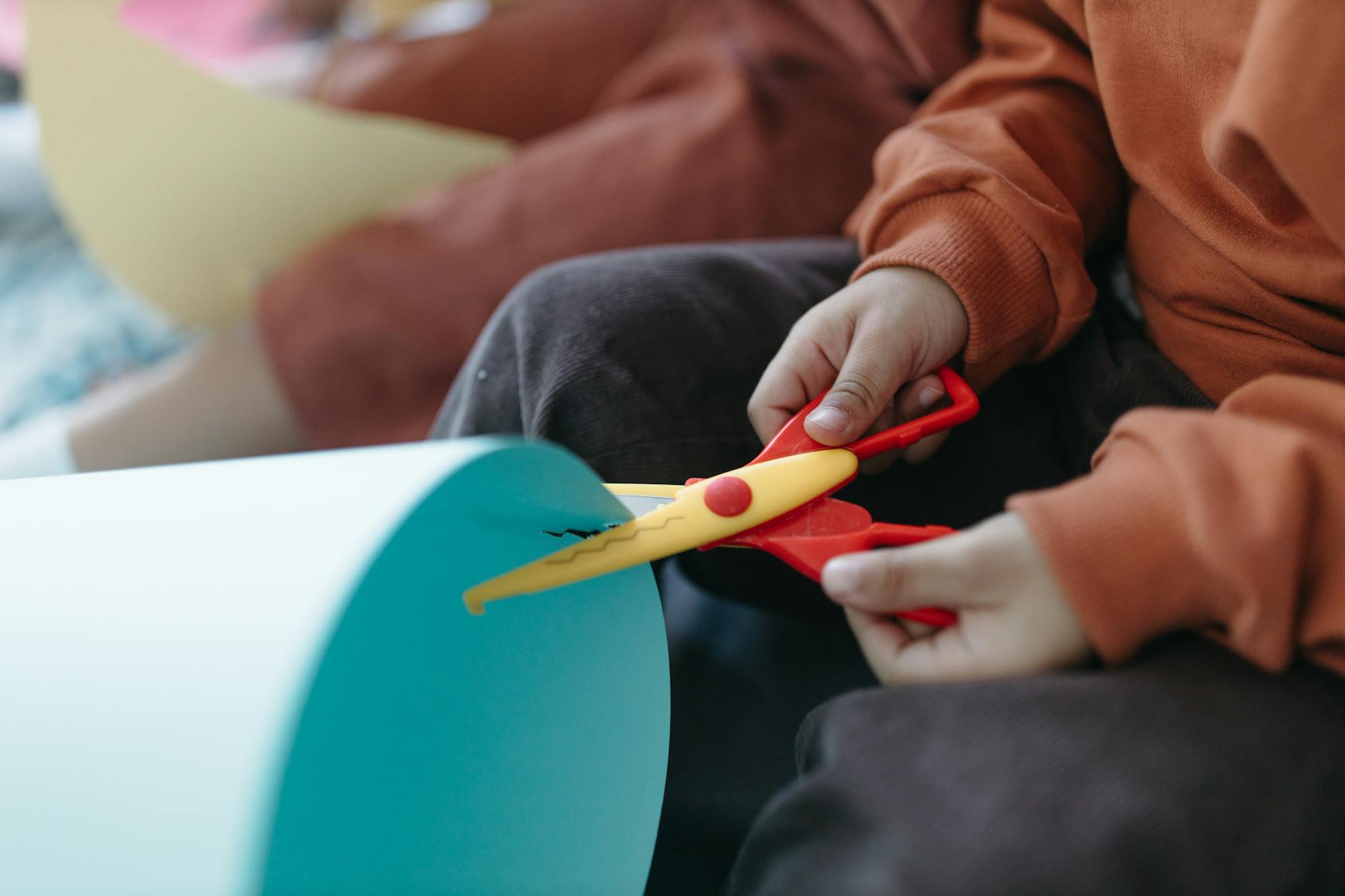
Tearing paper builds the intrinsic hand muscles needed for scissor control. Show children the pinch and pull method: pinch the paper between thumb and first finger, then pull in opposite directions. This strengthens the same small muscles used for pencil grips and letter formation.
Progression matters. Start with stiff cardstock—it offers resistance and easier control than flimsy paper. Move to construction paper, then thin tissue as skills develop. When introducing scissors, begin with snipping fringe along an index card. Advance to straight lines, then curves. By May, eighty percent of kindergarteners should cut within a quarter inch of a curved line.
For the Tear and Glue Collage, provide one-inch construction paper strips and glue sticks. Children tear the strips into irregular pieces and arrange them on cardstock. Later, create hairy monsters by cutting fringe along paper strips and curling them around pencils. These kindergarten activities build precise finger control needed for emergent literacy tasks. The tearing noise alone signals that centers-based learning is working.
Active Movement and Gross Motor Games
Indoor Obstacle Courses Using Classroom Furniture
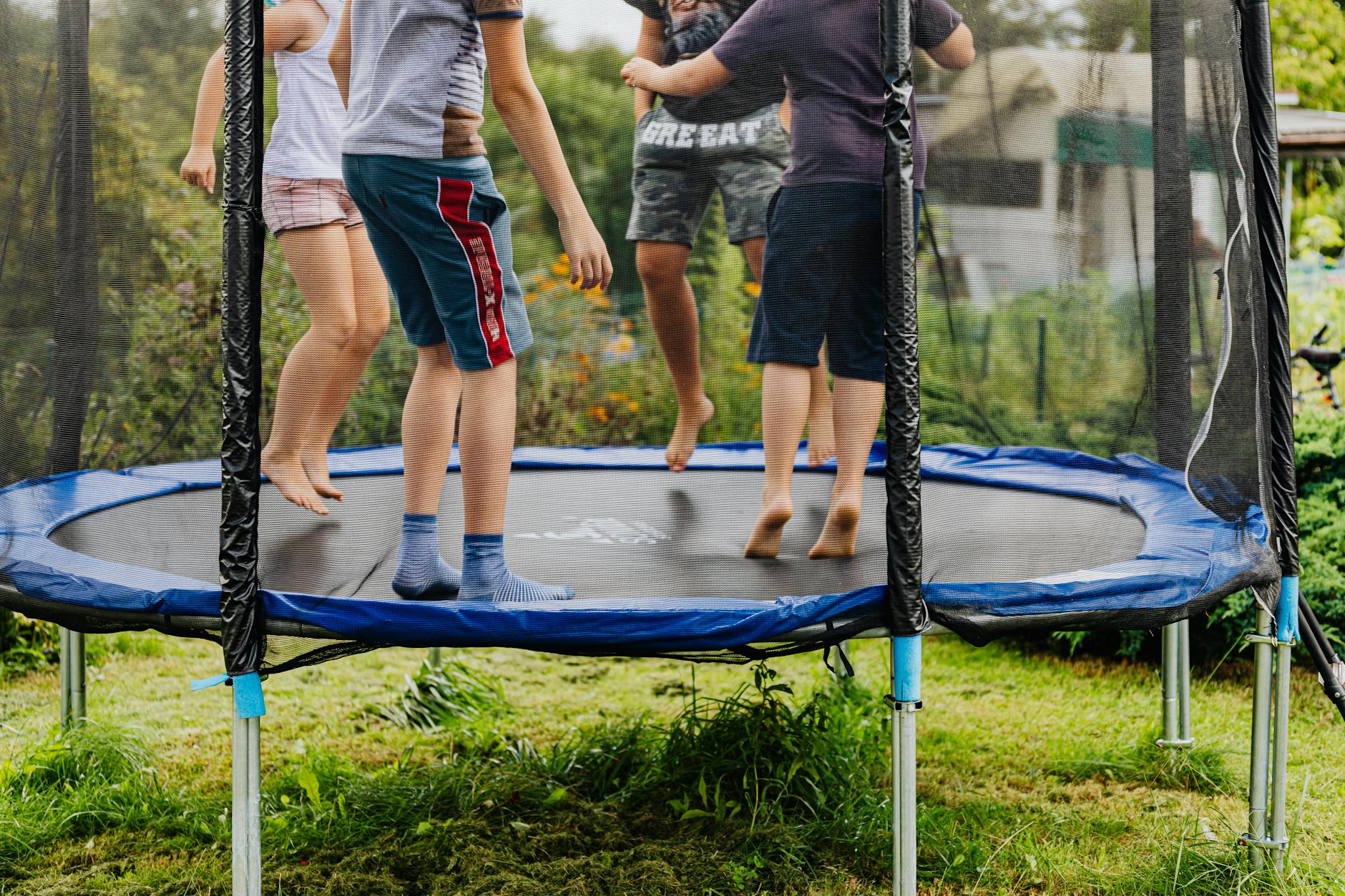
I learned the hard way that indoor recess requires structure. One rainy Tuesday in October, my kindergartners turned the block area into chaos. So I started building obstacle courses using painter's tape for two-inch balance beams and couch cushions as stepping stones. You need ten by six feet minimum. I arrange cardboard boxes into crawl tunnels, set laundry baskets for bean bag targets, and place hula hoops on the floor as jumping targets. Use blue painter's tape for high contrast against carpet.
Safety rules matter. I enforce one-direction traffic flow only. Foam padding goes under any climbing element, and I keep max height at eighteen inches for kindergarten work. Kids must wait until the person in front clears the cushion before starting. Each rotation takes five to seven minutes. This setup supports developing psychomotor skills through physical play while burning energy that would otherwise derail your afternoon lesson plans completely. The structured movement prevents chaos during indoor kindergarten activities.
Dance and Freeze Games for Transition Times
Freeze dance saves cleanup time. I play The Learning Station's "Brain Breaks Action Songs" or Greg & Steve's "Listen and Move." When the music stops, students freeze and hold up whatever object they're putting away. We play "Musical Statues" during toy cleanup. We call the variation "Statue Museum" when they freeze in animal poses. Keep it under three minutes. Longer than that and you overstimulate them, which defeats the purpose of the reset. I keep the volume loud enough to override chatter.
Research indicates that two to three minutes of vigorous movement improves attention spans for subsequent seated work. I use this during centers-based learning transitions or before emergent literacy lessons. One caution: never run these games within thirty minutes of lunch. Full stomachs and jumping don't mix in early childhood education. These quick bursts fit your schedule without eating instructional time. This timing aligns with attention span research for primary grades.
Yoga Poses and Balance Challenges for Focus
Yoga belongs in the calm down corner, not gym class. I use Yoga Pretzels cards or Cosmic Kids Yoga videos, but only the five to ten minute versions. Skip the thirty-minute stories. We start with Mountain Pose for grounding, flow to Forward Fold for calming, and finish with legs-up-the-wall using the cubby wall. Tree pose builds balance. Cobra strengthens core muscles. Child's Pose teaches self-regulation when emotions run high during play-based learning. Never schedule this during high-energy periods. The cards show clear visual cues for non-readers.
I place stuffed animals on their bellies to demonstrate belly breathing. The whole sequence runs three to five minutes. I implement this after recess to transition into quiet time, not during active play periods. It works better than shouting for attention. These kindergarten activities teach body awareness while supporting number sense and fine motor skills prep—kids can't grip pencils or focus on math if they can't control their bodies first. This approach builds the core strength needed for kindergarten work.
How to Implement Activity Rotations Without Losing Your Mind?
Implement activity rotations using visual choice boards with photos rather than words, limiting 3 students per center to prevent chaos. Use the 'Must Do/May Do' system to ensure curriculum coverage while allowing choice. Schedule 12-15 minute rotations with 2-minute warnings, and organize materials in closed bins with color-coded labels to enable 5-minute cleanup transitions.
I learned the hard way that twenty open centers equals twenty arguments. Start with four choices. Build stamina slowly. Your sanity depends on boundaries, not abundance.
Setting Up Choice Boards and Center Schedules
I use a pocket chart with student photos on cards. Each child has a colored clothespin with their name clipped to the center sign. Maximum three clips per sign. When the spots fill, kids must choose elsewhere. This visual limit prevents the inevitable crush at the sensory table and maintains equity of access.
Fixed rotations move everyone when the timer sounds. Flexible rotations let students change when they finish their 'Must Do' tasks. Both work, but fixed prevents the kid who camps at the blocks for forty-five minutes while avoiding the writing center entirely. I start the year fixed, then release to flexible once routines solidify and students demonstrate responsibility.
Post the 'Ask 3 Before Me' rule prominently at eye level. Students must consult three classmates before interrupting your small group. This builds problem-solving independence and protects your effective learning station types from constant disruption. Add a visual schedule with photos showing the rotation order so pre-readers can self-navigate during play-based learning time. The 'Must Do/May Do' board ensures everyone completes priority work—perhaps a specific number sense game or writing task—before choosing freely.
Managing Materials with Simple Organization Systems
I store every kindergarten activities set in Sterilite 6-quart bins. Each bin carries a photo label plus text. One bin equals one activity. No digging through mixed baskets.
Stop leaving everything out. Use closed bins for activities not in rotation. Mark floor spaces with colored duct tape—green means open, red means closed. This visual boundary prevents the 'everywhere at once' chaos that kills centers-based learning.
My weekly prep looks like this:
I prep five complete sets every Monday morning.
These live in a plastic drawer unit I call the 'center tower.'
When materials run low, the entire bin rotates to a 'refill station' at the back.
I restock during planning period rather than interrupting flow.
Daily cleanup requires structure. I assign a 'materials monitor' using our helper chart. That child checks each center against a photo checklist, ensuring all fine motor skills materials return to their homes. We use the Harry Kindergarten 'Clean Up' song as our timer. When the music stops, butts hit the carpet. This keeps our sensory bins and math manipulatives intact for tomorrow's exploration.
Adapting Activities for Mixed Ability Levels
Differentiation doesn't mean twenty-two lesson plans. I tier activities using the same materials. In the block center, Level 1 tasks ask kids to build a tower five blocks high. Level 2 challenges them to bridge an eight-inch span. Level 3 requires three different shapes. I print these on color-coded cards—green, yellow, red—and let students self-select their challenge.
This approach lets me support differentiated instruction strategies without burning out. Pair struggling students with patient peer mentors, but ensure every activity has multiple entry points. Accommodations remain invisible but vital. Spring-assisted scissors help weak grips. Larger beads suit developing fine motor control. Visual instruction cards sit beside written ones to scaffold emergent literacy. Every child accesses the same rich materials; only the expectation shifts.
I track participation weekly using a simple checklist. I note whether each child worked independently, with assistance, or dependently during activities for kindergarten students. This data drives my small-group instruction without formal testing. Early childhood education runs on observation, not worksheets. One September morning, I watched a student who couldn't hold scissors in August cut a complex shape independently at the art center. That checklist marked the growth better than any assessment.
Put Kindergarten Activities to Work Tomorrow
You don't need new toys or a bigger classroom. You need a plan. I've watched 5-year-olds discover emergent literacy in a rice bin while another group builds number sense with blocks across the room. These kindergarten activities aren't filler. They are the core work of early childhood education. When children manipulate real objects, they build the neural pathways that worksheets simply cannot touch.
Pick one station. Just one. Set it up with materials you already own. Watch how the kids interact for ten minutes. That observation tells you exactly what to adjust tomorrow. Play-based learning starts when you stop overthinking and let them lead the exploration.
Today, clear off one table. Put out playdough and popsicle sticks. Call it the "shape lab." Sit with the children. Ask one question: "What did you notice?" That single shift from direct instruction to hands-on discovery changes your entire afternoon.
What Are the Best Literacy-Based Kindergarten Activities?
The best literacy-based kindergarten activities combine multisensory engagement with systematic skill building daily. Top approaches include alphabet scavenger hunts using environmental print, interactive story retelling with manipulative props, and phonemic awareness stations featuring sound sorting with physical objects. These methods align with Science of Reading principles while maintaining play-based characteristics essential for five- and six-year-old young learners in early childhood education.
Feature | Commercial Centers | DIY Alternatives |
|---|---|---|
Cost | $150–$300 (Lakeshore) | $20–$40 (dollar store) |
Durability | Rigid plastic materials, 5+ years | Cardstock, replace mid-year |
Customization | Fixed activities | Adjust difficulty weekly |
Storage | Shelf bins | Shoebox stacks |
Class Size | 20–25 students | 20–25 students |
Alphabet Scavenger Hunts and Letter Matching Games
Environmental Print Walks send kids hunting through cafeteria menus and classroom labels to find five words starting with target letters like 'M'.
Magnetic Letter Fishing uses blue fabric "ponds" and dowel rods with magnets to pull up letters from the "water."
Alphabet Parking Lots match toy cars to taped-letter spaces on the carpet.
Each setup takes 10–15 minutes and costs under $10. I bought magnetic letters and matchbox cars at the dollar store last September during back-to-school sales. For struggling learners, start with five target letters rather than the full alphabet. This builds confidence and fine motor skills before you expand to all 26 letters in these activities for kindergarten students.
Interactive Story Retelling with Props and Puppets
Story Baskets turn read-alouds into hands-on experiences. For The Three Little Pigs, use simple straw, sticks, and foam blocks as props. Where the Wild Things Are works with printable monster masks on craft sticks. Limit props to 4–6 items to prevent cognitive overload in these literacy-focused kindergarten activities.
Five-year-olds shut down with too many choices. Model the retelling once using the props, then students practice independently while you observe. Check off story elements on a simple list: character, setting, problem, solution. You can also try personalized storybooks to engage young readers using similar hands-on techniques.
Phonemic Awareness Sound Sorting Stations
Sound sorting uses Wilson Fundations sound cards, chipper chips as colored counters, and Elkonin boxes drawn on laminated mats. Students sort small objects—toy cars, animals, food items—into muffin tins labeled with letter cards representing initial /m/, /s/, and /t/ sounds. This evidence-based literacy instruction targets emergent literacy through play-based learning.
Progress systematically: initial sounds for weeks 1–4, final sounds for weeks 5–8. Mastery means 80% accuracy on 10 items. Fast finishers draw and label their sorted objects on the recording sheets. Children enjoy the tactile nature of the objects. Use this kindergarten work for centers-based learning rotations twice weekly to assess phonemic growth accurately.
Math Games That Build Number Sense and Logic
These kindergarten activities move beyond worksheets. They get five-year-olds touching, moving, and problem-solving with real objects. That's where benefits of math challenges for early development show up most clearly—in the moment when a child realizes six sticks can make a rectangle. The best play-based learning happens when materials are simple and the thinking is complex.
Children need to feel quantities before they can calculate them. These activities bridge concrete experience and abstract thinking through direct manipulation.
Counting Collections and Classroom Number Hunts
Fill clear containers with 10 to 20 identical items. Buttons, craft sticks, or plastic bears work well. Students estimate first, write their guess, then count using 1:1 correspondence into a ten-frame egg carton. They record the final quantity by drawing the collection and writing the numeral.
Start conservatively. In September, keep collections under 15 objects. By May, progress to 30 or more. I scatter mystery bags around the room containing cubes, shells, or old keys. Kids hunt, grab, and count. The movement keeps them engaged during early childhood education routines.
The mystery element matters. When students pull items from a paper bag without looking, the anticipation increases engagement. They want to know if their estimate was close.
Watch for skipping or double-counting. Teach the touch-and-move strategy: pick up the object, say the number, move it aside. Provide number lines 0-20 for reference.
This builds number sense through concrete manipulation. It also supports emergent literacy through numeral writing practice. The egg cartons keep them organized while they work independently.
Shape Building with Loose Parts and Manipulatives
You have three solid options for shape building. Each serves different purposes in your centers-based learning rotation:
Magna-Tiles ($50–$120): Best for 3D structures like cubes and pyramids. The magnets hold edges together without frustration.
Craft sticks with Velcro dots ($8–$15): Ideal for 2D polygons. Students build and rebuild quickly, testing different angles.
Natural materials (free): Stones, sticks, and acorns create irregular shapes that challenge geometric thinking beyond standard definitions.
Screen all materials under 1.75 inches for choking hazards per CPSC guidelines. Use cork tiles as bases and geometric solids as inspiration cards. Challenge cards add specific direction: "Build a rectangle using exactly 6 sticks" or "Create a triangle with 3 stones."
Magna-Tiles shine for architectural builds. Craft sticks force precision. Natural materials demand creative problem-solving when stones won't stack evenly.
Assessment is visual. Photograph structures for portfolios. Check for properties like square corners or straight sides. These free learning games for kindergarten require minimal setup but generate rich discussions about attributes and stability.
Pattern Block Puzzles and Symmetry Exploration
Use standard 1-inch plastic pattern blocks: hexagons, trapezoids, rhombuses, triangles, squares, and parallelograms. A 100-piece set adequately serves four students at a math station. Store them in shallow trays for easy access during play-based learning time.
Offer progression cards:
Level 1: Interior lines show exactly which shapes fit and where.
Level 2: Outline only. Students determine the internal arrangement themselves.
Level 3: Symmetry completion. Build the left half, then mirror it perfectly on the right.
For symmetry exploration, give students hinged mirrors or Mira boards to check predictions. They build one wing of a butterfly using blocks on one side only, then predict what the mirror shows before looking.
Color-code difficulty. Yellow cards use 2 to 3 blocks. Blue cards use 4 to 5. Red cards demand 6 or more pieces. Set a 10-minute timer to prevent frustration. This builds fine motor skills and spatial reasoning simultaneously.
Science and Sensory Exploration Activities
Science in early childhood education works best when tiny hands get dirty. These kindergarten activities teach prediction, classification, and cause-and-effect through direct manipulation. I learned quickly that preschoolers remember what they discover themselves, not what I tell them from the front of the room.
Sink or Float Prediction and Testing Stations
Set up clear Sterilite 16-quart bins filled four inches deep with water. Collect eight to twelve test objects matching in size but varying in material: wood blocks, metal washers, plastic dinosaurs, foam packing peanuts. Critical safety warning: Remove batteries, small magnets, and sharp objects before children arrive. These items corrode, pinch, or cut. Label each object with masking tape and permanent marker for easy identification during documentation.
Children handle each object first to gauge weight, then predict using thumbs up for float or thumbs down for sink. They mark predictions on clipboards showing object names paired with smiley or sad face icons. After testing by gently placing items in water, transfer results to chart paper using checkmarks. The visual record helps children recognize patterns across material types. Metal consistently sinks. Wood usually floats.
The sink rescue mission extends learning while building fine motor skills. Students use plastic tongs to retrieve submerged items, gripping carefully to avoid splashing. This tactile learning strategies for young children connects physical action to scientific observation. Watch them concentrate intensely while maneuvering slippery wet objects back to the dry tray. The tongs build grip strength for handwriting later.
Nature Observation and Loose Parts Sorting
During fifteen-minute nature walks, students gather five to ten items each: acorns, dandelions, bark pieces, seed pods, and interesting rocks. Store collections in divided craft boxes to prevent chaos throughout the week. This organized approach supports centers-based learning by keeping materials accessible yet contained. Each compartment holds one category of treasure.
Set up sorting stations using muffin tins or egg cartons as trays. Children classify items by texture (rough versus smooth), color (green, brown, or other), or size (bigger or smaller than their palm). Alternate categories include living versus non-living. These distinctions build scientific vocabulary naturally without flashcard drills. The physical sorting requires decision-making and comparison skills.
Introduce specific terminology during sorting: texture, brittle, flexible. When a child snaps a dried leaf, name that quality immediately. Emergent literacy grows when children connect spoken words to sensory experiences. The handling required in play kindergarten science cements abstract concepts into memory far better than worksheets showing pictures of leaves. They remember the crunch of brittle leaves long after the lesson ends.
Color Mixing Experiments with Primary Colors
Stock stations with primary color liquid watercolor paints from Colorations or Sax brands. Avoid food coloring, which stains clothing permanently and frustrates parents. Provide pipettes, small clear cups, and laminated color wheel mats. Budget approximately twenty-five to thirty dollars for a complete class set of six stations. The initial investment lasts multiple school years with proper storage.
Cover tables with vinyl tablecloths for easy cleanup. Establish the "one squeeze" pipette rule immediately to prevent floods and waste. Present specific challenges: "Make green for a frog" or "Make orange for a pumpkin." Students record their successful recipes on color mixing cards, noting combinations like two yellow plus one red equals orange. These cards become reference tools for future art projects.
Hang a color wheel anchor chart nearby to support play-based learning discussions. Ask students to identify primary versus secondary colors in their mixtures. This develops number sense through ratio experimentation while teaching fundamental art concepts. Keep absorbent towels within arm's reach. The predictable mess becomes manageable with clear boundaries and immediate cleanup routines. The pride on their faces when creating purple independently never gets old.
How Do You Build Social-Emotional Skills Through Play?
Build social-emotional skills through structured cooperative play using the 'Tallest Tower' challenge with 50 Solo cups, emotion charades based on Paul Ekman's six basic feelings, and beginner board games like Hoot Owl Hoot that require turn-taking without reading skills. These activities target the CASEL competencies of self-management and relationship skills through scaffolded peer interaction.
Social-emotional learning works best when kids don't know it's happening. I hide these lessons inside centers-based learning rotations where the stakes feel low but the growth is real. The key is structure—loose enough to feel like play, tight enough to force interaction.
Cooperative Building Challenges for Teamwork
Set out 50 Solo cups, 100 index cards, or 30 cardboard tubes with masking tape. The rules are simple: everyone must add at least three items, you cannot touch another child's contribution without asking, and the timer runs for ten minutes. If one child dominates, enforce a "one piece per person per round" rule. I learned this the hard way with a group of 1st graders last October—without these guardrails, one confident builder takes over and three kids check out.
Assign roles to prevent dominance. Rotate every three minutes so everyone touches the materials:
Material Collector gathers cups or tubes from the pile.
Builder places items on the growing structure.
Safety Checker watches for falling towers and calls "freeze" if needed.
Cheerleader gives specific praise like "Nice base building!"
Success means the structure stands for ten seconds without support. When the tower falls or time runs out, ask three questions: What was hard? How did your team decide where to put pieces? What would you try next time? Connect this debrief to Second Step curriculum Unit 2 on problem-solving. The goal isn't the tallest tower—it's practicing the negotiation.
Emotion Charades and Feeling Recognition Games
Print free cards showing Paul Ekman's six basic emotions: happy, sad, angry, scared, surprised, disgusted. Commercial sets like Feelings Flashcards from ICDL work too. One child acts out the emotion while peers guess. After guessing, ask: "What makes you feel this way?" Watch for recognition, not Hollywood acting.
Extend with How Would You Feel If scenario cards. "How would you feel if you lost your lunch box? If a friend shared a toy?" Students hold up emotion face cards in response. This builds emergent literacy through visual recognition while teaching emotional vocabulary. I keep a Zones of Regulation anchor chart nearby—Blue, Green, Yellow, Red zones—to help them name their current state.
Assessment is simple: can the child name four or more emotions and identify what triggers them? If they can match "angry" to "someone took my toy," they're building self-management. These nursery games disguised as kindergarten activities create safe spaces for big feelings.
Turn-Taking Board Games for Beginner Players
Choose games that last 10 to 15 minutes maximum and require zero reading. Hoot Owl Hoot is cooperative—players work together to get owls to the nest. Candy Land works for competitive practice but keeps rules simple. Pop Up Pirate builds tolerance for chance. Avoid Monopoly Jr. (too long) and Chutes and Ladders (frustration tolerance too high for fall semester).
Teach specific phrases before you start: "Good game," "Maybe next time," and "Can I have a turn?" Use a three-minute sand timer to prevent turn-hogging. For true beginners, try Snail's Pace Race or Orchard Game—both cooperative, no winners or losers, perfect for early childhood education settings where emotional regulation is still developing.
Save competitive games for second semester when relationship skills are stronger. These structured social-emotional learning activities for elementary students work because they create low-stakes rehearsal for high-stakes moments. The board game table becomes a microcosm of the classroom community.
Art and Fine Motor Development Projects
Process Art Creations with Recyclable Materials
Process art differs from product art in one crucial way: the final object doesn't matter. When children build at the Sculpture Station using toilet paper tubes, bottle caps, and cardboard boxes, nobody shows them a finished example. They attach materials with masking tape and figure out balance through trial and error. Contrast this with handprint turkeys. Every child presses their painted palm onto paper to create identical birds. One builds fine motor skills and problem-solving; the other builds compliance.
I aim for an 80/20 ratio in my classroom. Eighty percent of art time goes to process. Twenty percent covers the seasonal crafts parents expect.
Set up the station with aluminum foil scraps, buttons, fabric remnants, and low-temp glue guns reserved for teacher use. Offer no instructions. Let children discover that tape sticks better to dry cardboard than to foil. Document their work by photographing the building process, not just the wobbly tower. Mount these on black foam core for a gallery walk that honors the thinking, not the thing.
Clay and Playdough Sculpting Stations
Air-dry clay demands different handling than playdough. Crayola or Amaco brands work best for sculpting units because they harden into permanent works. Give each child four ounces—enough for a small pinch pot without overwhelming their hands. Provide texture tools like combs, forks, and golf pencils to create surface patterns.
Store the clay properly and it lasts. Place unfinished work in Ziploc bags with damp paper towels. The clay stays workable for two weeks. For drying, balance cooling racks over baking sheets. This allows air circulation underneath sculptures and prevents flat, soggy bottoms.
Teach three techniques: pinch pots using thumb depressions, coil rolling to build walls, and slab building for flat shapes. Show them how to score clay with pencils and use plastic knives for cutting. After forty-eight hours of drying, paint with tempera. Seal with Mod Podge if you plan to keep pieces long-term. Cover tables with dollar store vinyl tablecloths for easy cleanup.
Tearing and Cutting Collage Making Activities
Tearing paper builds the intrinsic hand muscles needed for scissor control. Show children the pinch and pull method: pinch the paper between thumb and first finger, then pull in opposite directions. This strengthens the same small muscles used for pencil grips and letter formation.
Progression matters. Start with stiff cardstock—it offers resistance and easier control than flimsy paper. Move to construction paper, then thin tissue as skills develop. When introducing scissors, begin with snipping fringe along an index card. Advance to straight lines, then curves. By May, eighty percent of kindergarteners should cut within a quarter inch of a curved line.
For the Tear and Glue Collage, provide one-inch construction paper strips and glue sticks. Children tear the strips into irregular pieces and arrange them on cardstock. Later, create hairy monsters by cutting fringe along paper strips and curling them around pencils. These kindergarten activities build precise finger control needed for emergent literacy tasks. The tearing noise alone signals that centers-based learning is working.
Active Movement and Gross Motor Games
Indoor Obstacle Courses Using Classroom Furniture
I learned the hard way that indoor recess requires structure. One rainy Tuesday in October, my kindergartners turned the block area into chaos. So I started building obstacle courses using painter's tape for two-inch balance beams and couch cushions as stepping stones. You need ten by six feet minimum. I arrange cardboard boxes into crawl tunnels, set laundry baskets for bean bag targets, and place hula hoops on the floor as jumping targets. Use blue painter's tape for high contrast against carpet.
Safety rules matter. I enforce one-direction traffic flow only. Foam padding goes under any climbing element, and I keep max height at eighteen inches for kindergarten work. Kids must wait until the person in front clears the cushion before starting. Each rotation takes five to seven minutes. This setup supports developing psychomotor skills through physical play while burning energy that would otherwise derail your afternoon lesson plans completely. The structured movement prevents chaos during indoor kindergarten activities.
Dance and Freeze Games for Transition Times
Freeze dance saves cleanup time. I play The Learning Station's "Brain Breaks Action Songs" or Greg & Steve's "Listen and Move." When the music stops, students freeze and hold up whatever object they're putting away. We play "Musical Statues" during toy cleanup. We call the variation "Statue Museum" when they freeze in animal poses. Keep it under three minutes. Longer than that and you overstimulate them, which defeats the purpose of the reset. I keep the volume loud enough to override chatter.
Research indicates that two to three minutes of vigorous movement improves attention spans for subsequent seated work. I use this during centers-based learning transitions or before emergent literacy lessons. One caution: never run these games within thirty minutes of lunch. Full stomachs and jumping don't mix in early childhood education. These quick bursts fit your schedule without eating instructional time. This timing aligns with attention span research for primary grades.
Yoga Poses and Balance Challenges for Focus
Yoga belongs in the calm down corner, not gym class. I use Yoga Pretzels cards or Cosmic Kids Yoga videos, but only the five to ten minute versions. Skip the thirty-minute stories. We start with Mountain Pose for grounding, flow to Forward Fold for calming, and finish with legs-up-the-wall using the cubby wall. Tree pose builds balance. Cobra strengthens core muscles. Child's Pose teaches self-regulation when emotions run high during play-based learning. Never schedule this during high-energy periods. The cards show clear visual cues for non-readers.
I place stuffed animals on their bellies to demonstrate belly breathing. The whole sequence runs three to five minutes. I implement this after recess to transition into quiet time, not during active play periods. It works better than shouting for attention. These kindergarten activities teach body awareness while supporting number sense and fine motor skills prep—kids can't grip pencils or focus on math if they can't control their bodies first. This approach builds the core strength needed for kindergarten work.
How to Implement Activity Rotations Without Losing Your Mind?
Implement activity rotations using visual choice boards with photos rather than words, limiting 3 students per center to prevent chaos. Use the 'Must Do/May Do' system to ensure curriculum coverage while allowing choice. Schedule 12-15 minute rotations with 2-minute warnings, and organize materials in closed bins with color-coded labels to enable 5-minute cleanup transitions.
I learned the hard way that twenty open centers equals twenty arguments. Start with four choices. Build stamina slowly. Your sanity depends on boundaries, not abundance.
Setting Up Choice Boards and Center Schedules
I use a pocket chart with student photos on cards. Each child has a colored clothespin with their name clipped to the center sign. Maximum three clips per sign. When the spots fill, kids must choose elsewhere. This visual limit prevents the inevitable crush at the sensory table and maintains equity of access.
Fixed rotations move everyone when the timer sounds. Flexible rotations let students change when they finish their 'Must Do' tasks. Both work, but fixed prevents the kid who camps at the blocks for forty-five minutes while avoiding the writing center entirely. I start the year fixed, then release to flexible once routines solidify and students demonstrate responsibility.
Post the 'Ask 3 Before Me' rule prominently at eye level. Students must consult three classmates before interrupting your small group. This builds problem-solving independence and protects your effective learning station types from constant disruption. Add a visual schedule with photos showing the rotation order so pre-readers can self-navigate during play-based learning time. The 'Must Do/May Do' board ensures everyone completes priority work—perhaps a specific number sense game or writing task—before choosing freely.
Managing Materials with Simple Organization Systems
I store every kindergarten activities set in Sterilite 6-quart bins. Each bin carries a photo label plus text. One bin equals one activity. No digging through mixed baskets.
Stop leaving everything out. Use closed bins for activities not in rotation. Mark floor spaces with colored duct tape—green means open, red means closed. This visual boundary prevents the 'everywhere at once' chaos that kills centers-based learning.
My weekly prep looks like this:
I prep five complete sets every Monday morning.
These live in a plastic drawer unit I call the 'center tower.'
When materials run low, the entire bin rotates to a 'refill station' at the back.
I restock during planning period rather than interrupting flow.
Daily cleanup requires structure. I assign a 'materials monitor' using our helper chart. That child checks each center against a photo checklist, ensuring all fine motor skills materials return to their homes. We use the Harry Kindergarten 'Clean Up' song as our timer. When the music stops, butts hit the carpet. This keeps our sensory bins and math manipulatives intact for tomorrow's exploration.
Adapting Activities for Mixed Ability Levels
Differentiation doesn't mean twenty-two lesson plans. I tier activities using the same materials. In the block center, Level 1 tasks ask kids to build a tower five blocks high. Level 2 challenges them to bridge an eight-inch span. Level 3 requires three different shapes. I print these on color-coded cards—green, yellow, red—and let students self-select their challenge.
This approach lets me support differentiated instruction strategies without burning out. Pair struggling students with patient peer mentors, but ensure every activity has multiple entry points. Accommodations remain invisible but vital. Spring-assisted scissors help weak grips. Larger beads suit developing fine motor control. Visual instruction cards sit beside written ones to scaffold emergent literacy. Every child accesses the same rich materials; only the expectation shifts.
I track participation weekly using a simple checklist. I note whether each child worked independently, with assistance, or dependently during activities for kindergarten students. This data drives my small-group instruction without formal testing. Early childhood education runs on observation, not worksheets. One September morning, I watched a student who couldn't hold scissors in August cut a complex shape independently at the art center. That checklist marked the growth better than any assessment.
Put Kindergarten Activities to Work Tomorrow
You don't need new toys or a bigger classroom. You need a plan. I've watched 5-year-olds discover emergent literacy in a rice bin while another group builds number sense with blocks across the room. These kindergarten activities aren't filler. They are the core work of early childhood education. When children manipulate real objects, they build the neural pathways that worksheets simply cannot touch.
Pick one station. Just one. Set it up with materials you already own. Watch how the kids interact for ten minutes. That observation tells you exactly what to adjust tomorrow. Play-based learning starts when you stop overthinking and let them lead the exploration.
Today, clear off one table. Put out playdough and popsicle sticks. Call it the "shape lab." Sit with the children. Ask one question: "What did you notice?" That single shift from direct instruction to hands-on discovery changes your entire afternoon.
Still grading everything by hand?
EMStudio is a free teaching management app — manage your classes, students, lessons, and more!
Learn More
Still grading everything by hand?
EMStudio is a free teaching management app — manage your classes, students, lessons, and more!
Learn More



Notion4Teachers
Notion templates to simplify administrative tasks and enhance your teaching experience.



2026 Notion4Teachers. All Rights Reserved.
Notion4Teachers
Notion templates to simplify administrative tasks and enhance your teaching experience.
2026 Notion4Teachers. All Rights Reserved.
Notion4Teachers
Notion templates to simplify administrative tasks and enhance your teaching experience.
2026 Notion4Teachers. All Rights Reserved.