Auditory Visual and Kinesthetic Learning: Complete Classroom Guide
Auditory Visual and Kinesthetic Learning: Complete Classroom Guide

Article by
Milo
ESL Content Coordinator & Educator
ESL Content Coordinator & Educator
All Posts
It's October. Your 7th graders are staring at the fraction problems you just explained twice, but three kids in the back are building drum beats on their desks and one student has sketched a perfect diagram of the concept without writing a single number. You are looking at auditory visual and kinesthetic preferences playing out in real time, and none of them are wrong. They are simply different routes to the same understanding.
Neil Fleming's VARK model gave us the vocabulary for this decades ago, but modern neuroscience has moved toward multimodal learning and dual coding theory. The kids aren't locked into one box. I've watched the same student who needs to hear a poem read aloud one day build a model of the setting the next. Sensory processing shifts based on context, mood, and the actual task in front of them.
This guide covers what these preferences actually look like in practice, why they still matter beyond the old "learning styles" debate, and how to spot them without formal testing. You will get classroom strategies that hit all three modalities at once, because you don't have time to teach the same lesson three different ways. Universal Design for Learning needs we build for everyone from the start.
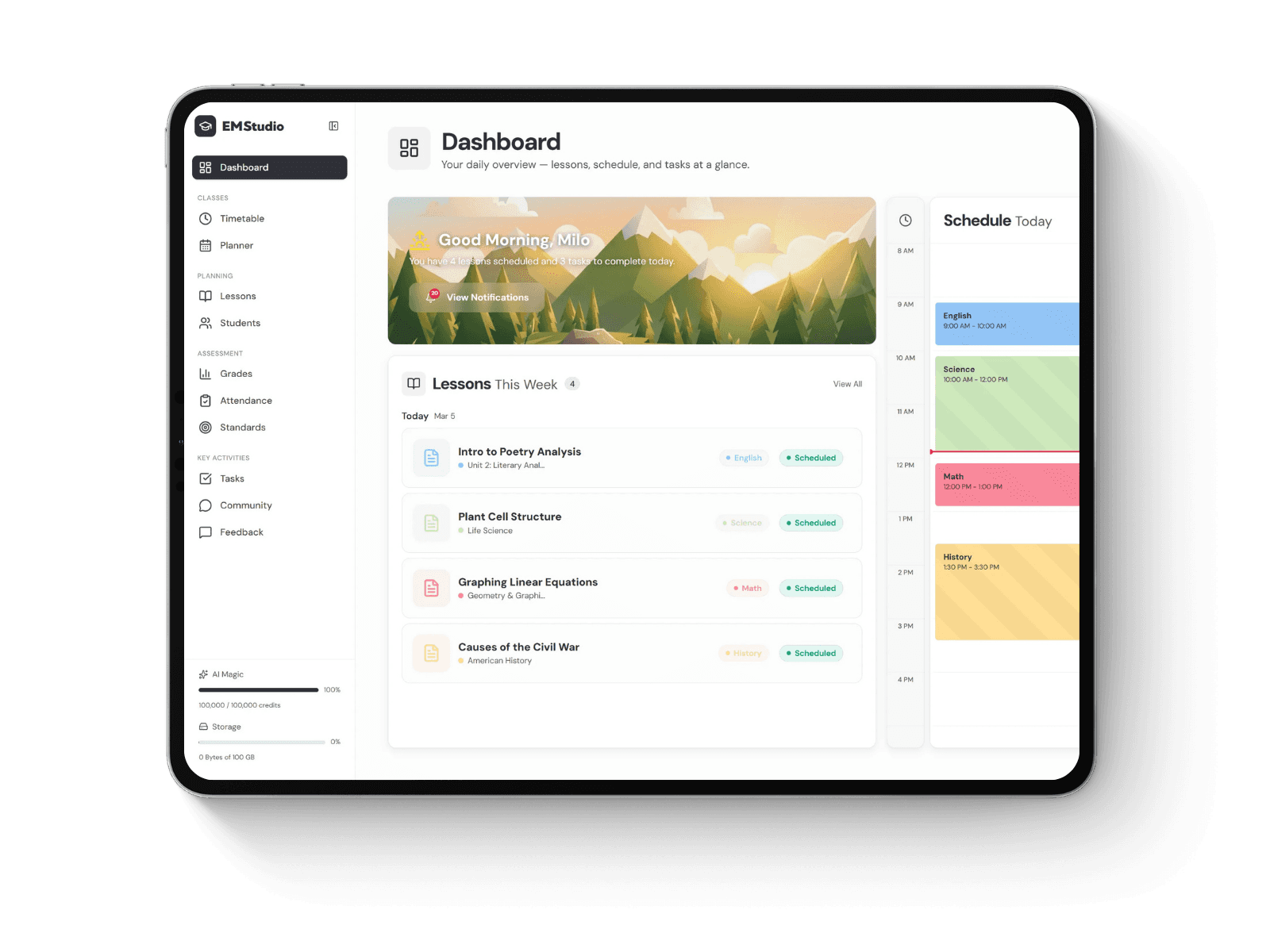
Still grading everything by hand?
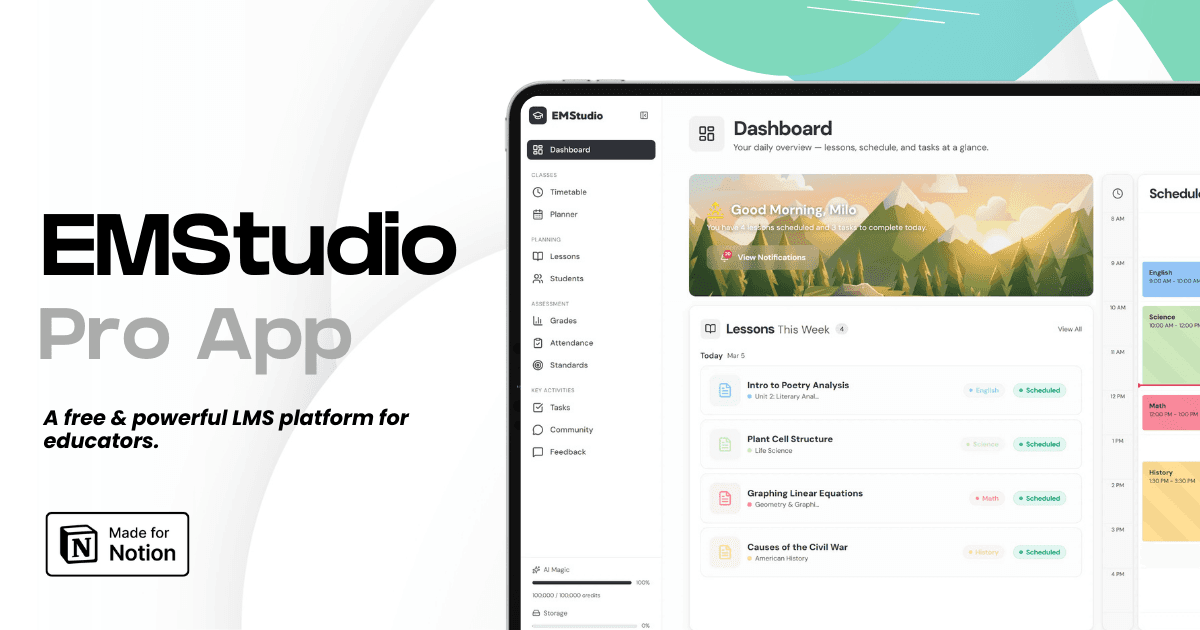
EMStudio is a free teaching management app — manage your classes, students, lessons, and more!
Learn More
Still grading everything by hand?
EMStudio is a free teaching management app — manage your classes, students, lessons, and more!
Learn More
Table of Contents
What Are Auditory, Visual, and Kinesthetic Learning Styles?
Auditory, visual, and kinesthetic learning styles describe how students prefer to receive information: through listening, seeing, or physical activity. Based on Neil Fleming's VARK model, these modalities represent sensory channels for processing content. However, modern research indicates these are preferences, not fixed categories that determine learning capacity.
You have seen it in your classroom. Some students hang on every word you say. Others need to see the diagram or touch the manipulative to understand.
The VARK assessment framework emerged from New Zealand educator Neil Fleming's work in 1992. He categorized learners by their preferred input channel. Visual learners process spatial and graphic information like charts and diagrams, while Aural learners prefer listening and speaking.
Read/Write learners favor text-based input, and Kinesthetic learners need movement and hands-on experience. Most teachers conflate the Visual and Read/Write categories, assuming students who like reading are visual learners. They are not. True visual learners need the spatial map, the flowchart, the color-coded system.
They struggle when you hand them a wall of text. This distinction matters for your instruction. You might label a bookworm as visual when they actually prefer the Read/Write modality within the different categories of learning styles.
The confusion between visual and read/write learners creates mismatched instruction. You might show a slideshow to a child who actually needs to handle the material. That child stares blankly while you wonder why the images did not work.
You can spot these preferences during a typical lesson. Visual learners ask you to review the diagram again and notice when you move the classroom furniture. They remember where on the page the answer appeared.
Auditory learners, or those with a hearing learning style, verbalize their thinking aloud and remember song lyrics after hearing them twice. They benefit from discussion and often read with subvocalization. You will see their lips move.
Kinesthetic learners gesture when speaking and cannot sit still through a 45-minute lecture. They need movement breaks after 20 to 25 minutes of sedentary work. Give them a stress ball or let them stand at a high table.
These students often tap pencils or bounce legs while concentrating. The movement helps them process, not distracts them. Taking away their fidget tools actually reduces their comprehension.
These preferences map to distinct neurological regions. The occipital lobe decodes visual input, transforming symbols and images into meaning. The temporal lobe processes auditory information, including language and rhythm.
The cerebellum and motor cortex handle kinesthetic encoding, linking physical action to memory formation. This sensory processing happens in all students simultaneously. No one learns solely through one channel.
Every student uses all three regions. However, individual students may prefer one channel for initial input before dual coding theory kicks in. They see the diagram while hearing your explanation, creating multiple memory pathways.
This multimodal learning approach reflects reality. The brain stores memories through interconnected networks. Relying on single-sensory instruction wastes potential.
Effective teaching leverages this redundancy. When you explain photosynthesis verbally while showing a diagram and having students act out the molecule movement, you engage multiple pathways. This strengthens retention for everyone, not just those with specific preferences.
Harold Pashler and colleagues challenged these ideas in 2008. Their research showed weak evidence that matching teaching to preference improves outcomes. You should not label a child as only a kinesthetic learner and teach exclusively through motion.
The 2008 critique focused specifically on the meshing hypothesis. This theory claimed that matching instruction to a student's preferred modality automatically improves retention. Research debunked this specific claim.
However, the critique did not prove that all students learn identically from identical presentations. It simply showed that preference matching alone does not guarantee better outcomes. The research actually supports providing multiple modalities to everyone.
The research supports what experienced teachers know. Students need information delivered in multiple formats to build sturdy understanding. A single presentation method leaves gaps.
But ignoring modality diversity creates barriers. When you only lecture, you exclude students who need to see the process. When you only assign textbook reading, you lose kids who need to hear the text or manipulate the concept.
Think of auditory visual and kinesthetic options as entry points, not boxes. A student might prefer audio visual kinesthetic combinations depending on the content. Difficult concepts often require multiple modalities.
This perspective aligns with Universal Design for Learning principles. You offer multiple means of representation from the start. No one needs a special exemption because the lesson already includes options.
This approach benefits students with diagnosed learning differences and those without labels. Everyone processes information more deeply when they encounter it through multiple senses. You create stronger memories.
Watch a kindergarten circle time. The auditory child sings the cleanup song unprompted. The visual child studies the picture book illustrations while you read. The kinesthetic child acts out the story with hand motions.
The kindergarten teacher who ignores these differences loses half the class during calendar time. The visual kids need to see the date written. The auditory kids need to chant the days of the week. The kinesthetic kids need to clap the syllables.
In seventh-grade science, the dichotomy sharpens. You show a video demonstration of osmosis. Some students grasp it immediately. Others need your verbal explanation of the process. A third group must perform the egg-in-vinegar lab themselves to understand cellular transport.
In middle school, you see the same split during note-taking. Some students copy every word you write. Others record the lecture on their phones. A third group sketches concept maps that make no sense to anyone else.
By eleventh-grade English, the patterns persist but mature. One student annotates the text silently, thriving on written analysis. Another absorbs the same novel through audiobook during their commute. A third group needs to perform scenes from Hamlet to feel the meter and intent.
High school students develop coping strategies by eleventh grade. They know they need to record the lecture or draw the diagram or build the model. Your job is making sure those options exist without stigma.
They stop asking for accommodations when the options are built into the lesson design. The audio visual kinesthetic variety becomes invisible, normalized classroom practice. No one feels singled out.
I watched this play out during a fractions lesson last year. Three students built the models silently. Two discussed the process aloud while working. One needed to walk around the room comparing his pieces to objects on the shelves.
Neuroimaging confirms this overlap. When a student listens to a story, the visual cortex often activates as they create mental images. When they handle manipulatives, language centers light up as they describe the texture and weight.
Fleming developed the instrument to help teachers recognize that students differ in how they engage with material. He never intended it as a diagnostic tool to limit students. The framework simply describes preferences that emerge when students have choices.
Audio visual and kinesthetic preferences remain relevant across grade levels. You are not sorting children into rigid types. You are recognizing that sensory variety strengthens learning for everyone.
Understanding these modalities helps you plan lessons that reach every child on the first attempt. You are not personalizing to the individual. You are diversifying for the group.

Why Do Auditory, Visual, and Kinesthetic Preferences Still Matter in Modern Education?
While strict 'learning styles' matching lacks strong empirical support, auditory, visual, and kinesthetic modalities remain vital in education. Multi-sensory instruction engaging all three channels improves retention and accessibility for diverse learners. Modern frameworks like Universal Design for Learning utilize these modalities as engagement tools rather than student labels.
The concept took a beating in the 2010s. Researchers debunked the idea that matching instruction to preferred learning styles boosts achievement. But throwing out the modalities entirely misses the point.
Learning styles theory claims that diagnosing a student's preferred mode and tailoring content exclusively to that mode enhances learning. This is the hypothesis that Neil Fleming's VARK model popularized. Multiple large-scale meta-analyses have found this matching approach produces negligible effects on academic outcomes.
Multi-sensory instruction operates on different principles. Dual coding theory shows that the brain processes auditory and visual information through separate channels. When teachers simultaneously engage auditory visual and kinesthetic pathways, students form richer memory traces.
The failure mode is real and damaging. When you tell a child, "You are a kinesthetic learner," you risk creating learned helplessness. I have watched students refuse to read complex texts because they believed their identity as a "visual learner" exempted them from auditory processing tasks.
Never use learning preferences to excuse students from challenging work. Saying "He is kinesthetic, so he does not need to write essays" cripples writing development. All students need practice across modalities. Evidence-based best practices for learning styles emphasize strengthening weak channels, not avoiding them.
Universal Design for Learning offers the evidence-based alternative. UDL treats auditory, visual, and kinesthetic modalities as flexible options rather than fixed traits. The framework rests on three principles. Multiple Means of Representation provides content through various sensory channels. Multiple Means of Action and Expression allows students to demonstrate learning through movement, speech, or text. Multiple Means of Engagement connects the material to different interests and motivation sources.
Notice the shift. UDL does not ask you to diagnose and sort students. It asks you to present information in multiple formats simultaneously. A single lesson might include a podcast clip for auditory processing, a diagram for visual learners, and a hands-on sorting activity for kinesthetic engagement.
John Hattie's Visible Learning research supports this approach. Research suggests that direct instruction delivered through multi-modal formats shows high effect sizes. Conversely, individualized instruction based on style preferences shows minimal impact on achievement. The difference is stark.
Cost analysis matters for your budget. Effective UDL implementation costs little. Varied graphic organizers cost nothing but photocopying. Discussion protocols require only your voice. Standing desks can be replaced by allowing students to work at counters or on the floor. Research on psychomotor learning shows simple movement integration works.
The expensive pitfalls drain resources without return. Proprietary learning styles assessment software runs thousands of dollars annually. Curriculum tracking systems that sort students into modality-based groups require extensive training and maintenance. These tools lack empirical support.
Kinesthetic learning research reveals another layer. Studies on sensory processing show that movement anchors abstract concepts. However, kinesthetic learning style research indicates that restricting movement activities to so-called kinesthetic learners denies cognitive benefits to the whole class.
Your classroom probably already includes multimodal learning. When you read aloud while projecting the text, you engage auditory and visual channels. When students act out vocabulary words, you add kinesthetic input.
The modern classroom needs this flexibility. Students with processing disorders, English learners, and gifted students all benefit from multi-sensory approaches. You do not need to identify who needs what. You simply provide options.
The confusion stems from terminology. Educators often conflate sensory preferences with cognitive abilities. A student might prefer to listen to audiobooks, but that does not mean their brain cannot process visual text effectively. Preference is comfort. Ability is capacity.
Dual coding theory explains why multi-sensory instruction works. Allan Paivio's research demonstrates that verbal and visual information are processed in distinct cognitive subsystems. When you explain a concept while students manipulate physical models, you create two separate memory traces.
The VARK model persists in professional development sessions despite the evidence. Neil Fleming's questionnaire remains popular because it offers easy categorization. Teachers enjoy sorting students into tidy boxes. But different learning styles kinesthetic research consistently shows that these categories predict nothing about how well students actually learn.
Sensory processing differences do exist. Some students have legitimate auditory processing disorders or visual impairments. These require specific accommodations. However, these diagnoses come from medical professionals, not classroom questionnaires.
When you label a student as auditory, you might unconsciously limit their visual exposure. I have seen teachers excuse students from diagram analysis because "Timmy is auditory." Timmy then enters high school biology unable to interpret lab diagrams.
Multi-sensory instruction prevents these gaps. By requiring all students to engage with text, audio, and movement, you ensure comprehensive skill development. The student who prefers listening still practices visual literacy.
UDL implementation looks different across subjects. In mathematics, Multiple Means of Representation might mean showing a video of a proof, displaying the written steps, and using algebra tiles simultaneously. In English Language Arts, it could involve hearing a poem read aloud, seeing the text on screen, and performing the narrative physically.
The Action and Expression principle addresses kinesthetic needs without tracking. Some students might write an essay. Others might deliver a speech. A third group might create a physical demonstration. All demonstrate mastery of the same learning objective.
Engagement, the third UDL principle, connects to sensory variety. Novelty captures attention. Switching between auditory discussion, visual analysis, and kinesthetic building prevents the cognitive fatigue that comes from single-channel instruction.
Hattie's meta-analyses rank instructional strategies by effect size. Research suggests that approaches emphasizing multi-modal encoding consistently outperform those emphasizing learning style matching. We are talking about effect sizes of 0.6 or higher versus near-zero effects.
Districts often purchase expensive learning styles platforms hoping to personalize instruction. These systems assess students and route them to different content streams based on VARK categories. This is tracking by another name.
Free alternatives abound. Graphic organizers cost pennies to copy. Think-Pair-Share engages auditory processing. Gallery walks incorporate movement. Whiteboard activities add visual and kinesthetic elements.
The evidence for kinesthetic learning research specifically shows that embodiment enhances conceptual understanding. When students physically act out scientific processes or historical events, they retain details longer than through passive listening alone.
Brain imaging studies support multi-sensory approaches. When subjects encounter information through multiple senses simultaneously, activation spreads across broader cortical networks. This distributed encoding makes memories more durable.
Avoid the temptation to resurrect learning styles with new vocabulary. Some teachers switch to terms like "learning preference" or "cognitive style" hoping to evade the criticism. The research applies to the concept, not the terminology.
Your professional judgment matters more than any assessment. You know which students need movement breaks. You observe who struggles with oral directions versus written ones. These observations inform temporary scaffolding, not permanent labels.
The goal is flexible expertise. Students should develop strength across auditory, visual, and kinesthetic channels. A reader who can also listen critically and learn through hands-on experimentation possesses versatile tools for lifelong learning.
Modern education requires this flexibility. Standardized tests present information in multiple formats. College lectures demand auditory processing. Professional workplaces require interpreting visual data and manuals. By making sure students can learn through any modality, you prepare them for realities beyond your classroom walls.
Let go of the diagnostic obsession. Stop administering VARK questionnaires. Start planning lessons that naturally cycle through speaking, showing, and doing. The modalities matter because they represent how human brains actually work.
How to Identify Auditory, Visual, and Kinesthetic Learners in Your Classroom
Start with data. The free VARK questionnaire at vark-learn.com gives you a baseline in ten minutes. Neil Fleming designed this 16-question inventory, available in multiple languages, to measure preference strength across the VARK model. Students self-score each category. When a learner marks 6-8 points in the Visual column, that indicates a strong preference, not a fixed identity. Treat these numbers as starting points. A zero in Kinesthetic doesn't mean a student can't learn by doing; it simply means they don't default to movement when given a choice.
Interpret the results with flexibility. Many students will show multimodal learning patterns, scoring moderately across two or three categories. This is typical. Pure unimodal learners are outliers. When you see a student score high on both Auditory and Visual, you've likely found an audio visual learner who benefits when you combine discussion with graphic supports. The questionnaire opens the conversation about how they process information best.
Follow up with the 3-Day Observation Protocol. Day 1, track eye movements during direct instruction. Stand at the board and watch where students look. Do they watch your mouth and facial expressions? Do they scan the text behind you? Or do their eyes drift to the window while their fingers tap the desk? These micro-behaviors reveal sensory processing habits that surveys might miss.
Day 2, listen for question types. Keep a tally in your plan book. "Can you repeat that?" or "What did you say?" indicates characteristics of auditory learners. "Can you show me again?" or "Where did you write that?" points toward identifying visual learners. "Can I try that?" or "Let me do it" signals tactile and kinesthetic learning needs. The vocabulary students use to request help tells you more than any diagnostic test.
Day 3, analyze free-time choices. When given ten minutes of unstructured time, where do students migrate? Who pulls out sketchbooks? Who starts conversations? Who rearranges the supply closet or builds towers from spare blocks? These voluntary behaviors show true preference, not compliance. A student might endure a lecture, but they choose to draw during breaks.
Confirm patterns with the Behavioral Indicators Checklist. Visual students organize with color. They use highlighters strategically. They notice when you move the objective to a new corner of the whiteboard. They draw arrows and icons in their margins. They remember where information appeared on a page.
Auditory students process through sound. They read aloud when the room goes quiet. They hum or whistle during independent work. They repeat your directions under their breath. They remember the explanation you gave Tuesday but forget the chart you posted.
Kinesthetic students need movement to think. They tap pencils. They kick chair legs. They prefer floor seating or standing desks. They gesture when explaining concepts, physically shaping ideas with their hands. They learn by manipulating objects, not viewing them.
Most students blend categories. Use the Decision Flowchart logic to sort mixed modalities. If a student doodles constantly during lectures but recalls specific details you only said aloud, you've identified an auditory and visual learner using dual coding theory. They need both channels active to encode memories.
If a student must stand to work through complex problems, mark them as Kinesthetic dominant. Some learners think with their whole bodies. If you see a child pacing while memorizing, or using hand signals to track math operations, you're watching a visual kinesthetic learner in action. When a student repeats instructions aloud before starting any task, that's an auditory processing preference, even if they also take notes.
Adapt your observation lens by grade level. In elementary classrooms, watch center time selections. The child who picks the art station daily differs fundamentally from the one who chooses the drama corner or the block area. These choices reveal natural inclinations before students learn to mask them.
In middle school, study note-taking methods. Some students sketch diagrams in the margins. Others record voice memos on their phones. A third group builds elaborate foldables with flaps and pockets. These self-directed strategies show how they naturally organize information.
By high school, observe study group formation. One cluster reviews with flashcards in silence. Another discusses concepts aloud in the hallway. A third group commandeers whiteboards to work problems while standing. These self-selected peer groupings validate what you've observed during structured class time.
Your goal isn't to label but to understand. When you recognize the full range of auditory visual and kinesthetic preferences in your room, you can apply Universal Design for Learning principles effectively. You stop assuming everyone learns best through your preferred method. Instead, you build pathways for the audio visual learner who needs discussion plus diagrams, the visual kinesthetic learner who needs models to manipulate, and the purely auditory student who just needs to talk it through. The VARK questionnaire starts the process. Your daily observations finish it.
Classroom Strategies That Engage Auditory, Visual, and Kinesthetic Learners Simultaneously
Stop teaching to one sense at a time. When you layer auditory visual and kinesthetic input into single activities, you catch kids who would otherwise tune out. These strategies align with Universal Design for Learning principles by offering multiple means of engagement.
The table below compares four activities that hit every channel without tripled prep time. Use it to pick your next lesson based on your available setup window and your current unit objectives.
Activity Name | Auditory Component | Visual Component | Kinesthetic Component | Setup Time | Best Subject |
|---|---|---|---|---|---|
Gallery Walk with Podcast Recording | 60-second Flipgrid explanations | Station charts and posters | Rotation and hand signals | 20 minutes | Social Studies, Science |
Human Timeline/Number Line | Peer explanation of position | Visual line on floor/wall | Body placement on line | 10 minutes | History, Math |
Stop-Motion Vocabulary | Narration of definition | Animated video output | Manipulating objects | 15 minutes | ELA, Science |
Stand-Up-Hand-Up-Pair-Up with Whiteboards | Partner discussion protocol | Whiteboard responses | Standing and movement | 5 minutes | Any |
The Gallery Walk with Podcast Recording takes 45 minutes and works best with grades 6-12. You set up five stations around the room with charts or posters displaying different content chunks like primary sources or lab diagrams. Tape the QR code for the Flipgrid topic at each station so students do not waste time searching. This belongs in your toolkit of active learning strategies for middle and high school.
Students move in groups of three, spending about six minutes at each stop. They use the free tier of Flipgrid to record 60-second audio explanations of what they see. This forces them to convert visual data into spoken language immediately and skip the silent transcription that usually happens during gallery walks.
I watch them use hand signals—thumbs up or sideways—to indicate agreement or disagreement with previous recordings without interrupting the audio flow. The physical motion keeps their bodies engaged while their ears listen for misconceptions they need to address in their own recording. This simple gesture adds accountability.
You grade these recordings later for content accuracy and speaking clarity. The time stamp tells you who was on task during the rotation. You catch misconceptions faster than you would from silent written worksheets because you hear their voice explain the process.
The Kinesthetic Lecture method respects the reality that kinesthetic learners learn best by doing, not just sitting through a forty-five minute talk. You deliver content in ten-minute chunks while students complete Cornell notes, hitting the visual and text-processing channels hard before they stand. This respects the limits of working memory.
The Cornell format forces them to write questions in the left margin while you speak. This active note-taking prevents the passive transcription that happens when students try to copy every word you say. It keeps their hands busy with purpose.
Then you trigger the Stand-Up-Hand-Up-Pair-Up protocol. Students stand, raise a hand high so you can see who is ready, find a partner across the room, and share their notes aloud for two minutes. You use a specific transition signal—like a hand clap or chime—to freeze them and reset their attention before the next chunk.
Start by integrating interactive whiteboards to display the timer and rotation cues. This gives your visual learners an anchor while the rest of the class moves. You can also post the discussion question on the board so pairs do not waste thirty seconds figuring out what to say.
This rotation happens every ten minutes without fail. It prevents the cognitive overload that sets in when any single modality lasts too long. Your brain needs the novelty of a physical shift to reset working memory for the next chunk of content.
You do not need a Hollywood budget to run hands-on learning activities that honor different types of learners kinesthetic needs. Try Vocabulary Charades where students act out terms while reading definitions aloud from the Word Wall. The visual anchors stay posted, the auditory channel processes the meaning, and the body locks in the concept through muscle memory built during the gesture.
Math Manipulatives with Think-Aloud protocols force students to speak their problem-solving steps while moving tiles or blocks. Science Labs paired with Prediction Drawings ask kids to sketch what they think will happen before touching the materials. They discuss results while packing up to keep the auditory channel active during the transition.
History Timeline using body positioning turns your floor into a kinesthetic global learning style playground. Kids physically place themselves at 1776 or 1945 and argue their historical significance aloud. The spatial positioning helps them understand relative chronology better than a flat worksheet ever could.
The Human Timeline activity requires only masking tape and index cards. You place dates on the floor ten feet apart and hand students events to place physically. They must explain their reasoning aloud before taping the card down, hitting the auditory channel while their body remembers the distance between World War I and World War II.
Literature Circles assign specific roles—Visualizer, Discussion Director, Passage Performer—that rotate each week. Every student practices different types of learners kinesthetic skills alongside visual and auditory ones. The Passage Performer reads aloud with expression while the Visualizer maps the scene on paper with colored pencils.
These five approaches serve as practical kinaesthetic learning style examples that work in any classroom regardless of your district's budget. The spelling differs between British and American English, but the movement requirement stays the same. Kids need to touch and move to anchor abstract ideas in their long-term memory.
Avoid the trap of thinking kinesthetic means chaos or recess. Simply letting kids wander is not a kinesthetic approach to learning; it is just poor classroom management with no academic return. Every movement must connect to a cognitive task like sorting cards or building a model that is content.
Kinesthetic activities fail when they become glorified play. If the math manipulatives come out but students are just building towers instead of modeling place value, you have lost the academic purpose. Keep the objective visible on the board so they know the learning target.
Visual supports fail when you rely solely on videos for your instruction. Dual coding theory tells us that graphics plus text beat video alone for retention because the brain processes static images differently than moving ones. Offer both graphic organizers and written text alongside any clip you show to reach more learners.
Switch modalities every fifteen to twenty minutes to prevent shutdown. When you extend an activity beyond that window, you violate basic sensory processing limits and lose the kids you were trying to reach. Even adults check out after twenty minutes of passive listening to a single speaker.
Remember the VARK model that Neil Fleming developed was meant to describe preferences, not fixed abilities or boxes to put kids in. True multimodal learning happens when you blend these channels deliberately while avoiding isolated stations. You are building neural redundancy so concepts survive in memory even if one pathway gets blocked by stress or distraction.
Key Takeaways for Auditory Visual And Kinesthetic
You do not need three separate lesson plans. Layer your instruction so students hear the explanation, see the model, and touch the materials in the same activity. This multimodal approach reaches more kids with less prep time than trying to target single senses in isolation. It also builds stronger neural connections than any single method alone.
Watch how your students naturally engage with new material. The child who doodles while listening may need both channels active. The one who fidgets might need to stand or manipulate objects. These observations help you adjust your delivery on the fly, not label kids permanently or limit how they interact with content throughout the year.
Stop worrying about finding the perfect match for each learner. Dual coding theory tells us that everyone learns better when you combine words with images and physical movement. Your job is to mix the modes consistently throughout your lessons, not to sort students into rigid boxes that restrict their access to the curriculum based on a single preference.
What Are Auditory, Visual, and Kinesthetic Learning Styles?
Auditory, visual, and kinesthetic learning styles describe how students prefer to receive information: through listening, seeing, or physical activity. Based on Neil Fleming's VARK model, these modalities represent sensory channels for processing content. However, modern research indicates these are preferences, not fixed categories that determine learning capacity.
You have seen it in your classroom. Some students hang on every word you say. Others need to see the diagram or touch the manipulative to understand.
The VARK assessment framework emerged from New Zealand educator Neil Fleming's work in 1992. He categorized learners by their preferred input channel. Visual learners process spatial and graphic information like charts and diagrams, while Aural learners prefer listening and speaking.
Read/Write learners favor text-based input, and Kinesthetic learners need movement and hands-on experience. Most teachers conflate the Visual and Read/Write categories, assuming students who like reading are visual learners. They are not. True visual learners need the spatial map, the flowchart, the color-coded system.
They struggle when you hand them a wall of text. This distinction matters for your instruction. You might label a bookworm as visual when they actually prefer the Read/Write modality within the different categories of learning styles.
The confusion between visual and read/write learners creates mismatched instruction. You might show a slideshow to a child who actually needs to handle the material. That child stares blankly while you wonder why the images did not work.
You can spot these preferences during a typical lesson. Visual learners ask you to review the diagram again and notice when you move the classroom furniture. They remember where on the page the answer appeared.
Auditory learners, or those with a hearing learning style, verbalize their thinking aloud and remember song lyrics after hearing them twice. They benefit from discussion and often read with subvocalization. You will see their lips move.
Kinesthetic learners gesture when speaking and cannot sit still through a 45-minute lecture. They need movement breaks after 20 to 25 minutes of sedentary work. Give them a stress ball or let them stand at a high table.
These students often tap pencils or bounce legs while concentrating. The movement helps them process, not distracts them. Taking away their fidget tools actually reduces their comprehension.
These preferences map to distinct neurological regions. The occipital lobe decodes visual input, transforming symbols and images into meaning. The temporal lobe processes auditory information, including language and rhythm.
The cerebellum and motor cortex handle kinesthetic encoding, linking physical action to memory formation. This sensory processing happens in all students simultaneously. No one learns solely through one channel.
Every student uses all three regions. However, individual students may prefer one channel for initial input before dual coding theory kicks in. They see the diagram while hearing your explanation, creating multiple memory pathways.
This multimodal learning approach reflects reality. The brain stores memories through interconnected networks. Relying on single-sensory instruction wastes potential.
Effective teaching leverages this redundancy. When you explain photosynthesis verbally while showing a diagram and having students act out the molecule movement, you engage multiple pathways. This strengthens retention for everyone, not just those with specific preferences.
Harold Pashler and colleagues challenged these ideas in 2008. Their research showed weak evidence that matching teaching to preference improves outcomes. You should not label a child as only a kinesthetic learner and teach exclusively through motion.
The 2008 critique focused specifically on the meshing hypothesis. This theory claimed that matching instruction to a student's preferred modality automatically improves retention. Research debunked this specific claim.
However, the critique did not prove that all students learn identically from identical presentations. It simply showed that preference matching alone does not guarantee better outcomes. The research actually supports providing multiple modalities to everyone.
The research supports what experienced teachers know. Students need information delivered in multiple formats to build sturdy understanding. A single presentation method leaves gaps.
But ignoring modality diversity creates barriers. When you only lecture, you exclude students who need to see the process. When you only assign textbook reading, you lose kids who need to hear the text or manipulate the concept.
Think of auditory visual and kinesthetic options as entry points, not boxes. A student might prefer audio visual kinesthetic combinations depending on the content. Difficult concepts often require multiple modalities.
This perspective aligns with Universal Design for Learning principles. You offer multiple means of representation from the start. No one needs a special exemption because the lesson already includes options.
This approach benefits students with diagnosed learning differences and those without labels. Everyone processes information more deeply when they encounter it through multiple senses. You create stronger memories.
Watch a kindergarten circle time. The auditory child sings the cleanup song unprompted. The visual child studies the picture book illustrations while you read. The kinesthetic child acts out the story with hand motions.
The kindergarten teacher who ignores these differences loses half the class during calendar time. The visual kids need to see the date written. The auditory kids need to chant the days of the week. The kinesthetic kids need to clap the syllables.
In seventh-grade science, the dichotomy sharpens. You show a video demonstration of osmosis. Some students grasp it immediately. Others need your verbal explanation of the process. A third group must perform the egg-in-vinegar lab themselves to understand cellular transport.
In middle school, you see the same split during note-taking. Some students copy every word you write. Others record the lecture on their phones. A third group sketches concept maps that make no sense to anyone else.
By eleventh-grade English, the patterns persist but mature. One student annotates the text silently, thriving on written analysis. Another absorbs the same novel through audiobook during their commute. A third group needs to perform scenes from Hamlet to feel the meter and intent.
High school students develop coping strategies by eleventh grade. They know they need to record the lecture or draw the diagram or build the model. Your job is making sure those options exist without stigma.
They stop asking for accommodations when the options are built into the lesson design. The audio visual kinesthetic variety becomes invisible, normalized classroom practice. No one feels singled out.
I watched this play out during a fractions lesson last year. Three students built the models silently. Two discussed the process aloud while working. One needed to walk around the room comparing his pieces to objects on the shelves.
Neuroimaging confirms this overlap. When a student listens to a story, the visual cortex often activates as they create mental images. When they handle manipulatives, language centers light up as they describe the texture and weight.
Fleming developed the instrument to help teachers recognize that students differ in how they engage with material. He never intended it as a diagnostic tool to limit students. The framework simply describes preferences that emerge when students have choices.
Audio visual and kinesthetic preferences remain relevant across grade levels. You are not sorting children into rigid types. You are recognizing that sensory variety strengthens learning for everyone.
Understanding these modalities helps you plan lessons that reach every child on the first attempt. You are not personalizing to the individual. You are diversifying for the group.
Why Do Auditory, Visual, and Kinesthetic Preferences Still Matter in Modern Education?
While strict 'learning styles' matching lacks strong empirical support, auditory, visual, and kinesthetic modalities remain vital in education. Multi-sensory instruction engaging all three channels improves retention and accessibility for diverse learners. Modern frameworks like Universal Design for Learning utilize these modalities as engagement tools rather than student labels.
The concept took a beating in the 2010s. Researchers debunked the idea that matching instruction to preferred learning styles boosts achievement. But throwing out the modalities entirely misses the point.
Learning styles theory claims that diagnosing a student's preferred mode and tailoring content exclusively to that mode enhances learning. This is the hypothesis that Neil Fleming's VARK model popularized. Multiple large-scale meta-analyses have found this matching approach produces negligible effects on academic outcomes.
Multi-sensory instruction operates on different principles. Dual coding theory shows that the brain processes auditory and visual information through separate channels. When teachers simultaneously engage auditory visual and kinesthetic pathways, students form richer memory traces.
The failure mode is real and damaging. When you tell a child, "You are a kinesthetic learner," you risk creating learned helplessness. I have watched students refuse to read complex texts because they believed their identity as a "visual learner" exempted them from auditory processing tasks.
Never use learning preferences to excuse students from challenging work. Saying "He is kinesthetic, so he does not need to write essays" cripples writing development. All students need practice across modalities. Evidence-based best practices for learning styles emphasize strengthening weak channels, not avoiding them.
Universal Design for Learning offers the evidence-based alternative. UDL treats auditory, visual, and kinesthetic modalities as flexible options rather than fixed traits. The framework rests on three principles. Multiple Means of Representation provides content through various sensory channels. Multiple Means of Action and Expression allows students to demonstrate learning through movement, speech, or text. Multiple Means of Engagement connects the material to different interests and motivation sources.
Notice the shift. UDL does not ask you to diagnose and sort students. It asks you to present information in multiple formats simultaneously. A single lesson might include a podcast clip for auditory processing, a diagram for visual learners, and a hands-on sorting activity for kinesthetic engagement.
John Hattie's Visible Learning research supports this approach. Research suggests that direct instruction delivered through multi-modal formats shows high effect sizes. Conversely, individualized instruction based on style preferences shows minimal impact on achievement. The difference is stark.
Cost analysis matters for your budget. Effective UDL implementation costs little. Varied graphic organizers cost nothing but photocopying. Discussion protocols require only your voice. Standing desks can be replaced by allowing students to work at counters or on the floor. Research on psychomotor learning shows simple movement integration works.
The expensive pitfalls drain resources without return. Proprietary learning styles assessment software runs thousands of dollars annually. Curriculum tracking systems that sort students into modality-based groups require extensive training and maintenance. These tools lack empirical support.
Kinesthetic learning research reveals another layer. Studies on sensory processing show that movement anchors abstract concepts. However, kinesthetic learning style research indicates that restricting movement activities to so-called kinesthetic learners denies cognitive benefits to the whole class.
Your classroom probably already includes multimodal learning. When you read aloud while projecting the text, you engage auditory and visual channels. When students act out vocabulary words, you add kinesthetic input.
The modern classroom needs this flexibility. Students with processing disorders, English learners, and gifted students all benefit from multi-sensory approaches. You do not need to identify who needs what. You simply provide options.
The confusion stems from terminology. Educators often conflate sensory preferences with cognitive abilities. A student might prefer to listen to audiobooks, but that does not mean their brain cannot process visual text effectively. Preference is comfort. Ability is capacity.
Dual coding theory explains why multi-sensory instruction works. Allan Paivio's research demonstrates that verbal and visual information are processed in distinct cognitive subsystems. When you explain a concept while students manipulate physical models, you create two separate memory traces.
The VARK model persists in professional development sessions despite the evidence. Neil Fleming's questionnaire remains popular because it offers easy categorization. Teachers enjoy sorting students into tidy boxes. But different learning styles kinesthetic research consistently shows that these categories predict nothing about how well students actually learn.
Sensory processing differences do exist. Some students have legitimate auditory processing disorders or visual impairments. These require specific accommodations. However, these diagnoses come from medical professionals, not classroom questionnaires.
When you label a student as auditory, you might unconsciously limit their visual exposure. I have seen teachers excuse students from diagram analysis because "Timmy is auditory." Timmy then enters high school biology unable to interpret lab diagrams.
Multi-sensory instruction prevents these gaps. By requiring all students to engage with text, audio, and movement, you ensure comprehensive skill development. The student who prefers listening still practices visual literacy.
UDL implementation looks different across subjects. In mathematics, Multiple Means of Representation might mean showing a video of a proof, displaying the written steps, and using algebra tiles simultaneously. In English Language Arts, it could involve hearing a poem read aloud, seeing the text on screen, and performing the narrative physically.
The Action and Expression principle addresses kinesthetic needs without tracking. Some students might write an essay. Others might deliver a speech. A third group might create a physical demonstration. All demonstrate mastery of the same learning objective.
Engagement, the third UDL principle, connects to sensory variety. Novelty captures attention. Switching between auditory discussion, visual analysis, and kinesthetic building prevents the cognitive fatigue that comes from single-channel instruction.
Hattie's meta-analyses rank instructional strategies by effect size. Research suggests that approaches emphasizing multi-modal encoding consistently outperform those emphasizing learning style matching. We are talking about effect sizes of 0.6 or higher versus near-zero effects.
Districts often purchase expensive learning styles platforms hoping to personalize instruction. These systems assess students and route them to different content streams based on VARK categories. This is tracking by another name.
Free alternatives abound. Graphic organizers cost pennies to copy. Think-Pair-Share engages auditory processing. Gallery walks incorporate movement. Whiteboard activities add visual and kinesthetic elements.
The evidence for kinesthetic learning research specifically shows that embodiment enhances conceptual understanding. When students physically act out scientific processes or historical events, they retain details longer than through passive listening alone.
Brain imaging studies support multi-sensory approaches. When subjects encounter information through multiple senses simultaneously, activation spreads across broader cortical networks. This distributed encoding makes memories more durable.
Avoid the temptation to resurrect learning styles with new vocabulary. Some teachers switch to terms like "learning preference" or "cognitive style" hoping to evade the criticism. The research applies to the concept, not the terminology.
Your professional judgment matters more than any assessment. You know which students need movement breaks. You observe who struggles with oral directions versus written ones. These observations inform temporary scaffolding, not permanent labels.
The goal is flexible expertise. Students should develop strength across auditory, visual, and kinesthetic channels. A reader who can also listen critically and learn through hands-on experimentation possesses versatile tools for lifelong learning.
Modern education requires this flexibility. Standardized tests present information in multiple formats. College lectures demand auditory processing. Professional workplaces require interpreting visual data and manuals. By making sure students can learn through any modality, you prepare them for realities beyond your classroom walls.
Let go of the diagnostic obsession. Stop administering VARK questionnaires. Start planning lessons that naturally cycle through speaking, showing, and doing. The modalities matter because they represent how human brains actually work.
How to Identify Auditory, Visual, and Kinesthetic Learners in Your Classroom
Start with data. The free VARK questionnaire at vark-learn.com gives you a baseline in ten minutes. Neil Fleming designed this 16-question inventory, available in multiple languages, to measure preference strength across the VARK model. Students self-score each category. When a learner marks 6-8 points in the Visual column, that indicates a strong preference, not a fixed identity. Treat these numbers as starting points. A zero in Kinesthetic doesn't mean a student can't learn by doing; it simply means they don't default to movement when given a choice.
Interpret the results with flexibility. Many students will show multimodal learning patterns, scoring moderately across two or three categories. This is typical. Pure unimodal learners are outliers. When you see a student score high on both Auditory and Visual, you've likely found an audio visual learner who benefits when you combine discussion with graphic supports. The questionnaire opens the conversation about how they process information best.
Follow up with the 3-Day Observation Protocol. Day 1, track eye movements during direct instruction. Stand at the board and watch where students look. Do they watch your mouth and facial expressions? Do they scan the text behind you? Or do their eyes drift to the window while their fingers tap the desk? These micro-behaviors reveal sensory processing habits that surveys might miss.
Day 2, listen for question types. Keep a tally in your plan book. "Can you repeat that?" or "What did you say?" indicates characteristics of auditory learners. "Can you show me again?" or "Where did you write that?" points toward identifying visual learners. "Can I try that?" or "Let me do it" signals tactile and kinesthetic learning needs. The vocabulary students use to request help tells you more than any diagnostic test.
Day 3, analyze free-time choices. When given ten minutes of unstructured time, where do students migrate? Who pulls out sketchbooks? Who starts conversations? Who rearranges the supply closet or builds towers from spare blocks? These voluntary behaviors show true preference, not compliance. A student might endure a lecture, but they choose to draw during breaks.
Confirm patterns with the Behavioral Indicators Checklist. Visual students organize with color. They use highlighters strategically. They notice when you move the objective to a new corner of the whiteboard. They draw arrows and icons in their margins. They remember where information appeared on a page.
Auditory students process through sound. They read aloud when the room goes quiet. They hum or whistle during independent work. They repeat your directions under their breath. They remember the explanation you gave Tuesday but forget the chart you posted.
Kinesthetic students need movement to think. They tap pencils. They kick chair legs. They prefer floor seating or standing desks. They gesture when explaining concepts, physically shaping ideas with their hands. They learn by manipulating objects, not viewing them.
Most students blend categories. Use the Decision Flowchart logic to sort mixed modalities. If a student doodles constantly during lectures but recalls specific details you only said aloud, you've identified an auditory and visual learner using dual coding theory. They need both channels active to encode memories.
If a student must stand to work through complex problems, mark them as Kinesthetic dominant. Some learners think with their whole bodies. If you see a child pacing while memorizing, or using hand signals to track math operations, you're watching a visual kinesthetic learner in action. When a student repeats instructions aloud before starting any task, that's an auditory processing preference, even if they also take notes.
Adapt your observation lens by grade level. In elementary classrooms, watch center time selections. The child who picks the art station daily differs fundamentally from the one who chooses the drama corner or the block area. These choices reveal natural inclinations before students learn to mask them.
In middle school, study note-taking methods. Some students sketch diagrams in the margins. Others record voice memos on their phones. A third group builds elaborate foldables with flaps and pockets. These self-directed strategies show how they naturally organize information.
By high school, observe study group formation. One cluster reviews with flashcards in silence. Another discusses concepts aloud in the hallway. A third group commandeers whiteboards to work problems while standing. These self-selected peer groupings validate what you've observed during structured class time.
Your goal isn't to label but to understand. When you recognize the full range of auditory visual and kinesthetic preferences in your room, you can apply Universal Design for Learning principles effectively. You stop assuming everyone learns best through your preferred method. Instead, you build pathways for the audio visual learner who needs discussion plus diagrams, the visual kinesthetic learner who needs models to manipulate, and the purely auditory student who just needs to talk it through. The VARK questionnaire starts the process. Your daily observations finish it.
Classroom Strategies That Engage Auditory, Visual, and Kinesthetic Learners Simultaneously
Stop teaching to one sense at a time. When you layer auditory visual and kinesthetic input into single activities, you catch kids who would otherwise tune out. These strategies align with Universal Design for Learning principles by offering multiple means of engagement.
The table below compares four activities that hit every channel without tripled prep time. Use it to pick your next lesson based on your available setup window and your current unit objectives.
Activity Name | Auditory Component | Visual Component | Kinesthetic Component | Setup Time | Best Subject |
|---|---|---|---|---|---|
Gallery Walk with Podcast Recording | 60-second Flipgrid explanations | Station charts and posters | Rotation and hand signals | 20 minutes | Social Studies, Science |
Human Timeline/Number Line | Peer explanation of position | Visual line on floor/wall | Body placement on line | 10 minutes | History, Math |
Stop-Motion Vocabulary | Narration of definition | Animated video output | Manipulating objects | 15 minutes | ELA, Science |
Stand-Up-Hand-Up-Pair-Up with Whiteboards | Partner discussion protocol | Whiteboard responses | Standing and movement | 5 minutes | Any |
The Gallery Walk with Podcast Recording takes 45 minutes and works best with grades 6-12. You set up five stations around the room with charts or posters displaying different content chunks like primary sources or lab diagrams. Tape the QR code for the Flipgrid topic at each station so students do not waste time searching. This belongs in your toolkit of active learning strategies for middle and high school.
Students move in groups of three, spending about six minutes at each stop. They use the free tier of Flipgrid to record 60-second audio explanations of what they see. This forces them to convert visual data into spoken language immediately and skip the silent transcription that usually happens during gallery walks.
I watch them use hand signals—thumbs up or sideways—to indicate agreement or disagreement with previous recordings without interrupting the audio flow. The physical motion keeps their bodies engaged while their ears listen for misconceptions they need to address in their own recording. This simple gesture adds accountability.
You grade these recordings later for content accuracy and speaking clarity. The time stamp tells you who was on task during the rotation. You catch misconceptions faster than you would from silent written worksheets because you hear their voice explain the process.
The Kinesthetic Lecture method respects the reality that kinesthetic learners learn best by doing, not just sitting through a forty-five minute talk. You deliver content in ten-minute chunks while students complete Cornell notes, hitting the visual and text-processing channels hard before they stand. This respects the limits of working memory.
The Cornell format forces them to write questions in the left margin while you speak. This active note-taking prevents the passive transcription that happens when students try to copy every word you say. It keeps their hands busy with purpose.
Then you trigger the Stand-Up-Hand-Up-Pair-Up protocol. Students stand, raise a hand high so you can see who is ready, find a partner across the room, and share their notes aloud for two minutes. You use a specific transition signal—like a hand clap or chime—to freeze them and reset their attention before the next chunk.
Start by integrating interactive whiteboards to display the timer and rotation cues. This gives your visual learners an anchor while the rest of the class moves. You can also post the discussion question on the board so pairs do not waste thirty seconds figuring out what to say.
This rotation happens every ten minutes without fail. It prevents the cognitive overload that sets in when any single modality lasts too long. Your brain needs the novelty of a physical shift to reset working memory for the next chunk of content.
You do not need a Hollywood budget to run hands-on learning activities that honor different types of learners kinesthetic needs. Try Vocabulary Charades where students act out terms while reading definitions aloud from the Word Wall. The visual anchors stay posted, the auditory channel processes the meaning, and the body locks in the concept through muscle memory built during the gesture.
Math Manipulatives with Think-Aloud protocols force students to speak their problem-solving steps while moving tiles or blocks. Science Labs paired with Prediction Drawings ask kids to sketch what they think will happen before touching the materials. They discuss results while packing up to keep the auditory channel active during the transition.
History Timeline using body positioning turns your floor into a kinesthetic global learning style playground. Kids physically place themselves at 1776 or 1945 and argue their historical significance aloud. The spatial positioning helps them understand relative chronology better than a flat worksheet ever could.
The Human Timeline activity requires only masking tape and index cards. You place dates on the floor ten feet apart and hand students events to place physically. They must explain their reasoning aloud before taping the card down, hitting the auditory channel while their body remembers the distance between World War I and World War II.
Literature Circles assign specific roles—Visualizer, Discussion Director, Passage Performer—that rotate each week. Every student practices different types of learners kinesthetic skills alongside visual and auditory ones. The Passage Performer reads aloud with expression while the Visualizer maps the scene on paper with colored pencils.
These five approaches serve as practical kinaesthetic learning style examples that work in any classroom regardless of your district's budget. The spelling differs between British and American English, but the movement requirement stays the same. Kids need to touch and move to anchor abstract ideas in their long-term memory.
Avoid the trap of thinking kinesthetic means chaos or recess. Simply letting kids wander is not a kinesthetic approach to learning; it is just poor classroom management with no academic return. Every movement must connect to a cognitive task like sorting cards or building a model that is content.
Kinesthetic activities fail when they become glorified play. If the math manipulatives come out but students are just building towers instead of modeling place value, you have lost the academic purpose. Keep the objective visible on the board so they know the learning target.
Visual supports fail when you rely solely on videos for your instruction. Dual coding theory tells us that graphics plus text beat video alone for retention because the brain processes static images differently than moving ones. Offer both graphic organizers and written text alongside any clip you show to reach more learners.
Switch modalities every fifteen to twenty minutes to prevent shutdown. When you extend an activity beyond that window, you violate basic sensory processing limits and lose the kids you were trying to reach. Even adults check out after twenty minutes of passive listening to a single speaker.
Remember the VARK model that Neil Fleming developed was meant to describe preferences, not fixed abilities or boxes to put kids in. True multimodal learning happens when you blend these channels deliberately while avoiding isolated stations. You are building neural redundancy so concepts survive in memory even if one pathway gets blocked by stress or distraction.
Key Takeaways for Auditory Visual And Kinesthetic
You do not need three separate lesson plans. Layer your instruction so students hear the explanation, see the model, and touch the materials in the same activity. This multimodal approach reaches more kids with less prep time than trying to target single senses in isolation. It also builds stronger neural connections than any single method alone.
Watch how your students naturally engage with new material. The child who doodles while listening may need both channels active. The one who fidgets might need to stand or manipulate objects. These observations help you adjust your delivery on the fly, not label kids permanently or limit how they interact with content throughout the year.
Stop worrying about finding the perfect match for each learner. Dual coding theory tells us that everyone learns better when you combine words with images and physical movement. Your job is to mix the modes consistently throughout your lessons, not to sort students into rigid boxes that restrict their access to the curriculum based on a single preference.
Still grading everything by hand?
EMStudio is a free teaching management app — manage your classes, students, lessons, and more!
Learn More
Still grading everything by hand?
EMStudio is a free teaching management app — manage your classes, students, lessons, and more!
Learn More



Notion4Teachers
Notion templates to simplify administrative tasks and enhance your teaching experience.



2026 Notion4Teachers. All Rights Reserved.
Notion4Teachers
Notion templates to simplify administrative tasks and enhance your teaching experience.
2026 Notion4Teachers. All Rights Reserved.
Notion4Teachers
Notion templates to simplify administrative tasks and enhance your teaching experience.
2026 Notion4Teachers. All Rights Reserved.