
18 Podcasts for Teachers That Transform Professional Practice
18 Podcasts for Teachers That Transform Professional Practice

Article by
Milo
ESL Content Coordinator & Educator
ESL Content Coordinator & Educator
All Posts
It's mid-October. Your 7th graders just gave you that blank stare during the genetics unit. You're sitting in your car wondering how to salvage tomorrow's lesson before parent conferences hit. Podcasts for teachers bridge that gap between annual workshops when you need practical ideas tonight.
I've burned through countless commutes listening to veteran educators argue about grading policies. They share classroom management hacks that actually work with real kids. The best shows feel like hallway conversations with the colleague who always has the right resource. You get "try this tomorrow" strategies, not theory. They boost teacher efficacy.
This list covers specific STEM instructional strategies, early childhood play-based methods, and edtech tools that won't waste your planning period. You'll find shows for high school literature teachers and elementary specialists alike. Each one earned its spot by saving me precious afternoon prep time. Some completely changed how I handle those brutal classroom moments.
Still grading everything by hand?
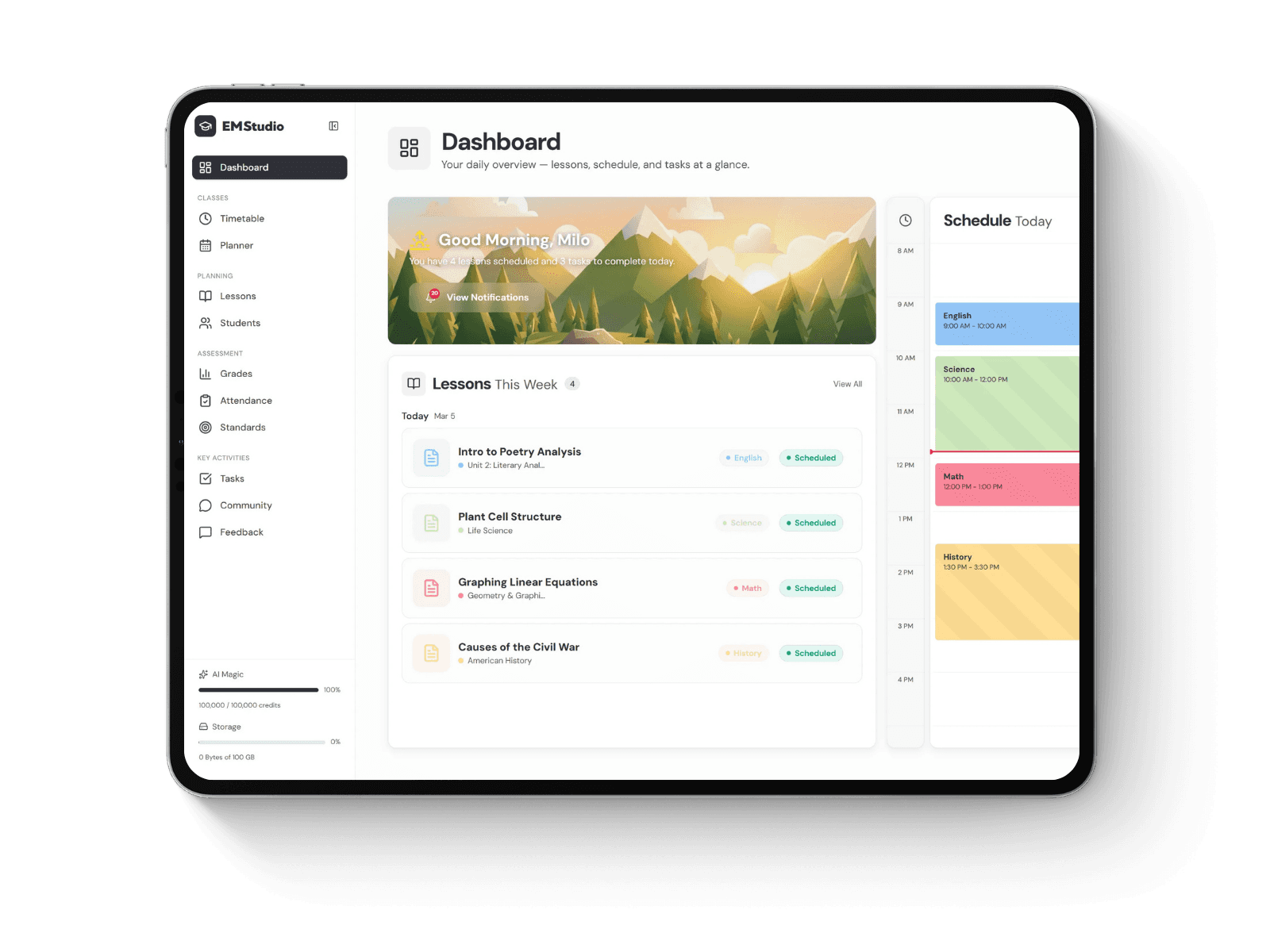
EMStudio is a free teaching management app — manage your classes, students, lessons, and more!
Learn More
Still grading everything by hand?
EMStudio is a free teaching management app — manage your classes, students, lessons, and more!
Learn More
Table of Contents
Which Podcasts Focus on Classroom Management and Pedagogy?
The best classroom management and pedagogy podcasts include Cult of Pedagogy by Jennifer Gonzalez for deep strategies, Truth for Teachers by Angela Watson for time-saving techniques, and The 10 Minute Teacher by Vicki Davis for daily quick tips. These shows offer research-backed methods for elementary through high school educators, with episodes ranging from 10 to 60 minutes.
You need professional development that fits into your actual schedule. These three podcasts for teachers deliver effective classroom management strategies without requiring a substitute. Each host brings classroom-tested experience and refuses to waste your time with theory that doesn't transfer to real kids.
Cult of Pedagogy: 45–60 minutes, weekly. Jennifer Gonzalez, former middle school teacher and National Board Certified Teacher.
Truth for Teachers: 15–20 minutes, weekly. Angela Watson, founder of the 40 Hour Teacher Workweek Club.
The 10 Minute Teacher: 10 minutes, daily (weekdays). Vicki Davis, IT Director and "Cool Cat Teacher."
These hosts regularly break down John Hattie’s Visible Learning research. They focus on high-effect-size strategies—those with an effect size above 0.40—such as direct instruction, feedback, and classroom discussion techniques. You will hear specific ways to implement these evidence-based practices without drowning in academic jargon.
Avoid listening to classroom management episodes while actively planning tomorrow’s instruction. The cognitive load competes with your own lesson design. Reserve these podcasts for your commute, lunch duty, or prep period when you can absorb the ideas without dividing your attention.
The Cult of Pedagogy Podcast
Jennifer Gonzalez brings fourteen years of middle school classroom experience and National Board Certification to every episode. Her background shows in the specifics—she doesn't suggest "managing behaviors" but rather describes exactly how to rearrange desk clusters to reduce off-task talking in 7th grade humanities blocks. She interviews practicing teachers who admit when a lesson bombed, then analyzes why.
Check the archive for "The Teachers of TikTok" and "ChatGPT for Teachers" episodes. Each one connects to her companion blog, which holds over 200 archived episodes with transcripts and resource links. The Facebook community of over 75,000 members actively discusses implementation, posting photos of classroom setups and reporting back on what worked with real students last week. Last month, a thread about handling cell phone violations generated 400 comments with specific scripts teachers used successfully.
Truth for Teachers with Angela Watson
Angela Watson built the 40 Hour Teacher Workweek Club, and her podcast extends that efficiency focus into audio format. Episodes arrive weekly, clocking in at 15 to 20 minutes—perfect for one prep period or a short commute. She delivers "Monday morning ready" strategies you can act on immediately without spending Sunday night redesigning your entire system. The show assumes you have 25 essays to grade and no desire to hear about "self-care" that requires more time.
Look for episodes like "5 grading shortcuts that don't lower standards" and her parent email templates. Watson tests every tip with actual educators in her club before recording. The content focuses on preserving your sanity while maintaining high expectations, not shortcuts that sacrifice quality. You will find yourself pausing to jot down a specific phrase for that difficult parent conversation happening Thursday.
The 10 Minute Teacher Podcast
Vicki Davis, known online as the "Cool Cat Teacher," structures her show with military precision. The five-day rotation—Mindset Mondays, EdTech Tuesdays, Wonderful Classroom Wednesdays, Thought Leader Thursdays, and Five-Idea Fridays—means you know exactly what to expect. Each episode hits exactly ten minutes, fitting into passing periods, elementary bathroom breaks, or the car rider line.
With over 600 episodes archived, you can search for a specific topic like "elementary reading centers" and find a 2018 episode that still applies. Davis records from her actual classroom, often sharing what failed last Tuesday before explaining the fix. Her IT Director background means she understands which tech tools actually save time versus those that create more work. She avoids edtech buzzwords and names the specific Chrome extension that saves her three minutes per attendance entry.

What Are the Best Subject-Specific Podcasts for STEM and Humanities Teachers?
Top subject-specific podcasts include The Math Dude for grades 4-9 arithmetic strategies, The History of Literature for AP-level humanities enrichment, and NGSS Science Updates for standards-aligned K-12 science instruction. Each offers content-specific professional development that supplements general teaching methods with disciplinary expertise.
You need a filter. If you teach AP or IB courses, grab The History of Literature. If your students need quick refreshers, use The Math Dude. If you're chasing standards alignment, pick NGSS Science Updates. Match the podcast to the specific gap in your content knowledge and your students' grade level.
Most subject podcasts waste your time. They discuss theory while you need a Tuesday lesson. These three deliver classroom-ready content or direct student use.
Skip the ivory tower discussions and choose podcasts for teachers who actually teach. Your prep time is too short for abstract philosophy.
The Math Dude targets grades four through nine. The History of Literature serves grades nine through twelve, specifically AP and IB levels. NGSS Science Updates covers K-12 science with clear episode codes distinguishing elementary from secondary strategies.
The Math Dude Quick and Dirty Tips
Jason Marshall produces this through the Quick and Dirty Tips network. Episodes run five to ten minutes. He breaks down arithmetic concepts like mental math or fractions into bite-sized audio that respects your planning period limits.
You can play these directly to your fourth through ninth graders. I used "How to Multiply Double-Digit Numbers in Your Head" as a bell-ringer last October while my eighth graders practiced the technique. It filled nine minutes perfectly and sparked follow-up questions.
Teachers also benefit directly. If you suffer from math anxiety like I did during my first year teaching algebra, Marshall's refreshers rebuild your confidence without demanding homework. This dual purpose makes it one of the most practical educational podcasts for teachers juggling multiple preps.
The History of Literature
Jacke Wilson hosts this show for serious readers. Episodes stretch thirty to fifty minutes, diving deep into literary periods like The Romantics or specific authors like Virginia Woolf. This is pure content enrichment, not pedagogical theory.
AP Literature and AP World History teachers need this in their feed. When I taught Mrs. Dalloway for the first time, Wilson's episode gave me the historical context and critical frameworks I lacked. No lesson plans included.
Just the background knowledge to teach with authority instead of faking it through discussion. Pair this with tools to transform history classrooms when building new units. Your advanced students notice immediately when you speak with genuine expertise.
NGSS Science Updates and Strategies
This show tracks the messy shift to Next Generation Science Standards. Episodes feature working teachers implementing specific performance expectations like MS-PS1-2 or HS-ESS1-1. You'll hear how real classrooms handle phenomena-based learning without the administrative jargon.
Elementary episodes carry different codes than secondary ones. Check the show notes for grade-level tags. When my district switched from state standards to NGSS two years ago, this podcast kept me sane during the transition.
I finally understood what "crosscutting concepts" looked like in a real lab setting. Science coaches should bookmark this alongside STEM teacher resources and curriculum platforms. It bridges the gap between standards documents and Tuesday morning lab activities.

Top Educational Technology Podcasts for Digital Learning
You need podcasts for educators that match your tech comfort level. Three shows dominate this space, but they serve different audiences.
House of EdTech drops monthly. The EdTech Podcast releases biweekly. Google Teacher Tribe stopped production in 2020, though the archive remains useful. All three are free, yet House of EdTech and Google Teacher Tribe hosts sell paid certifications ranging from $99 to $299. Sophie Bailey offers interviews without upsells. Nesi targets beginners. Bailey speaks to industry insiders. Miller and Bell split the difference with foundational Google training. Choose based on whether you need classroom tricks, policy context, or types of educational technology for classroom use that withstand time.
House of EdTech
Chris Nesi releases episodes monthly, timed to the school year rhythm. His signature Smackdown segment packs five or six new tools into fifteen minutes—recent episodes covered Canva Education updates, Padlet alternatives, and AI detectors you can actually use. You walk away with browser tabs already open.
Nesi runs a companion YouTube channel where he demonstrates clicks and settings. You see exactly where the assign button lives. This matters when you are helping 3rd graders log in during a 40-minute block.
The show targets teachers with one to three years of tech integration experience seeking practical educator resources. Last October, I tried his suggestion for a PDF reader extension. Six minutes to install, forty minutes of scaffolding saved. Nesi also offers an EdTech Certification course for around $99 if you want structured professional development credits.
The EdTech Podcast
Sophie Bailey records from the UK with a global perspective. Episodes run 30 to 45 minutes and cover venture capital investment in education, policy shifts affecting 1:1 device initiatives, and international instructional strategies. You hear how Estonia structures digital citizenship.
This is not your source for Monday morning lesson ideas. Bailey interviews CEOs and ministry officials. You learn why your district bought particular software, not how to use it. The technical depth assumes you understand LMS architecture.
Technology coaches and administrators benefit most. I listened to her episode on EU AI regulations while grading last spring. It explained why our district banned certain chatbots. Classroom teachers seeking immediate classroom management wins should listen to House of EdTech first, then queue Bailey for industry context.
Google Teacher Tribe
Matt Miller and Kasey Bell stopped recording in 2020, but the hundred-plus episode archive covers Google Workspace fundamentals that boost teacher efficacy. You will find deep dives into Google Classroom workflows, Forms quiz settings, and Slides design.
The hosts built reputations here, then redirected energy to paid offerings that expand on the free material. Miller sells comprehensive Google certification courses through Ditch That Textbook, while Bell offers Shake Up Learning courses priced between $99 and $299. These come up frequently in episodes as natural next steps for listeners wanting formal credentials.
If you are just starting with Google Workspace, binge the archive. Then supplement with House of EdTech for current AI features and app updates. I still assign their Forms tutorial to student teachers. The step-by-step remains accurate, though you need fresh sources for 2024 tools.

Best Podcasts for Elementary and Early Childhood Educators
Elementary and early childhood shows must match developmental realities. Skip the Sunday Scaries podcasts that induce guilt about classroom perfection while you fold laundry on Saturday. Choose shows aligned to specific age bands: Preschool Podcast handles ages 3-5 with NAEYC-aligned standards, while Elementary Entrepreneur targets K-5 teachers monetizing prep via Teachers Pay Teachers. These podcasts for teachers deliver concrete strategies without the weekend anxiety.
The K-12 Art Chat
Cassie Stephens hosts The K-12 Art Chat from her Tennessee elementary art room. She’s the teacher wearing the dress she painted herself. She brings that energy to discussions about Teaching for Artistic Behavior (TAB) philosophy. Her voice carries the exhaustion and joy of someone who actually spent the day with 500 kids.
Episodes run 45-60 minutes. Cassie breaks down projects like clay stop-motion animation or art room organization on a $200 budget. She explains how to store wet clay with no shelf space and which materials survive 24 first-graders. You’ll hear her describe fiber arts units where students help sew her famous wearable art dresses. She posts photos of the finished projects in her show notes.
You don’t need to be an art specialist. Regular classroom teachers can adapt her ideas for morning meetings or Friday enrichment. The show targets elementary heavily, though the title suggests secondary applications. If you need arts integration without a sink, this is your resource. Her tips on play-based learning for early childhood educators transfer to any creative block, even if you just have a rolling cart.
The Preschool Podcast
Ron Spreeuwenberg hosts this show for ECE directors, not K-12 teachers. Episodes last 15-20 minutes, perfect for a drive between the daycare and the supply store. He focuses on early childhood administration and pedagogy for ages 3-5. The pacing respects your schedule without demanding a full prep period. You can listen to a full episode while unloading the dishwasher.
You’ll hear discussions on Reggio Emilia documentation techniques, playground safety standards, and parent communication strategies that don’t require constant app notifications. The content aligns with NAEYC standards and emphasizes observation-based assessment. HiMama childcare software produces the show, so the perspective leans toward daycare directors and preschool administrators rather than public school pre-K teachers. Expect conversations about staff scheduling alongside curriculum.
If you run a center or teach in a private preschool, this belongs in your rotation. Public school Pre-K teachers might find the administrative focus less relevant to their district mandates, but the child development research applies universally. Spreeuwenberg interviews researchers who explain exactly how to document play-based learning for early childhood educators without disrupting the actual play. The episodes on documentation boards alone will save you hours of Pinterest scrolling.
The Elementary Entrepreneur
This show targets K-5 teachers building side income through Teachers Pay Teachers and curriculum writing. Hosts discuss converting your classroom anchor charts into digital downloads and setting up LLC structures for summer tutoring businesses. They cover time management between teaching and entrepreneurship without pretending either job is easy. The hosts admit when a product launch flopped, which saves you from repeating their mistakes.
Exercise discernment. Some episodes promote multi-level marketing schemes disguised as side hustles. Skip those. Focus instead on interviews with established TPT sellers and curriculum writers who explain the actual work of product photography and SEO descriptions. Look for episodes featuring sellers who started while teaching full-time and built substantial income over years, not overnight.
The practical business advice here exceeds what you’ll find in general podcasts for teachers. If you’ve ever wondered whether to price your reading comprehension unit at $4.50 or $6.00, these hosts have tested both and report the results. They share spreadsheet templates for tracking expenses and quarterly tax reminders. Just remember: your classroom comes first, and this side business should reduce your financial stress, not add to it.

Must-Listen Podcasts for Secondary and High School Teachers
Secondary teaching hits different. You're managing AP exam preparation, navigating departmental politics, and decoding adolescent psychology—all while keeping 35 teenagers engaged for 90-minute blocks.
That's why the best podcasts for teachers at this level skip the cute craft ideas. They dive into instructional strategies that survive block schedules and content that respects your prep period constraints. Most episodes run 45-60 minutes. Perfect for your commute or that single prep when you actually get to sit down.
If you're hunting for the best podcast for teachers navigating the structure and purpose of secondary education, these three deliver. They understand that high school isn't just harder content—it's a different ecosystem with its own deadlines and departmental silos.
Talks with Teachers
Brian Sztabnik knows your pain. He's an AP Literature teacher who won Scholastic Teacher of the Year, and he interviews authors and master teachers who actually still grade papers on Sundays.
The show focuses on writing workshop methods and close reading strategies you can use Monday morning. Episodes run 30-40 minutes and drop monthly.
It's heavy on English Language Arts, but humanities teachers steal from it constantly. I pulled his Socratic seminar structure for my 11th-grade history class last spring. Worked better than anything I'd invented myself.
The discussions on exam preparation for AP tests alone justify the subscription. Sztabnik remembers what it's like to teach IB Diploma candidates while advising the yearbook. That credibility matters when you're drowning in essays.
The Smartest Person in the Room
Jonathan Olsen brings a progressive lens that challenges the status quo. He runs Project-Based Learning case studies with specific classroom management moves for secondary loads of 35-plus students.
His takes on standardized testing and traditional grading will rattle you—in a good way. He questions everything, which makes this professional development gold for teachers in independent or progressive public schools.
Warning: If you love your bubble sheets, skip this one. But if you're drowning in worksheets and need permission to try something messy, Olsen's your guy. He remembers what it's like to survive six preps.
The PBL examples are concrete, not theoretical fluff. Last month he broke down how to assess group work without losing your mind. Saved me three hours of rubric redesign.
The Teacher and The Admin
Rae Hughart and Livia Chan co-host this dual-perspective show. She's in the classroom; he's in the office. Together they unpack secondary dynamics without the usual us-versus-them tension.
They tackle AP testing coordination nightmares, bell schedule changes, and how to survive 90-minute departmental meetings that could've been emails. The show frequently references the Danielson Framework for Teaching and secondary-specific evaluation rubrics.
You'll hear real talk about teacher efficacy and continuing education requirements. It's rare to find educator resources that bridge the gap between classroom practice and administrative policy this honestly.
Worth your block period. I listened to their episode on evaluation systems during my lunch duty and actually understood my domain scores for the first time. Chan doesn't sugarcoat the administrative constraints, and Hughart doesn't pretend teachers have infinite time.

Teacher Wellness and Professional Mindset Podcasts
Avoid the toxic positivity trap. Some wellness podcasts claim teacher burnout is your fault. It isn't. It's a systemic problem driven by large class sizes and stolen planning time. You need hosts who acknowledge broken systems while giving you tools to survive inside them. Look for specific protocols you can measure—a 90-second breathing exercise between classes or boundary-setting email scripts—rather than vague instructions to "practice self-care." While podcasts for teachers are free, many hosts sell wellness courses ranging from $50 to $200. Treat these upsells differently than the free episodes when budgeting your professional development funds.
Teacher Care Network
Matthew and Angela Bowerman skip the inspiration fluff. They deliver concrete techniques you can use between bells. After a brutal parent meeting, try their 5-4-3-2-1 grounding technique: five things you see, four you hear, three you can touch, two you smell, one you taste. It takes ninety seconds. They also provide actual scripts for telling administrators no when you're already covering three extra duties. No more scrambling for words when your principal asks you to sub during your prep.
Episodes run 20 to 30 minutes, perfect for your commute or lunch break. The Bowermans specifically target teachers dealing with secondary traumatic stress and compassion fatigue. Unlike hosts who suggest you just need better gratitude journals, they name the systemic issues—underfunding, lack of mental health support, unrealistic caseloads—without leaving you drowning in anger. Their evidence-based strategies for teacher work-life balance acknowledge that your working conditions are the problem, not your attitude.
The Burned-In Teacher
Amber Harper organizes survival into four stages. Burning In means you're barely surviving the day. Burning On is maintenance mode. Burning Bright is thriving, and Burning Out is recovery after you've hit the wall. This framework helps you diagnose exactly where you stand. No more gaslighting yourself into thinking you should just be more grateful.
Harper speaks directly to teachers in years one through five, when attrition rates spike. She tackles specific scenarios like how to refuse extra duties without the guilt spiral, or how to decide whether to change schools or leave the profession entirely. The advice is granular and actionable, not theoretical. She recognizes that large class sizes and lack of planning time are institutional failures, not personal shortcomings.
Teach Create Motivate
Michelle Ferré offers systems for the chronically overwhelmed. Her Master Copy Binder houses every original document in one place, while the Weekly Clipboard Method keeps your immediate priorities visible and portable. She also dismantles teacher perfectionism—the belief that your bulletin boards need to look like Pinterest and your data folders need color-coded tabs.
Be warned: Ferré's aesthetic leans heavily toward elementary classroom design and Instagram-worthy organization. Secondary teachers might find fewer concrete systems that apply to their context. But her anti-perfectionism message crosses all grade levels. You don't need the perfect classroom. You need a sustainable one. The permission to stop overworking resonates whether you teach kindergarten or AP Chemistry.

How Do You Choose the Right Podcast for Your Professional Goals?
Audit your district's PD requirements first. Most districts require 15 to 30 contact hours annually, and your commute alone can cover half that. Match episode length to your actual availability, not your aspirational schedule. Then join the podcast's online community to turn listening into actionable professional development.
Stop collecting episodes. Start collecting hours.
Your prep period is not listening time. Neither is IEP writing. Save podcasts for teachers for commutes, workouts, or routine grading. Complex cognitive tasks kill comprehension.
Assessing Your Current Professional Development Needs
Pull out your last evaluation. Look at the Danielson Framework domains: Planning and Preparation, Classroom Environment, Instruction, and Professional Responsibilities. Where did you score "developing" instead of "proficient"? That is your starting line, not your finish line.
Match the gap to the category. Instruction domain struggles? Find shows about instructional strategies. Planning domain needs work? Look for educator resources and curriculum shows. Classroom management chaos? There are pods for that. This turns random listening into targeted continuing education with measurable impact on teacher efficacy.
Finding Time to Listen During Your Teaching Routine
Do the math. A 20-minute commute times 180 school days equals 60 hours of potential learning. That covers your district's annual requirement twice over. But only if you protect that time from lesson planning and IEP writing.
Match the slot to the show. Your 15-minute lunch break fits one 10 Minute Teacher episode plus five minutes to jot notes. A 45-minute prep period handles a full Cult of Pedagogy deep dive. Use 1.5x speed to cut a 30-minute show down to 20 minutes, squeezing three episodes into one hour of drive time.
Never listen during complex cognitive work. Comprehension drops when you split attention between podcast voices and writing IEP goals. Save episodes for commutes, workouts, or multiple-choice grading. Routine tasks only.
Building a Personal Learning Network from Podcast Communities
Listening is passive. Community is active. Join the Cult of Pedagogy Podcast Listeners Facebook group with 75,000 members, or the Shake Up Learning Community if Google tools are your focus. These spaces extend the conversation beyond the earbuds.
Show up to live Twitter chats when hosts are guests. Attend virtual summits hosted by networks like Teach Better or 40 Hour Workweek. Consider this part of joining professional learning communities that actually fit your schedule.
Set a rule: comment on one episode per week in the community. Teaching the concept to others cements your own learning and completes the loop from consumption to application. This is how proven programs for professional growth actually change practice.
Start Here: Podcasts For Teachers
You do not need another theoretical framework. You need ideas that work Monday morning. These podcasts for teachers deliver practical strategies from educators in classrooms right now, not consultants who visited one in 2019. They turn your commute into professional development that builds teacher efficacy. Stop waiting for district PD to fix your practice.
Pick one show that matches your current frustration. Math falling flat? Subscribe to a STEM series. Drowning in behavior issues? Queue up a classroom management show. Treat this like continuing education that fits your schedule — fifteen minutes between dismissal and pickup can shift your instructional strategies more than a three-hour meeting. Pause, rewind, and implement what you hear tomorrow.
Open your podcast app right now. Search "Truth for Teachers" by Angela Watson. Download the most recent episode. Listen during your drive home today. That's your entire professional development plan for the week.

Which Podcasts Focus on Classroom Management and Pedagogy?
The best classroom management and pedagogy podcasts include Cult of Pedagogy by Jennifer Gonzalez for deep strategies, Truth for Teachers by Angela Watson for time-saving techniques, and The 10 Minute Teacher by Vicki Davis for daily quick tips. These shows offer research-backed methods for elementary through high school educators, with episodes ranging from 10 to 60 minutes.
You need professional development that fits into your actual schedule. These three podcasts for teachers deliver effective classroom management strategies without requiring a substitute. Each host brings classroom-tested experience and refuses to waste your time with theory that doesn't transfer to real kids.
Cult of Pedagogy: 45–60 minutes, weekly. Jennifer Gonzalez, former middle school teacher and National Board Certified Teacher.
Truth for Teachers: 15–20 minutes, weekly. Angela Watson, founder of the 40 Hour Teacher Workweek Club.
The 10 Minute Teacher: 10 minutes, daily (weekdays). Vicki Davis, IT Director and "Cool Cat Teacher."
These hosts regularly break down John Hattie’s Visible Learning research. They focus on high-effect-size strategies—those with an effect size above 0.40—such as direct instruction, feedback, and classroom discussion techniques. You will hear specific ways to implement these evidence-based practices without drowning in academic jargon.
Avoid listening to classroom management episodes while actively planning tomorrow’s instruction. The cognitive load competes with your own lesson design. Reserve these podcasts for your commute, lunch duty, or prep period when you can absorb the ideas without dividing your attention.
The Cult of Pedagogy Podcast
Jennifer Gonzalez brings fourteen years of middle school classroom experience and National Board Certification to every episode. Her background shows in the specifics—she doesn't suggest "managing behaviors" but rather describes exactly how to rearrange desk clusters to reduce off-task talking in 7th grade humanities blocks. She interviews practicing teachers who admit when a lesson bombed, then analyzes why.
Check the archive for "The Teachers of TikTok" and "ChatGPT for Teachers" episodes. Each one connects to her companion blog, which holds over 200 archived episodes with transcripts and resource links. The Facebook community of over 75,000 members actively discusses implementation, posting photos of classroom setups and reporting back on what worked with real students last week. Last month, a thread about handling cell phone violations generated 400 comments with specific scripts teachers used successfully.
Truth for Teachers with Angela Watson
Angela Watson built the 40 Hour Teacher Workweek Club, and her podcast extends that efficiency focus into audio format. Episodes arrive weekly, clocking in at 15 to 20 minutes—perfect for one prep period or a short commute. She delivers "Monday morning ready" strategies you can act on immediately without spending Sunday night redesigning your entire system. The show assumes you have 25 essays to grade and no desire to hear about "self-care" that requires more time.
Look for episodes like "5 grading shortcuts that don't lower standards" and her parent email templates. Watson tests every tip with actual educators in her club before recording. The content focuses on preserving your sanity while maintaining high expectations, not shortcuts that sacrifice quality. You will find yourself pausing to jot down a specific phrase for that difficult parent conversation happening Thursday.
The 10 Minute Teacher Podcast
Vicki Davis, known online as the "Cool Cat Teacher," structures her show with military precision. The five-day rotation—Mindset Mondays, EdTech Tuesdays, Wonderful Classroom Wednesdays, Thought Leader Thursdays, and Five-Idea Fridays—means you know exactly what to expect. Each episode hits exactly ten minutes, fitting into passing periods, elementary bathroom breaks, or the car rider line.
With over 600 episodes archived, you can search for a specific topic like "elementary reading centers" and find a 2018 episode that still applies. Davis records from her actual classroom, often sharing what failed last Tuesday before explaining the fix. Her IT Director background means she understands which tech tools actually save time versus those that create more work. She avoids edtech buzzwords and names the specific Chrome extension that saves her three minutes per attendance entry.
What Are the Best Subject-Specific Podcasts for STEM and Humanities Teachers?
Top subject-specific podcasts include The Math Dude for grades 4-9 arithmetic strategies, The History of Literature for AP-level humanities enrichment, and NGSS Science Updates for standards-aligned K-12 science instruction. Each offers content-specific professional development that supplements general teaching methods with disciplinary expertise.
You need a filter. If you teach AP or IB courses, grab The History of Literature. If your students need quick refreshers, use The Math Dude. If you're chasing standards alignment, pick NGSS Science Updates. Match the podcast to the specific gap in your content knowledge and your students' grade level.
Most subject podcasts waste your time. They discuss theory while you need a Tuesday lesson. These three deliver classroom-ready content or direct student use.
Skip the ivory tower discussions and choose podcasts for teachers who actually teach. Your prep time is too short for abstract philosophy.
The Math Dude targets grades four through nine. The History of Literature serves grades nine through twelve, specifically AP and IB levels. NGSS Science Updates covers K-12 science with clear episode codes distinguishing elementary from secondary strategies.
The Math Dude Quick and Dirty Tips
Jason Marshall produces this through the Quick and Dirty Tips network. Episodes run five to ten minutes. He breaks down arithmetic concepts like mental math or fractions into bite-sized audio that respects your planning period limits.
You can play these directly to your fourth through ninth graders. I used "How to Multiply Double-Digit Numbers in Your Head" as a bell-ringer last October while my eighth graders practiced the technique. It filled nine minutes perfectly and sparked follow-up questions.
Teachers also benefit directly. If you suffer from math anxiety like I did during my first year teaching algebra, Marshall's refreshers rebuild your confidence without demanding homework. This dual purpose makes it one of the most practical educational podcasts for teachers juggling multiple preps.
The History of Literature
Jacke Wilson hosts this show for serious readers. Episodes stretch thirty to fifty minutes, diving deep into literary periods like The Romantics or specific authors like Virginia Woolf. This is pure content enrichment, not pedagogical theory.
AP Literature and AP World History teachers need this in their feed. When I taught Mrs. Dalloway for the first time, Wilson's episode gave me the historical context and critical frameworks I lacked. No lesson plans included.
Just the background knowledge to teach with authority instead of faking it through discussion. Pair this with tools to transform history classrooms when building new units. Your advanced students notice immediately when you speak with genuine expertise.
NGSS Science Updates and Strategies
This show tracks the messy shift to Next Generation Science Standards. Episodes feature working teachers implementing specific performance expectations like MS-PS1-2 or HS-ESS1-1. You'll hear how real classrooms handle phenomena-based learning without the administrative jargon.
Elementary episodes carry different codes than secondary ones. Check the show notes for grade-level tags. When my district switched from state standards to NGSS two years ago, this podcast kept me sane during the transition.
I finally understood what "crosscutting concepts" looked like in a real lab setting. Science coaches should bookmark this alongside STEM teacher resources and curriculum platforms. It bridges the gap between standards documents and Tuesday morning lab activities.
Top Educational Technology Podcasts for Digital Learning
You need podcasts for educators that match your tech comfort level. Three shows dominate this space, but they serve different audiences.
House of EdTech drops monthly. The EdTech Podcast releases biweekly. Google Teacher Tribe stopped production in 2020, though the archive remains useful. All three are free, yet House of EdTech and Google Teacher Tribe hosts sell paid certifications ranging from $99 to $299. Sophie Bailey offers interviews without upsells. Nesi targets beginners. Bailey speaks to industry insiders. Miller and Bell split the difference with foundational Google training. Choose based on whether you need classroom tricks, policy context, or types of educational technology for classroom use that withstand time.
House of EdTech
Chris Nesi releases episodes monthly, timed to the school year rhythm. His signature Smackdown segment packs five or six new tools into fifteen minutes—recent episodes covered Canva Education updates, Padlet alternatives, and AI detectors you can actually use. You walk away with browser tabs already open.
Nesi runs a companion YouTube channel where he demonstrates clicks and settings. You see exactly where the assign button lives. This matters when you are helping 3rd graders log in during a 40-minute block.
The show targets teachers with one to three years of tech integration experience seeking practical educator resources. Last October, I tried his suggestion for a PDF reader extension. Six minutes to install, forty minutes of scaffolding saved. Nesi also offers an EdTech Certification course for around $99 if you want structured professional development credits.
The EdTech Podcast
Sophie Bailey records from the UK with a global perspective. Episodes run 30 to 45 minutes and cover venture capital investment in education, policy shifts affecting 1:1 device initiatives, and international instructional strategies. You hear how Estonia structures digital citizenship.
This is not your source for Monday morning lesson ideas. Bailey interviews CEOs and ministry officials. You learn why your district bought particular software, not how to use it. The technical depth assumes you understand LMS architecture.
Technology coaches and administrators benefit most. I listened to her episode on EU AI regulations while grading last spring. It explained why our district banned certain chatbots. Classroom teachers seeking immediate classroom management wins should listen to House of EdTech first, then queue Bailey for industry context.
Google Teacher Tribe
Matt Miller and Kasey Bell stopped recording in 2020, but the hundred-plus episode archive covers Google Workspace fundamentals that boost teacher efficacy. You will find deep dives into Google Classroom workflows, Forms quiz settings, and Slides design.
The hosts built reputations here, then redirected energy to paid offerings that expand on the free material. Miller sells comprehensive Google certification courses through Ditch That Textbook, while Bell offers Shake Up Learning courses priced between $99 and $299. These come up frequently in episodes as natural next steps for listeners wanting formal credentials.
If you are just starting with Google Workspace, binge the archive. Then supplement with House of EdTech for current AI features and app updates. I still assign their Forms tutorial to student teachers. The step-by-step remains accurate, though you need fresh sources for 2024 tools.
Best Podcasts for Elementary and Early Childhood Educators
Elementary and early childhood shows must match developmental realities. Skip the Sunday Scaries podcasts that induce guilt about classroom perfection while you fold laundry on Saturday. Choose shows aligned to specific age bands: Preschool Podcast handles ages 3-5 with NAEYC-aligned standards, while Elementary Entrepreneur targets K-5 teachers monetizing prep via Teachers Pay Teachers. These podcasts for teachers deliver concrete strategies without the weekend anxiety.
The K-12 Art Chat
Cassie Stephens hosts The K-12 Art Chat from her Tennessee elementary art room. She’s the teacher wearing the dress she painted herself. She brings that energy to discussions about Teaching for Artistic Behavior (TAB) philosophy. Her voice carries the exhaustion and joy of someone who actually spent the day with 500 kids.
Episodes run 45-60 minutes. Cassie breaks down projects like clay stop-motion animation or art room organization on a $200 budget. She explains how to store wet clay with no shelf space and which materials survive 24 first-graders. You’ll hear her describe fiber arts units where students help sew her famous wearable art dresses. She posts photos of the finished projects in her show notes.
You don’t need to be an art specialist. Regular classroom teachers can adapt her ideas for morning meetings or Friday enrichment. The show targets elementary heavily, though the title suggests secondary applications. If you need arts integration without a sink, this is your resource. Her tips on play-based learning for early childhood educators transfer to any creative block, even if you just have a rolling cart.
The Preschool Podcast
Ron Spreeuwenberg hosts this show for ECE directors, not K-12 teachers. Episodes last 15-20 minutes, perfect for a drive between the daycare and the supply store. He focuses on early childhood administration and pedagogy for ages 3-5. The pacing respects your schedule without demanding a full prep period. You can listen to a full episode while unloading the dishwasher.
You’ll hear discussions on Reggio Emilia documentation techniques, playground safety standards, and parent communication strategies that don’t require constant app notifications. The content aligns with NAEYC standards and emphasizes observation-based assessment. HiMama childcare software produces the show, so the perspective leans toward daycare directors and preschool administrators rather than public school pre-K teachers. Expect conversations about staff scheduling alongside curriculum.
If you run a center or teach in a private preschool, this belongs in your rotation. Public school Pre-K teachers might find the administrative focus less relevant to their district mandates, but the child development research applies universally. Spreeuwenberg interviews researchers who explain exactly how to document play-based learning for early childhood educators without disrupting the actual play. The episodes on documentation boards alone will save you hours of Pinterest scrolling.
The Elementary Entrepreneur
This show targets K-5 teachers building side income through Teachers Pay Teachers and curriculum writing. Hosts discuss converting your classroom anchor charts into digital downloads and setting up LLC structures for summer tutoring businesses. They cover time management between teaching and entrepreneurship without pretending either job is easy. The hosts admit when a product launch flopped, which saves you from repeating their mistakes.
Exercise discernment. Some episodes promote multi-level marketing schemes disguised as side hustles. Skip those. Focus instead on interviews with established TPT sellers and curriculum writers who explain the actual work of product photography and SEO descriptions. Look for episodes featuring sellers who started while teaching full-time and built substantial income over years, not overnight.
The practical business advice here exceeds what you’ll find in general podcasts for teachers. If you’ve ever wondered whether to price your reading comprehension unit at $4.50 or $6.00, these hosts have tested both and report the results. They share spreadsheet templates for tracking expenses and quarterly tax reminders. Just remember: your classroom comes first, and this side business should reduce your financial stress, not add to it.
Must-Listen Podcasts for Secondary and High School Teachers
Secondary teaching hits different. You're managing AP exam preparation, navigating departmental politics, and decoding adolescent psychology—all while keeping 35 teenagers engaged for 90-minute blocks.
That's why the best podcasts for teachers at this level skip the cute craft ideas. They dive into instructional strategies that survive block schedules and content that respects your prep period constraints. Most episodes run 45-60 minutes. Perfect for your commute or that single prep when you actually get to sit down.
If you're hunting for the best podcast for teachers navigating the structure and purpose of secondary education, these three deliver. They understand that high school isn't just harder content—it's a different ecosystem with its own deadlines and departmental silos.
Talks with Teachers
Brian Sztabnik knows your pain. He's an AP Literature teacher who won Scholastic Teacher of the Year, and he interviews authors and master teachers who actually still grade papers on Sundays.
The show focuses on writing workshop methods and close reading strategies you can use Monday morning. Episodes run 30-40 minutes and drop monthly.
It's heavy on English Language Arts, but humanities teachers steal from it constantly. I pulled his Socratic seminar structure for my 11th-grade history class last spring. Worked better than anything I'd invented myself.
The discussions on exam preparation for AP tests alone justify the subscription. Sztabnik remembers what it's like to teach IB Diploma candidates while advising the yearbook. That credibility matters when you're drowning in essays.
The Smartest Person in the Room
Jonathan Olsen brings a progressive lens that challenges the status quo. He runs Project-Based Learning case studies with specific classroom management moves for secondary loads of 35-plus students.
His takes on standardized testing and traditional grading will rattle you—in a good way. He questions everything, which makes this professional development gold for teachers in independent or progressive public schools.
Warning: If you love your bubble sheets, skip this one. But if you're drowning in worksheets and need permission to try something messy, Olsen's your guy. He remembers what it's like to survive six preps.
The PBL examples are concrete, not theoretical fluff. Last month he broke down how to assess group work without losing your mind. Saved me three hours of rubric redesign.
The Teacher and The Admin
Rae Hughart and Livia Chan co-host this dual-perspective show. She's in the classroom; he's in the office. Together they unpack secondary dynamics without the usual us-versus-them tension.
They tackle AP testing coordination nightmares, bell schedule changes, and how to survive 90-minute departmental meetings that could've been emails. The show frequently references the Danielson Framework for Teaching and secondary-specific evaluation rubrics.
You'll hear real talk about teacher efficacy and continuing education requirements. It's rare to find educator resources that bridge the gap between classroom practice and administrative policy this honestly.
Worth your block period. I listened to their episode on evaluation systems during my lunch duty and actually understood my domain scores for the first time. Chan doesn't sugarcoat the administrative constraints, and Hughart doesn't pretend teachers have infinite time.
Teacher Wellness and Professional Mindset Podcasts
Avoid the toxic positivity trap. Some wellness podcasts claim teacher burnout is your fault. It isn't. It's a systemic problem driven by large class sizes and stolen planning time. You need hosts who acknowledge broken systems while giving you tools to survive inside them. Look for specific protocols you can measure—a 90-second breathing exercise between classes or boundary-setting email scripts—rather than vague instructions to "practice self-care." While podcasts for teachers are free, many hosts sell wellness courses ranging from $50 to $200. Treat these upsells differently than the free episodes when budgeting your professional development funds.
Teacher Care Network
Matthew and Angela Bowerman skip the inspiration fluff. They deliver concrete techniques you can use between bells. After a brutal parent meeting, try their 5-4-3-2-1 grounding technique: five things you see, four you hear, three you can touch, two you smell, one you taste. It takes ninety seconds. They also provide actual scripts for telling administrators no when you're already covering three extra duties. No more scrambling for words when your principal asks you to sub during your prep.
Episodes run 20 to 30 minutes, perfect for your commute or lunch break. The Bowermans specifically target teachers dealing with secondary traumatic stress and compassion fatigue. Unlike hosts who suggest you just need better gratitude journals, they name the systemic issues—underfunding, lack of mental health support, unrealistic caseloads—without leaving you drowning in anger. Their evidence-based strategies for teacher work-life balance acknowledge that your working conditions are the problem, not your attitude.
The Burned-In Teacher
Amber Harper organizes survival into four stages. Burning In means you're barely surviving the day. Burning On is maintenance mode. Burning Bright is thriving, and Burning Out is recovery after you've hit the wall. This framework helps you diagnose exactly where you stand. No more gaslighting yourself into thinking you should just be more grateful.
Harper speaks directly to teachers in years one through five, when attrition rates spike. She tackles specific scenarios like how to refuse extra duties without the guilt spiral, or how to decide whether to change schools or leave the profession entirely. The advice is granular and actionable, not theoretical. She recognizes that large class sizes and lack of planning time are institutional failures, not personal shortcomings.
Teach Create Motivate
Michelle Ferré offers systems for the chronically overwhelmed. Her Master Copy Binder houses every original document in one place, while the Weekly Clipboard Method keeps your immediate priorities visible and portable. She also dismantles teacher perfectionism—the belief that your bulletin boards need to look like Pinterest and your data folders need color-coded tabs.
Be warned: Ferré's aesthetic leans heavily toward elementary classroom design and Instagram-worthy organization. Secondary teachers might find fewer concrete systems that apply to their context. But her anti-perfectionism message crosses all grade levels. You don't need the perfect classroom. You need a sustainable one. The permission to stop overworking resonates whether you teach kindergarten or AP Chemistry.
How Do You Choose the Right Podcast for Your Professional Goals?
Audit your district's PD requirements first. Most districts require 15 to 30 contact hours annually, and your commute alone can cover half that. Match episode length to your actual availability, not your aspirational schedule. Then join the podcast's online community to turn listening into actionable professional development.
Stop collecting episodes. Start collecting hours.
Your prep period is not listening time. Neither is IEP writing. Save podcasts for teachers for commutes, workouts, or routine grading. Complex cognitive tasks kill comprehension.
Assessing Your Current Professional Development Needs
Pull out your last evaluation. Look at the Danielson Framework domains: Planning and Preparation, Classroom Environment, Instruction, and Professional Responsibilities. Where did you score "developing" instead of "proficient"? That is your starting line, not your finish line.
Match the gap to the category. Instruction domain struggles? Find shows about instructional strategies. Planning domain needs work? Look for educator resources and curriculum shows. Classroom management chaos? There are pods for that. This turns random listening into targeted continuing education with measurable impact on teacher efficacy.
Finding Time to Listen During Your Teaching Routine
Do the math. A 20-minute commute times 180 school days equals 60 hours of potential learning. That covers your district's annual requirement twice over. But only if you protect that time from lesson planning and IEP writing.
Match the slot to the show. Your 15-minute lunch break fits one 10 Minute Teacher episode plus five minutes to jot notes. A 45-minute prep period handles a full Cult of Pedagogy deep dive. Use 1.5x speed to cut a 30-minute show down to 20 minutes, squeezing three episodes into one hour of drive time.
Never listen during complex cognitive work. Comprehension drops when you split attention between podcast voices and writing IEP goals. Save episodes for commutes, workouts, or multiple-choice grading. Routine tasks only.
Building a Personal Learning Network from Podcast Communities
Listening is passive. Community is active. Join the Cult of Pedagogy Podcast Listeners Facebook group with 75,000 members, or the Shake Up Learning Community if Google tools are your focus. These spaces extend the conversation beyond the earbuds.
Show up to live Twitter chats when hosts are guests. Attend virtual summits hosted by networks like Teach Better or 40 Hour Workweek. Consider this part of joining professional learning communities that actually fit your schedule.
Set a rule: comment on one episode per week in the community. Teaching the concept to others cements your own learning and completes the loop from consumption to application. This is how proven programs for professional growth actually change practice.
Start Here: Podcasts For Teachers
You do not need another theoretical framework. You need ideas that work Monday morning. These podcasts for teachers deliver practical strategies from educators in classrooms right now, not consultants who visited one in 2019. They turn your commute into professional development that builds teacher efficacy. Stop waiting for district PD to fix your practice.
Pick one show that matches your current frustration. Math falling flat? Subscribe to a STEM series. Drowning in behavior issues? Queue up a classroom management show. Treat this like continuing education that fits your schedule — fifteen minutes between dismissal and pickup can shift your instructional strategies more than a three-hour meeting. Pause, rewind, and implement what you hear tomorrow.
Open your podcast app right now. Search "Truth for Teachers" by Angela Watson. Download the most recent episode. Listen during your drive home today. That's your entire professional development plan for the week.
Still grading everything by hand?
EMStudio is a free teaching management app — manage your classes, students, lessons, and more!
Learn More
Still grading everything by hand?
EMStudio is a free teaching management app — manage your classes, students, lessons, and more!
Learn More



Notion4Teachers
Notion templates to simplify administrative tasks and enhance your teaching experience.



2026 Notion4Teachers. All Rights Reserved.
Notion4Teachers
Notion templates to simplify administrative tasks and enhance your teaching experience.
2026 Notion4Teachers. All Rights Reserved.
Notion4Teachers
Notion templates to simplify administrative tasks and enhance your teaching experience.
2026 Notion4Teachers. All Rights Reserved.