
15 Socrative Teachers Tools for Classroom Management
15 Socrative Teachers Tools for Classroom Management

Article by
Milo
ESL Content Coordinator & Educator
ESL Content Coordinator & Educator
All Posts
Mary Budd Rowe discovered back in 1974 that the average teacher waits less than one second for an answer before moving on. That stat still haunts me during staff meetings. We ask a question, hear crickets, and immediately rescue the class with the answer or a simpler prompt. Socrative teachers break that cycle. We use the platform to collect every student's response simultaneously, turning that 0.8-second panic into 30 seconds of actual think time.
This post covers the fifteen specific tools I actually use for classroom management—not the features buried in submenus that look good in training videos but die in real life. We're talking about Quick Assessment Formats that take 90 seconds to set up, the Space Race feature that turns review days into team competitions, and how to spot the kid checking Instagram during your real-time polling without walking the room. You'll also see how socrative teachers use exit tickets to catch comprehension gaps before the bell rings.
I've run Socrative in a BYOD classroom where half the kids have cracked iPhone 6s and the other half have district Chromebooks from 2019. These tools work on both. No apps to download, no passwords they forget by Tuesday. Just a room code and questions that keep them honest about what they actually learned.
Still grading everything by hand?
EMStudio is a free teaching management app — manage your classes, students, lessons, and more!
Learn More

Still grading everything by hand?
EMStudio is a free teaching management app — manage your classes, students, lessons, and more!
Learn More
Table of Contents
What Quick Assessment Formats Work Best for Socrative Teachers?
Socrative teachers rely on three core quick assessment formats: multiple choice/true-false polls for instant comprehension checks, short answer fields for higher-order thinking, and the on-the-fly Quick Question mode for spontaneous checks. These tools provide immediate visual feedback within 15-30 seconds, allowing teachers to pivot instruction based on real-time data rather than waiting for graded assessments.
Paper quizzes take days to grade. These class tools take seconds. That speed changes everything about how you teach.
The 15-30 second feedback loop separates Socrative from paper assessments. The free tier handles 50 students per room; upgrade to Pro for 150. I limit quick checks to 3-5 questions for my 4th graders and 5-10 for my 8th graders. Any longer causes device fatigue and lost focus. These innovative tools to engage and inspire work best when you respect those limits.
Multiple Choice and True/False Instant Polls
Multiple choice questions support 2-10 options, not just four. You can upload images up to 5MB, which helps with graph analysis or artwork review in a BYOD classroom. They grade instantly, making them perfect for 3rd grade and up as a student response system.
True/False questions auto-grade but give no partial credit. I use these for ELA reading comprehension checks or binary math concept checks like "Is this number prime?" They’re blunt instruments, but fast ones.
Setup takes two minutes to create and fifteen seconds to launch to a class of 30. That’s the kind of speed that makes real-time polling actually useful.
Short Answer and Open Response Activities
Short answer fields have a 140-character limit per response. You’ll grade these manually through the dashboard, so budget 3-4 minutes per 30-student class for these comprehension checks.
I once asked my 7th-grade science students to "Explain photosynthesis in one sentence." No multiple choice hints meant I caught real misconceptions that formative assessment should reveal.
But watch your pacing. Open responses slow down the rhythm. For high school discussions, stick to 1-2 per quiz to keep momentum.
On-the-Fly Quick Question Mode
Quick Question mode launches in three clicks: select Quick Question, choose your type, project to class. No prep required.
Verbal questioning reaches the three kids with raised hands. Quick Question gets 100% participation in 45 seconds.
Use it for temperature checks during complex lessons. A 10th-grade history teacher might ask "How confident are you with WWI causes?" on a 5-point Likert scale to gauge whether to reteach or move on. It beats collecting digital exit tickets at the bell when you need data now to inform tomorrow’s lesson.
Space Race and Team Competition Features
Space Race turns standard quizzes into team competitions with rockets racing across the screen. John Hattie's Visible Learning research puts cooperative learning at an effect size of 0.40—double the 0.20 for competitive learning. This matters in middle school. I've watched 7th graders who wouldn't speak in traditional group work suddenly debate answers when their rocket stalls.
You're running a student response system that functions as a class management app, not just collecting digital exit tickets. The following breakdown covers how socrative teachers configure teams for maximum engagement without the usual group-work headaches.
Collaborative Space Race Mode Setup
Configure teams of two to four students sharing one device. Any larger and you'll see the "passenger effect"—one kid does the work while three watch. I learned this with a group of five during a comprehension check. The quiet kid let the loud one drive, and I had no data on what she actually knew.
Keep quizzes to five to fifteen questions. Eight to twelve minutes hits the sweet spot before middle schoolers check out. The rocket moves based on accuracy percentage, not just speed. Teams hitting 100% streaks zoom ahead; teams guessing wrong crawl along even if they click fast. This aligns with proven classroom gamification methods.
Enable the "Individual Device" setting even in team mode. This forces every student to submit an answer before the team moves forward. It eliminates the passive observer problem and gives you real-time polling data from every kid in your BYOD classroom.
Individual Progress Tracking Displays
The teacher dashboard shows color-coded mastery levels as students work. Red flags show below 60%, yellow sits at 60-79%, and green hits 80% and above. You see this shift in real time during the formative assessment. The colors update instantly as answers roll in, showing exactly who needs help.
Watch the time-per-question metric. Anyone taking longer than ninety seconds is either struggling or off-task. Use this flag to make circulation decisions. If three kids hit the 90-second mark simultaneously, the question wording is confusing, not the students. This turns data into action.
After the race, Socrative auto-generates PDF progress reports. Pull these for parent-teacher conferences. The visual timeline shows exactly when students slowed down or rushed, giving you concrete data for intervention talks without extra prep time.
Real-Time Leaderboard and Scoring Tools
The leaderboard displays team progress every three seconds, but you control visibility. Switch to anonymous mode showing only team names when reviewing sensitive topics. This works well during digital exit tickets about personal reading habits to reduce student anxiety and keep the focus on honesty.
You can pause or hide the leaderboard entirely. Do this when one team finishes early and starts celebrating. Hiding the screen prevents the "we're done" culture from infecting kids who need more processing time. It keeps the room focused on learning, not winning.
Enable "Randomize Question Order" in crowded classrooms. This prevents answer sharing between teams sitting elbow-to-elbow. Each device shows the same questions but scrambled, so Team A can't peek at Team B's screen. It maintains integrity without you becoming the security guard.

How Do Socrative Teachers Monitor Student Behavior?
Socrative teachers monitor behavior through a live results dashboard that updates every 3 seconds, showing participation rates and response patterns. They toggle between anonymous mode for sensitive topics and named tracking for accountability. Built-in participation alerts flag students who haven't responded within set timeframes.
Socrative functions as lightweight student behavior software without the creep factor. No cameras. No keystroke logging. Just clean data on who is engaging with your real-time polling questions and who has gone idle in your BYOD classroom.
Dedicated behavior management tools for teachers track discipline referrals and incident reports. Socrative tracks academic engagement—response rates, time-on-task, completion patterns. It is a student response system, not a security camera. Choose your monitoring layer based on lesson sensitivity.
Live Results Dashboard for Attention Tracking
The dashboard refreshes every 3 seconds. You watch the percentage climb as students submit answers. For multiple-choice comprehension checks, aim for 100% participation within 60 seconds. Anything less signals a pacing problem or off-task behavior.
Watch for the spinning loading icon. If a student shows "Waiting for response" for over two minutes, they have a frozen device or connectivity issues. Walk over immediately to avoid interrupting the flow for everyone.
When participation drops below 70%, pause. Hit the "Send Message" feature and type "Eyes on question 4." That usually snaps the room back before you need a digital behavior tracking sheet for follow-up.
Anonymous vs. Named Response Settings
The toggle lives in Settings > Student Name. Choose Anonymous or Require Name. Switching requires ending the room and restarting, so decide before students log in.
Use anonymous mode for middle school social-emotional learning checks. Ask "Did you feel safe at lunch today?" without attaching names to vulnerable answers. Switch to named mode for graded formative assessment accountability.
Remember FERPA compliance. Anonymous responses cannot be retroactively identified. If you need records for an IEP meeting, export the data before closing the room. Once the session ends, those responses are ghosts.
Device Monitoring and Participation Alerts
Socrative cannot detect tab-switching or screen sharing. Unlike proctoring software, it only measures the gap between question launch and answer submission. It tracks time-on-task, not window focus.
Configure the "Wait Time Alert" threshold. Set it to flag students taking three times longer than the class average on a given question. That catches both strugglers and disengaged scrollers.
In my 9th-grade algebra class of 32, the alert highlights four students who have not clicked Submit after two minutes. I use "Shuffle to Question" to force their screens back to the current item. No calling them out. Just silent redirection.

Exit Tickets and End-of-Class Data Collection
Exit tickets bridge your student response system and class communication apps. They capture the day's learning while feeding data into your workflow. I set mine to auto-close after three minutes. The bell rings, the room locks, and late submissions don't exist. This hard stop forces students to prioritize their final thoughts.
Standard Exit Ticket Templates
Socrative ships with three preset templates that save your sanity. The 3-2-1 template asks for three things learned, two questions remaining, and one connection to prior knowledge. It lives in the template library, ready to launch. No setup required.
The Emoji Scale runs 1-5 using visual Likert faces. I use this with my 7th graders for "How hard did you try today?" The emojis auto-translate to numerical data for tracking effort trends over time. Younger students tap faces instead of decoding Likert scales.
For AP test prep, the Thumbs Up/Down binary template delivers rapid comprehension checks. Students tap once. You see instantly who mastered the content and who needs tomorrow's reteach. Binary responses process faster than open text in a BYOD classroom with spotty Wi-Fi.
Custom Exit Survey Creation Tools
When presets won't cut it, build custom digital exit tickets. Click Image > Upload (JPEG/PNG max 5MB) > Position. Science teachers upload diagrams for labeling; art teachers position critique prompts beside student work photos. Visual questions beat text-only for spatial concepts.
Set tickets to auto-launch at 2:45 PM daily. The scheduling feature removes the mental load of remembering to open the room before the bell. Consistency builds routine; routine builds honest responses. Socrative teachers know that automatic beats manual every time.
Add branching logic with "If correct, go to..." statements. Struggling students receive remediation questions. High performers get extension prompts. Everyone finishes at the bell, but no one wastes time on irrelevant content. This differentiation happens silently while you monitor from your desk.
Automated Data Export to Gradebooks
Data dies in silos. Socrative prevents this with robust export options. The CSV export includes Student Name, Question, Response, and Time Submitted columns. Import directly into Excel, Google Sheets, or PowerSchool formats. Raw data preserves every student comment for your records.
Google Classroom integration posts scores directly to your Gradebook with one click. Warning: this only works for multiple choice and true/false questions. Short answer questions require manual entry. Plan your formative assessment question types accordingly. See these formative assessment examples for immediate use when designing export-ready questions.
Generate PDF reports showing visual heat maps of class-wide misconceptions. I attach these to PLC meeting agendas and parent emails. They turn real-time polling data into concrete action plans without extra formatting work on your end.
Data Analytics and Class Management App Integration
Socrative teachers drown in data without a map. The platform generates four distinct report types, each serving a different instructional moment. Knowing which button to click saves you from exporting useless spreadsheets.
Report Type | Data Shown | Best Use Case | Export Format |
|---|---|---|---|
Live Results | Answer distribution (A/B/C/D) with percentages; clickable bars show student names | Immediate small-group formation during instruction | CSV, Excel |
Heat Map | Green/red grid per student per question; sortable by weakest items | Identifying class-wide misconceptions for reteach | PNG, Screenshot |
Progress Report | 4-week trend line with accuracy rates; flags >15% decline | IEP documentation and parent conferences | |
Student Report | Total questions, avg time per question, consecutive correct streaks | One-on-one intervention meetings | PDF, Excel |
Real-Time Comprehension Graphs and Charts
Last October, my 8th graders bombed a formative assessment on photosynthesis. The bar chart flashed red—68% had picked "chlorophyll" as the gas plants release. I clicked that bar, and Socrative showed me exactly who needed pulling for a small group. No guessing.
The heat map view turns your screen into a grid of green and red squares. Each row is a student; each column is a question. Sort by "Weakest Questions" and the entire class's misconceptions surface instantly. I use this for real-time polling during comprehension checks to decide if we move on or circle back.
Set your mastery threshold before you start. The default is 70% correct for green status, but I bump it to 80% for AP Bio and drop it to 60% for my inclusion block. The student response system recalculates instantly, painting an honest picture of who actually got it, not who guessed well.
Longitudinal Student Progress Reports
Here is where Socrative Pro justifies its $59.99 annual price tag. The free tier dumps your data after 30 days, which destroys any chance of longitudinal IEP documentation. Pro keeps it for one full year, letting you prove growth across quarters with hard numbers, not hunches.
The 4-week trend line tracks individual accuracy rates session by session. When I see a student drop more than 15% over three weeks, I flag them for intervention. The report captures total questions answered, average time per question, and longest streak of consecutive correct answers—perfect metrics for a step-by-step student assessment analysis.
One click generates a PDF for parent-teacher conferences. It shows Week 1 struggling beside Week 4 mastery, complete with visual graphs that make growth undeniable. Parents do not care about your digital exit tickets; they care that their kid moved from 40% to 78%.
Integration with Other Behavior Management Tools
Socrative plays nice with the tools you already use, but it knows its lane. Google Classroom rosters sync directly. Canvas accepts LTI 1.3 integration for seamless grade passback. Schoology handles grade passback too. Microsoft Teams? You get limited import only—functional but clunky.
Pro plans unlock API access, which lets your IT department pull Socrative data into PowerSchool or Infinite Campus nightly. I do not touch this; my tech coordinator does the heavy lifting. It keeps my BYOD classroom assessment data living where administrators expect to find it without double entry.
Do not mistake this for a full classroom management app free alternative like ClassDojo. Socrative will not message parents, track behavior points, or take attendance during Zoom or Google Meet. You will still cross-reference manually. Use Socrative for what it does best: capturing thinking. Leave the parent communication to the apps built for it.

How Does Socrative Compare to Free Classroom Management Apps?
Compared to free classroom management apps for teachers, Socrative offers superior real-time data visualization but lacks parent communication features found in ClassDojo. While Kahoot's free tier limits sessions to 10 participants, Socrative accommodates 50 students. However, Google Forms provides more question types and unlimited responses, making Socrative ideal for formative assessment, not comprehensive behavior management.
Free apps promise everything. They deliver fragments. I've watched colleagues bounce between three platforms before lunch, chasing features locked behind paywalls. None of them do it all. That's the trap.
Here's the breakdown that matters for socrative teachers running a BYOD classroom:
Feature | Socrative (Free/Paid) | Kahoot (Free) | Google Forms |
|---|---|---|---|
Max participants | 50 / 150 | 10 | Unlimited |
Live dashboard | Yes / Yes | Yes | No |
Behavior analytics | Partial / Full | None | None |
Question types | MC/TF/Short | MC only | All types |
The participant limits create real problems. Kahoot's free version caps you at ten students. That's useless for most classroom management apps for teachers scenarios. Google Forms takes unlimited responses but offers no live view of results as they arrive. You wait until everyone finishes to see the damage. Socrative shows the confusion in real time. The behavior analytics row reveals another gap. Kahoot and Forms offer nothing for tracking conduct. Socrative gives partial insight through response patterns, but won't log tardies.
Choose Socrative when you need immediate comprehension checks during a lesson. The real-time polling shows you exactly who gets it and who doesn't before you move on. Last October, I ran a digital exit ticket with my 7th graders about cellular respiration. Within thirty seconds of the last submission, I knew three kids missed the anaerobic concept. I pulled them for reteaching before the bell rang.
Pick Google Forms for pre-unit surveys or complex branching logic. Use Kahoot if you want noise and energy without granular data. For daily formative assessment that drives tomorrow's instruction, Socrative wins. The data exports cleanly to your gradebook. The others make you fight for your spreadsheets. Your choice depends on what data you need to collect, not which interface looks prettiest.
But know the failure mode. I once tried tracking bathroom breaks and parent contacts in Socrative during a busy week. I created separate quizzes for hall passes and behavior incidents. It took twelve extra minutes per day. The app isn't built for discipline logs or guardian messaging. It has no built-in reward system or parent portal. You cannot send a quick text to mom about a rough afternoon.
Socrative is a student response system, not a behavior tracker. For parent communication or conduct records, use ClassDojo or Remind. Among the apps that transform K-12 classrooms, Socrative owns the formative assessment niche. It won't manage your seating chart or call home. Use the right tool for the right job.

Your First Week: Implementing Socrative Without Overwhelm
I tried launching Socrative with my 7th graders on a Monday morning. Total disaster. Friday afternoon works better when everyone's fried and a student response system feels like a game, not a test. New socrative teachers often try to do too much too fast. Start smaller than you think necessary.
Prerequisites Check
Bandwidth: Confirm 1 Mbps per 20 devices on your network.
Devices: Verify BYOD classroom policies or 1:1 availability.
Account: Set up your teacher login. Students never need accounts—just your room code.
The 5-Day Launch
Day 1 (10 min): Display your room code. Let students join and exit. No quiz yet. Just run real-time polling asking "How are you today?"
Day 2 (12 min): Launch a 3-question comprehension check on yesterday's content. Enable 'Require Student Names' before you start.
Day 3 (8 min): Review yesterday's data. Find the two kids who missed everything. Pull them for a quick reteach.
Day 4 (15 min): Deploy digital exit tickets. Three questions max. Ask what confused them today.
Day 5 (10 min): Show aggregate results. Celebrate how formative assessment helps you target help. These essential survival strategies for new teachers work best when you pace yourself.
Common First-Week Mistakes
Starting with 20-question quizzes causes student fatigue by question 5. Forgetting to enable 'Require Student Names' leaves you staring at unidentifiable "Yellow Giraffe" data all weekend. Running Space Race on unstable WiFi triggers mass disconnections that kill the room's energy and your credibility.
The Escalation Plan
If Week 1 shows less than 80% student participation, pivot immediately. Switch to anonymous mode temporarily to reduce anxiety. Let them play with this class tool without the pressure of being tracked. Once engagement stabilizes, reintroduce named tracking gradually over the next week. Don't abandon ship; adjust the sails.
The Bigger Picture on Socrative Teachers
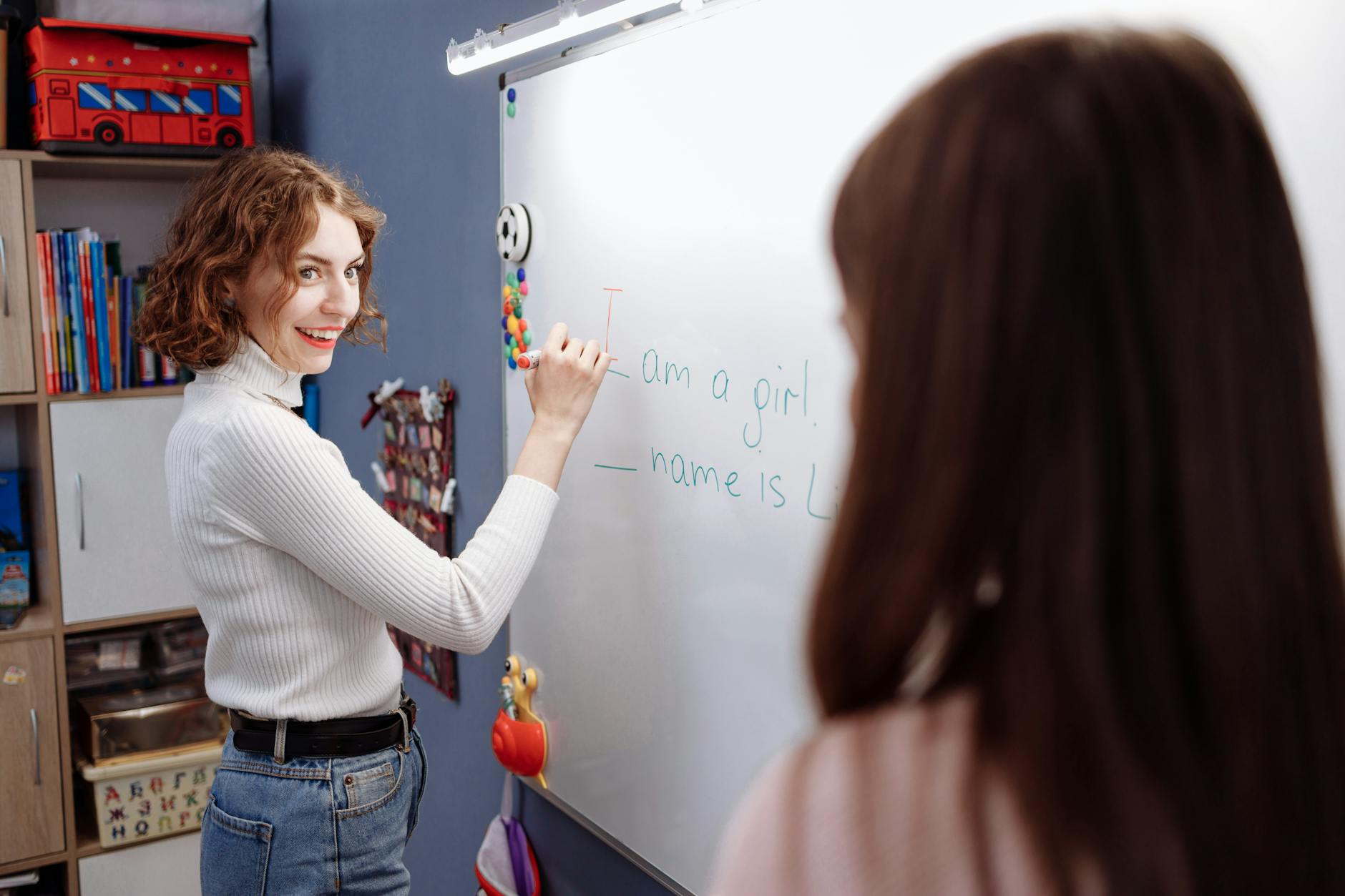
Socrative is a student response system that actually fits in a real classroom. It connects the quick checks, the Space Races, and those exit tickets into one stream of information. You ask a question. You see every answer. You decide whether to move on or reteach. That loop—formative assessment in its simplest form—is what separates guessing from teaching.
You do not need every feature working on day one. I started with one exit ticket on Friday afternoons. Later, I added real-time polling for comprehension checks during reading groups. The data analytics matter only if you glance at them before planning tomorrow's lesson. Compared to free apps, Socrative costs money, but it saves the one thing you cannot buy: time spent chasing down who understands what.
Stop trying to manage behavior through punishment. Manage it through engagement. When kids answer questions on their devices, they are too busy to cause trouble. Pick one tool from this list. Use it tomorrow. That is how socrative teachers build habits that actually last.
What Quick Assessment Formats Work Best for Socrative Teachers?
Socrative teachers rely on three core quick assessment formats: multiple choice/true-false polls for instant comprehension checks, short answer fields for higher-order thinking, and the on-the-fly Quick Question mode for spontaneous checks. These tools provide immediate visual feedback within 15-30 seconds, allowing teachers to pivot instruction based on real-time data rather than waiting for graded assessments.
Paper quizzes take days to grade. These class tools take seconds. That speed changes everything about how you teach.
The 15-30 second feedback loop separates Socrative from paper assessments. The free tier handles 50 students per room; upgrade to Pro for 150. I limit quick checks to 3-5 questions for my 4th graders and 5-10 for my 8th graders. Any longer causes device fatigue and lost focus. These innovative tools to engage and inspire work best when you respect those limits.
Multiple Choice and True/False Instant Polls
Multiple choice questions support 2-10 options, not just four. You can upload images up to 5MB, which helps with graph analysis or artwork review in a BYOD classroom. They grade instantly, making them perfect for 3rd grade and up as a student response system.
True/False questions auto-grade but give no partial credit. I use these for ELA reading comprehension checks or binary math concept checks like "Is this number prime?" They’re blunt instruments, but fast ones.
Setup takes two minutes to create and fifteen seconds to launch to a class of 30. That’s the kind of speed that makes real-time polling actually useful.
Short Answer and Open Response Activities
Short answer fields have a 140-character limit per response. You’ll grade these manually through the dashboard, so budget 3-4 minutes per 30-student class for these comprehension checks.
I once asked my 7th-grade science students to "Explain photosynthesis in one sentence." No multiple choice hints meant I caught real misconceptions that formative assessment should reveal.
But watch your pacing. Open responses slow down the rhythm. For high school discussions, stick to 1-2 per quiz to keep momentum.
On-the-Fly Quick Question Mode
Quick Question mode launches in three clicks: select Quick Question, choose your type, project to class. No prep required.
Verbal questioning reaches the three kids with raised hands. Quick Question gets 100% participation in 45 seconds.
Use it for temperature checks during complex lessons. A 10th-grade history teacher might ask "How confident are you with WWI causes?" on a 5-point Likert scale to gauge whether to reteach or move on. It beats collecting digital exit tickets at the bell when you need data now to inform tomorrow’s lesson.
Space Race and Team Competition Features
Space Race turns standard quizzes into team competitions with rockets racing across the screen. John Hattie's Visible Learning research puts cooperative learning at an effect size of 0.40—double the 0.20 for competitive learning. This matters in middle school. I've watched 7th graders who wouldn't speak in traditional group work suddenly debate answers when their rocket stalls.
You're running a student response system that functions as a class management app, not just collecting digital exit tickets. The following breakdown covers how socrative teachers configure teams for maximum engagement without the usual group-work headaches.
Collaborative Space Race Mode Setup
Configure teams of two to four students sharing one device. Any larger and you'll see the "passenger effect"—one kid does the work while three watch. I learned this with a group of five during a comprehension check. The quiet kid let the loud one drive, and I had no data on what she actually knew.
Keep quizzes to five to fifteen questions. Eight to twelve minutes hits the sweet spot before middle schoolers check out. The rocket moves based on accuracy percentage, not just speed. Teams hitting 100% streaks zoom ahead; teams guessing wrong crawl along even if they click fast. This aligns with proven classroom gamification methods.
Enable the "Individual Device" setting even in team mode. This forces every student to submit an answer before the team moves forward. It eliminates the passive observer problem and gives you real-time polling data from every kid in your BYOD classroom.
Individual Progress Tracking Displays
The teacher dashboard shows color-coded mastery levels as students work. Red flags show below 60%, yellow sits at 60-79%, and green hits 80% and above. You see this shift in real time during the formative assessment. The colors update instantly as answers roll in, showing exactly who needs help.
Watch the time-per-question metric. Anyone taking longer than ninety seconds is either struggling or off-task. Use this flag to make circulation decisions. If three kids hit the 90-second mark simultaneously, the question wording is confusing, not the students. This turns data into action.
After the race, Socrative auto-generates PDF progress reports. Pull these for parent-teacher conferences. The visual timeline shows exactly when students slowed down or rushed, giving you concrete data for intervention talks without extra prep time.
Real-Time Leaderboard and Scoring Tools
The leaderboard displays team progress every three seconds, but you control visibility. Switch to anonymous mode showing only team names when reviewing sensitive topics. This works well during digital exit tickets about personal reading habits to reduce student anxiety and keep the focus on honesty.
You can pause or hide the leaderboard entirely. Do this when one team finishes early and starts celebrating. Hiding the screen prevents the "we're done" culture from infecting kids who need more processing time. It keeps the room focused on learning, not winning.
Enable "Randomize Question Order" in crowded classrooms. This prevents answer sharing between teams sitting elbow-to-elbow. Each device shows the same questions but scrambled, so Team A can't peek at Team B's screen. It maintains integrity without you becoming the security guard.
How Do Socrative Teachers Monitor Student Behavior?
Socrative teachers monitor behavior through a live results dashboard that updates every 3 seconds, showing participation rates and response patterns. They toggle between anonymous mode for sensitive topics and named tracking for accountability. Built-in participation alerts flag students who haven't responded within set timeframes.
Socrative functions as lightweight student behavior software without the creep factor. No cameras. No keystroke logging. Just clean data on who is engaging with your real-time polling questions and who has gone idle in your BYOD classroom.
Dedicated behavior management tools for teachers track discipline referrals and incident reports. Socrative tracks academic engagement—response rates, time-on-task, completion patterns. It is a student response system, not a security camera. Choose your monitoring layer based on lesson sensitivity.
Live Results Dashboard for Attention Tracking
The dashboard refreshes every 3 seconds. You watch the percentage climb as students submit answers. For multiple-choice comprehension checks, aim for 100% participation within 60 seconds. Anything less signals a pacing problem or off-task behavior.
Watch for the spinning loading icon. If a student shows "Waiting for response" for over two minutes, they have a frozen device or connectivity issues. Walk over immediately to avoid interrupting the flow for everyone.
When participation drops below 70%, pause. Hit the "Send Message" feature and type "Eyes on question 4." That usually snaps the room back before you need a digital behavior tracking sheet for follow-up.
Anonymous vs. Named Response Settings
The toggle lives in Settings > Student Name. Choose Anonymous or Require Name. Switching requires ending the room and restarting, so decide before students log in.
Use anonymous mode for middle school social-emotional learning checks. Ask "Did you feel safe at lunch today?" without attaching names to vulnerable answers. Switch to named mode for graded formative assessment accountability.
Remember FERPA compliance. Anonymous responses cannot be retroactively identified. If you need records for an IEP meeting, export the data before closing the room. Once the session ends, those responses are ghosts.
Device Monitoring and Participation Alerts
Socrative cannot detect tab-switching or screen sharing. Unlike proctoring software, it only measures the gap between question launch and answer submission. It tracks time-on-task, not window focus.
Configure the "Wait Time Alert" threshold. Set it to flag students taking three times longer than the class average on a given question. That catches both strugglers and disengaged scrollers.
In my 9th-grade algebra class of 32, the alert highlights four students who have not clicked Submit after two minutes. I use "Shuffle to Question" to force their screens back to the current item. No calling them out. Just silent redirection.
Exit Tickets and End-of-Class Data Collection
Exit tickets bridge your student response system and class communication apps. They capture the day's learning while feeding data into your workflow. I set mine to auto-close after three minutes. The bell rings, the room locks, and late submissions don't exist. This hard stop forces students to prioritize their final thoughts.
Standard Exit Ticket Templates
Socrative ships with three preset templates that save your sanity. The 3-2-1 template asks for three things learned, two questions remaining, and one connection to prior knowledge. It lives in the template library, ready to launch. No setup required.
The Emoji Scale runs 1-5 using visual Likert faces. I use this with my 7th graders for "How hard did you try today?" The emojis auto-translate to numerical data for tracking effort trends over time. Younger students tap faces instead of decoding Likert scales.
For AP test prep, the Thumbs Up/Down binary template delivers rapid comprehension checks. Students tap once. You see instantly who mastered the content and who needs tomorrow's reteach. Binary responses process faster than open text in a BYOD classroom with spotty Wi-Fi.
Custom Exit Survey Creation Tools
When presets won't cut it, build custom digital exit tickets. Click Image > Upload (JPEG/PNG max 5MB) > Position. Science teachers upload diagrams for labeling; art teachers position critique prompts beside student work photos. Visual questions beat text-only for spatial concepts.
Set tickets to auto-launch at 2:45 PM daily. The scheduling feature removes the mental load of remembering to open the room before the bell. Consistency builds routine; routine builds honest responses. Socrative teachers know that automatic beats manual every time.
Add branching logic with "If correct, go to..." statements. Struggling students receive remediation questions. High performers get extension prompts. Everyone finishes at the bell, but no one wastes time on irrelevant content. This differentiation happens silently while you monitor from your desk.
Automated Data Export to Gradebooks
Data dies in silos. Socrative prevents this with robust export options. The CSV export includes Student Name, Question, Response, and Time Submitted columns. Import directly into Excel, Google Sheets, or PowerSchool formats. Raw data preserves every student comment for your records.
Google Classroom integration posts scores directly to your Gradebook with one click. Warning: this only works for multiple choice and true/false questions. Short answer questions require manual entry. Plan your formative assessment question types accordingly. See these formative assessment examples for immediate use when designing export-ready questions.
Generate PDF reports showing visual heat maps of class-wide misconceptions. I attach these to PLC meeting agendas and parent emails. They turn real-time polling data into concrete action plans without extra formatting work on your end.
Data Analytics and Class Management App Integration
Socrative teachers drown in data without a map. The platform generates four distinct report types, each serving a different instructional moment. Knowing which button to click saves you from exporting useless spreadsheets.
Report Type | Data Shown | Best Use Case | Export Format |
|---|---|---|---|
Live Results | Answer distribution (A/B/C/D) with percentages; clickable bars show student names | Immediate small-group formation during instruction | CSV, Excel |
Heat Map | Green/red grid per student per question; sortable by weakest items | Identifying class-wide misconceptions for reteach | PNG, Screenshot |
Progress Report | 4-week trend line with accuracy rates; flags >15% decline | IEP documentation and parent conferences | |
Student Report | Total questions, avg time per question, consecutive correct streaks | One-on-one intervention meetings | PDF, Excel |
Real-Time Comprehension Graphs and Charts
Last October, my 8th graders bombed a formative assessment on photosynthesis. The bar chart flashed red—68% had picked "chlorophyll" as the gas plants release. I clicked that bar, and Socrative showed me exactly who needed pulling for a small group. No guessing.
The heat map view turns your screen into a grid of green and red squares. Each row is a student; each column is a question. Sort by "Weakest Questions" and the entire class's misconceptions surface instantly. I use this for real-time polling during comprehension checks to decide if we move on or circle back.
Set your mastery threshold before you start. The default is 70% correct for green status, but I bump it to 80% for AP Bio and drop it to 60% for my inclusion block. The student response system recalculates instantly, painting an honest picture of who actually got it, not who guessed well.
Longitudinal Student Progress Reports
Here is where Socrative Pro justifies its $59.99 annual price tag. The free tier dumps your data after 30 days, which destroys any chance of longitudinal IEP documentation. Pro keeps it for one full year, letting you prove growth across quarters with hard numbers, not hunches.
The 4-week trend line tracks individual accuracy rates session by session. When I see a student drop more than 15% over three weeks, I flag them for intervention. The report captures total questions answered, average time per question, and longest streak of consecutive correct answers—perfect metrics for a step-by-step student assessment analysis.
One click generates a PDF for parent-teacher conferences. It shows Week 1 struggling beside Week 4 mastery, complete with visual graphs that make growth undeniable. Parents do not care about your digital exit tickets; they care that their kid moved from 40% to 78%.
Integration with Other Behavior Management Tools
Socrative plays nice with the tools you already use, but it knows its lane. Google Classroom rosters sync directly. Canvas accepts LTI 1.3 integration for seamless grade passback. Schoology handles grade passback too. Microsoft Teams? You get limited import only—functional but clunky.
Pro plans unlock API access, which lets your IT department pull Socrative data into PowerSchool or Infinite Campus nightly. I do not touch this; my tech coordinator does the heavy lifting. It keeps my BYOD classroom assessment data living where administrators expect to find it without double entry.
Do not mistake this for a full classroom management app free alternative like ClassDojo. Socrative will not message parents, track behavior points, or take attendance during Zoom or Google Meet. You will still cross-reference manually. Use Socrative for what it does best: capturing thinking. Leave the parent communication to the apps built for it.
How Does Socrative Compare to Free Classroom Management Apps?
Compared to free classroom management apps for teachers, Socrative offers superior real-time data visualization but lacks parent communication features found in ClassDojo. While Kahoot's free tier limits sessions to 10 participants, Socrative accommodates 50 students. However, Google Forms provides more question types and unlimited responses, making Socrative ideal for formative assessment, not comprehensive behavior management.
Free apps promise everything. They deliver fragments. I've watched colleagues bounce between three platforms before lunch, chasing features locked behind paywalls. None of them do it all. That's the trap.
Here's the breakdown that matters for socrative teachers running a BYOD classroom:
Feature | Socrative (Free/Paid) | Kahoot (Free) | Google Forms |
|---|---|---|---|
Max participants | 50 / 150 | 10 | Unlimited |
Live dashboard | Yes / Yes | Yes | No |
Behavior analytics | Partial / Full | None | None |
Question types | MC/TF/Short | MC only | All types |
The participant limits create real problems. Kahoot's free version caps you at ten students. That's useless for most classroom management apps for teachers scenarios. Google Forms takes unlimited responses but offers no live view of results as they arrive. You wait until everyone finishes to see the damage. Socrative shows the confusion in real time. The behavior analytics row reveals another gap. Kahoot and Forms offer nothing for tracking conduct. Socrative gives partial insight through response patterns, but won't log tardies.
Choose Socrative when you need immediate comprehension checks during a lesson. The real-time polling shows you exactly who gets it and who doesn't before you move on. Last October, I ran a digital exit ticket with my 7th graders about cellular respiration. Within thirty seconds of the last submission, I knew three kids missed the anaerobic concept. I pulled them for reteaching before the bell rang.
Pick Google Forms for pre-unit surveys or complex branching logic. Use Kahoot if you want noise and energy without granular data. For daily formative assessment that drives tomorrow's instruction, Socrative wins. The data exports cleanly to your gradebook. The others make you fight for your spreadsheets. Your choice depends on what data you need to collect, not which interface looks prettiest.
But know the failure mode. I once tried tracking bathroom breaks and parent contacts in Socrative during a busy week. I created separate quizzes for hall passes and behavior incidents. It took twelve extra minutes per day. The app isn't built for discipline logs or guardian messaging. It has no built-in reward system or parent portal. You cannot send a quick text to mom about a rough afternoon.
Socrative is a student response system, not a behavior tracker. For parent communication or conduct records, use ClassDojo or Remind. Among the apps that transform K-12 classrooms, Socrative owns the formative assessment niche. It won't manage your seating chart or call home. Use the right tool for the right job.
Your First Week: Implementing Socrative Without Overwhelm
I tried launching Socrative with my 7th graders on a Monday morning. Total disaster. Friday afternoon works better when everyone's fried and a student response system feels like a game, not a test. New socrative teachers often try to do too much too fast. Start smaller than you think necessary.
Prerequisites Check
Bandwidth: Confirm 1 Mbps per 20 devices on your network.
Devices: Verify BYOD classroom policies or 1:1 availability.
Account: Set up your teacher login. Students never need accounts—just your room code.
The 5-Day Launch
Day 1 (10 min): Display your room code. Let students join and exit. No quiz yet. Just run real-time polling asking "How are you today?"
Day 2 (12 min): Launch a 3-question comprehension check on yesterday's content. Enable 'Require Student Names' before you start.
Day 3 (8 min): Review yesterday's data. Find the two kids who missed everything. Pull them for a quick reteach.
Day 4 (15 min): Deploy digital exit tickets. Three questions max. Ask what confused them today.
Day 5 (10 min): Show aggregate results. Celebrate how formative assessment helps you target help. These essential survival strategies for new teachers work best when you pace yourself.
Common First-Week Mistakes
Starting with 20-question quizzes causes student fatigue by question 5. Forgetting to enable 'Require Student Names' leaves you staring at unidentifiable "Yellow Giraffe" data all weekend. Running Space Race on unstable WiFi triggers mass disconnections that kill the room's energy and your credibility.
The Escalation Plan
If Week 1 shows less than 80% student participation, pivot immediately. Switch to anonymous mode temporarily to reduce anxiety. Let them play with this class tool without the pressure of being tracked. Once engagement stabilizes, reintroduce named tracking gradually over the next week. Don't abandon ship; adjust the sails.
The Bigger Picture on Socrative Teachers
Socrative is a student response system that actually fits in a real classroom. It connects the quick checks, the Space Races, and those exit tickets into one stream of information. You ask a question. You see every answer. You decide whether to move on or reteach. That loop—formative assessment in its simplest form—is what separates guessing from teaching.
You do not need every feature working on day one. I started with one exit ticket on Friday afternoons. Later, I added real-time polling for comprehension checks during reading groups. The data analytics matter only if you glance at them before planning tomorrow's lesson. Compared to free apps, Socrative costs money, but it saves the one thing you cannot buy: time spent chasing down who understands what.
Stop trying to manage behavior through punishment. Manage it through engagement. When kids answer questions on their devices, they are too busy to cause trouble. Pick one tool from this list. Use it tomorrow. That is how socrative teachers build habits that actually last.
Still grading everything by hand?
EMStudio is a free teaching management app — manage your classes, students, lessons, and more!
Learn More
Still grading everything by hand?
EMStudio is a free teaching management app — manage your classes, students, lessons, and more!
Learn More






Notion4Teachers
Notion templates to simplify administrative tasks and enhance your teaching experience.



2026 Notion4Teachers. All Rights Reserved.
Notion4Teachers
Notion templates to simplify administrative tasks and enhance your teaching experience.
2026 Notion4Teachers. All Rights Reserved.
Notion4Teachers
Notion templates to simplify administrative tasks and enhance your teaching experience.
2026 Notion4Teachers. All Rights Reserved.