
15 Living Books for Every Subject and Grade Level
15 Living Books for Every Subject and Grade Level

Article by
Milo
ESL Content Coordinator & Educator
ESL Content Coordinator & Educator
All Posts
Charlotte Mason first warned against "twaddle" and pushed for living books in 1886. She saw textbooks that talked down to children and offered something better: narrative-rich texts written by authors who loved their subjects. That shift from dry facts to gripping stories still works.
You don't need to follow the full Charlotte Mason method to use living books. You just need good titles. This list covers history and geography, science, math and logic, character-building morning time reads, and diverse voices for modern classrooms. These are the books that make kids lean forward. Textbooks rarely manage that.
Still grading everything by hand?
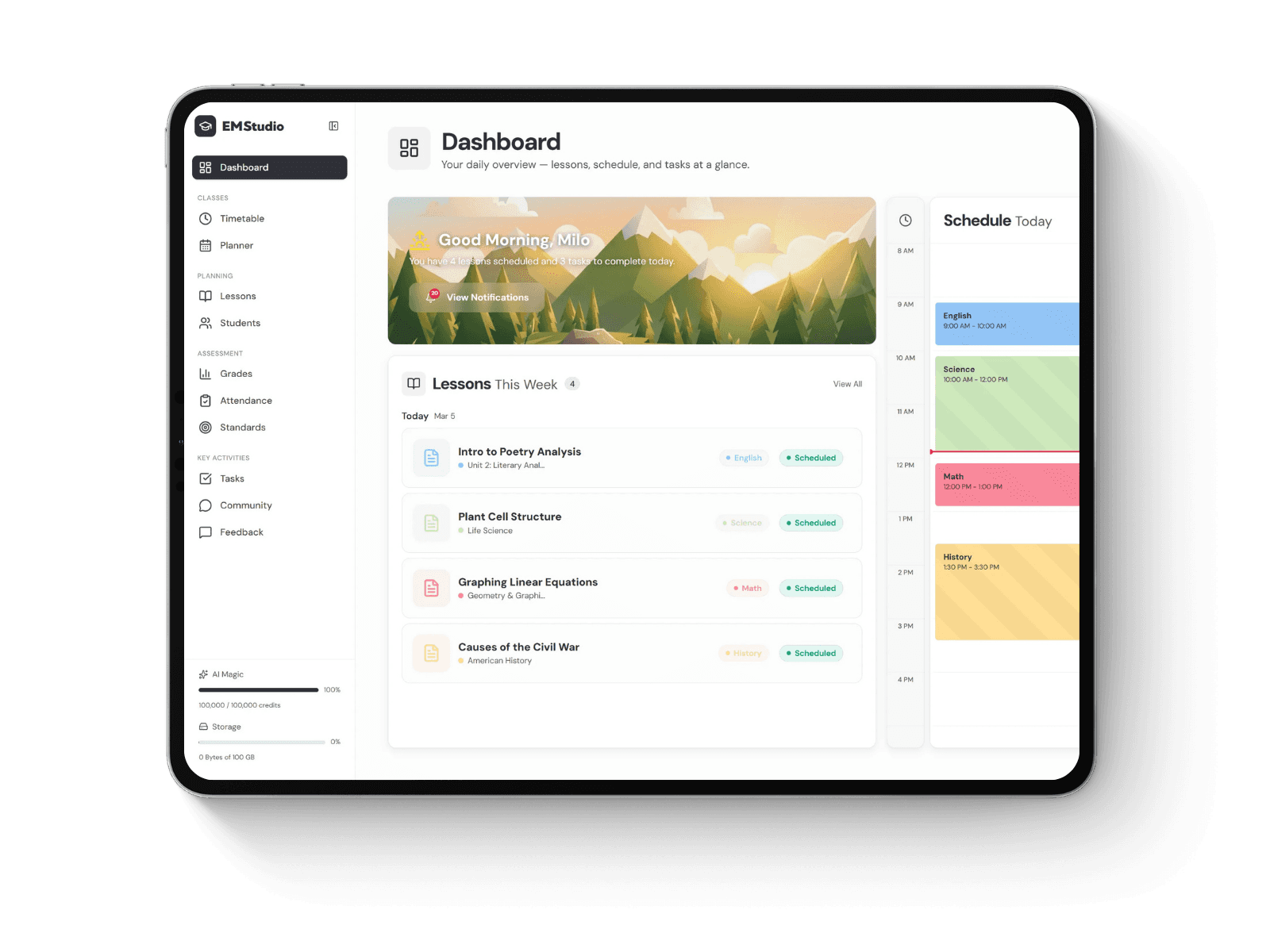
EMStudio is a free teaching management app — manage your classes, students, lessons, and more!
Learn More
Still grading everything by hand?
EMStudio is a free teaching management app — manage your classes, students, lessons, and more!
Learn More
Table of Contents
What Are the Best Living Books for History and Geography?
The best living books for history and geography include Susan Wise Bauer's 'The Story of the World' for ancient through modern history, Jean Lee Latham's 'Carry On, Mr. Bowditch' for maritime mathematics and navigation, and Holling C. Holling's 'Paddle-to-the-Sea' for Great Lakes geography. These narrative-driven texts replace dry facts with compelling stories that improve retention through emotional connection and character development.
Charlotte Mason called them "living books" for a reason. These aren't textbooks compiled by committees. They're stories written by authors who actually care about the subject, usually written well enough that you don't mind reading them aloud for the third time.
Living books present history and geography through narrative, not lists of facts. Charlotte Mason contrasted these with "twaddle"—dumbed-down writing that talks down to children or compiled textbooks written by committees without passion for the topic.
Title | Grade Range | Historical Period/Region | Key Academic Hook |
|---|---|---|---|
The Story of the World | 1-4 read-aloud/4-8 independent | Ancient-Modern World timeline | Narrative history |
Carry On, Mr. Bowditch | 5-8 | 1773 Massachusetts Maritime | Mathematical navigation |
Paddle-to-the-Sea | 2-6 | Great Lakes watershed geography | Cartography/mapping |
For Paddle-to-the-Sea, your students use blank Great Lakes outlines to trace the journey over ten class periods.
For Bowditch, they use protractors and strings to measure angles like a sextant.
Story of the World offers a four-volume progression with an Activity Book available for $20 to $25.
Skip these during the six-week crunch before standardized testing when scope-and-sequence alignment trumps narrative depth. They also fail for your students reading two or more years below grade level who need decodable readers for eighty percent of their diet.
The Story of the World by Susan Wise Bauer
This four-volume series runs from Ancient Times through the Middle Ages, Early Modern times, and the Modern Age, covering 5,000 BC to the present. Each chapter spans three to five pages and takes thirty to forty-five minutes to read aloud. The Activity Book costs $22.95 and holds coloring pages, review cards, and map work that turns listening into doing.
Use it with your first through fourth graders as a read-aloud family experience, or hand it to fourth through eighth graders for independent reading. The Lexile measures 800-900, so middle graders handle the vocabulary while younger ones follow the plot. I used Volume One with my third graders during our Ancient Egypt unit; they remembered the stories months later better than any textbook chapter.
The narrative weaves world events together without the fragmented feel of scope-and-sequence charts. You won't find assessment questions at the end. You ask for narration—the Charlotte Mason education method where children tell back what they heard. This shows you what actually stuck without resorting to twaddle-free worksheets that kill the love of childhood books and picture books.
The books work well alongside social studies tools that transform history classrooms, adding narrative depth to timeline activities.
Carry On, Mr. Bowditch by Jean Lee Latham
This 1956 Newbery Medal winner tells the story of Nathaniel Bowditch, a mathematician who taught himself navigation while indentured as a ship's clerk in Salem, Massachusetts. The book packs real mathematical content into a biographical narrative, showing how Bowditch calculated lunar distances and compiled mathematical tables called ephemerides. At 256 pages, it fits the upper elementary and middle school range perfectly for grades five through eight.
Your fifth through eighth graders can replicate Bowditch's work with protractors and strings to measure angles just as he did with a sextant aboard ship. This hands-on activity connects the abstract math on the page to physical geometry and practical navigation. The text doesn't shy away from equations and calculations, making it rare among childhood books that typically avoid numbers in favor of simpler plots.
Houghton Mifflin published this hardcover, and it holds up to multiple readings in your classroom library. The narrative demonstrates how mathematical precision saved lives at sea during the 1773 Massachusetts maritime period. Your students remember the mathematical navigation concepts because they come attached to a character fighting for his life against the Atlantic Ocean and winter storms.
Paddle-to-the-Sea by Holling C. Holling
This 1942 Caldecott Honor book follows a carved wooden canoe from Lake Superior through the Great Lakes to the Atlantic Ocean. The 64-page volume has full-spread illustrations that show geographic has like Lake Nipigon, Sault Ste. Marie, and Niagara Falls. It works for your second through sixth graders who need strong visual cues alongside the text and narration method discussions.
Over ten class periods, have your students trace the journey on blank Great Lakes outlines you print from any basic map site. They plot the twenty-plus locations mentioned in the text, learning the watershed geography through story and not dry memorization. The mapping activity builds spatial reasoning while the narrative keeps them engaged with the little canoe's adventures through storms and shipping locks.
The book demonstrates how cartography and mapping connect to real journeys across the Great Lakes watershed. Your children see how water flows from Lake Superior through the Soo Locks and over Niagara Falls to the Atlantic Ocean. This living books approach beats any worksheet asking them to label blank maps without narrative context or emotional investment in the geography they are studying.
You can pair it with social studies tools that transform history classrooms for a full regional study.

Which Living Books Make Science Come Alive?
The living books that make science come alive include Joanna Cole's 'The Magic School Bus' series for elementary inquiry-based learning, Cheryl Bardoe's 'Gregor Mendel' for upper elementary genetics, and William Kamkwamba's 'The Boy Who Harnessed the Wind' for middle school engineering. These texts embed scientific concepts within narrative frameworks, improving conceptual understanding through story-based context and primary source integration.
After reading, have students complete a scientific retelling. They explain the concept as if teaching a friend across the table. Research shows this beats worksheet review for retention. You will hear them articulate photosynthesis or genetics in their own words. This narration method cements understanding better than fill-in-the-blank drills.
Choose your text based on grade level and topic:
For K-2 inquiry, use Magic School Bus picture books ($6-8).
For grades 3-5 genetics, use Gregor Mendel ($12-17).
For grades 6-8 renewable energy, use The Boy Who Harnessed the Wind ($9-12).
Watch out for fake living books. Some biographies invent dialogue without sources. Verify the author used primary documents. Bardoe consulted the Abbott of Brno for Mendel's letters. Kamkwamba wrote his own story. Cole consulted science educators. Real Charlotte Mason education needs truth, not manufactured conversations.
You need proof the book worked:
After Gregor Mendel, students explain the 3:1 dominant-recessive ratio using pea plant examples.
After Kamkwamba, they diagram the windmill's three components: bicycle frame, pulley system, copper wire.
If they cannot, reread and narrate again.
The Magic School Bus Series by Joanna Cole
Stick with the original twelve classics from the 1990s by Cole and Degen. Each covers one science standard: geology in Inside the Earth, anatomy in Inside the Human Body. Best for the read-aloud family with kids in K-3, or grades 2-4 independent reading.
Check the margins for student reports that add depth for older siblings. These picture books run six to eight dollars. They satisfy the twaddle-free standard expected in Charlotte Mason education while delivering the narrative engagement of Newbery Medal winners.
Gregor Mendel: The Friar Who Grew Peas by Cheryl Bardoe
This forty-page book covers Mendel's eight-year experiment with twenty-eight thousand plants. Bardoe had it reviewed by the Abbott of Brno for accuracy. It shows the three-to-one ratio discovery through actual Abbey letters.
Use it for grades 3-5. Pair it with growing twenty to thirty pea plants in class. Students should explain that ratio using the book's examples. This demonstrates the roles and skills of a science teacher applied through primary sources.
The Boy Who Harnessed the Wind by William Kamkwamba
Choose between the thirty-two-page picture book (grades 2-4) and the two-hundred-eighty-eight-page young readers edition (grades 6-8). Both follow Kamkwamba building a windmill from bicycle parts and scrap metal to save his Malawi village.
The longer edition costs nine to twelve dollars. It shows the engineering process: identifying problems, researching, building prototypes. After reading, students should diagram the three components. Kamkwamba co-wrote it with Bryan Mealer, keeping it autobiographical and true.

Living Books for Math and Logic Development
Some teachers think living books can't build computational fluency. They're wrong. The best childhood books for math use narrative metaphor—dreams, medieval quests, wordless landscapes—to teach number sense as a supplement to procedural practice. While Newbery Medal winners often dominate classroom shelves, these titles serve a different but vital role in your curriculum.
Use them as 20-30 minute read-alouds two or three times weekly alongside Singapore Math, RightStart, or Math-U-See. These are not replacements for daily skill practice. They provide the narrative hook that makes abstract concepts stick when children reach the logic stage. Follow this developmental progression:
Level 1: Anno's Counting Book (preK-1) — concrete one-to-one correspondence.
Level 2: Sir Cumference (grades 2-5) — geometry formulas through story.
Level 3: The Number Devil (grades 5-8) — abstract concepts like infinity and Fibonacci.
Each level has specific mastery indicators. Watch for them as you read to ensure the learning transfers.
The Number Devil by Hans Magnus Enzensberger
Robert hates math until a creature in a red-tweed jacket appears in his dreams. This is the Number Devil, a cryptic figure who visits over twelve nights. He guides the boy through dreams that start with Roman numerals and end with the Golden Ratio and Fibonacci sequences. Originally published in German as Der Zahlenteufel, this 264-page novel targets grades 5-8 with zero twaddle.
The structure covers twelve dreams. You can read one chapter weekly as a supplement to your regular math program. Full-color illustrations throughout help visual learners grasp abstract concepts like infinity. The narration method works well here: ask your student to explain Robert's proof that infinity exists using the hotel example. The character dynamic drives the story.
Watch for mastery when your child starts spotting prime numbers in license plates or draws Pascal's triangle on notebook margins. After this Charlotte Mason education staple, abstract math stops being scary and starts being a puzzle they want to solve. This is grades 5-8 math done right.
Sir Cumference and the First Round Table by Cindy Neuschwander
King Arthur needs a table for his knights, but rectangular tables lead to fights about who sits at the head. Sir Cumference and his wife Lady Di of Ameter must solve this geometry problem quickly. Through the construction of a round table, your student discovers the relationship between radius, diameter, and circumference. This is book one of a ten-book series from Charlesbridge, and it remains the best entry point for grades 2-5.
The wordplay helps concepts stick in memory. Lady Di of Ameter measures across the diameter. Radius is half that distance, just like their son's name suggests. In thirty-two pages, Neuschwander derives the circumference formula through narrative tension, not drill. This is how picture books teach geometry without replacing your Math-U-See blocks or daily practice.
Look for mastery when your student can define radius, diameter, and circumference and explain pi using the table metaphor. These read-aloud family moments provide the conceptual framework that makes procedural practice meaningful for your logic development goals.
Anno's Counting Book by Mitsumasa Anno
This wordless picture book builds stable order counting without printing a single numeral on the page. Each spread is numbers zero through twelve through changing landscapes—village scenes, fields, seasons, and skies. Your preK-1 student must find the specific quantity of objects that match the number: three buildings, three trees, three children playing in the snow.
Mitsumasa Anno's signature style uses watercolor landscapes that shift from season to season as the numbers grow. The book needs one-to-one correspondence as children scan each detailed spread to find hidden objects. At thirty-two pages, it works perfectly for short attention spans and twaddle-free Charlotte Mason education moments.
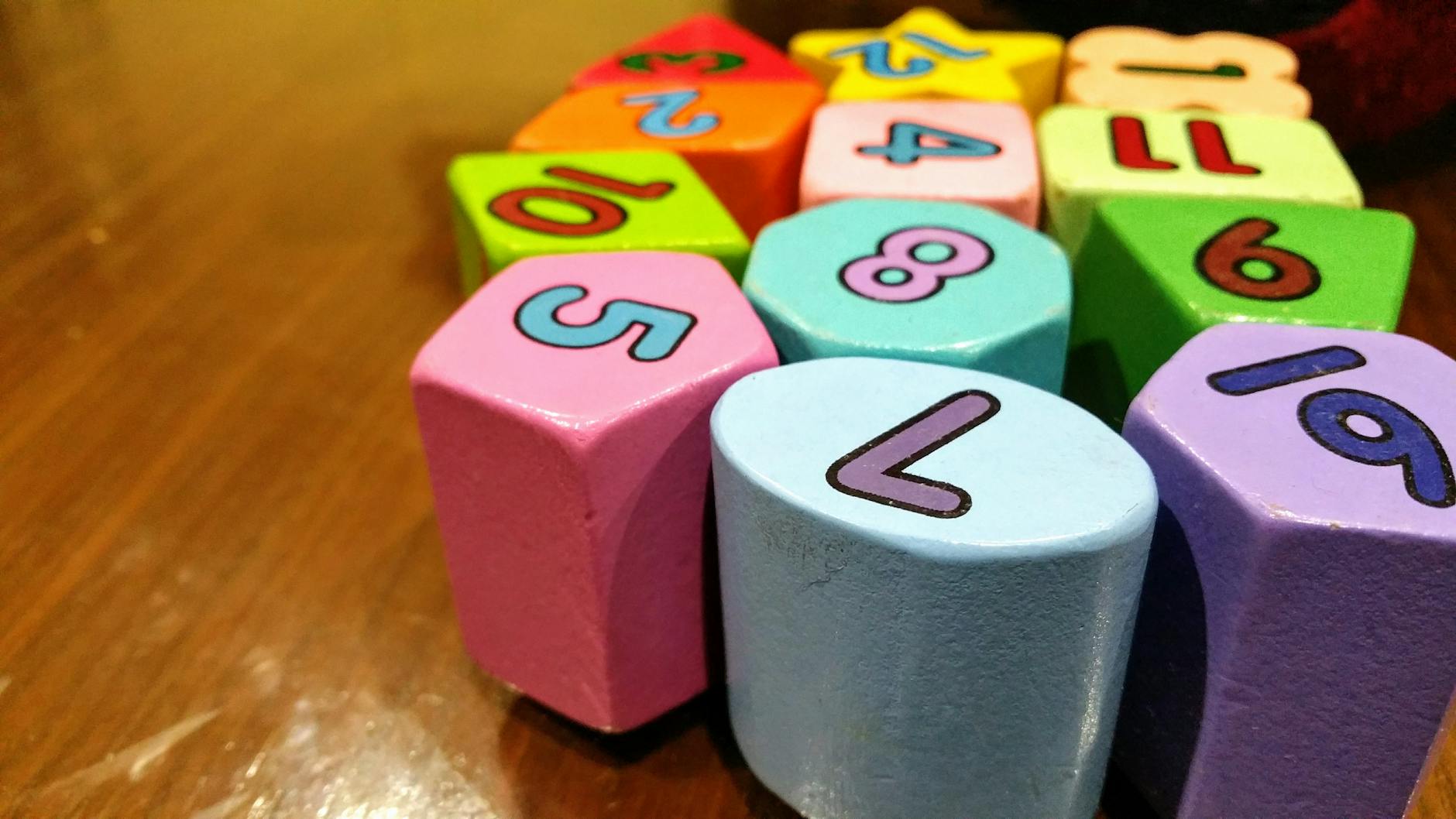
Pair this classic with numbers and counting activities for early learners for a complete approach. Mastery means your child demonstrates stable order counting to twelve and recognizes quantity without counting individual items, also called subitizing. Use it for morning time. This is the foundation of all future math logic development.
Character-Building Living Books for Morning Time
Morning Time anchors the Charlotte Mason education day. You gather your read-aloud family for 15 to 20 minutes before math and grammar. This communal reading targets character, not standards. It is also called Circle Time or Morning Basket.
Build a rotating book collection around the calendar. September brings empathy. October examines inclusion. November and December stretch into loyalty. This creates a rhythm students anticipate.
Select twaddle-free texts that demonstrate virtue through action. Reject books where the narrator preaches that sharing is good. Choose stories where characters suffer consequences for cowardice or reap rewards for courage.
Follow this script daily:
Read one chapter or the full picture book.
One student narrates the moral dilemma for two minutes.
Discuss for three minutes using specific prompts.
Move to math.
The Hundred Dresses by Eleanor Estes
This 1944 Newbery Honor book by Eleanor Estes follows Wanda Petronski, a Polish immigrant who wears the same faded blue dress daily to school. She tells classmates she owns one hundred beautiful dresses at home. The mockery intensifies until she simply stops attending, vanished without ceremony.
The themes cut deep for grades 2 through 5: the bystander effect, the isolation of immigration, and the invisibility of rural poverty. The book runs 80 pages, perfect for a two-week Morning Time block.
Focus your discussion on the deliberately ambiguous ending. Wanda has moved to the city. There is no scene where she accepts tearful apologies. Ask your students who actually learned the lesson. Ask what the class should have done Monday morning.
Each Kindness by Jacqueline Woodson
Jacqueline Woodson and illustrator E.B. Lewis created this 32-page picture book for grades K through 3. Chloe watches new student Maya enter with broken sandals and hand-me-down clothes. Chloe refuses to smile or play. One day Maya’s desk is empty, permanently, and Chloe realizes she wasted her chance for kindness.
The stone-in-water scene drives the moral home. The teacher drops a stone into a basin. The ripples spread outward. Bring a bowl of water and smooth stones to your Morning Time. Let each child drop one while naming a specific kind act they witnessed yesterday.
Discuss the final page where Chloe stands alone at the water. Ask what she will do differently when the next new student arrives. Ask who in your classroom might feel like Maya today. These are picture books that transform classroom libraries into spaces of conscience.
The Penderwicks by Jeanne Birdsall
The Penderwicks: A Summer Tale of Four Sisters, Two Rabbits, and a Very Interesting Boy launched the five-book series in 2005. This modern classic suits grades 3 through 6. It holds its own against Newbery Medal winners for characterization.
The four sisters model integrity, genuine apology, and standing up for siblings against unfair adults. Plan for a three-week read-aloud, covering roughly 12 pages per Morning Time session.
When Rosalind offers a genuine apology or Skye defends her sister against Mrs. Tifton, pause the narration method. Ask one student to summarize the integrity test. Then discuss: Was Skye right to shout? These living books let students judge moral complexity themselves.

Diverse Living Books for Modern Classrooms
Matt de la Peña, Jacqueline Woodson, and Kelly Yang write from experience. These #OwnVoices authors share their protagonists' cultural backgrounds, delivering authentic living books for Charlotte Mason education that avoid stereotypes. Last Stop drops you into an urban Latino neighborhood facing economic disparity. The Day You Begin centers a multicultural classroom with language barriers. Front Desk immerses you in Chinese immigrant motel life. Rotate these childhood books into your standard book collection year-round, not just during heritage months.
Last Stop on Market Street by Matt de la Peña
Matt de la Peña and Christian Robinson earned the 2016 Newbery Medal, Caldecott Honor, and Coretta Scott King Illustrator Honor for this picture book. CJ and his grandmother ride the bus through their diverse neighborhood to volunteer at a soup kitchen. The narration method addresses economic diversity subtly. Ask why Nana sees beauty where CJ sees lack. Grades K-3. 32 pages.
The Day You Begin by Jacqueline Woodson
Jacqueline Woodson and Rafael López capture the first day of school where children feel different. Angelina brings rice for lunch; Rigoberto speaks with an accent; skin tones vary. These details support culturally responsive teaching for K-12 educators. Add this twaddle-free text to your read-aloud family lineup during week one for SEL. Grades K-2. 32 pages.
Front Desk by Kelly Yang
Kelly Yang draws from her own childhood managing a California motel. Ten-year-old Mia Tang helps her parents clean rooms while navigating immigration issues and school. This Newbery Honor winner belongs in grades 4-7 book collections. Pre-read for racial slurs and realistic depictions of assault handled age-appropriately. 286 pages.

How to Source Living Books on a Teacher's Budget
Step 1: Build Your Core Collection Used
ThriftBooks stocks used paperbacks averaging $3.59, while Better World Books ships free on orders over $15. Search "Charlotte Mason," "Newbery," or "living books" to find twaddle-free titles. Building a 50-title classroom library costs approximately $180 used versus $750 new at retail.
Step 2: Preview Through Interlibrary Loan
Interlibrary Loan lets you test expensive picture books or out-of-print biographies before purchase. Most districts charge $0 to $2 per request. Install the Chrome extension Library Extension to check local library availability while browsing Amazon.
Step 3: Start a Co-Op
Form a lending circle with three to five read-aloud families, each contributing $50 to $75 annually to purchase 40 to 60 titles. Rotate the box quarterly among households.
Track loans with LibraryThing or the Book Buddy app.
Establish replacement cost agreements before handing over the bin.
Step 4: Mine Public Domain Archives
AmblesideOnline.org hosts curated lists of public domain books that support the narration method. You can also access these digital libraries offering free books for kids:
Project Gutenberg: Plain text only; illustrations often vanish.
Gateway to the Classics: Pre-1925 Newbery winners like The Story of Mankind.
Step 5: Verify Unabridged Editions
Avoid abridged anthologies when building your book collection. Many discount editions cut classics like Robinson Crusoe or Black Beauty, ruining the rhythm for read-aloud families. Check the copyright page for "unabridged" or "complete original text" before buying.

How Do You Transition From Textbooks to Living Books?
To transition from textbooks to living books, audit your current curriculum for encyclopedia-style passages and replace one content subject at a time, beginning with history or science while keeping traditional methods for skill subjects like math. Pick your student's strongest subject first to build confidence, replace multiple-choice tests with oral narration, and complete the shift over a 10-week period to avoid overwhelming the learner.
Phase 1: Audit and Pilot (Weeks 1–2)
Open your current textbook to any lesson. If the passage reads like an encyclopedia entry—dry facts, no narrative voice, no hook—it fails the twaddle test. Highlight these sections for replacement.
Choose only three pilot topics to avoid overwhelm:
One history unit, such as ancient civilizations or early American colonies.
One science block, like animal biology or astronomy.
One literature study using a novel or biography.
Look for authors who write with personality. If the text says "In 1492, Columbus sailed," that is twaddle. If it describes the creak of the ship and the sailors' fear, you have found a living book. Source twaddle-free alternatives from your library. This selective process mirrors choosing the best homeschool curriculum for your family—you prioritize engagement over coverage.
Phase 2: The Hybrid Model (Weeks 3–10)
Keep your traditional methods for skill subjects. These require explicit, systematic instruction:
Phonics and decoding.
Math computation and fact fluency.
Grammar and sentence structure.
Switch these content subjects to living books:
History and geography.
Science and nature study.
Your child reads The Story of the World instead of the textbook chapter on ancient Egypt. They absorb facts through narrative context rather than bullet points.
Never alternate textbook and living book chapters covering the same topic. This creates cognitive dissonance. The textbook trains the brain to memorize Nile River statistics while the living book asks for empathy with a character farming those banks. Mixing modes teaches students to skim stories for test answers, ruining both methods. Pick one lane per subject and stay in it.
Phase 3: Shift the Assessment (Weeks 11+)
Drop the quizzes. Charlotte Mason education uses the narration method to measure understanding:
Grades 1–4: Oral narration only. The student closes the book and tells you what they remember.
Grades 5+: Written narration. One or two paragraphs summarizing main ideas without looking back.
Oral narration requires patience. Do not prompt with questions. Simply say, "Tell me what you read." If they miss a key detail, resist correcting them. The act of sequencing events in their own mind matters more than perfect accuracy at first.
Use Notion book tracker and reading list templates to log titles and narration dates. This reveals which books sparked deep engagement and which ones flopped.
Know the Failure Modes
If standardized testing sits less than six weeks away, pause the transition. Living books build long-term retention through emotional connection, but they rarely align with the specific pacing and vocabulary of test prep materials. Return to your traditional text for test season, then resume.
Do not use independent living books for students with severe reading disabilities who require decodable text one hundred percent of the time. These readers need systematic phonics, not complex syntax. Make them part of a read-aloud family instead, so they absorb content through listening while their explicit intervention continues.
Also, avoid launching with the student's weakest subject. If a child hates science, do not begin there. Start with literature or history so they associate the new format with success.
The Reading Level Framework
Check your student’s percentile on recent standardized assessments:
Below 50th percentile: Use living books as read-alouds only. You read aloud, they listen and narrate. This builds vocabulary without decoding frustration.
50th to 75th percentile: Alternate read-aloud days with independent reading. Watch for fatigue like refusal to narrate or guessing at words. Drop back to read-alouds immediately if you see these red flags.
Above 75th percentile: Allow independent reading with discussion checks. Picture books work for all ages, but for independent reading, consider Newbery Medal winners that match your content goals.

Quick-Start Guide for Living Books
You do not need to rebuild your curriculum overnight. Swap one textbook chapter for a living book next Tuesday. Watch what happens when 4th graders narrate the journey of a raindrop and forget the worksheet on the water cycle. That shift—one book, one afternoon—is where the Charlotte Mason method actually starts.
Keep your standards high and your budget low. A twaddle-free library builds slowly. Scout thrift stores for out-of-print biographies, check Open Library for digital classics, and ask your librarian to pull every title by Jean Fritz or Russell Freedman. Your read-aloud family culture grows one compelling story at a time, not through wholesale replacement.
Resist the urge to quiz every chapter. Living books work because they build mental images, not test scores. Trust the narration method for a month. You will see retention spike in students who previously forgot the textbook content before the bell rang.
Audit next week's lessons. Pick one dry topic that makes you yawn.
Find a living book replacement using the lists above or a library catalog search.
Try the narration method: read for ten minutes, then have students tell it back.
Note which kids lean forward. Those students are your guides for next month's picks.

What Are the Best Living Books for History and Geography?
The best living books for history and geography include Susan Wise Bauer's 'The Story of the World' for ancient through modern history, Jean Lee Latham's 'Carry On, Mr. Bowditch' for maritime mathematics and navigation, and Holling C. Holling's 'Paddle-to-the-Sea' for Great Lakes geography. These narrative-driven texts replace dry facts with compelling stories that improve retention through emotional connection and character development.
Charlotte Mason called them "living books" for a reason. These aren't textbooks compiled by committees. They're stories written by authors who actually care about the subject, usually written well enough that you don't mind reading them aloud for the third time.
Living books present history and geography through narrative, not lists of facts. Charlotte Mason contrasted these with "twaddle"—dumbed-down writing that talks down to children or compiled textbooks written by committees without passion for the topic.
Title | Grade Range | Historical Period/Region | Key Academic Hook |
|---|---|---|---|
The Story of the World | 1-4 read-aloud/4-8 independent | Ancient-Modern World timeline | Narrative history |
Carry On, Mr. Bowditch | 5-8 | 1773 Massachusetts Maritime | Mathematical navigation |
Paddle-to-the-Sea | 2-6 | Great Lakes watershed geography | Cartography/mapping |
For Paddle-to-the-Sea, your students use blank Great Lakes outlines to trace the journey over ten class periods.
For Bowditch, they use protractors and strings to measure angles like a sextant.
Story of the World offers a four-volume progression with an Activity Book available for $20 to $25.
Skip these during the six-week crunch before standardized testing when scope-and-sequence alignment trumps narrative depth. They also fail for your students reading two or more years below grade level who need decodable readers for eighty percent of their diet.
The Story of the World by Susan Wise Bauer
This four-volume series runs from Ancient Times through the Middle Ages, Early Modern times, and the Modern Age, covering 5,000 BC to the present. Each chapter spans three to five pages and takes thirty to forty-five minutes to read aloud. The Activity Book costs $22.95 and holds coloring pages, review cards, and map work that turns listening into doing.
Use it with your first through fourth graders as a read-aloud family experience, or hand it to fourth through eighth graders for independent reading. The Lexile measures 800-900, so middle graders handle the vocabulary while younger ones follow the plot. I used Volume One with my third graders during our Ancient Egypt unit; they remembered the stories months later better than any textbook chapter.
The narrative weaves world events together without the fragmented feel of scope-and-sequence charts. You won't find assessment questions at the end. You ask for narration—the Charlotte Mason education method where children tell back what they heard. This shows you what actually stuck without resorting to twaddle-free worksheets that kill the love of childhood books and picture books.
The books work well alongside social studies tools that transform history classrooms, adding narrative depth to timeline activities.
Carry On, Mr. Bowditch by Jean Lee Latham
This 1956 Newbery Medal winner tells the story of Nathaniel Bowditch, a mathematician who taught himself navigation while indentured as a ship's clerk in Salem, Massachusetts. The book packs real mathematical content into a biographical narrative, showing how Bowditch calculated lunar distances and compiled mathematical tables called ephemerides. At 256 pages, it fits the upper elementary and middle school range perfectly for grades five through eight.
Your fifth through eighth graders can replicate Bowditch's work with protractors and strings to measure angles just as he did with a sextant aboard ship. This hands-on activity connects the abstract math on the page to physical geometry and practical navigation. The text doesn't shy away from equations and calculations, making it rare among childhood books that typically avoid numbers in favor of simpler plots.
Houghton Mifflin published this hardcover, and it holds up to multiple readings in your classroom library. The narrative demonstrates how mathematical precision saved lives at sea during the 1773 Massachusetts maritime period. Your students remember the mathematical navigation concepts because they come attached to a character fighting for his life against the Atlantic Ocean and winter storms.
Paddle-to-the-Sea by Holling C. Holling
This 1942 Caldecott Honor book follows a carved wooden canoe from Lake Superior through the Great Lakes to the Atlantic Ocean. The 64-page volume has full-spread illustrations that show geographic has like Lake Nipigon, Sault Ste. Marie, and Niagara Falls. It works for your second through sixth graders who need strong visual cues alongside the text and narration method discussions.
Over ten class periods, have your students trace the journey on blank Great Lakes outlines you print from any basic map site. They plot the twenty-plus locations mentioned in the text, learning the watershed geography through story and not dry memorization. The mapping activity builds spatial reasoning while the narrative keeps them engaged with the little canoe's adventures through storms and shipping locks.
The book demonstrates how cartography and mapping connect to real journeys across the Great Lakes watershed. Your children see how water flows from Lake Superior through the Soo Locks and over Niagara Falls to the Atlantic Ocean. This living books approach beats any worksheet asking them to label blank maps without narrative context or emotional investment in the geography they are studying.
You can pair it with social studies tools that transform history classrooms for a full regional study.
Which Living Books Make Science Come Alive?
The living books that make science come alive include Joanna Cole's 'The Magic School Bus' series for elementary inquiry-based learning, Cheryl Bardoe's 'Gregor Mendel' for upper elementary genetics, and William Kamkwamba's 'The Boy Who Harnessed the Wind' for middle school engineering. These texts embed scientific concepts within narrative frameworks, improving conceptual understanding through story-based context and primary source integration.
After reading, have students complete a scientific retelling. They explain the concept as if teaching a friend across the table. Research shows this beats worksheet review for retention. You will hear them articulate photosynthesis or genetics in their own words. This narration method cements understanding better than fill-in-the-blank drills.
Choose your text based on grade level and topic:
For K-2 inquiry, use Magic School Bus picture books ($6-8).
For grades 3-5 genetics, use Gregor Mendel ($12-17).
For grades 6-8 renewable energy, use The Boy Who Harnessed the Wind ($9-12).
Watch out for fake living books. Some biographies invent dialogue without sources. Verify the author used primary documents. Bardoe consulted the Abbott of Brno for Mendel's letters. Kamkwamba wrote his own story. Cole consulted science educators. Real Charlotte Mason education needs truth, not manufactured conversations.
You need proof the book worked:
After Gregor Mendel, students explain the 3:1 dominant-recessive ratio using pea plant examples.
After Kamkwamba, they diagram the windmill's three components: bicycle frame, pulley system, copper wire.
If they cannot, reread and narrate again.
The Magic School Bus Series by Joanna Cole
Stick with the original twelve classics from the 1990s by Cole and Degen. Each covers one science standard: geology in Inside the Earth, anatomy in Inside the Human Body. Best for the read-aloud family with kids in K-3, or grades 2-4 independent reading.
Check the margins for student reports that add depth for older siblings. These picture books run six to eight dollars. They satisfy the twaddle-free standard expected in Charlotte Mason education while delivering the narrative engagement of Newbery Medal winners.
Gregor Mendel: The Friar Who Grew Peas by Cheryl Bardoe
This forty-page book covers Mendel's eight-year experiment with twenty-eight thousand plants. Bardoe had it reviewed by the Abbott of Brno for accuracy. It shows the three-to-one ratio discovery through actual Abbey letters.
Use it for grades 3-5. Pair it with growing twenty to thirty pea plants in class. Students should explain that ratio using the book's examples. This demonstrates the roles and skills of a science teacher applied through primary sources.
The Boy Who Harnessed the Wind by William Kamkwamba
Choose between the thirty-two-page picture book (grades 2-4) and the two-hundred-eighty-eight-page young readers edition (grades 6-8). Both follow Kamkwamba building a windmill from bicycle parts and scrap metal to save his Malawi village.
The longer edition costs nine to twelve dollars. It shows the engineering process: identifying problems, researching, building prototypes. After reading, students should diagram the three components. Kamkwamba co-wrote it with Bryan Mealer, keeping it autobiographical and true.
Living Books for Math and Logic Development
Some teachers think living books can't build computational fluency. They're wrong. The best childhood books for math use narrative metaphor—dreams, medieval quests, wordless landscapes—to teach number sense as a supplement to procedural practice. While Newbery Medal winners often dominate classroom shelves, these titles serve a different but vital role in your curriculum.
Use them as 20-30 minute read-alouds two or three times weekly alongside Singapore Math, RightStart, or Math-U-See. These are not replacements for daily skill practice. They provide the narrative hook that makes abstract concepts stick when children reach the logic stage. Follow this developmental progression:
Level 1: Anno's Counting Book (preK-1) — concrete one-to-one correspondence.
Level 2: Sir Cumference (grades 2-5) — geometry formulas through story.
Level 3: The Number Devil (grades 5-8) — abstract concepts like infinity and Fibonacci.
Each level has specific mastery indicators. Watch for them as you read to ensure the learning transfers.
The Number Devil by Hans Magnus Enzensberger
Robert hates math until a creature in a red-tweed jacket appears in his dreams. This is the Number Devil, a cryptic figure who visits over twelve nights. He guides the boy through dreams that start with Roman numerals and end with the Golden Ratio and Fibonacci sequences. Originally published in German as Der Zahlenteufel, this 264-page novel targets grades 5-8 with zero twaddle.
The structure covers twelve dreams. You can read one chapter weekly as a supplement to your regular math program. Full-color illustrations throughout help visual learners grasp abstract concepts like infinity. The narration method works well here: ask your student to explain Robert's proof that infinity exists using the hotel example. The character dynamic drives the story.
Watch for mastery when your child starts spotting prime numbers in license plates or draws Pascal's triangle on notebook margins. After this Charlotte Mason education staple, abstract math stops being scary and starts being a puzzle they want to solve. This is grades 5-8 math done right.
Sir Cumference and the First Round Table by Cindy Neuschwander
King Arthur needs a table for his knights, but rectangular tables lead to fights about who sits at the head. Sir Cumference and his wife Lady Di of Ameter must solve this geometry problem quickly. Through the construction of a round table, your student discovers the relationship between radius, diameter, and circumference. This is book one of a ten-book series from Charlesbridge, and it remains the best entry point for grades 2-5.
The wordplay helps concepts stick in memory. Lady Di of Ameter measures across the diameter. Radius is half that distance, just like their son's name suggests. In thirty-two pages, Neuschwander derives the circumference formula through narrative tension, not drill. This is how picture books teach geometry without replacing your Math-U-See blocks or daily practice.
Look for mastery when your student can define radius, diameter, and circumference and explain pi using the table metaphor. These read-aloud family moments provide the conceptual framework that makes procedural practice meaningful for your logic development goals.
Anno's Counting Book by Mitsumasa Anno
This wordless picture book builds stable order counting without printing a single numeral on the page. Each spread is numbers zero through twelve through changing landscapes—village scenes, fields, seasons, and skies. Your preK-1 student must find the specific quantity of objects that match the number: three buildings, three trees, three children playing in the snow.
Mitsumasa Anno's signature style uses watercolor landscapes that shift from season to season as the numbers grow. The book needs one-to-one correspondence as children scan each detailed spread to find hidden objects. At thirty-two pages, it works perfectly for short attention spans and twaddle-free Charlotte Mason education moments.
Pair this classic with numbers and counting activities for early learners for a complete approach. Mastery means your child demonstrates stable order counting to twelve and recognizes quantity without counting individual items, also called subitizing. Use it for morning time. This is the foundation of all future math logic development.
Character-Building Living Books for Morning Time
Morning Time anchors the Charlotte Mason education day. You gather your read-aloud family for 15 to 20 minutes before math and grammar. This communal reading targets character, not standards. It is also called Circle Time or Morning Basket.
Build a rotating book collection around the calendar. September brings empathy. October examines inclusion. November and December stretch into loyalty. This creates a rhythm students anticipate.
Select twaddle-free texts that demonstrate virtue through action. Reject books where the narrator preaches that sharing is good. Choose stories where characters suffer consequences for cowardice or reap rewards for courage.
Follow this script daily:
Read one chapter or the full picture book.
One student narrates the moral dilemma for two minutes.
Discuss for three minutes using specific prompts.
Move to math.
The Hundred Dresses by Eleanor Estes
This 1944 Newbery Honor book by Eleanor Estes follows Wanda Petronski, a Polish immigrant who wears the same faded blue dress daily to school. She tells classmates she owns one hundred beautiful dresses at home. The mockery intensifies until she simply stops attending, vanished without ceremony.
The themes cut deep for grades 2 through 5: the bystander effect, the isolation of immigration, and the invisibility of rural poverty. The book runs 80 pages, perfect for a two-week Morning Time block.
Focus your discussion on the deliberately ambiguous ending. Wanda has moved to the city. There is no scene where she accepts tearful apologies. Ask your students who actually learned the lesson. Ask what the class should have done Monday morning.
Each Kindness by Jacqueline Woodson
Jacqueline Woodson and illustrator E.B. Lewis created this 32-page picture book for grades K through 3. Chloe watches new student Maya enter with broken sandals and hand-me-down clothes. Chloe refuses to smile or play. One day Maya’s desk is empty, permanently, and Chloe realizes she wasted her chance for kindness.
The stone-in-water scene drives the moral home. The teacher drops a stone into a basin. The ripples spread outward. Bring a bowl of water and smooth stones to your Morning Time. Let each child drop one while naming a specific kind act they witnessed yesterday.
Discuss the final page where Chloe stands alone at the water. Ask what she will do differently when the next new student arrives. Ask who in your classroom might feel like Maya today. These are picture books that transform classroom libraries into spaces of conscience.
The Penderwicks by Jeanne Birdsall
The Penderwicks: A Summer Tale of Four Sisters, Two Rabbits, and a Very Interesting Boy launched the five-book series in 2005. This modern classic suits grades 3 through 6. It holds its own against Newbery Medal winners for characterization.
The four sisters model integrity, genuine apology, and standing up for siblings against unfair adults. Plan for a three-week read-aloud, covering roughly 12 pages per Morning Time session.
When Rosalind offers a genuine apology or Skye defends her sister against Mrs. Tifton, pause the narration method. Ask one student to summarize the integrity test. Then discuss: Was Skye right to shout? These living books let students judge moral complexity themselves.
Diverse Living Books for Modern Classrooms
Matt de la Peña, Jacqueline Woodson, and Kelly Yang write from experience. These #OwnVoices authors share their protagonists' cultural backgrounds, delivering authentic living books for Charlotte Mason education that avoid stereotypes. Last Stop drops you into an urban Latino neighborhood facing economic disparity. The Day You Begin centers a multicultural classroom with language barriers. Front Desk immerses you in Chinese immigrant motel life. Rotate these childhood books into your standard book collection year-round, not just during heritage months.
Last Stop on Market Street by Matt de la Peña
Matt de la Peña and Christian Robinson earned the 2016 Newbery Medal, Caldecott Honor, and Coretta Scott King Illustrator Honor for this picture book. CJ and his grandmother ride the bus through their diverse neighborhood to volunteer at a soup kitchen. The narration method addresses economic diversity subtly. Ask why Nana sees beauty where CJ sees lack. Grades K-3. 32 pages.
The Day You Begin by Jacqueline Woodson
Jacqueline Woodson and Rafael López capture the first day of school where children feel different. Angelina brings rice for lunch; Rigoberto speaks with an accent; skin tones vary. These details support culturally responsive teaching for K-12 educators. Add this twaddle-free text to your read-aloud family lineup during week one for SEL. Grades K-2. 32 pages.
Front Desk by Kelly Yang
Kelly Yang draws from her own childhood managing a California motel. Ten-year-old Mia Tang helps her parents clean rooms while navigating immigration issues and school. This Newbery Honor winner belongs in grades 4-7 book collections. Pre-read for racial slurs and realistic depictions of assault handled age-appropriately. 286 pages.
How to Source Living Books on a Teacher's Budget
Step 1: Build Your Core Collection Used
ThriftBooks stocks used paperbacks averaging $3.59, while Better World Books ships free on orders over $15. Search "Charlotte Mason," "Newbery," or "living books" to find twaddle-free titles. Building a 50-title classroom library costs approximately $180 used versus $750 new at retail.
Step 2: Preview Through Interlibrary Loan
Interlibrary Loan lets you test expensive picture books or out-of-print biographies before purchase. Most districts charge $0 to $2 per request. Install the Chrome extension Library Extension to check local library availability while browsing Amazon.
Step 3: Start a Co-Op
Form a lending circle with three to five read-aloud families, each contributing $50 to $75 annually to purchase 40 to 60 titles. Rotate the box quarterly among households.
Track loans with LibraryThing or the Book Buddy app.
Establish replacement cost agreements before handing over the bin.
Step 4: Mine Public Domain Archives
AmblesideOnline.org hosts curated lists of public domain books that support the narration method. You can also access these digital libraries offering free books for kids:
Project Gutenberg: Plain text only; illustrations often vanish.
Gateway to the Classics: Pre-1925 Newbery winners like The Story of Mankind.
Step 5: Verify Unabridged Editions
Avoid abridged anthologies when building your book collection. Many discount editions cut classics like Robinson Crusoe or Black Beauty, ruining the rhythm for read-aloud families. Check the copyright page for "unabridged" or "complete original text" before buying.
How Do You Transition From Textbooks to Living Books?
To transition from textbooks to living books, audit your current curriculum for encyclopedia-style passages and replace one content subject at a time, beginning with history or science while keeping traditional methods for skill subjects like math. Pick your student's strongest subject first to build confidence, replace multiple-choice tests with oral narration, and complete the shift over a 10-week period to avoid overwhelming the learner.
Phase 1: Audit and Pilot (Weeks 1–2)
Open your current textbook to any lesson. If the passage reads like an encyclopedia entry—dry facts, no narrative voice, no hook—it fails the twaddle test. Highlight these sections for replacement.
Choose only three pilot topics to avoid overwhelm:
One history unit, such as ancient civilizations or early American colonies.
One science block, like animal biology or astronomy.
One literature study using a novel or biography.
Look for authors who write with personality. If the text says "In 1492, Columbus sailed," that is twaddle. If it describes the creak of the ship and the sailors' fear, you have found a living book. Source twaddle-free alternatives from your library. This selective process mirrors choosing the best homeschool curriculum for your family—you prioritize engagement over coverage.
Phase 2: The Hybrid Model (Weeks 3–10)
Keep your traditional methods for skill subjects. These require explicit, systematic instruction:
Phonics and decoding.
Math computation and fact fluency.
Grammar and sentence structure.
Switch these content subjects to living books:
History and geography.
Science and nature study.
Your child reads The Story of the World instead of the textbook chapter on ancient Egypt. They absorb facts through narrative context rather than bullet points.
Never alternate textbook and living book chapters covering the same topic. This creates cognitive dissonance. The textbook trains the brain to memorize Nile River statistics while the living book asks for empathy with a character farming those banks. Mixing modes teaches students to skim stories for test answers, ruining both methods. Pick one lane per subject and stay in it.
Phase 3: Shift the Assessment (Weeks 11+)
Drop the quizzes. Charlotte Mason education uses the narration method to measure understanding:
Grades 1–4: Oral narration only. The student closes the book and tells you what they remember.
Grades 5+: Written narration. One or two paragraphs summarizing main ideas without looking back.
Oral narration requires patience. Do not prompt with questions. Simply say, "Tell me what you read." If they miss a key detail, resist correcting them. The act of sequencing events in their own mind matters more than perfect accuracy at first.
Use Notion book tracker and reading list templates to log titles and narration dates. This reveals which books sparked deep engagement and which ones flopped.
Know the Failure Modes
If standardized testing sits less than six weeks away, pause the transition. Living books build long-term retention through emotional connection, but they rarely align with the specific pacing and vocabulary of test prep materials. Return to your traditional text for test season, then resume.
Do not use independent living books for students with severe reading disabilities who require decodable text one hundred percent of the time. These readers need systematic phonics, not complex syntax. Make them part of a read-aloud family instead, so they absorb content through listening while their explicit intervention continues.
Also, avoid launching with the student's weakest subject. If a child hates science, do not begin there. Start with literature or history so they associate the new format with success.
The Reading Level Framework
Check your student’s percentile on recent standardized assessments:
Below 50th percentile: Use living books as read-alouds only. You read aloud, they listen and narrate. This builds vocabulary without decoding frustration.
50th to 75th percentile: Alternate read-aloud days with independent reading. Watch for fatigue like refusal to narrate or guessing at words. Drop back to read-alouds immediately if you see these red flags.
Above 75th percentile: Allow independent reading with discussion checks. Picture books work for all ages, but for independent reading, consider Newbery Medal winners that match your content goals.
Quick-Start Guide for Living Books
You do not need to rebuild your curriculum overnight. Swap one textbook chapter for a living book next Tuesday. Watch what happens when 4th graders narrate the journey of a raindrop and forget the worksheet on the water cycle. That shift—one book, one afternoon—is where the Charlotte Mason method actually starts.
Keep your standards high and your budget low. A twaddle-free library builds slowly. Scout thrift stores for out-of-print biographies, check Open Library for digital classics, and ask your librarian to pull every title by Jean Fritz or Russell Freedman. Your read-aloud family culture grows one compelling story at a time, not through wholesale replacement.
Resist the urge to quiz every chapter. Living books work because they build mental images, not test scores. Trust the narration method for a month. You will see retention spike in students who previously forgot the textbook content before the bell rang.
Audit next week's lessons. Pick one dry topic that makes you yawn.
Find a living book replacement using the lists above or a library catalog search.
Try the narration method: read for ten minutes, then have students tell it back.
Note which kids lean forward. Those students are your guides for next month's picks.
Still grading everything by hand?
EMStudio is a free teaching management app — manage your classes, students, lessons, and more!
Learn More
Still grading everything by hand?
EMStudio is a free teaching management app — manage your classes, students, lessons, and more!
Learn More


Notion4Teachers
Notion templates to simplify administrative tasks and enhance your teaching experience.



2026 Notion4Teachers. All Rights Reserved.
Notion4Teachers
Notion templates to simplify administrative tasks and enhance your teaching experience.
2026 Notion4Teachers. All Rights Reserved.
Notion4Teachers
Notion templates to simplify administrative tasks and enhance your teaching experience.
2026 Notion4Teachers. All Rights Reserved.