15 Activities for Middle Schoolers That Boost Engagement
15 Activities for Middle Schoolers That Boost Engagement

Article by
Milo
ESL Content Coordinator & Educator
ESL Content Coordinator & Educator
All Posts
What actually works with sixth, seventh, and eighth graders when the textbook just stops working? The best activities for middle schoolers tap into how tweens think and move—not just what standards say they should learn. After fifteen years in the trenches, I can tell you that critical thinking games, movement breaks, and genuine peer instruction beat worksheets every single time. These kids aren't built to sit still and fill in blanks.
This post covers the specific strategies that actually stick: kinesthetic learning tasks that burn energy without classroom chaos, collaborative projects that build real-world skills, and tech integrations that don't feel like digital busywork. You'll also get low-prep transitions and bell ringers that save your sanity during those rough five-minute gaps between lessons.
Still grading everything by hand?
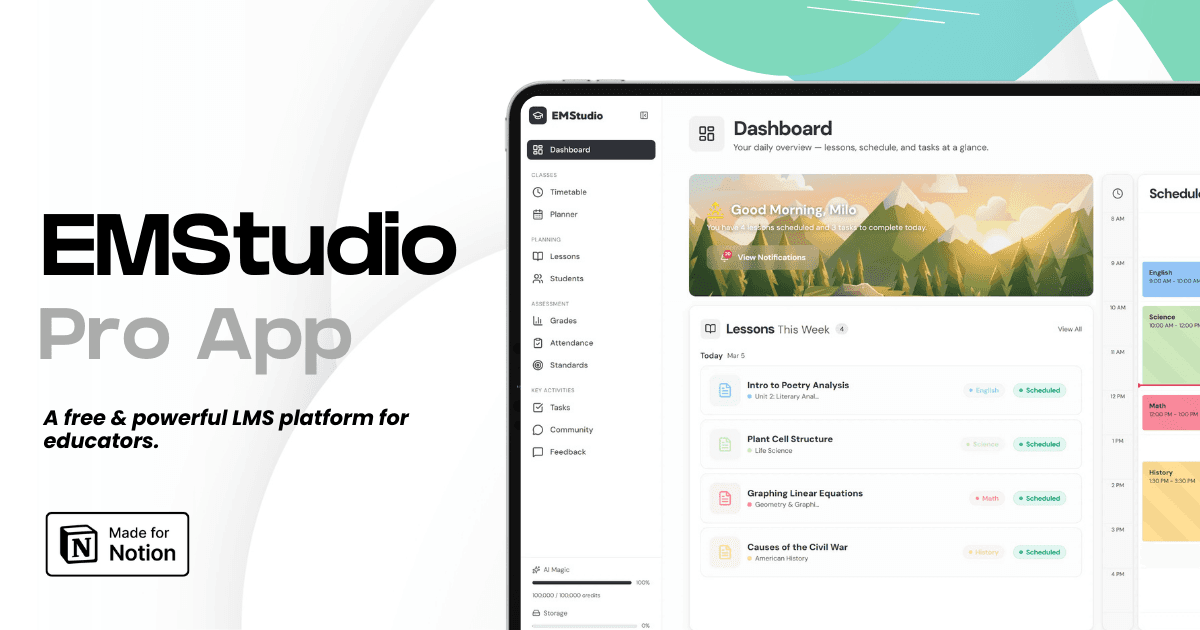
EMStudio is a free teaching management app — manage your classes, students, lessons, and more!
Learn More
Still grading everything by hand?
EMStudio is a free teaching management app — manage your classes, students, lessons, and more!
Learn More
Table of Contents
What Are the Best Critical Thinking Activities for Middle Schoolers?
The best critical thinking activities for middle schoolers include logic puzzle stations using GridWorks or KenKen for abstract reasoning, Socratic seminar circles employing the fishbowl protocol with 80% student talk time, and evidence-based argument games using the CER framework. These develop analytical skills while accommodating formal operational stage thinking.
Skip the worksheets. Real thinking starts when kids argue with evidence.
Unlike activities for 3rd graders that require counting bears or fraction tiles, middle schoolers have reached the formal operational stage. They manipulate abstract concepts mentally. My 7th graders solve 5x5 KenKen puzzles without visual aids, while younger students need concrete manipulatives for similar logic. This cognitive shift needs we drop the scaffolding and raise the complexity in our differentiated instruction.
For deep classroom engagement, I structure Socratic Seminar using the Fishbowl protocol. Six students form the inner circle discussing while the outer ring tracks participation on our 'Socratic Tracker' Google Form. I facilitate only 20% of the time—Hattie's research shows classroom discussion hits an effect size of 0.82 when teachers step back. Last February, my 7th period debated dystopian governments for twelve minutes straight while I stayed silent. This approach to facilitating Socratic Seminar circles puts the cognitive load on students.
When teaching students to effectively use evidence to back up arguments, I use the CER framework (Claim-Evidence-Reasoning) with physical card sorts. Teams sort 12 mixed cards into relevant, irrelevant, and partially relevant piles for three competing claims. They justify each sort using sentence starters like "This supports X because..." Each round lasts 15-20 minutes and builds the analytical muscles needed for essay writing.
Logic Puzzle Stations — Difficulty: Intermediate | Prep: 20 minutes
Socratic Seminar Circles — Difficulty: Advanced | Prep: 30 minutes
Evidence-Based Argument Games — Difficulty: Beginner to Intermediate | Prep: 15 minutes
Logic Puzzle Stations for Problem Solving
Set up four stations: Nonograms using 10x10 grids, logic grid puzzles adapted from Einstein's Riddle, Sudoku scaling from 6x6 for scaffolding up to standard 9x9, and visual spatial challenges like tangram paradoxes. I laminate answer keys for each station and stock tables with dry erase markers. Kids check their own work immediately, which builds autonomy and supports adolescent development through self-regulation.
Groups of three to four students rotate every eight minutes. I use 30-second music transition cues to keep us on pace without me playing traffic cop. The full rotation takes 35 minutes including a five-minute debrief where each group shares one specific breakthrough moment. This rhythm keeps energy high while targeting abstract reasoning skills.
Socratic Seminar Circles for Deep Discussion
Before we begin, students annotate the text using the 'Notice-Wonder-Question' protocol. The inner circle of six to eight students discusses for twelve minutes while the outer circle logs contributions on the tracker—categorizing each comment as a question, evidence, connection, or challenge. This generates real-time formative assessment data showing who is pushing thinking forward.
After the discussion, everyone completes a three-minute written reflection using the exit ticket prompt "One thing I changed my mind about..." It reveals metacognitive growth better than any multiple-choice quiz. The key is maintaining that 80/20 student-to-teacher talk ratio to maximize peer instruction and respect their capacity for independent thought.
Evidence-Based Argument Games
The 'Evidence Sort' method gets kids moving. Teams race to categorize 12 cards into relevant, irrelevant, and partially relevant piles for three different claims, then justify their selections in ten minutes using academic language frames. This incorporates kinesthetic learning into analytical work, which helps my squirrely 6th period focus.
For digital practice, I use iCivics 'Argument Wars' or Kialo-Edu for argument mapping with grades 7-8. For grade 6, I provide claim options rather than asking them to construct arguments from scratch. Each round runs 10-15 minutes, perfect for middle school attention spans. The physical card sort remains my favorite for diagnosing who truly understands evidence versus who is just guessing.
Which Movement-Based Activities Work Best for This Age Group?
Movement-based activities effective for middle schoolers include gallery walks with post-it annotation protocols, four corners debates using philosophical dilemmas with convince-your-neighbor rounds, and standing sorting challenges where students arrange themselves on continuums or human bar graphs. These leverage kinesthetic learning while respecting adolescent attention spans of 10-15 minutes.
Kids this age aren't wired to sit for fifty minutes straight. I've watched eighth graders glaze over after twelve minutes of passive listening. Strategic movement resets their brains without turning your room into a playground for activities for 2nd graders. The shift is enough.
Unlike activities for 2nd graders that require constant motion to maintain focus, activities for middle schoolers need structured shifts every ten to fifteen minutes. Adolescent development research shows their sustained attention peaks briefly then crashes. We aren't managing wiggles; we're preventing cognitive shutdown with purpose. Strategic movement supports differentiated instruction without chaos.
Protocol | Setup | Space | Noise |
|---|---|---|---|
Gallery Walks | 10 min | Perimeter walls | Low murmur |
Four Corners | 2 min | Open corners | Medium debate |
Standing Sorts | 5 min | Floor space | Variable |
Select based on your objective. Gallery walks suit text analysis, Four Corners work for ethical debates, and Standing Sorts map data or opinions. Match the movement to the mental work.
Skip movement-based active learning strategies during:
Formal assessments requiring sustained individual focus
Classrooms under 300 square feet—thirty bodies need navigation room
Groups exceeding thirty-two students without hallway extensions
I tried a four corners debate with thirty-four students last year. We spent more time untangling backpacks than discussing the content.
Gallery Walks for Text Analysis
Post six to eight anchor charts around your perimeter. Students travel in pairs with a three-column recording sheet labeled Observation, Question, and Connection. I use the Two Stars and a Wish protocol: each visitor places two green sticky notes with specific compliments and one yellow note with a probing question per station.
Limit each stop to three minutes—any longer and eighth graders start checking phones or drawing on the charts. This works best for ELA primary source analysis or Science phenomenon observation. You'll need chart paper and multicolored sticky notes. The walking becomes a formative assessment—I can see who lingers over evidence and who rushes through. The post-it conversations continue even after students sit down, extending the learning. The movement sparks thinking.
Four Corners Opinion Debates
Label corners: Strongly Agree, Agree, Disagree, Strongly Disagree. Present a philosophical dilemma tied to your curriculum—like whether the American Revolution was justified or if the character was truly evil. Students move while holding evidence cards, discuss with corner-mates for four minutes, then execute Convince Your Neighbor for two minutes of active persuasion.
Establish safety rules: no blocking paths between corners. Require written evidence before allowing movement. During debrief, ask students who switched corners to explain their reasoning change. This builds peer instruction skills while keeping classroom engagement high. The physical commitment to an opinion makes the thinking stick better than silent hand-raising. They own the shift.
Standing Sorting Challenges
Create continuum lines marked Agree to Disagree or categorical sorts on your floor. Students physically stand at positions representing their answers. I use Human Bar Graphs for math data analysis or Value Lines for historical perspectives, marking zero as Monarchy and ten as Democracy.
Alternatively, try the Inner/Outer Circle format for speed-dating beliefs about literary characters or scientific hypotheses. The physical arrangement provides immediate visual data about class consensus and outliers. Students remember where they stood—literally—when recalling the lesson later. It turns abstract opinions into physical coordinates they can see and discuss. It works because kinesthetic learning creates muscle memory for abstract concepts.
Collaborative Projects That Build Real-World Skills
The best activities for middle schoolers don't just fill time. They force students to talk, negotiate, and teach. I've watched quiet kids explain photosynthesis to a peer and suddenly grasp it themselves. That's the power of collaborative learning methods that drive results. When we shift from lecture to structured peer instruction, classroom engagement jumps immediately.
Peer Teaching Rotation Stations
I run the Jigsaw method when my unit splits into four chunks. Students spend 20 minutes in "expert groups" mastering one segment using resource packets. Then they rotate through home groups for 25 minutes total. Each expert gets six minutes to teach their chunk using the Teach-Check-Practice protocol. Research shows peer tutoring strategies carry an effect size between 0.55 and 0.82.
The structure only works with tight timekeeping. I project a timer. Experts carry a single-page guide, not a script. This builds differentiated instruction organically—stronger students dig deeper while struggling students get multiple explanations.
For formative assessment, I use a peer teaching rubric:
Accuracy counts for 40%.
Clarity counts for 30%.
Engagement counts for 30%.
Before rotating, experts check understanding using the 3-2-1 method: three facts, two connections, one question. If the question is blank, the expert hasn't probed deeply enough.
Cross-Classroom Collaboration Projects
Last spring, my eighth graders partnered with a second-grade class for "Science Mentor." My students studied elementary benchmarks to understand adolescent development differences, then designed a fossil dig activity for the younger kids. They had to break down complex concepts without dumbing them down. That's metacognitive awareness in action.
We scheduled three 30-minute sessions. Before the first visit, my students completed "Learner Profile" sheets analyzing what seven-year-olds can handle. They created a worksheet for prep class with picture clues and single-sentence instructions. The design process forced them to clarify their own understanding of sedimentary layers.
Logistics matter. We aligned schedules three weeks out. My students practiced explanations on each other first. When the second graders arrived, my middle schoolers weren't performing. They were facilitating project-based learning for real-world impact.
Community Interview Assignments
The Oral History Project sends students into the community using Voice Memos or Otter.ai for transcription. Each student conducts 15-minute interviews with two or three adults about career pathways or local history. Safety comes first:
Meet in public spaces like the library lobby.
Virtual interviews require the teacher CC'd on all correspondence.
Preparation prevents disaster. Students draft an Interview Protocol with five open-ended questions. I ban yes/no questions entirely. "What did your first job teach you?" works better than "Did you like your first job?"
Deliverables offer choice:
3-5 minute podcast episodes using the Anchor platform.
Narrative essays with three cited quotes in APA format.
Everyone submits signed consent forms before publication. These moments stick. Three years later, students still mention "that lady who told me about nursing school."

Tech-Integrated Activities for Digital Engagement
We need to stop treating middle school tech time like nursery class worksheets moved to a screen. Those drag-and-drop recognition tasks work for five-year-olds, but they kill classroom engagement in adolescence. Real activities for middle schoolers should have kids creating podcasts, curating digital collections, and filming evidence. Higher-order thinking beats passive consumption every time.
Here is the cost reality:
GooseChase EDU: Free tier caps at 5 teams. Kids use phones or shared devices.
Soundtrap for Education: Freemium model. You want 1:1 Chromebooks for cloud collaboration.
Google Arts & Culture: Completely free. Runs on shared classroom devices or rotated stations.
Plan for the wifi to fail. Differentiated instruction means having paper alternatives ready for students without home devices or during platform outages. If the app crashes, the learning continues. I keep printed scavenger hunt lists and script templates in a folder labeled "Digital Doomsday."
Interactive Digital Scavenger Hunts
GooseChase EDU gives you 5 teams on the free tier. ActionBound offers 3 free bounds monthly. Missions mix photo evidence—like finding geometric shapes in architecture—with GPS check-ins, text answers, and video performances. Last October, my 7th graders argued about obtuse angles while photographing doorframes in the hallway. That is kinesthetic learning disguised as chaos.
Setup takes 45 minutes initially, then 10 minutes to clone for reuse. I run these during review weeks or actual field trips. Build mixed-ability teams of four so no one sits out. The app tracks completion for instant formative assessment. You see exactly who found the right answer versus who just followed the loudest kid.
Require proof, not just answers. A photo of a right angle in a stairwell beats a typed sentence every time. This keeps them moving and builds observational skills that transfer to science and art.
Student-Created Podcast Projects
Soundtrap for Education runs on a freemium model, but Anchor gives unlimited free hosting with simpler tools. Purists use Audacity. Cap episodes at 5 minutes. Structure them with intro music from Incompetech, three tight content segments, and a brief outro. This respects adolescent development—their attention spans are growing but not infinite.
Grade with a clear rubric: audio quality (25%), content accuracy (50%), organization (25%). Ban reading from full scripts. Students get bullet-point notes only. This forces natural voice and authentic differentiated instruction. Strong writers draft the research, strong speakers improvise the delivery, and both skills earn credit. I have kids submit their outline as a checkpoint before recording.
Host a listening party. The class votes on best hook and most surprising fact. It takes one class period and builds community while practicing active listening.
Virtual Museum Curation Tasks
Skip the passive virtual field trip. Have students curate using Google Arts & Culture or Padlet. They select five artifacts representing a theme like the Industrial Revolution, write 50-word placards, and arrange a logical exhibition flow. These immersive virtual museum curation tasks demand analysis, not just observation.
Run peer instruction using the See-Think-Wonder protocol. Classmates view each gallery and post feedback: What do you see? What do you think? What does it make you wonder? For extension, have them record a 2-minute audio tour script defending why one artifact matters most. It hits writing standards while letting them argue historical interpretation.
Google Arts & Culture is free and runs on shared devices. No VR headsets needed. Just rotate groups through a few Chromebooks. The constraint forces focused discussion while they wait for their turn.

Low-Prep Transitions and Bell Ringers
Middle schoolers hit different. Unlike a worksheet for pre nursery class where kids trace letters and match shapes, activities for middle schoolers need to wake up adolescent brains fast. No paper passing. No "find your pencil" delays.
I learned this the hard way in my 8th grade ELA class. I'd spend five minutes distributing warm-up handouts while kids threw paper airplanes. Now I run a "Choose Your Starter" menu projected on the screen when they walk in:
Four minutes of thinking.
One minute to transition.
Zero worksheets.
Research backs this up. Formative assessment at the bell-ringer stage improves retention because you catch misconceptions before you teach the big idea, not after.
Three-Word Summary Challenges
Project an image, equation, or text excerpt on the board. Students grab a mini whiteboard or open a Padlet link and write exactly three words that capture the core concept. No sentences. No articles. Just the guts. "Light, Chlorophyll, Glucose" for photosynthesis. "Friction, Heat, Slow" for physics. The constraint forces precision and eliminates the fluff that fills five-sentence summaries.
Try the "Add One Word" variation for peer instruction. Student A posts three words. Student B must add a fourth word that deepens the meaning without repeating any previous terms. They continue building collaborative definitions for three minutes. I use this for kinesthetic learning—kids physically circulate to read whiteboards posted on the walls, moving in the classroom engagement sweet spot that accounts for adolescent development and their need to wiggle.
The time limit matters. Four minutes of writing, one minute to settle. If a student cannot distill the concept to three words, they do not own it yet. That is your formative assessment data before you invest twenty minutes in a lecture they are not ready to receive.
Visual Thinking Routine Prompts
Harvard's Project Zero visual thinking routine prompts train students to observe carefully before jumping to conclusions. Project a compelling image for 60 seconds. Students complete three stems: "I see..." (literal observation), "I think..." (inference), and "I wonder..." (inquiry question). No complete paragraphs required. Bullet points work.
For math or science classrooms, swap the routine for "Claim-Support-Question." Display a data chart, headline, or experimental photo. What claim can you make? What evidence supports it? What question does this raise? Total time: four minutes. This protocol supports adolescent development by creating low-stakes entry points—there is no wrong answer in the "wonder" column, which lowers the affective filter for anxious kids.
I maintain a slide deck of provocative images: abandoned amusement parks, microscopic insect eyes, civil rights protest photos from the 1960s. Monday gets the image. Tuesday gets the analysis. By October, they walk in and automatically reach for their journals without me saying a word.
Current Event Connection Quick Writes
Pull from CNN10 or Newsela, which offers Lexile-differentiated articles. The prompt is simple: "How does [current event] connect to [yesterday's lesson]?" Students write for three minutes, then share with a partner for two. This creates immediate classroom engagement because the content is fresh and relevant to their world outside the building.
Provide sentence frames for ELL students or struggling writers: "This relates to... because..." or "This is similar to... when..." That is differentiated instruction embedded in the starter, not an afterthought. You can collect these as exit tickets for a quick formative assessment check, or run a "Whip Around" where each student contributes one word from their response. No repeats allowed. By the time you reach the fifteenth student, they are digging deep to find a unique connection.
The prep is nearly zero. The news already happened. You just ask the question. I keep a browser tab open to CNN10 every morning. Some days I choose the story; some days I let the first kid in the door pick. Either way, we are writing within 90 seconds of the bell.

How to Adapt Activities for Mixed-Ability Classrooms?
Adapt activities for mixed-ability middle school classrooms by administering diagnostic exit tickets to form flexible groups, offering tiered task cards with neutral codes like shapes never colors, and using hollow square seating arrangements. Avoid permanent ability grouping. Ensure all tiers address identical learning objectives through varied complexity pathways.
I run a five-item diagnostic exit ticket every Friday. It takes ten minutes to sort responses. Kids scoring 0-2 get circle cards the following week, 3-4 get squares, perfect scores get triangles. I regroup every fourteen days. Never longer than three weeks. Permanent tracking kills motivation. This formative assessment routine takes one planning period to set up, but saves hours of guessing.
Colors failed me. I tried red-yellow-green cards my first year teaching seventh grade. Kids called them the "dumb red pile" by October. Now I use circles, squares, and triangles. Neutral shapes carry no stigma. This is differentiated instruction that respects kids.
Level one circles include word banks and sentence frames.
Level two squares hit grade level text complexity.
Level three triangles drop guardrails for open inquiry.
Same standard, three entry points.
I arrange desks in a hollow square for concept introduction. Heterogeneous grouping here is key. Everyone faces center. Struggling kids hear peer instruction from stronger classmates during whole-group discussion. The setup forces eye contact. Then we break into station rotations for skill remediation. Homogeneous groups here let me target specific gaps without shame. Kids move every fifteen minutes.
Never lock kids into ability-based seats for the semester. I tried that once in my second year teaching seventh grade. By December, my "low" group had stopped raising hands. Research confirms permanent tracking widens achievement gaps. Flexible groups rotate every two to three weeks. Kids need the chance to grow into new circles and reset.
Last March, my seventh graders analyzed theme in "The Lottery." The hollow square meant Jamal could overhear Maria's comment about tradition. During rotations, my circle group used a visual map with quotes provided. My triangle group debated authorial intent orally. Everyone tracked the same learning objective. The classroom engagement surprised me. No one knew the tiers.
Alignment matters more than the activity itself. All three tiers must target identical objectives. If the standard needs analyzing theme, everyone analyzes theme. The difference is complexity and product format.
Essays for some, visual maps for others, oral presentations for the rest. Same rigor, different pathways and formats. differential teaching strategies for mixed-ability classrooms work only when the learning objective stays constant across all levels.
This approach respects adolescent development. Middle schoolers crave movement and kinesthetic learning. Station rotations get them walking every fifteen minutes. The hollow square invites cross-talk without chaos.
Activities for middle schoolers fail when kids feel boxed into permanent labels. Flexible grouping protects their psychological need to belong while pushing real academic growth through varied complexity, genuine choice, and multiple ways to show mastery.

Planning Your First Week of Implementation
Start with activities for middle schoolers that require zero new content knowledge. I open with Three-Word Summary and Four Corners during the first two days. This builds your comprehensive classroom management plan without cognitive overload. Students practice expectations while reviewing last year's concepts. No one learns anything complex. They simply learn how to move, speak, and transition in your room.
On Day 3, introduce exactly one collaborative protocol. I choose Jigsaw because it explicitly teaches peer instruction. Use content they mastered last year—perhaps a familiar short story or basic fraction operations. They focus entirely on the procedure, not the learning target. This respects adolescent development; tween brains handle exactly one new variable at a time. Master the structure first.
Friday brings your first tech-integrated activity. Only attempt this after you've drilled device handling, charging station protocols, and login procedures until they're boring. I spend the first ten minutes reviewing hardware norms before we touch the assignment. If students cannot log in within ninety seconds, you are not ready for differentiated instruction via digital platforms. Patience here saves hours later.
Last year with my 7th graders, I broke my own rule. I attempted a Socratic seminar on Day 4 without teaching discussion norms first. I talked for twenty minutes while they stared at me. Three students dominated; everyone else checked out. It took three full days to recover that classroom engagement. Never again.
Certain mistakes will derail your entire week. I have made all of these during my first years. You cannot skip the boring stuff. Here is what actually goes wrong when you move too fast.
Introducing more than two new activity types per week. This causes confusion and kills momentum.
Attempting Socratic seminars before teaching discussion norms. You'll dominate the talk while they wait for you to answer your own questions.
Using kinesthetic learning activities without practicing transitions. You'll lose eight to ten minutes per class to chaos.
Kinesthetic learning fails without explicit transition practice. I spend fifteen minutes teaching students exactly how to stand, push in chairs, and move to corners silently. We practice this three times until it feels automatic. If you skip this step, you will waste eight to ten minutes per class herding cats. That lost time adds up to hours by Friday.
Track what works using data, not gut feelings. Run a weekly Activity Effectiveness Survey with three questions. Students rate engagement one to five, rate clarity one to five, and leave one open suggestion. This quick formative assessment takes two minutes to complete. It tells you exactly what to keep when planning your back-to-school lessons for next week. Iterate based on their feedback. The kids will tell you what works if you ask.
Getting Started with Activities For Middle Schoolers
Pick one activity from this list and try it tomorrow. Don't overhaul your whole unit or redesign your scope and sequence. I started with a simple bell ringer last fall. My 7th graders woke up before I'd finished taking attendance. Small shifts beat grand overhauls every single time.
Remember that differentiated instruction isn't about perfect lesson plans. It's about giving kids choices in how they show what they know. When you mix movement with formative assessment, you stop fighting adolescent development. You start using it to fuel classroom engagement. Your moody middle schoolers will thank you.
Choose your lowest-energy period and add one movement break.
Pick one tech tool from the list and play with it during your prep.
Try a collaborative project for twenty minutes on Friday.
Reflect Monday morning: what bombed, what soared, what you'll tweak.
What Are the Best Critical Thinking Activities for Middle Schoolers?
The best critical thinking activities for middle schoolers include logic puzzle stations using GridWorks or KenKen for abstract reasoning, Socratic seminar circles employing the fishbowl protocol with 80% student talk time, and evidence-based argument games using the CER framework. These develop analytical skills while accommodating formal operational stage thinking.
Skip the worksheets. Real thinking starts when kids argue with evidence.
Unlike activities for 3rd graders that require counting bears or fraction tiles, middle schoolers have reached the formal operational stage. They manipulate abstract concepts mentally. My 7th graders solve 5x5 KenKen puzzles without visual aids, while younger students need concrete manipulatives for similar logic. This cognitive shift needs we drop the scaffolding and raise the complexity in our differentiated instruction.
For deep classroom engagement, I structure Socratic Seminar using the Fishbowl protocol. Six students form the inner circle discussing while the outer ring tracks participation on our 'Socratic Tracker' Google Form. I facilitate only 20% of the time—Hattie's research shows classroom discussion hits an effect size of 0.82 when teachers step back. Last February, my 7th period debated dystopian governments for twelve minutes straight while I stayed silent. This approach to facilitating Socratic Seminar circles puts the cognitive load on students.
When teaching students to effectively use evidence to back up arguments, I use the CER framework (Claim-Evidence-Reasoning) with physical card sorts. Teams sort 12 mixed cards into relevant, irrelevant, and partially relevant piles for three competing claims. They justify each sort using sentence starters like "This supports X because..." Each round lasts 15-20 minutes and builds the analytical muscles needed for essay writing.
Logic Puzzle Stations — Difficulty: Intermediate | Prep: 20 minutes
Socratic Seminar Circles — Difficulty: Advanced | Prep: 30 minutes
Evidence-Based Argument Games — Difficulty: Beginner to Intermediate | Prep: 15 minutes
Logic Puzzle Stations for Problem Solving
Set up four stations: Nonograms using 10x10 grids, logic grid puzzles adapted from Einstein's Riddle, Sudoku scaling from 6x6 for scaffolding up to standard 9x9, and visual spatial challenges like tangram paradoxes. I laminate answer keys for each station and stock tables with dry erase markers. Kids check their own work immediately, which builds autonomy and supports adolescent development through self-regulation.
Groups of three to four students rotate every eight minutes. I use 30-second music transition cues to keep us on pace without me playing traffic cop. The full rotation takes 35 minutes including a five-minute debrief where each group shares one specific breakthrough moment. This rhythm keeps energy high while targeting abstract reasoning skills.
Socratic Seminar Circles for Deep Discussion
Before we begin, students annotate the text using the 'Notice-Wonder-Question' protocol. The inner circle of six to eight students discusses for twelve minutes while the outer circle logs contributions on the tracker—categorizing each comment as a question, evidence, connection, or challenge. This generates real-time formative assessment data showing who is pushing thinking forward.
After the discussion, everyone completes a three-minute written reflection using the exit ticket prompt "One thing I changed my mind about..." It reveals metacognitive growth better than any multiple-choice quiz. The key is maintaining that 80/20 student-to-teacher talk ratio to maximize peer instruction and respect their capacity for independent thought.
Evidence-Based Argument Games
The 'Evidence Sort' method gets kids moving. Teams race to categorize 12 cards into relevant, irrelevant, and partially relevant piles for three different claims, then justify their selections in ten minutes using academic language frames. This incorporates kinesthetic learning into analytical work, which helps my squirrely 6th period focus.
For digital practice, I use iCivics 'Argument Wars' or Kialo-Edu for argument mapping with grades 7-8. For grade 6, I provide claim options rather than asking them to construct arguments from scratch. Each round runs 10-15 minutes, perfect for middle school attention spans. The physical card sort remains my favorite for diagnosing who truly understands evidence versus who is just guessing.
Which Movement-Based Activities Work Best for This Age Group?
Movement-based activities effective for middle schoolers include gallery walks with post-it annotation protocols, four corners debates using philosophical dilemmas with convince-your-neighbor rounds, and standing sorting challenges where students arrange themselves on continuums or human bar graphs. These leverage kinesthetic learning while respecting adolescent attention spans of 10-15 minutes.
Kids this age aren't wired to sit for fifty minutes straight. I've watched eighth graders glaze over after twelve minutes of passive listening. Strategic movement resets their brains without turning your room into a playground for activities for 2nd graders. The shift is enough.
Unlike activities for 2nd graders that require constant motion to maintain focus, activities for middle schoolers need structured shifts every ten to fifteen minutes. Adolescent development research shows their sustained attention peaks briefly then crashes. We aren't managing wiggles; we're preventing cognitive shutdown with purpose. Strategic movement supports differentiated instruction without chaos.
Protocol | Setup | Space | Noise |
|---|---|---|---|
Gallery Walks | 10 min | Perimeter walls | Low murmur |
Four Corners | 2 min | Open corners | Medium debate |
Standing Sorts | 5 min | Floor space | Variable |
Select based on your objective. Gallery walks suit text analysis, Four Corners work for ethical debates, and Standing Sorts map data or opinions. Match the movement to the mental work.
Skip movement-based active learning strategies during:
Formal assessments requiring sustained individual focus
Classrooms under 300 square feet—thirty bodies need navigation room
Groups exceeding thirty-two students without hallway extensions
I tried a four corners debate with thirty-four students last year. We spent more time untangling backpacks than discussing the content.
Gallery Walks for Text Analysis
Post six to eight anchor charts around your perimeter. Students travel in pairs with a three-column recording sheet labeled Observation, Question, and Connection. I use the Two Stars and a Wish protocol: each visitor places two green sticky notes with specific compliments and one yellow note with a probing question per station.
Limit each stop to three minutes—any longer and eighth graders start checking phones or drawing on the charts. This works best for ELA primary source analysis or Science phenomenon observation. You'll need chart paper and multicolored sticky notes. The walking becomes a formative assessment—I can see who lingers over evidence and who rushes through. The post-it conversations continue even after students sit down, extending the learning. The movement sparks thinking.
Four Corners Opinion Debates
Label corners: Strongly Agree, Agree, Disagree, Strongly Disagree. Present a philosophical dilemma tied to your curriculum—like whether the American Revolution was justified or if the character was truly evil. Students move while holding evidence cards, discuss with corner-mates for four minutes, then execute Convince Your Neighbor for two minutes of active persuasion.
Establish safety rules: no blocking paths between corners. Require written evidence before allowing movement. During debrief, ask students who switched corners to explain their reasoning change. This builds peer instruction skills while keeping classroom engagement high. The physical commitment to an opinion makes the thinking stick better than silent hand-raising. They own the shift.
Standing Sorting Challenges
Create continuum lines marked Agree to Disagree or categorical sorts on your floor. Students physically stand at positions representing their answers. I use Human Bar Graphs for math data analysis or Value Lines for historical perspectives, marking zero as Monarchy and ten as Democracy.
Alternatively, try the Inner/Outer Circle format for speed-dating beliefs about literary characters or scientific hypotheses. The physical arrangement provides immediate visual data about class consensus and outliers. Students remember where they stood—literally—when recalling the lesson later. It turns abstract opinions into physical coordinates they can see and discuss. It works because kinesthetic learning creates muscle memory for abstract concepts.
Collaborative Projects That Build Real-World Skills
The best activities for middle schoolers don't just fill time. They force students to talk, negotiate, and teach. I've watched quiet kids explain photosynthesis to a peer and suddenly grasp it themselves. That's the power of collaborative learning methods that drive results. When we shift from lecture to structured peer instruction, classroom engagement jumps immediately.
Peer Teaching Rotation Stations
I run the Jigsaw method when my unit splits into four chunks. Students spend 20 minutes in "expert groups" mastering one segment using resource packets. Then they rotate through home groups for 25 minutes total. Each expert gets six minutes to teach their chunk using the Teach-Check-Practice protocol. Research shows peer tutoring strategies carry an effect size between 0.55 and 0.82.
The structure only works with tight timekeeping. I project a timer. Experts carry a single-page guide, not a script. This builds differentiated instruction organically—stronger students dig deeper while struggling students get multiple explanations.
For formative assessment, I use a peer teaching rubric:
Accuracy counts for 40%.
Clarity counts for 30%.
Engagement counts for 30%.
Before rotating, experts check understanding using the 3-2-1 method: three facts, two connections, one question. If the question is blank, the expert hasn't probed deeply enough.
Cross-Classroom Collaboration Projects
Last spring, my eighth graders partnered with a second-grade class for "Science Mentor." My students studied elementary benchmarks to understand adolescent development differences, then designed a fossil dig activity for the younger kids. They had to break down complex concepts without dumbing them down. That's metacognitive awareness in action.
We scheduled three 30-minute sessions. Before the first visit, my students completed "Learner Profile" sheets analyzing what seven-year-olds can handle. They created a worksheet for prep class with picture clues and single-sentence instructions. The design process forced them to clarify their own understanding of sedimentary layers.
Logistics matter. We aligned schedules three weeks out. My students practiced explanations on each other first. When the second graders arrived, my middle schoolers weren't performing. They were facilitating project-based learning for real-world impact.
Community Interview Assignments
The Oral History Project sends students into the community using Voice Memos or Otter.ai for transcription. Each student conducts 15-minute interviews with two or three adults about career pathways or local history. Safety comes first:
Meet in public spaces like the library lobby.
Virtual interviews require the teacher CC'd on all correspondence.
Preparation prevents disaster. Students draft an Interview Protocol with five open-ended questions. I ban yes/no questions entirely. "What did your first job teach you?" works better than "Did you like your first job?"
Deliverables offer choice:
3-5 minute podcast episodes using the Anchor platform.
Narrative essays with three cited quotes in APA format.
Everyone submits signed consent forms before publication. These moments stick. Three years later, students still mention "that lady who told me about nursing school."
Tech-Integrated Activities for Digital Engagement
We need to stop treating middle school tech time like nursery class worksheets moved to a screen. Those drag-and-drop recognition tasks work for five-year-olds, but they kill classroom engagement in adolescence. Real activities for middle schoolers should have kids creating podcasts, curating digital collections, and filming evidence. Higher-order thinking beats passive consumption every time.
Here is the cost reality:
GooseChase EDU: Free tier caps at 5 teams. Kids use phones or shared devices.
Soundtrap for Education: Freemium model. You want 1:1 Chromebooks for cloud collaboration.
Google Arts & Culture: Completely free. Runs on shared classroom devices or rotated stations.
Plan for the wifi to fail. Differentiated instruction means having paper alternatives ready for students without home devices or during platform outages. If the app crashes, the learning continues. I keep printed scavenger hunt lists and script templates in a folder labeled "Digital Doomsday."
Interactive Digital Scavenger Hunts
GooseChase EDU gives you 5 teams on the free tier. ActionBound offers 3 free bounds monthly. Missions mix photo evidence—like finding geometric shapes in architecture—with GPS check-ins, text answers, and video performances. Last October, my 7th graders argued about obtuse angles while photographing doorframes in the hallway. That is kinesthetic learning disguised as chaos.
Setup takes 45 minutes initially, then 10 minutes to clone for reuse. I run these during review weeks or actual field trips. Build mixed-ability teams of four so no one sits out. The app tracks completion for instant formative assessment. You see exactly who found the right answer versus who just followed the loudest kid.
Require proof, not just answers. A photo of a right angle in a stairwell beats a typed sentence every time. This keeps them moving and builds observational skills that transfer to science and art.
Student-Created Podcast Projects
Soundtrap for Education runs on a freemium model, but Anchor gives unlimited free hosting with simpler tools. Purists use Audacity. Cap episodes at 5 minutes. Structure them with intro music from Incompetech, three tight content segments, and a brief outro. This respects adolescent development—their attention spans are growing but not infinite.
Grade with a clear rubric: audio quality (25%), content accuracy (50%), organization (25%). Ban reading from full scripts. Students get bullet-point notes only. This forces natural voice and authentic differentiated instruction. Strong writers draft the research, strong speakers improvise the delivery, and both skills earn credit. I have kids submit their outline as a checkpoint before recording.
Host a listening party. The class votes on best hook and most surprising fact. It takes one class period and builds community while practicing active listening.
Virtual Museum Curation Tasks
Skip the passive virtual field trip. Have students curate using Google Arts & Culture or Padlet. They select five artifacts representing a theme like the Industrial Revolution, write 50-word placards, and arrange a logical exhibition flow. These immersive virtual museum curation tasks demand analysis, not just observation.
Run peer instruction using the See-Think-Wonder protocol. Classmates view each gallery and post feedback: What do you see? What do you think? What does it make you wonder? For extension, have them record a 2-minute audio tour script defending why one artifact matters most. It hits writing standards while letting them argue historical interpretation.
Google Arts & Culture is free and runs on shared devices. No VR headsets needed. Just rotate groups through a few Chromebooks. The constraint forces focused discussion while they wait for their turn.
Low-Prep Transitions and Bell Ringers
Middle schoolers hit different. Unlike a worksheet for pre nursery class where kids trace letters and match shapes, activities for middle schoolers need to wake up adolescent brains fast. No paper passing. No "find your pencil" delays.
I learned this the hard way in my 8th grade ELA class. I'd spend five minutes distributing warm-up handouts while kids threw paper airplanes. Now I run a "Choose Your Starter" menu projected on the screen when they walk in:
Four minutes of thinking.
One minute to transition.
Zero worksheets.
Research backs this up. Formative assessment at the bell-ringer stage improves retention because you catch misconceptions before you teach the big idea, not after.
Three-Word Summary Challenges
Project an image, equation, or text excerpt on the board. Students grab a mini whiteboard or open a Padlet link and write exactly three words that capture the core concept. No sentences. No articles. Just the guts. "Light, Chlorophyll, Glucose" for photosynthesis. "Friction, Heat, Slow" for physics. The constraint forces precision and eliminates the fluff that fills five-sentence summaries.
Try the "Add One Word" variation for peer instruction. Student A posts three words. Student B must add a fourth word that deepens the meaning without repeating any previous terms. They continue building collaborative definitions for three minutes. I use this for kinesthetic learning—kids physically circulate to read whiteboards posted on the walls, moving in the classroom engagement sweet spot that accounts for adolescent development and their need to wiggle.
The time limit matters. Four minutes of writing, one minute to settle. If a student cannot distill the concept to three words, they do not own it yet. That is your formative assessment data before you invest twenty minutes in a lecture they are not ready to receive.
Visual Thinking Routine Prompts
Harvard's Project Zero visual thinking routine prompts train students to observe carefully before jumping to conclusions. Project a compelling image for 60 seconds. Students complete three stems: "I see..." (literal observation), "I think..." (inference), and "I wonder..." (inquiry question). No complete paragraphs required. Bullet points work.
For math or science classrooms, swap the routine for "Claim-Support-Question." Display a data chart, headline, or experimental photo. What claim can you make? What evidence supports it? What question does this raise? Total time: four minutes. This protocol supports adolescent development by creating low-stakes entry points—there is no wrong answer in the "wonder" column, which lowers the affective filter for anxious kids.
I maintain a slide deck of provocative images: abandoned amusement parks, microscopic insect eyes, civil rights protest photos from the 1960s. Monday gets the image. Tuesday gets the analysis. By October, they walk in and automatically reach for their journals without me saying a word.
Current Event Connection Quick Writes
Pull from CNN10 or Newsela, which offers Lexile-differentiated articles. The prompt is simple: "How does [current event] connect to [yesterday's lesson]?" Students write for three minutes, then share with a partner for two. This creates immediate classroom engagement because the content is fresh and relevant to their world outside the building.
Provide sentence frames for ELL students or struggling writers: "This relates to... because..." or "This is similar to... when..." That is differentiated instruction embedded in the starter, not an afterthought. You can collect these as exit tickets for a quick formative assessment check, or run a "Whip Around" where each student contributes one word from their response. No repeats allowed. By the time you reach the fifteenth student, they are digging deep to find a unique connection.
The prep is nearly zero. The news already happened. You just ask the question. I keep a browser tab open to CNN10 every morning. Some days I choose the story; some days I let the first kid in the door pick. Either way, we are writing within 90 seconds of the bell.
How to Adapt Activities for Mixed-Ability Classrooms?
Adapt activities for mixed-ability middle school classrooms by administering diagnostic exit tickets to form flexible groups, offering tiered task cards with neutral codes like shapes never colors, and using hollow square seating arrangements. Avoid permanent ability grouping. Ensure all tiers address identical learning objectives through varied complexity pathways.
I run a five-item diagnostic exit ticket every Friday. It takes ten minutes to sort responses. Kids scoring 0-2 get circle cards the following week, 3-4 get squares, perfect scores get triangles. I regroup every fourteen days. Never longer than three weeks. Permanent tracking kills motivation. This formative assessment routine takes one planning period to set up, but saves hours of guessing.
Colors failed me. I tried red-yellow-green cards my first year teaching seventh grade. Kids called them the "dumb red pile" by October. Now I use circles, squares, and triangles. Neutral shapes carry no stigma. This is differentiated instruction that respects kids.
Level one circles include word banks and sentence frames.
Level two squares hit grade level text complexity.
Level three triangles drop guardrails for open inquiry.
Same standard, three entry points.
I arrange desks in a hollow square for concept introduction. Heterogeneous grouping here is key. Everyone faces center. Struggling kids hear peer instruction from stronger classmates during whole-group discussion. The setup forces eye contact. Then we break into station rotations for skill remediation. Homogeneous groups here let me target specific gaps without shame. Kids move every fifteen minutes.
Never lock kids into ability-based seats for the semester. I tried that once in my second year teaching seventh grade. By December, my "low" group had stopped raising hands. Research confirms permanent tracking widens achievement gaps. Flexible groups rotate every two to three weeks. Kids need the chance to grow into new circles and reset.
Last March, my seventh graders analyzed theme in "The Lottery." The hollow square meant Jamal could overhear Maria's comment about tradition. During rotations, my circle group used a visual map with quotes provided. My triangle group debated authorial intent orally. Everyone tracked the same learning objective. The classroom engagement surprised me. No one knew the tiers.
Alignment matters more than the activity itself. All three tiers must target identical objectives. If the standard needs analyzing theme, everyone analyzes theme. The difference is complexity and product format.
Essays for some, visual maps for others, oral presentations for the rest. Same rigor, different pathways and formats. differential teaching strategies for mixed-ability classrooms work only when the learning objective stays constant across all levels.
This approach respects adolescent development. Middle schoolers crave movement and kinesthetic learning. Station rotations get them walking every fifteen minutes. The hollow square invites cross-talk without chaos.
Activities for middle schoolers fail when kids feel boxed into permanent labels. Flexible grouping protects their psychological need to belong while pushing real academic growth through varied complexity, genuine choice, and multiple ways to show mastery.
Planning Your First Week of Implementation
Start with activities for middle schoolers that require zero new content knowledge. I open with Three-Word Summary and Four Corners during the first two days. This builds your comprehensive classroom management plan without cognitive overload. Students practice expectations while reviewing last year's concepts. No one learns anything complex. They simply learn how to move, speak, and transition in your room.
On Day 3, introduce exactly one collaborative protocol. I choose Jigsaw because it explicitly teaches peer instruction. Use content they mastered last year—perhaps a familiar short story or basic fraction operations. They focus entirely on the procedure, not the learning target. This respects adolescent development; tween brains handle exactly one new variable at a time. Master the structure first.
Friday brings your first tech-integrated activity. Only attempt this after you've drilled device handling, charging station protocols, and login procedures until they're boring. I spend the first ten minutes reviewing hardware norms before we touch the assignment. If students cannot log in within ninety seconds, you are not ready for differentiated instruction via digital platforms. Patience here saves hours later.
Last year with my 7th graders, I broke my own rule. I attempted a Socratic seminar on Day 4 without teaching discussion norms first. I talked for twenty minutes while they stared at me. Three students dominated; everyone else checked out. It took three full days to recover that classroom engagement. Never again.
Certain mistakes will derail your entire week. I have made all of these during my first years. You cannot skip the boring stuff. Here is what actually goes wrong when you move too fast.
Introducing more than two new activity types per week. This causes confusion and kills momentum.
Attempting Socratic seminars before teaching discussion norms. You'll dominate the talk while they wait for you to answer your own questions.
Using kinesthetic learning activities without practicing transitions. You'll lose eight to ten minutes per class to chaos.
Kinesthetic learning fails without explicit transition practice. I spend fifteen minutes teaching students exactly how to stand, push in chairs, and move to corners silently. We practice this three times until it feels automatic. If you skip this step, you will waste eight to ten minutes per class herding cats. That lost time adds up to hours by Friday.
Track what works using data, not gut feelings. Run a weekly Activity Effectiveness Survey with three questions. Students rate engagement one to five, rate clarity one to five, and leave one open suggestion. This quick formative assessment takes two minutes to complete. It tells you exactly what to keep when planning your back-to-school lessons for next week. Iterate based on their feedback. The kids will tell you what works if you ask.
Getting Started with Activities For Middle Schoolers
Pick one activity from this list and try it tomorrow. Don't overhaul your whole unit or redesign your scope and sequence. I started with a simple bell ringer last fall. My 7th graders woke up before I'd finished taking attendance. Small shifts beat grand overhauls every single time.
Remember that differentiated instruction isn't about perfect lesson plans. It's about giving kids choices in how they show what they know. When you mix movement with formative assessment, you stop fighting adolescent development. You start using it to fuel classroom engagement. Your moody middle schoolers will thank you.
Choose your lowest-energy period and add one movement break.
Pick one tech tool from the list and play with it during your prep.
Try a collaborative project for twenty minutes on Friday.
Reflect Monday morning: what bombed, what soared, what you'll tweak.
Still grading everything by hand?
EMStudio is a free teaching management app — manage your classes, students, lessons, and more!
Learn More
Still grading everything by hand?
EMStudio is a free teaching management app — manage your classes, students, lessons, and more!
Learn More


Notion4Teachers
Notion templates to simplify administrative tasks and enhance your teaching experience.



2026 Notion4Teachers. All Rights Reserved.
Notion4Teachers
Notion templates to simplify administrative tasks and enhance your teaching experience.
2026 Notion4Teachers. All Rights Reserved.
Notion4Teachers
Notion templates to simplify administrative tasks and enhance your teaching experience.
2026 Notion4Teachers. All Rights Reserved.