
Discovery Based Learning: A Complete Guide for Teachers
Discovery Based Learning: A Complete Guide for Teachers

Article by
Milo
ESL Content Coordinator & Educator
ESL Content Coordinator & Educator
All Posts
Is discovery based learning just a fancy label for leaving students to struggle alone? It can feel that way when the activity bombs and you're left with twenty blank stares and a mess of supplies. But done right, it is not abandonment. It is structured curiosity with a safety net.
I learned this the hard way in my fifth-grade science class. I handed out batteries and wires and told the class to "figure out circuits." Chaos ensued. Thirty minutes later, nothing was discovered except that batteries get hot when you short them. That was not discovery based learning. That was a fire hazard. Real discovery requires cognitive disequilibrium followed by resolution, not confusion followed by tears. You design the encounter with the concept, then get out of the way just enough.
The method works across every grade. I have watched kindergarteners discover the silent "e" rule by sorting word cards they manipulated themselves. I have seen high schoolers derive the quadratic formula through pattern blocks with zero direct instruction. The common thread? The teacher crafted the path, but the students walked it. That is the difference between inquiry-based instruction and chaos.
This guide cuts through the jargon. You will see exactly how guided discovery differs from pure discovery and problem-based learning. We will walk through the scaffolding moves that make it work. You will leave with examples you can use Monday morning. No edu-speak. Just what works.
Still grading everything by hand?
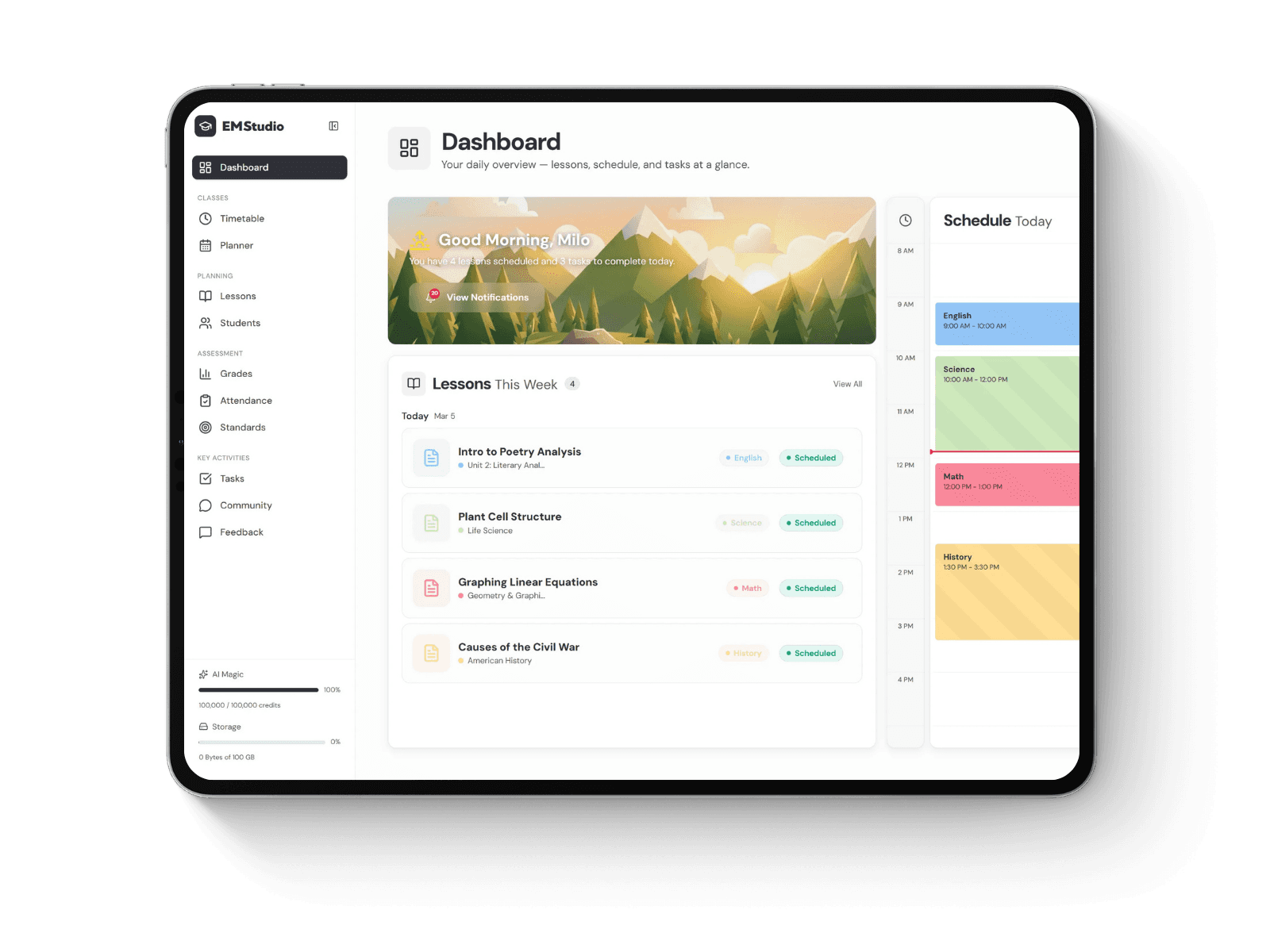
EMStudio is a free teaching management app — manage your classes, students, lessons, and more!
Learn More
Still grading everything by hand?
EMStudio is a free teaching management app — manage your classes, students, lessons, and more!
Learn More
Table of Contents
What Is Discovery Based Learning?
Discovery based learning is an inquiry approach where students construct knowledge through active exploration and problem-solving, not passive listening. Rooted in Jerome Bruner's 1961 work, it emphasizes cognitive accommodation through hands-on manipulation of concepts, allowing learners to derive principles independently while the teacher facilitates. No lecturing. Just nudges.
It's messy. Loud. And occasionally chaotic.
Students move around. They argue about whether to overlap the corners. They miscount and start over. You stand near the wall, biting your tongue, because telling them to multiply length by width would rob them of the moment the pattern clicks. That click—the cognitive accommodation—is the entire point.
Jerome Bruner introduced the concept in his seminal 1961 essay The Act of Discovery. He argued that knowledge built through personal discovery proves more durable than delivered content. When students manipulate materials and recognize patterns themselves, they construct mental frameworks that last. You remember the theorem you proved at 2:00 PM on a Tuesday, not the one projected on slide seventeen. This active construction defines the discovery learning method and separates it from passive reception.
John Hattie's Visible Learning meta-analyses provide necessary context. Direct instruction carries an effect size of 0.59, while inquiry-based learning approaches sit around 0.46. Discovery learning occupies a specific niche within inquiry-based instruction—one emphasizing maximum student autonomy. You don't abandon explicit teaching. You deploy discovery based learning when the conceptual understanding justifies the cognitive lift, following established inquiry-based learning principles.
Picture a 4th-grade classroom in late October. The teacher distributes packs of square sticky notes. She tells students to cover their desks completely—no gaps, no overlaps, notes only. Kids start counting. Some desks need forty squares. Others need sixty. The teacher asks nothing about formulas. She simply circulates, using Socratic questioning: "What do you notice about the desks that need more notes?" Eventually, someone sees it. Length times width equals the total. They excavated A=l×w themselves.
Jean Piaget explained the psychological mechanism through constructivist pedagogy. Learners experience cognitive disequilibrium when encountering contradictions—like why different desks require different note counts. This mental discomfort needs resolution. Through the experiential learning cycle, students reconcile the discrepancy by adjusting their mental schemas, a process Piaget called accommodation. You cannot hand someone accommodation. They must build it themselves through active manipulation of the concept.
Pure discovery—throwing students into problems with zero structure—often fails. That's not what Bruner advocated. Effective discovery learning requires careful preparation of materials and anticipated misconceptions. You design the environment so the concept becomes inevitable, but the recognition remains theirs.
Your role shifts dramatically from explainer to experience designer. Instead of delivering content, you design collisions with confusion. You use strategic Socratic questioning to nudge thinking without stealing the discovery. "What happened when you rotated the sticky notes?" beats "Here's how area works." You provide scaffolding—materials, time, strategic hints—while resisting the urge to rescue students from productive struggle. The confusion isn't failure. It's the engine.
Use this approach when you want students to own the concept, not just rent it for the test. It takes longer than direct instruction. The sticky note lesson eats a full forty-five minutes. But months later, those students still understand that area measures covering, not just multiplying random numbers.
Why Does Discovery Based Learning Matter?
Discovery based learning matters because it promotes deeper cognitive processing and long-term retention compared to passive reception. By engaging working memory through elaborative encoding, students develop metacognitive monitoring skills and 21st-century competencies like critical thinking, though it requires sufficient prior knowledge to be effective.
Memory That Lasts
Students remember what they figure out themselves. When you guide learners through the experiential learning cycle instead of handing them answers, they build neural pathways that actually stick past Friday's quiz. The catch? They need enough background knowledge first, or the discovery becomes frustrating guesswork that wastes time.
Surface-level memorization fades fast. In discovery based learning, students generate their own connections through elaborative encoding, linking new concepts to existing mental models. That process creates stronger retrieval cues than simple repetition. But watch for cognitive disequilibrium—Piaget's term for that uncomfortable gap between what students know and what they're trying to learn. Without adequate scaffolding, that productive struggle becomes overwhelming.
You can't drop novice learners into pure discovery and expect magic. They need enough prior knowledge to form hypotheses worth testing. Otherwise, you're watching kids flail. The sweet spot hits when students know just enough to recognize the pattern but not enough to solve it instantly.
The Metacognitive Payoff
This approach forces students to monitor their own thinking. During inquiry-based instruction, learners cycle through prediction, observation, and comparison. You’ll hear them engage in self-explanation protocols—talking through why they think the pattern works or why their hypothesis failed. That verbalization cements understanding and reveals gaps you’d miss on a multiple-choice test. It turns discovery learning in the classroom into visible thinking.
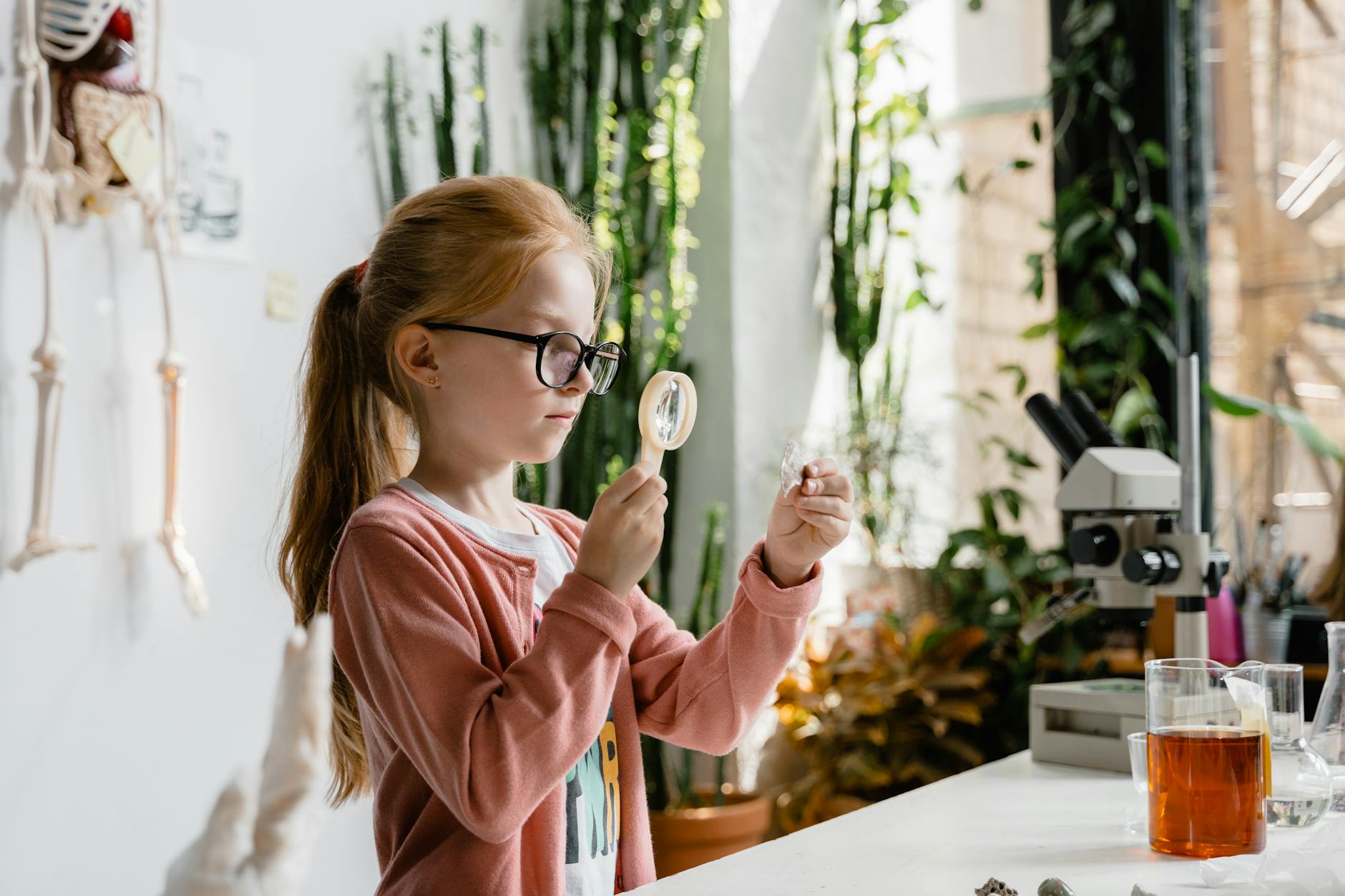
Fourth graders in my room last year kept lab notebooks during science investigations. They wrote predictions before testing pendulum lengths, then compared results to their initial theories. That written self-explanation protocol made their thinking concrete. They could literally see how their reasoning evolved, which built confidence for harder problems later.
Built-In Differentiation
Discovery creates natural differentiation. Take 6th-grade fractions with pattern blocks:
Visual learners see the hexagon split into six triangles.
Kinesthetic learners physically trade pieces.
Abstract thinkers derive the numerical relationships.
Everyone enters the same constructivist pedagogy activity, but each student grasps the concept through their own cognitive pathway. No separate worksheets needed.
I watched a student who struggled with symbolic notation grasp equivalent fractions instantly when she physically covered hexagons with red trapezoids. Her neighbor, who already knew the multiplication facts, derived the abstract rule from the same blocks. Both reached the objective through different doors.
Real Skills for Real Life
The active learning strategies inherent in discovery build durable skills. When students defend their findings to peers using evidence, they practice real critical thinking and collaborative problem-solving. You become the guide using Socratic questioning, not the dispenser of truth. That shift prepares them for workplaces where solutions aren't in the back of the book.
These aren't buzzwords. When you refuse to give the answer and ask, "What evidence supports your claim?" you force students to construct arguments. That defense process builds the communication skills employers actually want. They learn to articulate messy thinking and revise it under pressure.
How Does Discovery Based Learning Actually Work?
Discovery based learning works by creating cognitive disequilibrium that prompts students to accommodate new schemas through exploration and reflection. The teacher facilitates using Socratic questioning and 3-5 second wait times, while students cycle through Kolb's experiential learning cycle: concrete experience, reflective observation, abstract conceptualization, and active experimentation.
You present a problem that breaks their current mental model. Then you stop talking. Students wrestle with the mismatch between what they expected and what actually happened. That friction is where learning lives.
But working memory matters. Novices get overwhelmed by pure discovery because they lack schemas to process the load. That's why guided discovery method of teaching works better for 7th graders than open inquiry. Experts handle pure discovery; beginners need scaffolding that slowly releases responsibility. Manu Kapur's research on productive failure supports this progression.
The Teacher as Facilitator
You shift from lecturer to facilitator. Your new job is asking questions that hurt their brains just enough. This requires leading effective student discussions, not delivering lectures. Maintain 3-5 second wait times. Rowe found most teachers wait under one second. Count to five.
What pattern do you observe in the data?
How does this evidence support your claim?
What would happen if we changed X variable?
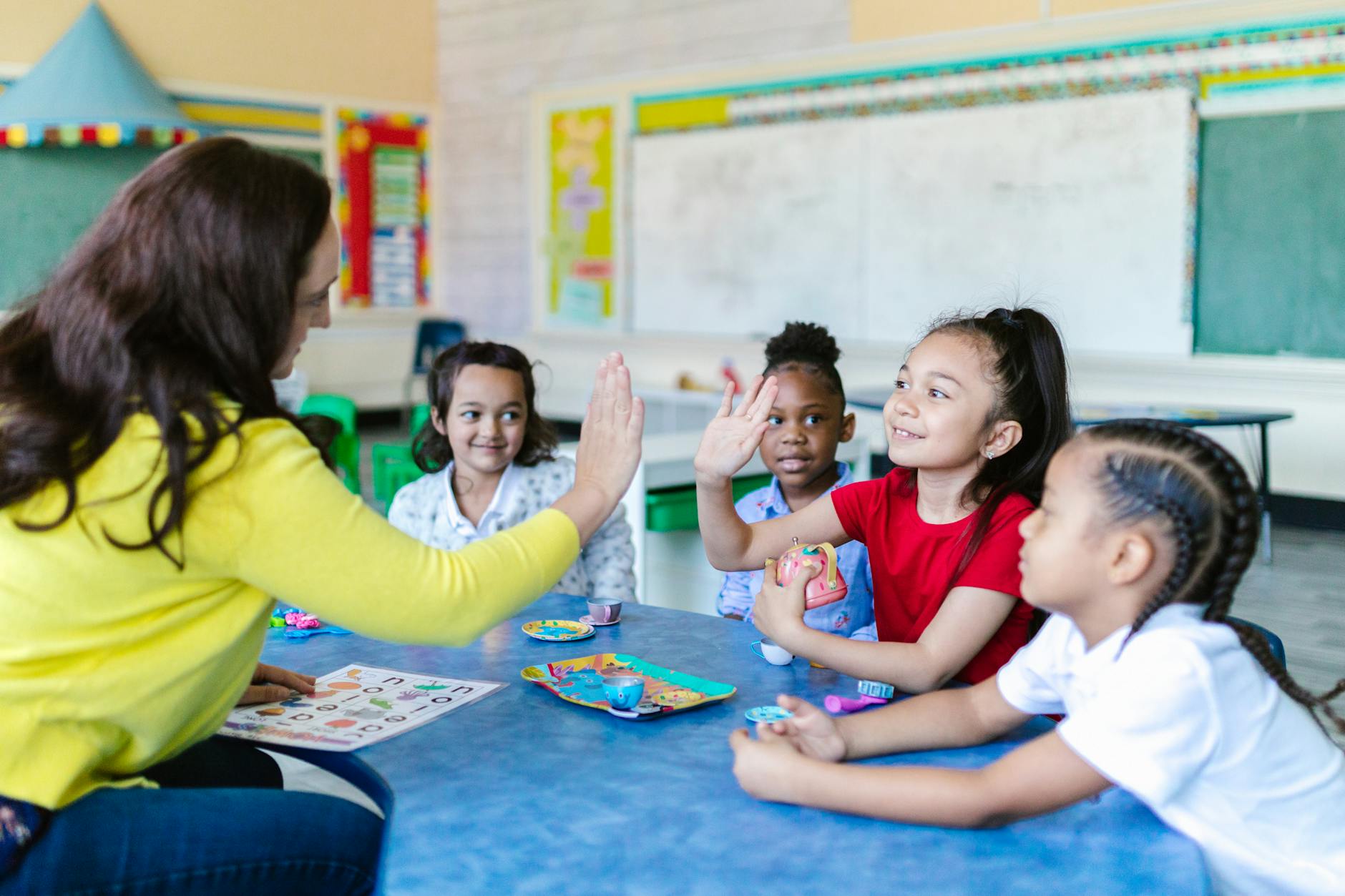
I enforce "Ask Three Before Me." Students check their textbook, ask a partner, and consult notes before calling me. I use Red-Yellow-Green cards for real-time monitoring. Green means rolling, yellow means stuck, red means need a hint. No talking required.
When they're frustrated, I don't rescue them. I offer hint cards: a reminder, a guiding question, or a partial answer. Three draws per group per lesson. This keeps them in productive struggle without shame. That's inquiry-based instruction.
The Cycle of Exploration and Reflection
Discovery based learning follows Kolb's cycle through four stages: concrete experience, reflective observation, abstract conceptualization, and active experimentation. Skip one, and learning evaporates within a week.
Last month my 8th graders built density columns. They handled the liquids (concrete), wrote why items sank (reflective), derived the mass/volume rule (abstract), then predicted where new objects would settle (experimentation). Each stage took ten minutes. The cycle closed the loop.
Before they touch materials, they write predictions. This creates cognitive disequilibrium when results contradict expectations. That mismatch drives constructivist pedagogy. They rebuild mental models to accommodate reality. You see the lightbulbs when they reconcile their guess with what actually happened.
Types of Discovery Learning: Pure, Guided, and Problem-Based
Not all discovery based learning looks the same. The types of discovery learning exist on a spectrum from zero guidance to heavy structuring, and choosing the wrong one for your kids' readiness level can sink the lesson before you start.
Type | Teacher Role | Guidance Level | Prior Knowledge Required | Risk of Misconceptions | Time Required | Example |
|---|---|---|---|---|---|---|
Pure Discovery | Silent facilitator | Zero predetermined procedures | Top 25% (75th percentile and above) | Very high; "discovery learning paralysis" for novices per Mayer 2004 | 1-2 class periods | Student-designed physics experiments without procedure sheets |
Guided Discovery | Socratic questioner | Heavy fading to none | Effective for below 75th percentile; mixed ability | Low; caught early via monitoring | 2-3 class periods | Triangle area derivation with grid paper and structured questions |
Problem-Based | Process consultant | High initial, then releases | Variable; group-dependent | Moderate; requires active facilitation | 5-8 sessions | 10th-grade biology mystery illness diagnosis |
Use this decision framework: If your students possess high prior knowledge plus strong self-regulation skills, run pure discovery. If you face a mixed-ability classroom with kids scattered across the performance spectrum, guided discovery carries the cognitive load safely. When you need complex real-world application across multiple weeks, deploy problem-based units.
Pure Discovery Learning
This is Jerome Bruner's original minimal-guidance vision. You hand students materials and step back. They design the investigation and find the pattern. No worksheet tells them what to look for.
Richard Mayer's 2004 research stopped this approach cold for most K-12 settings. He found that novices facing pure discovery often suffer discovery learning paralysis — working memory overloads while they struggle to manage the investigation and learn the concept. Kids with low prior knowledge learn less than with direct instruction because they're too busy figuring out procedures to notice the principle.
Reserve this for students who already own the domain and can self-correct without your input. Think of your AP Physics seniors testing Newton's laws with equipment they've used for three years, designing original experiments without procedure sheets to tell them how many trials to run. Or Montessori first graders working with self-correcting phonics materials they've practiced for months, where the pink tower itself shows the error without teacher intervention. These kids have the mental models to handle the cognitive load.
For typical learners, pure discovery risks false discoveries cementing misconceptions. A student might "discover" that heavier objects fall faster because they didn't control for air resistance, then argue because they "proved" it themselves. Without guidance, they build wrong theories that take twice as long to unlearn. Use this only for the top 25% with iron-clad self-regulation.
The constructivist pedagogy here assumes the learner builds knowledge best with no interference. That assumption fails for novices. They need the scaffolding that pure discovery removes entirely.
Guided Discovery Method of Teaching
This is where the magic happens for most classrooms with 24 to 32 mixed-ability kids. You use fading scaffolding — heavy support early, then gradual release. Day one, you model a worked example while thinking aloud through your mistakes. Day two, students tackle partially completed problems with hint cards stacked on the table corner. Day three, they work independently while you circulate with Socratic questioning that nudges without spoiling.
John Hattie's meta-analyses show this combination of direct instruction and inquiry hits the sweet spot for achievement, especially for students below the 75th percentile in subject knowledge. It protects working memory while still triggering that cognitive disequilibrium that makes concepts stick. The discovery learning method here feels like solving a puzzle with the edges already filled in — enough constraint to prevent paralysis, enough freedom for the "aha" moment to belong to the student.
Structure the materials with strategic constraints. In my 7th-grade math class, I gave pairs grid paper and scissors but no formula. The worksheet asked, "How many of your triangles fit inside the rectangle you cut?" It never mentioned "base" or "height" or "half."
Kids derived A=½bh by folding and counting squares, experiencing the experiential learning cycle from concrete manipulation to abstract rule. When someone got stuck, I asked, "What changed when you cut the rectangle diagonally?" I didn't say "triangle area equals half the base times height."
This approach thrives in mixed-ability rooms because the scaffolding carries students who struggle without boring the fast finishers. The hint cards allow differentiation without tracking. You prevent the train wrecks while letting kids feel the engine's power, and you catch misconceptions early through your circulation before they fossilize.
Problem-Based Discovery
Adapted from medical school PBL, this throws ill-structured authentic problems at teams of students. "Why are local bee populations declining?" has no predetermined solution path. Students define what they need to know, research pollinator biology, test hypotheses against local data, and present findings to actual stakeholders over five to eight class sessions.
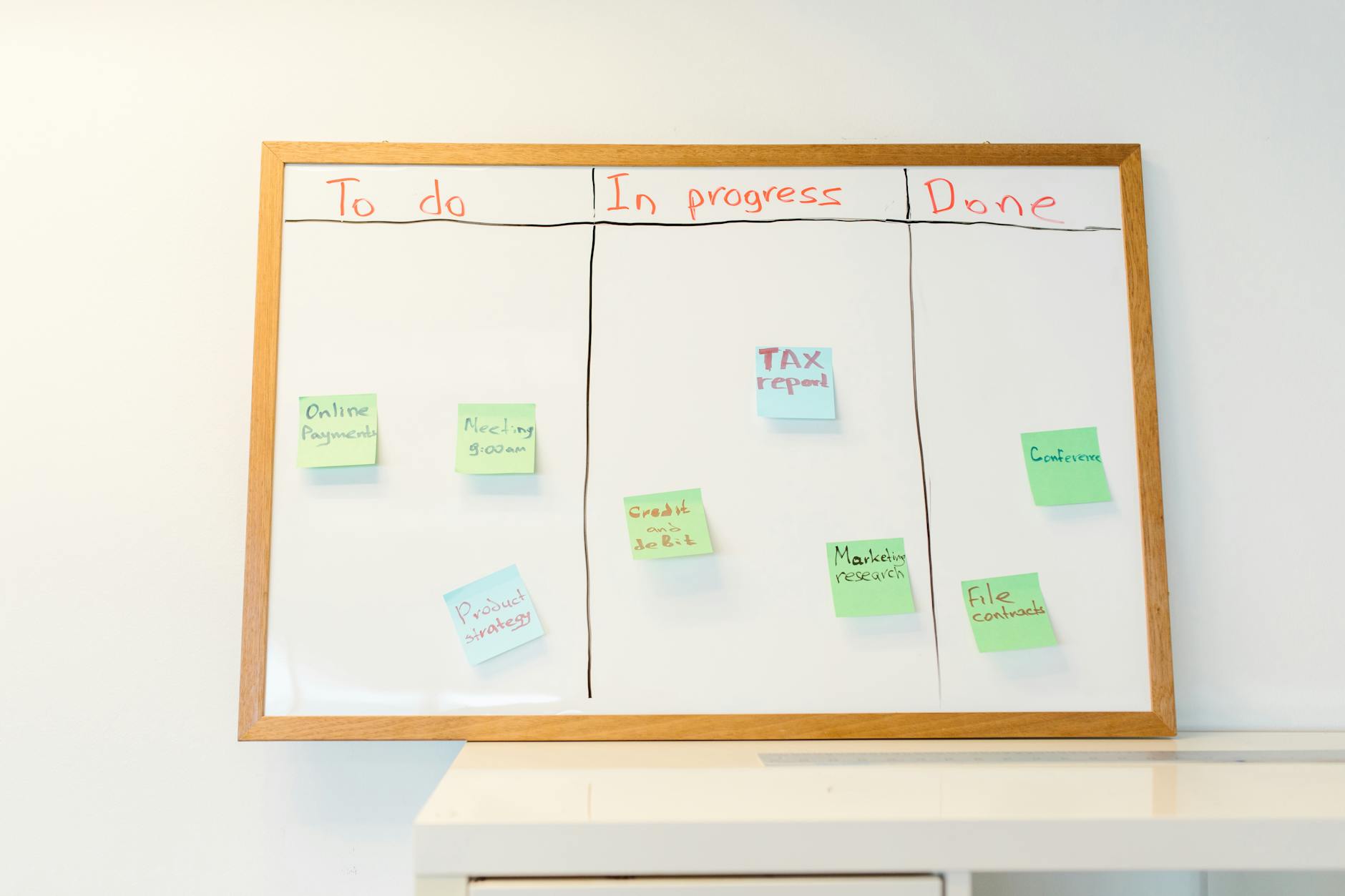
Group structure matters more here than in other types of discovery learning. Assign four to five students specific roles: Leader keeps time and tasks on track, Recorder documents the whiteboard problem-space mapping, Researcher hunts peer-reviewed sources, Skeptic challenges weak assumptions publicly. The whiteboard becomes shared brain space where all evidence lives visible to the group. Bring in "experts" — local beekeepers, extension agents, or even you playing dumb — for weekly consultations where students ask questions and you remain silent.
I ran a 10th-grade biology mystery illness unit last spring. Students received patient symptoms, family histories, and a menu of available lab tests with associated costs. They designed their own diagnostic protocols without following step-by-step instructions. One group wasted their entire budget on genetic testing when they should have started with basic blood cultures. They learned more from that budget mistake and the resulting dead-end than from any verification lab I'd ever run.
This needs serious inquiry-based instruction skills from you. You manage the process without owning the content. When groups hit walls, resist the urge to hint. Ask, "What evidence would convince you that you're wrong?" That Socratic questioning pushes them through cognitive disequilibrium into durable understanding. For problem-based learning frameworks that actually work in high school, you must structure the chaos with clear protocols, public accountability, and real consequences for the choices students make.
Discovery Method of Teaching Examples Across Grade Levels
Discovery based learning looks different in kindergarten than in 12th grade. Young children need concrete materials. High schoolers handle abstract simulations. This follows constructivist pedagogy and inquiry-based instruction.
Elementary Classroom Examples
These discovery method of teaching examples suit primary stages. Your youngest students need physical feedback.
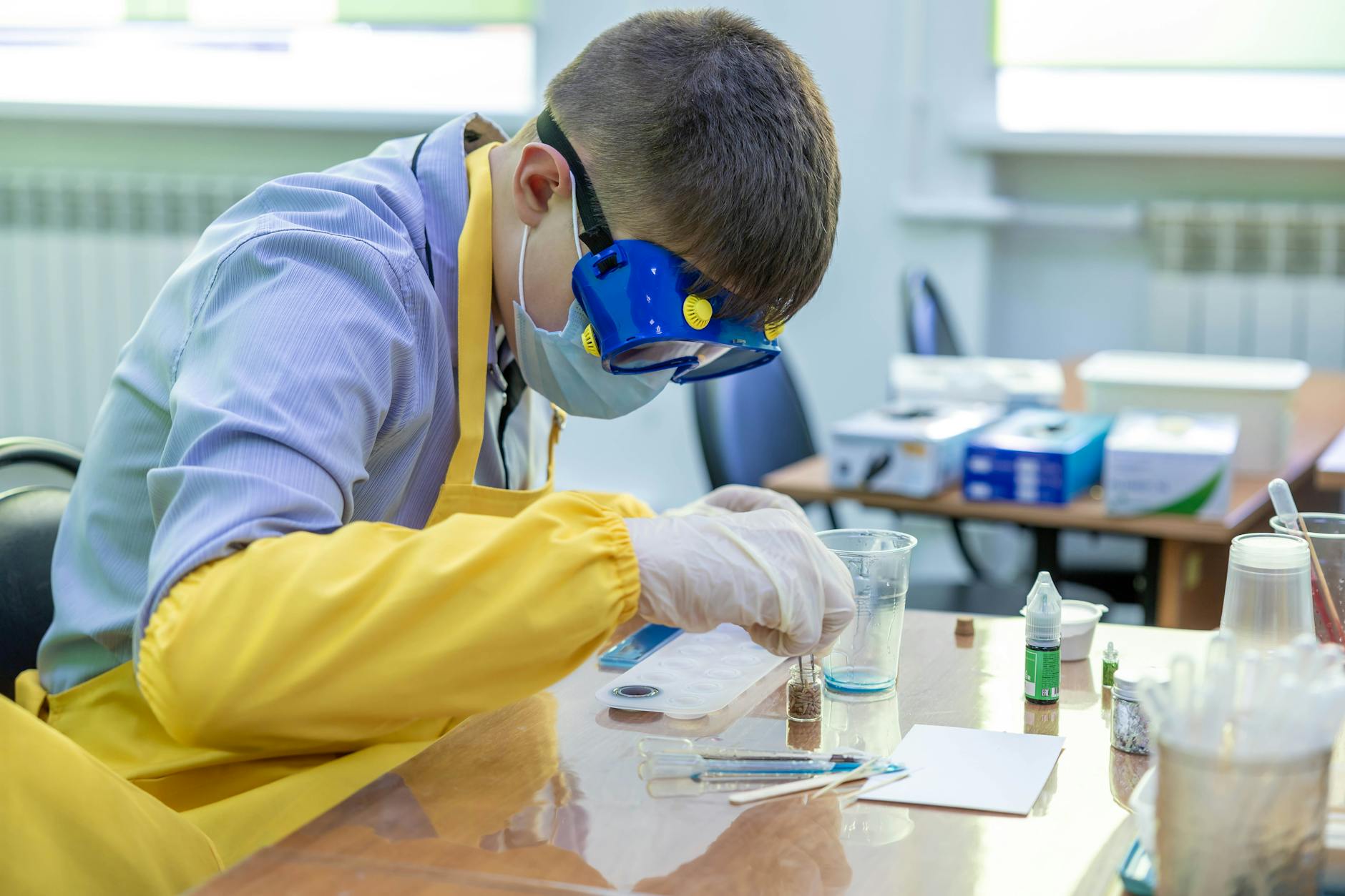
Kindergarten sink/float uses 10 items: apple, crayon, paperclip, cork, penny, button. You provide T-chart recording sheets. Students correct misconceptions about size and weight through physical testing.
Second grade discovery baskets contain egg cartons, counting bears, and grid paper. Students arrange 24 bears into configurations to discover 4×6, 3×8, and 2×12 before seeing multiplication tables. Egg carton sections prevent miscounting.
These self-correcting materials minimize your intervention. Group 3 students together. When frustration hits, ask "What happened when you placed the penny?" avoid explaining density.
Middle School Applications
Your middle schoolers handle controlled variables. Group 4 students for 45-minute lessons or multi-week units.
Seventh grade ecology uses 2-liter bottle ecosystems lasting 4 weeks. Groups manipulate one variable—light, water, or soil—and measure growth weekly. Plant death is valid data, not failure.
Eighth grade history uses 4 Industrial Revolution sources: factory ledger, child testimony, newspaper, parliamentary report. Students develop theses without textbook pre-reading.
Science density discovery uses irregular objects and graduated cylinders. Students derive displacement methods before learning Archimedes' principle. This creates productive cognitive disequilibrium.
Set up material stations to prevent chaos. When groups stall, ask "What pattern do you see?" avoid providing formulas.
High School Strategies
Tenth grade geometry uses GeoGebra software. Students manipulate triangle vertices to discover the 180-degree angle sum, then formalize two-column proofs.
Eleventh grade chemistry presents 5 unknown acids. Students design titration procedures to rank concentrations, not following cookbook manuals.
Twelfth grade literature prepares Socratic seminars where students discover connections between 1984 and surveillance articles. They work without teacher-provided themes.
These hands-on learning activities exemplify mature discovery based learning. Keep groups at 3-4. When students demand answers, use Socratic questioning: "What's your evidence?" This sustains the experiential learning cycle while providing scaffolding.

Step-by-Step Implementation Guide
Designing the Learning Experience
Block out 2–3 hours for the design phase before any student touches a material. Use Understanding by Design (Wiggins & McTighe). Anchor the unit with the enduring understanding—something like "Ecosystems maintain balance through feedback loops." Then craft an essential question using How, Why, or To what extent formats. Identify what evidence proves students discovered the concept themselves, not just parroted notes.
Select materials that make the target concept inevitable but not obvious. For a density investigation, mix large foam blocks with small metal washers. Kids assume heavy things sink—until the tiny washer drops and the huge block floats. This creates productive cognitive disequilibrium. Build scaffolding through digital or physical hint cards. Level 1 covers safety, Level 2 asks a guiding question, Level 3 gives a partial answer. Cap groups at three card draws per 45-minute lesson to prevent learned helplessness.
Skip the discovery method of teaching ppt lecture at the start. If you front-load with slides, you rob them of the discovery moment. Most discovery based learning activities run on household materials. Baking soda, vinegar, and recyclables cost roughly $15–$20 per class of 30. Specialized lab equipment jumps to $200+. Go with the cheap stuff first; concepts transfer regardless of budget.
Setting Up the Classroom Environment
Environment setup takes 30 minutes if you systematize it. Run 4–6 lab stations with effective classroom design for exploration principles. Use color-coded bins for safety:
Green means grab-and-go student access.
Yellow requires teacher permission first.
Red is teacher-only for safety equipment.
This prevents the "can we use the Bunsen burner?" chaos before it starts. Establish noise protocols before materials hit the table. Voice Level 1 (whisper) during individual exploration shifts to Level 2 (table talk) during group synthesis.
Project a visible countdown timer set to 15-minute exploration blocks with a 2-minute warning bell. When the timer hits zero, hands go up and mouths close—no exceptions. Digital integration requires tight boundaries. If using devices, deploy locked browsers or app configurations that lock students into PhET simulations only. During a 7th-grade physics unit, this prevents the inevitable drift toward YouTube. Physical manipulatives often outperform screens for initial constructivist pedagogy, but simulations work when materials are dangerous or expensive.
Facilitating Without Intervening
Facilitation happens in real time using status monitoring. Place Red-Yellow-Green progress cards at each table. Green means on track, Yellow needs clarification, Red signals stuck. Scan the room every five minutes, but only visit Red tables. This is guided discovery method of teaching in practice. Use Socratic questioning: "What have you tried?" Never hand the answer; inquiry-based instruction dies the moment you do.
Enforce "Three Before Me" ruthlessly. Students must consult their textbook, elbow partner, and class notes before flagging you down. This cuts your workload and forces resourcefulness. When they ask for verification, deploy strategic wait time. Ask "What evidence supports that?" then count to five. Rowe's research shows most teachers wait less than one second. That silence drives deeper processing.
Run this troubleshooting flowchart:
If students are stuck, deploy a hint card.
If off-task, check the constraint checklist.
If finished early, provide an extension challenge.
If incorrect discovery, use contrasting cases.
Assessing Student Discovery
Assessment runs continuously through the experiential learning cycle. Have students photograph each discovery stage using tablets. Then annotate with "What I noticed" and "What this means." Over a two-week unit, these images create visual learning trajectories. They replace worksheets. You see exactly when the lightbulb moment happened.
Schedule defense-of-learning assessments. Five-minute student presentations explain their discovery process, evidence gathered, and reasoning errors corrected. Grade on reasoning quality, not just correct conclusion. This aligns with higher-order thinking skills by forcing metacognition. Wrong answer with solid logic earns more than lucky guesses.
Close with a strict exit ticket protocol. "One thing I discovered," "One question I still have," and "How my thinking changed." Scan these before the next class. If half the class writes that "plants get food from soil," correct it immediately. Spend five minutes fixing misconceptions at the start. Ongoing documentation beats a summative test every time.
Common Pitfalls and How to Troubleshoot Them
Discovery based learning gets messy. That's the point. But there's a difference between productive struggle and a lesson that collapses into confusion. After fifteen years of trial and error, I've watched bright ideas crash because I missed these five traps. Here are the failures I've seen most often, and the fixes that actually work.
The Discovery Learning Paradox
Richard Mayer identified the Discovery Learning Paradox in 2004. Novices don't have the mental frameworks to construct knowledge from scratch. When you drop pure inquiry-based instruction on kids who lack domain schemas, they drown. They look busy. They're manipulating materials. But they're building wrong mental models that take twice as long to unlearn.
The fix is diagnostic. Run a quick pre-assessment. Kids below the 50th percentile get the guided discovery method of teaching with worked examples they study first. Kids above get pure discovery options. You're not lowering the ceiling; you're adjusting the entry ramp. Last year, my 7th graders who started with worked examples ended up outperforming the "advanced" group on the post-test because they didn't waste three days building misconceptions about balanced forces.
The 50th percentile split feels controversial. It looks like tracking. It's not. It's responsive teaching. You can shift kids between groups weekly as they grow. The goal is cognitive disequilibrium at the edge of their ability, not in the abyss.
Preventing False Discoveries
Students can "discover" that the Earth is flat if you let them wander long enough without guardrails. Constructivist pedagogy requires you to prevent false pattern recognition. I once had a group "prove" that heavy objects always sink by only testing metal items in water. They were convinced. I was horrified.
Have them write predictions before touching materials. Then hit them immediately with contrasting cases—non-examples that break their emerging wrong theories. If they're discovering density, show them a tiny heavy weight and a large light balloon right after they form their initial hypothesis. The cognitive disequilibrium forces revision before cementing. One contradictory example now saves a week of reteaching later.
Managing Time Without Killing Inquiry
Inquiry-based instruction expands to fill available time. A "two-day" inquiry becomes a week-long odyssey while your pacing guide burns and admin starts asking questions about why you're three units behind. The experiential learning cycle doesn't require infinite time. It requires focused time.
Implement Time Boxing. Twenty-minute hard stops. Even if they're mid-discovery. Follow with five-minute reflection periods where they record what they noticed and what they still need to know. This maintains the integrity of the process without derailing your semester. My physics unit used to bleed into Thanksgiving. Now it ends on Friday because I honor the timer.
Fixing Equity Issues
Three kids do the thinking. Four watch. One checks TikTok. This isn't group work. It's social loafing with supplies.
Assign specific roles with laminated cards:
Material Manager: Only person who touches the supplies until the hypothesis is written.
Recorder: Writes the group's predictions and data. Verifies everyone agrees before moving on.
Timekeeper: Watches the clock and calls out the 20-minute warning.
Speaker: Shares findings with the class. Rotates every two days.
Then add individual accountability via exit tickets that each student completes independently. No group grade survives contact with reality. When everyone has a job, everyone learns.
Handling Volume and Chaos
Discovery gets loud. But there's loud and there's chaos. You know the difference in your gut when you walk in the room and feel the panic rise.
Use Discovery Contracts. Students sign them before the activity. Specific behavioral rubrics: "Volume stays at Level 2 (table talk only)." Specific consequences: "Volume hits Level 3, we take a 2-minute reset break." No warnings. Just action.
When noise exceeds Level 2, stop everything. Two minutes of silent individual writing. Then resume. The break costs less time than repeating instructions three times. For more frameworks on keeping order during active learning, see our classroom management strategies.
Knowing When to Step In
Don't confuse hands-off with effective. Unstructured discovery isn't inquiry; it's abandonment. Kids need guardrails, not handcuffs.
Use Socratic questioning to nudge without answering. When a group is stuck, ask: "What would happen if you changed just one variable?" Then walk away. This scaffolding maintains student agency while preventing the frustration shutdown that kills motivation.
If you hear "I don't get it," resist the rescue. Ask "What part don't you get?" Force specificity. Vague confusion gets vague help. Specific stuck points get targeted support that actually moves thinking forward.

Key Takeaways for Discovery Based Learning
Discovery based learning isn't hands-off teaching. It's structured inquiry where you design the path but let students walk it. When you resist the urge to answer immediately and instead use Socratic questioning, you create the cognitive disequilibrium that forces real thinking. The classroom gets noisy. The timeline gets messy. That's exactly where learning happens.
Start small. One guided discovery lesson per unit beats a full semester of pure lecture. Watch how your students talk to each other when they're figuring out why the math works instead of just copying the algorithm. The retention difference is immediate. You'll spend less time reteaching in May because they built the understanding themselves in October.
Trust the process even when it feels inefficient. Constructivist pedagogy requires patience, but the independence you build pays dividends across every subject. Your job shifts from delivering facts to designing experiences. That's better teaching, and frankly, it's more fun for both you and your students.
What Is Discovery Based Learning?
Discovery based learning is an inquiry approach where students construct knowledge through active exploration and problem-solving, not passive listening. Rooted in Jerome Bruner's 1961 work, it emphasizes cognitive accommodation through hands-on manipulation of concepts, allowing learners to derive principles independently while the teacher facilitates. No lecturing. Just nudges.
It's messy. Loud. And occasionally chaotic.
Students move around. They argue about whether to overlap the corners. They miscount and start over. You stand near the wall, biting your tongue, because telling them to multiply length by width would rob them of the moment the pattern clicks. That click—the cognitive accommodation—is the entire point.
Jerome Bruner introduced the concept in his seminal 1961 essay The Act of Discovery. He argued that knowledge built through personal discovery proves more durable than delivered content. When students manipulate materials and recognize patterns themselves, they construct mental frameworks that last. You remember the theorem you proved at 2:00 PM on a Tuesday, not the one projected on slide seventeen. This active construction defines the discovery learning method and separates it from passive reception.
John Hattie's Visible Learning meta-analyses provide necessary context. Direct instruction carries an effect size of 0.59, while inquiry-based learning approaches sit around 0.46. Discovery learning occupies a specific niche within inquiry-based instruction—one emphasizing maximum student autonomy. You don't abandon explicit teaching. You deploy discovery based learning when the conceptual understanding justifies the cognitive lift, following established inquiry-based learning principles.
Picture a 4th-grade classroom in late October. The teacher distributes packs of square sticky notes. She tells students to cover their desks completely—no gaps, no overlaps, notes only. Kids start counting. Some desks need forty squares. Others need sixty. The teacher asks nothing about formulas. She simply circulates, using Socratic questioning: "What do you notice about the desks that need more notes?" Eventually, someone sees it. Length times width equals the total. They excavated A=l×w themselves.
Jean Piaget explained the psychological mechanism through constructivist pedagogy. Learners experience cognitive disequilibrium when encountering contradictions—like why different desks require different note counts. This mental discomfort needs resolution. Through the experiential learning cycle, students reconcile the discrepancy by adjusting their mental schemas, a process Piaget called accommodation. You cannot hand someone accommodation. They must build it themselves through active manipulation of the concept.
Pure discovery—throwing students into problems with zero structure—often fails. That's not what Bruner advocated. Effective discovery learning requires careful preparation of materials and anticipated misconceptions. You design the environment so the concept becomes inevitable, but the recognition remains theirs.
Your role shifts dramatically from explainer to experience designer. Instead of delivering content, you design collisions with confusion. You use strategic Socratic questioning to nudge thinking without stealing the discovery. "What happened when you rotated the sticky notes?" beats "Here's how area works." You provide scaffolding—materials, time, strategic hints—while resisting the urge to rescue students from productive struggle. The confusion isn't failure. It's the engine.
Use this approach when you want students to own the concept, not just rent it for the test. It takes longer than direct instruction. The sticky note lesson eats a full forty-five minutes. But months later, those students still understand that area measures covering, not just multiplying random numbers.
Why Does Discovery Based Learning Matter?
Discovery based learning matters because it promotes deeper cognitive processing and long-term retention compared to passive reception. By engaging working memory through elaborative encoding, students develop metacognitive monitoring skills and 21st-century competencies like critical thinking, though it requires sufficient prior knowledge to be effective.
Memory That Lasts
Students remember what they figure out themselves. When you guide learners through the experiential learning cycle instead of handing them answers, they build neural pathways that actually stick past Friday's quiz. The catch? They need enough background knowledge first, or the discovery becomes frustrating guesswork that wastes time.
Surface-level memorization fades fast. In discovery based learning, students generate their own connections through elaborative encoding, linking new concepts to existing mental models. That process creates stronger retrieval cues than simple repetition. But watch for cognitive disequilibrium—Piaget's term for that uncomfortable gap between what students know and what they're trying to learn. Without adequate scaffolding, that productive struggle becomes overwhelming.
You can't drop novice learners into pure discovery and expect magic. They need enough prior knowledge to form hypotheses worth testing. Otherwise, you're watching kids flail. The sweet spot hits when students know just enough to recognize the pattern but not enough to solve it instantly.
The Metacognitive Payoff
This approach forces students to monitor their own thinking. During inquiry-based instruction, learners cycle through prediction, observation, and comparison. You’ll hear them engage in self-explanation protocols—talking through why they think the pattern works or why their hypothesis failed. That verbalization cements understanding and reveals gaps you’d miss on a multiple-choice test. It turns discovery learning in the classroom into visible thinking.
Fourth graders in my room last year kept lab notebooks during science investigations. They wrote predictions before testing pendulum lengths, then compared results to their initial theories. That written self-explanation protocol made their thinking concrete. They could literally see how their reasoning evolved, which built confidence for harder problems later.
Built-In Differentiation
Discovery creates natural differentiation. Take 6th-grade fractions with pattern blocks:
Visual learners see the hexagon split into six triangles.
Kinesthetic learners physically trade pieces.
Abstract thinkers derive the numerical relationships.
Everyone enters the same constructivist pedagogy activity, but each student grasps the concept through their own cognitive pathway. No separate worksheets needed.
I watched a student who struggled with symbolic notation grasp equivalent fractions instantly when she physically covered hexagons with red trapezoids. Her neighbor, who already knew the multiplication facts, derived the abstract rule from the same blocks. Both reached the objective through different doors.
Real Skills for Real Life
The active learning strategies inherent in discovery build durable skills. When students defend their findings to peers using evidence, they practice real critical thinking and collaborative problem-solving. You become the guide using Socratic questioning, not the dispenser of truth. That shift prepares them for workplaces where solutions aren't in the back of the book.
These aren't buzzwords. When you refuse to give the answer and ask, "What evidence supports your claim?" you force students to construct arguments. That defense process builds the communication skills employers actually want. They learn to articulate messy thinking and revise it under pressure.
How Does Discovery Based Learning Actually Work?
Discovery based learning works by creating cognitive disequilibrium that prompts students to accommodate new schemas through exploration and reflection. The teacher facilitates using Socratic questioning and 3-5 second wait times, while students cycle through Kolb's experiential learning cycle: concrete experience, reflective observation, abstract conceptualization, and active experimentation.
You present a problem that breaks their current mental model. Then you stop talking. Students wrestle with the mismatch between what they expected and what actually happened. That friction is where learning lives.
But working memory matters. Novices get overwhelmed by pure discovery because they lack schemas to process the load. That's why guided discovery method of teaching works better for 7th graders than open inquiry. Experts handle pure discovery; beginners need scaffolding that slowly releases responsibility. Manu Kapur's research on productive failure supports this progression.
The Teacher as Facilitator
You shift from lecturer to facilitator. Your new job is asking questions that hurt their brains just enough. This requires leading effective student discussions, not delivering lectures. Maintain 3-5 second wait times. Rowe found most teachers wait under one second. Count to five.
What pattern do you observe in the data?
How does this evidence support your claim?
What would happen if we changed X variable?
I enforce "Ask Three Before Me." Students check their textbook, ask a partner, and consult notes before calling me. I use Red-Yellow-Green cards for real-time monitoring. Green means rolling, yellow means stuck, red means need a hint. No talking required.
When they're frustrated, I don't rescue them. I offer hint cards: a reminder, a guiding question, or a partial answer. Three draws per group per lesson. This keeps them in productive struggle without shame. That's inquiry-based instruction.
The Cycle of Exploration and Reflection
Discovery based learning follows Kolb's cycle through four stages: concrete experience, reflective observation, abstract conceptualization, and active experimentation. Skip one, and learning evaporates within a week.
Last month my 8th graders built density columns. They handled the liquids (concrete), wrote why items sank (reflective), derived the mass/volume rule (abstract), then predicted where new objects would settle (experimentation). Each stage took ten minutes. The cycle closed the loop.
Before they touch materials, they write predictions. This creates cognitive disequilibrium when results contradict expectations. That mismatch drives constructivist pedagogy. They rebuild mental models to accommodate reality. You see the lightbulbs when they reconcile their guess with what actually happened.
Types of Discovery Learning: Pure, Guided, and Problem-Based
Not all discovery based learning looks the same. The types of discovery learning exist on a spectrum from zero guidance to heavy structuring, and choosing the wrong one for your kids' readiness level can sink the lesson before you start.
Type | Teacher Role | Guidance Level | Prior Knowledge Required | Risk of Misconceptions | Time Required | Example |
|---|---|---|---|---|---|---|
Pure Discovery | Silent facilitator | Zero predetermined procedures | Top 25% (75th percentile and above) | Very high; "discovery learning paralysis" for novices per Mayer 2004 | 1-2 class periods | Student-designed physics experiments without procedure sheets |
Guided Discovery | Socratic questioner | Heavy fading to none | Effective for below 75th percentile; mixed ability | Low; caught early via monitoring | 2-3 class periods | Triangle area derivation with grid paper and structured questions |
Problem-Based | Process consultant | High initial, then releases | Variable; group-dependent | Moderate; requires active facilitation | 5-8 sessions | 10th-grade biology mystery illness diagnosis |
Use this decision framework: If your students possess high prior knowledge plus strong self-regulation skills, run pure discovery. If you face a mixed-ability classroom with kids scattered across the performance spectrum, guided discovery carries the cognitive load safely. When you need complex real-world application across multiple weeks, deploy problem-based units.
Pure Discovery Learning
This is Jerome Bruner's original minimal-guidance vision. You hand students materials and step back. They design the investigation and find the pattern. No worksheet tells them what to look for.
Richard Mayer's 2004 research stopped this approach cold for most K-12 settings. He found that novices facing pure discovery often suffer discovery learning paralysis — working memory overloads while they struggle to manage the investigation and learn the concept. Kids with low prior knowledge learn less than with direct instruction because they're too busy figuring out procedures to notice the principle.
Reserve this for students who already own the domain and can self-correct without your input. Think of your AP Physics seniors testing Newton's laws with equipment they've used for three years, designing original experiments without procedure sheets to tell them how many trials to run. Or Montessori first graders working with self-correcting phonics materials they've practiced for months, where the pink tower itself shows the error without teacher intervention. These kids have the mental models to handle the cognitive load.
For typical learners, pure discovery risks false discoveries cementing misconceptions. A student might "discover" that heavier objects fall faster because they didn't control for air resistance, then argue because they "proved" it themselves. Without guidance, they build wrong theories that take twice as long to unlearn. Use this only for the top 25% with iron-clad self-regulation.
The constructivist pedagogy here assumes the learner builds knowledge best with no interference. That assumption fails for novices. They need the scaffolding that pure discovery removes entirely.
Guided Discovery Method of Teaching
This is where the magic happens for most classrooms with 24 to 32 mixed-ability kids. You use fading scaffolding — heavy support early, then gradual release. Day one, you model a worked example while thinking aloud through your mistakes. Day two, students tackle partially completed problems with hint cards stacked on the table corner. Day three, they work independently while you circulate with Socratic questioning that nudges without spoiling.
John Hattie's meta-analyses show this combination of direct instruction and inquiry hits the sweet spot for achievement, especially for students below the 75th percentile in subject knowledge. It protects working memory while still triggering that cognitive disequilibrium that makes concepts stick. The discovery learning method here feels like solving a puzzle with the edges already filled in — enough constraint to prevent paralysis, enough freedom for the "aha" moment to belong to the student.
Structure the materials with strategic constraints. In my 7th-grade math class, I gave pairs grid paper and scissors but no formula. The worksheet asked, "How many of your triangles fit inside the rectangle you cut?" It never mentioned "base" or "height" or "half."
Kids derived A=½bh by folding and counting squares, experiencing the experiential learning cycle from concrete manipulation to abstract rule. When someone got stuck, I asked, "What changed when you cut the rectangle diagonally?" I didn't say "triangle area equals half the base times height."
This approach thrives in mixed-ability rooms because the scaffolding carries students who struggle without boring the fast finishers. The hint cards allow differentiation without tracking. You prevent the train wrecks while letting kids feel the engine's power, and you catch misconceptions early through your circulation before they fossilize.
Problem-Based Discovery
Adapted from medical school PBL, this throws ill-structured authentic problems at teams of students. "Why are local bee populations declining?" has no predetermined solution path. Students define what they need to know, research pollinator biology, test hypotheses against local data, and present findings to actual stakeholders over five to eight class sessions.
Group structure matters more here than in other types of discovery learning. Assign four to five students specific roles: Leader keeps time and tasks on track, Recorder documents the whiteboard problem-space mapping, Researcher hunts peer-reviewed sources, Skeptic challenges weak assumptions publicly. The whiteboard becomes shared brain space where all evidence lives visible to the group. Bring in "experts" — local beekeepers, extension agents, or even you playing dumb — for weekly consultations where students ask questions and you remain silent.
I ran a 10th-grade biology mystery illness unit last spring. Students received patient symptoms, family histories, and a menu of available lab tests with associated costs. They designed their own diagnostic protocols without following step-by-step instructions. One group wasted their entire budget on genetic testing when they should have started with basic blood cultures. They learned more from that budget mistake and the resulting dead-end than from any verification lab I'd ever run.
This needs serious inquiry-based instruction skills from you. You manage the process without owning the content. When groups hit walls, resist the urge to hint. Ask, "What evidence would convince you that you're wrong?" That Socratic questioning pushes them through cognitive disequilibrium into durable understanding. For problem-based learning frameworks that actually work in high school, you must structure the chaos with clear protocols, public accountability, and real consequences for the choices students make.
Discovery Method of Teaching Examples Across Grade Levels
Discovery based learning looks different in kindergarten than in 12th grade. Young children need concrete materials. High schoolers handle abstract simulations. This follows constructivist pedagogy and inquiry-based instruction.
Elementary Classroom Examples
These discovery method of teaching examples suit primary stages. Your youngest students need physical feedback.
Kindergarten sink/float uses 10 items: apple, crayon, paperclip, cork, penny, button. You provide T-chart recording sheets. Students correct misconceptions about size and weight through physical testing.
Second grade discovery baskets contain egg cartons, counting bears, and grid paper. Students arrange 24 bears into configurations to discover 4×6, 3×8, and 2×12 before seeing multiplication tables. Egg carton sections prevent miscounting.
These self-correcting materials minimize your intervention. Group 3 students together. When frustration hits, ask "What happened when you placed the penny?" avoid explaining density.
Middle School Applications
Your middle schoolers handle controlled variables. Group 4 students for 45-minute lessons or multi-week units.
Seventh grade ecology uses 2-liter bottle ecosystems lasting 4 weeks. Groups manipulate one variable—light, water, or soil—and measure growth weekly. Plant death is valid data, not failure.
Eighth grade history uses 4 Industrial Revolution sources: factory ledger, child testimony, newspaper, parliamentary report. Students develop theses without textbook pre-reading.
Science density discovery uses irregular objects and graduated cylinders. Students derive displacement methods before learning Archimedes' principle. This creates productive cognitive disequilibrium.
Set up material stations to prevent chaos. When groups stall, ask "What pattern do you see?" avoid providing formulas.
High School Strategies
Tenth grade geometry uses GeoGebra software. Students manipulate triangle vertices to discover the 180-degree angle sum, then formalize two-column proofs.
Eleventh grade chemistry presents 5 unknown acids. Students design titration procedures to rank concentrations, not following cookbook manuals.
Twelfth grade literature prepares Socratic seminars where students discover connections between 1984 and surveillance articles. They work without teacher-provided themes.
These hands-on learning activities exemplify mature discovery based learning. Keep groups at 3-4. When students demand answers, use Socratic questioning: "What's your evidence?" This sustains the experiential learning cycle while providing scaffolding.
Step-by-Step Implementation Guide
Designing the Learning Experience
Block out 2–3 hours for the design phase before any student touches a material. Use Understanding by Design (Wiggins & McTighe). Anchor the unit with the enduring understanding—something like "Ecosystems maintain balance through feedback loops." Then craft an essential question using How, Why, or To what extent formats. Identify what evidence proves students discovered the concept themselves, not just parroted notes.
Select materials that make the target concept inevitable but not obvious. For a density investigation, mix large foam blocks with small metal washers. Kids assume heavy things sink—until the tiny washer drops and the huge block floats. This creates productive cognitive disequilibrium. Build scaffolding through digital or physical hint cards. Level 1 covers safety, Level 2 asks a guiding question, Level 3 gives a partial answer. Cap groups at three card draws per 45-minute lesson to prevent learned helplessness.
Skip the discovery method of teaching ppt lecture at the start. If you front-load with slides, you rob them of the discovery moment. Most discovery based learning activities run on household materials. Baking soda, vinegar, and recyclables cost roughly $15–$20 per class of 30. Specialized lab equipment jumps to $200+. Go with the cheap stuff first; concepts transfer regardless of budget.
Setting Up the Classroom Environment
Environment setup takes 30 minutes if you systematize it. Run 4–6 lab stations with effective classroom design for exploration principles. Use color-coded bins for safety:
Green means grab-and-go student access.
Yellow requires teacher permission first.
Red is teacher-only for safety equipment.
This prevents the "can we use the Bunsen burner?" chaos before it starts. Establish noise protocols before materials hit the table. Voice Level 1 (whisper) during individual exploration shifts to Level 2 (table talk) during group synthesis.
Project a visible countdown timer set to 15-minute exploration blocks with a 2-minute warning bell. When the timer hits zero, hands go up and mouths close—no exceptions. Digital integration requires tight boundaries. If using devices, deploy locked browsers or app configurations that lock students into PhET simulations only. During a 7th-grade physics unit, this prevents the inevitable drift toward YouTube. Physical manipulatives often outperform screens for initial constructivist pedagogy, but simulations work when materials are dangerous or expensive.
Facilitating Without Intervening
Facilitation happens in real time using status monitoring. Place Red-Yellow-Green progress cards at each table. Green means on track, Yellow needs clarification, Red signals stuck. Scan the room every five minutes, but only visit Red tables. This is guided discovery method of teaching in practice. Use Socratic questioning: "What have you tried?" Never hand the answer; inquiry-based instruction dies the moment you do.
Enforce "Three Before Me" ruthlessly. Students must consult their textbook, elbow partner, and class notes before flagging you down. This cuts your workload and forces resourcefulness. When they ask for verification, deploy strategic wait time. Ask "What evidence supports that?" then count to five. Rowe's research shows most teachers wait less than one second. That silence drives deeper processing.
Run this troubleshooting flowchart:
If students are stuck, deploy a hint card.
If off-task, check the constraint checklist.
If finished early, provide an extension challenge.
If incorrect discovery, use contrasting cases.
Assessing Student Discovery
Assessment runs continuously through the experiential learning cycle. Have students photograph each discovery stage using tablets. Then annotate with "What I noticed" and "What this means." Over a two-week unit, these images create visual learning trajectories. They replace worksheets. You see exactly when the lightbulb moment happened.
Schedule defense-of-learning assessments. Five-minute student presentations explain their discovery process, evidence gathered, and reasoning errors corrected. Grade on reasoning quality, not just correct conclusion. This aligns with higher-order thinking skills by forcing metacognition. Wrong answer with solid logic earns more than lucky guesses.
Close with a strict exit ticket protocol. "One thing I discovered," "One question I still have," and "How my thinking changed." Scan these before the next class. If half the class writes that "plants get food from soil," correct it immediately. Spend five minutes fixing misconceptions at the start. Ongoing documentation beats a summative test every time.
Common Pitfalls and How to Troubleshoot Them
Discovery based learning gets messy. That's the point. But there's a difference between productive struggle and a lesson that collapses into confusion. After fifteen years of trial and error, I've watched bright ideas crash because I missed these five traps. Here are the failures I've seen most often, and the fixes that actually work.
The Discovery Learning Paradox
Richard Mayer identified the Discovery Learning Paradox in 2004. Novices don't have the mental frameworks to construct knowledge from scratch. When you drop pure inquiry-based instruction on kids who lack domain schemas, they drown. They look busy. They're manipulating materials. But they're building wrong mental models that take twice as long to unlearn.
The fix is diagnostic. Run a quick pre-assessment. Kids below the 50th percentile get the guided discovery method of teaching with worked examples they study first. Kids above get pure discovery options. You're not lowering the ceiling; you're adjusting the entry ramp. Last year, my 7th graders who started with worked examples ended up outperforming the "advanced" group on the post-test because they didn't waste three days building misconceptions about balanced forces.
The 50th percentile split feels controversial. It looks like tracking. It's not. It's responsive teaching. You can shift kids between groups weekly as they grow. The goal is cognitive disequilibrium at the edge of their ability, not in the abyss.
Preventing False Discoveries
Students can "discover" that the Earth is flat if you let them wander long enough without guardrails. Constructivist pedagogy requires you to prevent false pattern recognition. I once had a group "prove" that heavy objects always sink by only testing metal items in water. They were convinced. I was horrified.
Have them write predictions before touching materials. Then hit them immediately with contrasting cases—non-examples that break their emerging wrong theories. If they're discovering density, show them a tiny heavy weight and a large light balloon right after they form their initial hypothesis. The cognitive disequilibrium forces revision before cementing. One contradictory example now saves a week of reteaching later.
Managing Time Without Killing Inquiry
Inquiry-based instruction expands to fill available time. A "two-day" inquiry becomes a week-long odyssey while your pacing guide burns and admin starts asking questions about why you're three units behind. The experiential learning cycle doesn't require infinite time. It requires focused time.
Implement Time Boxing. Twenty-minute hard stops. Even if they're mid-discovery. Follow with five-minute reflection periods where they record what they noticed and what they still need to know. This maintains the integrity of the process without derailing your semester. My physics unit used to bleed into Thanksgiving. Now it ends on Friday because I honor the timer.
Fixing Equity Issues
Three kids do the thinking. Four watch. One checks TikTok. This isn't group work. It's social loafing with supplies.
Assign specific roles with laminated cards:
Material Manager: Only person who touches the supplies until the hypothesis is written.
Recorder: Writes the group's predictions and data. Verifies everyone agrees before moving on.
Timekeeper: Watches the clock and calls out the 20-minute warning.
Speaker: Shares findings with the class. Rotates every two days.
Then add individual accountability via exit tickets that each student completes independently. No group grade survives contact with reality. When everyone has a job, everyone learns.
Handling Volume and Chaos
Discovery gets loud. But there's loud and there's chaos. You know the difference in your gut when you walk in the room and feel the panic rise.
Use Discovery Contracts. Students sign them before the activity. Specific behavioral rubrics: "Volume stays at Level 2 (table talk only)." Specific consequences: "Volume hits Level 3, we take a 2-minute reset break." No warnings. Just action.
When noise exceeds Level 2, stop everything. Two minutes of silent individual writing. Then resume. The break costs less time than repeating instructions three times. For more frameworks on keeping order during active learning, see our classroom management strategies.
Knowing When to Step In
Don't confuse hands-off with effective. Unstructured discovery isn't inquiry; it's abandonment. Kids need guardrails, not handcuffs.
Use Socratic questioning to nudge without answering. When a group is stuck, ask: "What would happen if you changed just one variable?" Then walk away. This scaffolding maintains student agency while preventing the frustration shutdown that kills motivation.
If you hear "I don't get it," resist the rescue. Ask "What part don't you get?" Force specificity. Vague confusion gets vague help. Specific stuck points get targeted support that actually moves thinking forward.
Key Takeaways for Discovery Based Learning
Discovery based learning isn't hands-off teaching. It's structured inquiry where you design the path but let students walk it. When you resist the urge to answer immediately and instead use Socratic questioning, you create the cognitive disequilibrium that forces real thinking. The classroom gets noisy. The timeline gets messy. That's exactly where learning happens.
Start small. One guided discovery lesson per unit beats a full semester of pure lecture. Watch how your students talk to each other when they're figuring out why the math works instead of just copying the algorithm. The retention difference is immediate. You'll spend less time reteaching in May because they built the understanding themselves in October.
Trust the process even when it feels inefficient. Constructivist pedagogy requires patience, but the independence you build pays dividends across every subject. Your job shifts from delivering facts to designing experiences. That's better teaching, and frankly, it's more fun for both you and your students.
Still grading everything by hand?
EMStudio is a free teaching management app — manage your classes, students, lessons, and more!
Learn More
Still grading everything by hand?
EMStudio is a free teaching management app — manage your classes, students, lessons, and more!
Learn More


Notion4Teachers
Notion templates to simplify administrative tasks and enhance your teaching experience.



2026 Notion4Teachers. All Rights Reserved.
Notion4Teachers
Notion templates to simplify administrative tasks and enhance your teaching experience.
2026 Notion4Teachers. All Rights Reserved.
Notion4Teachers
Notion templates to simplify administrative tasks and enhance your teaching experience.
2026 Notion4Teachers. All Rights Reserved.