
Visual Thinking Strategies: 5 Steps to Classroom Success
Visual Thinking Strategies: 5 Steps to Classroom Success

Article by
Milo
ESL Content Coordinator & Educator
ESL Content Coordinator & Educator
All Posts
You put the painting up on the screen. "What do you notice?" you ask. Three hands go up. One kid says it's pretty. Another mentions the colors. Then silence settles over the room while the rest of your students check the clock. You know there's more to see in that image—subtext, technique, story—but pulling it out feels like dental work. That's the gap between showing visuals and actually teaching visual literacy.
Visual thinking strategies close that gap. Borrowed from museum education, this three-question protocol turns passive looking into inquiry-based discussion. I've used it with 7th graders analyzing WPA posters and with seniors deconstructing political cartoons. Instead of you lecturing about composition, students build evidence-based reasoning by citing details they actually see. No art history degree required.
These five steps will get you from that awkward silence to students arguing (politely) about whether the figure in the corner looks scared or sneaky. Let's start with picking the right image.
Still grading everything by hand?
EMStudio is a free teaching management app — manage your classes, students, lessons, and more!
Learn More

Still grading everything by hand?
EMStudio is a free teaching management app — manage your classes, students, lessons, and more!
Learn More
Table of Contents
What Are Visual Thinking Strategies and Why Use Them?
Visual Thinking Strategies is a structured discussion method using art to develop critical thinking. You project an image and students examine it through a specific three-question protocol. Research suggests this approach improves observation skills and evidence-based reasoning across subject areas.
Visual Thinking Strategies emerged from museum education in the 1990s. Philip Yenawine and Abigail Housen developed the protocol at the Museum of Modern Art while studying aesthetic development—how people process what they see. They noticed that casual gallery conversations rarely pushed visitors past surface-level reactions. Yenawine and Housen designed a structured approach that forces the brain to slow down and justify its conclusions.
The protocol hinges on three questions asked in sequence:
What's going on in this picture?
What do you see that makes you say that?
What more can we find?
This isn't the same as asking "What do you think?" during a slide presentation. The paraphrasing technique—where you neutrally restate each student's contribution—separates VTS from casual image talk. You're not correcting interpretations or filling silences with facts. You're modeling inquiry-based discussion by linking each comment back to visual evidence.
John Hattie's Visible Learning meta-analysis supports this approach. Teacher clarity shows an effect size of 0.75, while classroom discussion hits 0.82. VTS delivers both: you provide crystal-clear prompts through the three questions, then facilitate peer-to-peer dialogue without dominating the conversation.
The payoff shows up when students transition to textual analysis. Research indicates that kids trained in close looking demonstrate improved evidence-based reasoning when they later analyze written texts. They don't just say "The character is sad"—they point to page numbers and quote dialogue. I've watched 7th graders who spent September discussing paintings bring that same precision to The Giver in October. They hunt for textual evidence the same way they hunted for visual clues.
If you're building visual literacy across subjects, our visual learning guide for K-12 educators maps additional techniques for different grade levels.
You don't need an art history degree. You need five minutes and an interesting image.
Step 1 — Curate Thought-Provoking Visual Materials
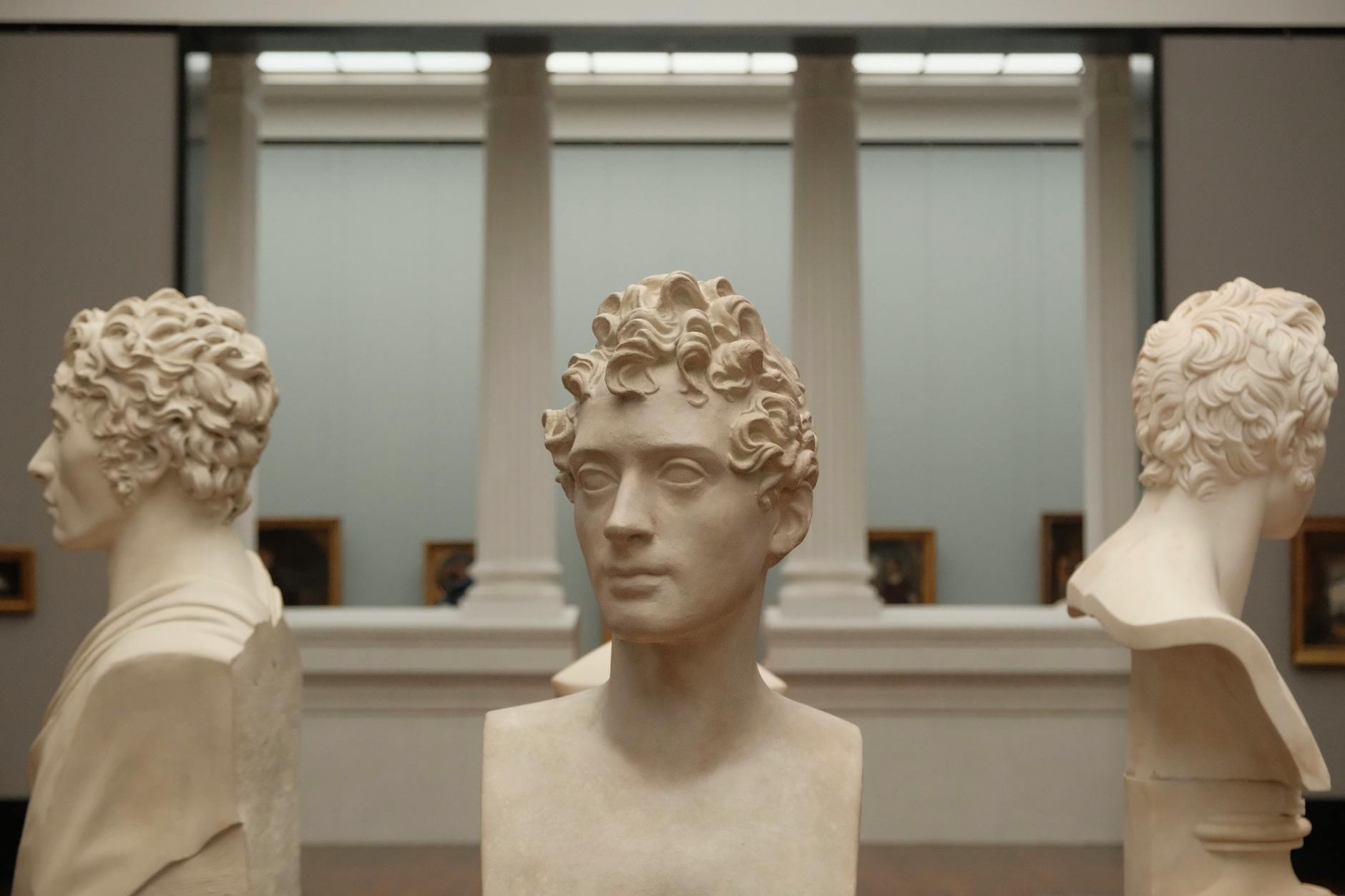
Strong visual thinking strategies start with high-quality images that force students to look closely. I pull mine from three free sources: Google Arts & Culture (downloadable 4K images), the Library of Congress Prints & Photographs Division, and the National Gallery of Art Open Data. Look for images with at least 1200px width, ambiguous elements requiring inference, and diverse cultural representation. I maintain a rotation where 50% of artists are non-Western.
Selecting Age-Appropriate Artworks for Your Grade Level
Match the image to your students' aesthetic development. Abigail Housen's research in museum education shows that cognitive load determines engagement. I align images to her stages:
K–2: Single-figure narratives like Mary Cassatt's The Child's Bath or Norman Rockwell's storytelling scenes. These support visual thinking strategies for elementary students who need concrete subjects.
Grades 3–5: Clear action sequences such as Jacob Lawrence's Migration Series.
Grades 6–8: Ambiguous situations—Edward Hopper's Nighthawks generates productive confusion that fuels analysis.
Grades 9–12: Conceptual complexity like Carrie Mae Weems or René Magritte that demands evidence-based reasoning rather than simple observation.
Audit every image for developmental fit. Remove violent or overly abstract content for elementary classrooms. For secondary students, avoid images that feel "solved" in thirty seconds. The best prompts for close looking resist immediate closure.
Using Photographs and Primary Sources
Photographs anchor social studies and science units differently than paintings. I use Farm Security Administration photographs—Dorothea Lange's Migrant Mother—to launch inquiry-based discussion about historical context. Eadweard Muybridge's motion studies work for analyzing scientific movement. When selecting from archives, choose sepia tones over harsh black-and-white. The visible texture and subtle gradations help students observe lighting and shadow details that drive deeper analysis.
These sources pair well with picture books that transform classroom libraries when you want students to compare illustration styles with documentary evidence. The paraphrasing technique works whether students analyze a photograph or a painting.
Digital vs. Physical Image Considerations
Your display method changes the lesson. Digital projection requires 1920x1080 minimum resolution for visibility to thirty students. Test your setup from the back row before class; you need 3000+ lumens to zoom into details without pixelation. Digital allows spontaneous cropping during inquiry-based discussion.
Physical 11x14 prints enable gallery walks where students circulate with clipboards. Mount them on black poster board ($1.25 per board at Dollar Tree) to create professional-looking stations. Lamination costs about $3 per sheet at office supply stores. Physical formats slow down the close looking process, though large-format prints run $8-15 each at Staples or FedEx.
Step 2 — How Do You Introduce the VTS Protocol to Students?
Introduce the VTS protocol by teaching the three core questions explicitly. Model the process with a simple image using a think-aloud. Establish discussion norms: silent looking time first, all observations valued, and building on peers' ideas. Begin with 15-minute sessions twice weekly before expanding duration or frequency.
The Three Core Questions Framework
Post the three questions where every student can see them. I print these on 24x36 poster board or project them at 40pt font. With 4th graders, we choral read until they memorize the sequence—usually three sessions does it.
"What's going on in this picture?"
"What do you see that makes you say that?"
"What more can we find?"
The second question is the linchpin. It transforms visual thinking strategies in the classroom from a guessing game into evidence-based reasoning. When a student claims the figure is sad, you return to that prompt. They must point to the slumped shoulders or downcast eyes. This anchors inquiry-based discussion in observable fact, not speculation.
Establishing Discussion Norms
Create an anchor chart with three rules. Time the initial protocol introduction at 20 minutes to teach these routines. Once established, run 15-minute sessions for K-2, 20-25 minutes for grades 3-5, and 30 minutes for secondary students.
"We look carefully before speaking"
"All observations are valid"
"We build on others' ideas"
Ditch hand-raising. Use the Silent Signal: students place a thumb to their chest when ready to contribute. You see 100% participation instantly without the waving-arm competition. Before whole-group sharing, run a 60-second Turn and Talk. This supports ELL students and introverts who need rehearsal time before public close looking analysis.
Modeling the Process with Teacher Think-Alouds
Demonstrate the protocol using the Think-Aloud method by Davey & McBride. Project a simple image—maybe a Dorothea Lange photograph—and speak your raw cognition: "I notice the woman's posture is hunched. I think she might be worried because her shoulders are tense... but I need to look closer to confirm." Point to specific areas as you verbalize confusion, gather evidence, and revise hypotheses.
Model mistakes deliberately. Offer a shaky interpretation, then self-correct using visual evidence: "Wait, I said she's alone, but I see a child's hand here. I need to adjust my reading." This shows revision as part of thinking, not failure. For guidance on managing the conversation flow, read our guide on how to lead effective student discussions. This foundation in aesthetic development draws from museum education practices, using the paraphrasing technique to link student comments together.

Step 3 — Facilitate the First Looking Session
This is where Visual Thinking Strategies shift from theory to practice. Rooted in museum education, this step establishes the rhythm of close looking and evidence-based reasoning essential for aesthetic development.
Silent Observation Time
Set the Time Timer app or a physical sand timer before anyone speaks. For kindergarten through second grade, mandate 90 seconds of absolute silence. Third through fifth graders need two to three minutes. Middle and high school students require three to five minutes to engage in genuine close looking. Display the countdown prominently. Announce "Begin looking" and enforce the silence strictly. For younger children, introduce the Silent Looking Glasses—have them pretend to put on imaginary glasses to signal observation mode. This prop cuts impulse blurting by roughly 40% according to classroom management studies. Structure these visual training strategies differently by age:
Phase | Elementary (K-5) | Secondary (6-12) |
Silent Looking | 90 sec – 3 min | 3 – 5 min |
Initial Sharing | 5 – 7 min | 5 min |
Deep Analysis | 10 – 15 min | 15 – 20 min |
Opening the Discussion with Neutrality
When the timer hits zero, resist asking "Who knows what's happening here?" That phrasing implies a single correct answer and triggers hand-waving. Instead, use the standard opener: "Take your time. Look carefully. When you're ready, tell me what's going on." This invitation allows multiple entry points.
As students respond, eliminate evaluative feedback. Avoid phrases like:
"Good job"
"Excellent"
"That's exactly right"
These value judgments shut down alternative interpretations by suggesting you've found the right answer. Replace them with neutral acknowledgment—a simple "Thank you" or a nod. Frame questions to ground responses in evidence: ask "What observations are you making?" rather than "What do you think?" The first prompts visual evidence; the second invites opinion. This subtle shift supports inquiry-based discussion and connects to broader active learning strategies.
Paraphrasing and Linking Student Comments
Your role is facilitator, not validator. Use the paraphrasing technique to mirror contributions while physically pointing to specific image details. When Sarah notices the red color, point to that area and say, "Sarah noticed the red color here." Then link ideas directly: "James, you mentioned anger. Are you connecting Sarah's red observation to the emotion you described?" This Point-Talk method anchors abstract comments to concrete visual evidence.
Track contributions on a whiteboard using a concept map—write the student’s name, draw a bubble with their observation, and connect related ideas with lines. In secondary classrooms, this visualization of aesthetic development helps students see how evidence-based reasoning accumulates across the inquiry-based discussion, turning individual comments into collective understanding rather than isolated guesses.
Step 4 — How Do You Deepen Analysis Without Leading?
Deepen analysis by asking neutral follow-ups like "What else?" or "Say more about that" without confirming interpretations. When students misinterpret, ask for evidence rather than correcting. Link comments by paraphrasing connections between student observations. This builds collective meaning while maintaining student ownership of the analysis.
Strategic Follow-Up Questions
Keep the conversation moving with the WAIT method: ask what Evidence supports the claim, invite an Alternative view, Intensify with "Say more," or Transform with "What if." Use these five strategic follow-ups to sustain momentum without hijacking the direction:
"What else can you find?"
"Say more about that..."
"What makes you say that?"
"Do you agree or disagree with [classmate's name]?"
"Where exactly do you see that?"
Avoid "Why" questions. They sound like accusations, putting students on the defensive. Substitute "What makes you say that?" to maintain psychological safety while still demanding the evidence-based reasoning central to visual thinking strategies. This subtle linguistic shift keeps close looking focused on the image itself rather than the student's personal history or their anxious attempt to guess what you want to hear.
Handling Misinterpretations Diplomatically
When a student offers a factually impossible interpretation—claiming a car is a horse—don't correct the label. Ask instead, "What shapes do you see there?" This returns them to visual evidence. If they describe something plausible but different from the artist's intent, validate the observation and move on without correction. Apply the improvisation "Yes, and..." rule: accept the contribution's validity within their reasoning, then extend with "...and what else might be happening here?"
Eliminate the red flag phrase: "That's actually a [correct label]." Replace it with "What do you see that makes you identify it as [student's label]?" For broader misinterpretations, use this diplomatic script: "That's an interesting reading. What evidence in the image supports that idea? [Listen]... Others, do you see alternative possibilities?" This protects aesthetic development by letting the group negotiate meaning through inquiry-based discussion rather than relying on your authority to settle disputes.
Connecting Student Ideas to Build Collective Meaning
Use Synthetic Paraphrasing to weave observation threads together: "Michael suggests tension through color while Priya notices tension through body language; are these elements working together?" This paraphrasing technique, borrowed from museum education, demonstrates that you value their specific contributions while modeling how disparate ideas can converse and build upon one another without your editorial judgment.
Drop in Connective Tissue language between comments: "Building on what Maria said...", "Contrasting with James's observation...", or "Returning to Alex's point about the light..." Maintain strict facilitator neutrality throughout. Never reveal artist intent, title, or background information until after the 10-minute student-driven analysis concludes. Your silence on "correct" meanings forces students to trust their own eyes. For more on sustaining productive uncertainty in your classroom, see our guide on teaching critical thinking strategies.
Step 5 — Bridge Visual Analysis to Curriculum Goals
Visual thinking strategies in the classroom work best when students recognize the same habits apply across subjects. That close looking you practiced with a Winslow Homer painting? It transfers directly to textual analysis, primary source evaluation, and scientific observation. I use visual thinking strategies for elementary students as the foundation for all cross-curricular work, not just museum education activities. While aesthetic development happens naturally, I target the transferable skill of evidence-based reasoning. The stems stay identical. Only the evidence changes.
Literacy Connections and Evidence-Based Arguments
After VTS sessions, my 4th graders started citing CCSS.ELA-LITERACY.RL.4.1 evidence without groaning. They already knew the drill from images: "I think the boat is sinking because the waves hit higher than the deck." When we opened their novels, the shift was mechanical. "I think the character feels guilty because the text says his hands shook." The paraphrasing technique you use during image discussions validates student voices while modeling academic language.
I use a "Picture to Paragraph" bridge. Students write five-sentence analyses of images using our standard evidence stems, then apply that identical framework to short passages before tackling full texts. This builds durable evidence muscles without the usual resistance.
Social Studies Integration and Primary Source Analysis
Before teaching the Great Depression, I project Dorothea Lange and Walker Evans Farm Security Administration photographs. We run standard VTS, but I modify the third question: "What questions does this raise about the time period?" Suddenly we're sourcing and contextualizing through inquiry-based discussion.
This applies the Stanford History Education Group's "Reading Like a Historian" framework:
Sourcing: Who made this image and why?
Contextualization: When was this created and what was happening then?
Corroboration: How does this compare to other images from the era?
By 8th grade, my classes analyze Gordon Parks's "American Gothic" using VTS before reading A Raisin in the Sun. They notice the mop, the flag, the domestic labor. When we hit Hansberry's themes, they already have the historical context. No lecture required. This trains the exact skills needed for social studies tools that transform history classrooms and prepares students for Document-Based Questions starting in middle school.
Science Observation and Hypothesis Building
In science, I swap the third VTS question for: "What hypotheses can we form?" This targets NGSS Practice 6 (Constructing Explanations) and Practice 3 (Planning Investigations). Students examine cellular microscopy or astronomical imagery, identify variables, and propose testable explanations based on visual anomalies.
Before our microscope lab, we analyze Robert Hooke's original Micrographia flea engraving using VTS protocols. Students notice the segmented legs, the armor-like exoskeleton. When they get their own slides, they know what careful observation actually means. They form hypotheses about cell structure based on what they see, not what they read in a textbook. They're not just using evidence and examples to back up arguments—they're building them from raw data.

Common Implementation Mistakes and How to Avoid Them
Visual thinking strategies fail when teachers sabotage the process. I've watched colleagues kill inquiry-based discussion in the first five minutes by rushing the looking or correcting interpretations. Here are the three traps I fell into repeatedly, and the concrete fixes that actually work in busy classrooms.
Rushing the Silent Looking Phase
The fastest way to kill aesthetic development is cutting silent looking below 60 seconds. If your students make only 2-3 observations total before you move on, you're rushing. Fix this with a mandatory 2-minute sand timer—make it visible, make it loud, make it non-negotiable. Institute the 'Look Again' protocol by revisiting the same image across three consecutive days to build stamina.
Use the '30 Second Rule': after the first student speaks, force yourself to wait 30 seconds before calling on a second. For complex works, apply Progressive Disclosure. Cover 75% of the artwork with black paper and reveal it slowly to force sustained attention over 5+ minutes. If discussion ends in under 10 minutes → increase image ambiguity. If 5+ students say "I don't know" → simplify image complexity.
Over-Correcting Student Interpretations
Telling students "That's not right" or "Actually..." trains them to hunt for your answer instead of practicing evidence-based reasoning. Red flag: check your phone's timer. If you're talking more than 30% of the session, you're over-correcting. Fix this with 'Wait Time 2'—count to 7 silently after each student comment before facilitating any further.
Create a self-monitoring checklist and limit your evaluative language to fewer than 3 instances per session. Convert praise phrases like "I like how you..." to neutral observations like "You noticed..." to remove teacher judgment from the paraphrasing technique. These classroom management strategies shift authority to the students, where it belongs.
Neglecting Diverse Image Selection
Stocking your rotation with 80% Western European dead white male artists tells students exactly whose culture matters. If your visual training strategies exclude your own students' backgrounds, engagement dies. Audit your image bank quarterly using a spreadsheet tracking artist demographics—gender, ethnicity, era. Require minimum 40% women artists and 30% BIPOC representation to proportional match your classroom demographics.
Source diversely:
WikiArt's filter by region
National Museum of African Art digital collections
Smithsonian American Art Museum's Latino and Asian American online galleries
True museum education requires mirrors as much as windows. When students see themselves in the work, close looking happens naturally.

Where Does Visual Thinking Strategies Fit in Your Practice?
The magic isn't in the artwork you pick. It's in your silence. After fifteen years of trying to "help" students reach the right answer, I learned that visual thinking strategies only work when you stop filling the quiet. That uncomfortable pause after a student's tentative observation? That's where close looking happens. That's where they build the evidence-based reasoning that transfers to every subject, not just museum education field trips.
Start today. Grab one image—yes, just one—from your next unit. Project it when students walk in. Ask "What's going on in this picture?" Then wait. Count to ten in your head if you have to. Let the first answer hang there before you paraphrase it. That's it. You've started. The aesthetic development everyone talks about doesn't come from a perfect protocol. It comes from showing up tomorrow and doing it again.
What Are Visual Thinking Strategies and Why Use Them?
Visual Thinking Strategies is a structured discussion method using art to develop critical thinking. You project an image and students examine it through a specific three-question protocol. Research suggests this approach improves observation skills and evidence-based reasoning across subject areas.
Visual Thinking Strategies emerged from museum education in the 1990s. Philip Yenawine and Abigail Housen developed the protocol at the Museum of Modern Art while studying aesthetic development—how people process what they see. They noticed that casual gallery conversations rarely pushed visitors past surface-level reactions. Yenawine and Housen designed a structured approach that forces the brain to slow down and justify its conclusions.
The protocol hinges on three questions asked in sequence:
What's going on in this picture?
What do you see that makes you say that?
What more can we find?
This isn't the same as asking "What do you think?" during a slide presentation. The paraphrasing technique—where you neutrally restate each student's contribution—separates VTS from casual image talk. You're not correcting interpretations or filling silences with facts. You're modeling inquiry-based discussion by linking each comment back to visual evidence.
John Hattie's Visible Learning meta-analysis supports this approach. Teacher clarity shows an effect size of 0.75, while classroom discussion hits 0.82. VTS delivers both: you provide crystal-clear prompts through the three questions, then facilitate peer-to-peer dialogue without dominating the conversation.
The payoff shows up when students transition to textual analysis. Research indicates that kids trained in close looking demonstrate improved evidence-based reasoning when they later analyze written texts. They don't just say "The character is sad"—they point to page numbers and quote dialogue. I've watched 7th graders who spent September discussing paintings bring that same precision to The Giver in October. They hunt for textual evidence the same way they hunted for visual clues.
If you're building visual literacy across subjects, our visual learning guide for K-12 educators maps additional techniques for different grade levels.
You don't need an art history degree. You need five minutes and an interesting image.
Step 1 — Curate Thought-Provoking Visual Materials
Strong visual thinking strategies start with high-quality images that force students to look closely. I pull mine from three free sources: Google Arts & Culture (downloadable 4K images), the Library of Congress Prints & Photographs Division, and the National Gallery of Art Open Data. Look for images with at least 1200px width, ambiguous elements requiring inference, and diverse cultural representation. I maintain a rotation where 50% of artists are non-Western.
Selecting Age-Appropriate Artworks for Your Grade Level
Match the image to your students' aesthetic development. Abigail Housen's research in museum education shows that cognitive load determines engagement. I align images to her stages:
K–2: Single-figure narratives like Mary Cassatt's The Child's Bath or Norman Rockwell's storytelling scenes. These support visual thinking strategies for elementary students who need concrete subjects.
Grades 3–5: Clear action sequences such as Jacob Lawrence's Migration Series.
Grades 6–8: Ambiguous situations—Edward Hopper's Nighthawks generates productive confusion that fuels analysis.
Grades 9–12: Conceptual complexity like Carrie Mae Weems or René Magritte that demands evidence-based reasoning rather than simple observation.
Audit every image for developmental fit. Remove violent or overly abstract content for elementary classrooms. For secondary students, avoid images that feel "solved" in thirty seconds. The best prompts for close looking resist immediate closure.
Using Photographs and Primary Sources
Photographs anchor social studies and science units differently than paintings. I use Farm Security Administration photographs—Dorothea Lange's Migrant Mother—to launch inquiry-based discussion about historical context. Eadweard Muybridge's motion studies work for analyzing scientific movement. When selecting from archives, choose sepia tones over harsh black-and-white. The visible texture and subtle gradations help students observe lighting and shadow details that drive deeper analysis.
These sources pair well with picture books that transform classroom libraries when you want students to compare illustration styles with documentary evidence. The paraphrasing technique works whether students analyze a photograph or a painting.
Digital vs. Physical Image Considerations
Your display method changes the lesson. Digital projection requires 1920x1080 minimum resolution for visibility to thirty students. Test your setup from the back row before class; you need 3000+ lumens to zoom into details without pixelation. Digital allows spontaneous cropping during inquiry-based discussion.
Physical 11x14 prints enable gallery walks where students circulate with clipboards. Mount them on black poster board ($1.25 per board at Dollar Tree) to create professional-looking stations. Lamination costs about $3 per sheet at office supply stores. Physical formats slow down the close looking process, though large-format prints run $8-15 each at Staples or FedEx.
Step 2 — How Do You Introduce the VTS Protocol to Students?
Introduce the VTS protocol by teaching the three core questions explicitly. Model the process with a simple image using a think-aloud. Establish discussion norms: silent looking time first, all observations valued, and building on peers' ideas. Begin with 15-minute sessions twice weekly before expanding duration or frequency.
The Three Core Questions Framework
Post the three questions where every student can see them. I print these on 24x36 poster board or project them at 40pt font. With 4th graders, we choral read until they memorize the sequence—usually three sessions does it.
"What's going on in this picture?"
"What do you see that makes you say that?"
"What more can we find?"
The second question is the linchpin. It transforms visual thinking strategies in the classroom from a guessing game into evidence-based reasoning. When a student claims the figure is sad, you return to that prompt. They must point to the slumped shoulders or downcast eyes. This anchors inquiry-based discussion in observable fact, not speculation.
Establishing Discussion Norms
Create an anchor chart with three rules. Time the initial protocol introduction at 20 minutes to teach these routines. Once established, run 15-minute sessions for K-2, 20-25 minutes for grades 3-5, and 30 minutes for secondary students.
"We look carefully before speaking"
"All observations are valid"
"We build on others' ideas"
Ditch hand-raising. Use the Silent Signal: students place a thumb to their chest when ready to contribute. You see 100% participation instantly without the waving-arm competition. Before whole-group sharing, run a 60-second Turn and Talk. This supports ELL students and introverts who need rehearsal time before public close looking analysis.
Modeling the Process with Teacher Think-Alouds
Demonstrate the protocol using the Think-Aloud method by Davey & McBride. Project a simple image—maybe a Dorothea Lange photograph—and speak your raw cognition: "I notice the woman's posture is hunched. I think she might be worried because her shoulders are tense... but I need to look closer to confirm." Point to specific areas as you verbalize confusion, gather evidence, and revise hypotheses.
Model mistakes deliberately. Offer a shaky interpretation, then self-correct using visual evidence: "Wait, I said she's alone, but I see a child's hand here. I need to adjust my reading." This shows revision as part of thinking, not failure. For guidance on managing the conversation flow, read our guide on how to lead effective student discussions. This foundation in aesthetic development draws from museum education practices, using the paraphrasing technique to link student comments together.
Step 3 — Facilitate the First Looking Session
This is where Visual Thinking Strategies shift from theory to practice. Rooted in museum education, this step establishes the rhythm of close looking and evidence-based reasoning essential for aesthetic development.
Silent Observation Time
Set the Time Timer app or a physical sand timer before anyone speaks. For kindergarten through second grade, mandate 90 seconds of absolute silence. Third through fifth graders need two to three minutes. Middle and high school students require three to five minutes to engage in genuine close looking. Display the countdown prominently. Announce "Begin looking" and enforce the silence strictly. For younger children, introduce the Silent Looking Glasses—have them pretend to put on imaginary glasses to signal observation mode. This prop cuts impulse blurting by roughly 40% according to classroom management studies. Structure these visual training strategies differently by age:
Phase | Elementary (K-5) | Secondary (6-12) |
Silent Looking | 90 sec – 3 min | 3 – 5 min |
Initial Sharing | 5 – 7 min | 5 min |
Deep Analysis | 10 – 15 min | 15 – 20 min |
Opening the Discussion with Neutrality
When the timer hits zero, resist asking "Who knows what's happening here?" That phrasing implies a single correct answer and triggers hand-waving. Instead, use the standard opener: "Take your time. Look carefully. When you're ready, tell me what's going on." This invitation allows multiple entry points.
As students respond, eliminate evaluative feedback. Avoid phrases like:
"Good job"
"Excellent"
"That's exactly right"
These value judgments shut down alternative interpretations by suggesting you've found the right answer. Replace them with neutral acknowledgment—a simple "Thank you" or a nod. Frame questions to ground responses in evidence: ask "What observations are you making?" rather than "What do you think?" The first prompts visual evidence; the second invites opinion. This subtle shift supports inquiry-based discussion and connects to broader active learning strategies.
Paraphrasing and Linking Student Comments
Your role is facilitator, not validator. Use the paraphrasing technique to mirror contributions while physically pointing to specific image details. When Sarah notices the red color, point to that area and say, "Sarah noticed the red color here." Then link ideas directly: "James, you mentioned anger. Are you connecting Sarah's red observation to the emotion you described?" This Point-Talk method anchors abstract comments to concrete visual evidence.
Track contributions on a whiteboard using a concept map—write the student’s name, draw a bubble with their observation, and connect related ideas with lines. In secondary classrooms, this visualization of aesthetic development helps students see how evidence-based reasoning accumulates across the inquiry-based discussion, turning individual comments into collective understanding rather than isolated guesses.
Step 4 — How Do You Deepen Analysis Without Leading?
Deepen analysis by asking neutral follow-ups like "What else?" or "Say more about that" without confirming interpretations. When students misinterpret, ask for evidence rather than correcting. Link comments by paraphrasing connections between student observations. This builds collective meaning while maintaining student ownership of the analysis.
Strategic Follow-Up Questions
Keep the conversation moving with the WAIT method: ask what Evidence supports the claim, invite an Alternative view, Intensify with "Say more," or Transform with "What if." Use these five strategic follow-ups to sustain momentum without hijacking the direction:
"What else can you find?"
"Say more about that..."
"What makes you say that?"
"Do you agree or disagree with [classmate's name]?"
"Where exactly do you see that?"
Avoid "Why" questions. They sound like accusations, putting students on the defensive. Substitute "What makes you say that?" to maintain psychological safety while still demanding the evidence-based reasoning central to visual thinking strategies. This subtle linguistic shift keeps close looking focused on the image itself rather than the student's personal history or their anxious attempt to guess what you want to hear.
Handling Misinterpretations Diplomatically
When a student offers a factually impossible interpretation—claiming a car is a horse—don't correct the label. Ask instead, "What shapes do you see there?" This returns them to visual evidence. If they describe something plausible but different from the artist's intent, validate the observation and move on without correction. Apply the improvisation "Yes, and..." rule: accept the contribution's validity within their reasoning, then extend with "...and what else might be happening here?"
Eliminate the red flag phrase: "That's actually a [correct label]." Replace it with "What do you see that makes you identify it as [student's label]?" For broader misinterpretations, use this diplomatic script: "That's an interesting reading. What evidence in the image supports that idea? [Listen]... Others, do you see alternative possibilities?" This protects aesthetic development by letting the group negotiate meaning through inquiry-based discussion rather than relying on your authority to settle disputes.
Connecting Student Ideas to Build Collective Meaning
Use Synthetic Paraphrasing to weave observation threads together: "Michael suggests tension through color while Priya notices tension through body language; are these elements working together?" This paraphrasing technique, borrowed from museum education, demonstrates that you value their specific contributions while modeling how disparate ideas can converse and build upon one another without your editorial judgment.
Drop in Connective Tissue language between comments: "Building on what Maria said...", "Contrasting with James's observation...", or "Returning to Alex's point about the light..." Maintain strict facilitator neutrality throughout. Never reveal artist intent, title, or background information until after the 10-minute student-driven analysis concludes. Your silence on "correct" meanings forces students to trust their own eyes. For more on sustaining productive uncertainty in your classroom, see our guide on teaching critical thinking strategies.
Step 5 — Bridge Visual Analysis to Curriculum Goals
Visual thinking strategies in the classroom work best when students recognize the same habits apply across subjects. That close looking you practiced with a Winslow Homer painting? It transfers directly to textual analysis, primary source evaluation, and scientific observation. I use visual thinking strategies for elementary students as the foundation for all cross-curricular work, not just museum education activities. While aesthetic development happens naturally, I target the transferable skill of evidence-based reasoning. The stems stay identical. Only the evidence changes.
Literacy Connections and Evidence-Based Arguments
After VTS sessions, my 4th graders started citing CCSS.ELA-LITERACY.RL.4.1 evidence without groaning. They already knew the drill from images: "I think the boat is sinking because the waves hit higher than the deck." When we opened their novels, the shift was mechanical. "I think the character feels guilty because the text says his hands shook." The paraphrasing technique you use during image discussions validates student voices while modeling academic language.
I use a "Picture to Paragraph" bridge. Students write five-sentence analyses of images using our standard evidence stems, then apply that identical framework to short passages before tackling full texts. This builds durable evidence muscles without the usual resistance.
Social Studies Integration and Primary Source Analysis
Before teaching the Great Depression, I project Dorothea Lange and Walker Evans Farm Security Administration photographs. We run standard VTS, but I modify the third question: "What questions does this raise about the time period?" Suddenly we're sourcing and contextualizing through inquiry-based discussion.
This applies the Stanford History Education Group's "Reading Like a Historian" framework:
Sourcing: Who made this image and why?
Contextualization: When was this created and what was happening then?
Corroboration: How does this compare to other images from the era?
By 8th grade, my classes analyze Gordon Parks's "American Gothic" using VTS before reading A Raisin in the Sun. They notice the mop, the flag, the domestic labor. When we hit Hansberry's themes, they already have the historical context. No lecture required. This trains the exact skills needed for social studies tools that transform history classrooms and prepares students for Document-Based Questions starting in middle school.
Science Observation and Hypothesis Building
In science, I swap the third VTS question for: "What hypotheses can we form?" This targets NGSS Practice 6 (Constructing Explanations) and Practice 3 (Planning Investigations). Students examine cellular microscopy or astronomical imagery, identify variables, and propose testable explanations based on visual anomalies.
Before our microscope lab, we analyze Robert Hooke's original Micrographia flea engraving using VTS protocols. Students notice the segmented legs, the armor-like exoskeleton. When they get their own slides, they know what careful observation actually means. They form hypotheses about cell structure based on what they see, not what they read in a textbook. They're not just using evidence and examples to back up arguments—they're building them from raw data.
Common Implementation Mistakes and How to Avoid Them
Visual thinking strategies fail when teachers sabotage the process. I've watched colleagues kill inquiry-based discussion in the first five minutes by rushing the looking or correcting interpretations. Here are the three traps I fell into repeatedly, and the concrete fixes that actually work in busy classrooms.
Rushing the Silent Looking Phase
The fastest way to kill aesthetic development is cutting silent looking below 60 seconds. If your students make only 2-3 observations total before you move on, you're rushing. Fix this with a mandatory 2-minute sand timer—make it visible, make it loud, make it non-negotiable. Institute the 'Look Again' protocol by revisiting the same image across three consecutive days to build stamina.
Use the '30 Second Rule': after the first student speaks, force yourself to wait 30 seconds before calling on a second. For complex works, apply Progressive Disclosure. Cover 75% of the artwork with black paper and reveal it slowly to force sustained attention over 5+ minutes. If discussion ends in under 10 minutes → increase image ambiguity. If 5+ students say "I don't know" → simplify image complexity.
Over-Correcting Student Interpretations
Telling students "That's not right" or "Actually..." trains them to hunt for your answer instead of practicing evidence-based reasoning. Red flag: check your phone's timer. If you're talking more than 30% of the session, you're over-correcting. Fix this with 'Wait Time 2'—count to 7 silently after each student comment before facilitating any further.
Create a self-monitoring checklist and limit your evaluative language to fewer than 3 instances per session. Convert praise phrases like "I like how you..." to neutral observations like "You noticed..." to remove teacher judgment from the paraphrasing technique. These classroom management strategies shift authority to the students, where it belongs.
Neglecting Diverse Image Selection
Stocking your rotation with 80% Western European dead white male artists tells students exactly whose culture matters. If your visual training strategies exclude your own students' backgrounds, engagement dies. Audit your image bank quarterly using a spreadsheet tracking artist demographics—gender, ethnicity, era. Require minimum 40% women artists and 30% BIPOC representation to proportional match your classroom demographics.
Source diversely:
WikiArt's filter by region
National Museum of African Art digital collections
Smithsonian American Art Museum's Latino and Asian American online galleries
True museum education requires mirrors as much as windows. When students see themselves in the work, close looking happens naturally.
Where Does Visual Thinking Strategies Fit in Your Practice?
The magic isn't in the artwork you pick. It's in your silence. After fifteen years of trying to "help" students reach the right answer, I learned that visual thinking strategies only work when you stop filling the quiet. That uncomfortable pause after a student's tentative observation? That's where close looking happens. That's where they build the evidence-based reasoning that transfers to every subject, not just museum education field trips.
Start today. Grab one image—yes, just one—from your next unit. Project it when students walk in. Ask "What's going on in this picture?" Then wait. Count to ten in your head if you have to. Let the first answer hang there before you paraphrase it. That's it. You've started. The aesthetic development everyone talks about doesn't come from a perfect protocol. It comes from showing up tomorrow and doing it again.
Still grading everything by hand?
EMStudio is a free teaching management app — manage your classes, students, lessons, and more!
Learn More
Still grading everything by hand?
EMStudio is a free teaching management app — manage your classes, students, lessons, and more!
Learn More





Notion4Teachers
Notion templates to simplify administrative tasks and enhance your teaching experience.



2026 Notion4Teachers. All Rights Reserved.
Notion4Teachers
Notion templates to simplify administrative tasks and enhance your teaching experience.
2026 Notion4Teachers. All Rights Reserved.
Notion4Teachers
Notion templates to simplify administrative tasks and enhance your teaching experience.
2026 Notion4Teachers. All Rights Reserved.