12 Morning Work Activities That Transform Your Routine
12 Morning Work Activities That Transform Your Routine

Article by
Milo
ESL Content Coordinator & Educator
ESL Content Coordinator & Educator
All Posts
It's mid-October and your third graders burst through the door at 8:15 with wet rain boots and endless stories about the bus driver. You need ten minutes to take attendance, sort the lunch count, and check notes from parents. Without solid morning work, those kids are swinging from the coat hooks or starting arguments over the pencil sharpener. These transitional activities between arrival and the bell set the tone for your entire academic day, yet too many of us waste this window on busywork that creates more chaos than calm.
I've learned that effective morning work isn't a photocopied stack that kids rush through or ignore completely while you handle sixteen tasks at your desk. You want a soft start that eases anxious kids into thinking mode without demanding a full lesson from you. Think spiral review they can tackle independently, or calendar time that builds routine without draining your Sunday prep period. The right classroom routine here actually teaches something worthwhile while you manage the administrative details that simply won't wait.
Below, I'll walk you through twelve specific activities that transformed my own mornings from frantic to focused. We'll cover low-prep options that respect your planning time, literacy and math setups requiring minimal explanation, and morning meeting activities that naturally bridge into academic content. I'll also show you exactly how to rotate these materials so your early finisher activities actually keep students occupied. You won't hear "I'm done, what do I do now?" during those first fifteen minutes, and you'll start the day with students who are actually ready to learn.
Still grading everything by hand?
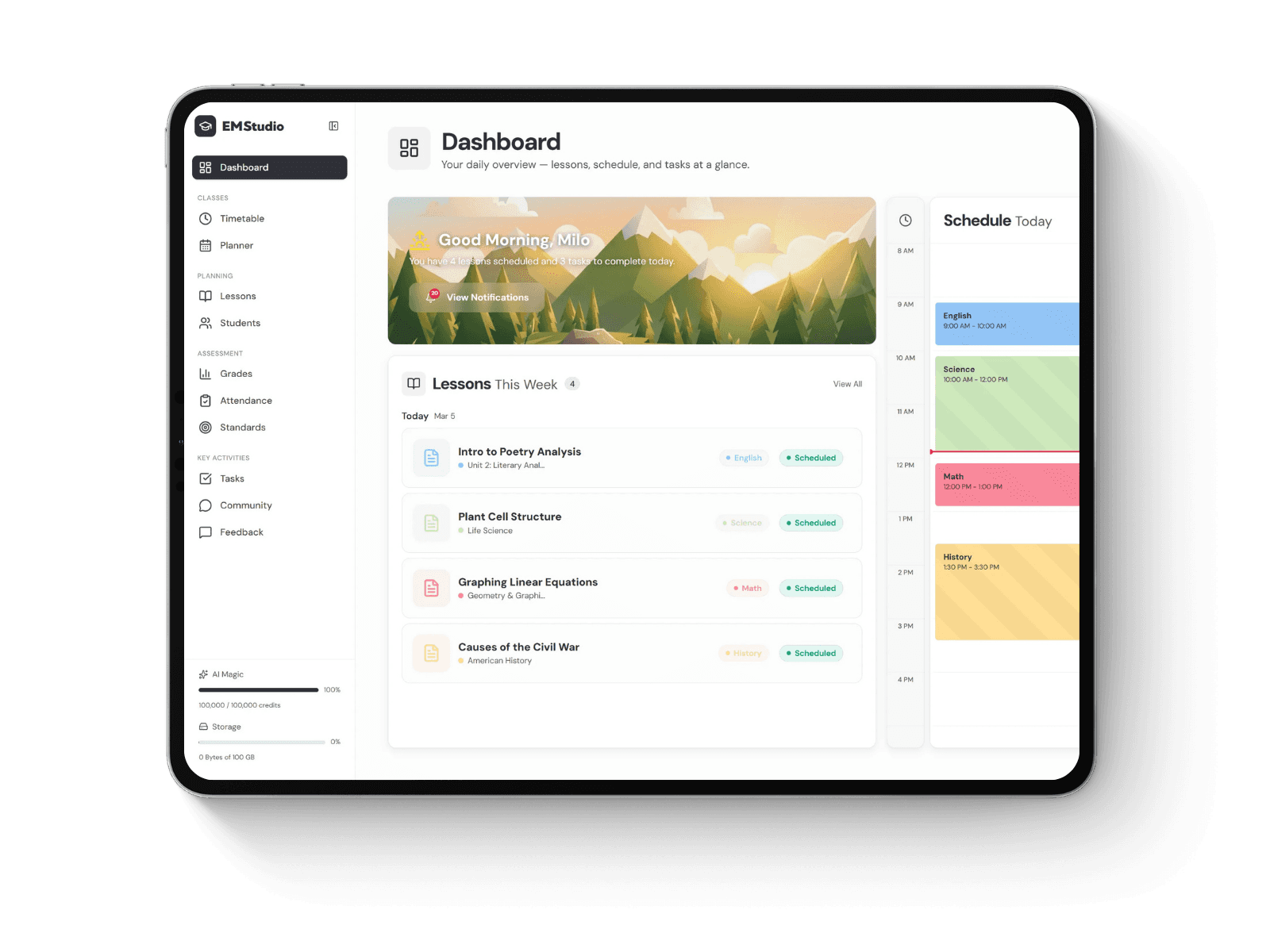
EMStudio is a free teaching management app — manage your classes, students, lessons, and more!
Learn More
Still grading everything by hand?
EMStudio is a free teaching management app — manage your classes, students, lessons, and more!
Learn More
Table of Contents
What Are the Best Low-Prep Morning Work Activities?
The best low-prep morning work activities include daily journals with structured prompts, Number of the Day challenges using dice or whiteboards, and independent reading response sheets. These require minimal setup—typically under five minutes weekly—use materials already in the classroom like composition notebooks, and engage students immediately upon arrival without technology.
Morning work should not require Sunday night prep marathons. I define low-prep as under five minutes of setup weekly using items already in your room. I screen for four specific traits:
No technology dependence that fails when the Wi-Fi hiccups.
Reusable templates or notebooks that eliminate photocopying queues.
Single-point rubric for quick assessment—done or not done.
Materials stored in student desks to eliminate distribution time.
Research suggests teachers spend 5-12 hours weekly on preparation. These activities reduce that burden while maintaining instructional rigor through structured choice.
When you spend more time prepping morning work than students spend doing it, engagement drops fast. I learned this the hard way in my third year, spending hours laminating elaborate soft start bins only to watch kids ignore them for free draw. Sustainability dies when prep time exceeds task duration. For more efficiency strategies, check out these time-saving classroom hacks.
Daily Journals and Writing Prompts
Daily journals build writing fluency without photocopying madness. I rotate three prompt categories that require zero prep once routines are set.
Opinion prompts ask "Would you rather..." questions. Recall prompts start with "Yesterday I learned..." Prediction prompts invite students to write "I think today we will..." For grades 2-5, require 3-5 sentences. For K-1, mandate an illustration with labels or a dictated caption.
Materials stay simple. Each student keeps a composition notebook in their desk. Write the prompt on the board or tape it to chart paper. Set a 10-15 minute timer using a sand timer or projected countdown. When time expires, pencils drop.
Early finishers do not rotate to new centers. They free write in the same journal or add details to yesterday's drawing. Everyone stays seated until the timer chimes for whole-group transition. This prevents the chaos of staggered finishing times during your soft start.
Number of the Day Challenges
Number of the Day builds number sense through spiral review without worksheet packets. Differentiate by grade level to keep the challenge appropriate.
Kindergarten and first grade work with numbers 1-20. They draw ten frames and tally marks. Second and third graders tackle two to three digit numbers using expanded form and adding or subtracting ten. Fourth and fifth graders explore multi-digit numbers through factors, multiples, and powers of ten.
Implementation stays flexible. Roll two to four dice to generate the daily number, or pick a number connected to your current math unit. Students record their work on personal whiteboards or a half-sheet template showing four to five different representations. This becomes a transitional activity that bridges arrival time to calendar time.
Accountability happens through partner sharing. Before the whole group reviews, students turn and share one representation with a neighbor. While they talk, circulate with a clipboard. Note who confuses place value or struggles with regrouping. These observations drive your small group instruction later.
Independent Reading Response Sheets
Independent reading responses keep the classroom routine academic while you take attendance. Students need structure, not just silent reading.
Offer three response types that rotate weekly. The Character Trait Web asks students to draw the character and list three adjectives describing them. The Setting Snapshot requires answering Where and When in complete sentences. The Prediction Bookmark involves writing a prediction on a sticky note at a stop point in the text.
Logistics matter for independence. Create a bin labeled "Morning Books" with level-appropriate texts—levels E through J work for first grade, for example. Students read for ten minutes, then complete one response sheet stored in their personal book baggie. This eliminates distribution time.
Differentiate by output, not input. Below-level readers draw a picture response with one label. On-level writers produce two complete sentences. Above-level students write four sentences citing evidence from the text. Everyone engages with the same book, but the expectation scales to their current ability. Check out these tools to support creative writers for extending these activities.

Which Morning Work Activities Build Early Literacy?
Early literacy morning work needs to hit phonemic awareness and sight word recognition hard. I use phonics sorting mats for word patterns, sentence building cards with color-coded parts of speech, and quick games like Tower Power or Parking Lot. These build decoding skills and automaticity for grades K-2 without worksheets.
These activities align with Scarborough's Reading Rope word recognition strand. They target phonological awareness, decoding, and sight recognition through explicit phonics instruction.
Each task takes 10 to 15 minutes and uses multi-sensory approaches. Students touch manipulatives, speak words aloud, and see color patterns. This engages touch, sight, and sound simultaneously, creating stronger neural connections than paper-pencil tasks for young readers.
Match the difficulty to the developmental stage:
Kindergarten: Use Phonics Sorting Mats with picture cards for initial sounds and rhyme matching. Focus on letter recognition games and pre-reading skills.
First Grade: Implement CVC word sorting and simple three-word sentence building. Target sight words from the Dolch pre-primer list during morning work.
Second Grade: Advance to vowel teams and r-controlled vowels in sorting mats. Build complex sentences with conjunctions and play Tower Power with Fry first 100 words.
Phonics Sorting Mats
Grab three paper plates or laminated mats and label them with your target pattern. I use short 'a' versus long 'a' with magic 'e' for my first graders in October when that skill emerges. Provide 12 to 15 word cards pulled from your current decodable text or structured literacy programs like Fundations.
Students sort by reading each word aloud, dragging the card to the correct mat. They pick three winners to copy in their journal and illustrate one to prove comprehension. This takes 8 to 10 minutes. Last year, I watched a struggling reader finally grasp the CVCe pattern when he physically moved the card from the short 'a' plate to the long 'a' plate. That tactile moment created the neural pathway worksheets never could.
Add magnetic letters, dry erase markers, or clothespins with words written on them. The fine motor work strengthens finger muscles for pencil grip while they decode. Store cards in labeled baggies for spiral review during soft start. Swap patterns weekly to match your scope, keeping the morning work routine fresh without reinventing the wheel. These transitional activities require minimal setup but deliver targeted practice.
Sentence Building Cards
Cut index cards into three distinct colors. Yellow cards carry the Who or subject. Green cards show the Did What or verb. Blue cards add Where or When using prepositional phrases. Create three difficulty tiers for differentiation: Kindergarteners build simple three-word sentences, first graders add adjectives for four to five word options, and second graders craft complex six-word sentences with conjunctions like and or but.
Accountability matters more than perfect handwriting. After building, students write the sentence in their morning work journal. They circle the capital letter, underline the period, and highlight any sight word used. Then they find a partner for a quick check before returning cards to the labeled baggies. This peer review takes two minutes but prevents errors from repeating all week while building editing skills.
Store cards in pocket charts or color-coded baggies. Rotate word sets weekly to match phonics patterns. Feature -ink words one week, -ank the next. This connects morning work to your evidence-based literacy instruction block. The color-coding provides visual scaffolding for English learners during these early finisher activities.
Sight Word Pattern Games
Keep a Jenga tower or wooden blocks in a literacy center tub. Students play Tower Power by reading a sight word from the Dolch pre-primer or Fry first 100 list to earn each block. They stack carefully, recording how many words they read before the tower crashes. The game lasts 5 to 7 minutes, perfect for a soft start activity that builds fluency pressure without anxiety.
Draw a six-space grid on construction paper for Parking Lot. Label each space with one of your five weekly focus words. Students read the word aloud to park a toy car in that space. Include two review words from previous weeks for spiral review. This visual-kinesthetic pairing helps students map letter recognition games to whole-word reading.
Track progress with two simple containers. Move mastered words to a Word Wall ring that students can flip through during independent reading. Keep practicing words in a Still Learning baggie updated each Friday. This system makes assessment transparent to the child and turns morning work into a personal challenge rather than a chore imposed by the teacher.

What Math Morning Work Requires Minimal Setup?
Math morning work with minimal setup includes Problem of the Day journals focusing on word problems, math fact fluency rings with index cards for addition or multiplication practice, and shape sorting stations using attribute blocks or pattern blocks. These activities require only paper, pencils, and basic manipulatives already found in elementary classrooms.
I used these three routines in my third grade classroom for three years. They run themselves once you teach the procedures.
Problem of the Day | 2 mins to photocopy half-sheets |
Fluency Rings | 20 mins initial setup, zero maintenance |
Shape Sorting | 5 mins gathering blocks |
Spiral review makes this morning work sustainable across the school year. I write problems using seventy percent previously learned material and thirty percent current unit exposure. This ratio builds confidence because students recognize most of the content. It also strengthens retrieval pathways without causing frustration during your transitional activities.
Everything fits in one bin on the counter. You need whiteboards, pencils, and basic manipulatives only. No apps, no devices, no lost passwords during your soft start.
Problem of the Day Journals
Use a half-sheet format with three distinct sections. Label them Model, Equation, and Answer Sentence. Students draw their thinking in the first box, write the number sentence in the second, and finish with a complete sentence that answers the question. Source these problems from Exemplars, CGI frameworks, or create your own based on your district scope.
Adjust the difficulty for your specific grade level. Kindergarten and first graders need Join and Result Unknown story problems with numbers under ten. Second and third graders handle two-step addition and subtraction scenarios. Fourth and fifth graders work multi-step problems requiring all four operations and careful reading comprehension.
During the morning meeting transition, three students share their strategies with the class. One might show direct modeling with circles and tally marks. Another demonstrates counting on using a number line. The third explains the standard algorithm. The class gives a thumbs up if they agree with the final answer. This creates the benefits of math challenges without requiring hours of prep time.
Math Fact Fluency Rings
Construction takes twenty minutes upfront but lasts all year. Hole-punch index cards and slide them onto binder rings. One ring holds addition facts zero through ten, sixty-six cards total. Move to zero through twenty next, then subtraction. Third grade and up use multiplication facts zero through twelve.
Partner A quizzes Partner B for exactly one minute using a sand timer. Partner B tries to beat their previous day's correct count. They switch roles immediately after, then record the highest score in their math journal. I watched my third graders race through these during our soft start before calendar time, cheering when someone beat their personal record.
Mastery requires three consecutive days of twenty or more correct responses for addition, or fifteen for multiplication. Move that specific fact set to a Mastered hook on the wall. The student grabs a new ring and begins the cycle again. This creates a visual trophy wall that tracks growth.
Shape Sorting Stations
Grab a sixty-piece set of attribute blocks or pattern blocks. Draw two overlapping circles on eleven-by-seventeen paper or directly on a whiteboard to create a Venn diagram mat. This simple setup becomes a permanent station in your classroom routine. It works as transitional activities while you take attendance.
Match the challenge to your grade level:
Grades K-1: Sort by one attribute like color or shape name.
Grades 2-3: Sort by two attributes simultaneously, such as red and thick versus blue and thin.
Grades 4-5: Identify the hidden rule and add a shape that fits an empty region of the Venn.
For an extension, students draw the mystery shape that would fit in the intersection but is not in the bag. They must justify their choice using specific attributes in complete written sentences. This connects naturally to counting activities for early learners while serving as early finisher activities for upper elementary students.

Morning Meeting Activities That Transition Into Academics
Use your meeting to wake up brains for the first lesson. If science starts with plant life cycles, ask who has helped in a garden. Their answers become the soil for new learning. This bridge strategy turns calendar time into a preview of the day's work using transitional activities.
Keep the whole routine under 20 minutes. I break it down: greeting takes two, sharing runs five, the activity gets five, and the transition to desk work needs three. That leaves room for a soft start without bleeding into core instruction.
The biggest mistake I see is letting circle time run long. When it hits 25 minutes, your math block pays the price. Set a visible timer and honor it. Kids need the closure cue as much as you do.
Circle Time Question of the Day
The question of the day bridges play to learning. These questions serve as spiral review and transitional activities while they settle into the classroom routine. They wake up yesterday's knowledge so new content has somewhere to stick.
Vocabulary preview: "What is a synonym for big?"
Geometry warm-up: "Name a shape with four equal sides."
Comprehension check: "What happened first in the story we read yesterday?"
Keep the protocol tight. Students turn and talk with their assigned elbow partner for exactly 30 seconds. I walk the circle and listen for strong answers. Then call on three to four volunteers to share with the whole group. Chart their responses on the whiteboard or anchor chart. You will reference those answers during the lesson. Seeing their own words on the board makes the transition into morning work feel seamless.
For morning meeting activities for kindergarten, hand a stuffed animal to the speaker. Only the child holding the bear talks. The rest practice eye contact and listening bodies. It slows the pace but builds the skills they need for real discussion later in the year. I used a beanbag frog in my first grade room and it cut interruptions by half.
SEL Check-In Journals
Start with a social emotional learning activities check-in. Hang a Zones of Regulation poster or an Emotion Wheel with six to eight feeling words. Students move a clothespin with their name to their zone color. Or they draw a face in their journal that matches their zone. It takes two minutes and gives you data on who needs extra support before academics start.
Use the sentence frame: "I am in the ____ Zone because ____. I can use the tool of ____ to stay or get back to Green." List the tools on the board:
Breathing techniques
Water break
Silent reading
Drawing or journaling
Connect it to academics. Use the feeling words as vocabulary words for the week. Graph the class emotions for math data collection. Count how many students are in the Green Zone versus Yellow. Ask what fraction of the class chose breathing as their tool. It turns the check-in into an early finisher activity for the math block. Third graders love seeing the data change day to day.
Group Greeting Routines
Make the greeting academic. These responsive classroom approach greetings warm up brains and voices at the same time:
Ball toss with math facts: The catcher says their name and the answer to four plus three.
Phonics greeting: Each student says their name and a word that starts with the same sound.
Counting greeting: Count by fives around the circle, with each child saying the next number before they greet their neighbor.
For morning meeting activities for kindergarten, keep greetings physical and visual. Use the butterfly greeting where children shake hands with both hands while making eye contact. Try the weather greeting where they comment on the actual sky outside. Or use a silent greeting, waving with direct eye contact. These build the same social skills without demanding language fluency that some five-year-olds do not have yet.
End with a clear transition cue. State firmly, "Today we will become experts on..." and fill in the blank with your first lesson's learning objective. That phrase signals the end of circle time and the start of morning work. Students know the soft start is over and academic time has begun. It closes the circle with purpose.
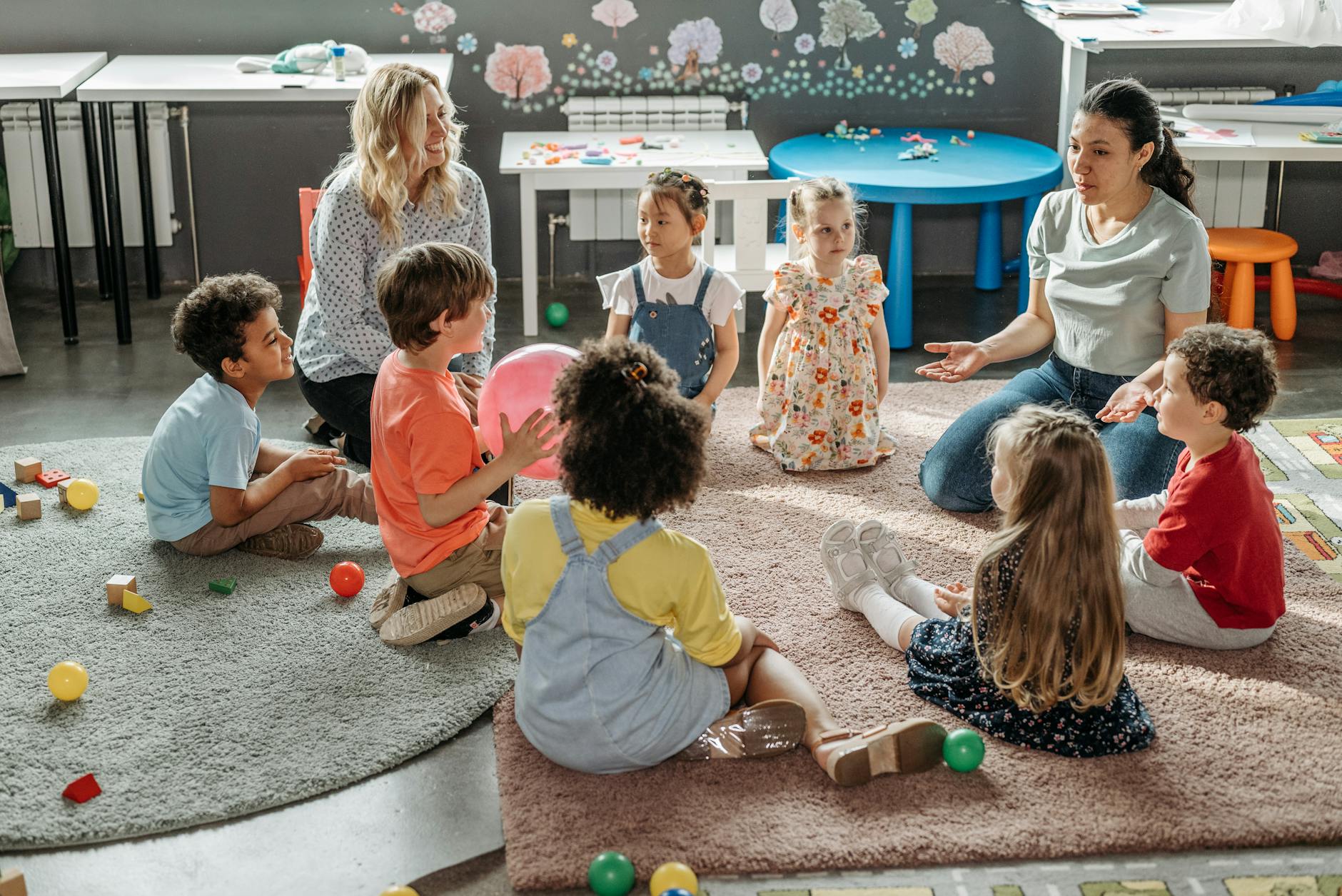
How to Rotate and Organize Morning Work for Maximum Engagement
Start here: Do you have 20+ minutes? Yes → Rotation system. No → Single activity choice board. I learned this the hard way in my 4th grade classroom. We tried rotating daily through five stations in fifteen minutes. Chaos. Kids spent more time moving than working. Daily switches train students to look for the next thing, not settle into the current task.
Rotate weekly, not daily. Train your procedures for two full weeks before you expect independence. Students need to know where materials live, how to transition quietly, and what "done" looks like. Never mix ability levels in competitive games during morning work. A struggling reader paired with a fluent one in a speed challenge creates embarrassment, not engagement.
Setting Up Weekly Rotation Boards
Use a pocket chart with student photos in rows and activity stations in columns. Label the columns Reading, Math, Writing, STEM, and Art. These effective learning stations keep materials contained and visible. Move the photos down one row each Monday morning, or across daily if your group has the stamina for this classroom routine.
Group four or five students together. You have two options for grouping:
Heterogeneous groups build social learning and peer support.
Homogeneous groups work better when you need targeted spiral review for specific skill gaps.
Change these groups every three to four weeks to prevent stagnation and social friction.
Management runs on clear signals:
Students complete the Must Do before moving to May Do.
Set a visible timer for fifteen minutes.
Play a specific clean-up song or ring your chime for immediate material return.
This structure creates a soft start that actually calms the room instead of amping it up. Keep activities open-ended enough to accommodate different speeds. A student who finishes the math station on Tuesday should have Wednesday and Thursday to extend the work or help peers. This prevents the early finisher chaos that derails calendar time later in the day.
Creating Self-Checking Systems
Immediate feedback drives engagement. Hattie's Visible Learning research puts feedback at an effect size of 0.70, nearly double the average intervention. Students who know their results immediately stay invested. Build self-checking systems so you are not the bottleneck during morning work.
Store answer keys in colored hanging files:
Red folders for math, blue for reading.
Label each by week number.
Students check their own work with a pen in a different color, marking incorrect answers.
They bring those errors to you during small group time for correction. This research-based organization strategy keeps the flow moving.
Appoint Morning Monitors on a weekly rotation. They wear a lanyard and check off completion only. They never mark correctness. This builds responsibility without creating anxiety. The monitor notes who is still working and who needs materials, serving as your eyes while you take attendance.
Train students to use the answer keys immediately after finishing, not at the end of the period. Delayed feedback loses impact. When they see the error right away, the learning sticks.
Differentiating by Skill Level
Use a three-tier folder system:
Green folders hold on-grade-level work.
Yellow folders contain approaching-level tasks with scaffolds like word banks.
Red folders offer enrichment and extension.
Students grab the folder color matching their assigned tier based on last week's assessment data. No public announcements. They simply know their color.
Create choice boards with a nine-square grid. Place three activities per tier in the squares. Students complete one per day from their assigned tier, or they can try a challenge from the next level up. These work as early finisher activities once the required task is done.
Reassess every three weeks using running records or math probes. Move students between color groups based on new data. Keeping a child in the same tier all year signals that growth is impossible. Transitional activities work best when they meet kids exactly where they are.
Avoid the temptation to let students choose their tier freely without guidance. Most will pick work that is too easy or impossibly hard. You direct the placement based on evidence.
Start Here: Morning Work
Morning work shouldn't be busy work. I've watched too many kids shuffle through worksheets just to buy me time for attendance. The best morning work builds your classroom routine while actually teaching something. Whether you choose a soft start with journals or jump straight into spiral review, pick activities that fit your kids and stick with them. Consistency beats novelty every time. When students know exactly what to expect the moment they walk in, you stop managing chaos and start teaching.
If your current routine feels shaky, don't rewrite everything. Change one transitional activity tomorrow. Trade number of the day for that stack of copied pages, or let kids chat while they organize their materials. See how it feels. Your morning sets the tone for the entire day, so protect those first fifteen minutes like they matter—because they do.
Today, pick your biggest pain point during arrival. If it's the noise, try silent reading for five minutes. If it's the homework check, set up a drop box and use those minutes for a quick spiral review sheet. Make one concrete change. Test it for a full week before you adjust again.

What Are the Best Low-Prep Morning Work Activities?
The best low-prep morning work activities include daily journals with structured prompts, Number of the Day challenges using dice or whiteboards, and independent reading response sheets. These require minimal setup—typically under five minutes weekly—use materials already in the classroom like composition notebooks, and engage students immediately upon arrival without technology.
Morning work should not require Sunday night prep marathons. I define low-prep as under five minutes of setup weekly using items already in your room. I screen for four specific traits:
No technology dependence that fails when the Wi-Fi hiccups.
Reusable templates or notebooks that eliminate photocopying queues.
Single-point rubric for quick assessment—done or not done.
Materials stored in student desks to eliminate distribution time.
Research suggests teachers spend 5-12 hours weekly on preparation. These activities reduce that burden while maintaining instructional rigor through structured choice.
When you spend more time prepping morning work than students spend doing it, engagement drops fast. I learned this the hard way in my third year, spending hours laminating elaborate soft start bins only to watch kids ignore them for free draw. Sustainability dies when prep time exceeds task duration. For more efficiency strategies, check out these time-saving classroom hacks.
Daily Journals and Writing Prompts
Daily journals build writing fluency without photocopying madness. I rotate three prompt categories that require zero prep once routines are set.
Opinion prompts ask "Would you rather..." questions. Recall prompts start with "Yesterday I learned..." Prediction prompts invite students to write "I think today we will..." For grades 2-5, require 3-5 sentences. For K-1, mandate an illustration with labels or a dictated caption.
Materials stay simple. Each student keeps a composition notebook in their desk. Write the prompt on the board or tape it to chart paper. Set a 10-15 minute timer using a sand timer or projected countdown. When time expires, pencils drop.
Early finishers do not rotate to new centers. They free write in the same journal or add details to yesterday's drawing. Everyone stays seated until the timer chimes for whole-group transition. This prevents the chaos of staggered finishing times during your soft start.
Number of the Day Challenges
Number of the Day builds number sense through spiral review without worksheet packets. Differentiate by grade level to keep the challenge appropriate.
Kindergarten and first grade work with numbers 1-20. They draw ten frames and tally marks. Second and third graders tackle two to three digit numbers using expanded form and adding or subtracting ten. Fourth and fifth graders explore multi-digit numbers through factors, multiples, and powers of ten.
Implementation stays flexible. Roll two to four dice to generate the daily number, or pick a number connected to your current math unit. Students record their work on personal whiteboards or a half-sheet template showing four to five different representations. This becomes a transitional activity that bridges arrival time to calendar time.
Accountability happens through partner sharing. Before the whole group reviews, students turn and share one representation with a neighbor. While they talk, circulate with a clipboard. Note who confuses place value or struggles with regrouping. These observations drive your small group instruction later.
Independent Reading Response Sheets
Independent reading responses keep the classroom routine academic while you take attendance. Students need structure, not just silent reading.
Offer three response types that rotate weekly. The Character Trait Web asks students to draw the character and list three adjectives describing them. The Setting Snapshot requires answering Where and When in complete sentences. The Prediction Bookmark involves writing a prediction on a sticky note at a stop point in the text.
Logistics matter for independence. Create a bin labeled "Morning Books" with level-appropriate texts—levels E through J work for first grade, for example. Students read for ten minutes, then complete one response sheet stored in their personal book baggie. This eliminates distribution time.
Differentiate by output, not input. Below-level readers draw a picture response with one label. On-level writers produce two complete sentences. Above-level students write four sentences citing evidence from the text. Everyone engages with the same book, but the expectation scales to their current ability. Check out these tools to support creative writers for extending these activities.
Which Morning Work Activities Build Early Literacy?
Early literacy morning work needs to hit phonemic awareness and sight word recognition hard. I use phonics sorting mats for word patterns, sentence building cards with color-coded parts of speech, and quick games like Tower Power or Parking Lot. These build decoding skills and automaticity for grades K-2 without worksheets.
These activities align with Scarborough's Reading Rope word recognition strand. They target phonological awareness, decoding, and sight recognition through explicit phonics instruction.
Each task takes 10 to 15 minutes and uses multi-sensory approaches. Students touch manipulatives, speak words aloud, and see color patterns. This engages touch, sight, and sound simultaneously, creating stronger neural connections than paper-pencil tasks for young readers.
Match the difficulty to the developmental stage:
Kindergarten: Use Phonics Sorting Mats with picture cards for initial sounds and rhyme matching. Focus on letter recognition games and pre-reading skills.
First Grade: Implement CVC word sorting and simple three-word sentence building. Target sight words from the Dolch pre-primer list during morning work.
Second Grade: Advance to vowel teams and r-controlled vowels in sorting mats. Build complex sentences with conjunctions and play Tower Power with Fry first 100 words.
Phonics Sorting Mats
Grab three paper plates or laminated mats and label them with your target pattern. I use short 'a' versus long 'a' with magic 'e' for my first graders in October when that skill emerges. Provide 12 to 15 word cards pulled from your current decodable text or structured literacy programs like Fundations.
Students sort by reading each word aloud, dragging the card to the correct mat. They pick three winners to copy in their journal and illustrate one to prove comprehension. This takes 8 to 10 minutes. Last year, I watched a struggling reader finally grasp the CVCe pattern when he physically moved the card from the short 'a' plate to the long 'a' plate. That tactile moment created the neural pathway worksheets never could.
Add magnetic letters, dry erase markers, or clothespins with words written on them. The fine motor work strengthens finger muscles for pencil grip while they decode. Store cards in labeled baggies for spiral review during soft start. Swap patterns weekly to match your scope, keeping the morning work routine fresh without reinventing the wheel. These transitional activities require minimal setup but deliver targeted practice.
Sentence Building Cards
Cut index cards into three distinct colors. Yellow cards carry the Who or subject. Green cards show the Did What or verb. Blue cards add Where or When using prepositional phrases. Create three difficulty tiers for differentiation: Kindergarteners build simple three-word sentences, first graders add adjectives for four to five word options, and second graders craft complex six-word sentences with conjunctions like and or but.
Accountability matters more than perfect handwriting. After building, students write the sentence in their morning work journal. They circle the capital letter, underline the period, and highlight any sight word used. Then they find a partner for a quick check before returning cards to the labeled baggies. This peer review takes two minutes but prevents errors from repeating all week while building editing skills.
Store cards in pocket charts or color-coded baggies. Rotate word sets weekly to match phonics patterns. Feature -ink words one week, -ank the next. This connects morning work to your evidence-based literacy instruction block. The color-coding provides visual scaffolding for English learners during these early finisher activities.
Sight Word Pattern Games
Keep a Jenga tower or wooden blocks in a literacy center tub. Students play Tower Power by reading a sight word from the Dolch pre-primer or Fry first 100 list to earn each block. They stack carefully, recording how many words they read before the tower crashes. The game lasts 5 to 7 minutes, perfect for a soft start activity that builds fluency pressure without anxiety.
Draw a six-space grid on construction paper for Parking Lot. Label each space with one of your five weekly focus words. Students read the word aloud to park a toy car in that space. Include two review words from previous weeks for spiral review. This visual-kinesthetic pairing helps students map letter recognition games to whole-word reading.
Track progress with two simple containers. Move mastered words to a Word Wall ring that students can flip through during independent reading. Keep practicing words in a Still Learning baggie updated each Friday. This system makes assessment transparent to the child and turns morning work into a personal challenge rather than a chore imposed by the teacher.
What Math Morning Work Requires Minimal Setup?
Math morning work with minimal setup includes Problem of the Day journals focusing on word problems, math fact fluency rings with index cards for addition or multiplication practice, and shape sorting stations using attribute blocks or pattern blocks. These activities require only paper, pencils, and basic manipulatives already found in elementary classrooms.
I used these three routines in my third grade classroom for three years. They run themselves once you teach the procedures.
Problem of the Day | 2 mins to photocopy half-sheets |
Fluency Rings | 20 mins initial setup, zero maintenance |
Shape Sorting | 5 mins gathering blocks |
Spiral review makes this morning work sustainable across the school year. I write problems using seventy percent previously learned material and thirty percent current unit exposure. This ratio builds confidence because students recognize most of the content. It also strengthens retrieval pathways without causing frustration during your transitional activities.
Everything fits in one bin on the counter. You need whiteboards, pencils, and basic manipulatives only. No apps, no devices, no lost passwords during your soft start.
Problem of the Day Journals
Use a half-sheet format with three distinct sections. Label them Model, Equation, and Answer Sentence. Students draw their thinking in the first box, write the number sentence in the second, and finish with a complete sentence that answers the question. Source these problems from Exemplars, CGI frameworks, or create your own based on your district scope.
Adjust the difficulty for your specific grade level. Kindergarten and first graders need Join and Result Unknown story problems with numbers under ten. Second and third graders handle two-step addition and subtraction scenarios. Fourth and fifth graders work multi-step problems requiring all four operations and careful reading comprehension.
During the morning meeting transition, three students share their strategies with the class. One might show direct modeling with circles and tally marks. Another demonstrates counting on using a number line. The third explains the standard algorithm. The class gives a thumbs up if they agree with the final answer. This creates the benefits of math challenges without requiring hours of prep time.
Math Fact Fluency Rings
Construction takes twenty minutes upfront but lasts all year. Hole-punch index cards and slide them onto binder rings. One ring holds addition facts zero through ten, sixty-six cards total. Move to zero through twenty next, then subtraction. Third grade and up use multiplication facts zero through twelve.
Partner A quizzes Partner B for exactly one minute using a sand timer. Partner B tries to beat their previous day's correct count. They switch roles immediately after, then record the highest score in their math journal. I watched my third graders race through these during our soft start before calendar time, cheering when someone beat their personal record.
Mastery requires three consecutive days of twenty or more correct responses for addition, or fifteen for multiplication. Move that specific fact set to a Mastered hook on the wall. The student grabs a new ring and begins the cycle again. This creates a visual trophy wall that tracks growth.
Shape Sorting Stations
Grab a sixty-piece set of attribute blocks or pattern blocks. Draw two overlapping circles on eleven-by-seventeen paper or directly on a whiteboard to create a Venn diagram mat. This simple setup becomes a permanent station in your classroom routine. It works as transitional activities while you take attendance.
Match the challenge to your grade level:
Grades K-1: Sort by one attribute like color or shape name.
Grades 2-3: Sort by two attributes simultaneously, such as red and thick versus blue and thin.
Grades 4-5: Identify the hidden rule and add a shape that fits an empty region of the Venn.
For an extension, students draw the mystery shape that would fit in the intersection but is not in the bag. They must justify their choice using specific attributes in complete written sentences. This connects naturally to counting activities for early learners while serving as early finisher activities for upper elementary students.
Morning Meeting Activities That Transition Into Academics
Use your meeting to wake up brains for the first lesson. If science starts with plant life cycles, ask who has helped in a garden. Their answers become the soil for new learning. This bridge strategy turns calendar time into a preview of the day's work using transitional activities.
Keep the whole routine under 20 minutes. I break it down: greeting takes two, sharing runs five, the activity gets five, and the transition to desk work needs three. That leaves room for a soft start without bleeding into core instruction.
The biggest mistake I see is letting circle time run long. When it hits 25 minutes, your math block pays the price. Set a visible timer and honor it. Kids need the closure cue as much as you do.
Circle Time Question of the Day
The question of the day bridges play to learning. These questions serve as spiral review and transitional activities while they settle into the classroom routine. They wake up yesterday's knowledge so new content has somewhere to stick.
Vocabulary preview: "What is a synonym for big?"
Geometry warm-up: "Name a shape with four equal sides."
Comprehension check: "What happened first in the story we read yesterday?"
Keep the protocol tight. Students turn and talk with their assigned elbow partner for exactly 30 seconds. I walk the circle and listen for strong answers. Then call on three to four volunteers to share with the whole group. Chart their responses on the whiteboard or anchor chart. You will reference those answers during the lesson. Seeing their own words on the board makes the transition into morning work feel seamless.
For morning meeting activities for kindergarten, hand a stuffed animal to the speaker. Only the child holding the bear talks. The rest practice eye contact and listening bodies. It slows the pace but builds the skills they need for real discussion later in the year. I used a beanbag frog in my first grade room and it cut interruptions by half.
SEL Check-In Journals
Start with a social emotional learning activities check-in. Hang a Zones of Regulation poster or an Emotion Wheel with six to eight feeling words. Students move a clothespin with their name to their zone color. Or they draw a face in their journal that matches their zone. It takes two minutes and gives you data on who needs extra support before academics start.
Use the sentence frame: "I am in the ____ Zone because ____. I can use the tool of ____ to stay or get back to Green." List the tools on the board:
Breathing techniques
Water break
Silent reading
Drawing or journaling
Connect it to academics. Use the feeling words as vocabulary words for the week. Graph the class emotions for math data collection. Count how many students are in the Green Zone versus Yellow. Ask what fraction of the class chose breathing as their tool. It turns the check-in into an early finisher activity for the math block. Third graders love seeing the data change day to day.
Group Greeting Routines
Make the greeting academic. These responsive classroom approach greetings warm up brains and voices at the same time:
Ball toss with math facts: The catcher says their name and the answer to four plus three.
Phonics greeting: Each student says their name and a word that starts with the same sound.
Counting greeting: Count by fives around the circle, with each child saying the next number before they greet their neighbor.
For morning meeting activities for kindergarten, keep greetings physical and visual. Use the butterfly greeting where children shake hands with both hands while making eye contact. Try the weather greeting where they comment on the actual sky outside. Or use a silent greeting, waving with direct eye contact. These build the same social skills without demanding language fluency that some five-year-olds do not have yet.
End with a clear transition cue. State firmly, "Today we will become experts on..." and fill in the blank with your first lesson's learning objective. That phrase signals the end of circle time and the start of morning work. Students know the soft start is over and academic time has begun. It closes the circle with purpose.
How to Rotate and Organize Morning Work for Maximum Engagement
Start here: Do you have 20+ minutes? Yes → Rotation system. No → Single activity choice board. I learned this the hard way in my 4th grade classroom. We tried rotating daily through five stations in fifteen minutes. Chaos. Kids spent more time moving than working. Daily switches train students to look for the next thing, not settle into the current task.
Rotate weekly, not daily. Train your procedures for two full weeks before you expect independence. Students need to know where materials live, how to transition quietly, and what "done" looks like. Never mix ability levels in competitive games during morning work. A struggling reader paired with a fluent one in a speed challenge creates embarrassment, not engagement.
Setting Up Weekly Rotation Boards
Use a pocket chart with student photos in rows and activity stations in columns. Label the columns Reading, Math, Writing, STEM, and Art. These effective learning stations keep materials contained and visible. Move the photos down one row each Monday morning, or across daily if your group has the stamina for this classroom routine.
Group four or five students together. You have two options for grouping:
Heterogeneous groups build social learning and peer support.
Homogeneous groups work better when you need targeted spiral review for specific skill gaps.
Change these groups every three to four weeks to prevent stagnation and social friction.
Management runs on clear signals:
Students complete the Must Do before moving to May Do.
Set a visible timer for fifteen minutes.
Play a specific clean-up song or ring your chime for immediate material return.
This structure creates a soft start that actually calms the room instead of amping it up. Keep activities open-ended enough to accommodate different speeds. A student who finishes the math station on Tuesday should have Wednesday and Thursday to extend the work or help peers. This prevents the early finisher chaos that derails calendar time later in the day.
Creating Self-Checking Systems
Immediate feedback drives engagement. Hattie's Visible Learning research puts feedback at an effect size of 0.70, nearly double the average intervention. Students who know their results immediately stay invested. Build self-checking systems so you are not the bottleneck during morning work.
Store answer keys in colored hanging files:
Red folders for math, blue for reading.
Label each by week number.
Students check their own work with a pen in a different color, marking incorrect answers.
They bring those errors to you during small group time for correction. This research-based organization strategy keeps the flow moving.
Appoint Morning Monitors on a weekly rotation. They wear a lanyard and check off completion only. They never mark correctness. This builds responsibility without creating anxiety. The monitor notes who is still working and who needs materials, serving as your eyes while you take attendance.
Train students to use the answer keys immediately after finishing, not at the end of the period. Delayed feedback loses impact. When they see the error right away, the learning sticks.
Differentiating by Skill Level
Use a three-tier folder system:
Green folders hold on-grade-level work.
Yellow folders contain approaching-level tasks with scaffolds like word banks.
Red folders offer enrichment and extension.
Students grab the folder color matching their assigned tier based on last week's assessment data. No public announcements. They simply know their color.
Create choice boards with a nine-square grid. Place three activities per tier in the squares. Students complete one per day from their assigned tier, or they can try a challenge from the next level up. These work as early finisher activities once the required task is done.
Reassess every three weeks using running records or math probes. Move students between color groups based on new data. Keeping a child in the same tier all year signals that growth is impossible. Transitional activities work best when they meet kids exactly where they are.
Avoid the temptation to let students choose their tier freely without guidance. Most will pick work that is too easy or impossibly hard. You direct the placement based on evidence.
Start Here: Morning Work
Morning work shouldn't be busy work. I've watched too many kids shuffle through worksheets just to buy me time for attendance. The best morning work builds your classroom routine while actually teaching something. Whether you choose a soft start with journals or jump straight into spiral review, pick activities that fit your kids and stick with them. Consistency beats novelty every time. When students know exactly what to expect the moment they walk in, you stop managing chaos and start teaching.
If your current routine feels shaky, don't rewrite everything. Change one transitional activity tomorrow. Trade number of the day for that stack of copied pages, or let kids chat while they organize their materials. See how it feels. Your morning sets the tone for the entire day, so protect those first fifteen minutes like they matter—because they do.
Today, pick your biggest pain point during arrival. If it's the noise, try silent reading for five minutes. If it's the homework check, set up a drop box and use those minutes for a quick spiral review sheet. Make one concrete change. Test it for a full week before you adjust again.
Still grading everything by hand?
EMStudio is a free teaching management app — manage your classes, students, lessons, and more!
Learn More
Still grading everything by hand?
EMStudio is a free teaching management app — manage your classes, students, lessons, and more!
Learn More





Notion4Teachers
Notion templates to simplify administrative tasks and enhance your teaching experience.



2026 Notion4Teachers. All Rights Reserved.
Notion4Teachers
Notion templates to simplify administrative tasks and enhance your teaching experience.
2026 Notion4Teachers. All Rights Reserved.
Notion4Teachers
Notion templates to simplify administrative tasks and enhance your teaching experience.
2026 Notion4Teachers. All Rights Reserved.