
How Notion Helps Teachers Choose the Right Software for Education
How Notion Helps Teachers Choose the Right Software for Education

Article by
Milo
ESL Content Coordinator & Educator
ESL Content Coordinator & Educator
All Posts

Teachers face countless decisions involving lesson planning, student progress, and administrative responsibilities. Choosing the right technology plays an important role in managing these tasks effectively. Notion provides a central platform that helps educators organize different aspects of their work, supporting more informed software decisions.
Notion is more than a note-taking app. It allows teachers to organize information, manage workflows, and review their existing tools more effectively, helping them assess which systems genuinely support their teaching practices.
Still grading everything by hand?
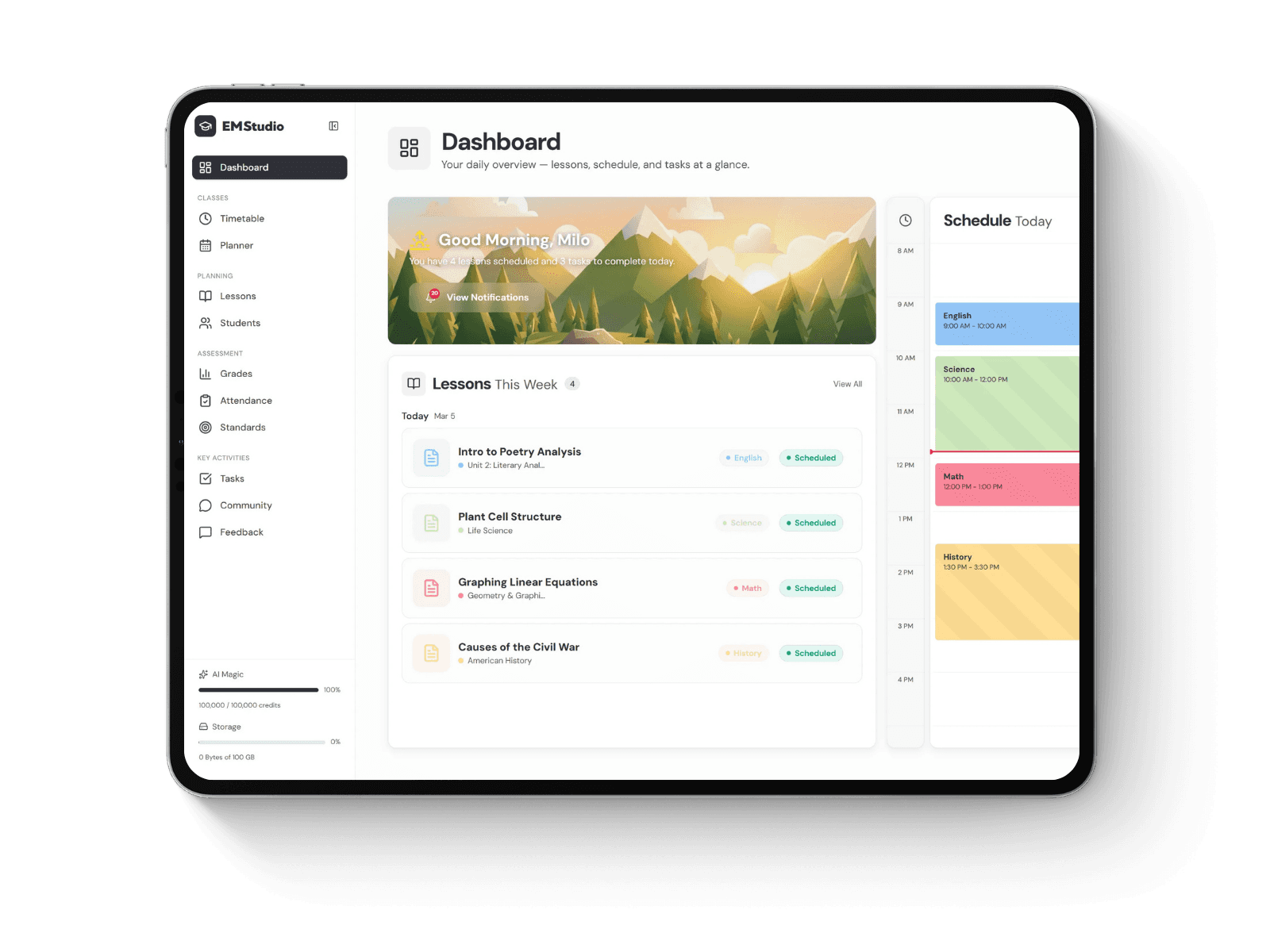
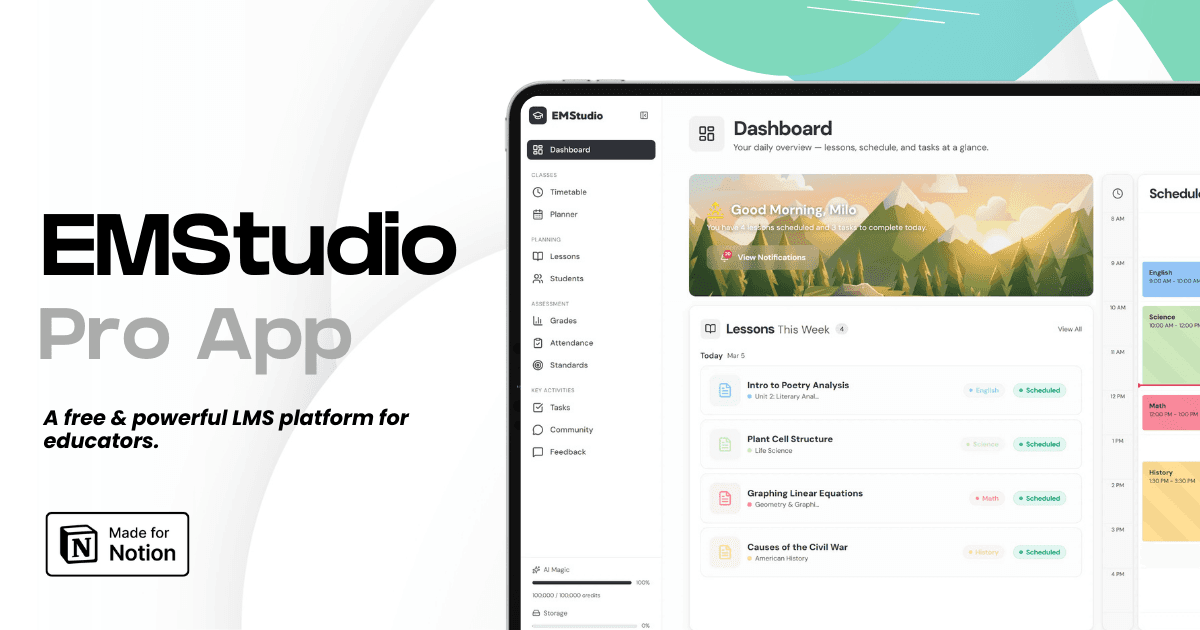
EMStudio is a free teaching management app — manage your classes, students, lessons, and more!
Learn More
Still grading everything by hand?
EMStudio is a free teaching management app — manage your classes, students, lessons, and more!
Learn More
Table of Contents
Why Teachers Are Overwhelmed by Tool Choices
The average teacher uses multiple platforms throughout the school day. There are learning management systems, communication apps, grading tools, and broader software for education platforms that schools rely on for reporting, planning, and administration. Each promises to simplify teaching, yet together they often create additional complexity.
This fragmentation creates real challenges. Research on education technology suggests that teachers spend significant time navigating disconnected tools instead of focusing directly on students. When platforms do not communicate effectively with one another, educators often lose valuable time re-entering information and switching between systems.
Notion helps address this challenge by giving teachers a single, organized space for ideas, lesson plans, and tasks. This unified approach helps educators identify which technology solutions genuinely support their daily work.
How Notion Creates a Foundation for Smarter Decisions
When teachers use Notion regularly, they often begin to recognize patterns in how they work. They can identify which tasks consume the most time and which processes are more complicated than necessary.
This kind of self-awareness is valuable. A teacher who has mapped out course planning in Notion often gains a clearer understanding of what they need from their digital tools. As a result, they can participate in software discussions with more focused questions and practical concerns.
Notion also helps teachers document their processes. When lesson-planning templates are clearly structured, it becomes easier to evaluate whether a new school-wide platform can support those workflows. Without this clarity, software decisions may rely more on marketing claims than practical classroom requirements.
Building a Personal Command Centre
Many teachers describe Notion as their “home base.” They use it to track deadlines, store curriculum materials, manage communication, and plan assessments.
Creating this personal command center gives teachers a clearer understanding of their actual workload. They can identify which administrative tasks consume preparation time and where information bottlenecks occur throughout the day.
This level of visibility supports better decision-making. When teachers understand their own systems, they are better equipped to determine whether a new platform will genuinely improve their workflow or simply add another layer of complexity.
Evaluating School-Wide Software With Greater Confidence
One of Notion’s most overlooked advantages is how it helps teachers contribute more effectively to school technology discussions. Schools often need to choose platforms for enrollment, scheduling, reporting, and student support.
Teachers who regularly use Notion develop experience organizing complex information, managing databases, and creating structured workflows. They also understand the importance of searchable, well-labeled records. This experience enables them to provide more practical feedback when schools evaluate new software.
Instead of leaving all technology decisions to administrators or IT departments, these teachers can advocate for solutions that better reflect classroom realities. They understand firsthand what works from a teacher’s perspective.
Questions Teachers Should Ask Before Adopting New Platforms
Teachers who use organized digital systems often develop stronger evaluation habits when reviewing educational technology. Before adopting any new platform, schools and educators should consider several important questions:
Does this platform reduce administrative steps or add them?
Can it integrate with the tools already in use?
Is the interface intuitive enough for daily use without extended training?
Does it generate reports that are actually useful for teachers and school leaders?
These questions reflect the kind of systems thinking that structured organizational workflows can encourage. Teachers who carefully evaluate their own work processes are often more thoughtful when assessing larger technology decisions for their schools. For schools weighing a full learning management system rather than a single tool, the stakes are higher. How to choose an LMS often comes down to the same fundamentals: administrative fit, integration, and honest reporting.
The Role of Organisation in Professional Growth
There is also a broader professional benefit to strong organization. Teachers who maintain organized systems are often more reflective practitioners. They have more mental space to evaluate teaching methods, experiment with new approaches, and contribute to school improvement efforts.
Notion supports this process by reducing cognitive load. When tasks, resources, and lesson plans are clearly organized, teachers spend less energy trying to remember information and more energy focusing on instruction and problem-solving. Over time, this shift can have a meaningful cumulative effect.
Research on teacher workload and well-being consistently identifies administrative burden as a major contributor to educator burnout. Tools that genuinely reduce that burden, rather than increase it, are no longer optional conveniences. They are becoming professional necessities.
Bringing It All Together
Notion does not aim to replace the large platforms schools already depend on. Instead, it gives teachers a dedicated space to clarify their workflows, organize their responsibilities, and communicate their needs more effectively. This foundation helps educators make more informed technology decisions.
Teachers who use Notion to organize their daily work often gain the clarity and confidence to participate in technology discussions at multiple levels within their schools. In many cases, they become stronger advocates for their students, colleagues, and professional needs.
With so many competing tools and claims available, this kind of informed perspective is increasingly valuable for schools. Meaningful improvements in educational systems often begin with one teacher, one organized workspace, and a willingness to think more intentionally about workflow management.
Better Systems Start With Clearer Thinking
Choosing the right digital tools for education requires more than comparing features or following trends. Teachers who understand their own workflows are better equipped to identify platforms that genuinely support learning and reduce unnecessary complexity. Tools like Notion help create that clarity, making technology decisions more practical, sustainable, and aligned with real classroom needs.
Why Teachers Are Overwhelmed by Tool Choices
The average teacher uses multiple platforms throughout the school day. There are learning management systems, communication apps, grading tools, and broader software for education platforms that schools rely on for reporting, planning, and administration. Each promises to simplify teaching, yet together they often create additional complexity.
This fragmentation creates real challenges. Research on education technology suggests that teachers spend significant time navigating disconnected tools instead of focusing directly on students. When platforms do not communicate effectively with one another, educators often lose valuable time re-entering information and switching between systems.
Notion helps address this challenge by giving teachers a single, organized space for ideas, lesson plans, and tasks. This unified approach helps educators identify which technology solutions genuinely support their daily work.
How Notion Creates a Foundation for Smarter Decisions
When teachers use Notion regularly, they often begin to recognize patterns in how they work. They can identify which tasks consume the most time and which processes are more complicated than necessary.
This kind of self-awareness is valuable. A teacher who has mapped out course planning in Notion often gains a clearer understanding of what they need from their digital tools. As a result, they can participate in software discussions with more focused questions and practical concerns.
Notion also helps teachers document their processes. When lesson-planning templates are clearly structured, it becomes easier to evaluate whether a new school-wide platform can support those workflows. Without this clarity, software decisions may rely more on marketing claims than practical classroom requirements.
Building a Personal Command Centre
Many teachers describe Notion as their “home base.” They use it to track deadlines, store curriculum materials, manage communication, and plan assessments.
Creating this personal command center gives teachers a clearer understanding of their actual workload. They can identify which administrative tasks consume preparation time and where information bottlenecks occur throughout the day.
This level of visibility supports better decision-making. When teachers understand their own systems, they are better equipped to determine whether a new platform will genuinely improve their workflow or simply add another layer of complexity.
Evaluating School-Wide Software With Greater Confidence
One of Notion’s most overlooked advantages is how it helps teachers contribute more effectively to school technology discussions. Schools often need to choose platforms for enrollment, scheduling, reporting, and student support.
Teachers who regularly use Notion develop experience organizing complex information, managing databases, and creating structured workflows. They also understand the importance of searchable, well-labeled records. This experience enables them to provide more practical feedback when schools evaluate new software.
Instead of leaving all technology decisions to administrators or IT departments, these teachers can advocate for solutions that better reflect classroom realities. They understand firsthand what works from a teacher’s perspective.
Questions Teachers Should Ask Before Adopting New Platforms
Teachers who use organized digital systems often develop stronger evaluation habits when reviewing educational technology. Before adopting any new platform, schools and educators should consider several important questions:
Does this platform reduce administrative steps or add them?
Can it integrate with the tools already in use?
Is the interface intuitive enough for daily use without extended training?
Does it generate reports that are actually useful for teachers and school leaders?
These questions reflect the kind of systems thinking that structured organizational workflows can encourage. Teachers who carefully evaluate their own work processes are often more thoughtful when assessing larger technology decisions for their schools. For schools weighing a full learning management system rather than a single tool, the stakes are higher. How to choose an LMS often comes down to the same fundamentals: administrative fit, integration, and honest reporting.
The Role of Organisation in Professional Growth
There is also a broader professional benefit to strong organization. Teachers who maintain organized systems are often more reflective practitioners. They have more mental space to evaluate teaching methods, experiment with new approaches, and contribute to school improvement efforts.
Notion supports this process by reducing cognitive load. When tasks, resources, and lesson plans are clearly organized, teachers spend less energy trying to remember information and more energy focusing on instruction and problem-solving. Over time, this shift can have a meaningful cumulative effect.
Research on teacher workload and well-being consistently identifies administrative burden as a major contributor to educator burnout. Tools that genuinely reduce that burden, rather than increase it, are no longer optional conveniences. They are becoming professional necessities.
Bringing It All Together
Notion does not aim to replace the large platforms schools already depend on. Instead, it gives teachers a dedicated space to clarify their workflows, organize their responsibilities, and communicate their needs more effectively. This foundation helps educators make more informed technology decisions.
Teachers who use Notion to organize their daily work often gain the clarity and confidence to participate in technology discussions at multiple levels within their schools. In many cases, they become stronger advocates for their students, colleagues, and professional needs.
With so many competing tools and claims available, this kind of informed perspective is increasingly valuable for schools. Meaningful improvements in educational systems often begin with one teacher, one organized workspace, and a willingness to think more intentionally about workflow management.
Better Systems Start With Clearer Thinking
Choosing the right digital tools for education requires more than comparing features or following trends. Teachers who understand their own workflows are better equipped to identify platforms that genuinely support learning and reduce unnecessary complexity. Tools like Notion help create that clarity, making technology decisions more practical, sustainable, and aligned with real classroom needs.
Still grading everything by hand?
EMStudio is a free teaching management app — manage your classes, students, lessons, and more!
Learn More
Still grading everything by hand?
EMStudio is a free teaching management app — manage your classes, students, lessons, and more!
Learn More



Notion4Teachers
Notion templates to simplify administrative tasks and enhance your teaching experience.



2026 Notion4Teachers. All Rights Reserved.
Notion4Teachers
Notion templates to simplify administrative tasks and enhance your teaching experience.
2026 Notion4Teachers. All Rights Reserved.
Notion4Teachers
Notion templates to simplify administrative tasks and enhance your teaching experience.
2026 Notion4Teachers. All Rights Reserved.