
How School-Based BCBAs Plan Their Continuing Education
How School-Based BCBAs Plan Their Continuing Education

Article by
Milo
ESL Content Coordinator & Educator
ESL Content Coordinator & Educator
All Posts
Still grading everything by hand?
EMStudio is a free teaching management app — manage your classes, students, lessons, and more!
Learn More
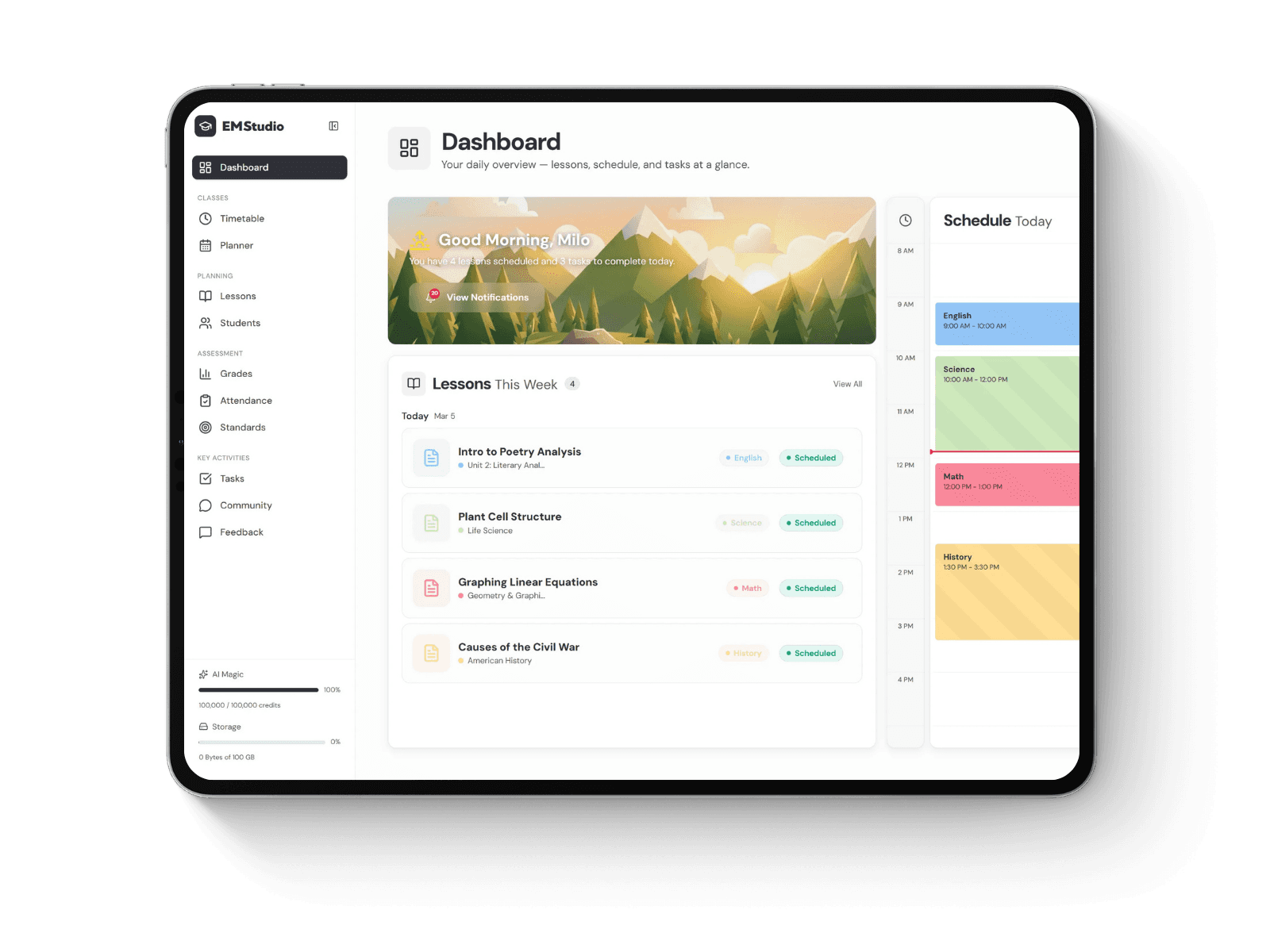
Still grading everything by hand?
EMStudio is a free teaching management app — manage your classes, students, lessons, and more!
Learn More
Table of Contents
The Board Certified Behavior Analyst (BCBA) credential has quietly become one of the more visible mid-career credentials in American education over the past fifteen years, with the BACB reporting more than 65,000 active BCBAs in the U.S. as of 2025 and a meaningful share of the growth coming from school-based practitioners working alongside special educators, school psychologists, and speech-language pathologists. The continuing education layer underneath the credential is its own quiet category, with annual hour requirements, ethics-and-supervision sub-categories, and a recurring two-year recertification cycle that working BCBAs need to plan around. The school-based BCBA in particular often discovers that the continuing-education calendar fits awkwardly against the school year, the summer recharge, and the family-and-life demands that the rest of the educator workforce shares, including the special-education practitioners whose professional standards sit alongside the BACB credential in most public-school districts.

School-based BCBAs and educators planning their continuing education benefit from a clearer view of how the CE category actually works on the regulatory side, what the realistic timeline options are, and which providers fit a working educator's schedule. The CE coursework offered by Behavior Analyst CE and similar online providers has standardised on a recognisable set of course formats, delivery options, and BACB-approved subject categories that working professionals should understand before signing up for the first course. The online format has matured considerably in the post-2020 environment, the cost structure is meaningfully different from the in-person conference model that dominated a decade ago, and the calendar discipline required is genuinely lighter for the educators who plan ahead.
Why Does Continuing Education Look Different for a School-Based BCBA Than for Other Educators?
The first thing to understand is that the BACB's continuing-education requirements are more structured than most other education credentials. A BCBA must complete 32 continuing education units (CEUs) every two years to recertify, with at least 4 of those hours in BACB Ethics Code content and at least 3 in supervision-related content. The remaining hours are general professional content within the BACB's approved subject categories, and the Association for Behavior Analysis International maintains the broader research-and-conference framework that anchors much of the field's continuing-education content alongside the BACB-approved provider list.
The factors that shape the CE picture for a school-based BCBA:
● The hour structure. 32 hours per 24-month cycle averages to roughly 4 to 5 hours per quarter, but most BCBAs cluster the work into one or two intensive periods rather than spreading it evenly. The summer break is a popular cluster window for school-based practitioners specifically.
● The Type-1 versus Type-2 categories. The BACB recognises Type-1 CEUs (delivered by approved CE providers, typically online courses or live presentations) and Type-2 CEUs (academic coursework, college-level teaching, etc.). Most working BCBAs accumulate primarily Type-1 CEUs because of the schedule flexibility.
● The ethics requirement. The 4-hour ethics requirement is a meaningful constraint because not every CE course qualifies. Ethics-specific courses are sometimes more expensive per hour and need to be selected deliberately; a BCBA who completes 32 hours of general content with no ethics hours has not satisfied the requirement.
● The supervision requirement. The 3-hour supervision requirement applies to BCBAs who supervise others, including school-based BCBAs supervising paraeducators or behaviour technicians. The supervision content focuses on the supervision-of-practice framework and is again a category-specific need.
A definition useful here: a BACB-approved continuing education provider is an organisation that has been approved by the Behavior Analyst Certification Board to deliver CEUs, with the approval requiring the provider to meet content standards, instructor qualifications, and documentation requirements. The approval is verifiable on the BACB's website, and BCBAs should confirm any provider's BACB-approved status before paying for a course.
The planning, the alignment with educator goals, and the documentation of outcomes that shape classroom engagement work extend naturally to the CE-planning conversation. The school-based BCBA's CE plan should serve the practitioner's own development as well as the students they support.
What Should School-Based BCBAs Look For in a Continuing Education Provider?
A short checklist for evaluating CE providers before signing up.
BACB-approved status. The provider's BACB approval should be verifiable on the BACB's authorized continuing education providers page. Providers advertising "CEU-eligible" courses without a BACB approval ID number are a warning sign.
● Course catalogue depth. The better providers offer 50+ courses across the BACB's approved subject categories, with regular updates to reflect current research and clinical practice. A provider with a thin catalogue limits the BCBA's ability to match courses to interest areas.
● Ethics and supervision course availability. The 4-ethics-hour and 3-supervision-hour requirements can constrain the BCBA's options if the provider's catalogue is thin in those categories. The right provider has multiple courses available in each.
● Asynchronous delivery. School-based BCBAs work during school hours and need CE content they can complete on their own schedule. Providers offering asynchronous (recorded video, narrated slides) courses give more schedule flexibility than providers limited to live webinars.
● Reasonable pricing. CE pricing typically runs 10 to 40 dollars per CEU hour for individual courses, with bundle and subscription pricing offering meaningful savings. The full 32-hour cycle should run 250 to 800 dollars total at sensible pricing tiers.
● Proper documentation. The CE provider should issue a formal certificate of completion with the BCBA's name, the course title, the BACB-approved CEU count, the BACB ethics or supervision designation if applicable, and the completion date. The BCBA needs this documentation for audits.
● A clear recertification-tracking system. Some providers offer dashboards that show the BCBA's progress against the 32-hour recertification target and flag any unmet ethics or supervision hours. This kind of administrative tooling matters more for working professionals than the BCBA might initially expect.

Photo by ROMAN ODINTSOV on Pexels
The catalogue depth, the support quality, and the pricing transparency that matter when evaluating ed-tech companies for K-12 classrooms carry through to the BCBA CE provider conversation. The exercise is the same exercise at different scales of the educator's professional life.
What Common Mistakes Do School-Based BCBAs Make Around Their CE Plan?
A short list of recurring mistakes that surface in BACB recertification cycles.
● Letting the cycle run down to the final months. The 24-month cycle feels long, but BCBAs who postpone the bulk of the work to the last quarter often find themselves taking courses out of urgency rather than interest. The result is CE that satisfies the requirement without producing the professional growth the credential is meant to support.
● Skipping the ethics or supervision categories. The 4-hour ethics and 3-hour supervision requirements are easy to forget when most general CE is satisfying. BCBAs who assume the categories will fill themselves often discover the gap in the final weeks of the cycle.
● Choosing on price alone. The cheapest CE provider is rarely the right one. The price-quality relationship matters here as much as in any other vendor decision, and the cost difference between a thin and a substantive course is small relative to the practitioner's time investment.
● Not coordinating with the school district's professional-development calendar. Many school districts offer their own professional development sessions that may not align with BACB CE requirements, and many also offer reimbursement programmes for BACB-approved CE that the BCBA may not have asked about. The HR or professional-development office is the right starting point for both questions.
● Assuming all online CE is asynchronous. Some online CE is live-only, requiring the BCBA to attend a webinar at a specific time. School-based BCBAs working during the school day cannot reliably attend live midday webinars and need to confirm the asynchronous-versus-live status before paying.
● Forgetting to download or save the certificate. The CE certificate is the BCBA's record of completion and is required during BACB audits. Providers occasionally remove certificates from their dashboards after a period; downloading and storing the certificate locally as soon as the course completes is the right discipline.
Frequently Asked Questions From School-Based BCBAs Planning Their CE
How many BCBA CEUs do I need per recertification cycle?
The BACB requires 32 continuing education units (CEUs) per 24-month recertification cycle, with at least 4 hours in BACB Ethics Code content and at least 3 hours in supervision-related content (for BCBAs who supervise). The remaining hours come from the BACB's approved subject categories.
Can I count school-district professional development toward my BACB CE?
Sometimes, depending on whether the school's PD content is delivered by a BACB-approved CE provider or qualifies as Type-2 academic content. Most school PD does not automatically count, but some school districts partner with BACB-approved providers for behavior-support training that does count. The BCBA should confirm with the provider before assuming the hours count.
How does the cost of online BCBA CE compare with attending an in-person conference?
Online CE typically runs 10 to 40 dollars per CEU hour individually, or 250 to 800 dollars for a full 32-hour cycle through a subscription. In-person conferences run 800 to 2,500 dollars for the registration alone, plus travel and lodging. The school-based BCBA usually meets the requirement primarily through online CE with occasional conference attendance for the networking and depth that conferences specifically provide.
What happens if I miss the recertification deadline?
The BACB allows a 60-day grace period after the cycle deadline during which the BCBA can complete missing CEUs and recertify late, sometimes with a fee. If the grace period passes without recertification, the BCBA's credential lapses and a formal reinstatement process applies. The right discipline is to plan the CE to complete by month 22 of the 24-month cycle, leaving a buffer for unexpected interruptions.
A Final Note for School-Based BCBAs Planning Their Continuing Education
The continuing education layer underneath the BCBA credential is one of the more meaningful professional decisions a school-based behavior analyst makes every two years, and the practitioners who plan the cycle thoughtfully (with the right provider, the right course mix across general and required categories, and the right pacing across the 24-month window) tend to come out of recertification with both a renewed credential and meaningful professional growth. The BCBAs who postpone the work and chase hours in the final weeks often satisfy the requirement without the development the credential was designed to produce. The marginal effort of the careful planning is small. The marginal benefit shows up at exactly the moment the BCBA is supposed to be applying the credential to the students whose lives the work is meant to improve.
School-based BCBAs in particular benefit from coordinating their continuing education with the school district's professional-development calendar, the special-education team's training schedule, and the academic-year rhythm that shapes the working week. Practitioners who plan the bulk of their hours during the summer break, who use the winter break for ethics-and-supervision courses that pair well with quiet planning time, and who reserve a small buffer for the inevitable late-cycle scheduling surprises tend to complete the 32-hour cycle with the least disruption to the school year. The school district HR or professional-development office is often willing to coordinate continuing-education reimbursement with BACB-approved provider courses, which improves both the financial and the calendar logistics of the cycle.
The same thoughtful planning extends to the broader career arc beyond the immediate two-year cycle. School-based BCBAs who track their continuing-education choices over time often find that the cumulative pattern of their course selections shapes the practitioner's eventual specialisation, the kinds of cases they're invited into across the district, and the broader credential opportunities (BCBA-D, ACE provider designation, supervisory roles) that open up as a result. The practitioners who treat each two-year cycle as a building block in a longer professional development plan, rather than as an isolated administrative requirement, generally end up with a more coherent professional identity and a stronger position to influence the broader special-education conversation in their district. That positioning matters when the school district is allocating staff across new programmes, when the special-education team is choosing a supervisor for a new BCaBA hire, or when the district is responding to an external request for behaviour-support consultation. The school-based BCBA whose continuing-education record signals genuine breadth (clinical assessment, supervision, ethics across edge cases, organisational behaviour management, applied research) usually wins those opportunities ahead of peers whose record reflects only the minimum required hours scattered across whatever provider was convenient at the time.
The Board Certified Behavior Analyst (BCBA) credential has quietly become one of the more visible mid-career credentials in American education over the past fifteen years, with the BACB reporting more than 65,000 active BCBAs in the U.S. as of 2025 and a meaningful share of the growth coming from school-based practitioners working alongside special educators, school psychologists, and speech-language pathologists. The continuing education layer underneath the credential is its own quiet category, with annual hour requirements, ethics-and-supervision sub-categories, and a recurring two-year recertification cycle that working BCBAs need to plan around. The school-based BCBA in particular often discovers that the continuing-education calendar fits awkwardly against the school year, the summer recharge, and the family-and-life demands that the rest of the educator workforce shares, including the special-education practitioners whose professional standards sit alongside the BACB credential in most public-school districts.
School-based BCBAs and educators planning their continuing education benefit from a clearer view of how the CE category actually works on the regulatory side, what the realistic timeline options are, and which providers fit a working educator's schedule. The CE coursework offered by Behavior Analyst CE and similar online providers has standardised on a recognisable set of course formats, delivery options, and BACB-approved subject categories that working professionals should understand before signing up for the first course. The online format has matured considerably in the post-2020 environment, the cost structure is meaningfully different from the in-person conference model that dominated a decade ago, and the calendar discipline required is genuinely lighter for the educators who plan ahead.
Why Does Continuing Education Look Different for a School-Based BCBA Than for Other Educators?
The first thing to understand is that the BACB's continuing-education requirements are more structured than most other education credentials. A BCBA must complete 32 continuing education units (CEUs) every two years to recertify, with at least 4 of those hours in BACB Ethics Code content and at least 3 in supervision-related content. The remaining hours are general professional content within the BACB's approved subject categories, and the Association for Behavior Analysis International maintains the broader research-and-conference framework that anchors much of the field's continuing-education content alongside the BACB-approved provider list.
The factors that shape the CE picture for a school-based BCBA:
● The hour structure. 32 hours per 24-month cycle averages to roughly 4 to 5 hours per quarter, but most BCBAs cluster the work into one or two intensive periods rather than spreading it evenly. The summer break is a popular cluster window for school-based practitioners specifically.
● The Type-1 versus Type-2 categories. The BACB recognises Type-1 CEUs (delivered by approved CE providers, typically online courses or live presentations) and Type-2 CEUs (academic coursework, college-level teaching, etc.). Most working BCBAs accumulate primarily Type-1 CEUs because of the schedule flexibility.
● The ethics requirement. The 4-hour ethics requirement is a meaningful constraint because not every CE course qualifies. Ethics-specific courses are sometimes more expensive per hour and need to be selected deliberately; a BCBA who completes 32 hours of general content with no ethics hours has not satisfied the requirement.
● The supervision requirement. The 3-hour supervision requirement applies to BCBAs who supervise others, including school-based BCBAs supervising paraeducators or behaviour technicians. The supervision content focuses on the supervision-of-practice framework and is again a category-specific need.
A definition useful here: a BACB-approved continuing education provider is an organisation that has been approved by the Behavior Analyst Certification Board to deliver CEUs, with the approval requiring the provider to meet content standards, instructor qualifications, and documentation requirements. The approval is verifiable on the BACB's website, and BCBAs should confirm any provider's BACB-approved status before paying for a course.
The planning, the alignment with educator goals, and the documentation of outcomes that shape classroom engagement work extend naturally to the CE-planning conversation. The school-based BCBA's CE plan should serve the practitioner's own development as well as the students they support.
What Should School-Based BCBAs Look For in a Continuing Education Provider?
A short checklist for evaluating CE providers before signing up.
BACB-approved status. The provider's BACB approval should be verifiable on the BACB's authorized continuing education providers page. Providers advertising "CEU-eligible" courses without a BACB approval ID number are a warning sign.
● Course catalogue depth. The better providers offer 50+ courses across the BACB's approved subject categories, with regular updates to reflect current research and clinical practice. A provider with a thin catalogue limits the BCBA's ability to match courses to interest areas.
● Ethics and supervision course availability. The 4-ethics-hour and 3-supervision-hour requirements can constrain the BCBA's options if the provider's catalogue is thin in those categories. The right provider has multiple courses available in each.
● Asynchronous delivery. School-based BCBAs work during school hours and need CE content they can complete on their own schedule. Providers offering asynchronous (recorded video, narrated slides) courses give more schedule flexibility than providers limited to live webinars.
● Reasonable pricing. CE pricing typically runs 10 to 40 dollars per CEU hour for individual courses, with bundle and subscription pricing offering meaningful savings. The full 32-hour cycle should run 250 to 800 dollars total at sensible pricing tiers.
● Proper documentation. The CE provider should issue a formal certificate of completion with the BCBA's name, the course title, the BACB-approved CEU count, the BACB ethics or supervision designation if applicable, and the completion date. The BCBA needs this documentation for audits.
● A clear recertification-tracking system. Some providers offer dashboards that show the BCBA's progress against the 32-hour recertification target and flag any unmet ethics or supervision hours. This kind of administrative tooling matters more for working professionals than the BCBA might initially expect.
Photo by ROMAN ODINTSOV on Pexels
The catalogue depth, the support quality, and the pricing transparency that matter when evaluating ed-tech companies for K-12 classrooms carry through to the BCBA CE provider conversation. The exercise is the same exercise at different scales of the educator's professional life.
What Common Mistakes Do School-Based BCBAs Make Around Their CE Plan?
A short list of recurring mistakes that surface in BACB recertification cycles.
● Letting the cycle run down to the final months. The 24-month cycle feels long, but BCBAs who postpone the bulk of the work to the last quarter often find themselves taking courses out of urgency rather than interest. The result is CE that satisfies the requirement without producing the professional growth the credential is meant to support.
● Skipping the ethics or supervision categories. The 4-hour ethics and 3-hour supervision requirements are easy to forget when most general CE is satisfying. BCBAs who assume the categories will fill themselves often discover the gap in the final weeks of the cycle.
● Choosing on price alone. The cheapest CE provider is rarely the right one. The price-quality relationship matters here as much as in any other vendor decision, and the cost difference between a thin and a substantive course is small relative to the practitioner's time investment.
● Not coordinating with the school district's professional-development calendar. Many school districts offer their own professional development sessions that may not align with BACB CE requirements, and many also offer reimbursement programmes for BACB-approved CE that the BCBA may not have asked about. The HR or professional-development office is the right starting point for both questions.
● Assuming all online CE is asynchronous. Some online CE is live-only, requiring the BCBA to attend a webinar at a specific time. School-based BCBAs working during the school day cannot reliably attend live midday webinars and need to confirm the asynchronous-versus-live status before paying.
● Forgetting to download or save the certificate. The CE certificate is the BCBA's record of completion and is required during BACB audits. Providers occasionally remove certificates from their dashboards after a period; downloading and storing the certificate locally as soon as the course completes is the right discipline.
Frequently Asked Questions From School-Based BCBAs Planning Their CE
How many BCBA CEUs do I need per recertification cycle?
The BACB requires 32 continuing education units (CEUs) per 24-month recertification cycle, with at least 4 hours in BACB Ethics Code content and at least 3 hours in supervision-related content (for BCBAs who supervise). The remaining hours come from the BACB's approved subject categories.
Can I count school-district professional development toward my BACB CE?
Sometimes, depending on whether the school's PD content is delivered by a BACB-approved CE provider or qualifies as Type-2 academic content. Most school PD does not automatically count, but some school districts partner with BACB-approved providers for behavior-support training that does count. The BCBA should confirm with the provider before assuming the hours count.
How does the cost of online BCBA CE compare with attending an in-person conference?
Online CE typically runs 10 to 40 dollars per CEU hour individually, or 250 to 800 dollars for a full 32-hour cycle through a subscription. In-person conferences run 800 to 2,500 dollars for the registration alone, plus travel and lodging. The school-based BCBA usually meets the requirement primarily through online CE with occasional conference attendance for the networking and depth that conferences specifically provide.
What happens if I miss the recertification deadline?
The BACB allows a 60-day grace period after the cycle deadline during which the BCBA can complete missing CEUs and recertify late, sometimes with a fee. If the grace period passes without recertification, the BCBA's credential lapses and a formal reinstatement process applies. The right discipline is to plan the CE to complete by month 22 of the 24-month cycle, leaving a buffer for unexpected interruptions.
A Final Note for School-Based BCBAs Planning Their Continuing Education
The continuing education layer underneath the BCBA credential is one of the more meaningful professional decisions a school-based behavior analyst makes every two years, and the practitioners who plan the cycle thoughtfully (with the right provider, the right course mix across general and required categories, and the right pacing across the 24-month window) tend to come out of recertification with both a renewed credential and meaningful professional growth. The BCBAs who postpone the work and chase hours in the final weeks often satisfy the requirement without the development the credential was designed to produce. The marginal effort of the careful planning is small. The marginal benefit shows up at exactly the moment the BCBA is supposed to be applying the credential to the students whose lives the work is meant to improve.
School-based BCBAs in particular benefit from coordinating their continuing education with the school district's professional-development calendar, the special-education team's training schedule, and the academic-year rhythm that shapes the working week. Practitioners who plan the bulk of their hours during the summer break, who use the winter break for ethics-and-supervision courses that pair well with quiet planning time, and who reserve a small buffer for the inevitable late-cycle scheduling surprises tend to complete the 32-hour cycle with the least disruption to the school year. The school district HR or professional-development office is often willing to coordinate continuing-education reimbursement with BACB-approved provider courses, which improves both the financial and the calendar logistics of the cycle.
The same thoughtful planning extends to the broader career arc beyond the immediate two-year cycle. School-based BCBAs who track their continuing-education choices over time often find that the cumulative pattern of their course selections shapes the practitioner's eventual specialisation, the kinds of cases they're invited into across the district, and the broader credential opportunities (BCBA-D, ACE provider designation, supervisory roles) that open up as a result. The practitioners who treat each two-year cycle as a building block in a longer professional development plan, rather than as an isolated administrative requirement, generally end up with a more coherent professional identity and a stronger position to influence the broader special-education conversation in their district. That positioning matters when the school district is allocating staff across new programmes, when the special-education team is choosing a supervisor for a new BCaBA hire, or when the district is responding to an external request for behaviour-support consultation. The school-based BCBA whose continuing-education record signals genuine breadth (clinical assessment, supervision, ethics across edge cases, organisational behaviour management, applied research) usually wins those opportunities ahead of peers whose record reflects only the minimum required hours scattered across whatever provider was convenient at the time.
Still grading everything by hand?
EMStudio is a free teaching management app — manage your classes, students, lessons, and more!
Learn More
Still grading everything by hand?
EMStudio is a free teaching management app — manage your classes, students, lessons, and more!
Learn More




Notion4Teachers
Notion templates to simplify administrative tasks and enhance your teaching experience.



2026 Notion4Teachers. All Rights Reserved.
Notion4Teachers
Notion templates to simplify administrative tasks and enhance your teaching experience.
2026 Notion4Teachers. All Rights Reserved.
Notion4Teachers
Notion templates to simplify administrative tasks and enhance your teaching experience.
2026 Notion4Teachers. All Rights Reserved.