
How Teachers Can Use Better Study Systems to Help Students Become More Independent Learners
How Teachers Can Use Better Study Systems to Help Students Become More Independent Learners

Article by
Milo
ESL Content Coordinator & Educator
ESL Content Coordinator & Educator
All Posts
Teachers are often expected to do two difficult things at once. They need to deliver lessons clearly, but also help students become less dependent on constant reminders, corrections, and last-minute rescues. That is not easy, especially when every class includes a wide range of confidence levels, learning speeds, and levels of home support.
A good study system can make this much easier. It does not replace strong teaching. Instead, it gives students a simple structure for planning, tracking, reviewing, and improving their own learning. When used well, a study system can turn revision from a vague instruction into a visible routine that students can actually follow.
For teachers, this matters because independent learning is not something students magically develop when they get older. It has to be taught, modelled, practised, and reinforced. Singapore’s Ministry of Education describes one key outcome of education as developing self-directed learners who take responsibility for their own learning. That goal is not only about motivation. It is about giving students the tools to know what to do next when the teacher is not standing beside them.
Still grading everything by hand?
EMStudio is a free teaching management app — manage your classes, students, lessons, and more!
Learn More
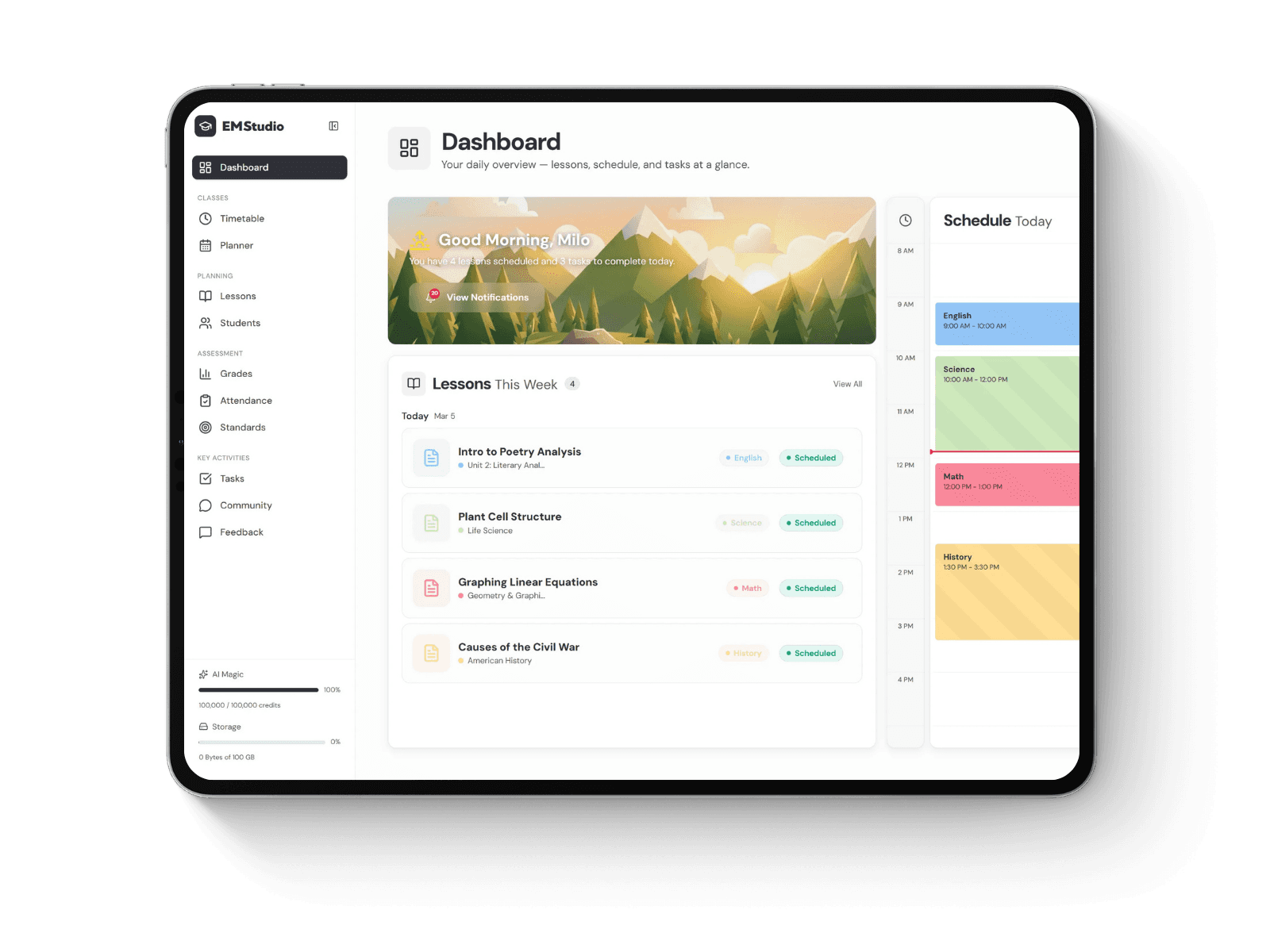
Still grading everything by hand?
EMStudio is a free teaching management app — manage your classes, students, lessons, and more!
Learn More
Table of Contents
Start With a Clear Learning Map
One reason students depend heavily on teachers is that they do not always understand the “map” of what they are learning. They may know there is a test next Friday, but they do not know which topics are secure, which topics are weak, and which skills need more practice.
A simple learning map changes that. Teachers can break a subject or unit into smaller skills and let students mark their own confidence level. For example, a Secondary 1 Mathematics topic such as algebra can be split into simplifying expressions, expanding brackets, factorising simple expressions, and solving linear equations. Instead of saying “revise algebra,” students can see exactly which part needs attention.
This can be done on paper, in a spreadsheet, or through a Notion-style class dashboard. The tool matters less than the clarity. Students need to see learning as a set of manageable skills rather than one large, intimidating subject.
Teach Students to Track Effort and Evidence
Many students judge their progress by feelings. “I think I understand” or “I studied already” often becomes the only measure. Unfortunately, feelings are not always reliable. A student may feel confident because they recognise a topic, but still struggle when they have to solve a question independently.
Teachers can build better habits by asking students to track evidence. What did they practise? What mistake did they correct? Which question could they now do without help? What feedback did they receive and act on?
A weekly learning log can be very simple. Students write down one topic they revised, one mistake they noticed, one correction they made, and one question they still have. This helps them move away from passive revision and towards active monitoring.
The Education Endowment Foundation’s guidance on metacognition and self-regulated learning highlights the importance of helping students plan, monitor, and evaluate their learning. In practical classroom terms, this means students should not only complete tasks; they should learn how to think about the way they complete tasks.
Make Revision More Visible
Revision often fails because it is invisible. A student may spend an hour with an open textbook, but the teacher cannot easily tell whether meaningful learning happened. Parents may also assume their child has studied simply because the child was sitting at a desk.
Study systems make revision visible. A revision tracker can show what was reviewed, how many questions were attempted, which corrections were made, and whether a student returned to the topic later. This is useful because students often over-focus on what feels familiar and avoid what feels uncomfortable.
Teachers can encourage students to use three simple revision categories: “not yet”, “improving”, and “confident”. This language is less discouraging than “bad” or “weak”, but still honest enough to guide action. A student who marks a topic as “not yet” knows it needs teacher support, peer discussion, or targeted practice. A topic marked “improving” needs repetition. A topic marked “confident” still needs occasional checking so it does not fade.
Build Reflection Into the End of Lessons
Reflection does not need to take long. Even two minutes at the end of a lesson can help students become more aware of their learning. The key is to use questions that require specific answers.
Instead of asking, “Do you understand?”, teachers can ask: “What is one step you must remember?” “What is one common mistake to avoid?”, or “Which part would you need help explaining to a friend?” These questions push students to process the lesson rather than simply nod along.
Over time, these short reflection routines train students to notice their own thinking. They also give teachers useful information. If half the class writes down the same confusion point, the next lesson can begin with a quick reteach. If only a few students are stuck, the teacher can offer a small-group intervention instead of slowing the whole class unnecessarily.
Use Systems Without Removing Human Support
A common mistake is to assume that independent learning means students should be left alone. That is not true. Independence grows best when students receive the right amount of structure first. Teachers provide the routines, prompts, examples, and feedback. Students gradually take more responsibility as those routines become familiar.
This is especially important for students who have fallen behind. A child who is already confused may not benefit from simply being told to “study harder”. They may need someone to diagnose the gap, explain the concept differently, and rebuild confidence step by step. For some families, this is where personalised support, such as private tuition in Singapore, can complement classroom learning by giving students focused attention on the exact areas they struggle with.
Keep the System Simple Enough to Maintain
Teachers are already busy. A study system should reduce friction, not add another layer of admin. The best systems are simple, repeatable, and easy for students to understand at a glance.
A useful classroom system might include four parts: a topic checklist, a homework tracker, a mistake log, and a short weekly reflection. That is enough to help students know what they are learning, what work is due, what errors they keep making, and what they need to improve next.
Digital tools can make this easier, especially for teachers who like reusable templates. However, the goal is not to create a beautiful dashboard for its own sake. The goal is to make learning more visible, manageable, and actionable. If the system looks impressive but students do not use it, it has failed. If it is simple but students use it every week, it is working.
The Real Goal Is Ownership
A strong study system does more than organise homework. It teaches students that learning is something they can influence. They begin to see that improvement is not random. It comes from noticing mistakes, asking better questions, practising deliberately, and reviewing consistently.
That shift is powerful. Students who learn how to monitor their own progress are less likely to panic before exams. They are also more likely to ask for help early because they can identify what they do not understand. Instead of waiting for the teacher to rescue them, they become active participants in their own progress.
For teachers, this is one of the most meaningful outcomes of education. A student who becomes more independent is not just better prepared for the next test. They are better prepared for the next stage of learning, the next challenge, and eventually, a world where they will need to keep learning long after school is over.
Start With a Clear Learning Map
One reason students depend heavily on teachers is that they do not always understand the “map” of what they are learning. They may know there is a test next Friday, but they do not know which topics are secure, which topics are weak, and which skills need more practice.
A simple learning map changes that. Teachers can break a subject or unit into smaller skills and let students mark their own confidence level. For example, a Secondary 1 Mathematics topic such as algebra can be split into simplifying expressions, expanding brackets, factorising simple expressions, and solving linear equations. Instead of saying “revise algebra,” students can see exactly which part needs attention.
This can be done on paper, in a spreadsheet, or through a Notion-style class dashboard. The tool matters less than the clarity. Students need to see learning as a set of manageable skills rather than one large, intimidating subject.
Teach Students to Track Effort and Evidence
Many students judge their progress by feelings. “I think I understand” or “I studied already” often becomes the only measure. Unfortunately, feelings are not always reliable. A student may feel confident because they recognise a topic, but still struggle when they have to solve a question independently.
Teachers can build better habits by asking students to track evidence. What did they practise? What mistake did they correct? Which question could they now do without help? What feedback did they receive and act on?
A weekly learning log can be very simple. Students write down one topic they revised, one mistake they noticed, one correction they made, and one question they still have. This helps them move away from passive revision and towards active monitoring.
The Education Endowment Foundation’s guidance on metacognition and self-regulated learning highlights the importance of helping students plan, monitor, and evaluate their learning. In practical classroom terms, this means students should not only complete tasks; they should learn how to think about the way they complete tasks.
Make Revision More Visible
Revision often fails because it is invisible. A student may spend an hour with an open textbook, but the teacher cannot easily tell whether meaningful learning happened. Parents may also assume their child has studied simply because the child was sitting at a desk.
Study systems make revision visible. A revision tracker can show what was reviewed, how many questions were attempted, which corrections were made, and whether a student returned to the topic later. This is useful because students often over-focus on what feels familiar and avoid what feels uncomfortable.
Teachers can encourage students to use three simple revision categories: “not yet”, “improving”, and “confident”. This language is less discouraging than “bad” or “weak”, but still honest enough to guide action. A student who marks a topic as “not yet” knows it needs teacher support, peer discussion, or targeted practice. A topic marked “improving” needs repetition. A topic marked “confident” still needs occasional checking so it does not fade.
Build Reflection Into the End of Lessons
Reflection does not need to take long. Even two minutes at the end of a lesson can help students become more aware of their learning. The key is to use questions that require specific answers.
Instead of asking, “Do you understand?”, teachers can ask: “What is one step you must remember?” “What is one common mistake to avoid?”, or “Which part would you need help explaining to a friend?” These questions push students to process the lesson rather than simply nod along.
Over time, these short reflection routines train students to notice their own thinking. They also give teachers useful information. If half the class writes down the same confusion point, the next lesson can begin with a quick reteach. If only a few students are stuck, the teacher can offer a small-group intervention instead of slowing the whole class unnecessarily.
Use Systems Without Removing Human Support
A common mistake is to assume that independent learning means students should be left alone. That is not true. Independence grows best when students receive the right amount of structure first. Teachers provide the routines, prompts, examples, and feedback. Students gradually take more responsibility as those routines become familiar.
This is especially important for students who have fallen behind. A child who is already confused may not benefit from simply being told to “study harder”. They may need someone to diagnose the gap, explain the concept differently, and rebuild confidence step by step. For some families, this is where personalised support, such as private tuition in Singapore, can complement classroom learning by giving students focused attention on the exact areas they struggle with.
Keep the System Simple Enough to Maintain
Teachers are already busy. A study system should reduce friction, not add another layer of admin. The best systems are simple, repeatable, and easy for students to understand at a glance.
A useful classroom system might include four parts: a topic checklist, a homework tracker, a mistake log, and a short weekly reflection. That is enough to help students know what they are learning, what work is due, what errors they keep making, and what they need to improve next.
Digital tools can make this easier, especially for teachers who like reusable templates. However, the goal is not to create a beautiful dashboard for its own sake. The goal is to make learning more visible, manageable, and actionable. If the system looks impressive but students do not use it, it has failed. If it is simple but students use it every week, it is working.
The Real Goal Is Ownership
A strong study system does more than organise homework. It teaches students that learning is something they can influence. They begin to see that improvement is not random. It comes from noticing mistakes, asking better questions, practising deliberately, and reviewing consistently.
That shift is powerful. Students who learn how to monitor their own progress are less likely to panic before exams. They are also more likely to ask for help early because they can identify what they do not understand. Instead of waiting for the teacher to rescue them, they become active participants in their own progress.
For teachers, this is one of the most meaningful outcomes of education. A student who becomes more independent is not just better prepared for the next test. They are better prepared for the next stage of learning, the next challenge, and eventually, a world where they will need to keep learning long after school is over.
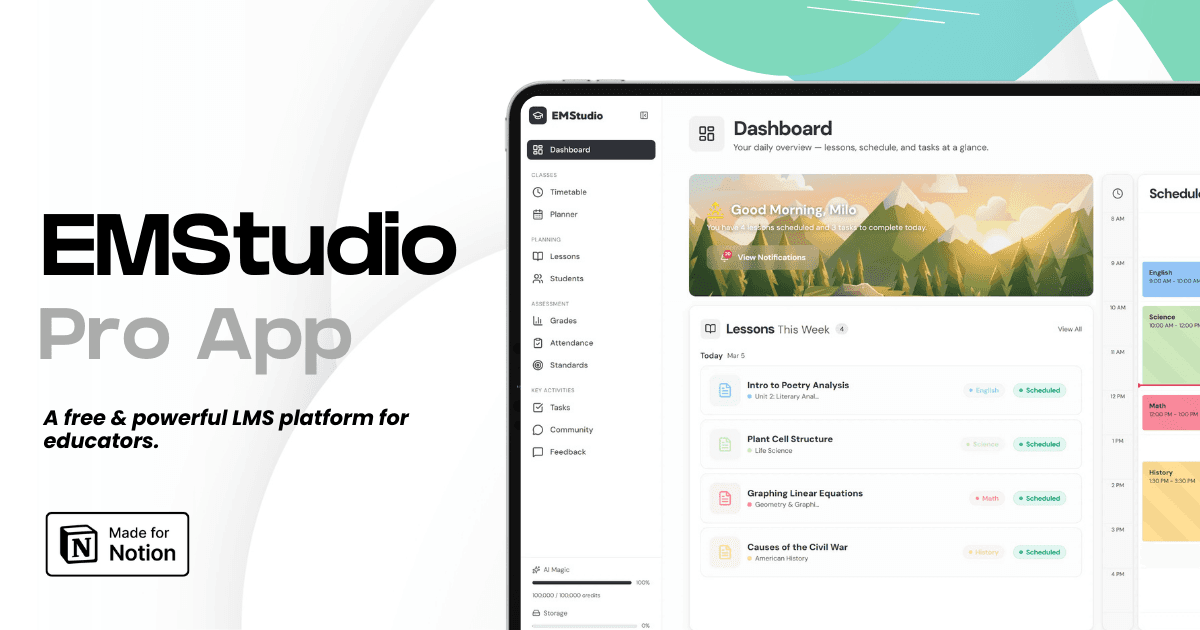
Still grading everything by hand?
EMStudio is a free teaching management app — manage your classes, students, lessons, and more!
Learn More
Still grading everything by hand?
EMStudio is a free teaching management app — manage your classes, students, lessons, and more!
Learn More



Notion4Teachers
Notion templates to simplify administrative tasks and enhance your teaching experience.



2026 Notion4Teachers. All Rights Reserved.
Notion4Teachers
Notion templates to simplify administrative tasks and enhance your teaching experience.
2026 Notion4Teachers. All Rights Reserved.
Notion4Teachers
Notion templates to simplify administrative tasks and enhance your teaching experience.
2026 Notion4Teachers. All Rights Reserved.