
12 Kindergarten Story Books Available as Free PDFs
12 Kindergarten Story Books Available as Free PDFs

Article by
Milo
ESL Content Coordinator & Educator
ESL Content Coordinator & Educator
All Posts
You don't need another expensive classroom library to teach reading well. Free kindergarten story books in PDF format won't replace the smell of paper or the weight of a board book, but they will save your budget when a child needs the same story three times during rainy indoor recess. I've watched emergent readers track text on a tablet during center time, and the phonemic awareness gains look identical to those with hardcovers. The book matters more than the format.
Districts rarely fund enough picture books for twenty-five five-year-olds. You end up with three battered copies of Brown Bear and a line of impatient kids. Digital read aloud options let every student follow along simultaneously on Chromebooks or projected screens. That's not cutting corners. That's solving a logistics problem with early literacy outcomes in mind, especially when you're building decoding skills with mixed-ability groups.
This list covers twelve titles you can download legally today. You'll find classic circle time tales that hold wiggly attention spans, short stories with pictures that build concepts of print, and leveled options for different reading levels. I focus on sources that respect copyright law—no sketchy sites that disappear next month. Just stable collections you can use tomorrow without worrying about fees or broken links.
Still grading everything by hand?
EMStudio is a free teaching management app — manage your classes, students, lessons, and more!
Learn More
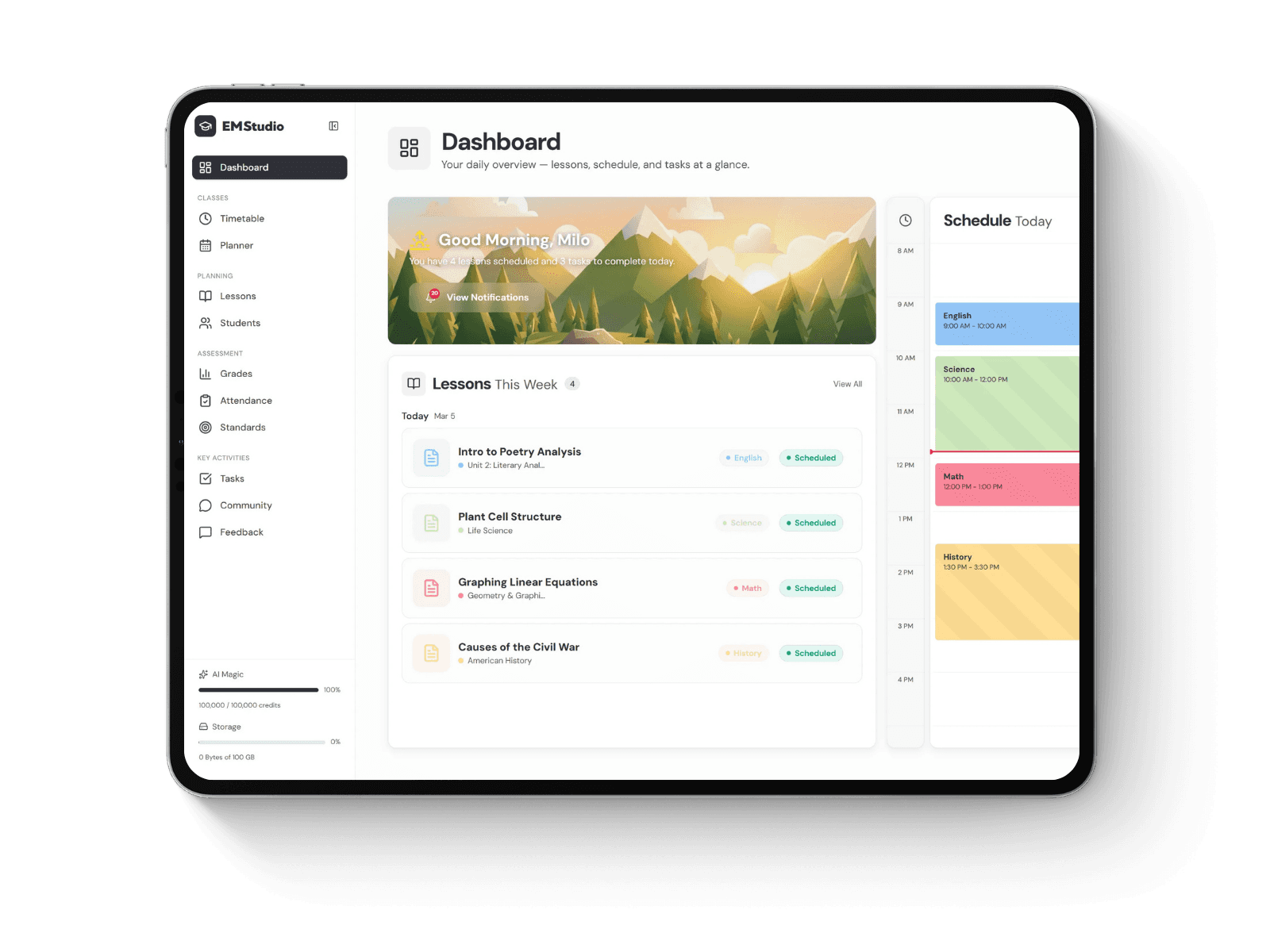
Still grading everything by hand?
EMStudio is a free teaching management app — manage your classes, students, lessons, and more!
Learn More
Table of Contents
Where Can You Find Free Kindergarten Books Online?
You can find free kindergarten books on Oxford Owl (250+ titles for ages 3-5 with audio), Project Gutenberg (60,000+ public domain classics including picture books), and Epic School (40,000+ books free for educators with verified school email). All offer instant PDF or digital access without purchase, though Epic requires .edu verification.
Free books shouldn't require a district budget meeting. These digital libraries and programs for free kids books deliver kindergarten story books straight to your classroom devices without subscription fees.
Platform | Account Needed | Collection Size | Offline Access | Works On |
Oxford Owl | Free email (optional) | 250+ for ages 3-5 | Limited | iOS, Android, Browser |
Project Gutenberg | None | 60,000+ total | Full (EPUB/PDF) | All e-readers, Browser |
Epic School | .edu email | 40,000+ for educators | No | iOS, Android, Browser |
Oxford Owl's Free eBook Library for Ages 3-5
Head to the Oxford Owl website and click into the free eBook Library. Filter by Ages 3-4 or Ages 4-5 to narrow the 250+ collection. Over 80 titles include professional audio narration with British accents that charm American kindergartners.
The platform auto-saves reading progress for two weeks even without an account, or indefinitely with free registration.
Sort using the Phonics and Story genre filters. Phonics books align with UK Phases 1-3, matching US kindergarten phonemic awareness goals. Story books feature Biff, Chip, and Kipper series samples for emergent readers.
Project Gutenberg's Illustrated Children's Collection
Visit catalogue.gutenberg.org and browse the Children's Literature bookshelf. This collection holds over 2,000 illustrated picture books published before 1929.
Download options include EPUB for tablets, Kindle for e-readers, and PDFs from 2-15MB for printing. No account required.
You'll find Beatrix Potter's The Tale of Peter Rabbit (1902), Margery Williams' The Velveteen Rabbit (1922), and illustrated Wonderful Wizard of Oz editions. These classics support early literacy with rich vocabulary.
Epic School's Digital Library for Educators
Sign up for Epic School using your .edu email or Google Classroom account. Verification takes 24-48 hours.
Once approved, create up to 36 student profiles and assign 1,000 books simultaneously. Each student gets a unique QR code for instant login.
Free access is restricted to 7:00 AM - 4:00 PM on school days only. Students cannot read from home during evenings or weekends.

What Are the Best Classic Story Tale Books for Circle Time?
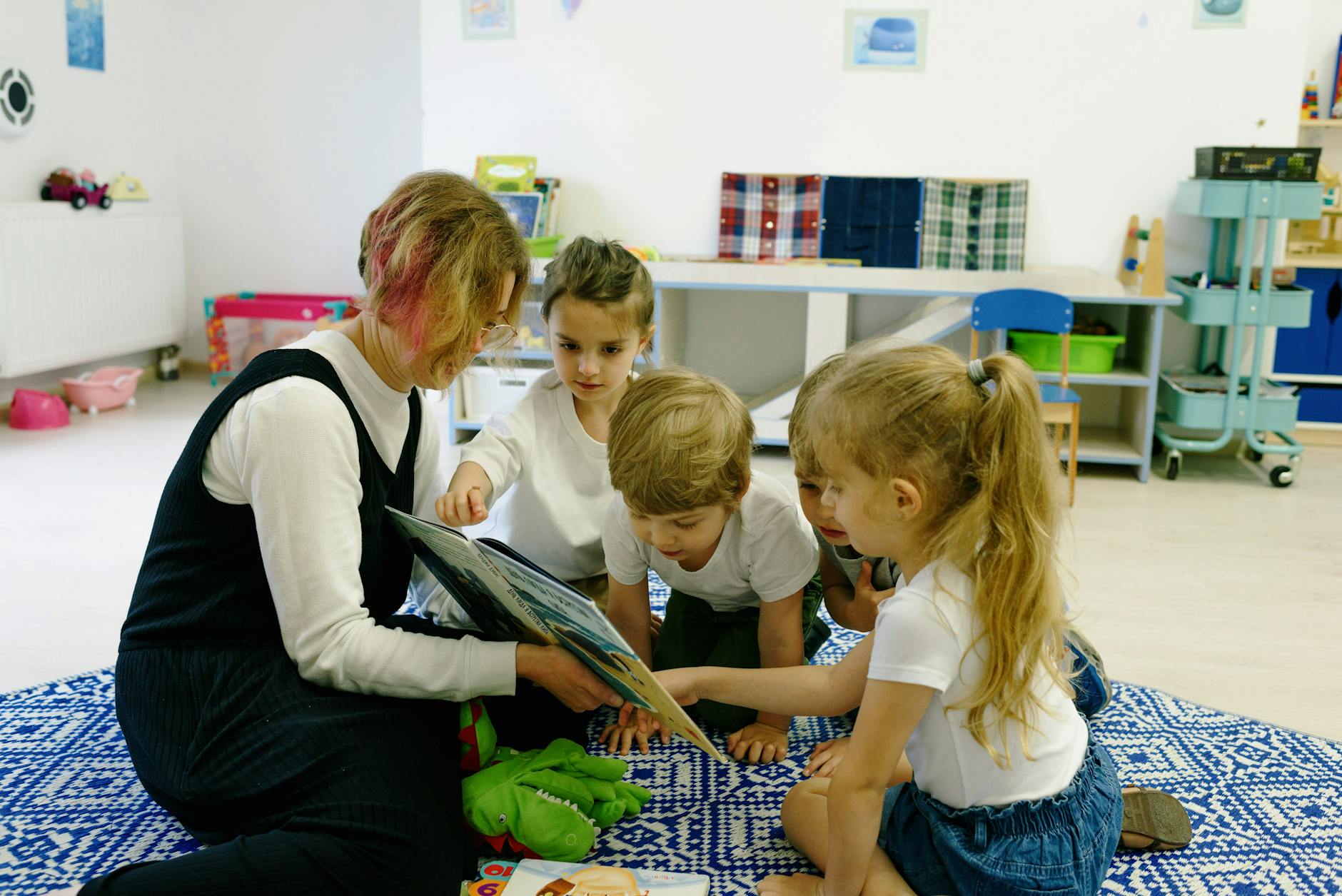
The best classic circle time books are The Three Billy Goats Gruff for sequencing practice, Little Red Hen for repeating phrase participation, and Aesop's Fables like The Lion and the Mouse for moral discussion. These 8-12 minute stories use predictable structures and interactive elements ideal for 15-20 students.
You need materials that hold attention without chaos. Picture books that transform classroom libraries work best when paired with physical props. Keep your kindergarten story books interactive and under twelve minutes.
The Three Billy Goats Gruff Printable Sequencing Version
Use the stop-and-predict method at each bridge crossing. Pause before the small, medium, and large goat encounters to ask, "What might happen next?" Have your students mime the troll's angry reaction while seated in the semicircle.
Pass out the printable 6-scene sequencing cards showing Bridge 1, Bridge 2, Bridge 3, Troll hiding, Troll defeated, and Grass field arrival. Students arrange these on the floor while retelling the story aloud. This builds decoding skills through physical movement and narrative recall.
Seat 15-20 students in a tight semicircle on the rug. Insert 90-second turn and talk breaks after the medium goat crosses. Use thumbs up or down signals to check comprehension before the large goat crosses the final bridge to reach the sweet grass.
Little Red Hen with Repeating Phrase Practice
Assign the repeating phrase "Not I" to specific table groups. Red Table voices the cat, Blue Table barks the dog, Yellow Table squeaks the mouse. Cue each group to chant in unison when your hen asks for help planting or harvesting.
Use a felt board with four character pieces plus wheat stalks, a millstone, and a bread loaf. Move the props to visualize the causal chain from planting through harvesting, grinding, and baking. This concrete progression helps emergent readers follow plot logic and build vocabulary.
Keep the read aloud to eight minutes max. The group chanting is a phonemic awareness drill disguised as participation. Watch for students who mouth the words but don't join the chorus; pair them with confident speakers during the 90-second turn and talk breaks.
Aesop's Fables Short Moral Stories with Pictures
Select three story tale books for your rotation: The Lion and the Mouse at 180 words for mutual aid themes, The Tortoise and the Hare at 200 words for perseverance, and The Boy Who Cried Wolf at 150 words for honesty lessons. Display vintage illustration sets with five to seven images per fable to anchor attention. Each fable runs eight to twelve minutes with discussion.
Run the moral moment discussion immediately after reading. Ask, "Was that a good choice?" Students respond with thumbs up or down. Then they justify using the sentence stem, "I think ___ because ___."
These brief texts fit free online stories collections if your budget is tight. Apply interactive read-aloud strategies like the 90-second turn and talk to debate the moral. This structure builds early literacy through argumentation and critical thinking practice.
Which Short Stories with Pictures PDF Build Early Literacy Skills?
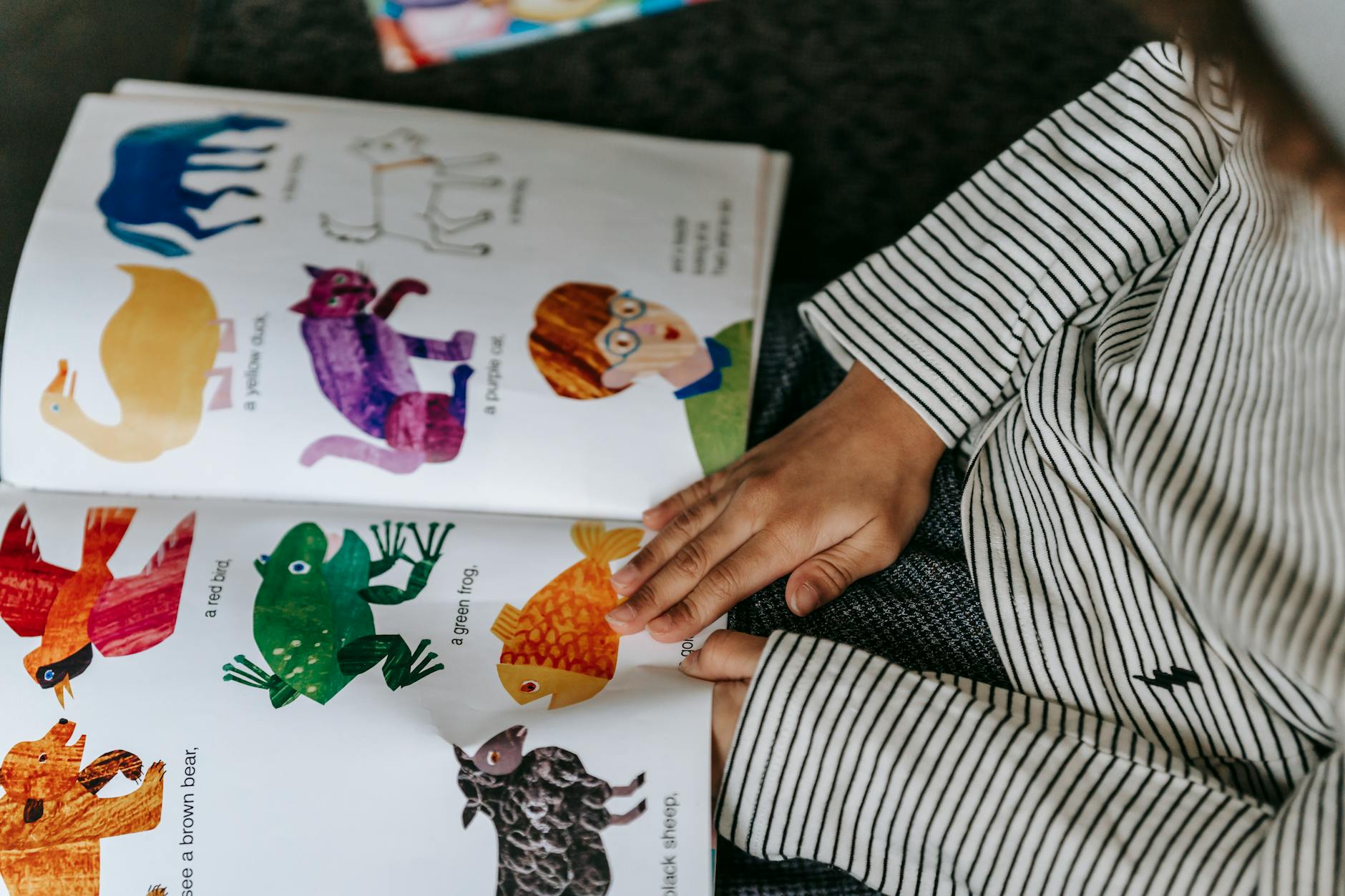
Wordless picture books like 'Journey' develop oral narrative skills during read aloud sessions, pattern books with predictable text such as 'Brown Bear' build phonological awareness, and concept books teach vocabulary through categorized images. These formats specifically target kindergarten literacy standards through visual and repetitive scaffolding.
Not all picture books teach reading. Some build decoding skills. Others develop storytelling muscles. The right short stories with pictures pdf match your specific literacy target.
Wordless Picture Books for Oral Narrative Development
Wordless books fail when you do all the talking. Use the PEER sequence instead: Prompt ("What is happening here?"), Evaluate ("Yes, the dog is running"), Expand ("The dog is running fast to catch the ball"), and Repeat ("Can you say that?"). Wait five to seven seconds after each prompt. Silence feels awkward, but that processing time builds oral language and decoding skills foundations.
Try Flotsam by David Wiesner for beach themes, The Red Book by Barbara Lehman for magical connections, or public domain Snowman sequence images. These kindergarten story books force students to construct narrative structure independently. Research from Hattie's Visible Learning shows dialogic reading of wordless books improves narrative structure use by 23% compared to text-only exposure.
Never point and narrate simultaneously. Point to the image, count to five silently, then invite a student description. This "wait and watch" technique shifts cognitive load to the student where it belongs.
Pattern Books with Predictable Text Structures
Pattern books provide the scaffolding emergent readers need. But not all structures target the same skills. You have three distinct types to choose from, and each serves a different instructional purpose for your early literacy block.
Circular stories like If You Give a Mouse a Cookie return to the starting scene, targeting plot prediction. Cumulative tales such as The Gingerbread Man add repeating elements, developing memory and sequencing. Rhyming couplets in the Dr. Seuss style build phonological awareness and phonemic awareness. John Hattie's Visible Learning research shows repeated reading of predictable text demonstrates an effect size of 0.67 on student achievement.
When students stumble on pattern text, use errorless reading. The group chorally supplies the phrase. This reduces anxiety and builds fluency without shame. Match your story pdf choice to your specific target: cumulative for sequencing, repetitive for evidence-based literacy instruction foundations.
Concept Books for Vocabulary Building
Concept books organize the world into bite-sized categories. Effective ones introduce five to seven new terms per reading with clear photographs, avoiding cartoon abstractions. Young learners need to see real hexagons, not stylized shapes, to build accurate mental models.
Target specific domains. Color books should move beyond basic red-blue-yellow into five intermediate hues like teal and maroon. Spatial relationship books must show under, over, through, between, and beside with clear photographic contexts. Quantity books need one-to-one correspondence dots next to numerals one through ten. This builds the steps to teach reading comprehension through concrete vocabulary anchors.
Extend learning with the labeling activity. After reading, have students create classroom signs using new terms. "This is a hexagon" signs appear during shape hunts. "Between" labels mark the space between desks. Vocabulary sticks when students apply it to their immediate environment.
How Do Free Leveled Reading Books Support Mixed-Ability Classrooms?
Free leveled PDFs support mixed-ability classrooms by providing Level A-B books with single-line text for beginners, Level C-D with multi-sentence plots for developing readers, and Level E+ chapter books for advanced students. Teachers can match texts to DRA benchmarks (1-8) for differentiated small-group instruction.
Stop teaching to the middle. These free leveled reading books pdf let you run three different reading groups from the same classroom library. Everyone gets text they can handle without you buying three separate curricula.
Level A-B correlates to DRA 1, Level C-D to DRA 3-4, and Level E+ to DRA 6-8. Level A-B uses one line of text with 5-10 words and pattern sentences. Level C-D moves to 2-3 sentences with 30-50 words and simple dialogue tags. Level E+ delivers 3-5 sentences with 75-100 words and clear chapter divisions.
Run the ear-reading buddy system. Pair your Level A reader with a Level C partner. The advanced student whispers the text while the beginner tracks the print with a finger. Rotate every 15 minutes to maintain focus. In a class of 24, you manage four simultaneous pairs while pulling your own guided group. Kids teach kids. You teach small groups. This is one of the most effective teaching strategies for mixed-ability classrooms.
Three sources work without district funding. Unite for Literacy hosts 50+ languages with a nonfiction focus—no registration needed. Reading A-Z offers five free sample books per level with email signup. Starfall provides phonics decodables; downloads require free registration. All three work for commercial use in classroom libraries.
DRA benchmarks expect mid-kindergarten students to read Level A independently and reach Level D by year-end. Matching kindergarten story books to these levels ensures students maintain 90-95% accuracy during independent practice. Hit that range and kids grow without frustration. Too easy wastes time; too hard kills confidence and stops progress.
Level A-B Single-Line Text with Picture Support
Level A-B texts display one line per page with 5-10 total words in these picture books. Pattern sentences dominate: "I see a cat. I see a dog." The illustration explicitly shows the noun mentioned, providing strong picture support for emergent readers.
Target specific early literacy skills. Students practice one-to-one word pointing, initial sound identification, and high-frequency sight words: the, I, see, a, my. Watch for left-to-right sweep and return sweep.
Physical layout matters for decoding skills. Use 18-24 point font with ample white space between lines. Keep text left-aligned to teach return sweep. Avoid justified text that creates uneven spacing.
Level C-D Multi-Sentence Pages with Simple Plots
Level C-D books contain 2-3 sentences per page totaling 30-50 words. Simple plots follow problem-solution structure. Dialogue tags appear: "said," "asked." This bridges phonemic awareness to comprehension.
Teach self-monitoring using meaning plus visual cues. Students read punctuation with voice—periods stop, questions rise, exclamations shout. Have them retell using beginning-middle-end sequence.
Good models include Frog and Toad early stories or Henry and Mudge beginning chapters. Unite for Literacy offers equivalent year 1 reading books pdf free with similar text complexity.
Level E Plus Early Chapter Books for Advanced Readers
Level E+ texts run 3-5 sentences per page with 75-100 words total. Books contain 2-3 chapters. Inferential comprehension enters—students must read between the lines and understand character motivation.
Build reading stamina systematically. Start with 10 minutes of sustained independent reading. Add two minutes each week. Target 20 minutes by year-end.
Try Mercy Watson by DiCamillo or Nate the Great for beginning chapter experiences. Project Gutenberg hosts chapter-book adaptations of classics for read aloud or independent practice.

How to Download and Organize Story PDFs Without Copyright Issues?
Download only public domain works (pre-1929 US publications) or Creative Commons licensed content. Organize files in Google Drive by reading level using consistent naming conventions like 'Title_Level_Topic.pdf'. Always verify you are not distributing copyrighted commercial titles like Disney or Eric Carle works.
Identifying Public Domain vs Licensed Free Content
Public domain works include US publications released before 1929. For works published between 1929 and 1989, check the Stanford Copyright Renewal Database to verify status. UK works enter public domain 70 years after the author's death.
Creative Commons licenses show usage rights clearly. CC0 means no restrictions. CC BY requires attribution. CC BY-NC permits classroom use but bans commercial sale on platforms like Teachers Pay Teachers. Avoid NC licenses if you plan to sell adapted materials.
Educational Fair Use limits you to displaying 10% or one chapter during class. It never permits uploading to publicly accessible school websites or permanent repositories. Watch for red flags: PDFs featuring Disney characters, Eric Carle's The Very Hungry Caterpillar, or Dr. Seuss titles offered as free downloads signal copyright violations unless explicitly licensed through platforms like Epic.
Creating Google Drive Folders by Reading Level
Create a main folder named Kindergarten Library 2024. Inside, build subfolders for DRA levels: Level-A through Level-E, plus Wordless, Concept, and Classics. This structure aligns with your early literacy progression throughout the year.
Use the naming convention Title_Level_Topic.pdf. For example: ThreeBears_C_FairyTales_DRA4.pdf. Consistent labels help you locate specific decoding skills texts during lesson planning without scrolling through random files.
Set sharing to Anyone with link can view for parent access to support home read aloud practice. Restrict editing rights to co-teachers only to prevent accidental deletion. Use Drive's shortcut feature to avoid duplicating files across folders. For more on managing classroom PDFs and layouts, see our detailed workflow guide.
Printing vs Tablet Display Technical Considerations
For tablet display, compress kindergarten reading books pdf free download files under 10MB for quick loading on 2018 or newer iPads. Files over 20MB cause noticeable lag. Use Adobe Acrobat's Reduce File Size or Smallpdf.com to optimize emergent readers for smooth transitions during phonemic awareness centers.
Print picture books at 300 DPI minimum so text remains visible from six feet during carpet time. Duplex printing saves paper, but flip on the short edge for field layouts. Print covers on 110 lb cardstock so your kindergarten story books survive repeated handling.
Check contrast ratios meet WCAG 2.1 standards. Yellow text on white backgrounds photocopies poorly. Grayscale printing costs approximately $0.02-$0.05 per page compared to $0.15-$0.50 for color. Test one page before printing entire sets.

Building Your Digital Library Implementation Strategies for Daily Use
Rotation Systems for Shared Classroom Devices
You have six tablets and twenty-four kindergarteners. Stop fighting over turns. Split them into four groups of six and rotate every twenty minutes. I use color-coded popsicle sticks—red group grabs devices on Monday, Wednesday, Friday; blue group takes Tuesday, Thursday. Twenty minutes is short enough to finish a read aloud video but long enough to build decoding skills before restlessness hits.
Assign two "Device Managers" each week from your most responsible students. They handle power-on, lock volume at fifty percent max, manage charging cables, and return everything to the station by the window. Laminate a troubleshooting card: "No sound? Check the side switch." Kids solve ninety percent of problems without you while you work with guided reading groups at the kidney table.
Set the rule: "Eyes on screen, ears on story, fingers on table." This stops the endless tapping that pauses videos mid-sentence. For kids who need isolation from classroom noise, rotate six to eight noise-reduction headphones daily. The rest use the speaker at low volume. Sand timers keep everyone honest about time limits. No arguments about who is next when the red sand runs out.
Sending Home Digital Access Links for Family Reading
You can't send home devices, but you can send home stories. Every Friday, I push three kindergarten story books through ClassDojo Portfolios or Remind. The message is simple: "This week's free stories: [Link 1] [Link 2] [Link 3]. Read together, then ask: Who was the story about? Where did they go? What did they learn?" Translate everything to Spanish for ELL families using the district translation tool. No fancy apps needed.
For delivery, email PDF attachments if they're under twenty-five megabytes to avoid Gmail limits. Or upload to Seesaw Family with a voice-recorded introduction: "Hi families, this week we're reading about pumpkins." Google Drive links set to "view only" work too. Just avoid those "request access" headaches at nine PM when parents finally sit down to help with homework.
Some families lack Wi-Fi entirely. For them, load twenty picture books onto a USB drive as a "Take Home Library" rotated monthly. Include a printed sheet with QR codes linking to video read-alouds. Parents scan, watch the fluent model, then read the PDF with their child. build a digital resource library that travels home on thumb drives without internet.
Tracking Student Progress with Digital Reading Logs
Stop chasing paper logs that never come back. Create a Google Form with dropdown fields: Student Name (pulled from your roster), Book Title (text entry), Reading Level (multiple choice: A/B/C/D/E), Date (auto-filled), and a checkbox for "I finished this book." Responses dump into Google Sheets instantly. Now you can track student progress automatically without touching a clipboard or deciphering parent handwriting.
Use Sheets' Filter Views to sort by reading level. Spot the kids stuck on Level B for four weeks straight while tracking progress toward your 100-book challenge or district benchmarks. Set conditional formatting: five books per week turns green, zero turns red. Share this data with your reading specialist in seconds during PLC meetings.
While reading eggs free for teachers offers a thirty-day trial with three thousand books and quizzes, remember it is not permanently free. True free PDFs give you permanent access without subscription headaches or renewal deadlines. For early literacy benchmarks, Epic School's built-in log tracks minutes and pages automatically. Export that CSV weekly to show your principal exactly how many emergent readers hit their phonemic awareness goals without manual entry.
The Future of Kindergarten Story Books in the Classroom
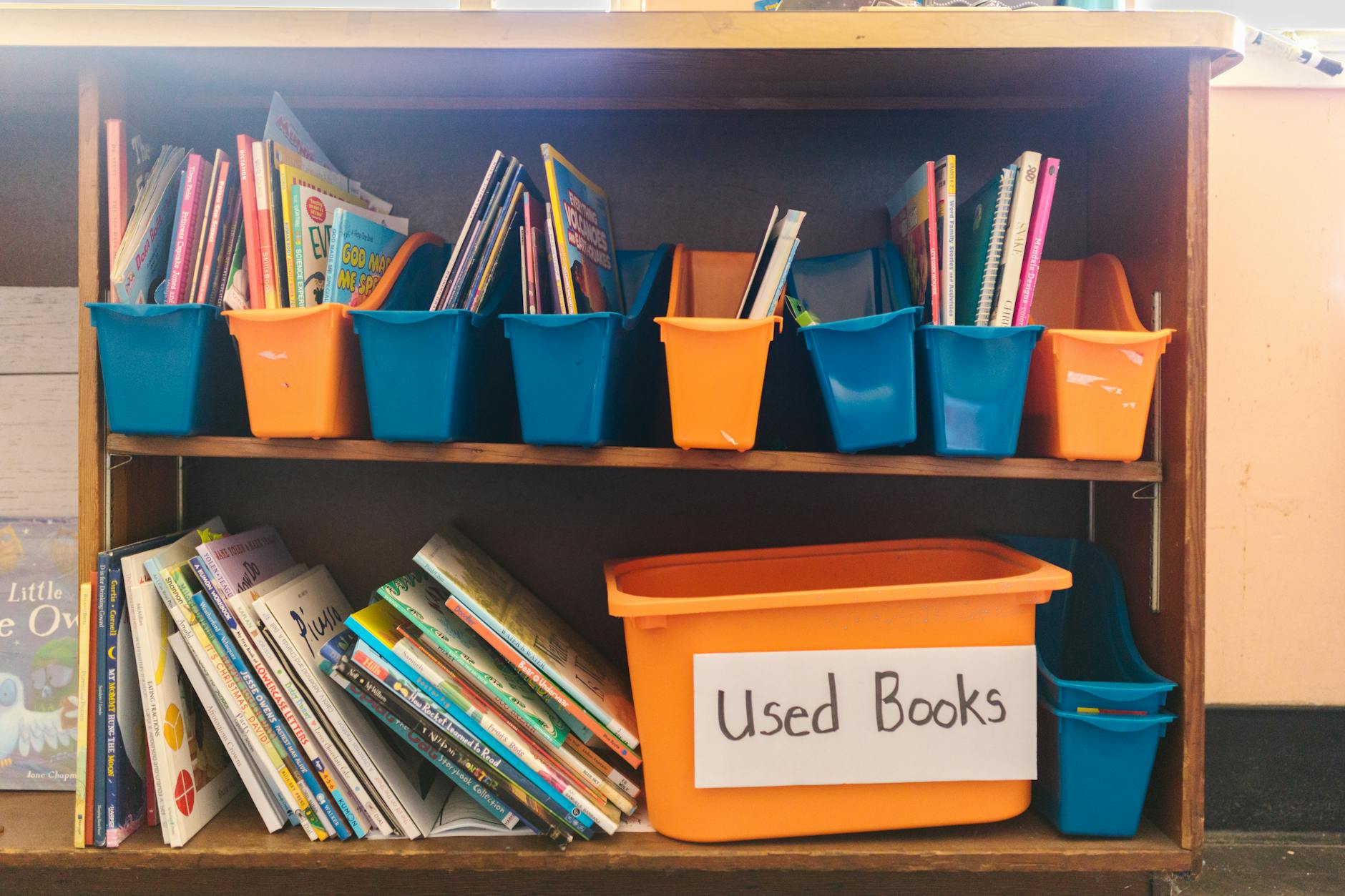
Digital libraries aren't replacing your classroom bookshelf. They're extending it. The best kindergarten teachers now blend physical picture books with curated PDFs, using tablets for one-on-one phonemic awareness practice while keeping hardcovers for whole-group read aloud sessions. Kids don't care about the format. They care about the story and your voice reading it to them.
What's shifting fast is access. Districts are tightening budgets, but free, high-quality early literacy resources keep growing online. Smart teachers build personal collections now—downloading leveled readers before links break, organizing folders by skill, not title, keeping backups when sites disappear. Your future self will thank you when that perfect phonics story is already on your drive.
Stay ahead by staying picky. Don't grab every free PDF you see. Choose texts that actually build decoding skills or spark rich discussions. The teachers who thrive won't be the ones with the biggest digital folders. They'll be the ones who know exactly which kindergarten story book fixes tomorrow's lesson, whether it's on paper or a screen.
Where Can You Find Free Kindergarten Books Online?
You can find free kindergarten books on Oxford Owl (250+ titles for ages 3-5 with audio), Project Gutenberg (60,000+ public domain classics including picture books), and Epic School (40,000+ books free for educators with verified school email). All offer instant PDF or digital access without purchase, though Epic requires .edu verification.
Free books shouldn't require a district budget meeting. These digital libraries and programs for free kids books deliver kindergarten story books straight to your classroom devices without subscription fees.
Platform | Account Needed | Collection Size | Offline Access | Works On |
Oxford Owl | Free email (optional) | 250+ for ages 3-5 | Limited | iOS, Android, Browser |
Project Gutenberg | None | 60,000+ total | Full (EPUB/PDF) | All e-readers, Browser |
Epic School | .edu email | 40,000+ for educators | No | iOS, Android, Browser |
Oxford Owl's Free eBook Library for Ages 3-5
Head to the Oxford Owl website and click into the free eBook Library. Filter by Ages 3-4 or Ages 4-5 to narrow the 250+ collection. Over 80 titles include professional audio narration with British accents that charm American kindergartners.
The platform auto-saves reading progress for two weeks even without an account, or indefinitely with free registration.
Sort using the Phonics and Story genre filters. Phonics books align with UK Phases 1-3, matching US kindergarten phonemic awareness goals. Story books feature Biff, Chip, and Kipper series samples for emergent readers.
Project Gutenberg's Illustrated Children's Collection
Visit catalogue.gutenberg.org and browse the Children's Literature bookshelf. This collection holds over 2,000 illustrated picture books published before 1929.
Download options include EPUB for tablets, Kindle for e-readers, and PDFs from 2-15MB for printing. No account required.
You'll find Beatrix Potter's The Tale of Peter Rabbit (1902), Margery Williams' The Velveteen Rabbit (1922), and illustrated Wonderful Wizard of Oz editions. These classics support early literacy with rich vocabulary.
Epic School's Digital Library for Educators
Sign up for Epic School using your .edu email or Google Classroom account. Verification takes 24-48 hours.
Once approved, create up to 36 student profiles and assign 1,000 books simultaneously. Each student gets a unique QR code for instant login.
Free access is restricted to 7:00 AM - 4:00 PM on school days only. Students cannot read from home during evenings or weekends.
What Are the Best Classic Story Tale Books for Circle Time?
The best classic circle time books are The Three Billy Goats Gruff for sequencing practice, Little Red Hen for repeating phrase participation, and Aesop's Fables like The Lion and the Mouse for moral discussion. These 8-12 minute stories use predictable structures and interactive elements ideal for 15-20 students.
You need materials that hold attention without chaos. Picture books that transform classroom libraries work best when paired with physical props. Keep your kindergarten story books interactive and under twelve minutes.
The Three Billy Goats Gruff Printable Sequencing Version
Use the stop-and-predict method at each bridge crossing. Pause before the small, medium, and large goat encounters to ask, "What might happen next?" Have your students mime the troll's angry reaction while seated in the semicircle.
Pass out the printable 6-scene sequencing cards showing Bridge 1, Bridge 2, Bridge 3, Troll hiding, Troll defeated, and Grass field arrival. Students arrange these on the floor while retelling the story aloud. This builds decoding skills through physical movement and narrative recall.
Seat 15-20 students in a tight semicircle on the rug. Insert 90-second turn and talk breaks after the medium goat crosses. Use thumbs up or down signals to check comprehension before the large goat crosses the final bridge to reach the sweet grass.
Little Red Hen with Repeating Phrase Practice
Assign the repeating phrase "Not I" to specific table groups. Red Table voices the cat, Blue Table barks the dog, Yellow Table squeaks the mouse. Cue each group to chant in unison when your hen asks for help planting or harvesting.
Use a felt board with four character pieces plus wheat stalks, a millstone, and a bread loaf. Move the props to visualize the causal chain from planting through harvesting, grinding, and baking. This concrete progression helps emergent readers follow plot logic and build vocabulary.
Keep the read aloud to eight minutes max. The group chanting is a phonemic awareness drill disguised as participation. Watch for students who mouth the words but don't join the chorus; pair them with confident speakers during the 90-second turn and talk breaks.
Aesop's Fables Short Moral Stories with Pictures
Select three story tale books for your rotation: The Lion and the Mouse at 180 words for mutual aid themes, The Tortoise and the Hare at 200 words for perseverance, and The Boy Who Cried Wolf at 150 words for honesty lessons. Display vintage illustration sets with five to seven images per fable to anchor attention. Each fable runs eight to twelve minutes with discussion.
Run the moral moment discussion immediately after reading. Ask, "Was that a good choice?" Students respond with thumbs up or down. Then they justify using the sentence stem, "I think ___ because ___."
These brief texts fit free online stories collections if your budget is tight. Apply interactive read-aloud strategies like the 90-second turn and talk to debate the moral. This structure builds early literacy through argumentation and critical thinking practice.
Which Short Stories with Pictures PDF Build Early Literacy Skills?
Wordless picture books like 'Journey' develop oral narrative skills during read aloud sessions, pattern books with predictable text such as 'Brown Bear' build phonological awareness, and concept books teach vocabulary through categorized images. These formats specifically target kindergarten literacy standards through visual and repetitive scaffolding.
Not all picture books teach reading. Some build decoding skills. Others develop storytelling muscles. The right short stories with pictures pdf match your specific literacy target.
Wordless Picture Books for Oral Narrative Development
Wordless books fail when you do all the talking. Use the PEER sequence instead: Prompt ("What is happening here?"), Evaluate ("Yes, the dog is running"), Expand ("The dog is running fast to catch the ball"), and Repeat ("Can you say that?"). Wait five to seven seconds after each prompt. Silence feels awkward, but that processing time builds oral language and decoding skills foundations.
Try Flotsam by David Wiesner for beach themes, The Red Book by Barbara Lehman for magical connections, or public domain Snowman sequence images. These kindergarten story books force students to construct narrative structure independently. Research from Hattie's Visible Learning shows dialogic reading of wordless books improves narrative structure use by 23% compared to text-only exposure.
Never point and narrate simultaneously. Point to the image, count to five silently, then invite a student description. This "wait and watch" technique shifts cognitive load to the student where it belongs.
Pattern Books with Predictable Text Structures
Pattern books provide the scaffolding emergent readers need. But not all structures target the same skills. You have three distinct types to choose from, and each serves a different instructional purpose for your early literacy block.
Circular stories like If You Give a Mouse a Cookie return to the starting scene, targeting plot prediction. Cumulative tales such as The Gingerbread Man add repeating elements, developing memory and sequencing. Rhyming couplets in the Dr. Seuss style build phonological awareness and phonemic awareness. John Hattie's Visible Learning research shows repeated reading of predictable text demonstrates an effect size of 0.67 on student achievement.
When students stumble on pattern text, use errorless reading. The group chorally supplies the phrase. This reduces anxiety and builds fluency without shame. Match your story pdf choice to your specific target: cumulative for sequencing, repetitive for evidence-based literacy instruction foundations.
Concept Books for Vocabulary Building
Concept books organize the world into bite-sized categories. Effective ones introduce five to seven new terms per reading with clear photographs, avoiding cartoon abstractions. Young learners need to see real hexagons, not stylized shapes, to build accurate mental models.
Target specific domains. Color books should move beyond basic red-blue-yellow into five intermediate hues like teal and maroon. Spatial relationship books must show under, over, through, between, and beside with clear photographic contexts. Quantity books need one-to-one correspondence dots next to numerals one through ten. This builds the steps to teach reading comprehension through concrete vocabulary anchors.
Extend learning with the labeling activity. After reading, have students create classroom signs using new terms. "This is a hexagon" signs appear during shape hunts. "Between" labels mark the space between desks. Vocabulary sticks when students apply it to their immediate environment.
How Do Free Leveled Reading Books Support Mixed-Ability Classrooms?
Free leveled PDFs support mixed-ability classrooms by providing Level A-B books with single-line text for beginners, Level C-D with multi-sentence plots for developing readers, and Level E+ chapter books for advanced students. Teachers can match texts to DRA benchmarks (1-8) for differentiated small-group instruction.
Stop teaching to the middle. These free leveled reading books pdf let you run three different reading groups from the same classroom library. Everyone gets text they can handle without you buying three separate curricula.
Level A-B correlates to DRA 1, Level C-D to DRA 3-4, and Level E+ to DRA 6-8. Level A-B uses one line of text with 5-10 words and pattern sentences. Level C-D moves to 2-3 sentences with 30-50 words and simple dialogue tags. Level E+ delivers 3-5 sentences with 75-100 words and clear chapter divisions.
Run the ear-reading buddy system. Pair your Level A reader with a Level C partner. The advanced student whispers the text while the beginner tracks the print with a finger. Rotate every 15 minutes to maintain focus. In a class of 24, you manage four simultaneous pairs while pulling your own guided group. Kids teach kids. You teach small groups. This is one of the most effective teaching strategies for mixed-ability classrooms.
Three sources work without district funding. Unite for Literacy hosts 50+ languages with a nonfiction focus—no registration needed. Reading A-Z offers five free sample books per level with email signup. Starfall provides phonics decodables; downloads require free registration. All three work for commercial use in classroom libraries.
DRA benchmarks expect mid-kindergarten students to read Level A independently and reach Level D by year-end. Matching kindergarten story books to these levels ensures students maintain 90-95% accuracy during independent practice. Hit that range and kids grow without frustration. Too easy wastes time; too hard kills confidence and stops progress.
Level A-B Single-Line Text with Picture Support
Level A-B texts display one line per page with 5-10 total words in these picture books. Pattern sentences dominate: "I see a cat. I see a dog." The illustration explicitly shows the noun mentioned, providing strong picture support for emergent readers.
Target specific early literacy skills. Students practice one-to-one word pointing, initial sound identification, and high-frequency sight words: the, I, see, a, my. Watch for left-to-right sweep and return sweep.
Physical layout matters for decoding skills. Use 18-24 point font with ample white space between lines. Keep text left-aligned to teach return sweep. Avoid justified text that creates uneven spacing.
Level C-D Multi-Sentence Pages with Simple Plots
Level C-D books contain 2-3 sentences per page totaling 30-50 words. Simple plots follow problem-solution structure. Dialogue tags appear: "said," "asked." This bridges phonemic awareness to comprehension.
Teach self-monitoring using meaning plus visual cues. Students read punctuation with voice—periods stop, questions rise, exclamations shout. Have them retell using beginning-middle-end sequence.
Good models include Frog and Toad early stories or Henry and Mudge beginning chapters. Unite for Literacy offers equivalent year 1 reading books pdf free with similar text complexity.
Level E Plus Early Chapter Books for Advanced Readers
Level E+ texts run 3-5 sentences per page with 75-100 words total. Books contain 2-3 chapters. Inferential comprehension enters—students must read between the lines and understand character motivation.
Build reading stamina systematically. Start with 10 minutes of sustained independent reading. Add two minutes each week. Target 20 minutes by year-end.
Try Mercy Watson by DiCamillo or Nate the Great for beginning chapter experiences. Project Gutenberg hosts chapter-book adaptations of classics for read aloud or independent practice.
How to Download and Organize Story PDFs Without Copyright Issues?
Download only public domain works (pre-1929 US publications) or Creative Commons licensed content. Organize files in Google Drive by reading level using consistent naming conventions like 'Title_Level_Topic.pdf'. Always verify you are not distributing copyrighted commercial titles like Disney or Eric Carle works.
Identifying Public Domain vs Licensed Free Content
Public domain works include US publications released before 1929. For works published between 1929 and 1989, check the Stanford Copyright Renewal Database to verify status. UK works enter public domain 70 years after the author's death.
Creative Commons licenses show usage rights clearly. CC0 means no restrictions. CC BY requires attribution. CC BY-NC permits classroom use but bans commercial sale on platforms like Teachers Pay Teachers. Avoid NC licenses if you plan to sell adapted materials.
Educational Fair Use limits you to displaying 10% or one chapter during class. It never permits uploading to publicly accessible school websites or permanent repositories. Watch for red flags: PDFs featuring Disney characters, Eric Carle's The Very Hungry Caterpillar, or Dr. Seuss titles offered as free downloads signal copyright violations unless explicitly licensed through platforms like Epic.
Creating Google Drive Folders by Reading Level
Create a main folder named Kindergarten Library 2024. Inside, build subfolders for DRA levels: Level-A through Level-E, plus Wordless, Concept, and Classics. This structure aligns with your early literacy progression throughout the year.
Use the naming convention Title_Level_Topic.pdf. For example: ThreeBears_C_FairyTales_DRA4.pdf. Consistent labels help you locate specific decoding skills texts during lesson planning without scrolling through random files.
Set sharing to Anyone with link can view for parent access to support home read aloud practice. Restrict editing rights to co-teachers only to prevent accidental deletion. Use Drive's shortcut feature to avoid duplicating files across folders. For more on managing classroom PDFs and layouts, see our detailed workflow guide.
Printing vs Tablet Display Technical Considerations
For tablet display, compress kindergarten reading books pdf free download files under 10MB for quick loading on 2018 or newer iPads. Files over 20MB cause noticeable lag. Use Adobe Acrobat's Reduce File Size or Smallpdf.com to optimize emergent readers for smooth transitions during phonemic awareness centers.
Print picture books at 300 DPI minimum so text remains visible from six feet during carpet time. Duplex printing saves paper, but flip on the short edge for field layouts. Print covers on 110 lb cardstock so your kindergarten story books survive repeated handling.
Check contrast ratios meet WCAG 2.1 standards. Yellow text on white backgrounds photocopies poorly. Grayscale printing costs approximately $0.02-$0.05 per page compared to $0.15-$0.50 for color. Test one page before printing entire sets.
Building Your Digital Library Implementation Strategies for Daily Use
Rotation Systems for Shared Classroom Devices
You have six tablets and twenty-four kindergarteners. Stop fighting over turns. Split them into four groups of six and rotate every twenty minutes. I use color-coded popsicle sticks—red group grabs devices on Monday, Wednesday, Friday; blue group takes Tuesday, Thursday. Twenty minutes is short enough to finish a read aloud video but long enough to build decoding skills before restlessness hits.
Assign two "Device Managers" each week from your most responsible students. They handle power-on, lock volume at fifty percent max, manage charging cables, and return everything to the station by the window. Laminate a troubleshooting card: "No sound? Check the side switch." Kids solve ninety percent of problems without you while you work with guided reading groups at the kidney table.
Set the rule: "Eyes on screen, ears on story, fingers on table." This stops the endless tapping that pauses videos mid-sentence. For kids who need isolation from classroom noise, rotate six to eight noise-reduction headphones daily. The rest use the speaker at low volume. Sand timers keep everyone honest about time limits. No arguments about who is next when the red sand runs out.
Sending Home Digital Access Links for Family Reading
You can't send home devices, but you can send home stories. Every Friday, I push three kindergarten story books through ClassDojo Portfolios or Remind. The message is simple: "This week's free stories: [Link 1] [Link 2] [Link 3]. Read together, then ask: Who was the story about? Where did they go? What did they learn?" Translate everything to Spanish for ELL families using the district translation tool. No fancy apps needed.
For delivery, email PDF attachments if they're under twenty-five megabytes to avoid Gmail limits. Or upload to Seesaw Family with a voice-recorded introduction: "Hi families, this week we're reading about pumpkins." Google Drive links set to "view only" work too. Just avoid those "request access" headaches at nine PM when parents finally sit down to help with homework.
Some families lack Wi-Fi entirely. For them, load twenty picture books onto a USB drive as a "Take Home Library" rotated monthly. Include a printed sheet with QR codes linking to video read-alouds. Parents scan, watch the fluent model, then read the PDF with their child. build a digital resource library that travels home on thumb drives without internet.
Tracking Student Progress with Digital Reading Logs
Stop chasing paper logs that never come back. Create a Google Form with dropdown fields: Student Name (pulled from your roster), Book Title (text entry), Reading Level (multiple choice: A/B/C/D/E), Date (auto-filled), and a checkbox for "I finished this book." Responses dump into Google Sheets instantly. Now you can track student progress automatically without touching a clipboard or deciphering parent handwriting.
Use Sheets' Filter Views to sort by reading level. Spot the kids stuck on Level B for four weeks straight while tracking progress toward your 100-book challenge or district benchmarks. Set conditional formatting: five books per week turns green, zero turns red. Share this data with your reading specialist in seconds during PLC meetings.
While reading eggs free for teachers offers a thirty-day trial with three thousand books and quizzes, remember it is not permanently free. True free PDFs give you permanent access without subscription headaches or renewal deadlines. For early literacy benchmarks, Epic School's built-in log tracks minutes and pages automatically. Export that CSV weekly to show your principal exactly how many emergent readers hit their phonemic awareness goals without manual entry.
The Future of Kindergarten Story Books in the Classroom
Digital libraries aren't replacing your classroom bookshelf. They're extending it. The best kindergarten teachers now blend physical picture books with curated PDFs, using tablets for one-on-one phonemic awareness practice while keeping hardcovers for whole-group read aloud sessions. Kids don't care about the format. They care about the story and your voice reading it to them.
What's shifting fast is access. Districts are tightening budgets, but free, high-quality early literacy resources keep growing online. Smart teachers build personal collections now—downloading leveled readers before links break, organizing folders by skill, not title, keeping backups when sites disappear. Your future self will thank you when that perfect phonics story is already on your drive.
Stay ahead by staying picky. Don't grab every free PDF you see. Choose texts that actually build decoding skills or spark rich discussions. The teachers who thrive won't be the ones with the biggest digital folders. They'll be the ones who know exactly which kindergarten story book fixes tomorrow's lesson, whether it's on paper or a screen.
Still grading everything by hand?
EMStudio is a free teaching management app — manage your classes, students, lessons, and more!
Learn More
Still grading everything by hand?
EMStudio is a free teaching management app — manage your classes, students, lessons, and more!
Learn More



Notion4Teachers
Notion templates to simplify administrative tasks and enhance your teaching experience.



2026 Notion4Teachers. All Rights Reserved.
Notion4Teachers
Notion templates to simplify administrative tasks and enhance your teaching experience.
2026 Notion4Teachers. All Rights Reserved.
Notion4Teachers
Notion templates to simplify administrative tasks and enhance your teaching experience.
2026 Notion4Teachers. All Rights Reserved.