
The Book with No Pictures: 12 Interactive Read-Alouds for Classrooms
The Book with No Pictures: 12 Interactive Read-Alouds for Classrooms

Article by
Milo
ESL Content Coordinator & Educator
ESL Content Coordinator & Educator
All Posts
Do you need a read-aloud that actually holds attention without relying on shiny illustrations? The Book with No Pictures proves that words alone can make 2nd graders roar with laughter. B.J. Novak's trick is simple: he makes you, the reader, say ridiculous things like "blork" and "bluurf," and kids can't believe an adult is forced to speak nonsense.
I've watched frozen, reluctant readers thaw out during this book. Last October, my 3rd graders were so hooked by the idea of making me sound silly that they forgot they were "too cool" for picture books. The text breaks the fourth wall on page one and never rebuilds it.
But one book won't carry your whole year. You need a rotation of interactive read-alouds that force participation, spark creativity, and yes, sometimes make you look ridiculous in front of thirty kids. Here are twelve that actually work from kindergarten through 5th grade, organized by exactly how you'll use them during your literacy block.
Still grading everything by hand?
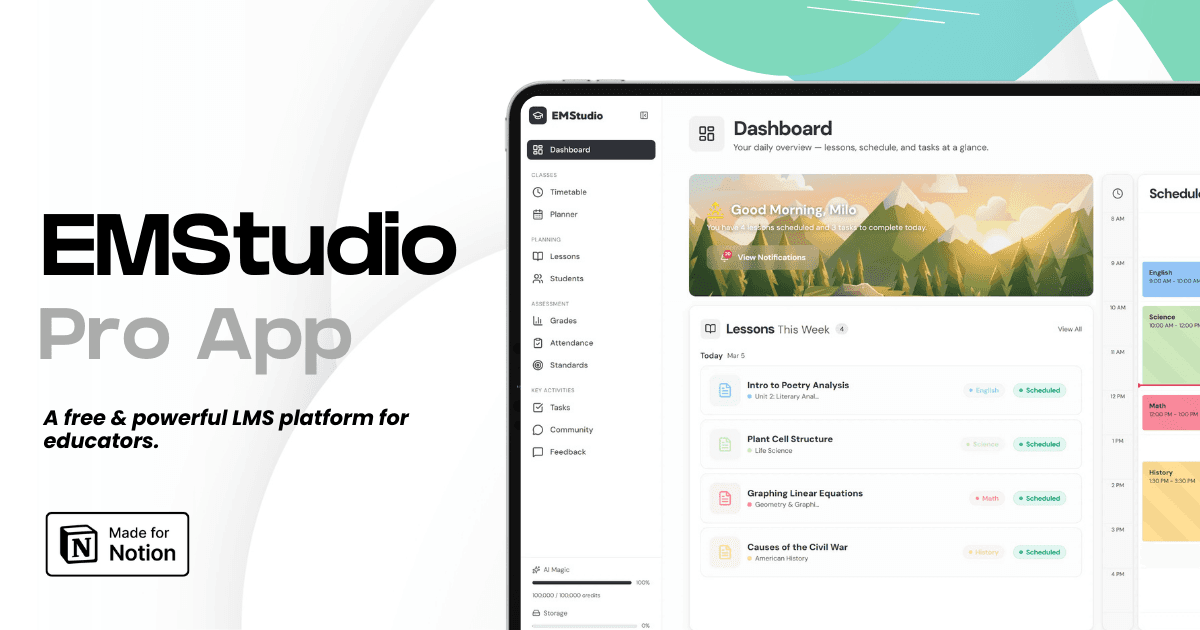
EMStudio is a free teaching management app — manage your classes, students, lessons, and more!
Learn More
Still grading everything by hand?
EMStudio is a free teaching management app — manage your classes, students, lessons, and more!
Learn More
Table of Contents
What Are the Best Interactive Read-Alouds for Breaking the Fourth Wall?
The best interactive read-alouds for breaking the fourth wall include The Monster at the End of This Book (Grover directly addressing the reader), Don't Let the Pigeon Drive the Bus (character pleading with audience), There's a Monster in Your Book (physical interaction required), and Press Here (implied cause-and-effect). These meta picture books require performative reading and create comedic tension between text and audience.
The Book with No Pictures works best as your entry point into this format. B.J. Novak's 2014 release mainstreamed the "comedy of disobedience" for modern classrooms. It succeeds with grades K-2, but only if you commit to the bit. Read it flat, and the kids stare at you confused. You have to sell the absurdity with full vocal commitment and ridiculous faces.
These books die in a monotone. You need two distinct gears: the panicked, breathless baritone for Grover, and the nasal, wheedling whine for Pigeon. I gesture with my whole body when reading these—backing away from the page when Grover begs, leaning into the aisle when Pigeon negotiates. Your physical energy signals that this isn't a standard read-aloud; it's theater.
Think of these four texts as a developmental staircase:
Psychological barrier: Grover begs the reader to stop turning pages
Persuasive dialogue: The Pigeon negotiates directly with your class
Physical action: Shake, tilt, and blow on the book itself
Implied causation: Press dots that seem to multiply through prediction alone
Never break the fourth wall with a substitute teacher or during the first week of school. These texts require established trust and classroom culture. The comedy depends on students feeling safe enough to shout "No!" at a book or shake it vigorously. Without rapport, you spend twenty minutes managing behavior instead of reading.
The Monster at the End of This Book
Jon Stone created this masterpiece in 1971. The Little Golden Book format feels vintage, but the mechanic remains unbeatable. Grover spends thirty-two pages constructing physical barriers—ropes, brick walls—to stop the reader from turning pages. The dramatic irony kills every time: the title already told your 1st graders exactly who waits at the end.
The interaction works because Grover speaks directly to the child. He breaks the boundary between story book characters and the classroom, creating a conspiracy between reader and text against Grover's anxiety. When you turn the page despite his pleading, the class erupts in guilty laughter. Even your shyest students lean in, fingers hovering, ready to defy him again.
You need two distinct voices. I use a high, panicked, breathless register for Grover—almost squeaking. The narrator stays calm, slightly bemused. Last October, I strung a rope across the front of my carpet area. When Grover mentioned his barrier, I pointed to the real one. The kids lost their minds. One boy rolled under it to reach the book. That's the immersive theater you're aiming for with these picture books that transform classroom libraries.
Don't Let the Pigeon Drive the Bus
Mo Willems published this Caldecott Honor winner in 2003. The forty-page format launched a six-book empire, but this original remains the tightest example of persuasive dialogue breaking the fourth wall. The bus driver addresses the reader directly, appointing your students as temporary guardians, then exits. The Pigeon arrives immediately, begging, wheedling, and demanding the wheel.
The interaction creates a 1:1 conversation between character and child. Unlike Grover, who fights the mechanics of reading, the Pigeon treats the reader as an authority figure to be manipulated. He uses logic ("I'll just steer"), emotional appeals ("My cousin Herb drives a bus!"), and tantrums. Your students must verbally deny him, creating a call-and-response rhythm. The boundary between story space and classroom dissolves; the Pigeon talks to them.
Setup determines success. Before opening the cover, hand a toy steering wheel to one student and place a bus driver hat on their head. When the Pigeon begs, point to that child. The class sees their peer as the barrier. It transforms the book from story into event. I use a nasal, wheedling whine, dropping my chin and looking up through my eyebrows. If you're not embarrassed by your performance, you're not doing it right.
There's a Monster in Your Book
Tom Fletcher released this British import in 2017, the companion to There's a Dragon in Your Book. The thirty-two pages demand eight specific physical interactions:
Shake the book violently to wake the sleeping monster
Tickle his feet through the page
Blow on the page to remove dust
Tilt left to make him slide across
Tilt right to trap him in the spine
Spin the book to confuse him
Press the monster down firmly to flatten him
Open the page slowly to release him into the room
Unlike Grover's psychological barriers, this text requires kinetic energy from every student. The interaction operates through physical cause-and-effect. When thirty 2nd graders jiggle their copies, the monster on the next spread appears rumpled. The correlation feels magical. This is making kids the hero of the story through physical agency, not just imagination.
However, this book destroys your classroom without parameters. I learned this last March when a student launched his copy across the carpet to "make the monster fly." Clear every desk first. Establish the "gentle earthquake" rule—two inches of movement, not throws. Practice "blowing" as directed air, not spitting. I demonstrate the wrong way dramatically until they laugh. The tilting works best with two-handed grip, elbows anchored. This prevents motion from becoming a weapon.
Press Here
Hervé Tullet published this French sensation in 2010 through Chronicle Books. Originally titled Un Livre, the fifty-six pages contain no plot or characters, just yellow dots against white backgrounds. The text issues direct commands: press here, rub the dot, blow, tilt. The magic relies on implied causation. When students press a dot, the next spread shows two dots, or red ones, or scattered chaos. No batteries, just predictive illusion.
The mechanic works through misdirection and timing. You must slow down. I cover the right-hand page with cardstock while the left displays instructions. Every child must press, rub, or blow before I reveal the "result." This enforced pacing builds suspense and ensures universal participation. The book trains students as agents of change, not just consumers. The book with no pictures demands vocal performance, but Press Here demands choreographic precision.
Use this with 3rd graders who think they're too sophisticated for Grover. They will argue about whether the dots actually moved, testing hypotheses about hidden magnets. Let them debate. The book becomes a science experiment. I once had a student spend twenty minutes pressing every dot in the library to test the pattern. That's the engagement you're buying. It proves that interaction doesn't require story book characters—just clear instructions and willingness to pretend.

Which Art and Creativity Books Inspire Student Confidence?
Art and creativity books that build student confidence include Peter H. Reynolds' The Dot (celebrating individual marks) and Ish (embracing imperfection), Barney Saltzberg's Beautiful Oops! (transforming mistakes), and The Squiggle (imaginative line play). These titles combat "I can't draw" syndrome by reframing artistic expression as process over product, particularly effective for grades K-4.
These four titles form a "growth mindset through art" cluster that directly targets the crumpled paper moment. You know the one: a student draws a line they hate, immediately wads the sheet, and asks for a fresh paper. These books stop that reflex dead.
The crumpled paper moment usually strikes around October in grades K-4, when students realize their drawings do not match their internal visions. These texts serve as pre-emptive strikes against that frustration. They teach that the first mark is merely a starting point, not a contract for perfection.
Title | Target Age | Artistic Medium Featured | Key Growth Moment | Prep Time for Follow-Up Activity |
|---|---|---|---|---|
The Dot | Grades K-3 | Paint and marker dots | Vashti signs her first mark | 5 minutes |
Ish | Grades 1-4 | Pen and pencil sketches | Marisol shows her "ish" wall | 10 minutes |
Beautiful Oops! | Grades PreK-2 | Mixed media mistakes | Torn page becomes alligator mouth | 15 minutes |
The Squiggle | Grades PreK-2 | String and line art | Girl sees dragon in red yarn | 0 minutes |
Grades 1-3 harbor a perfectionism epidemic that standard pep talks cannot touch. These books function as bibliotherapy for anxious high-achievers who refuse to attempt art to avoid imperfect results. Unlike the book with no pictures which demands participation through comedy and performance, these titles lower the stakes through quiet visual example, showing children that professional artists value the attempt over the outcome.
Beautiful Oops! contains delicate pop-ups. If you place this in your classroom library without supervision, the paper engineering will be destroyed within days. The torn-page effects and gatefolds cannot withstand the browsing habits of excited first graders. Keep this title behind your desk for small-group instruction only.
The Dot
Peter H. Reynolds published The Dot with Candlewick Press in 2003. The thirty-two page picture book features Vashti, a student approximately in second grade who believes she cannot draw. Her art teacher accepts a blank sheet; Vashti jabs an angry dot to prove her point. Instead of criticism, the teacher frames that single mark in swirly gold paper and hangs it above her desk.
That gesture sparks a cascade. Vashti paints dots of every size and color, mixing red with yellow, experimenting with negative space. She discovers her artistic voice through repetition and variation. The book closes with Vashti mentoring a younger boy who insists he cannot draw a straight line. She hands him paper and says, "Sign it." The confidence cycle continues as the student becomes the teacher.
Every September 15th marks International Dot Day, involving millions of students across one hundred ninety countries. They create dot art using visual thinking strategies and basic supplies. Register your class at thedotclub.org to download certificates and upload your gallery to the global map.
White paper, any size.
Markers or watercolor paints.
The willingness to make the first mark.
Ish
Peter H. Reynolds released Ish in 2004 as a companion to The Dot, though it stands alone. The protagonist Ramon draws constantly until his older brother mocks his vase drawing. Ramon crumples the paper and gives up, a scene that replays daily in classrooms when peers laugh at attempts. His younger sister Marisol rescues the crumpled sheet and tapes it to her wall alongside dozens of other "ish" drawings that celebrate approximation.
She teaches Ramon to see "vase-ish," "boat-ish," and "sun-ish" as valid categories. The liberation is immediate. Ramon fills notebooks with loose, joyful sketches, no longer paralyzed by photographic realism. The book reframes imperfection as artistic style rather than error, giving vocabulary to the approximate nature of creativity.
This title fits grades one through four, particularly effective for gifted students with perfectionist paralysis and art-anxious boys who struggle with fine motor precision. I have watched third graders who refuse to free-write because they cannot spell perfectly relax their shoulders when they hear "write it ish." Pair this text with tools to support creative writers facing similar blank-page terror.
Beautiful Oops!
Barney Saltzberg published Beautiful Oops! with Workman Publishing in 2010. The twenty-eight page book features intricate pop-ups, gatefolds, and torn-page effects that physically show mistakes transforming into unexpected art.
A torn paper flap becomes an alligator's mouth.
A spilled paint blob morphs into an elephant's body.
A crumpled page transforms into sheep's wool texture.
The engineering makes the philosophy tangible; students see that the error is not the end of the page but the beginning of something new and original.
The hardcover retails for twelve to fifteen dollars, but the pop-up elements tear easily with rough handling. The paper engineering cannot withstand the browsing habits of excited first graders who yank flaps too hard. If you place this in your classroom library without supervision, the interactive features will be destroyed within days.
Buy two copies or reserve this title strictly for small-group teacher-led read-alouds. I keep my copy in a labeled basket marked "Teacher Read-Aloud Only" and gather three to four students at a time to explore the foldouts together. This controlled setting allows you to model gentle page-turning while discussing the emotional relief of mistakes.
The Squiggle
Carole Lexa Schaefer wrote The Squiggle with illustrations by Pierr Morgan, published by Crown Books in 1996. The forty-page picture book contains approximately one hundred fifty words total, making it ideal for emerging readers. The plot follows a girl who finds a piece of red yarn on the sidewalk.
She picks it up and imagines it as various things: a dragon's fiery tongue, a thundercloud, a tightrope walker mid-performance, the trail of an ice-skater.
The heavy visual narrative with low text density makes this accessible for English Language Learners and pre-readers who rely on picture cues. Unlike the dot book which focuses on marks made, this title celebrates the imagination applied to found objects. Students recognize that creativity requires only willingness, not expensive supplies or refined technique.
Follow-up activities require zero prep. Hand students a piece of string or a line drawn on paper. Ask them to rotate the page and identify what the squiggle becomes from different angles. This pairs naturally with visual thinking strategies and builds the confidence to begin with a single line without requiring a finished vision in mind.
What Humorous Book Series Make Learning Unforgettable?
Humorous book series that enhance learning include Terry Deary's Horrible Histories (irreverent history facts for grades 3-6), Drew Daywalt's The Day the Crayons Quit (persuasive writing models), and Jon Scieszka's The Stinky Cheese Man (fractured fairy tales). These use absurdist humor, unreliable narrators, and character complaints to teach point of view, persuasion, and critical analysis.
Humor isn't just entertainment. These books force students to hold two truths simultaneously.
That cognitive load demands background knowledge of fairy tale originals and mature theory of mind to spot irony. When a narrator lies, the reader must know the truth to appreciate the joke. This complexity builds critical thinking faster than earnest lectures about bias.
Choose your humor type carefully:
Slapstick (Mo Willems' Pigeon): Pro—Universal appeal for emergent readers. Con—Limited academic rigor; mostly behavioral lessons.
Dark/Gross (Horrible Histories): Pro—Memorable historical facts through shock value. Con—Plague, execution, and toilet humor traumatize anxious students.
Literary Parody (Scieszka): Pro—Teaches sophisticated narrative structure and irony. Con—Requires pre-teaching original fairy tales or jokes land flat.
Horrible Histories contains plague, execution, and toilet humor. Preview every title before whole-class read-alouds. Anxious students fixate on beheading details or disease descriptions. Offer opt-out choices for sensitive kids who internalize historical violence.
The horrible histories book set has sold over 60 million copies worldwide. That reach means your students likely recognize the brand from BBC adaptations or older siblings. Use that cultural capital alongside other tools that transform history classrooms.
Horrible Histories
Terry Deary launched the series in 1993 with Scholastic UK. Over 20 titles cover eras from Rotten Romans to Vile Victorians to Woeful Second World War. Each volume focuses on the disgusting, violent, or absurd aspects of history that textbooks sanitize. You get the truth about chamber pots, battlefield surgery, and royal body odor.
The format mixes non-fiction prose, comic strips, and quizzes. Deary deliberately omitted an index to encourage cover-to-cover reading. The chatty, informal tone and "horrible" facts have moved 60 million copies globally, spawning a BBC television adaptation. Unlike the book with no pictures, which requires performative reading, these work for independent silent reading once kids catch the irony.
Restrict this to grades 3-6. Younger students miss the sarcasm and may fixate on frightening plague or beheading details. Always provide opt-out options for sensitive readers. I once had a 2nd grader cry about the guillotine description, even though the text treated it darkly funny. Pair this with classroom gamification methods to boost interest in research projects.
The Day the Crayons Quit
Drew Daywalt wrote the text, Oliver Jeffers illustrated, and the 2013 release became a #1 New York Times Bestseller. The 40-page epistolary narrative features letters from anthropomorphized crayons airing grievances to their owner, Duncan. Red crayon complains about overwork during holidays. Purple fumes over coloring outside lines.
Beige demands to be called "light brown" instead of "dark tan." Each letter follows persuasive structure: complaint, evidence, specific demand. You can teach thesis statements using Purple's airtight argument about consistency. The vocabulary is accessible but the rhetorical moves are sophisticated. Even Peach crayon hides in the box naked, too embarrassed to come out, modeling vulnerability.
This aligns perfectly with CCSS W.1.1 and W.2.1 for opinion writing. Students can model their own persuasive essays after Duncan's crayons. The relatable complaints about workload and identity resonate with 6-year-olds struggling to express frustration appropriately. My 1st graders wrote complaint letters to their shoes after studying Beige's argument.
The Stinky Cheese Man and Other Fairly Stupid Tales
Jon Scieszka and Lane Smith published this 56-page postmodern picture book with Viking Press in 1992. The collection fractures familiar tales into absurd variations that mock narrative conventions themselves. The title story replaces the Gingerbread Man with a cheesy equivalent who smells too bad to chase. The ugly duckling grows up to be just plain ugly, not a swan.
The table of contents physically collapses as story book characters disrupt it. Jack from Jack and the Beanstalk serves as an unreliable narrator who interrupts stories and insults the reader. Characters wander between tales, breaking narrative boundaries. The Little Red Hen keeps interrupting other stories to ask for help.
Prerequisite warning: Students must know original fairy tales—Cinderella, Little Red Hen, Chicken Little—before opening this book. Without that background, the parody falls completely flat. Pre-teach using traditional anthologies. I learned this the hard way with a 2nd grade class who sat silent through the jokes because they didn't know the originals.
The True Story of the 3 Little Pigs
Jon Scieszka and Lane Smith's 1989 debut launched Scieszka's picture book career before he wrote The Time Warp Trio chapter books. The 32-page retelling presents Alexander T. Wolf's defense against the classic accusations. He narrates from jail, serving time for alleged huffing and puffing.
The wolf claims he was framed. He had a sneezing cold while borrowing sugar for his granny's birthday cake. The first two houses collapsed due to shoddy pig construction, not his breath. The third pig insults his grandmother, provoking the alleged "huff and puff." Every detail inverts the original while maintaining logical consistency. Smith's illustrations show the wolf in a striped prison suit, adding visual irony.
Use this with 1st through 4th graders. It serves as an accessible introduction to unreliable narrators and multiple perspectives in justice systems. The concrete "who is lying" question builds critical analysis skills. My 3rd graders hold mock trials annually, and this book provides the perfect primer for discussing bias in evidence.
How to Choose the Right Interactive Book for Your Lesson Objectives?
Choose interactive books by matching your lesson objective to the book's mechanism: use fourth-wall breakers for engagement and fluency modeling, art books for growth mindset and STEM integration, and humor series for persuasive writing and critical thinking. Consider grade-level attention spans—5-7 minutes for PreK, up to 20 minutes for grade 5—and always preview dark humor for classroom appropriateness.
Start with your goal, then pick the tool.
Decision flowchart: First, identify your objective. Need engagement? Grab The Book with No Pictures or an all about me book that invites personal response. Building skills? Choose Press Here for cause-and-effect or Beautiful Oops for iteration. Strengthening community? Reach for Don't Let the Pigeon Drive the Bus! Next, match the interaction type to your comfort level. Finally, check complexity against your students' stamina. PreK students tap out after seven minutes; fifth graders can handle twenty.
Follow the readiness rule. Fourth-wall books demand established rapport. You need the performance energy and trust to ask kids to shout "Boo!" or shake the book. Never deploy these with substitute teachers or during the first week of school. Wait until you know names and personalities.
Budget reality check: Hardcovers run $15-20. Paperbacks save a few dollars but wear faster. Buy multiple copies of Press Here for small-group rotations; one copy of The True Story of the 3 Little Pigs suffices for read-alouds. Spend your money on durability for high-touch titles.
Address inclusion explicitly. Offer a quiet observation opt-out for students who find performative participation overwhelming. Shy students or those on the autism spectrum can signal engagement with a thumbs up instead of shouting or physical actions. Respect the boundary.
Matching Books to Grade Levels and Attention Spans
Match the cognitive load to the calendar month. October third graders can handle The Stinky Cheese Man and its fractured fairy tale structure, but August third graders need simpler interaction. Watch the clock. When eyes drift, stop. Better to finish early than to train them that books bore.
Align titles to specific standards:
Use The True Story of the 3 Little Pigs for RL.2.6 (point of view) and watch students argue whether the wolf is reliable.
The Day the Crayons Quit hits W.1.1 (opinion writing) naturally; kids write their own complaint letters immediately after.
For RL.3.9, compare The Stinky Cheese Man against original Grimm tales to analyze author choice.
Connect to STEM without forcing it. Press Here teaches cause and effect relationships better than any worksheet. Beautiful Oops models the engineering design process: iterate on mistakes. When a torn page becomes an alligator mouth, you see growth mindset in real time.
Use these sessions as formative assessment. Note who predicts outcomes during Press Here. Track who infers character feelings in The Day the Crayons Quit. Watch for the student who catches the irony in The True Story of the 3 Little Pigs. These observations guide your next week's small groups more honestly than any quiz.
Connecting Stories to Curriculum Standards
Stop treating standards as checklists. Use aligning stories with curriculum standards as your planning shortcut. When you map Interactive Read Alouds to specific targets, you kill two blocks with one book.
Think vertically. Last year I mapped The Book with No Pictures across three grade levels. It worked for fluency in grade 1 (RF.1.4), persuasive language in grade 3 (RI.3.8), and author’s purpose in grade 5 (RI.5.6). Same book, different lens. You save money and build community lore as students reference the book across years.
Plan your questions beforehand. If you are hitting RL.3.3 (character actions), pause when the pigeon screams. Ask why he yells. Skip asking how students feel about the yelling. Target the standard explicitly. Record your questions on a sticky note inside the cover so you never forget mid-read.
Building Classroom Community Through Shared Laughter
Laughter builds trust faster than icebreakers. Shared humor releases oxytocin, creating an in-group feeling that lasts months. When your class quotes Don't Let the Pigeon Drive the Bus! as a behavior cue—"Don't let the pigeon stay up late!"—you have building classroom community through shared experiences cemented. The book becomes your shared language.
Choose humor that translates. Absurdist humor, like Jon Scieszka’s logic, crosses language barriers better than wordplay. Avoid sarcasm entirely; literal thinkers confuse your tone with actual instruction. Preview The Stinky Cheese Man for dark humor that might unsettle anxious students. When in doubt, choose kindness over comedy.
Provide escape valves. For students with autism or social anxiety, shouting or shaking books triggers overwhelm. Offer the quiet observer role. They can point, nod, or write predictions instead of vocalizing. These innovative tools to engage and inspire work only when every child feels safe to opt in or out. Inclusion means choice.
The Bottom Line on The Book With No Pictures
Interactive read-alouds work because they force kids to participate instead of zoning out. The Book With No Pictures proves that words alone—silly, forced words coming out of your mouth—can hold attention better than flashy illustrations. That participation is the point.
Pick your book based on what you need that day. Breaking the fourth wall? Grab B.J. Novak’s book or Press Here. Building art confidence? Try Ish or The Dot. Need humor that teaches? Series like The Bad Guys or Elephant and Piggie do the heavy lifting. Match the tool to the objective.
You don’t need fifty titles. Five solid interactive books, rotated through the year, will transform your read-aloud time from background noise into the lesson kids beg you to repeat. Start with The Book With No Pictures. Watch what happens.

What Are the Best Interactive Read-Alouds for Breaking the Fourth Wall?
The best interactive read-alouds for breaking the fourth wall include The Monster at the End of This Book (Grover directly addressing the reader), Don't Let the Pigeon Drive the Bus (character pleading with audience), There's a Monster in Your Book (physical interaction required), and Press Here (implied cause-and-effect). These meta picture books require performative reading and create comedic tension between text and audience.
The Book with No Pictures works best as your entry point into this format. B.J. Novak's 2014 release mainstreamed the "comedy of disobedience" for modern classrooms. It succeeds with grades K-2, but only if you commit to the bit. Read it flat, and the kids stare at you confused. You have to sell the absurdity with full vocal commitment and ridiculous faces.
These books die in a monotone. You need two distinct gears: the panicked, breathless baritone for Grover, and the nasal, wheedling whine for Pigeon. I gesture with my whole body when reading these—backing away from the page when Grover begs, leaning into the aisle when Pigeon negotiates. Your physical energy signals that this isn't a standard read-aloud; it's theater.
Think of these four texts as a developmental staircase:
Psychological barrier: Grover begs the reader to stop turning pages
Persuasive dialogue: The Pigeon negotiates directly with your class
Physical action: Shake, tilt, and blow on the book itself
Implied causation: Press dots that seem to multiply through prediction alone
Never break the fourth wall with a substitute teacher or during the first week of school. These texts require established trust and classroom culture. The comedy depends on students feeling safe enough to shout "No!" at a book or shake it vigorously. Without rapport, you spend twenty minutes managing behavior instead of reading.
The Monster at the End of This Book
Jon Stone created this masterpiece in 1971. The Little Golden Book format feels vintage, but the mechanic remains unbeatable. Grover spends thirty-two pages constructing physical barriers—ropes, brick walls—to stop the reader from turning pages. The dramatic irony kills every time: the title already told your 1st graders exactly who waits at the end.
The interaction works because Grover speaks directly to the child. He breaks the boundary between story book characters and the classroom, creating a conspiracy between reader and text against Grover's anxiety. When you turn the page despite his pleading, the class erupts in guilty laughter. Even your shyest students lean in, fingers hovering, ready to defy him again.
You need two distinct voices. I use a high, panicked, breathless register for Grover—almost squeaking. The narrator stays calm, slightly bemused. Last October, I strung a rope across the front of my carpet area. When Grover mentioned his barrier, I pointed to the real one. The kids lost their minds. One boy rolled under it to reach the book. That's the immersive theater you're aiming for with these picture books that transform classroom libraries.
Don't Let the Pigeon Drive the Bus
Mo Willems published this Caldecott Honor winner in 2003. The forty-page format launched a six-book empire, but this original remains the tightest example of persuasive dialogue breaking the fourth wall. The bus driver addresses the reader directly, appointing your students as temporary guardians, then exits. The Pigeon arrives immediately, begging, wheedling, and demanding the wheel.
The interaction creates a 1:1 conversation between character and child. Unlike Grover, who fights the mechanics of reading, the Pigeon treats the reader as an authority figure to be manipulated. He uses logic ("I'll just steer"), emotional appeals ("My cousin Herb drives a bus!"), and tantrums. Your students must verbally deny him, creating a call-and-response rhythm. The boundary between story space and classroom dissolves; the Pigeon talks to them.
Setup determines success. Before opening the cover, hand a toy steering wheel to one student and place a bus driver hat on their head. When the Pigeon begs, point to that child. The class sees their peer as the barrier. It transforms the book from story into event. I use a nasal, wheedling whine, dropping my chin and looking up through my eyebrows. If you're not embarrassed by your performance, you're not doing it right.
There's a Monster in Your Book
Tom Fletcher released this British import in 2017, the companion to There's a Dragon in Your Book. The thirty-two pages demand eight specific physical interactions:
Shake the book violently to wake the sleeping monster
Tickle his feet through the page
Blow on the page to remove dust
Tilt left to make him slide across
Tilt right to trap him in the spine
Spin the book to confuse him
Press the monster down firmly to flatten him
Open the page slowly to release him into the room
Unlike Grover's psychological barriers, this text requires kinetic energy from every student. The interaction operates through physical cause-and-effect. When thirty 2nd graders jiggle their copies, the monster on the next spread appears rumpled. The correlation feels magical. This is making kids the hero of the story through physical agency, not just imagination.
However, this book destroys your classroom without parameters. I learned this last March when a student launched his copy across the carpet to "make the monster fly." Clear every desk first. Establish the "gentle earthquake" rule—two inches of movement, not throws. Practice "blowing" as directed air, not spitting. I demonstrate the wrong way dramatically until they laugh. The tilting works best with two-handed grip, elbows anchored. This prevents motion from becoming a weapon.
Press Here
Hervé Tullet published this French sensation in 2010 through Chronicle Books. Originally titled Un Livre, the fifty-six pages contain no plot or characters, just yellow dots against white backgrounds. The text issues direct commands: press here, rub the dot, blow, tilt. The magic relies on implied causation. When students press a dot, the next spread shows two dots, or red ones, or scattered chaos. No batteries, just predictive illusion.
The mechanic works through misdirection and timing. You must slow down. I cover the right-hand page with cardstock while the left displays instructions. Every child must press, rub, or blow before I reveal the "result." This enforced pacing builds suspense and ensures universal participation. The book trains students as agents of change, not just consumers. The book with no pictures demands vocal performance, but Press Here demands choreographic precision.
Use this with 3rd graders who think they're too sophisticated for Grover. They will argue about whether the dots actually moved, testing hypotheses about hidden magnets. Let them debate. The book becomes a science experiment. I once had a student spend twenty minutes pressing every dot in the library to test the pattern. That's the engagement you're buying. It proves that interaction doesn't require story book characters—just clear instructions and willingness to pretend.
Which Art and Creativity Books Inspire Student Confidence?
Art and creativity books that build student confidence include Peter H. Reynolds' The Dot (celebrating individual marks) and Ish (embracing imperfection), Barney Saltzberg's Beautiful Oops! (transforming mistakes), and The Squiggle (imaginative line play). These titles combat "I can't draw" syndrome by reframing artistic expression as process over product, particularly effective for grades K-4.
These four titles form a "growth mindset through art" cluster that directly targets the crumpled paper moment. You know the one: a student draws a line they hate, immediately wads the sheet, and asks for a fresh paper. These books stop that reflex dead.
The crumpled paper moment usually strikes around October in grades K-4, when students realize their drawings do not match their internal visions. These texts serve as pre-emptive strikes against that frustration. They teach that the first mark is merely a starting point, not a contract for perfection.
Title | Target Age | Artistic Medium Featured | Key Growth Moment | Prep Time for Follow-Up Activity |
|---|---|---|---|---|
The Dot | Grades K-3 | Paint and marker dots | Vashti signs her first mark | 5 minutes |
Ish | Grades 1-4 | Pen and pencil sketches | Marisol shows her "ish" wall | 10 minutes |
Beautiful Oops! | Grades PreK-2 | Mixed media mistakes | Torn page becomes alligator mouth | 15 minutes |
The Squiggle | Grades PreK-2 | String and line art | Girl sees dragon in red yarn | 0 minutes |
Grades 1-3 harbor a perfectionism epidemic that standard pep talks cannot touch. These books function as bibliotherapy for anxious high-achievers who refuse to attempt art to avoid imperfect results. Unlike the book with no pictures which demands participation through comedy and performance, these titles lower the stakes through quiet visual example, showing children that professional artists value the attempt over the outcome.
Beautiful Oops! contains delicate pop-ups. If you place this in your classroom library without supervision, the paper engineering will be destroyed within days. The torn-page effects and gatefolds cannot withstand the browsing habits of excited first graders. Keep this title behind your desk for small-group instruction only.
The Dot
Peter H. Reynolds published The Dot with Candlewick Press in 2003. The thirty-two page picture book features Vashti, a student approximately in second grade who believes she cannot draw. Her art teacher accepts a blank sheet; Vashti jabs an angry dot to prove her point. Instead of criticism, the teacher frames that single mark in swirly gold paper and hangs it above her desk.
That gesture sparks a cascade. Vashti paints dots of every size and color, mixing red with yellow, experimenting with negative space. She discovers her artistic voice through repetition and variation. The book closes with Vashti mentoring a younger boy who insists he cannot draw a straight line. She hands him paper and says, "Sign it." The confidence cycle continues as the student becomes the teacher.
Every September 15th marks International Dot Day, involving millions of students across one hundred ninety countries. They create dot art using visual thinking strategies and basic supplies. Register your class at thedotclub.org to download certificates and upload your gallery to the global map.
White paper, any size.
Markers or watercolor paints.
The willingness to make the first mark.
Ish
Peter H. Reynolds released Ish in 2004 as a companion to The Dot, though it stands alone. The protagonist Ramon draws constantly until his older brother mocks his vase drawing. Ramon crumples the paper and gives up, a scene that replays daily in classrooms when peers laugh at attempts. His younger sister Marisol rescues the crumpled sheet and tapes it to her wall alongside dozens of other "ish" drawings that celebrate approximation.
She teaches Ramon to see "vase-ish," "boat-ish," and "sun-ish" as valid categories. The liberation is immediate. Ramon fills notebooks with loose, joyful sketches, no longer paralyzed by photographic realism. The book reframes imperfection as artistic style rather than error, giving vocabulary to the approximate nature of creativity.
This title fits grades one through four, particularly effective for gifted students with perfectionist paralysis and art-anxious boys who struggle with fine motor precision. I have watched third graders who refuse to free-write because they cannot spell perfectly relax their shoulders when they hear "write it ish." Pair this text with tools to support creative writers facing similar blank-page terror.
Beautiful Oops!
Barney Saltzberg published Beautiful Oops! with Workman Publishing in 2010. The twenty-eight page book features intricate pop-ups, gatefolds, and torn-page effects that physically show mistakes transforming into unexpected art.
A torn paper flap becomes an alligator's mouth.
A spilled paint blob morphs into an elephant's body.
A crumpled page transforms into sheep's wool texture.
The engineering makes the philosophy tangible; students see that the error is not the end of the page but the beginning of something new and original.
The hardcover retails for twelve to fifteen dollars, but the pop-up elements tear easily with rough handling. The paper engineering cannot withstand the browsing habits of excited first graders who yank flaps too hard. If you place this in your classroom library without supervision, the interactive features will be destroyed within days.
Buy two copies or reserve this title strictly for small-group teacher-led read-alouds. I keep my copy in a labeled basket marked "Teacher Read-Aloud Only" and gather three to four students at a time to explore the foldouts together. This controlled setting allows you to model gentle page-turning while discussing the emotional relief of mistakes.
The Squiggle
Carole Lexa Schaefer wrote The Squiggle with illustrations by Pierr Morgan, published by Crown Books in 1996. The forty-page picture book contains approximately one hundred fifty words total, making it ideal for emerging readers. The plot follows a girl who finds a piece of red yarn on the sidewalk.
She picks it up and imagines it as various things: a dragon's fiery tongue, a thundercloud, a tightrope walker mid-performance, the trail of an ice-skater.
The heavy visual narrative with low text density makes this accessible for English Language Learners and pre-readers who rely on picture cues. Unlike the dot book which focuses on marks made, this title celebrates the imagination applied to found objects. Students recognize that creativity requires only willingness, not expensive supplies or refined technique.
Follow-up activities require zero prep. Hand students a piece of string or a line drawn on paper. Ask them to rotate the page and identify what the squiggle becomes from different angles. This pairs naturally with visual thinking strategies and builds the confidence to begin with a single line without requiring a finished vision in mind.
What Humorous Book Series Make Learning Unforgettable?
Humorous book series that enhance learning include Terry Deary's Horrible Histories (irreverent history facts for grades 3-6), Drew Daywalt's The Day the Crayons Quit (persuasive writing models), and Jon Scieszka's The Stinky Cheese Man (fractured fairy tales). These use absurdist humor, unreliable narrators, and character complaints to teach point of view, persuasion, and critical analysis.
Humor isn't just entertainment. These books force students to hold two truths simultaneously.
That cognitive load demands background knowledge of fairy tale originals and mature theory of mind to spot irony. When a narrator lies, the reader must know the truth to appreciate the joke. This complexity builds critical thinking faster than earnest lectures about bias.
Choose your humor type carefully:
Slapstick (Mo Willems' Pigeon): Pro—Universal appeal for emergent readers. Con—Limited academic rigor; mostly behavioral lessons.
Dark/Gross (Horrible Histories): Pro—Memorable historical facts through shock value. Con—Plague, execution, and toilet humor traumatize anxious students.
Literary Parody (Scieszka): Pro—Teaches sophisticated narrative structure and irony. Con—Requires pre-teaching original fairy tales or jokes land flat.
Horrible Histories contains plague, execution, and toilet humor. Preview every title before whole-class read-alouds. Anxious students fixate on beheading details or disease descriptions. Offer opt-out choices for sensitive kids who internalize historical violence.
The horrible histories book set has sold over 60 million copies worldwide. That reach means your students likely recognize the brand from BBC adaptations or older siblings. Use that cultural capital alongside other tools that transform history classrooms.
Horrible Histories
Terry Deary launched the series in 1993 with Scholastic UK. Over 20 titles cover eras from Rotten Romans to Vile Victorians to Woeful Second World War. Each volume focuses on the disgusting, violent, or absurd aspects of history that textbooks sanitize. You get the truth about chamber pots, battlefield surgery, and royal body odor.
The format mixes non-fiction prose, comic strips, and quizzes. Deary deliberately omitted an index to encourage cover-to-cover reading. The chatty, informal tone and "horrible" facts have moved 60 million copies globally, spawning a BBC television adaptation. Unlike the book with no pictures, which requires performative reading, these work for independent silent reading once kids catch the irony.
Restrict this to grades 3-6. Younger students miss the sarcasm and may fixate on frightening plague or beheading details. Always provide opt-out options for sensitive readers. I once had a 2nd grader cry about the guillotine description, even though the text treated it darkly funny. Pair this with classroom gamification methods to boost interest in research projects.
The Day the Crayons Quit
Drew Daywalt wrote the text, Oliver Jeffers illustrated, and the 2013 release became a #1 New York Times Bestseller. The 40-page epistolary narrative features letters from anthropomorphized crayons airing grievances to their owner, Duncan. Red crayon complains about overwork during holidays. Purple fumes over coloring outside lines.
Beige demands to be called "light brown" instead of "dark tan." Each letter follows persuasive structure: complaint, evidence, specific demand. You can teach thesis statements using Purple's airtight argument about consistency. The vocabulary is accessible but the rhetorical moves are sophisticated. Even Peach crayon hides in the box naked, too embarrassed to come out, modeling vulnerability.
This aligns perfectly with CCSS W.1.1 and W.2.1 for opinion writing. Students can model their own persuasive essays after Duncan's crayons. The relatable complaints about workload and identity resonate with 6-year-olds struggling to express frustration appropriately. My 1st graders wrote complaint letters to their shoes after studying Beige's argument.
The Stinky Cheese Man and Other Fairly Stupid Tales
Jon Scieszka and Lane Smith published this 56-page postmodern picture book with Viking Press in 1992. The collection fractures familiar tales into absurd variations that mock narrative conventions themselves. The title story replaces the Gingerbread Man with a cheesy equivalent who smells too bad to chase. The ugly duckling grows up to be just plain ugly, not a swan.
The table of contents physically collapses as story book characters disrupt it. Jack from Jack and the Beanstalk serves as an unreliable narrator who interrupts stories and insults the reader. Characters wander between tales, breaking narrative boundaries. The Little Red Hen keeps interrupting other stories to ask for help.
Prerequisite warning: Students must know original fairy tales—Cinderella, Little Red Hen, Chicken Little—before opening this book. Without that background, the parody falls completely flat. Pre-teach using traditional anthologies. I learned this the hard way with a 2nd grade class who sat silent through the jokes because they didn't know the originals.
The True Story of the 3 Little Pigs
Jon Scieszka and Lane Smith's 1989 debut launched Scieszka's picture book career before he wrote The Time Warp Trio chapter books. The 32-page retelling presents Alexander T. Wolf's defense against the classic accusations. He narrates from jail, serving time for alleged huffing and puffing.
The wolf claims he was framed. He had a sneezing cold while borrowing sugar for his granny's birthday cake. The first two houses collapsed due to shoddy pig construction, not his breath. The third pig insults his grandmother, provoking the alleged "huff and puff." Every detail inverts the original while maintaining logical consistency. Smith's illustrations show the wolf in a striped prison suit, adding visual irony.
Use this with 1st through 4th graders. It serves as an accessible introduction to unreliable narrators and multiple perspectives in justice systems. The concrete "who is lying" question builds critical analysis skills. My 3rd graders hold mock trials annually, and this book provides the perfect primer for discussing bias in evidence.
How to Choose the Right Interactive Book for Your Lesson Objectives?
Choose interactive books by matching your lesson objective to the book's mechanism: use fourth-wall breakers for engagement and fluency modeling, art books for growth mindset and STEM integration, and humor series for persuasive writing and critical thinking. Consider grade-level attention spans—5-7 minutes for PreK, up to 20 minutes for grade 5—and always preview dark humor for classroom appropriateness.
Start with your goal, then pick the tool.
Decision flowchart: First, identify your objective. Need engagement? Grab The Book with No Pictures or an all about me book that invites personal response. Building skills? Choose Press Here for cause-and-effect or Beautiful Oops for iteration. Strengthening community? Reach for Don't Let the Pigeon Drive the Bus! Next, match the interaction type to your comfort level. Finally, check complexity against your students' stamina. PreK students tap out after seven minutes; fifth graders can handle twenty.
Follow the readiness rule. Fourth-wall books demand established rapport. You need the performance energy and trust to ask kids to shout "Boo!" or shake the book. Never deploy these with substitute teachers or during the first week of school. Wait until you know names and personalities.
Budget reality check: Hardcovers run $15-20. Paperbacks save a few dollars but wear faster. Buy multiple copies of Press Here for small-group rotations; one copy of The True Story of the 3 Little Pigs suffices for read-alouds. Spend your money on durability for high-touch titles.
Address inclusion explicitly. Offer a quiet observation opt-out for students who find performative participation overwhelming. Shy students or those on the autism spectrum can signal engagement with a thumbs up instead of shouting or physical actions. Respect the boundary.
Matching Books to Grade Levels and Attention Spans
Match the cognitive load to the calendar month. October third graders can handle The Stinky Cheese Man and its fractured fairy tale structure, but August third graders need simpler interaction. Watch the clock. When eyes drift, stop. Better to finish early than to train them that books bore.
Align titles to specific standards:
Use The True Story of the 3 Little Pigs for RL.2.6 (point of view) and watch students argue whether the wolf is reliable.
The Day the Crayons Quit hits W.1.1 (opinion writing) naturally; kids write their own complaint letters immediately after.
For RL.3.9, compare The Stinky Cheese Man against original Grimm tales to analyze author choice.
Connect to STEM without forcing it. Press Here teaches cause and effect relationships better than any worksheet. Beautiful Oops models the engineering design process: iterate on mistakes. When a torn page becomes an alligator mouth, you see growth mindset in real time.
Use these sessions as formative assessment. Note who predicts outcomes during Press Here. Track who infers character feelings in The Day the Crayons Quit. Watch for the student who catches the irony in The True Story of the 3 Little Pigs. These observations guide your next week's small groups more honestly than any quiz.
Connecting Stories to Curriculum Standards
Stop treating standards as checklists. Use aligning stories with curriculum standards as your planning shortcut. When you map Interactive Read Alouds to specific targets, you kill two blocks with one book.
Think vertically. Last year I mapped The Book with No Pictures across three grade levels. It worked for fluency in grade 1 (RF.1.4), persuasive language in grade 3 (RI.3.8), and author’s purpose in grade 5 (RI.5.6). Same book, different lens. You save money and build community lore as students reference the book across years.
Plan your questions beforehand. If you are hitting RL.3.3 (character actions), pause when the pigeon screams. Ask why he yells. Skip asking how students feel about the yelling. Target the standard explicitly. Record your questions on a sticky note inside the cover so you never forget mid-read.
Building Classroom Community Through Shared Laughter
Laughter builds trust faster than icebreakers. Shared humor releases oxytocin, creating an in-group feeling that lasts months. When your class quotes Don't Let the Pigeon Drive the Bus! as a behavior cue—"Don't let the pigeon stay up late!"—you have building classroom community through shared experiences cemented. The book becomes your shared language.
Choose humor that translates. Absurdist humor, like Jon Scieszka’s logic, crosses language barriers better than wordplay. Avoid sarcasm entirely; literal thinkers confuse your tone with actual instruction. Preview The Stinky Cheese Man for dark humor that might unsettle anxious students. When in doubt, choose kindness over comedy.
Provide escape valves. For students with autism or social anxiety, shouting or shaking books triggers overwhelm. Offer the quiet observer role. They can point, nod, or write predictions instead of vocalizing. These innovative tools to engage and inspire work only when every child feels safe to opt in or out. Inclusion means choice.
The Bottom Line on The Book With No Pictures
Interactive read-alouds work because they force kids to participate instead of zoning out. The Book With No Pictures proves that words alone—silly, forced words coming out of your mouth—can hold attention better than flashy illustrations. That participation is the point.
Pick your book based on what you need that day. Breaking the fourth wall? Grab B.J. Novak’s book or Press Here. Building art confidence? Try Ish or The Dot. Need humor that teaches? Series like The Bad Guys or Elephant and Piggie do the heavy lifting. Match the tool to the objective.
You don’t need fifty titles. Five solid interactive books, rotated through the year, will transform your read-aloud time from background noise into the lesson kids beg you to repeat. Start with The Book With No Pictures. Watch what happens.
Still grading everything by hand?
EMStudio is a free teaching management app — manage your classes, students, lessons, and more!
Learn More
Still grading everything by hand?
EMStudio is a free teaching management app — manage your classes, students, lessons, and more!
Learn More




Notion4Teachers
Notion templates to simplify administrative tasks and enhance your teaching experience.



2026 Notion4Teachers. All Rights Reserved.
Notion4Teachers
Notion templates to simplify administrative tasks and enhance your teaching experience.
2026 Notion4Teachers. All Rights Reserved.
Notion4Teachers
Notion templates to simplify administrative tasks and enhance your teaching experience.
2026 Notion4Teachers. All Rights Reserved.