
Think Pair Share: A Complete Classroom Guide
Think Pair Share: A Complete Classroom Guide

Article by
Milo
ESL Content Coordinator & Educator
ESL Content Coordinator & Educator
All Posts
I watched a 7th grader stare at the floor for three solid minutes. It was during our pendulum discussion, and he had the answer. When I switched to think pair share, that same kid explained velocity to his partner. He used wild hand gestures and a half-correct analogy about roller coasters. Sometimes the quiet ones just need a smaller audience.
This fixes the participation gap. You don't have to force shy students to perform for thirty peers. You get real academic discourse and genuine wait time. Plus, you see who's stuck while they talk. It works in every subject, but only if you structure the three phases correctly.
This guide shows you exactly how to run each phase. You won't lose control of the noise level. You'll learn which lessons suit TPS and how to train kids to stay on task from day one. We'll cover why this beats cold-calling every single time.
Still grading everything by hand?
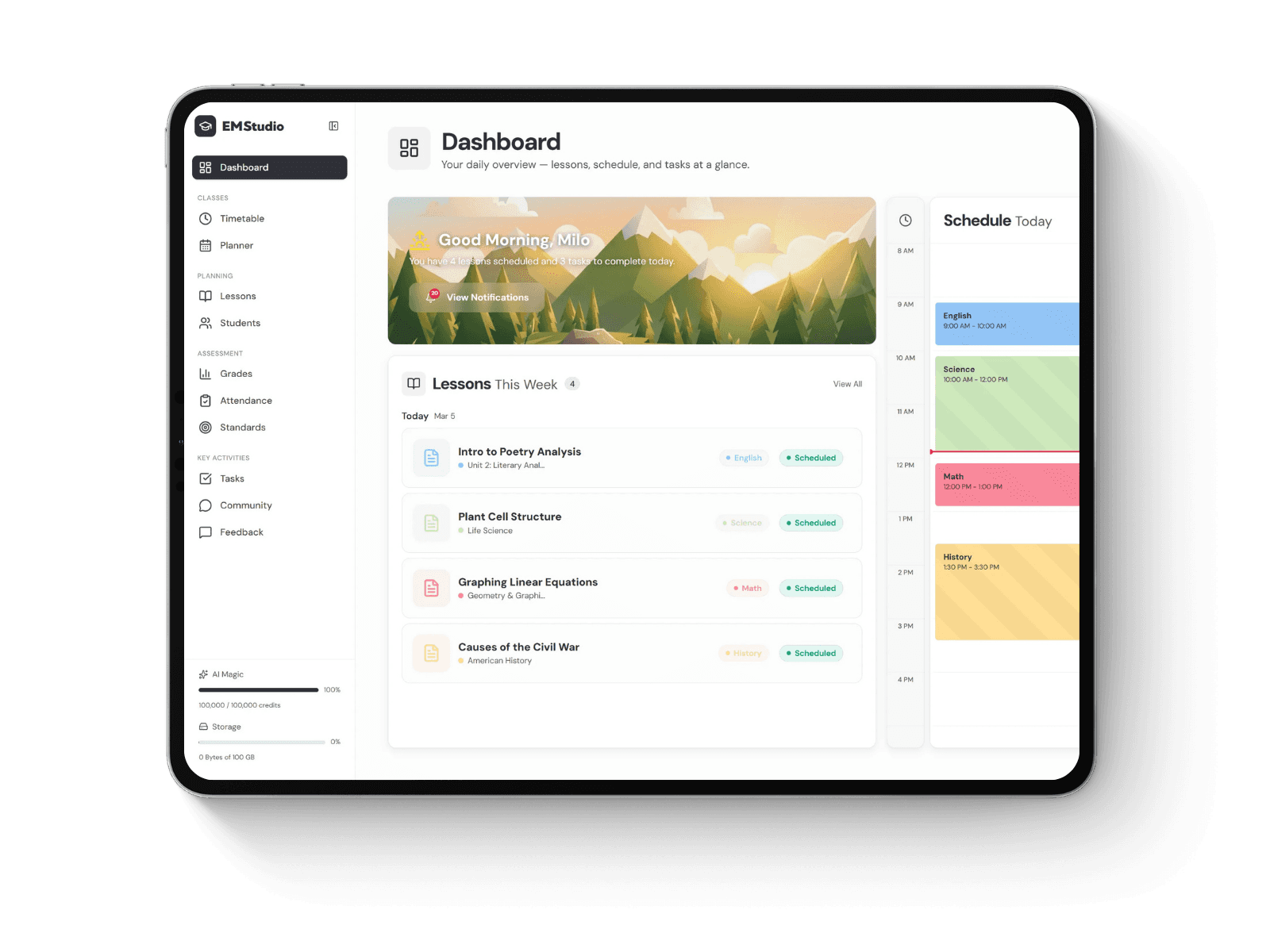
EMStudio is a free teaching management app — manage your classes, students, lessons, and more!
Learn More
Still grading everything by hand?
EMStudio is a free teaching management app — manage your classes, students, lessons, and more!
Learn More
Table of Contents
What Is Think Pair Share?
Think Pair Share is a cooperative learning protocol developed by Frank Lyman in 1981. It structures classroom discussion into three phases: individual thinking time (30-60 seconds silent), paired discussion (2-3 minutes), and whole-group sharing. This sequence ensures every student processes content and rehearses ideas before public sharing, dramatically increasing participation compared to traditional hand-raising.
Frank Lyman developed this at the University of Maryland in 1981, and it differs from casual turn-and-talks because of that mandatory silent thinking phase. You can't skip the "Think." The protocol needs 30-60 seconds of absolute quiet where students wrestle with the question alone before any voices activate.
The full cycle takes six to eight minutes: thirty to sixty seconds of wait time for silent thinking, two to three minutes knee-to-knee, and three to four minutes for sharing. Traditional hand-raising engages the same five to ten eager students while everyone else zones out. Think Pair Share forces one hundred percent of your kids to verbally rehearse before anyone shares publicly.
Use a chime or call-and-response like "Heads down... Pens up" to move between phases. I project a ClassroomScreen countdown so kids see exactly how much talk time remains. Without these signals, you lose two minutes herding cats between phases.
The Individual Thinking Phase
This phase requires 30 to 60 seconds of absolute silence—structured wait time with zero eye contact. No whispering. Every student needs a recording mechanism—individual whiteboards, a Claim-Evidence-Reasoning graphic organizer, or a digital response in Pear Deck. Without this written anchor, students forget their initial thought before they speak. The absolute silence matters; even quiet partner checks destroy the processing.
Last month I watched a 10th-grade English teacher analyzing rhetorical devices in Churchill's speech. Students circled one specific example and wrote exactly two sentences justifying its persuasive effect before lifting their eyes. That hard constraint produced richer partner conversations than the usual vague "discuss with your table" ever generates.
The Pair Discussion Phase
Have students shift to knee-to-knee seating or use shoulder partners. Give them 15 seconds to transition—anything longer wastes time. Provide sentence frames on the board: "I think... because...", "I heard you say...", or "I respectfully disagree because...". These scaffolds keep the conversation academic rather than social.
Structure the talk with assigned roles and strict timing. Partner A speaks for exactly 60 seconds while Partner B listens actively, watching a visible timer like Google Timer or a sand timer. Then they switch. Ban interruptions during the timed interval. This ensures both voices get airtime and prevents one dominant personality from hogging the discussion.
The Whole Group Sharing Phase
Ditch the raised hands. Use popsicle sticks, ClassDojo randomizer, or Wheel of Names to select pairs. Pick only three or four pairs maximum; going longer kills your pacing. Random selection ensures equity—the shy kid gets the same shot as the loud one.
Check listening with specific facilitation moves that double as formative assessment. Ask "Who heard something different from their partner?" or "Summarize what your partner said before adding your thought." When a student finishes, don't repeat their answer. Ask another student to rephrase instead. This forces active listening and builds academic discourse without you becoming an echo chamber.
Why Does Think Pair Share Matter in Modern Classrooms?
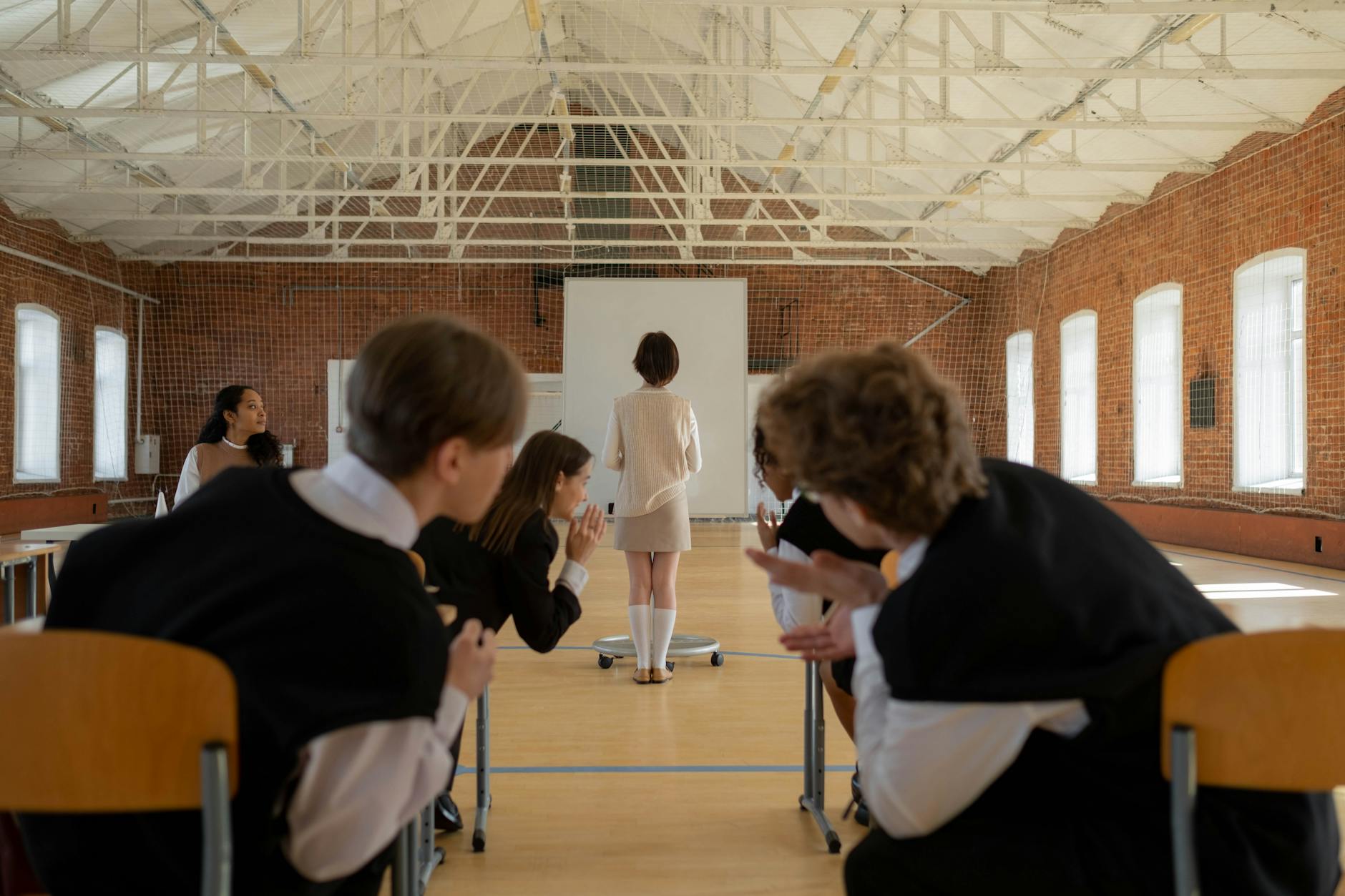
Think Pair Share democratizes classroom discourse. Traditional hand-raising engages only a handful of dominant students repeatedly, while TPS structures participation for 100% of kids. It provides critical processing time for English Language Learners and neurodivergent learners, aligning with Hattie's research showing classroom discussion has a 0.59 effect size on student achievement.
John Hattie's Visible Learning meta-analysis puts classroom discussion at 0.59. That's well above the 0.40 hinge point where interventions significantly impact achievement. When you use think pair share, you're not just filling time. You're deploying a high-impact strategy.
Increasing Student Participation and Equity
Traditional I-R-E patterns—Initiate, Respond, Evaluate—create a graveyard of effective class participation methods. Five to ten dominant students monopolize the discussion while the rest check out. TPS flips this. Within two to three minutes, every student verbalizes ideas to a partner. That's true student engagement, not performance.
The equity runs deeper. Girls and students of color often face a "chilly climate" in competitive hand-raising environments. The loudest voice wins. Pair share provides low-stakes rehearsal that builds confidence before public sharing. Kids who never raise their hands suddenly have something polished to say.
Elizabeth Cohen's Complex Instruction research explains why this works. Traditional settings allow high-status students—often perceived as "smart" based on race, class, or language fluency—to dominate the classroom discussion. TPS acts as a status treatment, reducing status differences by guaranteeing every student rehearsal time and academic discourse airtime. When you circulate during the Pair phase, you catch brilliant thinking from silent kids. That formative assessment data changes how you see your class.
The structure also eliminates the "opt-out" option. In traditional classroom discussion, students hide behind raised hands of others. TPS makes hiding impossible. Your cooperative learning structure ensures every kid processes the question. When you randomly select students to share out after pairing, everyone stays alert. They know their number might come up, so they prepare actual answers.
Building Processing Time for Diverse Learners
Mary Budd Rowe's wait time research revealed that traditional classrooms allow less than three seconds before demanding answers. That pace crushes students translating between languages or processing neurodivergently. ELLs specifically need cognitive space to move from conversational to academic English.
The Think phase provides what different learners specifically need:
ELLs get time to translate between L1 and academic English, bridging the 1-3 year proficiency gap.
Students with ADHD or executive function challenges use the written phase to organize thoughts before verbal demands.
Gifted learners gain perspective-taking opportunities by explaining concepts to partners who process differently.
Fast processors use the time for complex initial analysis while slower processors gain necessary retrieval time. That prevents the "blank stare" phenomenon common in cold calling. This differentiation happens automatically within your cooperative learning structure. You don't need separate lesson plans. The protocol itself creates the flexibility.
How Do You Structure Each Phase of Think Pair Share?
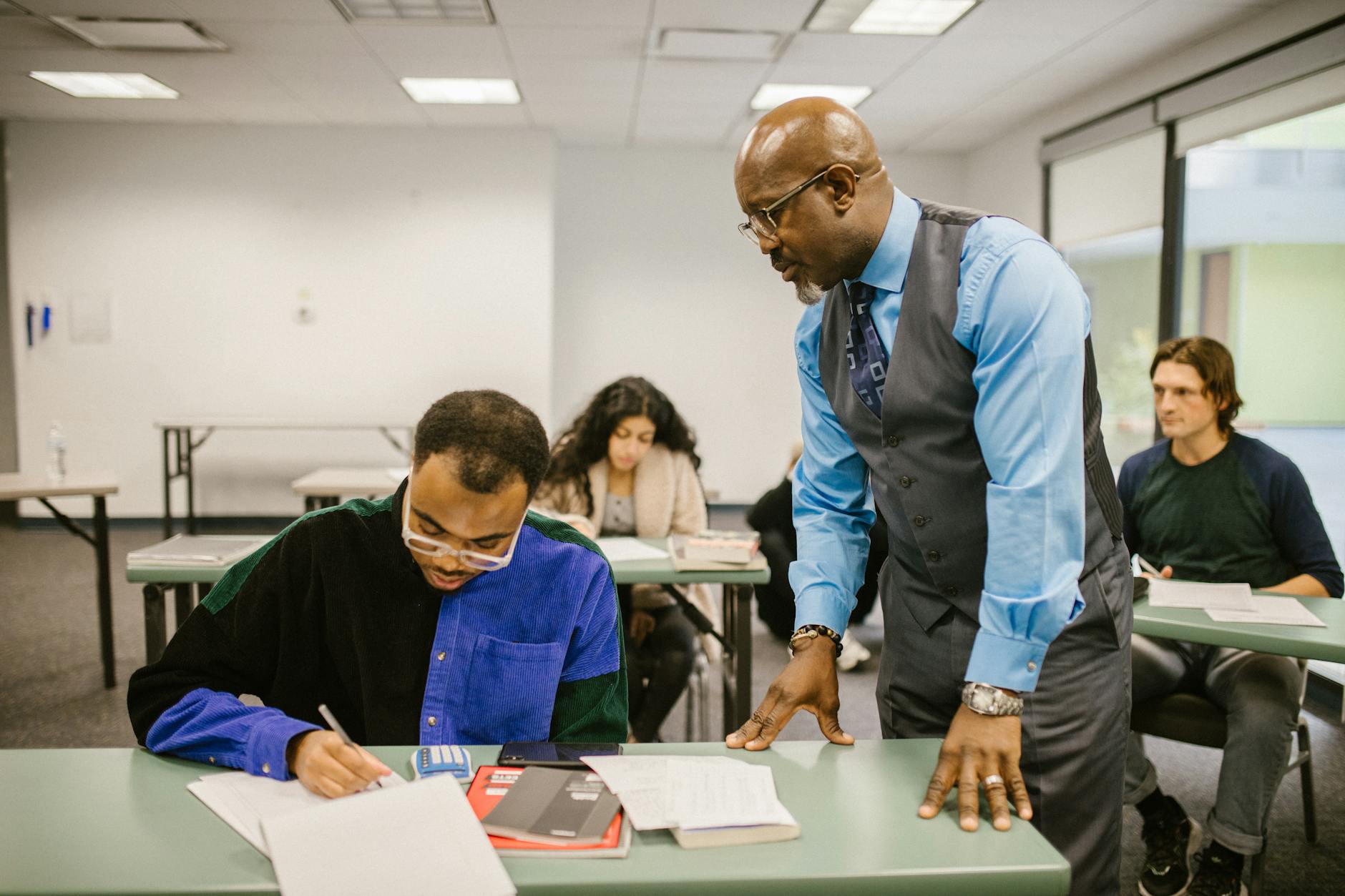
Structure Think Pair Share by timing each phase precisely: 60 seconds silent individual writing using stems like 'I believe...because,' followed by 2-3 minutes of knee-to-knee partner talk with assigned roles (Speaker/Listener), concluding with 4-5 minutes of whole-group sharing using random selection methods to ensure equity, avoiding volunteers.
Get the sequence wrong and you'll hear crickets. Nail it and you've got a self-running engine for academic discourse. Here's the implementation roadmap.
Follow this four-step cycle:
Design Level 2-3 questions (Skill/Concept or Strategic Thinking per Depth of Knowledge).
Enforce silent writing with visible timers.
Manage pairs through assigned seating.
Facilitate sharing via random selection.
If the question has one definitive answer, use Cold Call. If it's interpretive or multi-pathway, use think pair share. Never skip the Think phase, even when behind.
Phase 1: Crafting Questions for Independent Thought
Write questions that force evidence-based arguments. Check questions against Bloom's Taxonomy or Depth of Knowledge. Target Level 2-3. Avoid Level 1 recall; kids don't need partners to memorize a date.
What is the most significant factor... and why?
Which solution method is more efficient for [specific scenario] and what are the trade-offs?
How would [historical figure] critique [current policy]?
Require written output before any talking happens. Students need 2-3 complete sentences or a bulleted evidence list on individual whiteboards. For 2nd through 5th grade, give them 30-45 seconds. For 6th grade and up, demand 60-90 seconds minimum. If they haven't written it, they can't discuss it.
Walk the room and scan whiteboards during this wait time. You'll spot misconceptions before they spread and know exactly who to call on. This individual writing is your formative assessment.
Phase 2: Managing Partner Conversations Effectively
Assign seats to eliminate the "who are you picking?" chaos. Use clock partners (12, 3, 6, 9 o'clock positions) or elbow partners for instant knee-to-knee setup. Do not allow student choice during the first six weeks. You are training muscle memory, not hosting a social hour.
Control noise explicitly. Establish Voice Level 1 (six-inch voices) or Voice Level 2 (table talk). Use a yacker tracker or hand signals. Practice "stop on signal" three times before content use. When you raise your hand, mouths close within three seconds or you redo the routine.
Assign Speaker and Listener roles. One speaks while the other listens, then switch. Use physical cues like "Speaker touches paper, Listener hands in lap" so you can scan the room. This prevents dominant students from monopolizing and ensures both practice academic discourse.
Phase 3: Facilitating Whole-Group Share-Outs
Use equity sticks (popsicle sticks with names) or digital randomizers for selection. Never let volunteers drive the share-out; you'll hear from the same five students while the rest tune out. For complex topics, run Think-Pair-Share-Square: pairs combine into quartets before the whole group. This gives shy students a rehearsal round and surfaces stronger responses for the full classroom discussion.
Respond to student answers by extending thinking, not validating it. Skip the "Good job" and ask Who can add to that idea? or Apply Jaime's observation to this new scenario. This technique, detailed in our guide to leading effective student discussions, keeps the academic discourse moving upward. Limit the Share phase to 4-5 minutes to prevent pacing drag.
Mix response formats to boost student engagement. Have the partner share instead of the individual, or ask students to report their partner's idea, not their own. This creates accountability for listening and doubles participation without doubling your time.

Which Subjects and Lessons Work Best for Think Pair Share?
Think Pair Share works best for your open-ended disciplinary tasks. Use it for mathematics justification of solution pathways using SMP3, ELA thesis development with textual evidence, scientific hypothesis revision based on data patterns using CER frameworks, and social studies primary source analysis requiring perspective-taking and evidence-based claims.
Skip the recall questions. If your students can answer with one word or a date, don't bother with pair share. This protocol shines when kids need to wrestle with ambiguity, defend a position, or interpret complex texts. It also builds in necessary wait time for processing.
Mathematics: Problem-Solving and Proof Justification
Your math classroom often kills discussion by rushing to the answer. Think Pair Share slows that down. Use it for SMP3—Construct viable arguments and critique reasoning—rather than computation drills.
Try this with your 8th graders solving linear systems. Display two different solution methods side by side. Ask: "Which method is more efficient for a system with fractions and why?" Your kids defend their choice during the pair phase using mathematical vocabulary.
In your Geometry class, post a statement like "A rectangle is a square" and ask "Always, sometimes, or never true?" Students hunt for counterexamples or construct proofs while talking. Check out these mathematics implementation strategies for more.
ELA: Text Analysis and Thesis Development
You can use pair share to force evidence hunting. When your students can't hide behind "I just felt like it was sad," you get real academic discourse.
After reading The Great Gatsby with your 11th graders, try: "What is Fitzgerald suggesting about the American Dream through the green light? What specific textual evidence creates this meaning?" The pair phase reveals who actually tracked quotes versus who skimmed.
In your writing workshop, Partner A reads their working thesis. Partner B identifies the claim and lists three potential text citations needed. They switch. This turns peer response into formative assessment before you see final drafts.
Science: Hypothesis Formation and Data Interpretation
Science labs fail when your kids write conclusions in isolation. Cooperative learning during data analysis catches errors early and pushes better reasoning.
With your 7th graders analyzing solar oven trials, ask: "Based on your data table showing 5 trials, is your hypothesis supported? What specific sources of error explain the outlier at Trial 3?" The pair discussion often reveals measurement mistakes before they write final reports.
Use the CER (Claim-Evidence-Reasoning) framework during the Think phase individually. Then partners compare CERs to spot missing evidence or weak reasoning. This structured classroom discussion builds scientific argumentation better than silent worksheet completion.
Social Studies: Primary Source Analysis and Debate
History dies when your students treat documents like wallpaper. Pair share forces them to actually look at the sources and argue about perspective.
For your 10th grade WWII propaganda analysis using OPVL (Origin, Purpose, Value, Limitation), ask: "What is the author's purpose and what specific imagery creates this effect? How might a German civilian view this differently than a British citizen?" Partners push each other past surface observations. Browse these tools for social studies and primary source analysis.
Before your debates, assign Federalist or Anti-Federalist positions. Groups pair share within their side to gather arguments, then mix pairs for deliberation. This student engagement strategy ensures everyone enters the whole-class debate armed with evidence, not just the loud voices.
How Can You Introduce Think Pair Share Without Losing Control?
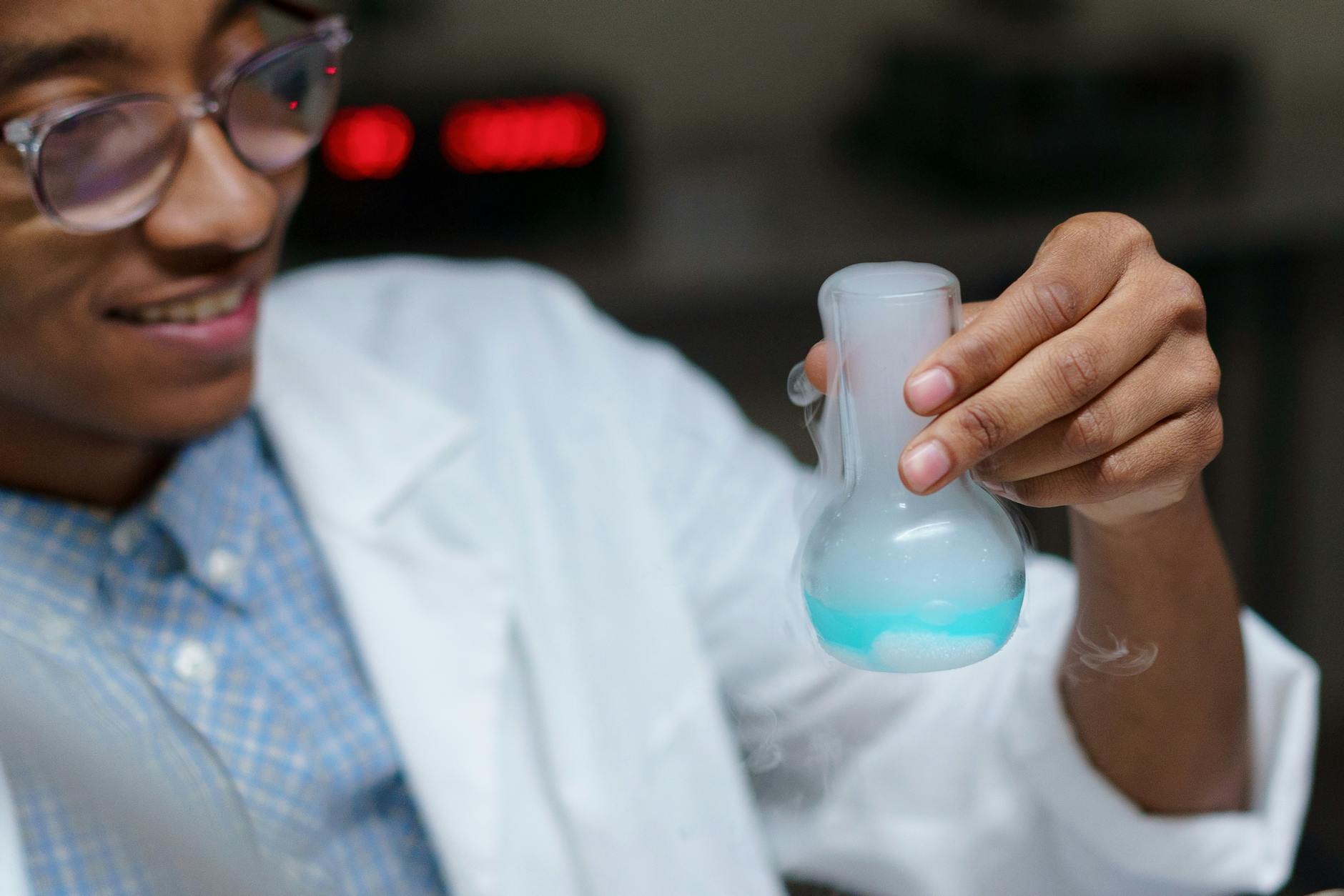
Introduce Think Pair Share by first modeling the protocol with a teaching assistant using a 'fishbowl' demonstration, establishing voice level protocols (0-1-2 scale), and starting with low-stakes questions. Use strategic pairings—heterogeneous for complex tasks, homogeneous for skill building—and provide sentence frames for academic language support.
Don't just tell them. Show them. Then show them what not to do. Kids need to see the moves before they make them, especially when you're asking them to manage their own noise levels and transitions.
Skip cooperative learning during emergency drills, when you have under five minutes total, or for simple recall questions. If the answer is "photosynthesis" or "1492," use cold calling or choral response instead. TPS wastes time when the thinking is already done or when speed matters more than processing.
Setting Expectations and Modeling the Protocol
Spend the first six weeks on gradual release. Start with "I do": you and a TA model the think pair share strategy while thinking aloud. Move to "we do": one volunteer pair tries it while the class watches. Only release to "you do"—full class practice—after three days of non-academic questions like "favorite ice cream." They need to nail the procedure before wrestling with content.
Set non-negotiables immediately. Voice Level 0 during Think means absolute silence. Level 1 during Pair means only your partner hears you. Teach "stop on signal"—hand up, freeze, eyes up. During Pair, there's no opt-out; everyone speaks. During Share, they can pass.
Run a fishbowl showing both correct and incorrect versions. Model interrupting and off-task behavior; let students catch the errors using a "Looks Like/Sounds Like" chart. Co-create anchor charts for each phase: Think (eyes down, pen moving), Pair (knee-to-knee, one voice), Share (eyes up, track speaker). Post sentence starters prominently. These visuals become your reference point when student engagement drifts.
Choosing Strategic Pairings and Rotation Systems
Use heterogeneous pairs—high/medium or medium/low—for complex tasks requiring rich academic discourse and explanation. The stronger student solidifies understanding by teaching; the struggling student gets immediate support. Use homogeneous pairs for fluency practice or extension work where matched pacing helps. Use random "clock partners" (12, 3, 6, 9) only for community building, not rigorous content.
Rotate pairs every two to three weeks or by unit. Frequent switches keep formative assessment honest—you want to see if they can explain it to anyone, not just their best friend. Manage odd numbers with triads (two listeners, one speaker, rotating) or become the "roaming partner" yourself.
Scaffolding for English Language Learners and Introverts
Support ELLs with strategies for inclusive multilingual classrooms. Provide word banks, bilingual glossaries, and sentence frames like "I agree with ___ because the text states ___." Pre-teach academic vocabulary 24 hours before the classroom discussion so language is ready. Don't let wait time expire while they're translating.
Protect introverts with options. Allow "write first, talk second" so they process before speaking. During Share phase, let them pass if they already spoke during Pair—but no opting out during Pair itself. Use digital backchannels like Padlet for the Think phase; students submit ideas anonymously, reducing anxiety while making sure participation. Like other Kagan cooperative learning structures, TPS works only when everyone carries the weight.
How Do You Troubleshoot Common Think Pair Share Challenges?
Troubleshoot Think Pair Share by rewriting vague questions using Bloom's Taxonomy verbs, implementing Rally Coach structures to balance participation, and enforcing 'eyes on paper first' rules with visible timers to prevent skipping individual thinking time. When pairs finish early, use 'bonus questions' rather than allowing off-task behavior.
Most think pair share failures stem from fixable implementation errors, not student behavior. You can diagnose the specific breakdown by watching what happens during the first 90 seconds of each phase.
Fixing Vague Questions That Limit Deep Thinking
When students stare blankly during the pair share, your question is likely DOK Level 1. Listen for "I don't know" or single-word answers like "Sad"—these signal cognitive dead ends rather than higher order thinking skills. The wait time you provide matters little if the prompt lacks intellectual weight.
Rewrite using specific Bloom's verbs:
Swap "What about the character?" for "Which character demonstrated the most significant growth from Chapter 1 to Chapter 5?"
Add "and what specific action in Chapter 3 demonstrates this change?" to demand text evidence
Specificity drives academic discourse. When you hear rich conversation during the cooperative learning activity, you know the prompt worked. If silence falls, rewrite it for tomorrow.
Addressing Uneven Participation Within Pairs
If one partner dominates while the other nods silently, your structure is broken. Watch for the "I agree" student who adds nothing substantive—the silent partner is checking out of the formative assessment entirely. This uneven dynamic wastes the pair share opportunity for half your class and gives you bad data about who understands the material.
Implement Rally Coach from Kagan. Partner A explains their thinking for exactly 30 seconds while Partner B listens without interrupting. Then Partner B paraphrases back before adding their own idea. Use random reporter calls so either partner might be selected to share for the team.
This forces balanced student engagement and eliminates the "passive passenger" problem. The 30-second timer is non-negotiable; it prevents the monologue that shuts down equitable participation.
Preventing the Skip of Individual Think Time
When students immediately turn and talk without writing, they are skipping the crucial processing phase. This happens when the question is too easy or your classroom discussion routine lacks structure. You will see heads swivel the moment you finish reading the prompt.
Enforce an "eyes on paper first" rule with a visible countdown timer on your board. Use physical barriers—manila folders standing up between partners—during the Think phase. Teach a secret signal like hand-on-head to indicate readiness. If chatter starts early, redirect immediately: "Finish your sentence on paper, then discuss."
Sometimes you must abandon the full protocol entirely. If chaos ensues after three honest attempts, pivot to Think-Pair-Write (skip the verbal share) or Think-Write-Share (skip the verbal pair) until your classroom control and management strategies solidify. Build the academic discourse muscle gradually with written responses first.

What to Remember About Think Pair Share
Think Pair Share only works when you protect the silence. Give kids time to write or think alone before they talk. Skip that first phase and you get empty chatter, not real classroom discussion.
Don't use it for everything. Save it for questions that actually have gray areas, or when you need quick formative assessment data. Math problems with multiple strategies, text evidence debates, or science predictions work great. Definitions and yes/no questions don't.
The noise isn't the point. The thinking is. Start with partners sitting shoulder-to-shoulder, practice your transition signal until they respond in 10 seconds, and be ready to cut the share phase short if energy drops. Better to stop early than watch kids tune out.
What Is Think Pair Share?
Think Pair Share is a cooperative learning protocol developed by Frank Lyman in 1981. It structures classroom discussion into three phases: individual thinking time (30-60 seconds silent), paired discussion (2-3 minutes), and whole-group sharing. This sequence ensures every student processes content and rehearses ideas before public sharing, dramatically increasing participation compared to traditional hand-raising.
Frank Lyman developed this at the University of Maryland in 1981, and it differs from casual turn-and-talks because of that mandatory silent thinking phase. You can't skip the "Think." The protocol needs 30-60 seconds of absolute quiet where students wrestle with the question alone before any voices activate.
The full cycle takes six to eight minutes: thirty to sixty seconds of wait time for silent thinking, two to three minutes knee-to-knee, and three to four minutes for sharing. Traditional hand-raising engages the same five to ten eager students while everyone else zones out. Think Pair Share forces one hundred percent of your kids to verbally rehearse before anyone shares publicly.
Use a chime or call-and-response like "Heads down... Pens up" to move between phases. I project a ClassroomScreen countdown so kids see exactly how much talk time remains. Without these signals, you lose two minutes herding cats between phases.
The Individual Thinking Phase
This phase requires 30 to 60 seconds of absolute silence—structured wait time with zero eye contact. No whispering. Every student needs a recording mechanism—individual whiteboards, a Claim-Evidence-Reasoning graphic organizer, or a digital response in Pear Deck. Without this written anchor, students forget their initial thought before they speak. The absolute silence matters; even quiet partner checks destroy the processing.
Last month I watched a 10th-grade English teacher analyzing rhetorical devices in Churchill's speech. Students circled one specific example and wrote exactly two sentences justifying its persuasive effect before lifting their eyes. That hard constraint produced richer partner conversations than the usual vague "discuss with your table" ever generates.
The Pair Discussion Phase
Have students shift to knee-to-knee seating or use shoulder partners. Give them 15 seconds to transition—anything longer wastes time. Provide sentence frames on the board: "I think... because...", "I heard you say...", or "I respectfully disagree because...". These scaffolds keep the conversation academic rather than social.
Structure the talk with assigned roles and strict timing. Partner A speaks for exactly 60 seconds while Partner B listens actively, watching a visible timer like Google Timer or a sand timer. Then they switch. Ban interruptions during the timed interval. This ensures both voices get airtime and prevents one dominant personality from hogging the discussion.
The Whole Group Sharing Phase
Ditch the raised hands. Use popsicle sticks, ClassDojo randomizer, or Wheel of Names to select pairs. Pick only three or four pairs maximum; going longer kills your pacing. Random selection ensures equity—the shy kid gets the same shot as the loud one.
Check listening with specific facilitation moves that double as formative assessment. Ask "Who heard something different from their partner?" or "Summarize what your partner said before adding your thought." When a student finishes, don't repeat their answer. Ask another student to rephrase instead. This forces active listening and builds academic discourse without you becoming an echo chamber.
Why Does Think Pair Share Matter in Modern Classrooms?
Think Pair Share democratizes classroom discourse. Traditional hand-raising engages only a handful of dominant students repeatedly, while TPS structures participation for 100% of kids. It provides critical processing time for English Language Learners and neurodivergent learners, aligning with Hattie's research showing classroom discussion has a 0.59 effect size on student achievement.
John Hattie's Visible Learning meta-analysis puts classroom discussion at 0.59. That's well above the 0.40 hinge point where interventions significantly impact achievement. When you use think pair share, you're not just filling time. You're deploying a high-impact strategy.
Increasing Student Participation and Equity
Traditional I-R-E patterns—Initiate, Respond, Evaluate—create a graveyard of effective class participation methods. Five to ten dominant students monopolize the discussion while the rest check out. TPS flips this. Within two to three minutes, every student verbalizes ideas to a partner. That's true student engagement, not performance.
The equity runs deeper. Girls and students of color often face a "chilly climate" in competitive hand-raising environments. The loudest voice wins. Pair share provides low-stakes rehearsal that builds confidence before public sharing. Kids who never raise their hands suddenly have something polished to say.
Elizabeth Cohen's Complex Instruction research explains why this works. Traditional settings allow high-status students—often perceived as "smart" based on race, class, or language fluency—to dominate the classroom discussion. TPS acts as a status treatment, reducing status differences by guaranteeing every student rehearsal time and academic discourse airtime. When you circulate during the Pair phase, you catch brilliant thinking from silent kids. That formative assessment data changes how you see your class.
The structure also eliminates the "opt-out" option. In traditional classroom discussion, students hide behind raised hands of others. TPS makes hiding impossible. Your cooperative learning structure ensures every kid processes the question. When you randomly select students to share out after pairing, everyone stays alert. They know their number might come up, so they prepare actual answers.
Building Processing Time for Diverse Learners
Mary Budd Rowe's wait time research revealed that traditional classrooms allow less than three seconds before demanding answers. That pace crushes students translating between languages or processing neurodivergently. ELLs specifically need cognitive space to move from conversational to academic English.
The Think phase provides what different learners specifically need:
ELLs get time to translate between L1 and academic English, bridging the 1-3 year proficiency gap.
Students with ADHD or executive function challenges use the written phase to organize thoughts before verbal demands.
Gifted learners gain perspective-taking opportunities by explaining concepts to partners who process differently.
Fast processors use the time for complex initial analysis while slower processors gain necessary retrieval time. That prevents the "blank stare" phenomenon common in cold calling. This differentiation happens automatically within your cooperative learning structure. You don't need separate lesson plans. The protocol itself creates the flexibility.
How Do You Structure Each Phase of Think Pair Share?
Structure Think Pair Share by timing each phase precisely: 60 seconds silent individual writing using stems like 'I believe...because,' followed by 2-3 minutes of knee-to-knee partner talk with assigned roles (Speaker/Listener), concluding with 4-5 minutes of whole-group sharing using random selection methods to ensure equity, avoiding volunteers.
Get the sequence wrong and you'll hear crickets. Nail it and you've got a self-running engine for academic discourse. Here's the implementation roadmap.
Follow this four-step cycle:
Design Level 2-3 questions (Skill/Concept or Strategic Thinking per Depth of Knowledge).
Enforce silent writing with visible timers.
Manage pairs through assigned seating.
Facilitate sharing via random selection.
If the question has one definitive answer, use Cold Call. If it's interpretive or multi-pathway, use think pair share. Never skip the Think phase, even when behind.
Phase 1: Crafting Questions for Independent Thought
Write questions that force evidence-based arguments. Check questions against Bloom's Taxonomy or Depth of Knowledge. Target Level 2-3. Avoid Level 1 recall; kids don't need partners to memorize a date.
What is the most significant factor... and why?
Which solution method is more efficient for [specific scenario] and what are the trade-offs?
How would [historical figure] critique [current policy]?
Require written output before any talking happens. Students need 2-3 complete sentences or a bulleted evidence list on individual whiteboards. For 2nd through 5th grade, give them 30-45 seconds. For 6th grade and up, demand 60-90 seconds minimum. If they haven't written it, they can't discuss it.
Walk the room and scan whiteboards during this wait time. You'll spot misconceptions before they spread and know exactly who to call on. This individual writing is your formative assessment.
Phase 2: Managing Partner Conversations Effectively
Assign seats to eliminate the "who are you picking?" chaos. Use clock partners (12, 3, 6, 9 o'clock positions) or elbow partners for instant knee-to-knee setup. Do not allow student choice during the first six weeks. You are training muscle memory, not hosting a social hour.
Control noise explicitly. Establish Voice Level 1 (six-inch voices) or Voice Level 2 (table talk). Use a yacker tracker or hand signals. Practice "stop on signal" three times before content use. When you raise your hand, mouths close within three seconds or you redo the routine.
Assign Speaker and Listener roles. One speaks while the other listens, then switch. Use physical cues like "Speaker touches paper, Listener hands in lap" so you can scan the room. This prevents dominant students from monopolizing and ensures both practice academic discourse.
Phase 3: Facilitating Whole-Group Share-Outs
Use equity sticks (popsicle sticks with names) or digital randomizers for selection. Never let volunteers drive the share-out; you'll hear from the same five students while the rest tune out. For complex topics, run Think-Pair-Share-Square: pairs combine into quartets before the whole group. This gives shy students a rehearsal round and surfaces stronger responses for the full classroom discussion.
Respond to student answers by extending thinking, not validating it. Skip the "Good job" and ask Who can add to that idea? or Apply Jaime's observation to this new scenario. This technique, detailed in our guide to leading effective student discussions, keeps the academic discourse moving upward. Limit the Share phase to 4-5 minutes to prevent pacing drag.
Mix response formats to boost student engagement. Have the partner share instead of the individual, or ask students to report their partner's idea, not their own. This creates accountability for listening and doubles participation without doubling your time.
Which Subjects and Lessons Work Best for Think Pair Share?
Think Pair Share works best for your open-ended disciplinary tasks. Use it for mathematics justification of solution pathways using SMP3, ELA thesis development with textual evidence, scientific hypothesis revision based on data patterns using CER frameworks, and social studies primary source analysis requiring perspective-taking and evidence-based claims.
Skip the recall questions. If your students can answer with one word or a date, don't bother with pair share. This protocol shines when kids need to wrestle with ambiguity, defend a position, or interpret complex texts. It also builds in necessary wait time for processing.
Mathematics: Problem-Solving and Proof Justification
Your math classroom often kills discussion by rushing to the answer. Think Pair Share slows that down. Use it for SMP3—Construct viable arguments and critique reasoning—rather than computation drills.
Try this with your 8th graders solving linear systems. Display two different solution methods side by side. Ask: "Which method is more efficient for a system with fractions and why?" Your kids defend their choice during the pair phase using mathematical vocabulary.
In your Geometry class, post a statement like "A rectangle is a square" and ask "Always, sometimes, or never true?" Students hunt for counterexamples or construct proofs while talking. Check out these mathematics implementation strategies for more.
ELA: Text Analysis and Thesis Development
You can use pair share to force evidence hunting. When your students can't hide behind "I just felt like it was sad," you get real academic discourse.
After reading The Great Gatsby with your 11th graders, try: "What is Fitzgerald suggesting about the American Dream through the green light? What specific textual evidence creates this meaning?" The pair phase reveals who actually tracked quotes versus who skimmed.
In your writing workshop, Partner A reads their working thesis. Partner B identifies the claim and lists three potential text citations needed. They switch. This turns peer response into formative assessment before you see final drafts.
Science: Hypothesis Formation and Data Interpretation
Science labs fail when your kids write conclusions in isolation. Cooperative learning during data analysis catches errors early and pushes better reasoning.
With your 7th graders analyzing solar oven trials, ask: "Based on your data table showing 5 trials, is your hypothesis supported? What specific sources of error explain the outlier at Trial 3?" The pair discussion often reveals measurement mistakes before they write final reports.
Use the CER (Claim-Evidence-Reasoning) framework during the Think phase individually. Then partners compare CERs to spot missing evidence or weak reasoning. This structured classroom discussion builds scientific argumentation better than silent worksheet completion.
Social Studies: Primary Source Analysis and Debate
History dies when your students treat documents like wallpaper. Pair share forces them to actually look at the sources and argue about perspective.
For your 10th grade WWII propaganda analysis using OPVL (Origin, Purpose, Value, Limitation), ask: "What is the author's purpose and what specific imagery creates this effect? How might a German civilian view this differently than a British citizen?" Partners push each other past surface observations. Browse these tools for social studies and primary source analysis.
Before your debates, assign Federalist or Anti-Federalist positions. Groups pair share within their side to gather arguments, then mix pairs for deliberation. This student engagement strategy ensures everyone enters the whole-class debate armed with evidence, not just the loud voices.
How Can You Introduce Think Pair Share Without Losing Control?
Introduce Think Pair Share by first modeling the protocol with a teaching assistant using a 'fishbowl' demonstration, establishing voice level protocols (0-1-2 scale), and starting with low-stakes questions. Use strategic pairings—heterogeneous for complex tasks, homogeneous for skill building—and provide sentence frames for academic language support.
Don't just tell them. Show them. Then show them what not to do. Kids need to see the moves before they make them, especially when you're asking them to manage their own noise levels and transitions.
Skip cooperative learning during emergency drills, when you have under five minutes total, or for simple recall questions. If the answer is "photosynthesis" or "1492," use cold calling or choral response instead. TPS wastes time when the thinking is already done or when speed matters more than processing.
Setting Expectations and Modeling the Protocol
Spend the first six weeks on gradual release. Start with "I do": you and a TA model the think pair share strategy while thinking aloud. Move to "we do": one volunteer pair tries it while the class watches. Only release to "you do"—full class practice—after three days of non-academic questions like "favorite ice cream." They need to nail the procedure before wrestling with content.
Set non-negotiables immediately. Voice Level 0 during Think means absolute silence. Level 1 during Pair means only your partner hears you. Teach "stop on signal"—hand up, freeze, eyes up. During Pair, there's no opt-out; everyone speaks. During Share, they can pass.
Run a fishbowl showing both correct and incorrect versions. Model interrupting and off-task behavior; let students catch the errors using a "Looks Like/Sounds Like" chart. Co-create anchor charts for each phase: Think (eyes down, pen moving), Pair (knee-to-knee, one voice), Share (eyes up, track speaker). Post sentence starters prominently. These visuals become your reference point when student engagement drifts.
Choosing Strategic Pairings and Rotation Systems
Use heterogeneous pairs—high/medium or medium/low—for complex tasks requiring rich academic discourse and explanation. The stronger student solidifies understanding by teaching; the struggling student gets immediate support. Use homogeneous pairs for fluency practice or extension work where matched pacing helps. Use random "clock partners" (12, 3, 6, 9) only for community building, not rigorous content.
Rotate pairs every two to three weeks or by unit. Frequent switches keep formative assessment honest—you want to see if they can explain it to anyone, not just their best friend. Manage odd numbers with triads (two listeners, one speaker, rotating) or become the "roaming partner" yourself.
Scaffolding for English Language Learners and Introverts
Support ELLs with strategies for inclusive multilingual classrooms. Provide word banks, bilingual glossaries, and sentence frames like "I agree with ___ because the text states ___." Pre-teach academic vocabulary 24 hours before the classroom discussion so language is ready. Don't let wait time expire while they're translating.
Protect introverts with options. Allow "write first, talk second" so they process before speaking. During Share phase, let them pass if they already spoke during Pair—but no opting out during Pair itself. Use digital backchannels like Padlet for the Think phase; students submit ideas anonymously, reducing anxiety while making sure participation. Like other Kagan cooperative learning structures, TPS works only when everyone carries the weight.
How Do You Troubleshoot Common Think Pair Share Challenges?
Troubleshoot Think Pair Share by rewriting vague questions using Bloom's Taxonomy verbs, implementing Rally Coach structures to balance participation, and enforcing 'eyes on paper first' rules with visible timers to prevent skipping individual thinking time. When pairs finish early, use 'bonus questions' rather than allowing off-task behavior.
Most think pair share failures stem from fixable implementation errors, not student behavior. You can diagnose the specific breakdown by watching what happens during the first 90 seconds of each phase.
Fixing Vague Questions That Limit Deep Thinking
When students stare blankly during the pair share, your question is likely DOK Level 1. Listen for "I don't know" or single-word answers like "Sad"—these signal cognitive dead ends rather than higher order thinking skills. The wait time you provide matters little if the prompt lacks intellectual weight.
Rewrite using specific Bloom's verbs:
Swap "What about the character?" for "Which character demonstrated the most significant growth from Chapter 1 to Chapter 5?"
Add "and what specific action in Chapter 3 demonstrates this change?" to demand text evidence
Specificity drives academic discourse. When you hear rich conversation during the cooperative learning activity, you know the prompt worked. If silence falls, rewrite it for tomorrow.
Addressing Uneven Participation Within Pairs
If one partner dominates while the other nods silently, your structure is broken. Watch for the "I agree" student who adds nothing substantive—the silent partner is checking out of the formative assessment entirely. This uneven dynamic wastes the pair share opportunity for half your class and gives you bad data about who understands the material.
Implement Rally Coach from Kagan. Partner A explains their thinking for exactly 30 seconds while Partner B listens without interrupting. Then Partner B paraphrases back before adding their own idea. Use random reporter calls so either partner might be selected to share for the team.
This forces balanced student engagement and eliminates the "passive passenger" problem. The 30-second timer is non-negotiable; it prevents the monologue that shuts down equitable participation.
Preventing the Skip of Individual Think Time
When students immediately turn and talk without writing, they are skipping the crucial processing phase. This happens when the question is too easy or your classroom discussion routine lacks structure. You will see heads swivel the moment you finish reading the prompt.
Enforce an "eyes on paper first" rule with a visible countdown timer on your board. Use physical barriers—manila folders standing up between partners—during the Think phase. Teach a secret signal like hand-on-head to indicate readiness. If chatter starts early, redirect immediately: "Finish your sentence on paper, then discuss."
Sometimes you must abandon the full protocol entirely. If chaos ensues after three honest attempts, pivot to Think-Pair-Write (skip the verbal share) or Think-Write-Share (skip the verbal pair) until your classroom control and management strategies solidify. Build the academic discourse muscle gradually with written responses first.
What to Remember About Think Pair Share
Think Pair Share only works when you protect the silence. Give kids time to write or think alone before they talk. Skip that first phase and you get empty chatter, not real classroom discussion.
Don't use it for everything. Save it for questions that actually have gray areas, or when you need quick formative assessment data. Math problems with multiple strategies, text evidence debates, or science predictions work great. Definitions and yes/no questions don't.
The noise isn't the point. The thinking is. Start with partners sitting shoulder-to-shoulder, practice your transition signal until they respond in 10 seconds, and be ready to cut the share phase short if energy drops. Better to stop early than watch kids tune out.
Still grading everything by hand?
EMStudio is a free teaching management app — manage your classes, students, lessons, and more!
Learn More
Still grading everything by hand?
EMStudio is a free teaching management app — manage your classes, students, lessons, and more!
Learn More




Notion4Teachers
Notion templates to simplify administrative tasks and enhance your teaching experience.



2026 Notion4Teachers. All Rights Reserved.
Notion4Teachers
Notion templates to simplify administrative tasks and enhance your teaching experience.
2026 Notion4Teachers. All Rights Reserved.
Notion4Teachers
Notion templates to simplify administrative tasks and enhance your teaching experience.
2026 Notion4Teachers. All Rights Reserved.