
Kagan Cooperative Learning: A Complete Classroom Guide
Kagan Cooperative Learning: A Complete Classroom Guide

Article by
Milo
ESL Content Coordinator & Educator
ESL Content Coordinator & Educator
All Posts
The Johnson brothers at the University of Minnesota have spent over fifty years compiling research on cooperative learning, drawing from more than 1,200 studies showing consistent achievement gains across grade levels. This isn't theoretical fluff. When Spencer Kagan translated that research into concrete classroom structures in the 1980s, he gave us something better than the "turn to your partner" chaos we wing after lunch. Kagan cooperative learning uses specific protocols like RallyRobin that force every kid to participate simultaneously without letting one student dominate while three others check their phones.
I learned the hard way that group work fails when students lack the skills to collaborate. Kagan structures build those skills deliberately through the PIES framework—Positive Interdependence, Individual Accountability, Equal Participation, and Simultaneous Interaction. Without these four elements, you're just seating kids together and hoping for the best. With them, you get heterogeneous grouping that actually works because every student has a defined role and knows exactly how to fulfill it. The result is genuine social skills development happening alongside content mastery, not as an afterthought or a Friday afternoon filler activity.
This guide covers the difference between Kagan and regular group work, how these structures function in real classrooms with real time constraints, and the four foundational structures you should master before trying anything fancy. I'll also share which advanced structures actually justify the prep time—and which ones look good in training but collect dust in your filing cabinet. You don't need to become a Kagan certified trainer to see results. You just need two or three structures implemented with consistency.
Still grading everything by hand?
EMStudio is a free teaching management app — manage your classes, students, lessons, and more!
Learn More

Still grading everything by hand?
EMStudio is a free teaching management app — manage your classes, students, lessons, and more!
Learn More
Table of Contents
What Is Kagan Cooperative Learning?
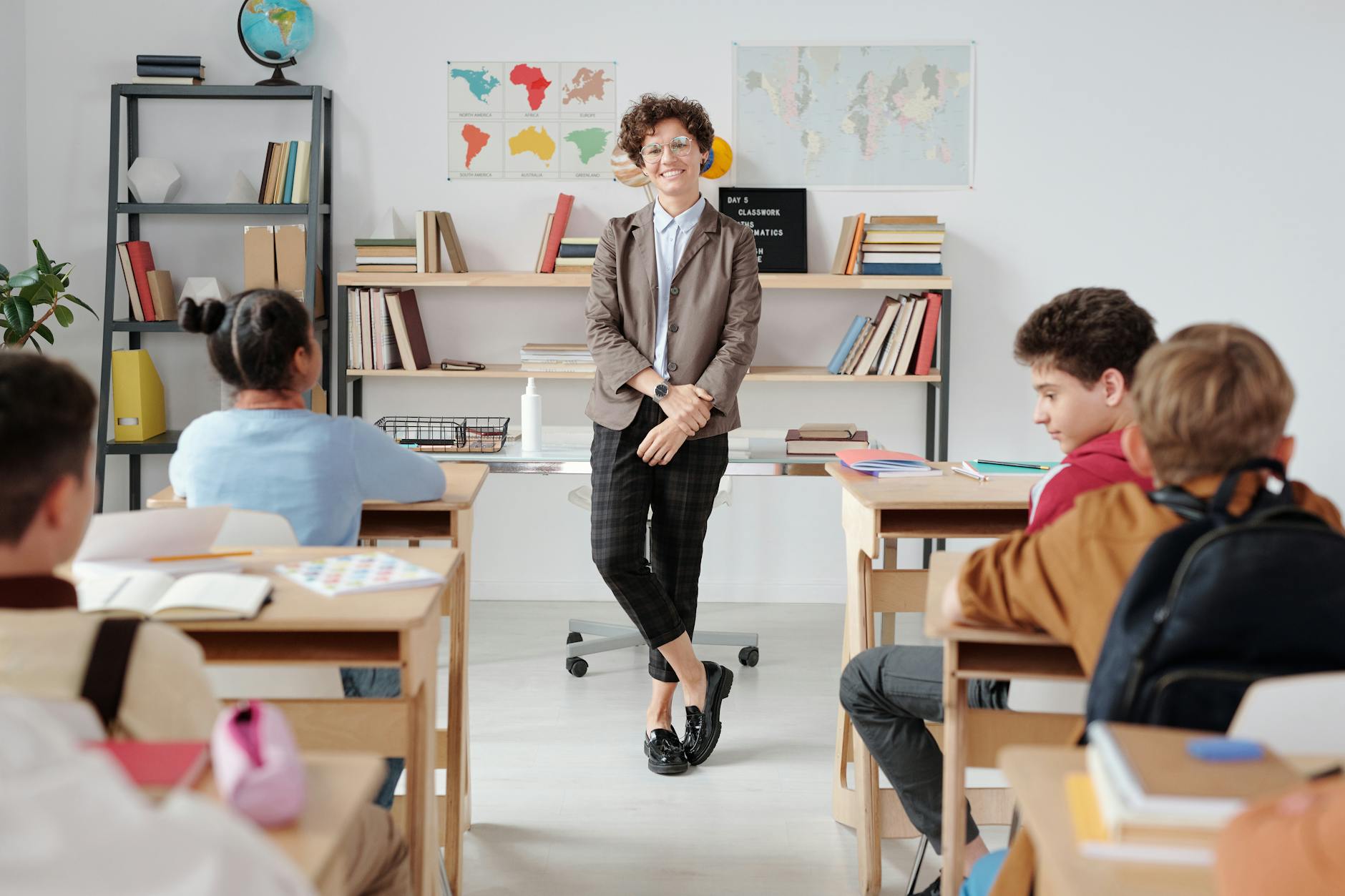
Kagan cooperative learning is a structural approach developed by Dr. Spencer Kagan that organizes classroom interactions into specific research-based formats. Unlike traditional group work, it uses the PIES framework—Positive Interdependence, Individual Accountability, Equal Participation, and Simultaneous Interaction—to ensure all students engage equally rather than allowing some to dominate while others hide. I learned this the hard way in my 7th grade classroom. "Group work" meant one kid did everything while three others watched. Dr Kagan cooperative learning fixes this with precise structures that force everyone to participate at the same time.
The Structural Approach vs. Traditional Group Work
Traditional group work is a free-for-all. You assign four kids to a poster project, and one student writes while the others text under the desk. No structure means no guarantee of learning, and you can't prove who did what. The structural approach to cooperative learning changes everything. In a RallyRobin, partners take strict turns. Student A talks for 30 seconds. Student B talks for 30 seconds. No interruptions. No hiding. Everyone speaks because the rules demand it.
Compare this to "turn and talk." In a class of 30, only one student speaks at a time. That's 4% of your class talking. With simultaneous interaction, half your class talks simultaneously. Structures like RoundRobin ensure 50% of voices fill the room at once while you circulate. The difference is individual accountability. Traditional methods let kids hitchhike on others' work. Heterogeneous grouping combined with Kagan structures means every student must produce visible output. No coasting allowed.
The PIES Framework Explained
PIES is the psychological engine behind every Kagan structure. Miss one piece, and the whole thing collapses back into traditional group work with hitchhikers and dominant talkers taking over.
Positive Interdependence: Students need each other's contributions. In RoundTable, each teammate adds one idea. If Maria doesn't contribute, the team has a blank space.
Individual Accountability: Everyone must show visible work. You collect random papers, so each student writes instead of letting one recorder do everything.
Equal Participation: No one dominates. Timed turns and role cards enforce strict fairness so everyone talks equally.
Simultaneous Interaction: Half the class talks at once. Instead of one student at the board while 29 watch, 15 pairs solve problems together.
When all four elements are present, you get true social skills development. Students learn to listen because their turn comes next. They prepare answers because they can't copy a partner. The structure itself teaches the skills.
Why Does Kagan Cooperative Learning Produce Better Results Than Group Work?
Kagan structures produce superior results because they maximize engagement through simultaneous interaction, with 50% of students talking at once compared to 4% in traditional settings. Research by John Hattie shows cooperative learning has an effect size of 0.40-0.59. The built-in accountability prevents 'hitchhiking' while structured peer support improves achievement for low-performing students and English Language Learners.
Traditional group work lets one kid do the work while three watch. Kagan cooperative learning stops that cold.
Research on Engagement and Achievement Gains
John Hattie's Visible Learning meta-analysis places cooperative learning strategies in the high-impact zone with effect sizes between 0.40 and 0.59. These figures represent months of additional learning growth.
When teachers build in individual accountability—a core component of the PIES framework—students retain information longer and demonstrate stronger critical thinking than they do under competitive or individualistic structures. The research is clear: cooperation with accountability outperforms cooperation without it.
The engagement numbers reveal why traditional methods fall short:
Traditional Q&A: One student talks while others listen. Only four to five students engage per minute.
Kagan structures: Half the class processes simultaneously using pairs, or 25% in teams. Fifteen to thirty students work actively at once.
Retention: Structured cooperative tasks yield higher scores on delayed post-tests than solo work.
Social skills: Embedded interaction develops communication faster than isolated lessons.
This positive interdependence creates genuine teamwork rather than mere proximity. Students get more reps explaining concepts and receiving immediate feedback. The active learning strategies embedded in these structures force retrieval practice.
Kagan cooperative learning 2009 research documents that when implemented with fidelity, these structures narrow achievement gaps across subject areas because every student processes content verbally, not just volunteers.
Social Skill Development and Equity
Academic gains are only half the story. Research shows structured cooperative learning improves cross-ethnic relations and reduces bullying more effectively than social skills curricula taught in isolation. When students work shoulder-to-shoulder with assigned partners rather than self-selected friends, they build bridges across social divides.
The equity mechanism is built into the PIES framework. Because every student must respond and no one can opt out, status differences based on race, class, or prior achievement diminish. In my 7th grade classroom, I watched a student with a learning disability teach his heterogeneous grouping partner the water cycle using RoundRobin. He had never raised his hand in traditional settings.
English Language Learners benefit immediately from structured peer support. They receive comprehensible input from peers and get low-stakes practice speaking academic language before whole-group sharing. The structure protects them from public error anxiety while building fluency.
Low-status students demonstrate competence regularly in these brief interactions. When a struggling student explains a concept to a partner and that partner paraphrases it back, the classroom sees that student as knowledgeable. Competence leads to status. This reversal is the equity promise of cooperative learning spencer kagan pioneered.
Unlike traditional group work where loud students dominate quiet ones, these kagan educational strategies ensure equal participation. Social skills development happens naturally through structured practice rather than isolated lessons.
How Do Kagan Structures Function in Real Classrooms?
Kagan structures function through simultaneous interaction architecture where students work in pairs or teams with defined roles and turn-taking protocols. Individual accountability mechanisms ensure every student participates—no one can hide—through numbered heads, random selection, and specific output requirements. This creates equal participation and positive interdependence where students rely on each other's contributions to complete tasks.
I switched to kagan cooperative learning after watching my 7th graders hide behind "group work" for years. The shift isn't magical—it's mechanical. Specific protocols replace vague cooperation, ensuring every kid talks and every kid produces.
Choose pair structures like RallyRobin when you need rapid processing, simple recall, or have less than five minutes. Use team structures like Numbered Heads Together for complex analysis requiring multiple perspectives. Match the structure to your cognitive target and available time, not just your content.
Simultaneous Interaction Architecture
In a traditional classroom of 30 students, only one or two respond to a teacher question at once—roughly 4% active participation. With simultaneous interaction pairs, 15 students talk simultaneously, jumping to 50% engagement. Four-member team structures engage 25% at once while processing more complex material. This architecture quadruples student practice opportunities within the same ten-minute window compared to traditional instruction.
The math is brutal but clear. In a thirty-minute traditional review, each student might speak once or twice. With cooperative learning structures kagan provides, every student practices fifteen times in the same period. That repetition builds automaticity in skills and confidence in shy speakers who otherwise vanish into the background.
This density requires intentional physical design. Students need face-to-face seating in heterogeneous grouping arrangements, not rows facing forward. You need clear visual and auditory signals—hand raises, countdowns, chimes—to manage the productive noise level. Without these specific methods for increasing class participation, the room descends into chaos rather than the structured collaboration these kagan learning structures demand.
Built-in Individual Accountability Mechanisms
Accountability prevents hitchhiking. I implement three specific mechanisms drawn from the PIES framework:
Public random selection using numbered playing cards or dice to determine who responds
Individual whiteboards visible to me during team work so I can scan for gaps
Independent quizzes following team practice where students cannot help each other
When any numbered head from 1-4 might be called, every student prepares a complete answer.
Students learn the 'no opt-out' principle immediately. Before the team can celebrate success, every member must produce a written exit ticket or oral response. There is no hiding behind a dominant teammate or staying quiet while others carry the cognitive load.
This protocol fundamentally shifts peer dynamics. Social skills development accelerates because social loafing becomes impossible—team rewards depend on individual knowledge demonstrated publicly. Struggling students receive immediate, targeted tutoring from teammates who recognize they might be responsible for that peer's understanding. The individual accountability forces genuine collaboration, not the comfortable silence of traditional group work.

The Four Foundational Kagan Structures Every Teacher Should Know
These four structures form the backbone of effective kagan cooperative learning. They create simultaneous interaction and positive interdependence without complex prep. Each one takes less than five minutes to run.
RallyRobin and RallyTable
RallyRobin is the fastest entry point into kagan cooperative structures. Partners face each other and take turns listing items orally until you call time. Ask for prime numbers, causes of WWII, or adjectives to describe a character. Thirty-second rounds keep the pace snappy and prevent one student from monopolizing. The rapid fire keeps energy high.
RallyTable works the same way but shifts the work to paper. One pencil passes between partners; whoever holds it writes while the other coaches. This single-pen rule forces turn-taking without you hovering. Students must talk to write, ensuring both participate equally in the thinking process.
Grades 2–12.
Zero prep for RallyRobin; RallyTable needs one sheet and pencil per pair.
Both run three to five minutes.
Timed Pair Share
Timed Pair Share fixes the broken "turn and talk" that dominates whole-group instruction. Partner A speaks for exactly sixty seconds while Partner B listens without interrupting. I display the timer on the board so students see the countdown and feel the equity.
The magic happens in the silence. Unlike unstructured chats where one student dominates, this structure prevents loquacious students from hijacking the conversation. Quiet ones get protected airtime. Use sentence frames like "I believe... because..." for ELL support to lower the linguistic barrier.
This builds individual accountability through strict time limits. I use it for predictions before reading or opinions after a demo. It exemplifies spencer kagan kagan cooperative learning structures that ensure every voice gets heard. It remains one of the most reliable kagan structures examples in my toolkit.
RoundRobin and RoundTable
RoundRobin puts heterogeneous grouping into practice with teams of four. Each student gets thirty seconds to share orally while the team listens. No interruptions, no piggybacking until the rotation completes. This creates simultaneous interaction across the room. Every team works at once.
RoundTable adds the writing component. One paper rotates clockwise only around the team; each student adds one idea or solves one step of a multi-step problem. Use this for cumulative stories in ELA or long division checks where each step matters.
Teams of four.
Thirty seconds per student or one line per rotation.
Paper moves clockwise only.
The physical rotation creates positive interdependence—if the paper stops, the team stalls. Everyone contributes exactly once per rotation, which nails the individual accountability piece of the PIES framework.
StandUp-HandUp-PairUp
StandUp-HandUp-PairUp is your brain break disguised as instruction. Everyone stands, raises a hand, and walks to find a partner across the room—not at the adjacent desk. They high-five to confirm the partnership, then discuss the prompt for two minutes while you play music.
Start the music for ten to fifteen seconds while students mix. When it stops, the nearest pair partners. The random mixing breaks up cliques. Use specific prompts like "Name one thing you learned yesterday." Avoid vague "discuss this" instructions.
This builds social skills development because students must navigate choosing partners and maintaining conversation without teacher mediation. It is one of the simplest collaborative learning methods that drive results while getting blood flowing to tired brains.

Advanced Kagan Structures for Complex Content
These three kagan instructional strategies move beyond basic turn-and-talk. They force high-level thinking and guarantee simultaneous interaction. I use them when the content gets heavy.
Advanced Structure | Best Use Case | Group Size | Prep Time |
|---|---|---|---|
Numbered Heads Together | Analysis, evaluation questions | 4 | Low |
Mix-Pair-Share | Review, opinion sharing | 2 (rotating) | Low |
Three-Step Interview | Personal experience, hypothesis building | 4 | Medium |
Numbered Heads Together
Start by teaching the numbering-off procedure. Students count 1-2-3-4 around their heterogeneous grouping. I usually do this with my 7th graders during our Civil War unit. Once they know their numbers, I project a high-cognitive-demand question—something requiring analysis or evaluation, not recall.
Teams get 30 to 60 seconds for consultation. Every student must know the answer because individual accountability drives the structure. I roll a die or draw chips to select which number responds. If I call "Three," only the threes stand.
If the selected student knows the answer, they respond immediately.
If they cannot answer, the team reconsults for ten seconds.
The same student must then respond. No rescue allowed.
This maintains the positive interdependence while ensuring everyone masters the material. It changes the dynamic completely.
Mix-Pair-Share
Clear the desks or head to an open space. I play music for fifteen seconds while students mix around the room. When the music stops, they raise a hand high and find the nearest partner. The prompt must be specific—"Share one way the character showed courage" beats "Talk about the book." Specificity keeps the conversation academic and focused on the learning target.
After sharing for thirty seconds, music starts again. Students mix, pair with someone new, and respond to the same prompt or a follow-up. Three to four rounds in five minutes guarantees simultaneous interaction with multiple perspectives. This kagan cooperative learning structure works beautifully for review days before a major assessment.
Practice a safety signal beforehand. When I clap three times, everyone freezes. This keeps the energy high without chaos. It is essential for social skills development during movement. You will need it when the enthusiasm overflows into noise.
Three-Step Interview
This structure builds deep listening skills. Person A interviews Person B for two minutes, then they switch. I teach paraphrasing first—"So what I hear you saying is..."—or students just wait for their turn to talk while ignoring their partner. The listening is as important as the speaking here. Without paraphrasing, the structure collapses into waiting.
After both interviews finish, pairs join another pair to form foursomes. They do a RoundRobin, sharing interesting findings from their partner. This connects to leading effective student discussions because students report their partner's ideas, not their own. It forces active recall, empathy, and careful attention.
Use this for personal experience sharing, prediction making, or connecting prior knowledge to new content. The PIES framework is strong here—positive interdependence requires listening, and individual accountability requires reporting accurately. This is classic kagan spencer cooperative learning at its absolute best for complex topics.
Kagan Partner Strategies for Immediate Classroom Use
You do not need a three-day workshop to start kagan cooperative learning tomorrow. These kagan partner strategies require zero photocopies and zero rearranged desks. Just clear directions and a timer. They work because they create simultaneous interaction—every student talking at once. Compare that to the traditional model where one student answers while thirty others zone out.
Think-Pair-Share Variations
The standard version respects thinking time. Give students ten seconds of dead silence to process the question. Then pairs share for two minutes using RallyRobin format. They bounce ideas back and forth, listing items until the timer stops. You call on three or four students randomly. This stops the "popcorn" discussion where the same three voices dominate while others hide.
Standard: Ten seconds think time, two minutes to share in pairs, then three or four students share with the class.
RallyRobin variation: Partners list multiple items rapidly, passing the idea back and forth like a tennis match rather than discussing one point.
Timed turns: Strict thirty-second limits per student prevent one partner from dominating the conversation.
Think-Pair-Square-Pair: After pairing, square up with another pair to share findings, then return to refine your original answer.
I watched this transform a 7th grade discussion about theme. Suddenly every student had something to say because they had tested their ideas twice before whole-group sharing. It builds social skills development through repeated low-stakes rehearsal and ensures equal participation, a key element of the PIES framework.
Paraphrase Passport
Partner A speaks for forty-five seconds while Partner B listens without interrupting. Then B must paraphrase using a sentence stem: "What I heard you say is..." or "So you're saying that..." Only after accurate paraphrasing can B add their own ideas. If B gets it wrong, A corrects gently and B tries again.
This builds listening comprehension through structured accountability. It forces students to process their partner's words rather than just waiting for their turn to speak. The positive interdependence is clear: neither student can succeed without the other's careful listening. Use this when discussing controversial topics where understanding opposing views matters more than winning the argument.
Skip this for simple recall questions. Asking a student to paraphrase "What is 2+2?" wastes time and feels patronizing. Reserve Paraphrase Passport for opinions, complex explanations, or peer editing where deep processing matters more than speed.
Tip and Tag
Partners examine one piece of work—an essay draft, a math solution, or a lab report. Partner A gives one specific, actionable tip: not "make it better" but "add a transition word between these two sentences." Then A tags B, who implements the change immediately. B then tips A on a different section.
This creates individual accountability within the pair. Both students must think critically about the work. The specificity prevents vague feedback. It also builds metacognition—students learn to identify exactly what makes writing or problem-solving strong. These kagan cooperative strategies work best when you model what "specific" looks like first.
Use this for editing paragraphs, critiquing art, or troubleshooting lab errors. The structure ensures heterogeneous grouping works because the "expert" role shifts based on the task section. For a complete guide to designing these activities, see our toolkit for cooperative learning design. These kagan collaborative learning moves honor the PIES framework without requiring you to rewrite your curriculum.

How Do You Implement Kagan Structures Without Classroom Chaos?
Implement kagan cooperative learning by first teaching specific signals and routines until automatic, arranging desks in clusters of four with clear walkways, and assigning team roles. Start with low-risk class builders like StandUp-HandUp-PairUp for five minutes daily, then gradually introduce academic structures one per week. Use visual timers and noise level protocols to maintain order.
I learned this the hard way in my 7th-grade classroom. I tried to launch RallyRobin on day one without establishing how to get their attention back. It took twelve minutes to restore order. Now I spend three full days on signals before any academic cooperative learning begins.
Establishing Routines and Signals
Teach your attention signal first. I use a raised hand with the expectation that all eyes track to me and all mouths close within three seconds. Practice this until it is automatic. Do not introduce academic structures until you achieve 100% compliance every single time.
Establish Voice Levels immediately. I use four distinct settings. Post these visuals at the front:
Level 0: Testing silence.
Level 1: Whisper—only your partner hears you.
Level 2: Table talk, a six-inch voice.
Level 3: Presenting voice for the whole class.
Use a "Voice Check" before releasing students to work. Call out "Voice Level," wait for the choral response "Two," then say "Go." These classroom procedures that eliminate daily chaos must become muscle memory. If you pause to shush side conversations, the structure fails.
Arranging Furniture and Materials
Arrange desks in heterogeneous grouping of four using the principles of cooperative learning by dr spencer kagan. Students face each other, not the front board. Maintain eighteen-inch aisles so you can circulate without squeezing. Store materials in team tubs. Assign a Materials Manager who distributes and collects everything. Rotate this job daily to build individual accountability and create positive interdependence among team members.
Establish traffic patterns before adding academic content. For RoundTable, practice the clockwise paper pass without talking first. Walk the route yourself. Show them exactly where elbows go so papers slide smoothly. This physical routine supports simultaneous interaction later. This setup creates the physical conditions for the PIES framework to function properly while building social skills development.
Timing Your First Structure
Begin with low-stakes content. Spend days one through three practicing StandUp-HandUp-PairUp using favorite foods or hobbies, not curriculum. Use only this structure for week one. Add RallyRobin in week two. Introduce RoundRobin in week three. Never pair a new structure with new academic content on the same day.
Keep initial attempts brief. Five to seven minutes maximum. Display a visible countdown timer on your SmartBoard or use a physical timer. Teach a "Finish Up" protocol. Give a thirty-second warning so students complete their thought and prepare to return to silence. Stop on time, even if they beg to continue. This builds trust in your kagan and kagan cooperative learning system.
Troubleshooting Common Challenges in Kagan Classrooms
Even with perfect planning, kagan cooperative learning structures can derail. I've seen 7th graders turn a RoundTable into a shouting match in thirty seconds. The fix isn't abandoning simultaneous interaction. It's building failsafes into your PIES framework from day one. When structures break down, teachers usually blame the kids. Usually, it's missing systems.
Managing Noise and Movement
Noise kills focus. I use a Yacker Tracker—that traffic light visual sound meter that glows red when volume spikes. Place it where teams can see it. Students police themselves when yellow flickers. The Too Noisy app works too, but kids respond better to the physical light they can control together.
Assign one Noise Monitor per team. They award a point if voices stay at Level 2 or below. Kids listen to peers more than to us. Try proximity praise: "Table 3 is using Level 1 voices perfectly." Other tables quiet immediately to compete for your attention.
When chaos hits, don't talk over it. Raise your hand for Freeze. Everyone stops, returns to seats, resets. I demonstrate the 6-inch voice—thumb to pinky distance—and have them practice. If they can't maintain it, return to individual work for two minutes. They learn quickly that positive interdependence includes managing volume.
Ensuring Equal Participation
Dominant voices drown out quiet kids. I use Talking Chips. Each student gets three pennies. Every time they speak, they place one in the center. When chips are gone, they listen. No one can speak twice until all chips are spent. It forces individual accountability. I keep a simple tracking sheet on my clipboard, marking participation dots as I circulate.
Role cards help too. Recorder writes. Materials Manager fetches supplies. Timekeeper watches the clock. Encourager keeps the team positive. Roles rotate daily. Students know exactly what equal participation looks like when cards are on the table. I print them on colored cardstock and laminate them so they last the semester.
I enforce the No Hogging, No Hiding rule strictly. If someone dominates, I tap the role card and whisper, "Let Maria record this one." If they hide, I ask, "What's your chip count?" These social skills development moments matter more than the content. Consequences are immediate: hog twice, lose voice for five minutes. Hide, and you answer the next three questions.
Adapting for Introverted or Special Needs Students
Not every child thrives in spencer kagan education structures without support. For introverts, I provide two minutes of pre-writing before any oral share. They can pass once per session, but must contribute next time. Written responses count as participation. This honors their processing time while maintaining individual accountability.
Different needs require different supports:
For ADHD, assign movement roles like Materials Manager. They can stand, distribute papers, and fetch supplies. Fidget tools help during pair work.
For ELL learners, provide sentence frames: "I agree because..." or "I noticed..." Word banks on the table reduce anxiety.
For autistic students, use visual structure cards showing exactly what to do during Timed Pair Share.
For gifted students, assign extension roles like Summarizer or Questioner to deepen thinking.
Keep everyone in heterogeneous grouping with supportive peers. These strategies for diverse learning environments ensure structures serve all learners. Differentiation makes kagan cooperative learning work for everyone.
What Is Kagan Cooperative Learning?
Kagan cooperative learning is a structural approach developed by Dr. Spencer Kagan that organizes classroom interactions into specific research-based formats. Unlike traditional group work, it uses the PIES framework—Positive Interdependence, Individual Accountability, Equal Participation, and Simultaneous Interaction—to ensure all students engage equally rather than allowing some to dominate while others hide. I learned this the hard way in my 7th grade classroom. "Group work" meant one kid did everything while three others watched. Dr Kagan cooperative learning fixes this with precise structures that force everyone to participate at the same time.
The Structural Approach vs. Traditional Group Work
Traditional group work is a free-for-all. You assign four kids to a poster project, and one student writes while the others text under the desk. No structure means no guarantee of learning, and you can't prove who did what. The structural approach to cooperative learning changes everything. In a RallyRobin, partners take strict turns. Student A talks for 30 seconds. Student B talks for 30 seconds. No interruptions. No hiding. Everyone speaks because the rules demand it.
Compare this to "turn and talk." In a class of 30, only one student speaks at a time. That's 4% of your class talking. With simultaneous interaction, half your class talks simultaneously. Structures like RoundRobin ensure 50% of voices fill the room at once while you circulate. The difference is individual accountability. Traditional methods let kids hitchhike on others' work. Heterogeneous grouping combined with Kagan structures means every student must produce visible output. No coasting allowed.
The PIES Framework Explained
PIES is the psychological engine behind every Kagan structure. Miss one piece, and the whole thing collapses back into traditional group work with hitchhikers and dominant talkers taking over.
Positive Interdependence: Students need each other's contributions. In RoundTable, each teammate adds one idea. If Maria doesn't contribute, the team has a blank space.
Individual Accountability: Everyone must show visible work. You collect random papers, so each student writes instead of letting one recorder do everything.
Equal Participation: No one dominates. Timed turns and role cards enforce strict fairness so everyone talks equally.
Simultaneous Interaction: Half the class talks at once. Instead of one student at the board while 29 watch, 15 pairs solve problems together.
When all four elements are present, you get true social skills development. Students learn to listen because their turn comes next. They prepare answers because they can't copy a partner. The structure itself teaches the skills.
Why Does Kagan Cooperative Learning Produce Better Results Than Group Work?
Kagan structures produce superior results because they maximize engagement through simultaneous interaction, with 50% of students talking at once compared to 4% in traditional settings. Research by John Hattie shows cooperative learning has an effect size of 0.40-0.59. The built-in accountability prevents 'hitchhiking' while structured peer support improves achievement for low-performing students and English Language Learners.
Traditional group work lets one kid do the work while three watch. Kagan cooperative learning stops that cold.
Research on Engagement and Achievement Gains
John Hattie's Visible Learning meta-analysis places cooperative learning strategies in the high-impact zone with effect sizes between 0.40 and 0.59. These figures represent months of additional learning growth.
When teachers build in individual accountability—a core component of the PIES framework—students retain information longer and demonstrate stronger critical thinking than they do under competitive or individualistic structures. The research is clear: cooperation with accountability outperforms cooperation without it.
The engagement numbers reveal why traditional methods fall short:
Traditional Q&A: One student talks while others listen. Only four to five students engage per minute.
Kagan structures: Half the class processes simultaneously using pairs, or 25% in teams. Fifteen to thirty students work actively at once.
Retention: Structured cooperative tasks yield higher scores on delayed post-tests than solo work.
Social skills: Embedded interaction develops communication faster than isolated lessons.
This positive interdependence creates genuine teamwork rather than mere proximity. Students get more reps explaining concepts and receiving immediate feedback. The active learning strategies embedded in these structures force retrieval practice.
Kagan cooperative learning 2009 research documents that when implemented with fidelity, these structures narrow achievement gaps across subject areas because every student processes content verbally, not just volunteers.
Social Skill Development and Equity
Academic gains are only half the story. Research shows structured cooperative learning improves cross-ethnic relations and reduces bullying more effectively than social skills curricula taught in isolation. When students work shoulder-to-shoulder with assigned partners rather than self-selected friends, they build bridges across social divides.
The equity mechanism is built into the PIES framework. Because every student must respond and no one can opt out, status differences based on race, class, or prior achievement diminish. In my 7th grade classroom, I watched a student with a learning disability teach his heterogeneous grouping partner the water cycle using RoundRobin. He had never raised his hand in traditional settings.
English Language Learners benefit immediately from structured peer support. They receive comprehensible input from peers and get low-stakes practice speaking academic language before whole-group sharing. The structure protects them from public error anxiety while building fluency.
Low-status students demonstrate competence regularly in these brief interactions. When a struggling student explains a concept to a partner and that partner paraphrases it back, the classroom sees that student as knowledgeable. Competence leads to status. This reversal is the equity promise of cooperative learning spencer kagan pioneered.
Unlike traditional group work where loud students dominate quiet ones, these kagan educational strategies ensure equal participation. Social skills development happens naturally through structured practice rather than isolated lessons.
How Do Kagan Structures Function in Real Classrooms?
Kagan structures function through simultaneous interaction architecture where students work in pairs or teams with defined roles and turn-taking protocols. Individual accountability mechanisms ensure every student participates—no one can hide—through numbered heads, random selection, and specific output requirements. This creates equal participation and positive interdependence where students rely on each other's contributions to complete tasks.
I switched to kagan cooperative learning after watching my 7th graders hide behind "group work" for years. The shift isn't magical—it's mechanical. Specific protocols replace vague cooperation, ensuring every kid talks and every kid produces.
Choose pair structures like RallyRobin when you need rapid processing, simple recall, or have less than five minutes. Use team structures like Numbered Heads Together for complex analysis requiring multiple perspectives. Match the structure to your cognitive target and available time, not just your content.
Simultaneous Interaction Architecture
In a traditional classroom of 30 students, only one or two respond to a teacher question at once—roughly 4% active participation. With simultaneous interaction pairs, 15 students talk simultaneously, jumping to 50% engagement. Four-member team structures engage 25% at once while processing more complex material. This architecture quadruples student practice opportunities within the same ten-minute window compared to traditional instruction.
The math is brutal but clear. In a thirty-minute traditional review, each student might speak once or twice. With cooperative learning structures kagan provides, every student practices fifteen times in the same period. That repetition builds automaticity in skills and confidence in shy speakers who otherwise vanish into the background.
This density requires intentional physical design. Students need face-to-face seating in heterogeneous grouping arrangements, not rows facing forward. You need clear visual and auditory signals—hand raises, countdowns, chimes—to manage the productive noise level. Without these specific methods for increasing class participation, the room descends into chaos rather than the structured collaboration these kagan learning structures demand.
Built-in Individual Accountability Mechanisms
Accountability prevents hitchhiking. I implement three specific mechanisms drawn from the PIES framework:
Public random selection using numbered playing cards or dice to determine who responds
Individual whiteboards visible to me during team work so I can scan for gaps
Independent quizzes following team practice where students cannot help each other
When any numbered head from 1-4 might be called, every student prepares a complete answer.
Students learn the 'no opt-out' principle immediately. Before the team can celebrate success, every member must produce a written exit ticket or oral response. There is no hiding behind a dominant teammate or staying quiet while others carry the cognitive load.
This protocol fundamentally shifts peer dynamics. Social skills development accelerates because social loafing becomes impossible—team rewards depend on individual knowledge demonstrated publicly. Struggling students receive immediate, targeted tutoring from teammates who recognize they might be responsible for that peer's understanding. The individual accountability forces genuine collaboration, not the comfortable silence of traditional group work.
The Four Foundational Kagan Structures Every Teacher Should Know
These four structures form the backbone of effective kagan cooperative learning. They create simultaneous interaction and positive interdependence without complex prep. Each one takes less than five minutes to run.
RallyRobin and RallyTable
RallyRobin is the fastest entry point into kagan cooperative structures. Partners face each other and take turns listing items orally until you call time. Ask for prime numbers, causes of WWII, or adjectives to describe a character. Thirty-second rounds keep the pace snappy and prevent one student from monopolizing. The rapid fire keeps energy high.
RallyTable works the same way but shifts the work to paper. One pencil passes between partners; whoever holds it writes while the other coaches. This single-pen rule forces turn-taking without you hovering. Students must talk to write, ensuring both participate equally in the thinking process.
Grades 2–12.
Zero prep for RallyRobin; RallyTable needs one sheet and pencil per pair.
Both run three to five minutes.
Timed Pair Share
Timed Pair Share fixes the broken "turn and talk" that dominates whole-group instruction. Partner A speaks for exactly sixty seconds while Partner B listens without interrupting. I display the timer on the board so students see the countdown and feel the equity.
The magic happens in the silence. Unlike unstructured chats where one student dominates, this structure prevents loquacious students from hijacking the conversation. Quiet ones get protected airtime. Use sentence frames like "I believe... because..." for ELL support to lower the linguistic barrier.
This builds individual accountability through strict time limits. I use it for predictions before reading or opinions after a demo. It exemplifies spencer kagan kagan cooperative learning structures that ensure every voice gets heard. It remains one of the most reliable kagan structures examples in my toolkit.
RoundRobin and RoundTable
RoundRobin puts heterogeneous grouping into practice with teams of four. Each student gets thirty seconds to share orally while the team listens. No interruptions, no piggybacking until the rotation completes. This creates simultaneous interaction across the room. Every team works at once.
RoundTable adds the writing component. One paper rotates clockwise only around the team; each student adds one idea or solves one step of a multi-step problem. Use this for cumulative stories in ELA or long division checks where each step matters.
Teams of four.
Thirty seconds per student or one line per rotation.
Paper moves clockwise only.
The physical rotation creates positive interdependence—if the paper stops, the team stalls. Everyone contributes exactly once per rotation, which nails the individual accountability piece of the PIES framework.
StandUp-HandUp-PairUp
StandUp-HandUp-PairUp is your brain break disguised as instruction. Everyone stands, raises a hand, and walks to find a partner across the room—not at the adjacent desk. They high-five to confirm the partnership, then discuss the prompt for two minutes while you play music.
Start the music for ten to fifteen seconds while students mix. When it stops, the nearest pair partners. The random mixing breaks up cliques. Use specific prompts like "Name one thing you learned yesterday." Avoid vague "discuss this" instructions.
This builds social skills development because students must navigate choosing partners and maintaining conversation without teacher mediation. It is one of the simplest collaborative learning methods that drive results while getting blood flowing to tired brains.
Advanced Kagan Structures for Complex Content
These three kagan instructional strategies move beyond basic turn-and-talk. They force high-level thinking and guarantee simultaneous interaction. I use them when the content gets heavy.
Advanced Structure | Best Use Case | Group Size | Prep Time |
|---|---|---|---|
Numbered Heads Together | Analysis, evaluation questions | 4 | Low |
Mix-Pair-Share | Review, opinion sharing | 2 (rotating) | Low |
Three-Step Interview | Personal experience, hypothesis building | 4 | Medium |
Numbered Heads Together
Start by teaching the numbering-off procedure. Students count 1-2-3-4 around their heterogeneous grouping. I usually do this with my 7th graders during our Civil War unit. Once they know their numbers, I project a high-cognitive-demand question—something requiring analysis or evaluation, not recall.
Teams get 30 to 60 seconds for consultation. Every student must know the answer because individual accountability drives the structure. I roll a die or draw chips to select which number responds. If I call "Three," only the threes stand.
If the selected student knows the answer, they respond immediately.
If they cannot answer, the team reconsults for ten seconds.
The same student must then respond. No rescue allowed.
This maintains the positive interdependence while ensuring everyone masters the material. It changes the dynamic completely.
Mix-Pair-Share
Clear the desks or head to an open space. I play music for fifteen seconds while students mix around the room. When the music stops, they raise a hand high and find the nearest partner. The prompt must be specific—"Share one way the character showed courage" beats "Talk about the book." Specificity keeps the conversation academic and focused on the learning target.
After sharing for thirty seconds, music starts again. Students mix, pair with someone new, and respond to the same prompt or a follow-up. Three to four rounds in five minutes guarantees simultaneous interaction with multiple perspectives. This kagan cooperative learning structure works beautifully for review days before a major assessment.
Practice a safety signal beforehand. When I clap three times, everyone freezes. This keeps the energy high without chaos. It is essential for social skills development during movement. You will need it when the enthusiasm overflows into noise.
Three-Step Interview
This structure builds deep listening skills. Person A interviews Person B for two minutes, then they switch. I teach paraphrasing first—"So what I hear you saying is..."—or students just wait for their turn to talk while ignoring their partner. The listening is as important as the speaking here. Without paraphrasing, the structure collapses into waiting.
After both interviews finish, pairs join another pair to form foursomes. They do a RoundRobin, sharing interesting findings from their partner. This connects to leading effective student discussions because students report their partner's ideas, not their own. It forces active recall, empathy, and careful attention.
Use this for personal experience sharing, prediction making, or connecting prior knowledge to new content. The PIES framework is strong here—positive interdependence requires listening, and individual accountability requires reporting accurately. This is classic kagan spencer cooperative learning at its absolute best for complex topics.
Kagan Partner Strategies for Immediate Classroom Use
You do not need a three-day workshop to start kagan cooperative learning tomorrow. These kagan partner strategies require zero photocopies and zero rearranged desks. Just clear directions and a timer. They work because they create simultaneous interaction—every student talking at once. Compare that to the traditional model where one student answers while thirty others zone out.
Think-Pair-Share Variations
The standard version respects thinking time. Give students ten seconds of dead silence to process the question. Then pairs share for two minutes using RallyRobin format. They bounce ideas back and forth, listing items until the timer stops. You call on three or four students randomly. This stops the "popcorn" discussion where the same three voices dominate while others hide.
Standard: Ten seconds think time, two minutes to share in pairs, then three or four students share with the class.
RallyRobin variation: Partners list multiple items rapidly, passing the idea back and forth like a tennis match rather than discussing one point.
Timed turns: Strict thirty-second limits per student prevent one partner from dominating the conversation.
Think-Pair-Square-Pair: After pairing, square up with another pair to share findings, then return to refine your original answer.
I watched this transform a 7th grade discussion about theme. Suddenly every student had something to say because they had tested their ideas twice before whole-group sharing. It builds social skills development through repeated low-stakes rehearsal and ensures equal participation, a key element of the PIES framework.
Paraphrase Passport
Partner A speaks for forty-five seconds while Partner B listens without interrupting. Then B must paraphrase using a sentence stem: "What I heard you say is..." or "So you're saying that..." Only after accurate paraphrasing can B add their own ideas. If B gets it wrong, A corrects gently and B tries again.
This builds listening comprehension through structured accountability. It forces students to process their partner's words rather than just waiting for their turn to speak. The positive interdependence is clear: neither student can succeed without the other's careful listening. Use this when discussing controversial topics where understanding opposing views matters more than winning the argument.
Skip this for simple recall questions. Asking a student to paraphrase "What is 2+2?" wastes time and feels patronizing. Reserve Paraphrase Passport for opinions, complex explanations, or peer editing where deep processing matters more than speed.
Tip and Tag
Partners examine one piece of work—an essay draft, a math solution, or a lab report. Partner A gives one specific, actionable tip: not "make it better" but "add a transition word between these two sentences." Then A tags B, who implements the change immediately. B then tips A on a different section.
This creates individual accountability within the pair. Both students must think critically about the work. The specificity prevents vague feedback. It also builds metacognition—students learn to identify exactly what makes writing or problem-solving strong. These kagan cooperative strategies work best when you model what "specific" looks like first.
Use this for editing paragraphs, critiquing art, or troubleshooting lab errors. The structure ensures heterogeneous grouping works because the "expert" role shifts based on the task section. For a complete guide to designing these activities, see our toolkit for cooperative learning design. These kagan collaborative learning moves honor the PIES framework without requiring you to rewrite your curriculum.
How Do You Implement Kagan Structures Without Classroom Chaos?
Implement kagan cooperative learning by first teaching specific signals and routines until automatic, arranging desks in clusters of four with clear walkways, and assigning team roles. Start with low-risk class builders like StandUp-HandUp-PairUp for five minutes daily, then gradually introduce academic structures one per week. Use visual timers and noise level protocols to maintain order.
I learned this the hard way in my 7th-grade classroom. I tried to launch RallyRobin on day one without establishing how to get their attention back. It took twelve minutes to restore order. Now I spend three full days on signals before any academic cooperative learning begins.
Establishing Routines and Signals
Teach your attention signal first. I use a raised hand with the expectation that all eyes track to me and all mouths close within three seconds. Practice this until it is automatic. Do not introduce academic structures until you achieve 100% compliance every single time.
Establish Voice Levels immediately. I use four distinct settings. Post these visuals at the front:
Level 0: Testing silence.
Level 1: Whisper—only your partner hears you.
Level 2: Table talk, a six-inch voice.
Level 3: Presenting voice for the whole class.
Use a "Voice Check" before releasing students to work. Call out "Voice Level," wait for the choral response "Two," then say "Go." These classroom procedures that eliminate daily chaos must become muscle memory. If you pause to shush side conversations, the structure fails.
Arranging Furniture and Materials
Arrange desks in heterogeneous grouping of four using the principles of cooperative learning by dr spencer kagan. Students face each other, not the front board. Maintain eighteen-inch aisles so you can circulate without squeezing. Store materials in team tubs. Assign a Materials Manager who distributes and collects everything. Rotate this job daily to build individual accountability and create positive interdependence among team members.
Establish traffic patterns before adding academic content. For RoundTable, practice the clockwise paper pass without talking first. Walk the route yourself. Show them exactly where elbows go so papers slide smoothly. This physical routine supports simultaneous interaction later. This setup creates the physical conditions for the PIES framework to function properly while building social skills development.
Timing Your First Structure
Begin with low-stakes content. Spend days one through three practicing StandUp-HandUp-PairUp using favorite foods or hobbies, not curriculum. Use only this structure for week one. Add RallyRobin in week two. Introduce RoundRobin in week three. Never pair a new structure with new academic content on the same day.
Keep initial attempts brief. Five to seven minutes maximum. Display a visible countdown timer on your SmartBoard or use a physical timer. Teach a "Finish Up" protocol. Give a thirty-second warning so students complete their thought and prepare to return to silence. Stop on time, even if they beg to continue. This builds trust in your kagan and kagan cooperative learning system.
Troubleshooting Common Challenges in Kagan Classrooms
Even with perfect planning, kagan cooperative learning structures can derail. I've seen 7th graders turn a RoundTable into a shouting match in thirty seconds. The fix isn't abandoning simultaneous interaction. It's building failsafes into your PIES framework from day one. When structures break down, teachers usually blame the kids. Usually, it's missing systems.
Managing Noise and Movement
Noise kills focus. I use a Yacker Tracker—that traffic light visual sound meter that glows red when volume spikes. Place it where teams can see it. Students police themselves when yellow flickers. The Too Noisy app works too, but kids respond better to the physical light they can control together.
Assign one Noise Monitor per team. They award a point if voices stay at Level 2 or below. Kids listen to peers more than to us. Try proximity praise: "Table 3 is using Level 1 voices perfectly." Other tables quiet immediately to compete for your attention.
When chaos hits, don't talk over it. Raise your hand for Freeze. Everyone stops, returns to seats, resets. I demonstrate the 6-inch voice—thumb to pinky distance—and have them practice. If they can't maintain it, return to individual work for two minutes. They learn quickly that positive interdependence includes managing volume.
Ensuring Equal Participation
Dominant voices drown out quiet kids. I use Talking Chips. Each student gets three pennies. Every time they speak, they place one in the center. When chips are gone, they listen. No one can speak twice until all chips are spent. It forces individual accountability. I keep a simple tracking sheet on my clipboard, marking participation dots as I circulate.
Role cards help too. Recorder writes. Materials Manager fetches supplies. Timekeeper watches the clock. Encourager keeps the team positive. Roles rotate daily. Students know exactly what equal participation looks like when cards are on the table. I print them on colored cardstock and laminate them so they last the semester.
I enforce the No Hogging, No Hiding rule strictly. If someone dominates, I tap the role card and whisper, "Let Maria record this one." If they hide, I ask, "What's your chip count?" These social skills development moments matter more than the content. Consequences are immediate: hog twice, lose voice for five minutes. Hide, and you answer the next three questions.
Adapting for Introverted or Special Needs Students
Not every child thrives in spencer kagan education structures without support. For introverts, I provide two minutes of pre-writing before any oral share. They can pass once per session, but must contribute next time. Written responses count as participation. This honors their processing time while maintaining individual accountability.
Different needs require different supports:
For ADHD, assign movement roles like Materials Manager. They can stand, distribute papers, and fetch supplies. Fidget tools help during pair work.
For ELL learners, provide sentence frames: "I agree because..." or "I noticed..." Word banks on the table reduce anxiety.
For autistic students, use visual structure cards showing exactly what to do during Timed Pair Share.
For gifted students, assign extension roles like Summarizer or Questioner to deepen thinking.
Keep everyone in heterogeneous grouping with supportive peers. These strategies for diverse learning environments ensure structures serve all learners. Differentiation makes kagan cooperative learning work for everyone.
Still grading everything by hand?
EMStudio is a free teaching management app — manage your classes, students, lessons, and more!
Learn More
Still grading everything by hand?
EMStudio is a free teaching management app — manage your classes, students, lessons, and more!
Learn More





Notion4Teachers
Notion templates to simplify administrative tasks and enhance your teaching experience.



2026 Notion4Teachers. All Rights Reserved.
Notion4Teachers
Notion templates to simplify administrative tasks and enhance your teaching experience.
2026 Notion4Teachers. All Rights Reserved.
Notion4Teachers
Notion templates to simplify administrative tasks and enhance your teaching experience.
2026 Notion4Teachers. All Rights Reserved.