Co Op Learning: A Complete Guide for K-12 Educators
Co Op Learning: A Complete Guide for K-12 Educators

Article by
Milo
ESL Content Coordinator & Educator
ESL Content Coordinator & Educator
All Posts
You've tried group work before. You pushed the desks together, handed out the assignment, and watched two kids solve everything while the rest discussed weekend plans. That's not co op learning. That's just chaos with better furniture.
Real co op learning runs on structure. It uses positive interdependence and individual accountability to force every kid to pull their weight. When I switched from lecture-heavy instruction to actual cooperation, I stopped losing my voice by third period. My students started teaching each other instead of waiting for me to repeat directions five times.
This guide covers the mechanics. You'll get specific peer tutoring setups, ways to build in group processing so groups improve over time, and grouping strategies that prevent the "one kid does all the work" problem. No theory dumps. Just what works in actual K-12 classrooms.
Still grading everything by hand?
EMStudio is a free teaching management app — manage your classes, students, lessons, and more!
Learn More
Still grading everything by hand?
EMStudio is a free teaching management app — manage your classes, students, lessons, and more!
Learn More
Table of Contents
What Is Co Op Learning?
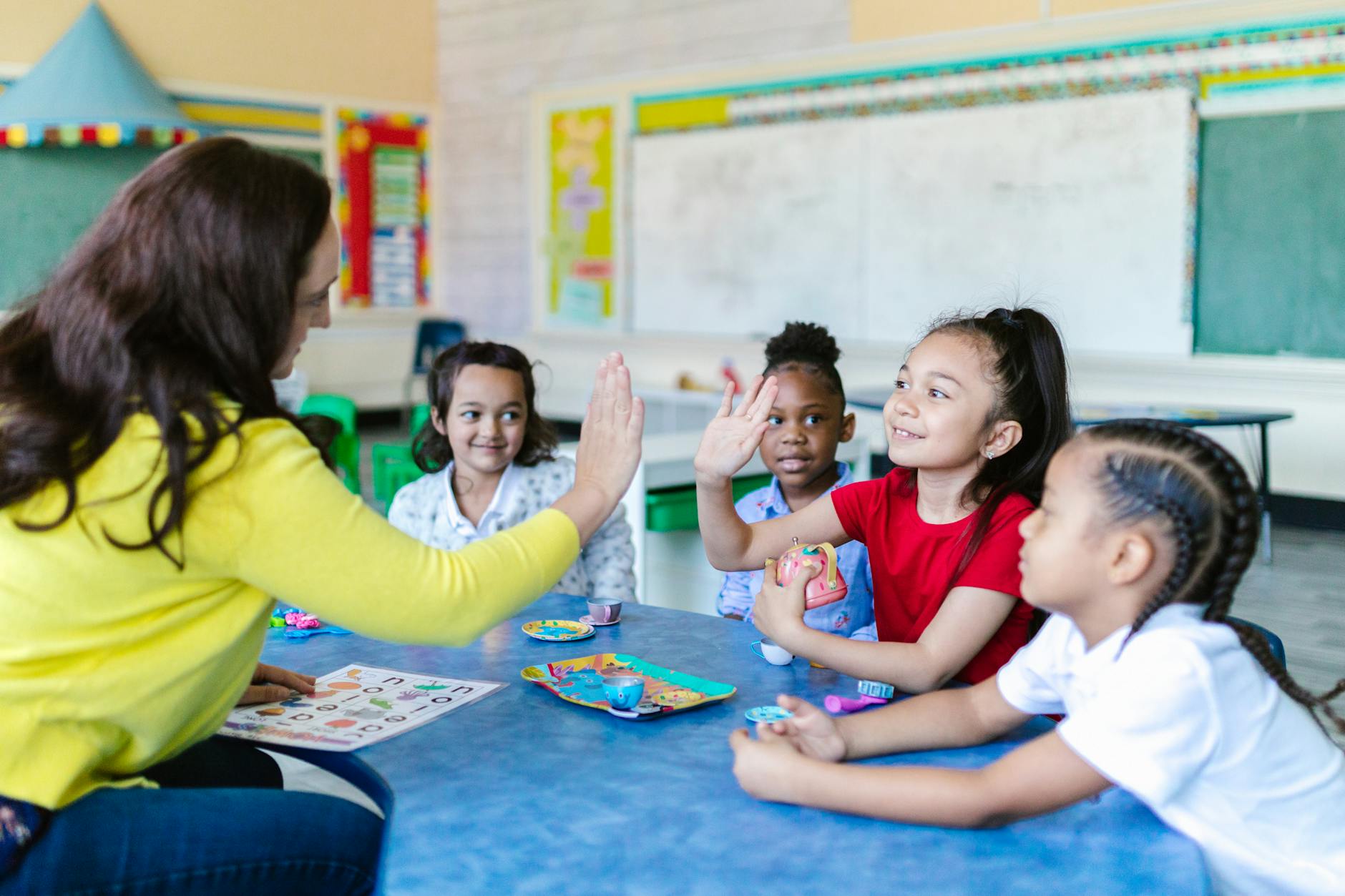
Cooperative learning is an instructional strategy where students work in small, structured groups of 2-4 members to achieve shared learning goals. Unlike traditional group work, it requires positive interdependence, individual accountability, and specific social skills, ensuring all members participate actively rather than allowing some students to dominate or free-ride.
David and Roger Johnson, researchers at the University of Minnesota who pioneered this framework based on social interdependence theory, insist that true cooperative learning requires five specific elements working together. You cannot simply push desks together and call it cooperation. The structure matters more than the seating chart.
John Hattie's Visible Learning meta-analysis puts cooperative learning at an effect size of 0.40. That lands it squarely in the "zone of desired effects" — meaning it actually accelerates student achievement rather than just keeping kids busy. It works because it combines peer tutoring with built-in accountability mechanisms that pure group work lacks.
Most teachers have witnessed pseudo-groups: four students sitting at a shared table but working on four separate packets, or one kid doing the work while three others check their phones. Without specific structures — shared goals, individual accountability mechanisms, and assigned roles — you don't have co op learning. You have chaos with better furniture.
Picture a 7th-grade science classroom. The teacher assigns students to mixed-ability groups of four to design erosion control solutions for a local creek bed. Each student has a defined role: the Facilitator keeps the team on task, the Materials Manager gathers supplies, the Recorder documents the design process, and the Presenter will share findings with the class. They sink or swim together on the project grade, but each student also takes an individual quiz on erosion concepts to prove they learned the material. No hiding behind the smart kid.
The Five Essential Elements of Cooperative Learning
The Johnson brothers identified five elements that separate real cooperative learning from dressed-up group work. Miss one, and the structure crumbles.
Positive Interdependence: Students understand they sink or swim together. In practice, this means a shared grade component — if the group presentation fails, everyone loses points — plus resources that require sharing, like one set of materials per group.
Individual Accountability: Each member must demonstrate mastery independently. You see this when teachers give individual quizzes after group work or call on random students to explain the team's answer.
Promotive Interaction: Students help, encourage, and share resources face-to-face. This requires actual eye contact and conversation, which is why desks pushed together works better than rows where students crane their necks to talk.
Social Skills: Communication, trust, and conflict management don't come naturally to 12-year-olds. Teachers must explicitly teach these — modeling how to paraphrase a teammate's idea or how to disagree without insulting.
Group Processing: Teams reflect on their functioning to improve effectiveness. A three-minute protocol at lesson's end — "What did we do well? What will we do differently tomorrow?" — suffices.
Co Op Learning vs Collaborative Learning: Key Distinctions
These terms get tossed around interchangeably in faculty meetings, but they describe different experiences for your students. Understanding the distinctions between cooperative and collaborative learning helps you pick the right tool.
Structure: Cooperative learning is highly structured and teacher-directed — you assign groups, define roles, and build in accountability. Collaborative learning is less structured and more student-centered, with groups forming organically around shared interests.
Interdependence: In cooperative learning, positive interdependence is mandatory, not optional. You engineer the task so students genuinely need each other. In collaborative learning, this happens sometimes but isn't required.
Accountability: Cooperative learning demands both group and individual assessment. Collaborative projects often grade only the final product without verifying individual mastery.
Roles: Cooperative learning uses assigned roles that rotate regularly. Collaborative learning lets roles emerge naturally based on student strengths and interests.
Both strategies fall under the umbrella of group learning, but cooperative learning is the formalized subset requiring all five essential elements. Use it when you need every single kid to learn the content, not just produce a poster.
Why Does Co Op Learning Work in K-12 Classrooms?
Cooperative learning works because it combines cognitive elaboration (explaining concepts to peers) with motivational accountability (individual testing). Research indicates it produces effect sizes of 0.40-0.73 on student achievement while developing critical social skills like conflict resolution and active listening that transfer to workplace and college readiness. When students teach each other, they encode information more deeply than through silent individual study.
Academic Achievement and Long-Term Retention
John Hattie's meta-analyses show cooperative learning produces an average effect size of 0.40—solid territory for any instructional strategy. Bump that to 0.55-0.88 when you layer in specific structures like reciprocal teaching or STAD (Student Teams-Achievement Divisions). The mechanism isn't magic; it's elaborative rehearsal. When your 9th-grade biology students explain cellular respiration to a partner using the Jigsaw method, they process the content three times: once when they learn their chunk, again when they teach their home group, and once more when they hear peer explanations. That multiple exposure shows up on delayed post-tests months later, where co op learning students retain ecosystem concepts while lecture-only groups fade. Marzano's research on instructional strategies confirms this power. When cooperative learning marzano style combines with clear learning objectives and feedback mechanisms, effect sizes hit 0.73. You see this in classrooms where students using structured group investigation demonstrate measurable gains on unit tests compared to traditional instruction. The individual accountability piece matters here—each student takes a quiz or demonstration alone, so they can't hide in the group.
Social Skill Development and Communication
This is where collaboration and cooperative learning separates itself from simple group work. social skill development and communication don't happen by accident; you teach them explicitly through social interdependence theory (Deutsch, 1949; Johnson & Johnson). Positive interdependence creates a psychological drive where students facilitate each other's learning because their own success depends on it. Students develop:
Active listening—paraphrasing what a peer said before adding their own thought
Conflict resolution—disagreeing with ideas rather than attacking people
Leadership—rotating between task roles (keeping time) and maintenance roles (encouraging quiet members)
Trust-building—knowing their grade depends partly on teammates' success
These competencies map directly to Danielson Framework Domain 2 (Classroom Environment) and Domain 3 (Instruction) criteria around student interactions and assuming responsibility for learning. But here's the reality check: plan for six to eight weeks of explicit modeling and group processing sessions before your teams function autonomously without you refereeing every two minutes.
Addressing Diverse Learning Needs Through Peer Support
Cooperative learning and differentiated instruction are natural partners. When you form heterogeneous groups, you create built-in peer tutoring networks. Your ELLs hear academic vocabulary modeled by native speakers during authentic student-centered learning tasks. Students with IEPs access grade-level content through scaffolded roles—maybe they manage the lab materials while a partner records data, but both grapple with the same essential question. Gifted kids stop doing extra worksheets and start cementing knowledge by explaining complex concepts to teammates. This approach reduces status differences in mixed-ability classrooms. Complex Instruction (Cohen & Lotan) uses multiple-ability treatment of content so every student brings a required skill to the table—spatial reasoning, verbal explanation, hands-on building. No one is the "smart one" or the "slow one." You are supporting differentiated instruction through peer groups rather than running three separate lesson plans. That's the efficiency veteran teachers recognize immediately.

How Co Op Learning Works in Practice
You don't just throw kids into groups and hope for the best. Co op learning follows a decision chain. This is cooperative teaching and learning at its most practical—not chaos, but intentional design. Start with your learning objective. Does this task actually need cooperation? Complex problem-solving with multiple solutions does. Memorizing vocabulary lists doesn't. If cooperation makes sense, pick your structure. Think-Pair-Share works for quick checks. Jigsaw fits when each student needs unique expertise. Unlike complex instruction cooperative learning which requires extensive training, these structures work immediately. Then assign roles and build in accountability before anyone moves a desk. Watch your clock. Sustained group work hits limits by age. Elementary students tap out after 15-20 minutes. Middle schoolers can handle 20-30 minutes before side conversations take over. High schoolers manage 30-40 minutes of intense collaboration, but that's your ceiling. This shifts the classroom toward student-centered learning, but only when the infrastructure supports it.
Don't launch until three things are solid. Your classroom management must be established—students need to know you see them even when you're across the room. They need transition signals that mean move now, not after you repeat yourself three times. Most importantly, write the task instructions on cards or project them on slides. If you're answering "what are we supposed to do?" while groups are forming, you've already lost momentum.
Establishing Positive Interdependence Among Group Members
Positive interdependence means students believe they sink or swim together. It comes in two distinct types:
Resource interdependence gives each member unique materials or information. Think Jigsaw: every student holds one piece of the puzzle.
Task interdependence requires every contribution to finish the product.
In my 3rd-grade classroom, I use task interdependence for multi-step word problems. One student calculates the first operation, passes the paper, the next student completes the second step, and so on. The final answer depends on every calculation being correct. If Jordan messes up step one, the group discovers the error together when the final number makes no sense. They learn quickly to check each other's work.
For 11th-grade history, I flip to resource interdependence. Each student receives one primary source document. Alone, they can't answer the essential question about causes of the Great Depression. The group needs all four perspectives—banking, farming, industrial labor, and government policy—to build a complete argument. This is where establishing positive interdependence and individual accountability becomes crucial; without both, one student reads all four documents while the others check their phones.
Building Individual Accountability Systems
Groups fail when students hide. You need mechanisms that expose who's learning and who's coasting. I rotate through three checks:
The Random Reporter system assigns each student a number 1-4. When time's up, I roll a die or pick a number. That student presents the group's answer. No hiding behind the strongest speaker.
Individual quizzes following group practice let me see who actually mastered the material versus who copied the final answer.
Individual processing papers ask students to explain the group's solution in their own words.
Research from social interdependence theory suggests you need these accountability checks in 60-70% of cooperative lessons. Less than that, and social loafing becomes epidemic. More than that, and you undermine the trust you're building. I aim for two out of three sessions weekly. It keeps everyone honest without turning every group task into a test.
Promotive Interaction and Group Processing Techniques
Promotive interaction is the oral glue holding groups together. It's not just "work together nicely." This isn't peer tutoring where one expert helps a novice; it's mutual support where everyone teaches and learns. Students must encourage and facilitate each other's efforts using specific scripts. I post sentence starters on the board:
"I agree with [Name] because..."
"Can you explain how you got that answer?"
"Let's check our work against the rubric before we finish."
These phrases force students to engage with each other's thinking rather than just dividing the labor.
End every session with group processing. I use the 3-2-1 protocol. Groups identify three things they did well, two things to improve next time, and one specific contribution each member made. This takes five minutes. My 7th graders used to rush to pack up; now they actually discuss who explained the math concept clearly and who needs to speak up more. That reflection time converts today's group work into better collaboration tomorrow.
Proven Co Op Learning Strategies for Immediate Implementation
You don't need to redesign your entire curriculum to get started with co op learning. Pick one structure, teach the routines explicitly, and use it consistently for two weeks before adding another. Comoglio and Cardoso's research on cooperative learning emphasizes that the metacognitive development happens during group processing time—those two minutes at the end when students reflect on what helped them learn. Skip this step and you lose the benefits that separate true cooperative learning strategies from mere group work where one student does everything.
Think-Pair-Share: Grades K-12, pairs, 2-4 minutes, no materials.
Jigsaw: Grades 4-12, home groups of 4, 45 minutes, expert sheets required.
Numbered Heads Together: Grades 2-12, groups of 4, 10-15 minutes, scoreboard needed.
Round Robin: Grades 3-12, groups of 3-5, 5-10 minutes, paper optional.
Reciprocal Teaching: Grades 3-12, groups of 4, 20-30 minutes, text required.
STAD: Grades 2-12, mixed-ability teams of 4, weekly cycle, worksheets/flashcards.
Choose based on your specific goal: use Think-Pair-Share for quick formative assessment, Jigsaw when students must master content from multiple texts, Numbered Heads Together for competitive review games, Round Robin for generating ideas, Reciprocal Teaching for complex reading comprehension, and STAD for basic skills practice. Each structure builds positive interdependence and individual accountability—the twin engines of effective student-centered learning.
Think-Pair-Share and Structured Variations
Post your question on the board. Give students 30 seconds of silent think time—no talking, no writing, just thinking. Then pairs discuss for 2-3 minutes using sentence stems you provide. "I believe... because..." or "The text suggests..." work better than open conversation. For sharing, use Random Reporter: you call on one student, but their partner answers. This keeps both accountable.
Try Think-Pair-Square for complex questions—pairs join another pair to refine answers before whole-class sharing. Or use Think-Pair-Write when you need individual accountability; students return to their seats to write independently after discussing. These active learning strategies like Think-Pair-Share require zero prep but yield immediate engagement across all grade levels.
The Jigsaw Method for Content Mastery
Divide your text into four chunks. Home groups of four assign topics—A, B, C, D. Students move to expert groups with others studying the same chunk for 10-15 minutes. Give them expert sheets with key points and graphic organizers; without these, they'll struggle to teach accurately. Return to home groups where each expert teaches their chunk in 3-4 minutes while others take notes.
End with an individual quiz covering all topics. This creates positive interdependence—students need each other to pass. I learned the hard way that 4th graders need explicit modeling on how to explain a concept; don't assume they know how to teach. This structure excels in social studies and science where multiple sources or topics converge.
Numbered Heads Together for Accountability
Groups of four number off 1-4. You ask a question—"What's the capital of Nebraska?"—and students literally put their heads together to ensure everyone knows the answer. No hands raised until you call a number: "All 2s stand." If student 2 answers correctly, the team gets a point on the scoreboard.
The randomness creates individual accountability; every student must know the material because anyone could be called. I use this for math facts, vocabulary review, and test prep. Keep rounds fast—30 seconds per question—to maintain energy. These cooperative learning games turn review sessions into high-stakes practice without the anxiety of public failure.
Round Robin and Round Table Discussions
In Round Robin, each student speaks for 30-45 seconds without interruptions. Use a visible timer and enforce the no-interruption rule strictly; I sometimes use a talking stick. I use this for brainstorming essay topics or activating prior knowledge before a science unit. The structure ensures your quiet students get airtime and your dominant students learn to wait.
For written brainstorming, try Round Table: one paper circulates, each student adds one idea or sentence. Allow a "Pass" option, but return to that student later. This generates thesis statements or problem-solving approaches efficiently. Leading effective student discussions requires these scaffolds; vague "discuss in your groups" prompts usually result in off-task conversation.
Reciprocal Teaching for Reading Comprehension
Assign four roles that rotate every page: Predictor, Questioner, Clarifier, Summarizer. The Predictor guesses what happens next based on headings. The Questioner asks a "teacher-like" question about the text. The Clarifier explains confusing vocabulary or concepts. The Summarizer states main ideas in two sentences.
With 3rd graders, start with just predicting and summarizing. Add questioning and clarifying by 6th grade. This applies peer tutoring within the group and builds comprehension better than silent reading alone. I've used this successfully in history classes with dense primary sources—students catch details I'd miss when reading alone, and the group processing builds their awareness of reading strategies.
Student Teams Achievement Divisions (STAD)
Slavin's research supports this weekly cycle: you teach for 20 minutes, then teams practice together using worksheets or flashcards for 15 minutes. Students take individual quizzes (10 minutes), but scores earn improvement points based on beating their own past average, not raw scores. A student who usually scores 60% and gets 70% earns more points than a student who always scores 90%.
Teams earning high improvement get certificates or recognition (5 minutes). This builds social interdependence theory in action—students celebrate each other's growth because everyone's improvement helps the team. Mix ability levels carefully; heterogeneous grouping is critical. STAD works best for math facts, spelling, and grammar basics—skills requiring repetition without boredom.

How to Structure Co Op Groups for Maximum Impact?
Structure co op groups heterogeneously in teams of four. These cooperative grouping strategies maximize peer tutoring while preventing the free-riding that kills group morale. Mix high, middle, and low achievers together, assign rotating roles, and hold every student accountable through random reporter selection or individual quizzes.
Heterogeneous vs Homogeneous Grouping Decisions
Research on within-class ability grouping shows minimal effects—just 0.12 standard deviations for low achievers. Contrast that with heterogeneous cooperative learning, which produces effects of 0.40 or higher across all achievement levels. The data is clear: keeping students mixed accelerates learning for everyone, while ability grouping often strands struggling students with limited peer models.
Use heterogeneous grouping when introducing new concepts or tackling complex problems. The optimal mix includes one high achiever, two middle achievers, and one low achiever. This prevents the "two lows" trap where struggling students spin without models. Use heterogeneous grouping for mixed-ability classrooms during inquiry-based science labs, literature circle discussions, or math problem-solving tasks where diverse perspectives spark deeper analysis.
Reserve homogeneous grouping for targeted skill intervention only. Fluency drills or specific remedial practice work here, but limit these cycles to two weeks. Beyond that, you create tracking effects that limit exposure to higher-order thinking models. Never use homogeneous groups for conceptual understanding—that's where you need diverse perspectives to challenge thinking and prevent the "blind leading the blind" scenario.
Optimal Group Size and Composition Rules
Four is the magic number for most tasks. Quads allow pair-checking before group consensus and accommodate standard role systems perfectly. Triads work for quick language practice but create unstable dynamics where two students often gang up on one, leaving someone silenced. Pairs excel for peer editing or ELL conversation practice, though one absence collapses the group entirely.
When forming groups, follow specific composition rules:
Mix one student from the top 25%, two from the middle 50%, and one from the bottom 25% of your class data.
Balance gender so no group becomes a single-gender island.
Separate friends who giggle through instructions—social bonds often override academic focus.
For ELLs, pair emergent speakers with patient, clear models rather than other struggling language learners.
Role Assignment Systems That Prevent Free-Riding
Free-riding destroys trust in student-centered learning. Assign four standard roles to create positive interdependence: the Facilitator keeps the group on task and ensures all participate; the Recorder writes group answers; the Materials Manager distributes and collects supplies; and the Reporter presents findings to the class. These roles mirror real-world collaborative skills while ensuring everyone has a job.
Rotate roles daily or per activity. Track assignments on the board or use individual cards so students can't hide in the same comfortable spot. This rotation builds skills across all domains and prevents the dominance of natural leaders who would otherwise monopolize the Facilitator role.
Ensure individual accountability through the Random Reporter method. When time is up, roll a die or draw a name to determine who presents. Everyone must know the material because anyone might speak. Supplement this with individual quizzes where scores contribute to team totals but cannot be carried by group work alone. This balance of social interdependence theory and personal responsibility keeps cooperative collaborative work honest and ensures that collaborative learning cooperative learning actually teaches content, not just social skills.

Common Implementation Challenges and Practical Solutions
Don't use co op learning when students are learning brand-new procedural skills for the first time. Splitting attention between the skill and social negotiation overloads working memory. The line between collaborative and cooperative teaching blurs when routines break down, so skip this during high-stakes test prep requiring timed individual practice, or when your classroom management isn't solid yet. You need the structure in place before you hand over control to a cooperative learning center.
Watch for pseudo-learning: groups that look busy but discuss weekend plans, worksheets divided "you do 1-5, I'll do 6-10," or one student doing all work while others watch. These patterns destroy student-centered learning goals and waste instructional time. You know it's happening when the group finishes early but can't explain their answers, or when four kids have identical wrong answers in the same handwriting.
If groups wander off-task, check your task clarity and tighten time limits.
If one voice dominates, deploy participation tokens.
If assessment shows no learning gains, increase individual accountability mechanisms immediately.
Managing Off-Task Behavior During Group Work
Prevention beats intervention. Position yourself for proximity seating—circulate every three to four minutes without pattern so your presence becomes ambient. Insert group processing checks at ten-minute marks: "Pause. What have you decided so far?" Task cards with written instructions cut down on "what do we do now?" conversations. When you spot off-task behavior early, you can redirect with a hand on a shoulder rather than stopping the whole class.
When groups drift, use a group pause signal. Hand up means everyone stops and looks. For chronic offenders, pull the facilitator aside and redefine their leadership role. Track behavior with a Group Work Checker clipboard: mark plus for on-task, minus for off-task. It feeds into the team participation grade without stopping the flow. For more strategies on managing off-task behavior during group activities, start with your physical position in the room.
Ensuring Equitable Participation Across Skill Levels
The quiet kid copies answers. The high achiever dominates conversation. This kills positive interdependence. First, identify who speaks using a participation tracker: the recorder marks tally marks for each idea contributed. Data doesn't lie. If you see one name with ten marks and others with zero, you have a problem that needs immediate fixing before the gap widens.
Deploy a token system. Each student gets two chips to "spend" when speaking. When they're out, they listen. For chronic dominators, try this script: "Thank you for that idea. Now let's hear from [Name] who hasn't shared yet. [Name], what do you think about the third step?" Build social interdependence theory into the structure, not just the hope that they'll play nice. If peer tutoring emerges naturally from this balance, let it happen, but don't force it.

Building Your First Co Op Learning Lesson Plan
Start simple. Your first co op learning lesson shouldn't depend on elaborate structures until your students have mastered basic social skills. They need to know how to listen without interrupting, disagree politely, and respond to transition signals before you add complex positive interdependence or division of labor.
Selecting Content Appropriate for Group Processing
Don't attempt complex cooperative learning structures until students can handle basic social skills. They need to know how to listen without interrupting, disagree politely, and respond to transition signals. Without these prerequisites, positive interdependence collapses into chaos.
Pick tasks that require multiple perspectives. The content should meet at least one of these criteria:
Benefits from peer explanation or teaching
Has no single right answer or allows multiple solution paths
Requires true division of labor to complete efficiently
Good bets include math word problems with multiple strategies, science inquiry labs, and historical document analysis. Skip rote memorization like state capitals or simple computation drills. If one student can finish it alone during lunch while eating a sandwich, it's not group-worthy.
Designing the Activity Structure and Time Allocation
Block your 30 minutes precisely:
5 minutes: Set expectations, assign roles, distribute materials
15-20 minutes: Group work using a specific strategy like peer tutoring or student-centered learning stations
5 minutes: Group processing and individual reflection
Prep task cards with written instructions to stop the "what do we do now?" interruptions. Include role cards and answer sheets for the recorder. Use a visible timer, give a one-minute warning, and establish a cleanup routine where the materials manager collects while others start exit tickets. For digital setups, see our guide on implementing tech-enabled collaborative structures.
Assessment Protocols and Reflection Components
Prevent free-riding with dual accountability. Weight the grade thirty percent on the group product and seventy percent on an individual quiz covering the same material. This honors both individual accountability and collaborative learning effort.
Score the group product using these criteria:
Content accuracy (demonstrates mastery of concepts)
Collaboration quality (used expected social skills, equitable participation)
Individual contribution (fulfilled specific role responsibilities)
End with a 3-2-1 exit ticket: three things learned, two things the group did well, and one thing to improve next time. This reflection builds the metacognitive awareness that makes social interdependence theory stick in real classrooms. Find ready-to-use formats in our lesson plan examples for group processing.

Start Here: Co Op Learning
The difference between group work and real co op learning comes down to one thing: whether students actually need each other to finish the task. If Sarah can complete the worksheet while Malik watches, you don't have cooperation—you have proximity. True social interdependence theory in action means Sarah can't succeed unless Malik contributes his piece, and vice versa. That tension creates the learning.
Start tomorrow. Don't rewrite your whole curriculum. Pick one 15-minute activity from this guide—maybe numbered heads together or a structured peer tutoring rotation—and run it with intention. Watch who talks, who listens, and where they get stuck. That's your data.
Co op learning isn't a program you buy. It's a habit you build, one lesson at a time. Your first attempt will feel clunky. The second will feel less so. By the fifth, you'll wonder why you ever taught solo.
What Is Co Op Learning?
Cooperative learning is an instructional strategy where students work in small, structured groups of 2-4 members to achieve shared learning goals. Unlike traditional group work, it requires positive interdependence, individual accountability, and specific social skills, ensuring all members participate actively rather than allowing some students to dominate or free-ride.
David and Roger Johnson, researchers at the University of Minnesota who pioneered this framework based on social interdependence theory, insist that true cooperative learning requires five specific elements working together. You cannot simply push desks together and call it cooperation. The structure matters more than the seating chart.
John Hattie's Visible Learning meta-analysis puts cooperative learning at an effect size of 0.40. That lands it squarely in the "zone of desired effects" — meaning it actually accelerates student achievement rather than just keeping kids busy. It works because it combines peer tutoring with built-in accountability mechanisms that pure group work lacks.
Most teachers have witnessed pseudo-groups: four students sitting at a shared table but working on four separate packets, or one kid doing the work while three others check their phones. Without specific structures — shared goals, individual accountability mechanisms, and assigned roles — you don't have co op learning. You have chaos with better furniture.
Picture a 7th-grade science classroom. The teacher assigns students to mixed-ability groups of four to design erosion control solutions for a local creek bed. Each student has a defined role: the Facilitator keeps the team on task, the Materials Manager gathers supplies, the Recorder documents the design process, and the Presenter will share findings with the class. They sink or swim together on the project grade, but each student also takes an individual quiz on erosion concepts to prove they learned the material. No hiding behind the smart kid.
The Five Essential Elements of Cooperative Learning
The Johnson brothers identified five elements that separate real cooperative learning from dressed-up group work. Miss one, and the structure crumbles.
Positive Interdependence: Students understand they sink or swim together. In practice, this means a shared grade component — if the group presentation fails, everyone loses points — plus resources that require sharing, like one set of materials per group.
Individual Accountability: Each member must demonstrate mastery independently. You see this when teachers give individual quizzes after group work or call on random students to explain the team's answer.
Promotive Interaction: Students help, encourage, and share resources face-to-face. This requires actual eye contact and conversation, which is why desks pushed together works better than rows where students crane their necks to talk.
Social Skills: Communication, trust, and conflict management don't come naturally to 12-year-olds. Teachers must explicitly teach these — modeling how to paraphrase a teammate's idea or how to disagree without insulting.
Group Processing: Teams reflect on their functioning to improve effectiveness. A three-minute protocol at lesson's end — "What did we do well? What will we do differently tomorrow?" — suffices.
Co Op Learning vs Collaborative Learning: Key Distinctions
These terms get tossed around interchangeably in faculty meetings, but they describe different experiences for your students. Understanding the distinctions between cooperative and collaborative learning helps you pick the right tool.
Structure: Cooperative learning is highly structured and teacher-directed — you assign groups, define roles, and build in accountability. Collaborative learning is less structured and more student-centered, with groups forming organically around shared interests.
Interdependence: In cooperative learning, positive interdependence is mandatory, not optional. You engineer the task so students genuinely need each other. In collaborative learning, this happens sometimes but isn't required.
Accountability: Cooperative learning demands both group and individual assessment. Collaborative projects often grade only the final product without verifying individual mastery.
Roles: Cooperative learning uses assigned roles that rotate regularly. Collaborative learning lets roles emerge naturally based on student strengths and interests.
Both strategies fall under the umbrella of group learning, but cooperative learning is the formalized subset requiring all five essential elements. Use it when you need every single kid to learn the content, not just produce a poster.
Why Does Co Op Learning Work in K-12 Classrooms?
Cooperative learning works because it combines cognitive elaboration (explaining concepts to peers) with motivational accountability (individual testing). Research indicates it produces effect sizes of 0.40-0.73 on student achievement while developing critical social skills like conflict resolution and active listening that transfer to workplace and college readiness. When students teach each other, they encode information more deeply than through silent individual study.
Academic Achievement and Long-Term Retention
John Hattie's meta-analyses show cooperative learning produces an average effect size of 0.40—solid territory for any instructional strategy. Bump that to 0.55-0.88 when you layer in specific structures like reciprocal teaching or STAD (Student Teams-Achievement Divisions). The mechanism isn't magic; it's elaborative rehearsal. When your 9th-grade biology students explain cellular respiration to a partner using the Jigsaw method, they process the content three times: once when they learn their chunk, again when they teach their home group, and once more when they hear peer explanations. That multiple exposure shows up on delayed post-tests months later, where co op learning students retain ecosystem concepts while lecture-only groups fade. Marzano's research on instructional strategies confirms this power. When cooperative learning marzano style combines with clear learning objectives and feedback mechanisms, effect sizes hit 0.73. You see this in classrooms where students using structured group investigation demonstrate measurable gains on unit tests compared to traditional instruction. The individual accountability piece matters here—each student takes a quiz or demonstration alone, so they can't hide in the group.
Social Skill Development and Communication
This is where collaboration and cooperative learning separates itself from simple group work. social skill development and communication don't happen by accident; you teach them explicitly through social interdependence theory (Deutsch, 1949; Johnson & Johnson). Positive interdependence creates a psychological drive where students facilitate each other's learning because their own success depends on it. Students develop:
Active listening—paraphrasing what a peer said before adding their own thought
Conflict resolution—disagreeing with ideas rather than attacking people
Leadership—rotating between task roles (keeping time) and maintenance roles (encouraging quiet members)
Trust-building—knowing their grade depends partly on teammates' success
These competencies map directly to Danielson Framework Domain 2 (Classroom Environment) and Domain 3 (Instruction) criteria around student interactions and assuming responsibility for learning. But here's the reality check: plan for six to eight weeks of explicit modeling and group processing sessions before your teams function autonomously without you refereeing every two minutes.
Addressing Diverse Learning Needs Through Peer Support
Cooperative learning and differentiated instruction are natural partners. When you form heterogeneous groups, you create built-in peer tutoring networks. Your ELLs hear academic vocabulary modeled by native speakers during authentic student-centered learning tasks. Students with IEPs access grade-level content through scaffolded roles—maybe they manage the lab materials while a partner records data, but both grapple with the same essential question. Gifted kids stop doing extra worksheets and start cementing knowledge by explaining complex concepts to teammates. This approach reduces status differences in mixed-ability classrooms. Complex Instruction (Cohen & Lotan) uses multiple-ability treatment of content so every student brings a required skill to the table—spatial reasoning, verbal explanation, hands-on building. No one is the "smart one" or the "slow one." You are supporting differentiated instruction through peer groups rather than running three separate lesson plans. That's the efficiency veteran teachers recognize immediately.
How Co Op Learning Works in Practice
You don't just throw kids into groups and hope for the best. Co op learning follows a decision chain. This is cooperative teaching and learning at its most practical—not chaos, but intentional design. Start with your learning objective. Does this task actually need cooperation? Complex problem-solving with multiple solutions does. Memorizing vocabulary lists doesn't. If cooperation makes sense, pick your structure. Think-Pair-Share works for quick checks. Jigsaw fits when each student needs unique expertise. Unlike complex instruction cooperative learning which requires extensive training, these structures work immediately. Then assign roles and build in accountability before anyone moves a desk. Watch your clock. Sustained group work hits limits by age. Elementary students tap out after 15-20 minutes. Middle schoolers can handle 20-30 minutes before side conversations take over. High schoolers manage 30-40 minutes of intense collaboration, but that's your ceiling. This shifts the classroom toward student-centered learning, but only when the infrastructure supports it.
Don't launch until three things are solid. Your classroom management must be established—students need to know you see them even when you're across the room. They need transition signals that mean move now, not after you repeat yourself three times. Most importantly, write the task instructions on cards or project them on slides. If you're answering "what are we supposed to do?" while groups are forming, you've already lost momentum.
Establishing Positive Interdependence Among Group Members
Positive interdependence means students believe they sink or swim together. It comes in two distinct types:
Resource interdependence gives each member unique materials or information. Think Jigsaw: every student holds one piece of the puzzle.
Task interdependence requires every contribution to finish the product.
In my 3rd-grade classroom, I use task interdependence for multi-step word problems. One student calculates the first operation, passes the paper, the next student completes the second step, and so on. The final answer depends on every calculation being correct. If Jordan messes up step one, the group discovers the error together when the final number makes no sense. They learn quickly to check each other's work.
For 11th-grade history, I flip to resource interdependence. Each student receives one primary source document. Alone, they can't answer the essential question about causes of the Great Depression. The group needs all four perspectives—banking, farming, industrial labor, and government policy—to build a complete argument. This is where establishing positive interdependence and individual accountability becomes crucial; without both, one student reads all four documents while the others check their phones.
Building Individual Accountability Systems
Groups fail when students hide. You need mechanisms that expose who's learning and who's coasting. I rotate through three checks:
The Random Reporter system assigns each student a number 1-4. When time's up, I roll a die or pick a number. That student presents the group's answer. No hiding behind the strongest speaker.
Individual quizzes following group practice let me see who actually mastered the material versus who copied the final answer.
Individual processing papers ask students to explain the group's solution in their own words.
Research from social interdependence theory suggests you need these accountability checks in 60-70% of cooperative lessons. Less than that, and social loafing becomes epidemic. More than that, and you undermine the trust you're building. I aim for two out of three sessions weekly. It keeps everyone honest without turning every group task into a test.
Promotive Interaction and Group Processing Techniques
Promotive interaction is the oral glue holding groups together. It's not just "work together nicely." This isn't peer tutoring where one expert helps a novice; it's mutual support where everyone teaches and learns. Students must encourage and facilitate each other's efforts using specific scripts. I post sentence starters on the board:
"I agree with [Name] because..."
"Can you explain how you got that answer?"
"Let's check our work against the rubric before we finish."
These phrases force students to engage with each other's thinking rather than just dividing the labor.
End every session with group processing. I use the 3-2-1 protocol. Groups identify three things they did well, two things to improve next time, and one specific contribution each member made. This takes five minutes. My 7th graders used to rush to pack up; now they actually discuss who explained the math concept clearly and who needs to speak up more. That reflection time converts today's group work into better collaboration tomorrow.
Proven Co Op Learning Strategies for Immediate Implementation
You don't need to redesign your entire curriculum to get started with co op learning. Pick one structure, teach the routines explicitly, and use it consistently for two weeks before adding another. Comoglio and Cardoso's research on cooperative learning emphasizes that the metacognitive development happens during group processing time—those two minutes at the end when students reflect on what helped them learn. Skip this step and you lose the benefits that separate true cooperative learning strategies from mere group work where one student does everything.
Think-Pair-Share: Grades K-12, pairs, 2-4 minutes, no materials.
Jigsaw: Grades 4-12, home groups of 4, 45 minutes, expert sheets required.
Numbered Heads Together: Grades 2-12, groups of 4, 10-15 minutes, scoreboard needed.
Round Robin: Grades 3-12, groups of 3-5, 5-10 minutes, paper optional.
Reciprocal Teaching: Grades 3-12, groups of 4, 20-30 minutes, text required.
STAD: Grades 2-12, mixed-ability teams of 4, weekly cycle, worksheets/flashcards.
Choose based on your specific goal: use Think-Pair-Share for quick formative assessment, Jigsaw when students must master content from multiple texts, Numbered Heads Together for competitive review games, Round Robin for generating ideas, Reciprocal Teaching for complex reading comprehension, and STAD for basic skills practice. Each structure builds positive interdependence and individual accountability—the twin engines of effective student-centered learning.
Think-Pair-Share and Structured Variations
Post your question on the board. Give students 30 seconds of silent think time—no talking, no writing, just thinking. Then pairs discuss for 2-3 minutes using sentence stems you provide. "I believe... because..." or "The text suggests..." work better than open conversation. For sharing, use Random Reporter: you call on one student, but their partner answers. This keeps both accountable.
Try Think-Pair-Square for complex questions—pairs join another pair to refine answers before whole-class sharing. Or use Think-Pair-Write when you need individual accountability; students return to their seats to write independently after discussing. These active learning strategies like Think-Pair-Share require zero prep but yield immediate engagement across all grade levels.
The Jigsaw Method for Content Mastery
Divide your text into four chunks. Home groups of four assign topics—A, B, C, D. Students move to expert groups with others studying the same chunk for 10-15 minutes. Give them expert sheets with key points and graphic organizers; without these, they'll struggle to teach accurately. Return to home groups where each expert teaches their chunk in 3-4 minutes while others take notes.
End with an individual quiz covering all topics. This creates positive interdependence—students need each other to pass. I learned the hard way that 4th graders need explicit modeling on how to explain a concept; don't assume they know how to teach. This structure excels in social studies and science where multiple sources or topics converge.
Numbered Heads Together for Accountability
Groups of four number off 1-4. You ask a question—"What's the capital of Nebraska?"—and students literally put their heads together to ensure everyone knows the answer. No hands raised until you call a number: "All 2s stand." If student 2 answers correctly, the team gets a point on the scoreboard.
The randomness creates individual accountability; every student must know the material because anyone could be called. I use this for math facts, vocabulary review, and test prep. Keep rounds fast—30 seconds per question—to maintain energy. These cooperative learning games turn review sessions into high-stakes practice without the anxiety of public failure.
Round Robin and Round Table Discussions
In Round Robin, each student speaks for 30-45 seconds without interruptions. Use a visible timer and enforce the no-interruption rule strictly; I sometimes use a talking stick. I use this for brainstorming essay topics or activating prior knowledge before a science unit. The structure ensures your quiet students get airtime and your dominant students learn to wait.
For written brainstorming, try Round Table: one paper circulates, each student adds one idea or sentence. Allow a "Pass" option, but return to that student later. This generates thesis statements or problem-solving approaches efficiently. Leading effective student discussions requires these scaffolds; vague "discuss in your groups" prompts usually result in off-task conversation.
Reciprocal Teaching for Reading Comprehension
Assign four roles that rotate every page: Predictor, Questioner, Clarifier, Summarizer. The Predictor guesses what happens next based on headings. The Questioner asks a "teacher-like" question about the text. The Clarifier explains confusing vocabulary or concepts. The Summarizer states main ideas in two sentences.
With 3rd graders, start with just predicting and summarizing. Add questioning and clarifying by 6th grade. This applies peer tutoring within the group and builds comprehension better than silent reading alone. I've used this successfully in history classes with dense primary sources—students catch details I'd miss when reading alone, and the group processing builds their awareness of reading strategies.
Student Teams Achievement Divisions (STAD)
Slavin's research supports this weekly cycle: you teach for 20 minutes, then teams practice together using worksheets or flashcards for 15 minutes. Students take individual quizzes (10 minutes), but scores earn improvement points based on beating their own past average, not raw scores. A student who usually scores 60% and gets 70% earns more points than a student who always scores 90%.
Teams earning high improvement get certificates or recognition (5 minutes). This builds social interdependence theory in action—students celebrate each other's growth because everyone's improvement helps the team. Mix ability levels carefully; heterogeneous grouping is critical. STAD works best for math facts, spelling, and grammar basics—skills requiring repetition without boredom.
How to Structure Co Op Groups for Maximum Impact?
Structure co op groups heterogeneously in teams of four. These cooperative grouping strategies maximize peer tutoring while preventing the free-riding that kills group morale. Mix high, middle, and low achievers together, assign rotating roles, and hold every student accountable through random reporter selection or individual quizzes.
Heterogeneous vs Homogeneous Grouping Decisions
Research on within-class ability grouping shows minimal effects—just 0.12 standard deviations for low achievers. Contrast that with heterogeneous cooperative learning, which produces effects of 0.40 or higher across all achievement levels. The data is clear: keeping students mixed accelerates learning for everyone, while ability grouping often strands struggling students with limited peer models.
Use heterogeneous grouping when introducing new concepts or tackling complex problems. The optimal mix includes one high achiever, two middle achievers, and one low achiever. This prevents the "two lows" trap where struggling students spin without models. Use heterogeneous grouping for mixed-ability classrooms during inquiry-based science labs, literature circle discussions, or math problem-solving tasks where diverse perspectives spark deeper analysis.
Reserve homogeneous grouping for targeted skill intervention only. Fluency drills or specific remedial practice work here, but limit these cycles to two weeks. Beyond that, you create tracking effects that limit exposure to higher-order thinking models. Never use homogeneous groups for conceptual understanding—that's where you need diverse perspectives to challenge thinking and prevent the "blind leading the blind" scenario.
Optimal Group Size and Composition Rules
Four is the magic number for most tasks. Quads allow pair-checking before group consensus and accommodate standard role systems perfectly. Triads work for quick language practice but create unstable dynamics where two students often gang up on one, leaving someone silenced. Pairs excel for peer editing or ELL conversation practice, though one absence collapses the group entirely.
When forming groups, follow specific composition rules:
Mix one student from the top 25%, two from the middle 50%, and one from the bottom 25% of your class data.
Balance gender so no group becomes a single-gender island.
Separate friends who giggle through instructions—social bonds often override academic focus.
For ELLs, pair emergent speakers with patient, clear models rather than other struggling language learners.
Role Assignment Systems That Prevent Free-Riding
Free-riding destroys trust in student-centered learning. Assign four standard roles to create positive interdependence: the Facilitator keeps the group on task and ensures all participate; the Recorder writes group answers; the Materials Manager distributes and collects supplies; and the Reporter presents findings to the class. These roles mirror real-world collaborative skills while ensuring everyone has a job.
Rotate roles daily or per activity. Track assignments on the board or use individual cards so students can't hide in the same comfortable spot. This rotation builds skills across all domains and prevents the dominance of natural leaders who would otherwise monopolize the Facilitator role.
Ensure individual accountability through the Random Reporter method. When time is up, roll a die or draw a name to determine who presents. Everyone must know the material because anyone might speak. Supplement this with individual quizzes where scores contribute to team totals but cannot be carried by group work alone. This balance of social interdependence theory and personal responsibility keeps cooperative collaborative work honest and ensures that collaborative learning cooperative learning actually teaches content, not just social skills.
Common Implementation Challenges and Practical Solutions
Don't use co op learning when students are learning brand-new procedural skills for the first time. Splitting attention between the skill and social negotiation overloads working memory. The line between collaborative and cooperative teaching blurs when routines break down, so skip this during high-stakes test prep requiring timed individual practice, or when your classroom management isn't solid yet. You need the structure in place before you hand over control to a cooperative learning center.
Watch for pseudo-learning: groups that look busy but discuss weekend plans, worksheets divided "you do 1-5, I'll do 6-10," or one student doing all work while others watch. These patterns destroy student-centered learning goals and waste instructional time. You know it's happening when the group finishes early but can't explain their answers, or when four kids have identical wrong answers in the same handwriting.
If groups wander off-task, check your task clarity and tighten time limits.
If one voice dominates, deploy participation tokens.
If assessment shows no learning gains, increase individual accountability mechanisms immediately.
Managing Off-Task Behavior During Group Work
Prevention beats intervention. Position yourself for proximity seating—circulate every three to four minutes without pattern so your presence becomes ambient. Insert group processing checks at ten-minute marks: "Pause. What have you decided so far?" Task cards with written instructions cut down on "what do we do now?" conversations. When you spot off-task behavior early, you can redirect with a hand on a shoulder rather than stopping the whole class.
When groups drift, use a group pause signal. Hand up means everyone stops and looks. For chronic offenders, pull the facilitator aside and redefine their leadership role. Track behavior with a Group Work Checker clipboard: mark plus for on-task, minus for off-task. It feeds into the team participation grade without stopping the flow. For more strategies on managing off-task behavior during group activities, start with your physical position in the room.
Ensuring Equitable Participation Across Skill Levels
The quiet kid copies answers. The high achiever dominates conversation. This kills positive interdependence. First, identify who speaks using a participation tracker: the recorder marks tally marks for each idea contributed. Data doesn't lie. If you see one name with ten marks and others with zero, you have a problem that needs immediate fixing before the gap widens.
Deploy a token system. Each student gets two chips to "spend" when speaking. When they're out, they listen. For chronic dominators, try this script: "Thank you for that idea. Now let's hear from [Name] who hasn't shared yet. [Name], what do you think about the third step?" Build social interdependence theory into the structure, not just the hope that they'll play nice. If peer tutoring emerges naturally from this balance, let it happen, but don't force it.
Building Your First Co Op Learning Lesson Plan
Start simple. Your first co op learning lesson shouldn't depend on elaborate structures until your students have mastered basic social skills. They need to know how to listen without interrupting, disagree politely, and respond to transition signals before you add complex positive interdependence or division of labor.
Selecting Content Appropriate for Group Processing
Don't attempt complex cooperative learning structures until students can handle basic social skills. They need to know how to listen without interrupting, disagree politely, and respond to transition signals. Without these prerequisites, positive interdependence collapses into chaos.
Pick tasks that require multiple perspectives. The content should meet at least one of these criteria:
Benefits from peer explanation or teaching
Has no single right answer or allows multiple solution paths
Requires true division of labor to complete efficiently
Good bets include math word problems with multiple strategies, science inquiry labs, and historical document analysis. Skip rote memorization like state capitals or simple computation drills. If one student can finish it alone during lunch while eating a sandwich, it's not group-worthy.
Designing the Activity Structure and Time Allocation
Block your 30 minutes precisely:
5 minutes: Set expectations, assign roles, distribute materials
15-20 minutes: Group work using a specific strategy like peer tutoring or student-centered learning stations
5 minutes: Group processing and individual reflection
Prep task cards with written instructions to stop the "what do we do now?" interruptions. Include role cards and answer sheets for the recorder. Use a visible timer, give a one-minute warning, and establish a cleanup routine where the materials manager collects while others start exit tickets. For digital setups, see our guide on implementing tech-enabled collaborative structures.
Assessment Protocols and Reflection Components
Prevent free-riding with dual accountability. Weight the grade thirty percent on the group product and seventy percent on an individual quiz covering the same material. This honors both individual accountability and collaborative learning effort.
Score the group product using these criteria:
Content accuracy (demonstrates mastery of concepts)
Collaboration quality (used expected social skills, equitable participation)
Individual contribution (fulfilled specific role responsibilities)
End with a 3-2-1 exit ticket: three things learned, two things the group did well, and one thing to improve next time. This reflection builds the metacognitive awareness that makes social interdependence theory stick in real classrooms. Find ready-to-use formats in our lesson plan examples for group processing.
Start Here: Co Op Learning
The difference between group work and real co op learning comes down to one thing: whether students actually need each other to finish the task. If Sarah can complete the worksheet while Malik watches, you don't have cooperation—you have proximity. True social interdependence theory in action means Sarah can't succeed unless Malik contributes his piece, and vice versa. That tension creates the learning.
Start tomorrow. Don't rewrite your whole curriculum. Pick one 15-minute activity from this guide—maybe numbered heads together or a structured peer tutoring rotation—and run it with intention. Watch who talks, who listens, and where they get stuck. That's your data.
Co op learning isn't a program you buy. It's a habit you build, one lesson at a time. Your first attempt will feel clunky. The second will feel less so. By the fifth, you'll wonder why you ever taught solo.
Still grading everything by hand?
EMStudio is a free teaching management app — manage your classes, students, lessons, and more!
Learn More
Still grading everything by hand?
EMStudio is a free teaching management app — manage your classes, students, lessons, and more!
Learn More



Notion4Teachers
Notion templates to simplify administrative tasks and enhance your teaching experience.



2026 Notion4Teachers. All Rights Reserved.
Notion4Teachers
Notion templates to simplify administrative tasks and enhance your teaching experience.
2026 Notion4Teachers. All Rights Reserved.
Notion4Teachers
Notion templates to simplify administrative tasks and enhance your teaching experience.
2026 Notion4Teachers. All Rights Reserved.