15 Essential Teachers Pay Resources for K-12 Classrooms
15 Essential Teachers Pay Resources for K-12 Classrooms

Article by
Milo
ESL Content Coordinator & Educator
ESL Content Coordinator & Educator
All Posts
You’ve been there. It’s 9 PM on a Tuesday, you’re staring at tomorrow’s lesson plan gap, and your district-provided textbook just isn’t cutting it. You hop on Teachers Pay Teachers hoping to find something solid, but thirty minutes later you’re drowning in neon fonts, clipart chaos, and grammar worksheets that look like they were made in 1997. Not all teachers pay resources are worth your classroom budget—or your limited prep time.
I’ve spent years sifting through the educational marketplace, testing what actually works with real kids in real classrooms and what collects digital dust in my Google Drive. This isn’t a list of pretty Pinterest activities. These are the curriculum supplements, printable classroom materials, and digital teaching resources that veteran teachers actually use when the pacing guide falls short or a student needs intervention that the basal reader doesn’t provide.
In this post, I’m sharing 15 specific TPT resources that deserve your money, plus the hard-won criteria I use to evaluate free versus paid content before I click “purchase.” You’ll get subject-specific bundles that save hours of planning and practical strategies for implementing teacher-authored content without reinventing your entire workflow or drowning in extra grading.
Still grading everything by hand?
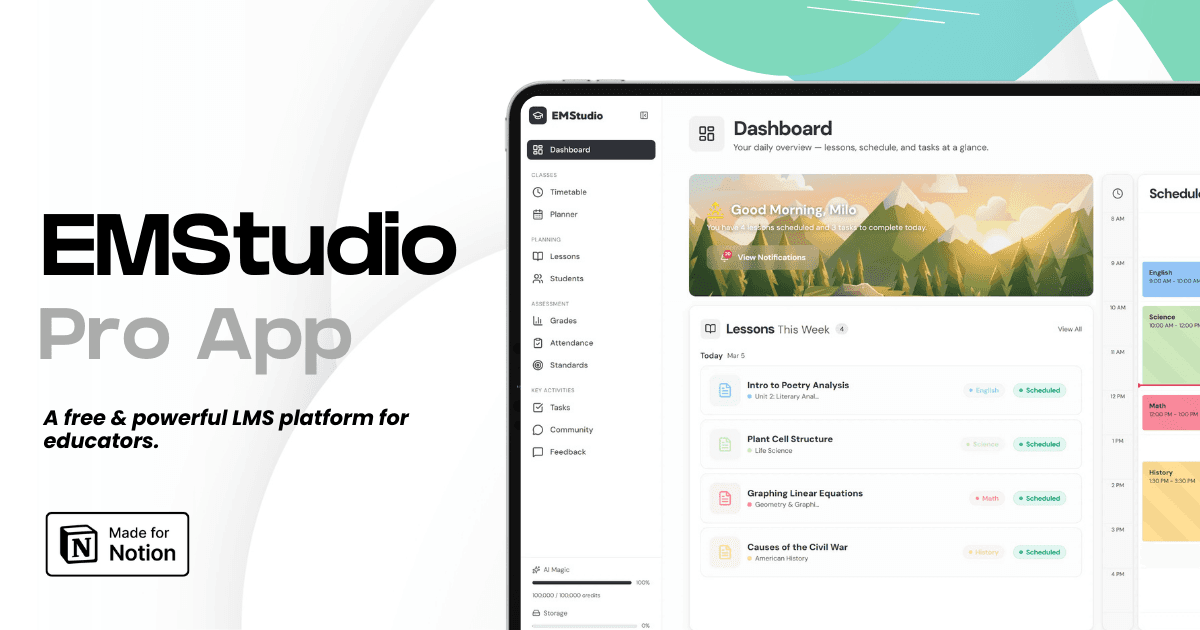
EMStudio is a free teaching management app — manage your classes, students, lessons, and more!
Learn More
Still grading everything by hand?
EMStudio is a free teaching management app — manage your classes, students, lessons, and more!
Learn More
Table of Contents
What Are the Best Teachers Pay Resources for Literacy and Math?
The best literacy and math resources include Mrs J's Resource Creations phonics centers ($4-$8), tiered math intervention bundles ($25-$45), differentiated writing workshops, standards-based grammar spirals, and STEM interactive notebooks. These materials offer structured, research-aligned activities for grades K-12 with measurable outcomes in fluency and computation when implemented 3-4 times weekly.
Research indicates teachers spend an average 7 hours weekly on materials creation; quality TPT resources reduce this by 2.5-3 hours when selected for specific instructional gaps. The educational marketplace works best when you match printable classroom materials to precise student needs rather than filling file folders with random worksheets.
Individual Skill Centers ($3-$8): Single-skill packets for targeted remediation, requiring 15 minutes initial prep to print, laminate, and organize.
Complete Bundles ($25-$45): Year-long curriculum supplements with built-in scope and sequence, needing 30 minutes setup to review alignment charts and prepare storage systems.
Grade Band Targeting: K-2 foundational skills (letter recognition, CVC words), 3-5 intervention support (multi-digit computation, comprehension strategies), 6-8 special education accommodations (modified text, visual supports).
Watch for the failure mode: print-and-go resources lacking scope and sequence alignment create instructional gaps in structured literacy programs. If the product description does not explicitly state which phonics pattern or math standard it targets, skip it. Teacher-authored content succeeds when it fills holes in your core curriculum, not when it replaces your instructional judgment.
Mrs J's Resource Creations Phonics-Based Reading Centers
Mrs J's Resource Creations builds phonics centers that actually match the sequence your reading program demands. Her CVC, blends, digraphs, and vowel teams units cover grades K-3 with discrete folders for each pattern. Individual center sets run $4.25; the complete year-long bundle hits $32 and covers every phonics pattern you'll teach.
I ran these in a kindergarten classroom of 24 students using a rotation model: 6 students per station, 12-minute rotations, 3 times weekly. The prep takes 20 minutes upfront to print on cardstock and file by skill. Kids work independently while you pull guided reading groups. Check effective learning stations for phonics and reading for setup diagrams that work with these materials.
Math Intervention Bundles for Tiered Support
Quality math intervention bundles follow RTI frameworks: 20-minute daily sessions with progress monitoring every 2 weeks using Acadience Math or AIMSweb. TPT bundles cost $28-$42 versus commercial intervention programs at $145+ or self-created materials costing 12 hours of labor at your hourly rate.
These digital teaching resources target K-5 with distinct strands for place value, computation, and word problem solving. Each tier has different entry points—Tier 1 reviews grade-level concepts, Tier 2 provides scaffolded practice, Tier 3 offers intensive concrete modeling. See math teacher resources for tiered intervention for implementation schedules.
Differentiated Writing Workshop Units
Lucy Calkins alternatives from established sellers provide scope and sequence for grades 1-6 without the exhausting minilesson scripting. Look for units with built-in differentiation: below-level students get sentence frames, on-level writers receive graphic organizers, above-level kids tackle open-ended inquiry projects.
A complete 6-week workshop bundle saves roughly 45 hours of curriculum writing time. That is nine weeks of planning periods you get back. The best units include mentor text lists, conferring cheat sheets, and publishing checklists that keep students moving independently while you conference.
Standards-Based Grammar Spiral Review
Daily 5-minute worksheet formats aligned to CCSS Language standards L.1.1 through L.6.2 keep grammar instruction from swallowing your writing block. Digital versions using Google Forms cost around $15; printable PDFs run $12.
Students track mastery in data binders with weekly updated checklists showing spiral review patterns. You spot exactly which kid still confuses possessives with contractions six weeks in. The worksheets work best as morning bell-ringers or transition activities, not as standalone grammar instruction.
Interactive Notebook Templates for STEM Integration
Cross-curricular templates integrate science content with math graphing and technical writing for grades 3-8. These curriculum supplements require composition books—avoid spiral notebooks because pages tear out—and liquid glue, not sticks, because the paper actually stays attached.
Budget 2 hours in August for initial prep: printing, trimming, and organizing templates by unit. Daily maintenance takes 5 minutes for cutting and gluing. Students build reference books they actually use during assessments rather than stuffing worksheets in desks.
Which Teachers Pay Resources Do Veteran Teachers Recommend?
Veteran teachers recommend Teacher Synergy collaborative planning kits, emergency sub plan bundles, behavior management systems, parent communication templates, and assessment data trackers. These practical resources prioritize editable formats and blackline masters over aesthetics, saving educators 2-3 hours weekly in preparation time while maintaining instructional rigor across diverse classrooms.
Watch out for aesthetic prioritization when browsing teachers pay resources. Materials loaded with excessive clipart might look Instagram-ready, but they drain your budget. Color printing costs $0.15 per page while blackline masters run $0.02. Veteran teachers choose editable PowerPoint and Google Slides files with clean layouts over decorative elements that distract from learning.
Resource | Time Saved/Week | Cost | Veteran Rating | Editing Capability |
|---|---|---|---|---|
Teacher Synergy Planning Kits | 2.5 hours | $18 | 4.9 stars | Full Google Slides/Sheets |
Emergency Sub Plans | 3 hours | $12 | 4.8 stars | PowerPoint editable |
Behavior Management Systems | 2 hours | $8 | 4.9 stars | PowerPoint/Google Slides |
Parent Communication Templates | 1.5 hours | $6 | 4.8 stars | Canva/PowerPoint |
Assessment Data Trackers | 2 hours | $10 | 4.9 stars | Google Sheets with formulas |
Teacher Synergy Collaborative Planning Kits
Teacher Synergy collaborative planning kits include vertical alignment maps designed for PLCs of 3-6 teachers. These curriculum supplements run on editable Google Sheets with pre-built formulas that calculate mastery percentages automatically. You pay $18 per grade level or $75 for a school-wide K-5 license.
I used these last year with my third-grade team. We stopped guessing about whether students retained skills from second grade. The formulas highlight gaps before you plan interventions.
Research on structured literacy suggests systematic centers yield measurable gains in decoding when used 3-4 times weekly for 20-minute sessions. These kits help you track exactly that frequency without extra paperwork.
Substitute Teacher Emergency Sub Plans
Emergency sub plan bundles from the educational marketplace include three days of standalone activities, a class roster template, and an emergency procedures checklist. Veteran teachers filter TPT resources for reading level specificity.
K-2: Lexile 200-400
3-5: Lexile 400-800
6-8: Lexile 800+
The zero-prep criteria matters most. Activities must work with paper, pencil, and crayons only. No special manipulatives. No technology dependencies. When I had emergency surgery last spring, my sub opened the tub and taught without calling me once. Look for printable classroom materials with blackline masters, not color-heavy pages that drain your ink budget.
Classroom Management Behavior Systems
The best behavior management systems on Teachers Pay Resources offer alternatives to clip charts. Look for Zones of Regulation check-in tools, punch card economies, or digital companion packs for ClassDojo. Quality bundles include take-home explanation letters in English and Spanish, which saves you from writing your own translations.
Implementation follows a strict three-week timeline:
Week one: Teach the system explicitly.
Week two: Practice with feedback.
Week three: Release to independent use.
I switched to a punch card economy last January. The editable PowerPoint files let me add my specific classroom rules without retyping the whole packet. These proven classroom management systems cut my behavior referrals by half within a month.
Parent Communication Templates and Newsletters
Parent communication templates include weekly newsletters, positive phone call logs, and conference preparation forms. The effective ones come in Canva or PowerPoint formats with editable text boxes. Bilingual options matter: Spanish, Mandarin, and Arabic translations should be included, not bolted on later.
You can customize a quality template in ten minutes. Starting from scratch takes forty-five. I send my weekly update every Sunday night using these formats. Parents know exactly when to expect news.
For more strategies for effective parent communication, choose templates that prioritize clear information over decorative clip art borders that distract from your message.
Assessment Data Tracking Tools
Assessment data trackers compatible with major diagnostic tools save you from manual color-coding:
DIBELS 8th Ed
Acadience Reading
STAR Math
iReady
easyCBM
The Google Sheets versions use conditional formatting to auto-highlight students below benchmark in red, strategic in yellow, and core in green. Check whether the teacher-authored content includes FERPA-compliant digital storage protocols or if you're safer keeping physical binders locked in your desk.
I upload my tracker to our secure drive every Friday afternoon. The built-in formulas calculate growth percentiles while I sip my coffee. These digital teaching resources turn three hours of data analysis into twenty minutes of actual instructional planning time.

Subject-Specific Bundles Worth the Investment
Buy the bundle if you'll use more than 60% of the units, the price sits below 70% of buying everything separately, and you need editable formats to tweak for your kids. Full-year bundles on the educational marketplace run $55 to $125, representing 40-60% savings versus individual purchases. But teachers pay resources individually can drain your budget fast, so calculate carefully.
Individual units win when you only need one or two specific standards, or when you're trialing a new teaching style before committing cash. A $4.95 single download prevents a $90 mistake.
Science labs carry implementation costs beyond the digital teaching resource. Budget $50-$100 upfront for scales, beakers, and thermometers—equipment you'll use for years, but costs that don't appear on your receipt.
Science of Reading Complete Curriculum Sets
These aren't worksheets. They're full-scope curricula for grades K-2:
Phonemic awareness drills (Heggerty-style)
OG-based phonics sequences
Fluency passages timed to the minute
Comprehension strategy minilessons
Most quality sets include alignment charts for DIBELS, PAST, and CORE Phonics Survey so you stop guessing what your diagnostic data means. This is evidence-based science of reading instruction packaged for daily use.
Plan three hours of upfront onboarding. You'll need to learn the scope and sequence, particularly if you're aligning with district-mandated 95% Group or Wilson Reading System protocols. But once you're oriented, you stop hunting for Friday's lesson at 6 PM on Thursday.
Project-Based Learning Social Studies Units
These replace textbook chapters rather than supplement them. Each unit runs 3-4 weeks and targets grades 3-8 with sustained inquiry. Instead of reading about colonial government, kids run one. The "Colonial Town Council" simulation distributes unique roles per class—merchants, apprentices, enslaved persons seeking freedom, clergy, landowners—each with primary source evidence to argue during debate. Kids grapple with taxation and representation while hitting civic engagement standards hard.
You receive:
25 unique role cards per class
Rubrics assessing presentation skills and collaboration
Audience evaluation forms for peer judgment
The prep work is front-loaded, but you skip the lecture-and-worksheet cycle entirely for nearly a month.
Hands-On Science Lab Activity Collections
Quality printable classroom materials follow the 5E model:
Engage: Phenomenon video to spark curiosity
Explore: Hands-on investigation
Explain: Targeted reading and vocabulary
Elaborate: Application to new contexts
Evaluate: Exit tickets or performance tasks
Budget $75 upfront for classroom scales, beakers, and thermometers. That's still cheaper than the $200 commercial kits, and you own the equipment forever. Check that your teacherpays download includes GHS-aligned safety symbols, age-appropriate contracts for grades 3-8, and emergency procedure flowcharts. Paper towels won't save you from a vinegar-and-baking-soda volcano gone wrong.
Art Integration Across the Curriculum
You don't need an art degree or a separate 45-minute block. These curriculum supplements teach specific techniques:
Sketch notes for science observations
Visual vocabulary using the Frayer model with illustrations
Perspective drawing for social studies map work
Each 30-minute integrated lesson includes step-by-step photo directions showing exactly how to model the technique. Teachers with zero art background get results that hang in the hallway and actually represent content learning, not just craft time.
Special Education Adapted Resource Libraries
This is where teacher-authored content proves its value for inclusion teachers. Look for:
Visual schedules and first-then boards
Token economies for behavior management
Modified texts dropped 200 Lexile points without losing concepts
Quality bundles include pre-written IEP objectives aligned to common goals—reading fluency benchmarks, math computation steps, behavior frequency tracking. Compare the $65 lifetime access for special education adapted resource libraries against $250+ annual subscriptions to News2You. The math favors the one-time purchase if you'll use it across multiple students and IEP cycles.
How to Evaluate Free vs. Paid Teachers Pay Resources Before You Buy?
Scrutinize the preview file first. If you don't see a table of contents, close the tab. Check that the seller maintains 4.0+ stars across 50+ ratings, then scan reviews for words like "editable" and "thorough." Free teachers pay resources work for one-off activities, but paid bundles earn their keep only when you use them for three years across multiple periods.
The Evaluation Checklist
Before you add to cart, verify three things:
The preview PDF must show the full table of contents—if you only see a cover image, the seller is hiding something.
Confirm the seller holds 4.0+ stars with at least 50 ratings; anything less suggests inconsistent quality.
Scan the review keywords for "editable," "thorough," and "differentiated"—these indicate teacher-authored content worth your money.
This approach to evaluating teacher-created resources across subjects saves you from buyer's remorse.
The Math That Matters
Calculate ROI before you buy. Use this formula: (Hours saved × $35 hourly rate) minus Resource cost equals Net value. A $5 resource breaks even at 1.5 hours saved. If the printable classroom materials save you six hours of weekend prep, that $15 bundle just returned $195 in personal time. That's the difference between curriculum supplements and junk worksheets.
Red Flags That Signal Pass
Watch for four warning signs:
Pixelated thumbnails suggest the creator rushed the design.
No preview PDF means you buy blind.
Reviews complaining of "worksheets only" without instructional guidance reveal shallow digital teaching resources.
CCSS alignment claims without specific standard numbers listed are empty marketing.
When browsing the educational marketplace, these details separate quality from clutter.
When Free Works Better
Sometimes zero dollars is the right price:
Single-use activities like Valentine's Day word searches don't need premium investment.
Holiday-specific crafts and trial versions help you test a seller's style before committing to $50+ bundles.
Seasonal projects you won't reuse next year.
The www teacherpay platform offers thousands of solid freebies for these exact scenarios. Save your budget for TPT resources you'll use weekly, not once.

Implementation Strategies for Premium Classroom Resources
You bought it. Now don't blow it.
Phase 1 is teacher familiarization. Block two hours. Not one hour while watching TV—two focused hours with the resource open and your grade-level standards beside you. Click every link. Look at every page. Check the answer keys against what your district actually teaches. I once bought a $12 3rd grade fractions unit that assumed kids already knew equivalent fractions. Caught it in hour two, not hour zero.
Phase 2 is modification. Budget one hour to adapt for your IEP and ELL students. The bulk of teachers pay resources target grade-level readers only. You'll need to pull the text into a doc and simplify sentence structures, or add vocabulary banks for newcomers. Don't skip this. Nothing kills a premium resource faster than handing grade-level text to a kid reading two years behind.
Phase 3 is the gradual release over two weeks. Day 1: you model with the resource. Day 3: small groups try one section. Day 5: independent practice. Don't dump the whole packet on Tuesday and expect magic by Thursday.
Here is where teachers sink their investment:
Printing the entire unit before reviewing. That's 200 pages and $40 in ink down the drain when you realize half the content doesn't match your scope and sequence.
Skipping the diagnostic pre-assessment. The author included it for a reason. If three kids already know the material, you'll see it in the data and can compact the instruction instead of boring them for two weeks.
Saving files as "TPT_Download_Final_Final(1).pdf" on your desktop. Use a naming convention: Year_Subject_Resource_Modified. Example: 24_Math_FractionsUnit_Modified.
For storage, pick a lane. Digital: Google Drive organized as Curriculum > Subject > Unit > Original + Modified. Keep the pristine file untouched so you can reset next year. Physical: Three-ring binders with page protectors and labeled tabs for each unit. I use both—digital for projecting, physical for my hands-on reference.
Consider organizing premium materials in a digital resource library if you're managing hundreds of files across subjects. It beats scrolling through Drive folders during a lesson.
Finally, measure whether the price was worth it. Track implementation fidelity: are you actually using the components as designed, or just grabbing the worksheets? Then check student growth. Compare your pre-assessment data to the post-assessment. If the premium resource moved the needle 15% higher than your old materials, you've got justification for the next purchase. If scores stayed flat, that seller goes on your "do not buy" list—no matter how cute the cover was.

The Future of Teachers Pay Resources in the Classroom
The best TPT resources won't change your classroom sitting in your Downloads folder. I've watched teachers hoard thousands of files for "someday" while scrambling for Monday's lesson plan. Pick one resource from this list—just one—that fills a gap you're staring at right now. Buy it, print it tonight, and use it tomorrow. A single page written by a teacher who's been in your exact spot beats a generic textbook worksheet every time.
Stop shopping and start teaching. Set a timer for twenty minutes, audit your current TPT library, and delete anything you haven't opened in six months. Then take that one new resource, customize the header with your name, and make it yours. Your planning period is too short to sort through digital clutter. The educational marketplace works when you treat it like a hardware store: grab the specific tool you need, use it until it breaks, then come back for the next job.

What Are the Best Teachers Pay Resources for Literacy and Math?
The best literacy and math resources include Mrs J's Resource Creations phonics centers ($4-$8), tiered math intervention bundles ($25-$45), differentiated writing workshops, standards-based grammar spirals, and STEM interactive notebooks. These materials offer structured, research-aligned activities for grades K-12 with measurable outcomes in fluency and computation when implemented 3-4 times weekly.
Research indicates teachers spend an average 7 hours weekly on materials creation; quality TPT resources reduce this by 2.5-3 hours when selected for specific instructional gaps. The educational marketplace works best when you match printable classroom materials to precise student needs rather than filling file folders with random worksheets.
Individual Skill Centers ($3-$8): Single-skill packets for targeted remediation, requiring 15 minutes initial prep to print, laminate, and organize.
Complete Bundles ($25-$45): Year-long curriculum supplements with built-in scope and sequence, needing 30 minutes setup to review alignment charts and prepare storage systems.
Grade Band Targeting: K-2 foundational skills (letter recognition, CVC words), 3-5 intervention support (multi-digit computation, comprehension strategies), 6-8 special education accommodations (modified text, visual supports).
Watch for the failure mode: print-and-go resources lacking scope and sequence alignment create instructional gaps in structured literacy programs. If the product description does not explicitly state which phonics pattern or math standard it targets, skip it. Teacher-authored content succeeds when it fills holes in your core curriculum, not when it replaces your instructional judgment.
Mrs J's Resource Creations Phonics-Based Reading Centers
Mrs J's Resource Creations builds phonics centers that actually match the sequence your reading program demands. Her CVC, blends, digraphs, and vowel teams units cover grades K-3 with discrete folders for each pattern. Individual center sets run $4.25; the complete year-long bundle hits $32 and covers every phonics pattern you'll teach.
I ran these in a kindergarten classroom of 24 students using a rotation model: 6 students per station, 12-minute rotations, 3 times weekly. The prep takes 20 minutes upfront to print on cardstock and file by skill. Kids work independently while you pull guided reading groups. Check effective learning stations for phonics and reading for setup diagrams that work with these materials.
Math Intervention Bundles for Tiered Support
Quality math intervention bundles follow RTI frameworks: 20-minute daily sessions with progress monitoring every 2 weeks using Acadience Math or AIMSweb. TPT bundles cost $28-$42 versus commercial intervention programs at $145+ or self-created materials costing 12 hours of labor at your hourly rate.
These digital teaching resources target K-5 with distinct strands for place value, computation, and word problem solving. Each tier has different entry points—Tier 1 reviews grade-level concepts, Tier 2 provides scaffolded practice, Tier 3 offers intensive concrete modeling. See math teacher resources for tiered intervention for implementation schedules.
Differentiated Writing Workshop Units
Lucy Calkins alternatives from established sellers provide scope and sequence for grades 1-6 without the exhausting minilesson scripting. Look for units with built-in differentiation: below-level students get sentence frames, on-level writers receive graphic organizers, above-level kids tackle open-ended inquiry projects.
A complete 6-week workshop bundle saves roughly 45 hours of curriculum writing time. That is nine weeks of planning periods you get back. The best units include mentor text lists, conferring cheat sheets, and publishing checklists that keep students moving independently while you conference.
Standards-Based Grammar Spiral Review
Daily 5-minute worksheet formats aligned to CCSS Language standards L.1.1 through L.6.2 keep grammar instruction from swallowing your writing block. Digital versions using Google Forms cost around $15; printable PDFs run $12.
Students track mastery in data binders with weekly updated checklists showing spiral review patterns. You spot exactly which kid still confuses possessives with contractions six weeks in. The worksheets work best as morning bell-ringers or transition activities, not as standalone grammar instruction.
Interactive Notebook Templates for STEM Integration
Cross-curricular templates integrate science content with math graphing and technical writing for grades 3-8. These curriculum supplements require composition books—avoid spiral notebooks because pages tear out—and liquid glue, not sticks, because the paper actually stays attached.
Budget 2 hours in August for initial prep: printing, trimming, and organizing templates by unit. Daily maintenance takes 5 minutes for cutting and gluing. Students build reference books they actually use during assessments rather than stuffing worksheets in desks.
Which Teachers Pay Resources Do Veteran Teachers Recommend?
Veteran teachers recommend Teacher Synergy collaborative planning kits, emergency sub plan bundles, behavior management systems, parent communication templates, and assessment data trackers. These practical resources prioritize editable formats and blackline masters over aesthetics, saving educators 2-3 hours weekly in preparation time while maintaining instructional rigor across diverse classrooms.
Watch out for aesthetic prioritization when browsing teachers pay resources. Materials loaded with excessive clipart might look Instagram-ready, but they drain your budget. Color printing costs $0.15 per page while blackline masters run $0.02. Veteran teachers choose editable PowerPoint and Google Slides files with clean layouts over decorative elements that distract from learning.
Resource | Time Saved/Week | Cost | Veteran Rating | Editing Capability |
|---|---|---|---|---|
Teacher Synergy Planning Kits | 2.5 hours | $18 | 4.9 stars | Full Google Slides/Sheets |
Emergency Sub Plans | 3 hours | $12 | 4.8 stars | PowerPoint editable |
Behavior Management Systems | 2 hours | $8 | 4.9 stars | PowerPoint/Google Slides |
Parent Communication Templates | 1.5 hours | $6 | 4.8 stars | Canva/PowerPoint |
Assessment Data Trackers | 2 hours | $10 | 4.9 stars | Google Sheets with formulas |
Teacher Synergy Collaborative Planning Kits
Teacher Synergy collaborative planning kits include vertical alignment maps designed for PLCs of 3-6 teachers. These curriculum supplements run on editable Google Sheets with pre-built formulas that calculate mastery percentages automatically. You pay $18 per grade level or $75 for a school-wide K-5 license.
I used these last year with my third-grade team. We stopped guessing about whether students retained skills from second grade. The formulas highlight gaps before you plan interventions.
Research on structured literacy suggests systematic centers yield measurable gains in decoding when used 3-4 times weekly for 20-minute sessions. These kits help you track exactly that frequency without extra paperwork.
Substitute Teacher Emergency Sub Plans
Emergency sub plan bundles from the educational marketplace include three days of standalone activities, a class roster template, and an emergency procedures checklist. Veteran teachers filter TPT resources for reading level specificity.
K-2: Lexile 200-400
3-5: Lexile 400-800
6-8: Lexile 800+
The zero-prep criteria matters most. Activities must work with paper, pencil, and crayons only. No special manipulatives. No technology dependencies. When I had emergency surgery last spring, my sub opened the tub and taught without calling me once. Look for printable classroom materials with blackline masters, not color-heavy pages that drain your ink budget.
Classroom Management Behavior Systems
The best behavior management systems on Teachers Pay Resources offer alternatives to clip charts. Look for Zones of Regulation check-in tools, punch card economies, or digital companion packs for ClassDojo. Quality bundles include take-home explanation letters in English and Spanish, which saves you from writing your own translations.
Implementation follows a strict three-week timeline:
Week one: Teach the system explicitly.
Week two: Practice with feedback.
Week three: Release to independent use.
I switched to a punch card economy last January. The editable PowerPoint files let me add my specific classroom rules without retyping the whole packet. These proven classroom management systems cut my behavior referrals by half within a month.
Parent Communication Templates and Newsletters
Parent communication templates include weekly newsletters, positive phone call logs, and conference preparation forms. The effective ones come in Canva or PowerPoint formats with editable text boxes. Bilingual options matter: Spanish, Mandarin, and Arabic translations should be included, not bolted on later.
You can customize a quality template in ten minutes. Starting from scratch takes forty-five. I send my weekly update every Sunday night using these formats. Parents know exactly when to expect news.
For more strategies for effective parent communication, choose templates that prioritize clear information over decorative clip art borders that distract from your message.
Assessment Data Tracking Tools
Assessment data trackers compatible with major diagnostic tools save you from manual color-coding:
DIBELS 8th Ed
Acadience Reading
STAR Math
iReady
easyCBM
The Google Sheets versions use conditional formatting to auto-highlight students below benchmark in red, strategic in yellow, and core in green. Check whether the teacher-authored content includes FERPA-compliant digital storage protocols or if you're safer keeping physical binders locked in your desk.
I upload my tracker to our secure drive every Friday afternoon. The built-in formulas calculate growth percentiles while I sip my coffee. These digital teaching resources turn three hours of data analysis into twenty minutes of actual instructional planning time.
Subject-Specific Bundles Worth the Investment
Buy the bundle if you'll use more than 60% of the units, the price sits below 70% of buying everything separately, and you need editable formats to tweak for your kids. Full-year bundles on the educational marketplace run $55 to $125, representing 40-60% savings versus individual purchases. But teachers pay resources individually can drain your budget fast, so calculate carefully.
Individual units win when you only need one or two specific standards, or when you're trialing a new teaching style before committing cash. A $4.95 single download prevents a $90 mistake.
Science labs carry implementation costs beyond the digital teaching resource. Budget $50-$100 upfront for scales, beakers, and thermometers—equipment you'll use for years, but costs that don't appear on your receipt.
Science of Reading Complete Curriculum Sets
These aren't worksheets. They're full-scope curricula for grades K-2:
Phonemic awareness drills (Heggerty-style)
OG-based phonics sequences
Fluency passages timed to the minute
Comprehension strategy minilessons
Most quality sets include alignment charts for DIBELS, PAST, and CORE Phonics Survey so you stop guessing what your diagnostic data means. This is evidence-based science of reading instruction packaged for daily use.
Plan three hours of upfront onboarding. You'll need to learn the scope and sequence, particularly if you're aligning with district-mandated 95% Group or Wilson Reading System protocols. But once you're oriented, you stop hunting for Friday's lesson at 6 PM on Thursday.
Project-Based Learning Social Studies Units
These replace textbook chapters rather than supplement them. Each unit runs 3-4 weeks and targets grades 3-8 with sustained inquiry. Instead of reading about colonial government, kids run one. The "Colonial Town Council" simulation distributes unique roles per class—merchants, apprentices, enslaved persons seeking freedom, clergy, landowners—each with primary source evidence to argue during debate. Kids grapple with taxation and representation while hitting civic engagement standards hard.
You receive:
25 unique role cards per class
Rubrics assessing presentation skills and collaboration
Audience evaluation forms for peer judgment
The prep work is front-loaded, but you skip the lecture-and-worksheet cycle entirely for nearly a month.
Hands-On Science Lab Activity Collections
Quality printable classroom materials follow the 5E model:
Engage: Phenomenon video to spark curiosity
Explore: Hands-on investigation
Explain: Targeted reading and vocabulary
Elaborate: Application to new contexts
Evaluate: Exit tickets or performance tasks
Budget $75 upfront for classroom scales, beakers, and thermometers. That's still cheaper than the $200 commercial kits, and you own the equipment forever. Check that your teacherpays download includes GHS-aligned safety symbols, age-appropriate contracts for grades 3-8, and emergency procedure flowcharts. Paper towels won't save you from a vinegar-and-baking-soda volcano gone wrong.
Art Integration Across the Curriculum
You don't need an art degree or a separate 45-minute block. These curriculum supplements teach specific techniques:
Sketch notes for science observations
Visual vocabulary using the Frayer model with illustrations
Perspective drawing for social studies map work
Each 30-minute integrated lesson includes step-by-step photo directions showing exactly how to model the technique. Teachers with zero art background get results that hang in the hallway and actually represent content learning, not just craft time.
Special Education Adapted Resource Libraries
This is where teacher-authored content proves its value for inclusion teachers. Look for:
Visual schedules and first-then boards
Token economies for behavior management
Modified texts dropped 200 Lexile points without losing concepts
Quality bundles include pre-written IEP objectives aligned to common goals—reading fluency benchmarks, math computation steps, behavior frequency tracking. Compare the $65 lifetime access for special education adapted resource libraries against $250+ annual subscriptions to News2You. The math favors the one-time purchase if you'll use it across multiple students and IEP cycles.
How to Evaluate Free vs. Paid Teachers Pay Resources Before You Buy?
Scrutinize the preview file first. If you don't see a table of contents, close the tab. Check that the seller maintains 4.0+ stars across 50+ ratings, then scan reviews for words like "editable" and "thorough." Free teachers pay resources work for one-off activities, but paid bundles earn their keep only when you use them for three years across multiple periods.
The Evaluation Checklist
Before you add to cart, verify three things:
The preview PDF must show the full table of contents—if you only see a cover image, the seller is hiding something.
Confirm the seller holds 4.0+ stars with at least 50 ratings; anything less suggests inconsistent quality.
Scan the review keywords for "editable," "thorough," and "differentiated"—these indicate teacher-authored content worth your money.
This approach to evaluating teacher-created resources across subjects saves you from buyer's remorse.
The Math That Matters
Calculate ROI before you buy. Use this formula: (Hours saved × $35 hourly rate) minus Resource cost equals Net value. A $5 resource breaks even at 1.5 hours saved. If the printable classroom materials save you six hours of weekend prep, that $15 bundle just returned $195 in personal time. That's the difference between curriculum supplements and junk worksheets.
Red Flags That Signal Pass
Watch for four warning signs:
Pixelated thumbnails suggest the creator rushed the design.
No preview PDF means you buy blind.
Reviews complaining of "worksheets only" without instructional guidance reveal shallow digital teaching resources.
CCSS alignment claims without specific standard numbers listed are empty marketing.
When browsing the educational marketplace, these details separate quality from clutter.
When Free Works Better
Sometimes zero dollars is the right price:
Single-use activities like Valentine's Day word searches don't need premium investment.
Holiday-specific crafts and trial versions help you test a seller's style before committing to $50+ bundles.
Seasonal projects you won't reuse next year.
The www teacherpay platform offers thousands of solid freebies for these exact scenarios. Save your budget for TPT resources you'll use weekly, not once.
Implementation Strategies for Premium Classroom Resources
You bought it. Now don't blow it.
Phase 1 is teacher familiarization. Block two hours. Not one hour while watching TV—two focused hours with the resource open and your grade-level standards beside you. Click every link. Look at every page. Check the answer keys against what your district actually teaches. I once bought a $12 3rd grade fractions unit that assumed kids already knew equivalent fractions. Caught it in hour two, not hour zero.
Phase 2 is modification. Budget one hour to adapt for your IEP and ELL students. The bulk of teachers pay resources target grade-level readers only. You'll need to pull the text into a doc and simplify sentence structures, or add vocabulary banks for newcomers. Don't skip this. Nothing kills a premium resource faster than handing grade-level text to a kid reading two years behind.
Phase 3 is the gradual release over two weeks. Day 1: you model with the resource. Day 3: small groups try one section. Day 5: independent practice. Don't dump the whole packet on Tuesday and expect magic by Thursday.
Here is where teachers sink their investment:
Printing the entire unit before reviewing. That's 200 pages and $40 in ink down the drain when you realize half the content doesn't match your scope and sequence.
Skipping the diagnostic pre-assessment. The author included it for a reason. If three kids already know the material, you'll see it in the data and can compact the instruction instead of boring them for two weeks.
Saving files as "TPT_Download_Final_Final(1).pdf" on your desktop. Use a naming convention: Year_Subject_Resource_Modified. Example: 24_Math_FractionsUnit_Modified.
For storage, pick a lane. Digital: Google Drive organized as Curriculum > Subject > Unit > Original + Modified. Keep the pristine file untouched so you can reset next year. Physical: Three-ring binders with page protectors and labeled tabs for each unit. I use both—digital for projecting, physical for my hands-on reference.
Consider organizing premium materials in a digital resource library if you're managing hundreds of files across subjects. It beats scrolling through Drive folders during a lesson.
Finally, measure whether the price was worth it. Track implementation fidelity: are you actually using the components as designed, or just grabbing the worksheets? Then check student growth. Compare your pre-assessment data to the post-assessment. If the premium resource moved the needle 15% higher than your old materials, you've got justification for the next purchase. If scores stayed flat, that seller goes on your "do not buy" list—no matter how cute the cover was.
The Future of Teachers Pay Resources in the Classroom
The best TPT resources won't change your classroom sitting in your Downloads folder. I've watched teachers hoard thousands of files for "someday" while scrambling for Monday's lesson plan. Pick one resource from this list—just one—that fills a gap you're staring at right now. Buy it, print it tonight, and use it tomorrow. A single page written by a teacher who's been in your exact spot beats a generic textbook worksheet every time.
Stop shopping and start teaching. Set a timer for twenty minutes, audit your current TPT library, and delete anything you haven't opened in six months. Then take that one new resource, customize the header with your name, and make it yours. Your planning period is too short to sort through digital clutter. The educational marketplace works when you treat it like a hardware store: grab the specific tool you need, use it until it breaks, then come back for the next job.
Still grading everything by hand?
EMStudio is a free teaching management app — manage your classes, students, lessons, and more!
Learn More
Still grading everything by hand?
EMStudio is a free teaching management app — manage your classes, students, lessons, and more!
Learn More



Notion4Teachers
Notion templates to simplify administrative tasks and enhance your teaching experience.



2026 Notion4Teachers. All Rights Reserved.
Notion4Teachers
Notion templates to simplify administrative tasks and enhance your teaching experience.
2026 Notion4Teachers. All Rights Reserved.
Notion4Teachers
Notion templates to simplify administrative tasks and enhance your teaching experience.
2026 Notion4Teachers. All Rights Reserved.