
Reading Aloud: A Complete Guide for K-12 Classrooms
Reading Aloud: A Complete Guide for K-12 Classrooms

Article by
Milo
ESL Content Coordinator & Educator
ESL Content Coordinator & Educator
All Posts
I watched a fifth grader named Marcus whisper the ending to Charlotte's Web before I turned the page. He'd never finished a chapter book on his own, but he'd been hanging on every word for three weeks. That's the power of reading aloud — it reaches kids who think books aren't for them, even in middle school when they pretend they're too old for stories. Some of my toughest 8th graders still gather at the back of the room when I pull out a novel.
We don't do this because it's cozy, though it is. We read aloud because it builds listening comprehension in ways silent reading can't touch. It's where vocabulary acquisition actually sticks, where kids hear syntax and rhythm modeled by someone who knows how the story goes. I've watched ELL students decode body language and context clues during an interactive read aloud that would have stumped them on the page. The oral language development happens in real time, sentence by sentence, without worksheets or grades attached.
This guide covers everything from kindergarten circle time to high school humanities. You'll find strategies for fluency instruction, ways to spark classroom discourse, and mistakes that kill engagement — like asking comprehension questions every three pages. Whether you're new to this or you've been reading to kids for twenty years, there's something here to sharpen your practice. The research backs what we already know: kids who hear fluent, expressive reading become better readers themselves. We'll start with the basics.
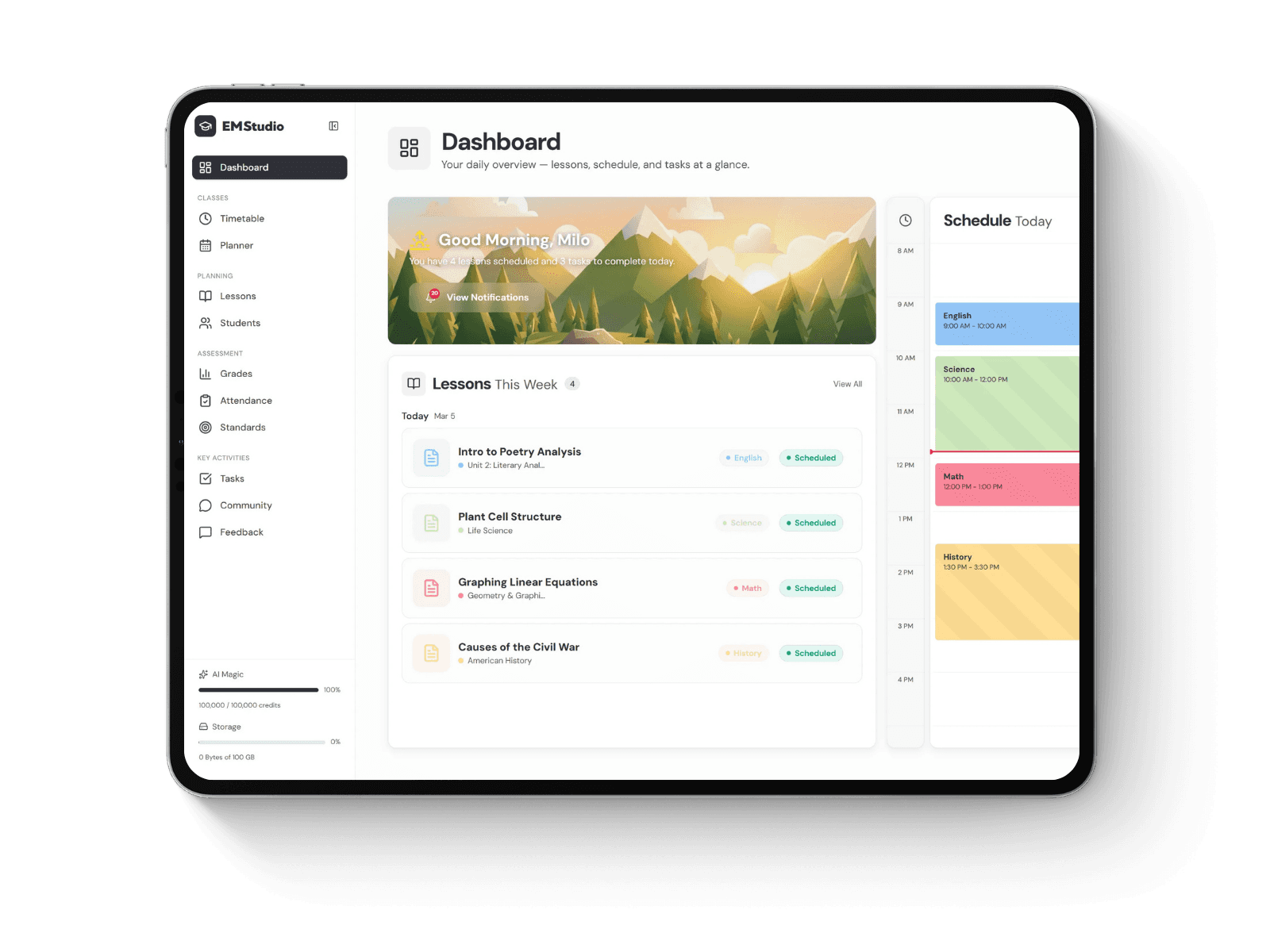
Still grading everything by hand?
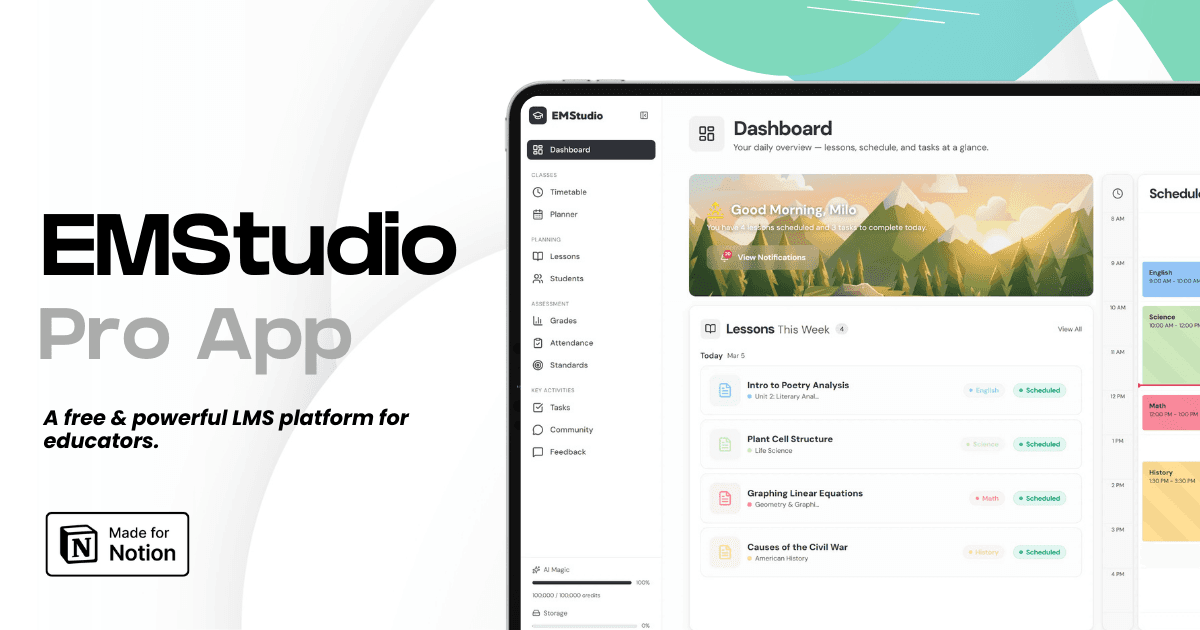
EMStudio is a free teaching management app — manage your classes, students, lessons, and more!
Learn More
Still grading everything by hand?
EMStudio is a free teaching management app — manage your classes, students, lessons, and more!
Learn More
Table of Contents
What Is Reading Aloud?
Reading aloud is an instructional practice where teachers model fluent, expressive reading while students engage actively as listeners. Unlike round-robin reading, it involves strategic stopping points, thinking aloud, and comprehension monitoring, allowing students to access complex texts 2-3 years above their independent reading level.
Jim Trelease's The Read-Aloud Handbook established this as a daily classroom ritual, not an occasional treat when you have extra time. You are performing the text while demonstrating expert reader behaviors. Students listen, visualize, and construct meaning without the decoding burden. This is active instruction, not passive entertainment.
Time benchmarks shift by developmental stage. Kindergarten through fifth grade need 15-20 minutes of daily read alouds to build stamina. Middle schoolers handle 10-12 minutes before attention drifts. High schoolers stay engaged for 8-10 minutes. These windows align with attention span research and respect the pacing of secondary schedules.
Reading aloud takes two primary forms: interactive and performance-based. Each serves distinct instructional purposes and requires different preparation.
John Hattie's Visible Learning meta-analysis puts teacher modeling at an effect size of 0.55, nearly double the hinge point of 0.40. This is not enrichment or filler. It is high-impact instruction that builds listening comprehension and vocabulary acquisition while modeling the importance of reading as a lifelong intellectual practice. The data backs what master teachers have always known about the transfer of skilled reading behaviors.
The Core Components of Effective Reading Aloud
Four elements separate effective read alouds from mere text recitation. You need deliberate structure and consistent implementation.
Fluent prosodic modeling at 150-160 words per minute with varied intonation demonstrates how syntax sounds and punctuation functions.
Metacognitive thinking aloud using stems like "I notice..." and "This makes me wonder..." makes invisible reading processes visible to learners.
Visual text accessibility through document cameras or big books for K-2 ensures eyes track with ears during shared reading.
Purposeful questioning using literal, inferential, and evaluative frames sparks classroom discourse that extends beyond recall.
The comprehension modeling loop works when you demonstrate monitoring, clarifying, and questioning in real time. Your fourth graders watch you encounter an unfamiliar word, pause, and reread for context clues. They hear you say, "That doesn't make sense," and backtrack through the paragraph. These expert behaviors become their internal dialogue through repeated observation and discussion. This is fluency instruction embedded in authentic context, not isolated drill. When students later read independently, they mimic these same self-correction strategies.
Interactive vs. Performance-Based Approaches
You choose your approach based on instructional purpose. Interactive read aloud follows the Fountas & Pinnell framework with strategic stopping points for comprehension checks and vocabulary exploration. interactive vs. performance-based approaches require different planning rhythms and classroom management.
Douglas Fisher and Nancy Frey's close reading model suggests turn-and-talk every 2-3 pages during complex informational texts. Students negotiate meaning together before you continue. Performance-based reading delivers theatrical, uninterrupted delivery for aesthetic appreciation and prosody absorption. You maintain distinct character voices without breaking the narrative spell to discuss.
Use interactive read-alouds for complex informational texts requiring negotiation of meaning and background knowledge activation. Use performance reading for poetry, building fluency models, or texts with heavy dialogue requiring distinct character voices. Both support oral language development, but they serve different cognitive purposes. Match the method to the text complexity and your specific learning target for that lesson. Your students need both models to become fully proficient readers.
Why Does Reading Aloud Matter for Student Development?
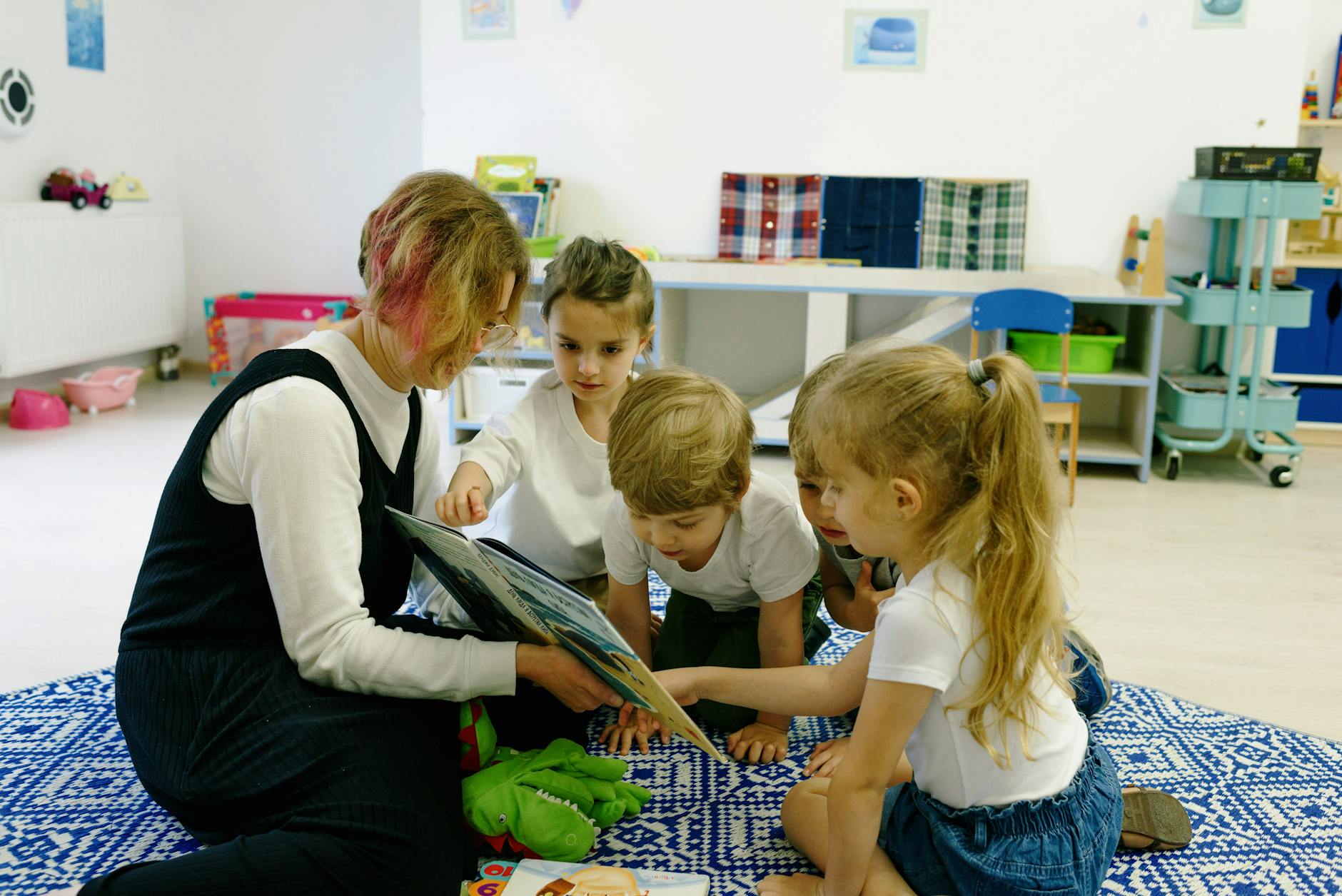
Reading aloud matters because it exposes students to complex vocabulary and syntax 2-3 years above their independent reading level, closing background knowledge gaps while building empathy through shared narrative experiences. Research indicates it significantly impacts vocabulary acquisition and creates classroom communities through collective emotional engagement with texts.
Students can't decode Charlotte's Web yet. But they can absolutely comprehend it. That's the magic.
Cognitive and Language Acquisition Benefits
Isabel Beck and Margaret McKeown identified the vocabulary cascade effect through their research on Tier 2 word acquisition. When you read aloud, students encounter sophisticated words like "devoured" or "reluctant" in context. They absorb these words two to three grade levels above their current decoding ability.
This isn't accidental. When students listen rather than decode, they free up working memory. John Hattie's meta-analysis puts teacher modeling at an effect size of 0.55. That translates to nearly a year and a half of additional growth. The cognitive load shifts from word attack to meaning-making.
Everyday conversation uses simple syntax. Independent reading limits students to their current fluency level. But reading aloud exposes them to complex subordinate clauses, varied punctuation, and literary sentence structures. Students internalize grammar through their ears before they master it through their eyes.
The listening comprehension advantage is measurable. Students comprehend texts read aloud that sit two to three years above their independent reading level. This builds the background knowledge necessary for future academic success. Without this exposure, the Matthew Effect takes hold. Rich get richer. Poor get poorer.
Vocabulary acquisition happens implicitly during these sessions. Students don't memorize lists. They encounter words like "scarce" or "ferocious" wrapped in meaningful narratives. They hear inflection. They catch irony. This depth of processing beats worksheet definitions every time.
Syntactic awareness develops through repeated exposure to formal register. Students hear how authors structure arguments, describe settings, and reveal character motivation. They absorb transitions like "meanwhile" and "consequently." These linguistic patterns eventually appear in their writing. The transfer happens gradually but permanently.
This exposure closes the preparation gap. Students enter middle school science with prior knowledge of laboratory vocabulary. They recognize historical terms in social studies. The oral language development from primary read alouds creates ripples through their entire academic career.
Your fluency instruction starts here. When students hear you pause at commas, emphasize dialogue tags, and vary pace for suspense, they internalize prosody. They learn that reading has rhythm and meaning beyond mere word calling. This modeling costs nothing but fifteen minutes daily.
Social-Emotional and Classroom Community Impact
Fiction builds empathy through shared emotional experience. When you read aloud, you create collective moments. Twenty-five hearts race together during the climax. Twenty-five breaths release at the resolution. This synchrony literally wires brains for compassion.
Collective laughter at humorous moments releases tension and builds rapport.
Shared suspense during cliffhangers creates synchronized attention that reduces behavioral disruptions.
Inside references from stories become classroom shorthand for complex emotions.
The importance of reading extends beyond academics. Research on narrative transportation shows that identifying with fictional characters increases real-world prosocial behavior. Students who journey with flawed protagonists develop flexibility in their social thinking. They practice perspective-taking in a low-stakes environment.
I saw this with my 4th graders during Because of Winn-Dixie. When Opal befriended the isolated "witch" Miss Franny Block, my students started including a withdrawn classmate at recess. They referenced the book. "Remember how lonely Opal was?" The text became our moral compass. This is building a strong classroom community through story.
The interactive read aloud format amplifies this. Stop-and-think moments become classroom discourse about values. Should Stanley have run away? Was Fern right to save Wilbur? Students witness their peers' reasoning. They disagree respectfully. The story provides the distance needed to discuss hard topics safely.
Laughter heals. When the class collectively giggles at Mercy Watson driving her convertible, cortisol levels drop. Students feel safe enough to risk participation later. The read aloud operates as daily community maintenance.
Suspense creates unity. During The One and Only Ivan, every student leaned forward together. They begged for "just one more chapter." That collective longing builds relational bonds stronger than any icebreaker. They experienced desire together.
These shared emotional arcs reduce behavioral incidents. Students who feel connected to classmates and teacher disrupt less. They have skin in the game. The fifteen minutes you invest in reading aloud returns hours of instructional time through improved classroom climate.
The characters become honorary classmates. Students reference Julian's choices in Wonder during actual conflicts. "What would August want us to do?" The text provides neutral ground for discussing inclusion, fairness, and courage without pointing fingers at specific students.

How Does Reading Aloud Work?
Reading aloud works through expert modeling: teachers demonstrate fluent prosody, metacognitive strategies, and comprehension monitoring while students actively construct meaning through listening. Interactive protocols like turn-and-talk every 3-4 pages and strategic questioning ensure students remain cognitively engaged rather than passive.
You are the expert reader in the room. Your students watch how you navigate tricky passages, pause at punctuation, and wrestle with meaning. Through careful demonstration, you make invisible thinking visible. This modeling forms the core of how reading aloud builds comprehension skills. Students cannot see inside your mind unless you open it deliberately.
The Teacher's Role in Modeling Fluency and Expression
Think-alouds make your brain transparent. When you hit a confusing sentence, say exactly what you think: "This is confusing. Let me reread that last part." When you encounter an unknown word like photosynthesis in a 5th-grade science text, model the fix-up strategy explicitly. You pause and think aloud: "Photo means light—I remember that from photograph. Synthesis sounds like synthetic, meaning made or put together. So plants use light to make food." This demonstrates how expert readers use morphology and context clues simultaneously.
Mark your text for prosody before you read. Slash marks show where to pause. Up arrows indicate rising intonation for questions. This preparation ensures your fluency instruction sounds natural. You avoid the flat, monotone voice that kills engagement.
For emergent readers in K-2, track print with your finger. This simple gesture reinforces left-to-right progression and return sweep. It builds foundational print concepts without stopping to explain them. Young eyes learn where to look by following your lead.
Student Engagement Mechanisms and Active Listening
Keep students alert with specific listen for cues. "Listen for the moment when the character changes their mind." This targets attention without overwhelming working memory. Every five minutes, use thumb-to-chest self-assessment. Thumb up means tracking, sideways means drifting, down means lost. You see comprehension gaps instantly without breaking the story's spell or interrupting the narrative flow.
Interactive read aloud needs conversation. After three or four pages, students turn and talk using Accountable Talk Moves. One partner revoices: "I hear you saying..." Another expands: "I want to add..." This builds oral language development and classroom discourse skills simultaneously. These brief discussions cement understanding before you continue reading. The talking makes the thinking stick.
Here's the critical part: students should not follow along in the text during your initial read. Holding the book creates decoding competition that sabotages listening comprehension. They need to listen first to construct meaning auditorily. They use auditory learning mechanisms to build mental models. Later readings can involve text tracking, but the first pass belongs to the ear.
Building Background Knowledge and Vocabulary
Frontload knowledge like you prime a pump. With K-2 students, do a picture walk through the illustrations before reading. Ask what they notice, what they wonder, what might happen. This activates schema so new information has somewhere to land. For grades 3-8, use a 3-column chart: What I Know, What I Wonder, What I Learned.
Students fill the first two columns before you open the book. I learned this the hard way with my 7th graders. I jumped straight into a complex historical fiction text about the Dust Bowl without context. Blank stares. Now I spend three minutes on background. The difference is immediate.
High school students need brief historical context for primary sources. Three minutes of background prevents ten minutes of confusion later. Share the who, when, and why before passing out the document. Context acts as a scaffold for complex texts.
For vocabulary acquisition, select only three Tier 2 words per session. Teach them via the Frayer model before reading: definition, characteristics, examples, non-examples. When students encounter those words during the read aloud books, recognition sparks deeper comprehension. Revisit the words in context as you read, connecting back to your research-backed vocabulary strategies.

Reading Aloud Strategies for Different Grade Levels
Reading aloud isn't one-size-fits-all. What works for first graders falls flat with juniors. The text complexity changes. So does the pacing. And definitely the student response expectations.
Dimension | Elementary | Middle | High School |
|---|---|---|---|
Duration | 15–20 minutes | 10–12 minutes | 8–10 minutes |
Text Type | Picture books, short chapters | First chapters, newspaper articles | Shakespeare, primary sources |
Stopping Frequency | Every 2–3 pages | 2–3 strategic stops | 1–2 analytical pauses |
Engagement Strategy | Turn-and-talk, Accountable Talk | Sketch-to-stretch, debate prompts | Rhetorical frames, Socratic prep |
Assessment Method | Oral responses, observation | Stop-and-jot, journals | Annotations, seminar participation |
Elementary School Approaches
I stick to the Fountas & Pinnell Interactive Read-Aloud protocol. It's structured but flexible. I display the text using big books or a document camera. Every child needs to see the words and pictures. This visibility builds oral language development and listening comprehension simultaneously.
My stopping points are predictable. Every two to three pages, I pause for Accountable Talk Moves. I prompt with "What do you notice?" or "Say more about that." Partners turn and face each other. I listen in, then cold call for whole-group sharing. These aren't random questions. They target specific comprehension strategies.
Book selection matters. For grades 1–3, I use The Name Jar to discuss identity. I stop when the main character considers changing her name. For grades 3–5, Charlotte's Web works beautifully. I always pause at "Some Pig" to discuss inference. How do the characters know something the reader doesn't yet? Fifth graders handle Frindle well. I stop when Nick invents the word to discuss vocabulary acquisition and word play. These elementary reading programs build the foundation for complex thinking later.
Middle School Adaptations
Middle schoolers need variety and voice. I mix in audiobook excerpts for professional narration, especially with reluctant readers. Hearing trained actors model fluency instruction beats my teacher voice sometimes. I also keep Hi-Lo texts—high interest, low vocabulary—for struggling readers who want age-appropriate topics without decoding frustration. Choice matters at this age.
Visual note-taking changes everything here. Instead of just discussing, students sketch-to-stretch. They draw the mood, the conflict, or a prediction. It keeps hands busy while ears listen. The drawings become assessment artifacts.
Last month, I read the first chapter of The Hunger Games to my 7th graders. When we hit the reaping scene, I called for a stop-and-jot. "Write down three words describing the mood. Circle one. Explain how Collins creates that feeling." We shared after two minutes. The classroom discourse that followed connected mood to foreshadowing without me lecturing. These middle and high school adaptations respect their growing independence while building analysis skills.
High School Considerations
Secondary students won't sit for twenty minutes of picture books. They need read aloud books that prepare them for AP exam complexity and SAT vocabulary exposure. I choose dense texts they might avoid independently—Faulkner, Morrison, primary source documents. The interactive read aloud becomes a tool for parsing difficult syntax that would derail silent readers.
I use two main techniques. First, close reading of brutal passages. I read slowly while students follow along, annotating syntax patterns and diction choices. Second, poetry slam style performances. Students perform Shakespeare scenes after I model the rhythm and emotion.
I read Letter from Birmingham Jail to my 11th graders last semester. We stopped only twice—once to analyze King's use of "outsider" versus "insider," and once to mark rhetorical devices. Students annotated while I read. The next day, their Socratic seminar referenced specific phrases they'd heard aloud but might have skipped while reading silently.
The assessment shifts to preparation for Socratic seminar. Students arrive with annotated passages and discussion questions generated during the read aloud. They lead the conversation. I fade into the background, taking notes on their analysis. That's the power of oral parsing for complex texts. It builds the stamina they'll need for college-level work.
What Are the Most Common Reading Aloud Mistakes to Avoid?
The most common mistakes include round-robin reading (which causes anxiety and poor modeling), monotone delivery exceeding 180 words per minute, and selecting texts at students' decoding level, not 1-2 years above. Teachers also fail by not building in interaction, treating read alouds as passive babysitting, not active instruction.
Most teachers think they’re nailing interactive read aloud until they watch a playback. The mistakes hide in plain sight.
Fix these four errors immediately:
Monotone delivery: Flat voice without prosodic variation.
Excessive speed: Racing at 180+ wpm instead of instructional 150-160.
Round-robin substitution: Using student oral reading instead of teacher modeling.
Inappropriate texts: Books at decoding level rather than 1-2 years above.
Know when not to use reading aloud. Skip it for assessments, during independent reading time, or with texts requiring student annotation. Use close reading. Students need eyes on text for marginalia, not ears on your voice.
Voice and Pacing Problems That Lose Student Attention
Reading at 180 words per minute feels natural, but it destroys comprehension. Conversation speed overwhelms working memory. Students need time to process images and ideas.
Mark your text with slash marks every three to five words to force breath pauses. Record yourself on your phone. Listen for the dreaded "teacher voice"—that flat monotone we slip into by October. Prosody matters more than perfect pronunciation.
Protect your voice. Without projection training, standing ten feet from the back row strains your vocal cords. Use a microphone or reposition students. Last year, I lost my voice for three days after pushing through a novel study without amplification. Never again.
Lack of Student Interaction and Passive Listening
Round-robin reading kills the importance of reading for pleasure and meaning. When students take turns paragraph by paragraph, struggling decoders panic while fluent readers disengage. The class hears broken fluency and miscues instead of expert modeling.
This malpractice destroys classroom discourse. Students fixate on their upcoming turn, calculating paragraphs until their torture begins. They miss the plot entirely. Anxiety spikes for the struggling reader. Boredom hits the advanced kid. Comprehension plummets for everyone while we pretend this builds fluency instruction.
Never let ten minutes pass without interaction. Replace popcorn reading with "turn and talk" every three to four minutes using specific prompts. Try "stop and sketch" visualization to anchor listening comprehension. Students draw the scene, then share with a partner. Active minds stay with the text.
Poor Text Selection for the Specific Audience
Selecting books at grade-level decoding difficulty wastes the vocabulary acquisition window. Students can comprehend text two years above their independent reading level when you read it aloud. If the book is too easy, you squander precious minutes that should build background knowledge.
Avoid heavy dialect or archaic language without scaffolding. Reading Their Eyes Were Watching God cold confuses 7th graders. They miss the beauty while deciphering phonetic spellings. Preview culturally specific references first. Ensure protagonists reflect your diverse students to maintain engagement across demographics.
Be selective when selecting high-quality texts for your library. Poor choices cost fifteen to twenty minutes of instructional time daily. That accumulates to fifty-plus hours of lost oral language development annually. Choose texts that spark discussion, not confusion.

How to Launch Your Reading Aloud Routine This Week?
Launch your routine by selecting a high-engagement text 1-2 years above grade level, establishing a consistent daily time (ideally after lunch), and creating anchor charts for 'listening positions.' Start with a short 10-minute session using a cliffhanger chapter ending, implement turn-and-talk within the first 3 minutes, and use exit tickets to build accountability.
Stop overthinking the perfect book. Pick one that hooks you in the first paragraph, gather your students on the carpet or at desks, and read for ten minutes. That is the entire plan for Monday.
Run the sequence across five days. Monday is five minutes with heavy modeling of listening positions. Tuesday add the turn-and-talk. Wednesday introduce the exit ticket. Thursday practice the restart procedure if resistance appears. Friday celebrate finishing the short text. Do not add new strategies after Wednesday; cement the basics.
Selecting Your First High-Impact Text
Your first read aloud books choice determines whether this routine lives or dies. Look for five specific traits: a hook in the opening paragraph, enough content to finish in three to five sessions, fifteen to twenty Tier 2 vocabulary words per chapter, characters who reflect diverse experiences, and endings that beg you to continue. Organizing your reading list by these criteria saves you from mid-novel panic.
Match the text to your band. Tales of a Fourth Grade Nothing hooks grades three and four immediately. Jabari Jumps suits primary with its bold illustrations. Middle school responds to Freak the Mighty and its themes of friendship. High school teachers succeed with The Outsiders or Animal Farm for their moral complexity. Each builds oral language development and vocabulary acquisition while feeling age-appropriate to the students.
Do not start with a seven-hundred-page fantasy epic. Use picture books even for seventh graders during week one. Short texts allow you to finish and celebrate completion early. You are establishing the ritual, not proving rigor. Once the interactive read aloud routine sticks, layer in complex texts that demand deeper listening comprehension.
Setting Expectations and Building Rituals
Build the ritual before you worry about fluency instruction. Create an anchor chart titled "Active Listener" with your students. List eyes on the speaker, still hands, thinking minds, and quiet mouths. Post it where everyone sees it. Schedule the reading aloud block for the same time daily, ideally right after lunch when students need a calm transition.
Set up the physical space with clear sightlines. No one should crane their neck around another student’s head. Assign turn-and-talk partners beforehand. I number my fifth graders off in pairs during morning work so they know exactly who to nudge when I say "discuss." This prevents the selection chaos that derails momentum. Establish a silent hand signal for cleanup to avoid shouting over the final paragraph.
Implement the restart procedure. If a side conversation starts, stop reading. Calmly restart the paragraph. Do not negotiate. This signals that the work has academic weight, not entertainment value. Students learn quickly that interruptions cost them story time and respect for the text. This protocol builds the classroom discourse habits you need.
Quick Wins for Immediate Classroom Impact
Use a tight script on Monday. Tell your class, "We are going to become a community of readers. I will read, you will listen actively, and we will think together." Read for exactly five minutes. Stop at a cliffhanger even if the chapter continues. Have students turn and talk to predict what happens next. This creates immediate listening comprehension investment.
Deploy exit tickets from day one. As students leave, they hand you a sticky note with "One thing I wonder" or "One word I heard." This takes forty seconds and gives you data on who is tracking. It also builds the expectation that we think about text, not just hear it.
Phase your goals. Week one is purely routine: bodies in place, voices off, partners set. Week two add think-alouds where you model your own questions. Week three increase duration to your target length. Do not attempt think-alouds, partner discussions, and vocabulary mini-lessons on Monday. You will burn out and they will tune out.
Should You Try Reading Aloud?
Yes. If you teach K-12, reading aloud belongs in your daily routine. It builds oral language development faster than worksheets ever could. Start tomorrow.
I have watched struggling 7th graders lean forward during an interactive read aloud, suddenly tracking complex plots they couldn't handle alone. I have seen 2nd graders catch wordplay they missed in silent reading. Fluency instruction happens naturally when you pause at commas and stress dialogue. You don't need a certificate or a script. You need a book you love and fifteen minutes of protected time.
The research is settled. Kids who hear texts above their independent level build background knowledge and empathy faster than with isolated skills practice. Pick your first book. Block fifteen minutes. Protect this time like a fire drill. Watch what happens when you prioritize listening comprehension over testing comprehension. What story will you start with tomorrow?

What Is Reading Aloud?
Reading aloud is an instructional practice where teachers model fluent, expressive reading while students engage actively as listeners. Unlike round-robin reading, it involves strategic stopping points, thinking aloud, and comprehension monitoring, allowing students to access complex texts 2-3 years above their independent reading level.
Jim Trelease's The Read-Aloud Handbook established this as a daily classroom ritual, not an occasional treat when you have extra time. You are performing the text while demonstrating expert reader behaviors. Students listen, visualize, and construct meaning without the decoding burden. This is active instruction, not passive entertainment.
Time benchmarks shift by developmental stage. Kindergarten through fifth grade need 15-20 minutes of daily read alouds to build stamina. Middle schoolers handle 10-12 minutes before attention drifts. High schoolers stay engaged for 8-10 minutes. These windows align with attention span research and respect the pacing of secondary schedules.
Reading aloud takes two primary forms: interactive and performance-based. Each serves distinct instructional purposes and requires different preparation.
John Hattie's Visible Learning meta-analysis puts teacher modeling at an effect size of 0.55, nearly double the hinge point of 0.40. This is not enrichment or filler. It is high-impact instruction that builds listening comprehension and vocabulary acquisition while modeling the importance of reading as a lifelong intellectual practice. The data backs what master teachers have always known about the transfer of skilled reading behaviors.
The Core Components of Effective Reading Aloud
Four elements separate effective read alouds from mere text recitation. You need deliberate structure and consistent implementation.
Fluent prosodic modeling at 150-160 words per minute with varied intonation demonstrates how syntax sounds and punctuation functions.
Metacognitive thinking aloud using stems like "I notice..." and "This makes me wonder..." makes invisible reading processes visible to learners.
Visual text accessibility through document cameras or big books for K-2 ensures eyes track with ears during shared reading.
Purposeful questioning using literal, inferential, and evaluative frames sparks classroom discourse that extends beyond recall.
The comprehension modeling loop works when you demonstrate monitoring, clarifying, and questioning in real time. Your fourth graders watch you encounter an unfamiliar word, pause, and reread for context clues. They hear you say, "That doesn't make sense," and backtrack through the paragraph. These expert behaviors become their internal dialogue through repeated observation and discussion. This is fluency instruction embedded in authentic context, not isolated drill. When students later read independently, they mimic these same self-correction strategies.
Interactive vs. Performance-Based Approaches
You choose your approach based on instructional purpose. Interactive read aloud follows the Fountas & Pinnell framework with strategic stopping points for comprehension checks and vocabulary exploration. interactive vs. performance-based approaches require different planning rhythms and classroom management.
Douglas Fisher and Nancy Frey's close reading model suggests turn-and-talk every 2-3 pages during complex informational texts. Students negotiate meaning together before you continue. Performance-based reading delivers theatrical, uninterrupted delivery for aesthetic appreciation and prosody absorption. You maintain distinct character voices without breaking the narrative spell to discuss.
Use interactive read-alouds for complex informational texts requiring negotiation of meaning and background knowledge activation. Use performance reading for poetry, building fluency models, or texts with heavy dialogue requiring distinct character voices. Both support oral language development, but they serve different cognitive purposes. Match the method to the text complexity and your specific learning target for that lesson. Your students need both models to become fully proficient readers.
Why Does Reading Aloud Matter for Student Development?
Reading aloud matters because it exposes students to complex vocabulary and syntax 2-3 years above their independent reading level, closing background knowledge gaps while building empathy through shared narrative experiences. Research indicates it significantly impacts vocabulary acquisition and creates classroom communities through collective emotional engagement with texts.
Students can't decode Charlotte's Web yet. But they can absolutely comprehend it. That's the magic.
Cognitive and Language Acquisition Benefits
Isabel Beck and Margaret McKeown identified the vocabulary cascade effect through their research on Tier 2 word acquisition. When you read aloud, students encounter sophisticated words like "devoured" or "reluctant" in context. They absorb these words two to three grade levels above their current decoding ability.
This isn't accidental. When students listen rather than decode, they free up working memory. John Hattie's meta-analysis puts teacher modeling at an effect size of 0.55. That translates to nearly a year and a half of additional growth. The cognitive load shifts from word attack to meaning-making.
Everyday conversation uses simple syntax. Independent reading limits students to their current fluency level. But reading aloud exposes them to complex subordinate clauses, varied punctuation, and literary sentence structures. Students internalize grammar through their ears before they master it through their eyes.
The listening comprehension advantage is measurable. Students comprehend texts read aloud that sit two to three years above their independent reading level. This builds the background knowledge necessary for future academic success. Without this exposure, the Matthew Effect takes hold. Rich get richer. Poor get poorer.
Vocabulary acquisition happens implicitly during these sessions. Students don't memorize lists. They encounter words like "scarce" or "ferocious" wrapped in meaningful narratives. They hear inflection. They catch irony. This depth of processing beats worksheet definitions every time.
Syntactic awareness develops through repeated exposure to formal register. Students hear how authors structure arguments, describe settings, and reveal character motivation. They absorb transitions like "meanwhile" and "consequently." These linguistic patterns eventually appear in their writing. The transfer happens gradually but permanently.
This exposure closes the preparation gap. Students enter middle school science with prior knowledge of laboratory vocabulary. They recognize historical terms in social studies. The oral language development from primary read alouds creates ripples through their entire academic career.
Your fluency instruction starts here. When students hear you pause at commas, emphasize dialogue tags, and vary pace for suspense, they internalize prosody. They learn that reading has rhythm and meaning beyond mere word calling. This modeling costs nothing but fifteen minutes daily.
Social-Emotional and Classroom Community Impact
Fiction builds empathy through shared emotional experience. When you read aloud, you create collective moments. Twenty-five hearts race together during the climax. Twenty-five breaths release at the resolution. This synchrony literally wires brains for compassion.
Collective laughter at humorous moments releases tension and builds rapport.
Shared suspense during cliffhangers creates synchronized attention that reduces behavioral disruptions.
Inside references from stories become classroom shorthand for complex emotions.
The importance of reading extends beyond academics. Research on narrative transportation shows that identifying with fictional characters increases real-world prosocial behavior. Students who journey with flawed protagonists develop flexibility in their social thinking. They practice perspective-taking in a low-stakes environment.
I saw this with my 4th graders during Because of Winn-Dixie. When Opal befriended the isolated "witch" Miss Franny Block, my students started including a withdrawn classmate at recess. They referenced the book. "Remember how lonely Opal was?" The text became our moral compass. This is building a strong classroom community through story.
The interactive read aloud format amplifies this. Stop-and-think moments become classroom discourse about values. Should Stanley have run away? Was Fern right to save Wilbur? Students witness their peers' reasoning. They disagree respectfully. The story provides the distance needed to discuss hard topics safely.
Laughter heals. When the class collectively giggles at Mercy Watson driving her convertible, cortisol levels drop. Students feel safe enough to risk participation later. The read aloud operates as daily community maintenance.
Suspense creates unity. During The One and Only Ivan, every student leaned forward together. They begged for "just one more chapter." That collective longing builds relational bonds stronger than any icebreaker. They experienced desire together.
These shared emotional arcs reduce behavioral incidents. Students who feel connected to classmates and teacher disrupt less. They have skin in the game. The fifteen minutes you invest in reading aloud returns hours of instructional time through improved classroom climate.
The characters become honorary classmates. Students reference Julian's choices in Wonder during actual conflicts. "What would August want us to do?" The text provides neutral ground for discussing inclusion, fairness, and courage without pointing fingers at specific students.
How Does Reading Aloud Work?
Reading aloud works through expert modeling: teachers demonstrate fluent prosody, metacognitive strategies, and comprehension monitoring while students actively construct meaning through listening. Interactive protocols like turn-and-talk every 3-4 pages and strategic questioning ensure students remain cognitively engaged rather than passive.
You are the expert reader in the room. Your students watch how you navigate tricky passages, pause at punctuation, and wrestle with meaning. Through careful demonstration, you make invisible thinking visible. This modeling forms the core of how reading aloud builds comprehension skills. Students cannot see inside your mind unless you open it deliberately.
The Teacher's Role in Modeling Fluency and Expression
Think-alouds make your brain transparent. When you hit a confusing sentence, say exactly what you think: "This is confusing. Let me reread that last part." When you encounter an unknown word like photosynthesis in a 5th-grade science text, model the fix-up strategy explicitly. You pause and think aloud: "Photo means light—I remember that from photograph. Synthesis sounds like synthetic, meaning made or put together. So plants use light to make food." This demonstrates how expert readers use morphology and context clues simultaneously.
Mark your text for prosody before you read. Slash marks show where to pause. Up arrows indicate rising intonation for questions. This preparation ensures your fluency instruction sounds natural. You avoid the flat, monotone voice that kills engagement.
For emergent readers in K-2, track print with your finger. This simple gesture reinforces left-to-right progression and return sweep. It builds foundational print concepts without stopping to explain them. Young eyes learn where to look by following your lead.
Student Engagement Mechanisms and Active Listening
Keep students alert with specific listen for cues. "Listen for the moment when the character changes their mind." This targets attention without overwhelming working memory. Every five minutes, use thumb-to-chest self-assessment. Thumb up means tracking, sideways means drifting, down means lost. You see comprehension gaps instantly without breaking the story's spell or interrupting the narrative flow.
Interactive read aloud needs conversation. After three or four pages, students turn and talk using Accountable Talk Moves. One partner revoices: "I hear you saying..." Another expands: "I want to add..." This builds oral language development and classroom discourse skills simultaneously. These brief discussions cement understanding before you continue reading. The talking makes the thinking stick.
Here's the critical part: students should not follow along in the text during your initial read. Holding the book creates decoding competition that sabotages listening comprehension. They need to listen first to construct meaning auditorily. They use auditory learning mechanisms to build mental models. Later readings can involve text tracking, but the first pass belongs to the ear.
Building Background Knowledge and Vocabulary
Frontload knowledge like you prime a pump. With K-2 students, do a picture walk through the illustrations before reading. Ask what they notice, what they wonder, what might happen. This activates schema so new information has somewhere to land. For grades 3-8, use a 3-column chart: What I Know, What I Wonder, What I Learned.
Students fill the first two columns before you open the book. I learned this the hard way with my 7th graders. I jumped straight into a complex historical fiction text about the Dust Bowl without context. Blank stares. Now I spend three minutes on background. The difference is immediate.
High school students need brief historical context for primary sources. Three minutes of background prevents ten minutes of confusion later. Share the who, when, and why before passing out the document. Context acts as a scaffold for complex texts.
For vocabulary acquisition, select only three Tier 2 words per session. Teach them via the Frayer model before reading: definition, characteristics, examples, non-examples. When students encounter those words during the read aloud books, recognition sparks deeper comprehension. Revisit the words in context as you read, connecting back to your research-backed vocabulary strategies.
Reading Aloud Strategies for Different Grade Levels
Reading aloud isn't one-size-fits-all. What works for first graders falls flat with juniors. The text complexity changes. So does the pacing. And definitely the student response expectations.
Dimension | Elementary | Middle | High School |
|---|---|---|---|
Duration | 15–20 minutes | 10–12 minutes | 8–10 minutes |
Text Type | Picture books, short chapters | First chapters, newspaper articles | Shakespeare, primary sources |
Stopping Frequency | Every 2–3 pages | 2–3 strategic stops | 1–2 analytical pauses |
Engagement Strategy | Turn-and-talk, Accountable Talk | Sketch-to-stretch, debate prompts | Rhetorical frames, Socratic prep |
Assessment Method | Oral responses, observation | Stop-and-jot, journals | Annotations, seminar participation |
Elementary School Approaches
I stick to the Fountas & Pinnell Interactive Read-Aloud protocol. It's structured but flexible. I display the text using big books or a document camera. Every child needs to see the words and pictures. This visibility builds oral language development and listening comprehension simultaneously.
My stopping points are predictable. Every two to three pages, I pause for Accountable Talk Moves. I prompt with "What do you notice?" or "Say more about that." Partners turn and face each other. I listen in, then cold call for whole-group sharing. These aren't random questions. They target specific comprehension strategies.
Book selection matters. For grades 1–3, I use The Name Jar to discuss identity. I stop when the main character considers changing her name. For grades 3–5, Charlotte's Web works beautifully. I always pause at "Some Pig" to discuss inference. How do the characters know something the reader doesn't yet? Fifth graders handle Frindle well. I stop when Nick invents the word to discuss vocabulary acquisition and word play. These elementary reading programs build the foundation for complex thinking later.
Middle School Adaptations
Middle schoolers need variety and voice. I mix in audiobook excerpts for professional narration, especially with reluctant readers. Hearing trained actors model fluency instruction beats my teacher voice sometimes. I also keep Hi-Lo texts—high interest, low vocabulary—for struggling readers who want age-appropriate topics without decoding frustration. Choice matters at this age.
Visual note-taking changes everything here. Instead of just discussing, students sketch-to-stretch. They draw the mood, the conflict, or a prediction. It keeps hands busy while ears listen. The drawings become assessment artifacts.
Last month, I read the first chapter of The Hunger Games to my 7th graders. When we hit the reaping scene, I called for a stop-and-jot. "Write down three words describing the mood. Circle one. Explain how Collins creates that feeling." We shared after two minutes. The classroom discourse that followed connected mood to foreshadowing without me lecturing. These middle and high school adaptations respect their growing independence while building analysis skills.
High School Considerations
Secondary students won't sit for twenty minutes of picture books. They need read aloud books that prepare them for AP exam complexity and SAT vocabulary exposure. I choose dense texts they might avoid independently—Faulkner, Morrison, primary source documents. The interactive read aloud becomes a tool for parsing difficult syntax that would derail silent readers.
I use two main techniques. First, close reading of brutal passages. I read slowly while students follow along, annotating syntax patterns and diction choices. Second, poetry slam style performances. Students perform Shakespeare scenes after I model the rhythm and emotion.
I read Letter from Birmingham Jail to my 11th graders last semester. We stopped only twice—once to analyze King's use of "outsider" versus "insider," and once to mark rhetorical devices. Students annotated while I read. The next day, their Socratic seminar referenced specific phrases they'd heard aloud but might have skipped while reading silently.
The assessment shifts to preparation for Socratic seminar. Students arrive with annotated passages and discussion questions generated during the read aloud. They lead the conversation. I fade into the background, taking notes on their analysis. That's the power of oral parsing for complex texts. It builds the stamina they'll need for college-level work.
What Are the Most Common Reading Aloud Mistakes to Avoid?
The most common mistakes include round-robin reading (which causes anxiety and poor modeling), monotone delivery exceeding 180 words per minute, and selecting texts at students' decoding level, not 1-2 years above. Teachers also fail by not building in interaction, treating read alouds as passive babysitting, not active instruction.
Most teachers think they’re nailing interactive read aloud until they watch a playback. The mistakes hide in plain sight.
Fix these four errors immediately:
Monotone delivery: Flat voice without prosodic variation.
Excessive speed: Racing at 180+ wpm instead of instructional 150-160.
Round-robin substitution: Using student oral reading instead of teacher modeling.
Inappropriate texts: Books at decoding level rather than 1-2 years above.
Know when not to use reading aloud. Skip it for assessments, during independent reading time, or with texts requiring student annotation. Use close reading. Students need eyes on text for marginalia, not ears on your voice.
Voice and Pacing Problems That Lose Student Attention
Reading at 180 words per minute feels natural, but it destroys comprehension. Conversation speed overwhelms working memory. Students need time to process images and ideas.
Mark your text with slash marks every three to five words to force breath pauses. Record yourself on your phone. Listen for the dreaded "teacher voice"—that flat monotone we slip into by October. Prosody matters more than perfect pronunciation.
Protect your voice. Without projection training, standing ten feet from the back row strains your vocal cords. Use a microphone or reposition students. Last year, I lost my voice for three days after pushing through a novel study without amplification. Never again.
Lack of Student Interaction and Passive Listening
Round-robin reading kills the importance of reading for pleasure and meaning. When students take turns paragraph by paragraph, struggling decoders panic while fluent readers disengage. The class hears broken fluency and miscues instead of expert modeling.
This malpractice destroys classroom discourse. Students fixate on their upcoming turn, calculating paragraphs until their torture begins. They miss the plot entirely. Anxiety spikes for the struggling reader. Boredom hits the advanced kid. Comprehension plummets for everyone while we pretend this builds fluency instruction.
Never let ten minutes pass without interaction. Replace popcorn reading with "turn and talk" every three to four minutes using specific prompts. Try "stop and sketch" visualization to anchor listening comprehension. Students draw the scene, then share with a partner. Active minds stay with the text.
Poor Text Selection for the Specific Audience
Selecting books at grade-level decoding difficulty wastes the vocabulary acquisition window. Students can comprehend text two years above their independent reading level when you read it aloud. If the book is too easy, you squander precious minutes that should build background knowledge.
Avoid heavy dialect or archaic language without scaffolding. Reading Their Eyes Were Watching God cold confuses 7th graders. They miss the beauty while deciphering phonetic spellings. Preview culturally specific references first. Ensure protagonists reflect your diverse students to maintain engagement across demographics.
Be selective when selecting high-quality texts for your library. Poor choices cost fifteen to twenty minutes of instructional time daily. That accumulates to fifty-plus hours of lost oral language development annually. Choose texts that spark discussion, not confusion.
How to Launch Your Reading Aloud Routine This Week?
Launch your routine by selecting a high-engagement text 1-2 years above grade level, establishing a consistent daily time (ideally after lunch), and creating anchor charts for 'listening positions.' Start with a short 10-minute session using a cliffhanger chapter ending, implement turn-and-talk within the first 3 minutes, and use exit tickets to build accountability.
Stop overthinking the perfect book. Pick one that hooks you in the first paragraph, gather your students on the carpet or at desks, and read for ten minutes. That is the entire plan for Monday.
Run the sequence across five days. Monday is five minutes with heavy modeling of listening positions. Tuesday add the turn-and-talk. Wednesday introduce the exit ticket. Thursday practice the restart procedure if resistance appears. Friday celebrate finishing the short text. Do not add new strategies after Wednesday; cement the basics.
Selecting Your First High-Impact Text
Your first read aloud books choice determines whether this routine lives or dies. Look for five specific traits: a hook in the opening paragraph, enough content to finish in three to five sessions, fifteen to twenty Tier 2 vocabulary words per chapter, characters who reflect diverse experiences, and endings that beg you to continue. Organizing your reading list by these criteria saves you from mid-novel panic.
Match the text to your band. Tales of a Fourth Grade Nothing hooks grades three and four immediately. Jabari Jumps suits primary with its bold illustrations. Middle school responds to Freak the Mighty and its themes of friendship. High school teachers succeed with The Outsiders or Animal Farm for their moral complexity. Each builds oral language development and vocabulary acquisition while feeling age-appropriate to the students.
Do not start with a seven-hundred-page fantasy epic. Use picture books even for seventh graders during week one. Short texts allow you to finish and celebrate completion early. You are establishing the ritual, not proving rigor. Once the interactive read aloud routine sticks, layer in complex texts that demand deeper listening comprehension.
Setting Expectations and Building Rituals
Build the ritual before you worry about fluency instruction. Create an anchor chart titled "Active Listener" with your students. List eyes on the speaker, still hands, thinking minds, and quiet mouths. Post it where everyone sees it. Schedule the reading aloud block for the same time daily, ideally right after lunch when students need a calm transition.
Set up the physical space with clear sightlines. No one should crane their neck around another student’s head. Assign turn-and-talk partners beforehand. I number my fifth graders off in pairs during morning work so they know exactly who to nudge when I say "discuss." This prevents the selection chaos that derails momentum. Establish a silent hand signal for cleanup to avoid shouting over the final paragraph.
Implement the restart procedure. If a side conversation starts, stop reading. Calmly restart the paragraph. Do not negotiate. This signals that the work has academic weight, not entertainment value. Students learn quickly that interruptions cost them story time and respect for the text. This protocol builds the classroom discourse habits you need.
Quick Wins for Immediate Classroom Impact
Use a tight script on Monday. Tell your class, "We are going to become a community of readers. I will read, you will listen actively, and we will think together." Read for exactly five minutes. Stop at a cliffhanger even if the chapter continues. Have students turn and talk to predict what happens next. This creates immediate listening comprehension investment.
Deploy exit tickets from day one. As students leave, they hand you a sticky note with "One thing I wonder" or "One word I heard." This takes forty seconds and gives you data on who is tracking. It also builds the expectation that we think about text, not just hear it.
Phase your goals. Week one is purely routine: bodies in place, voices off, partners set. Week two add think-alouds where you model your own questions. Week three increase duration to your target length. Do not attempt think-alouds, partner discussions, and vocabulary mini-lessons on Monday. You will burn out and they will tune out.
Should You Try Reading Aloud?
Yes. If you teach K-12, reading aloud belongs in your daily routine. It builds oral language development faster than worksheets ever could. Start tomorrow.
I have watched struggling 7th graders lean forward during an interactive read aloud, suddenly tracking complex plots they couldn't handle alone. I have seen 2nd graders catch wordplay they missed in silent reading. Fluency instruction happens naturally when you pause at commas and stress dialogue. You don't need a certificate or a script. You need a book you love and fifteen minutes of protected time.
The research is settled. Kids who hear texts above their independent level build background knowledge and empathy faster than with isolated skills practice. Pick your first book. Block fifteen minutes. Protect this time like a fire drill. Watch what happens when you prioritize listening comprehension over testing comprehension. What story will you start with tomorrow?
Still grading everything by hand?
EMStudio is a free teaching management app — manage your classes, students, lessons, and more!
Learn More
Still grading everything by hand?
EMStudio is a free teaching management app — manage your classes, students, lessons, and more!
Learn More




Notion4Teachers
Notion templates to simplify administrative tasks and enhance your teaching experience.



2026 Notion4Teachers. All Rights Reserved.
Notion4Teachers
Notion templates to simplify administrative tasks and enhance your teaching experience.
2026 Notion4Teachers. All Rights Reserved.
Notion4Teachers
Notion templates to simplify administrative tasks and enhance your teaching experience.
2026 Notion4Teachers. All Rights Reserved.