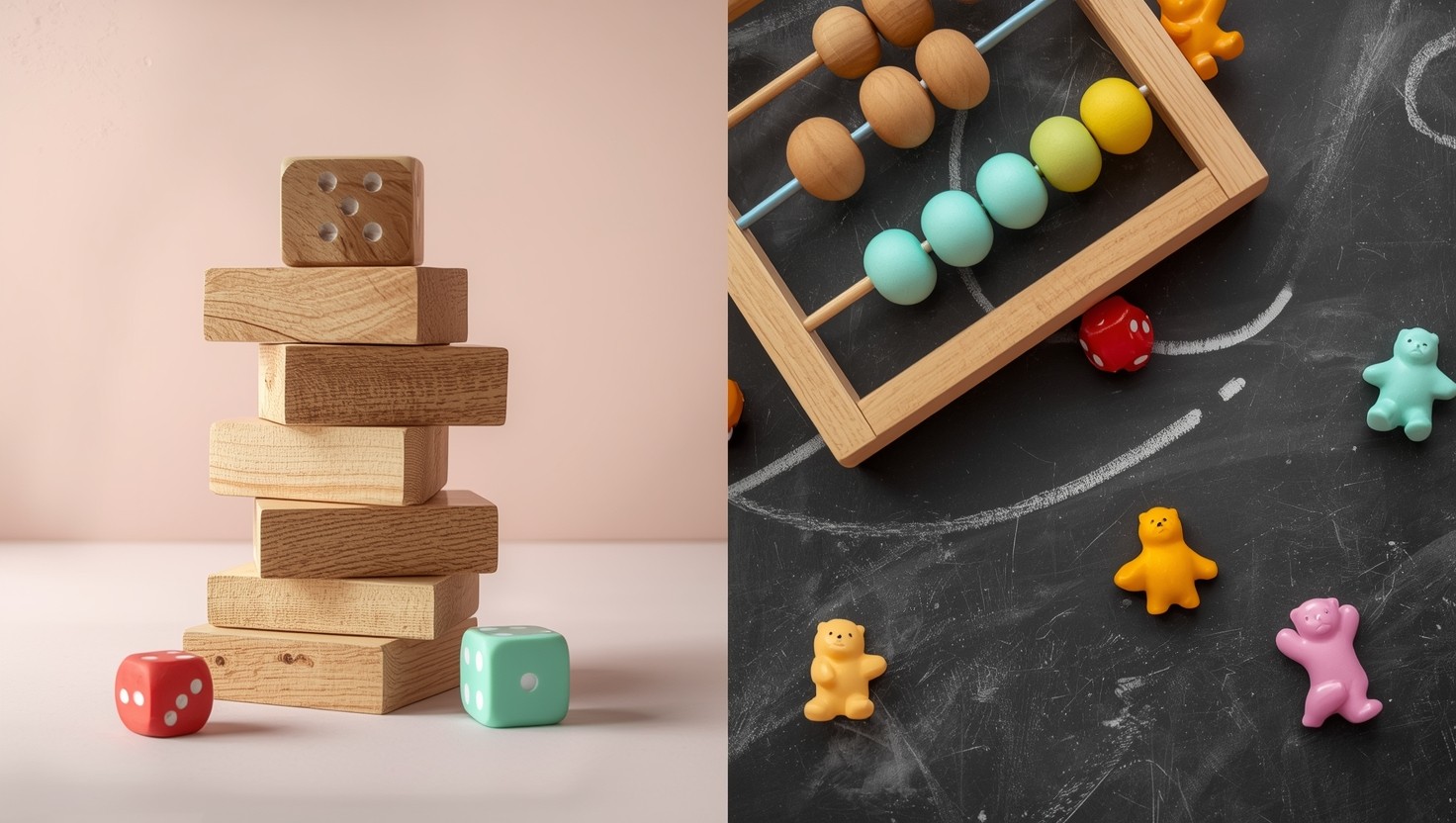
12 Pre K Math Games for Kindergarten Centers
12 Pre K Math Games for Kindergarten Centers

Article by
Milo
ESL Content Coordinator & Educator
ESL Content Coordinator & Educator
All Posts
You've got 20 minutes for math centers. Four kids are counting plastic bears. Two are making patterns. One is building a tower. You need them to learn one-to-one correspondence, not just stay busy. Pre k math games only work if they build real number sense.
I've taught kindergarten for 12 years. These 12 games use dice and dominoes. They teach subitizing and early addition. They fit your existing centers. Kids actually play them.
Still grading everything by hand?
EMStudio is a free teaching management app — manage your classes, students, lessons, and more!
Learn More

Still grading everything by hand?
EMStudio is a free teaching management app — manage your classes, students, lessons, and more!
Learn More
Table of Contents
What Are the Best Pre K Math Games for Counting?
The best pre k math games for counting include Bear Counter Sorting Mats for tactile 1:1 correspondence, Number Line Hopscotch for gross motor number sequencing, and Count and Clip Cards for fine motor counting practice. Each targets cardinality within 10-20 objects and supports subitizing skills through multi-sensory engagement. Choose based on your classroom space and students' specific motor needs.
Begin with rote counting chants to 10. Move to one-to-one correspondence when students touch each object once. Finally, cardinality emerges when they understand the last number counted is the total quantity. John Hattie's Visible Learning research confirms combining direct instruction with manipulatives yields an effect size of 0.59 for early numeracy acquisition. This approach outperforms isolated worksheet practice. See my full list of hands-on counting activities and tools for early learners for additional contexts.
Bear Counter Sorting Mats: Learning Resources Three Bear Family set of 96 bears, approximately $14. Targets subitizing quantities 1-3 versus cardinality to 20. Optimal group size: 2-4 students at a table. Prep time: 15 minutes to sort and label tins.
Number Line Hopscotch: Painter's tape or vinyl floor mat. Targets gross motor number sense and sequencing 0-10. Optimal group size: 2-4 students. Prep time: 10 minutes.
Count and Clip Cards: Laminated cards with spring-loaded clothespins. Targets fine motor counting and mathematical discourse. Optimal group size: 1-2 students. Prep time: 20 minutes.
Game | Item Type | Cost per Station | Storage |
|---|---|---|---|
Bear Counters | Reusable | $3-4 | Shoebox |
Hopscotch | Consumable tape | $2-3 | 4-gallon bin |
Clip Cards | Reusable | $2-3 | Shoebox |
Watch for students rushing through objects without pointing. If their final count jumps from 7 to 9 on identical sets, or they recount the same bear twice, they lack cardinality.
Immediately reduce the set size to 3-5 objects. Use the "touch and move" strategy where students physically transfer items from the pile into muffin tin compartments. This forces one-to-one correspondence and prevents the speedy chant that sounds like counting but means nothing.
Bear Counter Sorting and Counting Mats
I use the Learning Resources Three Bear Family set. The 1-inch plastic bears come in six colors: red, blue, yellow, green, purple, and orange. Students sort by color first, then count bears into numbered muffin tin compartments. Begin with 1-5. Progress to 1-10 only after they demonstrate consistent accuracy.
The CPA approach works here. Students handle concrete bears before printed 5-frames. The physical act of placing one bear per slot builds one-to-one correspondence better than any maths kg class worksheet method. I've watched struggling counters finally grasp the concept when they physically move the objects.
Measurable outcome: Students consistently stop counting at the target number without recounting, demonstrating cardinality, within a 15-minute center rotation. Prep requires 96 bears ($12-16) and six muffin tins ($8 total) for a class set serving four students. Store in a shoebox. Cost per station: $3-4.
Number Line Hopscotch Movement Game
I create the line with painter's tape on carpet or vinyl floor mats outdoors. Space numbers 18 inches apart. This accommodates small hops while keeping numbers distinct. Maximum four students on the mat simultaneously to prevent collisions.
Students hop to the called number and freeze for three seconds. Variation: Hop forward two spaces from 3 to practice "counting on," a pre-addition skill. Two-minute turns prevent fatigue. I use a sand timer for rotations.
Research indicates gross motor movement increases engagement for 4-5 year olds by embedding numeracy in physical play. I've seen reluctant counters participate when math involves jumping. Store materials in a 4-gallon bin. Cost per station stays under $3. Replace tape monthly with heavy carpet use.
Count and Clip Card Stations
I create laminated cards showing 1-20 objects—apples, stars—with three numeral choices at the bottom. Students clip spring-loaded clothespins to the correct number. Self-checking colored dots on the back correspond to the correct answer for immediate feedback.
The fine motor connection matters. Spring-loaded clothespins strengthen the tripod grip needed for writing. I buy 50 pins for $6. This muscle development supports later mathematical discourse through writing.
Prep takes 30 minutes for a 20-card set. Group size stays small at 1-2 students. This tactile approach shows higher retention for Pre-K learners than maths kg class worksheet methods. Store cards and pins in a shoebox sorted by quantity ranges 1-10 and 11-20.

Which Addition Games for Kindergarten Build Early Fluency?
Addition games for kindergarten that build fluency include Ladybug Spot Manipulatives for concrete sums within 5, Ten Frame War for comparing quantities up to 10, and Unifix Cube Towers for part-part-whole relationships. These progress from concrete manipulatives to mental math strategies using the CPA approach.
You cannot rush the concrete stage. Trust me on this.
The CPA approach moves students from Concrete manipulation to Pictorial representation and finally Abstract symbols. Five-year-olds need weeks with physical objects before they see a worksheet. I learned this the hard way when I skipped ahead to pictorial addition in October and watched my class melt down. Save multiplication fluency games for second grade; they're inappropriate here. These activities build the number sense and one-to-one correspondence that make later multiplication possible.
Ladybug Spot Manipulatives: Target sums within 5. Use red paper plates (6-inch) and black dot stickers. Students place 0-5 dots on each wing and count the total. Focus: combining sets.
Ten Frame War: Target quantities up to 10. Use printable ten-frame cards (3x5 inches, cardstock). Students flip cards and compare. Focus: subitizing and counting on.
Unifix Cube Towers: Target sums within 10. Use 20 unifix cubes in two colors per student. Build towers of 5 or 10 and decompose. Focus: part-part-whole relationships.
Game Name | Prerequisite Skill | Target Fluency Level | Indicator of Mastery |
|---|---|---|---|
Ladybug Spot | Counting to 10 | Automaticity within 5 | 3-second response for 4/5 problems |
Ten Frame War | Counting to 10 | Automaticity within 5 | 3-second response for 4/5 problems |
Unifix Towers | Counting to 10 | Automaticity within 5 | 3-second response for 4/5 problems |
Research indicates that kindergarten students should achieve fluency for addition within 5 by end of year, with accuracy rates of 90% for facts involving 0, 1, and 2. This aligns with evidence-based mathematics strategies and demonstrates the benefits of math challenges for cognitive development when appropriately scaffolded.
Ladybug Spot Addition Manipulatives
I make these from red foam circles six inches across. Students stick black dots on each wing—zero to five per side—then count the total to practice sums within 5 and 10. They record the equation on a sheet with blanks: __ + __ = __. The physical act of placing each dot builds one-to-one correspondence better than any app.
For pre k math games, limit sums to within 5. Kindergarteners handle within 10 by spring. Materials run eight dollars for a hundred plates, with fifteen minutes prep for a class set of twenty. That concrete manipulation builds the foundation needed for abstract multiplication fluency games in later grades. Don't skip this.
Ten Frame War Card Game
Use printable ten-frame cards showing quantities 0 through 10. Two students flip cards simultaneously; the student with the greater quantity collects both. When ties happen, they flip three more cards and let the third one win. I emphasize subitizing for quantities zero to five—students should recognize five dots instantly without counting.
This game sparks mathematical discourse. You'll hear kids verbalize "five and two more is seven" as they compare cards, building part-part-whole understanding. Each round lasts eight to ten minutes in pairs. Print cards three-by-five inches on cardstock for small hands. The number sense growth is obvious.
Unifix Cube Tower Challenges
Provide twenty unifix cubes per student in two colors. I challenge them: "Build a tower of five using two red and three blue. How many total?" They progress to "Make 10" cards later. The physical act of snapping cubes reinforces the joining concept more powerfully than drawing lines.
By December, a student should decompose towers of five into two-plus-three, four-plus-one, and five-plus-zero within three minutes, verbalizing each combination. I store cubes in six-by-nine cotton bags costing a dollar each, labeled with names for quick distribution. No more dumping bins on the floor.
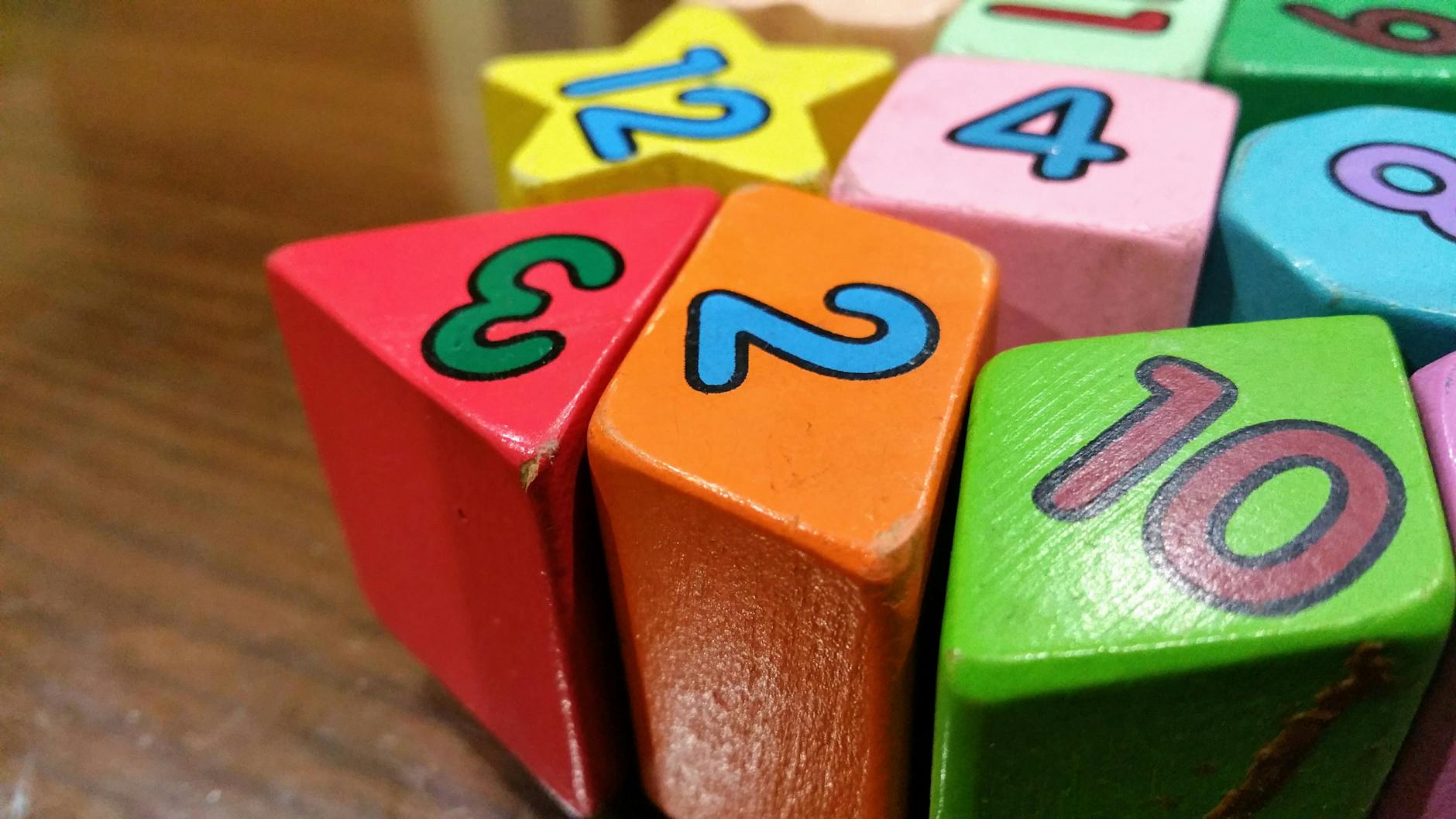
What Are the Most Engaging Math Games for 5 Year Olds?
Math games for 5 year olds that maximize engagement combine physical movement, sensory materials, and social interaction. Top choices include Shape Scavenger Hunts for geometry exploration, Pattern Block Puzzles for spatial reasoning, and Roll and Graph activities for data collection. These align with 5-year-old developmental needs for active, hands-on learning lasting 10-15 minutes.
Five-year-olds need to move. If they're sitting longer than ten minutes, you've lost them.
Engagement at this age hinges on novelty, sensory input, and achievable challenge. Unlike maths games for class 7—where students manage abstract strategy and complex rule systems—math games for 5 year olds demand concrete materials and gross motor action. A seventh grader might sit for 30 minutes solving logic puzzles, but a kindergartner needs to hunt for shapes under tables or build with blocks to grasp geometry. Developmentally appropriate practice means trading virtual environments for physical space and manipulatives.
Watch the clock. High-interest games hold attention for 10-12 minutes; seated tasks fade after 5-7. Four 5-year-olds hunting for cylinders during block center time will focus longer than the same group tracing worksheets. This is why play-based learning for preschoolers works—it respects their neurological limits.
Game Type | Pros | Cons |
|---|---|---|
Active (Gross Motor) | Improves focus; supports number sense through embodied cognition | Requires 6x6 foot clear space; noise level rises |
Table Task (Fine Motor) | Builds writing readiness; supports one-to-one correspondence | Requires rotation every 10 minutes; restlessness kicks in fast |
Social (Cooperative) | Develops mathematical discourse; teaches turn-taking | Needs adult scaffolding initially; conflicts over materials |
When pre k math games fail, they fail fast. Signs include students stacking blocks instead of following rules or wandering away after three minutes. The game is too hard. Fix it immediately: reduce shape choices from six to two, assign peer buddies, or switch from competitive to parallel play. Success with classroom gamification methods to boost interest depends on reading these cues before frustration spreads.
Shape Scavenger Hunt Cards
Create clipboard checklists with photos of four classroom objects per shape—circle, square, triangle, rectangle. Students hunt in pairs, checking off finds with dry-erase markers. Include advanced shapes like hexagons and trapezoids for differentiation. When Maya found the circular clock and her partner checked it off, they practiced mathematical discourse by debating whether the door was a rectangle or a square. Unlike maths games for class 7, which use virtual environments, this requires physical navigation of space using the CPA approach—concrete objects first.
Logistics matter. Run this as a 12-minute rotation with boundaries defined by colored tape on the floor. Issue "shape collector" badges for role clarity so four 5-year-olds know exactly who holds the clipboard. Materials cost little: eight clipboards at $1 each from Dollar Tree, printed cards laminated for durability. The number sense builds when they stop counting sides and start recognizing attributes instantly.
Pattern Block Puzzle Challenges
Use standard pattern blocks: yellow hexagons, red trapezoids, blue rhombuses, green triangles. Challenge students: "How many ways can you cover the yellow hexagon?" Provide recording sheets showing the outline where students trace the blocks with matching colored crayons. This builds composition and decomposition of shapes—the foundation of later algebraic thinking. I keep a timer visible; when it hits eight minutes, I start the cleanup countdown to avoid the inevitable tower-building collapse.
Quantity control prevents chaos. Place ten hexagons per table of four students, plus twenty triangles and fifteen rhombuses. Watch for the moment they discover that two trapezoids equal one hexagon, or six triangles fill the same space. This spatial reasoning correlates with later success in geometry. These math games for 5 year olds work because the manipulatives fit small hands perfectly.
Roll and Graph Dice Activities
Insert shape cards into 3-inch pocket dice. Students roll, then color one square on the corresponding column of a bar graph. Race to fill one column competitively, or complete the entire graph cooperatively. The math vocabulary emerges naturally: "most," "least," "equal," "how many more." Use foam dice to keep the noise down during independent work time. The foam saves my sanity during quiet reading nearby.
Set up for two players, ten minutes maximum. Use 11x17 graph paper so the bars grow visibly with each roll. Store dice in separate ziploc bags inside the game bin—otherwise, they vanish into the classroom ether. This activity bridges one-to-one correspondence with data collection, showing students that math lives in real questions about their world.

Number Recognition Games for Pre K Small Groups
Small group math intervention means four to six students sitting at your kidney table for exactly fifteen minutes. These are the children who identified fewer than ten numerals out of twenty on your benchmark assessment. You have three rotations per week with this group. The time is short. Every minute counts.
I stopped using maths kg class worksheet packets for these sessions two years ago. The CPA approach—Concrete, Pictorial, Abstract—needs that struggling four-year-olds touch and move objects before they circle answers on paper. When I compared retention rates between worksheet drill and manipulatives-based play, the kids who fished for numbers or swatted foam targets remembered numerals three weeks later. The worksheet group forgot them by Tuesday.
Some pre k math games work in both settings, but most reveal their design when you try to scale them.
Magnetic Number Fishing collapses in whole group—twelve wands become weapons, strings tangle, three kids never get a turn. It belongs in effective learning stations for small groups.
Number Swat adapts better to whole group if you enforce three-foot spacing between swatters.
Roll and Cover splits the difference; it works whole group at tables but shines in small group where you can hear individual mathematical discourse.
Before selecting games, consult your math coach or interventionist. Show them benchmark data. They spot patterns you miss—chronic 6/9 reversals, consistent 2/5 confusion. Ask them to model questioning during the first five minutes. I had a coach demonstrate pausing after wrong answers instead of correcting immediately. The wait time changed everything.
Research on early numeracy supports tactile learning. Students who trace numerals in sand or shaving cream while saying the number name show stronger retention than those doing visual-only drill. Motor movement, sensory input, and auditory naming build multiple pathways. Exact percentages vary by study, but the pattern holds.
Magnetic Number Fishing Game
Cut foam fish shapes four inches long. Hot-glue paper clips to their mouths. Number them 0 through 10, or 0 through 20 if your group is ready. Spread a blue fabric "pond" across the table. Hand each child a magnetic wand—I buy Dowling Magnets for three dollars each. They fish. They catch. They must say the number aloud before keeping the fish.
I learned the hard way about differentiation here. Last October, I gave my whole group fish numbered 0 to 20. Three kids shut down immediately. Now I sort the fish by bag. Struggling learners get 0 to 5 only. Advanced learners must catch two fish and compare them using greater than or less than vocabulary. The physical act of holding the wand builds one-to-one correspondence better than pointing at a flashcard.
Store the wands separately in a metal tin. If you toss them in the bin with the fish, they demagnetize each other within a month. I keep them in an old cookie tin on the highest shelf. When the game ends, I collect wands first, fish second. No exceptions.
This game fails in whole group. I tried it once with ten kids. The rods tangled into a knot that took twenty minutes to untangle. Two children cried because they never got a turn. In a group of four, each student gets fifteen catches in fifteen minutes. That repetition matters for kids still building number sense.
Roll and Cover Bump Games
You need two dice, a printable game board showing numbers 2 through 12, and ten linking cubes per player. Laminate the boards at 8.5 by 11 inches. They last all year. Students roll, identify the number or count the dots, then place a cube on the matching numeral. If an opponent has a cube there, the new player bumps it off. If the original player already has two cubes stacked, the spot freezes. First to place all ten cubes wins.
The math connection depends on your dice choice. Use dotted dice to reinforce subitizing and counting. Use numeral dice for pure recognition. I keep both versions in separate Ziploc bags labeled with Sharpie. When a child rolls and counts, I listen for their strategy. Do they count each dot individually, or do they see the four-dot pattern and say "four" instantly? That distinction tells me who understands quantity and who is still guessing.
Play this on carpet. I learned after three games on tile that dice roll under shelves and disappear into dust bunnies. Carpet keeps the cubes and dice contained. In whole group, this works at tables with four kids each, but you cannot hear the mathematical thinking. In small group, you catch the whispered "one, two, three, four" that reveals a child's current number sense level.
Number Swat Flyswatter Game
Create a giant number line from 0 to 10 on the floor using vinyl tape or numbered floor spots from your PE closet. Give each student a foam flyswatter from Dollar Tree—they cost one dollar each. You call a number. They race to swat it. The safety rule is non-negotiable: the swatter must touch the number before anyone shouts the answer. This prevents collisions and gives you a visual check of who found the target.
This game adapts to mixed ability groups better than most. For English learners, call the number in Spanish. For students struggling with recognition, show a quantity card with subitizing dots instead of saying the numeral. They match the quantity to the numeral. I keep a deck of five-frame cards in my apron pocket. The format mirrors interactive recognition games from literacy centers, which helps students transfer skills between subjects.
Space matters. Three feet between each child prevents accidental shoulder checks. I mark the spots with masking tape X's. Rotate the caller role every three minutes so every child gets two turns directing the group. When the caller says "five" and watches three peers rush to the wrong numeral, they learn just as much as the swatters. This peer observation builds mathematical discourse without forcing shy kids to speak before they are ready.
Unlike Magnetic Fishing, this works in whole group if you have the floor space. I have used it successfully with twelve children in a circle. But the magic happens in groups of four, where you can ask "Why did you swat six?" and hear a child explain their reasoning about the curve versus the loop.
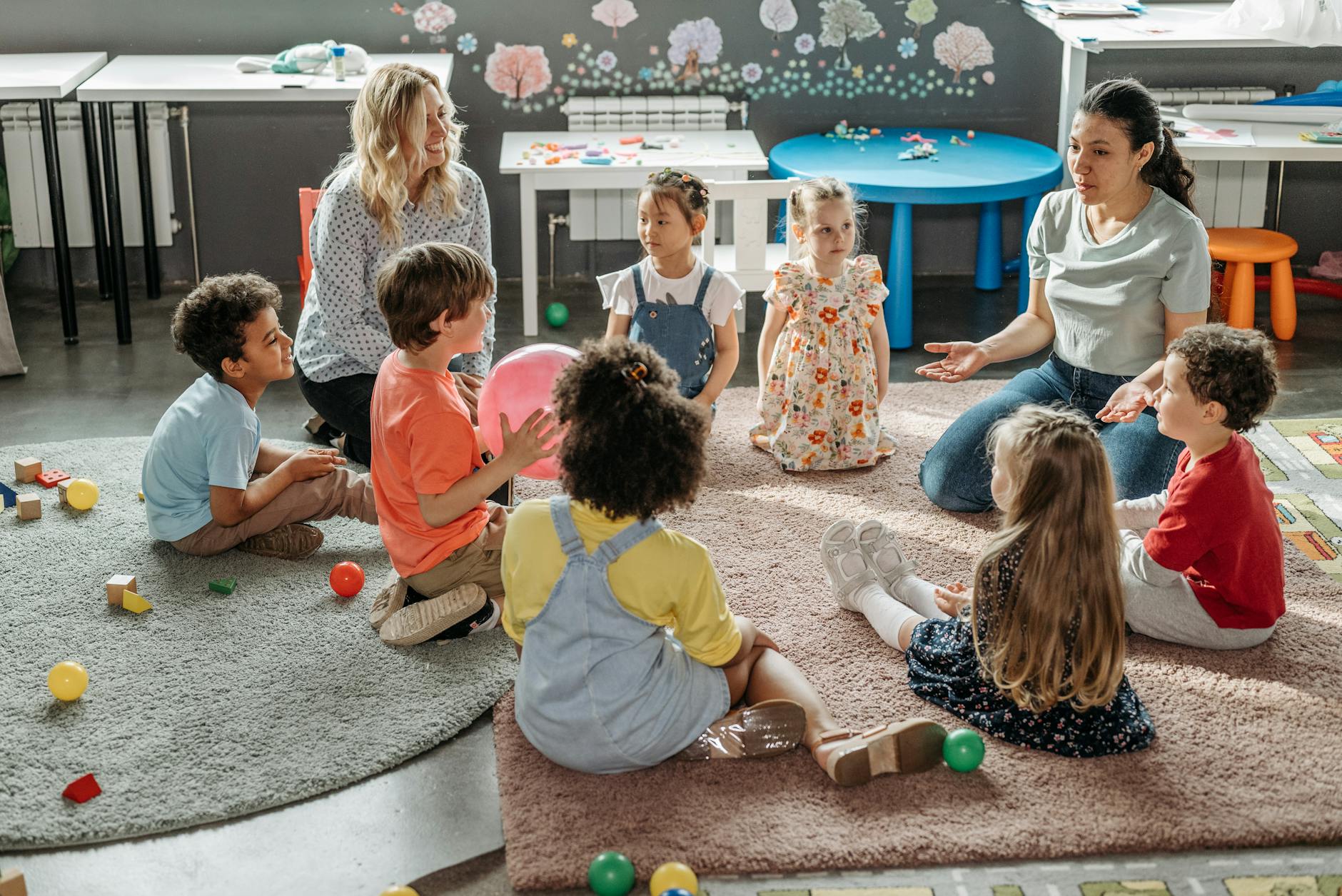
How Do You Organize Pre K Math Games in the Classroom?
Organize pre k math games using clear 4-gallon bins with photo labels, stored at child height. Implement a four-station rotation schedule with 12-minute intervals, using visual timers and transition songs. Differentiate by placing color-coded stickers on bins (green=enrichment, yellow=on-level, red=intervention) and consulting with your math coach quarterly to adjust groupings based on assessment data.
I learned this the hard way. Three years ago, my math centers looked like a tornado hit a dollar store. Now everything has a home, and the kids run the show.
Here is the five-step system that saved my sanity:
Step 1: Audit. Purge broken pieces and incomplete sets. If you're missing the red counting bear, toss the whole set.
Step 2: Categorize. Sort by math domain—counting, geometry, measurement. This supports the CPA approach.
Step 3: Contain. Buy clear 4-gallon bins. Students need to see contents without opening lids.
Step 4: Label. Tape photo labels to the front showing what "ready to play" looks like.
Step 5: System. Create checkout/return routine. Bins live at child height, 36 inches. I use research-based classroom organization strategies to keep this tight.
My Rotation Schedule Template keeps four groups moving:
Station 1: Teacher-led subitizing practice (12 minutes).
Station 2: Independent one-to-one correspondence with manipulatives.
Station 3: Partner geometry build.
Station 4: Number sense apps or puzzles.
Use sand timers for the two-minute warning. Without that visual cue, you'll have four-year-olds melting down when cleanup hits.
Color-code for differentiation. Green dots mean enrichment—these kids count past twenty. Yellow means on-level. Red means intensive support, working on one-to-five counting. I check these groupings quarterly with my math coach. Strong foundations here predict success with multiplication fluency games later. Watch for over-organization: if kids wait five minutes for materials, you're managing bins instead of teaching. Switch to open shelving at 36 inches with one-step setup.
Setting Up Math Center Storage Bins
I use clear 4-gallon Sterilite bins with locking lids. They cost four bucks at Walmart. I wrap the handles in color-coded duct tape—red, yellow, green—for quick differentiation. Kids know their color and grab the right challenge level.
Inside each bin, game boards stand upright in hanging file folders. Small pieces live in gallon Ziploc bags. No loose parts rolling around means no lost manipulatives during cleanup.
Photo labels are non-negotiable. I take a picture of the materials arranged correctly and tape it to the bin's exterior. I add a simple icon showing one person, two people, or a group. I also label everything with my last name. During shared resource periods, this prevents my pre k math games from walking away. You can track your classroom materials and inventory to catch losses early.
Creating Simple Rotation Schedules
Pre-K needs structure, not chaos. I run four stations, twelve minutes each. That's the sweet spot before attention fades. We use a two-minute warning timer—sand timers work best—to prevent meltdowns during transitions.
I use a visual schedule with a four-by-four grid. Each cell holds a student photo or name card. They know exactly where to go next without asking me twenty times.
When cleanup time hits, we sing our math transition song—same melody every day. I assign two Material Monitors as classroom jobs. They check bins for completeness at day's end. This beats hunting for missing dice during morning arrival. The routine builds independence and keeps mathematical discourse flowing during centers.
Differentiating Games by Skill Level
Differentiation happens in the moment. I modify any game three ways: quantity, support, or response mode. Advanced students might count to twenty. Struggling learners stick to one-to-five with peer buddies.
Take Number Swat. I lay out numeral cards. My green group swats the number that is "one more than four." My yellow group swats the number four when I show four dots. My red group simply points to the number I name. Same materials, different cognitive load.
After two weeks of center play, I give a one-minute numeral ID probe. If a child scores below twenty correct, I consult my math coach. We adjust the game difficulty or increase intervention time. These early skills—subitizing, one-to-one correspondence, strong number sense—predict readiness for abstract operations. Students who master these foundations handle multiplication fluency games in third grade with confidence. I apply the CPA approach when designing effective learning zones.

What to Remember About Pre K Math Games
You don't need fancy equipment to build number sense. A basket of counting bears and a ten-frame will teach one-to-one correspondence better than any app. Focus on subitizing and concrete manipulatives before you worry about addition fluency. If a child can't count ten objects reliably, worksheets with equations waste everyone's time. Master the foundations first.
How you store and rotate these games matters as much as the games themselves. I keep each pre k math game in a clear shoebox with a photo label on the end. Students grab the box, play, and return it to the same shelf. If cleanup takes longer than the game itself, swap it out. Your centers should run without you micromanaging every transition. Good organization turns chaos into independent learning time.
Keep it short. Five-year-olds need fifteen minutes max at a math center. When the timer rings, they switch. Consistency beats novelty every single time.
What Are the Best Pre K Math Games for Counting?
The best pre k math games for counting include Bear Counter Sorting Mats for tactile 1:1 correspondence, Number Line Hopscotch for gross motor number sequencing, and Count and Clip Cards for fine motor counting practice. Each targets cardinality within 10-20 objects and supports subitizing skills through multi-sensory engagement. Choose based on your classroom space and students' specific motor needs.
Begin with rote counting chants to 10. Move to one-to-one correspondence when students touch each object once. Finally, cardinality emerges when they understand the last number counted is the total quantity. John Hattie's Visible Learning research confirms combining direct instruction with manipulatives yields an effect size of 0.59 for early numeracy acquisition. This approach outperforms isolated worksheet practice. See my full list of hands-on counting activities and tools for early learners for additional contexts.
Bear Counter Sorting Mats: Learning Resources Three Bear Family set of 96 bears, approximately $14. Targets subitizing quantities 1-3 versus cardinality to 20. Optimal group size: 2-4 students at a table. Prep time: 15 minutes to sort and label tins.
Number Line Hopscotch: Painter's tape or vinyl floor mat. Targets gross motor number sense and sequencing 0-10. Optimal group size: 2-4 students. Prep time: 10 minutes.
Count and Clip Cards: Laminated cards with spring-loaded clothespins. Targets fine motor counting and mathematical discourse. Optimal group size: 1-2 students. Prep time: 20 minutes.
Game | Item Type | Cost per Station | Storage |
|---|---|---|---|
Bear Counters | Reusable | $3-4 | Shoebox |
Hopscotch | Consumable tape | $2-3 | 4-gallon bin |
Clip Cards | Reusable | $2-3 | Shoebox |
Watch for students rushing through objects without pointing. If their final count jumps from 7 to 9 on identical sets, or they recount the same bear twice, they lack cardinality.
Immediately reduce the set size to 3-5 objects. Use the "touch and move" strategy where students physically transfer items from the pile into muffin tin compartments. This forces one-to-one correspondence and prevents the speedy chant that sounds like counting but means nothing.
Bear Counter Sorting and Counting Mats
I use the Learning Resources Three Bear Family set. The 1-inch plastic bears come in six colors: red, blue, yellow, green, purple, and orange. Students sort by color first, then count bears into numbered muffin tin compartments. Begin with 1-5. Progress to 1-10 only after they demonstrate consistent accuracy.
The CPA approach works here. Students handle concrete bears before printed 5-frames. The physical act of placing one bear per slot builds one-to-one correspondence better than any maths kg class worksheet method. I've watched struggling counters finally grasp the concept when they physically move the objects.
Measurable outcome: Students consistently stop counting at the target number without recounting, demonstrating cardinality, within a 15-minute center rotation. Prep requires 96 bears ($12-16) and six muffin tins ($8 total) for a class set serving four students. Store in a shoebox. Cost per station: $3-4.
Number Line Hopscotch Movement Game
I create the line with painter's tape on carpet or vinyl floor mats outdoors. Space numbers 18 inches apart. This accommodates small hops while keeping numbers distinct. Maximum four students on the mat simultaneously to prevent collisions.
Students hop to the called number and freeze for three seconds. Variation: Hop forward two spaces from 3 to practice "counting on," a pre-addition skill. Two-minute turns prevent fatigue. I use a sand timer for rotations.
Research indicates gross motor movement increases engagement for 4-5 year olds by embedding numeracy in physical play. I've seen reluctant counters participate when math involves jumping. Store materials in a 4-gallon bin. Cost per station stays under $3. Replace tape monthly with heavy carpet use.
Count and Clip Card Stations
I create laminated cards showing 1-20 objects—apples, stars—with three numeral choices at the bottom. Students clip spring-loaded clothespins to the correct number. Self-checking colored dots on the back correspond to the correct answer for immediate feedback.
The fine motor connection matters. Spring-loaded clothespins strengthen the tripod grip needed for writing. I buy 50 pins for $6. This muscle development supports later mathematical discourse through writing.
Prep takes 30 minutes for a 20-card set. Group size stays small at 1-2 students. This tactile approach shows higher retention for Pre-K learners than maths kg class worksheet methods. Store cards and pins in a shoebox sorted by quantity ranges 1-10 and 11-20.
Which Addition Games for Kindergarten Build Early Fluency?
Addition games for kindergarten that build fluency include Ladybug Spot Manipulatives for concrete sums within 5, Ten Frame War for comparing quantities up to 10, and Unifix Cube Towers for part-part-whole relationships. These progress from concrete manipulatives to mental math strategies using the CPA approach.
You cannot rush the concrete stage. Trust me on this.
The CPA approach moves students from Concrete manipulation to Pictorial representation and finally Abstract symbols. Five-year-olds need weeks with physical objects before they see a worksheet. I learned this the hard way when I skipped ahead to pictorial addition in October and watched my class melt down. Save multiplication fluency games for second grade; they're inappropriate here. These activities build the number sense and one-to-one correspondence that make later multiplication possible.
Ladybug Spot Manipulatives: Target sums within 5. Use red paper plates (6-inch) and black dot stickers. Students place 0-5 dots on each wing and count the total. Focus: combining sets.
Ten Frame War: Target quantities up to 10. Use printable ten-frame cards (3x5 inches, cardstock). Students flip cards and compare. Focus: subitizing and counting on.
Unifix Cube Towers: Target sums within 10. Use 20 unifix cubes in two colors per student. Build towers of 5 or 10 and decompose. Focus: part-part-whole relationships.
Game Name | Prerequisite Skill | Target Fluency Level | Indicator of Mastery |
|---|---|---|---|
Ladybug Spot | Counting to 10 | Automaticity within 5 | 3-second response for 4/5 problems |
Ten Frame War | Counting to 10 | Automaticity within 5 | 3-second response for 4/5 problems |
Unifix Towers | Counting to 10 | Automaticity within 5 | 3-second response for 4/5 problems |
Research indicates that kindergarten students should achieve fluency for addition within 5 by end of year, with accuracy rates of 90% for facts involving 0, 1, and 2. This aligns with evidence-based mathematics strategies and demonstrates the benefits of math challenges for cognitive development when appropriately scaffolded.
Ladybug Spot Addition Manipulatives
I make these from red foam circles six inches across. Students stick black dots on each wing—zero to five per side—then count the total to practice sums within 5 and 10. They record the equation on a sheet with blanks: __ + __ = __. The physical act of placing each dot builds one-to-one correspondence better than any app.
For pre k math games, limit sums to within 5. Kindergarteners handle within 10 by spring. Materials run eight dollars for a hundred plates, with fifteen minutes prep for a class set of twenty. That concrete manipulation builds the foundation needed for abstract multiplication fluency games in later grades. Don't skip this.
Ten Frame War Card Game
Use printable ten-frame cards showing quantities 0 through 10. Two students flip cards simultaneously; the student with the greater quantity collects both. When ties happen, they flip three more cards and let the third one win. I emphasize subitizing for quantities zero to five—students should recognize five dots instantly without counting.
This game sparks mathematical discourse. You'll hear kids verbalize "five and two more is seven" as they compare cards, building part-part-whole understanding. Each round lasts eight to ten minutes in pairs. Print cards three-by-five inches on cardstock for small hands. The number sense growth is obvious.
Unifix Cube Tower Challenges
Provide twenty unifix cubes per student in two colors. I challenge them: "Build a tower of five using two red and three blue. How many total?" They progress to "Make 10" cards later. The physical act of snapping cubes reinforces the joining concept more powerfully than drawing lines.
By December, a student should decompose towers of five into two-plus-three, four-plus-one, and five-plus-zero within three minutes, verbalizing each combination. I store cubes in six-by-nine cotton bags costing a dollar each, labeled with names for quick distribution. No more dumping bins on the floor.
What Are the Most Engaging Math Games for 5 Year Olds?
Math games for 5 year olds that maximize engagement combine physical movement, sensory materials, and social interaction. Top choices include Shape Scavenger Hunts for geometry exploration, Pattern Block Puzzles for spatial reasoning, and Roll and Graph activities for data collection. These align with 5-year-old developmental needs for active, hands-on learning lasting 10-15 minutes.
Five-year-olds need to move. If they're sitting longer than ten minutes, you've lost them.
Engagement at this age hinges on novelty, sensory input, and achievable challenge. Unlike maths games for class 7—where students manage abstract strategy and complex rule systems—math games for 5 year olds demand concrete materials and gross motor action. A seventh grader might sit for 30 minutes solving logic puzzles, but a kindergartner needs to hunt for shapes under tables or build with blocks to grasp geometry. Developmentally appropriate practice means trading virtual environments for physical space and manipulatives.
Watch the clock. High-interest games hold attention for 10-12 minutes; seated tasks fade after 5-7. Four 5-year-olds hunting for cylinders during block center time will focus longer than the same group tracing worksheets. This is why play-based learning for preschoolers works—it respects their neurological limits.
Game Type | Pros | Cons |
|---|---|---|
Active (Gross Motor) | Improves focus; supports number sense through embodied cognition | Requires 6x6 foot clear space; noise level rises |
Table Task (Fine Motor) | Builds writing readiness; supports one-to-one correspondence | Requires rotation every 10 minutes; restlessness kicks in fast |
Social (Cooperative) | Develops mathematical discourse; teaches turn-taking | Needs adult scaffolding initially; conflicts over materials |
When pre k math games fail, they fail fast. Signs include students stacking blocks instead of following rules or wandering away after three minutes. The game is too hard. Fix it immediately: reduce shape choices from six to two, assign peer buddies, or switch from competitive to parallel play. Success with classroom gamification methods to boost interest depends on reading these cues before frustration spreads.
Shape Scavenger Hunt Cards
Create clipboard checklists with photos of four classroom objects per shape—circle, square, triangle, rectangle. Students hunt in pairs, checking off finds with dry-erase markers. Include advanced shapes like hexagons and trapezoids for differentiation. When Maya found the circular clock and her partner checked it off, they practiced mathematical discourse by debating whether the door was a rectangle or a square. Unlike maths games for class 7, which use virtual environments, this requires physical navigation of space using the CPA approach—concrete objects first.
Logistics matter. Run this as a 12-minute rotation with boundaries defined by colored tape on the floor. Issue "shape collector" badges for role clarity so four 5-year-olds know exactly who holds the clipboard. Materials cost little: eight clipboards at $1 each from Dollar Tree, printed cards laminated for durability. The number sense builds when they stop counting sides and start recognizing attributes instantly.
Pattern Block Puzzle Challenges
Use standard pattern blocks: yellow hexagons, red trapezoids, blue rhombuses, green triangles. Challenge students: "How many ways can you cover the yellow hexagon?" Provide recording sheets showing the outline where students trace the blocks with matching colored crayons. This builds composition and decomposition of shapes—the foundation of later algebraic thinking. I keep a timer visible; when it hits eight minutes, I start the cleanup countdown to avoid the inevitable tower-building collapse.
Quantity control prevents chaos. Place ten hexagons per table of four students, plus twenty triangles and fifteen rhombuses. Watch for the moment they discover that two trapezoids equal one hexagon, or six triangles fill the same space. This spatial reasoning correlates with later success in geometry. These math games for 5 year olds work because the manipulatives fit small hands perfectly.
Roll and Graph Dice Activities
Insert shape cards into 3-inch pocket dice. Students roll, then color one square on the corresponding column of a bar graph. Race to fill one column competitively, or complete the entire graph cooperatively. The math vocabulary emerges naturally: "most," "least," "equal," "how many more." Use foam dice to keep the noise down during independent work time. The foam saves my sanity during quiet reading nearby.
Set up for two players, ten minutes maximum. Use 11x17 graph paper so the bars grow visibly with each roll. Store dice in separate ziploc bags inside the game bin—otherwise, they vanish into the classroom ether. This activity bridges one-to-one correspondence with data collection, showing students that math lives in real questions about their world.
Number Recognition Games for Pre K Small Groups
Small group math intervention means four to six students sitting at your kidney table for exactly fifteen minutes. These are the children who identified fewer than ten numerals out of twenty on your benchmark assessment. You have three rotations per week with this group. The time is short. Every minute counts.
I stopped using maths kg class worksheet packets for these sessions two years ago. The CPA approach—Concrete, Pictorial, Abstract—needs that struggling four-year-olds touch and move objects before they circle answers on paper. When I compared retention rates between worksheet drill and manipulatives-based play, the kids who fished for numbers or swatted foam targets remembered numerals three weeks later. The worksheet group forgot them by Tuesday.
Some pre k math games work in both settings, but most reveal their design when you try to scale them.
Magnetic Number Fishing collapses in whole group—twelve wands become weapons, strings tangle, three kids never get a turn. It belongs in effective learning stations for small groups.
Number Swat adapts better to whole group if you enforce three-foot spacing between swatters.
Roll and Cover splits the difference; it works whole group at tables but shines in small group where you can hear individual mathematical discourse.
Before selecting games, consult your math coach or interventionist. Show them benchmark data. They spot patterns you miss—chronic 6/9 reversals, consistent 2/5 confusion. Ask them to model questioning during the first five minutes. I had a coach demonstrate pausing after wrong answers instead of correcting immediately. The wait time changed everything.
Research on early numeracy supports tactile learning. Students who trace numerals in sand or shaving cream while saying the number name show stronger retention than those doing visual-only drill. Motor movement, sensory input, and auditory naming build multiple pathways. Exact percentages vary by study, but the pattern holds.
Magnetic Number Fishing Game
Cut foam fish shapes four inches long. Hot-glue paper clips to their mouths. Number them 0 through 10, or 0 through 20 if your group is ready. Spread a blue fabric "pond" across the table. Hand each child a magnetic wand—I buy Dowling Magnets for three dollars each. They fish. They catch. They must say the number aloud before keeping the fish.
I learned the hard way about differentiation here. Last October, I gave my whole group fish numbered 0 to 20. Three kids shut down immediately. Now I sort the fish by bag. Struggling learners get 0 to 5 only. Advanced learners must catch two fish and compare them using greater than or less than vocabulary. The physical act of holding the wand builds one-to-one correspondence better than pointing at a flashcard.
Store the wands separately in a metal tin. If you toss them in the bin with the fish, they demagnetize each other within a month. I keep them in an old cookie tin on the highest shelf. When the game ends, I collect wands first, fish second. No exceptions.
This game fails in whole group. I tried it once with ten kids. The rods tangled into a knot that took twenty minutes to untangle. Two children cried because they never got a turn. In a group of four, each student gets fifteen catches in fifteen minutes. That repetition matters for kids still building number sense.
Roll and Cover Bump Games
You need two dice, a printable game board showing numbers 2 through 12, and ten linking cubes per player. Laminate the boards at 8.5 by 11 inches. They last all year. Students roll, identify the number or count the dots, then place a cube on the matching numeral. If an opponent has a cube there, the new player bumps it off. If the original player already has two cubes stacked, the spot freezes. First to place all ten cubes wins.
The math connection depends on your dice choice. Use dotted dice to reinforce subitizing and counting. Use numeral dice for pure recognition. I keep both versions in separate Ziploc bags labeled with Sharpie. When a child rolls and counts, I listen for their strategy. Do they count each dot individually, or do they see the four-dot pattern and say "four" instantly? That distinction tells me who understands quantity and who is still guessing.
Play this on carpet. I learned after three games on tile that dice roll under shelves and disappear into dust bunnies. Carpet keeps the cubes and dice contained. In whole group, this works at tables with four kids each, but you cannot hear the mathematical thinking. In small group, you catch the whispered "one, two, three, four" that reveals a child's current number sense level.
Number Swat Flyswatter Game
Create a giant number line from 0 to 10 on the floor using vinyl tape or numbered floor spots from your PE closet. Give each student a foam flyswatter from Dollar Tree—they cost one dollar each. You call a number. They race to swat it. The safety rule is non-negotiable: the swatter must touch the number before anyone shouts the answer. This prevents collisions and gives you a visual check of who found the target.
This game adapts to mixed ability groups better than most. For English learners, call the number in Spanish. For students struggling with recognition, show a quantity card with subitizing dots instead of saying the numeral. They match the quantity to the numeral. I keep a deck of five-frame cards in my apron pocket. The format mirrors interactive recognition games from literacy centers, which helps students transfer skills between subjects.
Space matters. Three feet between each child prevents accidental shoulder checks. I mark the spots with masking tape X's. Rotate the caller role every three minutes so every child gets two turns directing the group. When the caller says "five" and watches three peers rush to the wrong numeral, they learn just as much as the swatters. This peer observation builds mathematical discourse without forcing shy kids to speak before they are ready.
Unlike Magnetic Fishing, this works in whole group if you have the floor space. I have used it successfully with twelve children in a circle. But the magic happens in groups of four, where you can ask "Why did you swat six?" and hear a child explain their reasoning about the curve versus the loop.
How Do You Organize Pre K Math Games in the Classroom?
Organize pre k math games using clear 4-gallon bins with photo labels, stored at child height. Implement a four-station rotation schedule with 12-minute intervals, using visual timers and transition songs. Differentiate by placing color-coded stickers on bins (green=enrichment, yellow=on-level, red=intervention) and consulting with your math coach quarterly to adjust groupings based on assessment data.
I learned this the hard way. Three years ago, my math centers looked like a tornado hit a dollar store. Now everything has a home, and the kids run the show.
Here is the five-step system that saved my sanity:
Step 1: Audit. Purge broken pieces and incomplete sets. If you're missing the red counting bear, toss the whole set.
Step 2: Categorize. Sort by math domain—counting, geometry, measurement. This supports the CPA approach.
Step 3: Contain. Buy clear 4-gallon bins. Students need to see contents without opening lids.
Step 4: Label. Tape photo labels to the front showing what "ready to play" looks like.
Step 5: System. Create checkout/return routine. Bins live at child height, 36 inches. I use research-based classroom organization strategies to keep this tight.
My Rotation Schedule Template keeps four groups moving:
Station 1: Teacher-led subitizing practice (12 minutes).
Station 2: Independent one-to-one correspondence with manipulatives.
Station 3: Partner geometry build.
Station 4: Number sense apps or puzzles.
Use sand timers for the two-minute warning. Without that visual cue, you'll have four-year-olds melting down when cleanup hits.
Color-code for differentiation. Green dots mean enrichment—these kids count past twenty. Yellow means on-level. Red means intensive support, working on one-to-five counting. I check these groupings quarterly with my math coach. Strong foundations here predict success with multiplication fluency games later. Watch for over-organization: if kids wait five minutes for materials, you're managing bins instead of teaching. Switch to open shelving at 36 inches with one-step setup.
Setting Up Math Center Storage Bins
I use clear 4-gallon Sterilite bins with locking lids. They cost four bucks at Walmart. I wrap the handles in color-coded duct tape—red, yellow, green—for quick differentiation. Kids know their color and grab the right challenge level.
Inside each bin, game boards stand upright in hanging file folders. Small pieces live in gallon Ziploc bags. No loose parts rolling around means no lost manipulatives during cleanup.
Photo labels are non-negotiable. I take a picture of the materials arranged correctly and tape it to the bin's exterior. I add a simple icon showing one person, two people, or a group. I also label everything with my last name. During shared resource periods, this prevents my pre k math games from walking away. You can track your classroom materials and inventory to catch losses early.
Creating Simple Rotation Schedules
Pre-K needs structure, not chaos. I run four stations, twelve minutes each. That's the sweet spot before attention fades. We use a two-minute warning timer—sand timers work best—to prevent meltdowns during transitions.
I use a visual schedule with a four-by-four grid. Each cell holds a student photo or name card. They know exactly where to go next without asking me twenty times.
When cleanup time hits, we sing our math transition song—same melody every day. I assign two Material Monitors as classroom jobs. They check bins for completeness at day's end. This beats hunting for missing dice during morning arrival. The routine builds independence and keeps mathematical discourse flowing during centers.
Differentiating Games by Skill Level
Differentiation happens in the moment. I modify any game three ways: quantity, support, or response mode. Advanced students might count to twenty. Struggling learners stick to one-to-five with peer buddies.
Take Number Swat. I lay out numeral cards. My green group swats the number that is "one more than four." My yellow group swats the number four when I show four dots. My red group simply points to the number I name. Same materials, different cognitive load.
After two weeks of center play, I give a one-minute numeral ID probe. If a child scores below twenty correct, I consult my math coach. We adjust the game difficulty or increase intervention time. These early skills—subitizing, one-to-one correspondence, strong number sense—predict readiness for abstract operations. Students who master these foundations handle multiplication fluency games in third grade with confidence. I apply the CPA approach when designing effective learning zones.
What to Remember About Pre K Math Games
You don't need fancy equipment to build number sense. A basket of counting bears and a ten-frame will teach one-to-one correspondence better than any app. Focus on subitizing and concrete manipulatives before you worry about addition fluency. If a child can't count ten objects reliably, worksheets with equations waste everyone's time. Master the foundations first.
How you store and rotate these games matters as much as the games themselves. I keep each pre k math game in a clear shoebox with a photo label on the end. Students grab the box, play, and return it to the same shelf. If cleanup takes longer than the game itself, swap it out. Your centers should run without you micromanaging every transition. Good organization turns chaos into independent learning time.
Keep it short. Five-year-olds need fifteen minutes max at a math center. When the timer rings, they switch. Consistency beats novelty every single time.
Still grading everything by hand?
EMStudio is a free teaching management app — manage your classes, students, lessons, and more!
Learn More
Still grading everything by hand?
EMStudio is a free teaching management app — manage your classes, students, lessons, and more!
Learn More






Notion4Teachers
Notion templates to simplify administrative tasks and enhance your teaching experience.



2026 Notion4Teachers. All Rights Reserved.
Notion4Teachers
Notion templates to simplify administrative tasks and enhance your teaching experience.
2026 Notion4Teachers. All Rights Reserved.
Notion4Teachers
Notion templates to simplify administrative tasks and enhance your teaching experience.
2026 Notion4Teachers. All Rights Reserved.