
The 10 Best Math Learning Resources for Students of All Levels
The 10 Best Math Learning Resources for Students of All Levels

Article by
Milo
ESL Content Coordinator & Educator
ESL Content Coordinator & Educator
All Posts
Mathematics becomes easier when students know the right learning resources. Without these resources, even simple topics can feel overwhelming and confusing.
Today, there are many online math platforms available. They make learning more accessible and interactive. They combine step-by-step explanations, informative lectures, personalized practice, gaming, visual presentations, and more.
Below, I’ve created a list of the best math learning resources. These platforms can help math students of all levels. Whether you’re looking for help with advanced topics like calculus and algebra, we’ve got you covered.
Still grading everything by hand?
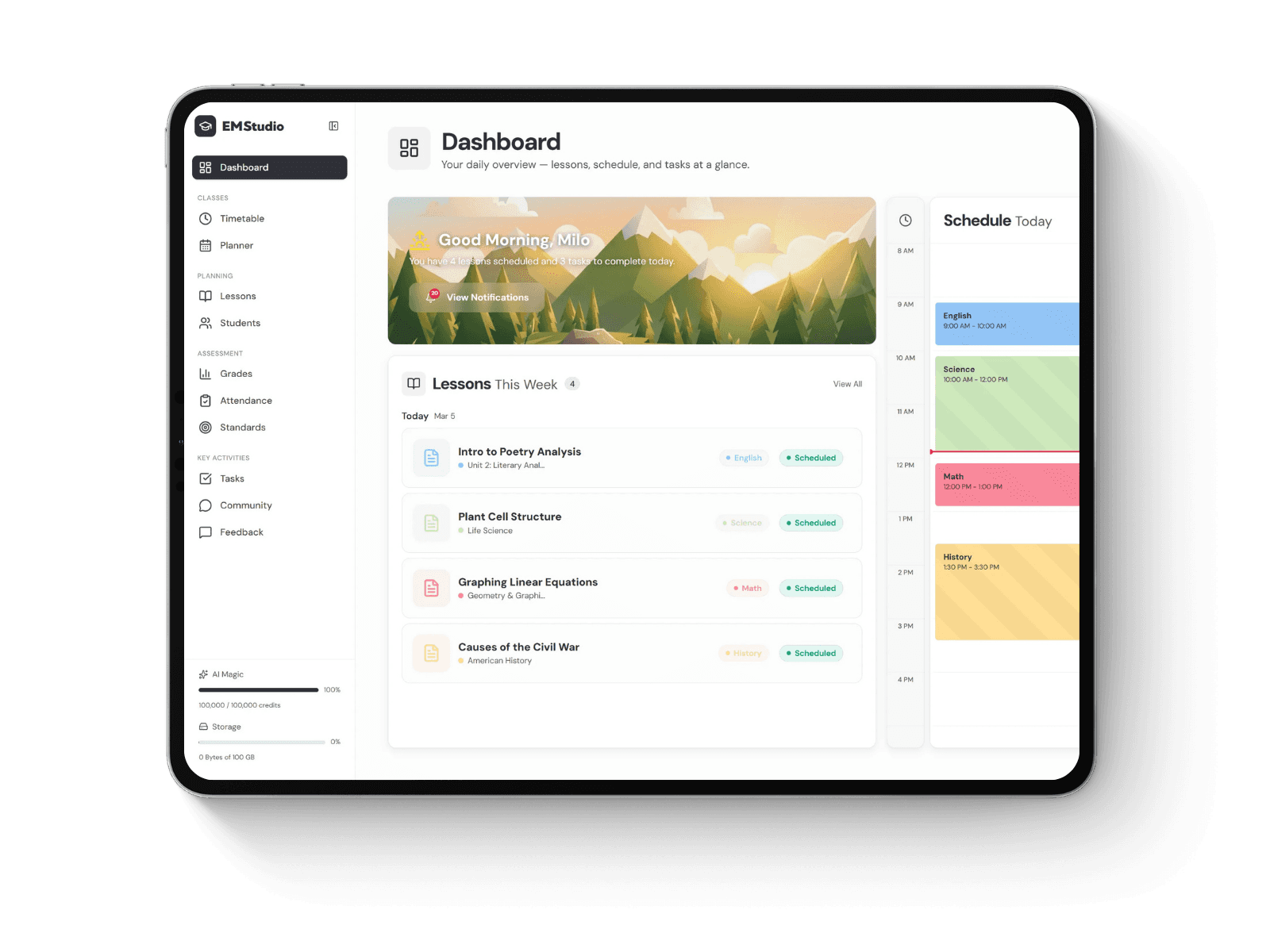
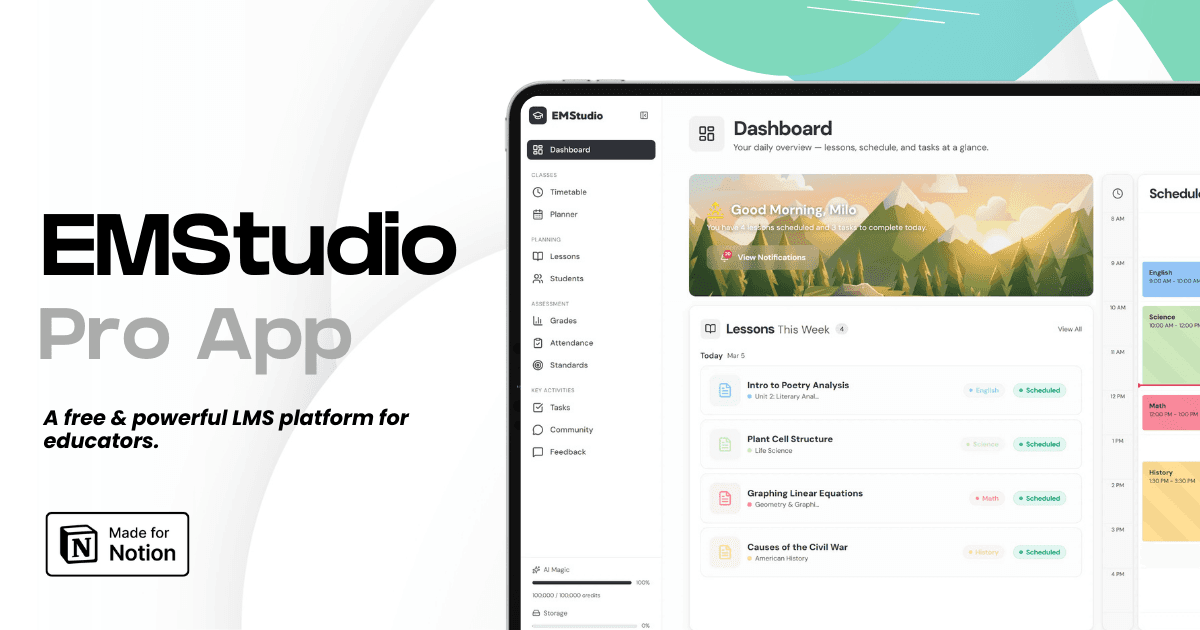
EMStudio is a free teaching management app — manage your classes, students, lessons, and more!
Learn More
Still grading everything by hand?
EMStudio is a free teaching management app — manage your classes, students, lessons, and more!
Learn More
Table of Contents
The 10 Best Resources for Math Learning
Here you can find the best option for every education/skill level, along with their prices and features. Let’s explore them in detail:
1. AllMath
Best for: Problem solving, step-by-step explanations, customized practice, quick calculations, and answer verifications
Pricing: Free
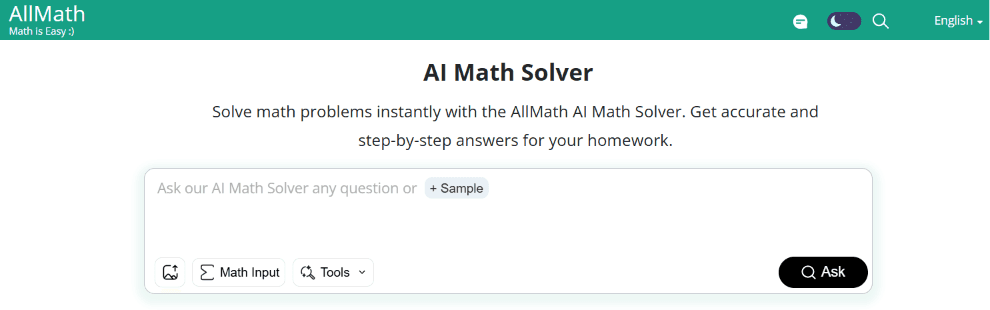
AllMath is an AI math solver designed to help users learn, practice, and solve simple to complex math problems (numeric and word) in seconds.
Not only does it provide an answer, but it also offers an accurate, step-by-step solution with explanations along the way. The AI solver has a built-in math keyboard that helps users type a math input in the correct format. Furthermore, it has integrated OCR, which allows users to upload photos of their math questions taken from textbooks or notebooks.
AllMath’s AI solver has two unique features named “Study Guide and Practice Test.” With the first one, students can create a detailed beginner-friendly study guide on any math topic they want. With the second one, users can create a practice test on a specific math topic and adjust its difficulty level according to their preferences.
On top of that, AllMath offers 500+ online calculators and problem-solving tools.
Pros:
Free of cost
No signup & very simple to use
Step-by-step explanations
Study guide and practice test
Wide range of calculators
Cons:
No human tutors available
May have certain daily usage limits
2. CalculatorsHub
Best for: Statistics coursework, checking class results, formula practice, unit and grade conversions
Best for: Quick calculations, unit conversions, financial computations, and problem-solving tools
Pricing: Free
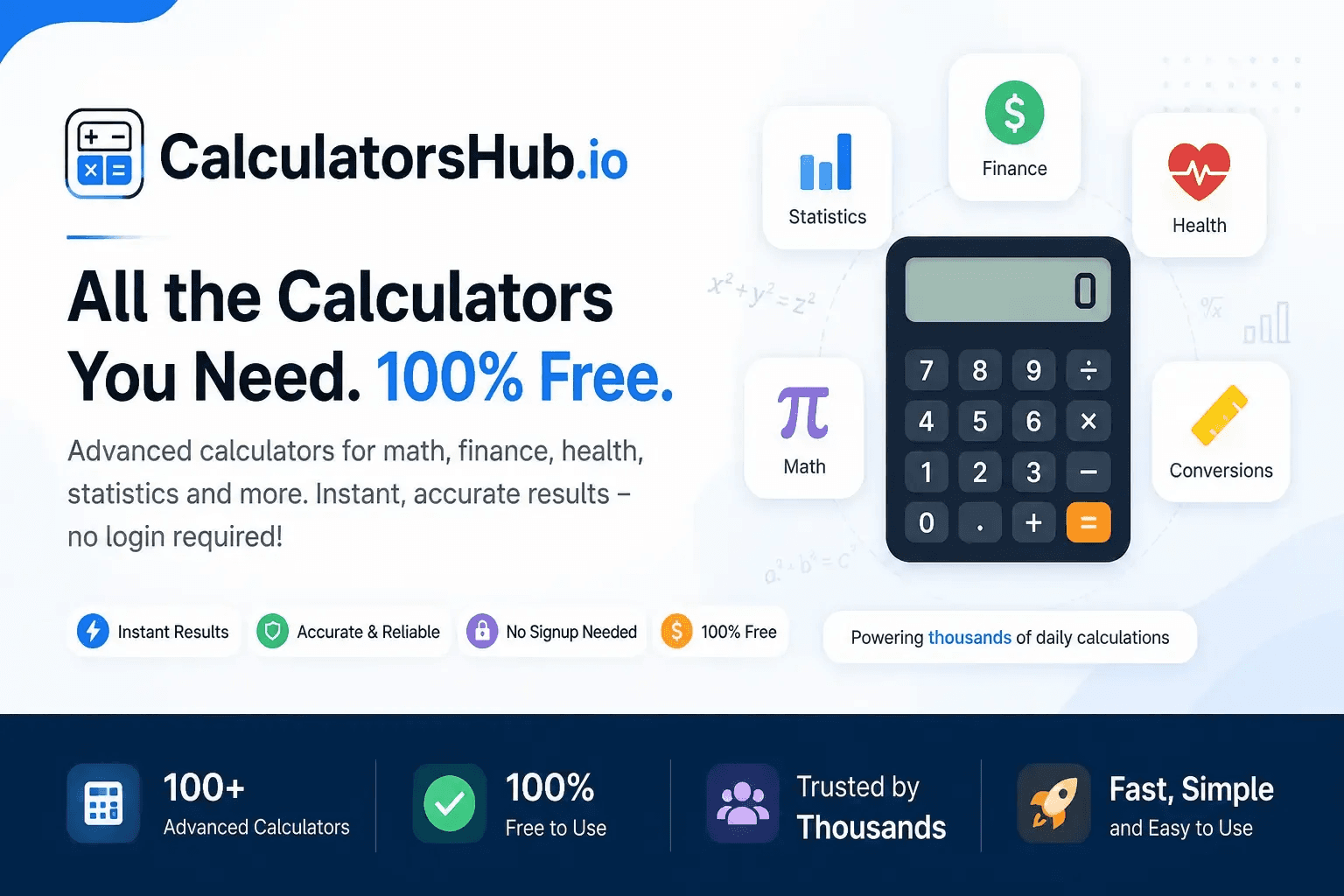
CalculatorsHub is an online resource offering a comprehensive collection of calculators and conversion tools designed for students, educators, and professionals.
From basic arithmetic to complex financial and scientific calculations, CalculatorsHub provides instant answers with detailed step-by-step explanations. The platform includes an intuitive interface and covers topics such as algebra, geometry, physics, finance, and health metrics.
On top of that, CalculatorsHub features 400+ specialized calculators for everyday needs, including mortgage, BMI, date, and currency converters.
Pros:
Free of cost
No signup required
Wide variety of calculators
Instant results with explanations
Useful for everyday calculations
Cons:
Not a full learning platform
No step-by-step tutoring available
3. Khan Academy
Best for: Beginner to advanced structured learning, video lectures, quizzes, and practice
Pricing: Free
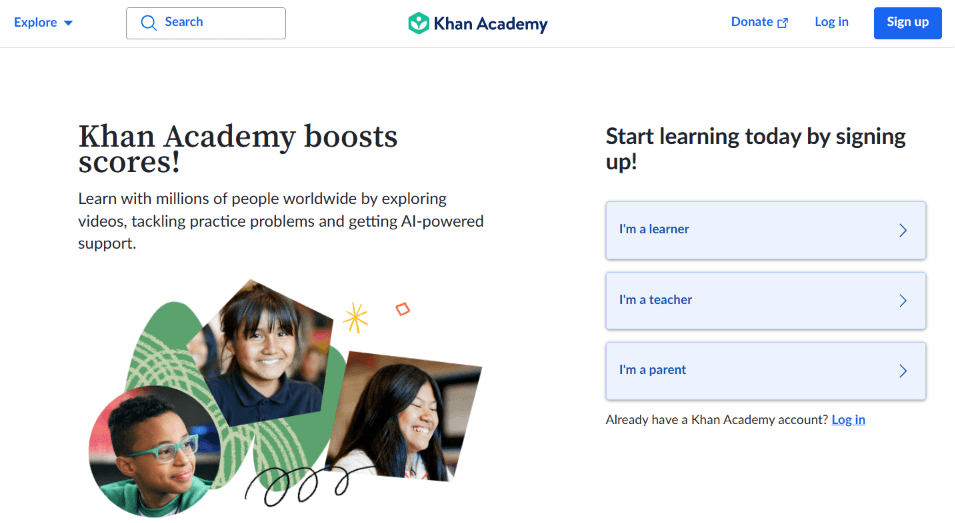
Khan Academy is an online platform that offers thousands of math lectures and courses all in one place. It covers various math topics that are well customized for students of all levels (kindergarten to college level).
After registering on their website, you can learn simple to complex math topics, including algebra, geometry, trigonometry, statistics, and calculus for free in interactive ways. These include video content, quizzes, and practice exercises.
Users can also track their progress and learn at any level they think is best for them. Other than math lectures, the platform also offers exam preparation classes (not live classes, though).
You can consider Khan Academy as a resource for simple video explanations on math topics at all education levels.
Pros:
Completely free
Video explanations
Practice exercises and quizzes
Learning dashboard to track progress
Lectures created by skilled math teachers
Cons:
Requires an account creation
4. My Engineering Buddy – Personalised Math & Engineering Help for Students
While self-learning platforms and math apps are excellent for practice, many students still need personalised guidance to understand difficult concepts fully. That's where My Engineering Buddy stands out as a valuable learning resource.
My Engineering Buddy provides one-on-one online tutoring and homework help for students studying Mathematics, Physics, Statistics, Calculus, Algebra, Engineering subjects, and many other STEM disciplines. Unlike automated learning tools, students receive direct support from experienced tutors who explain concepts step-by-step according to the student's pace and academic level.
The platform is especially useful for:
College and university students struggling with advanced math topics
Engineering students needing help with assignments and problem-solving
International students looking for flexible online tutoring
Learners preparing for exams, quizzes, and coursework deadlines
One major advantage of My Engineering Buddy is its personalised teaching approach. Students can schedule live tutoring sessions, ask doubts in real time, and get help with homework, projects, and exam preparation across a wide range of subjects.
For students who want more than just recorded lessons or practice worksheets, My Engineering Buddy combines human interaction with academic expertise, making it a strong companion alongside modern digital math learning resources.
5. IXL Math
Best for: Independent practice and learning for students in school and college
Pricing: From $9.95/month
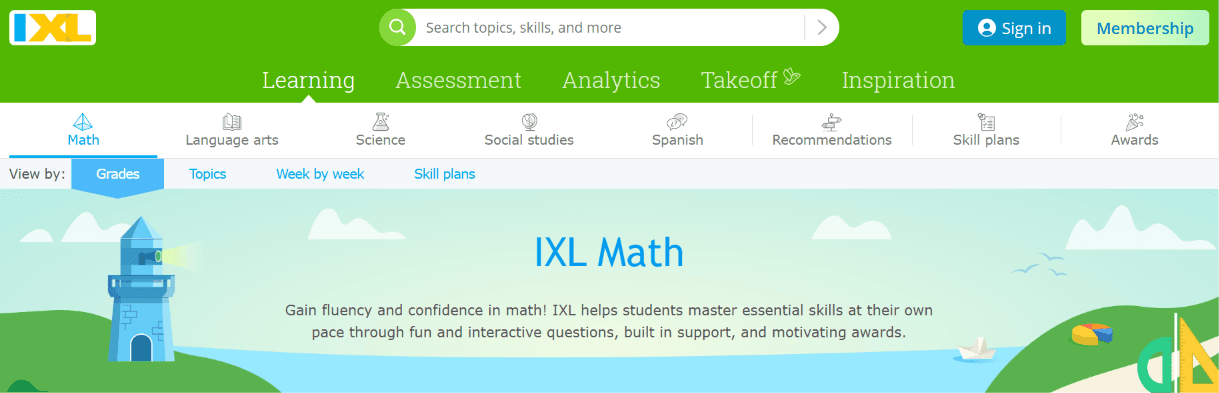
IXL Math is more focused on math practice than just lesson-based learning. It helps students stay engaged through various intriguing practice activities.
This platform consists of a library containing thousands of math lessons, practice questions, and more. It is suitable for students of all levels (kindergarten to grade 12) as it teaches 4500+ math skills and topics from simple counting to complex algebra and calculus.
IXL Math uses adaptive learning and gives students timely feedback. And, as learners progress, it adjusts the difficulty level automatically while also providing analysis and recommendations.
The platform is simple, yet it explains well whenever a learner commits a mistake or solves a question the wrong way. It does require a subscription to use it, and practice questions may be repetitive at times.
Pros:
Custom learning plans
A vast library of math skills
Feedback and recommendations
Adapts to a student’s level
Cons:
Paid platform
May feel repetitive for learners
6. Desmos
Best for: Visualization of complex functions, equations, formulas, graphs
Pricing: Free
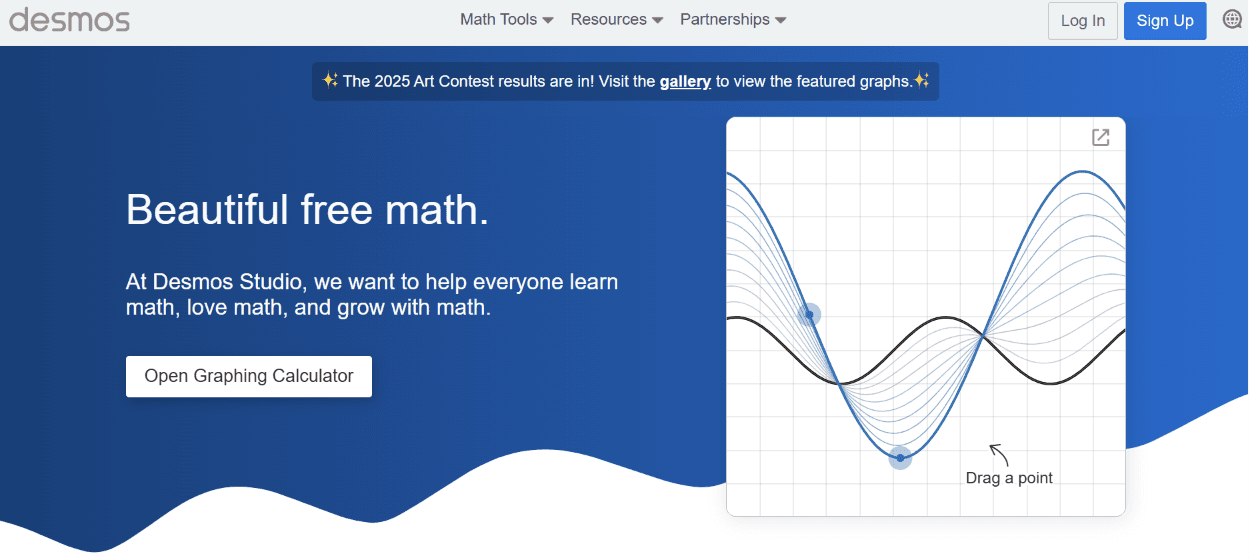
Desmos is a powerful resource for visual math learning. It helps students explore math concepts and complex topics visually so they can understand how everything works in real practice.
Its main tool is a graphing calculator, which allows users to solve linear, quadratic, and trigonometric equations with the help of graphs. Apart from that, the platform consists of various useful and interactive calculators.
Desmos makes complex topics like algebra, calculus, and functions easier to understand. Learners can adjust values and instantly see the changes as a consequence. The platform also offers animations, sliders, and regressions to fortify conceptual clarity.
Even so, it’s important to understand that by nature, Desmos isn’t a complete math course and doesn’t suit younger learners.
An app version of Desmos is available too (in App Store and Google Play Store).
Pros:
No charges
Simple and user-friendly
Very interactive
Accessible on any device
Great for self-learning
Cons:
Not a complete math suite
Not for young learners/beginners
7. Mathema
Best for: Young students looking for flexible math support
Pricing: Starts from $25 per hour
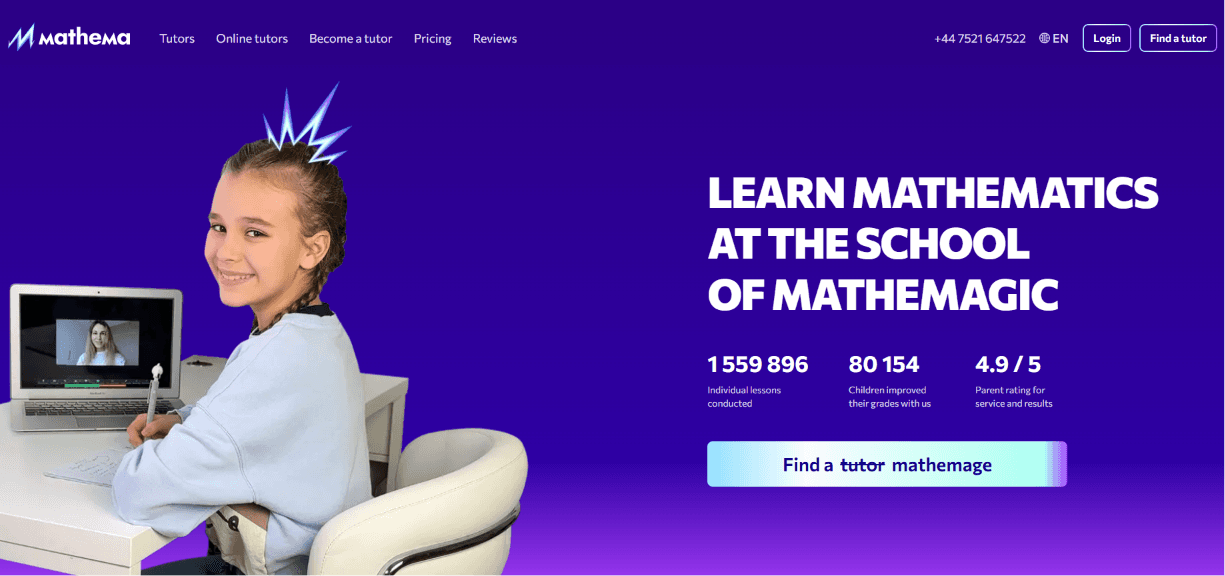
Mathema is like a complete virtual school system for kids from kindergarten to Grade 6. It offers engaging lessons, qualified teachers, flexible learning options, and a comprehensive curriculum.
With this platform, children can learn mathematics at their own pace in a much more friendly and supportive environment that encourages young ones to stay involved in math.
The expert teachers and the flexible time help reduce math anxiety, which is a solution to the problem faced by the majority of young learners.
This learning resource is available on desktop, tablet, and smartphone, so your child can learn using any device they are comfortable with. Furthermore, parents can track their child’s progress through assessments and progress reports.
However, it’s worth noting that Mathema is suitable only for children up to age 11.
Pros:
For early learners
Flexible hours
Support of expert teachers
Live sessions for homework and exam help
Progress reports for parents
Cons:
Paid (relatively expensive too)
Not available in all countries
8. Art of Problem Solving
Best for: Competition-level learning and a community to connect with
Pricing: Elementary school courses start from $15.99 a month. While middle and high school courses start from $107 per month
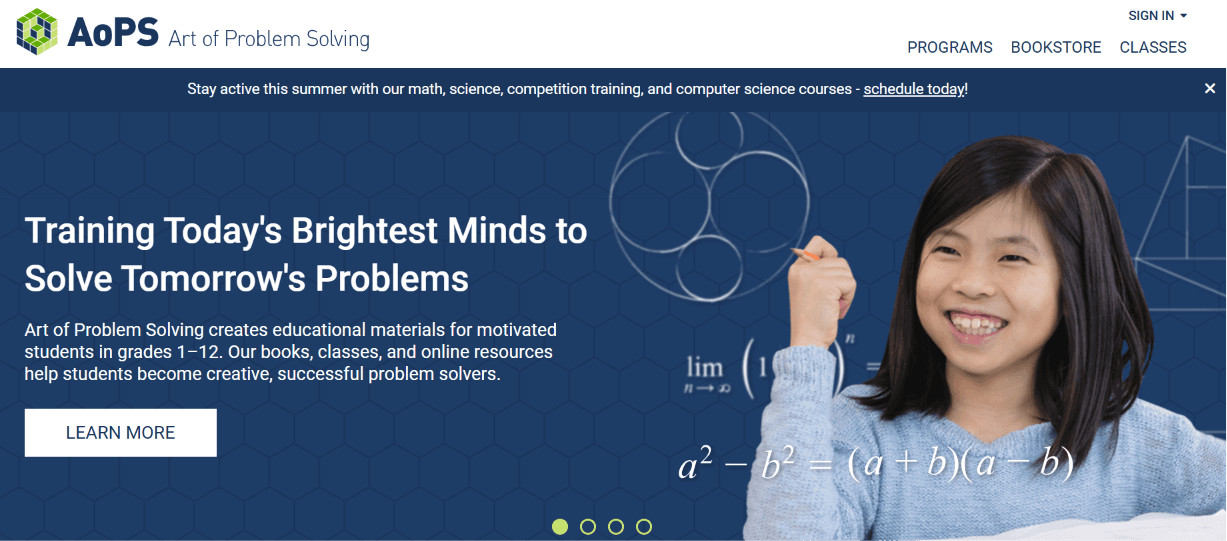
Art of Problem Solving (AoPS) offers math classes for students of elementary, middle, and high school. It focuses on simple to advanced mathematics and problem-solving skills.
This platform provides a variety of resources, including video lectures and interactive problems, along with a strong community that is designed for students who want to grow in their free time outside of school.
Younger students are provided with interactive lessons, so they stay engaged without being overwhelmed. Whereas older students can enroll in full math courses with live classes and assignments.
The classes offered by AoPS are not 1 on 1, though, which means that receiving personalized feedback is very rare. Course hours are also fixed and can’t be customized.
Pros:
High-quality courses and lessons
Active community for discussion
For both younger and older students
Live classes are available
Prepares students for universities and contests
Cons:
Expensive courses
Rigid timing (can’t be personalized)
9. Mathplanet
Best for: Written + video explanations and practice exercises for the US math curriculum (SAT, ACT exams)
Pricing: Free
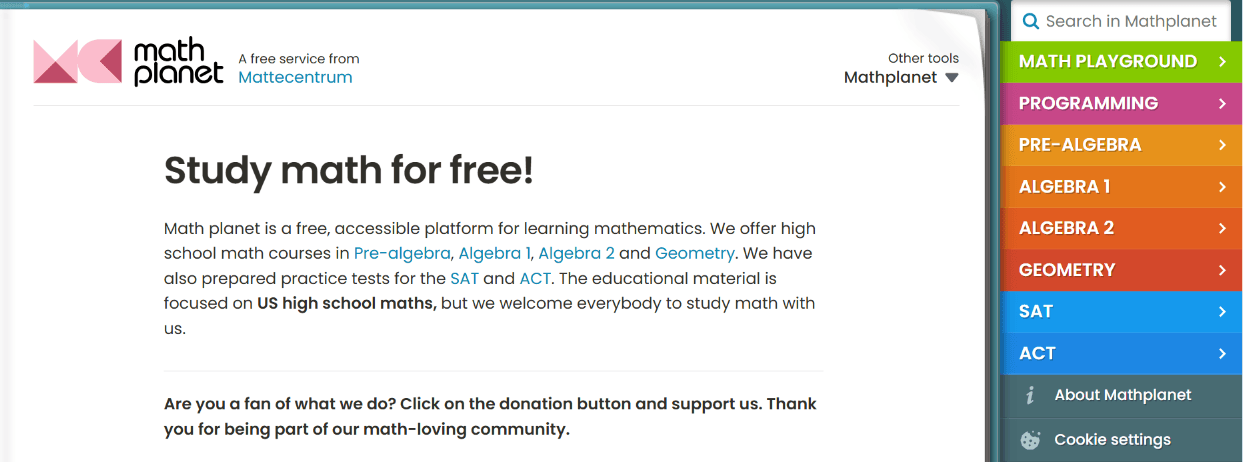
Mathplanet is a free online platform that offers a variety of learning resources. These include video classes, written content, and practice exercises. Lessons are provided in a simple format with clear explanations supported by practical examples.
The topics are well-aligned with US curricula as well as SAT and ACT exams. The main topics include algebra (pre, 1, 2) and geometry, which covers high school maths.
Most lectures are available in a written format, yet video explanations are available too. Once you are done with written/video explanations, you can enter practice tests for the SAT and ACT.
Mathplanet doesn’t include live tutors, which can make math learning a bit rigid and less motivating for young students.
Pros:
Completely free access
Good for high school students
Covers core high school math topics
Clear explanations with examples
Includes SAT and ACT practice materials
Cons:
Less interactive compared to modern platforms
No live teachers or feedback
10. Wolfram MathWorld
Best for: Advanced study of complex math topics
Pricing: Free
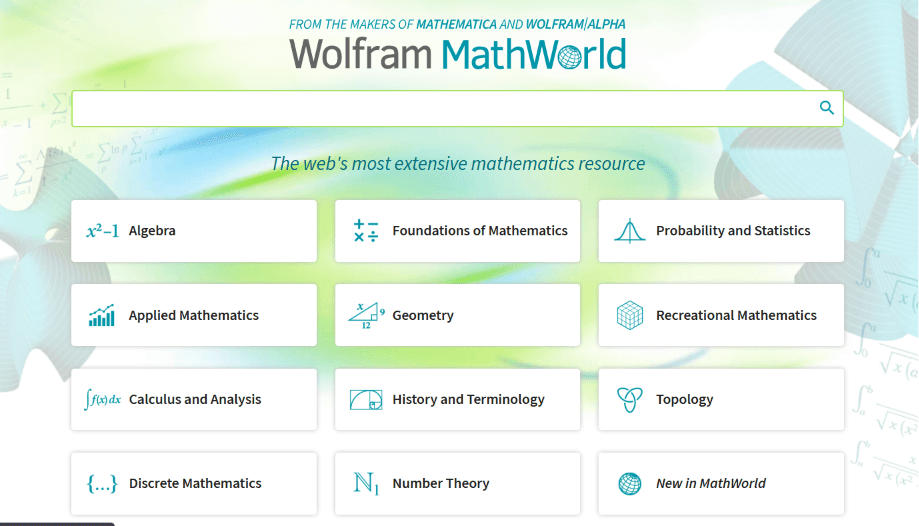
Wolfram MathWorld is a free online mathematics encyclopedia that covers thousands of topics, providing fully detailed articles. It was created by an American mathematician, Eric Weisstein.
MathWorld is one of the world’s most extensive resources for math articles with 13,000+ entries. It provides detailed definitions, examples, theorems, proofs, and illustrations for various simple to complex topics, including algebra, quantum field theory, topology, number theory, and more.
Due to the advanced language used for the explanations, this platform isn’t recommended for beginners. It is more suitable for older students, researchers, and educators who need in-depth theoretical math knowledge.
Pros:
A wealth of free knowledge
Covers a huge range of topics
Created by experts at an advanced level
Strong reference for formulas and definitions
Trusted by students and professionals
Cons:
Not for beginners (very advanced)
Complex language and terminology
11 (Bonus). Paul’s Online Math Notes
Best for: Revision, concept clarity, and independent math learning
Pricing: Free
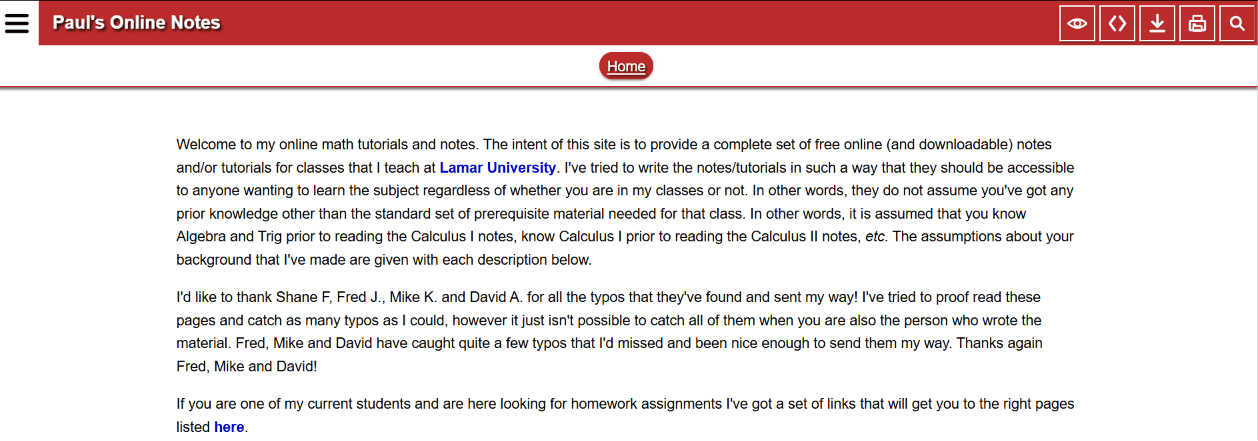
Paul’s Online Notes is a platform/website designed by Paul Dawkins, a professor at Lamar University in Texas, US. It offers a free collection of detailed tutorials and notes on different math topics, which are mostly based on his personal university classes.
The main topics covered are algebra, trigonometry, calculus, and differential equations. These are well explained through clear and structured lessons.
Doesn’t matter whether a student is enrolled at Lamar University or not; they can access all the content on the website for free. On top of it, they can also get access to Dawkins’ insider knowledge, where he provides cheat sheets, tables, lists of common math errors, and best practices.
Pros:
Structured lessons
Free and accessible for all learners
Prepared by a qualified math professor at Lamar University
Written explanations, examples, and practice problems
Covers high school to college-level math
Cons:
Not recommended for 1-on-1 learning (as no feedback is available)
Not for beginners
Key Takeaway
Choosing the right math learning resource depends on your skill level and goals. Some tools can be used for explanations and practice. While others can be used for visualization and advanced conceptual understanding.
For best results, combine 2 or 3 resources while keeping everything manageable. Start with easier topics, then move to advanced ones like algebra or calculus. Regular practice with the right use of learning resources can take your math skills to the next level.
The 10 Best Resources for Math Learning
Here you can find the best option for every education/skill level, along with their prices and features. Let’s explore them in detail:
1. AllMath
Best for: Problem solving, step-by-step explanations, customized practice, quick calculations, and answer verifications
Pricing: Free
AllMath is an AI math solver designed to help users learn, practice, and solve simple to complex math problems (numeric and word) in seconds.
Not only does it provide an answer, but it also offers an accurate, step-by-step solution with explanations along the way. The AI solver has a built-in math keyboard that helps users type a math input in the correct format. Furthermore, it has integrated OCR, which allows users to upload photos of their math questions taken from textbooks or notebooks.
AllMath’s AI solver has two unique features named “Study Guide and Practice Test.” With the first one, students can create a detailed beginner-friendly study guide on any math topic they want. With the second one, users can create a practice test on a specific math topic and adjust its difficulty level according to their preferences.
On top of that, AllMath offers 500+ online calculators and problem-solving tools.
Pros:
Free of cost
No signup & very simple to use
Step-by-step explanations
Study guide and practice test
Wide range of calculators
Cons:
No human tutors available
May have certain daily usage limits
2. CalculatorsHub
Best for: Statistics coursework, checking class results, formula practice, unit and grade conversions
Best for: Quick calculations, unit conversions, financial computations, and problem-solving tools
Pricing: Free
CalculatorsHub is an online resource offering a comprehensive collection of calculators and conversion tools designed for students, educators, and professionals.
From basic arithmetic to complex financial and scientific calculations, CalculatorsHub provides instant answers with detailed step-by-step explanations. The platform includes an intuitive interface and covers topics such as algebra, geometry, physics, finance, and health metrics.
On top of that, CalculatorsHub features 400+ specialized calculators for everyday needs, including mortgage, BMI, date, and currency converters.
Pros:
Free of cost
No signup required
Wide variety of calculators
Instant results with explanations
Useful for everyday calculations
Cons:
Not a full learning platform
No step-by-step tutoring available
3. Khan Academy
Best for: Beginner to advanced structured learning, video lectures, quizzes, and practice
Pricing: Free
Khan Academy is an online platform that offers thousands of math lectures and courses all in one place. It covers various math topics that are well customized for students of all levels (kindergarten to college level).
After registering on their website, you can learn simple to complex math topics, including algebra, geometry, trigonometry, statistics, and calculus for free in interactive ways. These include video content, quizzes, and practice exercises.
Users can also track their progress and learn at any level they think is best for them. Other than math lectures, the platform also offers exam preparation classes (not live classes, though).
You can consider Khan Academy as a resource for simple video explanations on math topics at all education levels.
Pros:
Completely free
Video explanations
Practice exercises and quizzes
Learning dashboard to track progress
Lectures created by skilled math teachers
Cons:
Requires an account creation
4. My Engineering Buddy – Personalised Math & Engineering Help for Students
While self-learning platforms and math apps are excellent for practice, many students still need personalised guidance to understand difficult concepts fully. That's where My Engineering Buddy stands out as a valuable learning resource.
My Engineering Buddy provides one-on-one online tutoring and homework help for students studying Mathematics, Physics, Statistics, Calculus, Algebra, Engineering subjects, and many other STEM disciplines. Unlike automated learning tools, students receive direct support from experienced tutors who explain concepts step-by-step according to the student's pace and academic level.
The platform is especially useful for:
College and university students struggling with advanced math topics
Engineering students needing help with assignments and problem-solving
International students looking for flexible online tutoring
Learners preparing for exams, quizzes, and coursework deadlines
One major advantage of My Engineering Buddy is its personalised teaching approach. Students can schedule live tutoring sessions, ask doubts in real time, and get help with homework, projects, and exam preparation across a wide range of subjects.
For students who want more than just recorded lessons or practice worksheets, My Engineering Buddy combines human interaction with academic expertise, making it a strong companion alongside modern digital math learning resources.
5. IXL Math
Best for: Independent practice and learning for students in school and college
Pricing: From $9.95/month
IXL Math is more focused on math practice than just lesson-based learning. It helps students stay engaged through various intriguing practice activities.
This platform consists of a library containing thousands of math lessons, practice questions, and more. It is suitable for students of all levels (kindergarten to grade 12) as it teaches 4500+ math skills and topics from simple counting to complex algebra and calculus.
IXL Math uses adaptive learning and gives students timely feedback. And, as learners progress, it adjusts the difficulty level automatically while also providing analysis and recommendations.
The platform is simple, yet it explains well whenever a learner commits a mistake or solves a question the wrong way. It does require a subscription to use it, and practice questions may be repetitive at times.
Pros:
Custom learning plans
A vast library of math skills
Feedback and recommendations
Adapts to a student’s level
Cons:
Paid platform
May feel repetitive for learners
6. Desmos
Best for: Visualization of complex functions, equations, formulas, graphs
Pricing: Free
Desmos is a powerful resource for visual math learning. It helps students explore math concepts and complex topics visually so they can understand how everything works in real practice.
Its main tool is a graphing calculator, which allows users to solve linear, quadratic, and trigonometric equations with the help of graphs. Apart from that, the platform consists of various useful and interactive calculators.
Desmos makes complex topics like algebra, calculus, and functions easier to understand. Learners can adjust values and instantly see the changes as a consequence. The platform also offers animations, sliders, and regressions to fortify conceptual clarity.
Even so, it’s important to understand that by nature, Desmos isn’t a complete math course and doesn’t suit younger learners.
An app version of Desmos is available too (in App Store and Google Play Store).
Pros:
No charges
Simple and user-friendly
Very interactive
Accessible on any device
Great for self-learning
Cons:
Not a complete math suite
Not for young learners/beginners
7. Mathema
Best for: Young students looking for flexible math support
Pricing: Starts from $25 per hour
Mathema is like a complete virtual school system for kids from kindergarten to Grade 6. It offers engaging lessons, qualified teachers, flexible learning options, and a comprehensive curriculum.
With this platform, children can learn mathematics at their own pace in a much more friendly and supportive environment that encourages young ones to stay involved in math.
The expert teachers and the flexible time help reduce math anxiety, which is a solution to the problem faced by the majority of young learners.
This learning resource is available on desktop, tablet, and smartphone, so your child can learn using any device they are comfortable with. Furthermore, parents can track their child’s progress through assessments and progress reports.
However, it’s worth noting that Mathema is suitable only for children up to age 11.
Pros:
For early learners
Flexible hours
Support of expert teachers
Live sessions for homework and exam help
Progress reports for parents
Cons:
Paid (relatively expensive too)
Not available in all countries
8. Art of Problem Solving
Best for: Competition-level learning and a community to connect with
Pricing: Elementary school courses start from $15.99 a month. While middle and high school courses start from $107 per month
Art of Problem Solving (AoPS) offers math classes for students of elementary, middle, and high school. It focuses on simple to advanced mathematics and problem-solving skills.
This platform provides a variety of resources, including video lectures and interactive problems, along with a strong community that is designed for students who want to grow in their free time outside of school.
Younger students are provided with interactive lessons, so they stay engaged without being overwhelmed. Whereas older students can enroll in full math courses with live classes and assignments.
The classes offered by AoPS are not 1 on 1, though, which means that receiving personalized feedback is very rare. Course hours are also fixed and can’t be customized.
Pros:
High-quality courses and lessons
Active community for discussion
For both younger and older students
Live classes are available
Prepares students for universities and contests
Cons:
Expensive courses
Rigid timing (can’t be personalized)
9. Mathplanet
Best for: Written + video explanations and practice exercises for the US math curriculum (SAT, ACT exams)
Pricing: Free
Mathplanet is a free online platform that offers a variety of learning resources. These include video classes, written content, and practice exercises. Lessons are provided in a simple format with clear explanations supported by practical examples.
The topics are well-aligned with US curricula as well as SAT and ACT exams. The main topics include algebra (pre, 1, 2) and geometry, which covers high school maths.
Most lectures are available in a written format, yet video explanations are available too. Once you are done with written/video explanations, you can enter practice tests for the SAT and ACT.
Mathplanet doesn’t include live tutors, which can make math learning a bit rigid and less motivating for young students.
Pros:
Completely free access
Good for high school students
Covers core high school math topics
Clear explanations with examples
Includes SAT and ACT practice materials
Cons:
Less interactive compared to modern platforms
No live teachers or feedback
10. Wolfram MathWorld
Best for: Advanced study of complex math topics
Pricing: Free
Wolfram MathWorld is a free online mathematics encyclopedia that covers thousands of topics, providing fully detailed articles. It was created by an American mathematician, Eric Weisstein.
MathWorld is one of the world’s most extensive resources for math articles with 13,000+ entries. It provides detailed definitions, examples, theorems, proofs, and illustrations for various simple to complex topics, including algebra, quantum field theory, topology, number theory, and more.
Due to the advanced language used for the explanations, this platform isn’t recommended for beginners. It is more suitable for older students, researchers, and educators who need in-depth theoretical math knowledge.
Pros:
A wealth of free knowledge
Covers a huge range of topics
Created by experts at an advanced level
Strong reference for formulas and definitions
Trusted by students and professionals
Cons:
Not for beginners (very advanced)
Complex language and terminology
11 (Bonus). Paul’s Online Math Notes
Best for: Revision, concept clarity, and independent math learning
Pricing: Free
Paul’s Online Notes is a platform/website designed by Paul Dawkins, a professor at Lamar University in Texas, US. It offers a free collection of detailed tutorials and notes on different math topics, which are mostly based on his personal university classes.
The main topics covered are algebra, trigonometry, calculus, and differential equations. These are well explained through clear and structured lessons.
Doesn’t matter whether a student is enrolled at Lamar University or not; they can access all the content on the website for free. On top of it, they can also get access to Dawkins’ insider knowledge, where he provides cheat sheets, tables, lists of common math errors, and best practices.
Pros:
Structured lessons
Free and accessible for all learners
Prepared by a qualified math professor at Lamar University
Written explanations, examples, and practice problems
Covers high school to college-level math
Cons:
Not recommended for 1-on-1 learning (as no feedback is available)
Not for beginners
Key Takeaway
Choosing the right math learning resource depends on your skill level and goals. Some tools can be used for explanations and practice. While others can be used for visualization and advanced conceptual understanding.
For best results, combine 2 or 3 resources while keeping everything manageable. Start with easier topics, then move to advanced ones like algebra or calculus. Regular practice with the right use of learning resources can take your math skills to the next level.
Still grading everything by hand?
EMStudio is a free teaching management app — manage your classes, students, lessons, and more!
Learn More
Still grading everything by hand?
EMStudio is a free teaching management app — manage your classes, students, lessons, and more!
Learn More



Notion4Teachers
Notion templates to simplify administrative tasks and enhance your teaching experience.



2026 Notion4Teachers. All Rights Reserved.
Notion4Teachers
Notion templates to simplify administrative tasks and enhance your teaching experience.
2026 Notion4Teachers. All Rights Reserved.
Notion4Teachers
Notion templates to simplify administrative tasks and enhance your teaching experience.
2026 Notion4Teachers. All Rights Reserved.