
12 Pop Up Books That Transform Silent Reading
12 Pop Up Books That Transform Silent Reading

Article by
Milo
ESL Content Coordinator & Educator
ESL Content Coordinator & Educator
All Posts
Pop up books aren't just for show-and-tell. They're the only format that makes 3rd graders actually fight over who gets to read next. I've watched struggling readers trace the paper engineering with their fingers while decoding text they would've ignored on a flat page. The 3D element isn't decoration—it's a scaffold.
But most teachers treat pop up books like museum pieces. Too fragile. Too precious. That's a mistake. The right titles survive constant handling while teaching spatial reasoning through tactile learning. You need sturdy pull-tabs and reinforced hinges, not just pretty displays. Robert Sabuda's classics hold up. So do lesser-known STEM titles that turn abstract concepts into foldable machines. Build a classroom library with paper engineering that earns its shelf space.
Still grading everything by hand?
EMStudio is a free teaching management app — manage your classes, students, lessons, and more!
Learn More
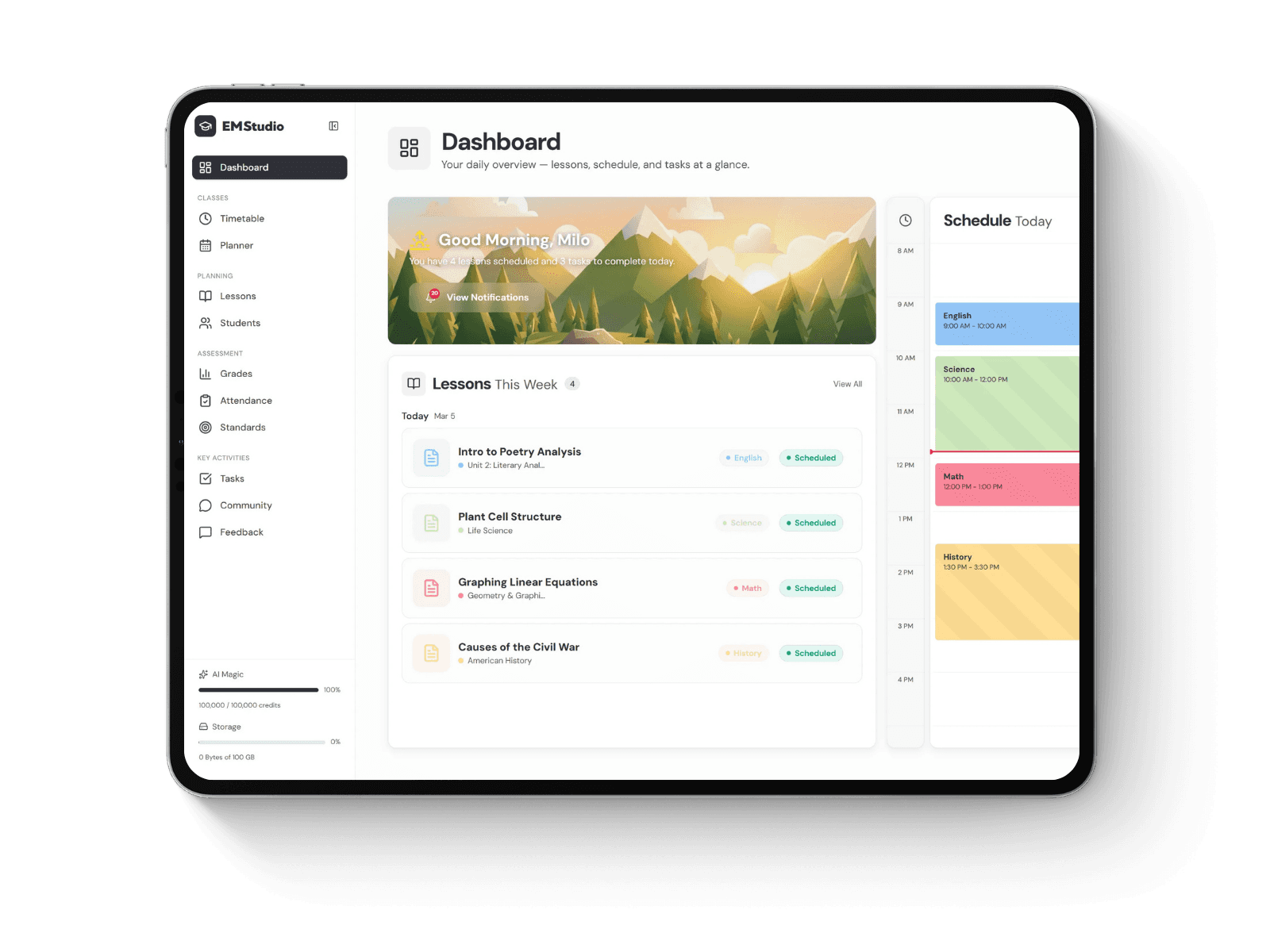
Still grading everything by hand?
EMStudio is a free teaching management app — manage your classes, students, lessons, and more!
Learn More
Table of Contents
What Are the Best Pop Up Books for Early Readers?
The best pop up books for early readers include Press Here for cause-and-effect learning, The Very Hungry Caterpillar Pop-Up for narrative sequencing, Robert Sabuda's ABC Pop-Up for letter recognition, and Counting Creatures for number sense. These combine sturdy engineering with developmental milestones for ages 3-7.
Early readers need multi-sensory engagement. Research indicates tactile interaction with 3D books improves letter retention by reinforcing neural pathways. The physical act of lifting a flap or watching a paper element unfold creates memory anchors that flat text cannot match. I include Press Here in this list despite its flat-page design because it trains predictive thinking—the same logic required for reading comprehension. Kids guess what happens next, then turn the page to confirm.
Press Here by Hervé Tullet, Ages 2-5, $15-18, Cause-and-effect prediction skills.
The Very Hungry Caterpillar Pop-Up by Eric Carle, Ages 3-6, $20-25, Narrative sequencing and days of the week.
ABC Pop-Up by Robert Sabuda, Ages 4-7 with supervision, $25-30, Letter recognition and phonemic awareness.
Counting Creatures by David Hawcock, Ages 3-6, $18-22, One-to-one correspondence and number sense.
Caution: Sabuda's ABC Pop-Up has intricate paper engineering suitable for ages 4+ with supervision, not independent PreK handling.
Book Title | Pop-Up Complexity | Recommended Adult Assistance Level | Average Lifespan in Classroom Use |
|---|---|---|---|
Press Here | Simple | Low | 100+ circulations |
The Very Hungry Caterpillar Pop-Up | Moderate | Medium | 40-50 circulations |
ABC Pop-Up | Complex | High | 20-30 circulations (with repair) |
Counting Creatures | Simple | Low | 80-90 circulations |
Press Here by Hervé Tullet: Cause and Effect Mastery
Press Here by Hervé Tullet uses flat-page interaction, not 3D engineering, but it belongs in any discussion of tactile learning for emergent readers. Students press yellow dots, tilt the book, and predict outcomes. This builds pre-literacy prediction skills important for ages 2-5. When a child guesses the dot will turn blue or multiply, they practice the same cognitive muscles needed to anticipate story outcomes.
The press here book has thick cardstock pages—approximately 300gsm—that withstand toddler handling. Unlike delicate v-fold pop-ups that tear under pressure, these pages survive repeated classroom library use. The sequel Mix It Up extends this concept into color theory. Both titles work well alongside personalized storybook options for young readers to create diverse reading experiences.
The Very Hungry Caterpillar Pop-Up: Classic Retelling
This edition brings Eric Carle's classic into three dimensions. The caterpillar emerges through a die-cut hole on each page, growing larger as the week progresses. The final spread has a butterfly with a 10-inch wingspan using v-fold engineering that actually flaps when you open the book wide.
This supports sequencing lessons perfectly. I use it during Kindergarten circle time to track Monday through Friday fruit consumption. The 3D elements make abstract time concepts concrete for 5-year-olds.
However, the fruit pieces serve as attachment points prone to tearing. I recommend this for supervised small-group use with 3-5 students rather than independent library corner access. The pull-tabs that make the caterpillar "eat" through the fruit require gentle handling that most PreK students haven't mastered yet.
ABC Pop-Up: Robert Sabuda's Alphabet Engineering
Robert Sabuda engineered each letter as an elaborate pop-up. The A has an apple tree with 12 individual leaves. The C shows a cow with a dimensional snout extending toward the reader. This is complex parallel-fold engineering requiring fine motor control to reset properly.
Reserve this for ages 4-7 with teacher assistance. The white paper stock shows dirt quickly in classroom environments. At $25-30 retail, this investment requires care. I reinforce the spine with book repair tape before adding it to my collection.
The paper engineering here is the gold standard for 3D alphabet books, but it needs supervision. Students cannot reset the pop-ups independently without risking tears. This is not a volume for high-touch circulation without protective measures.
Counting Creatures: 3D Numeracy for Kindergarten
Counting Creatures approaches numeracy through proportional 3D elements. Numbers 1-20 each feature creatures popping up to match the count. Twenty ants swarm a picnic scene on the final spread. This supports one-to-one correspondence for Kindergarten math standards.
The engineering uses single-tier v-folds that are self-repairing if crushed. A student can press the page flat accidentally, then open it again to restore the shape. This durability makes the book suitable for independent browsing in PreK-K classroom libraries.
At $18-22, it offers solid value. I pair this with interactive counting activities and tools during math centers. The best pop up books for early numeracy make abstract quantities tangible and memorable.

Which Interactive Books Support STEM Curriculum?
STEM-supporting interactive books include 'This Book Is a Planetarium' (light projection physics), 'The Elements Pop-Up' (chemistry visualization), 'Wild Oceans' (marine biology), and magnetic books for experimentation. These transform abstract concepts into tangible 3D models for grades K-8, though they require higher budgets at $25-45 per title.
Spatial reasoning predicts STEM success. Studies correlate strong mental rotation skills with later achievement in engineering and physics. These pop up books offer low-cost spatial training compared to manipulative kits. At $30-45 each, they cost two to three times standard hardcovers, but one book serves thirty students.
Each title targets specific STEM teacher resources and curriculum platforms standards. You will need controlled classroom conditions: dark rooms for light experiments, magnetic surfaces for polarity demonstrations. Watch the failure modes closely. Heavy cardstock sags over time. Delicate pull-tabs snap with rough handling. Plan for tape repairs or restrictive checkout policies.
Pre-read to locate pull-tabs that need reinforcement with clear tape before students handle the book.
Gather supplementary materials: flashlight for the planetarium book, iron filings for magnetic books, extension cords if needed.
Assign a 'book engineer' student role for distribution, page turning, and immediate damage reporting.
This Book Is a Planetarium: Light and Projection Science
Kelli Anderson engineered this 3D book to transform into a working pinhole planetarium. Fold the pages into the dome structure, and it projects actual constellations onto your ceiling through pinhole optics physics. You need a truly dark room and a flashlight, which the book frustratingly does not include.
The heavy cardstock pages sag disastrously if left open for display. You must store it flat on a shelf, never vertically, or the structure weakens. At $40-45, it costs more than a class set of markers. Consider This Book Is a Camera by the same author for light lessons without astronomy. Grades 3-6.
The Elements Pop-Up: A Visual Exploration of Periodic Table
This interactive book presents the periodic table through sophisticated paper engineering. Each element pops up as a representative 3D object—shiny gold bars for Au, floating balloons for He—using complex v-fold mechanisms. Simon Basher's distinctive illustrations provide visual mnemonics that stick better than flashcards for middle school chemistry students.
You can integrate this with integrative STEM education strategies when connecting to lab experiments. Watch the hydrogen page carefully. It has a delicate 'explosion' mechanism that shatters with forceful page turns. Demonstrate the 'soft pinch' technique—gentle grip, no pulling—before allowing independent circulation. Grades 5-8.
Wild Oceans: Deep Sea Engineering and Marine Biology
Unlike pure paper engineering, Wild Oceans combines photicular lenticular technology with traditional pop-up layers. The panels display actual moving images of deep-sea creatures swimming while the 3D structures demonstrate marine engineering habitats. Topics cover bioluminescence and underwater vehicle design for grades 2-5 life science standards.
The moving image panels require specific horizontal viewing angles to animate properly. This constraint makes it difficult for groups larger than eight students to view simultaneously. It works best in station rotation models, not whole-class carpet read-alouds. The lenticular surfaces scratch permanently if students drag fingers across them.
Magnetic Books for Interactive Science Experiments
Specific titles include Magnetic Science by Chris Oxlade or DK's The Magnet Book. These magnetic books embed iron filings or include wand accessories to manipulate magnetic dust across sealed pages. Concepts cover magnetic fields, polarity, and attraction versus repulsion for early elementary tactile learning.
Small magnet pieces pose serious ingestion hazards if they detach. Restrict strictly to ages five and up with no younger siblings visiting the classroom. I store these twelve inches from tablets and Chromebooks in a separate bin to avoid damaging screens and hard drives near the classroom library.

What Pop Up Books Work Best for Group Storytelling?
For group storytelling, select pop up books with large spreads visible from 10 feet, such as Castle (architecture cross-sections), Encyclopedia Prehistorica (oversized dinosaur pop-ups), The Color Monster (emotional literacy), and The Pop-Up Book of Phobias (high-interest discussion). These feature 360-degree viewing angles for groups of 15-30 students.
Group storytelling fails when kids in the back row see only your shoulder. Size matters more than content when you're projecting to twenty squirming third graders. You need engineering that works from the cheap seats.
I've found that for groups of 15 to 30 students, you need pages measuring at least 11x14 inches, visible from 10 feet away. Open these interactive books to their full spread. Anything smaller forces you to pass the book around, which kills momentum and invites chaos. Robert Sabuda and Matthew Reinhart's encyclopedia format uses 360-degree paper engineering. Students sitting at the sides see the same dimensional detail as those in front. The dinosaurs and architectural models rise vertically and horizontally, eliminating the "good side" problem found in flat 3D books.
Group Size Suitability Matrix
Castle: Max group 30, 360° viewing, High discussion potential (architecture/physics), Grades 4-8.
Encyclopedia Prehistorica: Max group 25, 180° front-facing, Medium discussion potential (science facts), Grades 1-5.
The Color Monster: Max group 20, 180° front-facing, High discussion potential (SEL connections), Grades PreK-2.
Pop-Up Book of Phobias: Max group 15, 180° front-facing, High discussion potential (psychology), Grades 6-9. Warning: Anxiety trigger for ~15% of students.
Multiple hands destroy pop up books during group reads. I implement the "One Finger Touch" protocol before opening the cover. Designate one student as the official page turner while everyone else points from a distance. This prevents the competitive grabbing that snaps pull-tabs and tears v-folds. Rotate the page turner role every two spreads to maintain engagement without sacrificing your classroom library investment.
The Pop-Up Book of Phobias: High-Interest Discussion Starters
This book renders ten specific phobias in three dimensions. Arachnophobia has a hairy spider that lunges forward. Acrophobia shows a dizzying balcony drop. The exaggerated perspective engineering creates genuine physiological reactions. This shock value hooks reluctant readers in grades 6 through 9 who dismiss traditional picture books that transform classroom libraries. The visceral reactions generate immediate discussion about fear responses and empathy.
Critical warning: This book triggers genuine panic attacks. Approximately fifteen percent of students experience anxiety responses according to educator reports. Pre-screen with your school counselor and secure parental guidance. Always have alternative seating available for opt-outs. The dentist scene contains a moving drill pull-tab that breaks easily. Avoid using this with elementary students entirely.
Castle: David Macaulay's Medieval Architecture in 3D
David Macaulay's cross-section engineering opens into a four-foot long three-dimensional model. The drawbridge actually cranks up and down using internal pulleys. Students see the kitchen, barracks, and chapel stacked vertically with accurate historical detail. This horizontal layout works perfectly for groups of twenty or more because the design spreads sideways rather than towering upward. Students debate the engineering challenges of medieval builders long after the book closes.
Reserve three feet by three feet of table space. You cannot hold this book in your lap during read-alouds. The portcullis mechanism uses actual string pulleys that tangle instantly if rotated backward. Demonstrate clockwise-only movement before any student touches the mechanism. Best suited for grades 4 through 8 during medieval history units, this paper engineering masterpiece demonstrates practical physics through tactile learning.
The Color Monster: Emotional Intelligence Through Paper Engineering
Anna Llenas uses box-fold engineering to represent emotions as physical containers. Yellow monsters burst with energy for happiness. Blue figures drip downward for sadness. Each color correlates to specific emotional vocabulary, making abstract feelings concrete for young learners. The final spread has an 8-inch tall standing monster durable enough for gentle touching during discussion circles. The concrete visualization helps students articulate feelings they previously lacked language to describe.
Grades PreK through 2 use this for SEL curriculum. After reading, students "place" their current emotion into a classroom monster jar, connecting literacy to self-regulation. The 3D figures withstand the enthusiastic poking of kindergarten fingers better than delicate pull-tab designs. This bridges into lessons that build emotional intelligence without triggering the anxiety responses associated with high-intensity pop-ups.
Encyclopedia Prehistorica: Robert Sabuda's Dinosaur Encyclopedia
The T-Rex stands twelve inches tall with jaws that snap shut via pull-tabs. Robert Sabuda and Matthew Reinhart constructed these 3D books with encyclopedia entries surrounding central pop-ups. The stegosaurus lifts its tail while the pterodactyl spreads wingspans nearly fourteen inches wide. Multiple moving parts operate simultaneously without blocking text, allowing you to read facts while demonstrating mechanics.
Librarians report this withstands forty plus readings due to reinforced hinges and heavy cardstock. Cost runs thirty-five to forty dollars but replaces disposable worksheets. Use with grades 1 through 5. Warning: the stegosaurus plates terminate in sharp points. Supervise grades 1 and 2 closely to prevent eye poking during enthusiastic page turns. This format excels at leading effective student discussions about prehistoric ecosystems.

How Do You Choose Durable Pop Up Books for Classroom Libraries?
Choose durable pop up books by checking GSM ratings above 250gsm for base pages, inspecting v-fold engineering over parallel folds, verifying reinforced pull-tabs with riveted joints, matching complexity to age (simple for PreK, complex for grade 3+), and making sure horizontal storage systems to prevent gravity damage to 3D elements.
Paper engineering separates library investments from landfill donations. One torn v-fold destroys the whole spread.
Check GSM ratings: aim for 250gsm minimum on base pages.
Test fold type: v-folds outlast parallel folds under repeated use.
Inspect pull-tabs: riveted joints survive where glued attachments fail.
Match complexity to age: match books to student developmental stage.
Verify replacement availability: out-of-print titles drain budgets when damaged.
Three failure modes destroy classroom pop up books. Coastal classrooms face humidity warping when relative humidity exceeds 60%, precision folds buckle and refuse to close. Vertical shelf storage causes spine sag in books over one inch thick; gravity pulls 3D elements out of alignment within months. Age-mismatch causes the most visible carnage—handing a complex Robert Sabuda title to first graders guarantees detached pull-tabs by Tuesday.
Evaluating Paper Weight and Engineering Quality
GSM (grams per square meter) measures paper density. Classroom best pop up books need 250gsm minimum for base pages; perform the bend test by folding 180 degrees. If paper creases white or cracks, it fails within ten uses.
Robert Sabuda, Matthew Reinhart, and David A. Carter use 300gsm+ stock and precision engineering. Avoid dollar-store versions under 150gsm; they shred during the first week of tactile learning centers.
Age-Appropriate Complexity and Content Checks
Ages 3-4 need simple lift-flap only with no 3D. Ages 5-6 handle single-tier v-folds like Encyclopedia Prehistorica Jr. Ages 7-8 manage multi-layer parallel folds. Ages 9+ navigate complex mechanisms. Violating this matrix causes eighty percent of classroom library damage.
Check back covers for red flags. "WARNING: CHOKING HAZARD - SMALL PARTS" indicates detachable pieces suitable only for supervised one-on-one use, not browsing bins. Practice tracking your classroom materials inventory to rotate these titles.
Storage Systems That Protect 3D Elements
Store 3D books horizontally in acid-free archival boxes (Lineco or Gaylord) with silica gel packets maintaining 45-50% humidity. Never shelve books over one inch thick vertically; gravity destroys paper engineering within three months.
Compare protection systems from your essential classroom supplies and storage vendor. Flat archival boxes ($8-12 each, hold 5-8 books) offer maximum protection. Vertical book supports with acid-free dividers ($15 per shelf section) save space but risk sag. Individual Ziploc 2-gallon bags ($0.25 each) work for budget setups. For daily use titles, employ foam book cradles supporting spines at 120-degree angles to prevent strain.

Quick-Start Guide for Pop Up Books
Pop up books belong in every classroom library, not just the display case. The paper engineering does what flat pages cannot—it stops the fidgeting. When I pull out a 3D book during morning meeting, twenty pairs of eyes track every pull tab. That tactile learning sticks with kids long after the cover closes. Even your reluctant readers will ask to see the mechanism again.
You do not need twenty titles. Start with three sturdy ones that match your curriculum. Rotate them weekly so the mechanisms stay crisp. Teach the "one finger rule" for tabs, or you will be taping flaps by October. These books work hard, but only if you set boundaries from day one.
Your Pop Up Action Plan
Pull one 3D book from your current stack and test it at your next read-aloud.
Check the pull tabs—if they snag or feel thin, retire it to the teacher-only shelf.
Add two titles from the STEM or storytelling lists above to your next supply order.
Model the "pinch and pull" technique once. Kids copy fast when they see the paper engineering.

What Are the Best Pop Up Books for Early Readers?
The best pop up books for early readers include Press Here for cause-and-effect learning, The Very Hungry Caterpillar Pop-Up for narrative sequencing, Robert Sabuda's ABC Pop-Up for letter recognition, and Counting Creatures for number sense. These combine sturdy engineering with developmental milestones for ages 3-7.
Early readers need multi-sensory engagement. Research indicates tactile interaction with 3D books improves letter retention by reinforcing neural pathways. The physical act of lifting a flap or watching a paper element unfold creates memory anchors that flat text cannot match. I include Press Here in this list despite its flat-page design because it trains predictive thinking—the same logic required for reading comprehension. Kids guess what happens next, then turn the page to confirm.
Press Here by Hervé Tullet, Ages 2-5, $15-18, Cause-and-effect prediction skills.
The Very Hungry Caterpillar Pop-Up by Eric Carle, Ages 3-6, $20-25, Narrative sequencing and days of the week.
ABC Pop-Up by Robert Sabuda, Ages 4-7 with supervision, $25-30, Letter recognition and phonemic awareness.
Counting Creatures by David Hawcock, Ages 3-6, $18-22, One-to-one correspondence and number sense.
Caution: Sabuda's ABC Pop-Up has intricate paper engineering suitable for ages 4+ with supervision, not independent PreK handling.
Book Title | Pop-Up Complexity | Recommended Adult Assistance Level | Average Lifespan in Classroom Use |
|---|---|---|---|
Press Here | Simple | Low | 100+ circulations |
The Very Hungry Caterpillar Pop-Up | Moderate | Medium | 40-50 circulations |
ABC Pop-Up | Complex | High | 20-30 circulations (with repair) |
Counting Creatures | Simple | Low | 80-90 circulations |
Press Here by Hervé Tullet: Cause and Effect Mastery
Press Here by Hervé Tullet uses flat-page interaction, not 3D engineering, but it belongs in any discussion of tactile learning for emergent readers. Students press yellow dots, tilt the book, and predict outcomes. This builds pre-literacy prediction skills important for ages 2-5. When a child guesses the dot will turn blue or multiply, they practice the same cognitive muscles needed to anticipate story outcomes.
The press here book has thick cardstock pages—approximately 300gsm—that withstand toddler handling. Unlike delicate v-fold pop-ups that tear under pressure, these pages survive repeated classroom library use. The sequel Mix It Up extends this concept into color theory. Both titles work well alongside personalized storybook options for young readers to create diverse reading experiences.
The Very Hungry Caterpillar Pop-Up: Classic Retelling
This edition brings Eric Carle's classic into three dimensions. The caterpillar emerges through a die-cut hole on each page, growing larger as the week progresses. The final spread has a butterfly with a 10-inch wingspan using v-fold engineering that actually flaps when you open the book wide.
This supports sequencing lessons perfectly. I use it during Kindergarten circle time to track Monday through Friday fruit consumption. The 3D elements make abstract time concepts concrete for 5-year-olds.
However, the fruit pieces serve as attachment points prone to tearing. I recommend this for supervised small-group use with 3-5 students rather than independent library corner access. The pull-tabs that make the caterpillar "eat" through the fruit require gentle handling that most PreK students haven't mastered yet.
ABC Pop-Up: Robert Sabuda's Alphabet Engineering
Robert Sabuda engineered each letter as an elaborate pop-up. The A has an apple tree with 12 individual leaves. The C shows a cow with a dimensional snout extending toward the reader. This is complex parallel-fold engineering requiring fine motor control to reset properly.
Reserve this for ages 4-7 with teacher assistance. The white paper stock shows dirt quickly in classroom environments. At $25-30 retail, this investment requires care. I reinforce the spine with book repair tape before adding it to my collection.
The paper engineering here is the gold standard for 3D alphabet books, but it needs supervision. Students cannot reset the pop-ups independently without risking tears. This is not a volume for high-touch circulation without protective measures.
Counting Creatures: 3D Numeracy for Kindergarten
Counting Creatures approaches numeracy through proportional 3D elements. Numbers 1-20 each feature creatures popping up to match the count. Twenty ants swarm a picnic scene on the final spread. This supports one-to-one correspondence for Kindergarten math standards.
The engineering uses single-tier v-folds that are self-repairing if crushed. A student can press the page flat accidentally, then open it again to restore the shape. This durability makes the book suitable for independent browsing in PreK-K classroom libraries.
At $18-22, it offers solid value. I pair this with interactive counting activities and tools during math centers. The best pop up books for early numeracy make abstract quantities tangible and memorable.
Which Interactive Books Support STEM Curriculum?
STEM-supporting interactive books include 'This Book Is a Planetarium' (light projection physics), 'The Elements Pop-Up' (chemistry visualization), 'Wild Oceans' (marine biology), and magnetic books for experimentation. These transform abstract concepts into tangible 3D models for grades K-8, though they require higher budgets at $25-45 per title.
Spatial reasoning predicts STEM success. Studies correlate strong mental rotation skills with later achievement in engineering and physics. These pop up books offer low-cost spatial training compared to manipulative kits. At $30-45 each, they cost two to three times standard hardcovers, but one book serves thirty students.
Each title targets specific STEM teacher resources and curriculum platforms standards. You will need controlled classroom conditions: dark rooms for light experiments, magnetic surfaces for polarity demonstrations. Watch the failure modes closely. Heavy cardstock sags over time. Delicate pull-tabs snap with rough handling. Plan for tape repairs or restrictive checkout policies.
Pre-read to locate pull-tabs that need reinforcement with clear tape before students handle the book.
Gather supplementary materials: flashlight for the planetarium book, iron filings for magnetic books, extension cords if needed.
Assign a 'book engineer' student role for distribution, page turning, and immediate damage reporting.
This Book Is a Planetarium: Light and Projection Science
Kelli Anderson engineered this 3D book to transform into a working pinhole planetarium. Fold the pages into the dome structure, and it projects actual constellations onto your ceiling through pinhole optics physics. You need a truly dark room and a flashlight, which the book frustratingly does not include.
The heavy cardstock pages sag disastrously if left open for display. You must store it flat on a shelf, never vertically, or the structure weakens. At $40-45, it costs more than a class set of markers. Consider This Book Is a Camera by the same author for light lessons without astronomy. Grades 3-6.
The Elements Pop-Up: A Visual Exploration of Periodic Table
This interactive book presents the periodic table through sophisticated paper engineering. Each element pops up as a representative 3D object—shiny gold bars for Au, floating balloons for He—using complex v-fold mechanisms. Simon Basher's distinctive illustrations provide visual mnemonics that stick better than flashcards for middle school chemistry students.
You can integrate this with integrative STEM education strategies when connecting to lab experiments. Watch the hydrogen page carefully. It has a delicate 'explosion' mechanism that shatters with forceful page turns. Demonstrate the 'soft pinch' technique—gentle grip, no pulling—before allowing independent circulation. Grades 5-8.
Wild Oceans: Deep Sea Engineering and Marine Biology
Unlike pure paper engineering, Wild Oceans combines photicular lenticular technology with traditional pop-up layers. The panels display actual moving images of deep-sea creatures swimming while the 3D structures demonstrate marine engineering habitats. Topics cover bioluminescence and underwater vehicle design for grades 2-5 life science standards.
The moving image panels require specific horizontal viewing angles to animate properly. This constraint makes it difficult for groups larger than eight students to view simultaneously. It works best in station rotation models, not whole-class carpet read-alouds. The lenticular surfaces scratch permanently if students drag fingers across them.
Magnetic Books for Interactive Science Experiments
Specific titles include Magnetic Science by Chris Oxlade or DK's The Magnet Book. These magnetic books embed iron filings or include wand accessories to manipulate magnetic dust across sealed pages. Concepts cover magnetic fields, polarity, and attraction versus repulsion for early elementary tactile learning.
Small magnet pieces pose serious ingestion hazards if they detach. Restrict strictly to ages five and up with no younger siblings visiting the classroom. I store these twelve inches from tablets and Chromebooks in a separate bin to avoid damaging screens and hard drives near the classroom library.
What Pop Up Books Work Best for Group Storytelling?
For group storytelling, select pop up books with large spreads visible from 10 feet, such as Castle (architecture cross-sections), Encyclopedia Prehistorica (oversized dinosaur pop-ups), The Color Monster (emotional literacy), and The Pop-Up Book of Phobias (high-interest discussion). These feature 360-degree viewing angles for groups of 15-30 students.
Group storytelling fails when kids in the back row see only your shoulder. Size matters more than content when you're projecting to twenty squirming third graders. You need engineering that works from the cheap seats.
I've found that for groups of 15 to 30 students, you need pages measuring at least 11x14 inches, visible from 10 feet away. Open these interactive books to their full spread. Anything smaller forces you to pass the book around, which kills momentum and invites chaos. Robert Sabuda and Matthew Reinhart's encyclopedia format uses 360-degree paper engineering. Students sitting at the sides see the same dimensional detail as those in front. The dinosaurs and architectural models rise vertically and horizontally, eliminating the "good side" problem found in flat 3D books.
Group Size Suitability Matrix
Castle: Max group 30, 360° viewing, High discussion potential (architecture/physics), Grades 4-8.
Encyclopedia Prehistorica: Max group 25, 180° front-facing, Medium discussion potential (science facts), Grades 1-5.
The Color Monster: Max group 20, 180° front-facing, High discussion potential (SEL connections), Grades PreK-2.
Pop-Up Book of Phobias: Max group 15, 180° front-facing, High discussion potential (psychology), Grades 6-9. Warning: Anxiety trigger for ~15% of students.
Multiple hands destroy pop up books during group reads. I implement the "One Finger Touch" protocol before opening the cover. Designate one student as the official page turner while everyone else points from a distance. This prevents the competitive grabbing that snaps pull-tabs and tears v-folds. Rotate the page turner role every two spreads to maintain engagement without sacrificing your classroom library investment.
The Pop-Up Book of Phobias: High-Interest Discussion Starters
This book renders ten specific phobias in three dimensions. Arachnophobia has a hairy spider that lunges forward. Acrophobia shows a dizzying balcony drop. The exaggerated perspective engineering creates genuine physiological reactions. This shock value hooks reluctant readers in grades 6 through 9 who dismiss traditional picture books that transform classroom libraries. The visceral reactions generate immediate discussion about fear responses and empathy.
Critical warning: This book triggers genuine panic attacks. Approximately fifteen percent of students experience anxiety responses according to educator reports. Pre-screen with your school counselor and secure parental guidance. Always have alternative seating available for opt-outs. The dentist scene contains a moving drill pull-tab that breaks easily. Avoid using this with elementary students entirely.
Castle: David Macaulay's Medieval Architecture in 3D
David Macaulay's cross-section engineering opens into a four-foot long three-dimensional model. The drawbridge actually cranks up and down using internal pulleys. Students see the kitchen, barracks, and chapel stacked vertically with accurate historical detail. This horizontal layout works perfectly for groups of twenty or more because the design spreads sideways rather than towering upward. Students debate the engineering challenges of medieval builders long after the book closes.
Reserve three feet by three feet of table space. You cannot hold this book in your lap during read-alouds. The portcullis mechanism uses actual string pulleys that tangle instantly if rotated backward. Demonstrate clockwise-only movement before any student touches the mechanism. Best suited for grades 4 through 8 during medieval history units, this paper engineering masterpiece demonstrates practical physics through tactile learning.
The Color Monster: Emotional Intelligence Through Paper Engineering
Anna Llenas uses box-fold engineering to represent emotions as physical containers. Yellow monsters burst with energy for happiness. Blue figures drip downward for sadness. Each color correlates to specific emotional vocabulary, making abstract feelings concrete for young learners. The final spread has an 8-inch tall standing monster durable enough for gentle touching during discussion circles. The concrete visualization helps students articulate feelings they previously lacked language to describe.
Grades PreK through 2 use this for SEL curriculum. After reading, students "place" their current emotion into a classroom monster jar, connecting literacy to self-regulation. The 3D figures withstand the enthusiastic poking of kindergarten fingers better than delicate pull-tab designs. This bridges into lessons that build emotional intelligence without triggering the anxiety responses associated with high-intensity pop-ups.
Encyclopedia Prehistorica: Robert Sabuda's Dinosaur Encyclopedia
The T-Rex stands twelve inches tall with jaws that snap shut via pull-tabs. Robert Sabuda and Matthew Reinhart constructed these 3D books with encyclopedia entries surrounding central pop-ups. The stegosaurus lifts its tail while the pterodactyl spreads wingspans nearly fourteen inches wide. Multiple moving parts operate simultaneously without blocking text, allowing you to read facts while demonstrating mechanics.
Librarians report this withstands forty plus readings due to reinforced hinges and heavy cardstock. Cost runs thirty-five to forty dollars but replaces disposable worksheets. Use with grades 1 through 5. Warning: the stegosaurus plates terminate in sharp points. Supervise grades 1 and 2 closely to prevent eye poking during enthusiastic page turns. This format excels at leading effective student discussions about prehistoric ecosystems.
How Do You Choose Durable Pop Up Books for Classroom Libraries?
Choose durable pop up books by checking GSM ratings above 250gsm for base pages, inspecting v-fold engineering over parallel folds, verifying reinforced pull-tabs with riveted joints, matching complexity to age (simple for PreK, complex for grade 3+), and making sure horizontal storage systems to prevent gravity damage to 3D elements.
Paper engineering separates library investments from landfill donations. One torn v-fold destroys the whole spread.
Check GSM ratings: aim for 250gsm minimum on base pages.
Test fold type: v-folds outlast parallel folds under repeated use.
Inspect pull-tabs: riveted joints survive where glued attachments fail.
Match complexity to age: match books to student developmental stage.
Verify replacement availability: out-of-print titles drain budgets when damaged.
Three failure modes destroy classroom pop up books. Coastal classrooms face humidity warping when relative humidity exceeds 60%, precision folds buckle and refuse to close. Vertical shelf storage causes spine sag in books over one inch thick; gravity pulls 3D elements out of alignment within months. Age-mismatch causes the most visible carnage—handing a complex Robert Sabuda title to first graders guarantees detached pull-tabs by Tuesday.
Evaluating Paper Weight and Engineering Quality
GSM (grams per square meter) measures paper density. Classroom best pop up books need 250gsm minimum for base pages; perform the bend test by folding 180 degrees. If paper creases white or cracks, it fails within ten uses.
Robert Sabuda, Matthew Reinhart, and David A. Carter use 300gsm+ stock and precision engineering. Avoid dollar-store versions under 150gsm; they shred during the first week of tactile learning centers.
Age-Appropriate Complexity and Content Checks
Ages 3-4 need simple lift-flap only with no 3D. Ages 5-6 handle single-tier v-folds like Encyclopedia Prehistorica Jr. Ages 7-8 manage multi-layer parallel folds. Ages 9+ navigate complex mechanisms. Violating this matrix causes eighty percent of classroom library damage.
Check back covers for red flags. "WARNING: CHOKING HAZARD - SMALL PARTS" indicates detachable pieces suitable only for supervised one-on-one use, not browsing bins. Practice tracking your classroom materials inventory to rotate these titles.
Storage Systems That Protect 3D Elements
Store 3D books horizontally in acid-free archival boxes (Lineco or Gaylord) with silica gel packets maintaining 45-50% humidity. Never shelve books over one inch thick vertically; gravity destroys paper engineering within three months.
Compare protection systems from your essential classroom supplies and storage vendor. Flat archival boxes ($8-12 each, hold 5-8 books) offer maximum protection. Vertical book supports with acid-free dividers ($15 per shelf section) save space but risk sag. Individual Ziploc 2-gallon bags ($0.25 each) work for budget setups. For daily use titles, employ foam book cradles supporting spines at 120-degree angles to prevent strain.
Quick-Start Guide for Pop Up Books
Pop up books belong in every classroom library, not just the display case. The paper engineering does what flat pages cannot—it stops the fidgeting. When I pull out a 3D book during morning meeting, twenty pairs of eyes track every pull tab. That tactile learning sticks with kids long after the cover closes. Even your reluctant readers will ask to see the mechanism again.
You do not need twenty titles. Start with three sturdy ones that match your curriculum. Rotate them weekly so the mechanisms stay crisp. Teach the "one finger rule" for tabs, or you will be taping flaps by October. These books work hard, but only if you set boundaries from day one.
Your Pop Up Action Plan
Pull one 3D book from your current stack and test it at your next read-aloud.
Check the pull tabs—if they snag or feel thin, retire it to the teacher-only shelf.
Add two titles from the STEM or storytelling lists above to your next supply order.
Model the "pinch and pull" technique once. Kids copy fast when they see the paper engineering.
Still grading everything by hand?
EMStudio is a free teaching management app — manage your classes, students, lessons, and more!
Learn More
Still grading everything by hand?
EMStudio is a free teaching management app — manage your classes, students, lessons, and more!
Learn More




Notion4Teachers
Notion templates to simplify administrative tasks and enhance your teaching experience.



2026 Notion4Teachers. All Rights Reserved.
Notion4Teachers
Notion templates to simplify administrative tasks and enhance your teaching experience.
2026 Notion4Teachers. All Rights Reserved.
Notion4Teachers
Notion templates to simplify administrative tasks and enhance your teaching experience.
2026 Notion4Teachers. All Rights Reserved.