15 PE Lesson Plans That Work in Any Gym
15 PE Lesson Plans That Work in Any Gym

Article by
Milo
ESL Content Coordinator & Educator
ESL Content Coordinator & Educator
All Posts
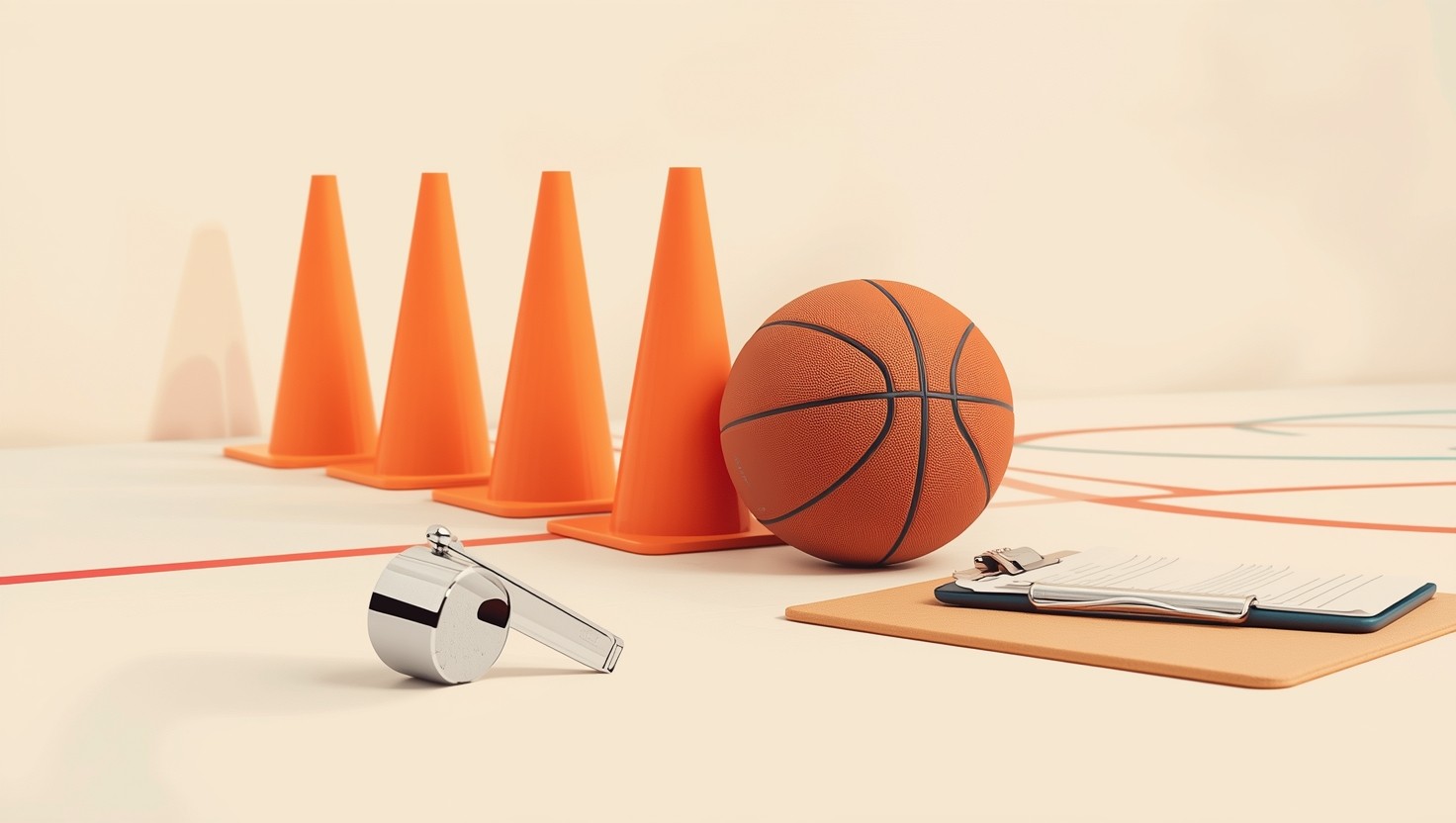
Where do you turn when you need a solid PE lesson plan five minutes before the bell rings? You pull from the stash that actually works. Zero equipment. Mixed abilities. Kids moving from bell to bell. I've taught everything from kindergarten scooters to eighth-grade volleyball. I can tell you that great pe lesson plans aren't about fancy equipment or complex rules. They're about clear objectives, quick transitions, and activities that build real physical literacy.
This post covers fifteen plans that solve real problems in actual gyms. You'll find no-prep games for chaotic weeks. Cooperative activities that teach teamwork without the eye-rolling. Fitness circuits that work when you're sharing the gym with three other classes. I break down elementary sequences for motor skills development and middle school progressions for real skill acquisition. You'll see how to use differentiated instruction without stopping the entire class. Whether you're using standards-based grading or just trying to keep everyone safe and sweating, these lessons stay on my clipboard.
Still grading everything by hand?
EMStudio is a free teaching management app — manage your classes, students, lessons, and more!
Learn More

Still grading everything by hand?
EMStudio is a free teaching management app — manage your classes, students, lessons, and more!
Learn More
Table of Contents
What Are the Best No-Prep PE Lesson Plans for Busy Weeks?
The best no-prep PE lesson plans use body-weight movements, tag variations, and movement challenges requiring zero equipment. Top options include Amoeba Tag for instant engagement, ABC Fitness for warm-ups, and silent Balloon Keep-Up for cool-downs. These work for grades K-8 in spaces as small as classrooms, needing only 5-10 minutes of setup time.
Instant Activities for Immediate Engagement
Amoeba Tag. Two students link arms to chase others. Tagged players join the chain until everyone is caught. Grades 3-5. Half gym.
Back-to-Back Tag. Partners move back-to-back as one unit. If they separate while tagging, they do five jumping jacks before rejoining. Grades K-2. Half gym.
Statue Tag. Tagged players freeze with legs spread wide. Others free them by crawling through. Frozen statues cannot tag. Grades 3-5. Full gym.
Everybody's It. All students tag simultaneously. When tagged, do three squats, shout "Reset," and rejoin. Grades 6-8. Full gym.
Line Tag. Floor lines are safe zones. Players only get tagged between lines. Change directions every 30 seconds. Grades K-2. Hallways work.
When the music starts, students scatter. I use a double whistle blast for immediate freeze. They've got to touch a knee and make eye contact within three seconds.
Amoeba Tag needs 30x30 feet for 25 students. Line Tag works in hallways with floor tiles when the gym is booked.
5-Minute Warm-Up Routines That Teach Skills
ABC Fitness builds physical literacy and motor skills development. Students spell names using body shapes for each letter. Hold each for five seconds. Maria does her full name; Jay does initials for differentiated instruction.
Cardio Dice uses a large foam die to determine jumping jacks, squats, or high knees for 30-second intervals. Accommodates 25-35 students in a standard gym for effective physical education instruction.
Locomotor Mix alternates skipping, galloping, and sliding to music. Change every 45 seconds.
The Dynamic Dozen cycles through 12 movements like high knees and lunges. Perform each for 20 seconds with 10-second transitions. Target heart rate hits 120-140 BPM, verifiable by talk test.
Replace jogging-in-place with mountain climbers in tight spaces. This reduces lateral movement while maintaining intensity.
Cool-Down Games With Zero Setup
Yoga Flow uses four poses held 30 seconds each: mountain, forward fold, warrior, and tree. Transitions students back to classroom focus.
Peer Stretching has pairs lead each other through three stretches for 20 seconds each. Builds social awareness and flexibility.
Silent Balloon Keep-Up keeps balloons in the air without talking for two minutes. Check for latex allergies; use scarves if needed.
Mindful Walking has students walk the perimeter silently counting breaths. Inhale three steps, exhale four, for three minutes. Alternative: Scarf Breathing with deep breaths while lowering scarves slowly.
Students return scarves to color-coded bins. This prepares for the next class while teaching responsibility.
Which Cooperative Games Build Real Teamwork in PE?
Cooperative games that build real teamwork include problem-solving challenges like Toxic River, trust activities like Partner Lean, and communication games like Helium Stick. These meet SHAPE America standards by requiring students to demonstrate responsible social behavior, resolve conflicts, and achieve goals collaboratively without eliminating players.
Elimination games teach kids to fail. Cooperative games pe teach them to win together. I build these cooperative learning structures into my pe lesson plans when I want students to actually talk, not just wait for their turn.
Game Name | Group Size | Primary Skill Focus | Safety Consideration |
|---|---|---|---|
Human Knot | 8-12 | Problem-solving (10 min) | No high lifting; watch for shoulder strain |
Pipeline Relay | 6-8 | Communication (ball rolling) | Use cardboard tubes; keep paths clear |
Magic Carpet Challenge | 30 (whole class) | Strategy (15 min) | Two tarps; check for slipping hazards |
Helium Stick | 6-8 | Focus (lowering tent pole) | Use lightweight pole; no grabbing allowed |
These hit SHAPE America Standard 4: responsible personal and social behavior. After each game, I ask two questions: "What strategy failed first?" and "How did you decide who led?" The answers inform my standards-based grading and show who's developing physical literacy versus who needs more skill acquisition support.
Skip trust falls. Seriously. Without trained spotters, proper matting, and controlled height, you're asking for a concussion. Try Partner Lean instead—students stand palm-to-palm and balance while stepping back. Or Willow in the Wind: seated circle, one student falls back into others' hands. Both build trust without the ER visit.
Problem-Solving Challenges for Mixed Abilities
Toxic River works for everyone. I lay two gym mats (rafts) on the floor for eight students. They must cross thirty feet of "lava" without touching the floor. Rules: mats must stay in contact with at least one player; if anyone touches lava, the whole team restarts.
The debrief focuses on planning versus trial-and-error. I also run Save the City: six students transport a ball through cones using only foam noodles, no hands, in five minutes. This builds motor skills development through differentiated instruction—some kids strategize, others execute.
Trust-Building Activities That Meet Safety Standards
Safe trust activities require spotters and mats. I use three.
Blindfolded Maze: verbal guidance through four cones arranged in a square, no physical leading.
Group Juggle: scarf tossing in patterns with eight students.
Wind in the Willows: seated fall back into circle hands.
Never do traditional trust falls from heights or without hand-to-hand spotting. If you don't have trained spotters and proper mats, don't do it. Partner Lean—standing palm-to-palm balance—works better and keeps everyone upright.
Communication Games for Non-Verbal Students
These activities work for supporting students with communication challenges. Mirror Me: leader moves, follower mirrors silently for sixty seconds, then switch. Sound Ball: throw to a sound cue rather than a name. Color Code Movement: silent movement to colored cones based on my hand signals.
For non-verbal students, I use visual cue cards. No one has to speak. Everyone demonstrates movement concepts and builds skill acquisition through observation rather than verbal processing.
What Fitness-Focused Lesson Plans Work for Large Classes?
For large classes of 35-40 students, circuit training with 8 stations (45 seconds work/15 seconds rest) and body-weight HIIT games like Fitness Battleship maximize participation. Use Tabata timing (20s/10s) for cardio stations and rotating small groups to ensure every student stays active with minimal equipment.
Large classes demand choreography. You need pe lesson plans that keep thirty-five kids moving without chaos. I learned this the hard way when twenty students stood around waiting for jump ropes while five kids monopolized the basketballs.
Circuit Training With Minimal Equipment
Set up eight stations in a circle around the gym perimeter. Use masking tape for agility ladders. Cut pool noodles in half for jump ropes. Basketball slams work fine in place of medicine balls.
Jump rope (phantom jump if ropes are scarce).
Agility ladder quick feet.
Medicine ball slams (or basketball to floor).
Plank hold.
Lunge walk across baseline.
Burpees.
Speed skaters.
Active recovery marching.
Rotate clockwise every 45 seconds. Allow 15 seconds to transition. Rest 2 minutes between rounds. Blow the whistle loudly; gym acoustics swallow voices.
Mark a six-foot radius around each station with cones. In crowded gyms, kids crash during lateral movements. I learned this after a collision between a burpee and a lunge walk sent two seventh graders to the nurse.
High-Intensity Interval Games for Cardio
Lay out a six-by-six grid using poly spots. Students lie down to become battleships. You call out exercises for hits—ten squats when you call B-4. Use Tabata timing: 20 seconds work, 10 seconds rest, for 8 rounds total. Between rounds, they run to new spots.
Use a standard deck for variety. Hearts equal squats, diamonds pushups, clubs lunges, spades burpees. The number shows reps; face cards equal ten. Jokers mean a thirty-second plank. Play Bring Sally Up for squats when you need a finisher.
Target 140 to 160 BPM for middle schoolers. Teach them to find their carotid pulse and count for six seconds, then multiply by ten. If they cannot talk during rest periods, they are in the right zone.
Strength Building Using Body Weight Only
Start beginners at the wall for push-ups and use a chair for squats. Move to incline push-ups with hands on a bench, then standard floor push-ups. For squats, progress from chair sit-to-stands to air squats to jump squats. Never load weights on large classes.
Skip BMI comparisons and weight goals entirely. They destroy motivation in front of peers. Use the RPE scale instead. Ask students to rate their effort one to ten. A five means they could do this all day; a ten means they need to stop immediately.
Structure work in three sets of eight to twelve reps for strength. Hold planks for thirty seconds. Offer regressions like seated marches for students with limited mobility. Everyone works at their own level without standing out.
Elementary Movement Competence Builders
Locomotor Skills Through Story-Based Games
Jungle Safari gets kindergartners crawling like bears and galloping like horses. I narrate while showing cue cards with animal pictures:
"The river is coming" — gallop to safety.
"Snake in the grass" — low crawl.
"Monkeys in trees" — jump and reach.
Mission to Mars has them moonwalk in slow motion. Pirate Adventure uses balance beams as planks and fast feet to escape sharks. Each story runs 15 to 20 minutes. You don't need expensive pe resources for these games.
While they play, I watch three specific kids for symmetrical movement patterns. Are both sides working equally during that bear crawl? That feeds into my standards-based grading.
Manipulative Skills Using Scarves and Balloons
Scarves are my secret weapon for psychomotor learning development in early grades. The fabric slows flight time so five-year-olds can track and catch. For Scarf Volleyball, I tape a line on the floor as the net and allow three hits per side.
Stage 1: Self-toss and catch with dominant hand.
Stage 2: Switch to non-dominant hand.
Stage 3: Toss, clap, then catch.
Stage 4: Partner toss with two scarves.
For differentiated instruction, paper plates work as paddles for kids with limited hand-eye coordination. Balloon Keep Up starts individual, then moves to partner play. Balloons build physical literacy and support skill acquisition before harder balls.
Don't squeeze balloons to pop them. If one breaks, I dispose of pieces immediately.
Spatial Awareness Activities for Crowded Gyms
When twenty-five second graders share a tiny gym, chaos follows without clear spatial markers. I give each student a hula hoop as their personal space bubble. When I yell "home base," they return instantly.
Space Invaders teaches general space awareness while they move to music. When the music stops, they return to their hoop without bumping anyone. Shadow Tag has them follow a partner exactly three steps behind, practicing movement concepts.
The Levels Game adds variety: high means jumping, medium means walking, low means crawling. If your gym is under 2,000 square feet, split the class and use half the space. These pe lesson plans only work if kids have room to develop motor skills.
Middle School Sports Skill Progressions
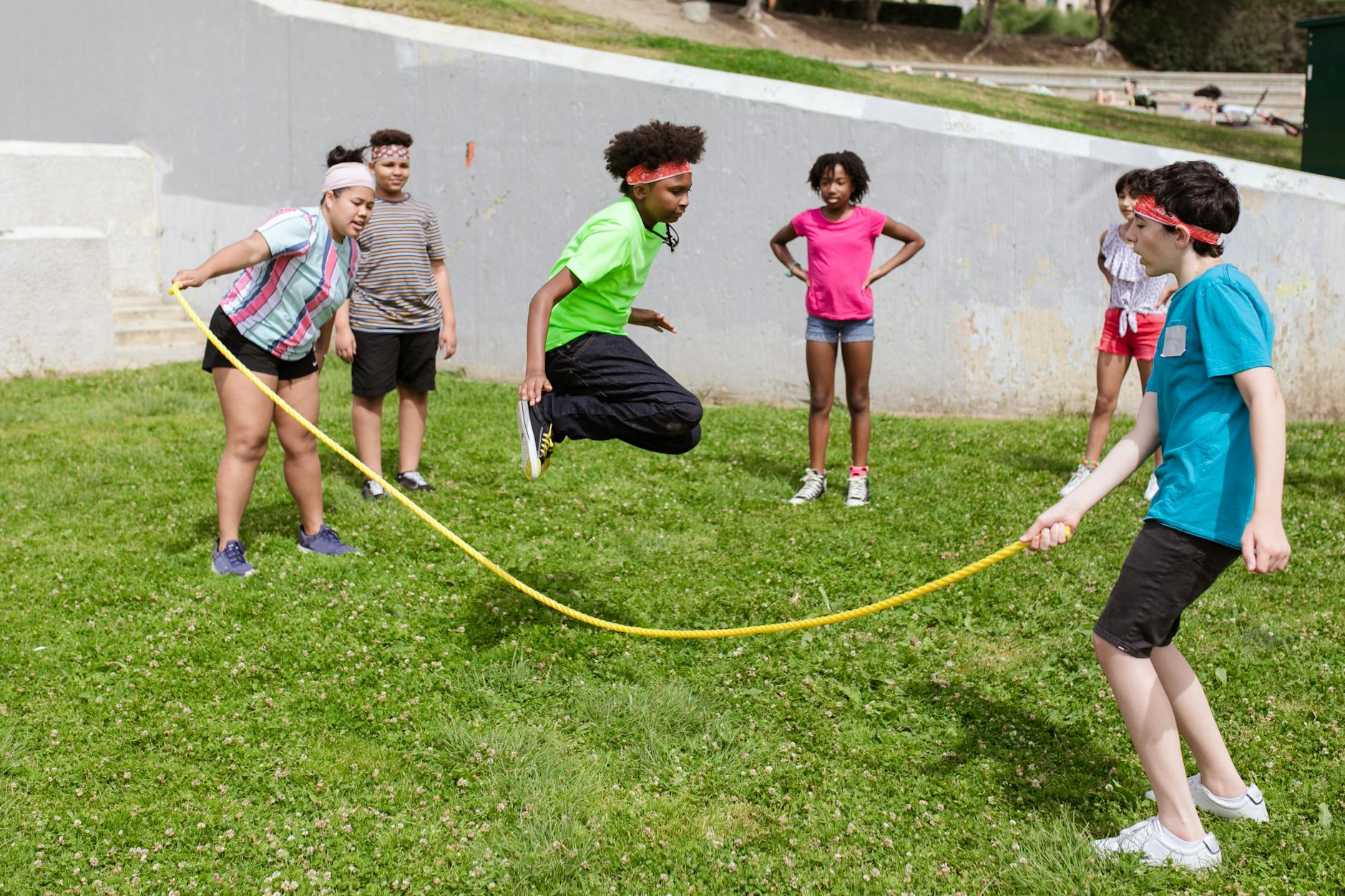
Middle schoolers need structure, not chaos. I break every sport into four stages so kids see actual growth. These pe lesson plans build physical literacy and movement competence through repetition that doesn't bore them to death.
Basketball Dribbling and Shooting Sequences
I start with the pound dribble. Two minutes, fingertips only, eyes on me. "Push, don't pat" keeps it off the palm. Stationary work first. Then walking through cones. Eyes up, find the target. Waist high max.
Stage three adds speed. Dribble to the cone, sprint back. No carrying. For shooting, I use BEEF: Balance, Eyes on rim, Elbow in, Follow-through.
My assessment is standards-based grading in practice. Ten makes from five spots in two minutes. Corners, wings, top of the key. Sixth graders use dominant hand only. Eighth graders go weak hand half the time. That's real differentiated instruction.
Poly spots keep them spaced for safety standards and emergency preparedness. I drill S.T.E.P.: Square to basket, Triple threat, Extend arm, Pop those knees.
Volleyball Forearm Pass and Set Combinations
I skip the arm swing. "Platform, Wrap, Lift" stops that nonsense. Feet shoulder-width, knees bent, forearms flat. Thumbs together. Contact the ball on your platform, not your hands.
Setting happens above the forehead. Diamond shape with hands. Extend and push with fingertips. No palm contact. Follow through to target. Contact must be clean.
Forearm pass cues: Platform, Wrap, Lift. No swinging arms.
Setting cues: Diamond, Extend, Push. Contact above forehead.
We start against the wall. Twenty consecutive passes without dropping. Then partners at ten feet. Beginners use balloons to slow it down. Advanced kids get real volleyballs. The bump-set-catch sequence builds motor skills development without the chaos of a real game.
This progression mirrors skill acquisition research. Isolate the form, then add variables. The wall removes the partner variable. Then we layer it back in.
Soccer Passing Patterns for Tactical Understanding
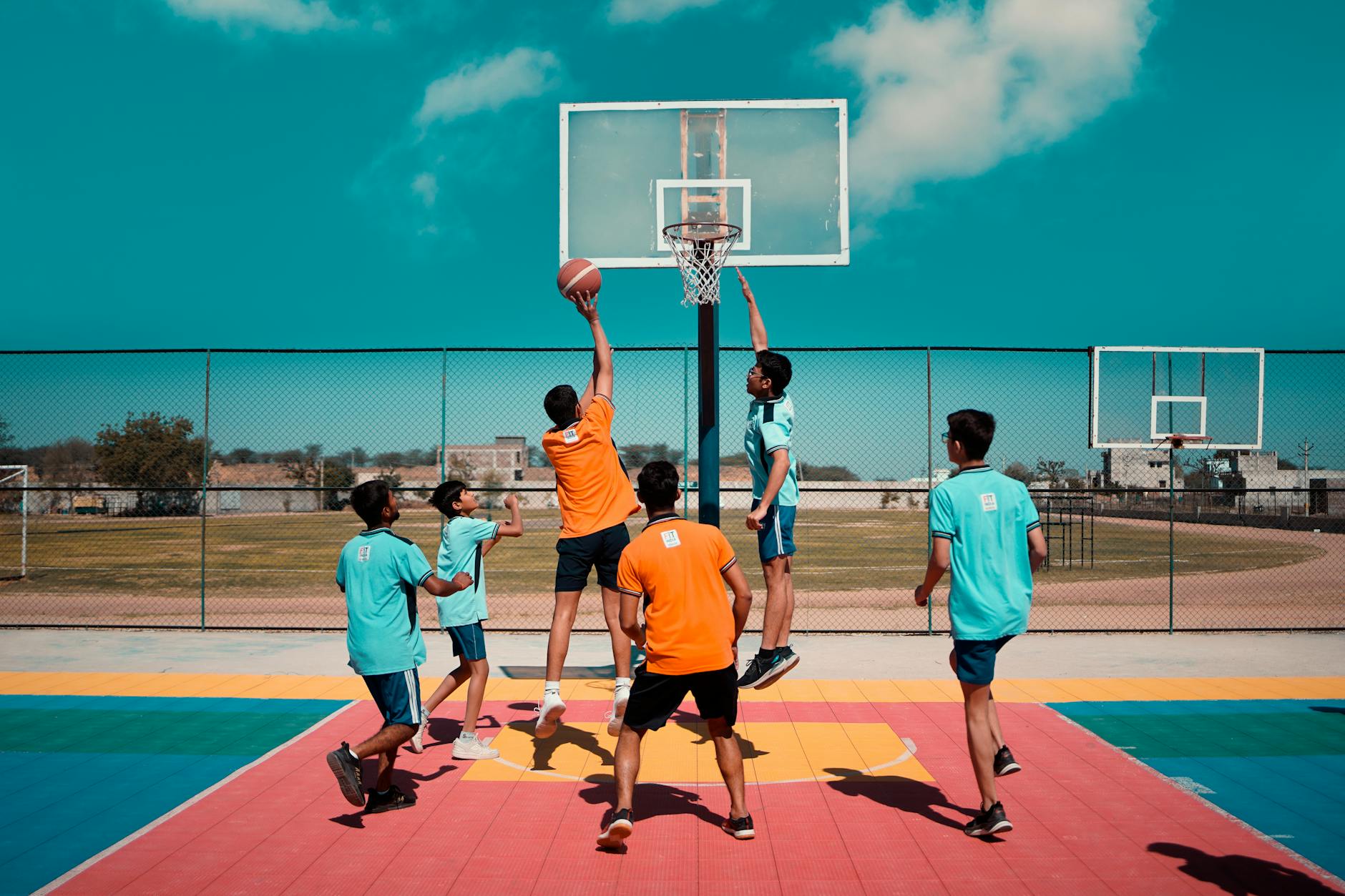
Small-sided games teach tactics and movement concepts better than lectures. I run 3v3 on 20-by-15 yard fields. Kids get 12 to 15 touches per minute instead of four in full-sided games.
Square Passing: 4 players, 2 balls, continuous movement
Y-Passing: 3 players with give-and-go
2v1 to Goal: Teaching width and support
The decision tree matters. Read the defense. Defender commits, pass to space. Drops off, dribble at them. Support available, pass to feet.
We run Pass and Move: A passes to B, B lays off, A runs around the cone, B passes to C. Continuous cycle. I mark lanes with cones. That's tactical understanding built into physical education lesson plans pdf you can actually use.
How Do You Adapt PE Lesson Plans for Limited Equipment?
Adapt PE lesson plans for limited equipment by reducing group sizes from 6 to 3 students per item, substituting household objects like rolled socks for balls, and implementing 4-minute station rotations. Prioritize individual skill work when equipment drops below 5 pieces for a class of 30.
Empty equipment closets don't cancel class. I've taught basketball with socks and volleyball with balloons. The key is changing the math.
Step 1: Audit. Count balls, cones, nets.
Step 2: Reduce groups. Class size (30) ÷ equipment pieces = group size. Target 3 students per item.
Step 3: Substitute. Use rolled socks for balls, tape for cones, laundry baskets for targets.
Step 4: Rotate. Run 4-minute stations with 30-second transitions.
Follow this rule: If equipment < 5 pieces, drop group games and switch to individual skill work.
Foam balls cost $3 each, cones $0.50, painter's tape $5. Free options work too: plastic bags for scarves, sand-filled bottles for weights, foil balls for table tennis. Never run full games with two balls for 30 kids. When your ratio hits 1:8, use Skill Stations instead. Downtime kills physical literacy and classroom management.
Modifying Group Sizes to Share Resources
30 kids divided by 5 basketballs equals 6 per group. Cut it to 3 using a half-class model: 15 students practice skills while 15 do fitness on the opposite side. Rotate at 15 minutes.
With 6 stations and 30 minutes of activity time, you get 5 minutes per station. This differentiated instruction keeps everyone active.
Substituting Household Items for Sports Equipment
Rolled socks with rubber bands work as hacky sacks or small balls. Paper plates become flying discs. Pillows serve as striking targets. Check for sharp edges before elementary classes touch them.
Store improvised gear in milk crates labeled by station number. I bought six crates for $18. Kids grab the crate and start immediately.
Rotating Stations to Maximize Space Usage
Place poly spots 6 feet behind each station as "on-deck" circles. When the timer beeps, the next student steps in immediately. Stand in the center of the gym for 360-degree visibility.
Use music for transitions. Music off means freeze. Music change means rotate clockwise. This prevents the collision pile-up that happens when 30 kids move at once.
How Can You Implement These Plans Without Losing Control?
Establish a consistent stop signal (whistle plus hand up) and practice it before every new activity. Use music cues for transitions and embed assessment during movement so you never stop the class cold. If control breaks, implement a 2-minute 'Reset Drill' of basic locomotor skills to regain focus.
You can't teach motor skills development if kids are running wild. I learned this the hard way with a 5th grade class that spent twenty minutes testing whether I meant what I said about freeze signals.
Pre-Teaching Expectations for New Activities
Never hand out equipment before teaching the stop signal. I use this script: "When I blow the whistle, freeze with ball on floor in three seconds." We practice three times. If less than 90% freeze, we do it again. No balls until we hit that threshold.
I teach skill acquisition in three stages: I demonstrate the movement concept, students shadow practice without equipment mirroring my form, then we go live with balls. I also post a Stop Light visual: Green means go, Yellow gives a five-minute warning, and Red means freeze instantly.
Consistency builds physical literacy faster than expensive pe resources or complicated differentiated instruction frameworks. Games that reinforce classroom management help, but this protocol works better.
Managing Transitions Between High-Energy Games
I use 10-second countdowns and music cues to keep flow during pe lesson plans. Fast beats mean activity time, slow beats signal transition, and silence means freeze instantly. When chaos wins, I call a Reset Drill: two minutes of marching or skipping to regain focus before we resume.
Carpet Square method: Each student has a numbered poly spot as their home base between activities.
Zen Count: After tag games, students lie down for ten slow breaths to prevent escalation.
These routines that eliminate daily chaos matter more than perfect lesson plans.
Assessing Learning Without Stopping Movement
Pedometer goals: 1,500 steps for grades 3-5 during a 40-minute class.
Clipboard checks: Watch 5 specific students for skill cues like "knees bent" while they move.
Exit tickets: Students write one cue they used today on the whiteboard as they leave.
I also use pulse checks: students count their carotid pulse for six seconds and give thumbs up if they're in the target zone. During cool-down, partners give "Glow and Grow" feedback using sentence starters. It builds physical literacy and movement concepts while allowing standards-based grading without halting activity.
Where Pe Lesson Plans Is Heading
The days of rolling out the ball are officially gone. Physical literacy now drives everything we do, from kindergarten throwing patterns to middle school game strategy. I’ve watched standards-based grading shift how we assess — it’s less about who’s fastest and more about who’s improving their motor skills development week to week. That shift makes PE matter more to kids who thought they weren’t athletes.
Differentiated instruction isn’t just for the classroom next door. Your PE lesson plans need built-in options for the kid with asthma, the athlete, and the beginner all sharing the same 30 minutes. The teachers who stay ahead are the ones sharing equipment hacks and crowd-control tricks on TikTok and in hallway conversations, not waiting for district training days. They’re swapping ideas Tuesday morning before the bell rings.
Stay curious. Try that no-prep game you saw on Instagram. Borrow the scooter adaptation from the teacher down the hall. The best PE lesson plans aren’t the ones sitting in a binder — they’re the ones you adjust on the fly when seven kids show up without gym shoes and it starts raining. Keep adapting. That’s the job, and it’s getting better every year.
What Are the Best No-Prep PE Lesson Plans for Busy Weeks?
The best no-prep PE lesson plans use body-weight movements, tag variations, and movement challenges requiring zero equipment. Top options include Amoeba Tag for instant engagement, ABC Fitness for warm-ups, and silent Balloon Keep-Up for cool-downs. These work for grades K-8 in spaces as small as classrooms, needing only 5-10 minutes of setup time.
Instant Activities for Immediate Engagement
Amoeba Tag. Two students link arms to chase others. Tagged players join the chain until everyone is caught. Grades 3-5. Half gym.
Back-to-Back Tag. Partners move back-to-back as one unit. If they separate while tagging, they do five jumping jacks before rejoining. Grades K-2. Half gym.
Statue Tag. Tagged players freeze with legs spread wide. Others free them by crawling through. Frozen statues cannot tag. Grades 3-5. Full gym.
Everybody's It. All students tag simultaneously. When tagged, do three squats, shout "Reset," and rejoin. Grades 6-8. Full gym.
Line Tag. Floor lines are safe zones. Players only get tagged between lines. Change directions every 30 seconds. Grades K-2. Hallways work.
When the music starts, students scatter. I use a double whistle blast for immediate freeze. They've got to touch a knee and make eye contact within three seconds.
Amoeba Tag needs 30x30 feet for 25 students. Line Tag works in hallways with floor tiles when the gym is booked.
5-Minute Warm-Up Routines That Teach Skills
ABC Fitness builds physical literacy and motor skills development. Students spell names using body shapes for each letter. Hold each for five seconds. Maria does her full name; Jay does initials for differentiated instruction.
Cardio Dice uses a large foam die to determine jumping jacks, squats, or high knees for 30-second intervals. Accommodates 25-35 students in a standard gym for effective physical education instruction.
Locomotor Mix alternates skipping, galloping, and sliding to music. Change every 45 seconds.
The Dynamic Dozen cycles through 12 movements like high knees and lunges. Perform each for 20 seconds with 10-second transitions. Target heart rate hits 120-140 BPM, verifiable by talk test.
Replace jogging-in-place with mountain climbers in tight spaces. This reduces lateral movement while maintaining intensity.
Cool-Down Games With Zero Setup
Yoga Flow uses four poses held 30 seconds each: mountain, forward fold, warrior, and tree. Transitions students back to classroom focus.
Peer Stretching has pairs lead each other through three stretches for 20 seconds each. Builds social awareness and flexibility.
Silent Balloon Keep-Up keeps balloons in the air without talking for two minutes. Check for latex allergies; use scarves if needed.
Mindful Walking has students walk the perimeter silently counting breaths. Inhale three steps, exhale four, for three minutes. Alternative: Scarf Breathing with deep breaths while lowering scarves slowly.
Students return scarves to color-coded bins. This prepares for the next class while teaching responsibility.
Which Cooperative Games Build Real Teamwork in PE?
Cooperative games that build real teamwork include problem-solving challenges like Toxic River, trust activities like Partner Lean, and communication games like Helium Stick. These meet SHAPE America standards by requiring students to demonstrate responsible social behavior, resolve conflicts, and achieve goals collaboratively without eliminating players.
Elimination games teach kids to fail. Cooperative games pe teach them to win together. I build these cooperative learning structures into my pe lesson plans when I want students to actually talk, not just wait for their turn.
Game Name | Group Size | Primary Skill Focus | Safety Consideration |
|---|---|---|---|
Human Knot | 8-12 | Problem-solving (10 min) | No high lifting; watch for shoulder strain |
Pipeline Relay | 6-8 | Communication (ball rolling) | Use cardboard tubes; keep paths clear |
Magic Carpet Challenge | 30 (whole class) | Strategy (15 min) | Two tarps; check for slipping hazards |
Helium Stick | 6-8 | Focus (lowering tent pole) | Use lightweight pole; no grabbing allowed |
These hit SHAPE America Standard 4: responsible personal and social behavior. After each game, I ask two questions: "What strategy failed first?" and "How did you decide who led?" The answers inform my standards-based grading and show who's developing physical literacy versus who needs more skill acquisition support.
Skip trust falls. Seriously. Without trained spotters, proper matting, and controlled height, you're asking for a concussion. Try Partner Lean instead—students stand palm-to-palm and balance while stepping back. Or Willow in the Wind: seated circle, one student falls back into others' hands. Both build trust without the ER visit.
Problem-Solving Challenges for Mixed Abilities
Toxic River works for everyone. I lay two gym mats (rafts) on the floor for eight students. They must cross thirty feet of "lava" without touching the floor. Rules: mats must stay in contact with at least one player; if anyone touches lava, the whole team restarts.
The debrief focuses on planning versus trial-and-error. I also run Save the City: six students transport a ball through cones using only foam noodles, no hands, in five minutes. This builds motor skills development through differentiated instruction—some kids strategize, others execute.
Trust-Building Activities That Meet Safety Standards
Safe trust activities require spotters and mats. I use three.
Blindfolded Maze: verbal guidance through four cones arranged in a square, no physical leading.
Group Juggle: scarf tossing in patterns with eight students.
Wind in the Willows: seated fall back into circle hands.
Never do traditional trust falls from heights or without hand-to-hand spotting. If you don't have trained spotters and proper mats, don't do it. Partner Lean—standing palm-to-palm balance—works better and keeps everyone upright.
Communication Games for Non-Verbal Students
These activities work for supporting students with communication challenges. Mirror Me: leader moves, follower mirrors silently for sixty seconds, then switch. Sound Ball: throw to a sound cue rather than a name. Color Code Movement: silent movement to colored cones based on my hand signals.
For non-verbal students, I use visual cue cards. No one has to speak. Everyone demonstrates movement concepts and builds skill acquisition through observation rather than verbal processing.
What Fitness-Focused Lesson Plans Work for Large Classes?
For large classes of 35-40 students, circuit training with 8 stations (45 seconds work/15 seconds rest) and body-weight HIIT games like Fitness Battleship maximize participation. Use Tabata timing (20s/10s) for cardio stations and rotating small groups to ensure every student stays active with minimal equipment.
Large classes demand choreography. You need pe lesson plans that keep thirty-five kids moving without chaos. I learned this the hard way when twenty students stood around waiting for jump ropes while five kids monopolized the basketballs.
Circuit Training With Minimal Equipment
Set up eight stations in a circle around the gym perimeter. Use masking tape for agility ladders. Cut pool noodles in half for jump ropes. Basketball slams work fine in place of medicine balls.
Jump rope (phantom jump if ropes are scarce).
Agility ladder quick feet.
Medicine ball slams (or basketball to floor).
Plank hold.
Lunge walk across baseline.
Burpees.
Speed skaters.
Active recovery marching.
Rotate clockwise every 45 seconds. Allow 15 seconds to transition. Rest 2 minutes between rounds. Blow the whistle loudly; gym acoustics swallow voices.
Mark a six-foot radius around each station with cones. In crowded gyms, kids crash during lateral movements. I learned this after a collision between a burpee and a lunge walk sent two seventh graders to the nurse.
High-Intensity Interval Games for Cardio
Lay out a six-by-six grid using poly spots. Students lie down to become battleships. You call out exercises for hits—ten squats when you call B-4. Use Tabata timing: 20 seconds work, 10 seconds rest, for 8 rounds total. Between rounds, they run to new spots.
Use a standard deck for variety. Hearts equal squats, diamonds pushups, clubs lunges, spades burpees. The number shows reps; face cards equal ten. Jokers mean a thirty-second plank. Play Bring Sally Up for squats when you need a finisher.
Target 140 to 160 BPM for middle schoolers. Teach them to find their carotid pulse and count for six seconds, then multiply by ten. If they cannot talk during rest periods, they are in the right zone.
Strength Building Using Body Weight Only
Start beginners at the wall for push-ups and use a chair for squats. Move to incline push-ups with hands on a bench, then standard floor push-ups. For squats, progress from chair sit-to-stands to air squats to jump squats. Never load weights on large classes.
Skip BMI comparisons and weight goals entirely. They destroy motivation in front of peers. Use the RPE scale instead. Ask students to rate their effort one to ten. A five means they could do this all day; a ten means they need to stop immediately.
Structure work in three sets of eight to twelve reps for strength. Hold planks for thirty seconds. Offer regressions like seated marches for students with limited mobility. Everyone works at their own level without standing out.
Elementary Movement Competence Builders
Locomotor Skills Through Story-Based Games
Jungle Safari gets kindergartners crawling like bears and galloping like horses. I narrate while showing cue cards with animal pictures:
"The river is coming" — gallop to safety.
"Snake in the grass" — low crawl.
"Monkeys in trees" — jump and reach.
Mission to Mars has them moonwalk in slow motion. Pirate Adventure uses balance beams as planks and fast feet to escape sharks. Each story runs 15 to 20 minutes. You don't need expensive pe resources for these games.
While they play, I watch three specific kids for symmetrical movement patterns. Are both sides working equally during that bear crawl? That feeds into my standards-based grading.
Manipulative Skills Using Scarves and Balloons
Scarves are my secret weapon for psychomotor learning development in early grades. The fabric slows flight time so five-year-olds can track and catch. For Scarf Volleyball, I tape a line on the floor as the net and allow three hits per side.
Stage 1: Self-toss and catch with dominant hand.
Stage 2: Switch to non-dominant hand.
Stage 3: Toss, clap, then catch.
Stage 4: Partner toss with two scarves.
For differentiated instruction, paper plates work as paddles for kids with limited hand-eye coordination. Balloon Keep Up starts individual, then moves to partner play. Balloons build physical literacy and support skill acquisition before harder balls.
Don't squeeze balloons to pop them. If one breaks, I dispose of pieces immediately.
Spatial Awareness Activities for Crowded Gyms
When twenty-five second graders share a tiny gym, chaos follows without clear spatial markers. I give each student a hula hoop as their personal space bubble. When I yell "home base," they return instantly.
Space Invaders teaches general space awareness while they move to music. When the music stops, they return to their hoop without bumping anyone. Shadow Tag has them follow a partner exactly three steps behind, practicing movement concepts.
The Levels Game adds variety: high means jumping, medium means walking, low means crawling. If your gym is under 2,000 square feet, split the class and use half the space. These pe lesson plans only work if kids have room to develop motor skills.
Middle School Sports Skill Progressions
Middle schoolers need structure, not chaos. I break every sport into four stages so kids see actual growth. These pe lesson plans build physical literacy and movement competence through repetition that doesn't bore them to death.
Basketball Dribbling and Shooting Sequences
I start with the pound dribble. Two minutes, fingertips only, eyes on me. "Push, don't pat" keeps it off the palm. Stationary work first. Then walking through cones. Eyes up, find the target. Waist high max.
Stage three adds speed. Dribble to the cone, sprint back. No carrying. For shooting, I use BEEF: Balance, Eyes on rim, Elbow in, Follow-through.
My assessment is standards-based grading in practice. Ten makes from five spots in two minutes. Corners, wings, top of the key. Sixth graders use dominant hand only. Eighth graders go weak hand half the time. That's real differentiated instruction.
Poly spots keep them spaced for safety standards and emergency preparedness. I drill S.T.E.P.: Square to basket, Triple threat, Extend arm, Pop those knees.
Volleyball Forearm Pass and Set Combinations
I skip the arm swing. "Platform, Wrap, Lift" stops that nonsense. Feet shoulder-width, knees bent, forearms flat. Thumbs together. Contact the ball on your platform, not your hands.
Setting happens above the forehead. Diamond shape with hands. Extend and push with fingertips. No palm contact. Follow through to target. Contact must be clean.
Forearm pass cues: Platform, Wrap, Lift. No swinging arms.
Setting cues: Diamond, Extend, Push. Contact above forehead.
We start against the wall. Twenty consecutive passes without dropping. Then partners at ten feet. Beginners use balloons to slow it down. Advanced kids get real volleyballs. The bump-set-catch sequence builds motor skills development without the chaos of a real game.
This progression mirrors skill acquisition research. Isolate the form, then add variables. The wall removes the partner variable. Then we layer it back in.
Soccer Passing Patterns for Tactical Understanding
Small-sided games teach tactics and movement concepts better than lectures. I run 3v3 on 20-by-15 yard fields. Kids get 12 to 15 touches per minute instead of four in full-sided games.
Square Passing: 4 players, 2 balls, continuous movement
Y-Passing: 3 players with give-and-go
2v1 to Goal: Teaching width and support
The decision tree matters. Read the defense. Defender commits, pass to space. Drops off, dribble at them. Support available, pass to feet.
We run Pass and Move: A passes to B, B lays off, A runs around the cone, B passes to C. Continuous cycle. I mark lanes with cones. That's tactical understanding built into physical education lesson plans pdf you can actually use.
How Do You Adapt PE Lesson Plans for Limited Equipment?
Adapt PE lesson plans for limited equipment by reducing group sizes from 6 to 3 students per item, substituting household objects like rolled socks for balls, and implementing 4-minute station rotations. Prioritize individual skill work when equipment drops below 5 pieces for a class of 30.
Empty equipment closets don't cancel class. I've taught basketball with socks and volleyball with balloons. The key is changing the math.
Step 1: Audit. Count balls, cones, nets.
Step 2: Reduce groups. Class size (30) ÷ equipment pieces = group size. Target 3 students per item.
Step 3: Substitute. Use rolled socks for balls, tape for cones, laundry baskets for targets.
Step 4: Rotate. Run 4-minute stations with 30-second transitions.
Follow this rule: If equipment < 5 pieces, drop group games and switch to individual skill work.
Foam balls cost $3 each, cones $0.50, painter's tape $5. Free options work too: plastic bags for scarves, sand-filled bottles for weights, foil balls for table tennis. Never run full games with two balls for 30 kids. When your ratio hits 1:8, use Skill Stations instead. Downtime kills physical literacy and classroom management.
Modifying Group Sizes to Share Resources
30 kids divided by 5 basketballs equals 6 per group. Cut it to 3 using a half-class model: 15 students practice skills while 15 do fitness on the opposite side. Rotate at 15 minutes.
With 6 stations and 30 minutes of activity time, you get 5 minutes per station. This differentiated instruction keeps everyone active.
Substituting Household Items for Sports Equipment
Rolled socks with rubber bands work as hacky sacks or small balls. Paper plates become flying discs. Pillows serve as striking targets. Check for sharp edges before elementary classes touch them.
Store improvised gear in milk crates labeled by station number. I bought six crates for $18. Kids grab the crate and start immediately.
Rotating Stations to Maximize Space Usage
Place poly spots 6 feet behind each station as "on-deck" circles. When the timer beeps, the next student steps in immediately. Stand in the center of the gym for 360-degree visibility.
Use music for transitions. Music off means freeze. Music change means rotate clockwise. This prevents the collision pile-up that happens when 30 kids move at once.
How Can You Implement These Plans Without Losing Control?
Establish a consistent stop signal (whistle plus hand up) and practice it before every new activity. Use music cues for transitions and embed assessment during movement so you never stop the class cold. If control breaks, implement a 2-minute 'Reset Drill' of basic locomotor skills to regain focus.
You can't teach motor skills development if kids are running wild. I learned this the hard way with a 5th grade class that spent twenty minutes testing whether I meant what I said about freeze signals.
Pre-Teaching Expectations for New Activities
Never hand out equipment before teaching the stop signal. I use this script: "When I blow the whistle, freeze with ball on floor in three seconds." We practice three times. If less than 90% freeze, we do it again. No balls until we hit that threshold.
I teach skill acquisition in three stages: I demonstrate the movement concept, students shadow practice without equipment mirroring my form, then we go live with balls. I also post a Stop Light visual: Green means go, Yellow gives a five-minute warning, and Red means freeze instantly.
Consistency builds physical literacy faster than expensive pe resources or complicated differentiated instruction frameworks. Games that reinforce classroom management help, but this protocol works better.
Managing Transitions Between High-Energy Games
I use 10-second countdowns and music cues to keep flow during pe lesson plans. Fast beats mean activity time, slow beats signal transition, and silence means freeze instantly. When chaos wins, I call a Reset Drill: two minutes of marching or skipping to regain focus before we resume.
Carpet Square method: Each student has a numbered poly spot as their home base between activities.
Zen Count: After tag games, students lie down for ten slow breaths to prevent escalation.
These routines that eliminate daily chaos matter more than perfect lesson plans.
Assessing Learning Without Stopping Movement
Pedometer goals: 1,500 steps for grades 3-5 during a 40-minute class.
Clipboard checks: Watch 5 specific students for skill cues like "knees bent" while they move.
Exit tickets: Students write one cue they used today on the whiteboard as they leave.
I also use pulse checks: students count their carotid pulse for six seconds and give thumbs up if they're in the target zone. During cool-down, partners give "Glow and Grow" feedback using sentence starters. It builds physical literacy and movement concepts while allowing standards-based grading without halting activity.
Where Pe Lesson Plans Is Heading
The days of rolling out the ball are officially gone. Physical literacy now drives everything we do, from kindergarten throwing patterns to middle school game strategy. I’ve watched standards-based grading shift how we assess — it’s less about who’s fastest and more about who’s improving their motor skills development week to week. That shift makes PE matter more to kids who thought they weren’t athletes.
Differentiated instruction isn’t just for the classroom next door. Your PE lesson plans need built-in options for the kid with asthma, the athlete, and the beginner all sharing the same 30 minutes. The teachers who stay ahead are the ones sharing equipment hacks and crowd-control tricks on TikTok and in hallway conversations, not waiting for district training days. They’re swapping ideas Tuesday morning before the bell rings.
Stay curious. Try that no-prep game you saw on Instagram. Borrow the scooter adaptation from the teacher down the hall. The best PE lesson plans aren’t the ones sitting in a binder — they’re the ones you adjust on the fly when seven kids show up without gym shoes and it starts raining. Keep adapting. That’s the job, and it’s getting better every year.
Still grading everything by hand?
EMStudio is a free teaching management app — manage your classes, students, lessons, and more!
Learn More
Still grading everything by hand?
EMStudio is a free teaching management app — manage your classes, students, lessons, and more!
Learn More





Notion4Teachers
Notion templates to simplify administrative tasks and enhance your teaching experience.



2026 Notion4Teachers. All Rights Reserved.
Notion4Teachers
Notion templates to simplify administrative tasks and enhance your teaching experience.
2026 Notion4Teachers. All Rights Reserved.
Notion4Teachers
Notion templates to simplify administrative tasks and enhance your teaching experience.
2026 Notion4Teachers. All Rights Reserved.