First Day of Class Activities That Build Belonging

Picture the first ride with a new carpool buddy, when nobody knows what to say. A first day of class can feel just as awkward, with a room full of kids watching to see what kind of teacher you'll be.
The good news is that the first day doesn't have to be left to chance. A simple plan that moves from belonging to goal-setting and academic launch helps students settle in fast. Building community comes first in that plan, so students feel they belong before goals enter the picture.
Here, we'll walk through each part, with grade-level tweaks and ways to make sharing comfortable for every learner.
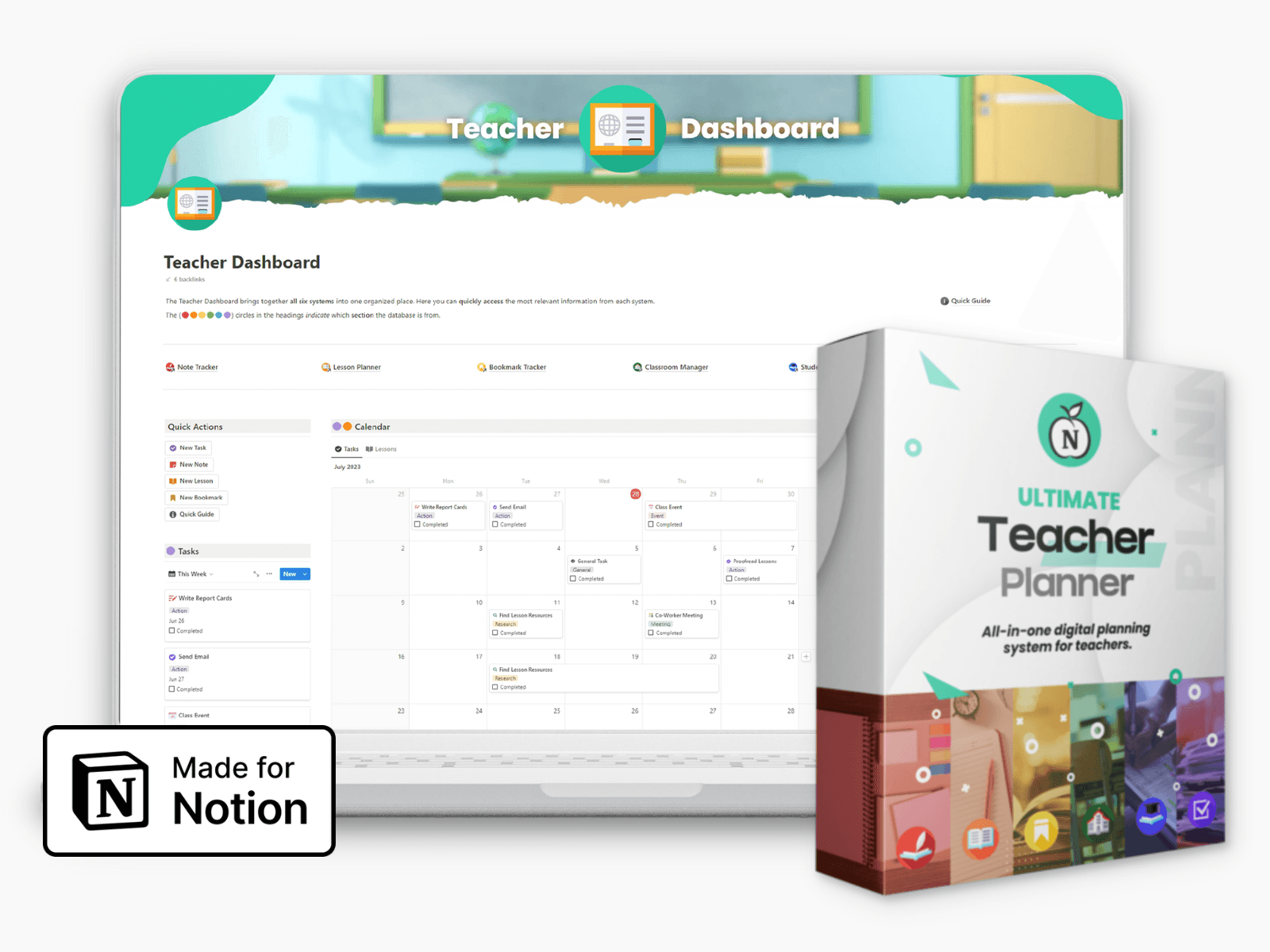
Ultimate Teacher Planner
The ultimate all-in-one education management system in Notion.
First Day of Class Activities for Belonging
Belonging starts on day one. These activities build it in four areas:
shared rules
modeled kindness
common ground
a calm start for nervous newcomers
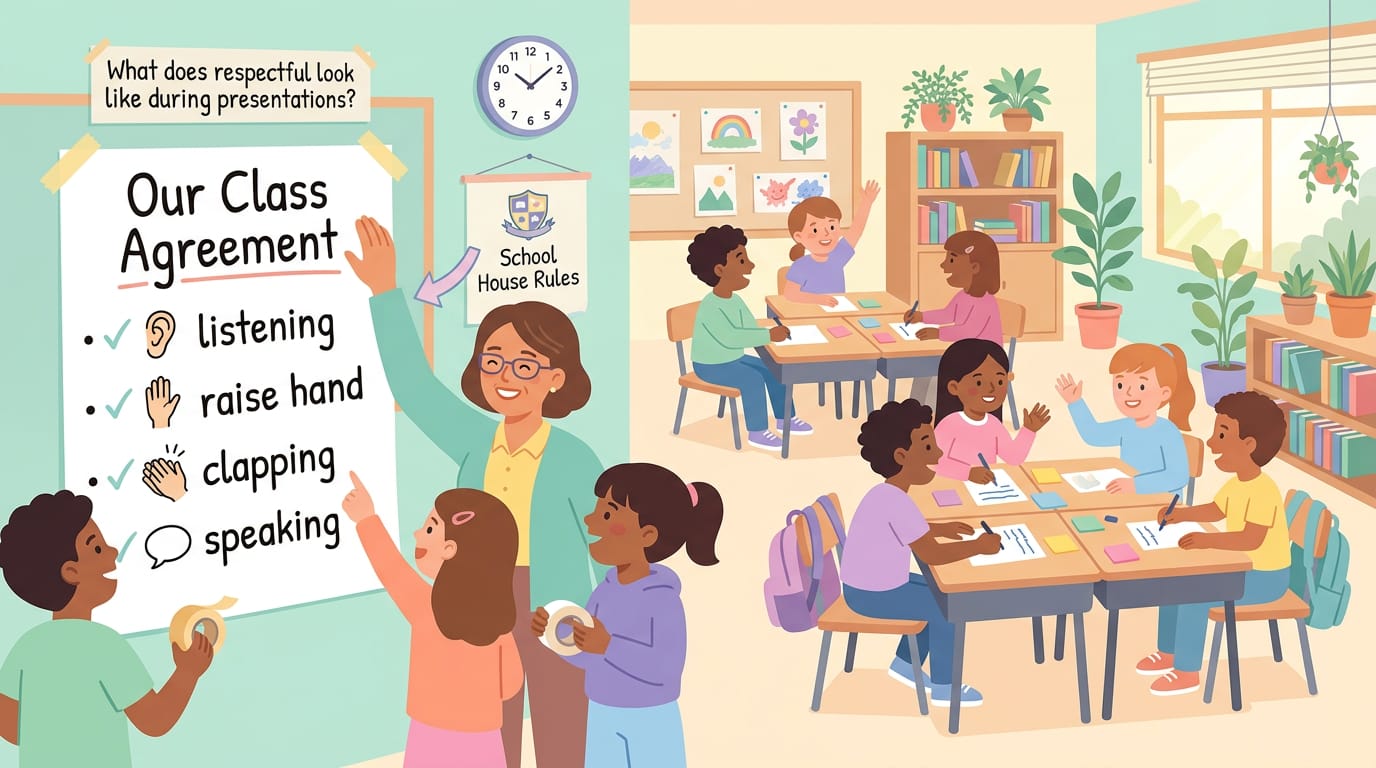
Let students help write class rules
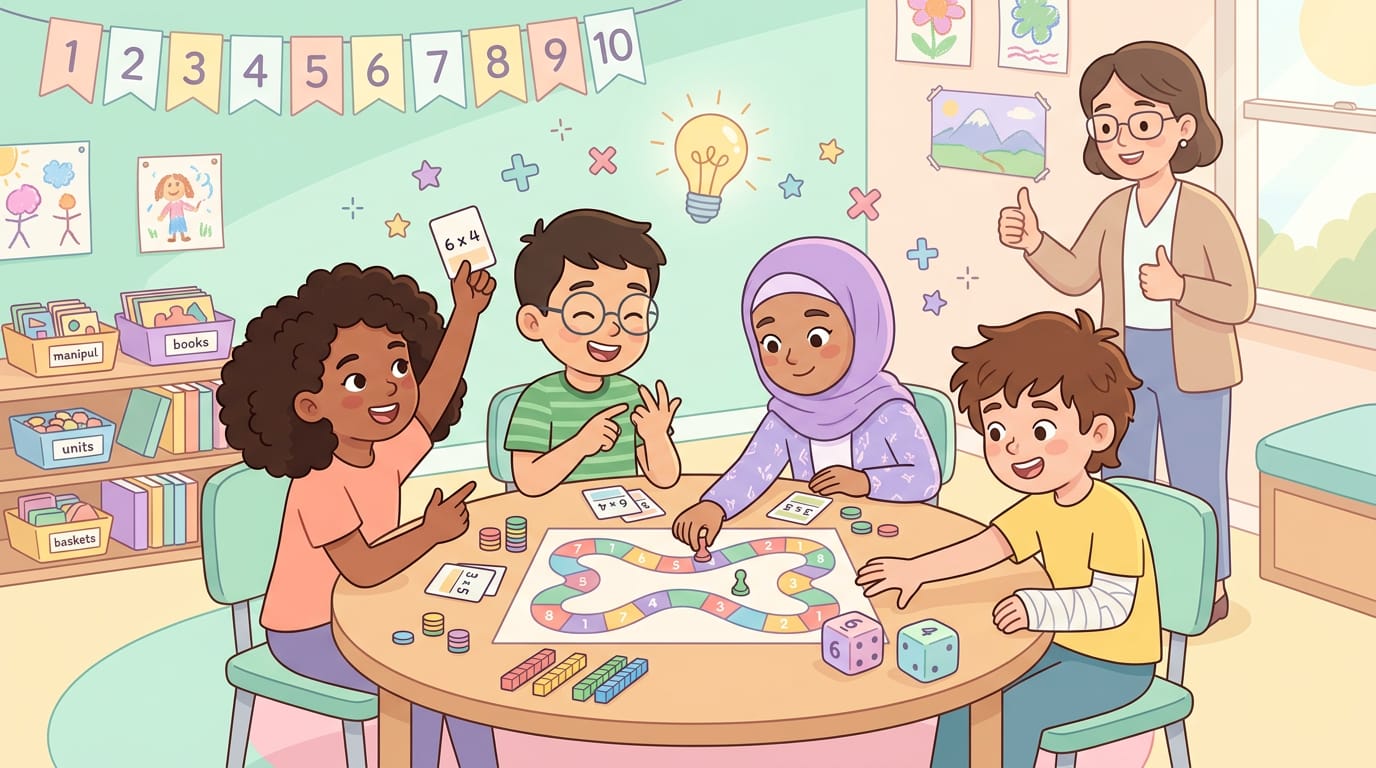
Rather than posting rules you wrote alone, ask small groups what helps them learn, then combine their answers into a class agreement. Think of a sixth-grade teacher who asks, 'What does respectful look like during presentations?'
Within ten minutes, that list hangs on the wall all year.
This builds a sense of responsibility for the room. If your school has house rules, connect the two so students see how their agreement fits the wider community.
Model kindness and build social-emotional skills
Students notice how you treat people, so greet each one by name and listen fully before responding. That's how you model considerate behavior: kindness is a habit you show, not a lesson you teach once.
Ask students to share one thing they're curious about, so they start noticing what their classmates care about. Social-emotional skills are the abilities that help people manage feelings and work well with others.
A systematic review on social support and college students' wellbeing found that supportive relationships are associated with students' social-emotional well-being. Start small.
Spot similarities and respect differences
Four Corners builds both. Post four labels in the corners, such as 'Beach,' 'Mountains,' 'City,' and 'Forest,' then ask, 'Which place would you pick for a class trip?' Students walk to their corner and talk with the people there.
Because students get up and move, the game doubles as a brain break.
Say up front that answers will vary. Consider a high school biology teacher who adds a 'Neither' corner. When two students in the same corner give different reasons, she invites both to share. The room learns that different doesn't mean wrong.
Easing nerves and making newcomers feel welcome
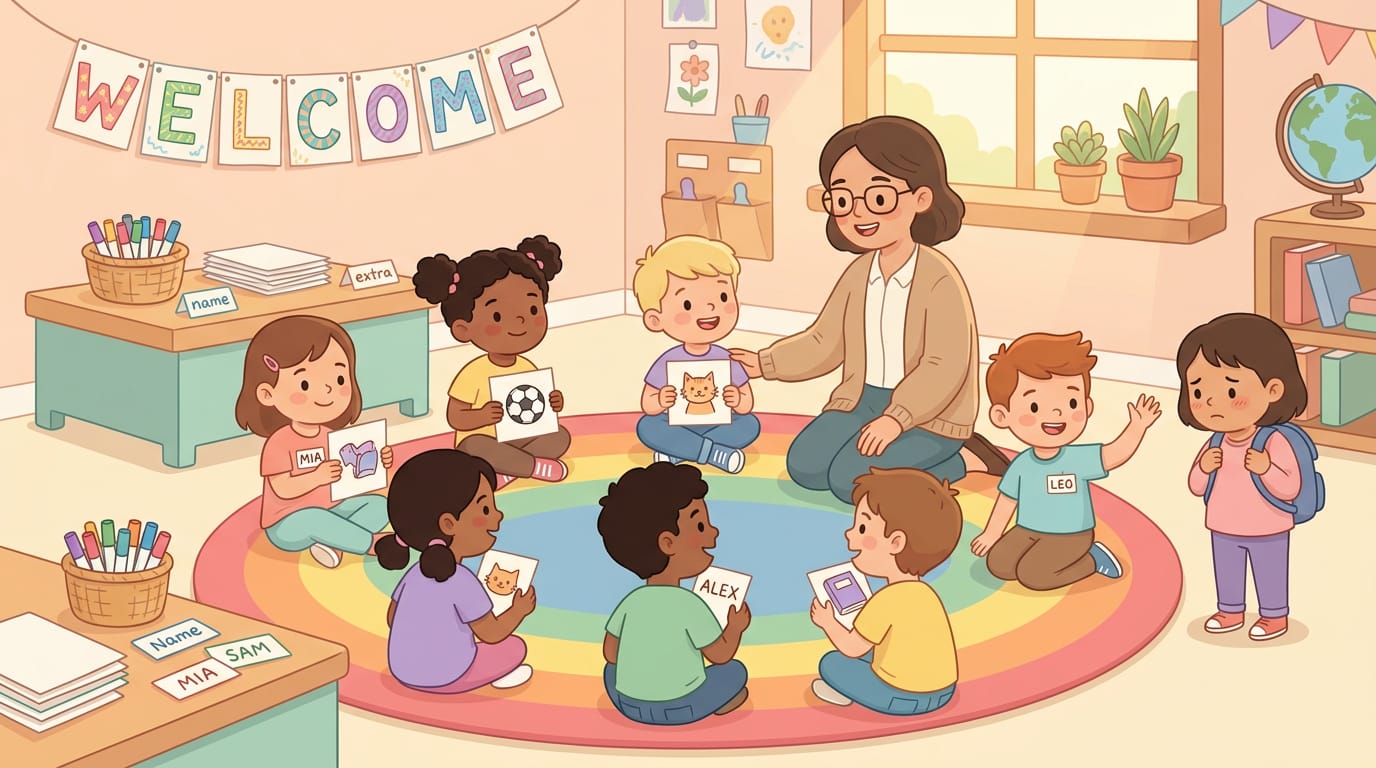
Admitting that you're nervous, too, can help the room relax. Greet students at the door and post a seat card or name tag. A new student who walks in knowing no one then has a place to start. Small welcomes like these are early rituals that help build classroom community.
Have students write one worry on an anonymous slip, then answer a few aloud.
Keep the first day low-pressure with no graded quizzes. Turn the syllabus into a scavenger hunt for pairs, such as finding when the first project is due, then lead a quick classroom tour.
Icebreakers to Know Classmates and Your Teacher
Icebreakers help students learn names and get to know you. Sample timing: 15 minutes of mingling, 10 of guessing, then letters and All About Me projects.
Mingle and introduce yourself with games
Get students moving first. We want them remembering names, not just hearing them.
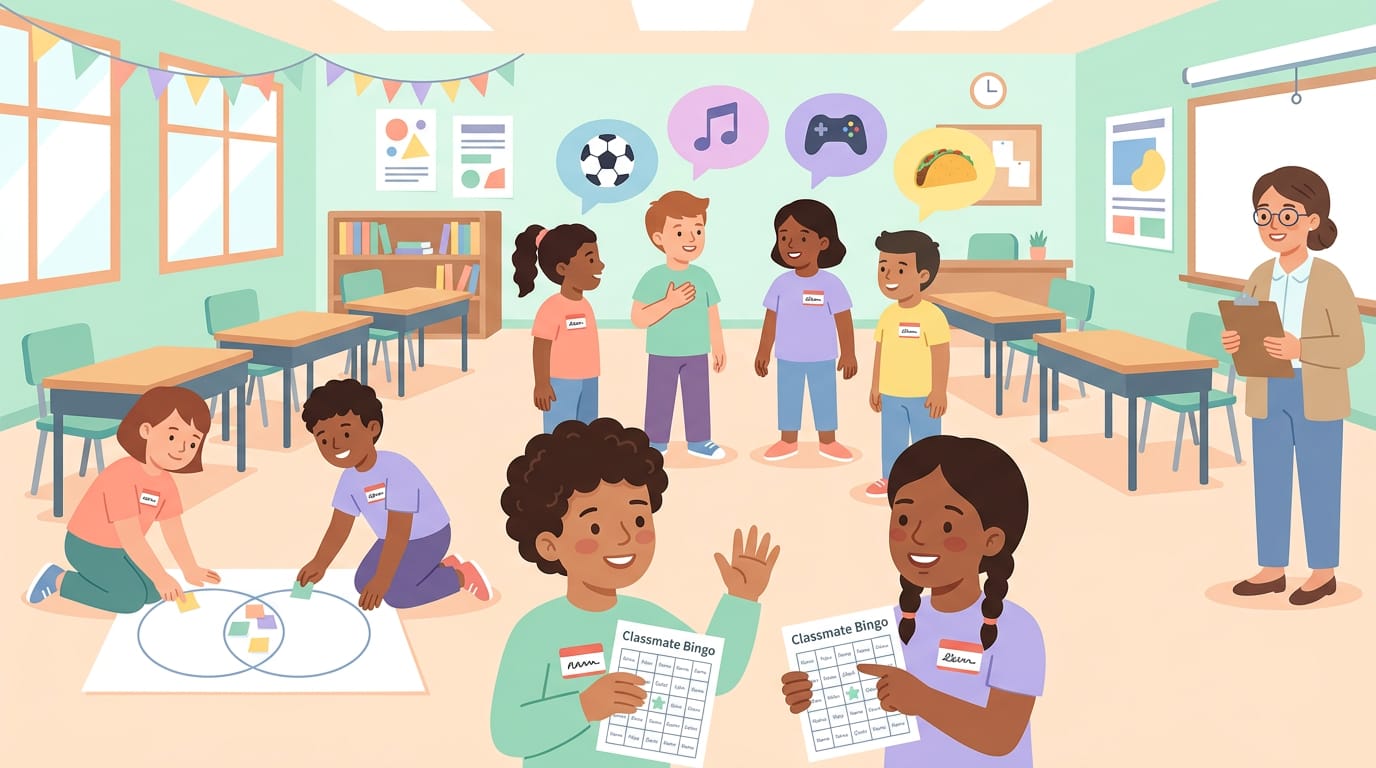
Classmate Bingo: Students find a classmate for each square.
Venn diagram pairs: Partners chart what's unique and what's shared.
Memory-chain introductions: Each student repeats earlier introductions, then adds their own.
Conversation starters practice: Offer open questions, like "What's your favorite meal?"
Sharing hobbies and interests: Group students by sport, music, or gaming.
Quick name-learning strategies: Repeat each name aloud, and pair it with a gesture.
Elementary versus secondary adaptations: Elementary: shorter rounds and picture cards. Secondary: pair prompts and more choice.
Guessing games about your teacher's life
Stars personal facts: Post facts about you; students star the ones they think are true.
Guess the mystery object: Hide a personal item in a bag; students ask yes/no questions.
Detective with teacher's items: Students infer what your desk objects say about you.
Yes/no question practice: Model specific questions like "Do you have a pet?" rather than "Tell me about yourself."
Letters students write to their teacher
Letter to my teacher: Students introduce themselves and share goals for the year.
'Things I Want My Teacher To Know' card: Students list up to three things they want you to know.
Model letter from teacher: Read your own letter aloud first so students see the tone.
Post and read letters: Read a few aloud with permission, or post them on a wall.
Opt-out options for sensitive sharing: Students can skip any prompt or share only with you.
Store student info in Notion: Keep responses in a private Notion database.
Share yourself with All About Me projects
All About Me flip book: Students fold a sheet into pages about family, favorites, and goals.
Self-portrait drawing: Students draw and label themselves. Collages suit anyone who'd rather not draw.
Name tags: Students add their name, how to pronounce it, and one favorite thing.
Share via video call: Remote students can record an intro or share the booklet on screen.
A third-grade teacher holds up each flip book at circle time. Two students discover they both have hamsters. Friendship starts by recess.
Reflect, Set Goals and Seal Time Capsules
These activities help students look back and look ahead.
Set SMART goals and resolutions
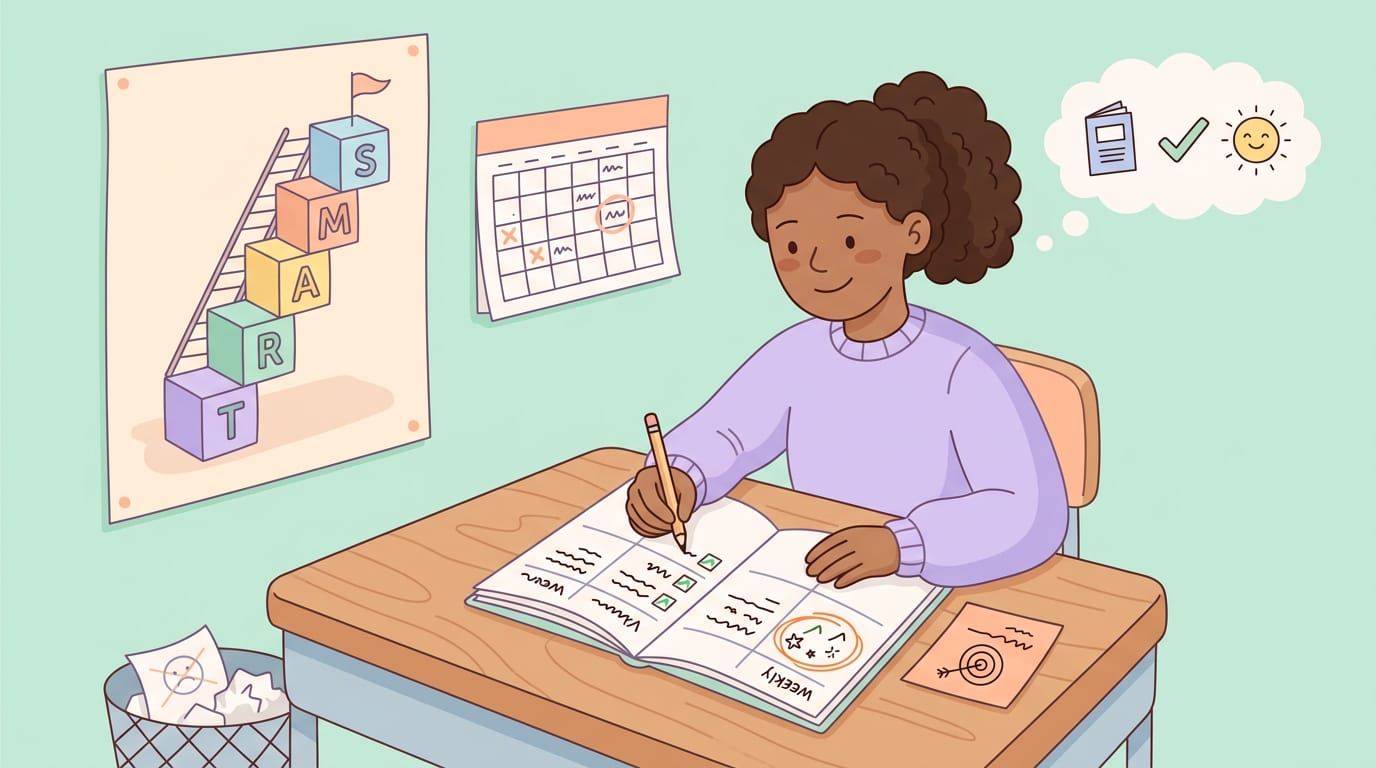
Start with SMART goals (Specific, Measurable, Achievable, Relevant, Time-bound), which turn vague wishes into plans teens can track.
Have students write one or two resolutions for the year, then a quick self-reflection on what worked and what didn't. Consider a ninth grader who kept missing homework deadlines.
Her resolution is to log every assignment in a planner and check it each Friday. She's focused on actions she controls, not grades she can't fully predict.
Write letters to your future self
Here's how it works:
Dear Future Self letter. Students describe their interests, worries, and hopes right now.
Time capsule of current interests. Seal it with a few items, like a song title or doodle.
Open at year end. Reopen it so students can compare who they were with who they've become.
Mail or schedule email. Mail letters home for younger learners, or schedule email for older ones.
Picture a sixth grader who rereads her letter in June and laughs at how much she worried about lunch. Growth is easier to see in hindsight.
Keep a writing project going all year
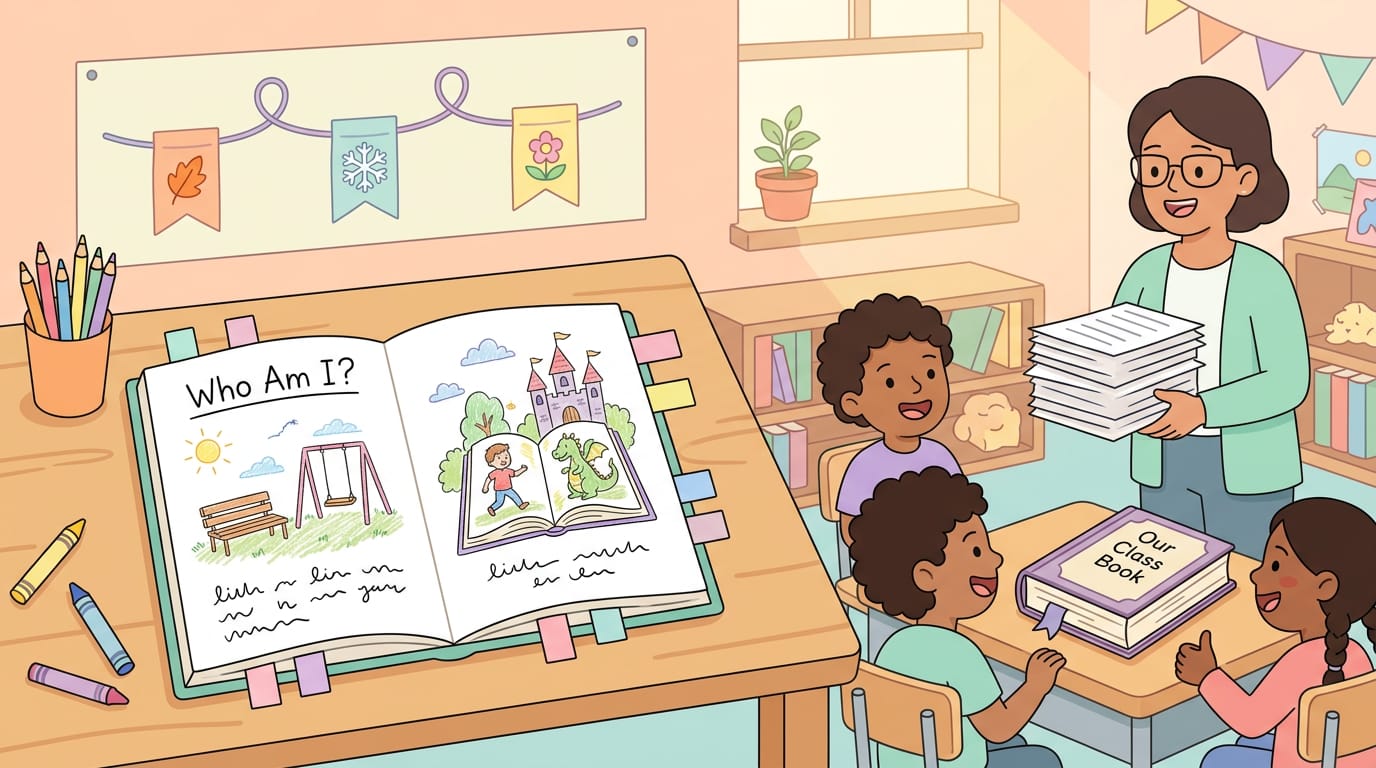
Launch a 'Who Am I?' book, a running journal students add to all year.
Plan milestones, such as a page in October, after winter break, and a final reflection in spring. Each gives you a checkpoint.
Mix literal and fantastic prompts. Ask something literal, like a favorite Saturday spot, then something fantastic, like which book character they'd swap lives with. Both reach every kind of writer.
Finally, publish the strongest pages, with student permission, in a class book.
Check Skill Levels and Practice Language
Before you dig into content, find out where students stand. Quick checks on day one show who needs support.
Check writing and speaking early on
Start with a writing sample for assessment: a few sentences about something familiar. It's quick and shows how students handle grammar.
For language feedback on errors, mark mistakes without stopping every sentence. Pick one or two patterns and keep the tone warm.
To gauge student levels, picture a secondary English teacher whose class mixes newcomers and long-term learners. Her samples show who needs sentence-level support, so she can group them by need.
Get students producing language early with a quick name-and-favorite-thing round. Then launch with a content-area hook lesson, such as a science question about why puddles disappear on sunny days.
Review vocabulary through fast team games
Stop the Bus uses categories. Call one out, like foods, and students write words until someone shouts "Stop the bus!" Check together, aiming for recall over perfect spelling.
In the team race with letters, call a letter and have teams write words starting with it. You'll check each word. Accuracy beats speed.
These work best with existing classes. Shy students may freeze in a fast race on day one.
Adapt by level: newer learners use picture cards, while stronger groups build full sentences.
Adjust activities to each student's level
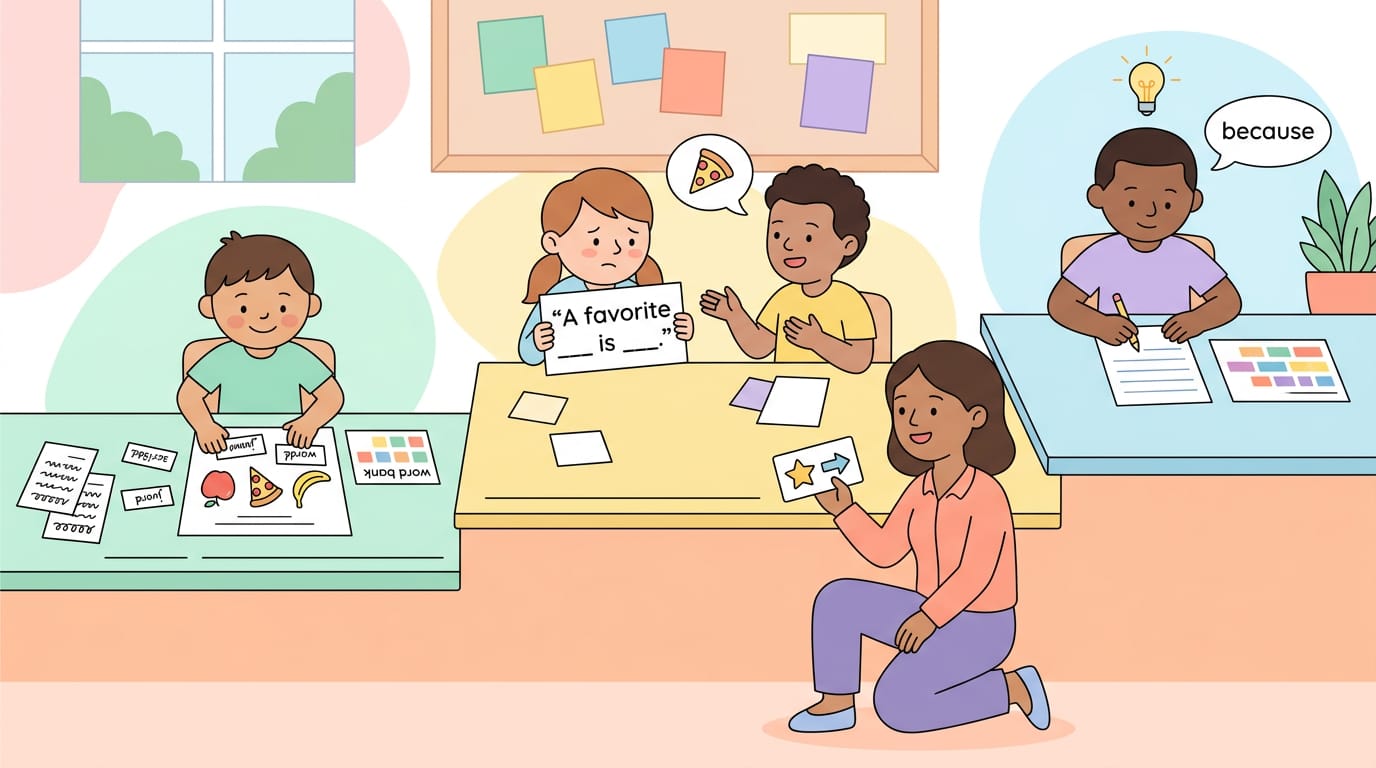
Scale activities from elementary to intermediate. Elementary students label pictures, while intermediate students write short descriptions.
Give hesitant speakers sentence frames, like A favorite ___ is ___. The frame lets them focus on meaning.
Simplify by trimming the word bank. Increase the challenge by asking for reasons.
Pairs practice first, so everyone speaks before anyone performs. Then give brief feedback: one strength, one next step.
Help Kids Get Ready for Day One
A little preparation before the first bell helps kids feel at home faster.
Build routines and a calm first-day mindset
Start your routine a week early. Practice simple habits, like lining up or unpacking a backpack into a cubby, in short bursts. Picture a second grade teacher who spends five minutes each afternoon rehearsing the morning.
By Monday, the kids do it without being asked.
Read first-day stories aloud. A picture book about starting school gives kids a shared picture of what to expect.
Explain the daily schedule from arrival to dismissal, and post it where everyone can see. The goal is predictability that helps kids feel safe rather than managed.
Use brainteasers to warm up. Post one puzzle as students walk in. Think of a fourth grade teacher whose room is buzzing with guesses within minutes. Kids think together before anyone asks them to share, and that's a gentle start to the day.
Capture the day and personalize supplies
Snap a first-day photo or video at the door or at each desk. It's a lovely keepsake, and kids get a kick out of seeing themselves on day one.
Show last year's first-day photos alongside today's. Kids notice how much they've grown.
Let kids share their new gear and style, like a fresh backpack or favorite shoes. It gives them an easy conversation starter.
Label cubbies and folders with each child's name, or let kids decorate their own. Imagine a kindergarten teacher who lets each child choose a sticker for a name tag. Ownership starts with small things.
A strong first day is less about perfect icebreakers and more about making every student feel like they belong. When you build in time to connect, set goals, and get a read on where learners are, the rest of the year has a solid foundation.
Ready to keep the momentum going? Explore Teaching Strategies & Concepts for more ideas to carry past day one.
References
A systematic review on the impact of social support on college students’ wellbeing and mental health — pmc.ncbi.nlm.nih.gov (2025)
Ultimate Teacher Planner
The ultimate all-in-one education management system in Notion.