Adult Learning Theory Guide: How Grown-Ups Learn Best

Think about the last training session that felt like a school lecture. Chances are, you forgot most of it by Friday. Adults bring real problems and years of experience, so they learn differently.
That's where adult learning theory comes in. It's the body of ideas about how grown-ups learn, and andragogy is the term Knowles used for its core approach: treating adults as self-directed learners who need to know why something matters.
In this post, we'll cover the principles, how andragogy differs from pedagogy, and practical steps you can use with colleagues.
Ultimate Teacher Planner
The ultimate all-in-one education management system in Notion.
What Adult Learning Theory and Andragogy Mean
Adult learning theory is the body of ideas about how grown-ups learn best, and andragogy is the name most often tied to it.
First, let's clear up the basics: a learning theory explains how people take in new knowledge and skills, and what helps them keep it.
How adults gain knowledge and use it
Adults rarely arrive as blank slates. They bring years of work and life experience, and new knowledge sticks best when it connects to what they already do.
According to Applying educational theory in practice, adult learning theory aims to improve adults’ skills and performance by connecting learning with real-life application.
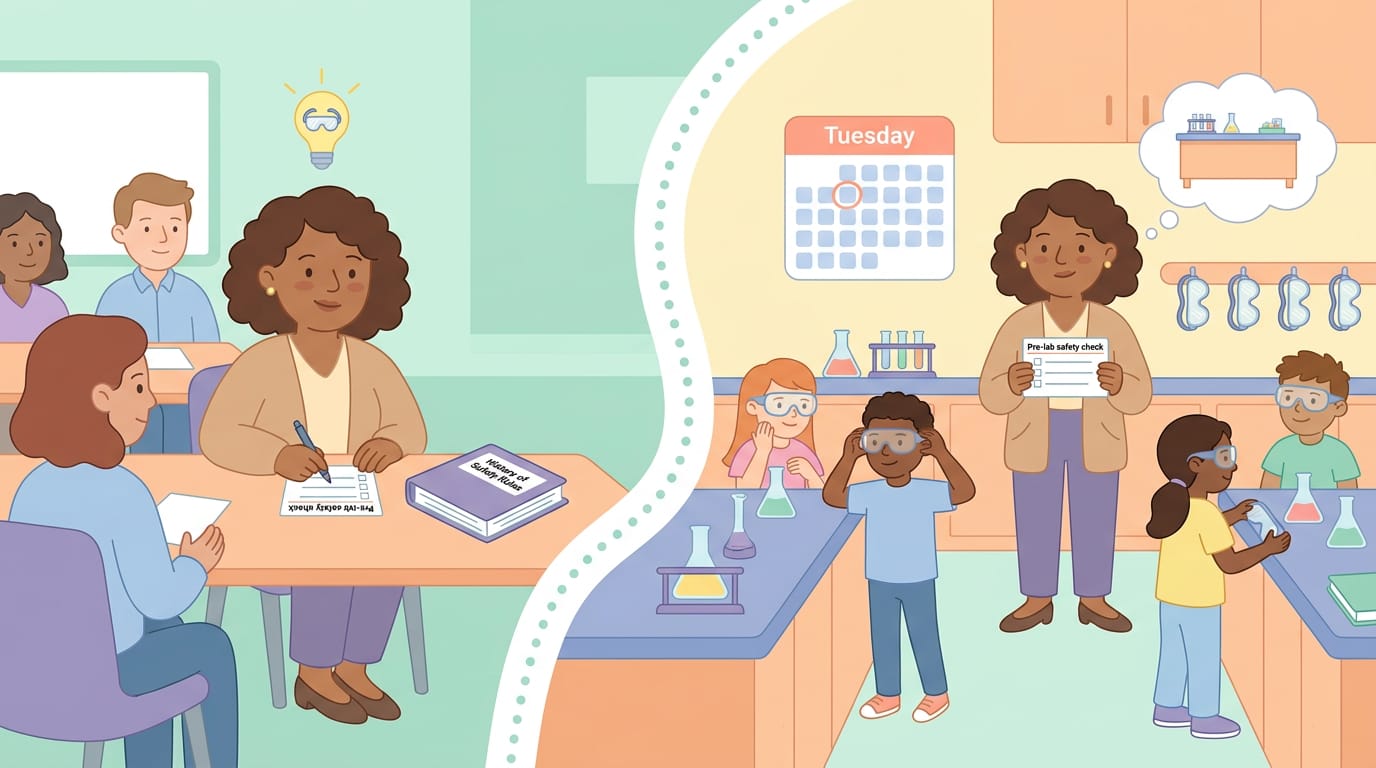
Consider a middle school science teacher attending a workshop on new lab-safety routines. She doesn't need the history of safety rules. She needs one routine she can run before Tuesday's lab. The goal is performance rather than completion.
Malcolm Knowles and where the ideas started
Malcolm Knowles introduced the term “andragogy” to North America, defining it as “the art and science of helping adults learn.” The core idea is that adults need teaching that respects their experience, their reasons for learning, and their ability to steer.
Experience counts.
How teaching adults differs from teaching children
Teaching children is traditionally called pedagogy, and andragogy is its adult counterpart. The biggest difference is who steers:
Instructor-led teaching puts the teacher in charge of sequence, pace, and goals.
Self-direction gives the learner a say in what to focus on and how to use it.
Adults still need guidance. They just want a say in the route.
The Principles and Assumptions Knowles Made
Malcolm Knowles built andragogy on a few plain beliefs about adults. You'll see why child-focused methods often fall flat with experienced professionals.
Key beliefs about how adults learn
In 1984, Knowles described four principles:
involvement in planning
use of experience
relevance
problem-centered learning
A study of adult blended learners in Ghana notes the first means adults should help plan their own education.
Six assumptions sit beneath these principles:
Need to know. Adults want the why before the what.
Self-concept and responsibility. Adults see themselves as accountable for their choices.
Prior experience. Adults bring a lifetime of practice into the room.
Readiness to learn. Adults are most open to what their roles demand now.
Problem-centered orientation. Adults want solutions, not subjects studied for their own sake.
Motivation. Internal goals drive adults more than outside rewards.
Andragogy has limits, though. Not every adult arrives with rich experience or a clear goal, so we should treat these assumptions as a lens, not a script.
How prior experience and mistakes help learning
Prior knowledge gives new material something to attach to. Picture a professional development facilitator introducing a new tool to teachers who already use exit tickets. Framing it as an upgrade to that habit means they refine rather than rebuild.
Adults can feel exposed when they get something wrong in front of peers. Mistakes deserve the same respect. They aren't a detour from learning; they're the route.
Why relevance and motivation matter to adults
Adults want learning they can use on Monday. That's immediate job relevance, and it drives buy-in. Think of an instructional coach who opens with questions teachers raised last week. They lean in, and the strategy lands in Tuesday's lessons.
Intrinsic motivation, like pride in good work, tends to outlast rewards. Barriers to learning, such as tight schedules, can stop adults before they start.
So what's the payoff? Knowledge tied to work already underway gets used right away, which is the core benefit of adult learning.
Letting learners help plan and evaluate
Adults ought to experience a sense of personal control over their education, so invite them to shape goals, activities, and evaluation. A facilitator might let teachers pick which of three coaching focuses to start with.
The plan feels like theirs, and their feedback shapes the next session.
Putting the Theory into Design and Delivery
Adult learning principles matter once they shape decisions. Here's how to build, guide, equip, and evaluate training so theory shows up in practice.
Designing training around the learner
Start with purpose: every activity needs a reason you can state in one sentence. Know your audience, since veterans and first-year teachers need different entry points.
Build in relevance, application, and autonomy so teachers can try ideas in their own classrooms and adapt them. Designing with empathy means respecting busy colleagues' time.
Here's how we'd apply that in a teacher professional development (PD) session.
An instructional coach might ask each teacher for one question their exit tickets (quick end-of-class checks) can't answer, then build the session around their questions, not her slides.
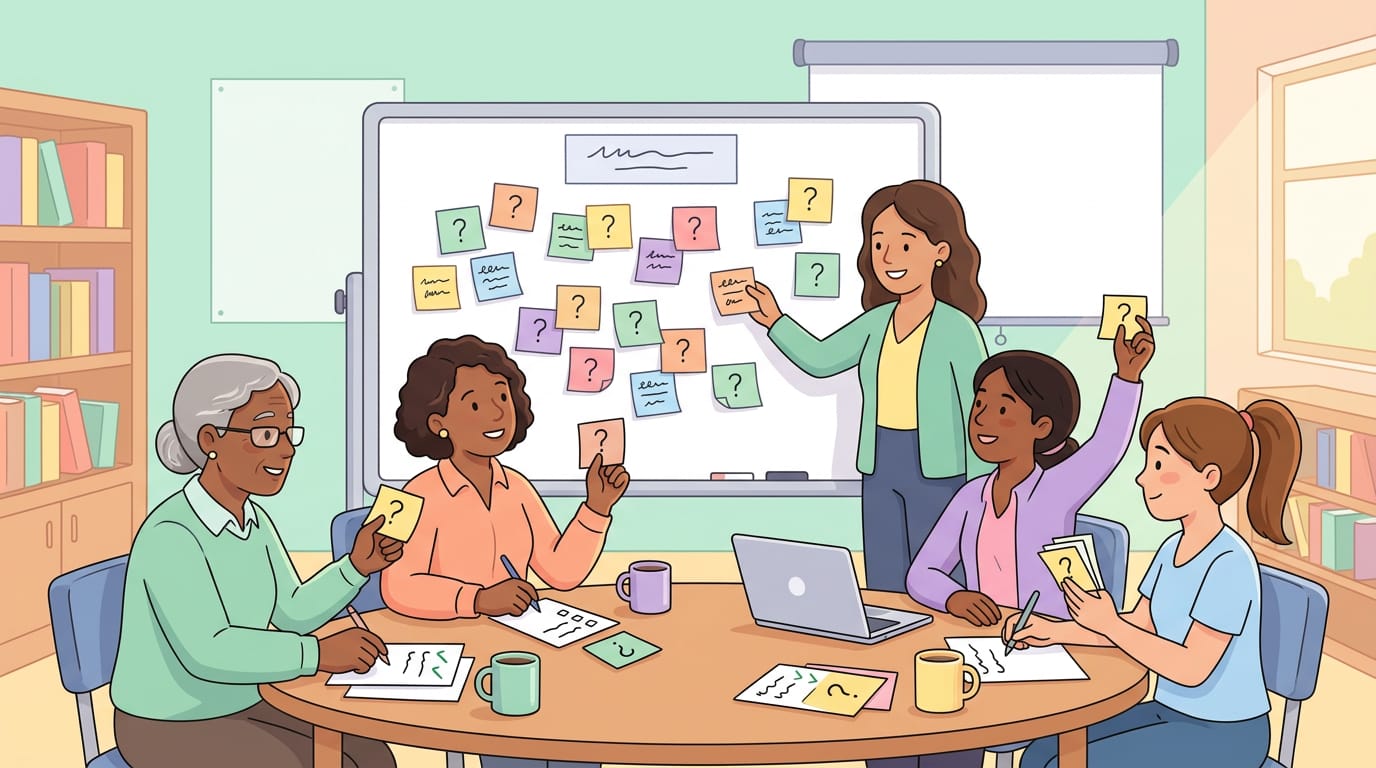
Guiding learners through active practice
Instruction tells learners what to know. Facilitation helps them apply it, shifting the job from telling to guiding.
Use case studies built on realistic problems, like a student who aces quizzes but can't explain the reasoning. For quick engagement, try think-pair-share: pose a question, give a minute alone, then compare with a partner.
Reflective activities ask learners to note what they tried and what they'd change. Problem-solving and critical thinking grow when learners defend a choice, like how to adapt one lesson for three reading levels.
Tools and formats, from microlearning to AI
Microlearning means short bursts, like a two-minute video after a staff meeting. It's best as a follow-up to deeper work.
Gamification adds points or badges, but keep the focus on the skill.
Artificial intelligence (AI) can draft practice scenarios, but a human still checks accuracy. Treat it as a starting point, not a finished product.
In virtual and hybrid sessions, keep segments short and give remote and in-room colleagues the same tasks.
Giving feedback and measuring real impact
Feedback should be specific, timely, and about the work, not the person. Invite a self-assessment first, then offer something like 'Your pause gave students room to think,' not 'Great job.'
An action plan turns a session into a commitment: one thing to try, when to try it, and the evidence to gather.
Satisfaction surveys show whether people enjoyed a session, not whether anything changed. Look for evidence of behavior rather than satisfaction, like classroom observations or student work. Impact lives in classrooms.
Other Learning Approaches That Pair Well
Andragogy pairs well with several other models. Here's how they complement it:
Experiential learning
Experiential learning means learning by doing, then reflecting on what happened. Kolb's cycle has four stages, not five:
concrete experience
reflective observation
abstract conceptualization
active experimentation
David Kolb is the name most associated with experiential learning theory. Picture a professional development (PD) facilitator whose colleagues test a new gradebook tool on a real assignment, then talk through the snags and leave with a working setup.
Experience alone isn't enough: the learning comes from reflecting on it, not just having it.

Transformative learning
Transformative learning happens when an adult questions an assumption and sees things differently. It's less about what you know and more about why you believe it.
A teacher who assumed students needed more practice might find, after reviewing the data, that unclear directions were the real problem.
Self-directed learning
Self-directed learning puts adults in charge of their own path: they spot gaps, choose resources, and track progress. It fits andragogy's focus on independence.
A new teacher might pick the two modules she needs most, then ask a mentor to review her lesson plan.
VARK learning styles
VARK sorts learners by preference: visual, auditory, reading and writing, and kinesthetic (hands-on). Use it to mix formats for everyone, not to box colleagues into one label. Teachers who want to apply these formats can explore auditory visual and kinesthetic learning in a complete classroom guide.
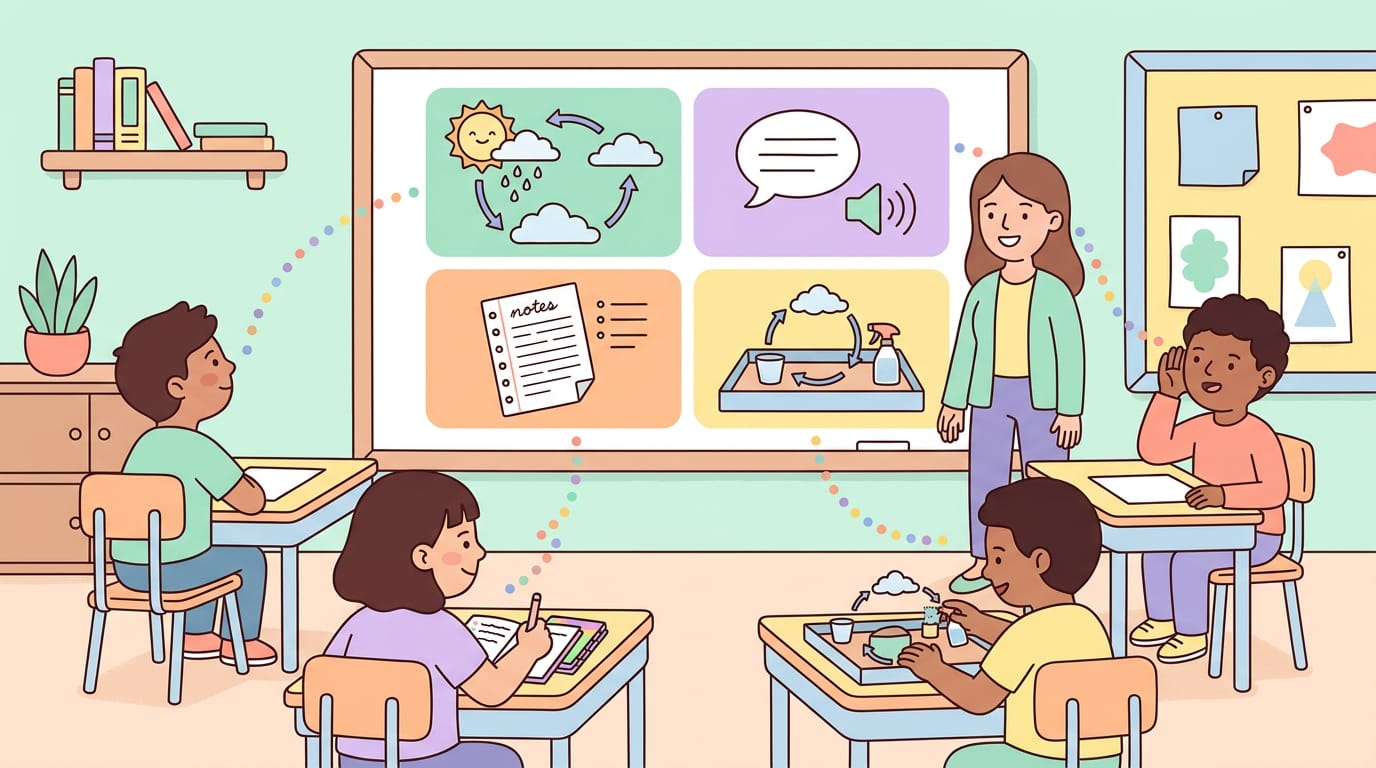
Universal Design for Learning
Universal Design for Learning (UDL) builds in options from the start: several ways to take in information, engage, and show what's learned.
A facilitator who posts a workshop video, a one-page guide, and a short practice task gives every colleague a way in. Build the options in once, and everyone benefits.
Who This Is for and What It Includes
Adults arrive with experience, goals, and very little patience for filler, which is why adult learning theory deserves a closer look. Here's who it helps and what we'll cover.
The professionals who benefit most
If you work with grown-ups, this guide is for you, especially if you're one of these:
Corporate trainers who run onboarding, compliance, or skills sessions and need people to apply what they learn on the job.
HR (human resources) and L&D (learning and development) teams who design programs across departments and need a shared way to explain why some training sticks and some doesn't.
Instructional designers who build courses and want learner-centered structure instead of a stack of slides.
Educators who teach adults in colleges, adult education programs, or workshops for their colleagues.
This is less about covering material and more about helping adults use it. Think of a veteran science teacher asked to lead a two-hour workshop on new grading tools for her colleagues.
When she opens by asking what they already use and what frustrates them, the room relaxes, and by the end people are asking how to use the tool on Monday. Adults want the why before the how.
Delivery, length, pricing and group options
Training can be delivered virtually or onsite. Either way, the principles stay the same; only the setting changes. Duration and pricing depend on the format and scope you need, so check current details before you plan a session or request a budget.
If you're training a whole team, group options let colleagues learn side by side, practice the same skills, and support each other afterward.
Adult learning theory comes down to one idea: adults learn best when they see the purpose, draw on what they already know, and get to use new skills right away.
Andragogy gives you a practical way to design for that, whether you're planning colleague training or any session with grown-up learners.
When learning works for adults, it sticks, and everyone in the room benefits. Ready to try it with your team? Browse our innovative teaching articles for more strategies to pair with it.
References
Experiences of Adult Learners Engaged in Blended Learning beyond COVID-19 in Ghana — doi.org (2024)
Applying educational theory in practice — pmc.ncbi.nlm.nih.gov (2003)
Ultimate Teacher Planner
The ultimate all-in-one education management system in Notion.