Learning Target Basics: What It Means and Why It Matters

Nobody starts a road trip without a destination in mind, yet lessons often begin without one. Learning targets fix that. They're short, plain-language statements of what students should know and be able to do by the end of a lesson.
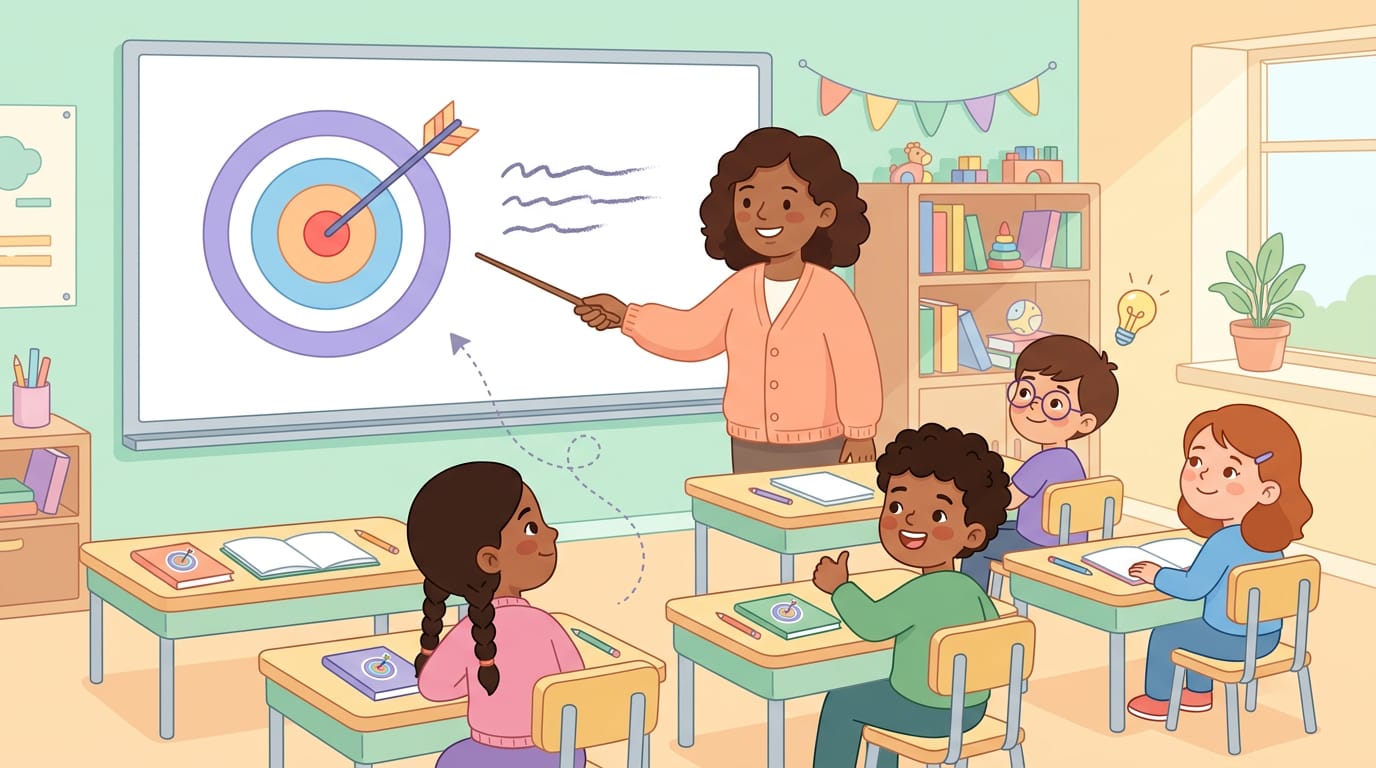
Think of a learning target as the destination on the map. When you and your students can both see it, choosing the route and spotting a wrong turn become much easier.
In this post, we'll cover what learning targets really mean, how to write them well, how to use them in class, and how to adapt them for each grade level.
Still grading everything by hand?
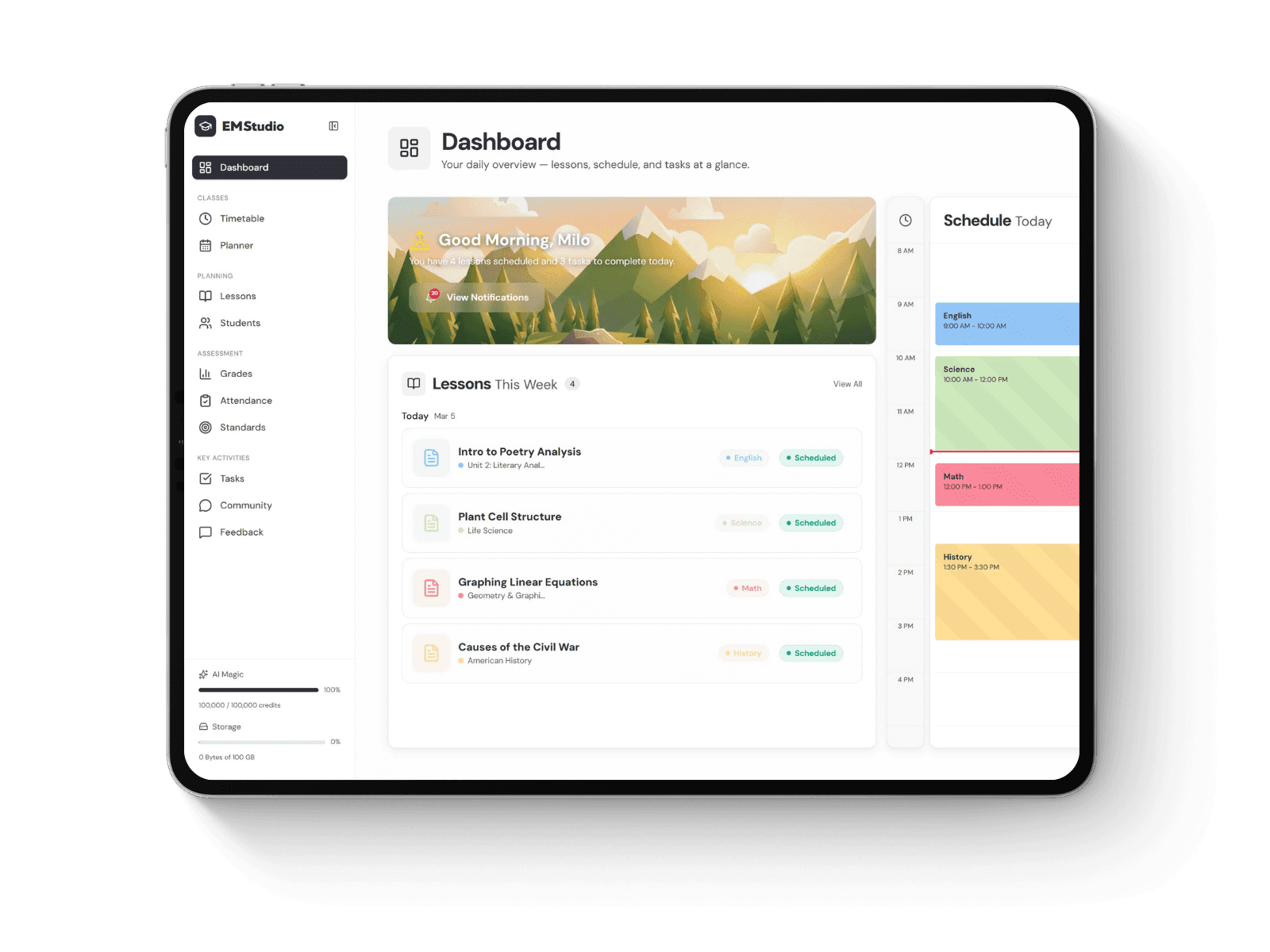
EMStudio is a free teaching management app — manage your classes, students, lessons, and more!
What Learning Targets Really Mean
Ever finished a lesson and wondered what it was for? A learning target answers that up front.
What targets are and why they help
A learning target is a statement of intended learning: what students should know or do by the end of a lesson, written in student-friendly wording like "Explain how a bill becomes a law." It answers Where are we going? and gives the why behind the work.
Targets also vary by cognitive level, from recalling facts to applying ideas to new problems.
Similar terms and how they differ
Learning goals, outcomes, and objectives often mean the same thing. The key difference is audience: a teacher objective describes what you plan to cover, while a target describes what students will know or do.
Success criteria are the companion: the evidence that shows a target is met. Most targets trace back to a standard.
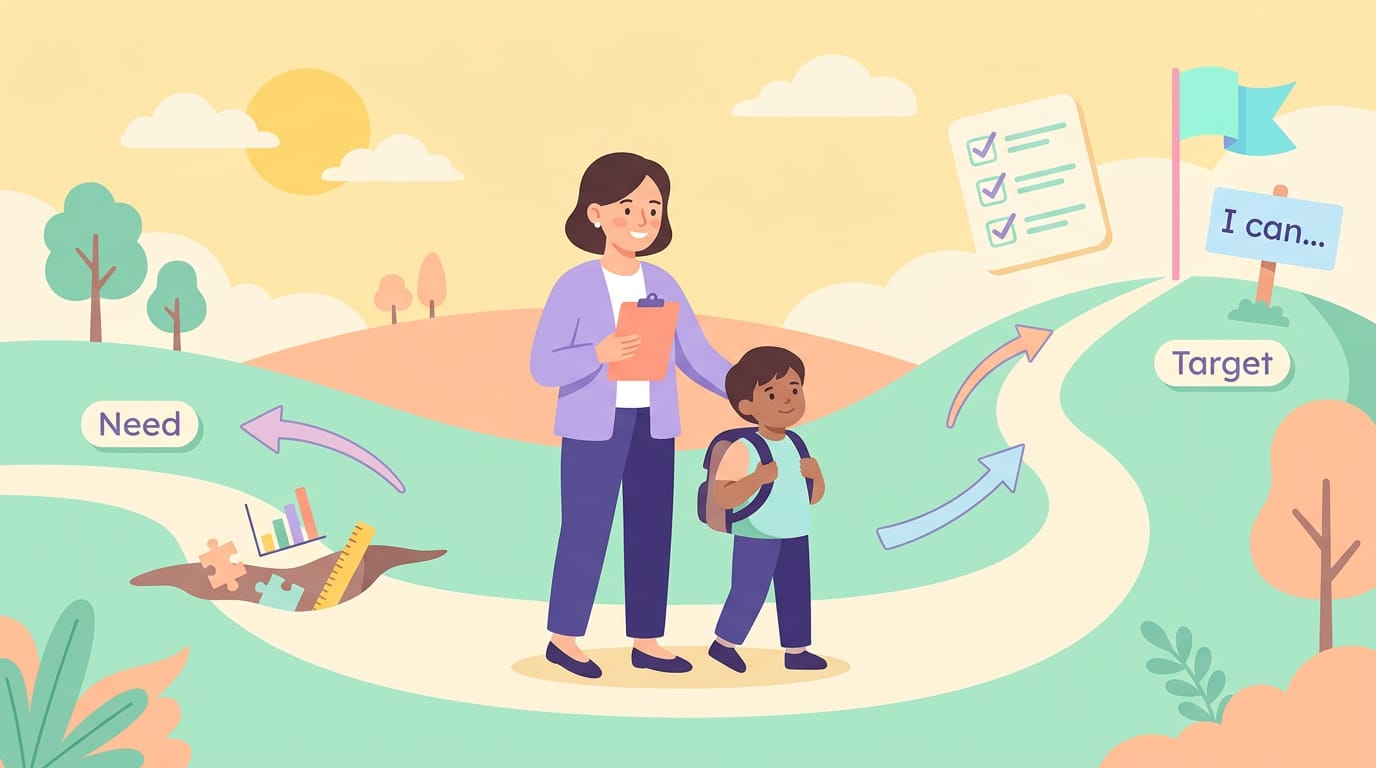
Learning needs are different: a need looks backward at a gap, while a target looks forward to the goal. Five common examples are:
mixing up area and perimeter
misreading a bar graph's scale
citing evidence without explaining it
confusing metaphors with similes
forgetting the steps of long division
What students and teachers gain from targets
Think of a science teacher who posts "Explain how evaporation drives the water cycle" at the start of class. Students know what a strong answer looks like, and she spends less time repeating directions. Targets keep effort focused.
Mastery-approach goals, which focus on mastering the material, also connect to confidence. A review of achievement goal research found they're consistently associated with self-efficacy, or belief in your own ability to succeed.
Researchers studying instructor clarity have demonstrated that clear teaching is causally related to student learning.
Students who check their work against the target start owning their learning. Everyone sees the same finish line.
How to Write Learning Targets Well
A learning target spells out what students should know or do by the end of a lesson.
Turning standards into classroom targets
Unpack the standard. List the skills and knowledge it asks for.
Find the big picture outcome. Ask what students should understand by the unit's end.
Group related standards that share a skill so you don't write a target for every line.
Add specific components, such as the content and the thinking level.
Keeping targets short and student friendly
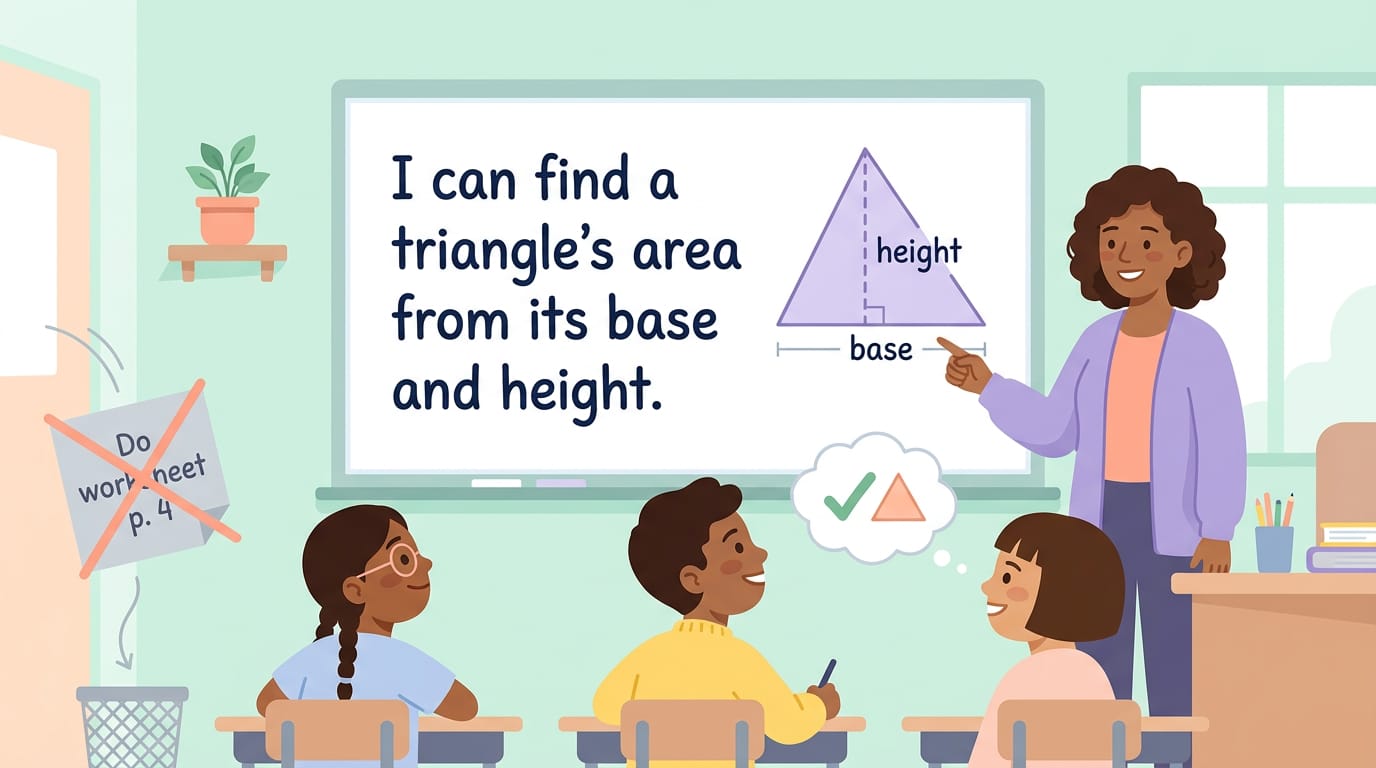
Write targets in student-friendly language, short and simple, with no context references like "the worksheet on page four."
Examples by subject, as "I can" statements:
Math: "I can find a triangle's area from its base and height."
English: "I can name an author's claim and the evidence behind it."
Science: "I can predict what happens when one variable changes."
Social studies: "I can compare two causes of one historical event."
Keep to one or two targets per lesson, so students know exactly where to focus. Clarity beats coverage.
Common mistake: activity vs. target. "Complete the worksheet" says what students do, not what they learn. Fix it by asking what they should be able to do afterward.
Showing what meeting the target looks like
Show your students what meeting the target looks like. Use a checklist for a simple skill or a rubric for layered quality, plus an annotated exemplar with notes on why it hits the target.
Try co-creating success criteria with students, so they're part of defining good work.
Think of a fifth-grade teacher who projects a strong and a weak paragraph and asks which one meets the target. Students spot the gap before they write their own, so feedback comes early.
Putting Learning Targets to Work in Class
Learning targets only help when students and families can see them and use them during lessons. Here's how we put them to work.
Posting targets where everyone can see
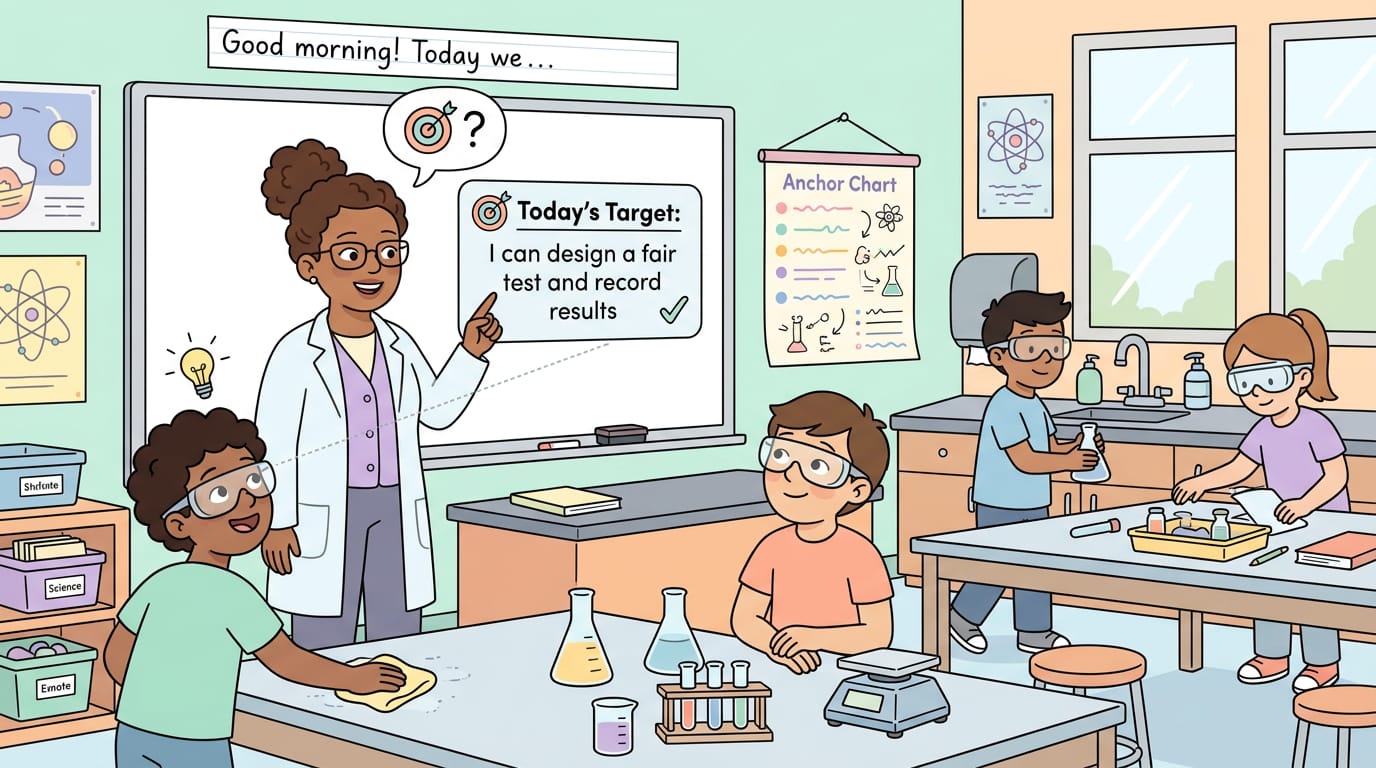
Post the target where students can read it from their seats, on a visual wall display, an anchor chart, or the board. Open each day with a morning message that states it plainly. The real goal is a target students use, so refer back to it mid-lesson.
Make targets visible beyond the classroom, too: share them with parents and administrators, and build them into your lesson templates so they show up every time.
Picture a sixth-grade science teacher who points back to the target when cleanup drags during a lab: "Does this step help us meet today's target?" Students start treating the target as a checkpoint instead of a chore.
Helping students take ownership of targets
Ownership starts when students restate the target in their own words. Add self-assessment of progress, where they rate where they stand, and peer assessment, where classmates check each other's work.
Over time, students spot their own strengths and weaknesses and know what to practice next.
Five learning strategies do most of the work toward a target:
Self-questioning: asking whether they could explain it without looking.
Summarizing: retelling the big idea in their own words.
Practicing and checking: working problems, then comparing results to the target.
Explaining to a partner: talking through their thinking and hearing feedback.
Asking for help early: pinpointing the exact part of the target that's unclear.
Tracking progress and giving feedback
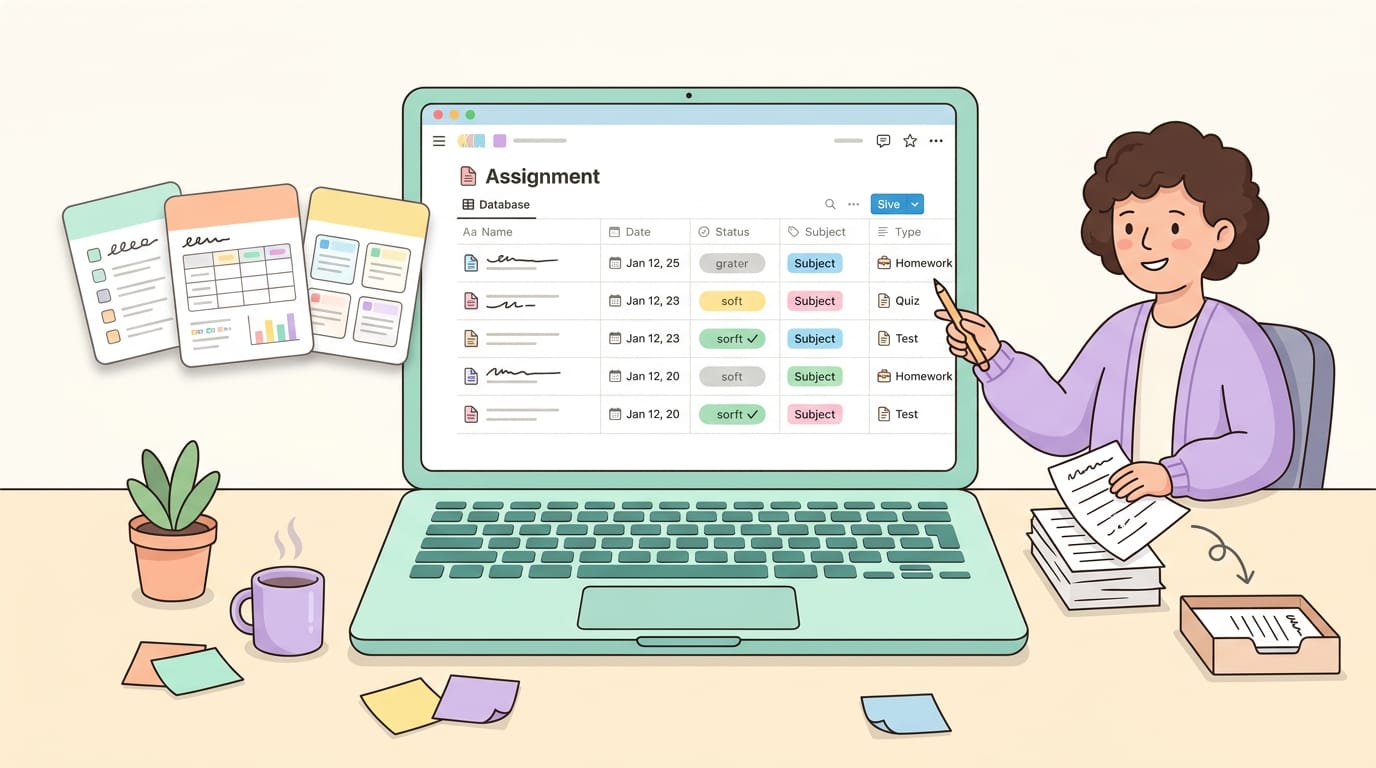
Tracking turns a target into evidence. A learning target monitoring sheet shows at a glance who has each target and who needs a small group. Portfolios and conferences add depth as you review best work together.
Use the target as the anchor for feedback, so comments name what's met and what's next. Share that same language with parents, then gather mastery data to decide what to reteach.
Making tests and tasks match the target
A target only counts if the test measures it. Make sure each question ties to a specific target, so a student who has that target can show it. That's standards-based alignment in practice.
Let rubrics frame grading so students know the criteria before they start. No surprises at grading time.
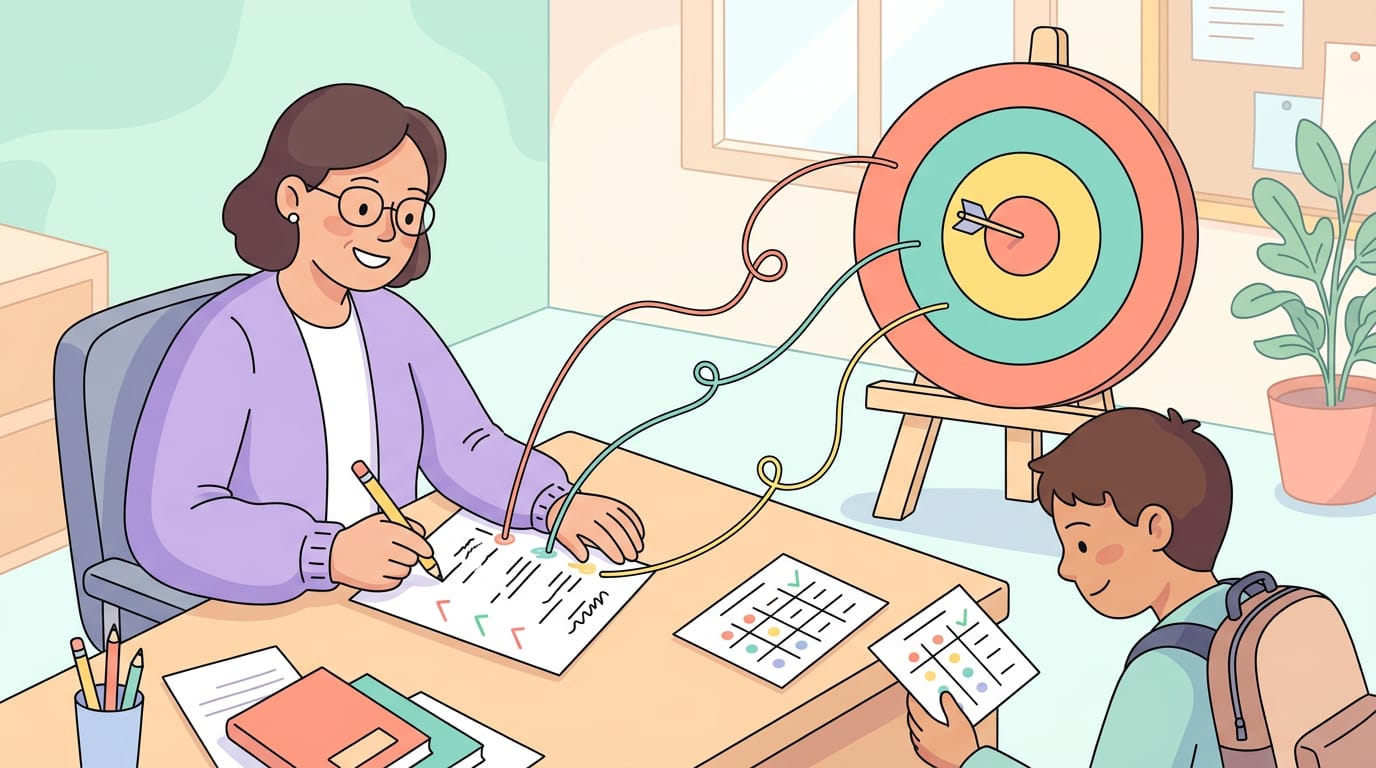
Adapting Targets for Each Grade Level
The same learning target looks different in kindergarten than in high school, so you'll adjust three things: the wording, who helps write it, and how students check progress.
K-2: 'I Can' Statements
Keep the target short enough to read together, phrased as an 'I can' statement: 'I can count to 20.' A first-grade teacher points to it every lesson, and by Friday most students can say whether they've got it.
3-5: Co-Created Criteria and Friendly Rubrics
A fourth-grade teacher asks, 'What does a great paragraph look like?' and turns the answers into co-created criteria and a friendly rubric with plain levels like 'Not yet' and 'Got it.'
Students become owners of the target, not just recipients. Ownership changes the work.
6-8: Unpacking Targets and Checklists
Unpack each target into the pieces students must show, then list them as a checklist. A seventh-grade science teacher turns 'Describe the water cycle and explain what drives it' into four boxes.
Students tick each box while they work, not after, so you can spot the empty one at a glance.
9-12: Detailed Rubrics and Self-Scoring
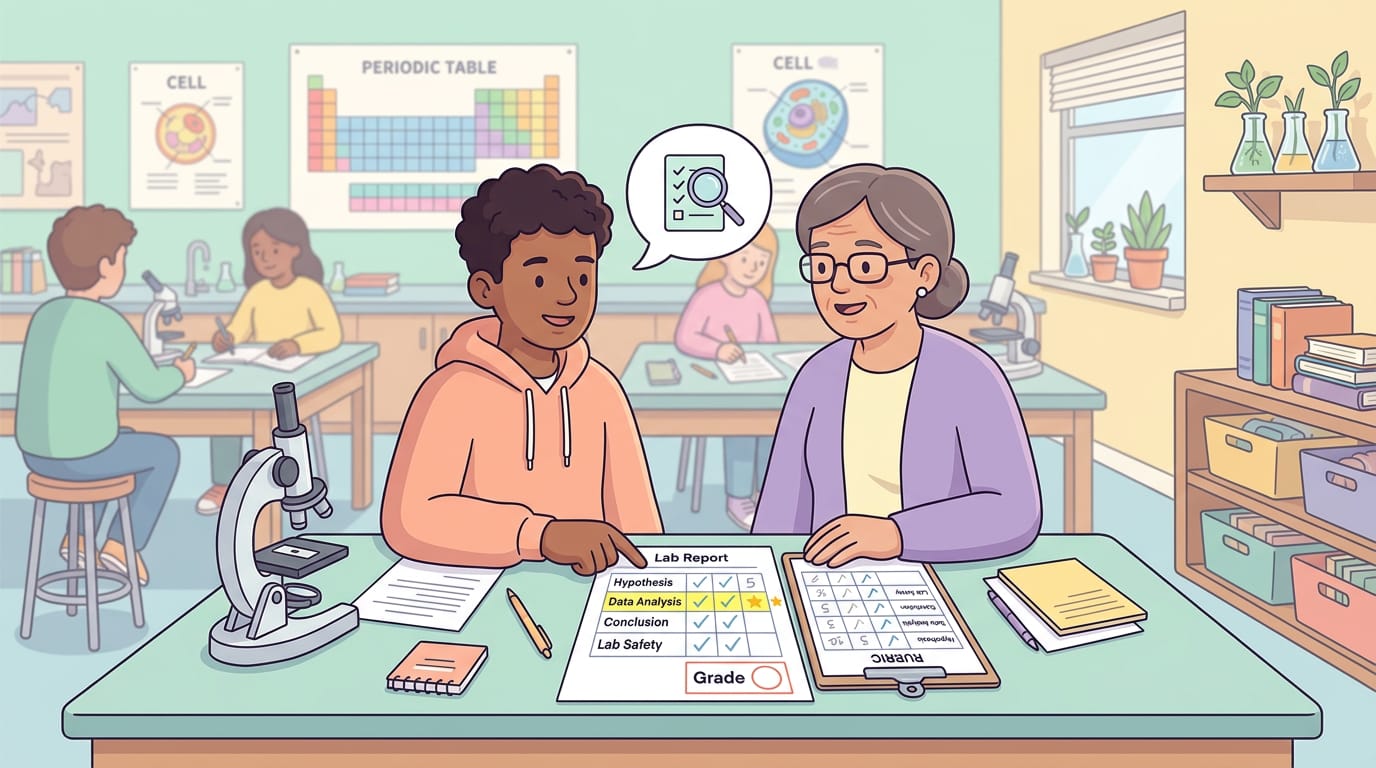
Older students can work from detailed rubrics that describe proficient work. A high school biology teacher has students self-score their lab reports, then compare in a short conference. The grade becomes the last step, not the first.
The conversation shifts from 'What grade is this?' to 'Which criterion needs work?'
Adapting for ELL and SPED Learners
For English language learners (ELLs) and students with special education needs (SPED), the target stays the same while the support changes.
A fifth-grade English learner studying food chains might get a labeled picture and a sentence frame: 'A [predator] eats a [prey].' The words stop blocking the science.
Where to Learn More
Want to go deeper? Four resources can sharpen how you write, use, and align your targets, and you don't have to read them all at once.
Key research and books to read
Visible Learning. John Hattie's Visible Learning is the place to start. A major message is that what works best for students is similar to what works best for teachers: setting challenging learning intentions and being clear about what success means.
Clarity for Learning. Read it beside a unit you're already teaching, and use it to check your targets as you go.
Sadler on criteria. Turn to Sadler's work when you're deciding how students will recognize success, because criteria give learners something concrete to check their work against.
Writing tips guides. Keep one open while you draft. When a target feels fuzzy, check that it names an observable action and a clear standard.
Here's how it plays out. A fifth-grade teacher planning a fractions unit writes down what students should be able to do by Friday before she picks a single worksheet.
When her first draft says "understand fractions," she swaps in "compare two fractions with unlike denominators." Now her students know exactly what they're aiming for, and so does she when she checks their work.
Read for clarity rather than coverage. One sharp target beats ten vague ones.
Clear learning targets turn a loose list of activities into a path students can follow.
Write them as specific, observable outcomes, use them to guide each step of the lesson, and adjust them for the grade you teach, and students will know exactly where they're headed.
That clarity helps you, too. A well-written target gives you a simple way to check whether the lesson is working.
Ready to put this into practice? Check out our Teaching Strategies & Concepts section for more ideas to try in your next lesson.
References
Achievement Goal Orientation and Self-Efficacy: Review of Theoretical Foundation and Empirical EvidenceTIVE REVIEW OF THEORETICAL FOUNDATION AND EMPIRICAL EVIDENCE — dea.lib.unideb.hu (2026)
Instructor clarity fosters student learning by reducing cognitive load (for some students) — doi.org (2025)
Visible Learning — doi.org (2008)
Still grading everything by hand?
EMStudio is a free teaching management app — manage your classes, students, lessons, and more!