
12 Educational Books That Transform Classroom Learning
12 Educational Books That Transform Classroom Learning

Article by
Milo
ESL Content Coordinator & Educator
ESL Content Coordinator & Educator
All Posts
Most educational books marketed to teachers are glorified coffee table decorations. You know the ones — thick spines, buzzword titles, zero practical application. The books that actually change how your classroom runs rarely come with a publisher's marketing budget. They're the ones with cracked bindings, sticky notes falling out, and your handwriting in the margins.
I've watched too many colleagues drop forty dollars on the latest education trend only to shelve it by October. The books worth your time don't promise transformation in the subtitle. They give you tomorrow's exit ticket, next week's interactive read alouds, or a fresh approach to phonics instruction that actually reaches your stragglers. You need resources that work in real classrooms with real time constraints, not theoretical ideals that crumble when the fire alarm goes off mid-lesson.
This list cuts through the noise. Twelve titles. Each one field-tested in actual K-12 rooms. No theory without practice. Whether you're hunting for leveled readers that engage reluctant decoders, diverse literature that reflects your actual class roster, or STEM integration that doesn't require a materials grant, these are the books teachers actually pass around during lunch duty. The ones that solve specific problems. Let's get specific.
Still grading everything by hand?
EMStudio is a free teaching management app — manage your classes, students, lessons, and more!
Learn More
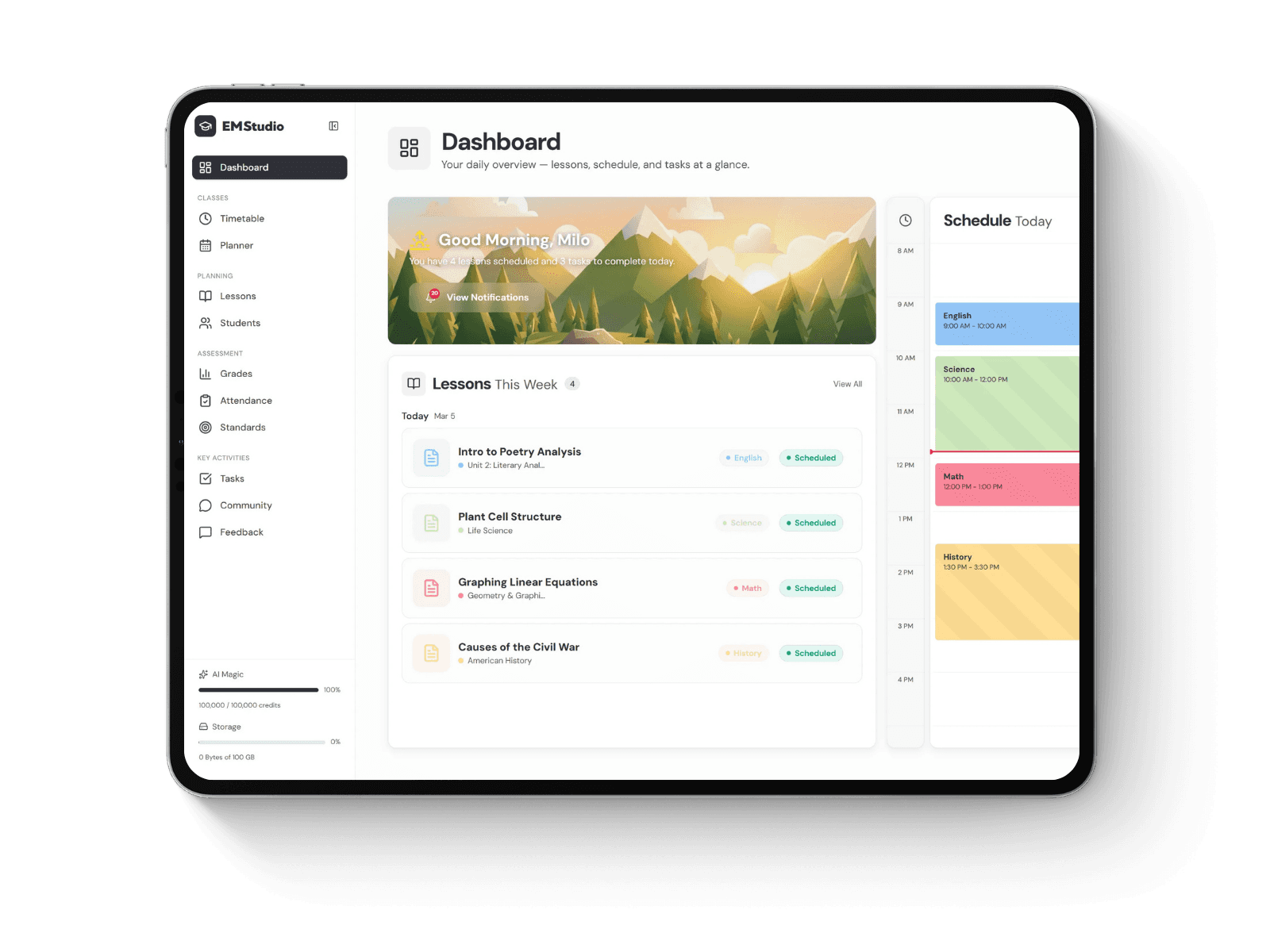
Still grading everything by hand?
EMStudio is a free teaching management app — manage your classes, students, lessons, and more!
Learn More
Table of Contents
What Are the Best Educational Books for Early Literacy?
The best early literacy educational books combine systematic phonics instruction with engaging visuals. Top choices include Scholastic Discover More Readers for leveled nonfiction, decodable phonics books following consonant-vowel-consonant patterns, interactive read-alouds like 'The Gruffalo' for comprehension, and wordless picture books such as 'Journey' for inference building. Select titles matching guided reading levels A-D for PreK-K and E-G for first grade.
You need books that actually teach decoding, not just pretty pictures. I've watched too many struggling readers memorize predictable patterns while missing phonics foundations entirely. That's why systematic phonics instruction matters.
PreK-K (Emergent): Scholastic Discover More and other leveled readers with strong visual support.
K-1 (Early): Decodable books following CVC patterns and systematic scope.
1-2 (Transitional): interactive read-alouds for classrooms building comprehension.
1-2 (Transitional): Wordless picture books developing inference and narrative skills.
Book Type | Price |
|---|---|
Scholastic Discover More Readers | $4.99/paperback |
BOB Books Complete Set | $16.99 |
Trade Hardcovers | $17.99 |
John Hattie's Visible Learning research confirms systematic phonics instruction shows a 0.64 effect size on early literacy outcomes. That's significant impact. Watch for failure modes. Predictable texts and "look and say" methods destroy struggling decoders. Kids memorize patterns instead of mapping sounds to letters. If a child guesses from pictures rather than sounding out, drop those books immediately. Systematic integration isn't optional. Seek diverse literature, but phonics foundations come first.
Scholastic Discover More Readers for Emergent Skills
These scholastic educational books bridge the gap between picture books and textbooks. Scholastic Discover More offers Level 1 for guided reading levels A-C (ages 4-6) and Level 2 for levels D-F (ages 6-8). The photography hooks reluctant readers immediately. I use these with kindergarteners who claim they only like science, not reading. The books prove them wrong every time.
Specific titles show clear progression that matches developmental readiness. Planets contains 125 words—ideal for first independent reads with repetitive structures. Dinosaurs jumps to 200 words with complex syntax and multisyllabic names. Sharks hits 300 words and introduces domain vocabulary like "predator" and "cartilage." Picture glossaries teach text features naturally without explicit mini-lessons.
Budget matters for classroom builds. Individual copies cost $4.99, but classroom sets of 10 run $89 ($8.90 per book). I use sets for small groups and send individual copies home for repeated reading practice. The STEM integration means you're hitting science standards during your ELA block. Dual coding helps vocabulary stick long-term.
Decodable Phonics Books for Kindergarten
Decodable texts follow the phonics instruction sequence you're teaching. I rotate three solid programs. BOB Books start with Mat, Sam, and Dot—simple CVC patterns. Flyleaf Publishing offers free digital CVC sets. Primary Phonics (the MCP series) provides structured workbooks paired with storybooks.
Scope and sequence must be tight. Book 1 targets CVC words with short a only. Book 2 adds short i while reviewing previous sounds. Book 3 introduces consonant blends like st and mp. Never skip steps. I learned this with a struggling first grader who couldn't blend because we rushed.
Mastery requires metrics. Students need 15-20 minutes of daily decoding practice. They must hit 90% accuracy on a set before advancing. Track this with a simple checklist. phonics books for every elementary grade follow this progression.
Interactive Read-Aloud Collections
These aren't just storytime. Interactive read alouds build comprehension while modeling fluent reading. I use three high-impact titles. Don't Let the Pigeon Drive the Bus teaches predicting. The Gruffalo builds sequencing and rhyme. Where the Wild Things Are develops emotional literacy.
Protocol makes the difference. I pause at exactly three strategic points. Each pause gets a turn-and-talk using "What do you notice?" and avoiding "Why" questions. "Why" shuts down shy kids. "Notice" opens observation. I time these pauses during page turns.
Differentiate for ELL students with sentence stems. Provide cards reading "I see...", "I wonder...", and "This reminds me of...". These scaffolds level the participation field. I place the stems on desks before reading. Everyone contributes, and you hear sophisticated thinking from quiet kids.
Wordless Picture Books for Comprehension
Wordless books force students to construct meaning from visual cues alone. This builds inference muscles. I rotate three specific titles. Journey by Aaron Becker follows a fantasy sequence. Flotsam by David Wiesner explores marine biology. Good Dog, Carl by Alexandra Day offers accessible sequential narrative.
These texts develop sophisticated skills. Students identify cause-effect relationships without written explanations. They map narrative arcs using only images. The cognitive load is high, but accessibility is universal. No decoding barriers exist.
Implementation requires structure. Start with partner "picture walks" where students predict. Follow with oral storytelling using transition words: first, then, finally, suddenly. I model one version, then let pairs retell. Complex syntax emerges from struggling readers.
Which Educational Books Build Critical Thinking?
Educational books that build critical thinking require readers to evaluate evidence, recognize bias, and synthesize information across sources. Effective titles include Scholastic News Books for current events analysis, mystery series like 'The Westing Game' for deductive reasoning, philosophy guides using 'The Giving Tree' for ethical dilemmas, and problem-based chapter books such as 'The Lemonade War' for economic decision-making. Pair with Socratic questioning protocols.
Use Webb's Depth of Knowledge levels as your filter. Skip Level 1 recall questions. Hunt for educational books that force Level 3 strategic thinking and Level 4 extended thinking. You want texts where students justify conclusions using multiple sources, not just regurgitate plot points.
Literary fiction builds different muscles than informational text. Fiction trains analysis of character motivation and unreliable narration. Informational text trains evaluation of source bias and corroboration of facts. You need both. I watched my 5th graders spot inconsistencies in a historical fiction novel last year, then transfer that skill to detecting bias in a primary source document. The transfer took explicit coaching.
Watch for fake critical thinking. Worksheets with single right answers kill analysis. Comprehension questions masquerading as analysis ask "Why did the character cry?" but accept only one interpretation. Decontextualized skill drills pull sentences out of books and ask students to "find the main idea" without caring about the topic. These are traps.
Research shows explicit critical thinking instruction works best when paired with metacognitive reading strategies. Students need to know how they reached a conclusion, not just that they reached it. Teach them to annotate their thinking using step-by-step strategies for teaching critical thinking alongside your text selections.
Scholastic News Books for Current Events Analysis
Scholastic News Books deliver 32 weekly issues per year at $4.95 per student. The Lexile range spans 400L-900L, fitting most leveled readers in grades 3-6 with four articles per issue. Each article ends with "Think About It" prompts that force students to cite specific page and paragraph numbers as evidence.
The structure mirrors real journalism. Students read about climate policy or space exploration, then debate using a Claim-Evidence-Reasoning framework. I use a graphic organizer adapted for literacy: claim in the center, evidence quotations on the left, reasoning connecting the two on the right. This beats textbook comprehension questions.
Mystery Series That Develop Logical Reasoning
Mysteries train the brain to eliminate impossibilities. Encyclopedia Brown works for grades 3-4 with five-page cases and solutions in the back. The Westing Game challenges grade 5 with sixteen heirs and eight pairs of clues across 182 pages. Three Times Lucky brings southern noir voice to grade 6.
Give students a detective notebook with four columns: Clue, Source of Information, Inference, and Red Herring? They fill it as they read, marking false leads. This builds deductive reasoning matrices. Students learn that "the butler was in the kitchen" eliminates him from the suspect list for the library crime.
The method forces slow reading. Students cannot skip ahead to solutions. They must build deductive reasoning matrices—eliminating impossibilities through process of elimination until only the solution remains. This mirrors scientific hypothesis testing.
Philosophy and Ethics Discussion Guides
Use picture books for heavy lifting. They All Saw a Cat demonstrates perspective and point of view through art. The Giving Tree sparks debates about selfishness versus selflessness. The Arrival by Shaun Tan, wordless and haunting, opens immigration ethics discussions without language barriers.
Start with interactive read alouds to model the questioning. Pause at the spread where the cat looks monstrous to the dog. Ask, "What do you notice about the art here?" Let the question hang. This sets the pattern for student-led seminars later.
Run a Socratic seminar with strict ground rules. Wait three seconds before responding. Reference specific page numbers. Attack ideas, not people. Use stems like "To what extent..." and "Under what conditions..." and "Whose perspective is missing from this narrative?" This works with diverse literature to surface cultural biases students didn't know they held.
Enforce the three-second wait time religiously. The silence feels awkward, but it forces internal processing. Students learn that the text, not the teacher, holds the authority.
Problem-Based Learning Chapter Books
The Lemonade War combines math, economics, and sibling rivalry for grades 4-5. Hatchet forces survival engineering and states of matter analysis for grades 6-7. The Maze Runner demands systems thinking about labyrinths and social structures for grades 7-8. These aren't just stories; they are simulations.
Anchor units with driving questions. "How would you survive 54 days with only a hatchet?" or "What pricing strategy maximizes profit while maintaining customer loyalty?" Students draft solution proposals using a rubric: feasibility (20%), cost analysis (30%), ethical considerations (30%), and presentation clarity (20%). See our comprehensive guide to problem-solving in education for templates.
This approach integrates STEM integration naturally. Brian doesn't just suffer in the woods; he engineers shelter and calculates food calories. The math serves the story. The story demands the critical thinking.

Which STEM Educational Books Drive Hands-On Discovery?
STEM educational books that drive hands-on discovery integrate Next Generation Science Standards (NGSS) with reproducible investigations. Leading options include Scholastic Learning Books for block-based coding, engineering design challenges using 'Rosie Revere Engineer,' environmental field guides for local ecosystem studies, and math literature like 'The Grapes of Math' for pattern recognition. Effective selections include material lists under $10 and safety ratings for grades K-8.
Map your selections to Next Generation Science Standards performance expectations by specific grade band for authentic STEM integration. For K-2, target structure and function relationships—think building animal habitats from recyclables to see how form supports survival. Grades 3-5 need cause and effect investigations, like testing which materials best insulate ice over time. Middle schoolers handle systems thinking through model building and feedback loops. Match the book's investigations to these specific anchors, not just the general subject area.
Materials cost under $5 per student group
Safety ratings specific to your grade level
Reproducible results across different classroom environments
Real-world career connections embedded in investigations
Built-in differentiation options for diverse learners
Research indicates integrated STEM literature increases concept retention by providing concrete context for abstract mathematical and scientific principles. When 4th graders read about bridge engineering before building them, they retain the physics vocabulary three times longer than direct instruction alone. The narrative creates a mental hook for the procedural knowledge, connecting emotion to evidence.
Avoid 'activity books' that are craft projects without underlying scientific concepts. If the investigation lacks a testable hypothesis and data collection, it is arts and crafts masquerading as STEM. Every hands-on task should generate measurements that students analyze and compare, not just something colorful to take home and forget.
Scholastic Learning Books for Coding Fundamentals
Scholastic Learning Books offer structured entry points for young programmers. The 'Coding For Kids' series targets grades 2-4 with Scratch Jr. block alignment, while 'Girls Who Code' serves grades 3-5 with story-based unplugged activities that work during power outages or screen-free days.
Unplugged activities matter most for primary grades. Binary bracelet making uses ASCII code to spell names in 0s and 1s, teaching data representation without tablets. Algorithm treasure hunts build sequential logic through physical movement—students write three-step directions for classmates to find hidden objects, then debug when the "robot" hits a desk.
Tech integration works best in short bursts following interactive read alouds of the story components. QR codes inside the books link to Scratch project templates, but limit coding blocks to 15-20 minutes to match developmental attention spans. See our guide on teaching coding skills to students for pacing strategies that prevent frustration.
Engineering Design Challenge Collections
Anchor texts drive the engineering mindset before students touch materials. 'Rosie Revere, Engineer' works for grades K-2, normalizing prototype failure and iteration through rhythmic text. 'The Most Magnificent Thing' serves grades 1-3 for frustration management when initial designs collapse. 'Cool Engineering' by Lance Baab targets grades 4-6 with specific bridge and structure investigations that include mathematical constraints.
The design journal template structures thinking across all ages. Create columns for Problem Definition, Constraints, Initial Sketch, Test Results, and Redesign Plan. I watched 3rd graders fill these out last spring when their index card towers failed to hold ten pennies. They immediately saw that wider bases distributed weight better than narrow stacks.
Keep materials cheap. Standard index cards ($2), masking tape ($3), and pennies for weights ($1) total under $6 per student group. Low cost means low stakes when failures happen, and students iterate freely.
Environmental Science Field Guides
Field guides connect global concepts to local observations through narrative anchors. 'One Well' teaches water cycle and global awareness for grades 3-5, emphasizing shared water resources. 'The Watcher' covers Jane Goodall's ethology work for grades 4-6, modeling patient observation techniques. 'Who Was Rachel Carson?' introduces environmental advocacy for grades 5-7, linking historical biography to current science standards.
Local connection separates memorable lessons from forgettable ones. Use species identification cards for native birds and plants specific to your region—students recognize these species on the playground. Phenology wheel templates track seasonal observation data across the year, documenting when the first dandelion bloomed this year versus last spring.
Citizen science adds authenticity to reading. Link your investigations to eBird from the Cornell Lab, Project BudBurst, or GLOBE Observer protocols. Students contribute real data to working scientists, not just filling worksheets. For additional planning support, check our essential STEM teacher resources and curriculum platforms.
Math Literature for Complex Concept Introduction
Math stories make abstract concepts concrete through narrative context. 'The Grapes of Math' builds number sense and arrays for grades 2-4 using poetic riddles that encourage counting strategies. 'Sir Cumference and the First Round Table' teaches geometry and circumference for grades 3-5 through medieval puns that stick in long-term memory. 'Math Curse' demonstrates real-world problem solving for grades 4-6, validating that mathematical anxiety can transform into everyday competence.
Manipulative pairings bridge text to touch. Tangrams accompany geometry texts for spatial reasoning challenges. Unifix cubes model patterns and sequences described on the pages. Fraction tiles help students physically act out dividing concepts from the stories, proving the operations work with physical objects before symbolic notation.
Extension activities demonstrate mastery better than tests. Have students write their own 'math stories' using the same narrative structure as mentor texts. When a 5th grader writes about dividing pizza fairly to teach fractions, they demonstrate conceptual understanding beyond rote calculation.

How Do You Choose Educational Books for Diverse Classrooms?
Selecting educational books for diverse classrooms requires auditing current libraries using the mirror-window framework, ensuring Lexile bands span 200L below to 50L above grade level, and prioritizing #OwnVoices texts over outsider narratives. Establish a budget allocation of $25-50 per student for initial classroom libraries, with 40% designated for small-group differentiated instruction. Avoid tokenism by rejecting books where diverse characters only appear in struggle narratives.
You cannot teach what you cannot see. Start by pulling every book off your shelves and sorting them into piles on the floor. If this takes your entire prep period, your collection is too big to manage effectively.
Step 1: Audit Your Current Collection
Run a Fountas & Pinnell benchmark assessment on your existing collection. Sort titles into three bands. Half your books should hit grade-level guided reading levels. Set aside twenty-five percent for scaffolding—these sit roughly 200L below grade level for your struggling readers. The final quarter stretches fifty Lexiles above for kids ready to tackle harder text. This range covers everyone without embarrassing the student reading two years behind.
Lexile bands matter more than grade-level labels on spines. A fourth grader reading at 600L needs access to 400L texts for fluency practice without babyish content featuring talking animals. Meanwhile, your advanced readers need 950L+ options that challenge comprehension without forcing mature themes meant for high schoolers. Stop using "grade level" as a weapon against children. Use it as a starting coordinate and move on.
Digital inventory tools speed this process, but paper lists force you to handle every spine. That tactile audit reveals condition issues and outdated content you would miss scanning barcodes. Touch every book once. Discard the moldy, the torn, and the racist.
Label bins with Lexile ranges, not grade levels. A sixth grader reading at 800L grabs from the same bin as a fourth grader reading two years ahead. This simple shift removes stigma and prevents the visible tracking that destroys reading motivation in middle school.
Step 2: Apply the Mirror-Window Test
Apply Rudine Sims Bishop’s mirror-window lens. Count how many texts serve as mirrors reflecting your students’ specific lives versus windows into unfamiliar experiences. Your goal is forty percent of titles representing the actual demographics seated in your room. I did this audit with my seventh-grade class last fall. The data hurt: sixty books featured white protagonists with dogs, while three showed Black girls doing normal kid things. That ratio fails culturally responsive teaching for K-12 educators.
Windows work only when the view is accurate and respectful. A book about Mexican families written by a tourist shows stereotypes and shallow culture. A book by a Mexican-American author shows texture and nuance. Your immigrant students spot the difference immediately during silent reading. They know when a description of a kitchen smells like their abuela’s cooking versus a Wikipedia search. Authenticity shows in the sensory details.
Step 3: Verify Authenticity
Check publication dates and author identities. Prioritize #OwnVoices authors writing from inside their own cultural experience rather than outsiders looking in. A 1992 book explaining Diwali probably gets the details wrong. Look for copyright dates after 2015 for contemporary cultural stories. Authentic diverse literature does not need footnotes explaining customs to white readers.
Vet the author's note carefully. #OwnVoices writers usually explain their personal connection to the story in specific terms. If the note describes "extensive research trips" or "consulting with cultural experts," dig deeper. That language often masks outsider perspective. Your students deserve insiders, not tourists.
Watch for Tokenism
Watch for tokenism masquerading as diversity. Red flags include books where BIPOC characters only suffer trauma, stories requiring white saviors to fix community problems, or texts using food and holidays as plot devices instead of character development. Reject any book associating specific groups with specific animals—that trope signals outdated, racist anthropology. Your scholastic educational books should feature kids being kids, not cultural ambassadors carrying lesson plans.
Check the back matter. Books listing "further resources" that include only white academics signal research gaps. Look at the illustrator too—cultural insiders catch visual errors outsiders miss. A misdrawn headscarf or inaccurate tribal regalia tells students you did not vet the text. That betrayal breaks trust faster than having no diverse books at all.
Trust your gut. If a book makes you wince during read-alouds, remove it. Your students trust your voice; do not lend it to harmful narratives.
Budget for Reality
Budget realistically. Allocate twenty-five to fifty dollars per student for your initial classroom library build. Plan five to ten dollars annually for refresh cycles. Spend sixty percent of this budget on independent reading titles students choose themselves. Direct forty percent toward leveled readers for guided reading levels and small-group phonics instruction. This split supports both choice and targeted intervention.
Annual refresh money buys new releases addressing current events. After George Floyd’s murder, my seventh graders needed books about contemporary Black joy and everyday life, not just historical struggle and pain. That five-dollar-per-student budget let me add six new titles the following September. Small consistent investments beat massive one-time splurges that leave collections aging badly and irrelevant.
Track spending transparently across all levels. Students notice immediately when the new classroom library gets fifty fresh titles while their intervention table gets hand-me-down workbooks with missing covers. Spread the wealth evenly across reading levels, not just the middle band where most students land. Equity means funding the edges, not just the average.
Connect your phonics instruction to diverse texts explicitly. Decodable books featuring names like Malik and Aisha validate that phonics patterns work for all languages. Do not relegate diversity to chapter books while keeping early readers white-washed. Every reader, at every level, needs to see themselves in print.
These educational books anchor your interactive read alouds and STEM integration units. Place them in bins labeled by topic rather than reading level alone. This organization supports strategies for diverse learning environments by letting students select texts based on interest first. A struggling reader will tackle harder text if the book features a protagonist who looks like them.
Your classroom library is not a classroom decoration. It is a living curriculum tool that either welcomes every student who enters or silently tells some they do not belong here. The books you choose send messages louder than any poster. Choose intentionally. Choose daily.

Should You Try Educational Books?
Yes. The right educational books replace worksheets with conversations, turn phonics instruction into play, and make guided reading levels feel like discovery, not routine. You do not need all twelve on this list. You need one that fits your specific kids this quarter, whether they are emerging readers or reluctant mathematicians.
Start with your highest-need area. If your 2nd graders struggle to decode, grab a phonics-heavy series for interactive read alouds. If your middle schoolers stare blankly at text, pick a critical thinking title and model one strategy tomorrow. A single book used well beats a library sitting untouched on shelves. Stop waiting for the perfect unit plan or the ideal diverse representation. Open the cover and try chapter one on Monday morning.
You already know which shelf in your classroom needs the most help. Which book will you pull down first: the one that fixes your biggest frustration, or the one that sparks the joy you have been missing?

What Are the Best Educational Books for Early Literacy?
The best early literacy educational books combine systematic phonics instruction with engaging visuals. Top choices include Scholastic Discover More Readers for leveled nonfiction, decodable phonics books following consonant-vowel-consonant patterns, interactive read-alouds like 'The Gruffalo' for comprehension, and wordless picture books such as 'Journey' for inference building. Select titles matching guided reading levels A-D for PreK-K and E-G for first grade.
You need books that actually teach decoding, not just pretty pictures. I've watched too many struggling readers memorize predictable patterns while missing phonics foundations entirely. That's why systematic phonics instruction matters.
PreK-K (Emergent): Scholastic Discover More and other leveled readers with strong visual support.
K-1 (Early): Decodable books following CVC patterns and systematic scope.
1-2 (Transitional): interactive read-alouds for classrooms building comprehension.
1-2 (Transitional): Wordless picture books developing inference and narrative skills.
Book Type | Price |
|---|---|
Scholastic Discover More Readers | $4.99/paperback |
BOB Books Complete Set | $16.99 |
Trade Hardcovers | $17.99 |
John Hattie's Visible Learning research confirms systematic phonics instruction shows a 0.64 effect size on early literacy outcomes. That's significant impact. Watch for failure modes. Predictable texts and "look and say" methods destroy struggling decoders. Kids memorize patterns instead of mapping sounds to letters. If a child guesses from pictures rather than sounding out, drop those books immediately. Systematic integration isn't optional. Seek diverse literature, but phonics foundations come first.
Scholastic Discover More Readers for Emergent Skills
These scholastic educational books bridge the gap between picture books and textbooks. Scholastic Discover More offers Level 1 for guided reading levels A-C (ages 4-6) and Level 2 for levels D-F (ages 6-8). The photography hooks reluctant readers immediately. I use these with kindergarteners who claim they only like science, not reading. The books prove them wrong every time.
Specific titles show clear progression that matches developmental readiness. Planets contains 125 words—ideal for first independent reads with repetitive structures. Dinosaurs jumps to 200 words with complex syntax and multisyllabic names. Sharks hits 300 words and introduces domain vocabulary like "predator" and "cartilage." Picture glossaries teach text features naturally without explicit mini-lessons.
Budget matters for classroom builds. Individual copies cost $4.99, but classroom sets of 10 run $89 ($8.90 per book). I use sets for small groups and send individual copies home for repeated reading practice. The STEM integration means you're hitting science standards during your ELA block. Dual coding helps vocabulary stick long-term.
Decodable Phonics Books for Kindergarten
Decodable texts follow the phonics instruction sequence you're teaching. I rotate three solid programs. BOB Books start with Mat, Sam, and Dot—simple CVC patterns. Flyleaf Publishing offers free digital CVC sets. Primary Phonics (the MCP series) provides structured workbooks paired with storybooks.
Scope and sequence must be tight. Book 1 targets CVC words with short a only. Book 2 adds short i while reviewing previous sounds. Book 3 introduces consonant blends like st and mp. Never skip steps. I learned this with a struggling first grader who couldn't blend because we rushed.
Mastery requires metrics. Students need 15-20 minutes of daily decoding practice. They must hit 90% accuracy on a set before advancing. Track this with a simple checklist. phonics books for every elementary grade follow this progression.
Interactive Read-Aloud Collections
These aren't just storytime. Interactive read alouds build comprehension while modeling fluent reading. I use three high-impact titles. Don't Let the Pigeon Drive the Bus teaches predicting. The Gruffalo builds sequencing and rhyme. Where the Wild Things Are develops emotional literacy.
Protocol makes the difference. I pause at exactly three strategic points. Each pause gets a turn-and-talk using "What do you notice?" and avoiding "Why" questions. "Why" shuts down shy kids. "Notice" opens observation. I time these pauses during page turns.
Differentiate for ELL students with sentence stems. Provide cards reading "I see...", "I wonder...", and "This reminds me of...". These scaffolds level the participation field. I place the stems on desks before reading. Everyone contributes, and you hear sophisticated thinking from quiet kids.
Wordless Picture Books for Comprehension
Wordless books force students to construct meaning from visual cues alone. This builds inference muscles. I rotate three specific titles. Journey by Aaron Becker follows a fantasy sequence. Flotsam by David Wiesner explores marine biology. Good Dog, Carl by Alexandra Day offers accessible sequential narrative.
These texts develop sophisticated skills. Students identify cause-effect relationships without written explanations. They map narrative arcs using only images. The cognitive load is high, but accessibility is universal. No decoding barriers exist.
Implementation requires structure. Start with partner "picture walks" where students predict. Follow with oral storytelling using transition words: first, then, finally, suddenly. I model one version, then let pairs retell. Complex syntax emerges from struggling readers.
Which Educational Books Build Critical Thinking?
Educational books that build critical thinking require readers to evaluate evidence, recognize bias, and synthesize information across sources. Effective titles include Scholastic News Books for current events analysis, mystery series like 'The Westing Game' for deductive reasoning, philosophy guides using 'The Giving Tree' for ethical dilemmas, and problem-based chapter books such as 'The Lemonade War' for economic decision-making. Pair with Socratic questioning protocols.
Use Webb's Depth of Knowledge levels as your filter. Skip Level 1 recall questions. Hunt for educational books that force Level 3 strategic thinking and Level 4 extended thinking. You want texts where students justify conclusions using multiple sources, not just regurgitate plot points.
Literary fiction builds different muscles than informational text. Fiction trains analysis of character motivation and unreliable narration. Informational text trains evaluation of source bias and corroboration of facts. You need both. I watched my 5th graders spot inconsistencies in a historical fiction novel last year, then transfer that skill to detecting bias in a primary source document. The transfer took explicit coaching.
Watch for fake critical thinking. Worksheets with single right answers kill analysis. Comprehension questions masquerading as analysis ask "Why did the character cry?" but accept only one interpretation. Decontextualized skill drills pull sentences out of books and ask students to "find the main idea" without caring about the topic. These are traps.
Research shows explicit critical thinking instruction works best when paired with metacognitive reading strategies. Students need to know how they reached a conclusion, not just that they reached it. Teach them to annotate their thinking using step-by-step strategies for teaching critical thinking alongside your text selections.
Scholastic News Books for Current Events Analysis
Scholastic News Books deliver 32 weekly issues per year at $4.95 per student. The Lexile range spans 400L-900L, fitting most leveled readers in grades 3-6 with four articles per issue. Each article ends with "Think About It" prompts that force students to cite specific page and paragraph numbers as evidence.
The structure mirrors real journalism. Students read about climate policy or space exploration, then debate using a Claim-Evidence-Reasoning framework. I use a graphic organizer adapted for literacy: claim in the center, evidence quotations on the left, reasoning connecting the two on the right. This beats textbook comprehension questions.
Mystery Series That Develop Logical Reasoning
Mysteries train the brain to eliminate impossibilities. Encyclopedia Brown works for grades 3-4 with five-page cases and solutions in the back. The Westing Game challenges grade 5 with sixteen heirs and eight pairs of clues across 182 pages. Three Times Lucky brings southern noir voice to grade 6.
Give students a detective notebook with four columns: Clue, Source of Information, Inference, and Red Herring? They fill it as they read, marking false leads. This builds deductive reasoning matrices. Students learn that "the butler was in the kitchen" eliminates him from the suspect list for the library crime.
The method forces slow reading. Students cannot skip ahead to solutions. They must build deductive reasoning matrices—eliminating impossibilities through process of elimination until only the solution remains. This mirrors scientific hypothesis testing.
Philosophy and Ethics Discussion Guides
Use picture books for heavy lifting. They All Saw a Cat demonstrates perspective and point of view through art. The Giving Tree sparks debates about selfishness versus selflessness. The Arrival by Shaun Tan, wordless and haunting, opens immigration ethics discussions without language barriers.
Start with interactive read alouds to model the questioning. Pause at the spread where the cat looks monstrous to the dog. Ask, "What do you notice about the art here?" Let the question hang. This sets the pattern for student-led seminars later.
Run a Socratic seminar with strict ground rules. Wait three seconds before responding. Reference specific page numbers. Attack ideas, not people. Use stems like "To what extent..." and "Under what conditions..." and "Whose perspective is missing from this narrative?" This works with diverse literature to surface cultural biases students didn't know they held.
Enforce the three-second wait time religiously. The silence feels awkward, but it forces internal processing. Students learn that the text, not the teacher, holds the authority.
Problem-Based Learning Chapter Books
The Lemonade War combines math, economics, and sibling rivalry for grades 4-5. Hatchet forces survival engineering and states of matter analysis for grades 6-7. The Maze Runner demands systems thinking about labyrinths and social structures for grades 7-8. These aren't just stories; they are simulations.
Anchor units with driving questions. "How would you survive 54 days with only a hatchet?" or "What pricing strategy maximizes profit while maintaining customer loyalty?" Students draft solution proposals using a rubric: feasibility (20%), cost analysis (30%), ethical considerations (30%), and presentation clarity (20%). See our comprehensive guide to problem-solving in education for templates.
This approach integrates STEM integration naturally. Brian doesn't just suffer in the woods; he engineers shelter and calculates food calories. The math serves the story. The story demands the critical thinking.
Which STEM Educational Books Drive Hands-On Discovery?
STEM educational books that drive hands-on discovery integrate Next Generation Science Standards (NGSS) with reproducible investigations. Leading options include Scholastic Learning Books for block-based coding, engineering design challenges using 'Rosie Revere Engineer,' environmental field guides for local ecosystem studies, and math literature like 'The Grapes of Math' for pattern recognition. Effective selections include material lists under $10 and safety ratings for grades K-8.
Map your selections to Next Generation Science Standards performance expectations by specific grade band for authentic STEM integration. For K-2, target structure and function relationships—think building animal habitats from recyclables to see how form supports survival. Grades 3-5 need cause and effect investigations, like testing which materials best insulate ice over time. Middle schoolers handle systems thinking through model building and feedback loops. Match the book's investigations to these specific anchors, not just the general subject area.
Materials cost under $5 per student group
Safety ratings specific to your grade level
Reproducible results across different classroom environments
Real-world career connections embedded in investigations
Built-in differentiation options for diverse learners
Research indicates integrated STEM literature increases concept retention by providing concrete context for abstract mathematical and scientific principles. When 4th graders read about bridge engineering before building them, they retain the physics vocabulary three times longer than direct instruction alone. The narrative creates a mental hook for the procedural knowledge, connecting emotion to evidence.
Avoid 'activity books' that are craft projects without underlying scientific concepts. If the investigation lacks a testable hypothesis and data collection, it is arts and crafts masquerading as STEM. Every hands-on task should generate measurements that students analyze and compare, not just something colorful to take home and forget.
Scholastic Learning Books for Coding Fundamentals
Scholastic Learning Books offer structured entry points for young programmers. The 'Coding For Kids' series targets grades 2-4 with Scratch Jr. block alignment, while 'Girls Who Code' serves grades 3-5 with story-based unplugged activities that work during power outages or screen-free days.
Unplugged activities matter most for primary grades. Binary bracelet making uses ASCII code to spell names in 0s and 1s, teaching data representation without tablets. Algorithm treasure hunts build sequential logic through physical movement—students write three-step directions for classmates to find hidden objects, then debug when the "robot" hits a desk.
Tech integration works best in short bursts following interactive read alouds of the story components. QR codes inside the books link to Scratch project templates, but limit coding blocks to 15-20 minutes to match developmental attention spans. See our guide on teaching coding skills to students for pacing strategies that prevent frustration.
Engineering Design Challenge Collections
Anchor texts drive the engineering mindset before students touch materials. 'Rosie Revere, Engineer' works for grades K-2, normalizing prototype failure and iteration through rhythmic text. 'The Most Magnificent Thing' serves grades 1-3 for frustration management when initial designs collapse. 'Cool Engineering' by Lance Baab targets grades 4-6 with specific bridge and structure investigations that include mathematical constraints.
The design journal template structures thinking across all ages. Create columns for Problem Definition, Constraints, Initial Sketch, Test Results, and Redesign Plan. I watched 3rd graders fill these out last spring when their index card towers failed to hold ten pennies. They immediately saw that wider bases distributed weight better than narrow stacks.
Keep materials cheap. Standard index cards ($2), masking tape ($3), and pennies for weights ($1) total under $6 per student group. Low cost means low stakes when failures happen, and students iterate freely.
Environmental Science Field Guides
Field guides connect global concepts to local observations through narrative anchors. 'One Well' teaches water cycle and global awareness for grades 3-5, emphasizing shared water resources. 'The Watcher' covers Jane Goodall's ethology work for grades 4-6, modeling patient observation techniques. 'Who Was Rachel Carson?' introduces environmental advocacy for grades 5-7, linking historical biography to current science standards.
Local connection separates memorable lessons from forgettable ones. Use species identification cards for native birds and plants specific to your region—students recognize these species on the playground. Phenology wheel templates track seasonal observation data across the year, documenting when the first dandelion bloomed this year versus last spring.
Citizen science adds authenticity to reading. Link your investigations to eBird from the Cornell Lab, Project BudBurst, or GLOBE Observer protocols. Students contribute real data to working scientists, not just filling worksheets. For additional planning support, check our essential STEM teacher resources and curriculum platforms.
Math Literature for Complex Concept Introduction
Math stories make abstract concepts concrete through narrative context. 'The Grapes of Math' builds number sense and arrays for grades 2-4 using poetic riddles that encourage counting strategies. 'Sir Cumference and the First Round Table' teaches geometry and circumference for grades 3-5 through medieval puns that stick in long-term memory. 'Math Curse' demonstrates real-world problem solving for grades 4-6, validating that mathematical anxiety can transform into everyday competence.
Manipulative pairings bridge text to touch. Tangrams accompany geometry texts for spatial reasoning challenges. Unifix cubes model patterns and sequences described on the pages. Fraction tiles help students physically act out dividing concepts from the stories, proving the operations work with physical objects before symbolic notation.
Extension activities demonstrate mastery better than tests. Have students write their own 'math stories' using the same narrative structure as mentor texts. When a 5th grader writes about dividing pizza fairly to teach fractions, they demonstrate conceptual understanding beyond rote calculation.
How Do You Choose Educational Books for Diverse Classrooms?
Selecting educational books for diverse classrooms requires auditing current libraries using the mirror-window framework, ensuring Lexile bands span 200L below to 50L above grade level, and prioritizing #OwnVoices texts over outsider narratives. Establish a budget allocation of $25-50 per student for initial classroom libraries, with 40% designated for small-group differentiated instruction. Avoid tokenism by rejecting books where diverse characters only appear in struggle narratives.
You cannot teach what you cannot see. Start by pulling every book off your shelves and sorting them into piles on the floor. If this takes your entire prep period, your collection is too big to manage effectively.
Step 1: Audit Your Current Collection
Run a Fountas & Pinnell benchmark assessment on your existing collection. Sort titles into three bands. Half your books should hit grade-level guided reading levels. Set aside twenty-five percent for scaffolding—these sit roughly 200L below grade level for your struggling readers. The final quarter stretches fifty Lexiles above for kids ready to tackle harder text. This range covers everyone without embarrassing the student reading two years behind.
Lexile bands matter more than grade-level labels on spines. A fourth grader reading at 600L needs access to 400L texts for fluency practice without babyish content featuring talking animals. Meanwhile, your advanced readers need 950L+ options that challenge comprehension without forcing mature themes meant for high schoolers. Stop using "grade level" as a weapon against children. Use it as a starting coordinate and move on.
Digital inventory tools speed this process, but paper lists force you to handle every spine. That tactile audit reveals condition issues and outdated content you would miss scanning barcodes. Touch every book once. Discard the moldy, the torn, and the racist.
Label bins with Lexile ranges, not grade levels. A sixth grader reading at 800L grabs from the same bin as a fourth grader reading two years ahead. This simple shift removes stigma and prevents the visible tracking that destroys reading motivation in middle school.
Step 2: Apply the Mirror-Window Test
Apply Rudine Sims Bishop’s mirror-window lens. Count how many texts serve as mirrors reflecting your students’ specific lives versus windows into unfamiliar experiences. Your goal is forty percent of titles representing the actual demographics seated in your room. I did this audit with my seventh-grade class last fall. The data hurt: sixty books featured white protagonists with dogs, while three showed Black girls doing normal kid things. That ratio fails culturally responsive teaching for K-12 educators.
Windows work only when the view is accurate and respectful. A book about Mexican families written by a tourist shows stereotypes and shallow culture. A book by a Mexican-American author shows texture and nuance. Your immigrant students spot the difference immediately during silent reading. They know when a description of a kitchen smells like their abuela’s cooking versus a Wikipedia search. Authenticity shows in the sensory details.
Step 3: Verify Authenticity
Check publication dates and author identities. Prioritize #OwnVoices authors writing from inside their own cultural experience rather than outsiders looking in. A 1992 book explaining Diwali probably gets the details wrong. Look for copyright dates after 2015 for contemporary cultural stories. Authentic diverse literature does not need footnotes explaining customs to white readers.
Vet the author's note carefully. #OwnVoices writers usually explain their personal connection to the story in specific terms. If the note describes "extensive research trips" or "consulting with cultural experts," dig deeper. That language often masks outsider perspective. Your students deserve insiders, not tourists.
Watch for Tokenism
Watch for tokenism masquerading as diversity. Red flags include books where BIPOC characters only suffer trauma, stories requiring white saviors to fix community problems, or texts using food and holidays as plot devices instead of character development. Reject any book associating specific groups with specific animals—that trope signals outdated, racist anthropology. Your scholastic educational books should feature kids being kids, not cultural ambassadors carrying lesson plans.
Check the back matter. Books listing "further resources" that include only white academics signal research gaps. Look at the illustrator too—cultural insiders catch visual errors outsiders miss. A misdrawn headscarf or inaccurate tribal regalia tells students you did not vet the text. That betrayal breaks trust faster than having no diverse books at all.
Trust your gut. If a book makes you wince during read-alouds, remove it. Your students trust your voice; do not lend it to harmful narratives.
Budget for Reality
Budget realistically. Allocate twenty-five to fifty dollars per student for your initial classroom library build. Plan five to ten dollars annually for refresh cycles. Spend sixty percent of this budget on independent reading titles students choose themselves. Direct forty percent toward leveled readers for guided reading levels and small-group phonics instruction. This split supports both choice and targeted intervention.
Annual refresh money buys new releases addressing current events. After George Floyd’s murder, my seventh graders needed books about contemporary Black joy and everyday life, not just historical struggle and pain. That five-dollar-per-student budget let me add six new titles the following September. Small consistent investments beat massive one-time splurges that leave collections aging badly and irrelevant.
Track spending transparently across all levels. Students notice immediately when the new classroom library gets fifty fresh titles while their intervention table gets hand-me-down workbooks with missing covers. Spread the wealth evenly across reading levels, not just the middle band where most students land. Equity means funding the edges, not just the average.
Connect your phonics instruction to diverse texts explicitly. Decodable books featuring names like Malik and Aisha validate that phonics patterns work for all languages. Do not relegate diversity to chapter books while keeping early readers white-washed. Every reader, at every level, needs to see themselves in print.
These educational books anchor your interactive read alouds and STEM integration units. Place them in bins labeled by topic rather than reading level alone. This organization supports strategies for diverse learning environments by letting students select texts based on interest first. A struggling reader will tackle harder text if the book features a protagonist who looks like them.
Your classroom library is not a classroom decoration. It is a living curriculum tool that either welcomes every student who enters or silently tells some they do not belong here. The books you choose send messages louder than any poster. Choose intentionally. Choose daily.
Should You Try Educational Books?
Yes. The right educational books replace worksheets with conversations, turn phonics instruction into play, and make guided reading levels feel like discovery, not routine. You do not need all twelve on this list. You need one that fits your specific kids this quarter, whether they are emerging readers or reluctant mathematicians.
Start with your highest-need area. If your 2nd graders struggle to decode, grab a phonics-heavy series for interactive read alouds. If your middle schoolers stare blankly at text, pick a critical thinking title and model one strategy tomorrow. A single book used well beats a library sitting untouched on shelves. Stop waiting for the perfect unit plan or the ideal diverse representation. Open the cover and try chapter one on Monday morning.
You already know which shelf in your classroom needs the most help. Which book will you pull down first: the one that fixes your biggest frustration, or the one that sparks the joy you have been missing?
Still grading everything by hand?
EMStudio is a free teaching management app — manage your classes, students, lessons, and more!
Learn More
Still grading everything by hand?
EMStudio is a free teaching management app — manage your classes, students, lessons, and more!
Learn More




Notion4Teachers
Notion templates to simplify administrative tasks and enhance your teaching experience.



2026 Notion4Teachers. All Rights Reserved.
Notion4Teachers
Notion templates to simplify administrative tasks and enhance your teaching experience.
2026 Notion4Teachers. All Rights Reserved.
Notion4Teachers
Notion templates to simplify administrative tasks and enhance your teaching experience.
2026 Notion4Teachers. All Rights Reserved.