Classroom Activities for Every Age and Subject

Remember a lesson that felt more like a game than a lesson, where the clock seemed to fly? That's the power of a well-chosen classroom activity.
Put simply, a classroom activity is a structured task that gets students doing the learning instead of just listening. Whether you teach toddlers or teenagers, the right activity can make a concept stick.
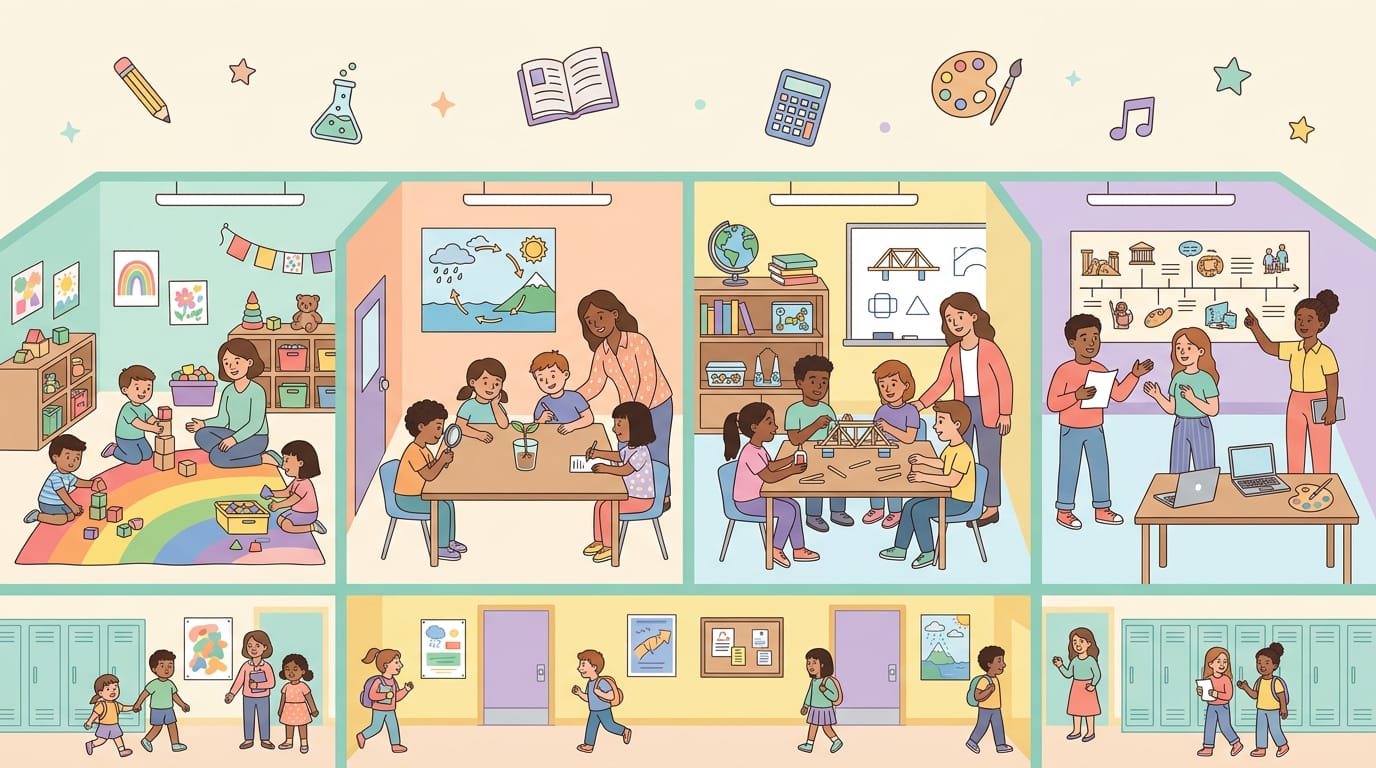
In this post, we'll walk through activities by purpose, subject, age, and prep level, plus practical tips for low-prep options, mindfulness breaks, and planning that cuts your workload.
Ultimate Teacher Planner
The ultimate all-in-one education management system in Notion.
Why Fun Classroom Activities Matter
Activities earn their place in a lesson for a few concrete reasons. Here's what they do for students, and why we rely on them.
Keeping students motivated and involved
Active participation is the first win. When students solve, argue, or test ideas, they're present in ways a slide can't match. The shift from watching to doing is where engagement begins.
Consider a middle school science teacher who has her class build paper bridges and test how many coins each one holds. Within minutes, everyone has a stake in the result. Higher motivation follows when students care about the outcome.
You'll spot it when a quiet student's eyes light up because their design held.
Engaged learners are the real goal. A student who wants to crack the problem keeps thinking long after the bell rings.
Helping students remember what they learn
Involvement aids learning. Active learning means students do something with the material, not just receive it.
In Enhanced Memory as a Common Effect of Active Learning, the authors review research showing that when students control the information they experience, memory improves compared with situations where that control is absent.
Deeper understanding shows up in results, too.
Active learning increases student performance in science, engineering, and mathematics reports that performance on exams and concept inventories (tests of core ideas) rose by 0.47 standard deviations under active learning, and the odds of failing were 1.95 times higher under traditional lecturing.
Building teamwork and problem solving skills
Groups build skills solo work can't. Students practice communicating and listening, and they sharpen problem solving when no path is obvious.
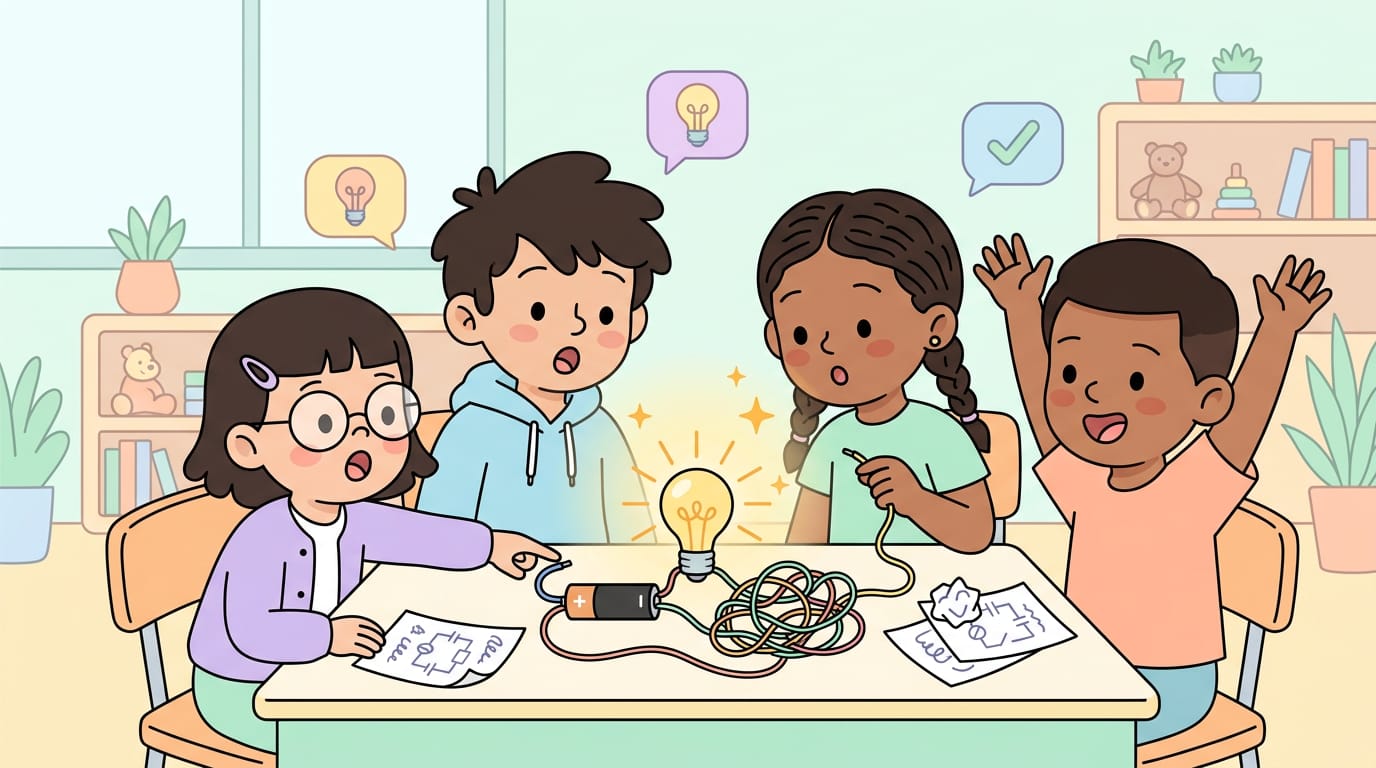
Picture four students handed one battery, one bulb, and a tangle of wires. The bulb finally lights when the quietest member speaks up with the fix.
Along the way, students make decisions about which approach to test and hear perspectives they'd never reach alone. The lasting skill is how they reach an answer, not just what it is.
Using activities to review and assess
Activities do three jobs well:
Content review. A quick game at the end of a unit brings back what students covered.
Extra practice. Students get more repetitions on a skill before it counts.
Assessment. Watching a group work shows you who has the idea and who needs another pass.
Activities make learning visible.
What Are Some Examples of Activities?
Activities range from quick checks to multi-day projects. Here are some quick options to start with:
Exit tickets: one question students answer on a slip of paper before they leave.
Think-pair-share: students think alone, talk with a partner, then share with the class.
Mindfulness brain breaks: a short breathing pause or stretch to reset focus.
Stories, art and crafts students create
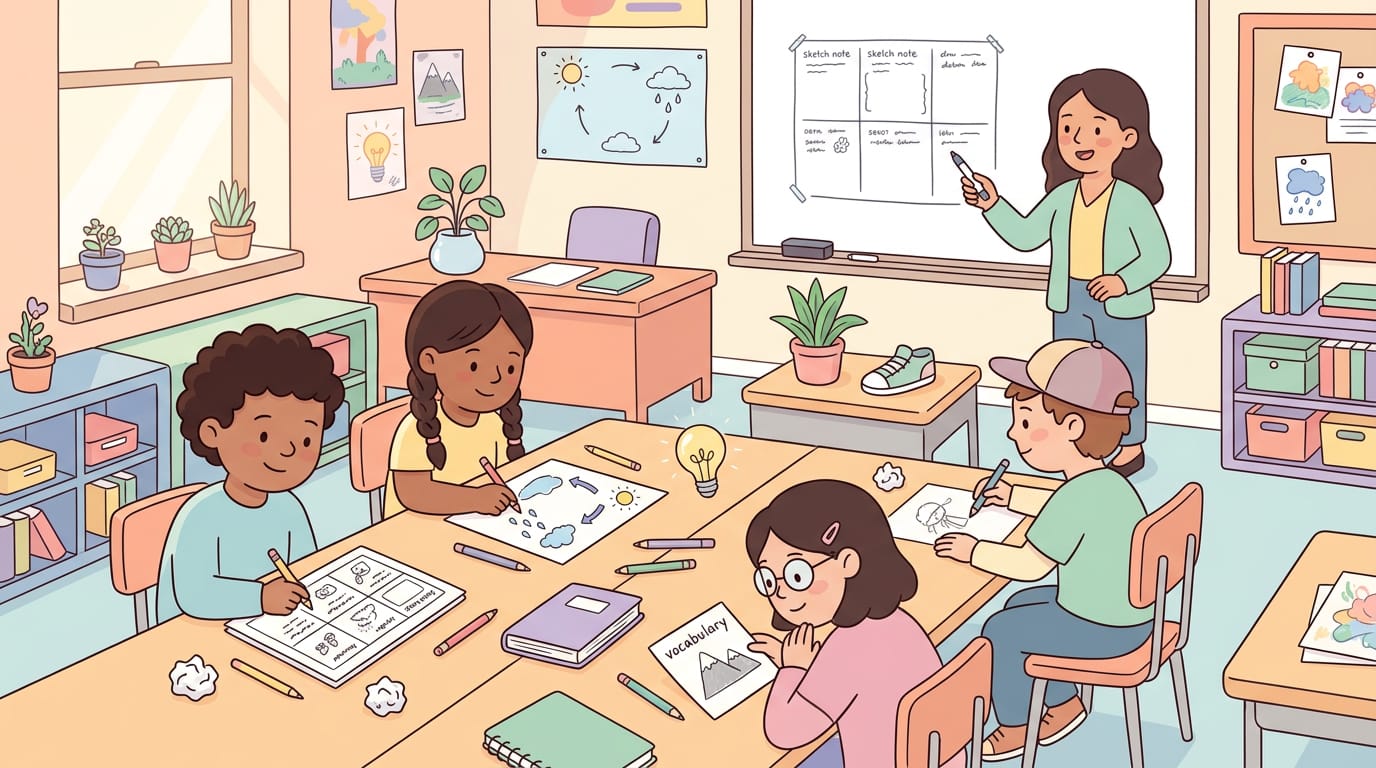
Some of the best activities let students make something. Student-created stories let learners retell a lesson in their own words, and a comic strip or labeled diagram turns an idea into a visual representation they can study.
Creative expression reaches students who struggle on paper: a quiet student might build a clay model of a cell and walk you through every part, showing understanding a worksheet wouldn't.
Hands-on experiments and trips outside class
Hands-on experiments put ideas to the test. A simple one, like melting ice with and without salt, has students predict, observe, and explain what happened.
Real-world applications make the link stick: a class that budgets a pretend grocery trip practices math they'll actually use.
Learning outside the classroom works the same way, since a walk around the schoolyard to find local plants makes a unit on ecosystems something students have seen for themselves. That's the difference: doing rather than watching.
Acting out roles, scenarios and debates
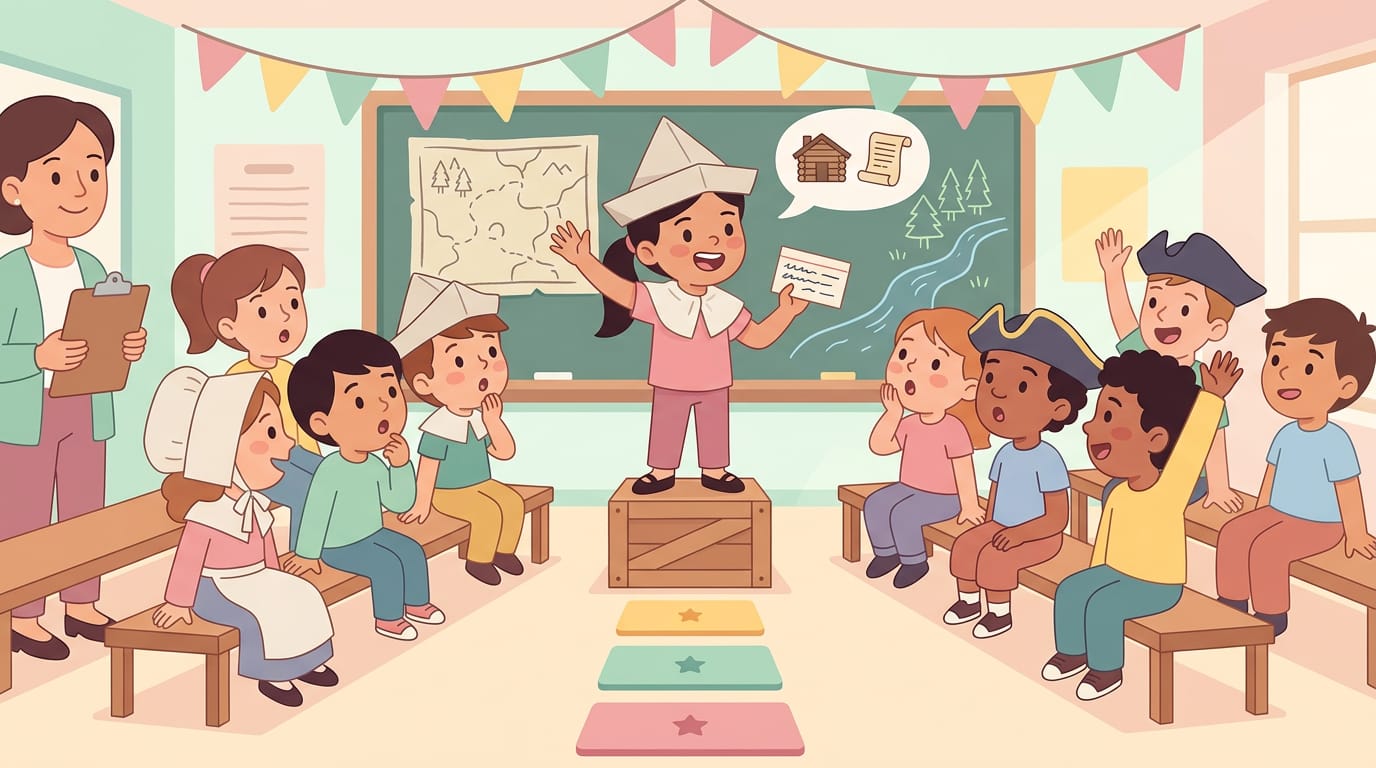
Acting things out builds understanding and confidence together. Speaking from the first-person perspective of a historical figure or novel character pushes students to consider why a figure acted, not just what happened.
Historical scenarios, like a staged town meeting, and persuasive arguments, where students defend an assigned side with evidence, build communication skills along the way. Think of a usually quiet student who comes alive arguing a settler's position.
Her confidence grows one turn at a time.
Games That Teach Each School Subject
Games give students repeated practice without the drill feeling, and they're useful in every subject.
Math games like Sudoku, bingo and Jeopardy
Sudoku. Students fill a grid so each number appears once per row, column, and box.
Math Bingo. Students mark answers as you read problems aloud.
Math Jeopardy. Teams pick a category and value, then answer in the form of a question.
Picture a middle school teacher who runs Math Bingo for ten minutes at the end of a fractions unit. The answers called out reveal who's still shaky on equivalent fractions. The goal is understanding rather than speed.
Word games for vocabulary and spelling
Word games put pattern-spotting to work, which is exactly what spelling needs.
Scrabble. Students build words from letter tiles and score points.
Hangman. Students guess letters to reveal a hidden word, using your new vocabulary terms.
Crossword puzzles. Write clues from your unit terms, or have students write them.
For vocabulary and spelling, use one shared word list across all four so students meet each term several times. Repetition matters more than novelty.
Games for coding and world geography
Programming concepts. Unplugged activities, like writing step-by-step directions for a partner, teach sequencing and loops.
Create own games. Students design a game around the unit, and writing the rules tests what they know.
GeoGuessr. Players guess a location from street-level images in a browser.
Countries and capitals. Run quick races where students place each country and capital on a blank map.
Picture a geography teacher who asks pairs to write a quiz round about a region they've studied. To write good clues, they have to know the countries cold.
Board games and apps for class
Monopoly, chess adaptations. Swap in topics from your unit, or require a correct answer before each chess move.
Educational apps. Try any app yourself first, and check that it matches your learning goals.
Online games. Pick ones students can open quickly, and keep an offline backup ready.
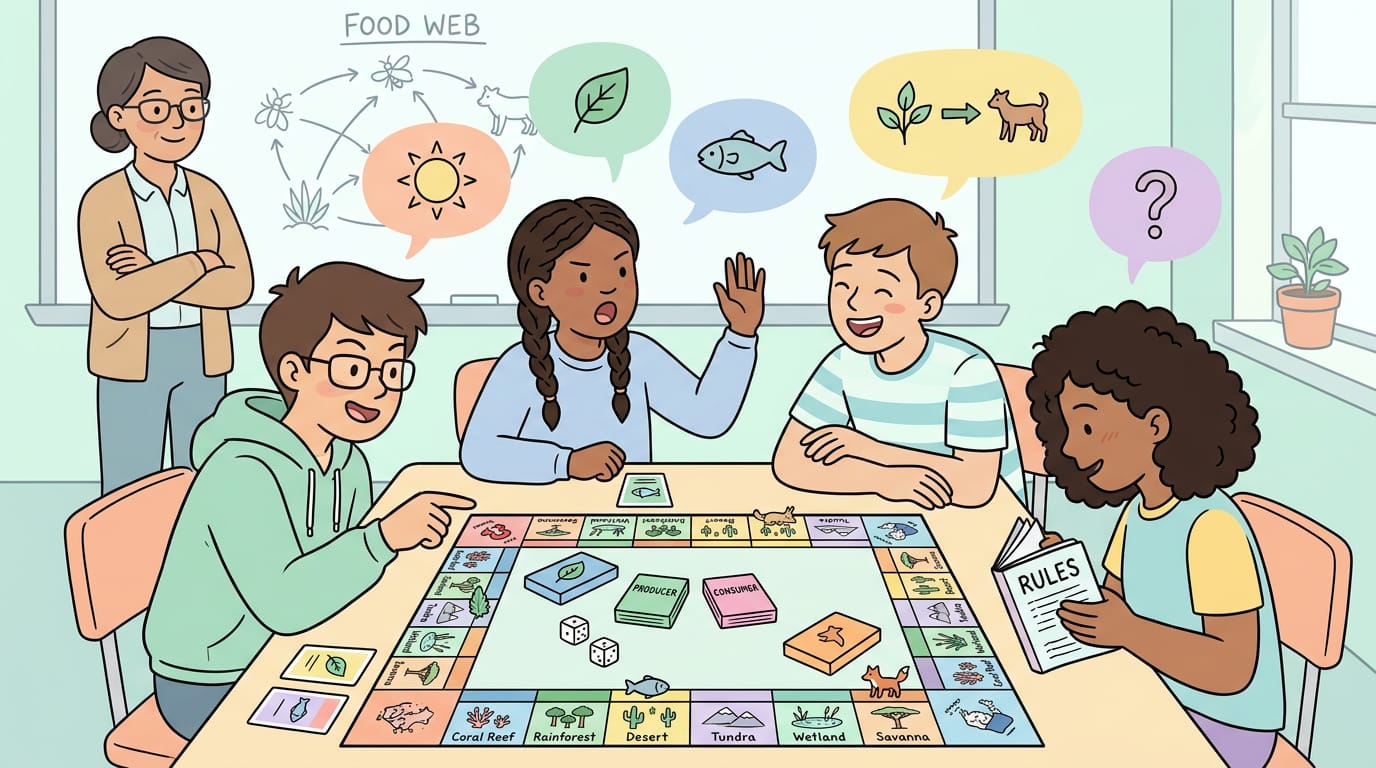
Consider a science teacher who turns Monopoly into an ecosystem game, with properties named for habitats. Students argue over the rules, and those arguments put words like habitat and producer to real use. The arguing is the learning.
Game-style Ways to Practice Skills
Practice doesn't have to feel like homework. Here's how we'd turn drills into movement and teamwork.
Scavenger hunts where answers unlock clues
In a scavenger hunt, each answer unlocks the next clue. Place task cards at stations, and each answer points students to the next one. Run it non-competitively: the goal is understanding rather than speed, so students check their own answers.
Daily 5 literacy stations fit here too. Students rotate through five activities:
read to self
read to someone
listen to reading
work on writing
word work
Think of a sixth-grade math teacher who hides task cards around the room, and by the end of class she can see exactly which skills still need work. Nobody gets left behind.
Playing games with task cards
Task cards power a few quick favorites:
Scoot. Partners answer a card, then move on when you call 'scoot.'
Jenga task cards. Tape a question to each block, and students answer the one they pull.
Board game with task cards. Students draw a card when they land on a space.
Group answer comparison. Groups check answers and talk through any differences.
Got 20 minutes to fill? Productive fillers beat busywork: a quick round of Scoot or a few Jenga blocks keeps students practicing instead of waiting.
Self-paced digital escape rooms with instant feedback
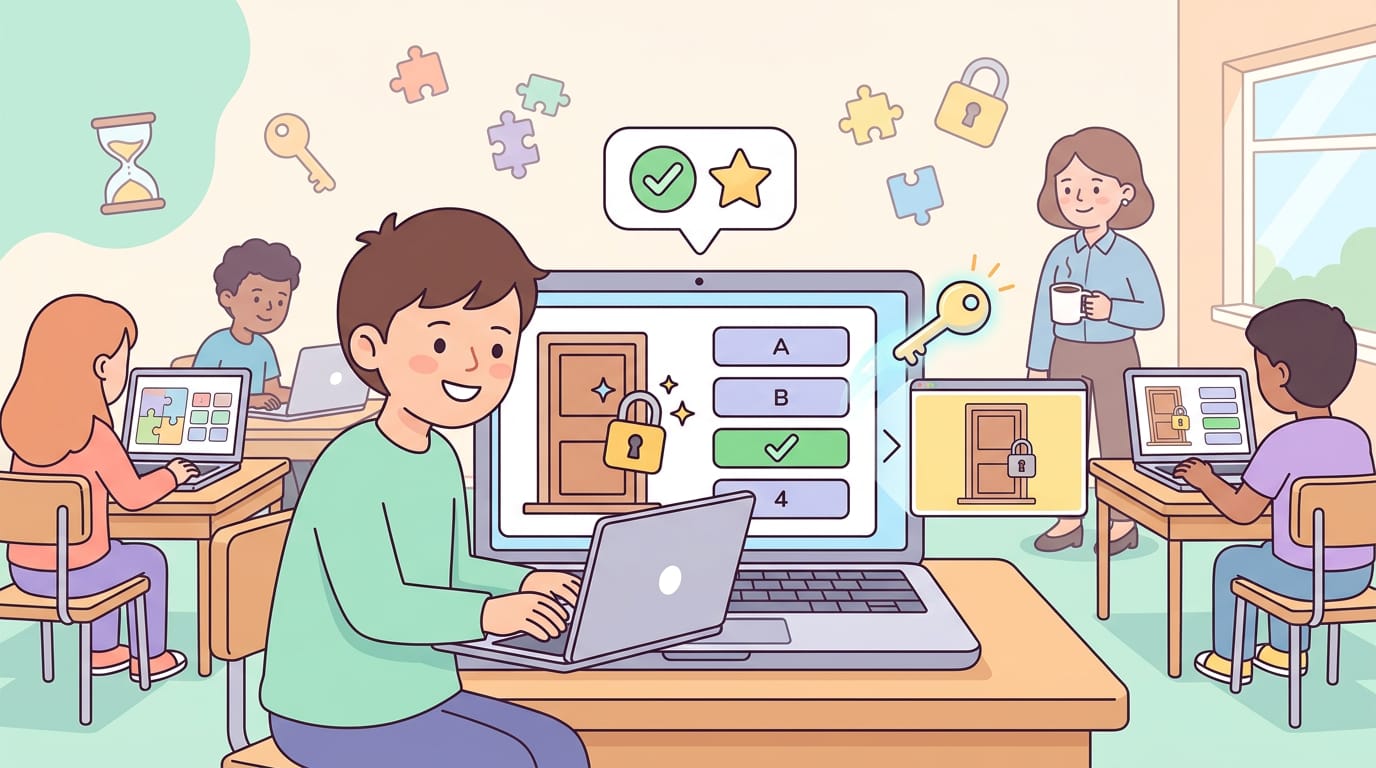
Build an escape room in Google Slides or Forms, where each correct answer unlocks the next puzzle. Forms can self-grade quiz questions, so students work at their own pace and see results right away.
Feedback arrives during the activity, not after it. Prep stays low because you build it once and reuse it, year after year, while students work on their own. Learning happens in the moment.
Amazing Race with pit stops and detours
Teams race through pit stops (checkpoints with a task to complete) and detours (a choice between two paths). It works for any subject or skill, and a template is available, so you won't start from a blank page.
Expect higher prep time: you'll write every pit stop and pair up the detour options. Detours shift the focus from speed to choice.
Consider a seventh-grade social studies teacher whose teams reach a pit stop with a primary source. The detour lets them choose between mapping a trade route or writing a short caption, so each team gets work that fits.
Activities for Toddlers and Young Children
Little learners learn with their whole bodies, so the best activities let them touch, pour, and build.
Sensory play, kitchen STEM and fine motor skills
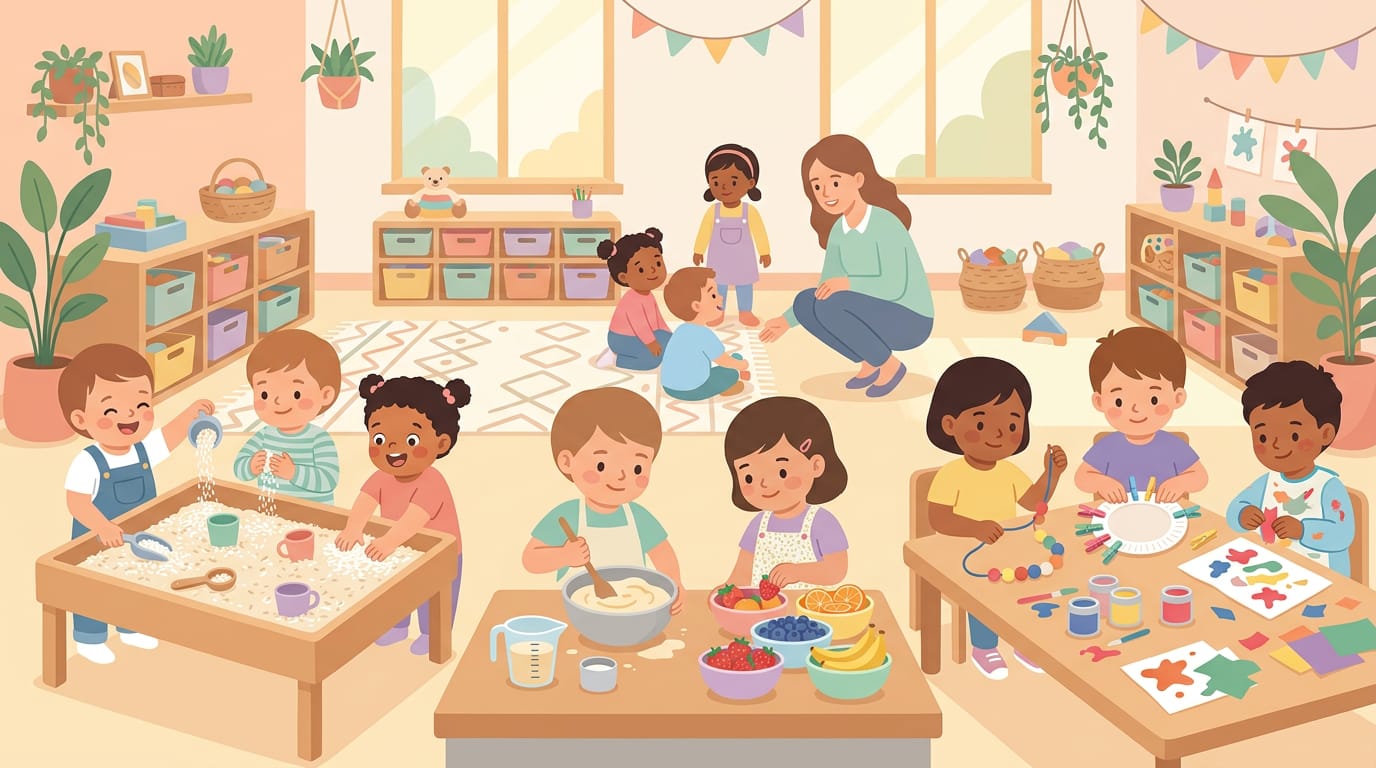
Sensory play lets children explore through touch, sight, sound, smell, and taste. Think of a daycare teacher who fills a shallow tray with dry rice and a few scoops.
Soon the toddlers are pouring and describing what they feel, and one teacher keeps a whole group busy.
Kitchen STEM, short for science, technology, engineering, and math, turns everyday cooking into a lesson. Stirring batter or sorting fruit by color helps children predict, observe, and compare.
Fine motor skills are the small hand and finger movements that later support writing. Threading large beads, pinching clothespins, and tearing paper all build that control. Little fingers need plenty of practice. Learning shapes activities for pre-K and kindergarten are a good next step once small hands have that practice.
Arts and crafts are less about what children make and more about how they explore color and texture. Set out a few materials and let them choose. Mess is part of the learning.
Seasonal and screen-free ideas for daycare
Seasons give you an easy way to rotate activities. Leaves and pinecones suit autumn, and planting seeds works well in spring.
Screen-free play keeps children engaged without a device. Puppet shows, music and movement, and story time all work well.
When time's tight, no-prep activities keep the day moving: - Freeze dance - Action songs with hand motions - A nature walk around the playground
If you run a daycare or an activity class, rotate children through a few short stations. You'll find your tray, craft table, and dance corner can share one room. Setting up that shared room is a good place to borrow ideas for your teaching space.
How Can You Make Your Classroom Fun?
Add a little movement and friendly competition, and keep the learning at the center. Here's how without burning out.
Managing pace, prep and waiting time
Take scoot, where students move between question cards posted around the room. You can run it two ways:
Whole-class scoot: everyone moves on your signal, but early finishers sit and wait.
Own-pace scoot: each pair moves when it's ready, so everyone stays busy.
Picture a teacher who posts eight cards and lets pairs move at their own speed. Quick pairs tackle the harder cards while slower pairs get the time they need.
Making cards takes real time, so the effort only pays off if you'll reuse them. Build a low-prep reusable template instead: one card layout you refill with new questions each unit.
Making sure games still teach something
Avoid fluff games, where the only thing anyone takes home is who won. A good game makes students think harder, not just faster. Winning isn't learning.
Make each round advance learning rather than review. In a fractions unit, for example, cards can move from practiced comparisons to ones students haven't seen yet.
Wrap the game in a theme tied to your unit, such as a quest that follows the topic you're teaching.
Build in differentiation and inclusion from the start: sentence starters or a partner for some students, extension cards for others. You can begin that inclusion on day one with first day of class activities.
Finally, keep an activity bank of go-to games sorted by subject and prep level, so you plan ahead instead of scrambling.
Classroom activities do more than fill time. They build understanding, keep energy up, and show you what students have learned. The best ones match a clear purpose, the age and subject in front of you, and the prep time you really have.
Start with one low-prep activity this week and let the results guide what comes next. Ready to bring more calm into your day? Explore Teacher Life & Wellbeing for mindful break ideas.
References
Enhanced Memory as a Common Effect of Active Learning — onlinelibrary.wiley.com
Active learning increases student performance in science, engineering, and mathematics — pmc.ncbi.nlm.nih.gov (2014)
Ultimate Teacher Planner
The ultimate all-in-one education management system in Notion.