15 Classroom Ideas to Transform Your Teaching Space
15 Classroom Ideas to Transform Your Teaching Space

Article by
Milo
ESL Content Coordinator & Educator
ESL Content Coordinator & Educator
All Posts
I watched a 4th grader drag a wobble stool across the room last Tuesday so she could see the anchor chart better. She didn't ask permission. She just moved, sat down, and kept working on her fractions. That's when it hit me: the best classroom ideas aren't about Pinterest-worthy bulletin boards or expensive flexible seating. They're about designing a space where kids make those small, independent choices that add up to real learning.
Your learning environment shapes everything—classroom management, student engagement, whether your instructional strategies actually land. Get the space wrong, and you're fighting your own room all year. Get it right, and the physical setup does half the work for you. I've taught in windowless closets and sprawling modular buildings, and I've learned that effective classroom organization isn't about square footage or matching theme decor. It's about intention and function.
This isn't a list of items to buy or color-coordinated bins to label. These are classroom ideas I've tested across grade levels and budgets—from flexible seating setups that actually survive the chaos of May to differentiated instruction stations that don't require a second teacher in the room. Some cost nothing. Some require convincing your principal. All of them have survived contact with real students, and that's the only test that matters.
Still grading everything by hand?
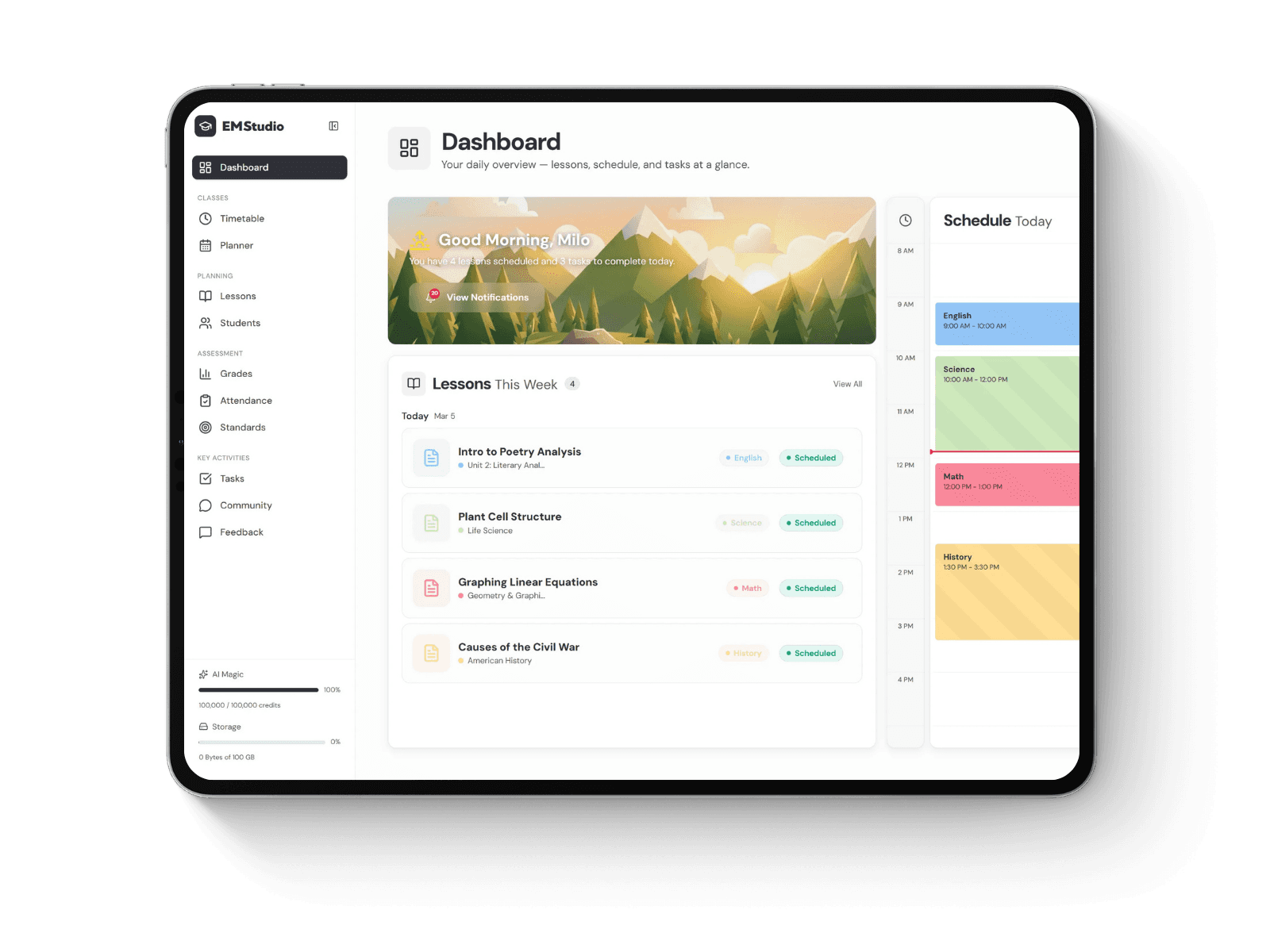
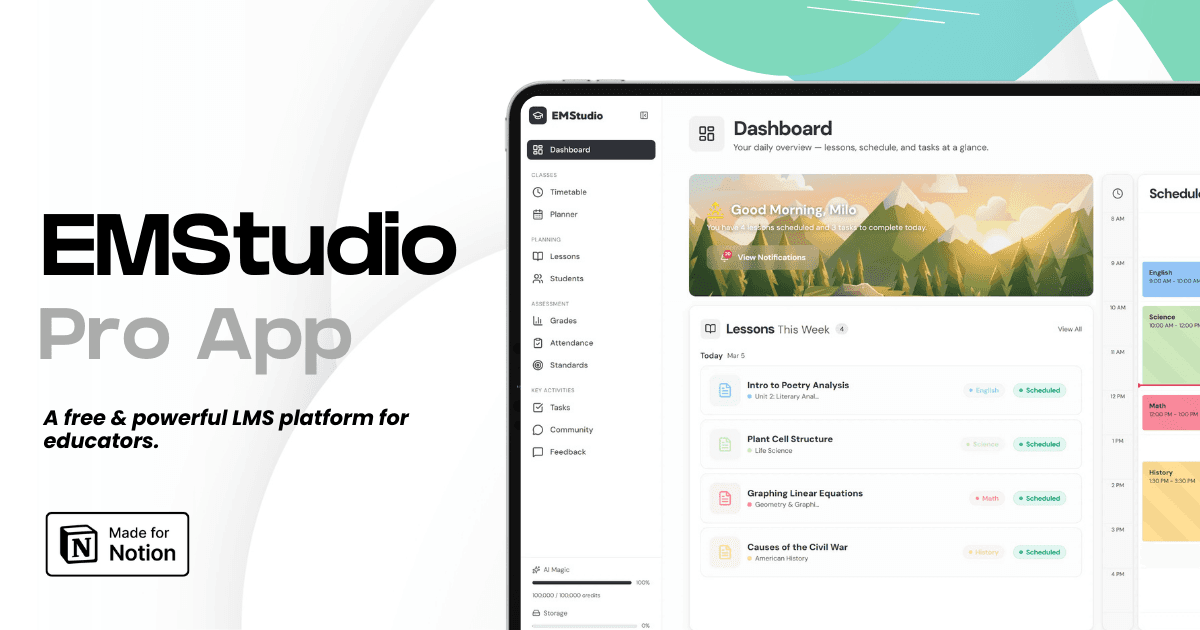
EMStudio is a free teaching management app — manage your classes, students, lessons, and more!
Learn More
Still grading everything by hand?
EMStudio is a free teaching management app — manage your classes, students, lessons, and more!
Learn More
Table of Contents
Flexible Seating and Space Design Strategies
John Hattie's Visible Learning research puts the physical environment's effect size at roughly 0.48. Movement-friendly classrooms support focus. You're designing for bodies that weren't meant to sit still.
Seating Type | Grades | Cost | Focus | Durability | Management |
|---|---|---|---|---|---|
Stability Balls | 3-8 | $15-25 | Core strength | High | Difficult |
Wobble Stools | 2-12 | $40-60 | ADHD support | Medium | Moderate |
Floor Cushions | K-5 | $8-12 | Reading corners | Low | Easy |
Standing Desks | 4-12 | $120-200 | Fidget reduction | High | Easy |
Crate Seats | K-8 | $12-15 | Budget option | Medium | Moderate |
Skip flexible seating if your class exceeds 32 students due to fire codes, or if you lack storage for traditional desks during state testing. Without solid classroom management systems, you'll face the "shopping cart" problem—kids constantly rolling furniture around your learning environment. Check our flexible seating implementation guide for setup timelines.
Successful implementation shows 80% of students remaining on-task during 20-minute independent work periods within 3 weeks. Track this with a simple clipboard tally to measure your classroom ideas against reality.
Standing Desk Stations and Floor Seating Options
You don't need expensive equipment for differentiated instruction. Slide $15 bed risers under standard desks for grades 4-8—suddenly you've got converters that fit existing furniture. For floor seating, cap circles at six feet diameter for six students using $20 pillow sets from Five Below or IKEA GURLI cushions.
Standing stations require $25 anti-fatigue mats to prevent heel pain during 45-minute periods. Students won't use what hurts. Place mats directly on tile or carpet, not on top of cords.
Collaborative Pods for Group Work
Trapezoid tables arranged in pods accommodate four to five students. Plan for 28-30 square feet per group in a standard 24x30 classroom—any tighter and chairs bump during entry. Equip each pod with 5-slot Sterilite caddies ($4 each) containing color-coded materials.
Assign one "materials manager" to distribute items. Display the Too Noisy app on a wall-mounted tablet with a 60dB threshold. When the meter spikes, the group pauses. See our effective classroom design for learning zones for more teacher ideas for classroom layouts.
Quiet Zones and Focus Corners
Designate a 4x4 foot corner for two students maximum using a $30 IKEA KALLAX shelf as a visual barrier. Stock $15-25 noise-canceling headphones and implement a Do Not Disturb traffic light system. Target these zones for 10-15 minute cooldown periods for sensory needs.
Without timed limits, they become social clubs. Place five-minute sand timers in the zone. When sand runs out, they rejoin the class. No exceptions.

What Are the Classroom Must Haves for New Teachers?
New teachers need organizational systems before decor: a mobile teacher cart with locking wheels ($60-80), Sterilite 3-drawer units for daily materials ($12 each), a magnetic dry-erase calendar for long-term planning, and a student supply station with labeled bins for paper, pencils, and turn-in trays. These foundational items prioritize functionality over aesthetics.
Buy the bins before the fairy lights. Your learning environment runs on systems, not vibes. Effective classroom management starts with stuff having a designated spot.
First-year teachers drop $500 to $750 of their own money setting up classrooms, according to NEA surveys. Spend it on operational gear that supports your instructional strategies, not decorative pillows. You need research-based classroom organization strategies more than you need a shiplap accent wall.
Focus on the First 5:
Mobile teacher cart with locking wheels for flexibility
3-drawer Sterilite unit per subject or preparation
Magnetic dry-erase calendar for unit pacing
Student supply station with labeled bins
Designated spot for your emergency substitute binder
These items drive student engagement and streamline your workflow by removing logistical friction.
Know what your district actually owns. Document cameras and printers are theirs. Plastic bins and personal laminators ($25-40) are yours. Shop Facebook Marketplace for book bins at $1-2, compared to $5-6 new. Hit Dollar Tree for small storage. Save DonorsChoose for big-ticket flexible seating over $100.
Organizational Command Centers and Teacher Carts
The three-tier rolling cart is your mobile command center. Configure it like this:
Top tier: Daily materials (sub binder, attendance clipboard, today's read-aloud)
Middle tier: Small group supplies (dry erase sleeves, marker sets)
Bottom tier: Personal items, emergency meds, and the chocolate you hide from students
Buy the Honey-Can-Do CRT-01512 ($45) or the Spectrum Diversified ($35). Both feature locking wheels. You need those locks if your room has sloped floors or if you park it near high-traffic areas. These classroom must haves move with you during flexible grouping and keep critical supplies within arm's reach during every transition.
Accessible Supply Stations for Student Independence
Build a "Help Yourself" station within six feet of the classroom door. Use a six-slot literature sorter for paper types: lined, graph, and blank. Add a three-cup caddy for sharpened pencils, pens, and markers. Stock a "While You Were Out" folder system for absent work. Label everything with photos for younger students.
This positioning keeps traffic patterns away from your direct instruction zone. Students grab what they need without asking permission. You stop fielding twenty requests for pencils during your mini-lesson. This setup builds student autonomy and protects your instructional time.
Visual Anchor Charts and Reference Walls
Anchor charts work only if students actually use them. Post five basics:
Writing process checklist
Math problem-solving steps
Classroom procedures map
Academic vocabulary tier list
Growth mindset sentence stems
These classroom ideas support differentiated instruction and provide concrete scaffolds that boost student engagement during independent work.
Use 24x32 chart paper with Mr. Sketch markers. Laminate them with a $25 personal laminator for reuse across years. These essential classroom supplies and teacher store favorites turn your walls into active teaching tools, not decorative wallpaper.

Student-Centered Innovation Ideas
You have probably arranged desks in rows facing the board. That setup works for direct instruction, but it kills student agency. Student-centered classroom innovation ideas flip the layout. You move from teacher-fronted rows to stations where kids drive the learning. Research on autonomy support backs this up. When students choose their learning pathways, engagement jumps. They stop asking "Is this graded?" and start asking "Can I try the harder option?"
Three frameworks make this shift manageable. Choice Boards use a 3x3 grid format—think appetizer, main course, dessert—to offer differentiated pathways. Genius Hour borrows Google's 20% time model: one hour weekly for passion projects. Exhibition Nights replace those awkward parent conferences with student-led galleries. These instructional strategies work across grade levels with slight tweaks. Elementary kids need picture-based choice boards. Middle schoolers handle digital menus in Google Classroom. High schoolers run with passion projects and community mentors.
Watch the failure mode. Too many choices paralyzes kids. I learned this the hard way with my first 9-option choice board—three kids cried. Start with binary choices. Offer option A or B for two weeks. Once they build decision stamina, expand to the full grid. This protects your classroom management while building student confidence.
Choice Boards and Personalized Learning Menus
Build your first choice board for 7th-grade science using a 3x3 grid.
Vocabulary Column: Flashcards, Crossword, or Comic Strip.
Investigation Column: Lab, Simulation, or Video Analysis.
Demonstration Column: Model, Presentation, or Essay.
Kids pick one from each column. Color-code by difficulty: green for approaching, blue for on-level, black for advanced. Tell students they need one color totaling nine points. This built-in differentiated instruction lets advanced kids soar while strugglers find success. It takes 15 minutes to build in Google Slides.
Student-Led Conference Setups and Exhibition Spaces
Ditch the traditional parent conference. Set up an Exhibition Night instead. Grab tri-fold boards from Dollar Tree—four bucks each. Students curate five artifacts with a reflection sheet. Move desks to the perimeter, drape them with dollar-store tablecloths, and create 3-foot aisles for gallery walks. The transformation takes 20 minutes once kids know the routine.
Run it like a museum opening. With 25 students, schedule 3-minute rotations. That fills 75 minutes with movement and purpose. Parents see student engagement in action instead of hearing you talk about it. This setup works for any subject showing project-based learning implementation. The physical classroom organization signals that student work matters more than teacher talk.
Genius Hour and Passion Project Stations
Block Fridays for Genius Hour. That 60 minutes of 20% time changes the entire week.
Research Zone: Four Chromebooks for source gathering.
Maker Space: Cardboard, tape, and scissors for building.
Presentation Prep: Recording corner with a $20 phone tripod.
Keep them accountable with the KWHLAQ chart: Know, Want, How, Learn, Action, Questions. They track progress in a Google Slides template. This prevents the "I don't know what to do" stall that kills classroom ideas like this. The learning environment shifts from teacher-directed to student-owned in about three weeks.

How Can You Create a Classroom That Supports Differentiation?
Create a differentiated classroom by establishing leveled resource libraries with color-coded bins. Green means approaching level, blue is on-level, black is advanced. Add scaffolding stations with task cards ranging from foundational to complex, plus assistive technology integration points with text-to-speech tools and adaptive seating for IEP accommodations.
Differentiation fails when kids know they're in the "low group." When you create a classroom that supports multiple pathways, you need physical layouts that hide the mechanics. These classroom ideas rely on John Hattie's research showing differentiated instruction hits an effect size of 0.60—but only when learning intentions stay crystal clear.
Use a discreet color system for classroom organization. Green bins hold approaching-grade-level texts. Blue contains on-level work. Black stores advanced materials. Students see colored spines only when you hand them a book. The bins face you, not the room. No one knows their neighbor's color unless you tell them.
Let data drive your instructional strategies.
If forty percent of your class reads below grade level, build those leveled libraries first.
Five or more IEPs with sensory needs? Prioritize assistive tech stations before anything else.
Serving gifted clusters? Dedicate corners to enrichment extensions.
Don't build what your kids don't need.
Avoid the tracking trap. Permanent ability grouping kills student engagement and fixes labels to kids. Smart classroom management means rotating every student through all zones weekly. Green zone today builds phonics skills; black zone Thursday tackles synthesis. The zones target skills, not students. Everyone grows everywhere.
Leveled Resource Libraries and Retrieval Systems
Organize your library by Fountas & Pinnell levels A-Z for elementary or Lexile bands for secondary. Use six primary colored bins—three dollars each—with adhesive labels covered by clear packing tape for durability. The color-coding stays hidden on the back.
Include a "shopping list" bookmark system. Students record three books they want next to prevent browsing time waste. Capacity: fifteen to twenty books per bin serves a class of twenty-eight. Restock during planning period while kids are at specials.
Scaffolding Stations for Skill Building
Design three-tiered task cards at your math or literacy station. Tier one uses concrete manipulatives with picture supports. Tier two provides graphic organizers with word banks. Tier three needs abstract problem solving with open-ended prompts. Label them 1-2-3, not "easy-medium-hard."
Rotation schedule: fifteen-minute rounds with four to six students per station. Use IKEA FLYSTA shelf units—forty dollars—to define station boundaries in open learning environment layouts.
Assistive Technology Integration Points
Establish two to three "Tech Hub" seats with Chromebook access to digital tools for differentiated instruction like Google Read&Write. Position near power outlets and away from high-traffic door areas. Train two students as "Tech Hosts" to troubleshoot basics so you keep teaching.
For physical accessibility, ensure thirty-six-inch aisle width for wheelchair access. Use bed risers to elevate standard desks for standing or seated wheelchair users. See more options in assistive technologies for special education.
How to Choose the Right Ideas for Your Grade Level and Budget?
Measure your usable square footage first (subtract built-ins), then pick high-impact, low-cost moves like desk pods (free) or portable whiteboards ($30). Adapt elementary ideas for hands-on centers; secondary ideas for flexible lecture zones. Prioritize changes under $50 and two hours setup time initially.
Stop pinning dream classrooms. Start with your actual square footage and bank account. The best classroom ideas fit your physical reality, not your Pinterest board. Small changes beat ambitious failures.
Assessing Your Physical Space Constraints
A standard classroom is 24 by 30 feet. That is 720 square feet on paper. Subtract built-ins and you have roughly 600 usable. Under 500? Abandon floor-based flexible seating. Go vertical with wall-mounted storage.
Measure with a tape. Map fixed obstacles: doors, outlets, cabinets. Calculate your teaching zone: 12-foot visibility radius from the whiteboard. Maintain 44-inch fire code exit paths.
Prioritizing High-Impact, Low-Cost Changes
Most low-cost classroom organization ideas deliver 80% of impact. Here are five under $25:
Move your desk to a corner. Reclaim twenty square feet. (15 min)
Install $12 Command hooks for backpacks. (20 min)
Mark floor zones with painter's tape. (10 min)
Build a "Status of the Class" board with $8 foam core. (30 min)
Claim wall space for Bell Ringers. (5 min)
Total investment: under $25 and two hours.
Adapting Ideas for Elementary vs. Secondary Settings
Elementary classrooms need defined boundaries. Use four-color floor tape for six centers: reading, writing, math, science, art, and quiet. Choose 12-14 inch seat heights. Label with icons, not text.
Secondary rooms need speed. Furniture on casters shifts from rows to groups in 60 seconds. Provide individual storage cubes for 150 plus students. Manage 1:1 devices at the door.
Elementary needs six to eight fixed zones for routine. Secondary needs two to three configurable layouts for varied instruction.
Digital Workflow and Tech-Enhanced Setup Ideas
Post-COVID classrooms aren't going back. Even with students physically present, you need digital backup systems and solid device management for every lesson. The tech isn't optional anymore—it's core classroom management. These classroom ideas prioritize function over flash. The best setups disappear into your routine instead of creating more work.
Device Charging and Digital Check-In Stations
Skip the $800 commercial charging cart. Build a DIY station with a 10-slot hanging shoe organizer ($12) and two surge protectors ($25). Mount it on the wall near your outlet. Label slots 1-30 with student numbers. Kids plug in devices during lunch or transitions. No more dead tablets during math rotations.
Add a digital check-in system. Post a Google Form QR code at your entrance. Students scan on entry to mark attendance and lunch count. The timestamp data writes itself. For younger grades, ClassDojo Check-In works better—it plays sound cues that help K-5 students confirm they've checked in without constant teacher monitoring.
Interactive Display Integration and Screen Management
Position your interactive whiteboard perpendicular to windows to kill glare. For projector-based systems, calculate throw distance carefully: allow 1.5 feet for every 10 inches of screen width. A 100-inch screen needs 15 feet of clearance. Get this wrong and you'll have shadows blocking content all year.
Manage cables with a Cord Concealer raceway ($15) along the floor. Trip hazards shut down student engagement fast. Use the split-screen function to display instructions while showing content. Better yet, set up a daily digital dashboard setup that stays visible during transitions. This classroom organization trick keeps your learning environment structured without constant clicking.
QR Code Systems for Paperless Resource Access
Generate codes using QRCode Monkey (free) linking to Google Drive folders organized by unit. Print them on 3x5 cards, laminate them, and hang sets on binder rings by your door. One specific win: a substitute teacher folder with a QR linking to emergency lesson videos and your roster. No more scrambling for paper copies when you're sick.
But avoid tech for tech's sake. Don't post QR codes for simple tasks faster done with paper. Reserve digital workflow for resources updated less than monthly—syllabus changes or unit overviews. Daily agendas should stay physical. Constantly regenerating codes for weekly updates creates maintenance fatigue that breaks your instructional strategies flow.
Implementing Your Classroom Ideas Without Burnout
You do not need to rebuild your learning environment in one weekend. Pick one zone—maybe the reading corner—and perfect it. Next week, tackle the supply station. Small steps prevent decision fatigue. This prevents the August overwhelm that leaves you rearranging desks at 9 PM on a Sunday. Sustainable classroom ideas respect your time.
July and August are for infrastructure: storage, desks, traffic flow. September is when you add student-centered elements like collaboration tables once you know your roster. October is for refining your classroom management using observation data. Watch where students actually work. Move furniture based on traffic patterns, not Pinterest boards.
If resetting your classroom organization takes more than five minutes at the end of the day, the system is too complex. I learned this with a color-coded bin setup that required twenty minutes of sorting. Your instructional strategies suffer when you are mentally exhausted from managing stuff. The five-minute rule keeps you sane. Simplify until the reset feels automatic.
Be ruthless with data. If fewer than ten percent of your students choose that flexible seating option after three weeks, it is clutter, not differentiated instruction. Remove it. When noise levels hit seventy decibels during independent work, return to traditional rows immediately. Student engagement drops when the physical space works against concentration. Cut your losses fast.
Protect your wallet. Use district-provided furniture only. Do not purchase items over one hundred dollars personally without DonorsChoose funding. Document every penny—teachers can deduct up to three hundred dollars in federal taxes for classroom expenses. Pair these financial boundaries with evidence-based strategies for teacher work-life balance to preserve your energy for actual teaching.

Key Takeaways for Classroom Ideas
Your learning environment works best when it solves real problems for real kids, not when it wins design awards. Pick one instructional strategy or layout change that addresses your biggest pain point this month. Get it running on Monday before you buy another beanbag chair or rearrange your entire library by genre for the third time.
The strongest classroom management happens in rooms that flex with your students' needs, not ones that look perfect in August. Start with what you have. Adjust as you go. Your kids will show you where the traffic jams are, and that's your data for next week's rearrangement.
Your student engagement will tell you what's working louder than any Pinterest board ever could. Build slowly. Your future self will thank you when you're not laminating labels at midnight on a Tuesday.
Flexible Seating and Space Design Strategies
John Hattie's Visible Learning research puts the physical environment's effect size at roughly 0.48. Movement-friendly classrooms support focus. You're designing for bodies that weren't meant to sit still.
Seating Type | Grades | Cost | Focus | Durability | Management |
|---|---|---|---|---|---|
Stability Balls | 3-8 | $15-25 | Core strength | High | Difficult |
Wobble Stools | 2-12 | $40-60 | ADHD support | Medium | Moderate |
Floor Cushions | K-5 | $8-12 | Reading corners | Low | Easy |
Standing Desks | 4-12 | $120-200 | Fidget reduction | High | Easy |
Crate Seats | K-8 | $12-15 | Budget option | Medium | Moderate |
Skip flexible seating if your class exceeds 32 students due to fire codes, or if you lack storage for traditional desks during state testing. Without solid classroom management systems, you'll face the "shopping cart" problem—kids constantly rolling furniture around your learning environment. Check our flexible seating implementation guide for setup timelines.
Successful implementation shows 80% of students remaining on-task during 20-minute independent work periods within 3 weeks. Track this with a simple clipboard tally to measure your classroom ideas against reality.
Standing Desk Stations and Floor Seating Options
You don't need expensive equipment for differentiated instruction. Slide $15 bed risers under standard desks for grades 4-8—suddenly you've got converters that fit existing furniture. For floor seating, cap circles at six feet diameter for six students using $20 pillow sets from Five Below or IKEA GURLI cushions.
Standing stations require $25 anti-fatigue mats to prevent heel pain during 45-minute periods. Students won't use what hurts. Place mats directly on tile or carpet, not on top of cords.
Collaborative Pods for Group Work
Trapezoid tables arranged in pods accommodate four to five students. Plan for 28-30 square feet per group in a standard 24x30 classroom—any tighter and chairs bump during entry. Equip each pod with 5-slot Sterilite caddies ($4 each) containing color-coded materials.
Assign one "materials manager" to distribute items. Display the Too Noisy app on a wall-mounted tablet with a 60dB threshold. When the meter spikes, the group pauses. See our effective classroom design for learning zones for more teacher ideas for classroom layouts.
Quiet Zones and Focus Corners
Designate a 4x4 foot corner for two students maximum using a $30 IKEA KALLAX shelf as a visual barrier. Stock $15-25 noise-canceling headphones and implement a Do Not Disturb traffic light system. Target these zones for 10-15 minute cooldown periods for sensory needs.
Without timed limits, they become social clubs. Place five-minute sand timers in the zone. When sand runs out, they rejoin the class. No exceptions.
What Are the Classroom Must Haves for New Teachers?
New teachers need organizational systems before decor: a mobile teacher cart with locking wheels ($60-80), Sterilite 3-drawer units for daily materials ($12 each), a magnetic dry-erase calendar for long-term planning, and a student supply station with labeled bins for paper, pencils, and turn-in trays. These foundational items prioritize functionality over aesthetics.
Buy the bins before the fairy lights. Your learning environment runs on systems, not vibes. Effective classroom management starts with stuff having a designated spot.
First-year teachers drop $500 to $750 of their own money setting up classrooms, according to NEA surveys. Spend it on operational gear that supports your instructional strategies, not decorative pillows. You need research-based classroom organization strategies more than you need a shiplap accent wall.
Focus on the First 5:
Mobile teacher cart with locking wheels for flexibility
3-drawer Sterilite unit per subject or preparation
Magnetic dry-erase calendar for unit pacing
Student supply station with labeled bins
Designated spot for your emergency substitute binder
These items drive student engagement and streamline your workflow by removing logistical friction.
Know what your district actually owns. Document cameras and printers are theirs. Plastic bins and personal laminators ($25-40) are yours. Shop Facebook Marketplace for book bins at $1-2, compared to $5-6 new. Hit Dollar Tree for small storage. Save DonorsChoose for big-ticket flexible seating over $100.
Organizational Command Centers and Teacher Carts
The three-tier rolling cart is your mobile command center. Configure it like this:
Top tier: Daily materials (sub binder, attendance clipboard, today's read-aloud)
Middle tier: Small group supplies (dry erase sleeves, marker sets)
Bottom tier: Personal items, emergency meds, and the chocolate you hide from students
Buy the Honey-Can-Do CRT-01512 ($45) or the Spectrum Diversified ($35). Both feature locking wheels. You need those locks if your room has sloped floors or if you park it near high-traffic areas. These classroom must haves move with you during flexible grouping and keep critical supplies within arm's reach during every transition.
Accessible Supply Stations for Student Independence
Build a "Help Yourself" station within six feet of the classroom door. Use a six-slot literature sorter for paper types: lined, graph, and blank. Add a three-cup caddy for sharpened pencils, pens, and markers. Stock a "While You Were Out" folder system for absent work. Label everything with photos for younger students.
This positioning keeps traffic patterns away from your direct instruction zone. Students grab what they need without asking permission. You stop fielding twenty requests for pencils during your mini-lesson. This setup builds student autonomy and protects your instructional time.
Visual Anchor Charts and Reference Walls
Anchor charts work only if students actually use them. Post five basics:
Writing process checklist
Math problem-solving steps
Classroom procedures map
Academic vocabulary tier list
Growth mindset sentence stems
These classroom ideas support differentiated instruction and provide concrete scaffolds that boost student engagement during independent work.
Use 24x32 chart paper with Mr. Sketch markers. Laminate them with a $25 personal laminator for reuse across years. These essential classroom supplies and teacher store favorites turn your walls into active teaching tools, not decorative wallpaper.
Student-Centered Innovation Ideas
You have probably arranged desks in rows facing the board. That setup works for direct instruction, but it kills student agency. Student-centered classroom innovation ideas flip the layout. You move from teacher-fronted rows to stations where kids drive the learning. Research on autonomy support backs this up. When students choose their learning pathways, engagement jumps. They stop asking "Is this graded?" and start asking "Can I try the harder option?"
Three frameworks make this shift manageable. Choice Boards use a 3x3 grid format—think appetizer, main course, dessert—to offer differentiated pathways. Genius Hour borrows Google's 20% time model: one hour weekly for passion projects. Exhibition Nights replace those awkward parent conferences with student-led galleries. These instructional strategies work across grade levels with slight tweaks. Elementary kids need picture-based choice boards. Middle schoolers handle digital menus in Google Classroom. High schoolers run with passion projects and community mentors.
Watch the failure mode. Too many choices paralyzes kids. I learned this the hard way with my first 9-option choice board—three kids cried. Start with binary choices. Offer option A or B for two weeks. Once they build decision stamina, expand to the full grid. This protects your classroom management while building student confidence.
Choice Boards and Personalized Learning Menus
Build your first choice board for 7th-grade science using a 3x3 grid.
Vocabulary Column: Flashcards, Crossword, or Comic Strip.
Investigation Column: Lab, Simulation, or Video Analysis.
Demonstration Column: Model, Presentation, or Essay.
Kids pick one from each column. Color-code by difficulty: green for approaching, blue for on-level, black for advanced. Tell students they need one color totaling nine points. This built-in differentiated instruction lets advanced kids soar while strugglers find success. It takes 15 minutes to build in Google Slides.
Student-Led Conference Setups and Exhibition Spaces
Ditch the traditional parent conference. Set up an Exhibition Night instead. Grab tri-fold boards from Dollar Tree—four bucks each. Students curate five artifacts with a reflection sheet. Move desks to the perimeter, drape them with dollar-store tablecloths, and create 3-foot aisles for gallery walks. The transformation takes 20 minutes once kids know the routine.
Run it like a museum opening. With 25 students, schedule 3-minute rotations. That fills 75 minutes with movement and purpose. Parents see student engagement in action instead of hearing you talk about it. This setup works for any subject showing project-based learning implementation. The physical classroom organization signals that student work matters more than teacher talk.
Genius Hour and Passion Project Stations
Block Fridays for Genius Hour. That 60 minutes of 20% time changes the entire week.
Research Zone: Four Chromebooks for source gathering.
Maker Space: Cardboard, tape, and scissors for building.
Presentation Prep: Recording corner with a $20 phone tripod.
Keep them accountable with the KWHLAQ chart: Know, Want, How, Learn, Action, Questions. They track progress in a Google Slides template. This prevents the "I don't know what to do" stall that kills classroom ideas like this. The learning environment shifts from teacher-directed to student-owned in about three weeks.
How Can You Create a Classroom That Supports Differentiation?
Create a differentiated classroom by establishing leveled resource libraries with color-coded bins. Green means approaching level, blue is on-level, black is advanced. Add scaffolding stations with task cards ranging from foundational to complex, plus assistive technology integration points with text-to-speech tools and adaptive seating for IEP accommodations.
Differentiation fails when kids know they're in the "low group." When you create a classroom that supports multiple pathways, you need physical layouts that hide the mechanics. These classroom ideas rely on John Hattie's research showing differentiated instruction hits an effect size of 0.60—but only when learning intentions stay crystal clear.
Use a discreet color system for classroom organization. Green bins hold approaching-grade-level texts. Blue contains on-level work. Black stores advanced materials. Students see colored spines only when you hand them a book. The bins face you, not the room. No one knows their neighbor's color unless you tell them.
Let data drive your instructional strategies.
If forty percent of your class reads below grade level, build those leveled libraries first.
Five or more IEPs with sensory needs? Prioritize assistive tech stations before anything else.
Serving gifted clusters? Dedicate corners to enrichment extensions.
Don't build what your kids don't need.
Avoid the tracking trap. Permanent ability grouping kills student engagement and fixes labels to kids. Smart classroom management means rotating every student through all zones weekly. Green zone today builds phonics skills; black zone Thursday tackles synthesis. The zones target skills, not students. Everyone grows everywhere.
Leveled Resource Libraries and Retrieval Systems
Organize your library by Fountas & Pinnell levels A-Z for elementary or Lexile bands for secondary. Use six primary colored bins—three dollars each—with adhesive labels covered by clear packing tape for durability. The color-coding stays hidden on the back.
Include a "shopping list" bookmark system. Students record three books they want next to prevent browsing time waste. Capacity: fifteen to twenty books per bin serves a class of twenty-eight. Restock during planning period while kids are at specials.
Scaffolding Stations for Skill Building
Design three-tiered task cards at your math or literacy station. Tier one uses concrete manipulatives with picture supports. Tier two provides graphic organizers with word banks. Tier three needs abstract problem solving with open-ended prompts. Label them 1-2-3, not "easy-medium-hard."
Rotation schedule: fifteen-minute rounds with four to six students per station. Use IKEA FLYSTA shelf units—forty dollars—to define station boundaries in open learning environment layouts.
Assistive Technology Integration Points
Establish two to three "Tech Hub" seats with Chromebook access to digital tools for differentiated instruction like Google Read&Write. Position near power outlets and away from high-traffic door areas. Train two students as "Tech Hosts" to troubleshoot basics so you keep teaching.
For physical accessibility, ensure thirty-six-inch aisle width for wheelchair access. Use bed risers to elevate standard desks for standing or seated wheelchair users. See more options in assistive technologies for special education.
How to Choose the Right Ideas for Your Grade Level and Budget?
Measure your usable square footage first (subtract built-ins), then pick high-impact, low-cost moves like desk pods (free) or portable whiteboards ($30). Adapt elementary ideas for hands-on centers; secondary ideas for flexible lecture zones. Prioritize changes under $50 and two hours setup time initially.
Stop pinning dream classrooms. Start with your actual square footage and bank account. The best classroom ideas fit your physical reality, not your Pinterest board. Small changes beat ambitious failures.
Assessing Your Physical Space Constraints
A standard classroom is 24 by 30 feet. That is 720 square feet on paper. Subtract built-ins and you have roughly 600 usable. Under 500? Abandon floor-based flexible seating. Go vertical with wall-mounted storage.
Measure with a tape. Map fixed obstacles: doors, outlets, cabinets. Calculate your teaching zone: 12-foot visibility radius from the whiteboard. Maintain 44-inch fire code exit paths.
Prioritizing High-Impact, Low-Cost Changes
Most low-cost classroom organization ideas deliver 80% of impact. Here are five under $25:
Move your desk to a corner. Reclaim twenty square feet. (15 min)
Install $12 Command hooks for backpacks. (20 min)
Mark floor zones with painter's tape. (10 min)
Build a "Status of the Class" board with $8 foam core. (30 min)
Claim wall space for Bell Ringers. (5 min)
Total investment: under $25 and two hours.
Adapting Ideas for Elementary vs. Secondary Settings
Elementary classrooms need defined boundaries. Use four-color floor tape for six centers: reading, writing, math, science, art, and quiet. Choose 12-14 inch seat heights. Label with icons, not text.
Secondary rooms need speed. Furniture on casters shifts from rows to groups in 60 seconds. Provide individual storage cubes for 150 plus students. Manage 1:1 devices at the door.
Elementary needs six to eight fixed zones for routine. Secondary needs two to three configurable layouts for varied instruction.
Digital Workflow and Tech-Enhanced Setup Ideas
Post-COVID classrooms aren't going back. Even with students physically present, you need digital backup systems and solid device management for every lesson. The tech isn't optional anymore—it's core classroom management. These classroom ideas prioritize function over flash. The best setups disappear into your routine instead of creating more work.
Device Charging and Digital Check-In Stations
Skip the $800 commercial charging cart. Build a DIY station with a 10-slot hanging shoe organizer ($12) and two surge protectors ($25). Mount it on the wall near your outlet. Label slots 1-30 with student numbers. Kids plug in devices during lunch or transitions. No more dead tablets during math rotations.
Add a digital check-in system. Post a Google Form QR code at your entrance. Students scan on entry to mark attendance and lunch count. The timestamp data writes itself. For younger grades, ClassDojo Check-In works better—it plays sound cues that help K-5 students confirm they've checked in without constant teacher monitoring.
Interactive Display Integration and Screen Management
Position your interactive whiteboard perpendicular to windows to kill glare. For projector-based systems, calculate throw distance carefully: allow 1.5 feet for every 10 inches of screen width. A 100-inch screen needs 15 feet of clearance. Get this wrong and you'll have shadows blocking content all year.
Manage cables with a Cord Concealer raceway ($15) along the floor. Trip hazards shut down student engagement fast. Use the split-screen function to display instructions while showing content. Better yet, set up a daily digital dashboard setup that stays visible during transitions. This classroom organization trick keeps your learning environment structured without constant clicking.
QR Code Systems for Paperless Resource Access
Generate codes using QRCode Monkey (free) linking to Google Drive folders organized by unit. Print them on 3x5 cards, laminate them, and hang sets on binder rings by your door. One specific win: a substitute teacher folder with a QR linking to emergency lesson videos and your roster. No more scrambling for paper copies when you're sick.
But avoid tech for tech's sake. Don't post QR codes for simple tasks faster done with paper. Reserve digital workflow for resources updated less than monthly—syllabus changes or unit overviews. Daily agendas should stay physical. Constantly regenerating codes for weekly updates creates maintenance fatigue that breaks your instructional strategies flow.
Implementing Your Classroom Ideas Without Burnout
You do not need to rebuild your learning environment in one weekend. Pick one zone—maybe the reading corner—and perfect it. Next week, tackle the supply station. Small steps prevent decision fatigue. This prevents the August overwhelm that leaves you rearranging desks at 9 PM on a Sunday. Sustainable classroom ideas respect your time.
July and August are for infrastructure: storage, desks, traffic flow. September is when you add student-centered elements like collaboration tables once you know your roster. October is for refining your classroom management using observation data. Watch where students actually work. Move furniture based on traffic patterns, not Pinterest boards.
If resetting your classroom organization takes more than five minutes at the end of the day, the system is too complex. I learned this with a color-coded bin setup that required twenty minutes of sorting. Your instructional strategies suffer when you are mentally exhausted from managing stuff. The five-minute rule keeps you sane. Simplify until the reset feels automatic.
Be ruthless with data. If fewer than ten percent of your students choose that flexible seating option after three weeks, it is clutter, not differentiated instruction. Remove it. When noise levels hit seventy decibels during independent work, return to traditional rows immediately. Student engagement drops when the physical space works against concentration. Cut your losses fast.
Protect your wallet. Use district-provided furniture only. Do not purchase items over one hundred dollars personally without DonorsChoose funding. Document every penny—teachers can deduct up to three hundred dollars in federal taxes for classroom expenses. Pair these financial boundaries with evidence-based strategies for teacher work-life balance to preserve your energy for actual teaching.
Key Takeaways for Classroom Ideas
Your learning environment works best when it solves real problems for real kids, not when it wins design awards. Pick one instructional strategy or layout change that addresses your biggest pain point this month. Get it running on Monday before you buy another beanbag chair or rearrange your entire library by genre for the third time.
The strongest classroom management happens in rooms that flex with your students' needs, not ones that look perfect in August. Start with what you have. Adjust as you go. Your kids will show you where the traffic jams are, and that's your data for next week's rearrangement.
Your student engagement will tell you what's working louder than any Pinterest board ever could. Build slowly. Your future self will thank you when you're not laminating labels at midnight on a Tuesday.
Still grading everything by hand?
EMStudio is a free teaching management app — manage your classes, students, lessons, and more!
Learn More
Still grading everything by hand?
EMStudio is a free teaching management app — manage your classes, students, lessons, and more!
Learn More



Notion4Teachers
Notion templates to simplify administrative tasks and enhance your teaching experience.



2026 Notion4Teachers. All Rights Reserved.
Notion4Teachers
Notion templates to simplify administrative tasks and enhance your teaching experience.
2026 Notion4Teachers. All Rights Reserved.
Notion4Teachers
Notion templates to simplify administrative tasks and enhance your teaching experience.
2026 Notion4Teachers. All Rights Reserved.